Endam Nihan – Syracuse, New York

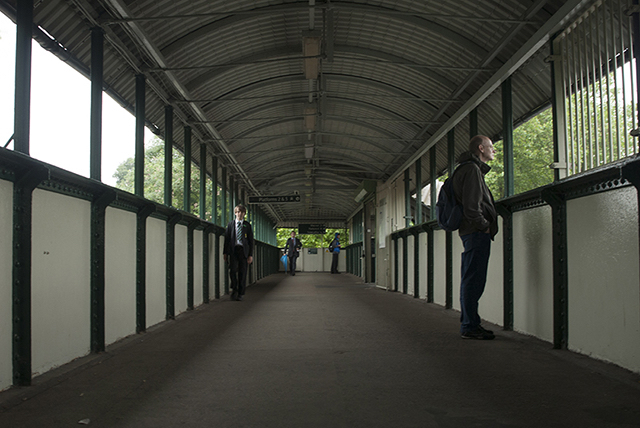
​week long diary, 06:31,2013,Single Channel Video and Sound,640x480

​week long diary, 06:31,2013,Single Channel Video and Sound,640×480

Briefly describe the work you do.

I split time between curatorial efforts and my own practice, both of which focus on live or recorded performance for the camera. Most of this also is centered around thinking about how video itself takes on different personas, and performs accordingly. So my performances can operate within some logic, some world that I enter and allow myself to humorously improvise in.

Tell us about your background and how that has had an influence on your work and on you as an artist.

My upbringing in Turkey and my background working in communication design and advertising was the starting point for my ideas concerning how traditional social and cultural norms are reinforced and reconfigured as images.

The concept of the artist studio has a broad range of meanings in contemporary practice. Artists may spend much of their time in the actual studio, or they may spend very little time in it. Tell us about your individual studio practice and how it differs from or is the same as traditional notions of “being in the studio.”

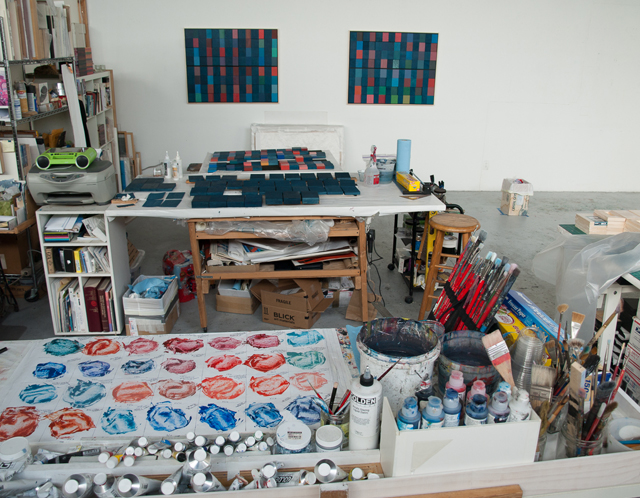
I work mostly from a laptop. Being in the studio almost exclusively means I’m looking at a screen, keeping up with events in Turkey, digging through archives, Skyping, or having hundreds of tabs open at the same time. When it’s time to shoot, I reach out to colleagues and friends, pool resources and usually end up making the work with very limited resources.

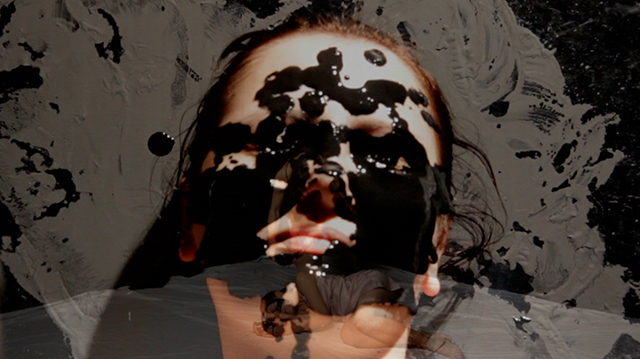
Mourning Cloak Butterfly,10:33,2013, Single Channel Video and Sound,1920x1080

Mourning Cloak Butterfly,10:33,2013, Single Channel Video and Sound,1920×1080

What roles do you find yourself playing that you may not have envisioned yourself in when you first started making art?

In my work, I try to create challenging experiences for myself in order to open spaces for others to become participants in these challenges by having them directly interact with my body, starting with their gaze. Part of my work is about pushing the limits of my viewers, usually without defining the terms of these limits before I perform. I look for reactions, such as facial expressions, body language and attitude, and try to use these observations as feedback for my process to inform new directions and content for my work.

When do you find is the best time to make art? Do you set aside a specific time everyday or do you have to work whenever time allows?

I see everything I do, direct, or indirect, as related to making art. Because I work in improvised, real-time performances, the making of the work and the work itself are often the same thing. 6. How has your work changed in the past five years? How is it the same?First of all, leaving a corporate, competitive working environment allowed me to explore and create all kinds of new things. On top of that, paying attention to events in Turkey as an outsider on the internet made it possible for me to create and inform new perspectives about things I was previously unaware or uncritical of. After I began performing publicly, the understanding of my body that I had gained through my cultural background started to fade away, allowing me to rethink how the norms and bodily restrictions I had rejected were held together in the first place. My practice helped me gain more self-confidence, consciousness and personal language to deliver these concerns. Lately, my interests and commitments are rapidly growing. Recently I’ve been interested in exploring activist strategies in alternative platforms and mediums for performances, including VR and networked environments.

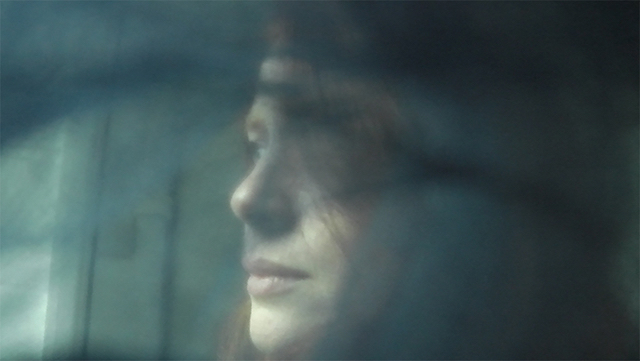
​nstallation shot of “Hold it”, Continuous loop,2014,3 channel HD video/sound installation, 1920x1080

​nstallation shot of “Hold it”, Continuous loop,2014,3 channel HD video/sound installation, 1920×1080

How have people such as family, friends, writers, philosophers, other artists or even pop icons had an impact on the work you do?

Because I am often both object and subject of my work, I see the kind of self examinations that we all perform daily as really the beginning of inquiry and influence into what I try to do. My work is directly informed by feminists of many waves, artists, as well as video and art video culture in general, porn sites, fashion magazines, fetish cult networks, nude art groups on Vimeo, Turkish internet memes, advertisements and issues relating to gender such as representations of women in media.

Have you ever been pulled in the direction of a pursuit other than being an artist? What are your other interests?

I had a stint in advertising. But I don’t know if I was pulled in that direction. When I get stressed I like to color in coloring books and express my aggressive creativity on my nails.

About

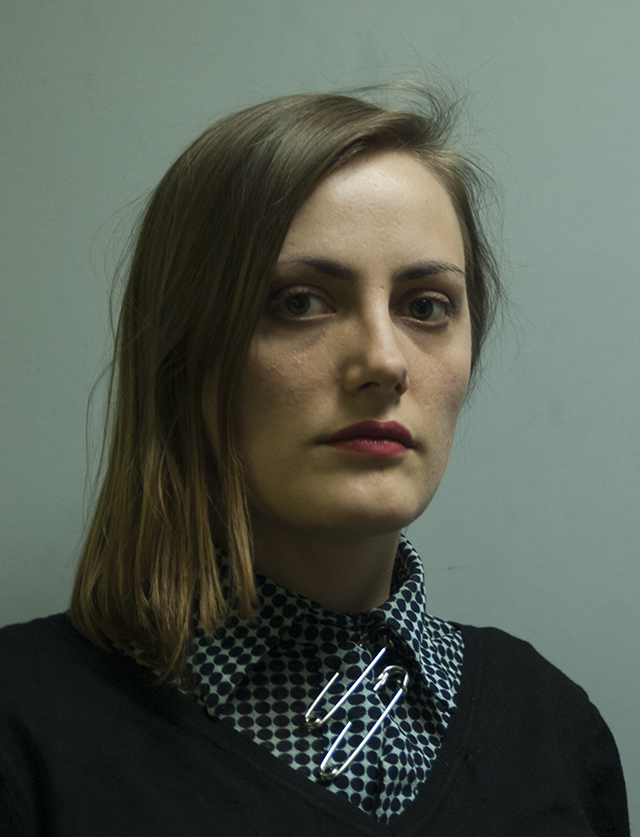
ENDAMNIHANheadshotEndam Nihan born and raised in Turkey. She currently lives and practice in Upstate NY. She holds a BFA in Visual Communication Design from Sabanci University and an MFA in Art Video from SYracuse University. R​ecent projects include co-curating Spark Performance Vol. I-IV, a series of performance art events in Syracuse, NY. H​er work has previously been exhibited at B​ody Anxiety (​h​ttp://bodyanxiety.com/​), First Films(UK), Webbiennial 14 (Istanbul), RADAR (Seattle/Vancouver), Rapid Pulse (Chicago), Hallwalls (Buffalo), The Way Out (NYC), Park Multimedia (Porto), Thirteen Video Art Festival (Stockholm), LoBe (Berlin).

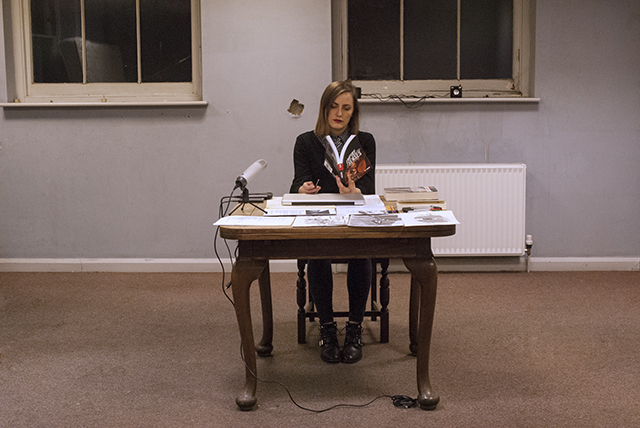
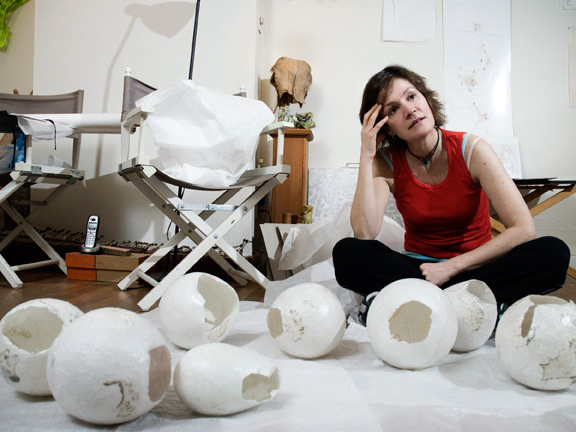
EN-you in your studio

endamnihan.com

All images copyright of the artist and used with their permission. 


Posted in Performance, Uncategorized | Tagged , , , , | Leave a comment

Victoria Buck – Knoxville, Tennessee

Title: ‘Observations of Systems’ Medium: Porcelain, pins Size: Height: 10 inches x Width: 8 inches Year: 2013

Title: ‘Observations of Systems’
Medium: Porcelain, pins
Size: Height: 10 inches x Width: 8 inches
Year: 2013

Briefly describe the work you do

I am a mixed media, sculpture artist. My current work deals with the liminal moment after a disaster- primarily a natural disaster. Where our preconceived notions of stability cease to exist, yet our primal need for survival urges us to continue on with hope. In essence, the place where fear and hope reside, where destruction and reconstruction are side by side.

I like thinking of my work as untraditional memorials of sorts, to our surrounds. The work I make ranges in size, from large installation to small intimate miniatures. These changes in size, of my work, that usually devoid of any color, can be either threatening to the viewer, or with the scale switch, the viewer becomes the threat.

Tell us about your background and how that has had an influence on your work and on you as an artist.

I am a New Zealander, and as an expatriate living in the United States, I often wander the streets of my hometown Christchurch/ Otautahi in my memory. My hometown was a beautiful city, (it still is, in it’s new different form) known as ‘The Garden City of the World.’

These ‘memory tours’ of mine became significantly complex when on February 22nd, 2011, a 6.3 magnitude earthquake devastated the city, killing 185 people, and drastically changing Christchurch’s architectural and natural landscape forever.

My fascination is of the shelter systems we have made, to protect people, and how sometimes these systems fail, yet we continue building in the same ways that are unsuitable and/or unsustainable, we often do so out of necessity.

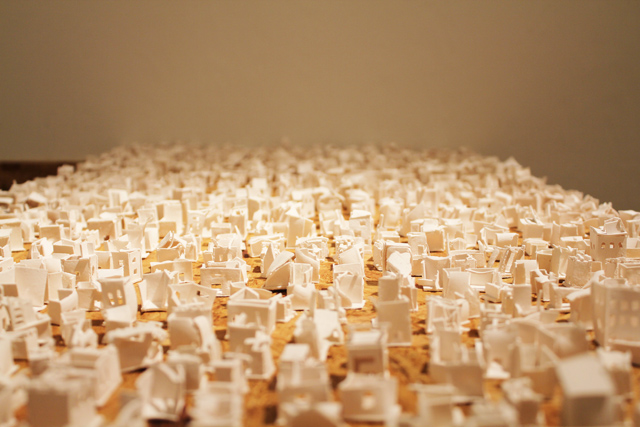
Title:  ‘Illusions of Stability’ Medium: Porcelain, Wood Size: Total dimension: 3.5 feet x 4.5 feet. Each house: various size range: ¾ inch- 2/4 inch Year: 2014

Title: ‘Illusions of Stability’
Medium: Porcelain, Wood
Size: Total dimension: 3.5 feet x 4.5 feet. Each house: various size range: ¾ inch- 2/4 inch
Year: 2014

The concept of the artist studio has a broad range of meanings in contemporary practice. Artists may spend much of their time in the actual studio, or they may spend very little time in it. Tell us about your individual studio practice and how it differs from or is the same as traditional notions of “being in the studio.”

I am lucky enough to have a home studio, where I can pop into easily. (Which is incredibly convenient for when I am firing my ancient electric kiln, or have a piece I am working on, that needs consistent attention -as working with clay often does.)

I incorporate intense making periods in the studio with bouts of research, archiving thoughts and images in a sketchbook or stashing them in my memory, culling through books, magazines, blogs and websites for color, construction ideas, whatever seems to pique my curiosity, or obsession in that time and place.

I am keenly aware of observations in our landscape both natural and architectural, and try to hold these observations for contemplation.

What roles do you find yourself playing that you may not have envisioned yourself in when you first started making art?

The amount of solitude that making requires, and reconciling my desire to make, with that of connecting socially with other beings. Also, the intense amounts of vulnerability that comes with making work that is sincere! Vulnerability is bittersweet. I am also an art educator, teaching studio art and art history, is an endless entity, and fun vocation unto itself, I didn’t think I would love teaching as much as I do!

When do you find is the best time to make art? Do you set aside a specific time everyday or do you have to work whenever time allows?

Currently I have two part time jobs, so I carve out time in the afternoons and-evenings, to be in my studio. But, the best time for me to make art is when I think I am done, and I stay in the studio a bit longer. Magical things can happen then.

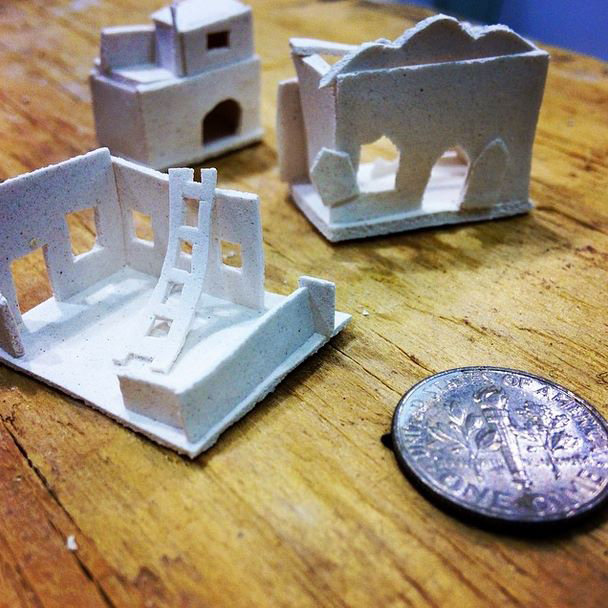
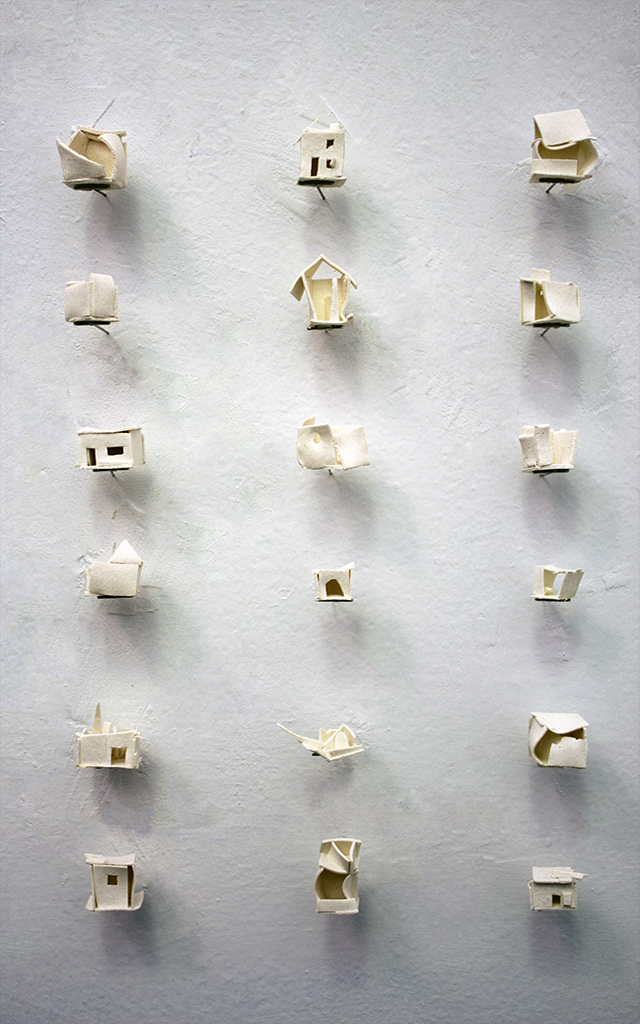
Title: Tiny houses  Medium: Porcelain  Size: Each house, various size range: ¾ inch- 2/4 inch  Year: 2014

Title: Tiny houses
Medium: Porcelain
Size: Each house, various size range: ¾ inch- 2/4 inch
Year: 2014

How has your work changed in the past five years? How is it the same?

With time, I am growing a material arsenal to pick from when creating my work. So in that regard, my work has changed, through this broadened use of ingredients. Consistently though, the concepts that my work deals with, has always been about memory of place, both imagined and real.

How have people such as family, friends, writers, philosophers, other artists or even pop icons had an impact on the work you do?

I am fortunate to have had some massively supportive professor-mentors in my life, who are extended family to me. And I’m grateful for my family and friends are the greatest cheerleaders I’ve ever met, especially Joan Buck, my mum- she can whip up a batch of scones, before you finishing latching the front gate and walk up the front path.

Some other artists, whom I admire are; Judith Hopf, Carol Bove, Urs Fischer, Manfred Pernice, Rebecca Warren, Grayson Perry.

I love Tina Fey and Chelsea Perreti for the laughs.

I also love instagram.

Have you ever been pulled in the direction of a pursuit other than being an artist? What are your other interests?

Before I went to art school, I rock climbed a lot. I dream(ed) about taking a year off, following good weather to good rocks, and living out of a van.

Other ways I currently occupy my time is that I am also a floral designer; I view floral design as a form of sculpture, using impermanent colorful material. I see a lot of color being incorporated into my work, soon, I think.

About

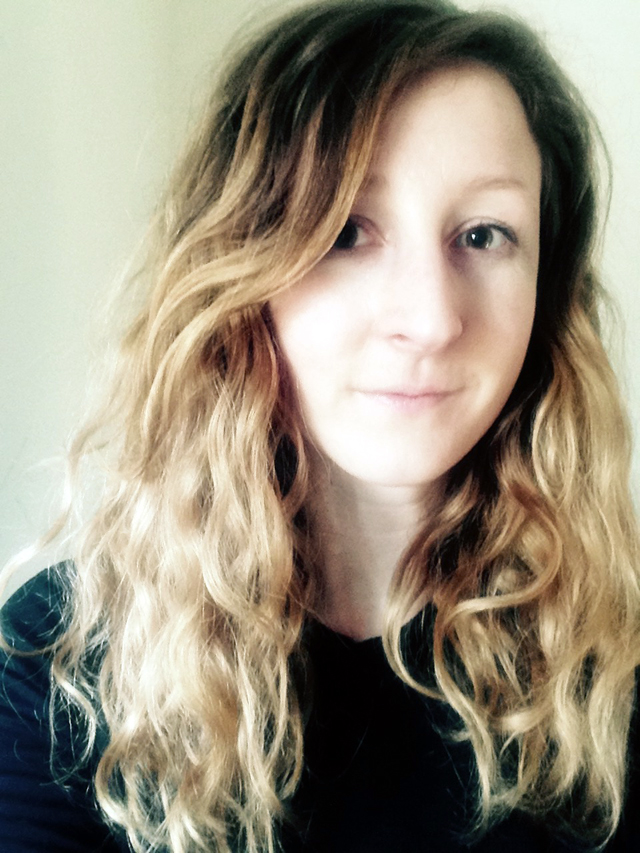
buck_v_headshotVictoria Buck was born and raised in the land of the long white cloud, Aotearoa, New Zealand. In the city of Otautahi, Christchurch.

She is currently a practicing artist and art educator, in Knoxville, Tennessee, USA. Victoria completed her BFA at Sierra Nevada College, Incline Village, Nevada, with a concentration in Ceramics, and Digital design, among the Sierra Nevada Mountains, in Lake Tahoe.

Recently, she received her Masters in studio art as a graduate of Ceramics, at the University of Tennessee, Knoxville, where she was also an instructor of record, in foundations in art and ceramic sculpture. Victoria is currently an Instructor at Pellissippi State Community College, Maryville, Tennessee, and a visiting Instructor at Arrowmont School of Art and Craft, Gatlinburg, Tennessee.

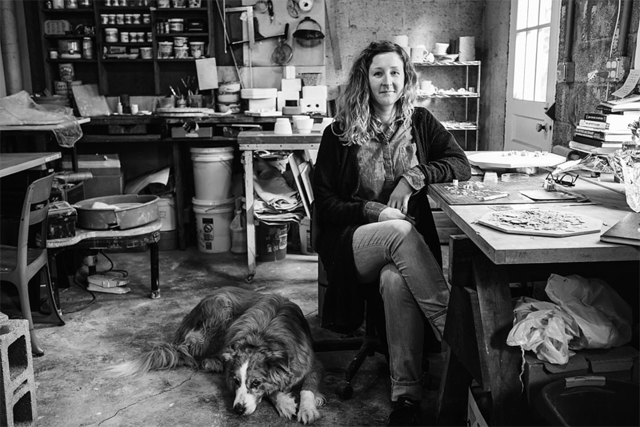
buck_v_studio

victoriabuck.com

All images copyright of the artist and used with their permission. 

Posted in Ceramics, Sculpture | Tagged , , , , | Leave a comment

Barbara Bargiel – London

​Waiting Room, video installation/ participatory performance, 2014

​Waiting Room, video installation/ participatory performance, 2014

Briefly describe the work you do. 

Where art sits, how it is viewed, how ‘visible’ it is and how it can be experienced—these are some of the questions which occupy my practice. In site-specific works, using video, sound, performance, sculpture, photography and drawing, I seek to draw attention to the discarded—forgotten, unseen details—as a trigger to personal memory.

I am interested in creating works that blur the boundaries of art and scenography. Using scenographic processes, as a mode of working with the material, site and a traveling body, I explore physical and experiential (sensory) relationships between them. In my work I attempt to activate ’spaces between’ that connect ’an inside’ with ’an outside’. I research, and am influenced by the site and its history. I look into archival pictures, found materials and old stories in order to imagine, reinterpret, and be inspired.

Tell us about your background and how that has had an influence on your work and on you as an artist.

I am Polish. I grew up watching film classics created by directors like Kieslowski, Lynch and Polanski. When I finished the highschool I moved to a magical city- Cracov. Initially I started studying Mathematics, but soon bored and inspired by the bohemian atmosphere of the city, I started experimenting with photography. I used to set up the darkroom with my friend in her flat bathroom. First during the day we would wonder around the old/ decaying architecture taking B&W pictures and then, at night, make enlargements till the morning next day. It was magical ! We were so so inspired !!! 

After that I really wanted to study Photography in the biggest possibly media hub. My sister was living in London. So I decide to join her. From a magical city I moved to a modern busy and never clean city of London. It was a contrast. I went to the art school and finished photographic degree.  During this time the technology brought to us digital cameras. Suddenly everybody could be a photographer.

I was disappointed. I did not want to be like every digital photographer, so I started mixing my photography with performance. I wanted to expand my creative skills. I went on to volunteer with different kinds of immersive theatre production companies making props and sets. I started attending live drawing classes, as well, as finished short sculpture courses. 

In whatever I do, I dont like being pigeon holed. I dont like boxes, and categorising.  It was what teachers tends to do in the art school. Put a label on you. I wanted to be boundless.

I was disappointed with my BA, and wanted to study MA where experimenting with mediums, and focusing on the process is encouraged. So, I discovered Scenography. This seam to be fitting with all my interests. The term is boundless, and I ended up gaining Masters of Art from the Drama/ Theatre School. I am proud of it.

I do believe everything that I have experienced, has influence on my work. Photography degree left in me the sharp eye for the  composition, love for the lighting and colour. My masters in Scenography, taught me how to work with space, material and embodiment, as well as how to make films. Here I felt in love with the term spectacular and sensorial staging.  Mathematics, and science helps me to create magic, as I can always proof something exist, as longest I have a good hypothesis/ equipment. 

​Poison, performance film, 2012

​Poison, performance film, 2012

The concept of the artist studio has a broad range of meanings in contemporary practice. Artists may spend much of their time in the actual studio, or they may spend very little time in it. Tell us about your individual studio practice and how it differs from or is the same as traditional notions of “being in the studio.

I do spend a lots of time at my computer at home, researching, and finding out about different technical tricks. So, called “artistic studio” I set up temporarily. Like I was staging something. I only need a studio when the actual testing, and experimentation happens, but many times my projects are outdoors, or I am invited to create something site specific for a particular space and time. A big part of my work, is figuring out how to put it all together. That is why I need a blanc/empty space where I can sit and think. Sometimes I only have a table, or a chair in my temporary studio. Most of what I make, is set up in the location for short period of time, or only for a recording. Different mediums, different effects, recordings, editing, projecting, ets… You would be surprised but I use quite a lots of equipment in my work, so I need a space to test it. 

What roles do you find yourself playing that you may not have envisioned yourself in when you first started making art?

Planning, organising, writing lots of applications, networking and in general doing a lots of admin work. These parts are not joyful for me at all. Worrying about  finally getting paid from making art. Documenting.

When do you find is the best time to make art? Do you set aside a specific time everyday or do you have to work whenever time allows?

I work whenever times allows. The best time for making art is for me, when I am invited/ commissioned to do a project.

Herstory, film, 2014

Herstory, film, 2014

How has your work changed in the past five years? How is it the same?

I never before created public art. I used to take a lot of self-portraits when I started. Now I am creating participatory art, as well, as collaborate as a scenographer. It seams to me, I am more attracted to videos and sound now. I don’t use anymore still images when I present my work in the gallery. My work is large scale, and sometimes the only existence left after it is a documentation. So, yes this is different. Before my work was photography, now the photography is only a mode of documenting my work.

How have people such as family, friends, writers, philosophers, other artists or even pop icons had an impact on the work you do?

Initially it was my sister curator and her partner artist who introduced me to the art. 

Later on, I was fascinated by Polanski biography, and  I  became a photographer,  as he was when he started. 

As, my knowledge expanded further I found myself being inspired by the movie directors such as Lynch and Tarkovsky. I like setting up visually mysterious situations.

Then fashion designers modest Yamamoto,  and cutting edge Pugh. I admire how they both use simplicity in they design. They use techniques, or enhance a detail other designers discard. They not scared to use darkness in they work.  

The sense of spectacular and staging element in my work, somehow are influenced by amazing works by Barney. The working with the body and space have some kind of linkage to Waltz dance staging. I like the unclear meaning/ alternative use of objects and the contrast. I like showing body pushed to the limits, not necessarily physically- like Waltz choreography, but psychologically.   

Have you ever been pulled in the direction of a pursuit other than being an artist? What are your other interests? 

I sign in the choir and would like to be in the band at some point in the future. I also would like to direct in the near future a feature film, with a big crew. When I grow old and am around 50 I would like to be a therapist. I am interested in psychology. I also write, and I hope one day somebody will publish my diary I have been writing almost every day since 2010. 

About

HEADSHOT (2)Barbara Bargiel (b.1982, Poland ) past 11 years lives and works in London. She studied Scenography at the Royal Central School of Speech and Drama and Photography at the University of East London. Recent exhibitions include NAA Festival at the Biblioteca Municipal in Barcelos (Portugal), Space Invaders: Neighbourhood Watch at the Jewish Community Centre (JW3, London), and a solo show Waiting Room at Platform1 Gallery with the participatory performance at Wandsworth Common Train Station (London).
ME IN STUDIO

barbarabargiel.com/ 

All images copyright of the artist and used with their permission. 

Posted in Installation, Video | Tagged , , , , | Leave a comment

Jane Deschner – Billings, Montana

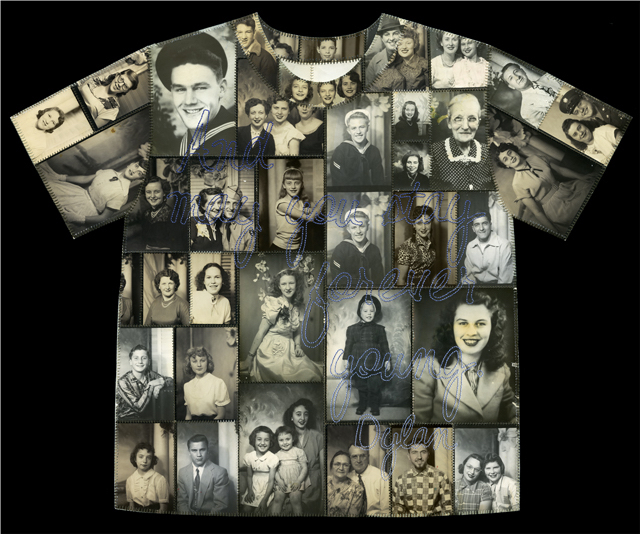
from the garment series ( t-shirt, Dylan, forever young), hand embroidered found studio portraits, 19.375” w x 22.625”h x 1.5”d, 2015

from the garment series ( t-shirt, Dylan, forever young), hand embroidered found studio portraits, 19.375” w x 22.625”h x 1.5”d, 2015

Briefly describe the work you do. 

“Jane Waggoner Deschner’s photo-collages riff perhaps most clearly on the concept of photographic keepsake. Family photographs, sewn together and topped with exuberant embroidered doodles and messages, celebrate the medium’s home-spun beginnings while poignantly pushing us to look more deeply at the artifacts of our own lives.” ~press release excerpt from The Embroidered Image, Robert Mann Gallery, NYC, 2014

Tell us about your background and how that has had an influence on your work and on you as an artist.

Disappointing experiences and unmet expectations of “happy family” have zigzagged through my life — eventually leading to my fascination with early and mid-twentieth century everyday photographs. Nan Goldin wrote, “The snapshot (is) the form of photography that is most defined by love. People take them out of love, and they take them to remember — people, places, and times. They’re about creating a history by recording a history.” When I collaborate with another’s photo, I tease out a common humanity not confined by time, place or circumstance. I explore our shared human condition to better understand my own. By asking viewers to look carefully — to react to quotations, decipher symbols and signs, and/or puzzle out juxtapositions — I renew and transform their experience of looking at old photographs. By engaging them with other people’s family photos, I alter the way they see their own. They come to realize, as I did, how universal this form of expression is — and how precious.

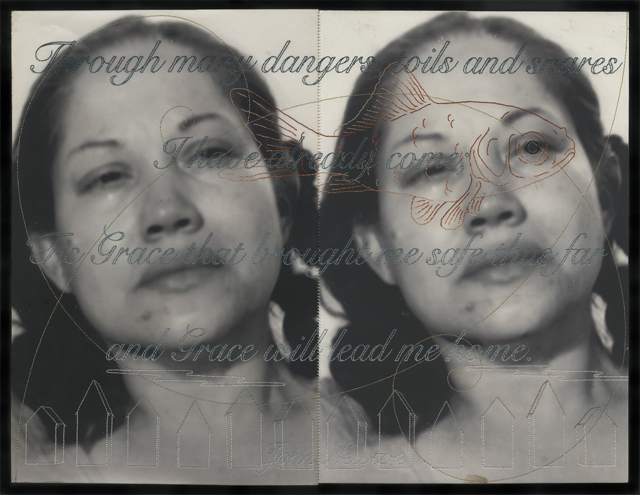
from the resilience series (Newton, grace), hand-embroidered found photographs, 15.25”h x 11.5”w, 2013

from the resilience series (Newton, grace), hand-embroidered found photographs, 15.25”h x 11.5”w, 2013

The concept of the artist studio has a broad range of meanings in contemporary practice. Artists may spend much of their time in the actual studio, or they may spend very little time in it. Tell us about your individual studio practice and how it differs from or is the same as traditional notions of “being in the studio.

All of my art making and working time is spent in my studio except the stitching which I do 15 feet down the hall from a comfortable chair in front of the TV. Artist residencies are the other part of my studio practice. There I have the time, space and support to concentrate on my work—free from most distractions. When I’m there, I “nest” in my studio—in addition to my computer, printer, scanner and lots of found photographs, I take a chenille bedspread and my pillow. I put down a small throw rug by the door. If a bed or futon isn’t provided, I take an airbed. I sleep there every night.

What roles do you find yourself playing that you may not have envisioned yourself in when you first started making art?

When I first started, my youngest child was 3 and I was in my 30s. I wanted to go beyond the craftsy things I’d been obsessively making so went back to college and earned a BA in art, one class a quarter for seven years. Now, 30+ years and an MFA later, I’m the kind of artist who handles all aspects of my practice: making, documenting, explaining, designing, collecting, framing, installing, marketing, hauling, crating, teaching, networking. When I began, I gave no thought to all the skills and trades that would be required. I also didn’t realize how much thinking and soul searching would be involved.

As for the artwork itself, I’m now a voyeur indulging in other people’s photographs and a ventriloquist appropriating quotes from famous individuals.

When do you find is the best time to make art? Do you set aside a specific time everyday or do you have to work whenever time allows?

There is so much more involved in being an artist than just making the art. My typical day follows a specific pattern—this organization helps me keep the various parts of my art life, work life and personal life all moving forward. I get out of bed and walk to the computer in my studio, starting water boiling for tea as I walk by the pot. I respond to emails, read news and art articles, collect quotes, interact on Facebook. Next I do work. It might be something for one of my graphic design or photography clients; it might be working on a residency application or exhibition proposal. Today it’s responding to this 365artists365days request. I run errands mid-day. The afternoon is time to prepare pieces for stitching—sort photos, scan and design the graphics, poke holes. If I have a show coming up, the afternoon is spent matting and framing. After dinner, I sit and stitch for 2–5 hours. If social commitments intervene and I go a night or two without stitching, I become uncentered and cranky. I follow this work pattern basically every day of the week. 

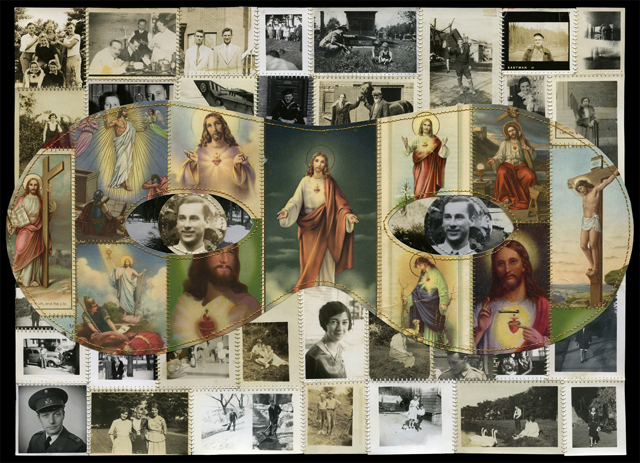
from the domino mask series (Jesus, assorted people), hand-embroidered holy cards and found photographs, 10.875”h x 15.375”w, 2014

from the domino mask series (Jesus, assorted people), hand-embroidered holy cards and found photographs, 10.875”h x 15.375”w, 2014

How has your work changed in the past five years? How is it the same?

I started working with found vernacular photographs in 2001. By 2010 I was well into embroidering quotes into studio portraits and collaged snapshots. Adding a famous person’s words to a vernacular image, I could ventriloquize thoughts my aging, maternal (increasingly opinionated) self wanted to express. A couple of years ago I started adding drawings to illustrate the quote and add another dimension to the work. Most recently I’ve been doing pieces that don’t rely on speaking the English language to understand (see the example from the domino mask series).

How have people such as family, friends, writers, philosophers, other artists or even pop icons had an impact on the work you do?

Periods of unhappy family life and the resulting options to grow or stay stuck taught me that one way I can work through distress is through making my art. The “resilience series” helped me process the sudden destruction of my home in 2010 (see example here). The quote on the t-shirt (from the garment series) memorializes an ex-boyfriend who had terminal cancer. He was one of the more devoted Dylan fans around and his light step and the sparkle in his eyes kept him forever boyish. 
I’ve also studied the work of Annette Messager, Christian Boltanski and John Baldessari for the fascinating ways they use found photographs as well as their creative ways of installing the work. I learned that how a viewer experiences a piece doesn’t have to end when the frame is put—how it’s displayed also affects understanding.

Have you ever been pulled in the direction of a pursuit other than being an artist? What are your other interests?

My first time through college and grad school I was an urban geographer; I worked at a regional planning agency. Geography is the only spatial social science so it made sense to me. Once I started making art, that became the center of my interests (along with family, of course). When I travel, it’s an art trip or to a residency. When the grandkids come to visit, we make art and go to art exhibits. Volunteer work is art related. My good friends are artists. Art is both my vocation and my avocation.

About

headshot (1)Jane Waggoner Deschner grew up in Lawrence, Kansas, moving to Montana in 1977. She earned degrees in geography at the University of Kansas and, later, in art at Montana State University–Billings (BA) and Vermont College of Fine Arts (MFA). She exhibits actively with recent solo shows in Kansas, Missouri, Nevada and Montana. “Face Value: Embroidered Found Photographs” is her solo exhibition at the University of Wyoming Art Museum, January 31–April 25, 2015. Juror Peter Held selected three pieces for the 2015 Missoula Art Museum Triennial. Her work was featured in “The Embroidered Image,” an invitational show at Robert Mann Gallery, Chelsea, NYC, during summer 2014. In the “First Person” department of Surface Design Journal’s winter 2014 issue, she writes about her work and process. She has been featured on numerous blogs including Hand/Eye, American Craft magazine’sWhy I Make, House of Mirth, mr x stitch, Accidental Mysteries and Hand Embroidery Network.

She has been awarded residencies/fellowships at Virginia Center for Creative Arts (including two LEAW Foundation grants), Amherst, VA; Ucross Foundation, Clearmont, WY; The Banff Centre, Banff, Alberta, CA; Playa, Summer Lake, OR; Santa Fe Art Institute, Santa Fe, NM; Jentel Foundation, Banner, WY; Kimmell• Harding•Nelson Center for the Arts, Nebraska City, NE; and Ragdale Foundation, Chicago, IL. Fall 2010 she was a visiting artist at Red Deer College, Red Deer, Alberta. She returns to The Banff Centre in March for the Visual Arts Late Winter BAiR Intensive 2015. Since May 2008 she has served as a Governor’s appointee on the Montana Arts Council. 

Her work is in the collections of Federal Reserve Banks in Minneapolis, MN, and Helena, MT; Missoula Art Museum, Missoula, MT; Churchill Arts Council, Fallon, NV; University of Montana; Montana State University–Billings Foundation; Yellowstone Public Radio; Nicolaysen Art Museum, Casper, WY; Archie Bray Foundation, Helena, MT; and collectors and artists across the US and in South Korea. She is represented by Sherry Leedy Contemporary Art in Kansas City, Missouri, and Catherine Louisa Gallery, Billings, Montana. In addition to being an artist, she works as an exhibition installer, graphic designer, photographer, instructor, curator and picture framer.  

studio (1)

janedeschner.com

All images copyright of the artist and used with their permission. 


Posted in Collage, Embroidery, mixed media | Tagged , , , , | Leave a comment

Ula Einstein – New York, New York

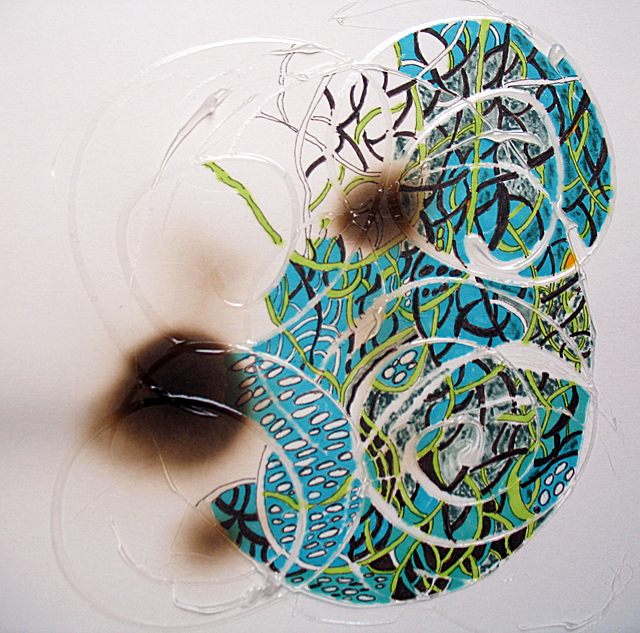
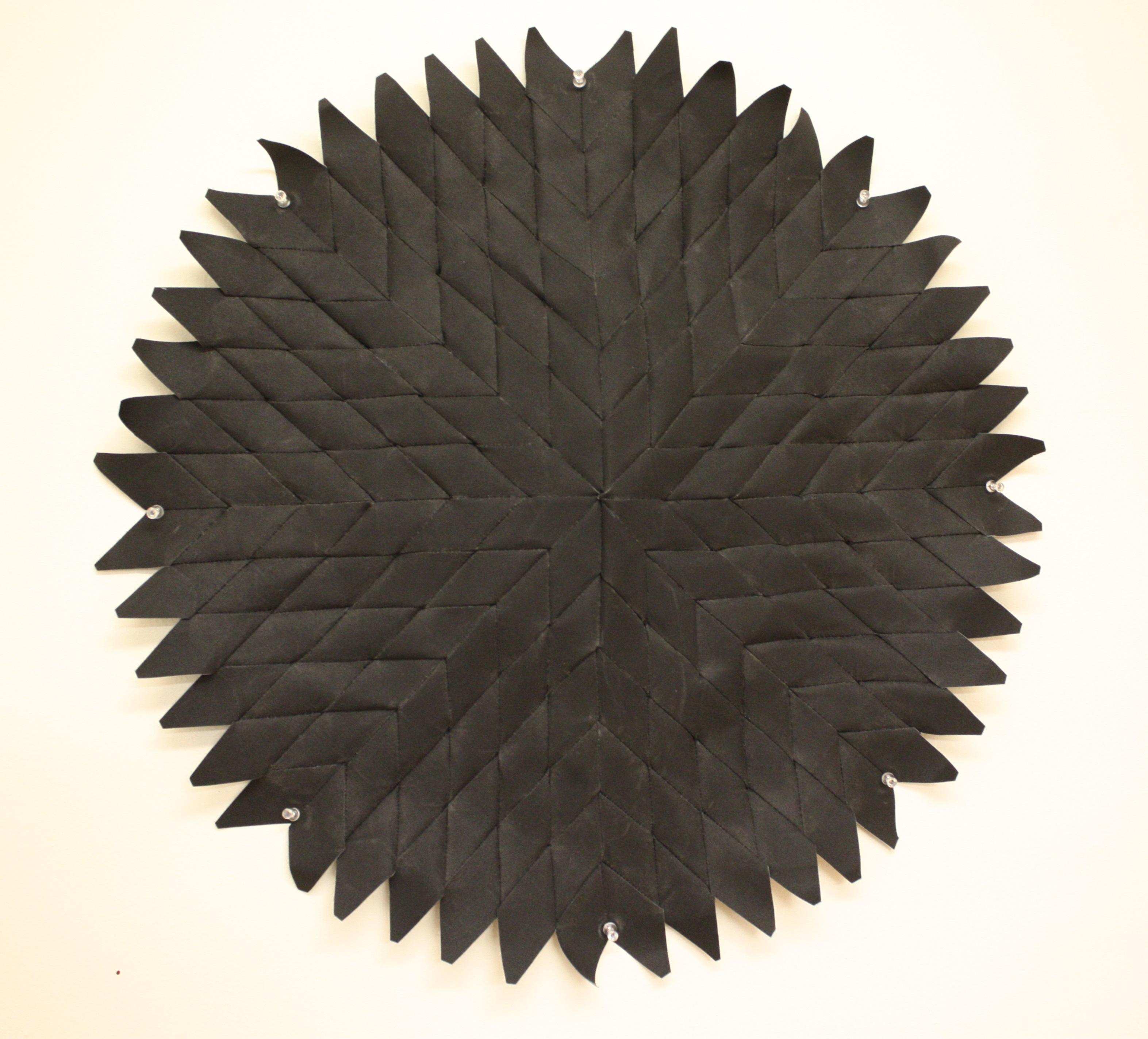
Vortex # 11:  2015, fire, hot glue, Prismacolor premium on paper 8 x 8"

Vortex # 11: 2015, fire, hot glue, Prismacolor premium on paper 8 x 8″

Briefly describe the work you do. 

Using the inspiration of the material’s characteristics as a starting point, the urge to change, advance, conceal, and unconceal, as the particular work takes form, I’m engaged in morphing, re-metabolizing, and transformation. 

In an expanded art practice I work with new as well as overlooked materials. Lo-tech and hands-on my ‘drawing’ using unconventional methods include fire, thread, hot glue, and bladecuts. I paint, sculpt, create installations, and photograph. Part of my work is text based; some legible, some not. I use a range of materials. I love paper; it is so forgiving.

The body of work Hybrid In(ter)vention, where I manipulate Tyvek, an industrial protective housing material, began after seeing many houses in progress, wrapped in it.  Blading, and heat manipulation all involve a risk; any marks or mistakes I can’t take back. Control and uncertainty; one can over-mess with things. The Unwinding Destiny Project (installation and photography) consists of tattooed text on broken eggshells from all the eggs I consumed over 6 years.  I don’t sketch prior to the work. Gestures of cut, crumple, burn, tear, tape, pierce, stitch, scorch, bind, erase, drawing out, layering, material and process, revelatory of each other, making is part of the content. I’m interested in the humble and the sublime, the micro and macro, the space between 2D and 3D.  My installations – components created in the studio, are not fixed; they are reconfigured in each exhibition. Further stretching the work is exploring the paradox of fragility/substance, destruction/creation, control/uncertainty, light/shadow, absence/presence.

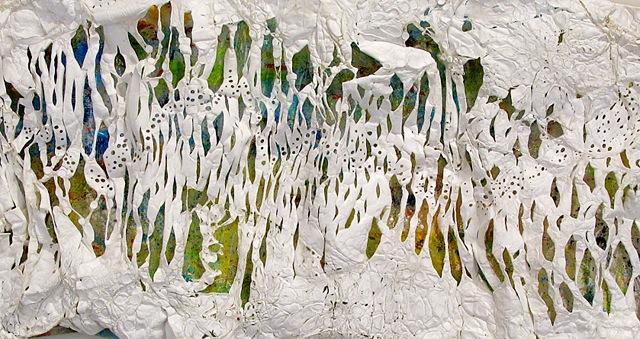
Scales:  2012 mixed media Tyvek, plastic, acrylic 20 x 31 x 2"

Scales: 2012 mixed media Tyvek, plastic, acrylic 20 x 31 x 2″

Tell us about your background and how that has had an influence on your work and on you as an artist.

I am one of six children raised in a religious home, in what I consider a sheltered environment. I loved singing, which is emotionally closest to my nervous system,  and acting in school plays. I have a visceral sensation of the pleasure  of having my hands in deep wet clay, once a week in a pottery class I took. I kept the first sculpture I made, which was a set of parted lips, painted the color of milk chocolate.    Departure from a strong tradition with specific expectations I didn’t feel cut out for, is not easy. I left home wanting to carve a path, seeking access to something I couldn’t name at the time.  I came to NYC to study acting which I consider to be one of the best educations; to experience being in other people’s shoes. Music is still a strong influence in my work: rhythm, harmony, dissonance, effecting shape and form. I have a background also in design, performance art, and 2 years doing stand-up comedy.

My sensibility is that of a builder;  I am drawn to explore the potential of tools and materials beyond their original function, not knowing ahead of time what will result.  As a visual artist, I am influenced by skin, our point of contact with the world, the layer between the inside, and out. Surface is topical, in a topography it is built up over time. I’m interested in what is not readily apparent; my frequent experience that things are not as they first appear.  I think about the human condition, in motion, beauty, and  edge. 

The concept of the artist studio has a broad range of meanings in contemporary practice. Artists may spend much of their time in the actual studio, or they may spend very little time in it. Tell us about your individual studio practice and how it differs from or is the same as traditional notions of “being in the studio.”

I’m a self-taught artist.  Some time in the mid 90’s I decided to buy paints and canvas and began experimenting. I used to spend a lot of time in the studio, ‘intuiting and listening’.  In the past 6 years, I’ve included taking work out of the studio, for a change of view, and to work in public spaces. I need to be present to do the work, but I also don’t like feeling confined.  I typically will take small drawings, or components of an installation and work outdoors (in the summer) or in cafes.  Currently I’m interested in making larger works for public spaces.  This is also encouraged by people who’ve seen my work, and turn the volume up on this idea.  I like that it could potentially take me out of the studio, experiment with new materials, and collaborate, i.e. with technicians and other artisans helping to execute the vision.

What roles do you find yourself playing that you may not have envisioned yourself in when you first started making art?

First is that I would become an exhibiting artist, and having to learn more business skills. Guest lecturing about my work, about art and process, doing radio interviews, interacting with students and the public, participating in panel discussions, all of which I enjoy immensely!  Engaging as a creativity coach, and being a role model for students, who sometimes email me after locating my work on the internet, and asking if I’ll share what I use, and my techniques.  Included in tasks/roles are sales person, proposal and grant writer, networking with artists, galleries, curators, art consultants.

When do you find is the best time to make art? Do you set aside a specific time everyday or do you have to work whenever time allows?  

When i first began mid 90’s I’d work for long stretches at a time; only remembering food when I became faint.  This has changed; I don’t have to finish something in a day. Being at a fellowship residency at the Santa Fe Art Institute; where I had a huge studio, and could work daily was perfect at the time. We are not static; things change often as we change.  I’ve had to work diligently before solo or 2-3 artists exhibitions completing pieces.  Now my best time is in the morning, it is not every day, as there are so many life/admin/marketing logistics to handle.  This has taught me to be more flexible, work in the time frames I have.  Small amounts of time; even an hour or three can be very productive. This winter, I’m been more free being with my work on the weekends.

Incubatory States:  2012 archival digital print 16 x 20" (installation + photography)

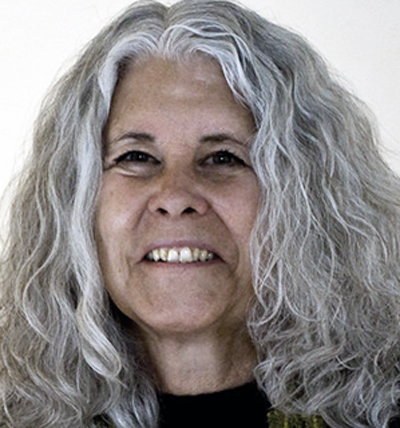
Incubatory States: 2012 archival digital print 16 x 20″ (installation + photography)

How has your work changed in the past five years? How is it the same?

I hope the work has developed and deepened. I still work from the Inside/Out, and am interested in the micro and the macro. My work continues to be labor intensive.  I don’t call myself a painter; instead ‘I use paint.’ What remains is my interest in the space between painting and sculpture, and the creative tension in fragility/substance, and ambiguity.   In this past year, after a back injury, I returned to color, doing small drawings with fire, and hot glue. I am more aware of being an impatient person, yet in our culture of speed, my work is repetitive, ritualistic, and process oriented.  I’ve noticed how much I enjoy photography, when I’m doing it spontaneously. It is a different energy.  I photograph my installations, which are temporarily ‘set -up’  but I’ve begun other kinds of work, i.e. shadow shots. I still like to mess with things. I like the raw, and the refined.  I hope my work will continue to develop, expand and grow. 

My life and art are not separate.

How have people such as family, friends, writers, philosophers, other artists or even pop icons had an impact on the work you do? 

I already want to apologize that I won’t name everyone. Eva Hesse is my kindred spirit, which I didn’t know until studio visitors began referencing her when they saw my work, and I researched her work.   Robert Henri, for The Art Spirit. Ana Mendiata for her philosophy and quotes about art being the way we establish our bond with the universe.  Judy Pfaff.  Ann Hamilton, re-affirming that we ‘have to trust what we can’t name.’ A word or a line in a novel, Simone Weil, Krista Tippett’s numerous podcasts On Being – great interviews from people from all walks of life. David Foster Wallace, Neil Gaiman,  Ghandi, El Anatsui’s work and philosophy resonates with me. These are a few. 

Have you ever been pulled in the direction of a pursuit other than being an artist? What are your other interests? 

I have an eclectic background in design, theatre, singing, and comedy. I could still be pulled in the direction of acting and singing, because I like collaborating; where everyone is called on to do their best for the sake of the work!  I did stand-up comedy for two years. As a virtual unknown I landed an audition for Saturday Night Live and became a finalist for key player.  That is not something I would ever return to.  After not singing for years, I was chosen in an audition,  by Dara Friedman for her Public Art Fund project, Musical, to sing solo on the streets of NYC in 2011.

I enjoy writing, and still consider it a big learning curve.  I enjoy interviewing people. I like the stories behind film; how things are made, how cast and crew work. I am curious about science, philosophy, music, spirituality, nature and archaeology. All these inform me in my work.

About

UlaEinsteinProfileIn 2014 Einstein’s work was included in The Piece as a Living Object 3-artist exhibition at the DeKalb Gallery, Pratt Institute, NY and in If You Build It, with Art in Flux and No Longer Empty, NYC. Einstein’s work has been included in solo and group exhibitions in galleries, museums, and non-profit art spaces around the country, including Everhart Museum of Natural History, Science and Art, the Delaware Center of Contemporary Art, and the New York Center for Architecture.  Her art, (and interviews) has been featured in numerous publications in print/online including The Village Voice, The New York Times, Easthampton and Southampton Press, NJ.com, La Biennale TV.   Her work is included in many private collections.  Feb 12 – April 1st, 2015 Einstein’s work is included in ALL / TOGETHER / DIFFERENT, Manny Cantor Center in NYC.

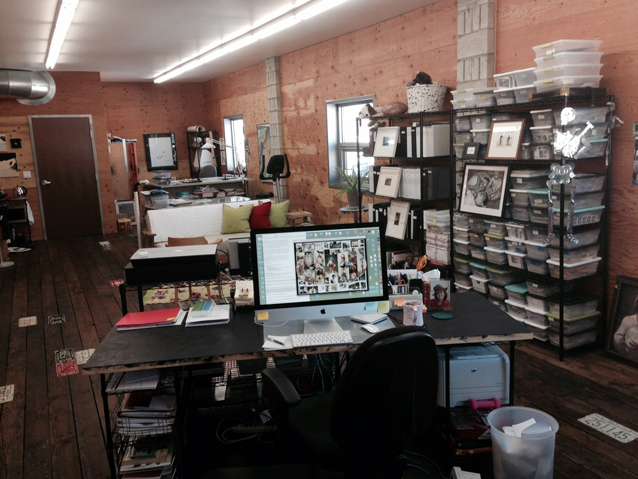
UlaEinsteinStudio2

ulaeinstein.com

All images copyright of the artist and used with their permission.  


Posted in Drawing, Installation, mixed media | Tagged , , , , | 3 Comments

Charlotte Becket – Brooklyn, New York

CURDLE , Mylar tape, plastic, motor, hardware. 50”x50”x50”. 2015 (on going series)

CURDLE , Mylar tape, plastic, motor, hardware. 50”x50”x50”. 2015 (on going series)

Briefly describe the work you do.

Our environment is one where automation, information, consumerism, progress and erosion are collapsed into a muddle that both celebrates and questions its status quo. The mechanical sculptures I construct explore the complexities of this ambivalence through errant machinery, polished forms that collapse and resume composure, and illuminated projections or screens that depict only the looping and chattering mechanisms behind them. The work aims to imbue these absurd and irrational scenarios with a pathos, humor and aesthetic seduction so as to draw out a conversation about our own relationship to speed, progress, technology and survival within perpetually fracturing and rearranging circumstances. The work’s looping, rhythmic motion transforms the sculptures from motorized machines to figural abstractions or landscapes. The mechanization in these pieces work in opposition to what we demand of the mechanized world around us. It seeks to offer something else, something that is slow and inefficient but more closely aligned with our selves.  

Tell us about your background and how that has had an influence on your work and on you as an artist. 

I’ve ways been curious about how things work and how things are made. I went to art school, which afforded me the time and permission to experiment with and investigate materials and processes.   I had always been drawn to sci-fi and surreal imagery, which was considered taboo and kitschy (not in a good way) where I was studying during undergrad. Much of my work came about trying to sublimate my interests and influences, which ultimately allowed me to define my own voice more clearly.

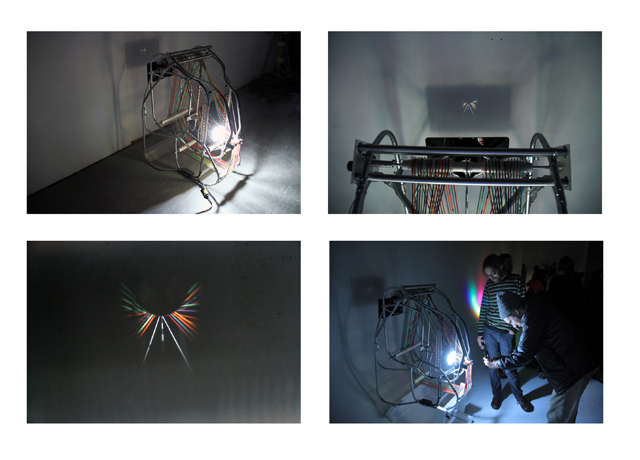
INFINITAS VIA, (composite image), Electrical conduit, colored elastic, lens, motor, hardware. 28"x40"x40".  2012

INFINITAS VIA, (composite image),
Electrical conduit, colored elastic, lens, motor, hardware. 28″x40″x40″. 2012

The concept of the artist studio has a broad range of meanings in contemporary practice. Artists may spend much of their time in the actual studio, or they may spend very little time in it. Tell us about your individual studio practice and how it differs from or is the same as traditional notions of “being in the studio.”

I would say I have a somewhat “traditional” studio practice. I live and work in the same place, which lets me have more time to be in contact with things I’m working on. I used to spend lots of time at hardware and mechanical specialty stores, lumberyards, and metal distributors. I love going to all those places because physically seeing materials and tools helps me solve problems and generate ideas. Over time, nearly all those types of places have closed, moved out of New York City or operate online only. Consequently, I too am online looking up materials etc. In some ways it’s more efficient, but less fun.

What roles do you find yourself playing that you may not have envisioned yourself in when you first started making art?

I teach at Pace University. Working with students is rewarding especially if you have the opportunity to be part of someone’s process of discovery or “ah-ha” moment. It’s challenging too, students constantly ask questions about things you over time have accepted or taken for granted. These conversations keep me questioning and reframing my own positions and stop me from falling into a sedentary rut with my opinions.

When do you find is the best time to make art? Do you set aside a specific time everyday or do you have to work whenever time allows?

I’m very flexible and like to work anytime of day or night.

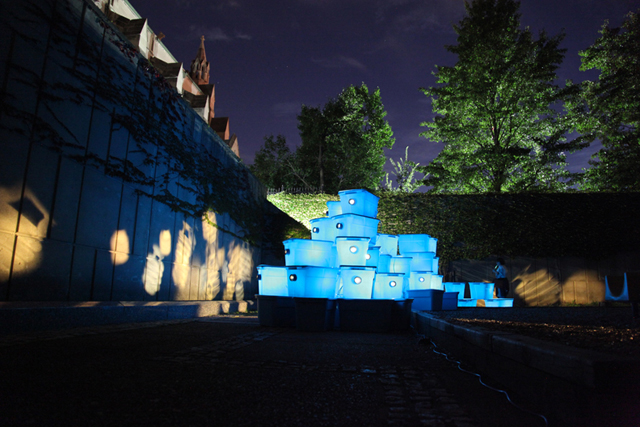
LIGHT   Plastic containers, lenses, light bulbs, motors.  Dimensions variable.  2014

LIGHT
Plastic containers, lenses, light bulbs, motors. Dimensions variable. 2014

How has your work changed in the past five years? How is it the same?

Most recently I have been exploring work that deals with projected images. These are completely produced through analogue methods. The sculptures contain lights and curved glass lenses to project images of themselves onto the surrounding gallery walls. The light projections allude to digital screens, monitors or surveillance video. The sculpture, Infinitas Via (2012) is an organized mass of braces and pulleys spooling dozens of colored elastic bands. The exploded diagram becomes cohesive as a lens bends the light reflected from the structure to create a mirage-like image on the wall. While the structure itself is a closed looping cell, the projected image depicts an illusion of traveling down an endless night road, suggesting a hallucination of escape. The animated projection is essentially a type of self-surveillance or monitoring, the piece collapses the image of a cage and escape. The machine becomes figurative, an analogue mechanism whose only function is to project a looping image of progress or liberation. In these works I am interested addressing issues regarding actual and perceived agency, and how a hallucination or fantasy of escape can satisfy the need. 

How have people such as family, friends, writers, philosophers, other artists or even pop icons had an impact on the work you do?

I am influenced by and draw inspiration from many different sources. Recently I’ve been thinking about Zilvinas Kempinas’ simple and transformative installations and razzle dazzle camouflage, David Lynch’s lighting and sustained mood sequences, and Thomas Demand’s translation of paper into photographic scenes.   I’ve also had Robert Gober’s recent retrospective in mind, specifically the way he creates dislocated spaces.

Have you ever been pulled in the direction of a pursuit other than being an artist? What are your other interests? 

To a greater or lesser extent, my interests tend to be filtered through the context of art making. That is to say, I have “other interests” but I relate them back to ideas for the studio.   I’ve always had day jobs but those never replaced wanting to work in the studio. Although there was a fleeting period directly after graduate school when I was looking for jobs specifically tied to New York City. So I contemplated joining the Police Academy, but after one recruitment meeting I thought otherwise.

 About

profilepic_becketCharlotte Becket lives and works in New York City where she is an Associate Professor at Pace University. She attended Hunter College’s MFA program and received her BFA from the Cleveland Institute of Art. Solo and two person exhibitions include Valentine Gallery NY, Crisp Gallery in London, LEAP in Berlin, and Taxter & Spengemann in New York City as well as group exhibitions at Gazelli Art House in London, Tanja Grunert, Anna Kustera, NY Studio Gallery, Passerby and the Invitational Exhibition Academy of Arts and Letters in New York City. She has been invited to lecture on her work at various galleries and universities and has been the recipient of grants from The New York Foundation for the Arts, The Joan Mitchell Foundation, The Tony Smith Foundation, and the Verizon Foundation. Her work has been reviewed in The New York Times, TimeOut London, ArtForum, and Art in America, among others.  She was recently included in, 100 Artists, a compendium of interviews with 100 international contemporary artists by Francesca Gavin.   

In the Studio

In the Studio

charlotte-becket.com

All images copyright of the artist and used with their permission.  

About Images above

CURDLE

Mylar tape, plastic, motor, hardware. 50”x50”x50”. 2015 (on going series)

These kinetic sculptures move slowly, performing gestures born from the banality of the human condition. Their looping, rhythmic motion transforms the sculptures from motorized machines to figural abstractions or landscapes. Rigid symmetrical forms are punctuated with bulging rifts that slowly swell, either in a moment of expansion or exhale. As the forms shift and redirect light they become hallucinogenic and unstable, subsisting in perpetually fracturing and rearranging circumstances. These bloated bodies creak and labor, endlessly moaning and muttering to them selves in an unresolved internal dialogue. As the polished forms collapse and resume composure they strains under the task of fusion and separation in an irresolute tug of war.

INFINITAS VIA (composite image)

Electrical conduit, colored elastic, lens, motor, hardware. 28″x40″x40″. 2012

An organized circuit of braces and pulleys spool dozens of colored elastic bands, a lens bends the light reflected from the structure to create a mirage-like image on the wall.

While the structure itself is a closed looping cell, the projected image depicts an illusion of traveling down a road, suggesting a hallucination of escape. The projection acts as a type of self-surveillance, collapsing the image of a cage and escape. In these works I am interested addressing issues regarding actual and perceived agency, and how a hallucination or fantasy of escape can satisfy the need.

LIGHT

Plastic containers, lenses, light bulbs, motors. Dimensions variable. 2014

An extroverted mass projects its interior mechanism to create its own atmosphere, prompting a dialogue between the rational topography and its dislocated environment. The projected imagery builds in superimposed layers around the space.  As light leaks and pools across the façade of the central form it leaves pinhole after-images and sweeping slivers of light that take over the bulky mass. 

Through reduced means using plastic containers, light bulbs and lenses, a rudimentary projection device is created wherein the light source is simultaneously the image.  The light bulb itself, as an updated quintessential pop object, also evokes searchlights and observation instruments.

Posted in Kinetic Sculpture, Light Sculpture, Mechanical Sculpture, Sculpture | Tagged , , , , | Leave a comment

Carol Ladewig – Oakland, California

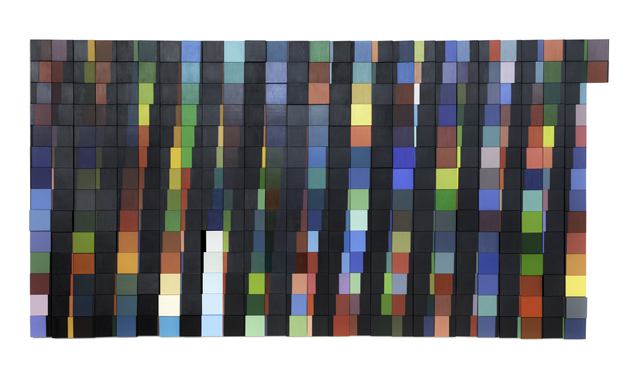
Year In Color - Night and Day: 6.18 - 8.12.2014, 2014, acrylic/gouache on panels, 34.2 x 43.5 in

Year In Color – Night and Day: 6.18 – 8.12.2014, 2014, acrylic/gouache on panels, 34.2 x 43.5 in

Briefly describe the work you do. 

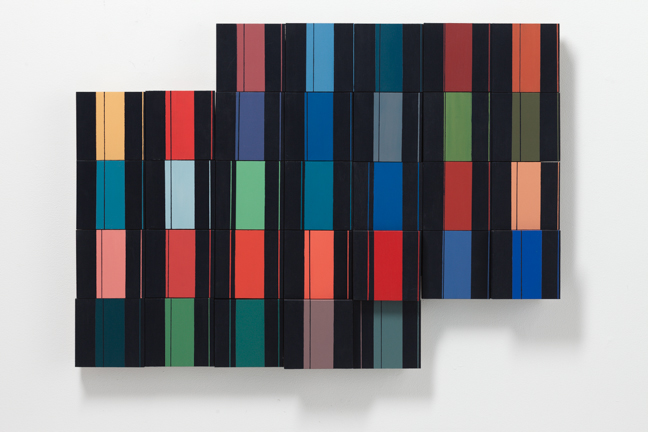
In my Year in Color works, I seek to render abstract concepts, such as time and its measurement, into an abstract visual vocabulary. I began this body of work in 2011 when I took up the practice of creating a small painting for each day using a complex color that has been made by mixing a simple set of primary acrylic and gouache pigments and white. Every panel differed in tone and composition, showcasing a color mixed uniquely for that day. This practice was an attempt to translate and capture each day’s unique experiences, activities, and moods. With varying annual rules and limitations for each subsequent year’s incarnation, I have continued this exploration of the interplay between structure, intent, and chance to create a record of time – that is both a narrative and a record of time.

Tell us about your background and how that has had an influence on your work and on you as an artist.

My mother was a painter and, when I was growing up, she had the book Masterpieces Vol. 1 in paperback. It contains images of paintings and sculpture from the Renaissance to Dali’s “Persistence of Memory.” I spent hours pouring over the images of the paintings, as it was my only source of art history in a small town in Southern California where we did not have access to museums or art education at school. I took the book with me when I left for college in the Bay Area, and it has remained with me as a physical reminder and guiding influence in my broader conceptions about painting and art ever since. I studied ceramics and design at UC Berkeley, drawing and painting at California College of Arts and Crafts and received my MFA from CCAC in 1991.

Year In Color: Lunar Phases 2012 (52 weeks + 2 days), 2012, acrylic/gouache on panels, 70 x 135 in

Year In Color: Lunar Phases 2012 (52 weeks + 2 days), 2012, acrylic/gouache on panels, 70 x 135 in

The concept of the artist studio has a broad range of meanings in contemporary practice. Artists may spend much of their time in the actual studio, or they may spend very little time in it. Tell us about your individual studio practice and how it differs from or is the same as traditional notions of “being in the studio.” 

My studio practice has varied over time, most recently balancing between time spent teaching and time dedicated to my studio practice. Generally, though, I try to be in the studio about 30 hours a week, where in addition to painting I do a lot of writing, which informs my painting. 

What roles do you find yourself playing that you may not have envisioned yourself in when you first started making art?

Starting out I did not realize how much marketing and business work is involved in getting one’s art shown. I also had not imagined that I would teach, but I have found that be a very rewarding practice. 

When do you find is the best time to make art? Do you set aside a specific time everyday or do you have to work whenever time allows?

I usually arrive at the studio by late morning and, generally, the afternoon and early evening are my most productive periods.  Those times also tend to provide the best natural light for painting.

Year In Color: January 2013, 2013, acrylic/gouache, 25 x 35 in

Year In Color: January 2013, 2013, acrylic/gouache, 25 x 35 in

How has your work changed in the past five years? How is it the same?

My work has changed in a narrowing of focus to color and structure with a continual thematic thread of memory and time. I have used the grid as an organizing structure since graduate school, and my paintings have often included both text and images.  However, my current body of work employs the grid to explore subtle variations in color without the text or images, delving deeper into explorations of the constructs of time through these lenses. 

How have people such as family, friends, writers, philosophers, other artists or even pop icons had an impact on the work you do?

I loved being in graduate school, and it gave me exactly I needed. I wanted to connect with a community, to push my work, and to learn. It did all that. I worked with Leslie Lerner, who suggested I apply a specific structure used in my drawings to my painting. I applied the grid structure to my work, and it continues to be the organizing approach that underpins my work today. Dennis Leon, Larry Sultan, and Ray Saunders all also had an impact on how I work and expanded my thinking and reading.

I read continuously a wide range of books, but ones that I return to are: Bacclard, The Poetics of Space, writings and work by Sean Scully, works about Morandi, and the poetry of John Keats. I also just love mysteries.

And, of course, my circle of friends and family are a fundamental source of support, critique and warmth, which is an important part of my practice.

Have you ever been pulled in the direction of a pursuit other than being an artist? What are your other interests? 

I have tried a variety of different things as a means of supporting my studio work and myself. One exceptional experience was co-founding the non-profit Oakland Art Gallery, where I was the Program Director from 2001 thru 2007. I loved organizing, curating, and installing exhibitions, which felt very similar to studio work.

I continue to be active in my community, as a board member of the Kala Art Institute and by chairing the symposium committee of the University of California Berkeley Art Alumni Group for the last six years. These activities help to balance me in relation to my studio time.

About

CarolLadewig_HeadshotCarol Ladewig received a BA from the University of California, Berkeley, and her MFA from the California College of Arts and Crafts, where she also received a 1991 Barclay Simpson Award and Exhibition. Her work has been exhibited by the Lucy Berman Gallery in Palo Alto, Kala Art Center, Berkeley Art Center, Museum of Los Gatos, Ute Stebich Gallery in Lenox, MA, and BGH Gallery in Los Angeles, among others, and she is currently represented by Slate Contemporary, Oakland, CA. In 2013, Ladewig was named an artist-in-residence at the Kala Art Institute, Berkeley, CA. Ladewig’s work is held in both public and private collections across the United States and Europe, including the Packard Foundation, SAP America, and Alameda County Art Collections. She has been an instructor in the Art Department at Diablo Valley College since 2001.

OLYMPUS DIGITAL CAMERA

carolladewig.com

All images copyright of the artist and used with their permission.  

Posted in Painting | Tagged , , , , | Leave a comment

AC Wilson – Richmond, Virginia

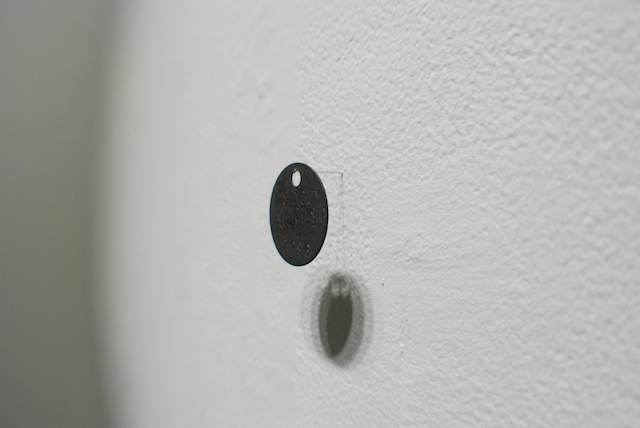
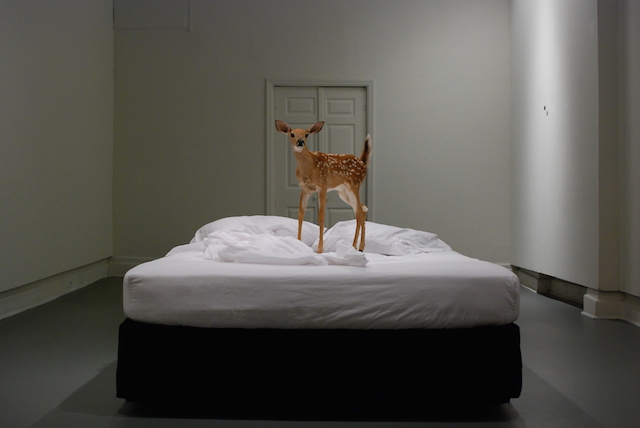
“What happens when you die” 2010 taxidermy fawn, cremation tag taxidermy fawn, bed, cremation tag

“What happens when you die”
2010
taxidermy fawn, cremation tag
taxidermy fawn, bed, cremation tag

Briefly describe the work you do. 

My work generally consists of simple assemblages of existing objects. These arrangements discuss aspects of the human condition such as tragedy and failure. Vehicles for this discussion have included taxidermy animals, illusionary magic, and public tragedies. 

Tell us about your background and how that has had an influence on your work and on you as an artist.

During my undergrad at the University of Tennessee, my mother was diagnosed with leukemia and passed away soon after. This had a tremendous affect on the direction and content of my work. My work became a therapy for me; I was able to start to make some sense out of a senseless personal tragedy. I found that a lot of the issues I was grappling with were able to translate to more universal themes of failure, loss, and confusion.  

“I’ve forgot your voice” 2015 three photographs

“I’ve forgot your voice”
2015
three photographs

The concept of the artist studio has a broad range of meanings in contemporary practice. Artists may spend much of their time in the actual studio, or they may spend very little time in it. Tell us about your individual studio practice and how it differs from or is the same as traditional notions of “being in the studio.”

The bulk of my time spent with a piece usually involves planning. This takes place outside of the studio, including research, sketching, and seeking out materials. I try to allow time for an idea to gestate and become familiar with it. The internet is an incalculable resource in my process. Most obviously, it allow the freedom to seek out nearly any imaginable object or material. Second, an endless stream of images and information can lead a tangent of thought to an unexpected result. The wealth of information surrounding how these objects relate to language and the human experience informs how a piece will grow conceptually.

However, mentally planning a three dimensional work reaches limitations at a certain point. The work  grows further then in a more traditional studio practice. The use of mock-ups and experimenting with arrangement helps actualize the work in a more grounded way. In addition to this, there is usually some “behind the scenes” construction involved. That is to say, I make an attempt to give the appearance of a light touch with my materials, and approaching solutions to problems many times proves more technically difficult than appearances might suggest. Problem solving conceptually and then in a physical sense work in concert help to create succinct work. 

What roles do you find yourself playing that you may not have envisioned yourself in when you first started making art?

As is the case with many young artists, I initially hoped to bring a radical approach to the conversation of contemporary art. I wanted to be a Duchamp, but as a got older I realized that having a meaningful voice doesn’t necessarily require being revolutionary. What started to attract me more was speaking softly. I started to become less interested in impressing my audience and more interested in talking to them in a meaningful honest way.  

When do you find is the best time to make art? Do you set aside a specific time everyday or do you have to work whenever time allows?

I like making work at night; there is a quietness then that gives me clarity. Although I try to maintain a constant internal dialogue, in the evening I find that I’m able to narrow these thoughts into more concise ideas. In addition to this, there is a kind of “drunken tiredness” that allows me to make less inhibited and self-conscious decisions. When revisiting these decisions, they are sometimes be fruitful but often not. The important thing is allowing mistakes to happen, and hopefully surprising yourself.  

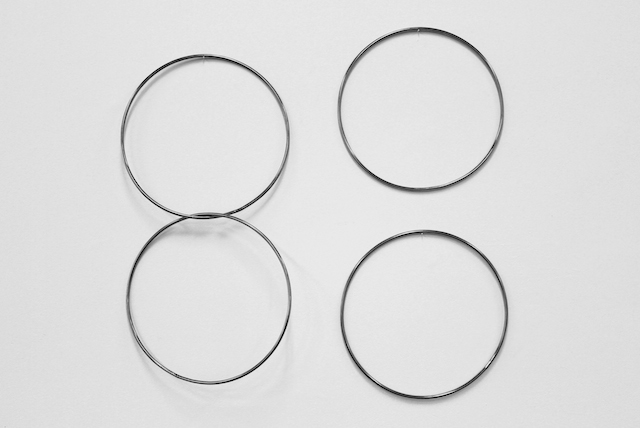
 “Deathbed” 2014 magician’s linking rings

“Deathbed”
2014
magician’s linking rings

How has your work changed in the past five years? How is it the same?

Five years ago I was in the thick of my undergraduate degree at the University of Tennessee. I was immersed in theory, critique, and studio practice. The environment of academia can be great for incubating ideas and direction or practice.

Once graduated, I knew I wanted my work to make a lateral shift, but was unsure what that might look like. I loved being in school, but was aware that I was in a “bubble” of sorts, and that the environment was not reflective of the real world. I took a short sabbatical from making work in order to approach things with a fresh set of eyes. As a result, how I approached making art became a more complicated endeavor. Challenges are healthy though, and conducive to innovation. 

How have people such as family, friends, writers, philosophers, other artists or even pop icons had an impact on the work you do?

Artists I admire include Tom Friedman, Tehching Hsieh, Jason Dodge, On Kawara, Robert Gober and Andy Kaufman.

In a more non-traditional sense, a major influence of mine has been The Simpsons. Growing up with the show, my comedic sensibilities are inextricably bound to the shows writing style. Especially in early seasons, the writing maintained a great balance between the irreverence in humor an emotional appeal. I’ve always attempted to emulate the way The Simpsons is able to take a relatable premise and subvert it in an unexpected way. That is to say, a common theme in the show is to set up a joke in way that seems familiar, then take the punchline in a totally different direction. This concept, as it translates to my work, is likely why many experience an element of comedy in my work, even though it deals with more serious content.  

Have you ever been pulled in the direction of a pursuit other than being an artist? What are your other interests? 

I’ve always been interested in writing, and if I hadn’t pursued visual art, that’s likely the route I would have gone. I’ve recently been dabbling in comedy writing, and the challenge is exciting to me. Comedy theory is complex, but the result is extremely direct. Similar to music, I enjoy that comedy is easy to enjoy without necessarily understanding the framework behind it. Comedy taps into something innate; you know it when it happens. 

I’m also interested in the workings of advertising. Effective advertising employs much of the same sensibilities and tools as good art, albeit with commercial motives. That being said, as in any discussion of art, that line has been blurred time and time again.  

About

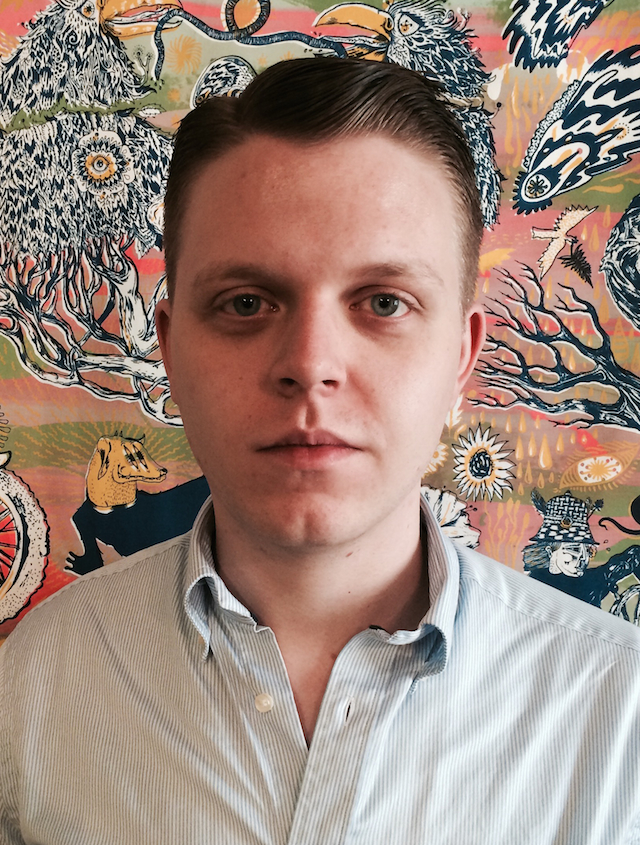
AC_Wilson_HeadshotAC Wilson (b. 1989) is an American artist working in sculpture. Wilson was born in Mesa, Arizona and raised in Sleepy Hollow, New York. He received a Bachelor of Fine Arts in sculpture from the University of Tennessee in 2012. He currently lives in Richmond, Virginia.

“What happens when you die”  2010 taxidermy fawn, bed, cremation tag

“What happens when you die”
2010
taxidermy fawn, bed, cremation tag

ac-wilson.com

All images copyright of the artist and used with their permission.  

Posted in Assemblage | Tagged , , , | Leave a comment

Brittany Miller – New York

 Black Quilt. Pieced emery cloth. 36". 2015.

Black Quilt. Pieced emery cloth. 36″. 2015.

Briefly describe the work you do.

Simple regurgitations really.

Tell us about your background and how that has had an influence on
your work and on you as an artist.

Cultish. Bullheaded. A teeny tiny world for men and for god. At Zion they found me scribbling in the scriptures. At school I was sent home for wearing pants. Taught never to speak up, I learned quick to pull threads until the long white dresses of Oneida were stripped, showing hair and carcinomas and varicose veins. I had little choice but to run away.

The concept of the artist studio has a broad range of meanings in contemporary practice. Artists may spend much of their time in the actual studio, or they may spend very little time in it. Tell us about your individual studio practice and how it differs from or is the same as traditional notions of “being in the studio.”

Work is my life and in living I work wherever I find myself. Wrap what I need tightly in a black hide. Sewing on a freight. Sanding at the Met.

I have a studio too. I arrive at it only whence the ideas I find, and the work I do, demand something more exact. This is mere convenience.

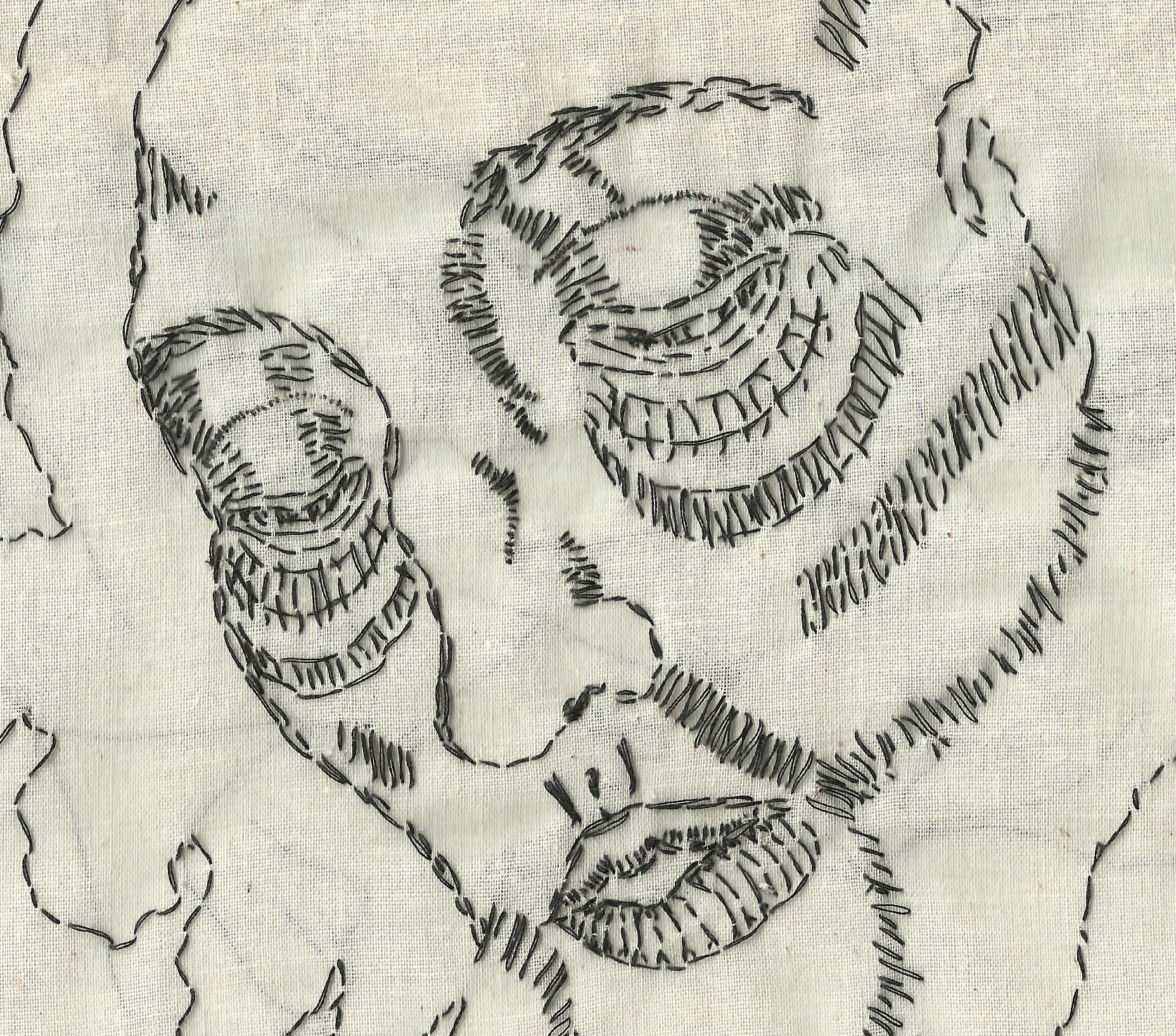
Embroidery referencing Anatomie normale du corps humain: atlas iconographique de XVI planches by Sigismond Laskowski. Black thread on muslin. 4.5"x7". 2012.

Embroidery referencing Anatomie normale du corps humain: atlas iconographique de XVI planches by Sigismond Laskowski. Black thread on muslin. 4.5″x7″. 2012.

What roles do you find yourself playing that you may not have envisioned yourself in when you first started making art?

Taxidermist.

When do you find is the best time to make art? Do you set aside a
specific time everyday or do you have to work whenever time allows?

Crepuscule is best. When the darkness glows. Shapes shrink and grow. Objects are misshapen. There’s something in the silence too.

But like I said, I work always and in all places.

Detail of St. John the Baptist. Black thread on muslin.

Detail of St. John the Baptist. Black thread on muslin.

How has your work changed in the past five years? How is it the same?

It’s been distilled. Melted down. My subject matter is more specific. My vision is more intact. More and more as I depart from the worlds of my teachers. Away from generality for a more twisted creation.

How have people such as family, friends, writers, philosophers, other artists or even pop icons had an impact on the work you do?

I enjoy old books with torn covers and soot, books by no-names, Guidebooks, how-to books, travel memoirs. These help me maintain a little grit in a transparent world. Also Davy Crockett.

Have you ever been pulled in the direction of a pursuit other than being an artist? What are your other interests?

As an artist I am also an adventurer. I have found the open ocean to be my penultimate invigorate. Together with a small crew I will to take a schooner from the west coast of North America to the mouth of the Mekong.

I am also a collector. I have over sixty-one cricket cages.

About

Martyr, Art School Graduate, Explorer of Lost Worlds, Anthropologist, Dog Mother 

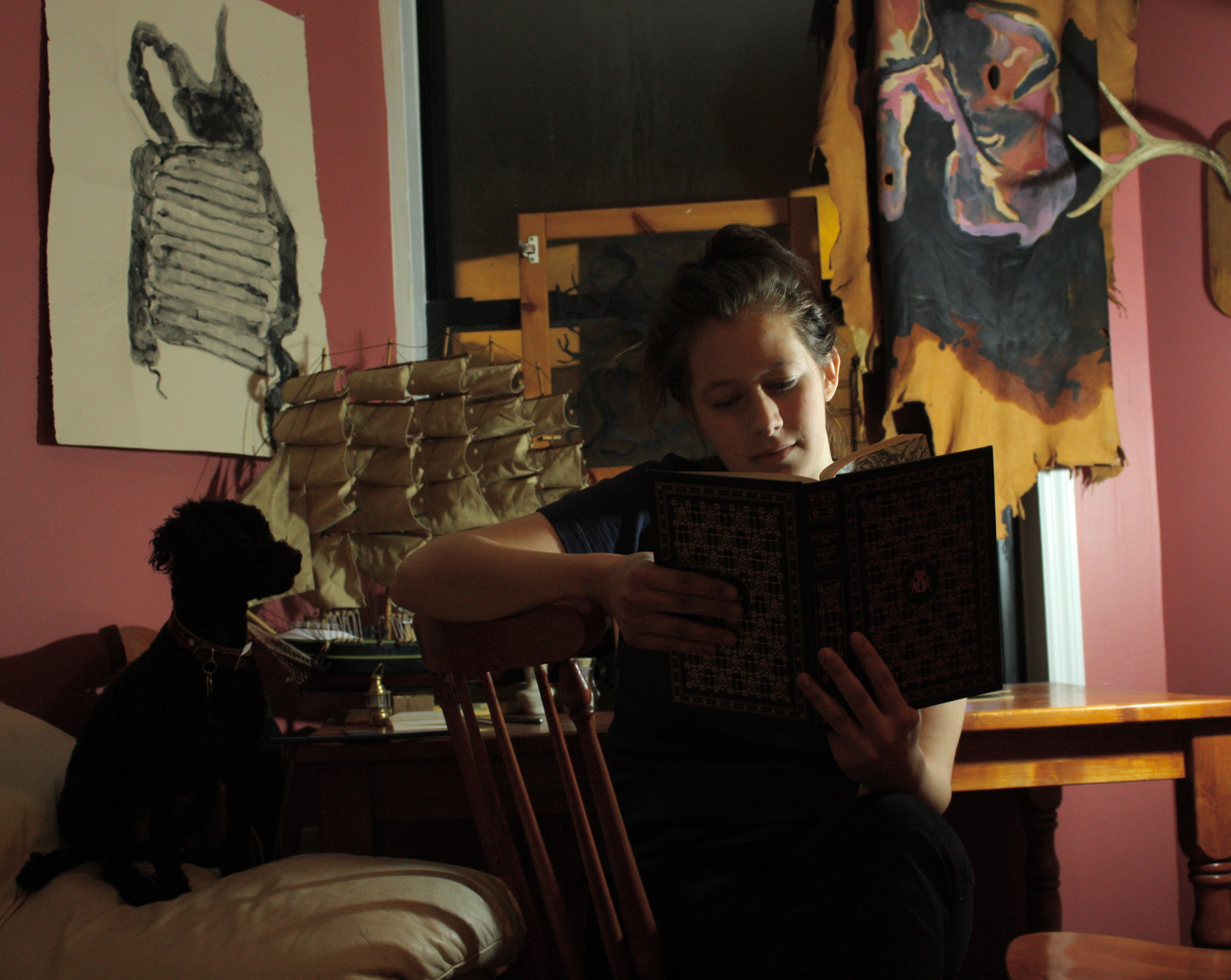
Readingstudio

bjmiller.nyc

All images copyright of the artist and used with their permission.  

Posted in Fiber Art | Tagged , , , , | Leave a comment

Barbara Lubliner – New York, New York

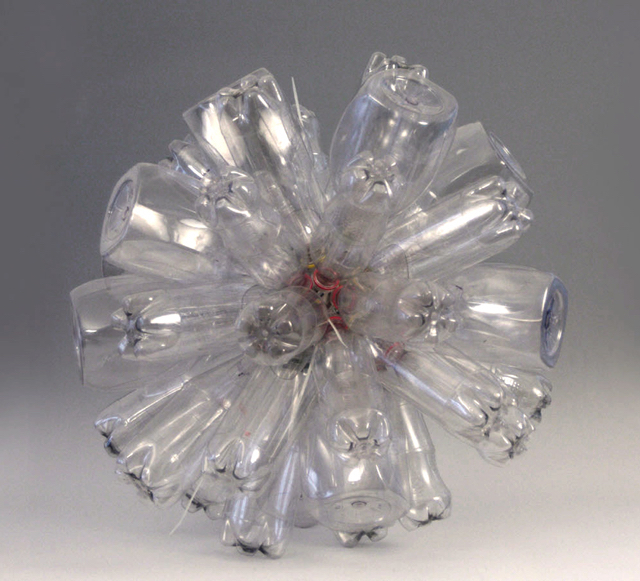
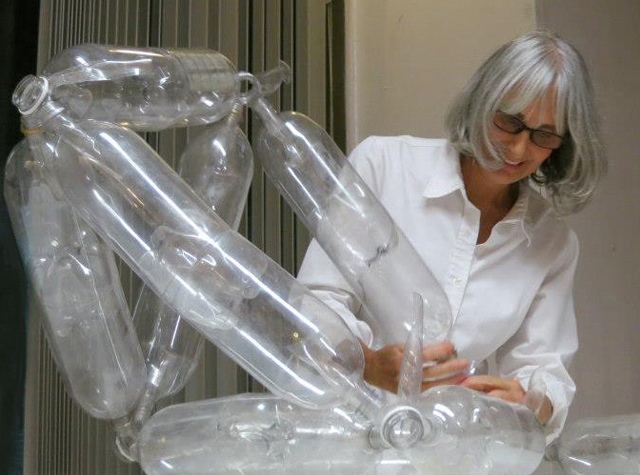
Bottle Jewel, plastic bottles, 24" diameter, 2012

Bottle Jewel, plastic bottles, 24″ diameter, 2012

Briefly describe the work you do.

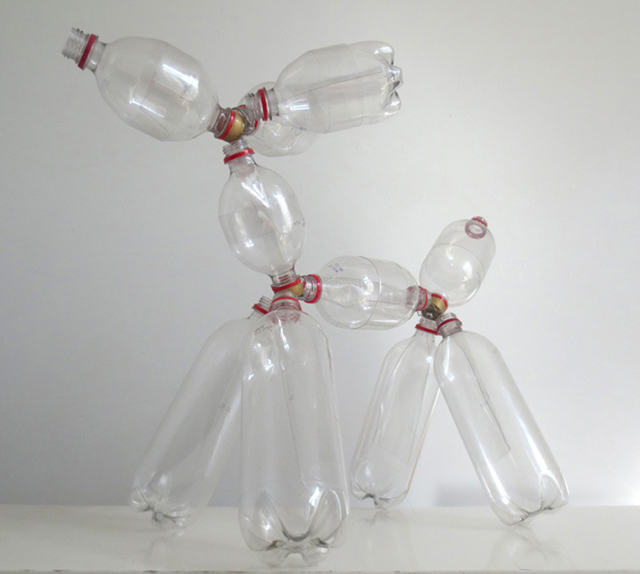
For ten years I have re-purposed plastic bottles and metal castoffs into playful sculptures and public art. I developed the “plastic bottle building-toy system,” a method similar to an Erector set or Lincoln logs. I fashion connectors and segments out of plastic bottles to make sculptures. I also collaborate with others to make outdoor installations from large accumulations of plastic bottles.

I recently started using another kind of plastic castoff – slide sleeve pages. Now that artists submit artwork digitally, many artists have piles of these. I am filling the pockets with paint chips and detritus, sewing some of them into “quilts” and leaving others as small works.

I primarily make sculpture, but I also curate, do performance art and make works on paper. Like the story of the 5 blind brothers who each describe an elephant according to the body part they touch, my different bodies of work appear distinct.

My recent video installation creates an environment that suggests a domestic grooming space and addresses growing older and facing mortality. It has both psychological weight and humor like my early feminist sculpture. These sculptures of cast cement and paper mache are female figures abstracted, altered, and reconstructed to express a complexity of associations.

My curatorial projects and public projects are exuberant. They become a focal point and touchstone in the community for which they were conceived.

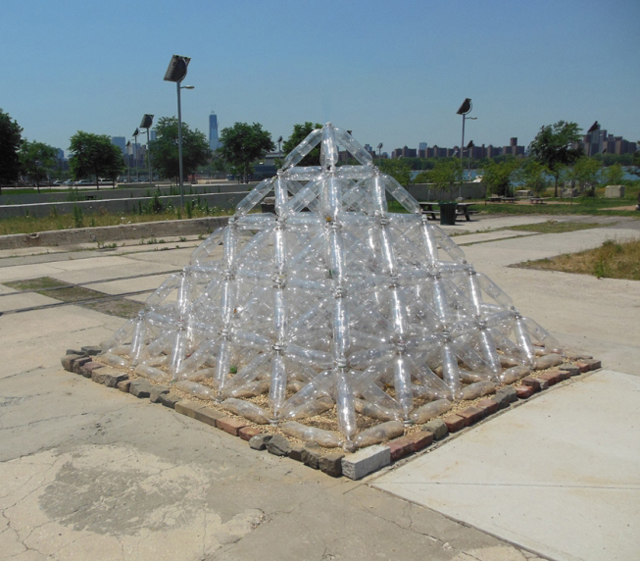
​​Plastic Bottle Pyramid, Collaboration with Sungjin Oh, plastic bottles, caps, gravel, 7' 6" x 11' x 11', 2012

​​Plastic Bottle Pyramid, Collaboration with Sungjin Oh, plastic bottles, caps, gravel, 7′ 6″ x 11′ x 11′, 2012

Tell us about your background and how that has had an influence on your work and on you as an artist.

I grew up in a suburb of NYC on Long Island in an immaculate house. Sandwiched and over shadowed by boisterous siblings, I was drawn to quietly express myself by making things. As a toddler I made mud pies and later hid out in the basement melting crayons and playing with samples supplied by my paper salesman father.  Early on I developed a vivid inner world, love of materials, and a habit of taking advantage of the resources on hand.

The concept of the artist studio has a broad range of meanings in contemporary practice. Artists may spend much of their time in the actual studio, or they may spend very little time in it. Tell us about your individual studio practice and how it differs from or is the same as traditional notions of “being in the studio.”
 

My art practice is an ongoing internal process of imagining and integrating ideas. Physically manifesting them and making things is done mostly in my studio, which at one time or another has been almost every room in my apartment. Now it’s the former master bedroom. Working at home has its distractions, but you can’t beat the convenience.

What roles do you find yourself playing that you may not have envisioned yourself in when you first started making art?

I never imagined skills, such as project management, space planning, and customer support, that I developed in my day jobs would be so useful to me as an artist.

When do you find is the best time to make art? Do you set aside a specific time everyday or do you have to work whenever time allows?

I schedule blocks of studio time each week. Sometimes I work non-stop when creative vibrations take over or when I have a deadline.


​Fern Time in a Bottle, plastic bottles, 21" x 13" x 24", 2013

​Fern Time in a Bottle, plastic bottles, 21″ x 13″ x 24″, 2013

How has your work changed in the past five years? How is it the same?

My work is constantly evolving as I respond to my circumstances, inner world and the world around me.

Five years ago I was working a day job and dealing with the care of my aging parents. In the public realm, I had the focus to curate “Upcycled,” artwork created out of plastic post-consumer waste. But waning psychic energy and time constraints guided me in my personal work to embark on a yearlong performance of simply letting my hair go gray.

Last year I became a full time artist, completed the video installation, “No More Dy(e)ing,” about the year I stopped dyeing my hair and co-curated “Time Frames Marking Time,” a large group show of artists who engage time as a palpable presence.

How have people such as family, friends, writers, philosophers, other artists or even pop icons had an impact on the work you do?

My late mentor, master mold maker Walt Zucker was a gentle soul who helped me balance flights of fancy with practicality. He taught me to patiently mix plaster of Paris to just the right consistency and to strategize and follow a step-by-step approach when faced with daunting challenges – and to enjoy the ride along the way.

Being centered in new age spirituality impacts my work as well. It helps me face the abyss of the unknown and to keep an open channel to positive energy.
 
Have you ever been pulled in the direction of a pursuit other than being an artist? What are your other interests?

I have always been an artist, but I never thought that I could only pursue that alone until recently.  Along the way I have been a professional flower arranger, hospital aid, architectural interior designer, feminist newspaper co-founder, and project manager developing educational software.

I used to fantasize about being a police detective. I love being physically active. One year I ran the New York City marathon. I am interested in word play, psychology, neurology and patterns of organization.

About

WestbethNew York City artist Barbara Lubliner moves fluidly between performance art, works on paper, and sculpture both large and small. Her art practice is a confluence of art and life, each twist and turn driven by the desire to use current life concerns as a springboard for creating thought provoking art that engages the public.

Lubliner has exhibited her work in solo and group exhibitions since the 1990s. The Brooklyn Museum’s online feminist art base includes Lubliner’s artwork inspired by her experiences giving birth and mothering. In recent years Lubliner’s public installations and studio work have involved re-purposing trash into playful art, shifting the focus from environmental blight to creative production. Her “File Cycle,” in Stamford, Connecticut’s 2007 Art in Public Places Exhibit and was featured in The New York Times article about the show.

Curatorial projects include “Upcycled,” artwork created out of plastic post-consumer waste; “Art & Alchemy,” featuring artists who transform found materials; “A Place At The Table,” a feminist performance event at the Brooklyn Museum; “Break the Mold: Honoring Walt Zucker;” “Time Frames Marking Time,” featuring work of artists who engage time as a palpable presence; and “Dog, Dog, Cat!” celebrating the bond humans share with all living creatures.

Lubliner_performance

barbaralubliner.com

All images copyright of the artist and used with their permission.  

Posted in Environmental Art, Public Art, Sculpture, Upcycled Art | Tagged , , , , | Leave a comment