Benjamin Sommabere – Barcelona, Catalunya, Spain

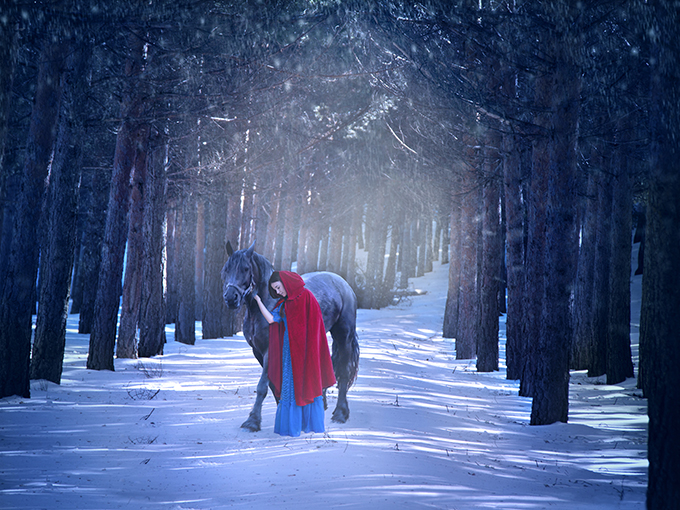
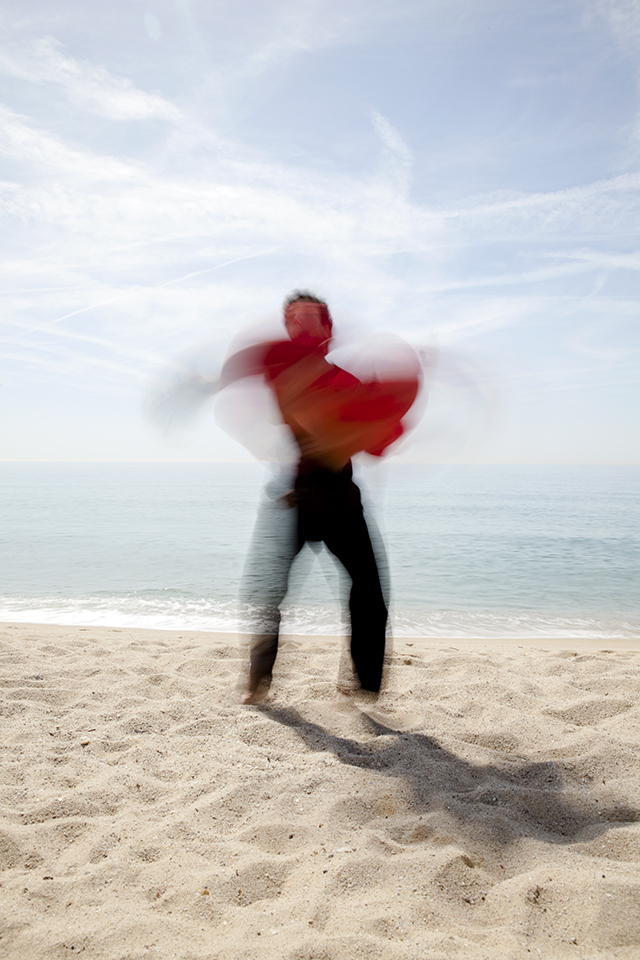
Passion ( 2015 , Barcelona ), Digital Photography, 75x50cm

Passion ( 2015 , Barcelona ), Digital Photography, 75x50cm

Briefly describe the work you do. 

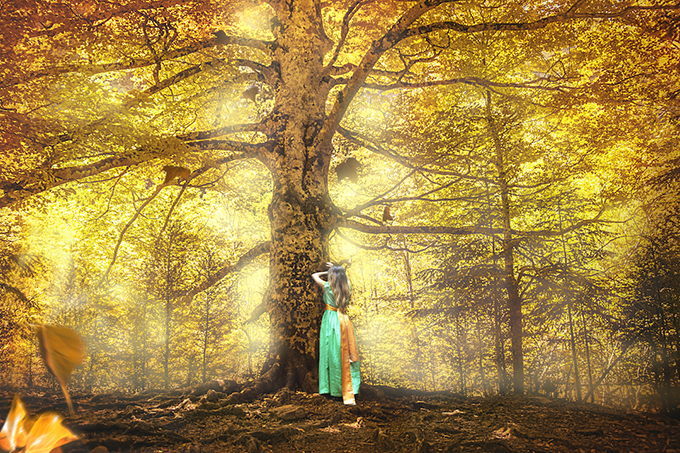
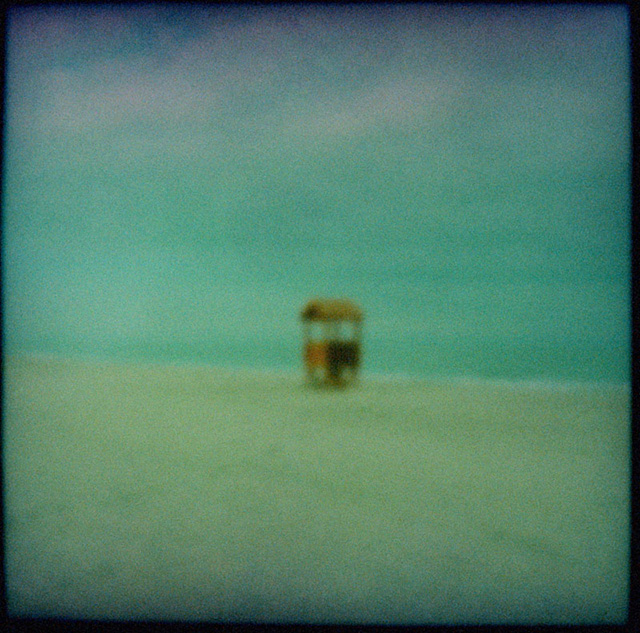
My work is based on the fact that photography allows us to change our temporal point of view on a subject by using different exposure time. With long exposure, I’ve the ability to show the constant metamorphosis of the human body. Creating a canon of beauty based not on the physical appearance of the person but on the energy they develop and the direction of this energy. It’s a work of balance that we do together to allow us to really show that a human body can become anything from a cape, to a bird if we allow him the time to be it. Even if some of these pictures look unreal, they are raw and totally unedited which is really important to me as I look towards making an honest representation of reality from a different temporal point of view that our eyes are not able to see.

Tell us about your background and how that has had an influence on your work and on you as an artist.

I do not have an artistic background, but a technical one in video editing and photography. After completing a degree in video and film editing, I started to work as a videographer and photographer mainly in Fashion until I switched and worked with a contemporary dance group in Europe. I think that knowing I worked in fashion is really important to understand my current work as it arrived in reaction to my difficulties of understanding what seems to be the canon of beauty pursued by the Fashion world. I started to feel an urge for honesty within my work that I could not really express in this field. It’s why I started to move towards art and into researching ways to transmit the content of a subject, his life and not only capture his exterior shape. I wanted to create a space of freedom within the photography and get away from the impression of freezing time, of creating artificial images that didn’t correspond at all with my concept of what a human being really is.
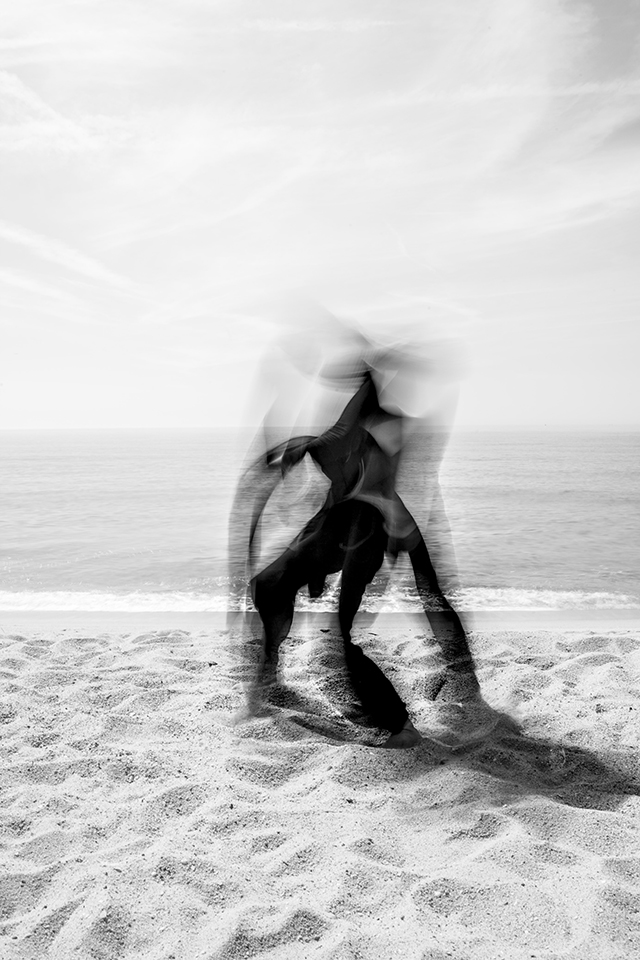
La Catalane ( 2015, Barcelona ), Digital Photography, 75x50cm

La Catalane ( 2015, Barcelona ), Digital Photography, 75x50cm

The concept of the artist studio has a broad range of meanings in contemporary practice. Artists may spend much of their time in the actual studio, or they may spend very little time in it. Tell us about your individual studio practice and how it differs from or is the same as traditional notions of “being in the studio.”

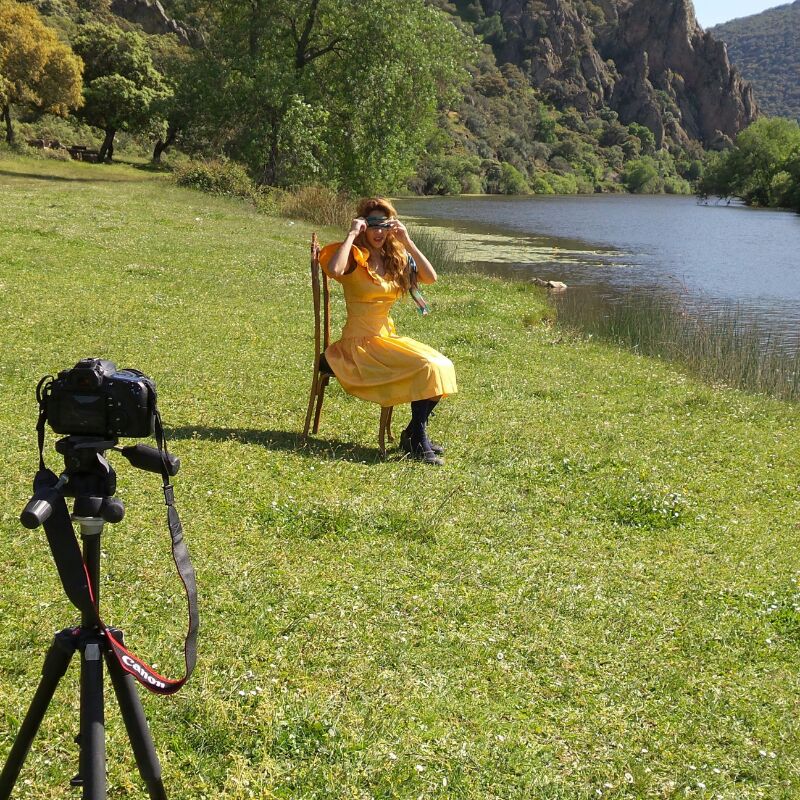
My studio for now and over the last year has been the beach because it allows me to work with the three main elements: solid, liquid and gas, which represent 3 different temporalities. I would even say that my studio only exists from the moment I set up my equipment to the moment I leave. Before and after it’s a space of inspiration but not automatically a space of work.

With the dancers we actually have a rhythm of work that sets up the space as much as the time frame around it. I have them start by improvising to see what are they able to do depending on their background, body limits but also on the day, then depending on the results of the improvisation I choreograph and direct the production towards the image I had planned to realize. When it’s done we finish by improvising on the theme of the choreography to allow me to see where we could have gone and where I can go during the next session as much as making the dancers move slowly out of the session. And this for me is “being in the studio”.

What roles do you find yourself playing that you may not have envisioned yourself in when you first started making art?

What I did not expect is the number of collaborations that I’d be doing now. Researching with other artists, collaborating on top of working on my own project. It’s something that I didn’t really think through in the start but it’s probably the most important part as we feed off of each other and help each other grow.

When do you find is the best time to make art? Do you set aside a specific time everyday or do you have to work whenever time allows?

For the photo session I respond really strongly to light and location, so for the production work everything is fixed in advance, the hours are mainly in the early mornings to get the sun at the right axis.
This can sometimes be extremely frustrating as I have an urge to create pictures but I’m not always able to do it. It’s why I started calming this frustration by starting to use new mediums such as painting and sculpting, even if my main medium will always be photography.
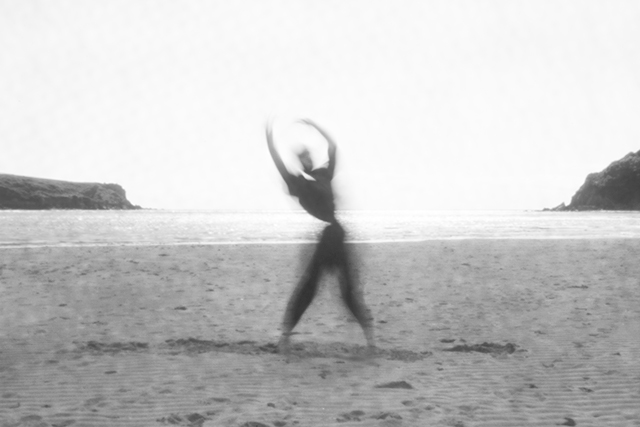
Seaside ( 2014 , South of England) , Digital Photography, 50x75cm

Seaside ( 2014 , South of England) , Digital Photography, 50x75cm

How has your work changed in the past five years? How is it the same?

I’m still an emerging artist, and five years ago I was only an assistant photographer. So a lot of my work has changed at many differing levels but mainly at the level of maturity. I went from being a technician at the service of other technicians, to being the one that serves the client, now I’m working to really express my own beliefs through my medium.

How have people such as family, friends, writers, philosophers, other artists or even pop icons had an impact on the work you do?

The first name that comes to mind for this question is Vera Tussing, a German choreographer based in Belgium that allowed me to go back into the field of art by hiring me for her research in England, that led to the show: The Palm Of Your Hand, that was presented this summer at the Edinburgh fringe festival together with her other work: T-Dance. This research was for me a revelation as I found out new ways to work with my medium that I’d never suspected before, it was also at this time that I was able to meet many of the dancers that I work with now.
The other person that has impacted my work is my fiancee, not directly in the pictures but by the travel that our relationship involved. I followed her to North America, England, then Spain which allowed me to constantly extend and enrich my knowledge and culture to other forms of art that have inspired my work now.
It is also probably no coincidence that I started my photographic project in the city of Barcelona, the city of Dali and Miro.

Have you ever been pulled in the direction of a pursuit other than being an artist? What are your other interests?

I’ve always been attracted by creating images, videos or photos. I started at 16 to take cinema classes, and from 14 to take pictures. But I for a while I was pulled in the direction of being more of a technician than an artist. Doing what needed to be done, having a fixed objective that would produce results. Making the image, the cliché that the audience wants to see and in a way has already been seen before. Whereas, now I feel more like I’m a researcher in reality, temporality and with the human body as my subject.

About
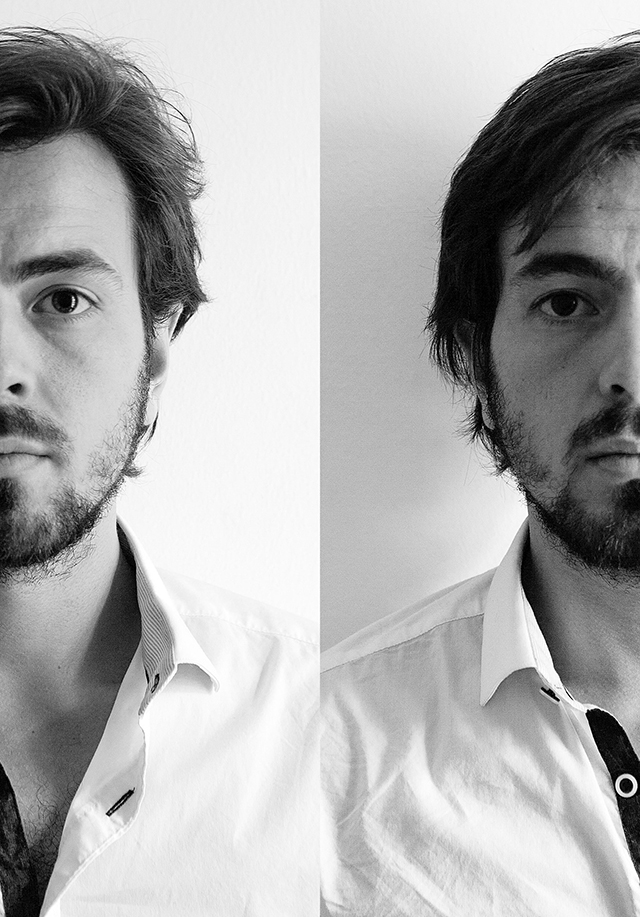
HeadshotBorn in Toulouse and growing up in Brive La Gaillarde, Benjamin Sommabere, discovered photography at 14 years old and was offered his first camera at 16. He has not put it down since. At 17 years while taking classes of cinematography, he started working as an assistant photographer with Fashion and portraitist photographers like Xavier Lambours. He continued working in Paris as an assistant until the end of his studies in video editing in Biarritz.

Then moved to British Columbia, Canada. In the city of Jeff Wall, he really began his career working for Vancouver Fashion week, first as fashion photographer, then as live stream director and executive producer. This experience led him to work with international designers as much in video as in photography.

While his career was developing as he was working as a corporate video producer and on diverse independent film shoots, he began to feel homesick and decided to return to Europe to feed on its art history. Here he continuously reflected on the image creation process and the responsibility of an image maker.

In Europe he encountered a German choreographer, Vera Tussing who introduced him to the field of contemporary dance. From here he joined her research project that led to her creation of The Palm of Your Hand which was presented at the Royal Academy of Arts in London.

Moving to Barcelona, the city of Miró and Dali, meeting and working with many dancers with rich and wide artistic backgrounds, Benjamin started his artistic research prolonging his reflection on the representation of the body and the use of photography. Trying to free himself from a medium that he started to despise. He wanted to stop capturing subjects as objects, but instead to give a real freedom of expression to the subjects inside the photographs. This research entitled On The Shore Of Light led to a collaboration with the dancers of La Bolsa and the choreographer Thomas Hauert for their piece La Mesura Del Desordre and was exhibited for the first time in La Visiva, Barcelona, Spain in July 2015.
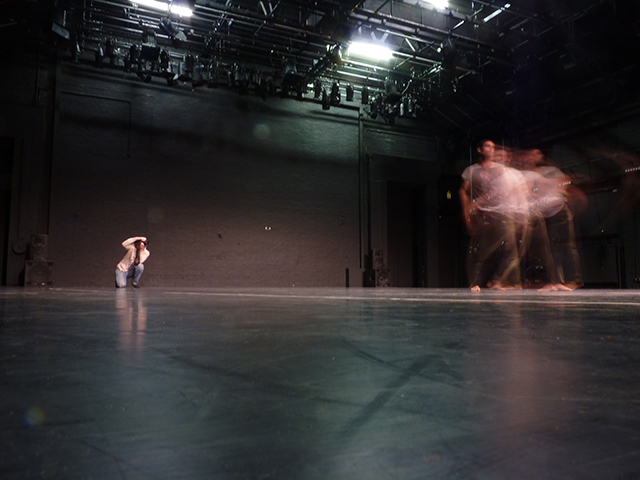
Photo studio

sommaberebenjamin.com

All images copyright of the artist and used with their permission. 


Posted in Photography | Tagged , , , , | Leave a comment

Julia Martin Gonzalez – Islas Canarias, Spain

3 obra2Briefly describe the work you do.

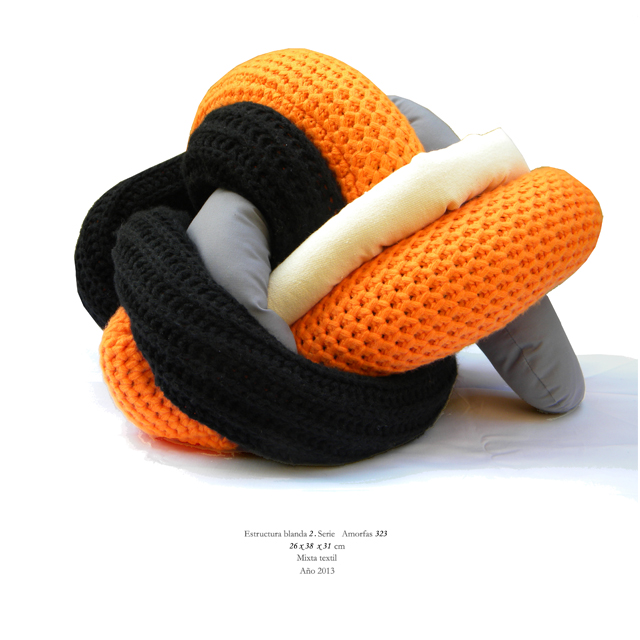
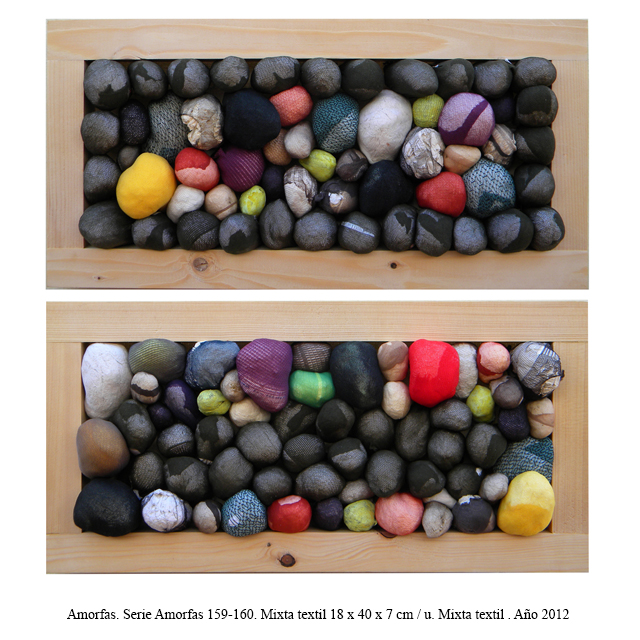
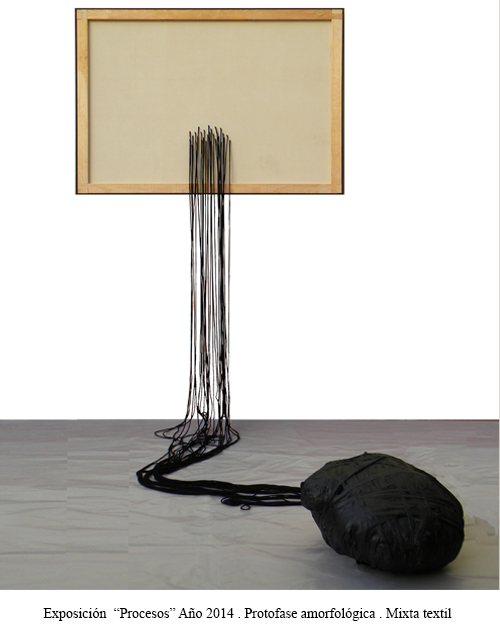
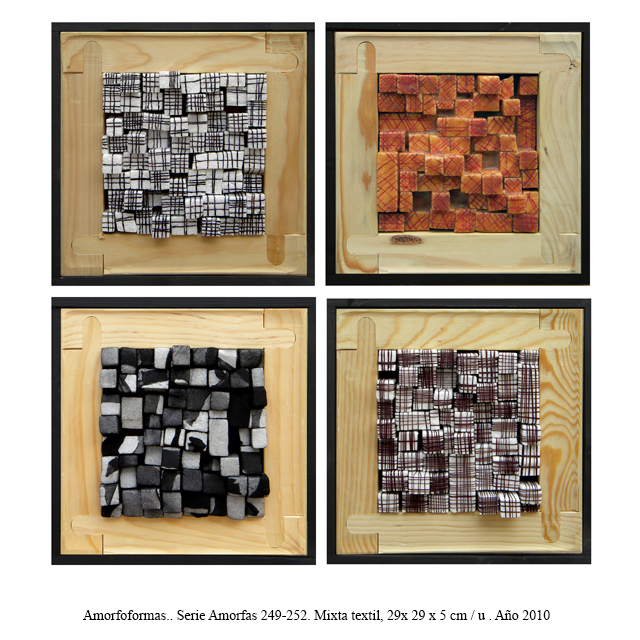
My work is based on a kind of fusion between painting and sculpture and attend to the own processes of materials with which I work, I use all kinds of textiles and take advantage of the opportunities they can offer me, inside and outside the frame.

It could say that the work is characterized by the pursuit of transformation of disassembly and pictorial genre and assume this practice as a process of research and experimentation.

Tell us about your background and how that has had an influence on your work and on you as an artist.

My childhood was always surrounded by art and various trades. My uncles were a blacksmith and other, basket maker and my father were carpenter… I spent hours and hours watching each one with his technique gave form to the matter. On the other hand, my mother grew up with the Bonnín family and in may house had some watercolors paints( Which I admired as treasures) I spent the afternoons looking al watercolors paints of D. Francisco Bonnín and his painters friends.

2 obra 1

The concept of the artist studio has a broad range of meaning in contemporary practice. Artists may spend much of their time in the actual studio, or they may spend very little time in it. Tell us about your individual studio practice and how it differs from or is the same as traditional notions of ” being in the studio “.

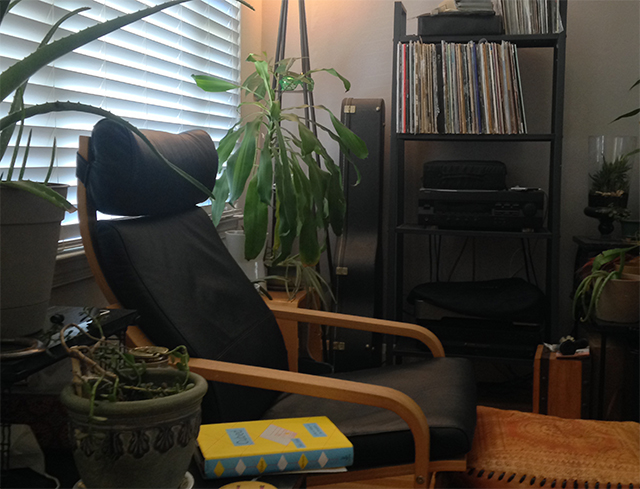
I work in my house. My studio occupies a particular space in which I keep fabrics, yarns, threads… the material with which I work, but I use different rooms on the house as a place of storage of the artist works.

What roles do you find yourself playing that you may not have envisioned yourself in when you first started making art ?

The field of teaching… I never thought that I could teach or work with children.

When do you find is the best time to make art? Do you set aside a specific time everyday or do you have to work whenever time allows ?

Whenever I can. I´m addicted to work.

DetailHow has your work changed in the past five years? How is it the same?

Really I still working under the same assumptions, but my work has been opening up to other media such as collage textile, embroidery, sewing, installation… now I work on other supports , not only the frame

Have you ever been pulled in the direction of a pursuit other than being an artist? What are your other interests ?

I want to continue dedicating myself to the art, in the future… I don´t know, But I hope to continue being linked to this.

About

1 headshotI was borm in La Orotava, Tenerife, Canary Islands in 1979. I started my studies at the School of Arts and Craft Fernando Estévez ,Santa Cruz de Tenerife, then I continued my studies at the College of Fine Arts at the University of La Laguna, finishing my studies in 2004.

Since 2004 my work involves research and experimentation of creative processes that offer me the textiles,

I have made 12 individual exhibitions highlighting “ Mundo Amorfa 06” in the Mapfre Guanarteme Foundation of La Laguna, “ A- Morfologías 08 “ in Cajacanarias   Foundation or “ Geométrica Imperfecta 015“ in La Recova, Santa Cruz de Tenerife .

I have been selected in various prizes such as Fernando Quiñones 2011, Cadiz,; Bienal Regional Artes Plásticas de Santa cruz de Tenerife 2015, 2010, 2006, 2004, Canary Islands,; Atrium 2010, 2006; Premio de Pintura Manolo Millares 2007, among others.

My work has been show in Canary Island, Cádiz, Madrid, Barcelona, Granada, Zaragoza, , León, Burgos, Guadalajara, Amsterdam and Strasgurgo. I received an honorable mention of the Bienal Regional de Artes Plásticas 2015, the 2nd prize of painting Manolo Millares 2007 and 2nd prize of painting Puerto de la Cruz and in 2006 was selected artist novel by the Foundation Mapfre Guanarteme.

4 obra3

juliamariamartin.blogspot.com

All images copyright of the artist and their used with permission.


Posted in Sculpture | Tagged , , | Leave a comment

Constanza Giaquinto – Buenos Aires, Argentina

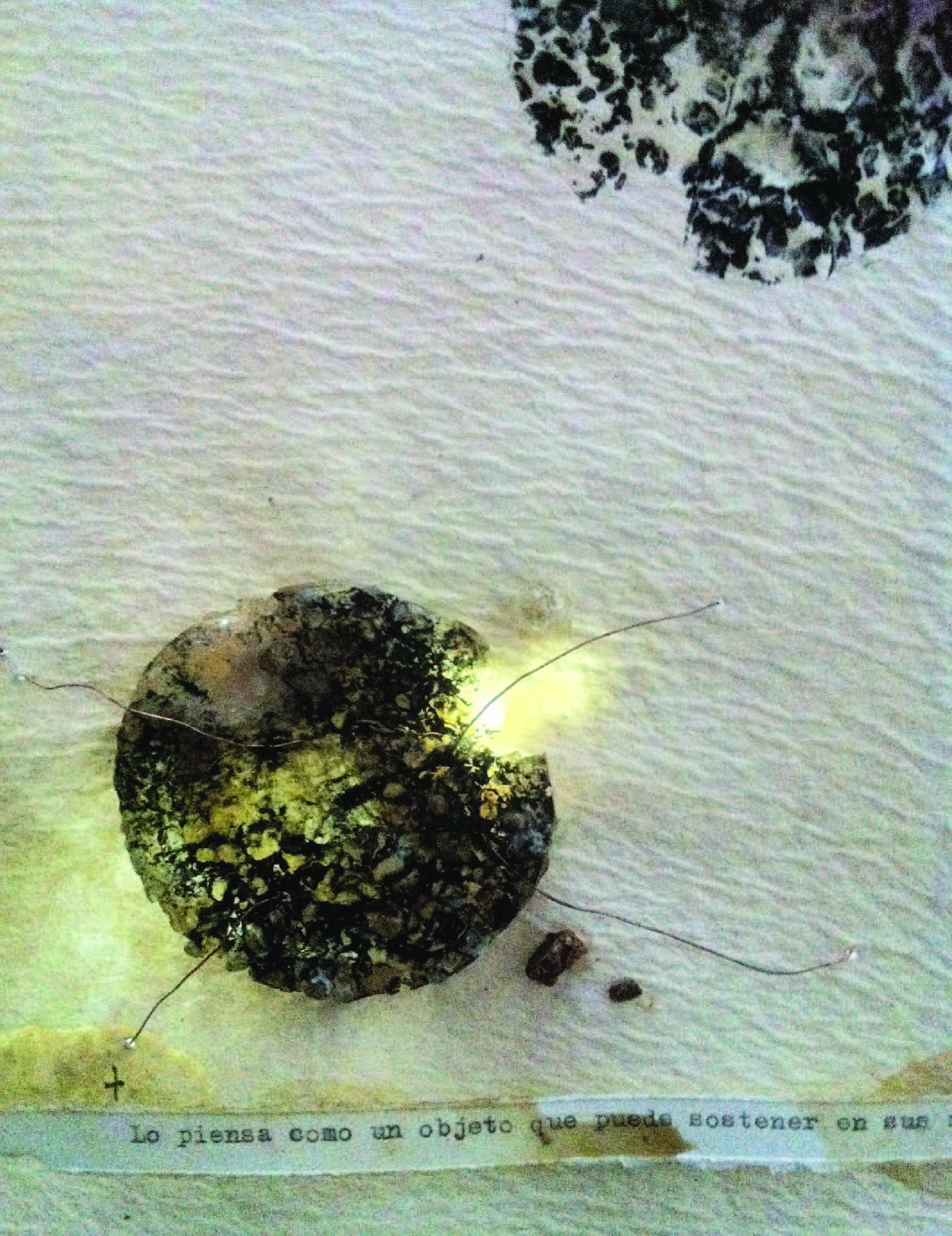
“Extracción”- Electronic materials.my own gall stone, 2014

“Extracción”- Electronic materials.my own gall stone, 2014

Briefly describe the work you do.

Today I find myself developing my work from an experimental search within a guideline research between printmaking, mixed media, photography and new technologies. From 2013 I am doomed to a project entitled “Altered Objects”, in which different processes objetual both manifest and personal experimentation, leading to the final work. As a concept I start from a personal quest to understand how vital structures of rigid thought to possible external disturbances work. Then leave the world and go developing micro divergent concepts that along each process then converge on one point: “THE NEED TO BE SUBJECT TO UNDERSTAND OUR OWN EXISTENCE”. This is represented from the first experiment to obtain solid objects, which are based on on liquid substances and manipulatable state. Then incorporate new technologies that will allow the interaction of the different states of matter. I work from the inside to the outside.

Tell us about your background and how that has had an influence on you as an artist.
 
Every experience that man develops, alters the context of psychological and interpersonal relationships that alternates other partner. I think this brings us to a place in common that we can all access in order to understand our reality and accept, then accept others. This idea is what brought me to art. The desire to communicate and demonstrate another way to perceive our existence. Thus, from my personal search in which I try to express myself as I am, to find the best possible balance between the artist and mother  who I am. Then in relation to my work (“Altered Objects”) I try to make visible different states of aggregation of the same substance, looking for a real understanding of the physical alteration – tangible chemistry, relative to other less noticeable emotional states.
prototype "Altered Objects” - Robot installation, 2015

prototype “Altered Objects” – Robot installation, 2015

 
The concept of the artist studio has a broad range of meanings in contemporary practice. Artists may spend much of their time in the actual studio, or they may spend very little time in it. Tell us about your individual studio practice and how it differs from or is the same as traditional notions of “being in the studio”.
 
Living. Only if I consider myself alive, and that’s enough for me to begin processing. I think if given situation for me was intense, I understand that you can be just as intense for another, that’s when then sack the focus of me and start to express from the internal to the external. So I think the moment of creation can start at every moment.
I spend time in my studio, often only thinking, feeling, and when the situation requires, in full action.
 
What roles do you find yourself playing that you may not have envisioned yourself in when you first started making art?
I live the moment as if it were a game where I can be suddenly researcher, scientist, writer. Everything that i want to play.
 
When do you find is the best time to make art? Do you set aside a specific time everyday or do you have to work whenever time allows?
 
Every day I have to go through the studio, whether to change something in the work or just to observe and reflect. I think there are not  time of day perfect. I try to listen internally when is  that moment and I intend to be there.
 
matrizdetalle1How has work changed in the past five years? How is it the same?
 
My way of perceiving art, my work has changed enormously since 2012. In my education, especially in printmaking; I began to feel I had much more out there. That art could be multidisciplinary and could reach another level of commitment to myself and society. Coincidentally life put me in front of my current professor Daniel Olmedo Alvarez who gave me endless tools, to expand my work.
 
How have people such as family, friends, writers, philosophers, other artists or even pop icons had an impact on the work you do?
 
I think all those with whom I share daily life have been contributing to my work. My parents, my children, my partner, my brothers, my friends, teachers. Alongside those celebrated artists that we can all admire. Personally, I have great admiration for the work of Alberto Grecco.  Writers like Alejandra Pisarnik, Jorge Luis Borges, Herman Hesse,  Virginia Woolf, are some of my favorites.
Have you ever been pulled in the direction of a pursuit other than being an artist? What are your others interests?
 
From childhood art it has haunted my mind. Either from the literature, theater or visual arts. Honestly I never thought to do something else, because I would not know that another run on. I like to read about psychology, philosophy. To think in writing, to act … But I think that all this can be concentrated in one thing, which I can access as needed for my work.

About

PrintEgresada del Instituto Superior Nueva Escuela de Diseño y Comunicación de la Carrera de Bellas Artes; trabajo como profesora de Grabado y Artes combinadas en mi Taller dictando cursos y talleres de dibujo, grabado, elaboración y producción de Proyectos. 
Realicé estudios de Interfaces electrónicas, Interfaces robóticas, Video instalación, Producción de obra con nuevos medios y Robótica aplicada al arte. 
Dedico el tiempo a la investigación y trabajo con nuevos medios expresivos con técnicas mixtas de grabado, monotipos, aguafuertes, aguatintas, aglutinantes, dibujo, fotografía digital, metal, madera, acrílico, mecanísmos, textos, costura con hilos e intervenciones sobre diferentes papeles y soportes, teniendo 20 trabajos de mi producción que ilustran diferentes tapas de libros de novelas. 
Actualmente me encuentro incursionando en el estudio, investigación, formulación y producción de obra que involucra Arte y nuevos medios: electrónica, robótica, grabado experimental, fotografía digital, video experimental, programación en Arduino y ensamble de objetos. 
Si bien tengo una corta trayectoria poseo una basta producción de obra que enmarca mi estilo y forma de expresar a través de mis trabajos. 
Dentro de las exposiciones realizadas desde el año 2003 se encuentran: “64 átomos de barro” y “La naturaleza del Ser” en la Provincia de Córdoba; “Tras lo emerge” y “Prototipos: arte y robótica” en el Instituto Superior Nueva Escuala de Diseño y Comunicación; e “Imágenes del dolor. Arte para la esperanza” en el Museo del Holocausto en Argetina.
working1

All images copyright of the artist and their used with permission.


Posted in mixed media, Photography, Printmaking | Tagged , , , | Leave a comment

Kirk Amaral Snow – Boston, Massachusetts

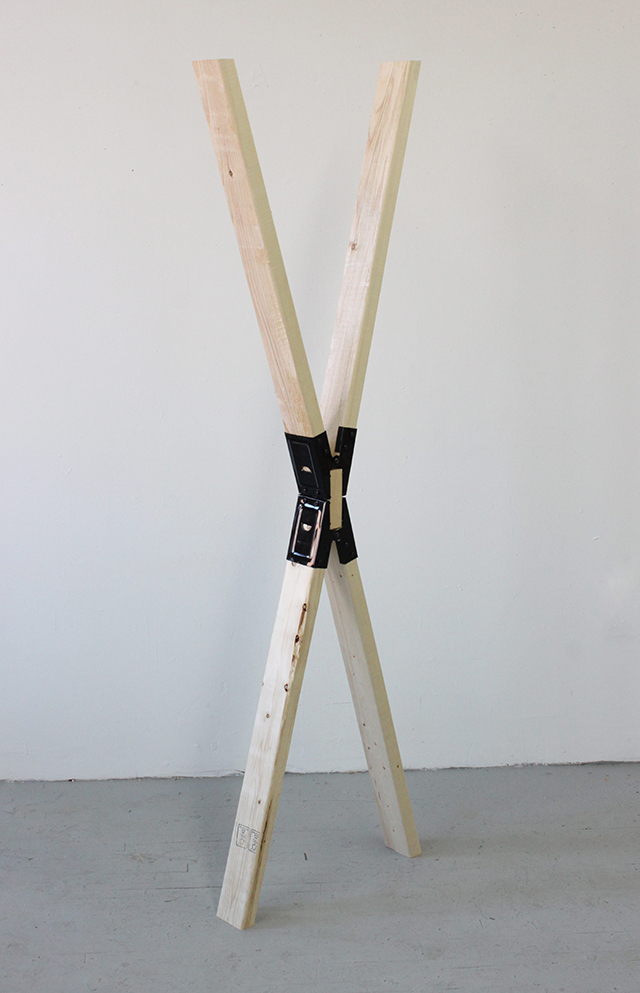
Holding This Moment Pine and Sawhorse Brackets 6’ x 2’ x 4" 2014

Holding This Moment
Pine and Sawhorse Brackets
6’ x 2’ x 4″
2014

Briefly describe the work you do.

My work is sculpture, probably in the broadest sense of the word. I borrow forms that exist in our built world and shift their meaning through different strategies. Construction grade materials are combined with cheap furniture, storage boxes, and other temporary living solutions in a way that points at their strengths and flaws. I like to strike a balance between the poetic and a sense of dark humor with the work; something shifting yet simple.

Tell us a little about your background and how that influences you as an artist.

I spent 35 years living in New England until a recent move to Baltimore. My family is creative in a broad sense: lots of makers, storytellers, designers. I developed an interest in “space” and objects at an early age. My dad spent some time as a real estate appraiser, and helping him out as a kid was my first real exposure to how space is constructed and valued. Getting to travel to visit my mom’s family in places like Mexico, Norway, and Brasil made me comfortable with “incomplete comprehension” and exposed me to varied material cultures.

The punk rock scene was my second home. I was exposed to Critical Theory and cultural critique through music first and foremost, and I still view things through that lens all these years later. It directly influenced my transition from studying to be an Art Historian to directly engaging in cultural production.

The concept of the “artist studio” has a broad range of meanings, especially in contemporary practice. The idea of the artist toiling away alone in a room may not necessarily reflect what many artists do from day to day anymore. Describe your studio practice and how it differs from (or is the same as) traditional notions of “being in the studio.”

Studios, to me, are a place of production and sometimes contemplation. At times my practice has been pretty ephemeral (I have a history of performance-based pieces), so I have not always kept studio space in the traditional sense.

Currently I have a desk, chair, and a corner of a basement filled with tools. While I have been in this position before, I prefer having an independent studio/workshop where I can go and execute an idea on a whim.  The fantasy of being more of a “studio artist” is really appealing, but it does not necessarily reflect my creative process or my lifestyle right now!

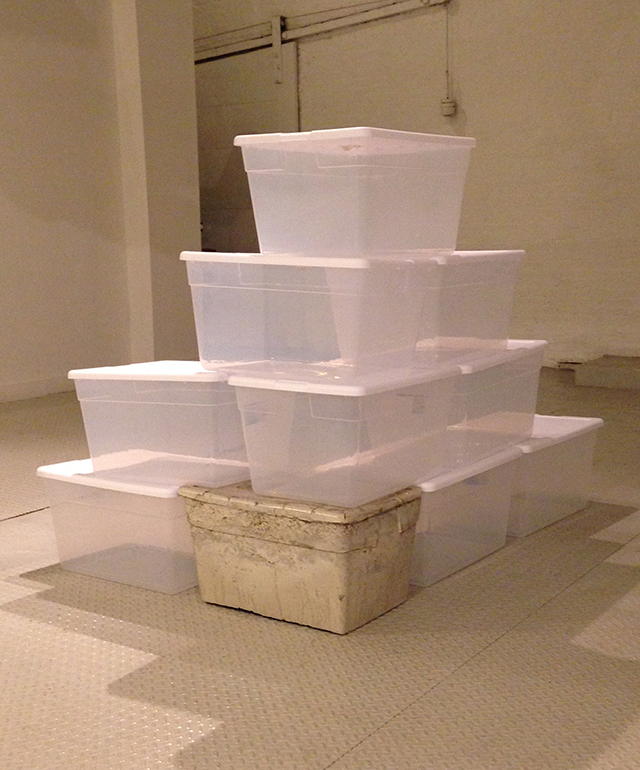
Cornerstone Concrete and Plastic Storage Bins Dimensions Variable 2015

Cornerstone
Concrete and Plastic Storage Bins
Dimensions Variable
2015

What unique roles do you see yourself as the artist playing that you may not have envisioned yourself in when you first started making art?

When I started studying art as a young adult, it was originally to make myself a better historian or theoretician. I never envisioned that all these years later I would still be maintaining an art practice. The act of “making” or “doing” has become incredibly important to me.

I have become a bit of subtle advocate for maintaining a creative life. At this point I am pretty sure some of my friends are tired of the questions about how this or that life decision affects their own practices! I know I have also crushed a few dreams by saying to students, “ You know grad school isn’t just about being able to teach?” If Art gets to have a capital “A”, if cultural production is that important, if it is an academic pursuit and research, then I want people out there who make it their lives. I’ll go to bat for that person any day of the week.

When do you find is the best time of day to make art? Do you have time set aside every day, every week or do you just work whenever you can?

Whenever I can. To quote Jurassic Park, “Life, uh, finds a way.” Sometimes that means life interferes with making work, but those are the moments that also fuel some of the best ideas.

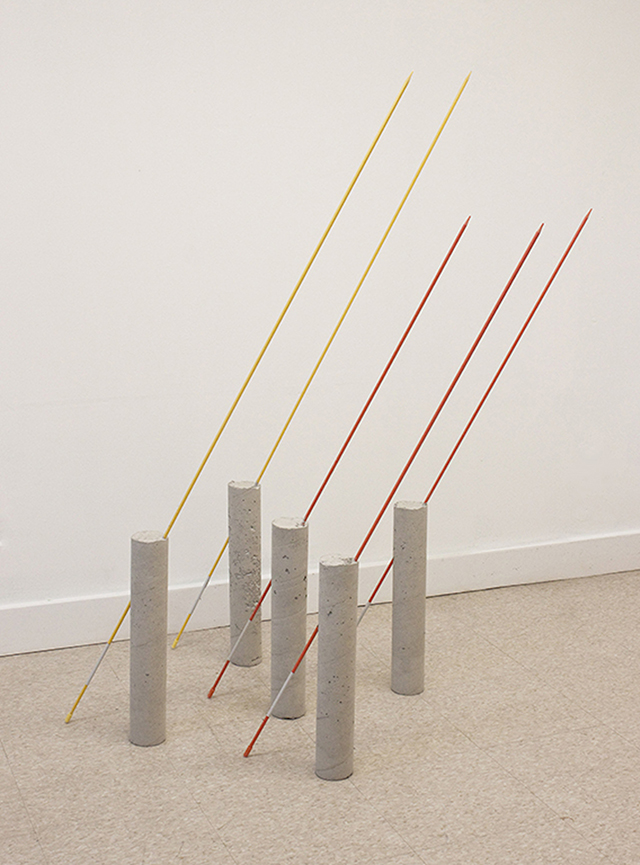
Palisade Quikrete and Reflective Driveway Markers Dimensions Variable 2012

Palisade
Quikrete and Reflective Driveway Markers
Dimensions Variable
2012

How has your work changed in the last five years? How is it the same?

On a real basic level, it has some color on occasion!

Five years ago, I would have viewed myself a performance practitioner who sometimes made objects to be viewed through that lens. Now the work is primarily objects, and once or twice a year I find time to activate some materials through performance. The Performance community has always given me great opportunities that I am very thankful for, but there is something very satisfying about the more “studio” oriented turn in my practice.

Are there people such as family, friends, writers, philosophers or even pop icons that have had an impact on the work you do?

My partner in crime (and life), Andrea Sherrill Evans, is a constant inspiration. She has the type of practice that I strive to build and is a wonderful teacher. Andrea also bakes a mean cookie, which always lifts my spirits.

I am also in awe of Eric Amaral Rohter, an amazing designer based in Bergen, who also happens to be my cousin. He took a chance a few years ago to leave an agency in DC to see if he could live in Norway. The chance he took has lead to an amazing creative practice that I am totally jealous of at times.

On a less personal level, I have a deep respect for the artists that really helped define conceptual practices in the 60’s and 70’s (minimalists, post-minimalist, body artists, etc): specifically, Adrian Piper, Donald Judd, and Robert Smithson for writing and establishing a dialogue for their work when there was a vacuum of critical thought from the perspective of practitioners. The critical dialogue between artists is what makes what we do an academic field, more so than knowledge of philosophy or other disciplines. Our broader interests are what make the work rich; they are not what make the work.

If you had an occupation outside of being an artist, what would that be and why?

If I had been exposed to the idea at a younger age, I might have tried to become an Industrial Designer. I think so much about “use” when selecting materials to develop meaning that I’ve determined I actually want to make things that can be used. In the end, I am much more drawn to things that do not have such fixed intent, so that probably wouldn’t have worked out that well.

About

KAS_HeadShotKirk Amaral Snow is a Baltimore-based intermedia artist whose practice investigates the relationship between the built world and performative aspects of culture.

Amaral Snow holds BA’s in Art History (2002) and Studio Art (2003) from the University of Rhode Island and an MFA from Tufts University/School of the Museum of Fine Arts, Boston (2011). He has exhibited and performed both nationally and internationally at The Franklin (Chicago, IL), Gallery Kayafas (Boston, MA), Proof (Boston, MA), Little Berlin (Philadelphia, PA), Mobius (Boston, MA), MEME (Cambridge, MA), Perfolink (Concepción, Chile), Infr’action Sète (Sète, France), Fonderie Darling (Montreal, Canada), and Grace Exhibition Space (NYC).

In 2014, Amaral Snow completed residencies at Samson Projects (Boston, MA) and ACRE (Steuben, WI). His most recent solo exhibition, The Lonesome Crowded… was staged at Boston’s Distillery Gallery in the summer of 2015.

KAS_Studio

kirkamaralsnow.com

All images copyright of the artist and their used with permission.

Posted in Uncategorized | Tagged , , , , | Leave a comment

Aitor Gonzalez – Valencia, Spain

365.1Briefly describe the work you do.

I develop sculptures in which I try to explore the relativity that comes from art/life, sculpture/painting, and comfort/instability.

Tell us about your background and how that has had an influence on your work and on you as an artist.

I have always been very interested in any kind of artistic manifestations,from cinema,music to architecture or literature.I am always looking to know better the world that surrounds me. My friends and family had always been really curious about everything and I think this has influenced me enormously.When I was a kid I really liked to draw ,then I started making small illustrations.When I went to uni my obsession for collecting small objects I found on the street started.This is how I became more and more interested in everyday objects and its aesthetic possibilities I don’t consider myself really attached to a “assemblage” practice.I like to have an active vision trough the objects and I try to explore the life those objects can have beyond its function.

The concept of the artist studio has a broad range of meanings in contemporary practice. Artists may spend much of their time in the actual studio, or they may spend very little time in it. Tell us about your individual studio practice and how it differs from or is the same as traditional notions of “being in the studio.”

Last year I used to have my studio located in a different place from my residency,In a way this allowed me to differentiate my social life with the productive one, I was always carrying a small diary in which I put things that interested me.
This year my workplace and my residency are in the same place,this allows me to be quicker at the time of testing materials and developing concepts.Both situations had its pros and cons and have produced different outcomes .

2

What roles do you find yourself playing that you may not have envisioned yourself in when you first started making art?

Maybe all the administrative work that someone has to develop in order to show the projects.Beyond the relaxed atmosphere it exists at university this last years I’ve realize that the artistic sphere is most of the times very competitive and sometimes more closed than how they present it to you when you study.

When do you find is the best time to make art? Do you set aside a specific time everyday or do you have to work whenever time allows?

I don’t really like to have an specific time just to make art, for me the working process starts with the election of materials,or even before in the idea or the interest something you see,listen or think.Personally I think that the artistic production is something very interdisciplinary that affects a lot of aspects in your day to day.

3How has your work changed in the past five years? How is it the same?

I think it has changed in the way that mi previous projects used to be bi-dimensional works while now I’m more interested in the space.Anyway I don’t reject from this influence,for a wide range of the works I make the wall is a fundamental part in the structure of the piece.

How have people such as family, friends, writers, philosophers, other artists, or even pop icons had an impact on the work you do?

I feel that everything that is surrounding you has a influence in the work you make.from surfing on the internet to watching a film.The over control of the productive process can make sometimes the pieces really conservative in the conceptually speaking.For me the most important thing about making art is to be able to get influence from everything and play with what surrounds you.

Have you ever been pulled in the direction of a pursuit other than being an artist? What are your other interests?

One of the most important things about making art is that it is a complete vocation.Sometimes is just about being constant and do what you really like in order to have a good range of work .I’ve always been really interested in all the creative practices,although now I’m just doing sculptural or intallation projects I am starting to become curious about editorial design. For now is something really amateur but in the future I would like to develope zines or artist books.

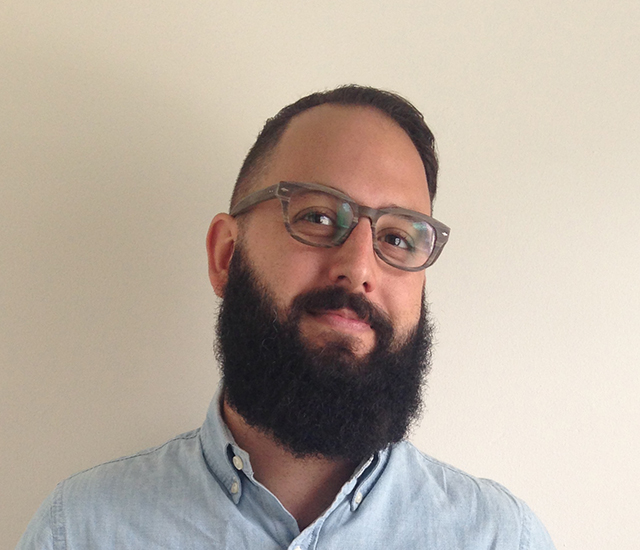
About

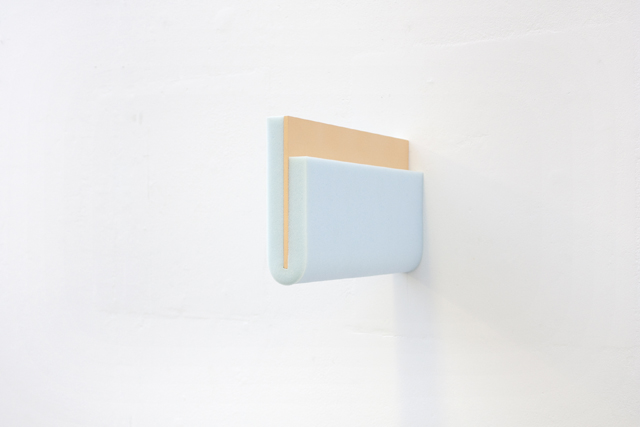
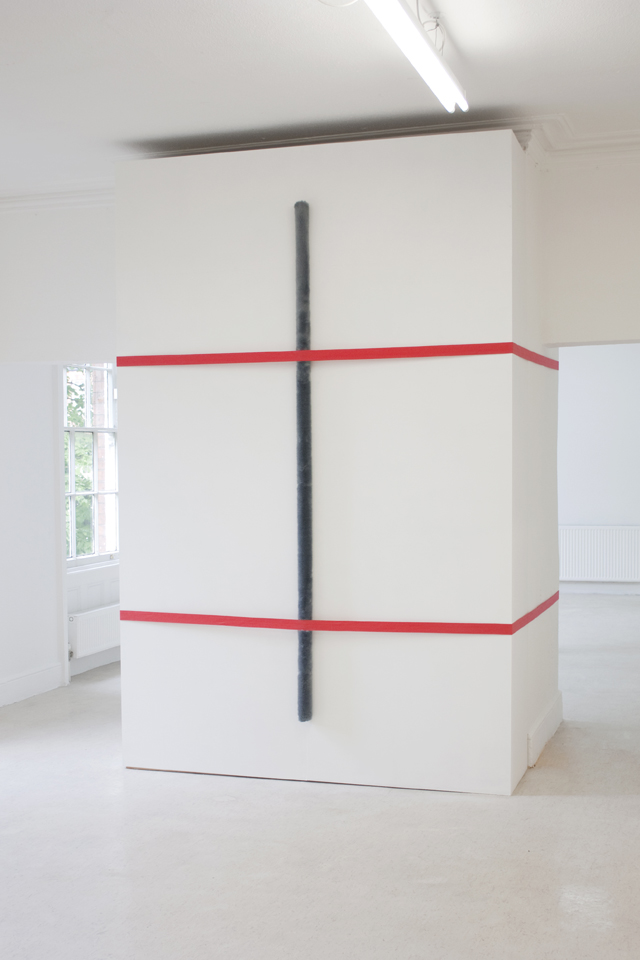
headshotAitor González (1994) is an emerging artist that lives and works in Valencia. Aitor has studied in the Leeds University and in the Polithecnic University of Valencia.In his practice he develops sculptures in which he introduces materials from everyday life, such as foam padding, sponge and air pillow cushion. In these pieces, he makes an attempt to explore the material properties of the elements he uses, as well as their sculptural possibilities. The aim of this is to move these found objects away from their common usage, while he tries to inscribe them into an abstract aesthetic.The pieces are halfway between the past usefulness of their components, which is entirely given by their form, and their re-signification as a cultural object.Although his practice often refers to the opposition link between the notions of provisionality and commodity, the sculptural objects seem to have found that commodity in external elements that simultaneously show their weakness and protect them from the perils of a hostile environment: the atmosphere, the bare floor, the viewer.

They’re armors that try to provide comfort to the sculpture’s core while they express their hidden/inner vulnerability. The monumental quality of the sculptures is therefore lost by the introduction of found objects that gives them a naked and vulnerable appearance.

Just as if somehow they were scared of their exhibition to the audience, and subsequently, of the potentially unlimited number of interpretations they could trigger

Aitor Gonzalez has been exhibiting in different spaces between Spain,Portugal and United Kingdom.

detail

Aitorgonzalez.es

All images copyright of the artist and Their Used with permission.


Posted in Installation, Sculpture | Tagged , , , , | Leave a comment

Dayana Burguesa – Alicante, Spain

the call. digital photography 54x36cm.2015

the call. digital photography 54x36cm.2015

Briefly describe the work you do.

My process of creating an image starts with a preconceived notion Largely, other times is the result of a daily emotional state, in the first case Takes a lot more time the outcome, since it goes from simple sketch That comes from a dream, to memory, a place visited. Through the search for materials props, costumes and Corresponding location for the photo shoot, then a starts the process of editing on your computer With Adobe Photoshop CS6, Which Usually Takes Depending on the complexity of the image Looked at my pictures I try to show people characters , animals and nature That remind us the value and depth of the Being.

Tell us About your background and how you That Had an influence on your work and on you as an artist.

My passion for art in digital image and usually are born from my first experiences in jobs as Assistant Costume and personnel in theater and television, Also in post production and video editing, so I found That I liked to create stories That allowed me to translate into Images that I wanted to tell, I like me drunk sensations and is a vital part to this I have to travel Constantly in search of new treasures.

The concept of the artist studio has a broad range of meanings in contemporary practice. May Artists spend much of Their time in the actual studio, or May They spend very little time in it. Tell us About Your Individual studio practice and how it differs from or is the same as traditional notions of “being in the studio.”

I think That would be a privilege for any person WHO spend MOST of Their Time to create any type of art, inspirational Having a place to study or work, in my case I have still not That privilege, home space I need Although I try to keep myself surrounded by Everything That inspires me, from an ancient book, trunks and antiques, and above all of the costumes, beautiful dresses hung everywhere, and UNLIKE the traditional spaces of great artists, I now I am Satisfied with the spaces of nature is Where there to the process of creating Begins to an image.

Snow white. 40x30 cm digital photograph. February 2015

Snow white. 40×30 cm digital photograph. February 2015

What roles do you find yourself playing not Have That You May Envisioned in yourself When you first started making art?

Such sleeping Sometimes I’m Obsessed with an idea to Achieve and how to shape it, I lift my drawing and writing, other times and is a very exciting part visit traces of antique and flea markets in search of objects for use in the photo shoots.

When do you find is the best time to make art? Do you Set Aside a specific time everyday or do you have to work Whenever Allows time?

I try to Organise my time, so it Allows me to do other things, but my any time of the day or night it is perfect and special ACCORDING to the image I’m trying to, That Which Gives motivation before I even get out of bed in the morning and Know That I expected to work I love, but does not mean esta Having an absolute organization That works very well, on the Contrary.

September end. 54x36 cm - digital imaging, Adobe photoshopcs6-August 2015

September end. 54×36 cm – digital imaging, Adobe photoshopcs6-August 2015

How has your work changed in the past five years? How is it the same?

Five years ago I was finished my studies of digital photography, Which I did buy my camera know-how, at that time not to dream type images, Although I always inclined to the notion of Conceptualizing and I liked to go in my mind and beyond a concept to scene, yet still love this my goal is to get there.

How have people: such as family, friends, writers, philosophers, artists or even other pop icons Had an impact on the work you do?

In This respect I think that i am very susceptible Constantly I am amazed With the work of modern artists, I admire and look like works of visual art and the paintings, and then a este everyday life music video, movies and of course, books and enjoy reading, and always taking my finding esta from my perception of reality, and THUS Become my reality.

Have you ever Been pulled in the direction of a pursuit other than Being an artist? What are your other interests? 

Yes, good girl I like writing stories and cartoons thing to for my school library, writing is a pending task That very soon take to a project. Generally in all, rest interests me I only try to do what I like, and apart from a passion for art in overall long gone my way in the direction of the evolution of our Being and the infinite possibilities That offers the universe and the awakening of our consciences to the universal love.

About

My interest in theater and art in general lead me down the path of photography, this is my vital break me spreading love for the image, the way I shoot between dream and material may be a reflection of my personality, I think everything can become art displaying emotions. as a way to show others an extension of the vision.

Study digital photography to acquire technical skills but the best choice is always accompanied out with the camera, from there, I think an idea argument, and start the search or find by chance a location where I allow image capture is often preconceived a very exciting part of my job as a photographer, I like to get drunk and sensations is what I try to tell the relationship of the environment with the individual.

I attend workshops and conferences of other photographers get inspiration and I in increasingly digital art and discover every day the beauty and the freedom to create different scenes, I think one important thing in digital photography is to work the ideas during the time necessary before executing them. now the whole process is digital, it is more comfortable and more and can do more freely, do not usually follow the rules, for me, everything is connected: photography, music, cinema illustrators, well have some specific training but be aware that there is art in every element and contemplate our feelings is the big school today.

my study

dayanaburguesaphotography.wordpress.com/

All images copyright of the artist and Their Used with permission.


Posted in Photography | Tagged , , , , | Leave a comment

Eugenia Martinez – México City, México

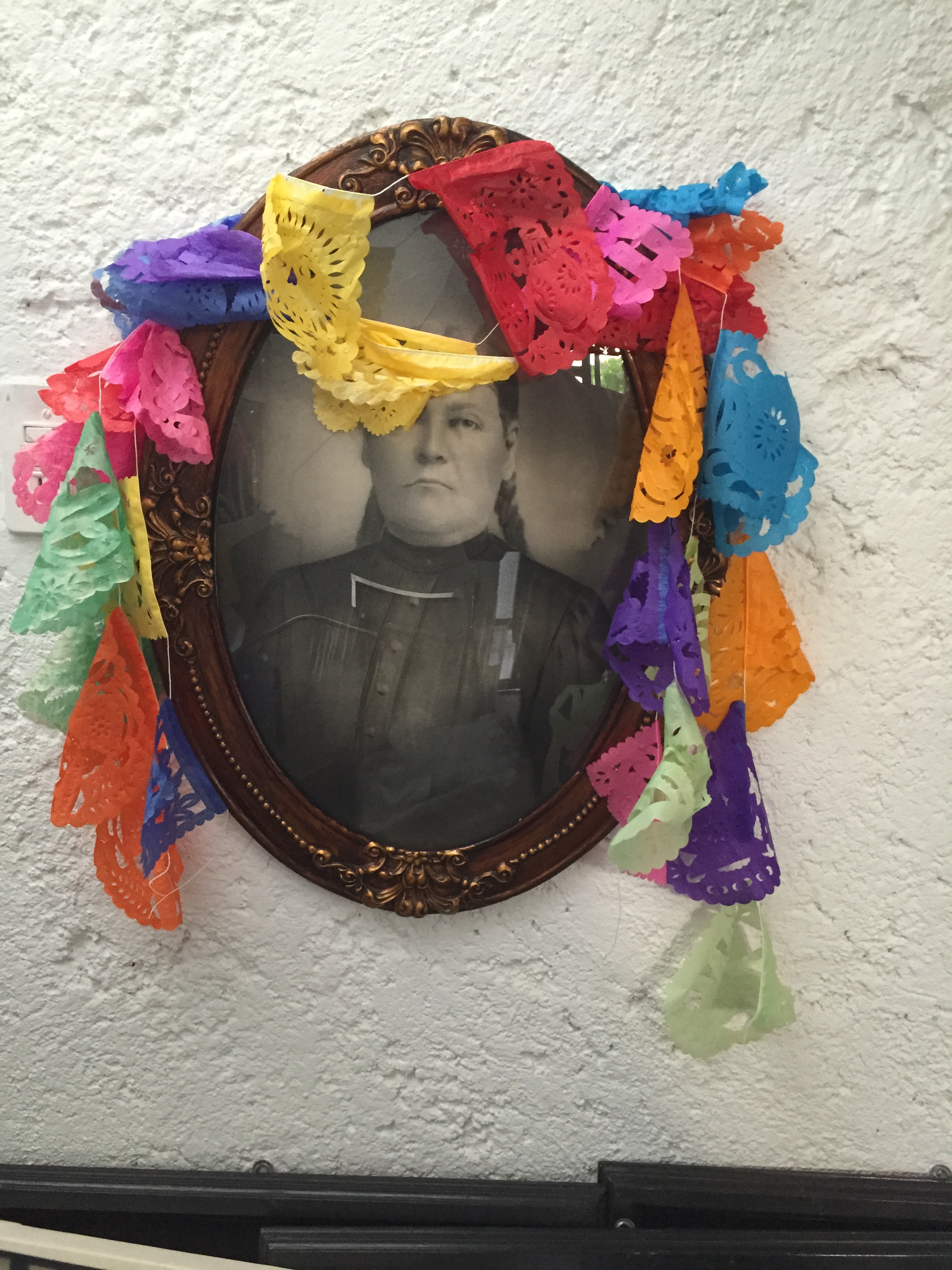
The bride & groom Enamel paint, plexiglass, vintage photograph and wood box 2015

The bride & groom, Enamel paint, plexiglass, vintage photograph and wood box 2015

Briefly describe the work you do. 

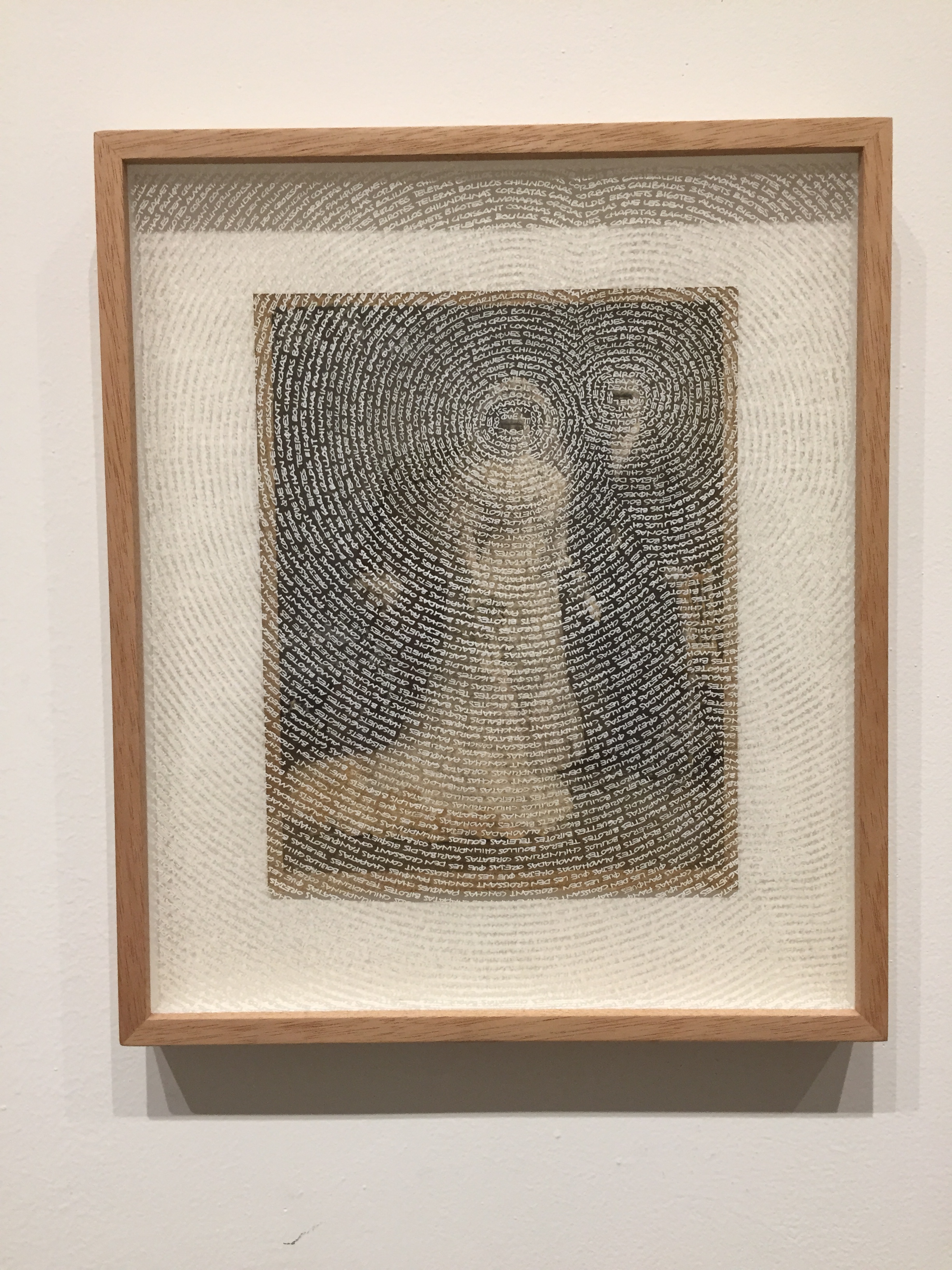
 I have had an interest in painting since I was very young. For the last 12 years, I have been mainly working with Mexican portraits from the past. My purpose is to reflect the social cleavage between the public discourse of the different Mexican groups and their true thoughts. I select parts of each piece and surround them repeatedly and obsessively by sentences, creating an impenetrable halo of prejudice.

Such sentences are meticulously written in different shades of white, creating a hypnotic and, in some cases, even an optical effect. These texts or sentences consist of literal or distorted quotes from politicians and moral leaders, as well as common popular sayings and songs, which become more and more contradictory and confusing. I consider myself as autodidactic.

Tell us about your background and how that has had an influence on your work and on you as an artist.

I think a portrait can tell you everything about a certain society. That is why I am very interested in family portraits, either paintings or photographs. .

During my time in collage I´d started to participate in social programs and politics in my community. Those years working gave me the understanding of the kind of country I am living. That´s the reason my work is becoming more political.

The concept of the artist studio has a broad range of meanings in contemporary practice. Artists may spend much of their time in the actual studio, or they may spend very little time in it. Tell us about your individual studio practice and how it differs from or is the same as traditional notions of “being in the studio.”

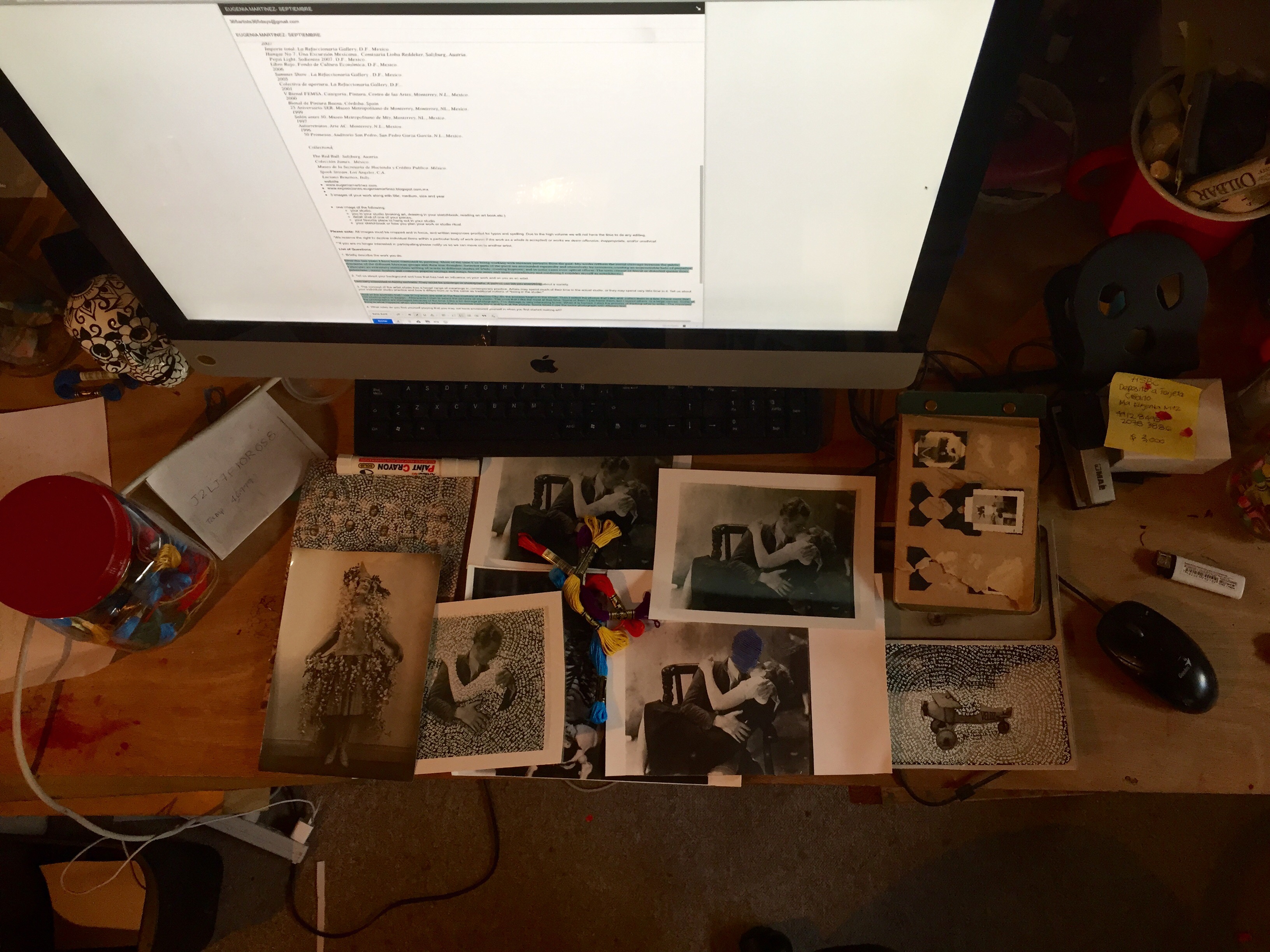
The artists are working all the time, not just in their studios. Everything can trigger an idea. Most of the portraits that I use in my work are sold at flea markets in Mexico City. So, the process begins on the street. I choose the photos that I like and store them in a box. Normally, I will have more than 100 photographs to begin with.

Once at my studio, I select the pictures that I like the most out of those. Then, I choose the ones I will just frame, and the ones I will reprint on a large canvas. Some photographs are damaged because of the time, and I like this type of photographs a lot. The damage they show is very interesting to me. Once the photograph is framed, I start the process of thinking what to write.

The important thing is what happens when you read the sentence that is repeated many times and look at the picture. Sometimes I even use the same photograph and apply a different text.

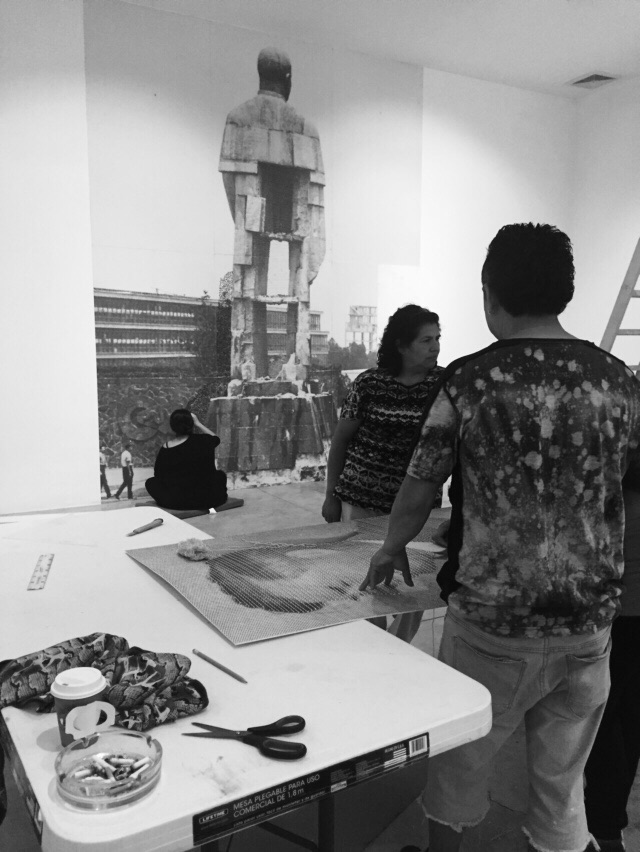
President estatue Crayon, print and yellow sewing thread 2015

President estatue
Crayon, print and yellow sewing thread
2015

What roles do you find yourself playing that you may not have envisioned yourself in when you first started making art?

 I just do art…

When do you find is the best time to make art? Do you set aside a specific time everyday or do you have to work whenever time allows?

Whenever time allows it. I live in a very complicated city, there is a lot of traffic. Also, I am the mother of two girls, so I work a lot at night and during weekends. Whatever it takes to get it done. My studio is located in my house. I work all the time. I like it a lot.

How has your work changed in the past five years? How is it the same?

I was born in the northeast of Mexico and in the north everything is new, plus it looks a lot like the United States. So, when I moved to Mexico City 12 years ago, I was amazed by the architecture. For me, it was very interesting to look at all the old buildings and live in them too. Because of that influence, I started to work with the viceregal portraits. Four years ago, I moved to a 1950’s house in another part of the city. I have to say that my works have changed dramatically after that.

image4

Broken Enamel paint , plexiglass, Toar Fantin Latour pastel, wood box 90x 60 cm 2014

How have people such as family, friends, writers, philosophers, other artists or even pop icons had an impact on the work you do?

All the artists had an impact from art history. My works change as I move from one place to another.

Have you ever been pulled in the direction of a pursuit other than being an artist? What are your other interests?

I studied a career that had nothing to do with art. There was a time that I felt ashamed of that. It was difficult to say that I had not gone to art school. However, when I was in college I started to join groups about politics and social works. This made me realized even more that I lived in a very complex country, in which sometimes you feel like you are in a first world country, but some other times in a very poor one. Such complexity made me understand which were the problems of Mexico that I wanted to talk about. With the years, my work started to become more political.

About

image1Eugenia Martinez was born in Monterrey, México, in 1976. Her work as a painter, for the last decade, consists mostly of Mexican portraits from the colonial era to the 1960´s enhanced with metaphoric texts.

Through the images, she reflects the social cleavage between the public discourse of the different Mexican social groups and their true thoughts. Selected parts of the paintings and photographs are surrounded repeatedly and obsessively by sentences, creating -what it seems to be- an impenetrable halo of prejudice.

For her first solo show at Ramis Barquet NY, “I don’t have a dream”, she exclusively uses photographs (a less subjective way than paintings), and executes an extremely meticulous writing of words in different shades of white, creating hypnotic, and in some cases even optical, effects.

The texts, both in English and Spanish, consist of literal or distorted quotes from politicians and moral leaders, become more and more contradictory and confusing.

The discourse of a community without a common dream.

image8

eugeniamartinez.com

All images copyright of the artist and used with their permission.
Posted in Photography | Tagged , , , | Leave a comment

Cari Freno – Philadelphia, Pennsylvania

Cook Forest Studies (still), 2011, HD video

Cook Forest Studies (still), 2011, HD video

Briefly describe the work you do. 

I use video, sculpture and drawing to explore generational influence, connection, and the changes that occur over time within a family structure and culture. I often use the surrounding landscape as a stand in for people, objects, or institutions with which I have had influential relationships. Through material experimentation, endurance, physical proximity, and imitation I attempt to learn something about place, existence, vulnerability, and identity.

Tell us about your background and how that has had an influence on your work and on you as an artist.

The interpersonal dynamic of my immediate family and the place I grew up has a large impact on my work. I consider the cultural, educational, regional, psychological and emotional influences of growing up in a Catholic, Italian, and Eastern European family in rural Ohio. Through my work, I yearn to better understand these influences on my own personality, and to trace backwards through time how certain behaviors and tendencies such as repression and anxiety become normalized and accepted as truth in this place.

The concept of the artist studio has a broad range of meanings in contemporary practice. Artists may spend much of their time in the actual studio, or they may spend very little time in it. Tell us about your individual studio practice and how it differs from or is the same as traditional notions of “being in the studio.”

My video work takes me to environments where I can play with the landscape as a character and material. I am interested in learning about behavior and relationships through acting and reacting to situations and allowing a strong sense of intuition in the moment to guide my actions and intentions. I try to allow anxiety and impressionability to manifest between myself and the object/landscape.

What Was I? (still), 2015, HD video

What Was I? (still), 2015, HD video

What roles do you find yourself playing that you may not have envisioned yourself in when you first started making art?

I find myself playing the roll of therapist, cheerleader, worst enemy, guru, laborer, editor, film crew, cook, actor, administrative assistant, collaborator, agent, colleague, explorer, mother, friend, teacher, manager, wife, director, writer, etc..

When do you find is the best time to make art? Do you set aside a specific time everyday or do you have to work whenever time allows?

So far my practice has been whenever time allows but I am constantly striving for a more structured routine in the studio. I oscillate between working in an actual studio and working in a more undeveloped landscape, often a public park.

Sea Change (still), 2015, HD video

Sea Change (still), 2015, HD video

How has your work changed in the past five years? How is it the same?

I have moved through materials while constantly paring down and reframing my ultimate questions and motivations. I started using my family in a more direct way by featuring them in videos and casting parts of their bodies. Making video work has stayed fairly consistent throughout the last 5 years.

How have people such as family, friends, writers, philosophers, other artists or even pop icons had an impact on the work you do?

I feel like I received an education of possibilities by viewing the work of Joan Jonas, Vito Acconci, Ana Mendiata and Pippilotti Rist.   I have also been influenced and inspired by filmmakers such as Victor Erice, Harmony Korine, Lars Von Trier and Ingmar Bergman.

Have you ever been pulled in the direction of a pursuit other than being an artist? What are your other interests? 

I care a lot about experiences and opportunities for young people. I have worked in many different levels of education from Kindergarten to my current position of teaching undergraduate students. Education, and the influences a young person experiences as they develop has always been a strong interest of mine.

About

image009Cari Freno was born in Garfield Heights, Ohio in 1982. She currently lives and works in Philadelphia, Pennsylvania.  She uses video, drawing and sculpture to explore the landscape where internal and external worlds intersect in an attempt to understand how concepts of self and personality emerge from lived experience. She has exhibited her work both nationally and internationally including venues in Chongqing, China and Berlin, Germany.  Her work has been exhibited at Redux Contemporary Art Center in Charleston, South Carolina and in various other national exhibitions.  Recently, Cari spent time as an Experience Economies: Landscape Experience Fellow at Mildred’s Lane in Beach Lake, PA. She is currently a professor of Drawing and Sculpture at Ursinus College in Collegeville, PA.

image011

carifreno.com

All images copyright of the artist and used with their permission.


Posted in Video | Tagged , , , , | 1 Comment

Stephanie Chambers – Sycamore, Illinois

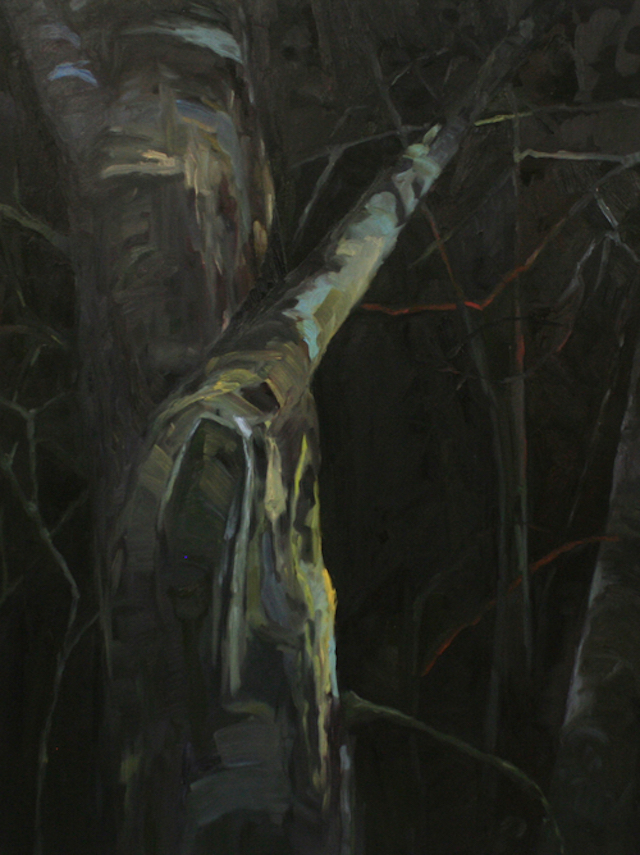
Lost in the Woods. oil on canvas. 53in x 65in. 2014.

Lost in the Woods. oil on canvas. 53in x 65in. 2014.

Briefly describe the work you do. 

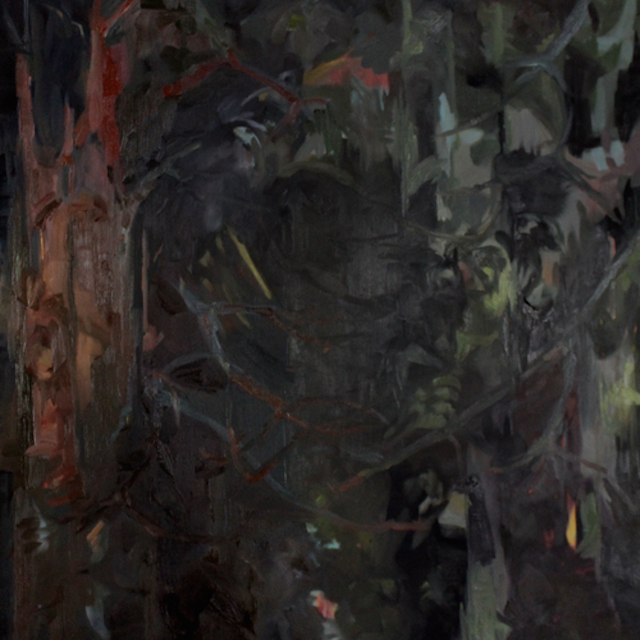
My paintings are from on-site observation and are produced out of the experience. They are not literal representations of the forest but are examining the overwhelmingness of this interaction with nature. As our world becomes more technologically driven our experience with nature becomes less direct, mediated through screens, my paintings question ones relationship to nature. Challenging the assumptions of what nature is, how we come to know it, and ultimately, how we interact with it. For me, the night is more alive than the day, especially in the forest. Our visual faculties are lessened by the dark and we are constantly looking to identify noises or smells we are encountering. This results in not truly seeing the forest but feeling it. Our senses are being overwhelmed. My paintings are rooted in this particular action. The seeing but not seeing, the not seeing but feeling.

Tell us about your background and how that has had an influence on your work and on you as an artist.

I am the descendant of a very long line of artist’s, especially painters. My grandmother’s house was full, floor to ceiling, with paintings. I specifically remember one trip when my brother and I were staying at her house and we would act out stories and battles and these paintings would be the backdrop of whatever event we would imagine. I can see now, looking back to those paintings years later, that they had a huge impact on the choices I make as an artists and in my paintings. From subjects, color choices, and even marks. 

Stand Tall. oil on canvas. 45in x 34in. 2014

Stand Tall. oil on canvas. 45in x 34in. 2014

The concept of the artist studio has a broad range of meanings in contemporary practice. Artists may spend much of their time in the actual studio, or they may spend very little time in it. Tell us about your individual studio practice and how it differs from or is the same as traditional notions of “being in the studio.”

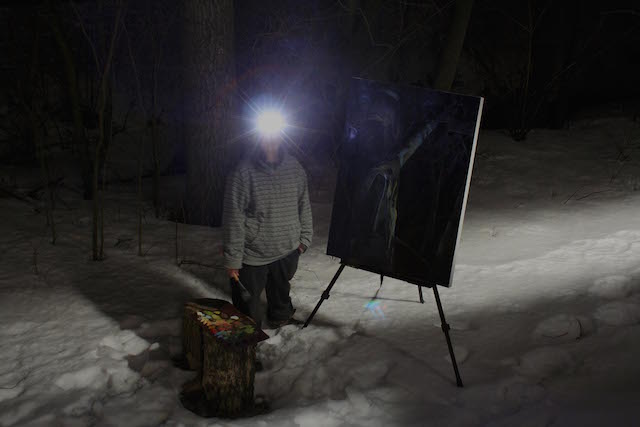
I would say that my studio practice is not the traditional concept of ”being in a studio.” I consider my easel my studio. I have corners and boxes and closets full of my studio supplies, but my studio is the outdoors. Whether its the forest outside my house or the Grand Canyon. My supplies travel with me and I with them. I build and stretch canvases on the floor, I gesso outside on the picnic table, and I cannot separate my life from a studio life, its all one and the same. 

What roles do you find yourself playing that you may not have envisioned yourself in when you first started making art?

The role of the educator, which I absolutely love, from young to old. When I first started making art I never dreamed that I would one day be teaching others how to create. I’ve had many exceptional teachers and mentors along my journey and I would not be who or where I am today without their guidance. Its an incredible feeling to hear back from a student that I thought years ago and realize that I had an impact. I hope to one day be of the standards that my mentors are. 

When do you find is the best time to make art? Do you set aside a specific time everyday or do you have to work whenever time allows?

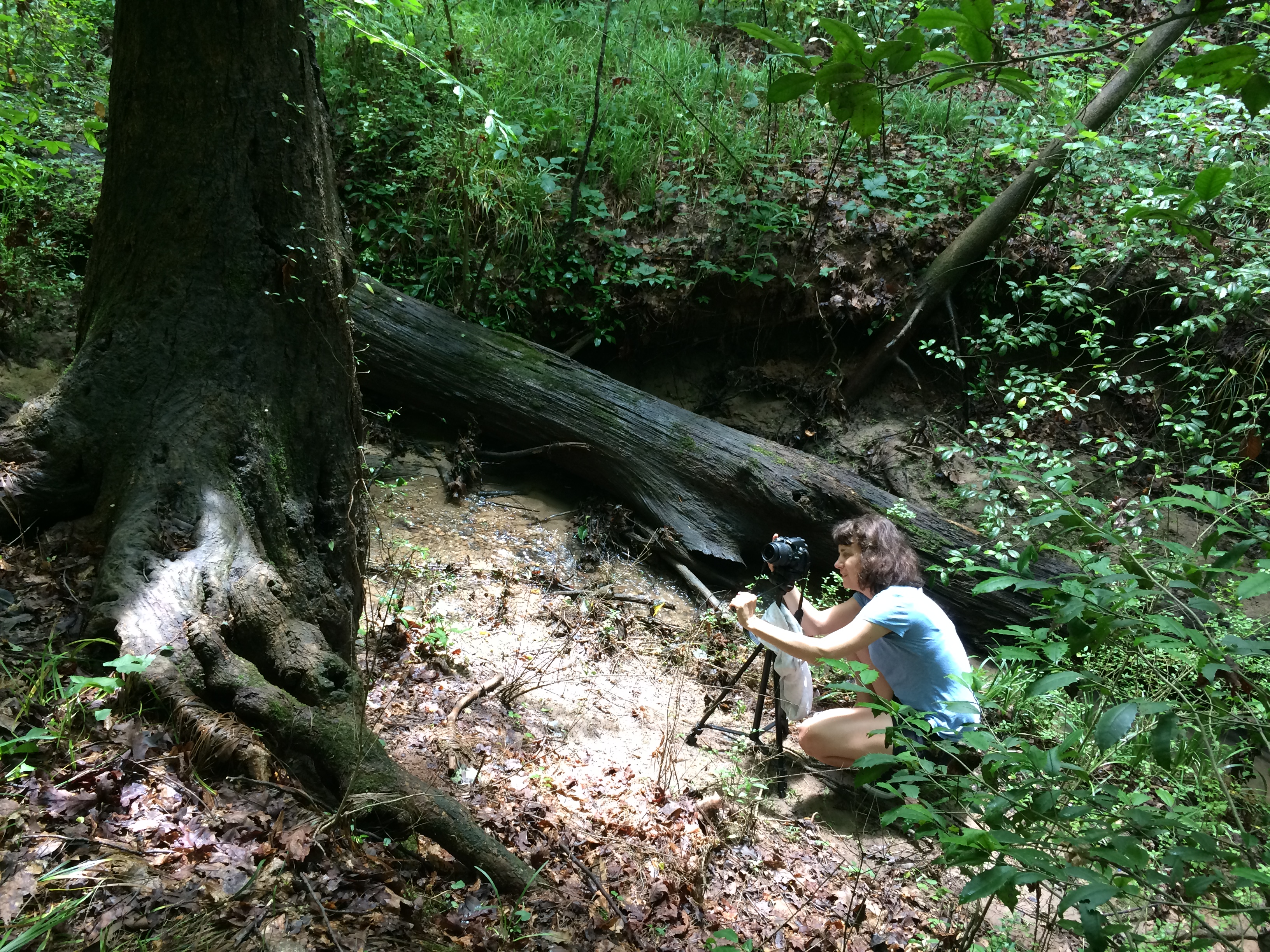
A few years back I struggled with trying to set aside a specific time to work. Painting outside I assumed I was limited to painting when the sun was in the sky. This conflicted with the fact that I am a night person. I am most alive, most creative, and most myself when the moon is in the sky. When I finally accepted this fact was when I began to explore nocturnal scenes. I bought a head lamp and have never looked back. 

Night Dance. oil on canvas. 34in x 34in. 2014

Night Dance. oil on canvas. 34in x 34in. 2014

How has your work changed in the past five years? How is it the same?

I would say the biggest change in the last five years has been the move to painting outside. Previously, I would do small studies outdoors and then come back into a traditional studio to make larger paintings. I felt that there was a missing link in the work, the experience in the painting was not reflecting my vision. So the move to small, medium, and large scale paintings in the open air was a must. 

How have people such as family, friends, writers, philosophers, other artists or even pop icons had an impact on the work you do?

I am very fortunate to have a very supporting family and group of friends. Even if they do not quite understand what I am doing, they are very encouraging and supportive. I think this support group has allowed me to take chances in my work that I may not have taken otherwise. 

I read a lot of nature writing. My favorite being John Muir. To see the excitement come off the page with just words influences me greatly. To have that kinship through nature inspires me to make more work. 

Have you ever been pulled in the direction of a pursuit other than being an artist? What are your other interests?

There have been many opportunities for careers outside of art. I love nature and the outdoors so park ranger was always something that excited me but when it came down to it, art is always my choice. I never seriously considered anything else. 

About

Image_04Stephanie Chambers is an artist and educator. She currently teaches at Judson University and Trinity Christian College. She received her Master of Fine Arts from Northern Illinois University and both her Master of Arts and Bachelor of Fine Arts from Texas A&M University in Corpus Christi, Texas. Born in Austin Texas she lived in Texas for twenty-seven years before moving to Illinois. She currently lives and works in Sycamore, Illinois. Her work consists mostly of on-site, all prima paintings. Working in nature allows her direct influence from her subjects, which currently explore nocturnal forest environments.

Image_05

sechambers.com

All images copyright of the artist and used with their permission.
 

Posted in Painting | Tagged , , , , | 1 Comment

Alejo Schatzky – Buenos Aires, Argentina

Cerro Torre Photography. Printed on cotton paper. 80 x 120 cms. Year 2015

Cerro Torre
Photography. Printed on cotton paper.
80 x 120 cms.
Year 2015

Briefly describe the work you do. 

I work with photography. My main subject is landscape. But I prefer to create new geographies rather than recreate reality. For me, photography is not a device to document things as they are but a tool to show things as I like them to be.

I work with loss of quality, turning every possible problem into an expressive tool. For that, I use a combination of old cameras, out of date films, odd developing and fire and chemicals to degrade the “originals”. Finally I use a digital camera to create a file that can be printed on different materials. Each step of the process adds a bit of distortion to the final image.

Tell us about your background and how that has had an influence on your work and on you as an artist.

I didn’t study photography in any way. I barely know the work of “the great photographers”.

When I was a kid, I was first attracted by the slides my father used to make during his trips. I can recognize there my interest for landscape and photography –and for travels as well. Later I discovered Andrei Tarkovsky’s films, where I can recognize my main visual influences –along with the painters I used to love in my childhood: Bruegel and some of the Impressionists.

256, from the series 365 Project Photography. Printed on cotton paper. 80 x 120 cms. Year 2013

256, from the series 365 Project
Photography. Printed on cotton paper.
80 x 120 cms.
Year 2013

The concept of the artist studio has a broad range of meanings in contemporary practice. Artists may spend much of their time in the actual studio, or they may spend very little time in it. Tell us about your individual studio practice and how it differs from or is the same as traditional notions of “being in the studio.”

I work at home. My studio occupies different spaces of the house, mainly my “office” (where I have my computer, my light box and the camera I use for the final process of my work) the kitchen (where I play with chemicals and fire) and almost all the rest of the house, where I have my prints.

A great part of my art practice takes place outdoors.

What roles do you find yourself playing that you may not have envisioned yourself in when you first started making art?

I play almost all the roles that one can imagine art circuit is about. Sometimes this is tiring.

Maybe I didn’t expect to work at self-promotion and selling in such an active way.

When do you find is the best time to make art? Do you set aside a specific time everyday or do you have to work whenever time allows?

I work every day in my art. This doesn’t mean I’m creating art pieces all the time. It takes me a lot of time to develop a series of photos: I think about it, I make tests, I reflect on them, I let the series grow, I edit, etc.

Sometimes, this process progresses without a tangible production and then the artworks appear all together.

Verano Photography. Printed on cotton paper. 60 x 60 cms. Year 2007

Verano
Photography. Printed on cotton paper.
60 x 60 cms.
Year 2007

How has your work changed in the past five years? How is it the same?

As my work is very experimental, I constantly find myself trying new things. In that sense, even if the results are very different, something that has not changed in these years is the process of research and experimentation.

One thing that has changed is the type of image that I am creating. Five years ago I was doing photography with soft tones and muted colors. But now the images are sharper and colorful, as a result of the chemical treatments that I am using.

How have people such as family, friends, writers, philosophers, other artists or even pop icons had an impact on the work you do?

The greatest impact on my work has always been music. It’s hard to explain but it is. I think music is the most direct of all arts, and the one that involves the highest level of sensitivity and emotion, and that has always been a great influence.

Have you ever been pulled in the direction of a pursuit other than being an artist? What are your other interests? 

I have many interests: music and literature are the main of all. But I also like woodworking and agriculture. And especially travel. I think in any of these areas everybody can have an artistic attitude.

About

Alejo Schatzky headshotI wish it was enough, so the viewer could see my work without bias or preconceptions.

I don’t believe in a formal curriculum. If its function is to legitimize the work of the artist, it will take then wrong way, because what someone has studied -at least in my case- has little to do with what they learned, and a collection of awards and exhibitions is no guarantee of quality. The only possible legitimization is the artwork itself.

Now, if the intent of the curriculum is to show the aesthetic and sensitive formation of the artist, something can be said.

I remember as a foundational moment the discovery, at the age of four years, of two albums: The Beatles’ Rubber Soul and Vinicius in La Fusa (Vinicius de Moraes). There I can identify the beginning of the formation of my taste and the search direction. The rest are the findings, mostly linked to music, that created in me the need to tell a story that today finds its translation into a visual language. Because one reproduces itself in every act that performs: I take pictures as I play guitar or knead bread.

From those findings I recover the preludes of Bach my mother played on the piano every day of my childhood, the guitar of Juan Falú, Bruegel’s paintings, the work of David Hockney, Sarah Moon photos, the films of Tarkovsky and Goddard, and the novels of Julio Cortázar and Daniel Moyano.

From sharing with like-minded people all my knowledge has arisen, and also the possibility of finding what belonged to me. I recognize there my biggest influences and my best learning.

At the studio

alejoschatzky.com.ar/

All images copyright of the artist and used with their permission.
 

Posted in Photography | Tagged , , , , | Leave a comment