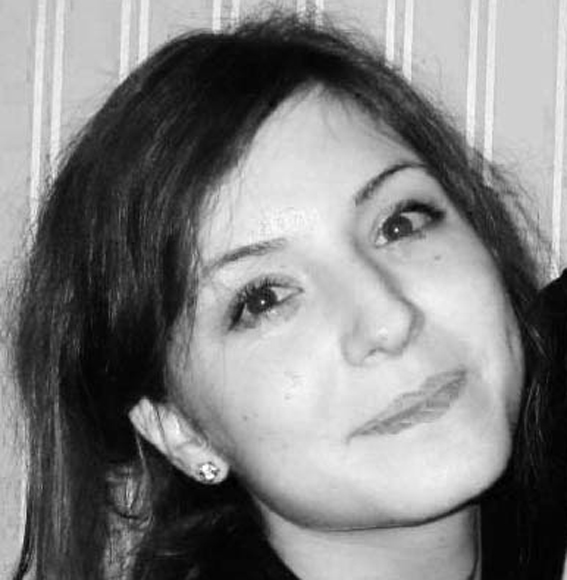
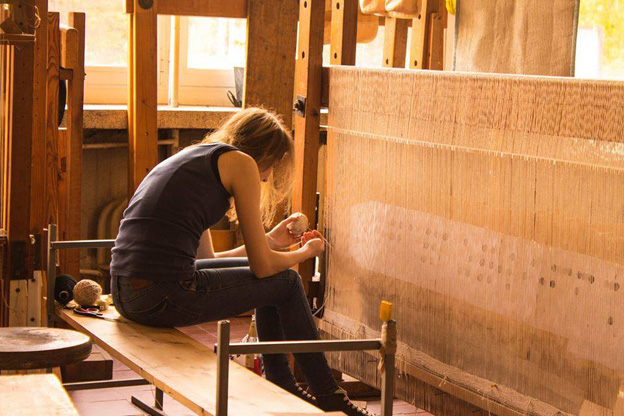
Vilyana Milanova – Sofia, Bulgaria

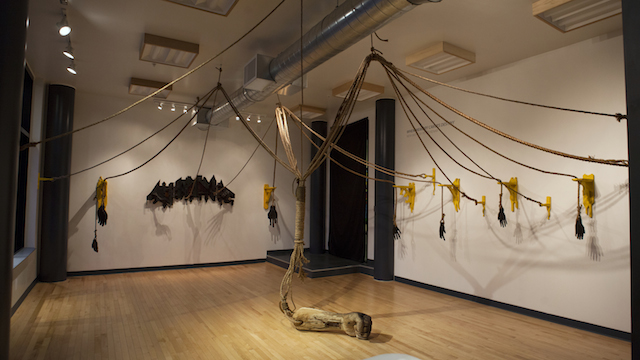
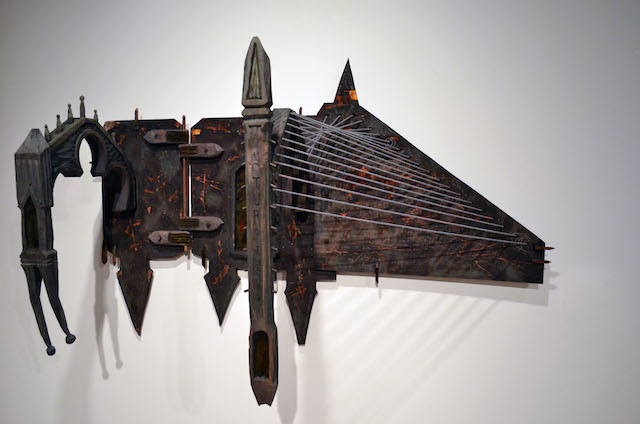
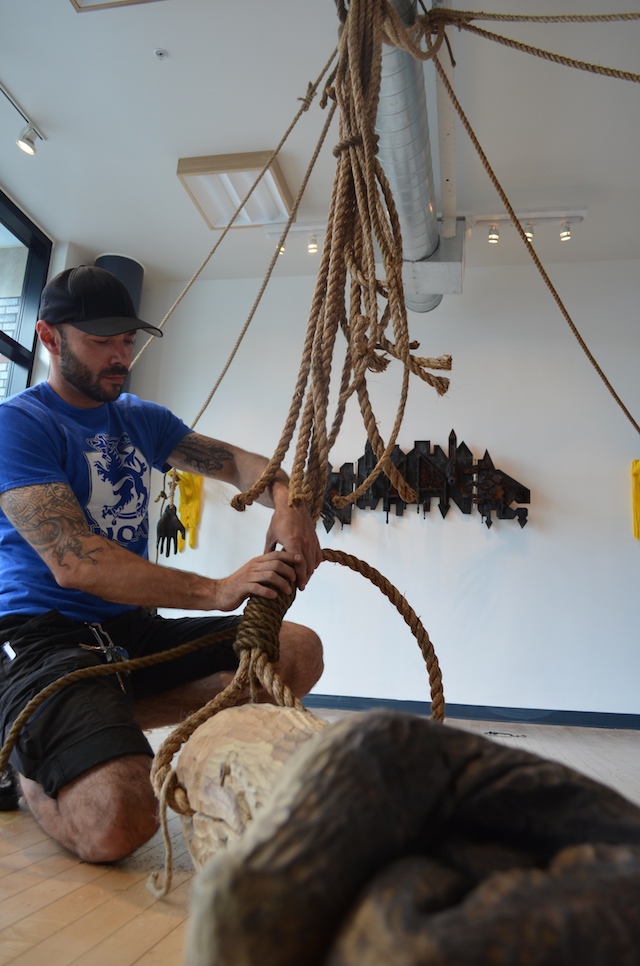
Three meters of memories Resin 2

Three meters of memories, Resin

Briefly describe the work you do.

I am interested in art as general. I love to work in different areas. I don’t like labels. I graduated as an Textile artist but not all of my works are typical textile works. I like presented ideas that are touchable because of its emotional characteristic. I like working on releasing my trapped emotions by my works. Furthermore, I love developing ideas that capture all of my attention.

Tell us about your background and how that has had an influence on your work and on you as an artist.

Meeting with all of the textile artists in the academy and getting to know the work of so many artists in general is great experience. I appreciate the support I receive from my textile leader Verzhiniya Markarova. She is great person and artist. I’m thankful for the freedom she gave me and my colleagues and the way she thought us as equals.

I had great opportunity to spend a semester in Italy as an Erasmus student. That was amazing time. I met really nice people, different culture, professionalism in the design area. Therefore, I was inspired to change the way I think of art and design. We were sharing  thoughts,  ideas and working together.

Three meters of memories, Resin

Three meters of memories, Resin

The concept of the artist studio has a broad range of meanings in contemporary practice. Artists may spend much of their time in the actual studio, or they may spend very little time in it. Tell us about your individual studio practice and how it differs from or is the same as traditional notions of “being in the studio.”

I believe the best studio is where you feel well. Even If this place  is outside on the grass or in the mountain on plain air. Studio could be the nature and is really great for me when I have the possibility to spend some time out of the town. I like also these studio-exchanges that brings communication and good experience. You make relations and get to know other artist’s ‘spaces’ and different way of working. For instant, I like working early in the morning and for me is important that my studio is at home. 

What roles do you find yourself playing that you may not have envisioned yourself in when you first started making art?

I didn’t know i will be so sure in what I do, so brave in my actions. It is great feeling.

When do you find is the best time to make art? Do you set aside a specific time everyday or do you have to work whenever time allows?

The idea comes always on its right moment.  I just keep it in mind till I have the possibility to make a sketch or write something about it. But there is no specific time I could mention. It depends on my mood. I love working early in the morning. This is the time I am the most energized and enthusiastic. However, in the weekends I work all day on different projects. I could just draw a little or make sketches and I really enjoy that.

Three meters of memories, Resin

Three meters of memories, Resin

How has your work changed in the past five years? How is it the same?

I think the passion and desire are still with me. However, other similarities I can’t mention. Five years ago I was a teenager. After I started my Bachelor in Textile I explore the amazing colored world of thoughts in my head. I started considering about my ideas as something possible. Every little strange idea is something thatI could rebuild or change. This appearance is what force me to think more and more and makes me do and work on it. Furthermore, I’ve been building and working on my own thoughts in direction art for long time and I still do it everyday. I open my senses for everything around me. It is important to be constant process. For example, I started making researches and read a lot about art after I started my Bachelor. Now, I am even more interested in so many different areas of art. I want to see more and more.This inspires me of course.Definitely, I’ve been changing. In addition I’ve grown as a person.It seems to me that I’ve done really important steps on my own in the last two years.

How have people such as family, friends, writers, philosophers, other artists or even pop icons had an impact on the work you do? My family and my friends are really supportive. This is important to me. My mother and my father have had always impact on me and my life. They have thought me ti be good person. I don’t have role models but people I admire and love. I always try to work on myself.

 Have you ever been pulled in the direction of a pursuit other than being an artist? What are your other interests?

I love confectionery and bakery in general. I guess I still can work on this desire. In my opinion, bakery is not good example as long as I would say bakery is art too.

About

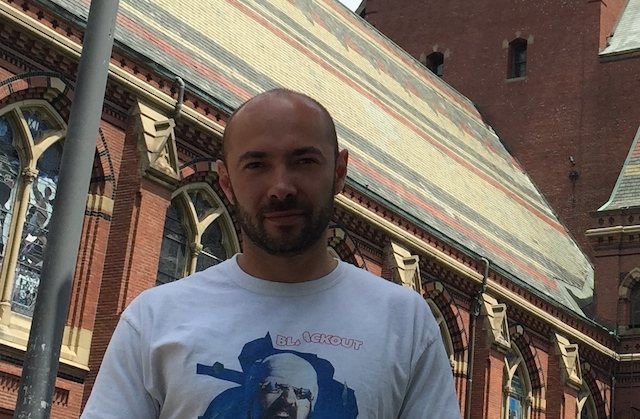
HeadshotBorn in In Levski, Bulgaria. Vilyana has just finished her BA in Textile in National Academy of Art Sofia. In 2013, she spent a semester as an Erasmus student in Istituto Superiore per le industrie artistiche (ISIA) in Faenza, Italy. She had chance to be part of a nice exhibition in Forli in May 2013. In the summer of 2013 she started working in a factory for beachwear and custom designed swimwear. Currently she lives and works in Sofia.

11721731_988190344545740_1434317018_n

works.io/vilyana-milanova-milanova

All images copyright of the artist and used with their permission. 

Posted in Sculpture | Tagged , , | Leave a comment

Kalee Appleton – Dallas, Texas

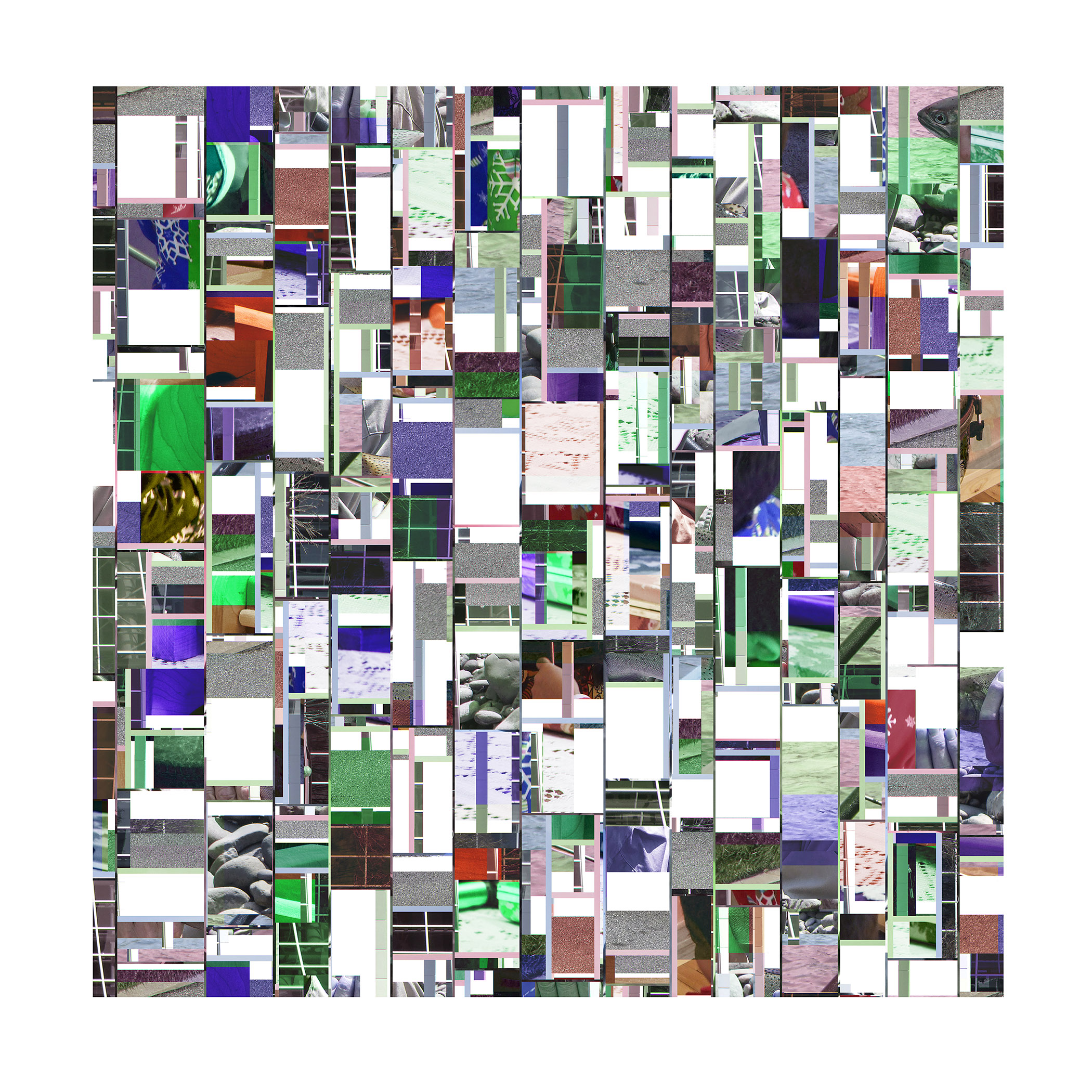
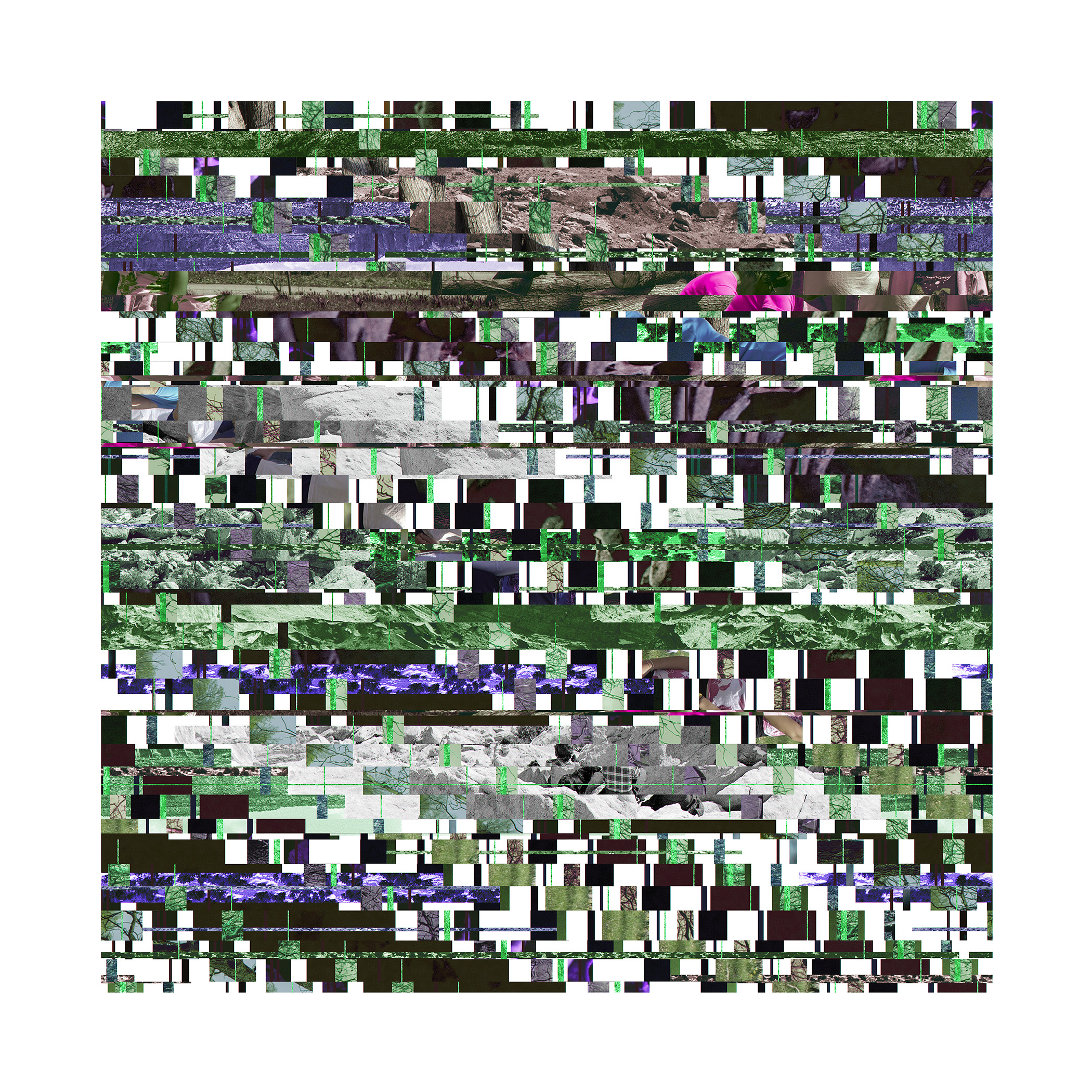
Untitled 2 Year: 2014 Medium: Archival Inkjet Print Size: 40” x 40”

Untitled 2
Year: 2014
Medium: Archival Inkjet Print
Size: 40” x 40”

Briefly describe the work you do.

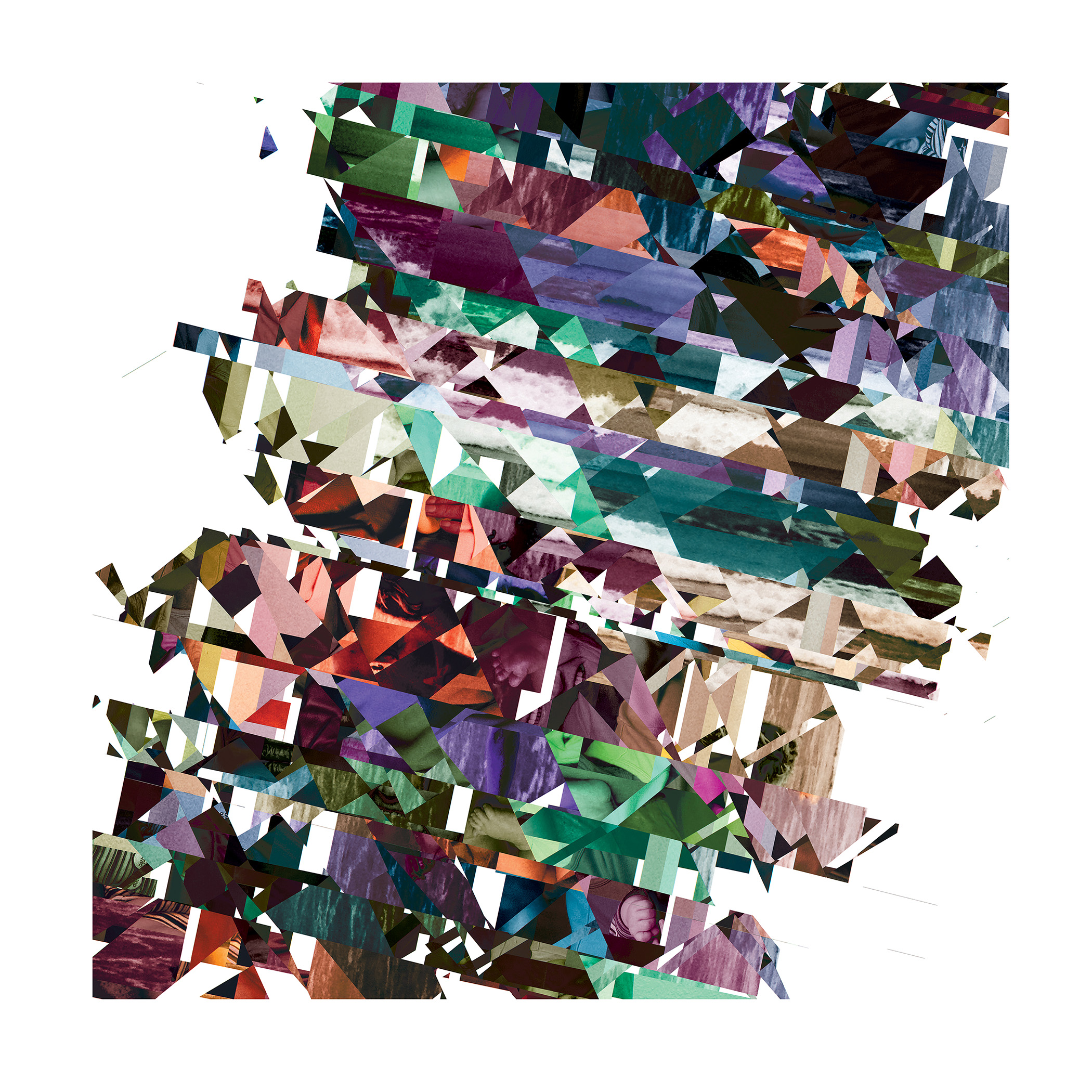
I am an artist and educator who works primarily in Photography and Digital Art. A lot of my work is produced by working with the digital code of photographs and either adding other photographic code to existing photographic code or altering it in some way. I work predominately with the hex editor software program, 0xED. In this series, Looking Back at Saturn, I asked individuals via internet, social media and call for entry forums to send me photographs of their past. I then used these volunteered images to create a digital collage using my method of digital code manipulation. I liked the idea of multiple people taking part in my art process as a type of collaboration as well as creating art pieces that speak to the collective memory that we have as members of the human race.

Tell us about your background and how that has had an influence on your work and on you as an artist.

I grew up in Hobbs, New Mexico, and went to Texas Tech University in Lubbock, Texas, where I took my first Art class and quickly switched from a Business major to an Art major. Since then, I’ve received a BFA in Studio Art (Photography), worked as an aviation photographer and eventually earned my MFA in Art from Texas Woman’s University. Something that I think has been instrumental in the subject matter of my artwork, was my learning photography at the pivotal point in which photography switched from analog to digital. I strongly believe that 1999-2009 is one of the most important decades in photographic history and we are just now realizing the effects of what went on during that time.

Untitled 8 Year: 2014 Medium: Archival Inkjet Print Size: 40” x 40”

Untitled 8
Year: 2014
Medium: Archival Inkjet Print
Size: 40” x 40”

The concept of the artist studio has a broad range of meanings in contemporary practice. Artists may spend much of their time in the actual studio, or they may spend very little time in it. Tell us about your individual studio practice and how it differs from or is the same as traditional notions of “being in the studio.”

I have recently attained a lovely in-home studio, where I work on a number of projects and I wouldn’t give it up for the world. Its spacious, has lovely light and is convenient, though it could use more storage. What studio couldn’t use more storage? When I need or want to get a lot of work done in the studio, I go directly there in the morning with my coffee. I often find myself at the end of a studio day, having not eaten, showered, fixed my hair and still wearing what I slept in. Those are the days that I get the most done.

What roles do you find yourself playing that you may not have envisioned yourself in when you first started making art?

It took me a very long time to call myself an artist. I felt that I had to earn the title. The goal of being an artist seemed so impossible to me when I first began marking work. I admired so many other artists and art educators and imagining myself as a colleague and fellow artist seemed so far fetched. It wasn’t until graduate school that I discovered that I was indeed an artist.

When do you find is the best time to make art? Do you set aside a specific time everyday or do you have to work whenever time allows?

Life has a tendency to get in the way of art making. Something that I like to do when I am hard pressed for time is do at least one thing a day that furthers my artistic endeavors. It can be as simple as looking at someone else’s artwork online or as intense as working in the studio for the entire day. There is no bad or good time for me to make work, but a necessity for me is being alone. I do make an exception for my dogs. They are pretty good studio companions.

Untitled 9 Year: 2014 Medium: Archival Inkjet Print Size: 30” x 30”

Untitled 9
Year: 2014
Medium: Archival Inkjet Print
Size: 30” x 30”

How has your work changed in the past five years? How is it the same?

My work has drastically changed over the past five years. Five years ago a lot of my work was based around nature and the idea of being connected, yet separate from nature. My work is still about this interconnection with nature, but lately I’ve begun incorporating digital media. I think I’m exploring the idea of gradually accepting the digital realm as a new form of nature. I’m starting to question what is “man made” and how does the digital realm tie into nature and human nature?

How have people such as family, friends, writers, philosophers, other artists or even pop icons had an impact on the work you do?

A writer that continues to strike me with new awareness is Loren Eiseley. Eiseley was a scientist who wrote about science and nature with beautiful prose that is reminiscent of poetry. A lot of his writings are about contemplation, something that I think is important for every successful artist. Contemplating ideas and ideas for future artwork is almost as important as creating the artwork.

Have you ever been pulled in the direction of a pursuit other than being an artist? What are your other interests? 

Until I was 16, I was very serious about being a ballet dancer. I like to say that Ballet was my first love and Art was my second. I attend the Texas Ballet Theater productions as often as I can and when I do, I think, “what if…”

About

Kalee Appleton is a photography-based artist and educator living in Dallas, Texas. Originally from Hobbs, NM, she attended Texas Tech University and received a BFA in Photography in 2005. Shortly after graduated she worked as a commercial corporate and aviation photographer before attending Texas Woman’s University, where she received an MFA in Photography in 2014. Kalee’s work deals with digital processes that explore the interconnectedness of life and the relationships that lie between the past and present. Kalee is a current member of 500x Gallery, a Dallas based artist collective, and has shown her work nationally.

kaleeappleton.com

All images copyright of the artist and used with their permission. 

Posted in Collage, Photography | 1 Comment

Edna Cantoral Acosta – Guadalajara, Jalisco, México

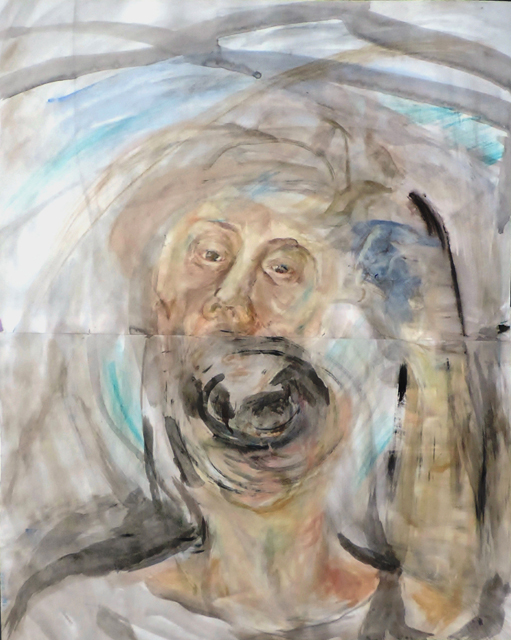
Edna 2014 Acrylic on paper. Laminated in plastic. 49 X 32 cm

Edna 2014
Acrylic on paper. Laminated in plastic.
49 X 32 cm

Briefly describe the work you do.

I am interested in that which is broken; the unfinished that never ends because it keeps changing; the “mistake“, the recycled, undrawn drawing, mixed techniques; the fragile; the small; introspection. I mainly works with acrylic, mixed techniques and collage. Literatura is a strong influence in my creations.

Sometimes I laminate my work in plastic, intending that the works float freely in space without the limitations of a frame. In a recent series we see that the characters turn into animals, symbols of what they really are. The presence of void and death as the main motors for transformation is a fixed value in my work.

I want my art has honesty, perseverance, perpetual change, the amazement, experimentation in the different techniques that reflect the profound curiosity I feel for myself and the world I am part of.

Tell us about your background and how that has had an influence on your work and on you as an artist.

I undertook a Literature diploma, I was practicing Chi Kung around that time, I was also doing pottery and clay sculpture. Art, science, music, literature, have always been present at home. My parents value art, and what is more, they live it.

The concept of the artist studio has a broad range of meanings in contemporary practice. Artists may spend much of their time in the actual studio, or they may spend very little time in it. Tell us about your individual studio practice and how it differs from or is the same as traditional notions of “being in the studio.”

I like to be lonely and yes, I spend time in the studio, I firmly believe that being in touch with myself is the best way to communicate something real, and to contact with another human being. I also believe in the transformative power of art and that we are a unit that any action that transforms me somehow transforms the world.

I like to travel when I can, to be in contact with people and learn from other realities it seems vital to me.

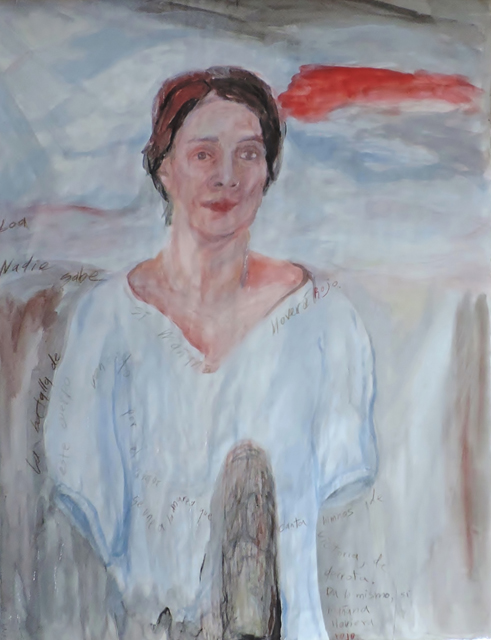
Edna 2013 Mixed media on papers. Laminated in plastic. 68 X 55 cm

Edna 2013
Mixed media on papers. Laminated in plastic.
68 X 55 cm

What roles do you find yourself playing that you may not have envisioned yourself in when you first started making art?

The artist’s books, I did not know what it was when I started my work.

When do you find is the best time to make art? Do you set aside a specific time everyday or do you have to work whenever time allows?

I work every day, I prefer the afternoon, sometimes I work even in weekends, I am a little work alcoholic. But when I begin to repeat I need to stop for a while… I rest being in nature, cooking, reading. I really like sleeping but sometimes I have to wake up because a persistent idea is bothering.

Edna 2015 Mixed media on paper. Laminated in plastic. 83 X 65 cm

Edna 2015
Mixed media on paper. Laminated in plastic.
83 X 65 cm

How has your work changed in the past five years? How is it the same?

The ideas are the same, but my work changed, before, the image was more invisible, prior the drawing was more intimated and now is more present.

How have people such as family, friends, writers, philosophers, other artists or even pop icons had an impact on the work you do?

My parents value art, and what is more, they live it.

My father is a pediatrician surgeon and I was allergic to medication, and this encouraged my parents to look for other alternatives. This has become decisive to me, thanks to my parent’s heritage and my mother’s

tireless spirit, the discovery of humanism, transpersonal psychology, Taoism, quantum physics, alternative medicine, meditation, and all that seeks for the integration of mind, body, spirit, and soul as a whole and in connection with a greater Whole. I may say that my work as artist is imbued with this life choice and with this insistent search to be that whom I am destined to be. My grandfather he used to like music, poetry, that he had a deep religiosity and curiosity for the invisible on oneself and the world.

Antonio Acosta, a painter, astrologer, and a true warrior in the path of self-discovery, was my first inspiration and real and close reference of art as a way of life and an occupation.

When my eldest sister, to whom I am strongly attached, went away to study music in Morelia, I found myself alone. This was the main reason that drove me to enter the Art School, I was looking for company. Funnily enough, I had to finish my studies there if I wished to pursue a professionally career in art.

Companions in my life have been the love and wonder I feel for words and the power that I deem they have. My mother and I recall that I have loved reading out loud since I was a child and thus I would follow her up and

down the house to read to her. I once asked her: what a funny word! who might have invented it? Language is still a mystery to me. Literature has also been one of the treasures I have held dear through my life and one that gives meaning to it.

Having seen the film Orlando, based on the novel by Virginia Woolf, Juan Gelman’s poetry. Goya, Toulouse, Remedios Varo.

Have you ever been pulled in the direction of a pursuit other than being an artist? What are your other interests? 

Cooking, once I worked in a restaurant, I have ideas for food. I like teaching , interact with kids, I learn more. I was interested in studying psychology, also I’m curious and like the zoology , biology.., photography. I like to travel.

About

Edna_ headshotEdna Cantoral Acosta was born in Mexico City, 1976. She studied in Guadalajara, Jalisco, Mexico, where she currently works. In 1996 she obtained the Sogem diploma in literary creation. She undertook undergraduate studies in plastic arts at the University of Guadalajara. (1998-2001). She took classes with artists and in the engraving workshop of Herculano Álvarez during the period between 2002-2003. She was granted a scholarship to study at the ENSAD, Paris, during the period from October 2004 to August 2005.

She has participated in 67 collective exhibitions in Guadalajara, Mexico city, Argentina, Spain, N.York, Georgia , Japon, London. Recent exhibitions are: “THE ARTERNATIVE PLAYGROUND”, 3th to 6th sept, 2015, The Rag Factory, London;

PEQUEÑO FORMATO INVERSIÓN ATRACTIVA VIII“, 22 de august to 22 sept, 2015 at Galería Adriana Valdés, Gdl, Jalisco; La Carnivale, The New Bohemian Gallery, Minnesota, 3 to 25 july 2015; Identity/Memory, Gallery on the Corner, London, 13 to 23 June 2015; Una Vida/ A life, excolegiojesuita.mx, Pátzcuaro, Mich, México, 12sept-19 oct, 2014; HEROES AND VILLAINS , ARC Gallery and Educational Foundation, 25 June to 19 july, 2014, Chicago; FOLIA , 1rst   International Artist Book Fair, Instituto Cultural Cabañas, February 2014 and Favor de Tocar, Larva , Nov- December 2013, Guadalajara, Jalisco, Mexico, both organized by: Liabooks; “Derroteros”, Galería Adriana Valdés, Guadalajara;   “The Artful Scriptorium”, Climate Gallery , N.York ; “Passion for Freedom”, Unit 24 Gallery, London;   ART TAKES TIMES SQUARE, Chashama and Artists Wanted, Nueva York; LA ELOCUENCIA DEL ARTE, Galería Adriana Valdés (december 2012 ) at Guadalajara, Jalisco; I’S SHES HERS and OURS, I-SHO Gallery, Edwards Lane , London, 2011; Redux , Desotorow Gallery, Inc. Savannah, Georgia, April, 2010. Edna carried out 11 individual ones, one of them being the Signature of the artist book “Homenaje a Juan Gelman /Hommage à Juan Gelman” at the Hune Brenner Gallery in Paris. Another individual exhibition: “Ventana Compartida” (Shared window), at Galería Ajolote (Gallery Axolotl), Contemporary Art in Guadalajara.

She took part in the book “Arte Euroamericano” volumes 3 and 4 and in the art magazine Casiopea # 12 (www.revistacasiopea.com), Guadalajara, México.

Edna has participated with artwork in the project: http://telephone.satellitepress.org/, New York, 2013 -2014.

She was represented by Agora Gallery, Chelsea, New York City. The year: 2008

She is a member of the International Miniart Exchange group since 2007 and she take part in the 2008 edition (www.miniartex.org) as well as in the exhibition: “Your Documents Please” International Identification Document exhibition ( http://www.yourdocumentsplease.com )

An engraving by Edna belongs to the collection: “Lolita Rubial” Foundation. Engraving National Museum, Uruguay.

One book : Homenaje a Juan Gelman is part of the collection of Standford University, 2014.

working at my studio_Edna.jpg

ednacantoralacosta.com

All images copyright of the artist and used with their permission. 


Posted in Altered Book, Book Arts, mixed media | Tagged , , , , , , | 1 Comment

Mars Gomes – London, United Kingdom

Lost In Translation Family Portrait Series Group B  Photography on-going  29.7 x 42 cm

Lost In Translation
Family Portrait Series Group B
Photography on-going 29.7 x 42 cm

Briefly describe the work you do. 

One thing that perhaps defines my work is materials and emotional depth with socio- political undertones. It’s evident that I use methods similar to confessional and conceptual models of contemporary art. Yet my work is charged with provocative irreverence and fragility, accessible to everyone. In short, existential anxiety …. with a bit of playful cruelty.

Some work is also political (Social Files) bringing into play social fragmentation with factual events, such as homelessness. Right now we are in major global crises with uncontrolled ‘consumerisation’ of everything and in Britain this has culminated with neo-conservative radical eradication and demonisation policies of the working classes and the poor. These are dangerous times in this respect and, at present, are vastly under-represented within the visual arts.

A few unconventional mediums keep resurfacing in my sculpture; plasticine, tar, chocolate, fat, sheep’s hearts, hairs, discarded cans,tins etc. With unusual props in my ongoing photographic project Family Portrait. In this series the fact that the medium is photography and the genre is portraiture allows me to bring an extra psychological sensibility between the model, the surroundings and image that is difficult to achieve in sculpture. Lets call it subjective intimacy.

Tell us about your background and how that has had an influence on your work and on you as an artist.

I was born in Mozambique in Southern Africa and came to Britain as a young adult where I studied Fine Art at Central St Martins College of Art and later Conceptual Anthropology at University College London. I have lived in London ever since while trips abroad have inspired my much of my work.

There have been two major events in my life that changed the course of things.

The first was war, and the reason I left Mozambique.

The second was cancer. I was quite young when I had it the first time. Every now and again it reappears. That definitely slows down my pace of life. Survivor’s instinct has a habit of kicking in. Does it influence my work? Sure it does, but never the ‘reason d’etre’.

Chocolate Bom-Bom 1 Edible Time Based piece Variable Dimension

Chocolate Bom-Bom 1
Edible Time Based piece Variable Dimension

The concept of the artist studio has a broad range of meanings in contemporary practice. Artists may spend much of their time in the actual studio, or they may spend very little time in it. Tell us about your individual studio practice and how it differs from or is the same as traditional notions of “being in the studio.”

The studio is a contained vessel of energy. In my case however this is a dynamic I had to change and contemporise to my needs.

For the last three years I live in the studio. Actually the studio lives with me. It can get complicated because some of the mediums I use are smelly and a bit poisonous. A lot of planing is needed.
I miss the journey to the studio, something I’ve replaced with a morning walk in the local park. It allows me time to plan and in my head change the organics of the house into ‘the studio’; architectural role play. Discipline is something I had to resolve, since my messy studio became somewhat of an evolutionary organism. Morphing to circumstance isn’t all that bad, merely a different process I had to adapt to.

What roles do you find yourself playing that you may not have envisioned yourself in when you first started making art?

The artist’s perennial artist’s dilemma; admin, budgeting, promoting etc. Budgeting for new pieces is something I started to do from the beginning as well. Artist like me use a lot of different materials, and it can easily become expensive and impossible to accomplish if not well planned.

When do you find is the best time to make art? Do you set aside a specific time everyday or do you have to work whenever time allows?

This is largely dictated by what medium I am working on. I find that some work is best to start quite early on and some when life calms down and the night sets in.

With the photographic project for example I am dependent on day light, models’ availability etc. Whereas with post production I work mostly at night.

Sculpture, especially in the technical stage, definitely during the day.

My working patterns are probably similar to most artists; long hours!

Help Duvet 2 2014 Duvet, Campbel Soup Can, Cotton  41 x 50 x 38 cm

Help Duvet 2 2014
Duvet, Campbel Soup Can, Cotton
41 x 50 x 38 cm

How has your work changed in the past five years? How is it the same?

I am in a pretty good phase right now. Everything seems to mould itself in an articulate way. The tread is there and even though my work diverges in many routes it finds it’s language; visual language that is.

Five years ago I became disillusioned; a kind of artist’s writer’s block? I stopped art all together for a few years. Although coming back was difficult and for a while I felt completely lost, the absence and subsequent return helped me to structure my thoughts and arrive at where I am now.

How have people such as family, friends, writers, philosophers, other artists or even pop icons had an impact on the work you do?

In many ways I am a visual story teller, so I like to listen to podcasts when I work. Long stories with lots of plots. This can be seen in the way I deal with plots in the Family Portrait narrative series and previously with my drawing phase.

Research precedes execution. Recently for my Chocolate Bom-bom edible pieces, I looked extensively at the contemporary French philosopher Michel Onfray’s writings on hedonism.

I’ve also been engaging with pre-20th century artists. For my current photography project, Rembrandt’s understanding of the ‘gaze’ in his portraiture pieces. On the other hand, Goya’s emphasis on narrative in his later black period, Los Caprichos, witches etchings, etc are also visible influences in my work.

Louise Bourgeois finds her way into my work as well. We will never know if she was raving mad. Madness is lucidity anyway. I think she is one of the most important artists of all time. Everything contained in emotion; genius.

Have you ever been pulled in the direction of a pursuit other than being an artist? What are your other interests? 

I was thinking about it the other day, and I guess if I’m really honest with myself I don’t know how to do anything else.

I live in London, a busy city with a lot of cultural choices and this is one of the perks I am lucky to have. Yet nature is the oxygen of the soul, therefore I diverge every now and again into the country side to breathe fresh air.

About

5-headshotMars Gomes was born in Mozambique and moved to Britain as a young adult. As a student she won the student drawing competition in Kent Institute of Art. Studied Fine Art at Central St Martins and Anthropology at University College London and was awarded scholarship for the Syracuse University (USA) exchange program.

Represented by Act de Naissance (France) during the 90’s, exhibiting her work in Britain and Europe. She was also selected for the acclaimed international feminist photographic exhibition What She Wants (1994).

During 2000/02 Mars Gomes set up the Studio Voltaire gallery in London, producing and curating events and group shows such as the open submission Everybody is an Artist, international group exhibitions and annual community art festivals . In 2006 Mars Gomes moved to Berlin where she set up a studio and produced work for the exhibition Berlin Works/ Berlin Arbiten.  In 2012 Mars Gomes was commissioned by LeeFest for a public art commission in east London. During this year she also partly curated and exhibited in the first, of the now well established London annual open, Bad Behaviour. In 2015 she was selected for the New Directions#1 contemporary art books editions by Exhibooks publishers,UK to be launched in September 2015.

4-messsculptureroom

marsgomes.wix.com/fine-artist

All images copyright of the artist and used with their permission. 


Posted in Photography, Sculpture | Tagged , , , , , | Leave a comment

Roberta Masciarelli – Dallas, Texas

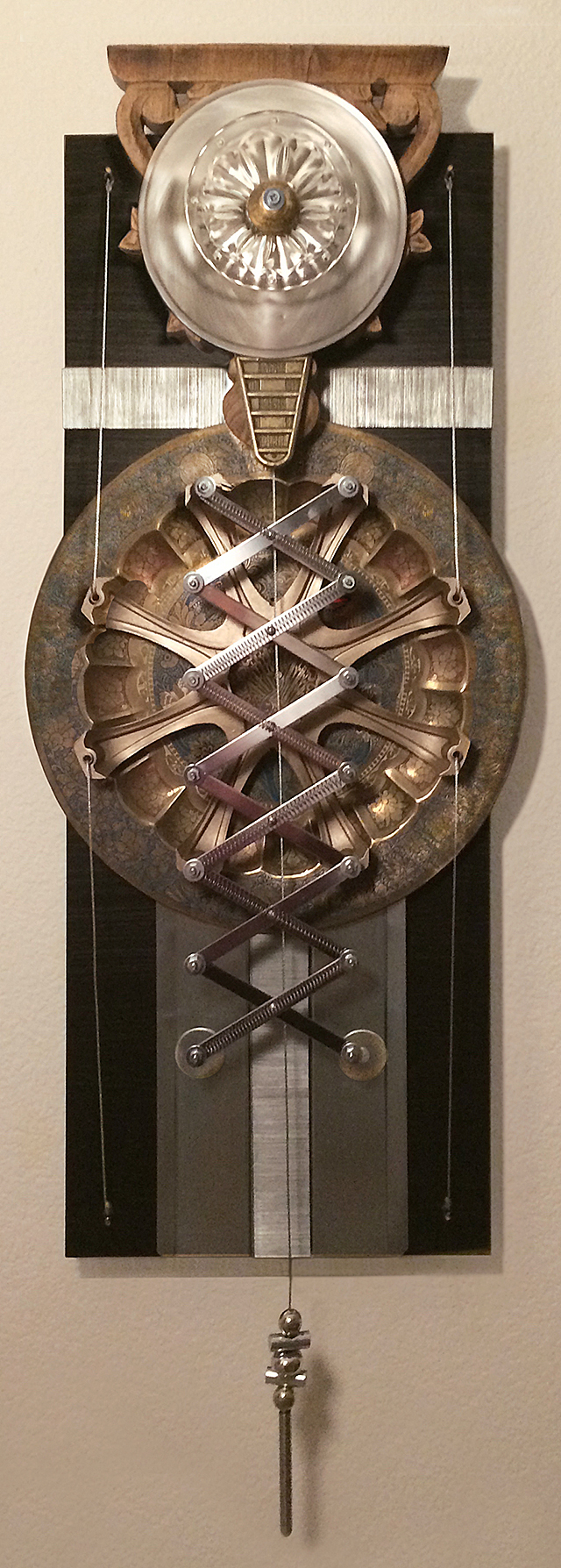
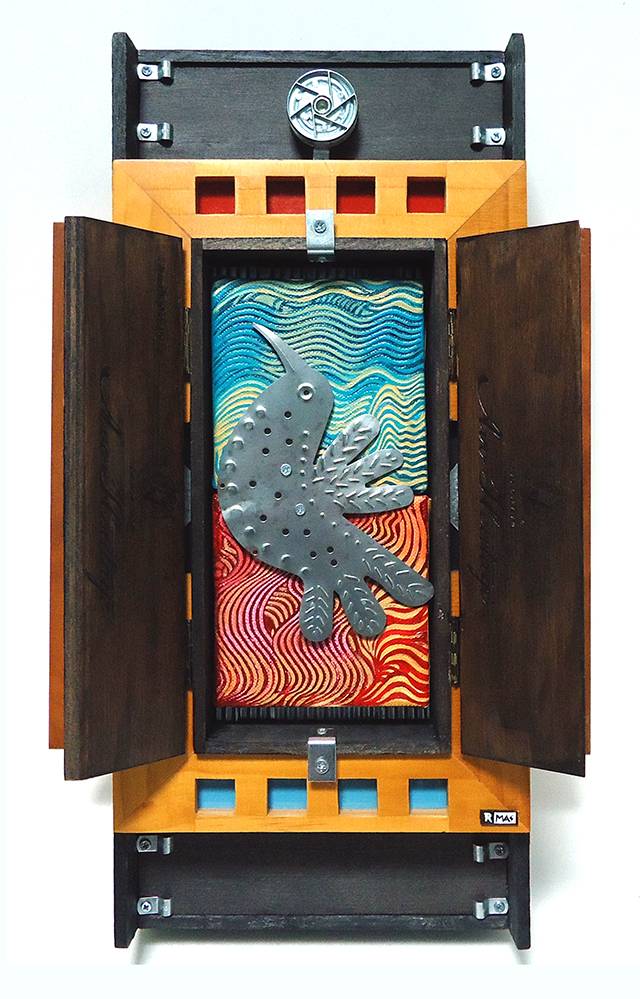
Natura Mechanica:  Wall hanging assemblage sculpture with found objects & repurposed materials Size: 21X19X4in 		2015

Natura Mechanica:
Wall hanging assemblage sculpture with found objects & repurposed materials
Size: 21X19X4in
2015

Briefly describe the work you do. 

I build spaces which allow the viewer’s eyes to travel along the construction which in turn tell stories.

Tell us about your background and how that has had an influence on your work and on you as an artist.

I have a bachelor degree in Architecture. And although I never worked as an architect, I carry this knowledge in everything I do.

I am used to planning what I want as the end result. I think about the structure of the piece itself: how it is going to last, not break and be in balance.

My style is loosely based on Brutalism – a short tendency in Architecture in the 50’s-70’s timeframe.

On that school of thought the infrastructure of a building was not hidden. Au contraire, eletric wires, conduits, plumbing and other details were apparent to the user, making them a part of the visual result. 

I like to show how I put my piece together. 

Most of time the use of glue is restricted to a minimum and all the screws and mending plates are visible. 

The electrical components are there, but sometimes having different uses. The beauty is in the knowledge and truth. The use of found objects are the main focus in my creations. 

Rahu Kalam Calculator:  Wall hanging assemblage sculpture with found objects  41 x 15 x 4in - with pendant  		2014

Rahu Kalam Calculator:
Wall hanging assemblage sculpture with found objects
41 x 15 x 4in – with pendant
2014

The concept of the artist studio has a broad range of meanings in contemporary practice. Artists may spend much of their time in the actual studio, or they may spend very little time in it. Tell us about your individual studio practice and how it differs from or is the same as traditional notions of “being in the studio.”

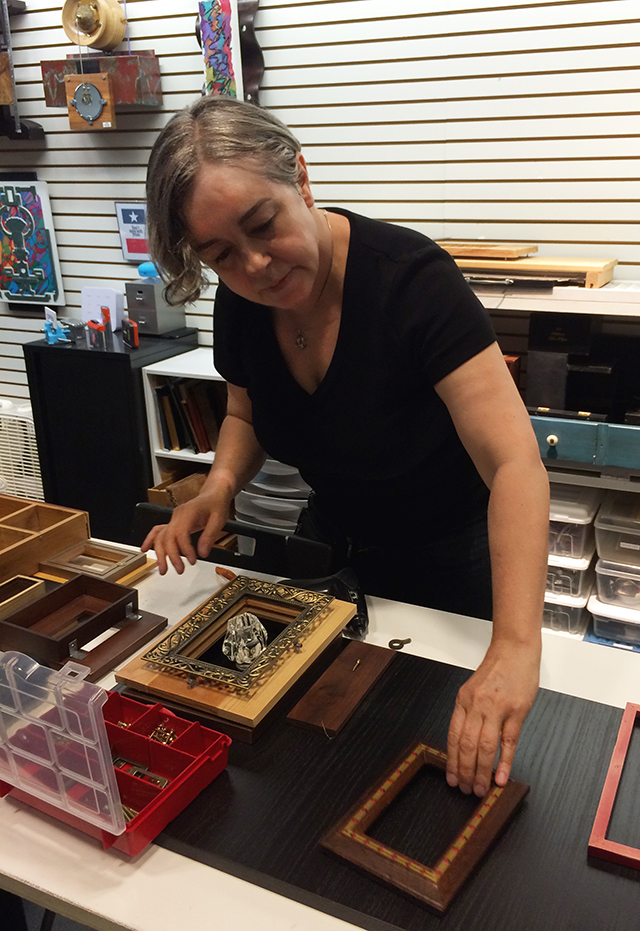
My studio is like an extension of my house, I have to go there everyday, besides the weekends.

My routine is about 4 to 5 hours per day. More than that becomes a bit overwhelming for my hands and arms -the need of strength and at the same time, control in manipulating the objects…

What roles do you find yourself playing that you may not have envisioned yourself in when you first started making art?

I quit working with computers as a graphic/web designer and I’ve started painting. I thought this was enough for me as an artist but it was not.

When do you find is the best time to make art? 

Afternoons seem to be the optimal timeframe.

Do you set aside a specific time everyday or do you have to work whenever time allows?

I have many projects in my mind and not enough time to execute them, it is like running against time…

But I work 4-5 hours per day. More than that can be quite challenging physically.

Phoenix:  Wall hanging assemblage sculpture with found objects and painting on canvas  11x17x4.5in 		2013

Phoenix:
Wall hanging assemblage sculpture with found objects and painting on canvas
11x17x4.5in
2013

How has your work changed in the past five years? How is it the same?

From pure paintings I’ve started to add materials and then, they become mixed media. Later the found objects came and my art became tridimensional

How have people such as family, friends, writers, philosophers, other artists or even pop icons had an impact on the work you do?

My husband always gave me his full support and I thank him for that. Music, metaphysical concepts, spirituality and sci-fi is are non ending fuel sources for my creativity. 

Have you ever been pulled in the direction of a pursuit other than being an artist? What are your other interests?

Yes, I thought in pursuing Healing Arts like Energy works, QiGong and Chinese Medicine but Art has prevailed.

About

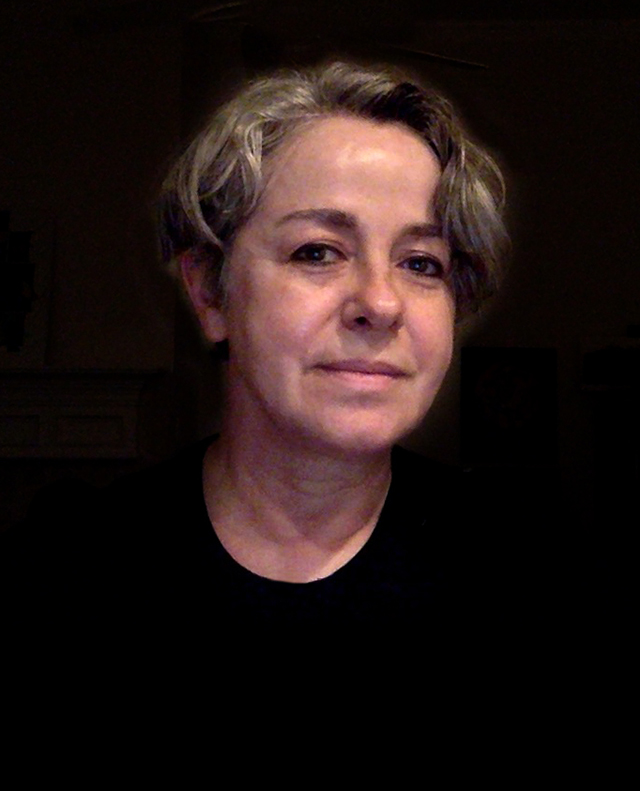
Rob_April2015-640Roberta Masciarelli has been a graphic designer/visual artist for about 25 years.

Her early career started in Sao Paulo, Brazil – where she is from originally.
There she worked for many advertising agencies and book publishers in addition to various free lance projects.

After relocating to Dallas in 1999, for about 10 years she continued her design career working assignments in North Texas, doing graphic and web design for several companies.

Her art are wall hanging sculptures created from found objects mixed with paintings. Her art has been exhibited in art events within the US in Dallas, Washington DC and New York.

Internationally, she has exhibited in collective shows in England, Holland, Denmark, Portugal, Spain,Turkey, South Africa, New Zealand and Bosnia, Japan & Italy.

She has a bachelor’s degree in Architecture, from Mackenzie University, Sao Paulo, Brazil. Her art studio at the Valley View Mall is open to public view.

Hours: Mon-Friday 2-6:00 PM or by appointment.

Address: 13331 Preston Rd – Studio C

Dallas, TX, 75240

working3_640

robbiemas.com

All images copyright of the artist and used with their permission. 


Posted in Sculpture | Tagged , , , , | Leave a comment

Peter Kenar – Chicago, Illinois

My Path Ablaze Wood, bronze, blood, brandy, Installation 8' x 30' x 15’ 2013

My Path Ablaze
Wood, bronze, blood, brandy,
Installation 8′ x 30′ x 15’ 2013

Briefly describe the work you do.

Generally my work tends to be object and installation based. Shifting between two modes of composition, I tend to address a heavy subject of ritualistic practice which usually brings a somewhat darker visual outcome. The other mode addresses humor and vulgarity. While attempting to be lighthearted, I somehow manage to connect the two states of mind visually.

Formally, I use components of religious architecture and I combine them with elements of human and animal figure.

Tell us about your background and how that has had an influence on your work and on you as an artist?

I was born and raised in communist Eastern Europe.   The environment of my upbringing lacked sensory stimulation of video games, cartoons, commercials and colorful toys. Perhaps, because of this depravation I was able to deeply observe my surroundings and pay attention to local traditions and culture. In catholic Poland, church was the dominant component of everyone’s life. As a child I became curious to why that is. Church had the prettiest buildings and the most colorful art. This early visual stimulation remains with me till this day and it plays an important role in majority of my recent compositions.

When Memory Carves Destiny Wood, rope, acrylic paint, blood, nails installation 2015

When Memory Carves Destiny
Wood, rope, acrylic paint, blood, nails
installation 2015

The concept of the artist studio has a broad range of meanings in contemporary practice. Artists may spend much of their time in the actual studio, or they may spend very little time in it. Tell us about your individual studio practice and how it differs from or is the same as traditional notions of “being in the studio.”

Studio practice indeed does cover a broad range of activity for me. I often think of it as something that never stops. There is this time when I get into this room with my artwork and my materials and tools.   This very time is almost sacred to me. I could compare it to a ritual as I have developed certain behaviors associated with me being in this workspace. While physically in the studio, I tend to only listen to one album for the duration of the fabrication of a given piece. This repetition turns into meditation and then euphoria. Sometimes I might add a few drinks to this equation. All of this energy is focused and poured into the hands on process. It’s very important to me to have a strong connection with my work in every way possible.

Second part of studio practice means research, observation and analysis. This is the part that never ends and it happens everywhere. This is the part that is becoming progressively more and even more important for the composition of my work.

What roles do you find yourself playing that you may not have envisioned yourself in before you first started making art?

As I first started making art I knew only of the romantic part which means making stuff in the studio. This reality has changed for me completely. Today, I additionally see myself as a writer, diplomat and perhaps even a businessman. Writing grants, proposals and applications often holds a priority over the actual studio time. I am not happy about this reality.

When do you find is the best time to make art? Do you set aside a specific time everyday or do you have to work whenever time allows?

I always try to work at night. This is not simply because I am less likely to be bothered. This is the time when I feel more active, stimulated. At night I feel like I am able to enter a different state of mind, state of euphoria. Everything feels more poetic as the nocturnal studio process often turns into a psychological celebration.

Two Faces Two Blemished wood, rope, blood, graphite 6' x 4' x 3' 2014

Two Faces Two Blemished
wood, rope, blood, graphite
6′ x 4′ x 3′
2014

How has your work changed in the past five years? How is it the same?

In the past five years my work has changed a lot. I used to only care about the final product and its visual impact as the other components were left behind. Today my feelings and intensions focus on the process and the potential symbolism of the materials used. The act of making is more important to me then the actual finished piece. I believe that this is apparent in my work.   Now, so much more is taken into consideration allowing all components of my compositions to be entirely intentional. Despite these significant changes, it’s relatively easy to recognize both, my old and new work as mine. I have always enjoyed a specific atmosphere and a certain crudeness as evidence of manipulation by a human hand.

How have people such as family, friends, writers, philosophers, other artists or even pop icons had an impact on the work you do?

Everything influences the work I do. In some sense, every piece I make is influenced by something else. Music and written word inspire me always. Because of my current occupation, I see art and meet artists every day. Some bring great encouragement and inspiration while some make me want to never touch art again. This is actually an awesome opportunity for me to mention that I lean towards the “Black and or White”. This means that I love the opposite sides of each spectrum while the middle ground does not interest me very much. This means that sometimes Madonna’s “Into the Grove” and sometimes the darkest most aggressive occult Metal are the inspiration for my work.

Have you ever been pulled in a direction of a pursuit other then being an artist? What are your other interests?

Music is my deep love. I must listen to it always and I must play it. My pursuit in its direction was quite serious at one point as I was recording albums, and touring with a band. Till this day I can think of very few things which bring me more satisfaction then performing in front of a live audience. Science or more specifically biology, originally existed as something I would have chased after instead of art. I enjoy the theory as well as the laboratory protocol. Surgical procedures fascinate me so I gladly provide friends or myself with stitches when necessary.

About

IMG_3376Peter was born and raised in Krosno, Poland. At the age of fourteen he moved to United States and has resided in Chicago as well as Chicago land since. He has received his sculpture BFA from Northern Illinois University and his MFA from Indiana University. Peter currently works for Methods & Materials based in Chicago. During the past year he has worked with Charles Ray, Liz Larner and many other artist, for the installation of their exhibitions. Peter lives and produces his work in Chicago. He has exhibited nationally in New York, Chicago, Seattle, as well as internationally in Japan, Poland and Italy. This year, his most recent solo exhibitions were hosted at Flow Space Minneapolis and Ave Arts in Grand Rapids.

DSC_0211

peterkenar.com

All images copyright of the artist and used with their permission. 

Posted in Installation, Sculpture | Tagged , , , , | Leave a comment

DAAS – Kobe, Japan

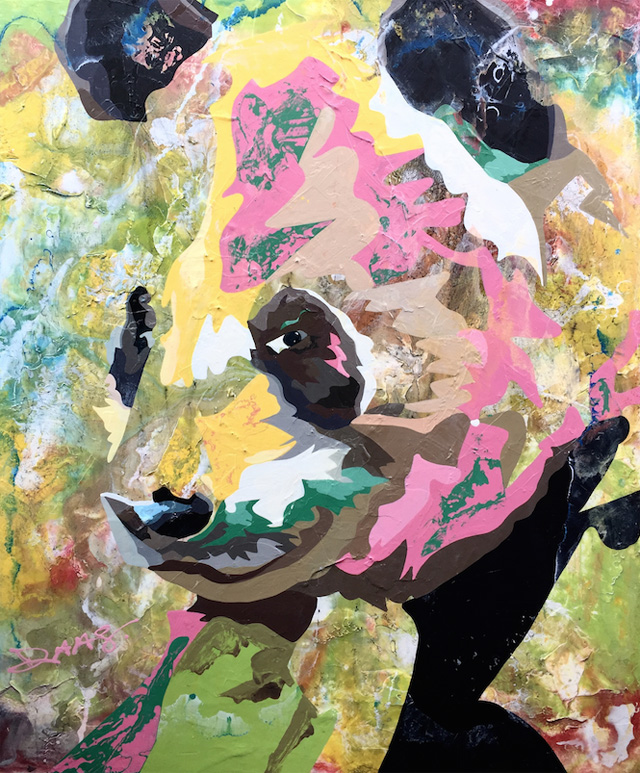
“Panda II” (2015) Enamel and acrylic on wood, 53 x 44.5 cm

“Panda II” (2015)
Enamel and acrylic on wood, 53 x 44.5 cm

Briefly describe the work you do.

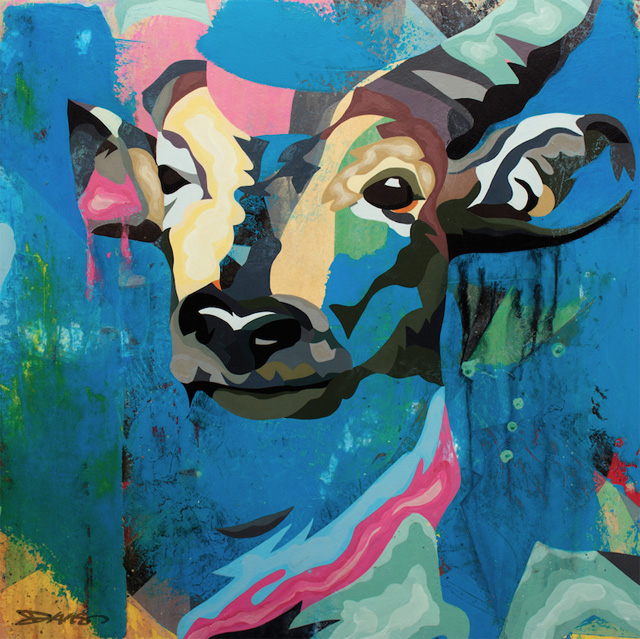
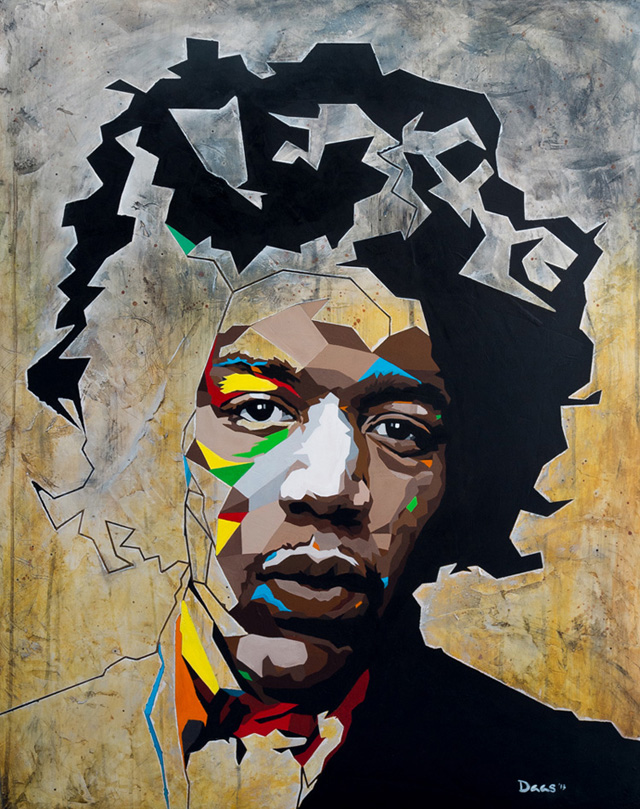
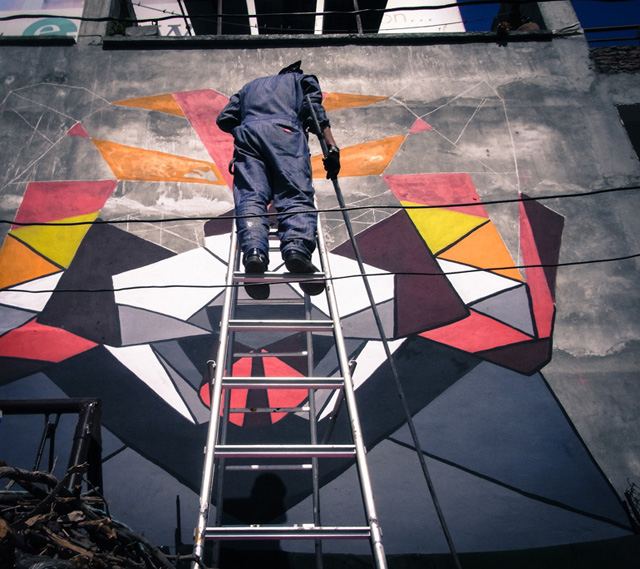
My work synthesizes line, geometric shapes, rich textures and color to produce paintings that use both representational and abstract elements to create recognizable forms such as humans, animals and insects.

Tell us about your background and how that has had an influence on your work and on you as an artist.

I grew up along the east coast of Florida, spending most of my time outdoors exploring the forest near my home, road trips with my family and building sand castles at the beach. During one of those road trips at around the age of 7, I observed my mother drawing in a sketchbook; it was at that moment when I realized I wanted to be an artist. I don’t see any obvious connection that my current work is influenced by my childhood though, as I’m more focused on the experiences I have daily and the inspiration I gather from my environment.

The concept of the artist studio has a broad range of meanings in contemporary practice. Artists may spend much of their time in the actual studio, or they may spend very little time in it. Tell us about your individual studio practice and how it differs from or is the same as traditional notions of “being in the studio.”

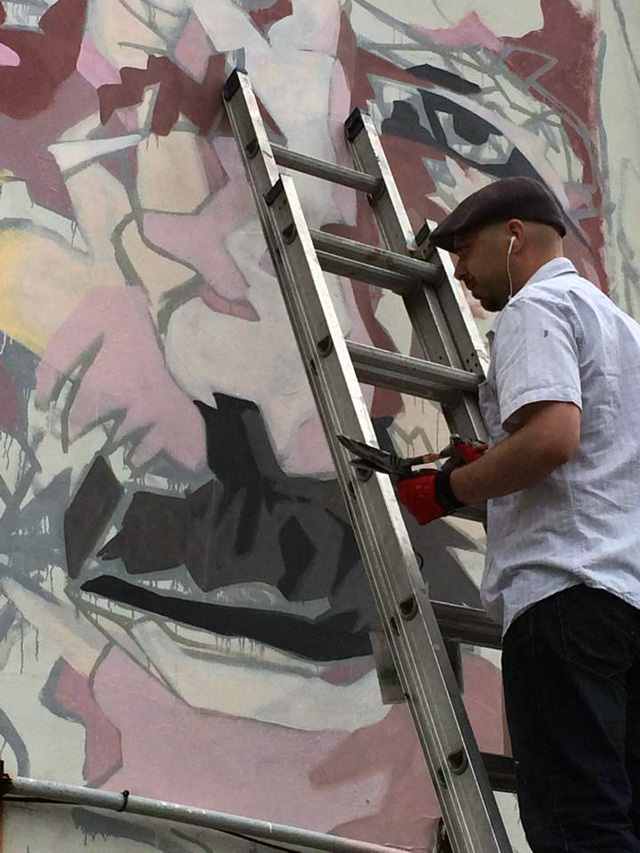
Although I maintain a studio in the traditional sense where I create the majority of my smaller works, storage for paintings and materials, I often find myself working on location out of the studio creating murals outdoors.

“Antelope” (2015) Acrylic on wood, 65 x 65 cm

“Antelope” (2015)
Acrylic on wood, 65 x 65 cm

What roles do you find yourself playing that you may not have envisioned yourself in when you first started making art?

The business side of art is something I had not expected to be so dominant and never thought it would take up so much of my time. I have learned to enjoy it though, especially when dealing with commissioned work and murals, it’s important to understand the financial aspects so that you get fair compensation for your work.

When do you find is the best time to make art? Do you set aside a specific time everyday or do you have to work whenever time allows?

I work on my art everyday, but I don’t have any specific schedule. The only exception is when I have deadlines on a project and or I have more than a couple things going on at the same time, then I will usually start painting in the morning and work until I reach a breaking point.

“What if 6 turned out to be 9” (2013) Acrylic and gypsum on canvas,  73 x 91 cm

“What if 6 turned out to be 9” (2013)
Acrylic and gypsum on canvas, 73 x 91 cm

How has your work changed in the past five years? How is it the same?

My work has actually gone through a rather dramatic transition over the past five years, becoming more focused on breaking down the elements of the subject and seeing how far I can push that abstraction before the image falls apart.

How have people such as family, friends, writers, philosophers, other artists or even pop icons had an impact on the work you do?

There are quite a few portraits in the Geometrics series that feature people who have made an impression on me, whether through writing, music or philosophy.

Have you ever been pulled in the direction of a pursuit other than being an artist? What are your other interests? 

Nearly everything in my life is connected with art. It’s a lifelong commitment.

About

image009DAAS is an American contemporary artist currently based in Kobe, Japan. Originally from the east coast of Florida, he made his way to Osaka, Japan in 2007, contracted as an artist for Universal Studios Japan. After leaving USJ in 2012, his focus has been primarily on exhibiting paintings and creating murals in his signature geometric style.

Exif_JPEG_PICTURE

Exif_JPEG_PICTURE

artist-daas.com

All images copyright of the artist and used with their permission. 

Posted in Street Art | Tagged , , , , | Leave a comment

Chin Chih Yang – New York City, New York

1.Kill Me or Change Interactive performance / Installation (30,000 Aluminum cans, Steel metal, rope, fish net and more)  Variable 2012

Kill Me or Change
Interactive performance / Installation (30,000 Aluminum cans, Steel metal, rope, fish net and more), Variable, 2012

Briefly describe the work you do.

Most of my projects have a relationship to society and community — the social issues intrinsic to human life. Another aspect is humanity’s relation to the environment: global interconnection, ecology, and what we generally term “nature.”

The information I gather about these themes largely derives from everyday media: the internet, sometimes the radio, TV. Also, talking to friends and thinking about people I care about.

I pay attention to changes in society and the new technologies that influence these. My work is constantly changing, just as social relations are. As an artist, I’ve evolved from working in very traditional media, like drawings, paintings, water colors, and sculptures — using wood as sculptural material — to working with new media photography, and digitally modified imagery. 

Today I incorporate all of these elements with the physicality of my body, interacting with audiences, and generally mixing different media together. I use whatever medium is best to make my concept clear, to articulate a problem I see in our society.

Tell us about your background and how that has had an influence on your work and on you as an artist.

Three things come to mind about my past and my artistic background.

I grew up as a farmer. As a child, I always helped my mother with the farming, while my father would work in Taipei city. Working in the fields, doing farm work, I got to see nature actually happen. Once, the river near our home flooded, and our whole village became water. It was very dangerous, and my mother sat me and my siblings onto the beam that structurally supported our roof. Even on the beam, though, our hands could touch the water; the flood was that devastating. A lot of houses were destroyed, and some people were even killed by the water.

Later, when it was time for me to go to elementary school, the teachers wanted all of us to speak Chinese. If you spoke Taiwanese, you were punished, because everyone was expected to learn Chinese. 

Alongside all of this was the fact of martial law. Free assembly was denied; nobody could meet in the street for political reasons. Martial law obtained in Taiwan for 50 years, and shaped the political climate that informed my childhood. As an upshot, I make a lot of politically-themed work: public events that create communities. 

Burning ICE Interactive Installation (21,000 BL of ICE, a siren, towel, plywood, rule and more), Variable, 2009

Burning ICE Interactive Installation (21,000 BL of ICE, a siren, towel, plywood, rule and more), Variable, 2009

The concept of the artist studio has a broad range of meanings in contemporary practice. Artists may spend much of their time in the actual studio, or they may spend very little time in it. Tell us about your individual studio practice and how it differs from or is the same as traditional notions of “being in the studio.”

I don’t have a physical studio space right now. At the same time, as a studio means to me somewhere I can live as well as work, anywhere is my studio.

If I am invited to an artist’s residency, that’s my studio. If I do an interactive performance near Times Square, a tree in Bryant Park, or the social interactions that emerge from being in that vicinity become materials for my work. To me, the studio means my life; where I live is where is my studio is.

I recently realized a project in Times Square, which is called “An Interactive Performance Against Corporate Waste.” I developed my concept at that very location, honing it in terms of the audiences that attended to me in Times Square. Years back, in Union Square, for my interactive sculpture “Burning Ice,” it was the same thing. I might bring certain items with me, but mainly I bring my body and my friends. That’s what I mean when I say art is everywhere and everywhere is my studio. I do not have a specific place to call my studio. I can’t work like that. My art can happen anytime, in any location — anything can happen and my art will happen there there too. 

What roles do you find yourself playing that you may not have envisioned yourself in when you first started making art?

The art world is confusing. I don’t quite understand what it means. When I was making objects — manipulating stones, Iet’s say, or drawing as a child — I didn’t know that was called art until someone told me. Even today, when I’m engaging in interactive performances, everybody says that they’re art but I don’t quite grasp how the professional art critic or art historian can distinguish what I do from life and call it “art.” At bottom, it seems whenever I do something interesting, or at least something that interests me, it’s art. So I wasn’t sure what my role was when I first started out, and in certain respects this question still puzzles me.

When do you find is the best time to make art? Do you set aside a specific time every day or do you have to work whenever time allows?

I don’t think I have a schedule. I never think, “right now I’m making this or making that.” Of course I’m always working on something, but I don’t have a regular schedule. Daily pressures inspire my work a lot: social relations, etc. Supposedly I should be able to quantify how many things I’m doing and for how long; but the way my work develops is so conversational that it’s hard to distinguish the scheduling of my life from the scheduling of my art. Not having a fixed studio space ties in with this. I don’t have a specific time or location where I do art. That’s not part of my practice.

3.Invisible love and beauty - 無形的愛與美 Interactive Performance (Black Ink, dried wood branch, recycle plastic sheet, thread, cable, cell phones, drawing paper, and more), Variable, 2009

Invisible love and beauty – 無形的愛與美
Interactive Performance (Black Ink, dried wood branch, recycle plastic sheet, thread, cable, cell phones, drawing paper, and more), Variable, 2009

How has your work changed in the past five years? How is it the same?

I put to use whatever media I feel I have to in order to convey a concept; but I wouldn’t say the results are cumulative. 

My work keeps changing all the time because I instinctively follow the rhythms of human feeling. Certainly, 5 years ago I was focusing more on digital media, whereas now I’m more interested in what can come out the human body: how it changes, the strangeness of sensation, immersion, etc. But it’s not like I’ve abandoned one practice for another. I pay attention to current events, and respond accordingly. Right now, I’m engaged by the police shootings happening across the U.S. And this will be going on in my mind for a while. 

Lately I want to use a very unique material and came out with something very small but interesting. I can’t say what exactly. Maybe gold, maybe some other material. I still have to find it. Everything hinges on doing something interesting in itself.  

How have people such as family, friends, writers, philosophers, other artists or even pop icons had an impact on the work you do?

I’m more interested in the way things appear, than who. How something comes into existence influences me, which I then apply to my way of making things.

Writers, philosophers, and other artists haven’t really influenced me. But if I see an old poster with a very unique concept or design, it influences me in that it gives me some kind of shock. I’m more interested in the future, however; and I look at icons as more like symbols than celebrities proper. 

Have you ever been pulled in the direction of a pursuit other than being an artist? What are your other interests? 

I don’t know how much benefit I get from what I’m doing — I mean in terms of money. I certainly find my work personally beneficial.

And while I’m uncertain what art means, and don’t receive much money from what I do, making art is something I really desire to do. 

My desire is what I’m making now, so I don’t know what others desires I could have had. A mansion, maybe? A private island? I don’t think that’s what I truly want. 

And even the money is not what I truly want. I need the money to spend to make what people call art, or to buy materials, but again: that’s my desire. 

About

HeadshotMultidisciplinary artist Chin Chih Yang was born in Taiwan, and has resided for many years in New York City. He studied at Parsons School of Design in Manhattan (BFA, 1986) and graduated from Pratt Institute in Brooklyn with a Master of Science in 1994. In a 2009 review Holland Cotter of the New York Times called one of his projects “a magical tunnel of love.” That same year he received a grant from The New York Foundation for the Arts; the following year he was awarded fellowships from the New York State Council on the Arts and another grant from The New York Foundation for the Arts.

His most recent work addresses society’s efforts to protect itself, both physically and psychologically, against long-term catastrophe resulting from pollution, surveillance, isolation, quarantine, and religious/political/social intolerance. The modern world, as Yang conceives it, is a graduated mixture of anxiety and entrancement. 21st-century products can do wondrous things, but producers and consumers alike wantonly discard waste. He explores such short-sighted practices by combining found materials, video projections, performance, and his own body to make art that spotlights ways forward. He likes to collaborate with other artists to create work which deals with the issues affecting individuals and, by extension, specific communities as well as society at large. Incorporating a touch of irony, his art helps us become better acquainted with the frightening side of human nature, signaling experimental and creative ways to view the planet and ourselves.

In 2011 He was honored with a NYFA Digital Electronic Arts Fellowship, a solo exhibition at Five Myles Gallery, and a Franklin Furnace Fund award. 2012 My project “Kill Me or Change” was selected from among 400+ international applications and this vital institutional support, funded in part by Jerome Foundation and The Lambent Fund, enabled presentation of a major work in front of the Unisphere. With the collaboration of Franklin Furnace, the Queens Museum of Art, The New York City Parks Department, Bay Crane Company, and over 100 volunteers, thousands of members of a very diverse general public watched as a construction crane raised, suspended, and then dropped 30,000 used aluminum cans on me. This intentionally playful and provocative project was my attempt to bring to light the effects of over-consumption. 30,000 is the number of aluminum cans one person will throw away in a lifetime. By showing, quite literally, the suffocating effects of one person’s personal polluting, this piece serves as a call to action for the public to examine their habits of personal consumption.

His professional art career began snowballing early in 2003, when his digital article “The War Against AIDS ” was published in Art Asia Pacific Magazine, and In 2005 his new media interactive article “The Control of Fear” was selected for presentation at the ACM 2005 Multi Media International Conference. In 2006 an exhibition of his work was sponsored by The Taipei Culture Center of the Taipei Economic and Cultural Office in NYC, and another exhibition was mounted by the Taiwanese American Council the following year. Additional career highlights include a 2014 residency at Arteles in Finland, and artist’s talks and demonstrations at School of Visual Arts 2012, and for Princeton University’s graduate fine arts students in 2010. Yang’s first solo project in the United States of America was a video installation in Union Square Park in 2007. That same year he presented solo performances and installations on site at The United Nations building and the Consulate General of China, and have since gone on to share my work with the public in Times Square, Rockefeller Center, Wall Street, and many major public gathering points in Manhattan. He has also presented solo work at colleges including Towson University and Queens College, and at the Manhattan galleries of Tribes Gallery, Tenri Cultural Institute, and CUE Art Foundation.

He strives to reach new audiences and relish opportunities to share his art with people who do not ordinarily encounter art. His work has been presented in forty major group exhibitions between 2005 and today. He has performed and exhibited in universities and museums across Taiwan; and in America at the Weatherhead East Asian Insitute of Columbia University. It is a pleasure to have had work included in the inaugural exhibition at Flux Factory and in prestigious venues from Exit Art to The Nathan Cummings Foundation Gallery. He has shown at art fairs in Miami, and Taipei Art faire, at the Asian Film Festival in Warsaw Poland, as well as in Hong Kong, and in Singapore. Back home in NYC, He has reached local audiences with interactive events at important cultural centers in all five boroughs, from The Queens Botanical Garden to the DUMBO Art Under the Bridge Festival, from the Bronx River and Longwood Arts Center to a public pool on Staten Island. On a glorious Saturday in 2009, the audience for his outdoor performance in Union Square Park was estimated at 20,000.

He has been commissioned by the Queens Council on the Arts and the NYC Department of Transportation, and has completed energizing and productive residencies at Byrdcliffe Art Colony and at the University of North Carolina (and was unfortunately forced to defer a residency offered by The Vermont Studio Center). He also completed a 2010 Lower Manhattan Cultural Council Swing Space Residency at Governors Island.

His work has received extensive coverage and critical acclaim in The Wall Street Journal, The New York Times, The Village Voice, Time Out New York, Art Asia Pacific Magazine, The Taipei Times other major publications. Profiles have been broadcast on television stations from WCBS, NY to the BBC World News, and online coverage has been presented by Art Beat, Art Radar Asia, Flavorpill, NY1, The Village Voice, and Time Out New York, among many other websites and blogs.

StudioInTimeSquare

chinchihyang.com

All images copyright of the artist and used with their permission. 

Posted in Performance | Tagged , , , , | 2 Comments

Ginny Zanger – Boston, Massachusetts

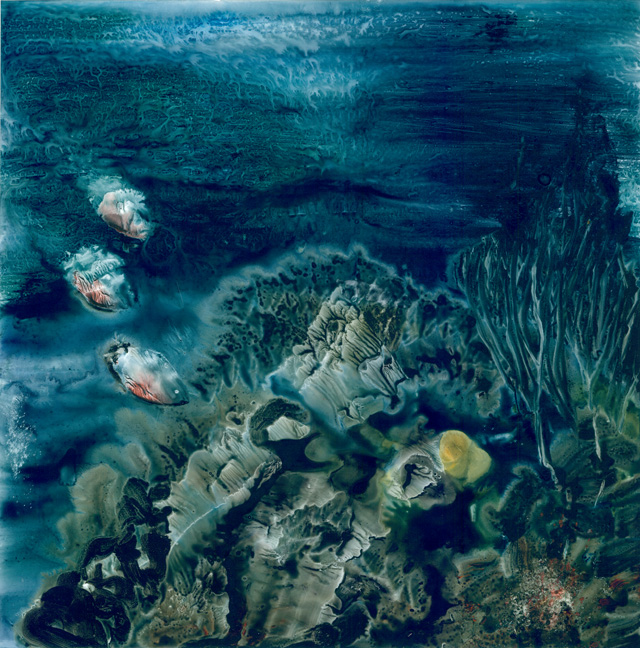
“Descent” watercolor on Yupo 26” x 26” 2014

“Descent” watercolor on Yupo 26” x 26” 2014

Briefly describe the work you do. 

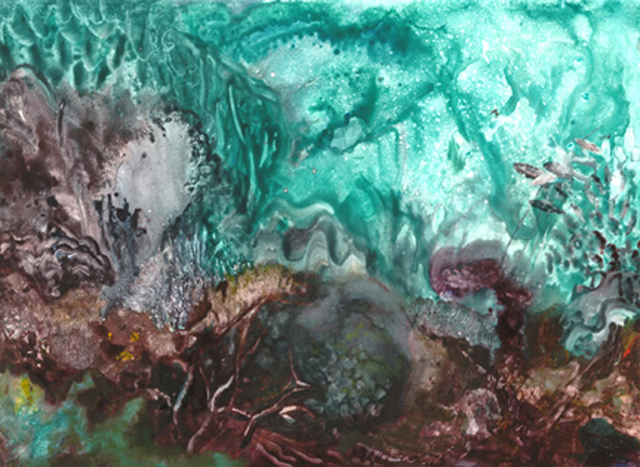
I am a painter and printmaker, responding to the ocean, my muse. The underwater landscape and the shoreline, in watercolor on Yupo (polypropylene), have been the focus of my work for the past three or four years. It is an ode to the glories of the sea, while hinting at its fragile future.

Tell us about your background and how that has had an influence on your work and on you as an artist.

The flora and fauna that I have explored as a SCUBA diver, and the experience of being in that flow, is what I seek to share in my painting. As that world has come under increasing attack – 40% of the coral reef is now damaged – I have sought ways to respond in my art. I’d been a political activist for many years, beginning with the Vietnam War, but sought refuge from the world’s troubles in my art. When the BP oil spill in the Gulf of Mexico happened five years ago, I understood that I could no longer separate my two worlds.  Integrating them has been harder than I imagined. I am not a conceptual artist, and I have no interest in creating heavy-handed propaganda. The challenge was pointed out to me by the artist Heidi Fasnacht, who suggested that I would have to change my artistic persona to address the oil spill in my work. She said I would need to transform my perspective from protector of the environment to destroyer. I’ve been working on it for five years now.

“Sea / Shore” watercolor on Yupo 26” x 26” 2014

“Sea / Shore” watercolor on Yupo 26” x 26” 2014

The concept of the artist studio has a broad range of meanings in contemporary practice. Artists may spend much of their time in the actual studio, or they may spend very little time in it. Tell us about your individual studio practice and how it differs from or is the same as traditional notions of “being in the studio.”

The beach and its environs is my real studio. That is where much of my best work has been made, and certainly found its inspiration. Several years ago I had a residency at a historic dune shack in Provincetown, Mass. It was just me and the coyotes (heard, but not seen) for a week in a shack in the dunes, and the experience was transformative. After many years of pleine aire painting, I spent a month in a studio at another residency, the Vermont Studio Center. Working ten hours a day for a month in that wonderful space convinced me that I needed to find a studio other when I got home to Boston, which I did. I still prefer to work outside – and fortunately my studio does have a covered porch. But as my materials have become  more complicated, and my joints have gotten a little stiffer – I find that I rely increasingly on my studio’s large flat tables  and many tools.  Shelter from wind and rain is another reason I am grateful to work indoors, though some of my most interesting work was painted in the dunes, literally weathered with raindrops and sand.

What roles do you find yourself playing that you may not have envisioned yourself in when you first started making art?

Webmaster! That’s been a big learning curve, but I’m grateful to have learned it. I hadn’t realized that other skills/roles that are more comfortable for me would also be utilized, such as writer, press agent, marketer, networker, and all round public relations specialist. People who know I’ve been a teacher assume that I teach/taught art, but I have had absolutely no interest. This is MY time, to make MY work.

When do you find is the best time to make art? Do you set aside a specific time everyday or do you have to work whenever time allows?

I am a morning person, and on the two days a week that I set aside to work in my studio during most of the year I try to begin work first thing. I have the illusion that I can fit it in between other parts of life on other days, but in fact that rarely happens. So I try to clear the decks on Mondays and Tuesdays. Feeling guilty that I don’t work more, my friend the painter Lisa Goren pointed out that my work  has a yearly rhythm to it, and she’s right. In summer, when I am able to spend big chunks of time at the shore, in Truro, Mass., on the outer tip of Cape Cod, I work intensively and productively, painting in the dunes by day, and at night working on a basement ping pong table. The times when I have had residencies – with no distractions and life’s essentials provided for –  have been my most productive. So last year when I needed to develop a body of work for a big show, I decided to give myself a residency in my own studio. It worked! Most of the pieces for the show WHAT REMAINS at The Copley Society of Art which closed June 24th, were done during that intensive process (the work can be seen on my website www.ginnyzanger.com in the WHAT REMAINS gallery).

“Pthalo Sea” watercolor monotype (from Yupo plate) 22” x 28” 2011

“Pthalo Sea” watercolor monotype (from Yupo plate) 22” x 28” 2011

How has your work changed in the past five years? How is it the same?

I have continued a love affair with watercolor throughout my career. The magic of colors combining spontaneously in water continues to draw me into its spell. But the way that I work with watercolor has changed dramatically due to the influences of my printmaking experiences and adopting Yupo as my paper.  I learned to make monotypes using oil-based etching inks because of the vibrancy of the colors, and later worked with watercolor. The impact on my painting of making monotypes has been the use of various techniques to create texturing. Removing ink from a monoprint plate with sponges, bubble wrap, Q tips, leaves, foam brushes or whatever else I find are all processes that I now use with watercolor on Yupo. Yupo has also allowed the liquidity of watercolor to express itself in new and interesting ways: I spray, pour, wipe, and tilt the paper, and use surface tension when I apply another sheet of Yupo and slowly peel it back. This latter technique, which I discovered on my own, turns out to have a rich history in the annals of European art. Known as decalcomanie, and invented in the eighteenth century for the ceramics industry, it was more recently used in the last century by Surrealist painters such as Max Ernst, who used it to uncover the subconscious. I use it to create evocative organic effects.

How have people such as family, friends, writers, philosophers, other artists or even pop icons had an impact on the work you do?

Having skipped art school, I owe so much to the teachers and mentors I have studied with: Rhoda Rosenberg, Robert Siegelman, Richard Raiselis, Joel Janowitz, Anne Neely, and Lois Tarlow. I had the good fortune to take the last week-long workshop by Michael Mazur before he died, and his drippy paintings and prints have influenced my work. Exhibits, interviews, and talks by Mark Bradford have inspired me to pursue a scary process that is guided more by the media I use than by me. My partner in art, Donna Hamil Talman, and the group of artists who meet regularly in Jamaica Plain Mass. are invaluable sources of support and ideas.

Have you ever been pulled in the direction of a pursuit other than being an artist? What are your other interests? 

My art training began early – classes at the Metropolitan Museum of Art when I was 5 followed by studies at The Art Students League as a teen-ager – but took a long hiatus when I lacked the courage to turn down admission to Harvard (no studio art program). I then got side-tracked for many years. I’d lived with a family and completed high school in Argentina, and that experience inspired a career in bilingual education and advocacy for immigrant students, during which I taught at all levels, earned a doctorate, wrote books, made videos, trained teachers, and did award-winning research. I then became a museologist, serving as vice president at Boston Children’s Museum for 13 years. As the art-making that I had squeezed into vacations and evenings became a more important part of my life,  I gradually shifted the balance, so that the education work that I still do is finally is subsumed by the art.

About

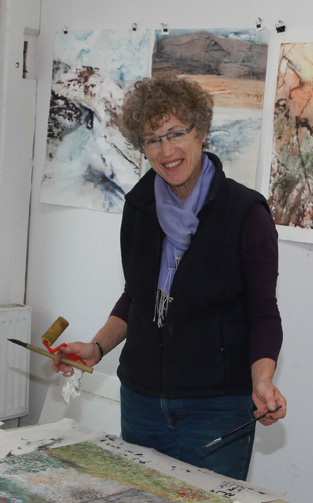
Zanger in StudioGinny Zanger lives and works in Boston and on Cape Cod. She uses water media in innovative ways  to create underwater landscapes and other works on paper that flow from her passion for the environment. Her work is in private collections throughout the United States and abroad, in the corporate collection of Keybank North, and in colleges and non-profit organizations in Greater Boston.  Zanger has been awarded residencies at Vermont Studio Center and the Provincelands dune shacks. Her work was the featured centerfold in Artscope magazine. After only two years, she was awarded Copley Artist status at the Copley Society in Boston, the oldest artist cooperative in America, where she and Donna Hamil Talman had a well-reviewed two-woman show this spring, What Remains. She exhibits widely throughout the Northeast and is represented this season by the Cove Gallery in Chatham and Wellfleet, Mass.

Digital image

Digital image

ginnyzanger.com 

All images copyright of the artist and used with their permission. 
 

Posted in Painting | Tagged , , , , | Leave a comment

Cheryl Derricotte – Oakland, California

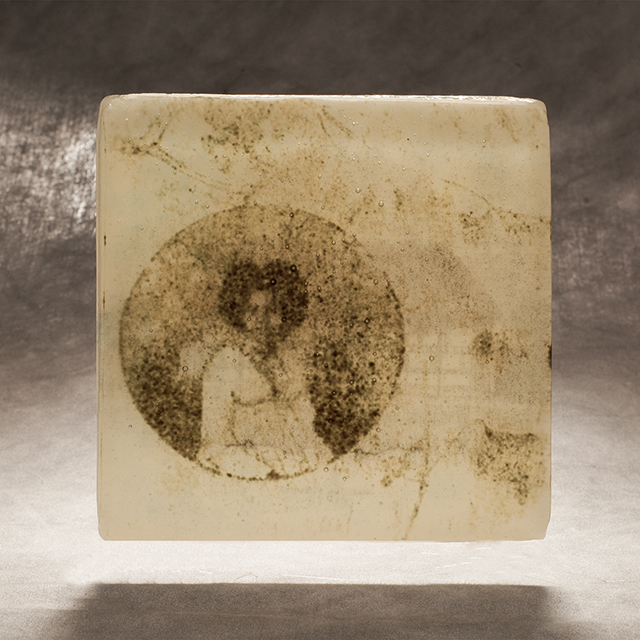
“La Negresse” (2014), 5” sq. glass

“La Negresse” (2014), 5” sq. glass

Briefly describe the work you do. 

I am a visual artist who works primarily with glass and on paper. I enjoy layering images and text on pieces. Text is an important component of my artwork. I often say that I live under the tyranny of title. A phrase will get stuck in my head, such as “We Buy Houses” and I wrestle with it until an artwork is created. Thus, many of my pieces have titles before I ever make a schematic drawing, much less cut a piece of glass or reach for a sheet of handmade paper.

Tell us about your background and how that has had an influence on your work and on you as an artist.

I am originally from Washington, DC and worked for many years in community development. Observations of current events, politics, and urban landscapes are often my entry into the art I create. I initially learned glass in 2002 at the Washington Glass School, a wonderful studio run by artists Tim Tate, Erwin Timmers and Michael Janis. At Tate’s encouragement, the next year I went to the Penland School of Crafts to study with another artist originally from Washington, DC, the great Therman Statom. This early exposure to and training from artists who work narratively with the medium were a positive influence on my work and I continue to work as a visual storyteller.

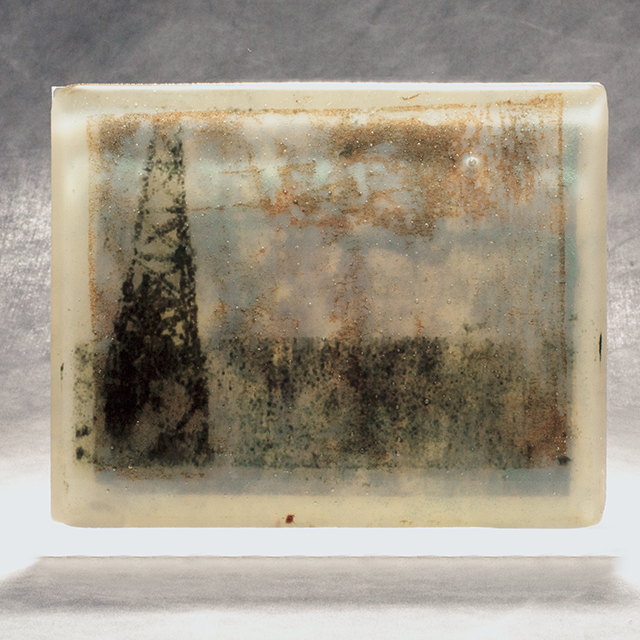
“Oil & Water” (2014), 5” x 7”, glass

“Oil & Water” (2014), 5” x 7”, glass

The concept of the artist studio has a broad range of meanings in contemporary practice. Artists may spend much of their time in the actual studio, or they may spend very little time in it. Tell us about your individual studio practice and how it differs from or is the same as traditional notions of “being in the studio.”

My studio practice is split between my live/work loft and my off-site art studio (work only). I make art from research, so I can get all my computer work done in the loft. I find historical images online or size my own photos that I plan to use in artworks. I also make storyboards for more complex pieces or series. I go to my art studio a few times a week. I tend to work in 3-hour blocks of time. Examples of activities are cutting glass for a project; cleaning glass for a project and setting up my print station; printing on glass, and printing on paper. Each these activities work well in 3-hour blocks. Some days I go into the studio for 3 hours. Other days I go for 3 hours, get a snack/lunch and work for another 3 hours.

What roles do you find yourself playing that you may not have envisioned yourself in when you first started making art?

I did not realize how many roles I would have to play when I first started making art. The business of art requires a good deal of time. Accounting, marketing, applying for grants and residencies, stocking the studio with supplies, teaching—these are the important players in my practice in addition to making art.

When do you find is the best time to make art? Do you set aside a specific time everyday or do you have to work whenever time allows?

I make art any and all of the time. My art studio is in a convenient location, so I can work whenever I want or need to – very helpful when getting ready for shows. I also keep a list of art projects on the “Notes” app on my IPhone. Whenever a phrase comes to me I write it down, as I know that it may turn into the title of my next piece or series.

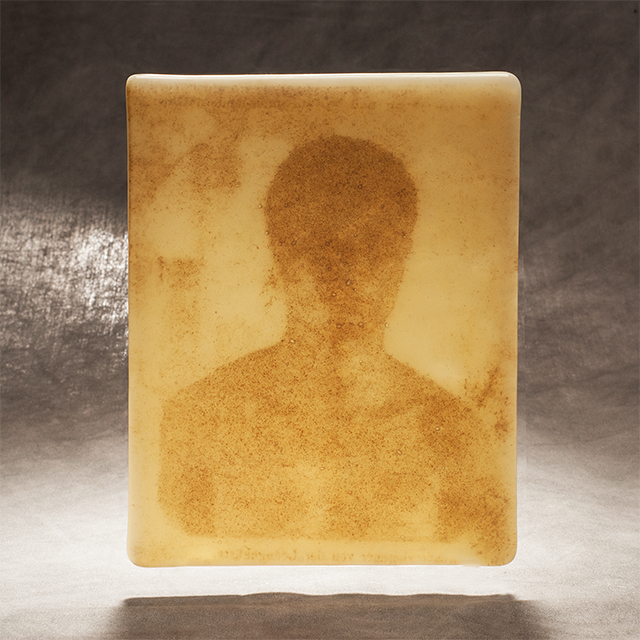
“Afrikan” (2014), 5 x 7, glass

“Afrikan” (2014), 5 x 7, glass

How has your work changed in the past five years? How is it the same?

My work has definitely changed over the past five years. I moved from Washington, DC to Oakland, CA in 2011. Since arriving in Oakland, I studied with Carrie Iverson. Carrie created an image transfer technique that applies the printmaking principles of lithography to glass. Using this technique has allowed me to layer imagery into my glasswork in new and exciting ways. I also studied with Matthew Day Perez at Arrowmont. Matthew expanded my view of casting and professional practice. Whenever possible, I try to take a master class every couple of years to push my technique and broaden my vision. I still work narratively and with text, so that is how my work has stayed the same.

How have people such as family, friends, writers, philosophers, other artists or even pop icons had an impact on the work you do?

My art studio is located in American Steel Studios. American Steel houses close to 200 artists and a number of the large-scale metal sculptures created for the annual Burning Man event in Nevada are made there. I sublease from a metal artist, Stephen Bruce. I enjoy seeing how his work evolves from the beauty of nature. My art studio environment pushes me to make bigger, bolder work. I love to hear artists who have enjoyed long art careers talk about their work. These talks influence how I present my own work to the public. Some talks that immediately come to mind are Therman Statom (Littleton Lecture) and Mildred Howard (Wilson Lecture), both at the Glass Arts Society Conference (2015); Carrie Mae Weems at Stanford University (2013) and Karen LaMonte at the Smithsonian (2010).

Have you ever been pulled in the direction of a pursuit other than being an artist? What are your other interests?

I write nonfiction and I am the author of the book Being the Grown-Up, Taking Care of Someone with a Terminal Illness. I enjoy writing and I am looking forward to finishing a second book. Then next book is about managing life changes and I plan to complete it as time permits over the next year or two. At some point, I am sure that I will write about art and artists.

About

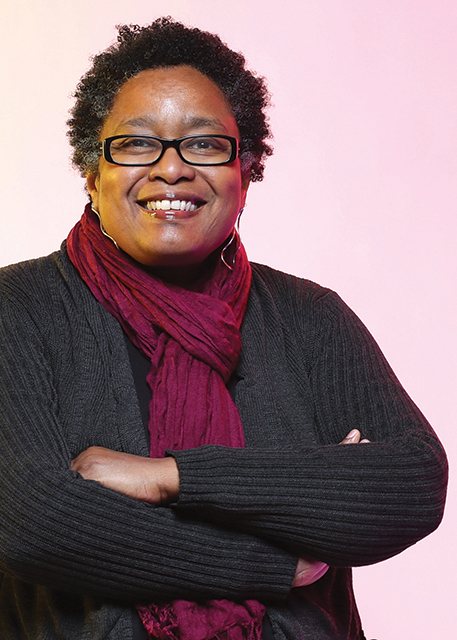
CherylDerricotteHeadshotCheryl Patrice Derricotte lives and makes art in Oakland, CA. She holds the Master of Fine Arts, (MFA), from the California Institute of Integral Studies (CIIS) (2015), a Master of Regional Planning (MRP) from the College of Architecture, Art and Planning, Cornell University (1989) and a BA in Urban Affairs from Barnard College, Columbia University (1987).

Derricotte has received numerous awards and fellowships. She recently received the Penland School of Crafts’ Art Alliance for Contemporary Glass Scholarship (2015). She was awarded an Integral Teaching Fellowship from CIIS and a Creative Capacity Fund grant from the Center for Cultural Innovation (both in 2014). Originally from Washington, DC, she was the recipient of a D.C. Commission on the Arts & Humanities/ National Endowment for the Arts Artist Fellowship grant (2005). Cheryl Patrice Derricotte’s sculptural work has been exhibited widely. Select shows include “HOME,” a joint exhibition of the Orange County Center for Contemporary Art (OCCCA) and the Vietnamese Arts and Letters Association (VAALA); “Hyperbolic Crochet Coral Reef” at the Smithsonian Museum of Natural History; “Terrestrial Forces,” at the Florida State University Museum of Fine Arts, and “Contemporary Glass” at the San Francisco Airport Museum.

Cheryl_Derricotte_WorkingInTheStudio

cityglassworks.com

All images copyright of the artist and used with their permission. 
 

Posted in Glass | Tagged , , , , | 1 Comment