Seren Moran – Oakland, California

title : DeSean medium : acrylic on canvas size : 27 x 28 year : 2015Briefly describe the work you do. 

Currently I’m primarily working with abstraction. I used to do portraiture and then moved into a lot of architecturally based work (all of which certainly had their abstract elements) but as of a late I’m really much more interested in pure abstraction and playing with what what is unexpected in both composition, value, technique and color. I do still often use images to get me started, but then I let the emotion take it from there. 

Tell us about your background and how that has had an influence on your work and on you as an artist.

In regards to my formal artistic background, spending two years abroad is probably one of the most influential experiences I’ve had in regards to how this has effected my work. The way art is taught in Italy is completely different from that of the United States and having had both formal instruction here & abroad has allowed me to really expand and explore my artist expression. Not to mention that just living in a foreign country and being fully immersed is an incredibly inspirational time. 

The concept of the artist studio has a broad range of meanings in contemporary practice. Artists may spend much of their time in the actual studio, or they may spend very little time in it. Tell us about your individual studio practice and how it differs from or is the same as traditional notions of “being in the studio.”

My studio practice is fairly traditional in some respects. I have a studio that isn’t at my house (although I have had my studio at home and in a lot of unique places in the past) and that’s where I do almost all of my creating. I will admit that I really loved having my studio in my house for some time because it allowed me to spend more time just looking at my in progress paintings and assessing them before actually working on them. But the downside with that was that I never found myself able to separate or escape thinking about it, so I think it’s kind of nice that I have a designated place to create my artwork now. And it’s in a warehouse owned by a clothing designer so it’s a creative environment. 

title : Torn medium : acrylic on canvas size : 20 x 24 year : 2015

What roles do you find yourself playing that you may not have envisioned yourself in when you first started making art?

I don’t think I ever really internalized how much self promotion was necessary in being an artist until I graduated. And since then, I’m certainly finding that being an artist is very similar if not identical to being a business owner, and therefore I have to take on every role that a business involves, creating the product, marketing, communication, admin, sales. It can be overwhelming that’s for sure, and there are certainly times I wish I could just forget about it all and hibernate in my studio painting forever. 

When do you find is the best time to make art? Do you set aside a specific time everyday or do you have to work whenever time allows?

I try to paint as often as I can. Luckily I’m very prolific, so even if I don’t have a ton of hours available in the studio, the hours I do have are used very efficiently. I try to paint on average 3-4 days a week, but sometimes it ends up being as little as 2. I pretty much set aside whatever time is available, but I have certainly had to explain to my friends that my studio time is not hang out time and had to learn to set those boundaries. I’ve also realized that for whatever reason I don’t do well creating after a full day, so painting needs to be the first thing I do in the morning if I’m going to get the most out of it. 

title : Nystagmus medium : mixed media on canvas size : 16 x 24 year : 2015How has your work changed in the past five years? How is it the same?

My work has changed a lot actually. I mean 5 years ago I was still in Undergrad, painting for lessons and had never sold anything. I’ve grown a lot as an artist since then and feel like a completely different person. I would say the most significant change is probably my confidence, which allows for my art to be more unique and expressive and free, all of which I highly value in assessing the quality of an art piece. But I do still think there is a common thread and style to all of my work since then, no matter how much I change, my art will still be created by me so I think that will show through regardless. 

How have people such as family, friends, writers, philosophers, other artists or even pop icons had an impact on the work you do?

I’ve noticed recently that most of my inspiration comes from non visual artists such as musicians, writers, actors etc. My brother just got his MFA in directing after a BFA in acting and now that we live in the same city I’m realizing how much he has had an impact on my creativity. Having a sibling I’m so close to be involved in the arts has allowed me to dive into deep and intimate conversations around art theory and exploration in ways I think can be difficult to explore with others. 

Have you ever been pulled in the direction of a pursuit other than being an artist? What are your other interests? 

Absolutely, I actually find that I’m lucky enough to like a lot of things. I was a part time teacher on and off for 5 years and loved it, then I decided I wanted to try something else and fell in love with furniture & interior design (which I still do part time). And it doesn’t stop there. But never did I consider stopping art, it was just playing around with the balance of how much I work and how much I create, I don’t think I will ever stop being an artist, I can’t. 

About
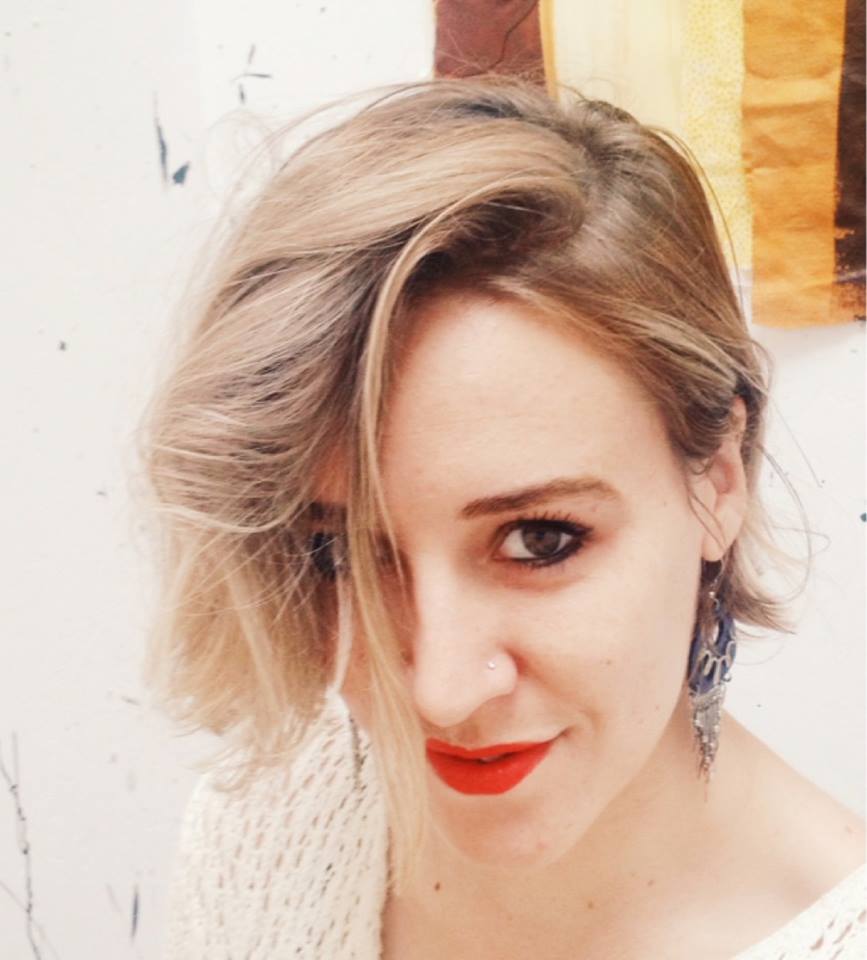
headshotSeren Moran was born in 1989 in Berkeley, California. In 2011, Seren graduated from San Diego State University’s Fine Arts Program, with an emphasis in painting. She graduated with honors, was initiated into Phi Beta Kappa Honor Society, and was the only undergraduate to receive the annual Art Council Scholarship that year. During her junior year of college, Seren studied abroad in the highly competitive art program at the original Leonardo da Vinci School of Art, L’Accademia di Bella Arte, in Florence Italy, where all classes were taught in Italian. Seren’s time in Italy was spent focused on nude portraiture in both painting and printmaking.

In 2012, Seren moved to Indaiatuba, Brazil, where she spent 10 months teaching English, learning Portuguese, and painting. There, she painted her Brasil Series which resulted in two exhibitions at a gallery and museum in the State of Sao Paulo. 

Seren’s recent work explores the transition of her returning to the Bay Area, exploring memories and architectural imagery reminiscent of home.. The subjects of her abstracted images are structures reminiscent of her childhood. Her most current work continues to explore memories but with a more process based approach, sampling works from her past and incorporating newer contrasting styles.
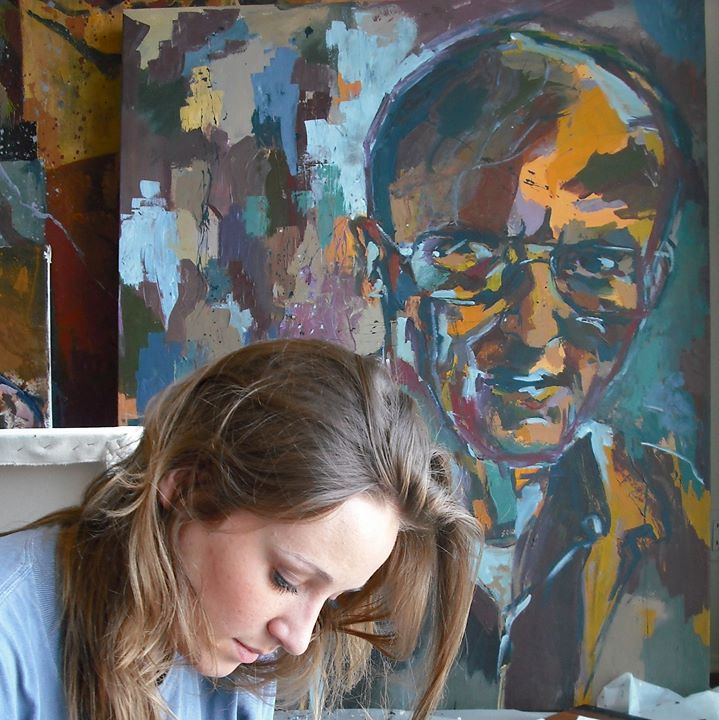
me in my studio

serenmoran.com

All images copyright of the artist and used with their permission. 
 

Posted in Painting | Tagged , , , , | Leave a comment

Maria Antonieta Cortez Cataldo – San Felipe, Quinta Región, Chile

“Chile” acrylic paint, varnish, graphite,oil painting. 45 x 110 cm. 2013

Briefly describe the work you do. 

My work consists in the perpetual creation parting from the perception of the real and the unreal, turning it to painting, collage, prints and experimentation mixing various techniques.

Tell us about your background and how that has had an influence on your work and on you as an artist.

Chile is, from a geographic point of view, long, narrow and multicultural. The Near North and the Central Region of the country have been my life’s scene. I feel an eternal love for the flowering desert (unique in this world) and for the Andes’ mountain rage. These geographical zones, for whatever reason, shaped me since I was a child, and I keep admiring their immense beauty.

The concept of the artist studio has a broad range of meanings in contemporary practice. Artists may spend much of their time in the actual studio, or they may spend very little time in it. Tell us about your individual studio practice and how it differs from or is the same as traditional notions of “being in the studio.”

My working place is “the place where I happen to be”, be it a library, a bus, or my room. Personally, I don’t dispose of a studio where to realize my works. However, that does not put a limit to the hours I dedicate to creating art.

“El cuerpo sufre” collage, graphite, acrylic paint. 60 x 100 cm. 2011

What roles do you find yourself playing that you may not have envisioned yourself in when you first started making art?

For some reason, I’ve always had the intuition of being creating, working on and observing art.

When do you find is the best time to make art? Do you set aside a specific time everyday or do you have to work whenever time allows?

It is always time to create. From day to day, almost like a routine, I assign time for creating, mostly at night. I can pass hours and hours working without feeling the exhaustion which the night brings.

How has your work changed in the past five years? How is it the same?

Five years ago, my work was scattered and focused on investigating sources. Now I can see that my work is consolidated in both visual and conceptual terms. At present I can observe a particular and contemporary imaginary , grown eager through constant learning.

How have people such as family, friends, writers, philosophers, other artists or even pop icons had an impact on the work you do?

Naturally, the family and other close persons have an influence in giving the impulse to having perseverance in working, to continuing one’s way and not to turn away from it. I admire the simplicity of narrative and visual works and the professions that human beings can have when they do not aspire to wealth and recognition. Seeing that, I think it is a way worth following: I am concentrated only in my work, confident that the work itself will talk, travel and cross the world.

Have you ever been pulled in the direction of a pursuit other than being an artist? What are your other interests? 

In some moment, I studied design. However, time passed by and I felt a necessity for art, I understood that – in spite of its way being vertiginous and sometimes agonizing -art is what makes me happy and which satisfies my soul. My interests also comprehend free education and the revaluation of ancient.

photo (7)About

The artist was born in 1986 in Chile which at that time respired the military dictatorship. The comet Halley was the year’s protagonist. The artist’s childhood was immersed, marked by her developing an imaginary full of questions and particular curiosities which the family still remembers. At home, there always existed a sewing machine, tools and materials which every day were used for creating and for resolving every-day matters. Nature and the mistakes of human progress were recurrent in the artist’s early observation of what was going on in her country.

Generally, arts is considered a subject different from the other subjects which figure in the scholar curriculum. It is considered to be pleasant and less academic than the others. However, when the artist lived in this panorama of artistic education, her curiosity always led her to experiment and create with what was near her. In her first artwork in college, when she had to made a replica of a contemporary artist’s work and chose Joan Miro and his work “The moon and the bird (La luna y el pájaro)”, she managed to create something distant from the original work but in which in a peculiar way remained its essence. This was the starting point for the artistic production. Later, thanks to academic studies and personal investigation the artist understand, develop and conceptualize in what she names “that the key lies in creating, creating and die creating”.In this way, talent can be developed, polished, smashed and revived.

The techniques with and on which she works are painting, printing and mixed techniques; she es about to include screen printing into her visual repertoire.

The artist has participated in the National Contest of Young Art in the University of Valparaiso and was selected from over 500 participants. Her work was published in national newspapers such as “El Ciudadano”, in regional newspapers such as “El Trabajo” and on virtual platforms. A few months ago, “Le Monde Dilpomatique” began to use some of her paintings as illustration for the Chilean edition. The artist’s work has permanated in the underground, but is slowly beginning to be shown in various digital displays and hopefully will find it’s way to a gallery soon.

All images copyright of the artist and used with their permission. 
 

Posted in mixed media | Tagged , , , , | Leave a comment

Susan Kapuscinski Gaylord – Newburyport, Massachusetts

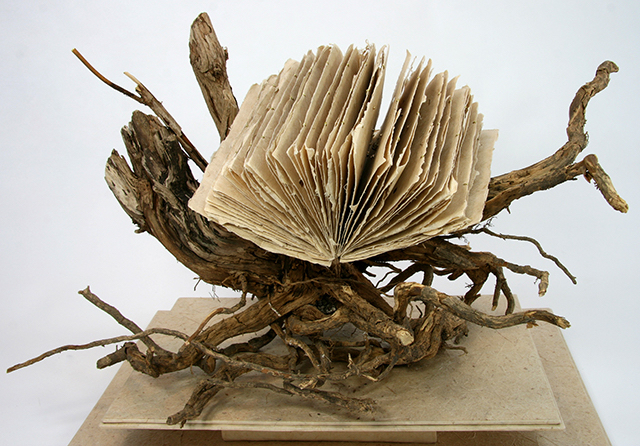
Spirit Book #82: Soaring Serenity

Spirit Book #82: Soaring Serenity

Briefly describe the work you do. 

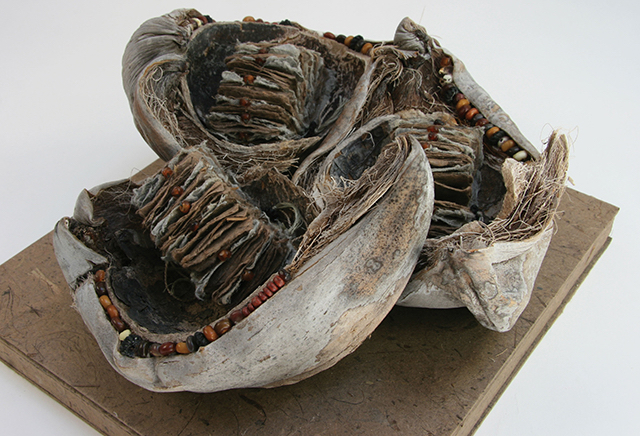
I’ve been an artist for 37 years. My artistic endeavors began with calligraphy and then moved into making books, slowly transitioning from books with text to wordless ones with natural materials. I am inspired by the spirit of nature, both wild and cultivated, and the beauty and power of words. I have been making Spirit Books, my most significant body of work, for the past 22 years. They bring together my love of the book and my response to the natural world that we see and the invisible one that lies behind it. I feel a deep connection to older powers as I gather twigs, branches, vines, and roots. Using them to cradle books, I link them to the longstanding tradition of books as testaments of faith and belief. Each page is a meditation that echoes nature with both repetition and variety. “Reading” the book is meant to be a contemplative experience that takes the reader out of the everyday world and into a state of gratitude and reverence. 

Tell us about your background and how that has had an influence on your work and on you as an artist.

I grew up in New Jersey. I loved reading, wading in the Rahway River, playing with friends, and spending time in my grandfather’s garden. In high school I was a serious student and determined athlete. I had no natural ability to draw so I never considered the possibility of life as an artist, but I loved making things: embroidery on jeans, jackets, and pillowcases and calligraphy on pages of plain paper with watercolor backgrounds.

I majored in English Literature in college which had a lot of influence on my work as an artist. I am mostly self-taught at what I have done for work in my adult life—calligraphy, bookmaking, graphic design, public speaking, teaching. What I learned as an English major enabled me to take much of my education into my own hands. I learned to take a red pen to everything I wrote. In my art, I continually review my lettering, bookmaking, teaching, and speaking performances with a metaphorical red pen.

When I first moved into visual art, I felt so out of my element, so insecure about not having an art degree, that I gave little credit to the degree I had. It was a surprise, then, when I was preparing my first talk about my art life several years ago, to realize that I approach art like an English major. My interest in working in series comes from my immersion in literature. I didn’t read one play by Shakespeare, I read them all. I spent four months with his comedies and another four with his tragedies. I spent a semester reading Edmund Spenser’s The Faerie Queen. I came to expect a digging in and a digging down, a sustained exploration of an idea. 

Spirit Book #30: Ixchel’s Dream

The concept of the artist studio has a broad range of meanings in contemporary practice. Artists may spend much of their time in the actual studio, or they may spend very little time in it. Tell us about your individual studio practice and how it differs from or is the same as traditional notions of “being in the studio.”

I feel like there is a part of me that at some level is always thinking about or gathering for my work. While it is a constant in my life wherever I am, I feel so lucky to have a studio in the house. I love having a separate space that I can go in and work at any time. 

The studio is long and narrow with a slightly wider space at each end. In the front is my computer where I spend a lot of time: designing books, playing with images in Photoshop, and taking care of business and communication. The middle part is mostly storage of work in progress and finished pieces. The back end has a skylight above and is the brightest and sunniest part. I try to keep the work surface clear when I am not working on something in particular. I find open spaces to be invitations to do more work.     

What roles do you find yourself playing that you may not have envisioned yourself in when you first started making art?

The most surprising thing to me is that I now do a fair amount of public speaking. When I started as an artist, I think the ability to work alone was an attraction. While it might not have always seemed that way to others, I was shy and liked the quiet time of interacting only with the materials and the work.

I first became comfortable standing up in front of large groups when I taught bookmaking to children in schools as a traveling teacher for over 20 years. Even when I was completely comfortable in front of a room, the idea of talking about my work made me nervous. With teaching I was guiding an activity and I felt it wasn’t really about me. When I had to speak about my work, I felt exposed. The turning point came in 2005 when I had an exhibition of the Spirit Books at the art gallery at Regis College in Weston, MA. I was so concerned that I didn’t have anything deep to say. I decided that I wasn’t going to worry about it and just explain my thoughts and process as simply as I could. To my surprise, the group of over 50 people, many of them people I had never met, were completely attentive and afterward told me how much they enjoyed my talk. I felt empowered. The idea that I could speak plainly from the heart was liberating. 

I now have a talk, Art Lessons: Learning From Our Creative Experiences, about my development as an artist and what I have learned about role of patience, the development of the critical eye, and the struggle with perfection. I never expected I would be doing this when I was spending day after day practicing calligraphy at my dining room table 37 years ago. 

When do you find is the best time to make art? Do you set aside a specific time everyday or do you have to work whenever time allows?

 The studio is the first place I want to be in the morning. Since I’m often drawn in before I get dressed, I always make a point of getting pajamas that that I could answer the door in. Recently I have been altering my schedule to have a walk first so I can get some exercise in before I start. Otherwise, it can be the end of the day and I haven’t left. I try to save handwork (stitching Spirit Books pages and other repetitive portable tasks) that I can do anywhere for evenings.

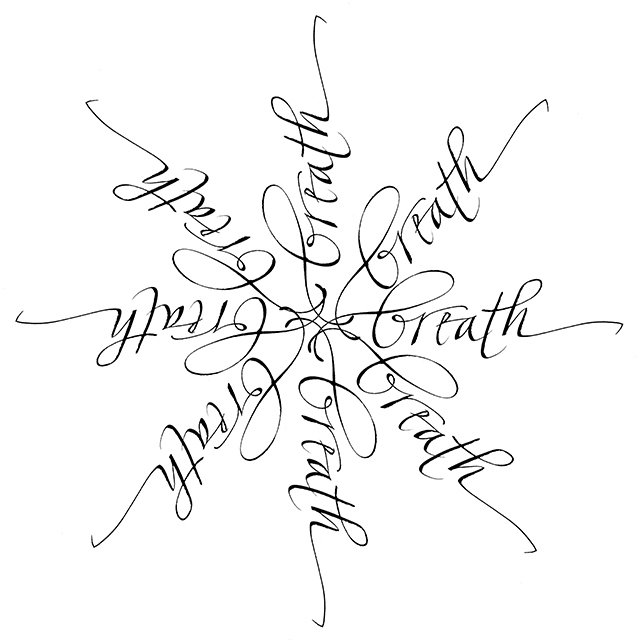
BreathHow has your work changed in the past five years? How is it the same?

In the past five years, I have recommitted to the Spirit Books. I thought I had made the last one in 2005. I’m not exactly sure why I felt the need to stop but I think it had something to do with not wanting to be defined so closely by one body of work. After five years, I found that I missed making them and returned to them. I only make 4 to 8 per year but feel they are the anchor of my work and ground me.

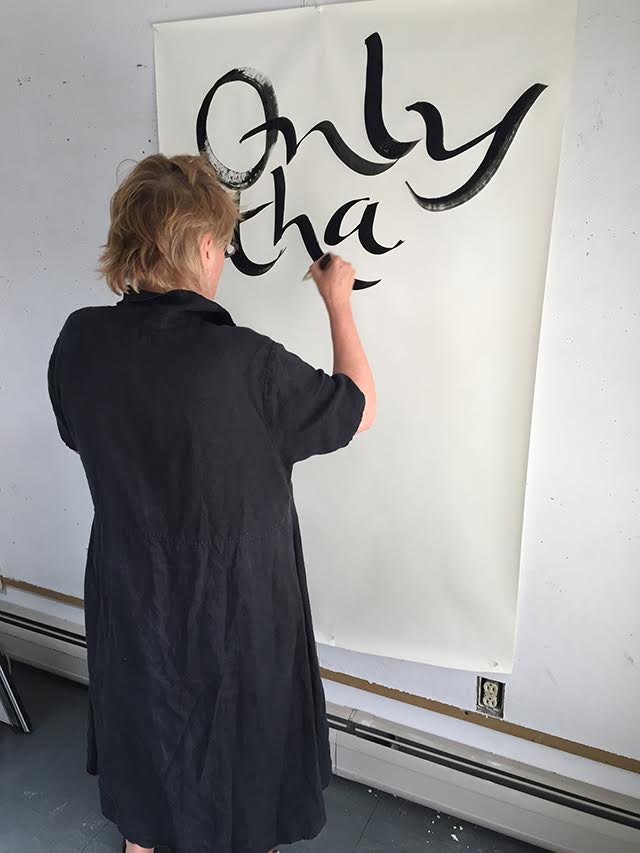
I started in art with calligraphy which I did very seriously and exclusively for about 10 years. I focused on books for the next 25+ years but always used lettering for personal things—making cards, addressing envelopes, writing notes. In the past five or so years I have incorporated more calligraphy into my work. I’ve done several installations: lettering quotes from Nathaniel Hawthorne at his birthplace in Salem, MA and outdoor sculpture projects at Maudslay State Park and for the upcoming Flying Horse Outdoor Sculpture exhibit in South Hamilton, MA. 

When I was doing calligraphy as my main work, I viewed myself as an interpreter of the words. Each piece used different colors and lettering styles and added elements. I am going back to quotes but my goal now is let the words to speak for themselves. 

I’ve always been more about process than product and have tried to let my work evolve as organically as possible. I am trying for that more and more. In a Christmas letter in 1513, Fra Giovanni Giocondo instructed a friend to “Take joy.”  That is what I am trying to do—to have every moment of creation be one of joy for me. 

How have people such as family, friends, writers, philosophers, other artists or even pop icons had an impact on the work you do?

I grew up in a house full of creative activity with a mother who knitted, sewed, cooked, and engaged in craft making of all kinds—melting wax for floating candles in bowls with flowers in summer and gathering milkweed pods for the wings of angel ornaments in winter. She was my first influence. 

The artist who has had the most profound influence on me is the late Jenny Hunter Groat. She was a dancer, calligrapher, and painter,  and a Zen Buddhist. After a weekend workshop on Notan, the Japanese design principle of light and dark, I began a long correspondence with her. I also spent a pivotal weekend at her retreat workshop called Knowing/Not Knowing at Green Gulch Zen Center in her native California. She encouraged me to follow my own voice and gave me the confidence to do so. 

Letters to a Young Poet by Rainer Maria Rilke has been a touchstone for me through the years. The passage that has been, and continues to be, the most meaningful is: 

“In this there is no measuring with time. A year doesn’t matter; ten years are nothing. To be an artist means not to compute or count; it means to ripen as the tree, which does not force its sap, but stands unshaken in the storms of spring with no fear that summer might not follow. It will come regardless. But it comes only to those who live as though eternity stretches before them, carefree, silent, and endless. I learn it daily, learn it with many pains, for which I am grateful. Patience is all!”

Have you ever been pulled in the direction of a pursuit other than being an artist? What are your other interests? 

I consider myself to be both an artist and a teacher. I feel that I am artist at my core and teach because I want to share what making art has brought to my life. I would rather teach someone to make something than have them buy something from me. 

Even though I believe that my purpose in life is to make and share art, I have occasionally felt so frustrated with the business part of being an artist that I have said, “ Maybe I should do something else.” I’ve never pursued them but professions that sound appealing are florist, exhibit designer, copyright lawyer, and behavioral economist.

About

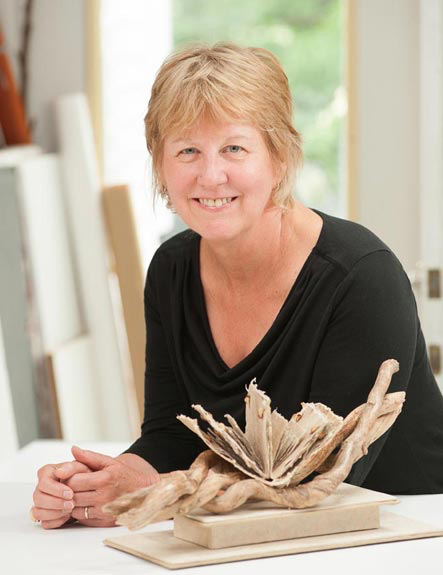
skg_blackKSusan Kapuscinski Gaylord has been working as a visual artist since the late 1970s. Ten years of calligraphic work were followed by involvement in book arts where she is best known for the Spirit Book Series and her website, makingbooks.com. She currently blogs at susangaylord.com, teaches and lectures about book arts and her journey as an artist, and works with hand-lettering, digital compositions, and bookmaking.

Her work is in the library collections of the Museum of Modern Art, the University of Arizona, Wellesley College, and Yale University. It has also been featured in solo and group exhibitions in museums and galleries throughout the United States and in Canada and Korea, including the Center for Book Arts in New York City; the Art Complex Museum in Duxbury, Massachusetts; the University of Indiana Art Gallery in Indianapolis; the Milwaukee Institute of Art and Design in Milwaukee, Wisconsin; and the Seungnam Book Fair in Seungnam, Korea.

Her work is well-represented in print with features in magazines (Urthona: Buddhism and the Arts, Somerset Studio, Fiberarts, and Letter Arts Review) and books (500 Handmade Books, Cover to Cover and the Art of the Handmade Book by Shereen LaPlantz, and Handmade Books And Cards by Jean Kropper). 

unnamed

susangaylord.com

All images copyright of the artist and used with their permission. 
 

Posted in Altered Book, Book Arts | Tagged , , , , | Leave a comment

Ginger Cook – Paris, Texas

Illuminating the Bad Mother MFA series

Ashtray and The Belt. Digital Photograph. 20×13. 2013

Brief description of my work.

I am a photographer who attempts nontraditional and alternative methods as well as digital and phoneography . My work varies with my mood, what inspires me on a particular day, what I am teaching in a particular semester, what I am reading and how hot or cold it is outside.

My background and how that has had an influence on my work and on me as an artist.

My undergraduate degree was in political science and speech communication in the 70s. I had no training in the world of art until I began the journey to grad school in my late

50s. In the grant arena I often found myself needing to take pictures to illustrate a need and so I signed up for photography at a local junior college. The need for images turned into a passion for learning not only about how to take a photograph but the history of photography as well. The love of reading, history and looking at art works of all types influences me at all levels of photo capture and printing out.

The concept of the artist studio has a broad range of meanings in contemporary practice. Artists may spend much of their time in the actual studio, or they may spend very little time in it. Tell us about your individual studio practice and how it differs from or is the same as traditional notions of “being in the studio.”

I do not really work in a studio. Even when I take portraits of people or do still life images I use natural lighting in a natural setting as much as possible. Right now I am working on a project of taking landscapes of West Texas and particularly Yoakum County and so I travel miles and miles from Paris Texas to Denver City Texas. I consider where my computer sits to be my digital studio. It is where I work on images, prepare to print and put together portfolios. The digital studio is where I spend hours and hours working.

Pain of Childhood. Digital Photograph. 60x33. 2012

Pain of Childhood. Digital Photograph. 60×33. 2012

What roles do you find yourself playing that you may not have envisioned yourself in when you first started making art?

I did not envision having to take my portfolio to galleries and venues. I enjoy talking to people about art and about my art but I do not like having to make calls. I think this is why I didn’t go into sales. I do enjoy teaching photography and teaching the history of photography. It also never occurred to me that I would one day be helping others become artists.

When do you find is the best time to make art? Do you set aside a specific time everyday or do you have to work whenever time allows?

I take my phone or a camera with me everywhere I go. It is a struggle to stop and take an image when I see it but I try to make myself be in the moment. It is the landscape series that I have to plan and budget for that is the biggest challenge.

My Nightgown Hangs Here, 55x36. 2012

My Nightgown Hangs Here, 55×36. 2012

How has your work changed in the past five years? How is it the same?

Graduate school changed not only my work but how I thought about my work. It is the best investment I have ever made for myself. It seems as if my work is evolving from the technical to the ideal. In graduate school my work examined the bad mother in contemporary art history and the images found in American galleries and museums. Since graduate school I am now considering the landscape of where I was born and grew up. I am thinking about landscape as memory and struggling to capture the image of my particular culture, of my tribe.

How have people such as family, friends, writers, philosophers, other artists or even pop icons had an impact on the work you do?

Two photographers are influencing my study of landscape at the moment. One is Luther Smith, a photographer and professor at Texas Christian University. His book, Trinity River, had a profound influence on changing how I looked at landscapes from when I first began this series. The second is Chad Smith who is a far West Texas landscape photographer. Chad teaches a killer landscape photography class each summer at Texas A&M-Commerce. He takes his students down to the Marfa area where they spend a week studying how to see the land. He is person who made me begin to think of landscape as place. I am reading Landscape and Memory by Simon Schama and A Field Guide to Getting Lost by Rebecca Solnit. In addition I am looking at the works by D. W. Meining, J. B. Jackson, David Lowenthal, Yi-Fu Tuan, etc.

Have you ever been pulled in the direction of a pursuit other than being an artist? What are your other interests?

I have had a different career. I’ve gotten older. I am where I want to be so I am not pulled in any other direction. However, I love exploring all the alternative mediums within photography like wet plate collodion, cyanotypes, lumen prints, collage, encaustic, printmaking, etc. When I go into the dark room I feel like a 10 year old at recess.

About

Self portrait

Self portrait

It is weird being a new and emerging artist at almost 60 years old. After working in the nonprofit world and owning a grant writing business for twenty-five years I decided to pursue my passion when the recession hit hard in 2010. I graduated with an MFA in May of 2013, started teaching pinhole photography the next Monday and haven’t slowed down since. The most difficult part of being new to the art world is approaching galleries and showing people my work. I’ve never been shy a day in my life and now I fear opening my portfolio to a curator. Gallery owners seem to expect a bright and shining face when looking at a fresh out of grad school student and I greet them with grey hair and droopy boobs. It is a challenge trying to get my work out of northeast Texas and into the hands of people who appreciate someone exploring The Bad Mother in Contemporary Art. Life is a challenge and I am determined to find my place even though I am a little late coming to opening night.

Ginger Sisco Cook in digital studio working on an  image

gingersiscocook.wordpress.com

All images copyright of the artist and used with their permission. 
Posted in Photography | Tagged , | Leave a comment

Gagan Singh – New Delhi, Delhi, India

image1

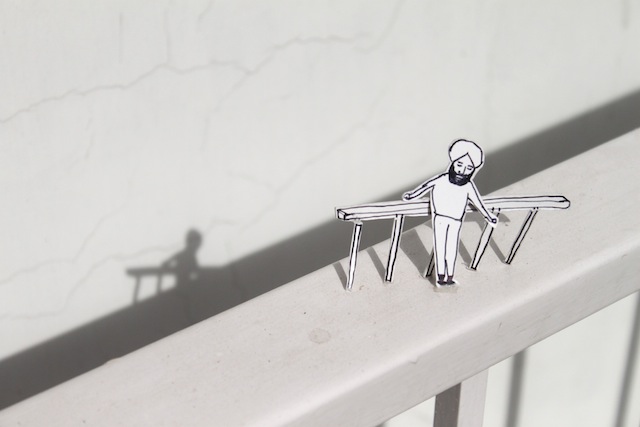
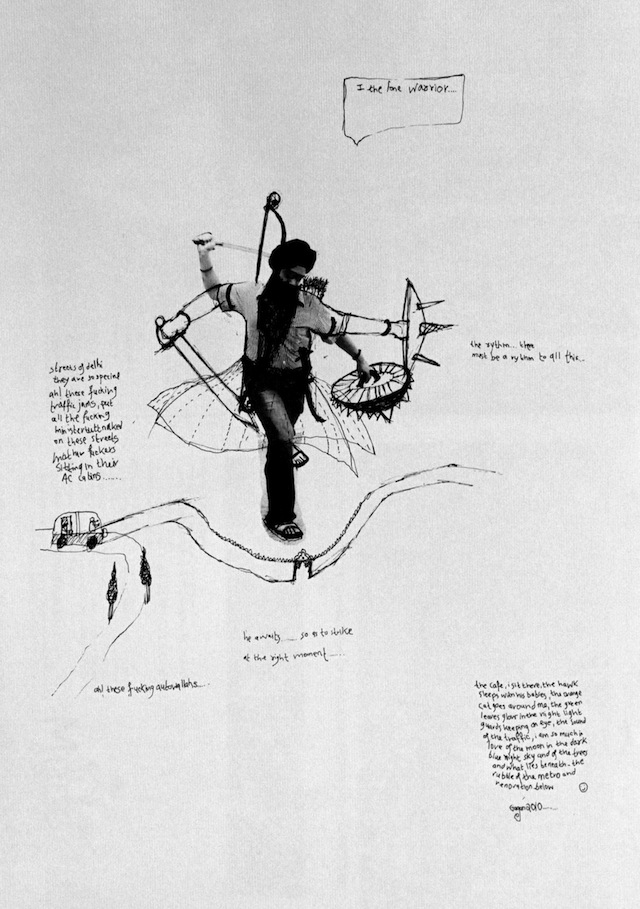
Cut out series, paper and pen, 3 inches by 5 inches, 2015

Briefly describe the work you do. 

I mainly work with drawing in a sketchbook. I like to be in-situ and draw what I’m thinking. I am currently exploring Net art, what is coding?

Tell us about your background and how that has had an influence on your work and on you as an artist.

I have been managing a telecom company for the past fifteen years in a densely populated Computer Hardware market. Coming from a business family, i never did my Bachelor in Fine Arts so I only knew how to sketch with a pen on paper and so that has become my practice. Also my studio is in the same computer market which is loud all the time, so I find peace in such turmoil. Its like making a sketch in the middle of a busy traffic filled road. I like to read on movement, force, torque so that influences my outcome.

The concept of the artist studio has a broad range of meanings in contemporary practice. Artists may spend much of their time in the actual studio, or they may spend very little time in it. Tell us about your individual studio practice and how it differs from or is the same as traditional notions of “being in the studio.”

For the past few years since 2011, i have been working in sketchbooks of all sizes but always inside a cafe, a museum space, a restaurant, a dining place, a park or an outdoor place. I can’t sit and work in my studio. So the City becomes my Studio. 

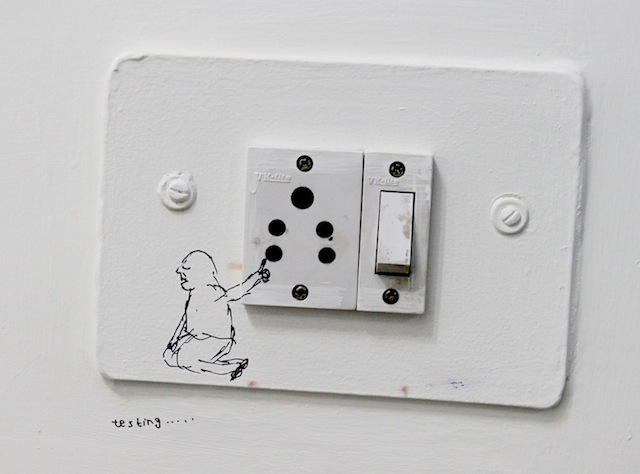
testing, pen on wall, 2 inches by 2 inches, 2013

testing, pen on wall, 2 inches by 2 inches, 2013

What roles do you find yourself playing that you may not have envisioned yourself in when you first started making art?

Well, off lately and I find it exciting to go through a concept or science, lets say physics and or something to with medical treatment, so for me to read it and then draw out, chalk out a sketch is an interesting space because it becomes like a self learning method through drawing simply because I am interested to know more. 

When do you find is the best time to make art? Do you set aside a specific time everyday or do you have to work whenever time allows?

I don’t have a best time, but over the past few years, it has become a fixed routine to work in the morning around ten till lunch. I can’t sit any longer in a cafe. And i drain all my energy in the process. After that Its about writing, reading emails, maybe visiting exhibitions, meeting people and then doing other activities.  

Rhythm series, mixed media. 8 by 11 inches, 2012

Rhythm series, mixed media. 8 by 11 inches, 2012

How has your work changed in the past five years? How is it the same?

In the five years, 2010 onwards, i have seen a shift in the line, from being a smooth line to becoming a broken line, from drawings from reading history, works on erotic art to capturing day to day events, a sense or reportage to also just picking a theme, like what happens if i fall, how can i go on falling, what is a fall? So i never worked like this earlier. Earlier it was enacting a past event. But the scale and tools and the medium have more or less remained the same, like a small sketchbook, around A 5, pen on paper and sketching. From being inside a studio to being completely outdoors. And only recently i worked or created works on humour which earlier were not so prominent in my practice.

How have people such as family, friends, writers, philosophers, other artists or even pop icons had an impact on the work you do?

My families stories become part of my sketchbook. my friends and interacting with them gives me new ways to look at my work. I like to read Merleau Ponty once in a while and what ever pops up as an interesting read. 

Have you ever been pulled in the direction of a pursuit other than being an artist? What are your other interests? 

Yes, I have of running my business on full scale, of creating a team of marketing but it retains itself for a short while. Also the nature of documentary filmmaking has been elusive as a way of projecting art which can create a social impact on the society and documentaries strength of capturing what popular cinema can not do.

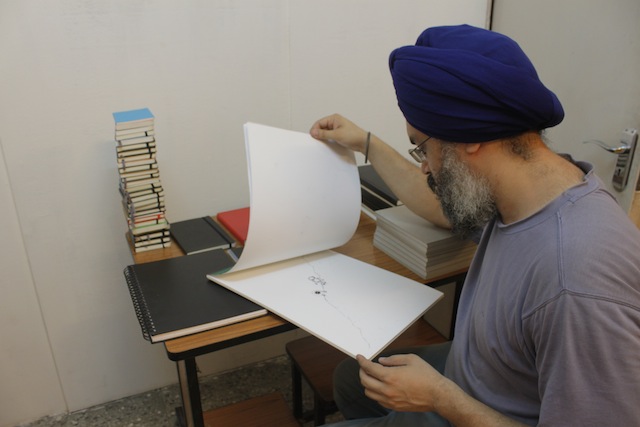
seeing my works

gagansingh.net

All images copyright of the artist and used with their permission. 


Posted in Drawing | Tagged , , , , | Leave a comment

Angela Isbell – Alexander City, Alabama

Secret Place Concrete, wood, metal 22x21x5” 2014

Secret Place
Concrete, wood, metal
22x21x5”
2014

Briefly describe the work you do. 

Within me is a yearning for self-discovery–to uncover the meaning and motives behind the things I think and feel. Here is where I take the abstract and make it concrete. Literally. Apart from our minds, our hands are what set us apart from every other living creature, not only physically but also socially. Our hands pray, gesture, and comfort. To render an emotion into a physical form, I use concrete to create life-size replicas of my own body, most often my hands. With scavenged wood, rusted metal, wallpaper, and bullet casings, I give these hands a spiritual environment, representational of Christianity rooted in the Deep South. It is in this place that I can learn about myself and lay to rest emotions, and in return, I am given peace.

Tell us about your background and how that has had an influence on your work and on you as an artist.

I grew up in a small town in central Alabama, a town so small it didn’t even have its own post office. As an adolescent, I was always creating–drawing, building clubhouses, writing poetry and stories, and even making short films with my mother’s video camera. With so little to do and so little required of me growing up, I was free to run wild, create, think, and pursue religion as I pleased. I often incorporate touches of “the South”– peeling floral wallpaper, old wood, and bullet casings– into my work to represent my youth and the strict Southern values that I willingly acquired, and eventually abandoned, as I got older. 

I Became Eve Plaster, wood, wallpaper, mixed media 32x39x7” 2015

I Became Eve
Plaster, wood, wallpaper, mixed media
32x39x7”
2015

The concept of the artist studio has a broad range of meanings in contemporary practice. Artists may spend much of their time in the actual studio, or they may spend very little time in it. Tell us about your individual studio practice and how it differs from or is the same as traditional notions of “being in the studio.”

On average, I spend very little time in the studio. I often begin working on a piece, and lose interest in it later. I spend most of my time coming up with ideas, concepts, titles, drawing on little pieces of paper, and making notes for future works. Although this isn’t a traditional practice, I find that when I have a solid idea, I am able to produce art that I am excited about.

What roles do you find yourself playing that you may not have envisioned yourself in when you first started making art?

When I first started making art, I never expected to learn how to use saws and power tools. Growing up, I thought of saws, drills, and sanders as tools for men, as I had always watched my father use them. Knowing how to use these tools has given me the potential to make three-dimensional art without restrictions.

When do you find is the best time to make art? Do you set aside a specific time everyday or do you have to work whenever time allows?

I prefer to work in solitude, and as I share a studio with my boyfriend who is also an artist, I try to take advantage of any opportunity I get to work alone in the studio. Although, late afternoon is when I usually work.

Because No One Ever Talks About the Third Side Concrete, wallpaper, mixed media 15x9x3.5” 2015
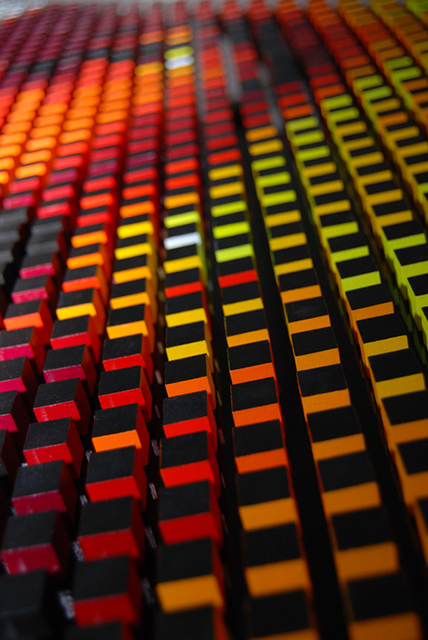
Because No One Ever Talks About the Third Side
Concrete, wallpaper, mixed media
15x9x3.5”
2015

How has your work changed in the past five years? How is it the same?

In the past few years, my art has taken a dramatic turn from cutesy to conceptual. At first, my work largely consisted of animal portraits and concepts that I couldn’t relate to. Nonetheless, over time, I’ve worked to develop the very personal and unique work that I had always wanted to create yet couldn’t figure out how. 

How have people such as family, friends, writers, philosophers, other artists or even pop icons had an impact on the work you do?

Until my junior year of college, I’d never taken a studio art class from a female. My first sculpture class was with a female professor, and I feel that I owe a lot of who I am as an artist and what I may become to her. She pushed me to create, showed me new techniques, and taught me that never have to limit myself as an artist because of my gender.

Have you ever been pulled in the direction of a pursuit other than being an artist? What are your other interests?

Before I pursued art, I desperately wanted to be a classical violinist and worked very hard with the intention of getting into my college’s music program. After spending an entire summer practicing for thirty hours a week, I realized that classical violin was not for me. I still play violin and take lessons; however, now I stick to jazz, contemporary, fiddle, and occasionally play at weddings.

About
AngelaIsbellHeadshotAs a junior in college, Angela Isbell fell in love with the art of sculpture, particularly mold-making. Using old wallpaper, metal, mixed media, and wood from her childhood home in central Alabama, she gives her sculptures a southern touch that alludes to Christianity in the Deep South. In 2015, Isbell graduated from the University of Alabama at Birmingham with a BA in Studio Art with a concentration in Sculpture. She currently resides in Alexander City, Alabama, with her boyfriend, Great Dane, Labrador, and two cats, Layla and Clapton.

AngelaIsbellinStudio1

angelaisbell.com 

All images copyright of the artist and used with their permission. 

Posted in Uncategorized | Tagged , , , , | Leave a comment

Timothy Gaewsky – Toledo, Ohio

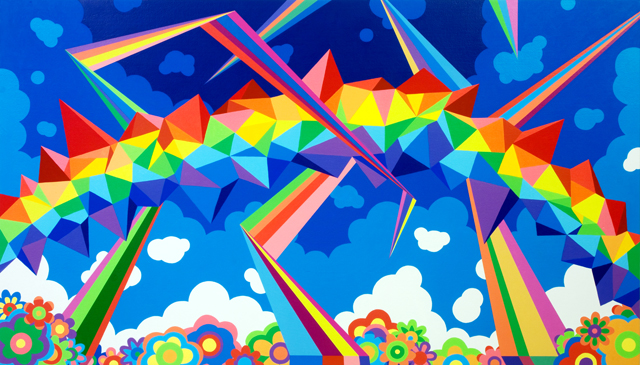
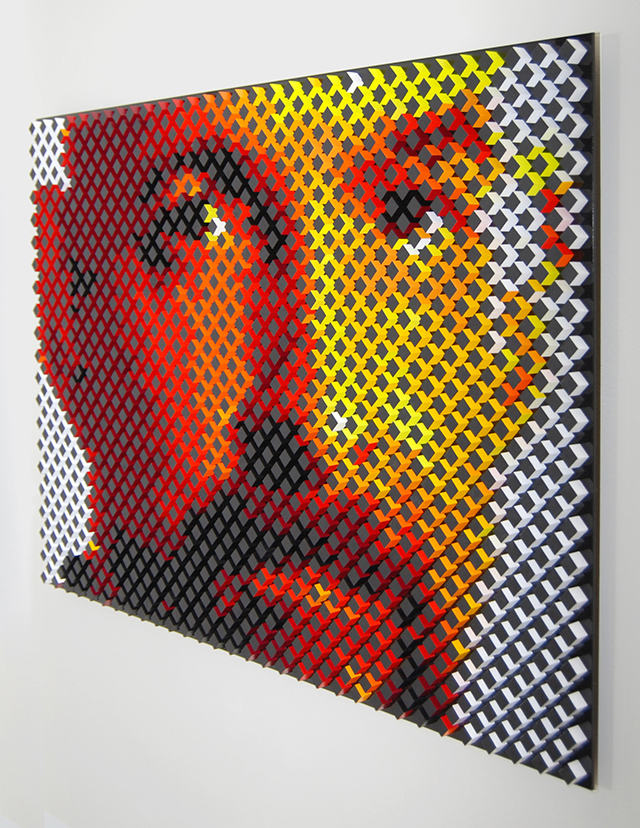
Positive Contact, 2015, synthetic polymer on wood, 41.5" x 43.25”

Positive Contact, 2015, synthetic polymer on wood, 41.5″ x 43.25”

Briefly describe the work you do.  

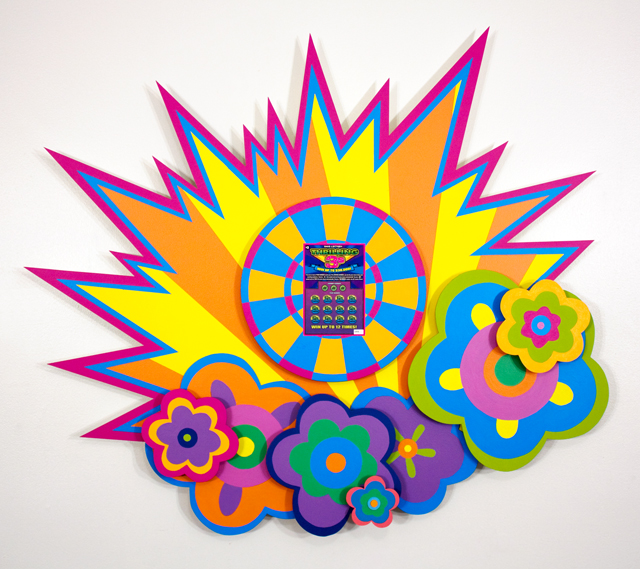
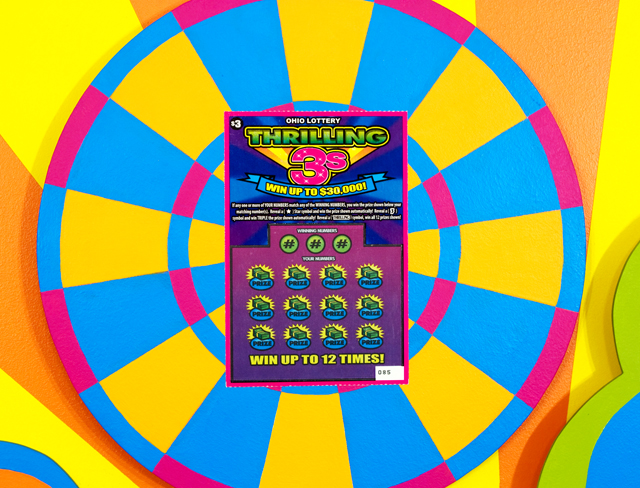
In short, the work I do is multi-faceted. My physical focus spans painting, installation pieces, and also, multi-layered and mixed media assemblages, whereas my visual and aesthetic focus consists of mimics and reflections of toy packaging and lottery ticket designs, 8-bit video game and pinball graphics, 60s psychedelic imagery, and the pop art genre. Many of these graphics are used by commercial and graphic design industries as a way to entice a visceral response from consumers, and may include the use of vibrant colors, flat and hard-edged shapes, as well as playful geometric patterns. Outside of the aesthetic imageries and influences, I also try to present in my work a focus on critical social commentary. In fact, outside of my current body of work, my most recent body, the multi-layered and mixed media assemblages, often incorporated unscratched lottery tickets as a way of commenting on instant gratification and the desire and determination to “get-rich-quick” that seems to shape much of American culture. My current body of work focuses on the subtleness of those same themes and designs, and their effect of attracting audiences and instilling within viewers a sense of calm, ease, and private happiness. 

Tell us about your background and how that has had an influence on your work and on you as an artist. 
When I was a kid, I knew that I wanted to be either an astronaut or an artist. Once I realized I would never get to ride in a rocket, I began really working hard on “being an artist”. Growing up in a wonderful middle-class family in the Midwest, I learned early on the value of hard work and following my passions. My parents were always very supportive of my dream to be an artist and constantly pushed me towards that. They came to all of my ‘shows,’ and hung up my work around the house. I think their support had a much more profound effect on me than I realized even then. That kind of endless support, the “you’re a success to me” attitude, taught me to focus on the passion of making art, and not the result of selling it. Because of all that, I genuinely enjoy my work. Yes, I’d love to sell some of it, but I’m also genuinely happy just making work and being around it.  
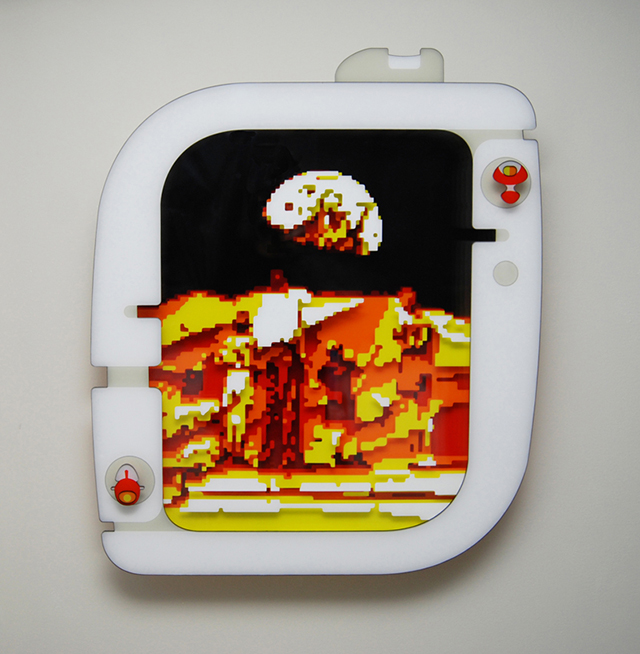
Movements of Clarity and Phosphene Bliss, 2014, synthetic polymer on wood, 36" x 61”

Movements of Clarity and Phosphene Bliss, 2014, synthetic polymer on wood, 36″ x 61”

The concept of the artist studio has a broad range of meanings in contemporary practice. Artists may spend much of their time in the actual studio, or they may spend very little time in it. Tell us about your individual studio practice and how it differs from or is the same as traditional notions of “being in the studio.” 

To me, being in the studio is more than the physical placement of my body. The studio is my sanctuary – my place of refuge from all the ongoing distractions at work and in life. I’m able to lose myself in the process of making work, and in my own thoughts and ideas. I get lost in preparing new painting surfaces, mixing various paint colors, searching for references and inspiration, or exploring ways to push my work in new directions. I may work on a single painting at a time, or I may work on any number of surfaces. When I’m ready to start a piece, I study the canvas, and I wait for the images to come to me. I’ll start with a general idea and sketch that out, and then various elements will be added throughout the process. This may take a week, or two depending on the size of the painting. During the painting process, I often find myself thinking of new experimental opportunities I can take in another painting. The whole process is very engaging for me: It is like I’m in a different reality when I am in my studio, one where I’m surrounded by the creative process, and everything else – paying bills, running errands – all of that – it doesn’t exist anymore. Because of that, I’ve always felt it important to keep my studio space as close to me as possible, often occupying part of my own living space. Right now, my studio is the basement of my house, and that’s okay with me.  

What roles do you find yourself playing that you may not have envisioned yourself in when you first started making art? 

I’ve assumed a number of roles that I didn’t anticipate when I started making art. I didn’t think I’d take on an advocating role, starting my own gallery as a way to curate, educate, and take part in the arts community, but I have, and with that, comes actively engaging in the movements that occur: a pop-up gallery here, a gallery project there – it’s all part of being an artist.  

When do you find is the best time to make art? Do you set aside a specific time every day or do you have to work whenever time allows? 

I typically spend at least twenty hours a week in the studio, although I desire to spend more time there. I have always found it important to have a dedicated studio practice, in addition to a 40-hour work week. Throughout my artistic career, I’ve had to depend on full-time employment for financial stability. Although I always plan to work during the week in the evenings, and on weekends, life doesn’t always cooperate. Now that I’m engaged to be married and starting a family, I know that my studio time will become a little more flexed as well, and there may be a span of days or weeks where I selflessly focus my attention on my new family, rather than on my next piece. 

One of These Days, 2013, sintra, synthetic polymer, unscratched lottery ticket, wood, 34" x 40" x 3.5”

One of These Days, 2013, sintra, synthetic polymer, unscratched lottery ticket, wood, 34″ x 40″ x 3.5”

How has your work changed in the past five years? How is it the same? 

As you can imagine, my work has always been reflective of my own psychological and intellectual development. Five years ago, I was a graduate student making humorous performance-based videos about failure. Then, I started adding more and more to the performance, backdrops, props, installations – all of which led me to start building my assemblage paintings. Clowns, carnivals, gaming aesthetics, lottery tickets, bright colors became part of my process, and as such, is now the basis for most of my painting work. 

How have people such as family, friends, writers, philosophers, other artists or even pop icons had an impact on the work you do? 

As mentioned earlier, growing up in the family I grew up in did a lot for cultivating my interests and passions. I always had the support of my family and friends, and I still do. In fact, my family is always the first to comment, share, or even purchase a new piece or print. Outside of my family, I constantly find inspiration in nearly everything around me. As an art handler in a major museum, I’m surrounded by inspiration from unexpected artists and works. I also live in art, in that my living and home environment is also full of visual stimulation and inspiration from a wide range of artists, methods, materials, and aesthetics.  

Have you ever been pulled in the direction of a pursuit other than being an artist? What are your other interests?  

Being an artist has always been my main pursuit in life. I tried my hand at teaching once, but I found that it wasn’t as enjoyable as making work. Art is my number one passion; however, I am starting a family, and I’m starting to enjoy all that that entails too, such as playing tennis, going bike riding or hiking, and the more-than-occasional binge watching on Netflix.  

About

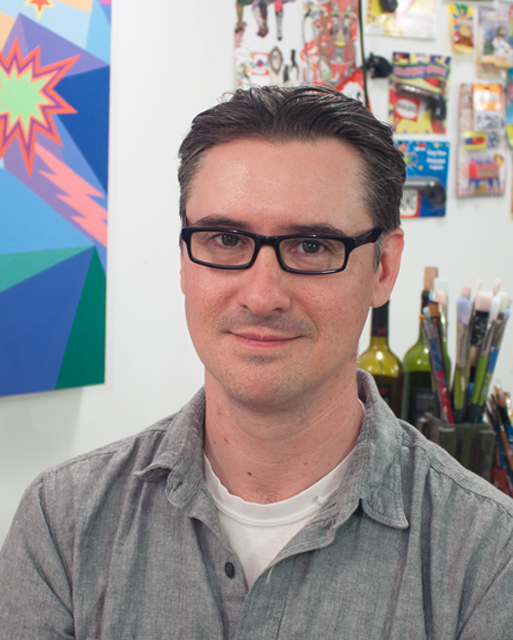
Gaewsky_HeadshotTimothy Gaewsky is an interdisciplinary artist who currently works in painting, assemblage, and installation. Gaewsky earned an MFA from Vermont College of Fine Arts, and a BFA from The Cleveland Institute of Art. His hard-edge, graphical, and witty paintings and installations draw on aesthetic influences from diverse sources, such as carnival games, toy packaging designs, pinball machine graphics, 8-bit video games, and more. His creative aim is to manipulate these elements in order to entice a visceral response from the viewer. Gaewsky has exhibited both nationally and abroad in group exhibitions at galleries and museums including: AC Institute (NYC, NY), Punch Gallery (Seattle, WA), The Gallery Project (Ann Arbor, MI), Toledo Museum of Art (Toledo, OH), AQUA Art Miami with ArtSlant (Miami Beach, FL), and Witte de With Center for Contemporary Art (Rotterdam, NL). Most recently, Gaewsky was awarded the FY 2015 Individual Excellence Award grant from the Ohio Arts Council. He currently lives and works in Toledo, Ohio.

One of These Days (detail), 2013, sintra, synthetic polymer, unscratched lottery ticket, wood, 34" x 40" x 3.5"

One of These Days (detail), 2013, sintra, synthetic polymer, unscratched lottery ticket, wood, 34″ x 40″ x 3.5″

timothygaewsky.com

All images copyright of the artist and used with their permission. 

Posted in Painting | Tagged , , , , | Leave a comment

Leonardo Blanc – Córdoba Capital, Córdoba, Argentina

Parte name: V|s=Vo Material: Copper Size: 300 x 250 x 33.6 mm Year: 2015

Parte name: V|s=Vo
Material: Copper
Size: 300 x 250 x 33.6 mm
Year: 2015

Briefly describe the work you do. 

I worked as a researcher at an aircraft military factory. In this place I worked around different metals, analyzing different manufacturing processes, mainly corrosion. During my research, I mixed scientific knowledge, poetry, photography and painting.

http://issuu.com/leonardoblanc/docs/memorias_de_verde_leonardo_blanc.do

Tell us about your background and how that has had an influence on your work and on you as an artist.

Anthropology, physical education and aeronautics technical degree were the disciplines that I studied and that provided the most important ingredients for the development of this work. However, it was the relationships with people that lead my creative processes.

The concept of the artist studio has a broad range of meanings in contemporary practice. Artists may spend much of their time in the actual studio, or they may spend very little time in it. Tell us about your individual studio practice and how it differs from or is the same as traditional notions of “being in the studio.”

In May 2014 I had an accident in my left leg and had to stay at home for one year unfit for work. That is the reason why I consider my study to be an important part on my recovery process and a sanctuary for intellectual elevation. However, I strongly believe anyone can achieve the creative act, anywhere in the universe. Time and space are mental constructions, like art.

Parte name: V|s=Vo Material: Copper Size: 300 x 250 x 33.6 mm Year: 2015

Parte name: V|s=Vo
Material: Copper
Size: 300 x 250 x 33.6 mm
Year: 2015

What roles do you find yourself playing that you may not have envisioned yourself in when you first started making art?

Nothing of what has happened to me was planned and therefore I never imagined I’d be where I am. I never imagined concluding my work and the consequences that this may involve. I always focused on processes because the future is very volatile and does not allow me to rest in a certain position or “state of comfort.” There are no horoscopes to determine the creative act and the position I play in art is inadvertently inexplicable and without expectations.

When do you find is the best time to make art? Do you set aside a specific time every day or do you have to work whenever time allows?

My creative acts happen all day long. Indeed, during the dream phase there are very important things happening, especially during the unconscious order. However, the moment I put my experiences and emotions is when I perform physical activities, usually during the morning and the afternoon.

Parte name: V|s=Vo Material: Copper Size: 300 x 250 x 33.6 mm Year: 2015

Parte name: V|s=Vo
Material: Copper
Size: 300 x 250 x 33.6 mm
Year: 2015

How has your work changed in the past five years? How is it the same?

In the last five years my work has changed radically. In 2010 I began to study a Masters degree in anthropology, putting my profession in Physical Education on hold for some time. In that same year I traveled around Europe, America, Asia and Africa. During that trip, experiences from abroad and new intellectual interests awakened self-consciousness of the creative act.

How have people such as family, friends, writers, philosophers, other artists or even pop icons had an impact on the work you do?

Through art residency “Casa/studio B´atz´ and use of virtual social networks.

Have you ever been pulled in the direction of a pursuit other than being an artist? What are your other interests? 

I have had many different jobs, in many different areas, such as: lifeguard; factory worker, cinemas, supermarkets, trade; independent researcher; organizer of sporting events; repairing and manufactured bicycles; in a nursing home, arranging cell, gardening, office, etc.

I could say that my interest is to live in peace and time, to develop the existential quest.

About

4I was born on June 20th, 1980, in Córdoba, Argentina. I’m an artist that combines various disciplines and life experiences. I finished my secondary studies at ENET Nº 7 of the “Guarnición Aérea Córdoba” (1999), getting a degree as “Technical Aeronautic”.

In the year of 2001 I dropped out of System Engineering (UTN) to enter the Instituto Provincial de Educación Física (IPEF). During the vocational training process, I worked at sport schools in Villa Allende’s town.

In 2005 I created, coordinated and dictated classes at the first Argentina`s Bike trial school. I also organized national and international tournaments, lectures, shows, exhibitions and workshops of Bike trial with the purpose of teaching the assembling, fixing and use of the bike for the development of children and youngsters. At the same time I participated as a teacher and coordinator of the civil association CAYÉ, planning and executing short, medium and long term educational projects at Córdoba’s state schools (2004 – 2007). In 2007 I got my degree as Physical Education Teacher and participated as associated teacher and researcher at the IPEF.

Over the next three years I traveled through the Americas, Europe, Asia and Africa. I carried on my graduate courses in Spain getting a Bachelor degree in Physical Activity and Sports Sciences.

Through the experiences lived during the trips, I discovered a new passion: it was the relationships lived with people from different cultures that originated the interest in observing, understanding and intervening different social groups. With the purpose of channeling my new intellectual curiosity, I started a Master degree in Social Anthropology (2010), dictated at the Faculty of Philosophy and Humanities of the Universidad Nacional de Córdoba (UNC). Simultaneously I carried on with the activities as Physical Education teacher and associated teacher at the IPEF.

In late 2011 I performed my first artistic intervention, “art-sport”, together with Demolition/Construction (Independent Contemporary Art). This action (designed and developed as “sport, art an social inclusion”) was intended for the neighbors of “Campo de la Rivera” (Former Illegal Center of Detention, Torturing and Assassination).

By mid-2012 I return to Europe beginning a new stage in conceptual art. At the end of the same year I returned to Argentina and settled in the art residence “Casa/estudio B´atz”. The close link with national and international artists and researchers, allowed me to develop new artistic approaches.

In 2014 I got a Master in Social Anthropology.

To access the material, I recommend reading:

http://issuu.com/leonardoblanc/docs/memorias_de_verde_leonardo_blanc.do

7

cargocollective.com/LeonardoBlanc/admin/9648706

All images copyright of the artist and used with their permission. 

Posted in Conceptual Art | Tagged , , , , | Leave a comment

Tyler Bohm – Columbus, Ohio

Metamorph,-mat-board-on-plexiglass,-33-x-33-x-2-in.,-2013

Metamorph,-mat-board-on-plexiglass,-33-x-33-x-2-in.,-2013

Briefly describe the work you do.

My work is, in the broadest sense, about technology and the future. I’m simultaneously fascinated with and alienated by the rapidly evolving technological landscape we inhabit, and that tension informs my art. My recent works are mixed-media relief pieces that originate as digital designs and are executed primarily in plexiglass. I consider them a kind of creative future studies, a speculation about where we’re headed that draws on science fiction and past generations’ visions of the future.

Tell us about your background and how that has had an influence on your work and on you as an artist.

I’ve long considered myself an artist but have taken a number of hiatuses from making work, which have influenced me to varying degrees. I studied Russian and Russian politics for several years, which was fascinating in that the Soviet Union always struck me as a massive and tragic art project. The early Soviet leaders had a belief in an idealized future society which I still find weirdly compelling. More recently I’ve been working in the architectural industry, which has opened my eyes to a number of design approaches and fabrication processes I use in my own work.

The concept of the artist studio has a broad range of meanings in contemporary practice. Artists may spend much of their time in the actual studio, or they may spend very little time in it. Tell us about your individual studio practice and how it differs from or is the same as traditional notions of “being in the studio.”

I have a day job so my studio practice revolves around those time constraints. Though the bulk of my work usually occurs outside of my studio. My pieces are designed in Illustrator and undergo an initial fabrication stage at an architectural model shop, where I use a laser cutter and other tools to translate digital designs into physical components. It’s only at that point that I move onto the studio, where I’m essentially assembling and painting a pre-designed kit of parts.

Peripheral-Visionary,-mixed-media-on-plexiglass,-36-x-24-x-1-in.,-2015

Peripheral-Visionary,-mixed-media-on-plexiglass,-36-x-24-x-1-in.,-2015

What roles do you find yourself playing that you may not have envisioned yourself in when you first started making art?

My creative practice is funny in that it’s made me a dilettante in a range of niche subjects. I’m often experimenting with materials and concepts about which I have minimal technical knowledge. As a result I find myself doing Google crash courses, researching manufacturers and suppliers etc. There are times when I’m haggling for bulk discounts on craft items or peppering specialty manufacturers with odd technical questions that I just stop and think, how did I get here?

When do you find is the best time to make art? Do you set aside a specific time everyday or do you have to work whenever time allows?

I was reading about chronotypes recently and realized I don’t actually have a more productive time of the day. I seem to be equally efficient/inefficient at all hours, so I’ve always tended to work whenever time permits. Light naps and hypnogogic states are useful in terms of generating and visualizing concepts, but otherwise it’s hard to predict when an idea will arise. Lately I’ve started using Evernote to keep a running tab of potentially interesting ideas, which I use to create a prioritized list of new works.

The-Future-is-Behind-Us,-mixed-media-on-plexiglass,-33-x-24-x-4-in.,-2015

The-Future-is-Behind-Us,-mixed-media-on-plexiglass,-33-x-24-x-4-in.,-2015

How has your work changed in the past five years? How is it the same?

Up until about 2-3 years ago, I was very focused on creating a cohesive series of works. I had a particular set of parameters I was working within, and I was trying to stretch that design language to a kind of logical endpoint. Since then I think my work has become more experimental and conceptual. I’ve been exploring unfamiliar materials, techniques and technologies. And my practice has become more conceptually-driven, emerging from thought experiments or research rather than sketches. But the interest in technology, future studies, science fiction and related themes has remained a constant.

How have people such as family, friends, writers, philosophers, other artists or even pop icons had an impact on the work you do?

I was lucky to grow up in a very artistic home. Both of my parents are involved in creative fields and have always been very supportive of my artistic inclinations.  Another influence has been my wife, a poet and writer who has collaborated with me on several projects and encouraged me to forge my own path. These immediate influences have had an impact not so much on the type of art I’m making, but on the more fundamental ability to pursue art in the first place. 

Have you ever been pulled in the direction of a pursuit other than being an artist? What are your other interests?

I’m a bit of a magpie when it comes to passions and interests and constantly find myself pulled in multiple directions. Russia still fascinates me despite its apparent disconnect with my creative practice. Architecture is another field of longstanding interest, as are advances in computer technology such as artificial intelligence. I’ve always been drawn to artists on the periphery, whose frame of reference is a discipline or field other than the visual arts. So I try to be open to outside influences and ideas, and try not to worry about whether those interests necessarily converge.

About

headshotTyler Bohm is a mixed-media artist who spent several years working in the architectural industry, where he adopted the tools and techniques of digital and physical modeling to create digitally-based sculptural works. The resulting artistic process, which involves traditional approaches such as painting mediated through a range of design technologies, is reflective of the technological themes explored in the work. He attended Kenyon College and Oxford University, and is based in Columbus, Ohio.

Peripheral-Visionary-detail-shot

Peripheral-Visionary-detail-shot

tylerbohm.com

All images copyright of the artist and used with their permission. 

Posted in Digital Art, mixed media, Sculpture | Tagged , , , , | Leave a comment

Virginia Rota – Madrid, Spain

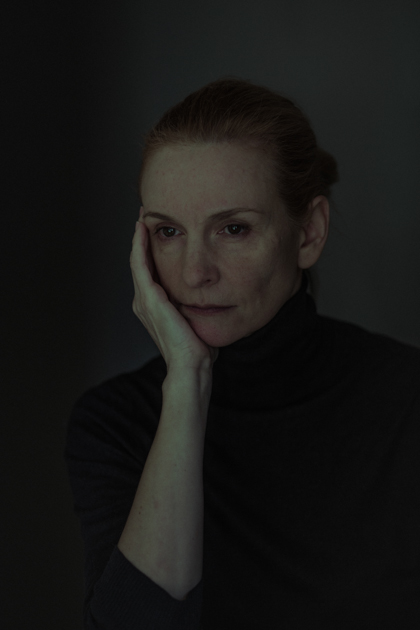
S_T (serie Saudade)-digital-50x70cm-2015-photo2

S_T (serie Saudade)-digital-50x70cm-2015

Briefly describe the work you do. 

I am photographer playing with pain who sometimes experiment with video. 

Tell us about your background and how that has had an influence on your work and on you as an artist.

I’ve never been interested in art. Only by writing. I made the mistake of studying psychology in college. That lost me many years. That has not taught me anything for my life. In the final year I discovered photography. I started doing photography in theaters for a magazine. Bad things happened and I felt so so sad, so I started to take more and more pictures. It’s been terrible things in my life; I guess that is why my work is not a circus (I mean the funny way).

The concept of the artist studio has a broad range of meanings in contemporary practice. Artists may spend much of their time in the actual studio, or they may spend very little time in it. Tell us about your individual studio practice and how it differs from or is the same as traditional notions of “being in the studio.”

I have not a study. I’ve never had. I used to work in the streets, taking pictures. Then at home or in a bar by editing, writing. Now I only take pictures at home. In the corridor of my house. I would love to have a study; but in Madrid the spaces are quite expensive; and I need a space with natural light, not a sewer.

What roles do you find yourself playing that you may not have envisioned yourself in when you first started making art?

I don’t know if you mean it, but one of the weird things for me is to see a stranger staring at my pictures. About my work, I’m not doing anything I’m surprised. I don’t know if this is good or bad, but what I’m feeling it’s what I’m doing; so it seems quite natural and I’m not fulfilling a role that is foreign to me.

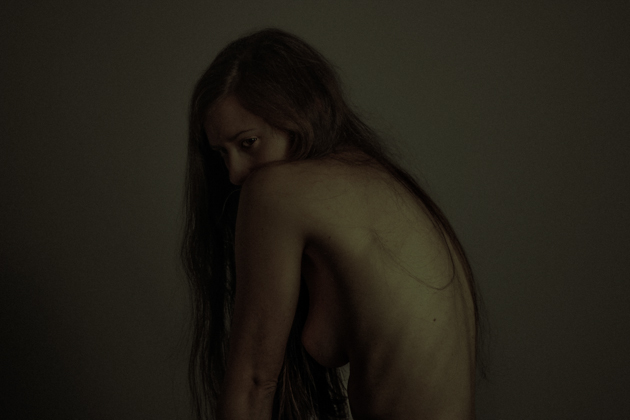
S_T (Saudade)-digital-50x70cm-2015

S_T (Saudade)-digital-50x70cm-2015

When do you find is the best time to make art? Do you set aside a specific time everyday or do you have to work whenever time allows?

I usually take pictures in the periods when I’m sad. When I’m really sad it is when I invite a lot of people home to take their photograph; but every day I try to do something. Work for me is not just be taking or editing photographs;I am also working to send my calls, attending e-mails or study just what is happening. 

How has your work changed in the past five years? How is it the same?

I’ve only been taking photographs 3 years. Before I was taking photograph in black and white, girls in middle of the street. I thought it was fine. Now I find it an immature work. I think my work now is more accurate, more mature than the last. However, I have the feeling that this is going to happen constantly, and I’m start thinking how wrong I am now thinking that my current work is mature, when in two years will seem like a child’s play.

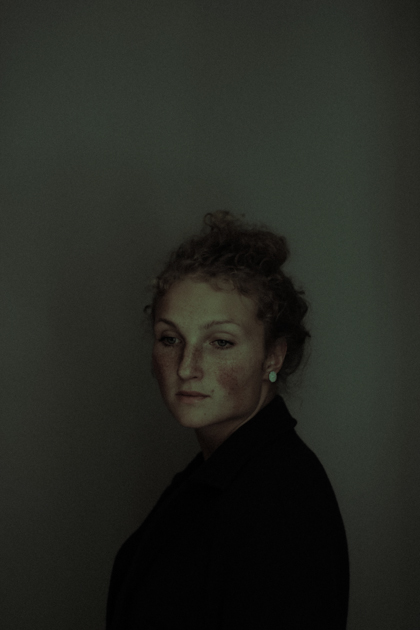
S_T (serie Saudade)- digital-50x70cm-2015

S_T (serie Saudade)- digital-50x70cm-2015

How have people such as family, friends, writers, philosophers, other artists or even pop icons had an impact on the work you do?

I work on my experience. But it’s all pretty intuitive. The past is what makes my job. I really like the work of Iché Veru (photo), Sally Mann (pictured), Silvia Grav (photo), Haneke (cinema) and Angélica Liddell (theater). They are my reference as to how to bring an idea to action, but do not try to acquire an aesthetic or similar.

Have you ever been pulled in the direction of a pursuit other than being an artist? What are your other interests? 

I always wanted to be a writer. I have a blog. But I do not take it as seriously as photography; I mean you do not spend so many hours to write. Just I do not know how. The psychology was a mistake. I finished career, I could formally say I’m a psychologist. But I do not feel it. I’m interested in theatrical lighting. I’m trying to work on it now. And I just want to continue creating pictures and video.. 

About

headshot-virginiarotaBorn in Málaga. Actually living in Madrid. Self-taught photographer. First prize Malagacrea 2015, prize Contemporarte 2015 and selected by Incubarte 2015 (prize Galería Liebre y Galería Blanca Soto). Individual exhibitions: Saudade in Galería La casa Rosa 2015 and Agosto Clandestino, Poetry Festival, La Rioja, Logroño 2015. Collective exhibitions: Amigos Imaginarios/Amigos de verano (Museum Thyssen, 2015), Beauty (Museum MAD, Málaga 2015), Vidas Cruzadas/Festival de videocreación (Galería Paula Alonso, Madrid, 2015), Under35 (Galería GACMA, Málaga 2015), Madrid Ext/Día (PHOTOESPAÑA, TAI, Madrid 2014), Celebración (Exposición colectiva, Fundación Cruzcampo, Parking Salitre, 2013), Proyecto Dispara-T (Exposición en balcones, MAUS, Málaga 2013), Más grotesco(Exposición comisariada por Los Interventores, Málaga, 2013) y Malagorée (Isla de Gorée, Senegal 2013).

As a filmmaker; my first short film DOLO (foundfootage’s exercise on pain) was nominated for Best Film and Best Director in Notodofilmfest 2014 and selected by IVAHM 2015. CADENCE, my first documentary about the dancer Janet Novás, has participated in the International Film Festival of Gijón, International Film Festival 22xDon Luis Buñuel, Festival ICARO, Festival de Teatro y Danza Contemporánea de Bilbao-Bilboko Antzerki Dantza (BAD) and IX MIVSC – São Carlos Videodance Festival.

My interest stems from the need to express myself and approach what I do not understand.

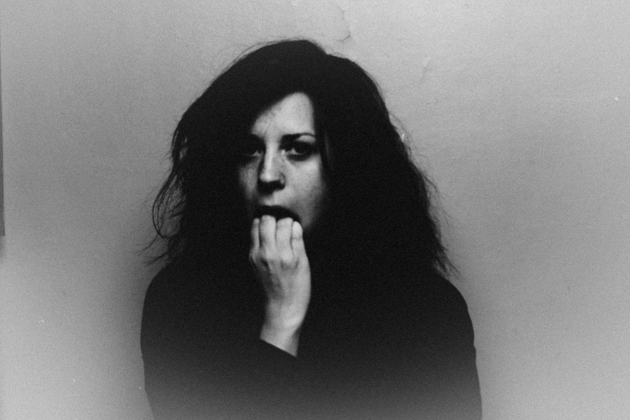
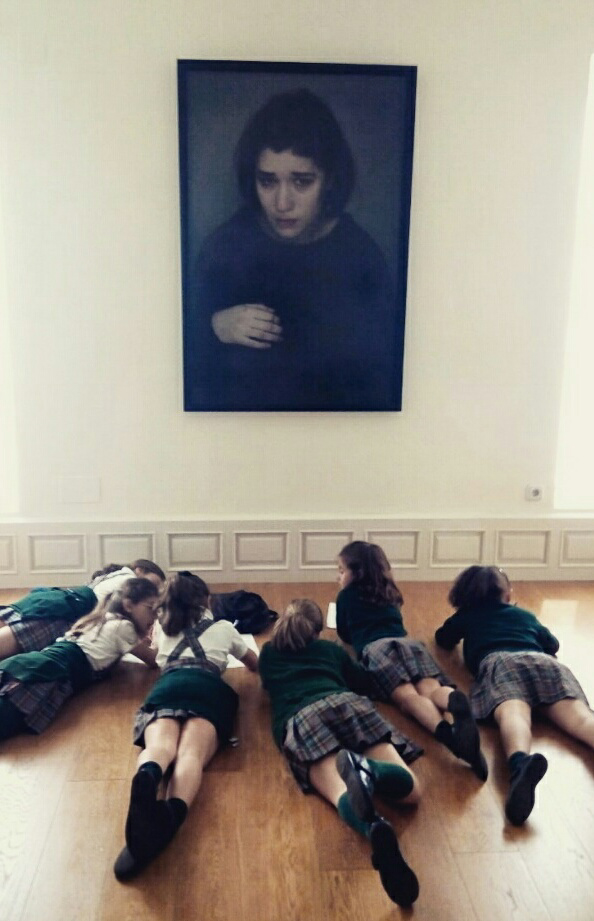
girls on a gallery painting one of my portrait (serie 'Saudade)

virginiarota.es 

All images copyright of the artist and used with their permission. 

Posted in Photography | Tagged , , , , , | Leave a comment