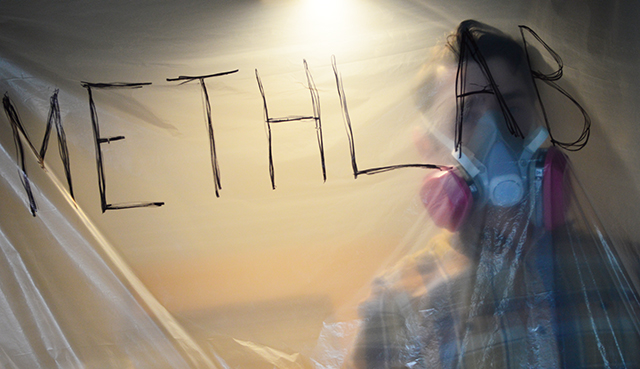
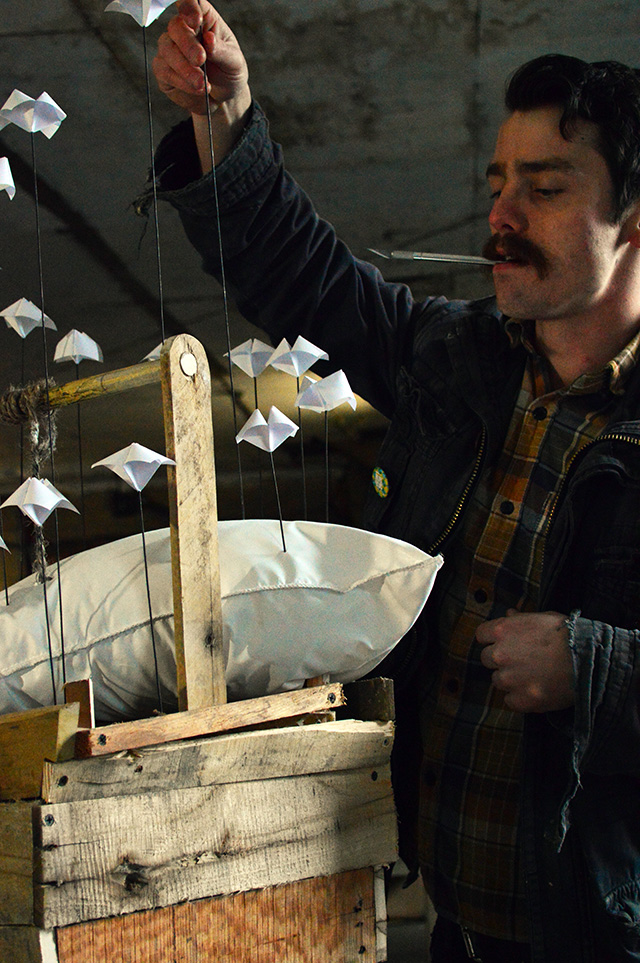
Christopher McIntyre Perceptions – Milwaukee, Wisconsin

American Scene, Fine Art Photography, 12x18, 2012

American Scene, Fine Art Photography, 12×18, 2012

Briefly describe the work you do.

Art to me an acronym; A Reality Transcribed. My art is life so I often say on social media #ARTLife. I speak life, I create life, I birth life with my artworks in various mediums, mostly known for my fine art photography.

Tell us a little about your background and how that influences you as an artist.

Given my background, life inspires me because at one point I was extremely close to the opposite of it. I am a self taught artist with various mentorships. I took the unorthodox path into the art world. No family connections to institutions, no art school, nothing that would make one be at ease in reference to the ‘typical’ artist because my life has been far from typical. My father was a drug dealer. My mother is apart of an active Christian church. So, in these separate homes I would live in two different worlds which shaped a lot of my art as well as my worldview; my perception is of the big picture as well as the little pixels. My art is riddled with codes due to that & my passion is far beyond what a ‘typical’ artist can have. I am driven by my desire to be successful in the rite of cultivating / manifesting my own perception with 100% artistic control as well as to profit from what I create. Even when I was living in my art studio for a moment in time in the past, this has never been a hobby. This is my life. I inked ART Life on my chest in blood, I’ve sweated with building my brand & I’ve surely cried tears due to it. I’m beyond invested & this is my ministry from the Most High God to the people of the earth.

Waterfalls, Fine Art Photography, 20x30, 2012

Waterfalls, Fine Art Photography, 20×30, 2012

The concept of the “artist studio” has a broad range of meanings, especially in contemporary practice. The idea of the artist toiling away alone in a room may not necessarily reflect what many artists do from day to day anymore. Describe your studio practice and how it differs from (or is the same as) traditional notions of “being in the studio.”

The world is my studio. All I need is a space where God’s peace can rest & space for my tools then I can work. I’ve lived a nomadic life in reference to studios but as I mature, I see myself owning spaces & being connected to spaces that I can occupy for the sake of art. Being an alumni RedLine Milwaukee artist, I grew to value the idea of feeding off of a community of artists of various mediums. It stimulates creativity that can manifest in different ways & collaborations can be birthed in communal studio spaces, as long as respect is kept high with communication as a must.

What unique roles do you see yourself as the artist playing that you may not have envisioned yourself in when you first started making art?

I see my power to influence people within society. My position as an artist is to make people think. If I don’t make people think then I’m not doing my job. Think in your mind. Think in your heart. Think in your soul.

Beauty Pageant, Fine Art Photography, 20x30, 2011

Beauty Pageant, Fine Art Photography, 20×30, 2011

When do you find is the best time of day to make art? Do you have time set aside every day, every week or do you just work whenever you can? 

Nowadays, all of the above. I am always ready to make art because the flow of creativity is never peaked for me. Sometimes, life just comes first. Family & the analytical side of art, which is business, often take precedent over the creative because the imbalance of these things in an artist’s life will utterly destroy you in the end so I take time to focus on those things then I get to the ARTLife. 🙂 My life’s creed is “God, Family, Business” & I feel closest to God when I’m creating. The first five words of the Bible are ‘In the beginning, God created…’ so the first act of the Triune Godhead is creation. I must create.

How has your work changed in the last five years? How is it the same?

The essence of my work is the same because I am C.M.P. as my logo often brands. I legally changed my name to “Christopher McIntyre Perceptions”, which also meshes with my company “CMPerceptions”. When you invest in my artwork, you are receiving a piece of me, literally. I was once told that change is the only constant thing in this world so we are always changing. I’m changing how I express  via mixed media, painting, spoken word, documentary film, etc…but the essence of my expression is the same, to shine LIGHT…true light, not artificial light. Art is my ministry.

Are there people such as family, friends, writers, philosophers or even pop icons that have had an impact on the work you do?

God, my family & people whom I respect in actions / principles influence me but life in general impacts my work. We gain from the world around us then give back to the world what we perceive as it processes inside of us to be birthed into art. This is the duty of an artist.

The Studio

The Studio

If you had an occupation outside of being an artist, what would that be and why?

Honestly, whatever I’d be…I would be miserable to a point. I worked for Apple for two years & I loved it but I longed for more in my art career. I worked part time for AT&T making a few thousand dollars almost every pay check & hated it due to meeting numbers rather than creating work that I could sell for numbers. It would always go back to art for me. I knew since I was I child that I wanted to be an artist & work for myself. Thanks be to Jesus Christ, prayer works & dreams come true with hard work.

About 

Self PortraitChristopher McIntyre Perceptions, an artist, uses life as his canvas
as he is mostly known for fine art photography, cultivating art for 10
years.

www.CMPerceptions.com

All images copyright of the artist and used with their permission. 
Posted in Uncategorized | Tagged , , , , | 1 Comment

Laura Turon – El Paso, Texas

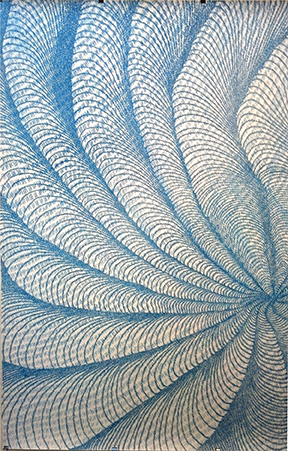
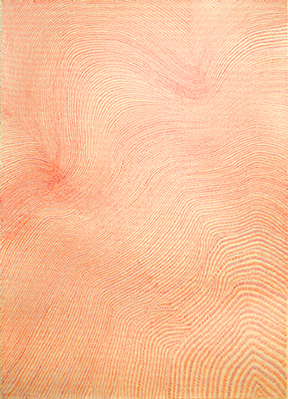
31831x5, 6' x 51", Colored pencil on paper, 2013

31831×5, 6′ x 51″, Colored pencil on paper, 2013

Briefly describe the work that you do.

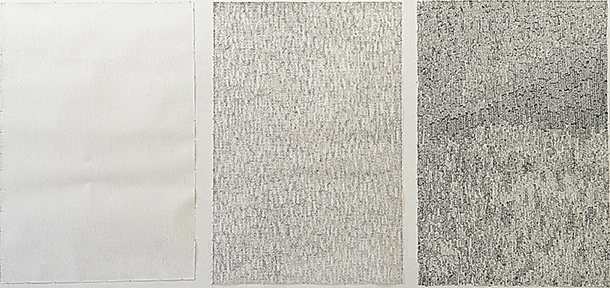
I explore the process of mark making which has become my main focus—also, the idea of transferring or even destroying my work. That is, I often use tape to transfer the graphite from one composition to another. This causes one work to become less “perfect” while transferring the image to a new work. When the first work is destroyed, or degraded, it adds flaws and thus more personality and character to the original piece, while recreating it in a new piece, or, in the case of my triptychs, in two more ways. The first piece ceases to exist, it sacrificed itself to become something new. I liken this to life, aging, and growing as a person. When one’s former self disintegrates to become a new, more mature person.

At what point in your life did you decide to become an artist?

I started college pursuing an engineering degree, but it wasn’t until I took a drawing class as an elective that I found my true passion in life—art. Before taking that drawing class, I considered myself a self-taught artist, I never thought I could actually make a career out of it, until I talked to my art professor and looked into to the program. 

Tell us a little about your background and how that influences you as an artist.

I grew up in Acapulco; a city situated in the south of Mexico in a semi-circular bay that is a popular tourist destination. My father was a singer and my mother a business owner. As a child I was always surrounded by music. I watched my father composing music and singing on a daily basis. My father’s passion and commitment to his career has been one of the major influences to me as an artist. I dropped out of school at young age and started working in my family’s business, where I learned about commitment and responsibility. In my free time I would spend mostly by myself, and began creating journals that consisted mainly of drawings, and some poetry expressing my feelings along with a drawing related to it. I had a very deep emotional and spiritual connection with my journals, where drawing would take me into a meditative state of mind. That’s when drawing became a very personal and significant aspect of my life.

Interference 1, 2 & 3,  6' x 51" each, Triptych, graphite and tape on paper, 2012

Interference 1, 2 & 3, 6′ x 51″ each, Triptych, graphite and tape on paper, 2012

What types of conceptual concerns are present in your work? How do those relate to the specific process(es) or media you use?

Repetition, deconstruction, transformation, interference and exploring the idea of appreciating things that can be taken for granted: Such as time, life experiences and memories are my main conceptual concerns at the time. I mainly work on large scale and transcribe all of these ideas into mark making. I use tally marks to represent time and question how we make our time count in things that matter. I create pieces that consist of excessive mark making and use tape to deconstruct, transform and represent interference. I write memories and life experiences to carve them on different surfaces, and use each letter as a mark.  

We once heard Chuck Close say he did not believe in being inspired, rather in working hard everyday. What motivates you in your studio practice?

What motivates me is my commitment to my work. I have created a relationship with my art that requires time, responsibility and hard work. The more time I spend working, the more I can challenge and push myself into working in more complex compositions. 

32856x5, 6' x 51", Colored pencil on paper, :2013

32856×5, 6′ x 51″, Colored pencil on paper, :2013

What artists living or non-living influence your work?

Mark Rothko

Heike Weber

Agnes Martin

Yayoi Kusama

When you are not making art what types of activities and interests do you engage in? 

Hiking

Off-roading

Visit museums and galleries

Spend time with my loved ones and watch movies

About 

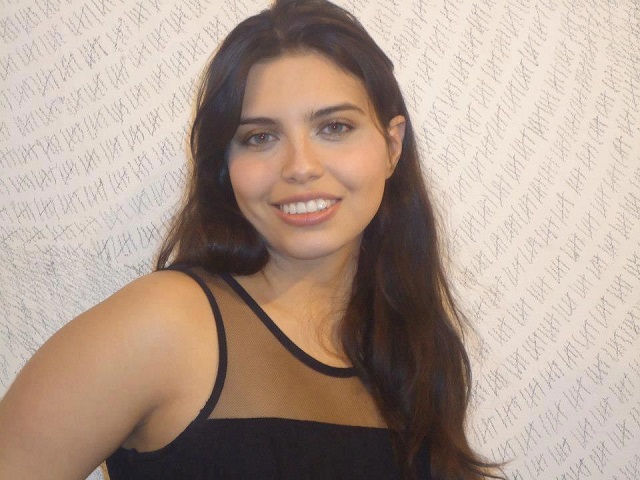
headshotLaura Turon is an emerging artist, recently graduated from the University of Texas at El Paso with a Bachelor of Fine Arts degree in Studio Art with double concentration in Drawing and Graphic Design, a minor in Painting and a certificate in Exhibition Practices. She was born on August 7, 1987 in El Paso Texas, where she lived until age four. She was raised in the south of Mexico in the City of Acapulco where she remained living until 2001. Then moved to Ciudad Juárez and began work at her family’s business where she stayed for five years. In 2007 she moved to El Paso where she remains and has established her studio. Her work has been exhibited in galleries throughout El Paso and she has curated exhibitions for local city events.

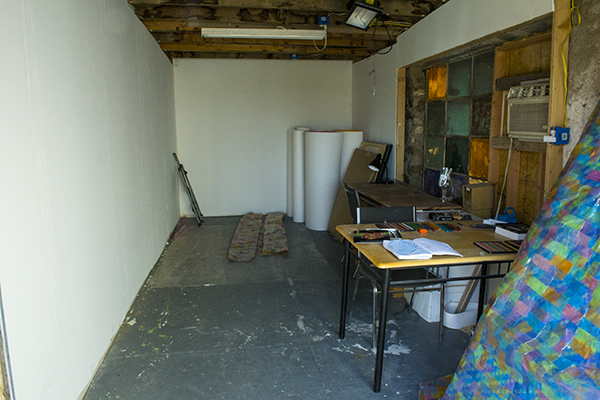
In the Studio

The Studio

www.lauraturon.com

All images copyright of the artist and used with their permission. 
Posted in Uncategorized | Tagged , , , , , | Leave a comment

Grace Scott – Grand Rapids, Michigan

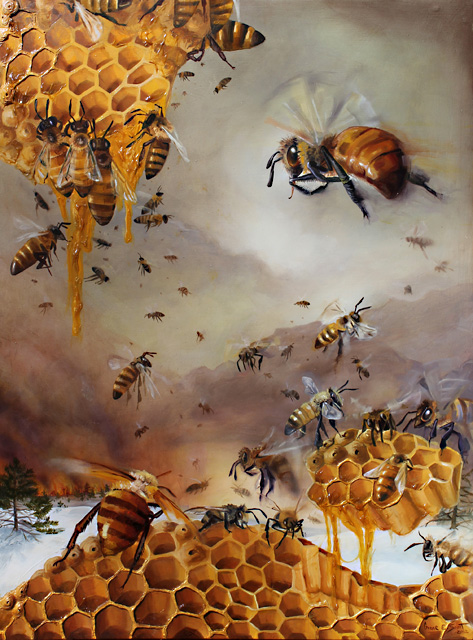
What was Once Milk and Honey, Oil and Mixed Media on Board, 16.75" x 22.5"

What was Once Milk and Honey, Oil and Mixed Media on Board, 16.75″ x 22.5″

Briefly describe the work that you do.

My art encompasses the technical realism of natural science illustration and also the strange imagery that is associated with modern surrealism and lowbrow art. My work is usually laden with symbols and features subjects from the natural world in correlation with these symbols or as symbols themselves. My paintings draw from ancient history and the present to create contemporary narratives and parallels.

At what point in your life did you decide to become an artist?

It wasn’t until high school that I made my decision to go to art school and become a professional artist. I had always loved science, as well, and it took me a long time to decide which direction to go in. As a child I had always had a gift for art and people always called me an artist but I didn’t quite know what this label entailed. While at Kendall College of Art and Design, though I still missed science, I knew that I had made the right decision to become an artist. After receiving my Masters Degree in Fine Art Painting I understood a little bit more about what it means to be an artist and what my duty as an artist is.

Tell us a little about your background and how that influences you as an artist.

I grew up in Petoskey, Michigan. My family lived out of town and back in the woods. I had 40 acres of forests plus hundreds of acres of state land to play on. Everyday I would be outside playing among the trees, fields, ponds, streams, and also observing the inner workings of the natural world. These influences have greatly affected my work. I paint what I know and I know the natural world. Plants, insects, animals, and landscapes are the meat and bones of my work. Also the philosophies that are associated with being in tune with nature also appear in my art. 

St. Gitche Gumee: The Hunted, Oil on Board, 24" x 36"

St. Gitche Gumee: The Hunted, Oil on Board, 24″ x 36″

What types of conceptual concerns are present in your work? How do those relate to the specific process(es) or media you use?

Conceptually my art is concerned with creating new narratives that promote deeper understandings of the world we live in and the inhabitants we live among. I see the world in an animistic sense where all things are regarded as persons and we all live in relationship to one another. My paintings use concepts of ma and symbols to draw these connections, ask questions, and create new thoughts that initiate deeper understanding of the world around us. Recently I have been exploring alchemical symbols and how they relate to my own personal narrative and myth while still encompassing my concerns mentioned above. Conceptually I don’t think my ideas relate in any specific way to the techniques I deploy. I paint realistically because that is what my hands do naturally. I guess I can say that I use many layers to build up my paintings and they also have many layers of meanings to them. 

sketchbookWe once heard Chuck Close say he did not believe in being inspired, rather in working hard everyday. What motivates you in your studio practice?

I agree with Chuck to a point, that it takes hard work to go anywhere in the art world, but I disagree with him on being inspired. Highly creative works need inspiration or you are stuck staring at a blank canvas with no idea how to link concepts or ideas. If you just paint portraits, like Chuck, you don’t need all that much inspiration you just need a hard work ethic. I need both. What motivates me is seeing other artists who do similar work to mine and who are making it big.  I have big ambitions and these push me to work hard at my studio practice and my persona of “artist.”

What artists living or non-living influence your work?

Artists such as Martin Wittfooth, Walton Ford, Derek Nobbs, Andy Kehoe, Lindsey Carr, Charmaine Olivia, Craig Larotonda, and even Marilyn Manson influence my work by creating fantastic imagery and creating their own myths and their own naratives that resonate. They inspire me to become a better artist. 

When you are not making art what types of activities and interests do you engage in? 

When I’m not making art I’m usually doing something outside. I like to garden, hike, camp, mountain bike, go to the beach. I do some fun things with my dog, Aleu. He is a Malamute/Samoyed mix and we go dog sledding, skijoring, and bikejoring. I also like to brew my own beer. Right now I have a blueberry mead in the carboy. I also love to go to concerts, music festivals, and see live music.

About 

headshotGrace Scott is an inspired native Michigan artist currently residing in Grand Rapids, MI. Her work possesses a magnetism that grows from a deep connection and curiosity with nature that began in childhood. Science, magic, symbols, and folklore are woven together to construct meditative images that bare the strangeness of dreams and yet comment on current issues.

Grace has received a Bachelors Degree in Traditional Illustration and also a Masters Degree in Fine Art Painting from Kendall College of Art and Design. Grace currently teaches traditional rendering techniques for the Illustration Department at Kendall.

A published illustrator and designer, her work can also be found on local Michigan breweries’ beer labels, business’s logos and promotional gear, and in regional galleries throughout Michigan. She enjoys commissioned work, illustration/design jobs, and also progressing her body of work with experimentation and constant research.

In the Studio

In the Studio

www.graceescott.com

All images copyright of the artist and used with their permission. 
Posted in Uncategorized | Tagged , , , , | Leave a comment

Jordon Rodgers – United Kingdom

Urban Utopia no 9. iPad drawing. 2012

Urban Utopia no 9. iPad drawing. 2012

Briefly describe the work that you do.

At the early stage of my career it is an opportunity to do something different, to push boundaries. I use my cross-disciplinary way of working to bridge the gap between traditional drawing and drawing on the iPad. I’m interested in conservation and preservation of historical British landmarks and buildings.

I have been exploring the affect the changing nature of the built environment has on our collective imagination. The process of creation is kinetic and mobile, yet macroeconomics and national politics feel increasingly more remote. Consequently, creative collaboration is essential to the art of valuing what’s on our doorstep. 

At what point in your life did you decide to become an artist?

Ten years of age. 

Tell us a little about your background and how that influences you as an artist.

Education

2009 – 2012, BA (Hons) Fine Art, Lancaster University, First-Class

Prizes

2013, Short-list, Jerwood Drawing Prize 2013
2012, Long-list, Aesthetica Art Prize 2012, and the 100 Contemporary Artists 2013 Anthology

iPad drawing workshop

2014, iPad Art Class: Cityscapes at Apple Store, Covent Garden, London 2013, Jerwood Drawing Prize: The Big Draw, London
2013, Tea With An Architect: Love Architecture Festival, Liverpool

Solo Exhibitions

2014, Drawing: Liverpool, Clove Hitch Gallery, Liverpool 

2013, New Babylon, Nancy Victor Gallery, London

Selected Group Exhibitions

2013, Jerwood Drawing Prize 2013, Jerwood Space, London 2013, Fresh Meat Gallery Open 2013, London
2013, Aesthetica Art Prize Exhibition 2013, York St Marys, York 2013, Art In Mind: Downtown, The Brick Lane Gallery, London 

City of London Mile. iPad drawing. 2014

City of London Mile. iPad drawing. 2014

What types of conceptual concerns are present in your work? How do those relate to the specific process(es) or media you use?

I make use of the iPad as a tool to explore the comparisons between traditional drawing on paper and digital drawing applications. Touch screens are revolutionising the process of creation and represent a new perspective in drawing. Direct touch input has made a significant difference to my pieces. 

Urban Utopia no 10. iPad drawing. 2012

Urban Utopia no 10. iPad drawing. 2012

We once heard Chuck Close say he did not believe in being inspired, rather in working hard everyday. What motivates you in your studio practice?

The act of looking during everyday passage through a city is an art form. Architecture presents a romantic vision for a humanistic city that is ever changing due to technical enhancement; it’s just a matter of how we keep up with these changes. 

What artists living or non-living influence your work?

David Hockney, Guy Debord, L. S. Lowry. 

When you are not making art what types of activities and interests do you engage in? 

Architecture, art, British heritage, new technologies, drawing, iPad, design, graphic design, skiing, tennis 

About 

headshotJordan Rodgers is a BA (Hons) Fine Art, First-Class graduate from Lancaster University, who presents cross-disciplinary drawing involving architectural visualisation. His style is reminiscent of cubist, futurist where the extended lines of the buildings appear to have angles, which have more potential than the visible; the invisible of the building. Since graduating in July 2012 his work has already been exhibited in selected group and solo shows and published in national and international art magazines and websites, including the Aesthetica Art Prize 2012, and the 100 Contemporary Artists 2013 Anthology and more recently the Jerwood Drawing Prize 2013. 

In the Studio

In the Studio

All images copyright of the artist and used with their permission. 
Posted in Uncategorized | Tagged , , , , | Leave a comment

Katie Ries – DePere, Wisconsin

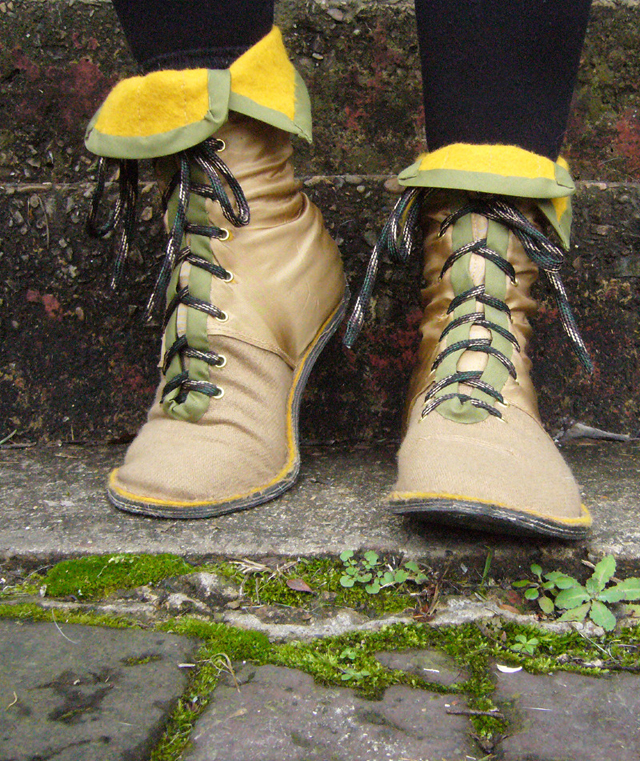
Land Boots – First Draft,  Wool, nylon, satin, rubber, cotton, acrylic felt, thread, grommets, laces, Size 6.5 US, 2012

Land Boots – First Draft,
Wool, nylon, satin, rubber, cotton, acrylic felt, thread, grommets, laces, Size 6.5 US, 2012

Briefly describe the work you do.

I make drawings, objects, and events about my ideas of ecological sustainability. I use humor, performance, and community events to mediate the perceived righteousness of environmentalism and sustainability. I’m interested in the rub between what is possible and what is reasonable. 

Tell us a little about your background and how that influences you as an artist.

I grew up in Nashville, TN and was lucky to be encouraged to make things by artist mother. She gave me and my brothers access to supplies like paper, scissors, glue, pens, and markers. That early exposure and some great teachers gave me a good foundation of making. I played outside a lot—sports and imaginary-play—and I think those positive experiences laid the groundwork for the Land Scouts.

The concept of the “artist studio” has a broad range of meanings, especially in contemporary practice. The idea of the artist toiling away alone in a room may not necessarily reflect what many artists do from day to day anymore. Describe your studio practice and how it differs from (or is the same as) traditional notions of “being in the studio.”

I have a small studio in my house and I try to put in (and log) a certain number of hours each week depending on projects and my teaching schedule. My work also evolves via research, emailing community partners, and that sort of thing. That legwork is equally important, but sometimes less satisfying. I think I use drawing to see me through those times and to root my ideas in the visual and material world. 

What unique roles do you see yourself as the artist playing that you may not have envisioned yourself in when you first started making art?

I think art has always been for me about engaging with ideas and people, but my ideas of how artwork can engage people have changed. I’m more comfortable now with using my work to ask for more specific responses and behaviors. 

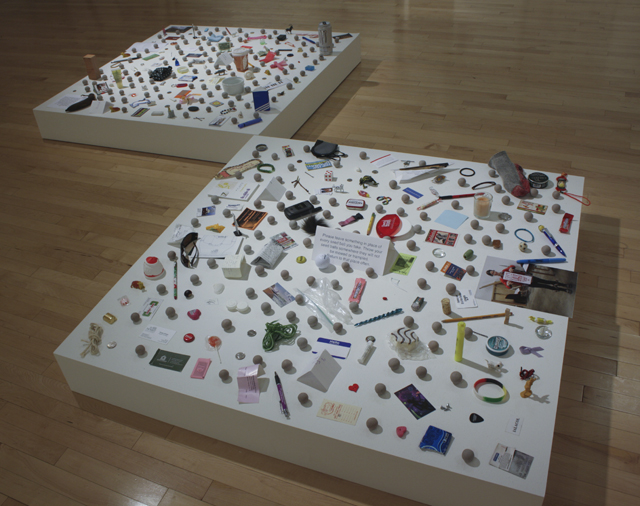
What You’ve Got,  Midwestern prairie wildflower seedballs, offer to trade, traded objects, dimensions variable, 2014

What You’ve Got,
Midwestern prairie wildflower seedballs, offer to trade, traded objects, dimensions variable, 2014

When do you find is the best time of day to make art? Do you have time set aside every day, every week or do you just work whenever you can? 

Right now evenings are a more productive time for me. I find it helpful to have ongoing punch lists for projects so that when I have shorter spans of time in the studio I can go straight to the list and knock something off. In a similar vein I try to note on a big wall calendar how many hours I’m in the studio (not counting professional practice work) and any upcoming deadlines.

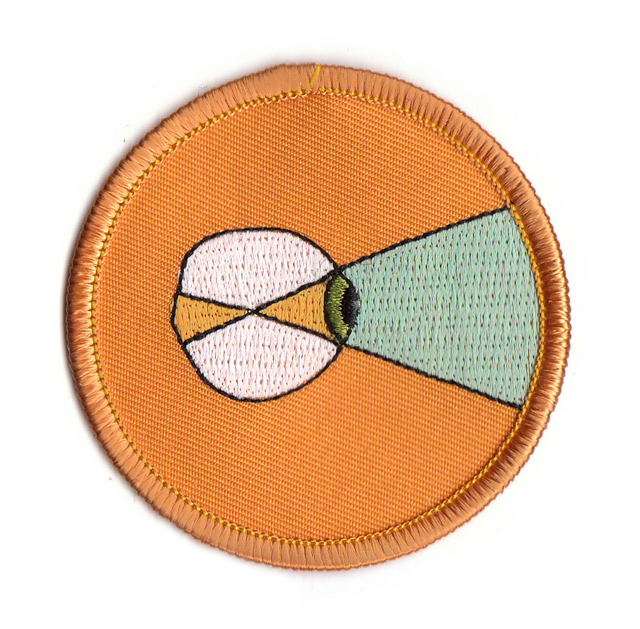
Land Scout Badge – Observation Primary badge of the Land Scouts, sewn by Stadri Emblems, Woodstock, NY, 2.5” diameter, ongoing

Land Scout Badge – Observation
Primary badge of the Land Scouts, sewn by Stadri Emblems, Woodstock, NY, 2.5” diameter, ongoing

How has your work changed in the last five years? How is it the same?

It’s still about people and land, but I think I’ve tempered my romantic ideas of agriculture or the Natural World and gotten more specific in my ideas of how we use and interact with land and what sustainability can look like in different situations and cultures. 

Are there people such as family, friends, writers, philosophers or even pop icons that have had an impact on the work you do?

Wendell Berry’s writing and activism are inspiring to me. I consume pop culture in small doses—things like pop dance music, youth fashion, and mass media. I enjoy work by artists who use humor, the natural world, and/or social interactions to address modern issues, people like Mel Chin, Natalie Jeremijenko, Sophie Calle, Agnes Denes, and Mark Dion.

If you had an occupation outside of being an artist, what would that be and why?

I’d like to run at a land-based school for middle or high school students. That or some sort of sustainable farming or land advocacy. 

About 

ries_headshot_640A graduate of UT Knoxville (MFA) and Colorado College (BA) Katie Ries is an artist living in Northeastern Wisconsin. Ries creates drawing, prints, costumes, and objects to raise and answer questions about land, labor, and community. She is an Assistant Professor of Art at St. Norbert College and the founder of the Land Scouts, an urban troop promoting land stewardship. In 2006 Ries helped establish and run Ries the Birdhouse, a community space for working artists, musicians and activists in Knoxville, TN. She is currently working to design and construct a pair of sustainable fashion boots appropriate for Wisconsin winters. 

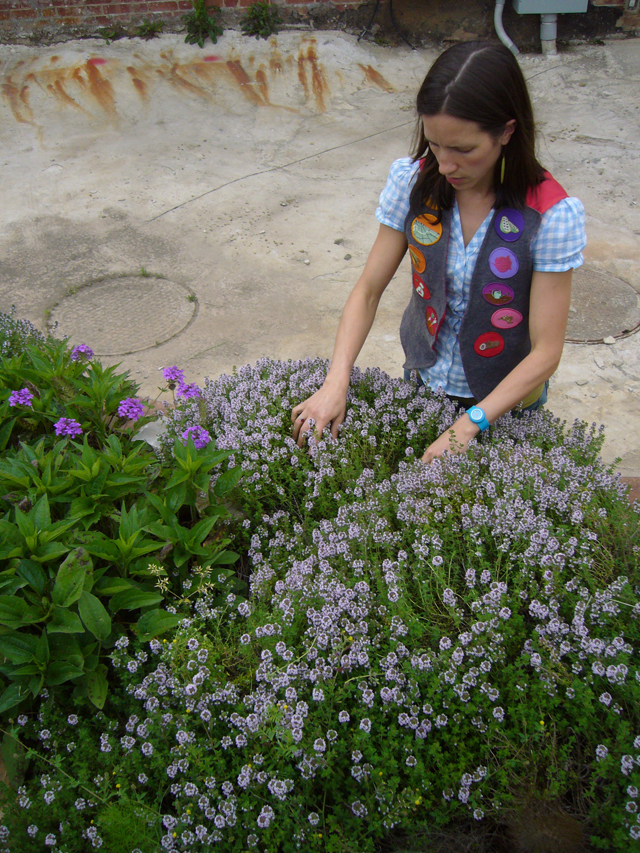
ries_thyme_sm

www.whoshareswins.com

All images copyright of the artist and used with their permission. 
Posted in Uncategorized | Tagged , , , , | 2 Comments

Danielle Dobies – Batavia, Illinois

Georgian Selfie foam, Dacron, diamond-tufted sequin fabric, plastic gemstones 28”x24”x26” 2014

Georgian Selfie
foam, Dacron, diamond-tufted sequin fabric, plastic gemstones
28”x24”x26”
2014

Briefly describe the work you do.

I am simultaneously indulging in and creating a parody of society’s construction of gender. I use materials that are attractive to me because of their kitschy sparkle, or industrial rawness, and experiment with their interaction until a form reveals itself. Learning the appropriate crafts for fabric, wood, or steel is an empowering process. The sculptures tend to have bright fabrics, tedious pattern, and comical functions, such as shooting glitter when a foot pump is depressed. Viewers are invited to physically interact with each piece, activating the humorous elements and discovering the parody. 

Tell us a little about your background and how that influences you as an artist.

The process of creating my artwork provides me an awareness of the privilege and discrimination associated with gendered activities. The works are a digestion of experiences such as striving to be a fashionable woman and reaping the social benefits, or purposefully avoiding eye contact with the lingering hardware store associate as I choose the appropriate grinding wheel. My practice seeks an understanding of my personal identity as a woman and feminist, and how ideas about gender fluctuate in society. 

The concept of the “artist studio” has a broad range of meanings, especially in contemporary practice. The idea of the artist toiling away alone in a room may not necessarily reflect what many artists do from day to day anymore. Describe your studio practice and how it differs from (or is the same as) traditional notions of “being in the studio.”

I usually have several projects in different stages developing at once. The first part of my process starts with shopping trips! I go to Joann’s, Hobby Lobby, Lowe’s, American Science and Surplus, and roam the isles, acting on impulse and grabbing whatever is attractive that day, of course with coupons ready on my smart phone. When I get to my studio I start to think about why something jumped out at me, perhaps because it was a fabric with an interesting texture, or it moves in a specific way for some unknown original purpose. I experiment with the properties of the materials, cutting, sewing, braiding, and combining them intuitively until a concept arises. Constructing a piece typically involves mechanical trial and error, retrofitting and fabricating the interactive elements. With each piece I challenge myself with a new, usually tedious process, such as forging, wood lathing, or needlepoint, during which time, if the process allows, I might be able to zone out and binge on several seasons of a Netflix original. 

Crown Jewels Steel, tulle, hanging baskets, plastic gemstones, gold chain, wheels 6’x6’x4’ 2013

Crown Jewels
Steel, tulle, hanging baskets, plastic gemstones, gold chain, wheels
6’x6’x4’
2013

What unique roles do you see yourself as the artist playing that you may not have envisioned yourself in when you first started making art?

When I started school, I was not as aware of how much artists are expected to talk and write about themselves, yet this accounts for about half of what I do in grad school. Giving artist lectures is not something that I am particularly excited about, although writing new artist statements every week helps me understand what I am making and develop ideas further. 

When do you find is the best time of day to make art? Do you have time set aside every day, every week or do you just work whenever you can? 

Because I am currently in grad school, I must work during every spare minute I have. I have a studio provided by the school, but I also have a mobile studio in my car and a sewing studio on my couch. 

Boob steel, aluminum, fabric, tubing, foot pump, glass orb filled with glitter 32” x 30”x 30” 2013

Boob
steel, aluminum, fabric, tubing, foot pump, glass orb filled with glitter
32” x 30”x 30”
2013

How has your work changed in the last five years? How is it the same?

I’ve really only developed my work over the last five years. I went straight to grad school after my BFA, and in that time have left behind oil and colored pencil portraiture to try every other possible material through sculpture and public murals. Right now these are two different practices; my own studio time making sculpture, and conducting mosaic workshops for public murals. I have begun to bring mosaic into my current body of work, and I would like to see these two practices overlap more often. 

Are there people such as family, friends, writers, philosophers or even pop icons that have had an impact on the work you do?

The largest impact has come from my teachers. At Elmhurst College I caught the mosaic bug from John Pitman Weber, who has continually supported my work in that area.  I travelled to India with Lynn Hill and experienced the kind of beauty and hardships that she ceaselessly talks about, inspiring my BFA thesis. At NIU I am in constant dialogue with teachers who help me develop concepts and toss a constant stream of artist references and philosophy at me to digest. Ultimately, much of what I do wouldn’t be possible without the support of my parents, Dale and Diane Dobies, who are everything from financial backers, to my installation team, to my cheering squad, to talk therapy specialists. 

If you had an occupation outside of being an artist, what would that be and why?

I’ve gone over this question countless times, as I think every artist does, because of how economically and emotionally challenging it is to be an artist. I will likely search for jobs that allow me to keep making my art, such as teaching, directing public mural workshops, or conducting wine tasting. Ultimately, I wouldn’t be doing anything else. 

About 

HeadshotBorn 1989, Cleveland Heights, OH. Education: BFA (2012) Elmhurst College, BA in Philosophy (2012) Elmhurst College. Exhibitions: Experiences in India: A Two-Woman Show, Dekalb Area Women’s Center (2013-2014), Ten Rounds, Gallery 214, Northern Illinois University (2013), Sixty Three Days, Gallery 215, Northern Illinois University (2012), On Som Bel, Water Street Studios (2012), DuPage Invitational Sculpture and 3D Art Show, Lombard, IL (2011), Faces of Sustenance, Elmhurst College (2010). Bibliography: NIU Alumni Association. (2014 Winter) Artist Pays it Forward. Northern Now, Howerth, Keisha. (2013 November 4) Artwork Shows Labors of Indian Women. Northern Star, Santiago Natalie. (2013 July 23) Piece by Piece by Piece. NIU Today

Burrows, Chris. (2013 August 31). NIU Artist Pays it Forward. Dekalb Daily Chronicle, Winters, Jim. (2011 Spring). Something Magnificent About Them. Prospect Magazine. Santella, Andrew. (2010, December 2). Portraits of Hope. Quick Studies. ABC 7 News. (2010 November 30) Chicago, IL: WLS-TV, Wheeler, Jennifer. (2010, November 24). Daily Herald. Mann, Leslie. (2010, November 23). Feeding Body and Soul. Chicago Tribune. Awards: Graduate Teaching Assistantship (2013), Graduate Assistantship (2012- Present), Student-Teacher Collaborative Research Grant (2011), DuPage Invitational Sculpture & 3D Art Show 2nd Place (2010), Thing 1-2-3 Fellowship Thing 1-2-3 Foundation (2010), Sandra Jorgensen Memorial Renewable Scholarship (2008).

http://danielledobies.com/

All images copyright of the artist and used with their permission. 
Posted in Uncategorized | Tagged , , , , | Leave a comment

Trina Turturici – Los Angeles, California

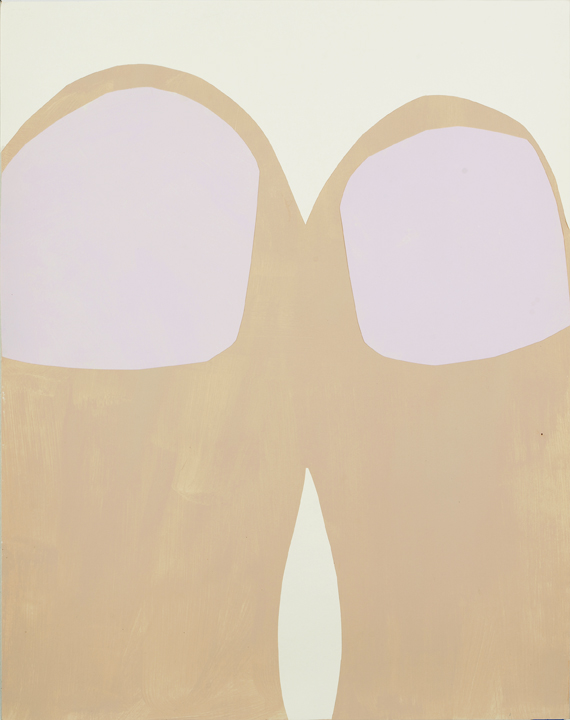
Opposable, flashe and acrylic on cut and pasted paper, 24in x 19in, 2013

Opposable, flashe and acrylic on cut and pasted paper, 24in x 19in, 2013

Briefly describe the work that you do.

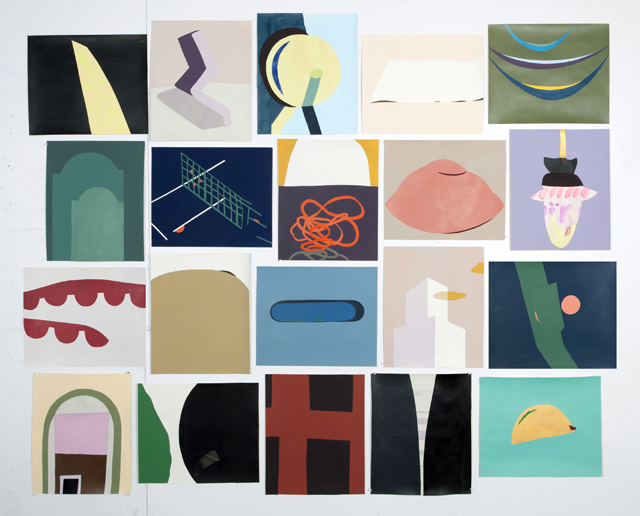
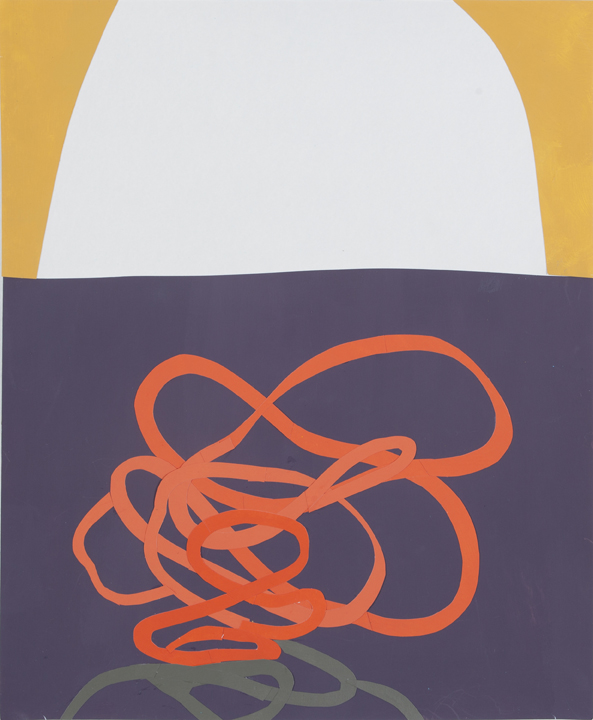
I make collages based on my observations of the most ordinary and banal things that I see around me. I pay close attention to the very specific shapes of things, often zooming in or cropping, while intuitively changing the colors. My original idea transforms into something unexpected and unusual but at the same time familiar. I think of the result as a sort of “visual joke”.

At what point in your life did you decide to become an artist?

When I was a kid I drew all the time, in fact, the first thing I told people when they asked me what I wanted to be when I grow up was an artist (as well as veterinarian, actress, and softball player). I truly became an artist during my second year in college when I was a graphic design major. I was sitting in my typography class in front of a computer screen zoning out while my professor lectured us about labels on potato chip bags when I suddenly realized it just wasn’t for me. That’s when I decided I had to be an artist. I honestly felt I had no other options. 

Tell us a little about your background and how that influences you as an artist.

Where I am from and how I grew up has everything to do with the kind of artist I am today. I grew up in a Suburb of Sacramento, California that I like to call “Any Town USA”. My hometown consisted of rows of tract homes, perfectly manicured lawns, strip malls, parking lots, and miles of soccer fields. I spent much of my childhood curbing my boredom with daily walks to Taco Bell, building forts out of cardboard boxes, and watching hours and hours of TV including reruns of The SimpsonsRen and Stimpy, and Seinfeld. I really had to train my imagination to take myself out of the mundanity of suburban life and to try to build an identity for myself. I think it’s safe to say that most people make an effort to lead interesting and fulfilling lives, and as much as we would like to think that we are doing that, rarely do we account for the hours we spend stuck in traffic, standing in line at the post office, or staring out of the window at work. My sense of humor and curiosity have always played a role in how I deal with getting through those dull moments and making art is my way of finding something meaningful in them.

Group, flash and acrylic on cut and pasted paper, 2013

Group, flashe and acrylic on cut and pasted paper, 2013

What types of conceptual concerns are present in your work? How do those relate to the specific process(es) or media you use?

Conceptually, I’m interested in mystery, humor, and simplicity. My work represents how I want to live my life which is why I will simply say that I think we take ourselves too seriously. 

We once heard Chuck Close say he did not believe in being inspired, rather in working hard everyday. What motivates you in your studio practice?

For me, it is important to make a habit out of going to the studio as often as possible and to realize that every day of work is a good day even if there is nothing to show for it. More often than not I am excited to go to the studio but there are some days when I feel stuck and unmotivated. I can usually dig myself out of a rut by simply drawing, going for a walk, reading a book, chatting with a friend, or just looking around. I feel that during my first few years as an artist I was training myself to work consistently and to have the right frame of mind in the studio. I am always making an effort to balance myself with having a sense of urgency while having the patience not to force anything. I find that having several projects going at once helps me stay motivated. Lately, I’ve been experimenting with other materials, exploring the 3D, and learning some computer animation skills. These projects may never see the light of day but they have potential and I am excited about that. I am also the kind of person that cannot stand still, which really helps in the studio. Ultimately, it’s about having confidence and not being afraid to fail.  

Coil, flashe and acrylic on cut and pasted paper, 11in x 14in, 2013

Coil, flashe and acrylic on cut and pasted paper, 11in x 14in, 2013

What artists living or non-living influence your work?

I am fascinated by Indian Miniatures, Japanese Woodcuts, and the work of the Ancient Egyptians. I have a huge list of painters I could name but I always seem to come back to Matisse. I also would like to mention all of my friends and colleagues. I am surrounded by so many talented and interesting artists it’s overwhelming.  

When you are not making art what types of activities and interests do you engage in? 

It is so easy to get sucked into the routine of spending hours of solitude everyday in the studio and not coming into contact with another human being. That is why I find it so important to take the time to leave my studio and go out and interact with the world. I enjoy traveling and watching live performances including; stand-up, improv, music, theater, dance, and sports. When I leave my studio and experience something first-hand I always come back feeling invigorated and full of ideas.

About 

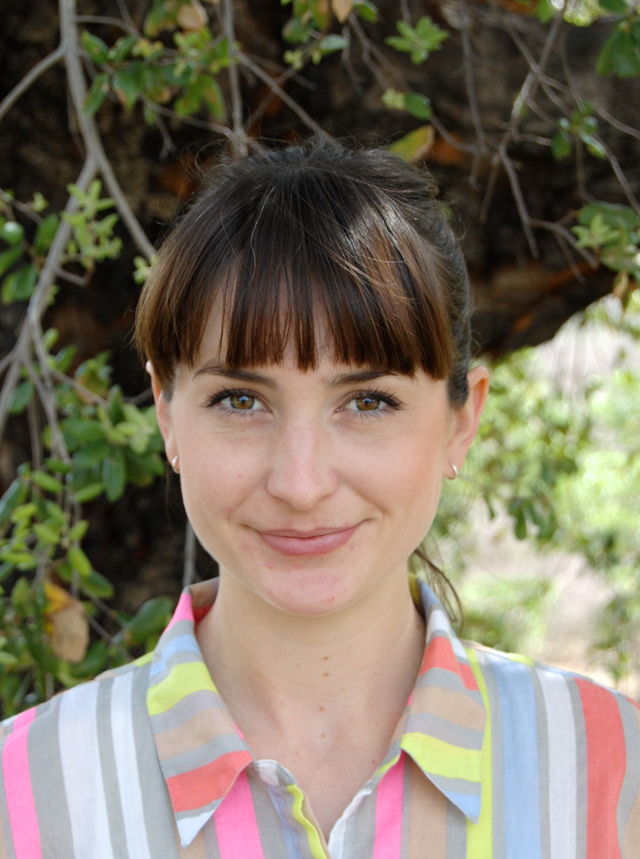
HeadshotTrina Turturici received her MFA in Painting from Boston University and her BFA in Drawing and Painting from California State University, Long Beach. She has participated in several artist residencies, including The Vermont Studio Center, and has exhibited nationally. She currently lives in Los Angeles where she continues to work in her studio at an old brewery. 

The Studio

The Studio

www.trinaturturici.com

All images copyright of the artist and used with their permission. 
Posted in Uncategorized | Tagged , , , , | Leave a comment

Josh Ostraff – North Kingstown, Rhode Island

Thin Walls: Same spot on the wall Medium: Acrylic, wood panel Size: 4’ x 6’ Date: 2010

Thin Walls: Same spot on the wall Medium: Acrylic, wood panel Size: 4’ x 6’ Date: 2010

Briefly describe the work that you do.

I am interested in shared living experiences and the stories that derive from them. The stories I know best are my own, so I tend to explore my own connection to those shared living experiences through painting and drawing.

At what point in your life did you decide to become an artist?

I grew up with a dad who is an artist and educator. Watching him I saw firsthand the interesting people he met and with whom he worked, the places that his art opened up to visiting, and the fun that was possible. It looked pretty good and has led me to where I am now.

Tell us a little about your background and how that influences you as an artist.

My family is a big influence on me. Having kids has helped shaped how I work. When I get home from work I want to spend time with them. They often spend time with me in the studio working on projects along side me. I also schedule time to work alone at key times during my week. I have learned to make those scheduled times count. I work hard and get a lot done and in the end I find a nice balance.

Thin Walls: They Stopped Medium: Acrylic, Wood Panel Size: 8’ x 14’ Date: 2012

Thin Walls: They Stopped Medium: Acrylic, Wood Panel Size: 8’ x 14’ Date: 2012

What types of conceptual concerns are present in your work? How do those relate to the specific process(es) or media you use?

I had this experience a few years ago that helped set up the conceptual thinking involved in my Thin Walls series. I had woken one morning and had gone into my bathroom to brush my teeth and while I was doing that I began to hear other teeth brushing sounds. It hit me; my neighbor and I were staring at the same spot on the wall due to apartment plumbing. This started a series ofinvestigative works that responded through painting, drawing, and film to sounds thin walls are unable to contain.

This experience started my thinking about the human figure and living spaces in a shared enviornment. As I began to make paintings, I found I was practicing a reductive aesthetic bychoosing to simpfly and at times eliminate lines, compositionalstructures, and layers of paint, leaving just enough information to define certain boundaries. I liked the idea that saying less was saying more. Artists like Hopper, Sanchez, Katz, Kuitco, and Hockney found a vocabulary in emphasizing color, form, and line through removing or flattening elements. The key to not allowing this reductive aesthetic to go too far has been to find a ”rightness”. 

Robert Marshall, my BFA advisor, wrote and told me “Painting has been and will always be a delicate exercise in equilibrium—a juggling game of relative amounts—a search for appropriate relationships and intentions. The painter adds to the image only to later subtract what has just been painstakingly included. The ‘rightness’ of the painting evolves as artists realize that they are only facilitators; that the painting itself demands various adjustments and that the painter imposes a specific direction upon the painting only as the painting sustains that direction.”

The vital role of making choices leads to the facilitation of the “rightness” of a work. This is a skill that can only be developed through experience. I worked through a whole series of paintings, drawings, even film, changing and developing the work along the way. In this way, the end product represents more than what can be seen, just as the decisions that go into a painting are usually unrecognized by the viewer without some background information. The choices and work that I have made throughout my life and specifically in this work have allowed me to develop the experience of knowing what I feel is that “rightness.”

Thin Walls: Sudden Silence Medium: Acrylic, Wood Panel Size: 8’ x 14’ Date: 2012

Thin Walls: Sudden Silence Medium: Acrylic, Wood Panel Size: 8’ x 14’ Date: 2012

We once heard Chuck Close say he did not believe in being inspired, rather in working hard everyday. What motivates you in your studio practice?

Teaching has been a great motivator. I hate the idea of being a hypocrite, telling my students to work harder, only to not work hard myself. I also want to be a better teacher and artist. I have seen that when I push myself in my studio practice I progress at both of those things.

What artists living or non-living influence your work?

There are too many artists to list that have influenced me. That said, my dad Joseph Ostraff has been one of the artists that has impacted my life the most. I consider him one of my best friends. We talk about and share ideas, we have worked on projects together, and we both teach. I have a lot of reasons to want to be influenced by him. For me most important has been his desire to see me grow, improve, while recognizing what is special about me. I am grateful for his presence in my life. 

IMG_4069When you are not making art what types of activities and interests do you engage in? 

I love hiking, fishing, camping, I guess exploring the outdoors in general. Traveling is nice when I can afford it, which is not often. I like reading, especially about the organic and local movements. I like to spend time with my wife and kids doing things that interest them. Being involved in helping them be successful or engaged is pretty amazing and satisfying. I also find myself drawing little house plans with the hope someday I will be able to find a place and the money to build one of them.

IMG_4450

The Studio

www. jostraff.com

All images copyright of the artist and used with their permission. 
Posted in Uncategorized | Leave a comment

Jessica Brooke Anderson – Atlanta, Georgia

Left Right and Center: A Participatory Investigation of Cerebral Action detail of participant tilting their head to the left while drawing line from right to left  2013

Left Right and Center: A Participatory Investigation of Cerebral Action
detail of participant tilting their head to the left while drawing line from right to left
2013

Briefly describe the work you do.

In my work, I am interested in moments when the emotional body merges with the physical body. Sometimes these moments occur in measurable science and sometimes these moments are more mystical in origin. I spend a lot of time reading medical studies, researching things like psychobiology, gathering information from scientific journals, and learning about holistic healing practices. It is important to me that my projects are grounded in truth – be it data derived truth, experiential/cultural truth, or physical truth – and it is important to me that my projects invite viewers to analyze and personalize the presented information in a new context. 

I believe in empowered viewership and I am intentional about the presentation of my work along with the incorporation of the corresponding research. This plays a big role in what I call reciprocal sculpture. In my definition, reciprocal sculpture occurs when the viewer is sculpted by the experience of engaging with a sculpted object. For instance, in my project “Room for Space,” I created a meditative sphere that, according to current research into meditative processes, had the potential to sculpt a viewer biologically (changing the physical structure of the brain, increasing the speed of neurons, growth in circulatory enzymes, alteration of genetic code, etc). By engaging with this object in the gallery, viewers could synthesize the stated research with their own experience of staring at the object and could determine if they felt (or even believed in) the occurrence of an internal change.

This dialogue between object, viewer, and documentation is the crux of my studio practice and is what guides every decision I make in my work. For me, it is not about proving or disproving any of the research I use; it is about offering a question to an audience and allowing space for a full spectrum of answers to unfurl.

Room for Space: Sessions with a Meditative Object  installation view  2013

Room for Space: Sessions with a Meditative Object
installation view
2013

Tell us a little about your background and how that influences you as an artist.

What is interesting is that while my work is entirely rooted in ideas of science and medicine, I have zero training in either area. I have considered enrolling in courses about anatomy, biology/physiology, or neuroscience but have opted not to (so far) because I think it is important for me to maintain an outside perspective on these subjects. This enables me to think about accepted truths in new ways and I am able to remain informed without being limited by what I have been trained to know.

Another contributing background influence is my exposure to alternative medicine through my upbringing. I was raised by a mother whose health needs placed her outside of traditional medicine and thus, I became aware of many holistic healing techniques and expanded ways to think about the body. I have been able to pull from this history and use it to inform my own approach to both traditional and non-traditional biologic investigations within my art.

The concept of the “artist studio” has a broad range of meanings, especially in contemporary practice. The idea of the artist toiling away alone in a room may not necessarily reflect what many artists do from day to day anymore. Describe your studio practice and how it differs from (or is the same as) traditional notions of “being in the studio.”

I guess my studio practice is fairly non-traditional because it involves so much research and reading prior to the materialization of the project. When I am physically working in the studio, it is often to execute the design that I have carefully concocted during my research process. Moments of “toiling genius” are not really relevant to me for that reason. While I do spend plenty of time testing prototypes or experimenting with materials, most of my work relies of the precision of my plans.

What unique roles do you see yourself as the artist playing that you may not have envisioned yourself in when you first started making art?

Certainly the role of improvised scientist. My work has also become much more performative over the years, which is not a direction I consciously chose. I have toyed with this level of performativity and have opted away from the pseudonym (Dr. Ande Erson) that I adopted for a while, thus taking a step away from direct performance. But by making performative objects, inviting viewers to engage with my installations, and incorporating my own actions into the exhibited work, it all situates me in the unsuspecting area of performance and situational aesthetics.  

“Meditation Walking” project in-progress at the Arteles Center in Haukijärvi, Finland

“Meditation Walking” project in-progress at the Arteles Center in Haukijärvi, Finland

When do you find is the best time of day to make art? Do you have time set aside every day, every week or do you just work whenever you can? 

While I love the morning, I am definitely a night-time maker. Which is good for when I am teaching because I can still utilize the evenings for creative production. Weekends and summers are also important because of their long chunks of uninterrupted time, which is important for the making end of my plan-plan-plan-plan-MAKE process. 

How has your work changed in the last five years? How is it the same?

5 years ago my work was more metaphorical. The ideas were still the same – external ways to measure/interpret internal functions of the body – but I was inventing the language instead of turning to outside research. I was also more object oriented, whereas my current work is more installation based. But the core motivations behind my artwork have been the same for my entire career as an artist. Even while I was an undergrad painting major at Guilford College, the motivation for my work was directly connected to the themes I am dealing with today. 

Are there people such as family, friends, writers, philosophers or even pop icons that have had an impact on the work you do?

I am always looking for inspiration and compatible information. When I first began thinking sculpturally as a student, Kiki Smith was fundamental in my development. James Turrell has also been important to me. I have read everything I can find from Barbara Maria Stafford and am a recent appreciator of Brian Massumi. Any contemporary artist who is blurring the boundary between art and science is also on my radar – I think it is important to pay attention to those who are building similar conversations around you. Even if your paths never cross directly, it is important to be aware of one another.

On a personal level, the list is exhaustive including my special family, past mentors, and healers of all varieties. 

If you had an occupation outside of being an artist, what would that be and why?

You know, the more I have been reading about neuroscience and cognitive science, the more I have found myself wishing I studied these subjects earlier in my career. I am quite pleased with the route I have chosen, but between my strong interest in the subject and my obsessive research tendencies, I think I would have made an excellent cognitive scientist, had I ended up in that direction. Though as it is now, I still have the option to collaborate with these fields academically and this is wonderful because that means we can conduct joint research that is both cross-disciplinary and mutually beneficial. Which to me, is the best of all worlds. 

About 

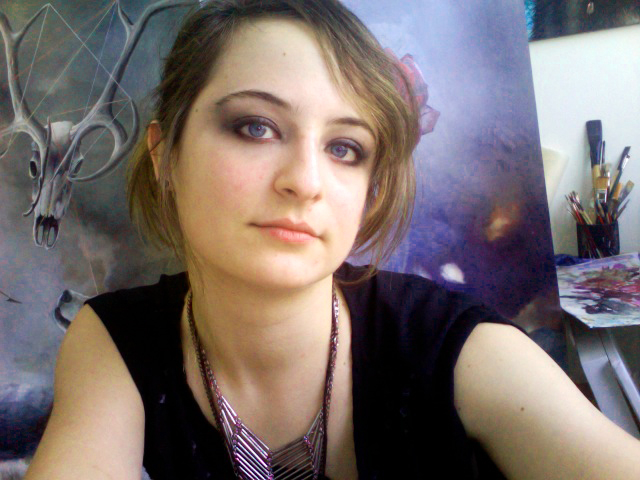
JAnderson5Jessica Brooke Anderson is an artist and researcher currently located in her home-city of Atlanta, Georgia. She received her BA from Guilford College in Greensboro, North Carolina, and her MFA in Sculpture from the University of Tennessee, where she also served as a Teaching Associate and Director of the University exhibition space, Gallery 1010.

With a clean and minimalist aesthetic, Jessica’s work navigates contemporary notions of health and biologic phenomena. Her installations are immersive, participatory, and intentionally suspended between the boundary of art, science, and alternative medicine. She has exhibited both nationally and internationally including a recent installation on the border of Tornio, Finland and Haparanda, Sweden as part of an exhibition curated by the Magneetti Northern Media Culture Association. She has been an Artist-in-Residence at Spark Box Studio, in Ontario, Canada and, most recently, the “Silence. Awareness. Existence.” Residency at the Arteles Center in Haukijärvi, Finland. Jessica has received various awards for materials, research, travel, and merit and has presented her research at conferences and panel discussions across the United States.

Mechanisms of Health  detail of preserved footbath sediment and detail of participant receiving a detoxing footbath  2011

Mechanisms of Health
detail of preserved footbath sediment and detail of participant receiving a detoxing footbath
2011

www.JessicaBrookeAnderson.com

All images copyright of the artist and used with their permission. 
Posted in Uncategorized | Tagged , , , , | Leave a comment

Eli Blasko – Pittsburgh, Pennsylvania

Visuo-Spatial Sketch of Home Medium:assorted woods, LaserJet image transfer, ceramic, cool and warm lights Size/Year:15’x4’x6’/2013

Visuo-Spatial Sketch of Home
Medium: assorted woods, LaserJet image transfer, ceramic, cool and warm lights
Size/Year: 15’x4’x6’/2013

Briefly describe the work you do.

My sculptural works are intricate and expansive microcosms that primarily investigate psychological phenomena. I like to create objects that can be contemplated as a cohesive whole, yet are laden with meticulous, little details that allow viewers to explore the piece and gradually unravel more and more layers of meaning. For me, the concept of being able to explore a piece is much more exciting than just a passive gaze. I find both to be valid and important ways of looking at art, but like to invite a more investigative experience with the work because I feel this sort of analysis runs parallel to how I conduct myself in the world. Dealing with themes of cognition and how one’s mind relates to the physical world, the duality of interior and exterior is also frequently present in the works. I often illustrate this by utilizing furniture as well as architectural components; contrasting objects that surround us in a home-like setting with the structures that surround us in the street and create our public atmosphere.

Tell us a little about your background and how that influences you as an artist.

I grew up as an only child in rural Pennsylvania, north of Pittsburgh; a place often referred to affectionately as Pennsyltucky. I spent a lot of my childhood alone in the woods for hours on end going on adventures. I definitely see my aesthetic being influenced by the woods. Not in the sense of overall appearance—I definitely wouldn’t call my work organic—but in the very detailed way that I make. One thing I remember doing a lot is looking at a spot in the woods, usually on the ground, and then getting gradually closer to it. It sounds really mundane, but it’s an amazing thing. If you hone in on a point like this in nature all of these little details start coming out. Colors change, you start to notice little insects moving, miniscule little sprouts of whatever plants are there become very apparent, little shells and exoskeletons emerge, etc. etc. I think the only child factor probably influences my psychological themes in a roundabout way. I would spend a fair amount of time in my own head questioning things, almost having conversations with myself, and I still do a lot of that today. 

The concept of the “artist studio” has a broad range of meanings, especially in contemporary practice. The idea of the artist toiling away alone in a room may not necessarily reflect what many artists do from day to day anymore. Describe your studio practice and how it differs from (or is the same as) traditional notions of “being in the studio.”

I definitely perpetuate the stereotype of the artist locked away in some room by him/herself—at least part of the time. There is a reflection period where I am by myself in a room staring off into space and scribbling notes and little drawings. To an outsider, I’m sure it would probably look like I’m stoned or something, but it’s just a process of conceptualizing what the current pieces I’m working on are really about. Almost like a distillation method I suppose; taking the original idea I had for a work and making sure I’m articulating it in the best way, or asking myself if that idea isn’t what the piece is about anymore. This time then, of course, is cut with the much more exciting building phase. I prefer to be around other people in the shop. There’s much more energy with people around, it’s nice to ask for bits of feedback here and there, joke around with and feel motivated by each other, and then the reassurance of knowing if you cut your hand off there’s someone who will get you to a hospital.

Conversation Machine (II) Medium:polystyrene, brick, porcelain, wood, PVC, paint, sugar, salt Size/Year:8’x 3’x 3’/2012

Conversation Machine (II)
Medium: polystyrene, brick, porcelain, wood, PVC, paint, sugar, salt
Size/Year: 8’x 3’x 3’/2012

What unique roles do you see yourself as the artist playing that you may not have envisioned yourself in when you first started making art?

Handyman is definitely one. Just generally “that guy that fixes stuff.” It’s not a terrible role to play because I do like putting things together. I also have this weird mental image of myself (artists in general, really) as some sort of comedic witchdoctor. I guess just because everything is so scientific, logical and pragmatic in how most of society works today, the practice of art-making makes me feel like I’m practicing some sort of creative magic—as if I’m this aging guru in an old bus down by the river that rambles on about perception and Euclidean space, whittling faces out of wooden door knobs.

When do you find is the best time of day to make art? Do you have time set aside every day, every week or do you just work whenever you can? 

The nighttime is the right time for me. The critic Jerry Saltz does this thing where he calls artists vampires, and I really enjoy it and find it fitting. It’s like I’m tired around 10pm every night and then all of a sudden I look at the clock at its 4am and all of these things got made. I think the lack of distraction that the night offers is really nice. I do more of my boring, yet oh-so-necessary, computer work during the day.

Dissecting a Miniature American on Live Television Medium:mild steel, poplar, basswood, ceramic, paint, found objects Size/Year:4’x 2’x 4.5’/2013

Dissecting a Miniature American on Live Television
Medium: mild steel, poplar, basswood, ceramic, paint, found objects
Size/Year: 4’x 2’x 4.5’/2013

How has your work changed in the last five years? How is it the same?

It’s completely different. I was drawing with pastels and painting watercolors five years ago, which are almost the only two things that I don’t really do today. I think I’m still interested in the same sort of things visually, just using them in a completely different format.

Are there people such as family, friends, writers, philosophers or even pop icons that have had an impact on the work you do?

I’m really influenced by a lot of the friends I’ve worked around or collaborated with in the past. I had the very fortunate experience of completing my undergraduate studies with a slew of extremely talented people, and looking at their work continues to inspire me. Writers and philosophers definitely impact me too. Some of the most recent influences have been the linguist Steven Pinker and the writings of David Abram—particularly The Spell of the Sensuous. Steven Hawking and Slavoj Žižek will continue to blow my mind too.

If you had an occupation outside of being an artist, what would that be and why?

Probably a neurologist, an astronomer, or a forest ecologist. They all touch on things that fascinate me, and honestly, I feel like I became an artist because of an inability to pick just one thing to be interested in. The beautiful thing about contemporary art is that it can pull inspiration from anywhere that you can possibly think of and create a dialogue about it in a new forum. I love that.

About 

Blasko-headshotEli Blasko holds a BFA from Slippery Rock University of Pennsylvania and has also studied Intermedia at The Academy of Fine Art & Design in Bratislava, Slovakia as well as Traditional Blacksmithing at Touchstone Center for Crafts in Farmington, PA. Blasko’s practice spans a wide range of media, primarily focusing on sculpture, but also incorporating methods of printmaking, performance, and video. Thematically, his work embraces notions of uncertainty that present themselves while exploring psychological phenomena such as memory, cognition, learning, and play. Blasko is an internationally exhibiting artist, most recently showing and lecturing on his work at The Sculpture X Conference hosted by The Columbus College of Art and Design in Columbus, OH. In February of 2013, he was an Artist-in-Residence through the Paducah Arts Alliance in Paducah, KY and is currently a resident artist at Hub-Bub in Spartanburg, SC.

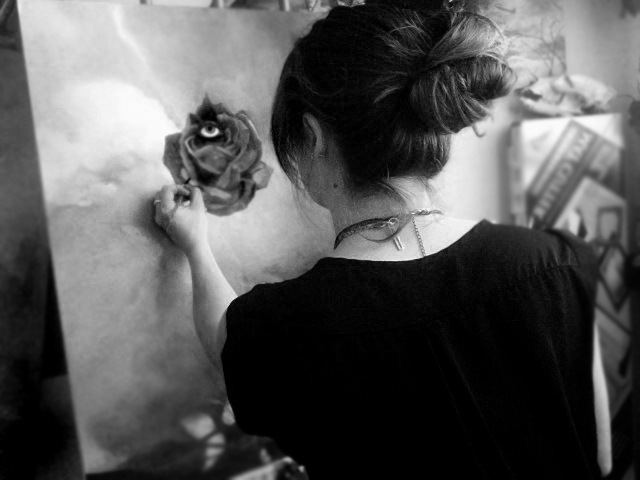
Blasko-inthestudio

In the Studio

www.eliblasko.com

All images copyright of the artist and used with their permission. 
Posted in Uncategorized | Tagged , , , , | 1 Comment