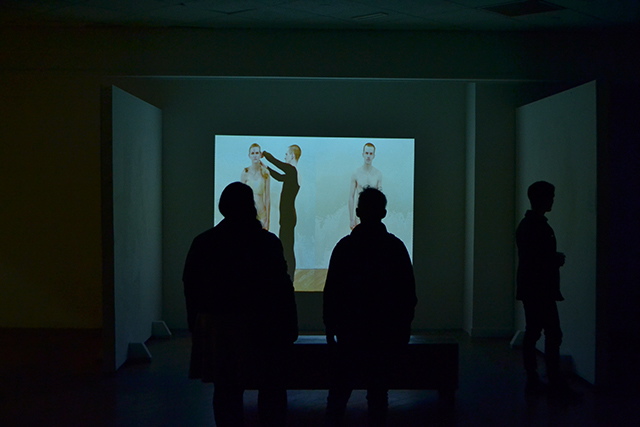
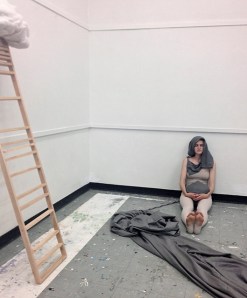
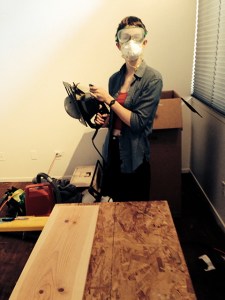
Liz Rywelski – Buffalo, New York

RYWELSKI_365-1Briefly describe the work you do.

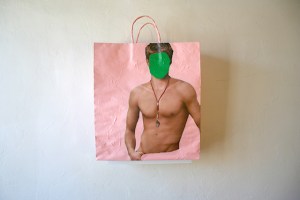
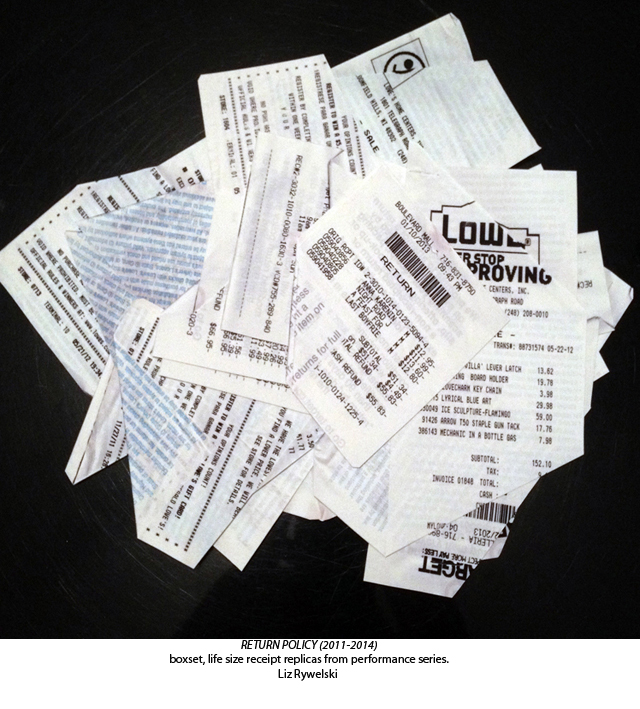
I shop, because money and how we use it is a reflection of identity and self-image—but the concept can be played with. With my shopping list and budget I aim to critically discover what exactly is being offered to me– the consumer, and how my desires as a customer aid to construct an identity. As a customer, I search for gratification, browse various dimensions of material identity, try on perception and often return my purchases.

Tell us a little about your background and how that influences you as an artist.

I was born to a couple of hippie-ish folks on Long Island, NY, in 1980… so that was inspiring.  I moved to Philadelphia in ‘98, participated in DIY art collectives and established alternative art spaces, performed in a few bands, Man Man /Gamelon; The Johnny Showcase and Lefty Lucy Cabaret; and Sri Slava, and collaborated with artists on various projects, events, and art. Space 1026 is where I found inspiration in performance art above other art forms. I worked with an amazing talented genius artist named Tom Ruth– we made performances, photos, videos, movies, and music together. We put our videos on Friendster and Youtube on 2003-4 and through those platforms we met other artists, including the artist Ryan Trecartin. Ryan ended up moving to Philadelphia and we all became friends. Ryan and I lived together and would spend countless hours on Chatroulette together performing for the people through my desktop lens from my bedroom.

Growing up in Philadelphia, an independent alternative artist in my 20’s, there was so much freedom to do and be and grow because anything goes there, in a good way. Philadelphia is an awesome nurturing creative environment, the experience there inspired me and granted me the economic flexibility and freedom to really get in touch the most complicated parts of who I simply am as an artist. I don’t feel I have to return to Philly to feel right post-grad school, though I love and cherish and miss that city very much. What I need as an artist is in my heart and I’m inspired anywhere and by all things.

The concept of the “artist studio” has a broad range of meanings, especially in contemporary practice. The idea of the artist toiling away alone in a room may not necessarily reflect what many artists do from day to day anymore. Describe your studio practice and how it differs from (or is the same as) traditional notions of “being in the studio.”

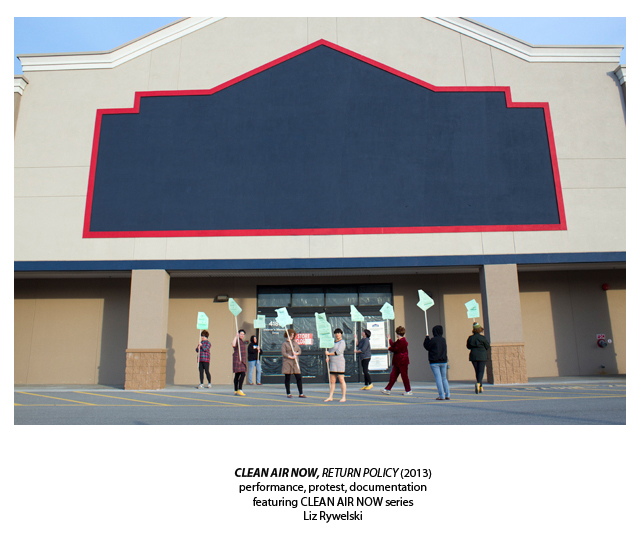
I moved to Buffalo in 2010 for graduate school and my first years there were lonely because it is a small city, I missed my friends, and Buffalo’s downtown isn’t walkable, so I’d go to the mall and large outdoor shopping complexes to be around people and walk around freely. I began to gravitate to big box stores because the identical architectures and aisles of familiar-lined shelves of big box stores were comforting, they were just like the big box stores in Philadelphia, Long Island, Miami, LA, and other places I had spent long periods of time. These stores became my studio, shopping became my art practice, “the customer” became my performance. These comforting yet displaced shopping experiences were the catalyst for a major body of work titled RETURN POLICY, in where I attempt to find in consumption a deeper sense of human frailty, how buying makes me who I imagine myself to be.

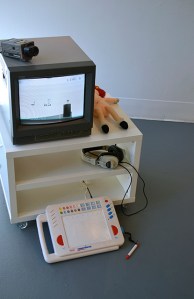
RETURN POLICY just scrapes the surface of the complicated illusion that everyday commerce constructs.  I made a diverse collection of performances, photographs, web-based media, and games about identity, desire, a meta-consumer esthetic and conceptual strengths to isolate an environment where shopping for ideals and identity can be played with, laughed at, adored, and reconsidered all together.
Rywelski-365-3What unique roles do you see yourself as the artist playing that you may not have envisioned yourself in when you first started making art?

When I first started making art—like, feeling a sense of urgency and identity though completing works that I considered to be art—I felt like my heart was on fire, I was sure the art world would have a place for me. I didn’t follow rules, I made scenes, I was hard to love, I wanted to leave a good story in my wake, I wanted to be undeniable artist-ego, because I felt I was, and so I was. 10 years later, well– like 8 independent artist years and 3 academic years later, I discovered that I can tell you what it looks like but I can’t tell you what it is in a way that makes conventional sense, and that is my unique role. Blending in with the crowd, rather than sticking out has made my best work, and that has been the most unexpected thing I’ve learned about myself as an artist since I began the journey.

When do you find is the best time of day to make art?  

Payday! I get ideas at the most random moments anytime of day, often the moment has something to do with sunlight or a shower, live music or reading, twirling my bangs and/or biting my lip.

Do you have time set aside every day, every week or do you just work whenever you can?

I go shopping-as-art-practice whenever I have over $300 to play with. Making in-store work can be expensive and I don’t always get the $ back for a second try, also I am a terrible speller and have more misspelled receipts than correct ones due to my spelling problem.

How has your work changed in the last five years? How is it the same?

I think that is one of the most interesting things about my body of work, because when I get a new idea it’s exciting as if I’d just figured out how to get from wheel to airplane in a single invention, but really I’ve reinvented the wheel all together again and again… Kinda love saying the same thing over and over different ways for 12 years. My work, in terms of the actual product, like photography, sculpture, performance, drawing, video has changed but the concept has remained unintentionally constant.
RYWELSKI_365-2Are there people such as family, friends, writers, philosophers or even pop icons that have had an impact on the work you do?

Yes, I’ve mentioned a few guys however, the most impact on me as an artist has come directly from other women. The artist and friend Alice Alexandrescu has made an art out of helping others realize their own art practice, she calls it “Gut Flora”, or being an “Art Fluffer”. Artist, feminist performance artist, educator, and icon Mecol Hebron has such an epic catalogue of powerful event work and performance art to share. I am in awe of her ability to organize and make powerful-positive things happen for women in the arts. Finally, I am just going to admit it here first but I am absolutely inspired by female body builder Kelly Keiser. Her project is her, from the inside out. Kelly’s practice challenges female sterio-types and requires absolute commitment to exceed personal goals. It is amazing to watch via social network and awe inspiring to support.

If you had an occupation outside of being an artist, what would that be and why?

I do have another occupation (or three) but all require me to be an artist. I am a substitute teacher, make websites, work at ArtPark, rep for an amazing family owned vineyard, and sell Out-of-Home advertising. Currently, I am working on a freelance project at a healthcare corporation writing job descriptions for several hundred vacant positions waiting to be filled. Working within a cubicle in a call center, experiencing real time customer service both internal and external, and operating in a corporate environment has been the start to a new body of written work that I am absolutely consumed by creatively in producing it. It is not like anything I’ve done before, yet touches on familiar concepts.

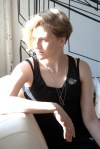
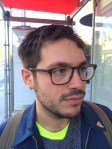
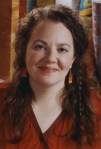
RYWELSKI_HEADSHOTAbout 

Money and how we use it is a reflection of identity and self-image—but the concept can be played with. Through my shopping list and budget I aim to critically discover what exactly is being offered to me– the consumer, and how my desires as a customer aid to construct an identity. In shopping, I search for gratification, browse various dimensions of material identity, try on perception and often return my purchases.

Liz Rywelski was born to Long Island, NY, in 1980.  She moved to Philadelphia in 1998, participated in DIY art collectives and established alternative-art spaces, performed in a few bands and collaborated with artists. It was at Space 1026 where she found inspiration in performance art, and put it to play in performing with Ryan Trecartin on Chatroulette, then later in his movies.

Rywelski moved to Buffalo in 2010 for graduate school. She describes her first years there as lonely, and said she often roamed aimlessly through big box stores because, “the identical architectures and aisles of familiar-lined shelves of big box stores were comforting … they were just like the big box stores in Philadelphia, Long Island, Miami, …” and other places she’d lived. This comforting yet displaced experience became the catalyst for a major body of work titled RETURN POLICY, in where Rywelski attempts to find in consumption a deeper sense of human frailty, how buying makes us who we imagine ourselves to be.
RETURN POLICY just scrapes the surface of the complicated illusion that everyday commerce constructs.  Seen through a diverse collection of performances, photographs, web-based media, and games about identity and desire her meta-consumer esthetic and conceptual strengths isolate an environment where shopping for ideals and identity can be played with, laughed at, adored, and reconsidered all together.

Recent exhibitions include Echo Art Fair as a featured installation artist; RETURN POLICY, Anderson Gallery; The Sketchbook Project, traveling exhibition; LIKEARTBASEL, Workshop Collective, Miami FL; Suite 6 Portraits Series, Dis Magazine; Getting Closer: intimacy in the digital age, Fe Arts Gallery, Pittsburgh PA. Liz is currently preparing for a residency at Vermont Studio Center where she will finish a new series of writings for publication next spring.


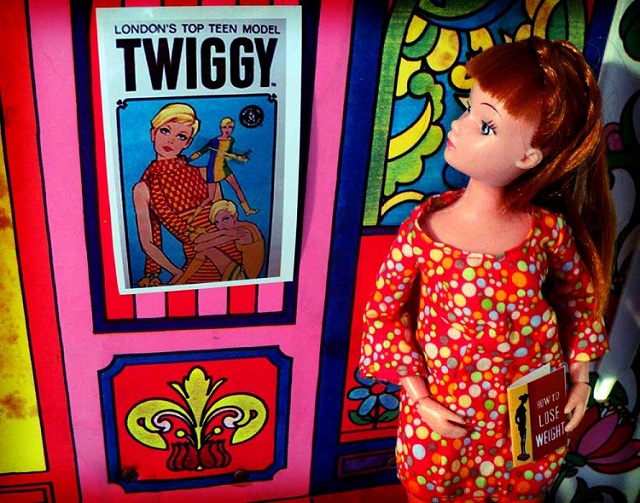
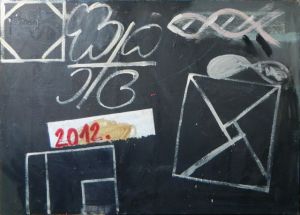
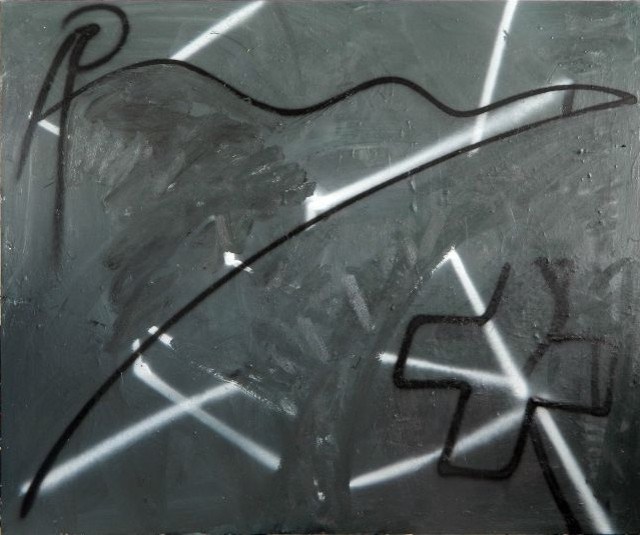
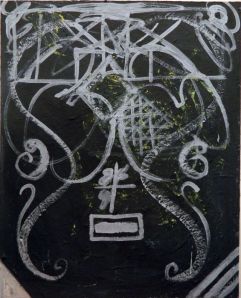
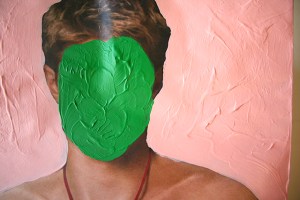
"Positive Return Policy"

“Positive Return Policy”

www.lizrywelski.com

All images copyright of the artist and used with their permission. 
Posted in Uncategorized | Leave a comment

Jeanne Heifetz – Brooklyn, NY

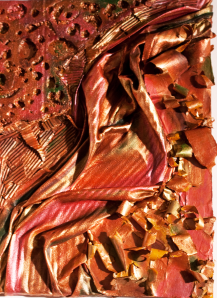
"Surface Tension 22" Quartzite, copper, graphite, bronze, zinc, nickel, wax. 24′′ x 24′′ 2013

“Surface Tension 22”
Quartzite, copper, graphite, bronze, zinc, nickel, wax.
24′′ x 24′′
2013

Briefly describe the work that you do.

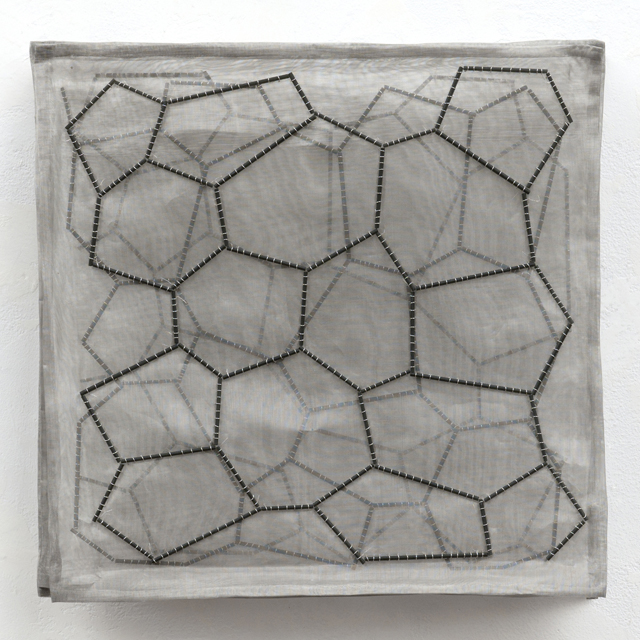
I have several distinct bodies of work, but I think of them all as dimensional drawing. In my current body of work I use thin layers of slate or quartzite as the substrate, much like working on panel, except that the surface of the stone has texture and topography. In the previous body of work, I used delicate (2mm) glass rods, which I acid-etched and then hand-stitched to sheer stainless steel mesh. The rods became sketch lines on the surface of the mesh, but also created a shadow drawing (or multiple drawings, depending on the lighting) on the wall. I made layered works in the same technique that were more mysterious, as each layer of mesh partially obscured the layer underneath it. I’m now starting to work on translucent papers, like vellum and gampi, that will enable me to work in layers, and possibly with shadow. A common thread in all these bodies of work is that your experience of the piece depends on where you’re standing. They invite movement.

At what point in your life did you decide to become an artist?

I would say it’s more a question of at what point did I give myself permission to think of myself as an artist. I have no formal training in art (I have two degrees in English, which I guess makes me an “outsider” artist) so it wasn’t until I started exhibiting alongside artists with MFAs that I began to feel comfortable applying the term to myself. But I guess I have always thought of myself as a “thing-maker” – I started weaving at fourteen, and even before that had done pottery, batik, silversmithing, leatherwork, and stained glass. I was proud to call myself an artisan for all the years I worked professionally as a weaver.

Tell us a little about your background and how that influences you as an artist.

My background in textiles means that I am used to working within, and pushing against, constraints. Unless you are a tapestry weaver, working on a loom means that your structure is always based on a grid. Coming from that world, it’s not surprising that I was drawn to geometric abstraction. But when you do what’s called “loom-controlled weaving,” your work is largely determined in the design stage. The execution contains some additional choices, but not many. I needed to be making work that required more frequent decision-making, the constant feedback loop of eye, hand, and brain. I still value the creative challenge of constraints, and each series I make has its own set of rules, but within those rules each piece is an improvisation, never sketched in advance.

"Surface Tension: Basalt Layers" Acid-etched glass rods, silver wire, stainless-steel mesh. 10” x 10” x 2” in 12” x 12” x 2” birch shadowbox (not shown). 2010

“Surface Tension: Basalt Layers”
Acid-etched glass rods, silver wire, stainless-steel mesh.
10” x 10” x 2” in 12” x 12” x 2” birch shadowbox (not shown).
2010

What types of conceptual concerns are present in your work? How do those relate to the specific process(es) or media you use?

I am fascinated by everything we are learning about the way the brain processes visual information. We are hardwired to seek patterns, but our brains get bored when the pattern is too obvious. Patterns that are irregular or elusive keep our synapses firing, make us feel more alive. I like to make work that challenges the edge of perception, using close tones, shadow, layering, or reflection to keep the eye and brain moving. I use earth pigments that are naturally reflective – ground metals, hematite, silver graphite, mica – so that different layers of the work catch the light at different angles. The geometric structures I’ve been exploring come from foams, specifically from those moments in the life of a foam when they hover between perfect spheres and complex polygons – an exciting hybrid of order and chaos that make my synapses buzz.

We once heard Chuck Close say he did not believe in being inspired, rather in working hard everyday. What motivates you in your studio practice?

One of my favorite quotations comes from the artist Ruth Asawa, who said something very similar: “Sculpture is like farming. If you just keep at it, you can get quite a lot done.” I love the practicality of that attitude. Farmers can’t control the weather, and we can’t control the vagaries of the art world, but we sure as hell can keep at it and get quite a lot done.

"Surface Tension 26" Quartzite, graphite, pewter, copper, bronze, zinc, nickel, wax. 24′′ x 24′′ 2014

“Surface Tension 26”
Quartzite, graphite, pewter, copper, bronze, zinc, nickel, wax.
24′′ x 24′′
2014

What artists living or non-living influence your work?

Non-living, I’d have to say Paul Klee; Kazimir Malevich; Fred Sandback; Gego and many of her fellow Latin American geometric abstract artists. There isn’t room to list all the living artists I admire. Not to get too geeky, but I keep a spreadsheet of artists I’m following, with a few keywords about each, and I’m up to nearly 700 names. I love discovering new work and sharing my discoveries. Influencing is a different question. When you’re younger it’s easy to be overwhelmed by how much good work is out there. You see great work and wish you had made it. You go back to your studio and try to make work in that vein. Now that I’m older I like to think of art as a huge community garden – we’re each working our own patch, and sometimes we end up growing the same things. And yes, sometimes your beans will be tastier than mine. But I’m happy to visit your patch and then return to mine. I’m content with what I’m growing. I like any work that’s so good it inspires me to go home and make better work – not to make that work, but to work harder on my own.

When you are not making art what types of activities and interests do you engage in? 

I’ve been pretty active in political work, organizing volunteers for local and national campaigns, and also for art-related activities in the public schools. Public-school kids are so hungry for art, which keeps getting cut back so that more time can go to test prep. A few years ago, working with a great organization called Haiti Cultural Exchange, I helped organize a series of 40 arts and arts-therapy workshops for kids in the Haitian community who had been traumatized by the 2010 earthquake. We also held an art-supply drive for their school; completely renovated their art/music/drama room; and painted an outdoor mural at the school, designed by the kids. I’ve just started a project to collect castoff art supplies from the private schools in New York City (who get rid of everything at the end of each school year and buy new each fall) and recombine these supplies to make fresh kits for public-school art teachers.

headshot365About 

Jeanne Heifetz’s recent and upcoming solo exhibitions include the Durham Arts Council (Durham, NC), the Earlville Opera House (Earlville, NY), Lane Community College (Eugene, OR), the University of Connecticut (Avery Point, CT), and the AVA Gallery (Lebanon, NH). Selected group shows include “Shifting Ecologies,” at The Painting Center (New York, NY); “The Last Brucennial” (New York, NY); “Cell Mates,” curated by Jeanne Brasile and Lisbeth Murray (Seton Hall University, NJ); and “Recent Acquisitions,” Fresh Paint Gallery (Los Angeles, CA). She is included in the Drawing Center’s online curated registry and is the founder and editor of the Textile Study Group of NY’s blog, where she interviews artists about their practice. Heifetz is also the author of When Blue Meant Yellow: How Colors Got Their Names. She holds degrees from Harvard University and New York University. Her residence and studio are in Brooklyn, New York.

jeanne_mural

www.jeanneheifetz.com

All images copyright of the artist and used with their permission. 
Posted in Uncategorized | Tagged , , , , | 3 Comments

Daniel Rathbun – Sheboygan, Wisconsin

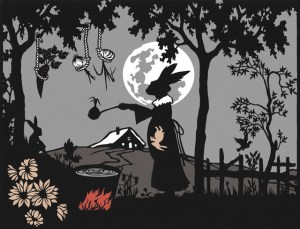
I Can’t Remember the Color Of Your Eyes (paper) 10” x 8” 2014

I Can’t Remember the Color Of Your Eyes (paper) 10” x 8” 2014

Briefly describe the work that you do.

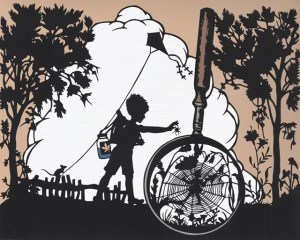
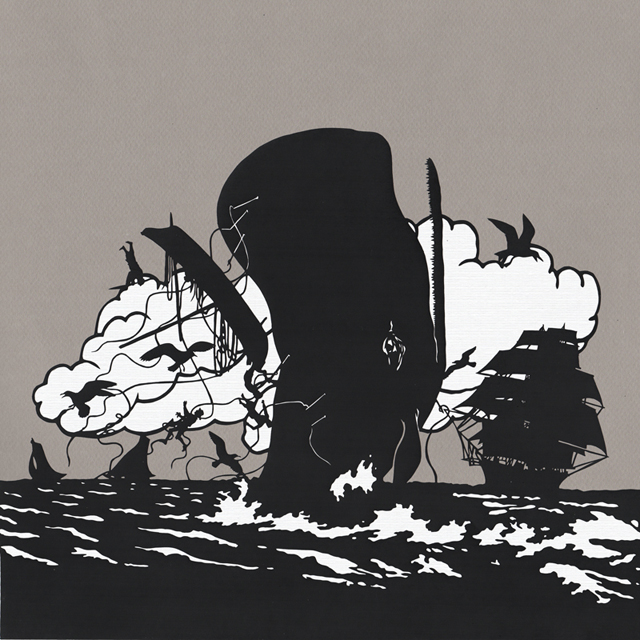
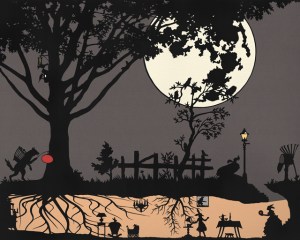
I create paper cuts that often foreshadow tragedy and despondent, melancholy characters in a whimsical way using a mix of Victorian and mythological themes & fables.

At what point in your life did you decide to become an artist?

I have always tried to creatively express myself, but it wasn’t until I became friends with an art therapist named Erin Blustein in 2004 that I gave it much serious thought. The idea of therapy through art was completely unknown to me. She introduced me to several Chicago artists and also how to view and think about art as more than just a static piece of work. Both she, and those people encouraged me to step out as an artist at that time, but it wasn’t until 2011 when I was approached to do an album cover that I had the confidence to actively pursue it.

Tell us a little about your background and how that influences you as an artist.

I grew up in southern New Mexico surrounded by open desert, barren mountains, and chili pepper & cotton farming. There were not many other kids to play with so I spent a large amount of time alone. I realized later in life that the things I did in my youth to pass the time (hopping a train, exploring abandoned mines, catching poisonous insects, etc…) could have had potentially tragic endings, and they just never did.

Not all, but a large portion of my work represents often ignored children making bad choices or being the victim of unfortunate circumstance while alone in nature, frequently with animals in attendance.

"Lost In The Waves (No Daylight)" (paper) 12” x 12” 2013

“Lost In The Waves (No Daylight)” (paper) 12” x 12” 2013

What types of conceptual concerns are present in your work? How do those relate to the specific process(es) or media you use?

For me, the image doesn’t work if it seems obvious or plain. Anyone can create shock imagery and that is something I want to avoid. I try to create an image that will be perceived differently after a few moments than the initial thought you may have given it. Each piece obviously has a meaning to me, but I prefer it when people find their own meaning and interpretation. Paper cuts make this possible because even though they have quite a bit of detail, at the same time they are silhouettes that lack details like expressions and texture. Is the character happy or forlorn? Is that someone drowning or an apparition? Is she holding a carrot or a knife? (it was a knife)

My color palette is also important to me. I tend to gravitate towards muddy tones accentuated with reds and oranges with the featured paper cut in black. Even though I do want people to find their own meaning, I don’t want to hide that what is featured is most likely not a ‘rainbows and sunshine’ situation.

I do not have a refined process. I try to always begin by designing a character and developing a scenario around them. The scenario can change day to day depending on my moods or environment and even by accidents with appealing results.

"From a Place / To A Place" (paper) 20” x 16” 2014

“From a Place / To A Place” (paper) 20” x 16” 2014

We once heard Chuck Close say he did not believe in being inspired, rather in working hard everyday. What motivates you in your studio practice?

I am motivated by music, lyrics and art. You could argue that all of those are art and I wouldn’t disagree. I can cut out finished designs in any environment, but I can’t create the designs without music.

I am also heavily influenced by nature and how I perceive it when it crosses my path. I love how chaotic nature is; the feeling that anything can be a victim regardless of preparation. Just looking out the window can be motivational. The other day I saw a woodpecker eating insects out of a spider’s web as they would get caught and I couldn’t help but be inspired by how nature encourages unconventional behavior.

What artists living or non-living influence your work?

My exposure to art as a child was seeing my dad emulate Frederic Remington in drawings and Zuni patterns on ceramics and the home crafts of my mother. My dad can sketch a windmill and horse like nobody’s business and my mom can seemingly make anything worthy of display out of found objects. I don’t know if this was an influence as much as it was teaching the fact that being creative is something that anyone can do.

"Hasenpfeffer Provenance" (paper) 16” x 14” 2014

“Hasenpfeffer Provenance” (paper) 16” x 14” 2014

If I had to name some more well-known influences of mine, I think the top of the list has to be Hans Christian Anderson. His stories and paper cuts are favorites of mine. Other top influential artists would be, Louis Wain, Edward Gorey & Lotte Reiniger.
Contemporary artists that have become influential in my work are: Marion Peck, Diana Sudyka, Emily Winfield Martin, Katie Gamb, Elsita Mora, James Jean, Yoshitomo Nara, Emmanuel Jose, Billy Childish, & Mark Ryden.
I would also say that the artists I have met and become friends with have certainly influenced me in direction and presentation, particularly erica jane huntzinger, Zak Worth and Byron Gin.
I am also heavily influenced by turn of the century through late 1950’s children’s books.

When you are not making art what types of activities and interests do you engage in? 

I spend a lot of time bird watching (or just any creatures around my yard). I also love hiking. The waterfalls area around Pembine, WI and most Wisconsin parks along the Niagara Escarpment are particular local favorites. I also enjoy seeking out still functional steam trains as well as seeing live music.

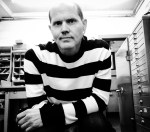
headshotAbout 

I was born in Santa Fe, NM and grew up in Tesuque and Las Cruces, NM just north of the border with Mexico. After graduating high school I studied geology at NMSU, but spent most of my time involved with the campus college radio station as a DJ and the assistant program director. In 1994 I had the opportunity to leave New Mexico for Chicago, IL with a friend who needed a roommate. I spent most of my time in Chicago seeing live music and forging lasting friendships with musicians and artists and working in random record stores and a garden center to pay the bills. After 14 years, I decided to move north to the Sheboygan area of Wisconsin to take advantage of affordable land and a more relaxed lifestyle. I live in an old farm house on 6 acres with my three cats where we watch birds, bunnies, woodchucks and the occasional fox taking advantage of my crumbling 19th century cheese factory and unkempt yard where they live out their lives. I try to be just as entertaining for them.

My work has been featured on albums covers for the 2006 release “the Titmice – Kind Of Black EP”, the 2011 self-titled release “Billy Blake & the Vagabonds ” and on the 2013 tour poster for “Kelly Hogan’s 2013 Midwest Tour”. I have been a featured artist for the Waxwing’s 2013 Fall Art Opening, The Victory Garden Initiative’s 2014 Fruity Nutty Affair, and the Waxwing’s 2014 2 Year Anniversary Show.

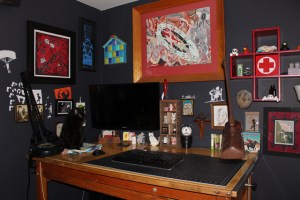
studio

www.danielrathbun.com

All images copyright of the artist and used with their permission. 
Posted in Uncategorized | Tagged , , , , | Leave a comment

Sarah Smith – Murray, Kentucky

"This is a trick" Pigment Inkjet Print 15”x20” 2013

“This is a trick”
Pigment Inkjet Print
15”x20”
2013

Briefly describe the work you do.

I’m primarily a photographer but I’ve started making short films over the past couple of years. A bulk of the work I make is centered around my family and personal experiences but I use that material as a way to investigate our relationship and attachment to photographs. I like to think that my work hovers somewhere between the intimate and the analytic.

Tell us a little about your background and how that influences you as an artist.

My childhood was split between Middletown, NY and Louisville, KY. Most of what I shoot is made in upstate New York and everything else seems to work in service to what I make when I’m there. My two short films, “Sacandaga” and “Everything is Here”, were both shot on the Great Sacandaga Lake in upstate New York. Growing up, I never felt like I was from a particular place since I spent my time bouncing between homes in two different states. My grandparents lived in a house right on The Sacandaga and it’s the only house that has remained a constant throughout my entire life. To me the house seems a bit like a timekeeper and I can’t help but make lots of work centered on that one place. I return there every winter and summer when I’m not teaching as a way of grounding myself. That lake specifically but even water in general have always had a huge impact on the work I make.

The concept of the “artist studio” has a broad range of meanings, especially in contemporary practice. The idea of the artist toiling away alone in a room may not necessarily reflect what many artists do from day to day anymore. Describe your studio practice and how it differs from (or is the same as) traditional notions of “being in the studio.”

I just finished my first year of full-time teaching so my studio practice has been a bit irregular. The only time I spend sitting in my studio is during the editing process or when I’m reading. When I’m out and about make a lot of notes on locations I’d like to revisit with my camera or moments I want to recreate. Most of my shooting takes place on the go and happens very intuitively. I used to be really strict about how and what I shot but I’ve found that since I’ve allowed myself to be much freer I’ve had a lot more success. I usually spend a couple months shooting and collecting images before I send anything off to get processed. By the time I get things back from the lab I’ll have hundreds of images to look at. As I’m shooting, some moments will stick out but it isn’t until I look at everything together that I’m able to make decisions about what images I want to use. It’s also nice to see everything laid out so connections that may not had been initially evident start to emerge.

"Done and Done" Pigment Inkjet Print 15”x20” 2014

“Done and Done”
Pigment Inkjet Print
15”x20”
2014

What unique roles do you see yourself as the artist playing that you may not have envisioned yourself in when you first started making art?

Sometimes I’m not even sure how I got to this point but I feel very lucky that I’ve managed a career that allows me the time to research and explore the things I’m interested in. When I first realized I wanted to be a photographer it was because I felt a connection to images of my own family. Growing up I always had a camera in my hand and it’s funny to look back on those old family snapshots and recognize the photos that I took as a child. There are entire stacks of photos full of belly shots and the undersides of family members chins. I never would have thought that all these years later I’d be shooting the same kinds of things just not from a slightly taller stature.

When do you find is the best time of day to make art? Do you have time set aside every day, every week or do you just work whenever you can? 

I’ve tried having set times to work in my studio but it just never works. This first year of teaching has been a major adjustment so I work when I can. The weekends are the only days that I can fully devote to my own work so I spend that time reading, researching, planning my next images or travelling to shoot. I’ve actually just made my way to New York for the summer so now I have a lot more time to spend on my own things.

How has your work changed in the last five years? How is it the same?

Since starting grad school I’ve taught every summer at the New York State Summer School of the Arts, Media Arts program on the SUNY Oswego campus. This program, intended for gifted high school students from around the state is similarly structured to an artist residency. It was here that I started to explore filmmaking as part of my own work. It was crazy, these sixteen and seventeen year old kids were making beautiful Super8 and 16mm films. I left that first summer with a borrowed Super8 camera and a few reels of Ektachrome. Shortly after leaving the program I shot part of the first film I ever made. It was the first performative piece I had ever tried and also the first time I had even considered filming something. The people I work with there are an amazing group of artists. I feel so lucky to spend my summers working and being influenced by them.

"T-shirt Tribute, “there ain’t no comin’ back from that”" Pigment Inkjet Print 16”x16” 2014

“T-shirt Tribute, “there ain’t no comin’ back from that””
Pigment Inkjet Print
16”x16”
2014

Are there people such as family, friends, writers, philosophers or even pop icons that have had an impact on the work you do?

Everyone knows that I love Biggie with all my heart. I even had a mug made with both of our faces on it. The mug started as a joke but I’m so glad I have it. If you’re in the market for such a thing, Gatlinburg Tennessee is a strange place where you can have your own face put on anything. Recently Biggie has started showing up more and more in my own work.

If you had an occupation outside of being an artist, what would that be and why?

A close friend has suggested that as an alternative career I should be a city helper. I’m almost positive that’s not a real thing but it seems that everywhere I go strangers stop me to ask for directions. There could be a way to start profiting off that.

Sarah Smith HeadshotAbout 

Originally from Middletown New York, Sarah currently lives in Murray Kentucky where she is a lecturer at Murray State University. She received a Master of Fine Arts from the University of Iowa in 2013 where she was awarded the Virgil M. Beall fellowship and the Paula Patton Grahame scholarship. She has recently exhibited at the Minneapolis Photo Center, the Janice Mason Art Museum, LUX Center for the Arts, Torpedo Factory Art Center, and the Cedar Rapids Museum of Art. She also has an upcoming solo exhibition at Sheetz Gallery in Altoona Pennsylvania this fall.

Studio

Studio

www.sarahpsmith.com

All images copyright of the artist and used with their permission. 
Posted in Uncategorized | Tagged , , , , | 1 Comment

Tiffany Gholar – Chicago, Illinois

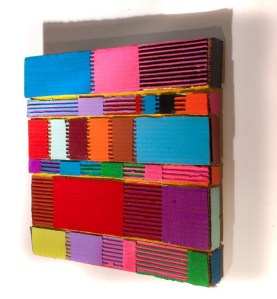
Chromatic Quilt

“Chromatic Quilt”
acrylic on cardboard
16×16″
2012

Briefly describe the work that you do.

I have two primary bodies of work, Post-Consumerism, which consists of painted assemblages made with recycled materials, and The Doll Project, a conceptual photography series about how women are portrayed in the media and its effects on body image.

At what point in your life did you decide to become an artist?

I knew from a young age (in kindergarten) that I wanted to be an artist, though it wasn’t until I was 28 that I finally decided to allow myself to pursue a career as an artist.

Tell us a little about your background and how that influences you as an artist.

I have a multidisciplinary background in the arts that encompasses a variety of fields. I studied film, creative writing, and interior design in addition to art. As a teenager, I attended a math and science high school. All of those things influence my work directly and indirectly.

"Thinspiration, 1969" digital photograph

“Thinspiration, 1969”
digital photograph

What types of conceptual concerns are present in your work? How do those relate to the specific process(es) or media you use?

My Post-Consumerism series is all about reusing recycled materials. As a result, I find myself saving things that most people would discard, from cardboard to foam packing material to paint skins. My environmental concerns extend to my immediate environment, which is why I only use non-toxic paints and adhesives.

"Journey to You" acrylic on Styrofoam and cardboard 16x12" 2013

“Journey to You”
acrylic on Styrofoam and cardboard
16×12″
2013

We once heard Chuck Close say he did not believe in being inspired, rather in working hard everyday. What motivates you in your studio practice?

I think that inspiration is still a driving force behind my studio practice, though I try to set aside studio days when I go there and work on something, even when I don’t feel like it.

What artists living or non-living influence your work?

Chakaia Booker, Lee Bontecou, Robert Rauschenberg, Louise Nevelson, Robert Chamberlain, and Hans Hofmann are the biggest influences on Post-Consumerism. The Doll Project is inspired by the work of Laurie Simmons and David LaChapelle.

When you are not making art what types of activities and interests do you engage in? 

When I’m not painting, I like to write, watch good movies, and work on interior design projects.

headshot - 640pxAbout 

Tiffany Gholar is a lifelong resident of Chicago, Illinois. She studied art as an undergraduate at the University of Chicago and interior design at Harrington College of Design and has a Masters Degree in Painting from Governors State University.

Her work has been exhibited in several Chicago area venues, including solo exhibitions at The Harold Washington Library and the University of Illinois at Chicago, as well as in group shows at The Chicago Children’s Museum and The Chicago Center for Green Technology. When she is not painting, she works as a freelance interior designer.

Studio

Studio

 www.tiffanygholar.com

All images copyright of the artist and used with their permission. 

Posted in Uncategorized | Tagged , , , , | Leave a comment

Jessica Adams – Brooklyn, New York

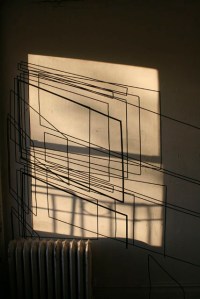
“Mapping the Light” Sunlight, masking tape Dimensions variable 2013-2014

“Mapping the Light”
Sunlight, masking tape
Dimensions variable
2013-2014

Briefly describe the work you do.

I investigate daily phenomena such as vision, light, space, and the passage of time through a variety of materials, including site-specific installation, video, found objects and appropriated pages from books, Polaroid film, and old photographic materials. My practice takes up one of the main staples of Buddhism, “just seeing what there is to see” – and investigates how this sort of activity is physically and mentally possible.

Tell us a little about your background and how that influences you as an artist.

I grew up with a German mother, an American father, and a trilingual vocabulary. As a child, I had one foot in Germany and one in the United States, and I was in an intensive Spanish immersion program at school. I think this lifestyle really inspired me as an artist: from an early age, I was fascinated by the particularities of the world, and wanted to translate these ephemeral experiences in some way. And by making work, I was able to ground myself in the uncontrollable spinning of the world.

The concept of the “artist studio” has a broad range of meanings, especially in contemporary practice. The idea of the artist toiling away alone in a room may not necessarily reflect what many artists do from day to day anymore. Describe your studio practice and how it differs from (or is the same as) traditional notions of “being in the studio.”

My studio is absolutely the central hub of my work, like it is for many artists, traditionally speaking. I have been lucky to have a beautiful studio with west-facing windows, so I get amazing sunlight. Because of the light that stretches and moves across my studio walls, I started to make installations that would have never come to fruition in a window-less studio. I’ve been tracking the movement of the sun with masking tape across my walls, forming a sort of map of the earth’s rotation. This work has led to time-lapse videos, photographs, and collages. The light in my studio is constantly surprising and fascinating to me, so I find it to be a very energizing space. It is also a very private space, and I find that this allows me to experiment more and be more open with my work.

Of course, I make work outside of the studio too, and find inspiration in day-to-day life. I often shoot videos on my phone at home, on the street, and in airplanes. I snap photographs constantly. I read books on the train and tear out the pages that resonate with me. My practice is not restricted to the studio, and in fact, I often consider New York to be my studio.

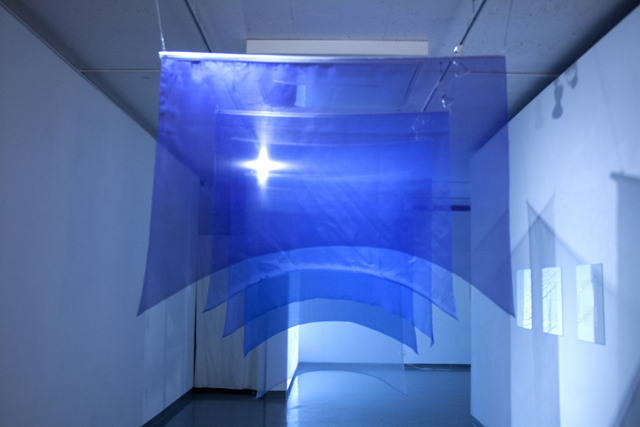
 “The Five Layers of the Earth’s Atmosphere” Silk organza, poster hangers, fishing line Dimensions variable 2014

“The Five Layers of the Earth’s Atmosphere”
Silk organza, poster hangers, fishing line
Dimensions variable
2014

What unique roles do you see yourself as the artist playing that you may not have envisioned yourself in when you first started making art?

When I first started to make art, I didn’t expect that my work would leave photography. I’ve recently become more of a scavenger, and I use a wide variety of materials that seemed unavailable to me a few years ago.

I also see myself as an artist as curator, which is a new developing path for me. I think that artists that curate gain new opportunities to interact with other peoples’ work, and it also informs the way that the artist views his/her own work. I didn’t expect that I would pursue this path, but it seems to become a more viable and interesting option to me more and more.

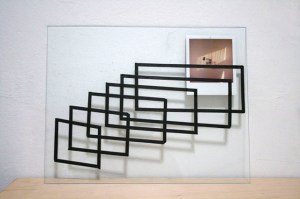
“Reflection on Mapping the Light” Glass, Polaroid, masking tape 8x10” 2014

“Reflection on Mapping the Light”
Glass, Polaroid, masking tape
8×10”
2014

When do you find is the best time of day to make art? Do you have time set aside every day, every week or do you just work whenever you can? 

The best time of day for me to work is during the late afternoon and evening, when the sun’s beams tilt perfectly into my studio. This is when I make work that deals directly with natural phenomena. I’m not much of a late night worker, so I’m always happy when I can get some studio work done in the afternoon. Lately my schedule has been pretty packed and unpredictable – I just graduated from my master’s program and I’m currently interning with a gallery here in New York, so I just try to squeeze in studio time whenever possible – but preferably when it’s sunny!

How has your work changed in the last five years? How is it the same?

I used to consider myself a photographer first and foremost. I used to make abstract pictures by experimenting with 35mm film – I’d put the film in a glass of water or a lake, or throw it in the laundry machine, or open up the back of my camera while shooting to expose the film to light. I was interested in examining how the camera could be dissected from the inside out, and how the alliance between the human eye and the camera’s eye could be vastly conflated. After my first semester in grad school, though, I felt constricted by the 2D medium and the label of photographer. That’s when I started to branch out into sculpture, installation, and video. Although I’m thrilled that my work has opened up so much, there are still many themes that harken back to my photographer days. I’m still interested in the materiality of photography, and I often peel apart Polaroid film and use photography equipment – like darkroom magenta filters and color gels – in my work. I’m still investigating the faculty of vision, and how our cognition can be altered through certain visual cues – or even a lack of those cues. My work is always encouraging more questions. Can we ever see nothing? And if so, what would it look like?

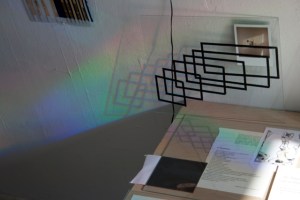
“Reflection on Mapping the Light” (detail)

“Reflection on Mapping the Light” (detail)

Are there people such as family, friends, writers, philosophers or even pop icons that have had an impact on the work you do?

My greatest inspirations are the light and space artists. I love James Turrell, Robert Irwin, and Doug Wheeler. The more contemporary artists that inspire me include Olafur Eliasson, Trisha Baga, and Zoe Leonard. I love artists that use the entire space of the gallery for their work, versus simply hanging a piece on the wall. I have recently become fascinated with the writings of John Cage. His writing about music is very relevant to my artistic practice, and I love his ideas about chance, seeing, and nothingness. I have recently also been inspired by phenomenology and writings about vision and seeing – I love Maurice Merleau-Ponty and books like Arthur Zajonc’s “Catching the Light: The Entwined History of Light and Mind.”

If you had an occupation outside of being an artist, what would that be and why?

If I didn’t make work, I’d still be involved in the art world in some way. I actually love gallery work, especially art handling, photography, and inventory/registrar work. I also love to curate shows and hope to curate shows in the future. And if none of this worked out, I’d be a writer (I majored in writing in college).

6. headshotAbout 

Jessica Adams (b. 1989) was born and raised in Indianapolis, IN. She received her BA in English writing and studio art from DePauw University in Greencastle, IN. This May, she received her MFA in Fine Arts from Pratt Institute in Brooklyn, NY. She currently lives and works in Brooklyn.

www.jessicadadams.com

All images copyright of the artist and used with their permission. 

Posted in Uncategorized | Tagged , , , , | Leave a comment

Radomir Djukanovic – Bajina Basta, Serbis

"Combined" Canvas 140x100cm 2012

“Combined”
Canvas
140x100cm
2012

Briefly describe the work that you do.

In my work, I reinterpretate the high modernism, once dominated by Art Informel, in a manner that evokes postmodernism. my “image” is a blend of the traditional notion of a painting dominated by artistic composition and colour pattern on the one hand and the modern idea of a painting which encompasses “non-traditional” materials and matter painting on the other. This “post-traditional painting” is also symbolist painting (U. Eco) with symbols ranging from empty and rudimentary to more associative ones.

At what point in your life did you decide to become an artist?

I just wanted to paint, and make good paintings. I can`t remember if I ever wanted to become an artist. Maybe when I decided to study art.

Tell us a little about your background and how that influences you as an artist.

-A faded colour, a landscape. The daily recurrence of shapes, the fixed walking route, the thirty years of living in one place, the reminiscences of familiar artistic truths together with the echoes of a happy childhood inspire a unique feeling of disapearing inside me. I try to capture it in a painting. Rather cold and laid completely bare, the feeling, although repetitive, is hard to render in painting.

"Roaming" oil, wax and spraypaint on canvas 120x100cm 2014

“Roaming”
oil, wax and spraypaint on canvas
120x100cm
2014

What types of conceptual concerns are present in your work? How do those relate to the specific process(es) or media you use?

It is very important to me to react on what I see. and what I see I don`t like.  By recycling the everyday life of a backwater using what may sometimes be perceived as brutal methods, I have managed to generate noise and a certain amount of absurdity that has a wholesome effect on me.

79x53cm Acrylic tempera on board 2013

79x53cm
Acrylic tempera on board
2013

We once heard Chuck Close say he did not believe in being inspired, rather in working hard everyday. What motivates you in your studio practice?

-To paint on a daily basis, the way one lives from day to day, without a prearranged subject, without waiting for inspiration or romantic enjoyment. Layer upon layer, day after day, until the truth has revealed itself.

What artists living or non-living influence your work?

many of them.

When you are not making art what types of activities and interests do you engage in? 

I teach art in elementary school.

headshotAbout 

SOLO EXHIBITION HISTORY
2014
Inex Film gallery, Belgrade, Milisavljeva kuća ili šta ti vozi zet sad
2012
Multimedial Art Studio, Odžaci, 1-11. june
Galerija Doma omladine, Belgrade, works., (with Dušan Stošić)
2011
“Stepenište” gallery, Belgrade
Gallery of “Narodni Univerzitet Vranje”
Gallery of Contemporary Art, Pančevo, paintings
2010
Maržik Gallery, Kraljevo
2008
The Mining and Metallurgy Museum, Bor
Youth Club Kragujevac,(with Milan Nesic)
2007
SKC Belgrade, The VIP Gallery, Serbian Visual Scene, paintings, objects
Culture Club Srebrenica
The Culture Club Gallery Šabac
2006
Former City Hall Bajina Bašta, 6th Convention of Serbian Crossword Setters

2005
Small Art Salon Kragujevac, paintings
SKC Belgrade (with Slavko Djuric)
2004
SKC Kragujevac (with Slavko Djuric)
Culture Club Srebrenica
2003
Former City Hall Bajina Bašta

GROUP EXHIBITION HISTORY
2013
The first regional gifs festival GIFEST, Subotica (3. prize)
2012
First international biennial of small prints, Niš
30X30, Culture Club Zrenjanin
Serbian Contemporary Artists Reveal,Gallery of contemporary art center„Strategie Art”, Belgrade
6x6x2012, Rochester Contemporary Art Center’s (RoCo), international small art exhibition, Rochester, NY
11th International Miniature Art Biennial, Culture Club, Gornji Milanovac
Biennial of Graphic Arts , the new graphic moment. Culture Club Čačak
2011
30X30, Culture Club Zrenjanin
Mail art exhibition, SKC Kragujevac
Thetriennial of visual and experimental poetry, Culture club Valjevo
The International Group Exhibition – Political nonsense!, Decumanus Gallery, Krk , Croatia, catalogue
“Domazet” collection, Maržik Gallery, Kraljevo

2010
Niš Drawing Exhibition 2010, “Drawing – a new medium”, The Serbia Gallery
11thKEF, Short Digital Film Festival ///
30X30, Culture Club Zrenjanin
Short amateur film festival “In треш” , Elektrika gallery, Pančevo
The Visual Language of the Cyrillic Alphabet, Gallery of Modern Art Lazarevac
The Moment of Privacy Has Passed, Sketchbooks by Contemporary Artists, Architects and designers The Usher Gallery, Lincoln, England
“Youth 2010” Nis, Belgrade, Novi Sad, The Nis Art Foundation, catalogue
2009
Niš Drawing Exhibition 2009, “Communication”, Gallery of Modern Art, Niš
2nd Drawing Biennial, The Historical Archives Gallery, Pančevo
Small Format Show, Culture Club Grocka
2009 April Meeting of Artists, SKC Belgrade, The VIP Gallery
2008
2nd Ex-Yu Graphic Arts Exhibition, The SKC New Belgrade Gallery
Fine Arts Salon 30X30, Gallery of Modern Art, Zrenjanin, September
Henkel Art Award, the modern drawing category 08, The Legacy House, Belgrade
9th International Miniature Art Biennial, Culture Club, Gornji Milanovac
2007
30X30, Gallery of Modern Art, Zrenjanin
1st Drawing Biennia, Pančevo
Watercolour Exhibition, Culture club Šabac
2006
18th Regional Fine Arts Salon, The City Gallery, Užice
30X30, Culture Club Zrenjanin

2004
Watercolour Exhibition Ečka, Gallery of modern Art, Zrenjanin
2002
Real presence, Generation 2002, 25. Maj museum Belgrade, 25-31 august 2002.
2001
1st Student Drawing Biennial, Culture Club, Studentski Grad Belgrade

http://radomirdjukanovic.wordpress.com

All images copyright of the artist and used with their permission. 

Posted in Uncategorized | Tagged , , , , | Leave a comment

Linda Leslie Brown – Boston, Massachusetts

"Wrong Pipe" Ceramic, metal, plastic, paper, clay 7.5x8x6" 2013

“Wrong Pipe”
Ceramic, metal, plastic, paper, clay
7.5x8x6″
2013

Briefly describe the work that you do.

My practice is engaged with tactile, phenomenological experience in sculpture that merges the corporal and mental imaginations.These pieces explore a morphogenetic vocabulary of layered masses, planes and openings. My pieces are rife with allusions to the body. At the same time they suggest the plastic, provisional, and uncertain world of a new and transgenic nature, where corporeal and mechanical entities recombine.

At what point in your life did you decide to become an artist?

When I was little I assumed that all the art was already made a long time ago by great men. It took me awhile to see that what I was always doing and thinking about was art.

Tell us a little about your background and how that influences you as an artist.

I do not have much of a storyline about this. I am a white woman from the suburbs in Ohio. I have had many advantages and many personal struggles, as we all have had. I am grateful to have been given the Shambhala Buddhist teachings which have vividly focused my experience and opened my heart.

"No Los Son" Ceramic, metal, glass, paper, clay 7.5x8x6" 2013

“No Los Son”
Ceramic, metal, glass, paper, clay
7.5x8x6″
2013

What types of conceptual concerns are present in your work? How do those relate to the specific process(es) or media you use?

For me, materiality is meaning. The artist’s body interacts with things; both are changed.
Touching and looking are entwined in my work. The forms are packed together, both additive and layered, but also carved, porous and eroded. The pieces are multicolored and crenellated like a coral reef. Materials are varied: I use metal, wood, paper clay, plaster, pigments, glass, rubber and stone in a way that is rich and transformative.

"Co-Host" Ceramic, metal, glass, paper, clay 7.5x8x6" 2013

“Co-Host”
Ceramic, metal, glass, paper, clay
7.5x8x6″
2013

We once heard Chuck Close say he did not believe in being inspired, rather in working hard everyday. What motivates you in your studio practice?

I agree with Chuck, in that being constantly immersed in your studio practice keeps it in the forefront of your mind so the work becomes the reference point for the rest of your experience. Everything then leads back to the studio in some way, everything becomes useful and meaningful. But it is also important to me to open that up, so I am not obsessing over the same set of ideas. I need to be able to be surprised, even shocked, to move forward in my work.

What artists living or non-living influence your work?

Just about all of them. I am most indebted to all ceramists in world cultural history, and the great women artists in the US and Latin America in the 60’s and 70’s. Louise Bourgeois! Gego!

When you are not making art what types of activities and interests do you engage in? 

I read, garden, cook, practice meditation, walk my dog, love my husband, teach and avoid housework.

headshotAbout 

Linda Leslie Brown’s recent work incorporates a variety of practices, including sculpture, installation, painting and video/sound. Her work engages the interdependent relationships between nature, objects and human creative perception. Brown’s recent sculptural works are rife with allusions to the body. At the same time they suggest the plastic, provisional, and uncertain world of a new and transgenic nature, where corporeal and mechanical entities recombine.
Brown has exhibited her work regionally and nationally. Recent exhibitions include the Danforth Museum of Art, Framingham MA, AMP Gallery, Provincetown MA, Bannister Gallery, Rhode Island College, Providence RI and Vessels Gallery, Boston MA. She is the recipient of grants and fellowship residencies from the St. Botolph Club Foundation, FPAC, Women’s Studio Center, Hambidge Center, and I-Park among others. She is represented by Kingston Gallery, Boston, MA.

She is Professor and the Foundation Studies Program Director at NESAD, Suffolk University in Boston MA.


www.

All images copyright of the artist and used with their permission. 

Posted in Uncategorized | Tagged , , , , | Leave a comment

Keith DeNatale – Oakland, California

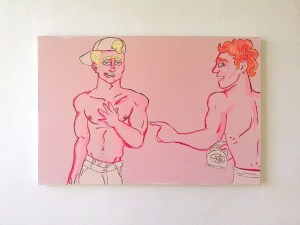
"Friends" Acrylic paint and sumi ink 36x24" 2013

“Friends”
Acrylic paint and sumi ink
36×24″
2013

Briefly describe the work you do.

The work I do is centered around reflections on the male body and its place in culture. I’m interested in jokes and puns popular within groups of hetero males and bringing them into a queer fantasy. The work manifests in comic style drawings as well as performance based video works. My main interest in it all is objectifying the straight male body.

Tell us a little about your background and how that influences you as an artist.

I come from a long line of athletic men, so growing up I was surrounded by a specific version of a masculine male. My father and my older brother were both MVP’s at my high school 30 years apart from one another so I had a path to becoming a man laid before me. Knowing I was gay from a young age, I struggled to place myself in relation to this image and was constantly questioning where my body/interests fell into the scheme of things. Through the years of questioning, however, I feel like I easily picked up on underlying queer tendencies in the ideal image of the american male. I knew I was different so even though I kept a part of myself hidden for years, I was able to see ironies and inconsistencies within “straight” groups.

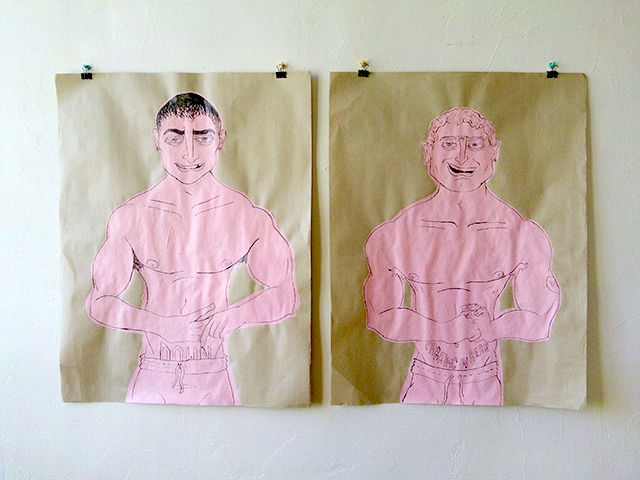
"TWINS L+R" Acrylic paint and sumi ink 19x24" each 2014

“TWINS L+R”
Acrylic paint and sumi ink
19×24″ each
2014

The concept of the “artist studio” has a broad range of meanings, especially in contemporary practice. The idea of the artist toiling away alone in a room may not necessarily reflect what many artists do from day to day anymore. Describe your studio practice and how it differs from (or is the same as) traditional notions of “being in the studio.”

My practice is more or less close to the general concept of an artist studio. I live in a loft space with my partner and do all of my work underneath our lofted bed. Compared to the studio space available to me during my undergrad at UC Davis it is a big change but I’ve learned to adapt. I work on multiple projects at once so my desk is usually full of piles of paper, paint and whatever else I pick up at and on the way to work.

Bag 2

“Bag 2” Shopping bag and acrylic paint
13.5×15.5×6″ 2013

What unique roles do you see yourself as the artist playing that you may not have envisioned yourself in when you first started making art?

I never envisioned how much of myself would be in my work. When I started making work as a kid I created fantasies that had nothing to do with my life. They were grounded in cartoons, movies and tv shows. It didn’t have much of anything to do with my own life. Recently I’ve really inserted myself into the work I’ve been making. If I’m not physically playing a role, like I do in most of my videos, I am taking cues from my own body and putting them into the images I’m creating. I like to use parts of myself, like my excessive amounts of body hair or my favorite junk food, and put them into my drawings.

When do you find is the best time of day to make art? Do you have time set aside every day, every week or do you just work whenever you can? 

I do most of my work at night after coming home from my job and having dinner. I work on multiple pieces at once, a little bit here and there, so most nights I usually spend at least some-time working on some-thing. The most fun time to work for me is on a day off when I can pretty much just spend the whole day working on a few things. It’s nice to put daylight hours into a piece; the atmosphere during the day is different than it is at night.

"BAG 2" detail

“BAG 2” detail

How has your work changed in the last five years? How is it the same?

The last year of my undergrad was where I really got a more clear idea of where I wanted my work to go. Since then it has been an interesting journey refining the choices I’ve made since then in terms of the content and the mediums I use. I never thought I’d devote as much time as I do now to painting, but I find myself painting almost every day. Interestingly enough it has come full circle for me. My introduction to art making was through cartoons and illustration so to see me now at age 24 drawing again is kind of great.

Are there people such as family, friends, writers, philosophers or even pop icons that have had an impact on the work you do?

I’ve been volunteering at the Bob Mizer Foundation for a few years and I’d say being around such an enormous body of work is incredibly influential for me. The amount of work he produced in his lifetime is insane. I think this is the reason that in the past year I’ve been so adamant about working on pieces as much as possible. He was a workhorse. Spending time with the work over the past few years you really see an artist using humor and culture in a clever way. He had an eye for taking something despicable or gross and making it funny or sexy. If I can make a percentage of the amount of work that he has in his life I’ll be content.

If you had an occupation outside of being an artist, what would that be and why?

I always thought being a co-host on a talk show would be a great job. Being paid to basically have an opinion on anything seems like the craziest thing to me and I am fascinated by the amount of people who get to be on TV and do it.

keithdenataleHEADSHOTAbout 

Keith DeNatale is an artist currently living and working in the California Bay Area. He received a BA from the University of California Davis in Studio Art and English.

http://keithdenatale.com

All images copyright of the artist and used with their permission. 

Posted in Uncategorized | Tagged , , , , | Leave a comment

Kayleigh Nelson – Portland, Oregon

"1995"  Multimedia Installation

“1995”
Multimedia Installation

Briefly describe the work you do.

With familiar household items and materials often discarded I create installations and performances that isolate everyday sounds, gestures, and images to investigate how different languages and symbolism are created in relationships.

Tell us a little about your background and how that influences you as an artist.

I think what most influences my work are the fears and idiosyncrasies I have developed or repressed since childhood. These are the things I am interested in uncovering and exploring in my art practice.

The concept of the “artist studio” has a broad range of meanings, especially in contemporary practice. The idea of the artist toiling away alone in a room may not necessarily reflect what many artists do from day to day anymore. Describe your studio practice and how it differs from (or is the same as) traditional notions of “being in the studio.”

When I create a piece I spend 90% ‘concept building’ and the other 10% actually making work, what that means is I don’t sit in my studio sewing and sculpting and dancing away, but most of it sitting and reading and researching on the internet. Most of the time the movements are developed from the unconscious movements I do day to day.

"Convergence" installation

“Convergence”
installation

What unique roles do you see yourself as the artist playing that you may not have envisioned yourself in when you first started making art?

I did not expect to be interested in curation when I first started doing art, but this role has greatly developed over the years as a key component of my art practice.

"From Which You Came" Performative Installation

“From Which You Came”
Performative Installation

When do you find is the best time of day to make art? Do you have time set aside every day, every week or do you just work whenever you can? 

A lot of my work comes from things I do, see and experience everyday so in that sense I am always at work. I am always thinking about my art practice but rarely am I sitting down crafting or creating physical pieces.

How has your work changed in the last five years? How is it the same?

I have moved from being completely sculpture based to installation to having a more performative practice, where most of my sculptures act merely as props. One thing I have kept though is my interest in what we use as safe spaces, why we need them and what happens when those are compromised.

Are there people such as family, friends, writers, philosophers or even pop icons that have had an impact on the work you do?

My partner Bobby Eversmann is a key element in my art practice. He is the first one I go to when creating a new concept or confronting problems. My most recent BFA thesis exhibition, Human Noise, was influenced by Do Ho Suh’s intricate fabric homes, e.e. cumming’s concrete poetry, Raymond Carver’s What We Talk About When We Talk About Love, my old living spaces, and Kaneto Shindo’s Kuroneko. As you can see, my projects are inspired by a variety of sources, many seemingly unrelated.

If you had an occupation outside of being an artist, what would that be and why?

I am, and want to continue on being a curator. I think this is different than being an ‘artist’ but also very much the same in ways. I run an alternative space called composition (compositiongallery.tumblr.com) out of my live/work loft in Chinatown in Portland, OR. and before this hosted shows out of the BFA studios at Portland State University. I have noticed more and more studio artists becoming curators, negating the old maxim of curators needing to be art historians. I am interested in making connections and helping out other artists by having them as well as creating shows based on what I think needs to be in the art scene.

knel headshotAbout 

Kayleigh Nelson is an artist and curator from the Bay Area, living in Portland, OR. With a BFA from Portland State University, Nelson has exhibited and performed at numerous galleries and spaces throughout the Pacific Northwest and was recently invited to perform at Yellowfish Epic Durational Performance Festival in Seattle, WA. Nelson works as the visual curatorial intern at Portland Institute for Contemporary Art (PICA) and is the director and curator at composition gallery in Portland, OR.

knel in studio

In the Studio

kayleighnelson.com

All images copyright of the artist and used with their permission. 

Posted in Uncategorized | Tagged , , , , | Leave a comment