James Deeb – Evanston, Illinois

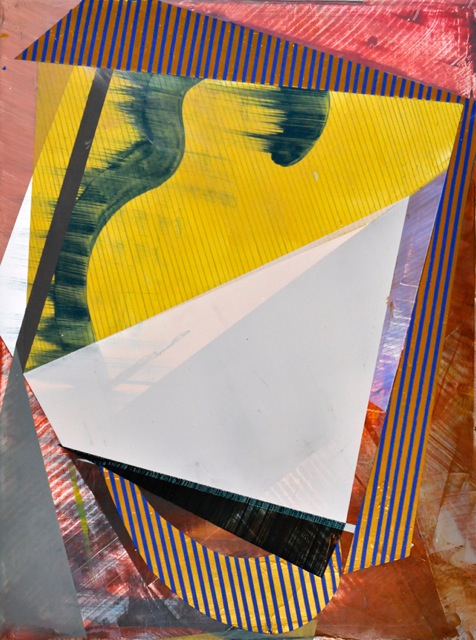
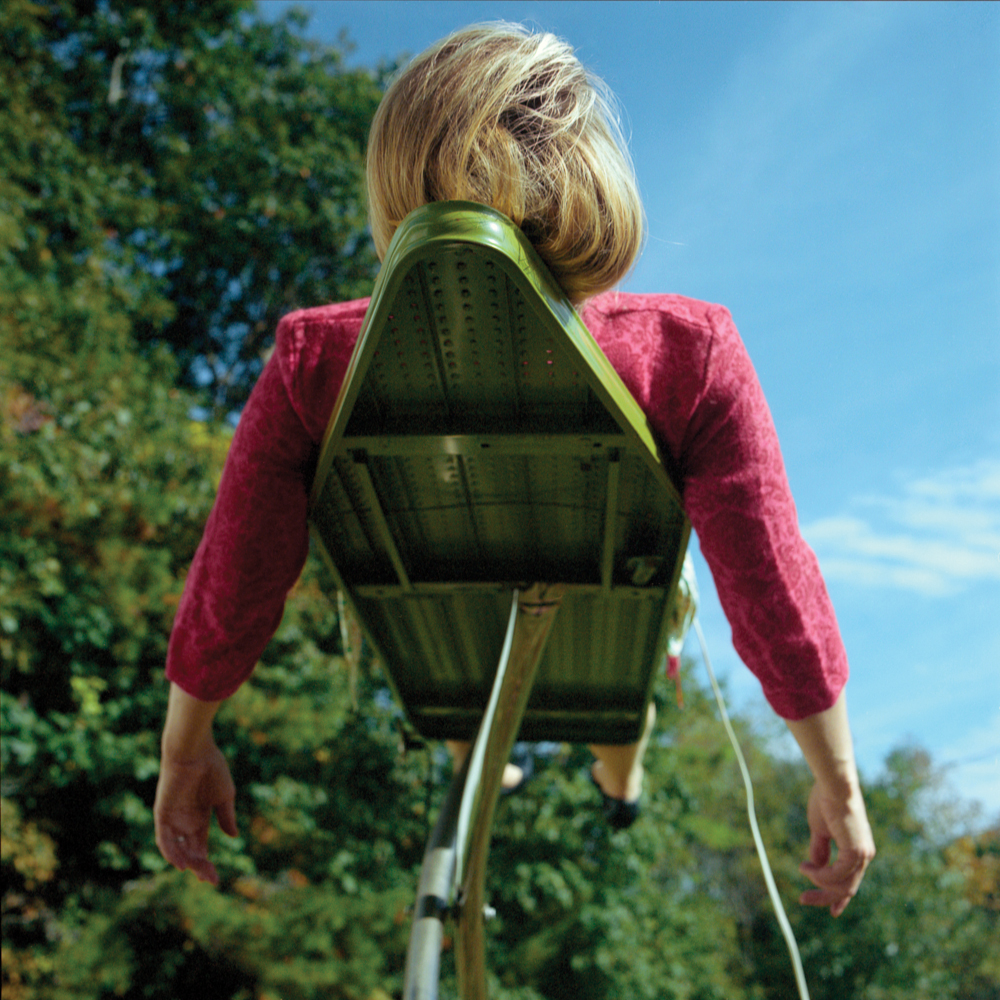
Quorum, monotype,21” x 15”, 2010

Quorum, monotype,21” x 15”, 2010

Briefly describe the work you do. 

My art centers on creating paintings, drawings and monotypes. I produce a short film or script about every ten years or so. Each media offers a different creative outlet that roughly fits most of my ideas. Viewers most often describe my work as dark, beautiful, frightening, literate and passionate, although usually not in the same sentence. I refer to my work as art in a minor key.

Tell us a little about your background and how that influences you as an artist.

I was born behind the wall of West Berlin in the mid-1960’s. My father was in the U.S. military and my family moved often. By the time I was three, we had left Berlin for Texas, with intervening stops in Indiana and California. Our next destination was to be Moscow, but everything changed with the sudden death of my father. We settled in a small city in Indiana to be close to my mother’s family. I remember drawing a lot as a child and making animated movies with lumpy clay dinosaurs.

My father’s untimely passing, along with our semi-nomadic existence, left me acutely aware of the transitory nature of life at an early age. And even though I enjoyed a fairly settled life afterward, it informs my art to this day.
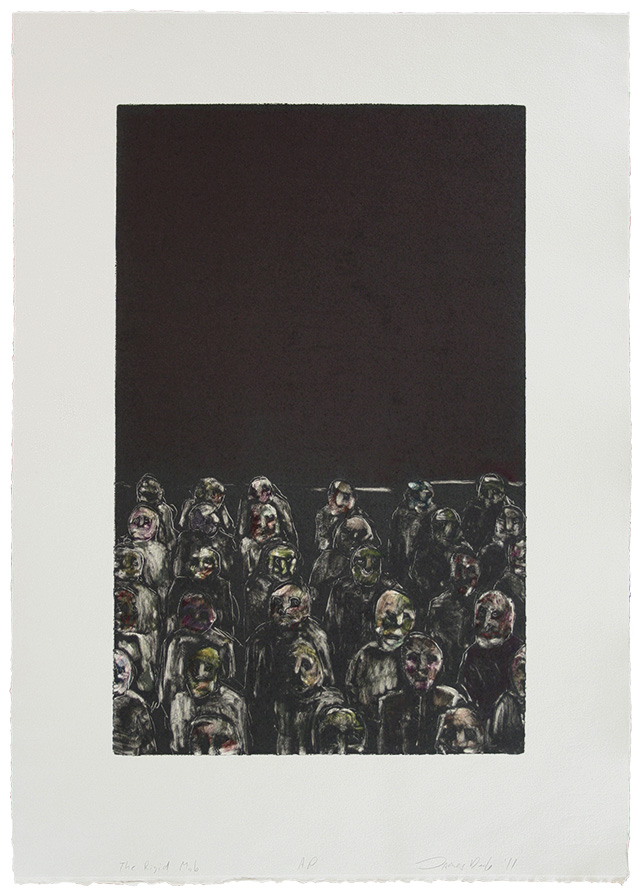
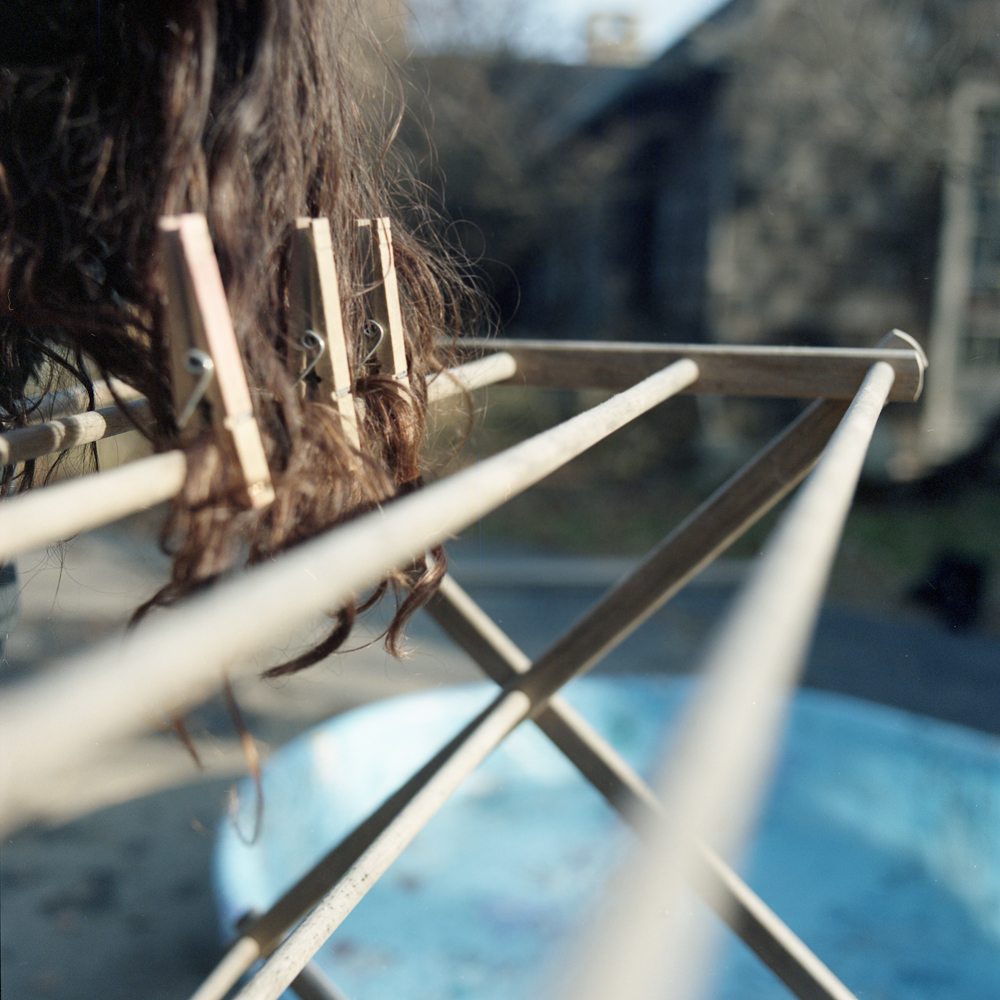
The Rigid Mob, monotype and colored pencil, 21” x 15”, 2011

The Rigid Mob, monotype and colored pencil, 21” x 15”, 2011

The concept of the “artist studio” has a broad range of meanings, especially in contemporary practice. The idea of the artist toiling away alone in a room may not necessarily reflect what many artists do from day to day anymore. Describe your studio practice and how it differs from (or is the same as) traditional notions of “being in the studio.”

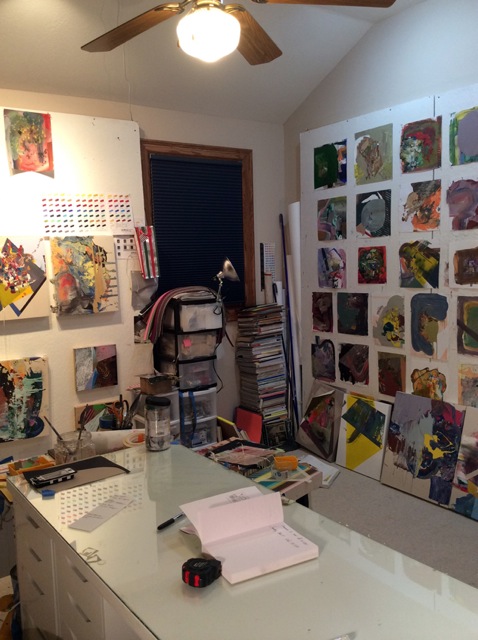
I work with traditional artist’s media, so I work in a traditional artist’s studio. We have this “idea of the artist toiling away alone in a room” because that room is usually the best place in which to produce an object like a painting or a print.

What unique roles do you see yourself as the artist playing that you may not have envisioned yourself in when you first started making art?

Teaching. Even though I don’t teach professionally, I often find myself educating others about my work, another artist’s work or the art world in general. Art can be intimidating and opaque to many people, including younger artists. Advocating for my discipline in this way helps spread the understanding of art, even if it is only one person at a time.

When do you find is the best time of day to make art? Do you have time set aside every day, every week or do you just work whenever you can? 

I’ve always preferred to work at night. As I’ve grown older and my life has become more complex, however, I’ve taught myself to work at any time. I try to work everyday, whether it’s spending five or six hours on a large painting or an hour adding color highlights to a monotype.
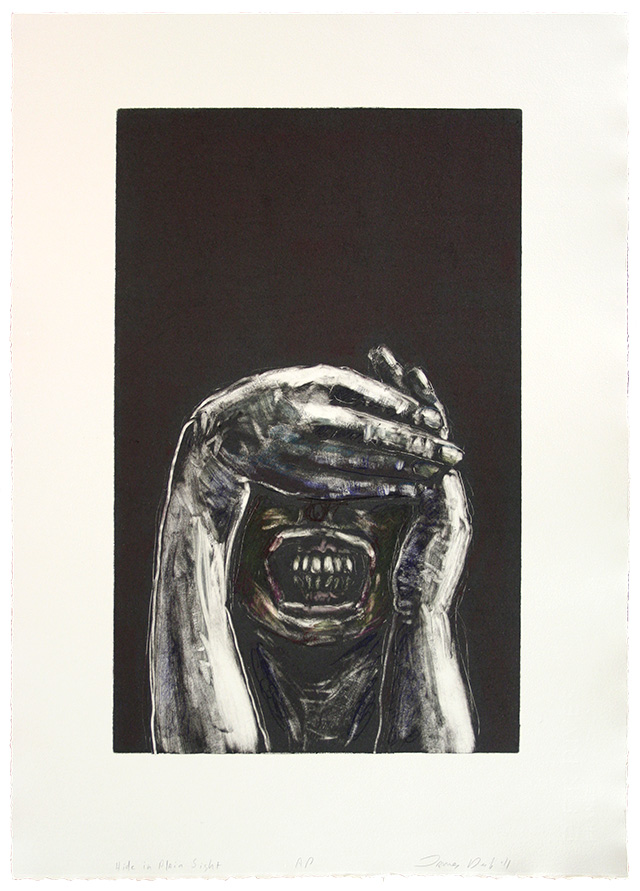
Hide in Plain Sight, monotype and colored pencil, 21” x 15”, 2011

Hide in Plain Sight, monotype and colored pencil, 21” x 15”, 2011

How has your work changed in the last five years? How is it the same?

The form of my work has changed little over the past five years. Although it feels more refined to me, I paint, draw and make monotypes in much the same way as I have for many years. The major change to my work has been in the amount of wit and humor (however dark) I invest in it. Many artists avoid humor in their work because they’re afraid of not being seen as “serious.” If you’ve ever studied the life of a comedian, you’ll know how deadly serious humor can be.

Are there people such as family, friends, writers, philosophers or even pop icons that have had an impact on the work you do?

I read a great deal and a few authors loom large as major influences. I refer to them as the three “B”s: J.G. Ballard, William S. Burroughs and Charles Bukowski. An honorable mention goes to Philip K. Dick.

If you had an occupation outside of being an artist, what would that be and why?

FBI profiler. No really, I think I’d be good at it. Although the thought of shaking J. Edgar Hoover’s mummified hand gives me the willies.

About

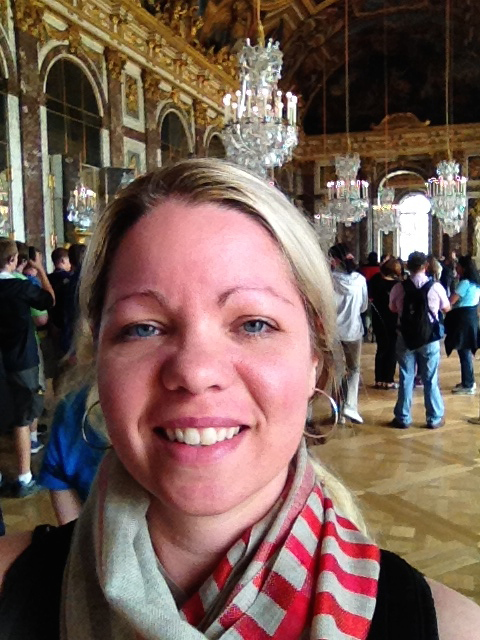
JamesDeeb_HeadShot_gsAlthough I had always been interested in art, I did not seriously study art until I went to college. I graduated from Indiana University at South Bend in 1988 and received an MFA from Western Michigan University in 1994. My work has been shown in numerous group and one-person exhibitions throughout the Midwest. At one of those solo shows, a visitor said to me, “I bet you love scary movies.” It was more of an announcement than a question. I thought for a moment and replied, “No, but I feel compelled to watch them.”
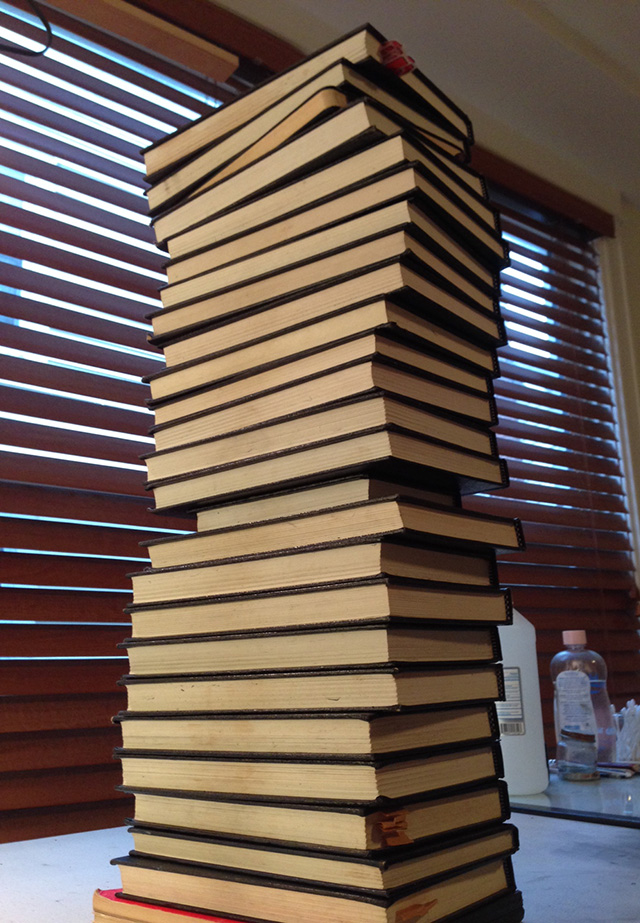
JDeeb_StackOfSketchbooks

Sketchbooks

www.jamesdeeb.com

All images copyright of the artist and used with their permission. 
 

Posted in Drawing, Painting, Printmaking | Tagged , , , , | 3 Comments

Eleen Lin – Long Island City, New York

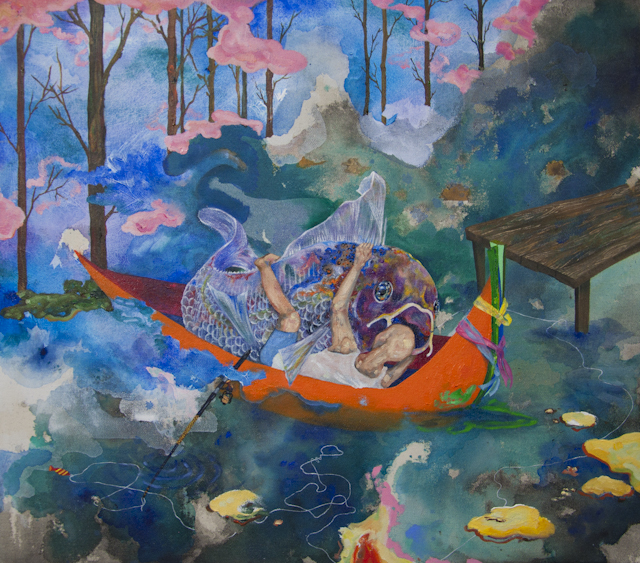
Chasing carp, 21 x 24, Oil and acrylic on canvas, 2014

Chasing carp, 21 x 24, Oil and acrylic on canvas, 2014

Briefly describe the work you do.

As a Third Culture Kid inhabiting in non-places of generic cities, I have always been concerned with the subject of cultural hybridity. In the age of cultural cannibalism where everything is brought together and rearranged to formulate new identities, I reiterate Chinese folklore stories into contemporized cross-cultural narratives. The Pet series paintings transform mystical intimacies between man and animal to represent complex urbanites’ obsession with pet ownerships. The paintings illustrate the nomadic solitary experience of drifting among various traditions, and the obscurity of cultural boundaries today. My current work looks at different narratives and how they are translated through alternative cultural lens. I take classical literature such as Moby Dick and reiterate them with overlapping narratives that are similar in other cultures.

Tell us a little about your background and how that influences you as an artist.

I was born in Taiwan and grew up in Bangkok, Thailand, where I studied at an international school. Later, I went to London for my undergraduate studies, and then to the United States for an MFA at Yale School of Art. My nomadic background has shaped the way I look at the world; drifting between various cultures and traditions, a kind of touristic outsider undefined by any particular identity. As a result, cultural hybridity has been the subject of my work. I decided to stay in New York after my studies; the city serves as new ground for me to search for more conflicting inspirations.         

The ark, 72 x 84, Oil and acrylic on canvas, 2014

The ark, 72 x 84, Oil and acrylic on canvas, 2014

The concept of the “artist studio” has a broad range of meanings, especially in contemporary practice. The idea of the artist toiling away alone in a room may not necessarily reflect what many artists do from day to day anymore. Describe your studio practice and how it differs from (or is the same as) traditional notions of “being in the studio.”

My studio practice is definitely closer to the traditional notion of being in a studio. However, it doesn’t necessary mean working in absolute solitude. I’m used to working with music and TV running in the background, or working while talking with family and friends on a hands free phone.

What unique roles do you see yourself as the artist playing that you may not have envisioned yourself in when you first started making art?

I think most of us romanticize about the role of the artist as a person that can simply lock themselves in the studio and paint. On the contrary, a contemporary artist has a lot of different shoes to fill. He or she needs to be an all-rounder. It’s not merely about being creative, but you have to know how to clearly articulate about your work; how to build, pack, protect and ship your pieces; how to fund and write proposals; and even how to self-promote. There are always new challenges in or outside of the studio.

When do you find is the best time of day to make art? Do you have time set aside every day, every week or do you just work whenever you can? 

My parents nicknamed me the night owl ever since I was a kid. I like to take my mornings slow to respond to emails and run other errands, so I can dedicate my afternoons and evenings uninterrupted to paint. I feel like my most productive hours are from 9pm-2am. I work 7 days a week with the occasional luxury of gallery/museum hopping once a month.

The frog of the well, 96 x 72, Oil and acrylic on canvas, 2014

The frog of the well, 96 x 72, Oil and acrylic on canvas, 2014

How has your work changed in the last five years? How is it the same?

Even though I am still pursuing the same narrative driven subjects, there has been a shift in the origins of the stories. I am currently working on a series of work inspired by Moby Dick. In additional, the way I approach the canvas has been much looser and expressive, with brighter color and wider spectrums. I am still constantly seeking for a broader range of cultural indexes from all different sources.

Are there people such as family, friends, writers, philosophers or even pop icons that have had an impact on the work you do?

The obvious would be literary writers of classical literature, old legends and mythologies, and of course, my parents for being such wonderful advocates of Chinese and Aesop’s fables. Others includes philosopher Zhuangzi and jazz musician Charles Mingus.

As for influences from other artists, I am especially attached to figurative painters who combine mysticism with everyday experience, artists who challenge visual complexity and, at the same time, respond to political and social conditions of their time. These artists include old masters such as Hieronymus Bosch and Hogarth; German Expressionists such as Max Beckmann, George Grosz, and Otto Dix; as well as contemporary artists like Paula Rego, Neo Rauch, Nancy Spero, Yun-Fei Ji, Daniel Richter and Raymond Pettibon. In addition to Western art, I am fascinated with perspectives and compositions found in traditional Chinese ink paintings, much of which documents travel.

If you had an occupation outside of being an artist, what would that be and why?

My great-grandfather was a Taiwanese glove puppeteer. The combination of decorative art, storytelling, intricate hand acrobatic performance, as well as recent introductions of laser lighting and pop music, makes them so intriguingly challenging. I would love to tackle this art form, but it would take a lifetime to master.

About

Lin_Eleen_headshotBorn in Taiwan and grew up in Thailand, UK, Vienna and the USA, Eleen Lin holds an MFA in Painting from Yale University School of Art, a BA from Slade School of Fine Art, UK. Her work has been exhibited in Guangdong Museum of Art, China; Queens Museum of Art, NY; Gwangju Museum of Art, Korea; and galleries throughout Austria, Thailand, Taiwan, United Kingdom and the United States. Lin has been awarded with Elizabeth Canfield Hicks Award, Sanyu Scholarships, and has participated with NYFA Immigrant Artist Projects as well as the AIM program from the Bronx Museum of Art.

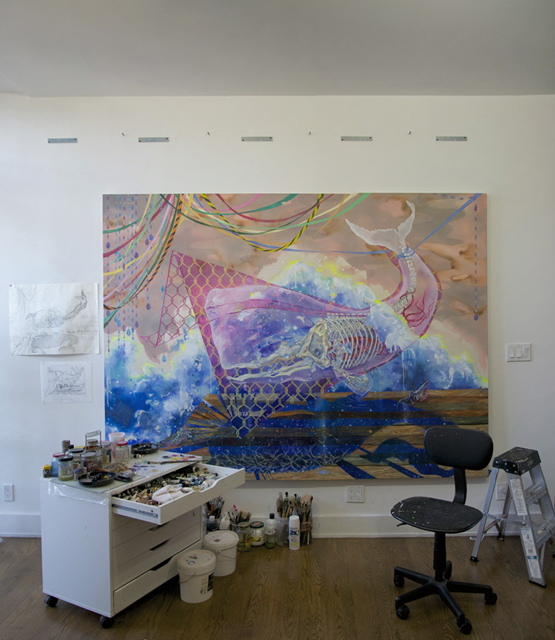
Lin_Eleen_Studio

www.eleenlin.com

All images copyright of the artist and used with their permission. 


Posted in Painting | Tagged , , , , | Leave a comment

Michael MacMahon – Falmouth, Massachusetts

Black and Red  60''x60'' Oil on Canvas 2013

Black and Red
60”x60”
Oil on Canvas
2013

Briefly describe the work you do.

My current body of work consists of large uniform square paintings that are inhabited by groups of people in similar dress toiling away at tasks which are impossible to define. These particular images are all based on compositions found in the work of Kasimir Malevich. The figures and the landscape exist in separate perspectives. The scenes are highly staged and ambiguous, they are at once specific yet open ended. They exist as part of a paralytic dream world where we lack the proper knowledge to understand the inner workings of that world or how to change it. The figures exhibit complex relationships to each other and demonstrate varying degrees of confidence and competence in their tasks. These paintings don’t come to a conclusion in the way we expect them to. The narratives are unfinished, open and in constant dialogue with artistic and political history. 

Tell us a little about your background and how that influences you as an artist.

 I grew up in a small isolated area in the southwest of Ireland. Growing up with a very close relationship to nature my connection to a larger world was limited to what I saw through the television. The very hands on immediacy of life in the countryside mixed with a filtered exposure to the larger world have greatly influenced the direction of my work.

White Square 60''x60'' Oil on Canvas 2014

White Square
60”x60”
Oil on Canvas
2014

The concept of the “artist studio” has a broad range of meanings, especially in contemporary practice. The idea of the artist toiling away alone in a room may not necessarily reflect what many artists do from day to day anymore. Describe your studio practice and how it differs from (or is the same as) traditional notions of “being in the studio.”

I relish the traditional studio setting. My studio is located in my basement and I feel it necessary to live as close to, if not in the studio. I also feel the community inherent in being an artist, such as other artists, my students and other members of the artistic community are as much a part of the studio practice as the time spent in isolation.   

What unique roles do you see yourself as the artist playing that you may not have envisioned yourself in when you first started making art?

Before attending college to study art I was primarily self taught and my concerns were centered on trying to achieve a high level of technical acumen. Many years later I now see the importance of a continuing critical dialogue on the nature of artistic production, what painting is and can be.

When do you find is the best time of day to make art? Do you have time set aside every day, every week or do you just work whenever you can? 

 The earlier the better, if I can be in the studio before the sun comes up with a cup of tea in hand I’m primed for a good day in the studio. I find that if I am mentally waking up while looking at the work I tend to have better clarity in regards to what the work needs. To feel I have achieved anything in the studio I need at least 8 – 12 uninterrupted hours. This can be difficult to achieve but I try and make the time to do this at least 3 – 4 days a week.

Deep Blue 60''x60'' Oil on Canvas 2014

Deep Blue
60”x60”
Oil on Canvas
2014

How has your work changed in the last five years? How is it the same?

My work is no longer so predetermined, in the past I worked primarily from life as an observational painter. Now much of my work is conceived as it is being made. Close inspection of any of my paintings will reveal an abundance of previous incarnations of what the painting is trying to be. The work has become much more intuitive as I seek what the painting needs rather than attempting a purely mimetic exercise.

Are there people such as family, friends, writers, philosophers or even pop icons that have had an impact on the work you do?

Some of the most important voices I have in creating work are my peers who are also creating work. I believe that rather than the ability of one artist to speak about what it is to exist at this moment in time it will be the overlapping and contradictory strands of contemporary art that best articulate our time. I have been incredibly lucky in meeting amazing emerging artists who continually amaze and surprise me. That being said I find influence from many different mediums of artistic production. Writers such as Albert Camus, Samuel Beckett and Maurice Merleau-Ponty have been greatly important in my work. I love film and it has always played an important part in my work, especially directors Jim Jarmusch, David Lynch, Luis Bunuel, Andrei Tarkovsky and Stanley Kubrick. The painters Michael Borremans, Luc Tuyman, Euan Uglow, Sangram Mujamdar, Alex Kanevsky and Mark Tansey have also been very influential.

If you had an occupation outside of being an artist, what would that be and why?

 It would have been far easier to do anything other than be an artist but I can’t think of a single other thing I would want to do.

About

headshotmichaelmacmahonMichael MacMahon is originally from Ireland and now resides in the United States. He is the recipient of numerous awards and has shown his work in various group and solo shows both nationally and internationally. He is currently a Teaching Fellow at the School of the Museum of Fine Arts, Boston. 

www.michaelmacmahon.co

All images copyright of the artist and used with their permission. 

Posted in Painting | Tagged , , , , | Leave a comment

Emily Bowser – Reading, Pennsylvania

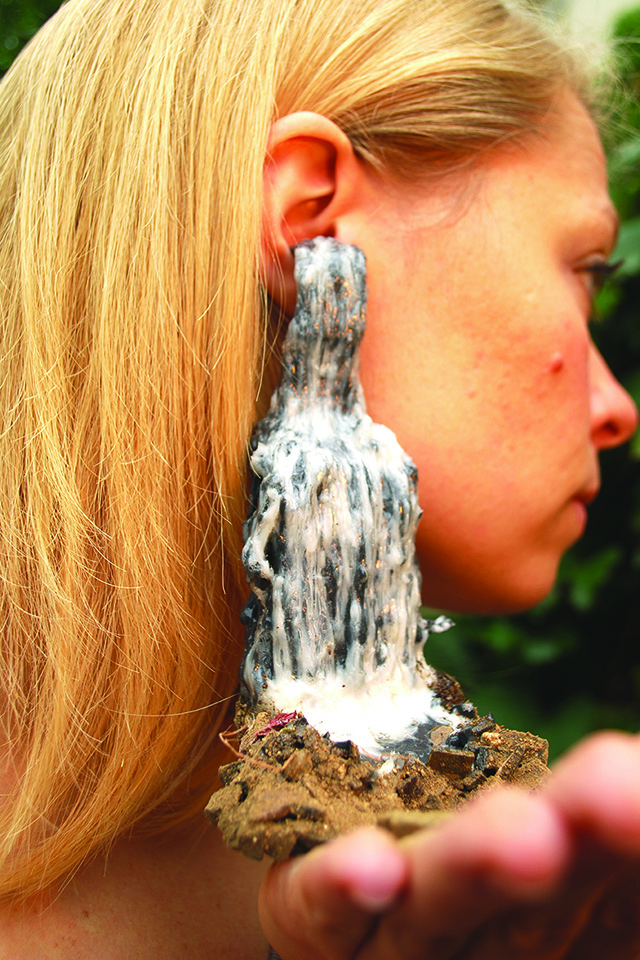
Dwell. Foam and House Paint.   3.5" x 3.5' x 5'  2011

Dwell.
Foam and House Paint.
3.5″ x 3.5′ x 5′ 2011

Briefly describe the work you do.

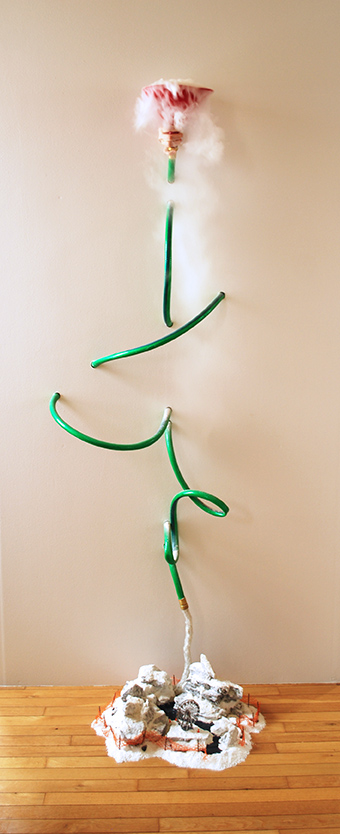
My work explores the dynamic environment we inhabit and, often overlook, by examining the inherent details of common occurrences.  Concepts surrounding views of space, architecture, environment, the individual and social perceptions within our present society are my primary influences. I have discovered that my work is becoming more and more about giving the viewer an experience where he/she is able to forget about the world that is around them on a daily basis and shift their focus into a space where a new reality is before them to simply enjoy. 

Tell us a little about your background and how that influences you as an artist.

I was lucky enough to grow up with parents that worked with their hands and valued the ability to be able to make things on their own. My parents wouldn’t classify themselves as “Artists,” by any means; but they always use their imagination, they dream big, they are unique with lots of character and heart, and are open to possibilities. For me, their support and example has always been a significant influence.

The concept of the “artist studio” has a broad range of meanings, especially in contemporary practice. The idea of the artist toiling away alone in a room may not necessarily reflect what many artists do from day to day anymore. Describe your studio practice and how it differs from (or is the same as) traditional notions of “being in the studio.”

I believe that talent only takes you so far. And that hard work is what it takes to get your work out there. So, YES, you should be working in the studio. However, that said, one would be wise to know that his/her studio is everywhere and in everything. Inspiration can be found at anytime – you just have to be open to it…and then put in some working hours in the studio. (And then put in some more hours.)

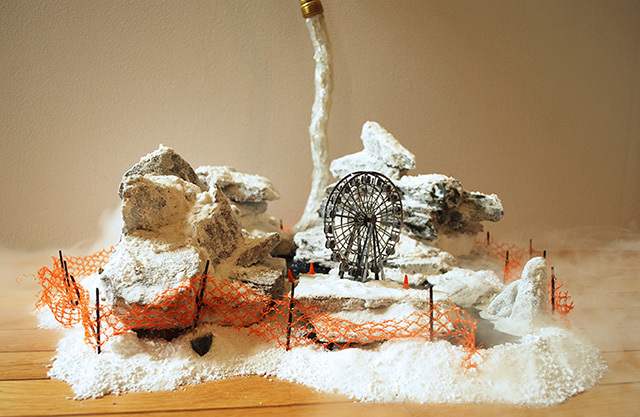
Running Through Empty Parking Lots. Funnel, Human Hand, Garden Hose, Dry Ice, Ferris Wheel, Traffic Cones made from pencil tips and paint, Rocks, Epsom Salts, Citrus Bag Scraps, Toothpicks, Hot Glue, Paint.     84" x 36" x 20     2014

Running Through Empty Parking Lots.
Funnel, Human Hand, Garden Hose, Dry Ice, Ferris Wheel, Traffic Cones made from pencil tips and paint, Rocks, Epsom Salts, Citrus Bag Scraps, Toothpicks, Hot Glue, Paint. 84″ x 36″ x 20 2014

What unique roles do you see yourself as the artist playing that you may not have envisioned yourself in when you first started making art?

Hmm, that’s an interesting question! I would say the role as ‘Mediator’ at times – because artists have honed the ability to see things from multiple perspectives during their lives. As a “Healer,” since you want to create and/or remedy situations into something beautiful or cathartic.

When do you find is the best time of day to make art? Do you have time set aside every day, every week or do you just work whenever you can?

Usually, I try to work whenever I have time. Either mornings or evenings are the times I enjoy working in the studio. Mornings are quiet and your mind is fresh. Your morning cup of tea always tastes better when paired with a side of art – even though it never gets finished because your hands are busy elsewhere. Evenings seem to have a romantic quality about them while you’re working. Nighttime dates with the art studio are great!

GagReel. Hobby Horses, Enlarged Tinker Toy Part, Fabric Knot, Wood, Saw Horses. Dimensions Variable.   2012

GagReel.
Hobby Horses, Enlarged Tinker Toy Part, Fabric Knot, Wood, Saw Horses.
Dimensions Variable. 2012

How has your work changed in the last five years? How is it the same?

My work has remained the same over the past few years in respect to the fact that it still references environments, nature and how we as humans alter those spaces. My work has changed in terms of attempting to layer subtler, yet complicated concepts within it. I enjoy works that aren’t too in your face about what is happening – I like it when the idea/s of a piece of art are softly echoed like poetry.

Are there people such as family, friends, writers, philosophers or even pop icons that have had an impact on the work you do?

As I said before, my parents have had a huge impact on my work.  My husband because of his constant love of art – he’s always keeping the process positive. My dear cat, Lucy, because she reminds me to have fun and not to take things too seriously. Movies, music, and poetry – those will forever keep informing my work – such fabulous resources. And the young artists out there consistently impact my work. Children have strong, bright, and unending imaginations that are ready for anything. They will forever be the bravest artists out there.

If you had an occupation outside of being an artist, what would that be and why?

Yoga teacher and the host of a travel/food show. I’m currently in the process of getting my certification to teach adult yoga, so the ball is rolling on that. I just love yoga! It keeps you honest and present, open and able to work through anything that’s going on in your life with a positive attitude. I’m really looking forward to teaching yoga in the near future! As far as being the host of a travel/food show – I simply love to travel, to see new places and faces, and experience new tastes and smells. Your body gathers up so many memories from travel – it really does change you from the inside out.

About

Emily_Bowser_HeadshotEmily Bowser has previously traveled throughout the country to make new work at venues such as Ox- Bow (Saugatuck, MI), Kimmel Harding Nelson Center for the Arts (Nebraska City), Byrdcliffe Artists Guild (Woodstock, NY), Vermont Studio Center (Johnson, VT), The Pajama Factory (Williamsport, PA) and The Fabric Workshop and Museum (Philadelphia, PA) and Taliesin Artist in Residence Program (TARP) through the Frank Lloyd Wright School of Architecture (Spring Green, WI).

She has exhibited her work at The Delaware Center for the Contemporary Arts (Wilmington, DE), Moore College of Art and Design (Philadelphia, PA),Nahcotta Gallery (Portsmouth, NH), Vox Populi (Philadelphia, PA), Southern Alleghenies Museum of Art (Loretto, PA), Space 1026 (Philadelphia, PA) ArtSpace Gallery (Richmond, VA), Sixth Street Gallery (Vancouver, WA), Heuser Art Center Gallery at Bradley University (Peoria, IL) James Oliver Gallery (Philadelphia, PA) and Crane Arts (Philadelphia, PA). In conjunction with her studio practice she enjoys teaching art to the younger artists of the future. Bowser has received her MFA with Honors in 2009 from the University of Iowa. 

Emily currently resides in Pennsylvania where she creates her work and teaches Art and Yoga to kids. 

Dwell. Foam and House Paint.   3.5" x 3.5' x 5'  2011

Dwell.
Foam and House Paint.
3.5″ x 3.5′ x 5′ 2011

www.emilybowser.com

All images copyright of the artist and used with their permission. 

Posted in Sculpture | Tagged , | Leave a comment

Carrie Fonder – Sarasota, Florida

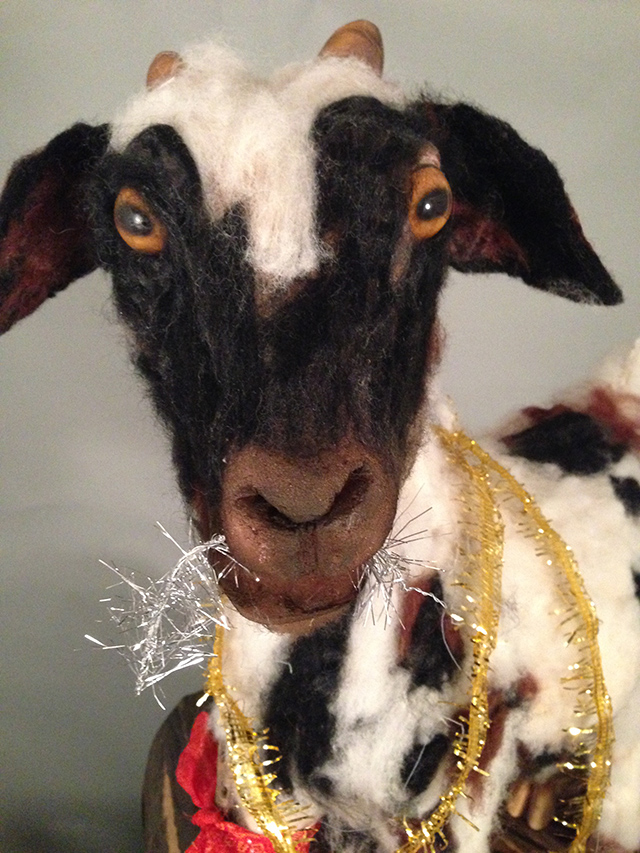
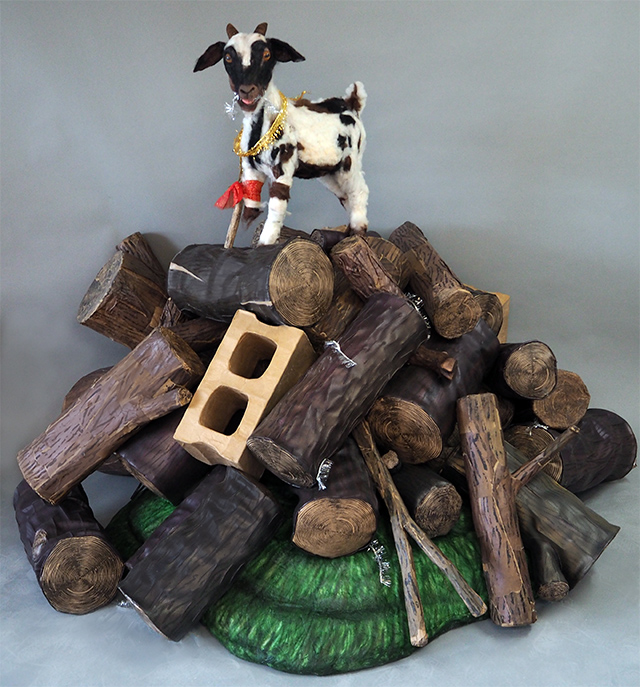
Goat Contemplates Its Incessant Need to be on Top, detail, 2014

Goat Contemplates Its Incessant Need to be on Top, detail, 2014

Briefly describe the work you do.

My work often manifests as mixed media sculpture with kinetic elements. However, I am increasingly exploring the realm of two-dimensionality with hybrid works that merge paintings, drawings and occasionally photographs. Materially, my repertoire includes low-grade materials like plywood, extruded polystyrene insulation foam and airbrushed acrylic paint.

Conceptually, I am interested in issues of gender, power, culture and complicity. My work is invested in the intersection of nature and culture; this often materializes as a play between two-dimensional and three-dimensional elements in a single piece. The slippage between those elements suggests a tension between the “real” and the represented. I infuse my work with wry humor and a kitsch sensibility. The two combine to create a space for playfulness amidst the conceptual tension of my work, as I address what it means to be a human animal in contemporary culture.

Tell us a little about your background and how that influences you as an artist.

Much of my artistic trajectory was determined my freshman year in the 3D lab at Milwaukee Institute of Art and Design under the tutelage of Steve Lacey.  He taught me such rare gems as “you can’t make a piece of shit and then turn it into something nice,” which I have since passed down to my students.

When I first entered the 3D lab at MIAD I had no experience using tools whatsoever. I was intimidated and fascinated in equal measure.  That combination has become the common thread that keeps me invested in my work. The thrill and challenge of creating work that married technical, formal, and aesthetic success compelled me to declare a major in sculpture by the end of my freshman year.

Goat Contemplates Its Incessant Need to be on Top, 2014, Mixed Media with motion sensor, Arduino micro-controler and motors, 72" x 56" x 62"

Goat Contemplates Its Incessant Need to be on Top, 2014, Mixed Media with motion sensor, Arduino micro-controler and motors, 72″ x 56″ x 62″

The concept of the “artist studio” has a broad range of meanings, especially in contemporary practice. The idea of the artist toiling away alone in a room may not necessarily reflect what many artists do from day to day anymore. Describe your studio practice and how it differs from (or is the same as) traditional notions of “being in the studio.”

The nature of the work I currently make requires a fairly formal workspace. That being said, the studio itself is not always glamorous; it has ranged from my basement to a backyard in Mumbai. The idea of post-studio is sexy, but for now my collection of tools, in a space that I can use them, is sexier.  

Additionally, I have recently found that community-based maker spaces are excellent studio alternatives. They are wonderful spaces to both access technology and connect with a community of expert problem solvers. 

What unique roles do you see yourself as the artist playing that you may not have envisioned yourself in when you first started making art?

As a young artist I assumed I would (after many years of practice) master my materials and processes.  Now, I realize that my constantly changing materials and processes (that forever elude perfect mastery) keep my love for my practice alive. The endless exploration and problem solving that inherently accompanies being a mixed media sculptor invigorates my practice, challenges my thinking and expands my skills as a maker.

As an extension of this, I never conceived that my practice would require me to be a technologist. Currently, I am learning basic micro-controller programming and exploring the use of technology including CNC routers and CNC plasma cutters.

When do you find is the best time of day to make art? Do you have time set aside every day, every week or do you just work whenever you can? 

Mornings are my optimal time to make art. I am most productive with a cup of coffee, a good playlist and a clear mind. 

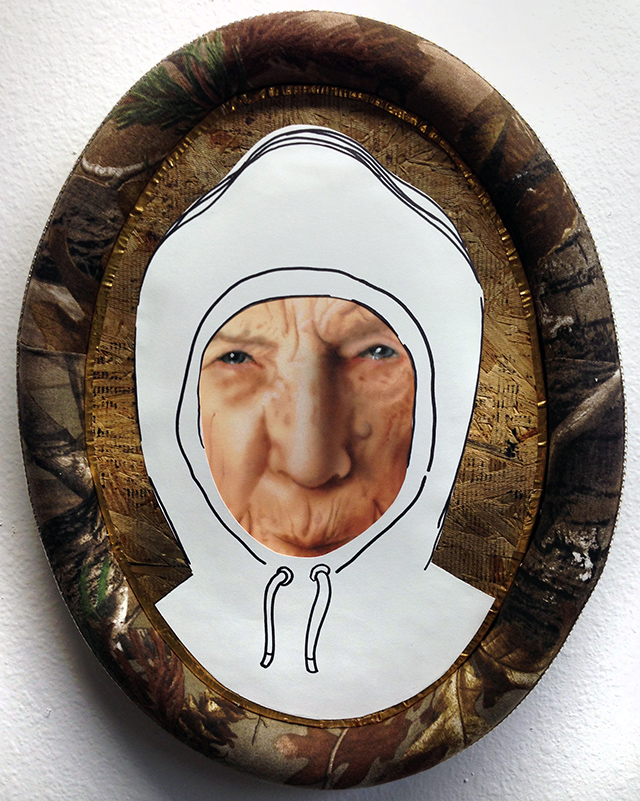
Untitled Hoodie, 2014, Mixed media with airbrushed acrylic portrait, 13" x 2" x  17"

Untitled Hoodie, 2014, Mixed media with airbrushed acrylic portrait, 13″ x 2″ x 17″

How has your work changed in the last five years? How is it the same?

Conceptually, my work has continued to develop along the same trajectory it was on five years ago. However, it has grown more nuanced. Currently, I am finding myself interested in making two-dimensional works, in addition to my sculptural works. Technologically, my work has evolved in recent years. I am now replacing the simple motors I formerly used with micro-controllers and servomotors.

Are there people such as family, friends, writers, philosophers or even pop icons that have had an impact on the work you do?

My family has always been extremely supportive of my work as an artist. Additionally, I owe a huge artistic debt to the many amazing professors who have mentored me over the years. (Not to mention the equally huge financial debt I owe to the institutions at which they teach.)  My artist peers have also had a tremendous impact on my work; there is nothing like a peer critique to keep you seeing clearly.

If you had an occupation outside of being an artist, what would that be and why?

For the purpose of this question I am going to disregard all of the arts related jobs I have held in the past and/or continue to hold including: business owner, non-profit artist/teacher in residence, art history professor, art professor, and camp director- to name a few.

If I were to select an occupation outside of the visual arts, I ’d be a writer for Lonely Planet. Next to art, travel is my life’s passion.  Any Lonely Planet folks reading this?  Feel free to contact me.

About

Fonder_headshotCarrie Fonder is a sculptor whose practice focuses on mixed media pieces that are both materially and conceptually driven. She earned her MFA in sculpture at Cranbrook Academy of Art and her BFA in sculpture at Milwaukee Institute of Art and Design. Fonder worked as an adjunct professor at The College for Creative Studies in Detroit and The Art Institute of Michigan in Troy, MI, before relocation to Sarasota, Florida earlier this year. In 2010 she was awarded a Fulbright Nehru Grant to explore the influence of culture on gender identity via depiction of the feminine in India. Fonder’s work has been exhibited both nationally and internationally.  This year she was awarded Best of Show in the Detroit Artist Market Biannual All Media Exhibition and received an Award of Excellence in the Fl3tch3r Exhibition at the Reece Museum at East Tennessee State University. 

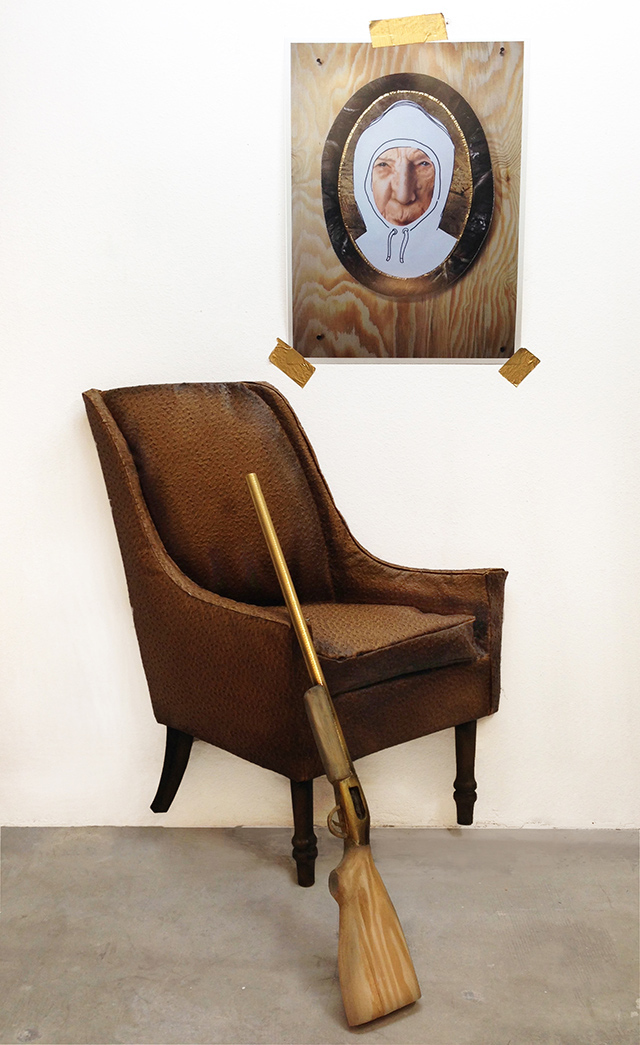
Wish You Were Here, 2014, Mixed media, 32" x 34" x 67"

Wish You Were Here, 2014, Mixed media, 32″ x 34″ x 67″

www.carrie-fonder.com

All images copyright of the artist and used with their permission. 
 

Posted in Sculpture | Tagged , , , , | Leave a comment

Anna Garner – Tucson, Arizona

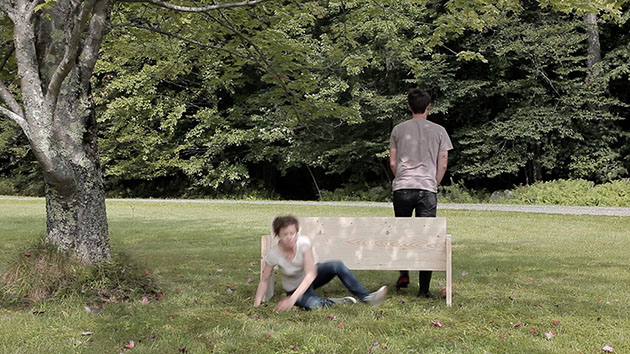
Title: Pratfall #1 Medium: Single Channel Video Year: 2014 Length: 4:20 Link: https://vimeo.com/104856485

Pratfall #1, Single Channel Video, 2014
Length: 4:20
Link: https://vimeo.com/104856485

Briefly describe the work you do.

My work investigates how the body can be shaped, sensed, relied upon, or distrusted. Through performance and video I execute varied physical challenges that reveal personal limitations, vulnerability, and clumsiness. Working with forms of physical comedy and slapstick, I draw attention to the overlap between the simultaneous assertion and loss of control inherent in pratfall, and to the body teetering between informed action and childish impotence.

Though a pratfall stunt appears as happenstance to the viewer it is carefully calculated, choreographed and executed to incur the minimal risk of injury. While danger is analyzed and reduced it is still present; the skilled act even when perfected is latent with uncertainty and potential injury. The work evokes the unknown, halts the release of comedic tension, and alludes to the failure of self-discipline and composure.

Tell us a little about your background and how that influences you as an artist.

I have a background in dance, including ballet, modern, improvisation, and various forms of dance and movement therapies. These experiences influence the ways that I approach performance and inform my use of the body as an instrument to reveal veracity through movement and presence.

The concept of the “artist studio” has a broad range of meanings, especially in contemporary practice. The idea of the artist toiling away alone in a room may not necessarily reflect what many artists do from day to day anymore. Describe your studio practice and how it differs from (or is the same as) traditional notions of “being in the studio.”

My studio practice varies a lot. I maintain dedicated studio hours, but these may not be spent in my actual studio. I may be driving around scouting locations, researching in the library, or working in a wood shop to make props for a piece. The diverse activities in my practice keep me engaged; I enjoy learning new mediums and experimenting with how to integrate them into my practice. I am currently working with clay for the first time, and making objects that I plan to incorporate in an installation with my videos.

Title: Pratfall #1 Medium: Single Channel Video Year:2014 Length: 4:20 Link: https://vimeo.com/104856485

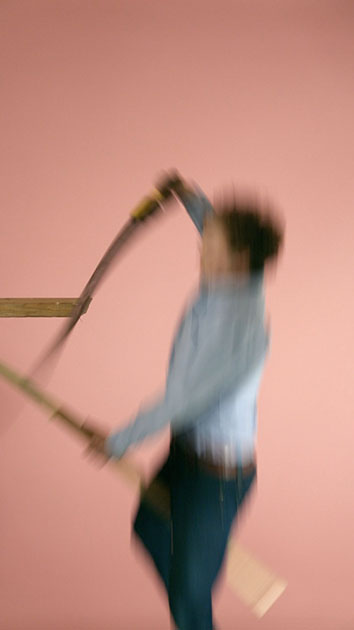
Pratfall #2, Single Channel Video, 2014 Length: 1:17  https://vimeo.com/103646802

What unique roles do you see yourself as the artist playing that you may not have envisioned yourself in when you first started making art?

Recently the production of my work has taken on a slightly larger scale. I find myself occupying the role of a director, working with hired actors, and multiple video assistants. Previously I preferred to work alone and manage all aspects of video production myself. However as my work has shifted directions I have needed the skills and assistance of other professionals in order to manifest my ideas. Working with others challenges me to let go of controlling every aspect of production; I have to trust that whomever is working the camera understands what I am trying to do and what I want in the shot. Bringing others into my work has also opened me up to new ways of looking at what I’m doing and to receiving invaluable feedback during the process of making.

When do you find is the best time of day to make art? Do you have time set aside every day, every week or do you just work whenever you can? 

I usually set aside certain days/times of the week for the studio. The regularity helps me to focus and to be more productive.  

Title: Pratfall #1 Medium: Single Channel Video Year:2014 Length: 4:20 Link: https://vimeo.com/104856485

Pratfall #1, Single Channel Video, 2014
Length: 4:20
Link: https://vimeo.com/104856485

How has your work changed in the last five years? How is it the same?

My work has changed quite a bit over the last five years. In May I received my MFA from the University of Arizona; I entered graduate school working solely in photography, however I used the time in school to experiment and work in different mediums. During this time my work shifted into primarily performance and video, and a little bit of sculpture. Working in these mediums aided the focus of my work and integrated my experience with dance, photography, and self-portraiture. My work is continuing to grow and I am currently working towards incorporating objects and video into installations.  

Are there people such as family, friends, writers, philosophers or even pop icons that have had an impact on the work you do?

My dad is a photographer and a collector, so I was introduced to art and particularly photography at a young age. As a kid I accompanied him on many of his shoots; he was primarily a nature photographer so we frequented national parks, beaches, nature reserves, and animal sanctuaries. This taught me a way of seeing beauty by means of the photographic and responding to the environment and to experience through the potential of what can be manifested in the lens. These early experiences played a major role in my desire, need, and decision to become an artist. It has also helped to have a family and partner who support my work and are engaged in my artistic process.

There are numerous other people, writers, artists, etc. who impact and influence my work. I am constantly looking at art, reading, and watching films all of which filter into the way I think about and approach what I’m doing in the studio. Most recently I have been watching a lot of silent and slapstick comedies by Buster Keaton, the Marx Brothers, and Charlie Chaplin. I consider it research, albeit extremely fun research, for my current work that deals with physical comedy and pratfall. I also recently read Simon Critchley’s On Humor, which connected for me the way that physical comedy, mediates the experience of being a body and having a body, bridges the physical and metaphysical.

If you had an occupation outside of being an artist, what would that be and why?

Right now it’s always changing, but I teach and/or do freelance work for video and photography.

About

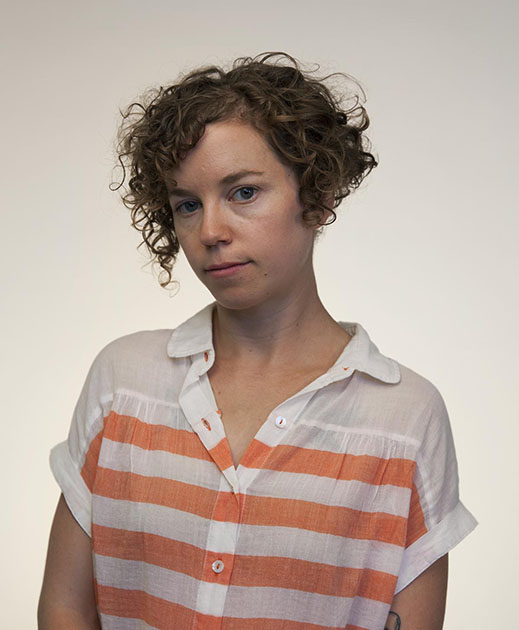
head shotAnna Garner (b. 1982) is a multi-media artist whose practice encompasses photography, video, performance, and sculpture.  Anna received her B.A. in Liberal Arts from The Evergreen State College in Olympia, WA and her MFA at the University of Arizona in Tucson, AZ.  Her work is based in performances that explore the awareness of personal limitations and self-control, focusing on physical challenges that investigate how the body can be shaped, sensed, relied upon or distrusted. Recent shows include video screenings at Trestle Gallery in Brooklyn, NY and Northwest Film Forum in Seattle, WA and a small group exhibition at Sala degli Archi in Livorno, Italy. In 2014 Anna was awarded residencies at The Showhegan School of Painting and Sculpture and Anderson Ranch Art Center.

Studio

www.annagarner.com

All images copyright of the artist and used with their permission. 


Posted in Performance, Video | Tagged , , , , | Leave a comment

Jennifer Omaitz – Kent, Ohio

"Shifting Spaces, " Acrylic on Canvas, 22" x 30", 2014

“Shifting Spaces, ” Acrylic on Canvas, 22″ x 30″, 2014

Briefly describe the work you do.

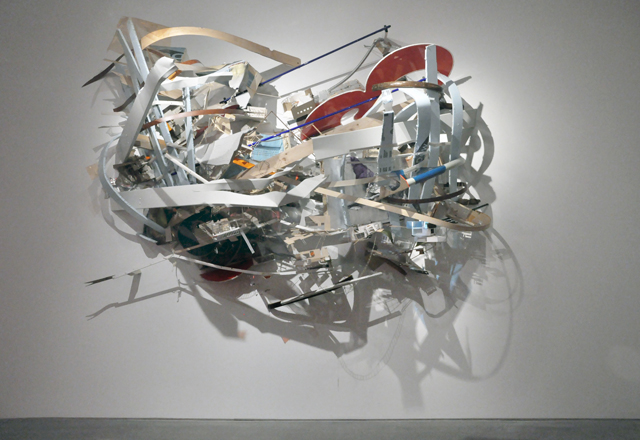
My work explores states of change between order and chaos that relate to an experience or environmental shift. Painting and Installation Art are modes of communicating the sensitivity to environmental factors; these practices provide me with a cadence and context through which to communicate utopian elegance, or dystopian plight. Installation allows me to explore the constant challenge of shifting my ideas into a new physical space. The work invokes the history of abstraction, architecture, landscape, natural disaster, and a tactile response image making in some way between each type of creative approach.

Tell us a little about your background and how that influences you as an artist.

I have always traveled and been influenced by location & experiences. Before I went to art school I was a computer technician and laser light operator for corporate events and underground parties. The experience of coming to a vacant space, enhancing the atmosphere with lights and other visuals, jolting the audience with color and sound felt akin to painting…in some ways. When I was in graduate school I was living between two houses, in two different locations. This displacement affected the way I made work, and still does. Movement is an elixir to the way I create.                                     

The concept of the “artist studio” has a broad range of meanings, especially in contemporary practice. The idea of the artist toiling away alone in a room may not necessarily reflect what many artists do from day to day anymore. Describe your studio practice and how it differs from (or is the same as) traditional notions of “being in the studio.”

My work aligns with two opposing ways of creating: producing every element from scratch and making every component by hand and working with the found and rearranging in a new context. 

Painting, or at least the way I paint, occurs in a very traditional space. I am usually situated in a studio, white walls, good light, drawers filled with paint work from layers, fat over lean, usually without a plan or drawing. My sketchbooks are important when I am away from the studio, they allow me access to the main space of creation. And then there is Installation. The gallery/space/site becomes my studio for the duration of the build my studio is on location. I rummage though garbage; collect from odd sources, contact various sources for specific components for the installation and in some cases get to pick items from other artists studios. When I create installations/assemblages my studio is mobile. This collecting process contributes to the content of the work. I usually have to go though a ritualistic type of process which includes isolation to keep focused through the build. Installation art is very, very, physical work; climbing ladders, sometimes hanging from ceilings, pinned underneath sharp objects…fun stuff! 

My paintings have a very finished state; my installations are temporary. These two ways of thinking about when a work of art is “done” and what happens afterwards keep me engaged.

"Tectonic Limit", Mixed Media Installation built for the show "Everything All At Once" Museum of Contemporary Art, Cleveland, Ohio, 2013 . H: 110 W: 130 D: 58

“Tectonic Limit”, Mixed Media Installation built for the show “Everything All At Once” Museum of Contemporary Art, Cleveland, Ohio, 2013 . H: 110 W: 130 D: 58

What unique roles do you see yourself as the artist playing that you may not have envisioned yourself in when you first started making art?

I never thought I would be making installations or teaching. I thought I would just be a quiet painter writing poetry and making images. I remember seeing the work of Sarah Sze when I was in undergrad at the Carnegie International, thinking, she is totally free with how she is interpreting space, playing with material, guiding the viewer, playing with the limitations and inventing new ways of interacting…why can’t I do that? It took me another 6 years before I would give myself the permission needed to answer that question.

When do you find is the best time of day to make art? Do you have time set aside every day, every week or do you just work whenever you can? 

 At night! I have never been a morning person. Although If I am able to work between 9-12 am this time slot seems to have a good cadence with my day. When I paint I have to have a schedule. Painting is a fluid process for me. When I am on location making a work…I just have to have all my materials and copious amounts of coffee, no distractions and no commitments other than making the work. Sculpture/installation is immersive and allows me to focus in a different, more dynamic way. However, finding time is always a challenge.

"Thinking of Pablo", Acrylic on Canvas, 16" x 20", 2014

“Thinking of Pablo”, Acrylic on Canvas, 16″ x 20″, 2014

How has your work changed in the last five years? How is it the same?

Starting to find comfort in working outside the studio. Since all my installations are created on site in a gallery or gallery like setting I have to be flexible. That was never taught in school. This idea of being flexible and willing to change and idea or placement of an item in the work creates discovery. This is now one of the most exciting components of the work.

My process within painting has changed, but the only constant is having a studio space to create some work. 

Are there people such as family, friends, writers, philosophers or even pop icons that have had an impact on the work you do?

Artist influences: Gerhard Richter, Lebbeus Woods, Kurt Schwitters, Zaha Hadid, Sarah Sze, and Julie Mehretu. My close artist friends are really the biggest source if inspiration, my artistic community means everything to me.

If you had an occupation outside of being an artist, what would that be and why?

An Architect. Architecture has the capacity to influence the way we behave, live, and create in a profound way. 

About

Omaitz_portraitJennifer Omaitz received her BFA in Painting from the Cleveland Institute of Art and her MFA in Painting from Kent State University. Omaitz has been exhibiting her work in Cleveland and Denver since 2002. Omaitz continues to blend practices of painting, drawing and sculpture in her installations. Her work confronts ideas of interior and exterior, construction and destruction, physical and psychological landscapes. Her most recent exhibition roster includes a site-specific installation commissioned for the 2010 Biennial of the Americas in Denver, Colorado, a solo show with the Sculpture Center, 2011, in Cleveland, OH and was recently was invited in 2013 to make a site specific installation for the exhibition “Everything All At Once,” at the Museum of Contemporary Art in Cleveland.

Omaitz_studio2014

Omaitz.com

All images copyright of the artist and used with their permission. 

Posted in Assemblage, Installation, Painting | Tagged , , , , | Leave a comment

Mark H. Cowardin – Lawrence, Kansas

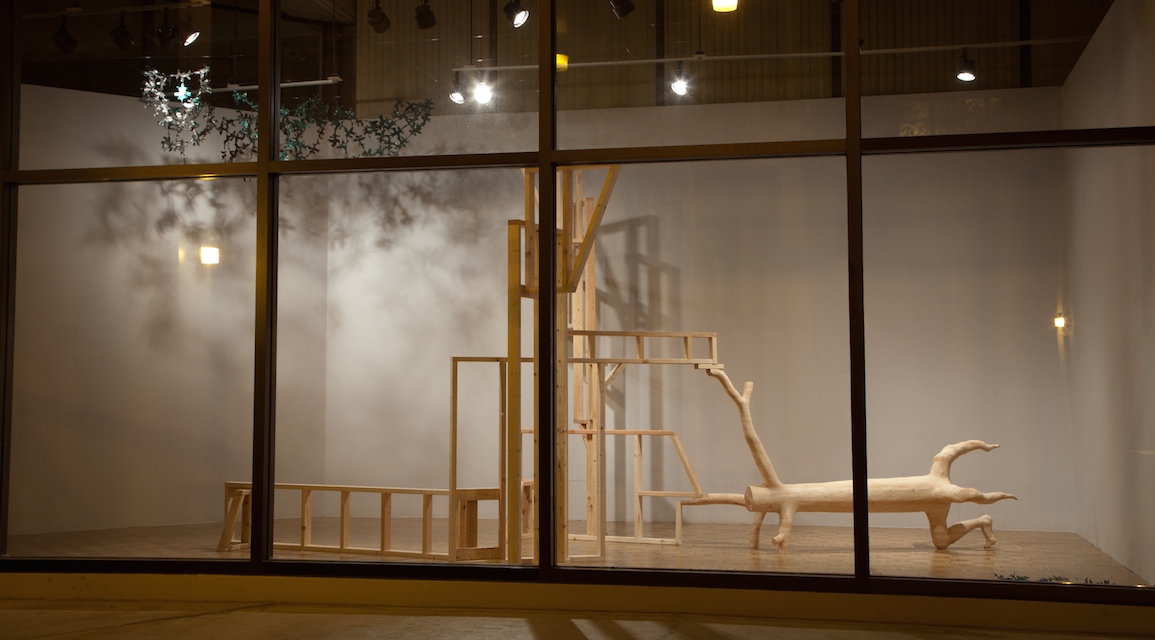
Here & There, 2013 Ebonized Walnut, Paint, Mixed Media, Wood, Silver Leaf, Flocking, & Glitter 58 in. x 23 in. x 16 in. Photo Credit: Aaron Paden

Here & There, 2013
Ebonized Walnut, Paint, Mixed Media, Wood, Silver Leaf, Flocking, & Glitter 58 in. x 23 in. x 16 in.
Photo Credit: Aaron Paden

Briefly describe the work you do.

My work begins with the observation of an absurdity relating to the intersection of humans and the natural world.  I am extraordinarily interested in the disconnect between people and the origins of the things they consume, and how that consumption alters the environment in which we live.   In addition, my current work is an exploration of my personal upbringing – where and how I was raised, and how that affects my worldview. 

Tell us a little about your background and how that influences you as an artist.

I grew up in a conservative, rural mid-western area that had been ravaged by mining in the early part of the twentieth century.  My playgrounds were giant mounds of mining tailings, flooded mine shafts, and decaying concrete structures whose original function had long been forgotten.  In essence, my favorite childhood haunts were horrible blights on nature, but to me they were full of magic and beauty.  Much of my current works are multi-layered explorations of these themes.  Another key influence would be that one of the ways I paid for my undergraduate degree was working as a carpenter building houses.  It felt natural for me to merge the techniques I was using on the job-sites to comment on the entire process of the built environment.

The concept of the “artist studio” has a broad range of meanings, especially in contemporary practice. The idea of the artist toiling away alone in a room may not necessarily reflect what many artists do from day to day anymore. Describe your studio practice and how it differs from (or is the same as) traditional notions of “being in the studio.”

I work whenever I can manage to get time to work.  As a professor, I haul pieces/parts of sculptures back and forth from my home studio to the school studio.  A huge part of my teaching philosophy is wrapped around the idea that I’m an artist first and a teacher second.  It’s my goal to model the art of making as much as profess it.  It has taken me a long time to figure this out, but many of my in class demonstrations are performed on actual pieces that I’m working on.  It’s not unusual to find me before, between, and after classes working on my works right along side my students.  It can be a difficult practice to manage, but my schedule has forced me to become more creative with time management and has made me much more efficient with my time.

Searching For a Toehold, 2012 2x4s, Tarp, & Monofilament Dimensions Variable Photo Credit: Dustin Trey

Searching For a Toehold, 2012 2x4s, Tarp, & Monofilament Dimensions Variable
Photo Credit: Dustin Trey

What unique roles do you see yourself as the artist playing that you may not have envisioned yourself in when you first started making art?

I never set out to become a teacher.  Teaching was an opportunity given to me during graduate school, and I found it to be far more inspiring than I ever expected it to be.  I view my role as a sculpture professor as not only helping to create strong artists, but to help become active participants in arts communities.

When do you find is the best time of day to make art? Do you have time set aside every day, every week or do you just work whenever you can? 

As a father, a husband, and a full-time teacher, dedicated studio time is hard to come by.  My studio is in my backyard, and I make it a general rule to be in the studio everyday.  Some days I may only get into the studio for a few minutes, but I think those brief bits can be incredibly productive.  I’ve often been warned of the dangers associated with having a studio at home, and sometimes it is quite difficult to separate the two.  But for me the perks far outweigh the negatives.  I feel like I am able to very effectively use my time.  I can help get the kids to bed, and still have time to walk out to the studio and accomplish goals. 

I don’t have a set schedule.  Some days I will get up obnoxiously early, and put in a few hours of work before anyone in my house is out of bed.  Other times I’m in the studio until the wee hours of the morning.  More than anything else, I make sure that I’m flexible and that when I hit the studio I use my time as effectively and as efficiently as possible.

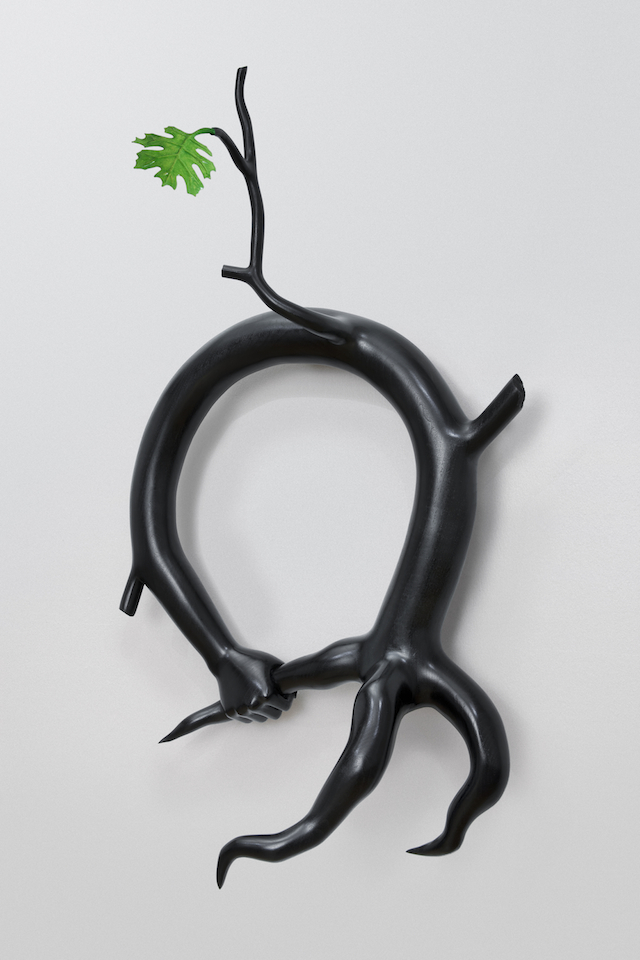
Get a Grip, 2012 Ebonized Walnut, Maple, and Paint 49 in. x 29 in. x 20 in. Photo Credit: EG Schempf

Get a Grip, 2012
Ebonized Walnut, Maple, and Paint
49 in. x 29 in. x 20 in.
Photo Credit: EG Schempf

How has your work changed in the last five years? How is it the same?

Maybe this is due to the fact that I’m a father or the fact that I’m over 40, but I feel that my work has become much more introspective.  I’m still inspired by the same topics of human interaction with the natural world, but I’m putting myself more at the center of that connection.

Are there people such as family, friends, writers, philosophers or even pop icons that have had an impact on the work you do?

There are many influences I could cite here, but I’m only going to mention a couple.  I think I was very fortunate to have had two incredibly engaged & inspiring art teachers in high school that convinced me early on that art is a legitimate and important field to pursue.  Thanks Al and Marv!

If you had an occupation outside of being an artist, what would that be and why?

Crate builder.  I find the practice of building crates for the shipping and hauling of artwork to be an incredibly meditative and relaxing process.

About

Mark H. Cowardin HeadshotMark Cowardin is a father, a husband, an artist, and an educator. His studio practice consists of an essential and delicate balance of these four jobs. Mark’s sculptural work observes the complicated, sometimes troubling, and always compelling intersection between humans and the natural world. His graceful sculptures juxtapose materials and conflicting ideas, and as a native U.S. Midwesterner, Cowardin examines the complex relationship to natural resources that the Midwest sometimes embodies. The implications of Cowardin’s narratives are sometimes alarming, complex and layered, and often ultimately tinged with yearning for a connection to the past and a hope for the future.

Mark Cowardin received an MFA in sculpture from the University of Arizona and a BFA from the University of Kansas. An Associate Professor of Art at Johnson County Community College in Overland Park, Mark currently resides with his family in Lawrence, Kansas. His work is included in numerous private and public collections including the John Michael Kohler Art Center, Kohler Corporation, the Nerman Museum of Contemporary Art, and Rockhurst University.

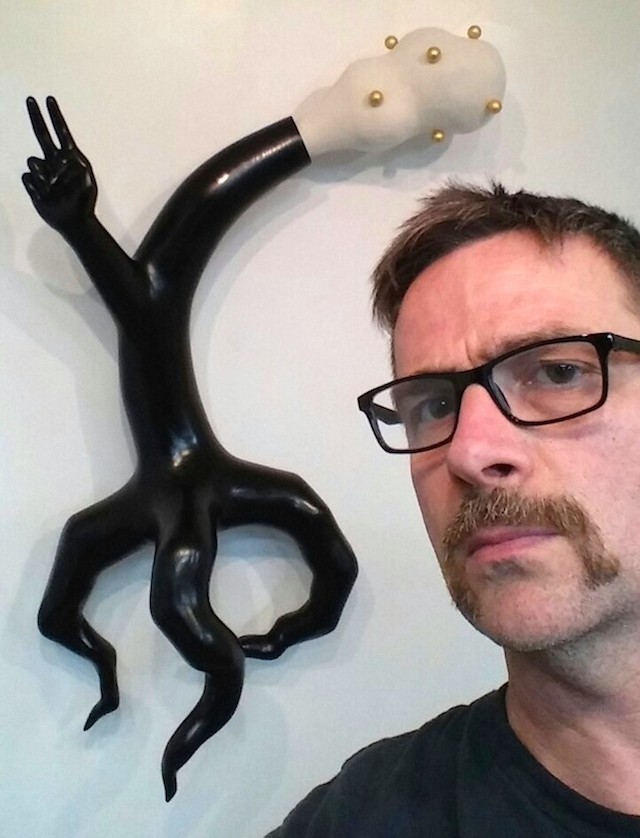
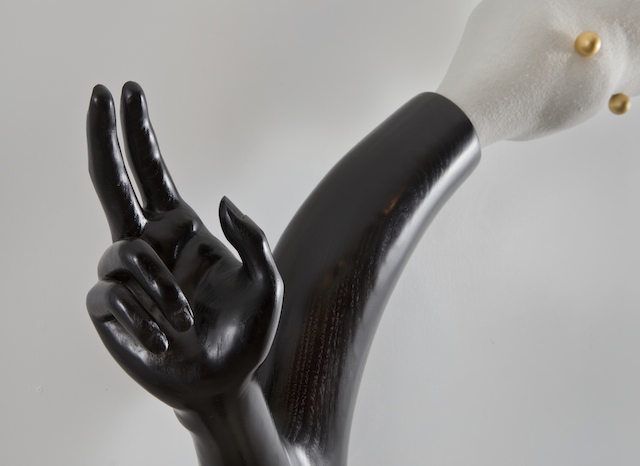
Detail It’s All Good, 2014 Kentucky Coffeetree, Mixed Media, Flitter, Wood, & Gold Leaf. 58 in. x 33.5 in. x 17 in. ) It’s All Good, 2014 Kentucky Coffeetree, Mixed Media, Flitter, Wood, & Gold Leaf. 

Detail
It’s All Good, 2014
Kentucky Coffeetree, Mixed Media, Flitter, Wood, & Gold Leaf.
58 in. x 33.5 in. x 17 in. )

All images copyright of the artist and used with their permission. 
Posted in Uncategorized | Tagged , , , , | Leave a comment

Nancy Grace Horton – Portsmouth, New Hampshire

Blast Off, 2010, Archival Pigment Print, 30x30, 17x17 editions of 10

Blast Off, 2010, Archival Pigment Print, 30×30, 17×17 editions of 10

Briefly describe the work you do.

My photographs are investigations of female gender roles as influenced by American culture and mass media. This body of work is a 21st century extension of feminist concerns regarding the media’s portrayal of women.  More specifically, I am interested in the explicit and implicit power relations that are constructed and maintained by mediatized systems of representation.

Tell us a little about your background and how that influences you as an artist.

I started off my career in photography  working as a freelance photojournalist.   In addition, as undergraduate student I was introduced to the video, Killing Us Softly by Jean Kilbourne, which continue to feed my work.   Gender in the media and gendered roles in society, including my own profession, have driven me to take notice and speak out about my own impressions as to how our culture continues to objectify and suppress women.

The concept of the “artist studio” has a broad range of meanings, especially in contemporary practice. The idea of the artist toiling away alone in a room may not necessarily reflect what many artists do from day to day anymore. Describe your studio practice and how it differs from (or is the same as) traditional notions of “being in the studio.”

The notion of the “artist studio” is foreign to me as I do my art making out in the world, outside or on location.   I do spend a fair amount of time in “my studio”.   I create my work on film and utilize contemporary methods, scanning and printing my work.  

Pinned Down, 2012, Archival Pigment Print, 30x30, 17x17 editions of 10

Pinned Down, 2012, Archival Pigment Print, 30×30, 17×17 editions of 10

What unique roles do you see yourself as the artist playing that you may not have envisioned yourself in when you first started making art?

I have had many occasion recently to be invited to lecture about my creative process.  When I first started making photographs, the prospect of lecturing was not a path I originally considered, yet I find it a most rewarding experience discussing the creative process of making my work and the intensions behind it.

When do you find is the best time of day to make art? Do you have time set aside every day, every week or do you just work whenever you can? 

I often use models to make my work, so we are in constant communication coordinating schedules, props, locations and weather.   I consider any time myself and my models align, a good time, the varying elements of light and weather become interesting parts of the process.

Hot, 2011, Archival Pigment Print, 30x30, 17x17 editions of 10

Hot, 2011, Archival Pigment Print, 30×30, 17×17 editions of 10

How has your work changed in the last five years? How is it the same?

In the last five years I have been able to use the psychology of one body of work and the asetstics of another and combine these into the work I am doing presently.   This was a challenged I posed to myself, and one that pushed me to try many different approached that lead to where I am now.

Are there people such as family, friends, writers, philosophers or even pop icons that have had an impact on the work you do?

There are several artists that I find especially inspiring including Martha Rosler and Mary Beth Edelson and many female artist from the 70s, specifically the work they were doing then.  I would not be able to do what I do if I did not have the support of my family and friends.  My partner Bill Paarlberg is also an artist which helps us to nurture each other and have a lot in common to enjoy and talk about.

If you had an occupation outside of being an artist, what would that be and why?

My path has brought me to a career that is multidimensional.  I was recently interviewed by at TV show, Boston Chronicle, and I was able to see several women working really interesting jobs, a producer, a camera person and an editor.  I found myself very interested in what the producer what doing, all the research she did, and organizing, and had I knew such a career existed, perhaps that may have been an interesting direction to take.

About

_dsc2044-1 copy1Nancy Grace Horton is a photo-based artist who embraces both analog and digital techniques to create bold narrative fragments fed by her background in photojournalism. Her series Ms. Behavior utilizes gender roles as inspiration to stimulate a feminist discussion. Her Learning to See school and community projects bring students near and far together to use photography to explore their communities.  She holds an MFA from Lesley University College of Art and Design, and her work has been exhibited at the Danforth Museum, the Griffin Museum, the New York Photo Fest and the A.I.R. Gallery in Brooklyn, NY. Nancy Grace Horton is the recipient of numerous grants and awards including several Artist Entrepreneurial Grants from the New Hampshire State Council on the Arts.

www.nancygracehorton.com

All images copyright of the artist and used with their permission. 

Posted in Conceptual Art, Feminist Art, Photography | Tagged , , , , | Leave a comment

Bug Davidson – Austin, Texas

Rule of Three Installed at Howard Art Project, Boston, MA 2014  2 channel HD video

Rule of Three
Installed at Howard Art Project, Boston, MA 2014
2 channel HD video

Briefly describe the work you do.

I am a lens based maker, mostly motion images, and sometimes performer.

Tell us a little about your background and how that influences you as an artist.

Growing up in the back yard of an oil refinery, films backlit and fired my imagination, gave me a world outside my reality. I don’t think I have ever stopped having a piece of my consciousness occupied by the cinema. It was an escape for my entire family, and I find even now that we are more likely to discuss films and issues within them than our own lives. So maybe I have always been on a quest to explain something about myself via moving image, to arrive at a voice or truth within the work. 

The concept of the “artist studio” has a broad range of meanings, especially in contemporary practice. The idea of the artist toiling away alone in a room may not necessarily reflect what many artists do from day to day anymore. Describe your studio practice and how it differs from (or is the same as) traditional notions of “being in the studio.”

For my workflow, keeping a studio is much more about an editing station, a place for equipment, small camera tests, etc. I have found that adding tactile processes into my practice when possible is of great value to me, and goes back to my experimental filmmaking roots where the materials are so much a part of the process. I still love to work on and manipulate celluloid when possible. Really anything to step away from a computer screen while staying in a creative space. Shooting can be many things, but rarely is it in a “studio” atmosphere for my work. 

Nothing Like Ivanhoe HD Still from Short Film Dir & DP Bug Davidson 2013

Nothing Like Ivanhoe
HD Still from Short Film
Dir & DP Bug Davidson
2013

What unique roles do you see yourself as the artist playing that you may not have envisioned yourself in when you first started making art?

I began as a filmmaker, so the fine art world where objects inherently have a possibility of visual value was new to me. It was through knowing painters, sculptors and people who make performance work that a holistic idea of visual communication and presentation became real to me.

When do you find is the best time of day to make art? Do you have time set aside every day, every week or do you just work whenever you can? 

There is no good time to make work. It must be done, it has its own demands. I think the pervasive “do what you love” attitude toward art is absurd. Sometimes I don’t love it – I am completely at odds with production, but I do it anyway, because it is what I do. It’s not always about pleasure. I mean to say that there is an attitude out there that an artist must choose to make time to do work to be happy, to fulfill a dream, etc. I feel like that is a false sense of process for many. I must make the work because I will be crazy if I do not, I will be demonized by my own thoughts if I don’t move forward. The work does not make me happy, it allows me to exist.

Charles Burney’s Musical Tour Installed at Distler Music Hall  2 Channel HD Video for live concert 2014

Charles Burney’s Musical Tour
Installed at Distler Music Hall
2 Channel HD Video for live concert
2014

How has your work changed in the last five years? How is it the same?

I am the sort to be taken by surprise by the nature of things on a fundamental level. No matter how I research, write and brainstorm new material, there are threads that seem to weave their way into new work that are pieces of the old. 

Are there people such as family, friends, writers, philosophers or even pop icons that have had an impact on the work you do?

I would be nowhere without my often collaborator Holly M Lewis, a magnificent writer. Friends that have made strange journeys for no reason other than to see with me, and maybe take some pictures, or show some pictures, or step in the frame. Every actor that tried, really tried, especially the bad ones. 

If you had an occupation outside of being an artist, what would that be and why?

I would hope that if I had ever had a good answer to this question that I would have put that slipper on the foot awhile ago.

About

BugonSetBug Davidson is a motion image artist and film director. Their most recent film, Nothing Like Ivanhoe, premiered in a sponsored screening by Polari Festival’s filmmaker assistance program. Davidson received the Puffin Foundation Grant to continue ongoing lens based performance work, Rule of Three. Bug has studied at the School of the Museum of Fine Arts Boston, Tufts University, The School of Visual Arts and The Irish Film Center Dublin.

BugwCam

www.behance.net/bugdavidson

All images copyright of the artist and used with their permission. 
 

Posted in Video | Tagged , , , | Leave a comment