Chemin Hsiao – Elmhurst, New York

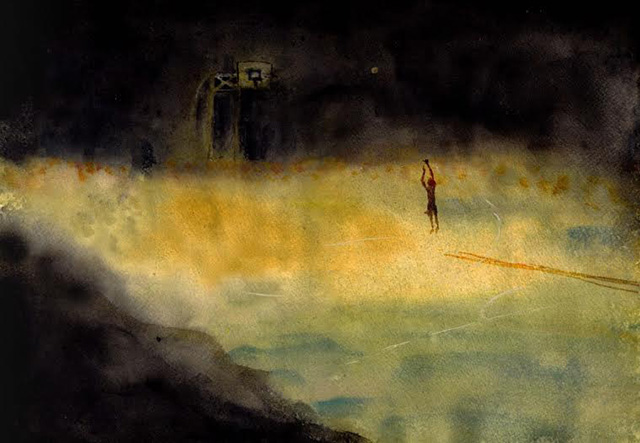
One Man along Riverside / Watercolor /  15” x 11.5”   / 2012

One Man along Riverside / Watercolor / 15” x 11.5” / 2012

Briefly describe the work you do.

My work often draws upon my memory of locations, people or animals, which have personal meaning to me. I retell the story for myself to express an elusive feeling toward that certain place or object, for instance, homeless people on subway, or certain animals which I visited often at zoos in NYC. When the feeling is strong enough, it will expand to a more complicated painting like “My Journey to The West,” which is about my voyage of studying from East(Taiwan) to West(New York).

Tell us a little about your background and how that influences you as an artist.

I was born in Taiwan. After college, I went abroad to New York City to study animation and illustration at School of Visual Arts. Graduated from MFA Illustration as Visual Essay program, I was inspired by the chairman Marshall Arisman’s idea of illustrator as an author, illustrating from one’s own life. Looking back at my work, my Taiwanese background fuels the content of my work, and my art education in New York city gave me the tools to express that. “Hoop Memoir” is a great example as it is a visual essay about my reminiscence of playing college basketball in Taiwan. The scenery surrounded by mountain and river can never be created without my culture background.  
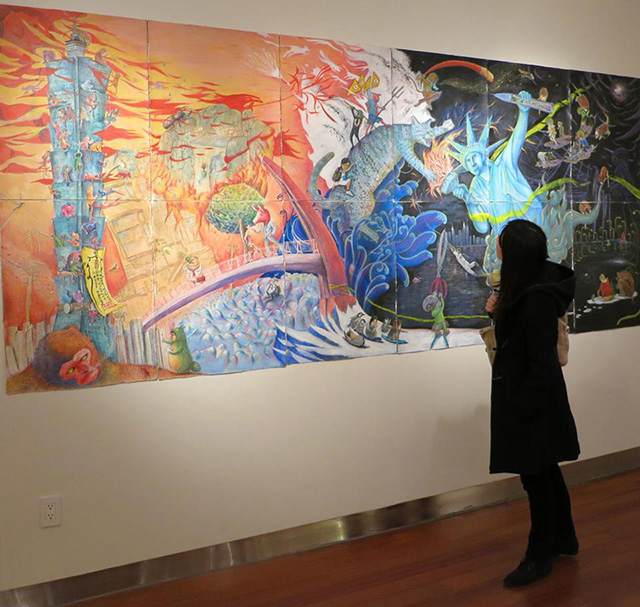
My Journey to the West/ Mixed Media / 132" x 60" / 2013

My Journey to the West/ Mixed Media / 132″ x 60″ / 2013

The concept of the “artist studio” has a broad range of meanings, especially in contemporary practice. The idea of the artist toiling away alone in a room may not necessarily reflect what many artists do from day to day anymore. Describe your studio practice and how it differs from (or is the same as) traditional notions of “being in the studio.”

I agree. A lot of my studio practice comes from sketching on the subway or painting in the zoo/park. Being at the moment with a particular space is very important. The process of elusiveness is part of the bigger creation later. 

What unique roles do you see yourself as the artist playing that you may not have envisioned yourself in when you first started making art?

The role as your own business partner. Not until actually showing your work to the public will you realize how important the business wisdom is required. I am still learning. 

When do you find is the best time of day to make art? Do you have time set aside every day, every week or do you just work whenever you can?

I concentrate better at night, but after having a day job, I have to work more in the early morning and weekend. I basically grab any time I have to make any progress for myself, the “New York Subway Sketch” series were created under such circumstance.
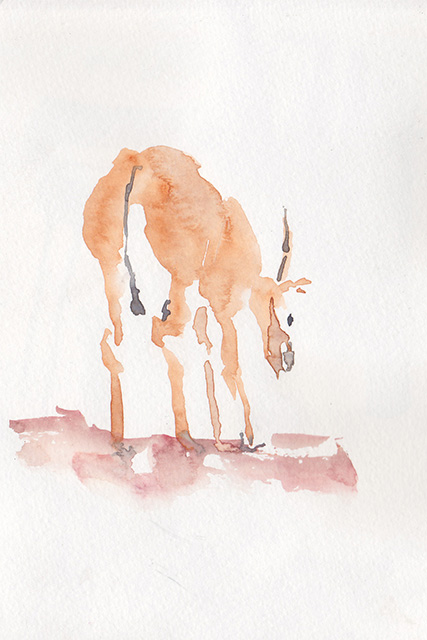
Still / Watercolor / 5” x 7”  / 2012

Still / Watercolor / 5” x 7” / 2012

How has your work changed in the last five years? How is it the same?

My work has evolved in terms of scale and complexity during past five years. Still telling my own story, but as my skills advance, I begin to work toward more complicated ways of expression.

Are there people such as family, friends, writers, philosophers or even pop icons that have had an impact on the work you do?

Of course! There are a lot of artists inspired me. To name a few, Deborah Ross, Mu Pan, Yuko Shimizu, Marcos Chin, Gregory Crane, Joo Chung, John Ruggeri… Needless to say the great masters in the museum, and people & animals from daily life, for instance, I just saw an elegant lady sitting with her poodle on subway yesterday, just fascinating!

If you had an occupation outside of being an artist, what would that be and why?

Maybe work for gallery/museum, or work for other artists?? so I can keep learning and attempt to be an artist! 🙂

About
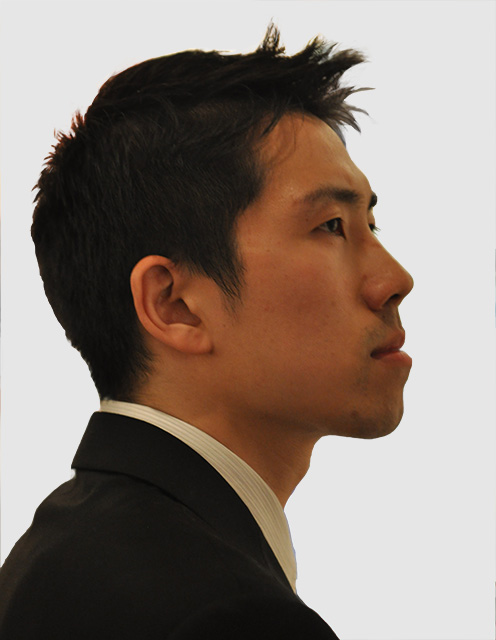
Headshot_CheminChemin Hsiao is a Taiwanese artist based in New York City. Born in Taiwan, graduated from MFA Illustration as Visual Essay at School of Visual Arts, his work often tells story with memories of locations and people. He also paints portraitures and animals with the passion of capture their spirits. 

Chemin’s painting “My Journey to the West” was recently on view at Zero Boundaries exhibition at Taipei Culture Center, New York. He was chosen as 1 of 30 nominees at 2013 Young Illustrator Award in Berlin. His work has been selected in major illustration annuals such as The Society of Illustrators New York & LA, and American Illustration. 
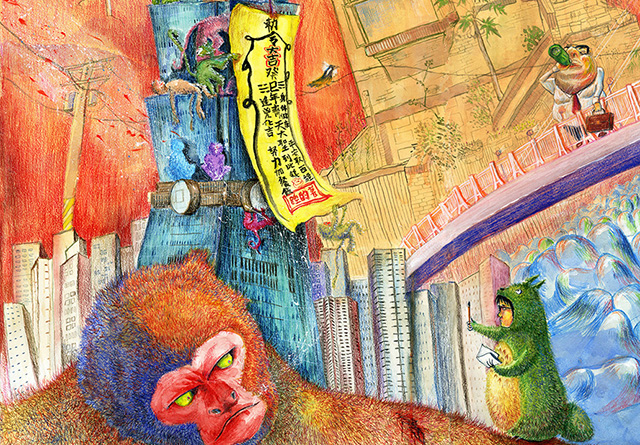
JourneyWest-Detail

JourneyWest-Detail

www.cheminart.com

All images copyright of the artist and used with their permission.  
Posted in mixed media | Tagged , , , , | Leave a comment

Luis Mejico – Chicago, Illinois

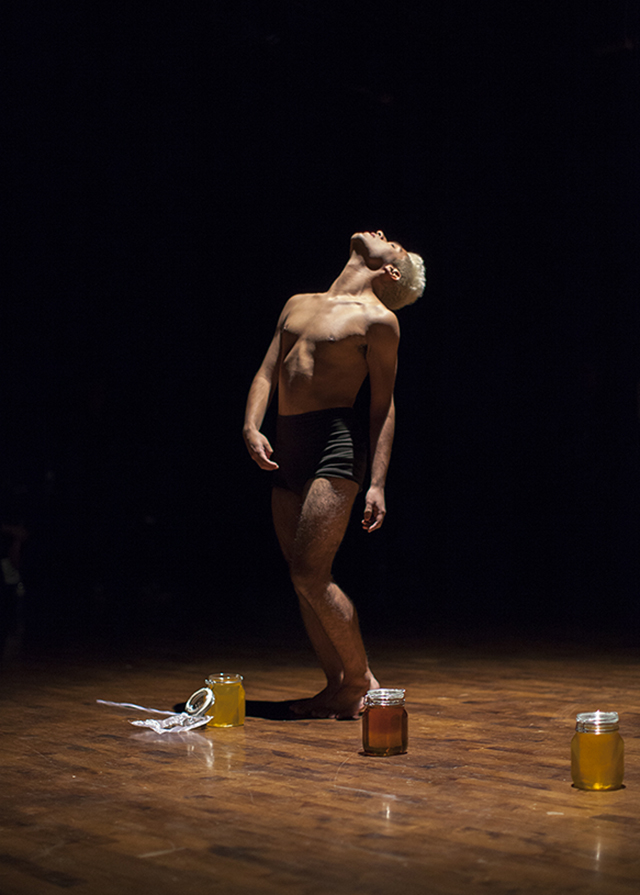
Title: ForMe:ShajairaL Medium: Performance Size: Dimensionsvariable Year: 2014

Title: For Me: Shajaira L
Medium: Performance
Size: Dimensions variable
Year: 2014

Briefly describe the work you do.

I work primarily in performance art, and very often my work includes the involvement of the public. My interest in challenging the binary between artist and audience stems from a desire to unite individuals through artwork, by using my projects as platforms for collaboration with other people. My current largest project, “For Me / For You”, asks audiences to send in submissions of any form (poetry, prose, images, videos, songs, lists of words, sets of actions, scripts, and so on) that I then translate into performance work. I produce a work that is a combination of the artistic language of the submission and my own language. At the root of my practice is the desire to produce a reciprocal expression of my and my audience’s interests through the intimate act of exchange.
 
Tell us a little about your background and how that influences you as an artist.
I didn’t have a traumatic, lonely, or otherwise interesting childhood. I am an artist because I seek to communicate with others. I use art as a tool for collaboration and creation; my works serve as platforms for myself and another to develop something collaboratively, through the blending of the submission and of myself. This blending, this conversation leads to a finished artwork that is just as much my creation as it is the creation of the person who sent in the submission.I think that the reason I find art a worthwhile pursuit is that it is often a tool for discussion. I think that something very interesting happens when an artwork and a spectator meet. The artwork is, in some ways, always reflective of the artist’s interests, desires, experiments, and so on. It is a glimpse at the history of the maker. Likewise, the spectator comes upon the work with their own history. It is when these two histories meet, when the spectator generates a critique on the work, that the artwork serves as a tool for communication – from the mind of the artist, to the mind of the audience. What happens when these two histories meet? What discussion is born out of that touch? My work explores this idea of a mixed history through it’s generation, so that the end product becomes a physical translation of the conversation myself and the public had.
 
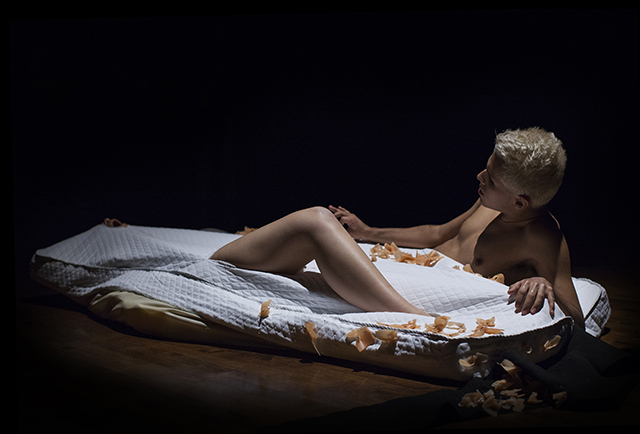
Title: ForYou:Eschar Medium: Performance Size: Dimensionsvariable Year: 2014

Title: For You: Eschar
Medium: Performance
Size: Dimensions variable
Year: 2014


The concept of the “artist studio” has a broad range of meanings, especially in contemporary practice. The idea of the artist toiling away alone in a room may not necessarily reflect what many artists do from day to day anymore. Describe your studio practice and how it differs from (or is the same as) traditional notions of “being in the studio.

My “studio” is effectively my phone, my laptop, my sketchbook. The development of my practice is far removed from the romanticized artist’s studio, and I imagine this to be true of many contemporary artists. I think that the majority of my work is developed by taking notes on my phone or sketchbook of things that I am interested in, and then workshopping performances in my living room using my computer’s camera.I think that all things feed into an art practice – yes, it’s the museums you go to, and the work you look at, but it’s also posts on Facebook, your feed on Instagram, and so on. I think artists have been expanding out of the studio into the “outside,” non-art world for decades now. I believe that many artists, myself included, are now making their practice in a more “virtual” or non-physical setting. Sketchbooks and laptops are effectively the same thing – technologies for storing and looking at visual and/or textual information. The contemporary studio, at least mine, exists mostly in journals, sketchbooks, notes, texts, image posts, etc., and takes up very little physical space. The only time my work is ever brought out into the physical world is when I’m workshopping movements or building objects (this is done in whatever room I have remaining in my apartment: typically a 5’x5’ living room, or a 4’x4’ kitchen, depending on what I’m making). I’m not saying that non-physical artist studios are replacing physical ones, but I do think that contemporary makers use a blend of the two in their creation of artwork.

What unique roles do you see yourself as the artist playing that you may not have envisioned yourself in when you first started making art?

I honestly never anticipated the amount of reading I would be doing! I think that school has really disciplined me into keeping a theoretical and research background in my work, and to continue to look at other artists while reading contemporary theory. It’s a blessing. I read a lot when I was a kid but some time during my teens I lost interest in books. It’s been a slow start, but I’ve rediscovered my love for reading, both for work and for pleasure. Artists are scholars too, and in reading about the work and processes of others, I am given glimpses into myself as a maker. Art history is so interesting and so compelling, and there is so much to learn. I think my desire for learning is reflected by the way my art is made. In the same way that my work is a conversation between myself and other, I want to be engaged in the current (interesting) conversations going on in the art world. That’s very exciting for me.

When do you find is the best time of day to make art? Do you have time set aside every day, every week or do you just work whenever you can?

I find that I am almost always, in some way, working. I have the blessing of attending art school, with class projects keeping me very busy. Any time that I don’t spend in school, I’m either working on a project, sketching, reading, looking at the work of others, writing, and so on. I have a manic drive to immerse myself in my work because I feel like it is all I really have, or at least, all I really want. I obviously make time to relax; this manifests itself in seeing friends, spending time with family, and so on. The brain is muscle and you need to give it a break too. But I genuinely enjoy the speed at which all things come. I keep myself on my feet in terms of my practice because I know I have to keep moving in order to grow.

Title: ForYou:WeTried Medium: Performance Size: Dimensionsvariable Year: 2014

Title: For You: We Tried
Medium: Performance
Size: Dimensions variable
Year: 2014

How has your work changed in the last five years? How is it the same?

It’s funny, I worked exclusively in sculpture up until two years ago. Something I liked about sculpture was the physical presence of work, the way it occupies space in the same way that bodies do. But my frustration came out of the finality, the “object-ness” of sculpture. My work felt too finished, too finite, too limited in many respects. I changed my medium to performance because of it’s immediacy, the live-ness of the present body. There’s much more excitement for me in orchestrating and organizing performance because I find performance so immensely malleable, and communicates message to an audience with the body, a medium that any audience member can know and recognize. I think performance, like any medium, has it’s own set of complications. But having started working in this way, I don’t know how I can possibly go back.
Are there people such as family, friends, writers, philosophers or even pop icons that have had an impact on the work you do?
I think that the biggest impact on me has always come from my educators. In college and in high school, my career has only ever grown and maintained itself because of the mentors I have come to know and respect. I look at teachers as some of the most valuable and dedicated workers in our world. Education is key to any individual because it can provide a framework for one to discover and play with the world around them. A good educator encourages failure as much as they do success, and the instructors I’ve had the fortune of learning from have always reminded me of this. Experimentation, along with it’s successes and failures, is key to growth.
If you had an occupation outside of being an artist, what would that be and why?
Ideally, I would like to be a working artist, critic, curator, and a college-level instructor in the future. However, if I had to pick a single career outside of the art climate entirely, I would really enjoy being an entomologist, possibly specializing in the study of beetles. I think that insects are extremely fascinating and beautiful creatures, and I would love to learn more about them. They’re a little gross, sure, but they’re one of the most diverse groups of animals on the planet, and represent over half of all current living organisms. Insects are very successful creatures in terms of survival and adaptation, and I think we could all take a tip or two from them.

About

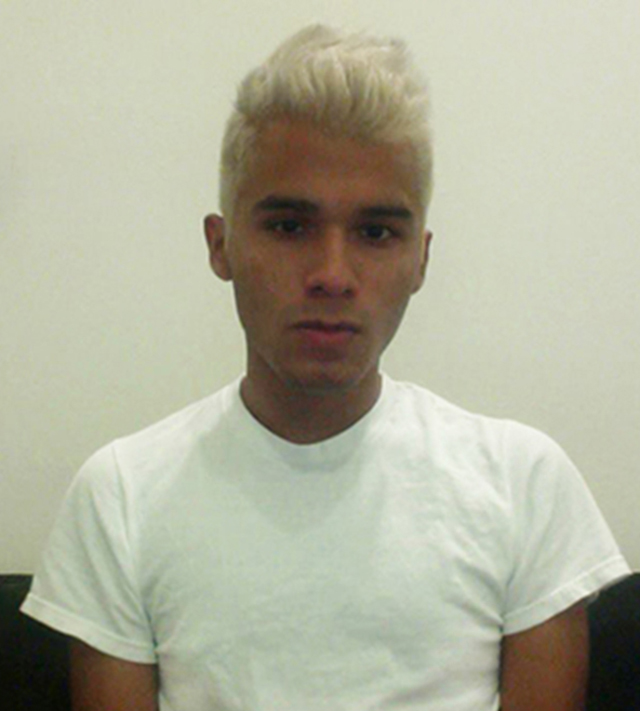
LuisMejico_HeadshotLuis Mejico is an artist based in Chicago. Attending the School of the Art Institute of Chicago on the Walter Massey Full Tuition Merit Scholarship, he works in performance and sculpture. He has performed and exhibited work at the Museum of Contemporary Art of Chicago, Links Hall, Zhou Brothers Art Center, The Oak Park Art League, Water Street Studios, Openlands Lakeshore Preserve, Things are Better in Space Gallery, Student Union Galleries at SAIC, THE WALK Fashion Festival at SAIC, ARTBASH 2014 at SAIC, and Marwen Art Gallery, among others. He is currently seeking his BFA at SAIC (2017).

LuisMejicoInStudio
All images copyright of the artist and used with their permission.  
Posted in Performance | Tagged , , , , | Leave a comment

Simona Frillici – Perugia, Italy

"Reflexes / Nigerian woman" 2014, technique: acrylic paint,xerox, on glass.

“Reflexes / Nigerian woman” 2014, technique: acrylic paint,xerox, on glass.

Briefly describe the work you do.

Through my work I investigate the human being in his spiritual and material reality; what appears and what is; the image and essence; the outside and the inside; the particular (the form) and the universal (spiritual). The artist is a tightrope walker on a rope that divides the world of appearances by the spiritual energy.

Tell us a little about your background and how that influences you as an artist.

The land where I was born (its history) and the environment in which I grew up are my roots. Like a tree I can not do without my roots.

The concept of the “artist studio” has a broad range of meanings, especially in contemporary practice. The idea of the artist toiling away alone in a room may not necessarily reflect what many artists do from day to day anymore. Describe your studio practice and how it differs from (or is the same as) traditional notions of “being in the studio.

In 2011 I made three events focused on the concept: “artist’s studio” and what I mean by art. I made my site http://www.simonafrillici.com to document the three events. The studio is the place of pure experimentation. It is the place where I can draw on my depth and I can pull out what is unique (myself) and at the same time belongs to the universal. When I’m about to do an exhibition or I have to do the project for a new installation (also in a place very far) only in my studio I can shed light inside me and I can imagine the future exhibition or installation. This is a first draft which subsequently must mature interiorly in every moment of everyday, until it reaches its final form.

"Angels", San Matteo Church, Perugia, 2014    mt3x3, technique: xerox,old paintings wrapped in transparent paper

“Angels”, San Matteo Church, Perugia, 2014
mt3x3, technique: xerox,old paintings wrapped in transparent paper

What unique roles do you see yourself as the artist playing that you may not have envisioned yourself in when you first started making art?

I do not think that the artist plays a role. The artist is. The changes are an evolution of being.

When do you find is the best time of day to make art? Do you have time set aside every day, every week or do you just work whenever you can?

The best time to work in the studio is in the morning. I force myself to go in the studio every day, every morning. I think it is necessary the daily act that becomes ritual.

"Reflexes", 2014, cm155x76,5,technique: acrylic paint,xerox,plexiglass,bubble wrap,cardboard

“Reflexes”, 2014, cm155x76,5,technique: acrylic paint,xerox,plexiglass,bubble wrap,cardboard

How has your work changed in the last five years? How is it the same?

The fundamental change is that I am much more aware of what I do in my work. The artist follows a path; there are those who see clearly from the beginning; there are those who need more time. External changes are: the use of new media, for example, the video; the growing interest in the virtual world and social network.

Are there people such as family, friends, writers, philosophers or even pop icons that have had an impact on the work you do?

The first time I went to visit the museum of Alberto Burri in Città Di Castello (Italy) I was struck.

If you had an occupation outside of being an artist, what would that be and why?

An artist can hardly have another occupation (although it is not impossible) because to follow his own inner path requires a continuous concentration on themselves.

About

headshotSIMONA FRILLICI (1966, Italy). After High School she graduated in painting at The Academy of Fine Arts in Perugia. In 1988 she was chosen to represent the Chair of Painting at the Art Expo in Bari, Italy.

my favourite place

www.simonafrillici.com

All images copyright of the artist and used with their permission.  
Posted in Painting | Tagged , , , | Leave a comment

Stephanie Clark – Minneapolis, Minnesota

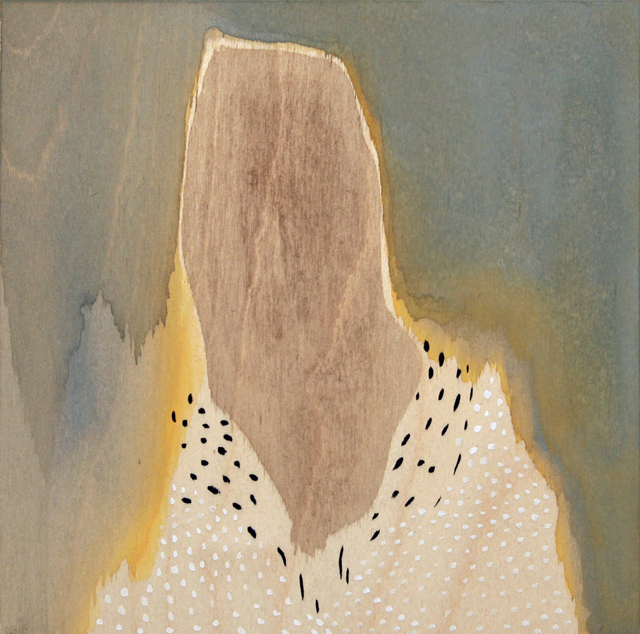
Accipitrinae, 2014, Gouache on wood panel, 8” x 8”

Accipitrinae, 2014, Gouache on wood panel, 8” x 8”

Briefly describe the work you do.

 
My most recent work concerns my physicality in locale and environment. While residing in different communities over time, my work has become oracular in nature: each painting revealing itself through my time spent within a particular landscape or place. The resulting body of work explores abstraction, nature, ritual and migration. Rejecting the idea of the artist as despot, conqueror, or passive observer, I exist within the landscape, physically experiencing a location in a particular time and space.
 
Tell us a little about your background and how that influences you as an artist.
 
I was born in the Southwestern US in 1988, and have lived nomadically for the majority of my life. I currently reside and work in Minneapolis, MN. In 2011, I earned a Post-Baccalaureate from the School of the Museum of Fine Arts in Boston, MA, where I con-currently attended classes at Tufts University in Medford, MA. I received a BFA with cum laude honors from the University of North Dakota in Grand Forks, ND in 2010.
 
Throughout the winter and early spring of 2015, I will be residing and working in Rekyavík, Laugarvatn, and Hrísey, Iceland.I have always loved being outdoors and find that that is where I am most comfortable. I like to roam. Having lived and worked in so many different places has affected my practice to the end that it has become an immensely pivotal facet of the discourse surrounding my current bodies of work.
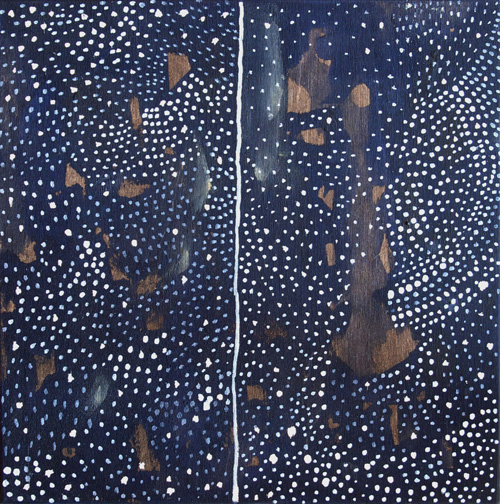
Binary, 2014, Gouache on wood panel, 8” x 8”

Binary, 2014, Gouache on wood panel, 8” x 8”

The concept of the “artist studio” has a broad range of meanings, especially in contemporary practice. The idea of the artist toiling away alone in a room may not necessarily reflect what many artists do from day to day anymore. Describe your studio practice and how it differs from (or is the same as) traditional notions of “being in the studio.
 
My studio practice right now involves a lot of physical migration and travel. I have been attending and working at artist residencies for the past two and a half years. Additionally, my most recent bodies of work are representative of this nomadic way of living.
 
What unique roles do you see yourself as the artist playing that you may not have envisioned yourself in when you first started making art?
 
Many artists I know are amazing multi-taskers, evolve quickly, and are constantly asking questions. I suppose when I first started making work, I already knew this but was not fully aware of how necessary these characteristics are to maintaining a fluid practice. I have always had these characteristics ingrained within me.
 
When do you find is the best time of day to make art? Do you have time set aside every day, every week or do you just work whenever you can?
 
When in the studio, early mornings are my best time to make work. I get up at about 5:00am and start working in the studio by 6:00am or 7:00am. I work until afternoon, take a break, and then work until 5:00pm. I then spend the evenings working on administrative tasks or reading. My dog is my alarm clock and lets me know when it is time to take a break. She is very insistent, but kindly so.
 
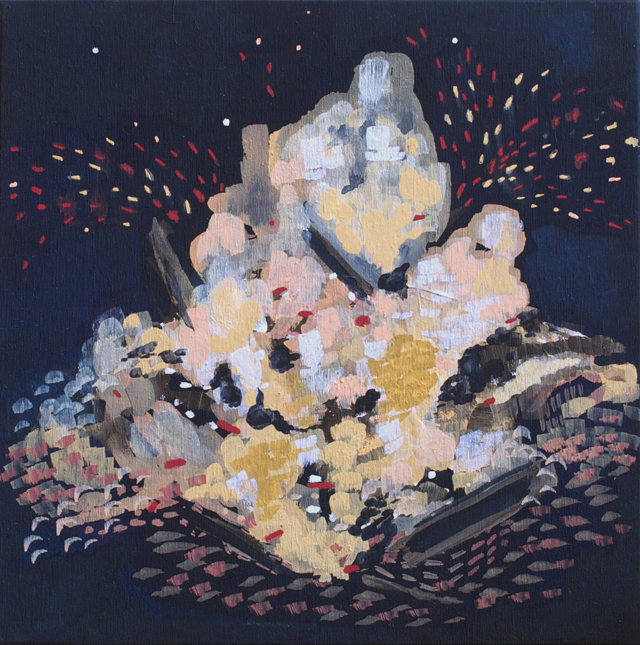
Could you paint that campfire? ... No, it is too beautiful., 2014, Gouache on wood panel, 8” x 8”

Could you paint that campfire? … No, it is too beautiful., 2014, Gouache on wood panel, 8” x 8”

How has your work changed in the last five years? How is it the same?

 
In the past five years, my work has changed drastically in how I represent content and palette. How I consider the narrative structure of my work has evolved immensely. This said, my work has always concerned place in some manner, and I have always been interested in painterly concerns and materiality.
 
Are there people such as family, friends, writers, philosophers or even pop icons that have had an impact on the work you do?
 
Gaston Bachelard, Joseph Beuys, Pieter Bruegel the Elder, Oskar Fischinger, Helen Frankenthaler, Caspar David Friedrich, Glenn Gould, Richard Feynman, Tine Lundsfryd, Agnes Martin, John Muir, Kelly Reichardt, W.G. Sebald, Alain Resnais, Hans Richter, Mark Rothko, Rumi, Sjón, Patti Smith, Rebecca Solnit, Rose Valland, Vladislav Vančura, Margaret Wertheim, and Jennifer West.
 
If you had an occupation outside of being an artist, what would that be and why?
 
I would be an explorer, farmer, physicist, Pomologist (Orchardist), Ornithologist, Special Collections or Children’s Librarian, mystic, or beekeeper. These professions concern my interests and regard my character. When the time comes, I plan on being a few of these, in tandem with being an artist. Some of these I will never become, but will continue to greatly admire.
 
About
 
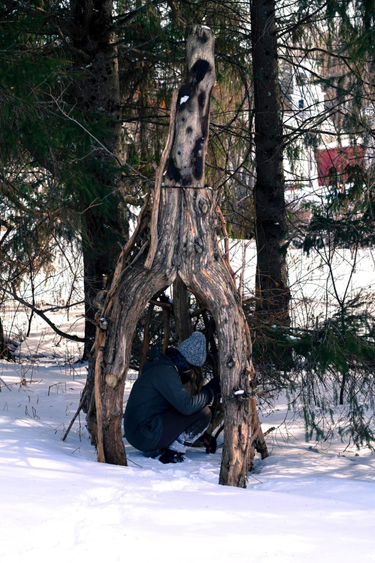
Photo credit: Kyle Dubois, 2014

Photo credit: Kyle Dubois, 2014

Born in the Southwestern United States, Stephanie Clark has lived nomadically for the majority of her life. She currently resides and works in Minneapolis, MN. Clark earned a Post-Baccalaureate from the School of the Museum of Fine Arts in Boston, Massachusetts (2011), and a BFA with cum laude honors from The University of North Dakota in Grand Forks, North Dakota (2010).

She has been invited to and attended several residency programs including Norðanbál Gamli Skóli, Hrísey, Iceland (forthcoming 2015); Gullkistan, Laugarvatn, Iceland (forthcoming 2015); Artscape Gibraltar Point Centre for the Arts, Toronto Island, Toronto, ON, Canada (2014); Vermont Studio Center Residency, Johnson, Vermont (2014); Grin City Collective, Grinnell, Iowa (2013); Contemporary Artists Center at Woodside Residency, Troy, New York (2013); and The Homestead, Willow, Alaska (2012).In early 2015, her work will be featured on the front cover and back cover of the Chicago Review, Issue 59:1.
 
SCLARK_365_ STUDIO 001
 
 
All images copyright of the artist and used with their permission.  
 

Posted in Uncategorized | Tagged , , , , | Leave a comment

Erika Boudreau-Barbee – New York, New York

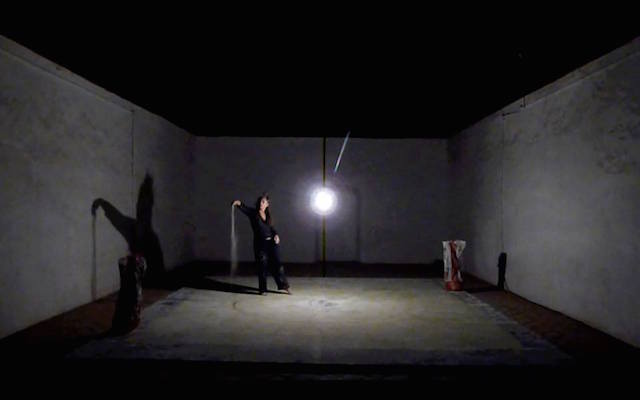
“I Bit The Dust”   Performance. Materials: mineral dust, dye, center hanging lightbulb, stage. 2014

“I Bit The Dust”
Performance. Materials: mineral dust, dye, center hanging lightbulb, stage. 2014

Briefly describe the work you do.

My art is usually derived from thought and the hopscotch mapping of my mind bursting with free exploration. What my choreographic work attempts to bring forward is the visually appealing and the visually repulsive showing them to be equally captivating. My dance is sourced from my gut while my choreography is tasked. My art is an experiment of not only human reaction but human interaction. Often found in my work is discomfort coming from a natural place composed with irony and contradiction. I explore humanity’s energy force with its relation to the world and call on societal expansion. Lately, I have been expanding from dance and choreography into social and political based conceptual performances.

Tell us a little about your background and how that influences you as an artist.

I grew up dancing with my older sister in Tigard, Oregon and began teaching and choreographing by the time I reached high school. I thank my peers from NYU Tisch School of the Arts for challenging me not only as a dancer but expanding my mind as an artist. Although my mode of presentation is in performance, I use a variety of mediums to create the final product including painting and writing poetry. I use text to create most of my phrase work although it may be completely unrelated to the concept. The Bhagavad Gita is a personal favorite. I am influenced heavily by eastern energy work and healing techniques. I write in stream of consciousness form which I then will translate into movement. I am inspired by past experiences, past lives, time, space, other dimensions, creatures, the universe in chaos and the universe in order, magnetic energy, elements, and circles.

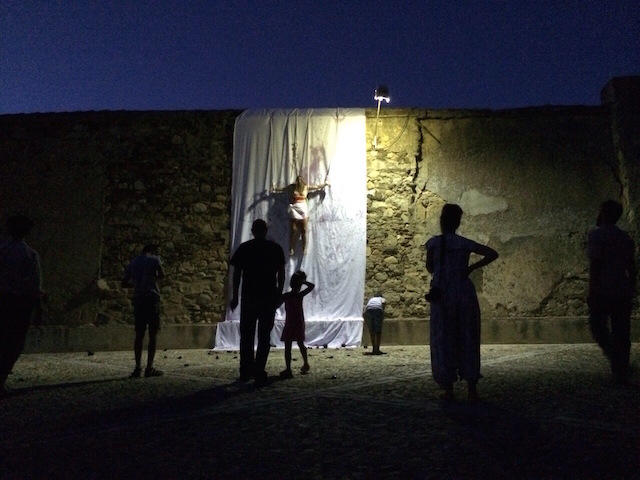
.   “From The Top” Performance. Materials: black tempra paint, white fabric, red wine, black balloons, rope, ladder. Rigging materials: sand, stone, barrels, nails, harness, iron rods, rope. 2014

. “From The Top”
Performance. Materials: black tempra paint, white fabric, red wine, black balloons, rope, ladder. Rigging materials: sand, stone, barrels, nails, harness, iron rods, rope. 2014

The concept of the “artist studio” has a broad range of meanings, especially in contemporary practice. The idea of the artist toiling away alone in a room may not necessarily reflect what many artists do from day to day anymore. Describe your studio practice and how it differs from (or is the same as) traditional notions of “being in the studio.

My studio changes. Most of my thinking is done on the NYC subway. I am curious about human nature so it is a prime place for observations. Depending on the time of day, it brings my mind chaos or clarity, both are useful. My movement is best accomplished in an empty room. I feel I am constantly creating and it doesn’t matter the space I am in as long as I write it in my journal. What matters is my state of mind. I change the energy of the space to be conducive to creating.

What unique roles do you see yourself as the artist playing that you may not have envisioned yourself in when you first started making art?

My roles continue to change. But I would prefer not to do the business end of this and the self promoting, its not where my head is. I am too floaty to do that job well.

When do you find is the best time of day to make art? Do you have time set aside every day, every week or do you just work whenever you can?

The best time is when it hits you. If it smacks me in the face or crawls with Kundalini up my spine I know I have to stop what I am doing and let it take over. It is the most honest work.

.    “Fours & 12’s” Performance. Movement material was crafted in collaboration with the paintings of Andrzej Rafalowicz. 2014

. “Fours & 12’s”
Performance. Movement material was crafted in collaboration with the paintings of Andrzej Rafalowicz. 2014

How has your work changed in the last five years? How is it the same?

Well to be honest two years ago I didn’t know I would be calling myself an artist, I knew myself only as a dancer. I have moved from not just choreographing modern contemporary works but into conceptual performance art. I toy with audience interaction and enjoy questioning social norms, encouraging the taboo.

Are there people such as family, friends, writers, philosophers or even pop icons that have had an impact on the work you do?

Sasha Waltz, Pina Bausch, Carolee Scheemann, Ralph Lemon, Patti Smith. But I am inspired by the beauty of the people and earth I am surrounded by everyday. The artists mentioned impact how I make art, but the people and earth open my spirit and tell me what I need to make.

If you had an occupation outside of being an artist, what would that be and why?

Reiki practitioner, naturopathic doctor, gardener, pilot, wine taster, travel blog writer, sustainable farmer, herbalist, motivational coach, physical therapist, interior designer, artifact, kindergarten teacher, tree house builder, travel agent, peace corps member, baker, yoga instructor, poet, flower arranger, dog walker, zoologist, explorer, archeologist, interpreter, philanthropist. I am curious about too many things to pick just one.

About

1ERIKA BOUDREAU-BARBEE is an artist whose dance training started in Oregon and has led her throughout the US and to Italy, Israel, Germany, and Spain. She graduated with a BFA in dance from Tisch School of the Arts at New York University. When in New York City she dances for Pilar Castro-Kiltz as a member of Ensemble Dance. In the past year she has premiered two performance art works, a film, and paintings at a gallery in Berlin, Germany as an artist in residence and spent three months flirting with performance in Belalcazar, Spain at La Fragua Artist Residency. In Spain, she collaborated with visual artists, performed at various shows, and premiered works at a split exhibition event. She is expanding from dance and choreography into social and political based conceptual performances. Boudreau-Barbee hopes to integrate art with healing and take a ride on creativity’s power.

place I hang out most, the floor

place I hang out most, the floor

erikabb.com

All images copyright of the artist and used with their permission.  


Posted in Performance | Tagged , , , , | Leave a comment

Sara Willadsen – Sheboygan Falls, Wisconsin

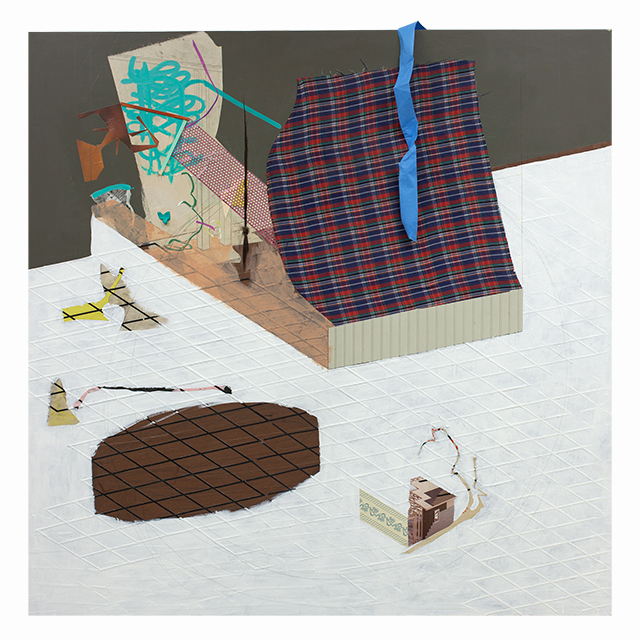
“Woolly Eyes,” Laser-cut paper, acrylic paint, graphite, gel pen, ink, found images on paper, 22¾" x 22¾", 2014

“Woolly Eyes,” Laser-cut paper, acrylic paint, graphite, gel pen, ink, found images on paper, 22¾” x 22¾”, 2014

Briefly describe the work you do.

I make pictures that satisfy my curiosity in aesthetics and found materials. Combining these articles with reappropriations of my own work allows me to employ past patterns and marks as prompts for new structures and environments. The aggressive process used to construct these secretive spaces is kept in balance with the consciousness to know when to stop.

Tell us a little about your background and how that influences you as an artist.

I was born and raised in Sheboygan Falls, Wisconsin. Like most artists, I started creating things at a very young age. I was constantly restless and wanting to make something, as I have always been a highly visual person and needed to be occupied with some kind of project. Living in a small quiet town helped to foster my curiosity in art and led me to pursue many of my artistic interests at a young age including painting, photography, and various crafts.

“Front,” Laser-cut paper, graphite, latex, hum

“Front,” Laser-cut paper, graphite, latex, hum

The concept of the “artist studio” has a broad range of meanings, especially in contemporary practice. The idea of the artist toiling away alone in a room may not necessarily reflect what many artists do from day to day anymore. Describe your studio practice and how it differs from (or is the same as) traditional notions of “being in the studio.”

My studio practice is primarily a solitary one.

Since I like to begin a piece with some kind of wash or mark(s) already on the surface, I often reappropriate many of my own paintings and drawings as well as found pieces, often ones with unintentional and chance marks. These then become prompts for new spaces.  

I rely heavily on pareidolia to pull ideas from my subconscious and bring order to the chaotic marks left behind. This psychological phenomenon tricks the brain into seeing whole objects from fractured information. When I see abstract images or designs my mind fills in the gaps so that I see structures and planes. My mind searches out spaces to explore in everything I observe, so I start with a jumbled mess of unrecognizable shapes and pull out a space I see in it with pencil marks and continued patterns. These prompts usually result in structures and spaces that resemble places I have recently encountered or experiences from my past that have visually stuck with me.

I often move from one piece to the next so I am always working on multiple pieces.

What unique roles do you see yourself as the artist playing that you may not have envisioned yourself in when you first started making art?

When I started going to school for art I never really thought about the external effect I would have on others, but I have come to find that through teaching and engaging with younger artists, I have become somewhat of a role model.  I think my current studio practice reassures and demonstrates to other aspiring artists that they can successfully pursue their own practice just as I observe with well-known artists that have taught me and/or influenced my work.

When do you find is the best time of day to make art? Do you have time set aside every day, every week or do you just work whenever you can? 

I feel that my brain functions at its best at night, but I work on pieces whenever I have the opportunity. Since I work as a freelance graphic designer during the week I have to devote nights and weekends to my studio practice.

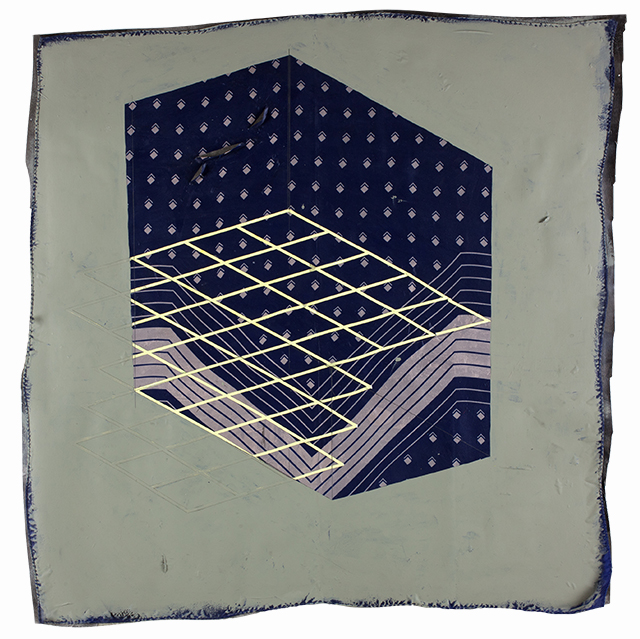
“Middle Ground,” Laser-cut paper, fabric, graphite, charcoal, and acrylic on paper, 26” x 26”, 2014

“Middle Ground,” Laser-cut paper, fabric, graphite, charcoal, and acrylic on paper, 26” x 26”, 2014

How has your work changed in the last five years? How is it the same?

When I began painting and drawing five years ago in undergrad, I created a lot of desolate night scenes from around Sheboygan County. My interest in landscapes is still present in my current work as I take inspiration from some the same Sheboygan surroundings, but in a less straightforward and representational way. I now combine these ideas with found materials and other ephemera I collect to create an image of a new environment.

Are there people such as family, friends, writers, philosophers or even pop icons that have had an impact on the work you do?

One of my former professors, Geoffrey Todd Smith, has made a great impact on my studio practice. During a studio visit with him in grad school, he suggested that I give myself rules to work by so I don’t always resort to my default instincts, which to me can get stale and too repetitive. I am very open and receptive to experimentation in my work, so this method continuously keeps me engaged in what I am making and often leads me in exciting directions.

I draw much of my inspiration from artists such as Mark Whalen and Edward Hopper as well as my surroundings and places I see every day.

If you had an occupation outside of being an artist, what would that be and why?

I think I would have some type of non-profit job that works with animals. I have always been concerned with the well-being of all animals and could never commit to a career that doesn’t align with my morals, so this would probably be one of the only other jobs besides being an artist that would make me feel like I’m making a positive contribution to the world.

About

Headshot_WilladsenSara Willadsen was born in Sheboygan, WI in 1987. She received her Master of Fine Arts Degree in Painting from Northern Illinois University in 2014 and her Bachelor of Arts Degree from Lakeland College in 2010. Working predominantly with paint and various found materials, Willadsen’s work explores ideas of abstract spaces and structures inspired by her childhood spent in Sheboygan County. She has had work shown at the Museum of Wisconsin Art and exhibits frequently in group exhibitions. Willadsen lives and works as a visual artist and freelance designer in Sheboygan.
Studies

Studies

www.sarawilladsen.com

All images copyright of the artist and used with their permission.  


Posted in Collage, Painting | Tagged , , , , | Leave a comment

Uriel Ziv – Kfar Saba Israel

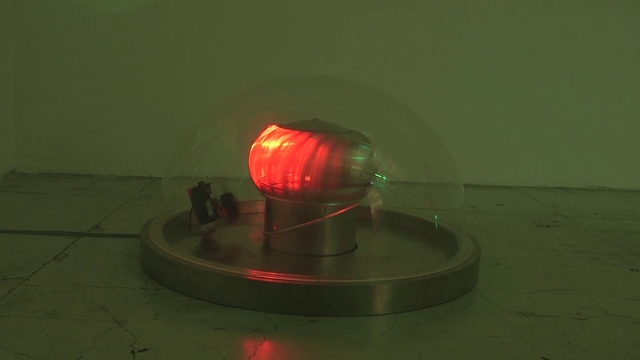
con with Stomach Problems (2014) Sculpture combines light, and movement. Materials: Plexiglas, stainless steel, aluminum, fan, LED light. Diameter: 110 cm. Height : 50 cm.

con with Stomach Problems (2014)
Sculpture combines light, and movement.
Materials: Plexiglas, stainless steel, aluminum, fan, LED light.
Diameter: 110 cm.
Height : 50 cm.

Briefly describe the work you do.

I base my artwork on the need to integrate motion, or something that hints at motion (e.g. video, light, sound, motors, etc.), in passive objects. Also, by including disruption, repetition and the use of modern and digital means of expression, I try to connect the physical movement within or outside of the object with the restlessness of “today’s eye”, one that moves sporadically between screens, signs, storefronts, and so on.

Tell us a little about your background and how that influences you as an artist.

I grew up in Israel, in a Haredi Jewish family. My family’s daily lives and ideological disposition revolved around strict religious laws (including a great deal of praying, Torah study, prohibitions and intimidations). The individual had no place in this way of life, you couldn’t voice any doubts, and there was just one truth – the belief in God’s laws.

Naturally, this environment didn’t tolerate any notions of culture, so philosophy and art were out of bounds, and TV, movies and computers were forbidden – these were seen as impure. Fortunately, I was a curious child and wanted to learn about the “outside world”, so I built a secret chest, where I stored a TV with a connected VCR, and when my parents were away, I would take the TV out and watch movies (I watched dozens of movies like this…).

I think that this was a turning point, when I developed a “hunger” for creating reflexive objects and images that solicit questions from people on their essence, and don’t have any absolute truths.

The concept of the “artist studio” has a broad range of meanings, especially in contemporary practice. The idea of the artist toiling away alone in a room may not necessarily reflect what many artists do from day to day anymore. Describe your studio practice and how it differs from (or is the same as) tradition notions of “being in the studio”.

When I work on a physical object that contains or is placed near video, I divide my work into two spaces: I have a space within my house, which I call “soft space”, and I have space outside my house, which I call “hard space”.

Physically, conceptually and ironically, “hard space” is truly hard, since it is a public shelter – a place to run away to in times of war (a situation all too common in our area, which leads to the unavoidable comparison between destruction and creation, between defense and defenselessness, and between being safe and being as insecure as the others). I use this space for the physical, or “dirty” work that my object requires. Conversely, the “soft space” is a room in my house with a computer for whatever digital or technological work my object requires.

As for how I work, the object sometimes dictates that I need to work in video, and sometimes, the opposite is true. The “idea” is above and in front of them.

What unique roles do you see yourself as the artist playing that you may not have envisioned yourself in when you first started making art?

When I started making art, I was skeptical and very doubtful of the digital world and its connection to art. Today, I understand its power (for good and bad…) and how it can be used to build the future. I also appreciate that my mission as an artist is to play an active, positive, critical, and productive role, since the media shapes the future of the freedom and liberty of mankind.

When do you find is the best time of day to make art? Do you have time set aside every day, every week or do you just work whenever you can?

I work whenever I can (I try to work every day). I prefer to do my computer work at night, because nighttime is accompanied by a certain “cinematic mysteriousness” that lends itself well to working with video. When I physically work on an object, I prefer to work in the daytime, since this is when my awareness and physical ability are at the highest level.

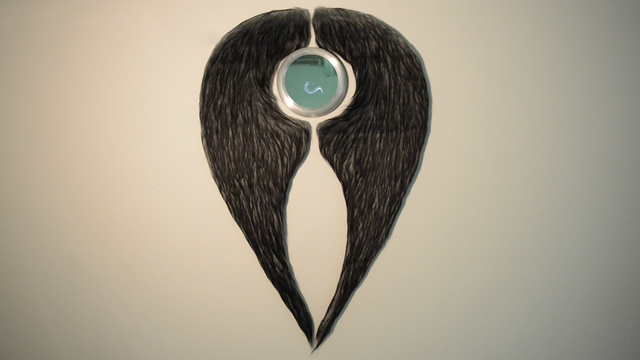
Vesicle (2013) Sculpture combines: Aluminum, tablet screen, video, fake fur , wood, mirror. Dimensions: 116 X 74 cm. Video loop: 3:11 min' (no sound).

Vesicle (2013)
Sculpture combines: Aluminum, tablet screen, video, fake fur , wood, mirror.
Dimensions: 116 X 74 cm.
Video loop: 3:11 min’ (no sound).

How has your work changed in the last five years? How is it the same?

At first, I was more interested in creating video projects that investigated the language of video, not so much in the context of cinema as in the context of sculpture. I would also take photographs of real characters, and not computer renditions, in outdoor spaces. Over time, I realized that I didn’t need to take photographs outside, and that whatever I needed was nearby, so I started to combine studio photography with the use of ready-made digitally-processed video materials. I also used to project video onto walls and objects, while today, I’m more interested in combining an object’s static physical nature with the dynamic nature of video. I see video as something that is more abstract, something that can be manipulated.

Are there people such as family, friends, writers, philosophers or even pop icons that have had an impact on the work you do?

There are many, I will not list them at the moment. But I can recommend this book, from 1940, a book called, “The Invention of Morel” , by the writer ‘Adolfo Bioy Casares’. This is a prophetic book which is very relevant to the current period and even more relevant for years to come.

If you had an occupation outside of being an artist, what would that be and why?

Marine biologist.

I grew up near the sea, which, for me, became a kind of shelter, a place for introspection and finding freedom. Like space, I find the depths of the sea fascinating and mysterious. We don’t know too much about the organisms and microorganisms in the water.

Creatures that were discovered and studied until today are artistic masterpieces in their own rite. They glow and illuminate, and they have unusual shapes and textures. They also contain the conceptual and spatial elements of good art. I’m referring to interesting combinations and contrasts that create uncertainty and leave room for questions. For me, the depths of the sea and the organisms that live there are a universe that exists in parallel with the history of art: Complex, abstract, minimalist and expressionist creatures live together in one place. Some move, some do not, some create light, and some have no light.

As an artist and as an individual, I see the sea and its depths as an inexhaustible source of inspiration.

About

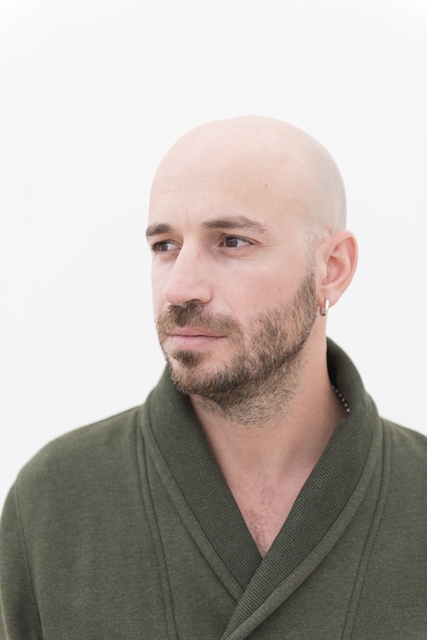
image001Uriel Ziv (b.1981) is a multi-media artist, currently living and working in Kfar Saba Israel.

In 2013 he received his BFA Degree in New Media from Bezalel, Academy of Art and Design, Jerusalem, Israel. (He received Award for Graduation Exhibition)

His work was shown in several group exhibitions in 2014 he had a solo exhibition at the Ramat Gan Museum, Israel.

At the moment he is working on several projects including outdoor sculptures, exhibitions, and collaborations with other artists.

www.urielziv.com

All images copyright of the artist and used with their permission.  

Posted in Digital Art, Digital Media, Kinetic Sculpture, Multi Media, New Media, Video Sculpture | Tagged , , , , | Leave a comment

Mena Ganey – Roswell, Georgia

Cowboy_40'' x 44''_2014

Cowboy_40” x 44”_2014

Briefly describe the work you do.

I have questions that need answers. My artwork is me trying to figure out how to physically make some sort of answer.  Right now I’m focused on the peculiar problem of people identifying southwest art with cowboys, cactus, and Native Americans dresses from two hundred years ago.

Tell us a little about your background and how that influences you as an artist.

I think I’ve always seen things different. As a six year old I used to knock on strangers doors and ask to photograph their loving rooms. At eleven I spray painted a silver 16 x 16 square in a scrub Forest because I thought people hiking through would think it was magical. I was fearless with an over-active imagination born into a family that enjoyed combing through dumps, exploring caves; very unusual sites. My dad is a scientist who loved/loves to go to bazaar roadside attractions; alligator farms definitely proved memorable. My mother was and is a fabulous photographer. They both taught me to be curious about the ordinary.

Harmonica, 36" x 48", acrylic and resin, 2014

Harmonica, 36″ x 48″, acrylic and resin, 2014

The concept of the “artist studio” has a broad range of meanings, especially in contemporary practice. The idea of the artist toiling away alone in a room may not necessarily reflect what many artists do from day to day anymore. Describe your studio practice and how it differs from (or is the same as) traditional notions of “being in the studio.”

My studio practice, although I have a physical space, is largely in my head. I carry a note pad wherever I go or I’ll dictate through my phone. I have an office/laboratory/studio/dojo where I paint and perform tests.

What unique roles do you see yourself as the artist playing that you may not have envisioned yourself in when you first started making art?

I never really saw myself getting into instillation or video art. I became very passionate about both my last year of grad school.

When do you find is the best time of day to make art? Do you have time set aside every day, every week or do you just work whenever you can? 

I’m actually a midday person I would start at 10 and go till about eight. Right now I’m creating on Sundays which is frankly not enough time for me but the reality is there are only so many hours in the day, and days in the week.

Saguaro, 16''x20', 2014

Saguaro, 16”x20′, 2014

How has your work changed in the last five years? How is it the same?

My work dramatically changed in the last five years. I feel that it’s much more cohesive and achievable- not so pie-in-the-sky anymore.

Are there people such as family, friends, writers, philosophers or even pop icons that have had an impact on the work you do?

My family. I think my son, Shannon has had the largest impact on my life. He’s a fantastic person. My friends as well. I have some fantastic artist friends.

I don’t want to say there’s one single person that launched something. It’s been a series of moments. I remember standing in front of an Anselm Kiefer and bawling. I love listening to Debussy in Fall. That kind of hopeless romantic shit.

If you had an occupation outside of being an artist, what would that be and why?

If I has another occupation outside of an artist? I’ve been very fortunate in my life that I get to make art everywhere I go and whatever I do.
I work for High Road Ice Cream presently. Last week we made strawberry ice cream and as I evened out the pan the strawberry drug through fresh vanilla anglaise leaving tiny beautiful trails of seeds.

About

IMG_2720Mena Ganey is an American artist, currently living in Atlanta, Georgia. In 2009 she completed her BFA in painting at Arizona State University, and in 2013 completed her MFA at the University of Arizona. She works primarily in the realms of installation, painting, printmaking and video, and has exhibited throughout the United States. Mena’s work explores the systems, archives, and values ascribed through visual culture.

IMG_9690

www.menaganey.com

All images copyright of the artist and used with their permission. 


Posted in Painting, Uncategorized | Tagged , , , , | Leave a comment

Chloe Feldman Emison – Boston, Massachusetts

Hardwick, I, pen and ink and wash, 31 x 27,” 2013.

Hardwick, I, pen and ink and wash, 31 x 27,” 2013.

Briefly describe the work you do.

Other than that, the work varies greatly.  Sometimes it is representational and sometimes not; sometimes very meticulous and sometimes not; sometimes in black and white and sometimes in color.  Sometimes the body is monstrous and sometimes not.

Tell us a little about your background and how that influences you as an artist.

I was homeschooled and visited many museums from an early age.  My parents encouraged me to draw to keep me occupied in museums, and in general whenever I had to wait for them before I was old enough to read.  I was a ballet student for many years; that has been important both to my drawings and to my ambition to design costume and sets.

The concept of the “artist studio” has a broad range of meanings, especially in contemporary practice. The idea of the artist toiling away alone in a room may not necessarily reflect what many artists do from day to day anymore. Describe your studio practice and how it differs from (or is the same as) traditional notions of “being in the studio.”

I live and work in rather cramped quarters at present, so being in my studio means being at my drawing desk.

After the Performance, XI, pen and inks, including metallic, and water- color, 35 x 28”, 2014.

After the Performance, XI, pen and inks, including metallic, and water-
color, 35 x 28”, 2014.

What unique roles do you see yourself as the artist playing that you may not have envisioned yourself in when you first started making art?

I had the opportunity to draw from cadavers, and the beauty of the interior organs has been an important revelation for me. I have done some wallpaper and fabric designs.

When do you find is the best time of day to make art? Do you have time set aside every day, every week or do you just work whenever you can? 

I work when I am not at my day (my very early morning until mid-afternoon) job.

Icon,VII, dip pen and ink and gold leaf, 30 x 25”, 2014.

Icon,VII, dip pen and ink and gold leaf, 30 x 25”, 2014.

How has your work changed in the last five years? How is it the same?

I am willing to work on a large scale, I now work non-representationally as well as representationally, I am willing to make things that won’t be liked.  The theme of performers seen off-stage goes back several years, and in general my style is recognizably the same.  I tend to work on imagery in series, and the series are developed over a number of years.

Are there people such as family, friends, writers, philosophers or even pop icons that have had an impact on the work you do?

Nabokov, Grand Budapest Hotel, Jacques Tati

If you had an occupation outside of being an artist, what would that be and why?

Pastry cook, because I like small-scale design.

About

cfe-headshotChloe Feldman Emison has shown her drawings widely in the United States and Europe, while also making animations (stop-motion) and illustrations. She studied fine art at Williams College and at the Ruskin School of Drawing and Fine Art, Oxford University, and animation at Forkbeard Fantasy in Devon. She was a visiting artist at Wasps Studios in Glasgow, and completed residencies at the Contemporary Artists Center in Woodside, N.Y., at The Old School Art House in Iceland, at the Vermont Studio Center, and at Can Serrat, near Barcelona. In 2013 she taught animation at the Eagle Hill School in Hardwick, Massachusetts. She has collaborated with the Elements Contemporary Ballet company in Chicago on the design of a new ballet about Atlantis slated for 2016. She was named the Mixed Media Artist of the Year for 2009 at the Cambridge Art Association, won a Spotlight on the Arts Award for Outstanding Emerging Artist in 2010, and a Board of Trustees Award from the Silvermine Art Center in New Canaan, Connecticut (2014).

The Studio

The Studio

chloefeldmanemison.com

All images copyright of the artist and used with their permission. 

Posted in Drawing | Tagged , , , , | Leave a comment

Rose Emanuela Briccetti – Santa Barbara, California

Collage and polymer etching on paper 15"x11"

Collage and polymer etching on paper
15″x11″

Briefly describe the work you do.

The existential plight of the modern worker, whether described by Marx or satirized in Dilbert, permeates the Western collective consciousness. My work aims to explore the alienation of the paper pusher, revealing the absurdity of this struggle through humor and nostalgia.

Tell us a little about your background and how that influences you as an artist.

As a little kid, my dad ran a small technology company. I remember going into his office and seeing all these big machines and colorful wires everywhere, and that imagery has always been in my head. My family moved around a bit as a result of corporate takeovers and layoffs and restructuring, so the struggle of the modern worker always loomed large in my life. I have a BFA in painting from Washington University in St. Louis, and since graduating have worked in an office during the day and made art in the off hours. My current day job at a
natural history museum and aquarium has influenced my work a lot, and my recent series of prints are all based on actual events in my day job. Whether it’s a giant squid case that’s leaking toxic chemicals or a plumbing crisis in the jellyfish exhibit, there’s always some kind of crazy crisis that calls me away from checking emails and going to meetings like a normal office worker. The absurdity of these events has become a metaphor to me for the greater absurdity of the whole nine-to-five world.

Working at a Snail's Pace Polymer etching on paper 15"x11"

Working at a Snail’s Pace
Polymer etching on paper
15″x11″

The concept of the “artist studio” has a broad range of meanings, especially in contemporary practice. The idea of the artist toiling away alone in a room may not necessarily reflect what many artists do from day to day anymore. Describe your studio practice and how it differs from (or is the same as) traditional notions of “being in the studio.”

My studio practice is fairly non-traditional in that I don’t have one set space I use to make art. I work on my laptop at home or the coffee shop sketching and composing. I paint in my living room. I print at the local community college or at a friend’s studio. I have access to a wood shop and work space through my day job, so I end up working all over the place.

What unique roles do you see yourself as the artist playing that you may not have envisioned yourself in when you first started making art?

Writing about my art is a continuous point of internal contention for me. A picture is worth a thousand words and trying to translate everything I say visually into text (like answering this question!) is never easy. But writing is crucial to my studio practice and helps me crystalize ideas and clarify my vision. I know the process is valuable even when I’ve been staring at my computer for an hour, stymied by writers block.

When do you find is the best time of day to make art? Do you have time set aside every day, every week or do you just work whenever you can? 

My art making schedule varies a lot! I got involved with a printmaking group at the local community college where they have a press and a set schedule, but I also do a lot of work whenever I can. I do a lot of composing and sketching on the computer which is nice because it’s easy to work anytime.

detail from Boss's Lap Oil on canvas 20"x16"

detail from Boss’s Lap
Oil on canvas
20″x16″

How has your work changed in the last five years? How is it the same?

I’ve always been interested in humor and nostalgia and making things in a very touched, handmade and physical way. It’s been just over 5 years since I started really exploring imagery of retro office workers. I started with this kind of imagery as a general trope, but recently my work has become much more autobiographical and inspired by specific events occurring at my day job. I’ve also begun exploring printmaking in the last 2 years which has helped me think more about my making process.

Are there people such as family, friends, writers, philosophers or even pop icons that have had an impact on the work you do?

I’m influenced by absurdist office humor like Dilbert, The Office, and Office Space. Mad Men is on the pop-culture-influences list as well. I try to read theory as much as I can; Marx, Weber, Durkheim, de Bouvier, Benjamin and McLuhan have definitely helped shape my world view and artistic vision. Becuase I’m making semi-autobiographical art about work and the workplace, I’d say my coworkers, bosses, vendors, and professional colleagues are all influences.

If you had an occupation outside of being an artist, what would that be and why?

I currently do exhibit design for a natural history museum and aquarium during the day, and that’s a pretty cool gig. I got to help install a T-Rex skeleton a few years back, I’ve sat in on dolphin necropsies—there’s always something weird and gross and interesting going on, and that keeps things exciting!

About

RBriccettiHeadshotRose Emanuela Briccetti (b. 1985)  lives and works in Santa Barbara, CA. She holds a BFA in Painting from Washington University in St. Louis where she received the prestigious Wacks Scholarship in painting. She has exhibited at SOMArts (San Francisco, CA), The Dickinson Museum Center (Dickinson, ND), Gallery M Squared (Houston, TX), and the Des Lee Gallery (St. Louis, MO).

Work Shoes, 2008 Oil on canvas 22"x28"

Work Shoes, 2008
Oil on canvas
22″x28″

www.rosebriccetti.com

All images copyright of the artist and used with their permission. 

Posted in Painting, Printmaking | Tagged , , , , | Leave a comment