Jodie Mim Goodnough – Providence, Rhode Island

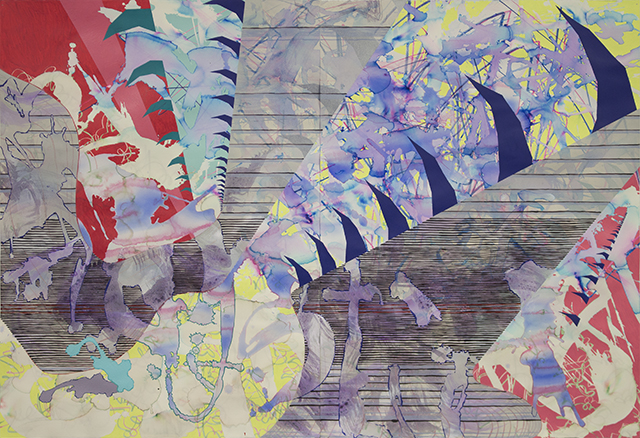
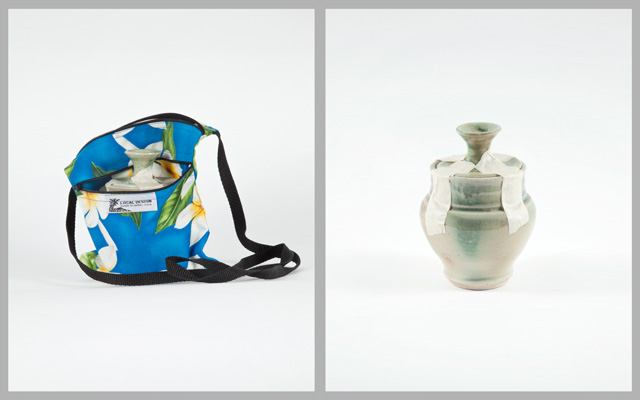
 The Way She Gave it to Me, Diptych, Archival Inkjet Prints, 16x20" each, 2014

The Way She Gave it to Me, Diptych, Archival Inkjet Prints, 16×20″ each, 2014

Briefly describe the work you do.

I make work around the theme of coping strategies, drawing from psychology, cultural theories and personal experience to look at the way we deal with difficult emotions such as grief, anxiety and loss. I’m also interested in issues of power in the mental health industry. My primary medium is photography, but I tend to think of myself a contemporary artist using images, among other methods, to explore topics that interest me. That said, I absolutely love the camera as a tool, and find the process of photographing, especially with my large format camera, to be both meditative and exciting at the same time.
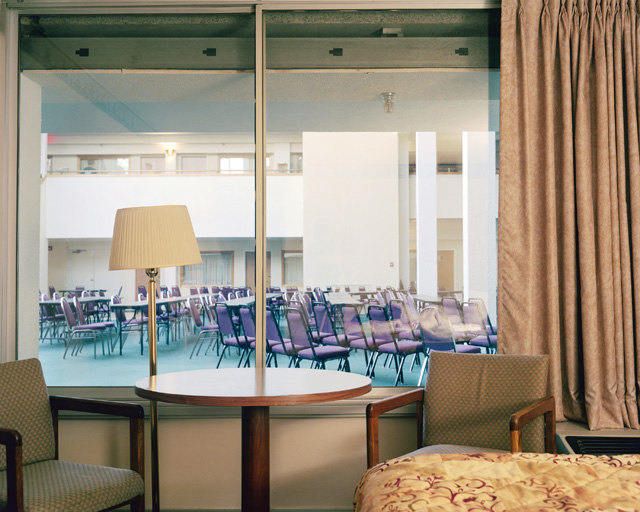
Bryan-Montpelier, OH, 2012, Archival Inkjet Print, 16x20", 2012

Bryan-Montpelier, OH, 2012, Archival Inkjet Print, 16×20″, 2012

Tell us a little about your background and how that influences you as an artist.

Growing up, I had to fend for myself a lot. This resulted in my being a voracious reader, and consumer of media. Today, this shows itself in my love of research. When working on a project I become immersed in the ideas behind it, and try to read everything I can about the subject. Eventually this process leads to me making an actual object, but I enjoy the exploration leading up to it as much as the making itself.

The concept of the “artist studio” has a broad range of meanings, especially in contemporary practice. The idea of the artist toiling away alone in a room may not necessarily reflect what many artists do from day to day anymore. Describe your studio practice and how it differs from (or is the same as) traditional notions of “being in the studio.”

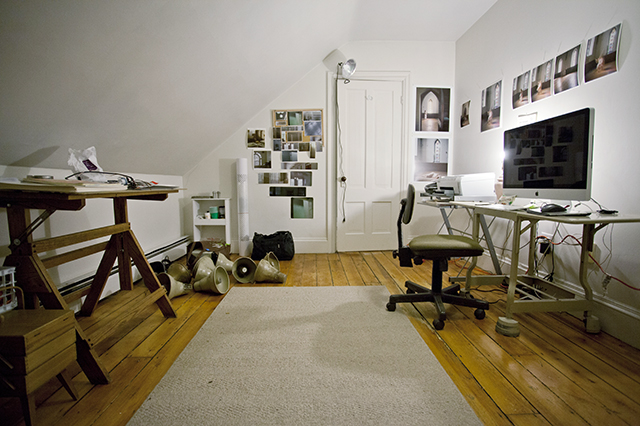
My studio is a second bedroom in my house, so I do in fact spend a good amount of time in there alone, toiling away. I leave to photograph, as most of my work in that realm isn’t studio-based, but now that I print digitally, even when shooting film, I spend a great deal of time in front of my computer. I hope in the long run to have a studio in a more collaborative environment, as I find nothing spurs me on more than conversations with other artists.

What unique roles do you see yourself as the artist playing that you may not have envisioned yourself in when you first started making art?

I never imagined that I would incorporate my own personal narrative in my work. I began photography most interested in producing documentary work. It was only when I actually worked as a documentary photographer that I realized it wasn’t for me.

When do you find is the best time of day to make art? Do you have time set aside every day, every week or do you just work whenever you can? 

I work two jobs in addition to making art, so I just get into the studio whenever I can. I definitely think and function better in the evenings, so typically after leaving my day job I’ll come home, make dinner and head to my studio for a few hours. It’s exhausting, but it’s the only way I can fit it all in right now!
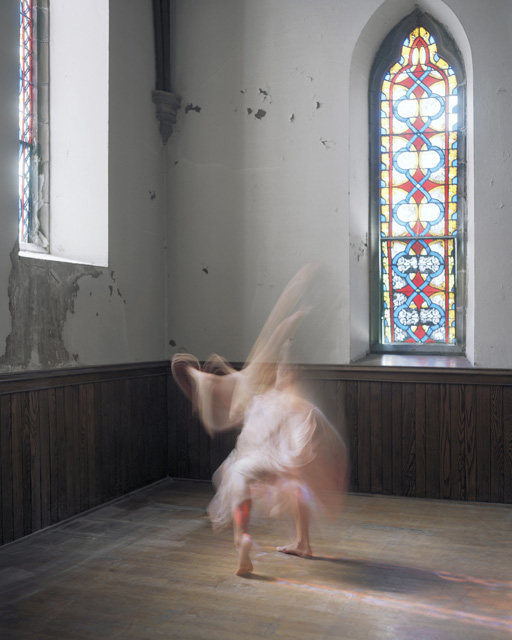
Untitled (from A Curious Dance), Archival Inkjet Print, 40x50", 2014

Untitled (from A Curious Dance), Archival Inkjet Print, 40×50″, 2014

How has your work changed in the last five years? How is it the same?

I hope that my work has matured in the way it communicates to the viewer. Five years ago I was about to begin graduate school. While I was making art at the time, I didn’t have the clarity of thought or the technical skill that I have now. My interests, however, have stayed fairly consistent. Psychology has always fascinated me, and it’s been a part of my work all along. I’ve simply delved deeper, and become more specific in terms of the references I am making.

Are there people such as family, friends, writers, philosophers or even pop icons that have had an impact on the work you do?

Absolutely. My immediate family, especially my mother and father, are the inspiration for a number of projects. As for writing, Foucault’s History of Madness is something I often come back to, as well as the work of researcher Sander Gilman, whose books I have tagged, highlighted and underlined until they are falling apart. 

If you had an occupation outside of being an artist, what would that be and why?

I like to think I would be a researcher of some sort. I am quite content working alone, and solving puzzles.

About
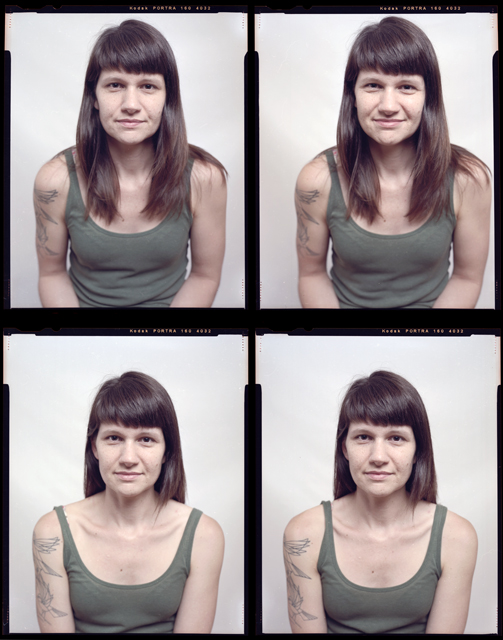
Goodnough_HeadshotJodie Mim Goodnough is a Providence, Rhode Island-based artist who uses photography, video, performance and sculpture to examine the various coping strategies we employ to find comfort in an often uncomfortable world, from religious rituals to pharmaceuticals and everything in between. She attended the photojournalism program at the Salt Institute for Documentary Studies in Portland, Maine and received her MFA from the School of the Museum of Fine Arts, Boston in May 2013. Her work has been shown in galleries nationally including at the Midwest Center for Photography and the William Morris Hunt Library of the Museum of Fine Arts, Boston, and has been published in Lenscratch and Fraction Magazine.
Studio_sm

The Studio

www.jodiemim.com

All images copyright of the artist and used with their permission.  
Posted in Photography | Tagged , , , , | Leave a comment

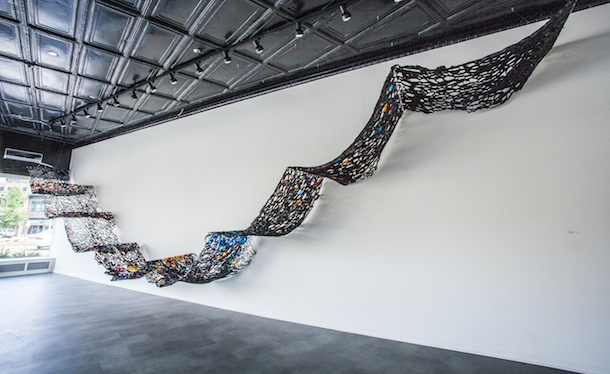
Suzan Shutan – New Haven, Connecticut

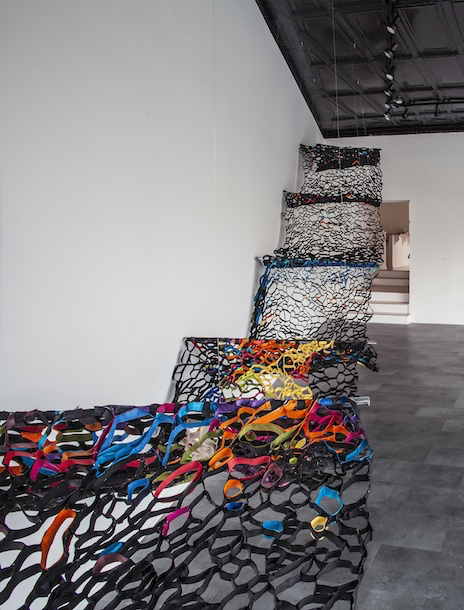
2014, tar paper and handmade paper

2014, tar paper and handmade paper

Briefly describe the work you do.

I create artwork that waivers between 2-3 dimensions. My site specific installations are often patterned with designs found in nature, illustrating inherent movements.  I repurpose recycled and manufactured materials which are culturally imbued with meaning as contemporary artifacts. Much of my work constructs views of “systems” found in the natural world. These systems contemplate daily life into meaningful structures that demonstrate transformative life processes such growth and decay. Ethereal at times, the patterns range from birds in flight to the movement of ants, released spores to the internal physics of blushing and the flow of oil spills. As landscapes, they make visualize a changing environment.

Tell us a little about your background and how that influences you as an artist.

I grew up with parents that valued traditional arts, in a large development of track homes that replaced a rich forested area that served as my playground until eventually it disappeared. Nature was my observation deck.  I collected it, made things with it and navigated through it’s  daily changes. The loss of the forest was my loss as well. It never left me, and later entered as a pivotal basis from which my work departs.

2014, tar paper and hand made paper

2014, tar paper and hand made paper

The concept of the “artist studio” has a broad range of meanings, especially in contemporary practice. The idea of the artist toiling away alone in a room may not necessarily reflect what many artists do from day to day anymore. Describe your studio practice and how it differs from (or is the same as) traditional notions of “being in the studio”.

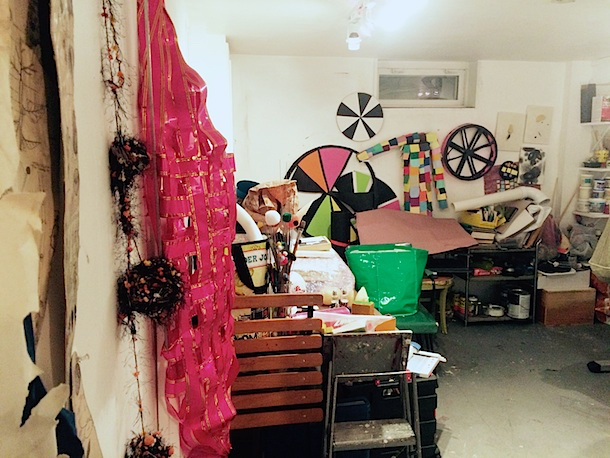
My Studio is generally the space in which my work gets installed. That is where the magic happens where all the components that I build over a period of months come together. My process involves working in troves of famine or feast. I can go 4 to 6 months not making working. During these months I make notations, sketches,  gather and collect shapes, forms, materials to consider then I hibernate and process what I’ve collected and start to work. Many of my ideas are rooted in environmental decay, the beauty of what was, the disappearance of it or damage to it and what remains. 

I’ve had a series of traditional studios away from my home for a number of years. Some were larger than 1000 ft. I miss having that kind of space where I could spread out and where light flooded my work. I had to downsize and my studio became a large basement which is now filled with the storage of my work.  Today I build my forms primarily on a long dining room table as my central workspace. I used to make work derived from sound and music I could never work without sound. That has changed. I desire either silence or  background noise as meditative sound usually in the form of TV programs. When I have that need I will work in a room filled with books and artwork by others artists, a couch a small table and TV set. This allows me to build in a methodical repetitive manner of multiple forms that eventually get put together as one huge piece. 

What unique roles do you see yourself as the artist playing that you may not have envisioned yourself in when you first started making art?

I think every artist is a sort of court jesture for society, their work reflecting on some level the times, its order chaos or  social morass. Often my subject matter draws attention to serious issues effecting nature so it is with great pleasure that my work contributes to a broader dialogue about environmental issues. As a teacher and educator it allows me the opportunity and privilege to help students delve into personal motivations and teach them how to work from their strengths.  

When do you find is the best time of day to make art? Do you have time set aside every day, every week or do you just work whenever you can? 

The best time for me to make art is inbetween jobs. No set day or time but I will always plan for a 2 day minimum artwork week . When I am in the throws of an idea I will work for a 10 hour period or longer. I am nocturnal getting my best ideas before sleep. Since my studio is in my home I  find myself waking up at night and putting in extra time which can go on for weeks until it effects my ability to function well.

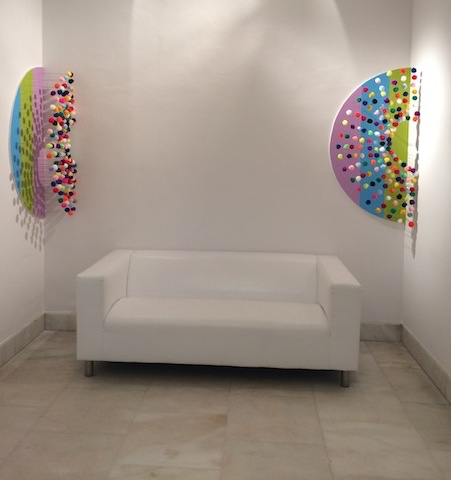
Poland, paint, pom poms, wire, 2014

Poland, paint, pom poms, wire, 2014

How has your work changed in the last five years? How is it the same?

It has grown in size encompassing 50 foot walls and consuming the viewer within that space, as well as pushing the limits of what a material can do. It engages the viewer more directly through touch. Yet it still addresses natures evolution, perhaps more intimately. 

Are there people such as family, friends, writers, philosophers or even pop icons that have had an impact on the work you do?

Waldens Pond had a profound impact on me when I was a young girl. Later in life writers like Annie Dillard, Diane Ackerman and Bachelard allowed me to expand my thinking on nature. So many artists have impacted my work otherwise.  Robert Wilson and James Turrell for their use of light, Andy Goldsworthy collaborating with nature, Linda Benglis experimenting with the alchemy of a material and Judy Pfaff’s ability to explode two dimensions into a living breathing three dimensional space.

If you had an occupation outside of being an artist, what would that be and why?

I can’t imagine having an occupation outside of being an artist. It’s who I am I live and breathe it, but I suppose I do have an occupation work wise supporting myself. I teach in a community college and in the past I have worked as a director of education in museums I have run a 1% for Public Art Program for a city and I have been an independent contractor doing grant writing and overseeing administrative aspects of art related projects for others  I have to work I need to bring in an income. My ideal job would be overseeing a private collection.

About

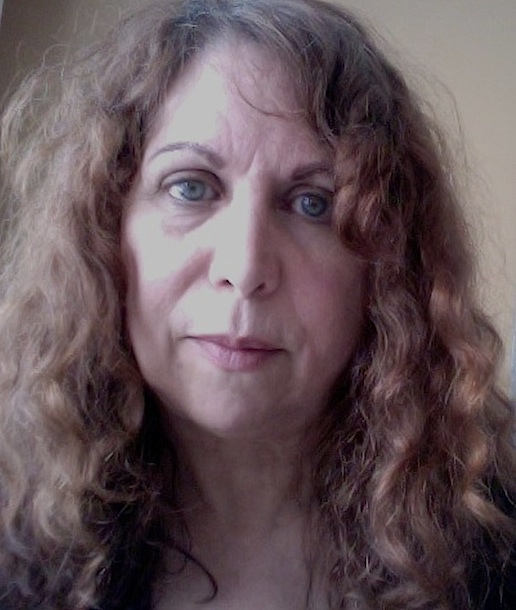
Suzan Shutan Pic 2013Suzan Shutan lives and works in New Haven, Connecticut. An MFA graduate of Rutgers University Mason Gross School of the Arts, NJ and BFA graduate of California Institute of the Arts, Valencia, CA, Suzan is a recipient of many awards that include three  CT Office of the Arts Fellowship in Sculpture, a CEC Artslink grant, Art Matters grant, Berkshire Taconic Foundation A.R.T grant and she was a Federal Public Art Project finalist. She has attended artist residencies at Bemis Foundation, Yaddo and Proyecto Ace in Buenos Aires, Argentina where she was awarded a mid career artist-exhibition residency.

Her work has been shown throughout the United States and Europe. She just completed a large installation at Zacheta National Gallery of Contemporary Art in Warsaw, Poland running through February 2015 and exhibited at Kenise Barnes Gallery, NY and Storefront Ten Eyck in Brooklyn in 2014. In 2013 her work was included in the Biennial Internationale d’art non objective Pont de Claix in Grenoble, France and in 2012 a twenty-foot relief sculpture made of tar roofing paper was on exhibit at the Bank of America Plaza in Charlotte North Carolina for one year.

Suzan Shutan’s work has been favorably reviewed by the NY Times, Art New England Magazine and High Performance Magazine. She is listed in 2010 Art in America Magazine with the Islip Art Museum in NY. Her work can be found in private and public collections such as the Villa Taverna Foundation, University of California Los Angles and the Swedish Archives in Bjaard. She teaches Sculpture at Housatonic Community College in Connecticut and is a mentor for MFA students in low residency programs in the Northeast USA.

studio
 

All images copyright of the artist and used with their permission.  
Posted in Installation | Tagged , , , , , | Leave a comment

Julie Alpert – Seattle, Washington

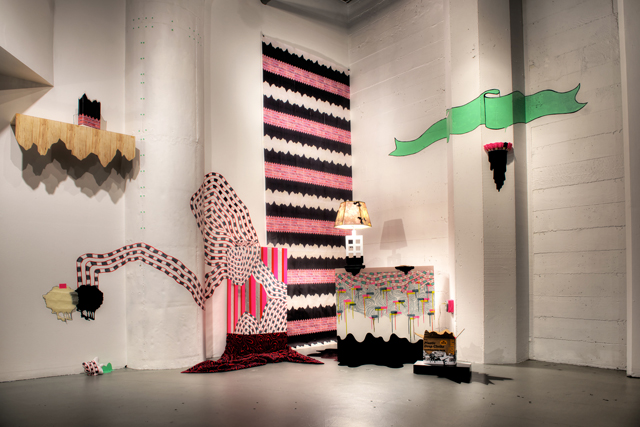
Shape Shifters 2013 installation at Cornish College of the Arts 10x10x12' house paint, acrylic, tape, paper, vinyl, cardboard, fabric, altered found objects photo credit: David Wentworth

Shape Shifters
2013 installation at Cornish College of the Arts
10x10x12′ house paint, acrylic, tape, paper, vinyl, cardboard, fabric, altered found objects
photo credit: David Wentworth

Briefly describe the work you do.

Using hardware store materials, found furniture, decorative kitsch, and custom fabric, I create theatrical site-specific installations that explore illusion, domesticity and boundaries.

Tell us a little about your background and how that influences you as an artist.

I grew up in a middle class Jewish family in a suburb of Washington, DC, an incredibly diverse and sprawling part of the country. I acted in my high school plays (lots of Shakespeare and bit character roles in musicals), took ballet lessons until I was 16 and played the flute. I spent my last year of high school taking drawing classes at a community college. After college at the University of Maryland, I worked as a buyer for an organic grocery store and then as the receptionist at the International Association of Firefighters. When I was 26, I moved to Seattle to get my MFA at the University of Washington. Almost 9 years later, I am still struck by how different the landscape, climate, culture, and pace of the Northwest is in relation to my hometown. I think my work is a response to the way our environment shapes our experiences and what it means to adapt to a new place. I also see a connection to my love of theater and performance. My set-like installations are created largely through improvisation and must be experienced in person before they ultimately disappear.

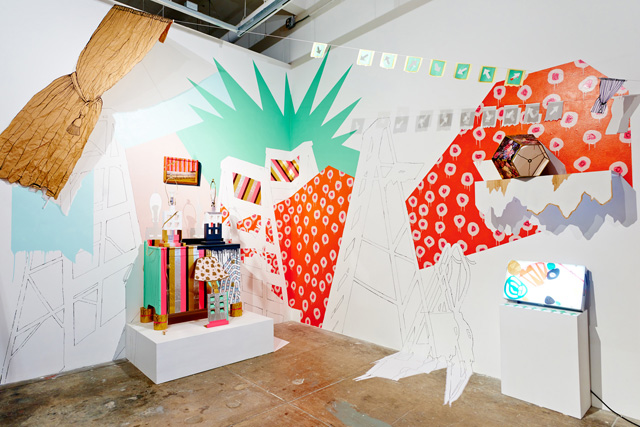
Look-alikes 2014 installation at SOIL Gallery 10x6x10' house paint, acrylic, marker, tape, paper, vinyl, cardboard, altered furniture, lightbox, string photo credit: David Wentworth

Look-alikes
2014 installation at SOIL Gallery
10x6x10′ house paint, acrylic, marker, tape, paper, vinyl, cardboard, altered furniture, lightbox, string
photo credit: David Wentworth

The concept of the “artist studio” has a broad range of meanings, especially in contemporary practice. The idea of the artist toiling away alone in a room may not necessarily reflect what many artists do from day to day anymore. Describe your studio practice and how it differs from (or is the same as) traditional notions of “being in the studio.”

I would describe my studio practice as fairly traditional in that I am, in fact, toiling away alone in a room. I work lots of part-time contract jobs, like teaching and artist assisting, which allow me to be in the studio a lot. It’s a small converted bedroom in my house which I constantly rearrange to accommodate the type of work I’m doing. If I’m in-between installations, I make lots of small-to-medium-size watercolors on a 4×8 table in the middle of the room and hang the in-progress work all over the walls so I can reflect on them. If I have an installation to prepare, I push the furniture against the walls and put plastic tarps down so I can assemble, alter, or paint more sculptural things. When I run out of room, I overflow into the living room and kitchen.

What unique roles do you see yourself as the artist playing that you may not have envisioned yourself in when you first started making art?

It never occurred to me just how much time I’d spend researching and writing proposals for grants, residencies, and other opportunities. It’s a good 30% of my studio practice. Conveniently, my computer is just feet away, so if I get stuck in my work, I travel over to the internet for research and editing. Luckily, I enjoy this aspect of being an artist almost as much as making the work.

When do you find is the best time of day to make art? Do you have time set aside every day, every week or do you just work whenever you can?

Because of the flexibility in my schedule and the fact that my studio is in my house, I work in there almost seven days a week. Naturally, some days are more productive than others, but if I’m excited about a new idea or working towards a deadline, I could be in the studio from morning til night with lots of little breaks. I am most productive from 9am-noon and 4pm-8pm.

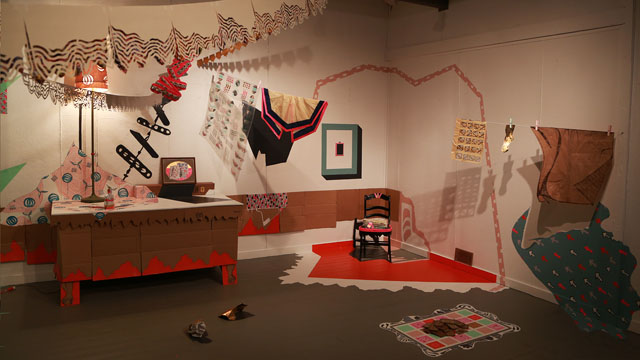
Three Generations of Decorations 2014 installation at MacDowell Colony, Firth Studio 23x10x10' house paint, acrylic, marker, tape, paper, cardboard, found objects, altered furniture, string photo credit: Tom Weidlinger

Three Generations of Decorations
2014 installation at MacDowell Colony, Firth Studio
23x10x10′ house paint, acrylic, marker, tape, paper, cardboard, found objects, altered furniture, string
photo credit: Tom Weidlinger

How has your work changed in the last five years? How is it the same?

I think my work has become more refined while also becoming more open. I am getting closer to making the work I really want to make; work that gets closer to revealing things about myself to myself.

Are there people such as family, friends, writers, philosophers or even pop icons that have had an impact on the work you do?

My mom has always been creative. She’s a gardener and a teacher. On sick days growing up, we would do sewing projects instead of zoning out on the tv, though there was plenty of that, too. My husband is also an artist and his commitment to making art and shutting out the noise help keep me focused on what’s important – making the work. Artists I constantly go back to for inspiration are Lee Bontecou, Jessica Stockholder, Ludovica Gioscia, and Amy Yoes. I saw a killer Kerry James Marshall retrospective in Madrid last summer as well as a mind-blowing Janet Cardiff and George Bures Miller show in Vancouver. I like artists who deal with real and perceived space.

If you had an occupation outside of being an artist, what would that be and why?

I would work with animals. Maybe a wildcat rescue.

About

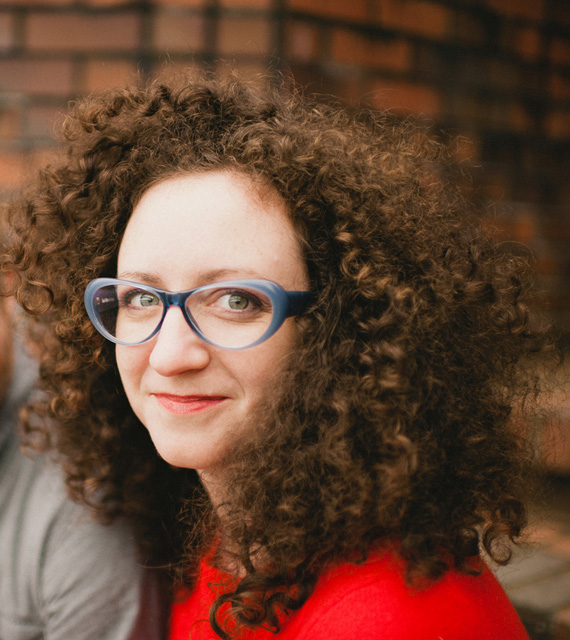
alpert_headshot_640Julie Alpert is an installation artist and painter whose work addresses illusion, domesticity, and boundaries. She has an MFA from the University of Washington and a BA from the University of Maryland. She is the recipient of a Pollock-Krasner Award, MacDowell Colony Fellowship, The New Foundation Grant, and The Neddy at Cornish Award Finalist. Julie was a member of SOIL Gallery from 2009-2014 and will be Artist-in-Residence at Clark College this Spring.

alpert_studio_640

www.juliealpert.com

All images copyright of the artist and used with their permission.  
Posted in Installation, Painting, Watercolor | Tagged , , , , , , | Leave a comment

Zach Fitchner – Jacksonville, Florida

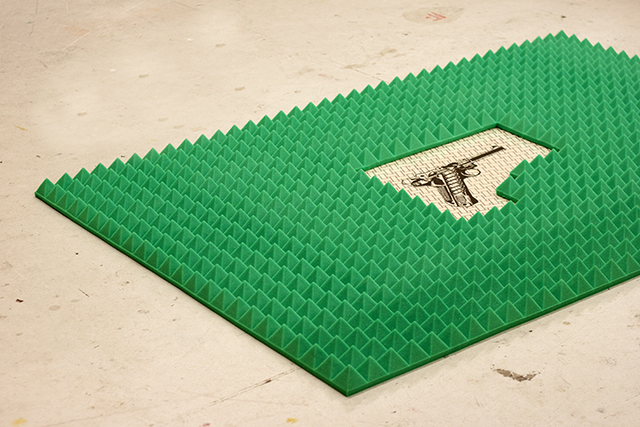
Luger Gun      Woodcut and Screenprint on Muslin, Mylar, and Acoustic Foam      4 ft. x 6 ft.      2014

Luger Gun
Woodcut and Screenprint on Muslin, Mylar, and Acoustic Foam, 4 ft. x 6 ft., 2014

Briefly describe the work you do.

 
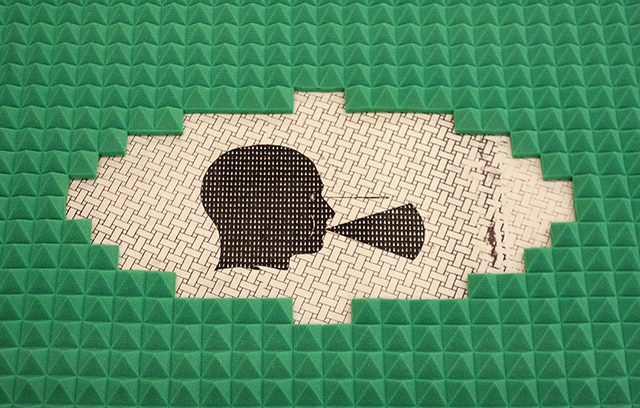
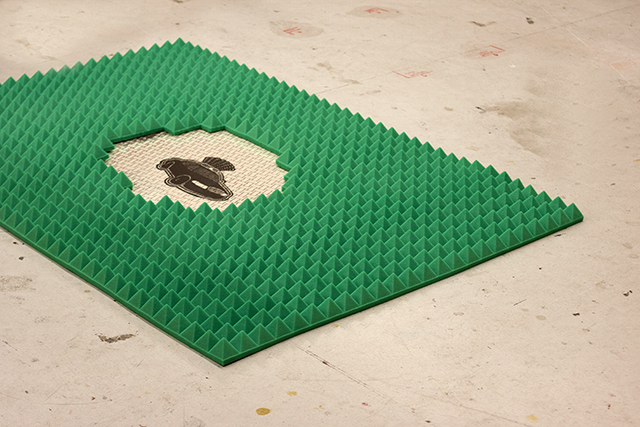
My most recent work is a suite of mixed media prints that I created for a solo exhibition entitled Icons of Confessions. Inspired by the phrase, “digging up dirt,” Icons of Confessions explores the significance of secrets with respect to personal identity. Utilizing the American Imagery Bank — a website conceived by Zach Fitchner to create participatory art — volunteers were asked to virtually confess their secrets. The icons in each piece represent anonymous confessions that have been figuratively dug up, and literally brought to the surface. Each piece lies on the ground measuring 4’ x 6’ and is made using woodcut and serigraphy on muslin, Mylar, and acoustic foam.
 
Tell us a little about your background and how that influences you as an artist.
 
The majority of my upbringing took place in Lakeland, Florida, where I turned out to be a fairly normal human being despite living in an extremely religious, conservative community. I spent most of my time at hardcore shows and pretending to be an apprentice at a local tattoo shop where my friends worked. Although it wasn’t a formal setting, I was always surrounded by creativity. As a junior in high school, I chose to pursue an MFA in hopes of making a career of art and teaching.It wasn’t until college that I began to draw inspiration from my hometown. It eventually found its way into my work in the form of farm animals and cast iron skillets. I made drawings, paintings, and prints depicting traditional southern culture and southern imagery, but that would eventually change.My work no longer focuses on southern culture, but I’ve found that the community in which I grew up directly molded some of the ideas about religion and culture that I explore in my work today.
Spitting Head (Detail)      Woodcut and Screenprint on Muslin, Mylar, and Acoustic Foam      4 ft. x 6 ft.      2014

Spitting Head (Detail)
Woodcut and Screenprint on Muslin, Mylar, and Acoustic Foam
4 ft. x 6 ft., 2014

 
The concept of the “artist studio” has a broad range of meanings, especially in contemporary practice. The idea of the artist toiling away alone in a room may not necessarily reflect what many artists do from day to day anymore. Describe your studio practice and how it differs from (or is the same as) traditional notions of “being in the studio.”
 
Because of the frequency with which I move, having a permanent studio space has never been practical, and I would assume this is a very common situation for artists in a similar position. Instead, I utilize my apartment and the facilities provided by the institutions at which I teach. My studio practice consists of sketchbook drawings, list-making, research, experimenting with materials, writing, listening to music, editing photographs, and production. Most of this takes place on my laptop computer.
 
 
What unique roles do you see yourself as the artist playing that you may not have envisioned yourself in when you first started making art?
 
One of the greatest things that I’ve learned is that artists can take on almost any role and tell any story, and I hope that in some way I have accomplished this.
 
When do you find is the best time of day to make art? Do you have time set aside every day, every week or do you just work whenever you can?
 
I plan and research whenever I have time, but I prefer to physically produce work very late at night.
 
 5 - 0      Woodcut and Screenprint on Muslin, Mylar, and Acoustic Foam      4 ft. x 6 ft.      2014

5 – 0
Woodcut and Screenprint on Muslin, Mylar, and Acoustic Foam, 4 ft. x 6 ft., 2014

How has your work changed in the last five years? How is it the same?

 
My work is constantly changing and evolving, but in the last five years it has undergone an especially drastic transformation. Viewer participation and social practice have emerged as a major focus in my process. I feel that I have improved the connections that I make between my concepts and my materials, and I also feel that I have begun to place more value on the ideas that make up the content of my work.
 
Are there people such as family, friends, writers, philosophers or even pop icons that have had an impact on the work you do?
 
Too many people have had an impact on my work for me to list, but my friends and family have always been very supportive and motivating factors for the work that I do.
 
If you had an occupation outside of being an artist, what would that be and why?
 
If I weren’t an artist I would almost certainly be a chef or restaurateur.
 
About
 
zach fitchner headshot portraitZach Fitchner is a printmaking artist and Visiting Assistant Professor of Printmaking at the University of North Florida. Driven by his desire to interact with people and share creative experiences, Fitchner’s work calls upon the participatory conventions of social practice in contemporary art and the graphic, reproducible properties of print media to portray his outlook on identity, religious, social, and cultural philosophies. To accomplish this, his work is guided by the American Imagery Bank, a conceptual platform created to direct artistic interaction and creation of iconography between he and his viewers. 
 
Born in Atlanta, Zach split his growing up between Sugar Hill, Georgia and Lakeland, Florida where he spent his time playing in creeks and roaming the streets as a rowdy juvenile. His art career began when he drew an eagle for the cover of his 5th grade graduation ceremony program. Zach has shown in numerous galleries and museums, nationally and internationally, and his prints are included in various public and private collections in the United States, Egypt, Slovakia, and Australia
 
In the Studio

In the Studio


All images copyright of the artist and used with their permission. 
 

Posted in Printmaking | Tagged , , , , | Leave a comment

Eric Wall – Copenhagen, Denmark

Quatre-aluminum foil , Oil on Fabric, Screen, Fabric, Wood and Aluminum. 2014. 40 x 29 cm.

Quatre-aluminum foil , Oil on Fabric, Screen, Fabric, Wood and Aluminum. 2014. 40 x 29 cm.

Briefly describe the work you do.

My works are generally stretched canvases or textiles and works on paper that encompass a wide variety of subject matters that explore the elements of architecture, as well as formal issues like space, pattern, and perspective. Often they are cropped, cut, fold, pierced, stitched, and manipulated, these works refer to many of painting’s most long running concerns – genre and narrative, pictorial space and illusion, and color and texture.

Tell us a little about your background and how that influences you as an artist.

I grew up in the US, but as an adult I have spent most of my time living in Northern Europe and traveling. The exposure old urban cities and historical cultural sites have had a profound effect on way I view our contemporary landscapes and the details that make them up. I currently am living in Copenhagen and I am very interested to see the lifestyle and city will play apart in my work.

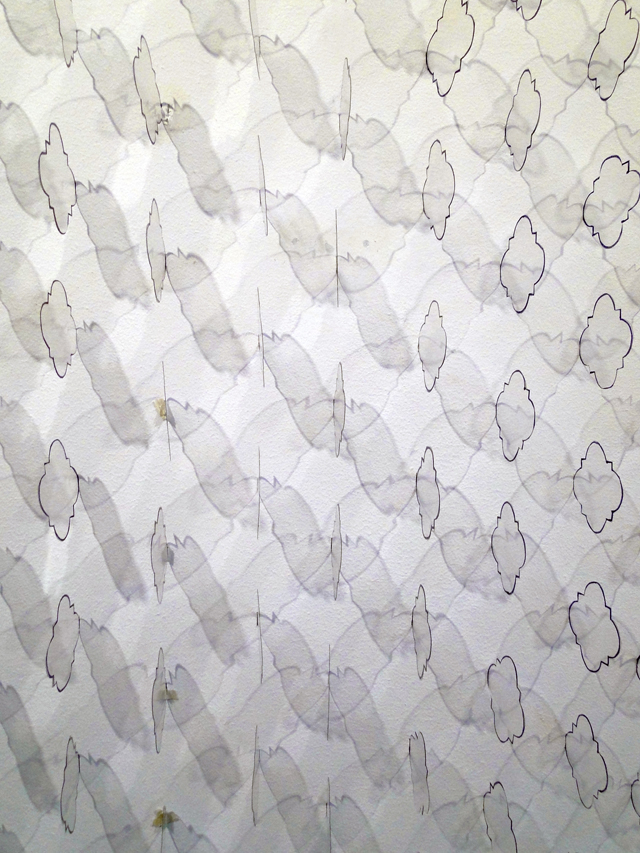
200 Quatrefoils, 200 Acetate quatrefoils and marker on cut dry wall. Site specific. 145 x 145 cm. 2014.

200 Quatrefoils, 200 Acetate quatrefoils and marker on cut dry wall. Site specific. 145 x 145 cm. 2014.

The concept of the “artist studio” has a broad range of meanings, especially in contemporary practice. The idea of the artist toiling away alone in a room may not necessarily reflect what many artists do from day to day anymore. Describe your studio practice and how it differs from (or is the same as) traditional notions of “being in the studio.”.

I would say that I am more of studio artist in the traditional sense, but more and more I am developing an appreciate and a desire to do more research based works.

What unique roles do you see yourself as the artist playing that you may not have envisioned yourself in when you first started making art?

The role of the artist in contemporary art is a very strange and curious thing that I am continually learning about. The more I think and learn about it the more it seems to become abstract.

When do you find is the best time of day to make art? Do you have time set aside every day, every week or do you just work whenever you can?

I tend to work best in the evening and nights, but my schedule does not really allow that. So I tend to work when I can, which is about 3 days a week right now.

Yellow Quatrefoil, Mixed Media on Canvas, Screen, and Wood. 2014. 105 x 80 x 5 cm.

Yellow Quatrefoil, Mixed Media on Canvas, Screen, and Wood. 2014. 105 x 80 x 5 cm.

How has your work changed in the last five years? How is it the same?

I like to think of my practice as a pendulum swinging from more representation to more conceptual abstractions. It seems that the pendulum changes direction every few years, but the subjects stay the same.

Are there people such as family, friends, writers, philosophers or even pop icons that have had an impact on the work you do?

There are dozens and dozens, but I think I am most influenced by google searching images currently.

If you had an occupation outside of being an artist, what would that be and why?

I think it would be my current occupation that helps pay the bills.

About

Eric Wall headshotEric’s works are generally works on paper and stretched canvases that encompass a wide variety of subject matters including empty interiors, landscapes, architecture, as well as formal issues like space, pattern, and perspective. Often they are cropped, cut, fold, pierced, stitched, and manipulated, these works refer to many of painting’s most long running concerns – genre and narrative, pictorial space and illusion, and color and texture. Eric continues to participate in the dialogue of Western painting while being fully conscience of the issues in the contemporary practices.

Born 1979. Eric Wall is an American/Swedish artist, currently residing in Copenhagen, Denmark.

He has exhibited paintings, sculpture, photography, video, and installation art in the US, Germany, Denmark, and Sweden. His one person exhibitions include shows at the Bolt Project Space, Chicago, Villavägen Sju Galleri, Sweden, ISM gallery, Denver, and Colorado State University. His work has also been included in exhibitions at the Cave Gallery, Detroit, Shoot the Lobster, New York, Lill Street Art Center, Hyde Park Art Center, The Chicago Artist Coalition, and The Built Festival, Chicago, Galleri Ett Annex and Galleri Linne in Sweden, the Space Gallery, Assembly Art Space and The Den Gallery in Denver, Jack Curfman Gallery, Colorado State University Directions Gallery, and the Museum of Contemporary Art Fort Collins in Fort Collins, Colorado. His work has been covered in The Chicago Tribune, Crain’s Chicago, Kulturstan Sweden, Detroit Free Press, and Matter Journal.

In Studio shot 640 72dp

In the Studio

ericwall.org

All images copyright of the artist and used with their permission. 
Posted in Conceptual Art, Painting | Tagged , , , , | Leave a comment

Youdhisthir Maharjan – Henniker, New Hampshire

The Center of Everything Reclaimed text cutouts   2014 9”X6”

The Center of Everything
Reclaimed text cutouts
2014, 9”X6”

Briefly describe the work you do.

I work with found materials and reclaimed text, engaging in laboriously repetitive and autopoietic processes, to create a new language that transcends their humble origin and takes a new life of its own, independent of its prescribed meaning and form; inquiring the intersection of identity and anonymity, individual and collective, familiar and alien; exploring the materiality of text; and reasserting the thingness of language. 

Tell us a little about your background and how that influences you as an artist.

 I grew up in military school in Bhaktapur city, Nepal, one of the three richest cities of Kathmandu valley, for art and architecture and myths, founded on Hindhu and Buddhist philosophies. My exposure to military discipline since my early childhood, and laboriously intricate, sacred Thangka and Mandala paintings, mass produced for sale in factory setting, has strong influence on my inclination toward spirituality, exploration of solitude and God, anonymity and individuality, and the power of repetition (meditation/prayer) and labor. 

Peace Like a River Reclaimed text cutouts   2014 45”X6”X3”

Peace Like a River
Reclaimed text cutouts
2014, 45”X6”X3”

The concept of the “artist studio” has a broad range of meanings, especially in contemporary practice. The idea of the artist toiling away alone in a room may not necessarily reflect what many artists do from day to day anymore. Describe your studio practice and how it differs from (or is the same as) traditional notions of “being in the studio.”

Although the concept of my works demand me to work in solitude, my interest is in the solitude of the self, unaffected and unaltered by the pandemonium of outside environment. I do not have specific studio space since my grad school. I work in my living room or on my porch—at peace—with cooking and television and music and neighbors’ children playing, sometimes all at the same time. My outdoor and on-site installations take days and “studio” environment beyond my control, but I always feel in the studio as long as I have solitude inside of me. 

What unique roles do you see yourself as the artist playing that you may not have envisioned yourself in when you first started making art?

My effort in using printmaking techniques beyond their traditional confines into making mural sized unique prints that borders painting, sculpture, and installation. 

My life-long, process based, conceptual works using recycled materials. 

My altered text series that questions language and meaning beyond their preassigned definitions. 

When do you find is the best time of day to make art? Do you have time set aside every day, every week or do you just work whenever you can? 

I mostly work on new ideas and revaluation of ongoing works at the quietude of night. My mornings are dedicated to reading, research, and surfing internet. I spend my days on installation works (indoor and outdoor), and collecting, cleaning, and sorting recycled materials.  

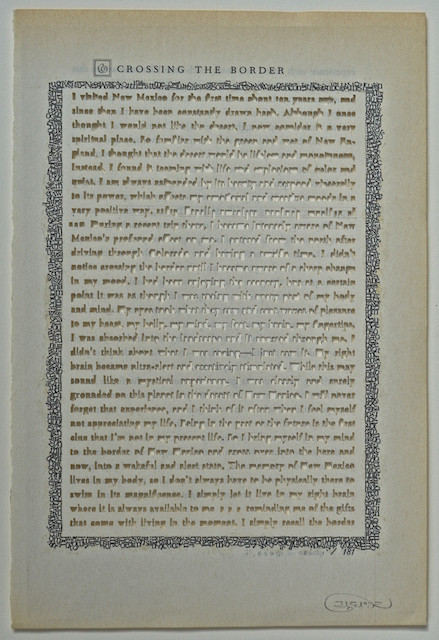
Crossing the Border Reclaimed text cutouts   2014 9”X6”

Crossing the Border
Reclaimed text cutouts
2014, 9”X6”

How has your work changed in the last five years? How is it the same?

My works have grown from precomposed and finished easel paintings with preassigned meanings/messages into process oriented works without prescribed meaning and composition, without any beginning or an end. The process is an end in itself, and not a mean to some preconceived end. The change in my living situation has also changed in the choices of my mediums and materials. 

Are there people such as family, friends, writers, philosophers or even pop icons that have had an impact on the work you do?

Samuel Becket’s Waiting for Godot, and Albert Camus’ The Myth of Sisyphus, have had great influence in my life and the works I produce.

If you had an occupation outside of being an artist, what would that be and why?

I would have been a medical doctor. Thats what my parents wanted me to be and I was preparing for it before I decided to go into arts.  

headshotAbout

Click here to download resume

youdhi.tumblr.com


All images copyright of the artist and used with their permission.  


Posted in Conceptual Art | Tagged , , , , | Leave a comment

Nora Renick Rinehart – Chicago, Illinois

 Sunrise Ombre - Digital photo collage, 2014.


Sunrise Ombre – Digital photo collage, 2014.

Briefly describe the work you do.

I make work that investigates the colors of the sky; repositioning them in relation to each other and removing them from their natural site in order to find new truths about how these colors function in our lives. In the course of this work I’ve experimented with a number of different media including photography, painting, sewing flags, dyeing fabric and installing it as wallpaper, quilting and collage.

Tell us a little about your background and how that influences you as an artist.

I grew up outside of Boston and was lucky enough to have a high school with a lot of art programs. In my senior year alone I took AP art, ceramics, darkroom photography, directing for the stage and an independent study in multi-media/sculpture. It was kind of a no-brainer for me to end up in art school. The fibers department at MICA (Maryland Institute College of Art, Baltimore) was everything I wanted in an education: technical expertise, social history through the history of textiles, and women’s studies as much of textile history predominantly follows the female experience. The most important thing I gained, however, was a new way of looking at the world- with metaphor and visual poetry. All of these things- history, politics, skill and concept- go into the way I make art. I see my work as another way to explore learning and teaching. I always hope that people who view/engage with my work come away with an even minute change in their perspective toward the world.

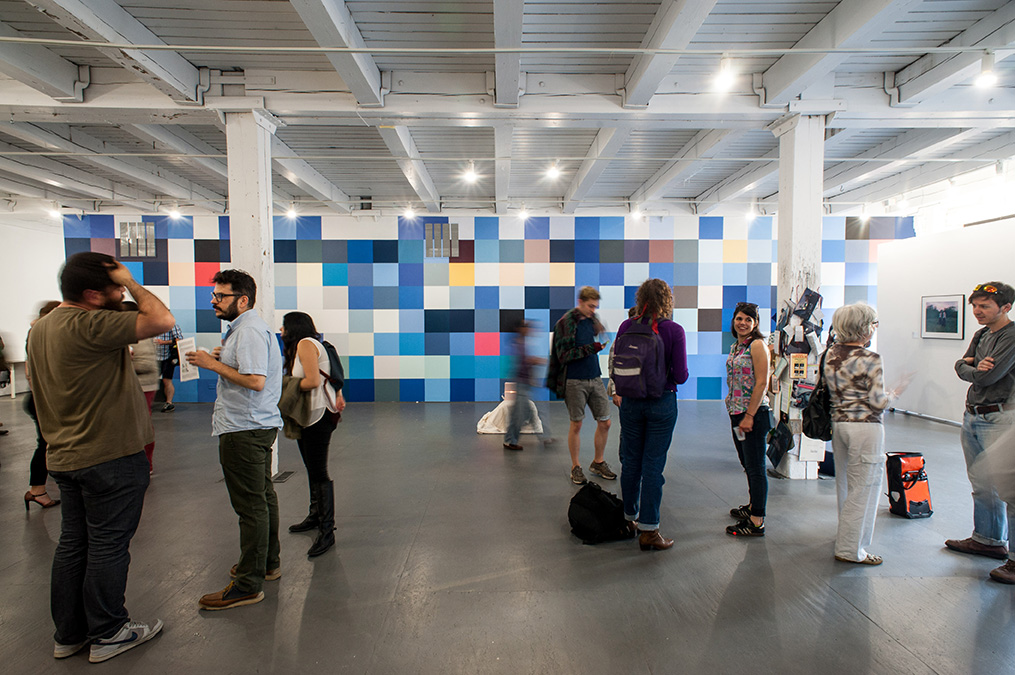
Data Horizon. Latex house paint, 45' x 12.5'. 2014

Data Horizon. Latex house paint, 45′ x 12.5′. 2014

The concept of the “artist studio” has a broad range of meanings, especially in contemporary practice. The idea of the artist toiling away alone in a room may not necessarily reflect what many artists do from day to day anymore. Describe your studio practice and how it differs from (or is the same as) traditional notions of “being in the studio.”

Coming to identify as a “studio artist” has been as weird as coming to terms with becoming an “adult.” The first difference I see between my practice and long-held stereotypes of the solitary artist is that I’m almost never alone. I may have a studio in my home but I mostly work at the local art center where I teach and am currently a resident artist. Within this community I’m able to get conceptual and technical feedback almost constantly, which has been absolutely invaluable to the caliber of my work. It has also lead me to collaborate frequently: collaborations make me reconsider everything about my work and process and stretch in ways I never would on my own. For me, being a studio artist has also meant finding a way to balance making money and making art. The obvious (and stable) answer would be to get a “real” job that would pay me a fixed income at regular intervals. However, I find that freelance sewing and screen printing allow me to pay the bills while exercising my skills and affording me the time to stew on my own work. It also means that my schedule is flexible which is great when inspiration strikes at odd hours of the day or night.

What unique roles do you see yourself as the artist playing that you may not have envisioned yourself in when you first started making art?

I’ve found myself curating quite a bit in the past two years, which I didn’t see coming. In 2013 I co-founded a project called Craft/Work which is an interactive community conversation that explores the boundaries between fine art and craft. So far Craft/Work has included six artist talks with accompanying workshops and a curated gallery exhibition here in Chicago. I love that my own questioning has lead to a larger set of conversations that really delve into this complicated topic. We’re in the process of getting a full website up and are planning new Craft/Work events for the upcoming year.

When do you find is the best time of day to make art? Do you have time set aside every day, every week or do you just work whenever you can?

I definitely don’t get as much time to make my own work as I would like. The downside of working in a public studio is that you’re always available for conversations and it’s easy to get pulled away. Therefore, and against all my own desires, I’ve found that I get the most work done between 8:30 and 10am… before anyone else gets in. I like to set that time aside for me to make whatever I want to make right then. Sometimes it’s art or sometimes it’s a new dress. But if I force myself to get up that early I get to have that time as a gift.

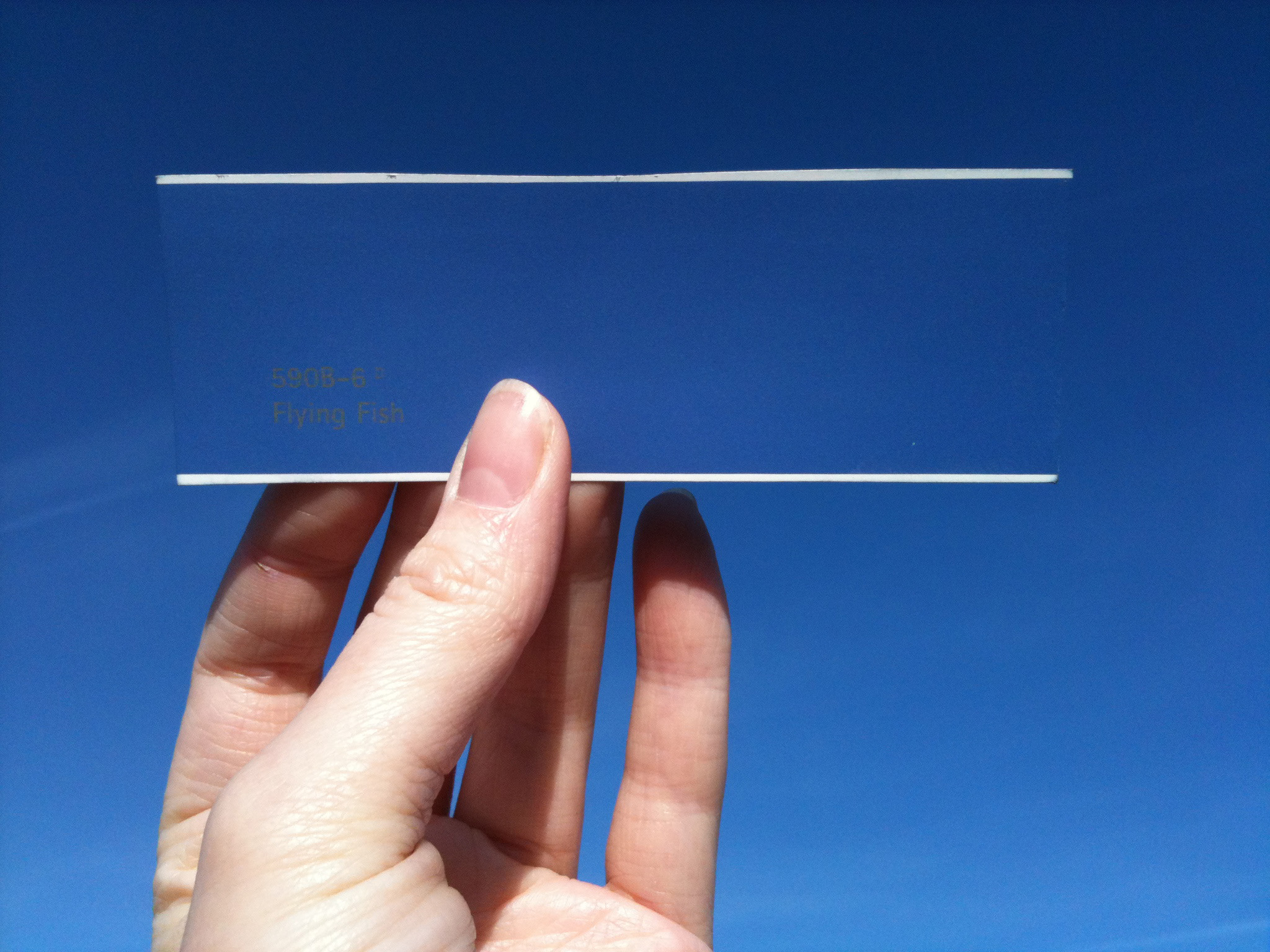
1/7 - 9:30am, O'Hare Oasis, facing up, "Flying Fish." Digital photo, 2013.

1/7 – 9:30am, O’Hare Oasis, facing up, “Flying Fish.” Digital photo, 2013.

How has your work changed in the last five years? How is it the same?

Oh man, my work has completely changed over the last five years. I began my current body of work in 2013 and pretty much everything I’ve made since then has been in this new vein. It’s been nice, actually. I felt really untethered after college. I made a series of pieces that, while being individually successful, didn’t relate to each other almost at all. My portfolio looked like it had been created by ten different people. Since 2013 I’ve been allowing myself to follow each piece onto the next logical experimentation and have ended up with a much more cohesive collection. Sometimes the amount of difference between my current and my past work worries me a little. But in the end, my motivations and work habits have remained the same. I have a feeling that when I look back at it in like 50 years it will all make sense.

Are there people such as family, friends, writers, philosophers or even pop icons that have had an impact on the work you do?

Absolutely! I am constantly inspired by myriad sources. Most recently I’ve been looking at a lot of abstract expressionist paintings, especially the color-theory work of Josef Albers which has directly impacted my own pieces. I’ve also been scouring the internet for visually dynamic info graphics and other fascinating ways of conveying data.

 If you had an occupation outside of being an artist, what would that be and why?

I have a feeling it’s going to have to be all arts-related for me, even in the future. (I can’t even make coffee.) I’d love to teach at the college level or get involved in an arts organization as an administrator or project manager. There was a hot second in college when I thought I’d become a constitutional scholar but I think that ship may have passed.

About

NRenick Rinehart HeadshotNora Renick Rinehart holds a BFA in Fibers from the Maryland Institute College of Art. Since graduating in 2008, she has had a number of textiles-related jobs including sewing custom handbags and stitching costumes for musical theater. She currently teaches and is a freelance studio artist. 
Although her background is in fibers, she doesn’t limit herself to any one media when approaching an idea or project. Her work, which tends to be disparate in concept and aesthetics, approaches an experience and tries to 
suss out it’s universalities.
Her current body of work investigates our relationship with the sky, explores the distinction between perception and reality, and investigates the importance of emotional response versus scientific analysis. 
Favorite Place to Hang Out in Studio

All images copyright of the artist and used with their permission.  
Posted in Photography, Textiles | Tagged , , , , , | Leave a comment

Emma Saperstein – Chicago, Illinois

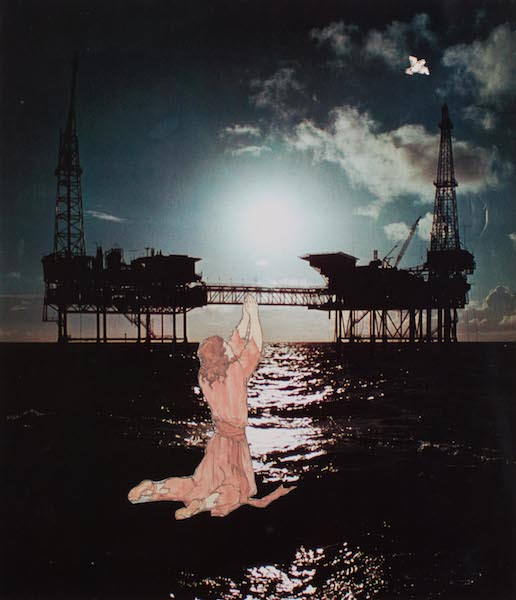
Prayer, 2013 Collage on paper 11 by 14 inches

Prayer, 2013
Collage on paper
11 by 14 inches

Briefly describe the work you do.

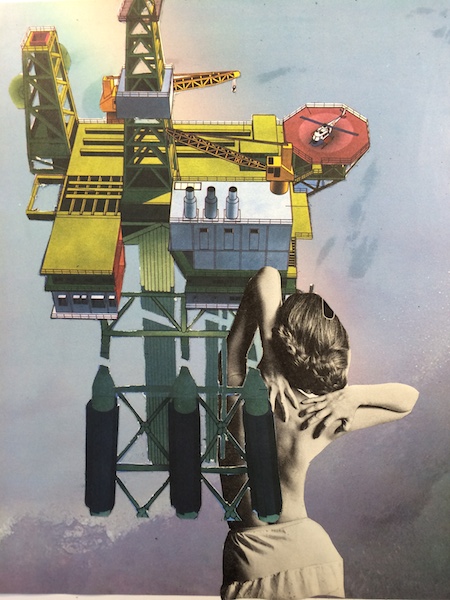
I’m an artist who lives and works in Chicago, IL. I work primarily in collage, performance and video. My current work is an investigation into the notoriously complex, elusive, political, and intoxicating industry that is the oil industry. Touching on issues of labor, finance, cultural variation, and industrial development, this project aims to expose the intricacies and complexities of the varying perspectives on the industry.  It attempts to illuminate and hold in balance the vilification of the industry due to its harsh and real effects on the environment and the quality of many lives, while also illuminating the necessity of the industry and the ethical, intelligent and efficient practices already in place. This project is a collaboration with Toby Wright, petroleum geologist and oil man. 

Tell us a little about your background and how that influences you as an artist.

I spent the first 16 years of my life traveling in Central Asia. The sort of dissonance and transition, but also curiosity is evident in my work. Making has always been my way of of understanding and interpreting the worlds I dwell in – whether that be in the backwoods of Wisconsin, the eerie mountains of Wyoming or the urban hum of Chicago.  

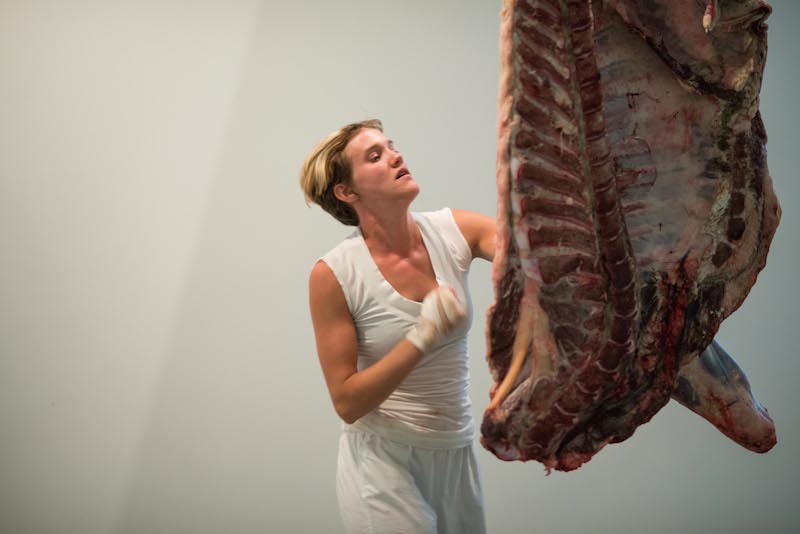
Quarter Beef, 2014 Performance still photograph

Quarter Beef, 2014
Performance still photograph

The concept of the “artist studio” has a broad range of meanings, especially in contemporary practice. The idea of the artist toiling away alone in a room may not necessarily reflect what many artists do from day to day anymore. Describe your studio practice and how it differs from (or is the same as) traditional notions of “being in the studio.”

I love this question! My recent work has been heavily research-based, so “working” could mean anything from collaging in my studio, making a mold of an oil drill bit, conducting interviews, or buying halves of cows at local butchers. 

What unique roles do you see yourself as the artist playing that you may not have envisioned yourself in when you first started making art?

The research aspect of my work is a recent development and making work that contributes to broader social, political, environmental issues is something that has become really important to me. I didn’t have this mentality when I first started making art, and I’m really excited to see more and more young artists becoming increasingly engaged in the pertinent issues of our time. 

IntertwinedWhen do you find is the best time of day to make art? Do you have time set aside every day, every week or do you just work whenever you can? 

I try to work two full days a week, and as much time outside of that as possible. I find it really important to keep up with the contemporary conversation by maintaining a regular practice of visiting other artist’s studios, museums and galleries. 

Are there people such as family, friends, writers, philosophers or even pop icons that have had an impact on the work you do?

I’m really inspired by conversation, and I’m grateful to have so many wonderful conversation partners and meeting more every day! Outside of my talented and stimulating group of friends and family, I’m regularly returning to the writing and work of Alice Munro, Anne Carson and Lydia Davis. In my recent work, I rely heavily on the research of Daniel Yergin and Richard Muller. 

If you had an occupation outside of being an artist, what would that be and why?

As most young emerging artists do, I already wear a lot of hats -from editor to cheesemonger to archivist… I like the synchronicity and diversity of my current situation and I can’t imagine a better life! 

About

HeadshotEmma Saperstein is a project- based artist living and working in Chicago. Her practice of performance, exchange and social practice in the past has been deeply engaged in developing a symbology of grief and grieving with a focus on Central Asian culture, where she spent the first 16 years of her life.  Recently, her practice has been engaging a personal and localized study of her experience in Chicago. Emma is a graduate of Wheaton College and the New York Center for Art and Media Studies. She slings, sells and eats cheese for her bread and butter and assists in running an artist’s work space with her fellow cheesemongers.

In the Studio

In the Studio

emmasaperstein.com

All images copyright of the artist and used with their permission.  
Posted in Collage | Tagged , , , , | Leave a comment

Norm Magnusson – Lake Hill, New York

Fig. 38: in autumn, some leaves will use color bars to help get everything perfect.  Watercolor on maple leaf, archival computer print, dimensions variable, 2011

Fig. 38: in autumn, some leaves will use color bars to help get everything perfect.
Watercolor on maple leaf, archival computer print, dimensions variable, 2011

Briefly describe the work you do.

My work has always followed dual paths, one path is creating political or social commentary and the other is creating lighter, more aesthetically focussed work. Right now, I’m working on my ‘historical’ marker series and my ‘decorating nature’ series. I love having both of them to move forward with.

Tell us a little about your background and how that influences you as an artist.

My mother was an artist and my father was a businessman and inventor. They were both very creative individuals and I truly believe I inherited some of that from them.

The concept of the “artist studio” has a broad range of meanings, especially in contemporary practice. The idea of the artist toiling away alone in a room may not necessarily reflect what many artists do from day to day anymore. Describe your studio practice and how it differs from (or is the same as) traditional notions of “being in the studio.”

I still have a proper studio where my easel lives but these days, most of my work is on the computer or on the desk where the computer sits when the watercolors aren’t there. I’m happy to work anywhere but sometimes miss my time in front of the easel.

Fig. 90: it’s said that if you arrange the leaves of the bluepoint tree in a circle, you will attract true love. Watercolor on leaves, archival computer print, dimensions variable, 2013

Fig. 90: it’s said that if you arrange the leaves of the bluepoint tree in a circle, you will attract true love.
Watercolor on leaves, archival computer print, dimensions variable, 2013

What unique roles do you see yourself as the artist playing that you may not have envisioned yourself in when you first started making art?

I never imagined how much education I would be involved with when I embarked on a career as an artist. I visit a lot of schools and give a lot of talks to young people, mostly high school age. It’s a surprising and delightful aspect of my job.

When do you find is the best time of day to make art? Do you have time set aside every day, every week or do you just work whenever you can? 

I’m really happy to be working on art-making at any time of day. I do a fair amount of writing and creative writing and find that my mind for that is best in the morning hours. I’m up at 5 or 6 usually and will try to get as much of that done as I can before the kids get up. After that, I’ll work on whatever needs attention that day. I love painting throughout the day and after dark am happy to get back on the computer again.

fig. 56: not normally associated with seasonal transformations, some stream-side stones actually will begin to pixellate in late autumn/early winter. Watercolor on stone, archival computer print, dimensions variable, 2012

Fig. 56: not normally associated with seasonal transformations, some stream-side stones actually will begin to pixellate in late autumn/early winter.
Watercolor on stone, archival computer print, dimensions variable, 2012

How has your work changed in the last five years? How is it the same?

The last 5 years have actually been a great time for me artistically. I’ve done a couple of educational apps for iOS and have just finished a major proposal for a regional children’s museum. I still work on my on-going projects but it’s always nice to have new challenges, too.

Are there people such as family, friends, writers, philosophers or even pop icons that have had an impact on the work you do?

I started out painting making copies of works I liked. I really liked Matisse’s cutouts and Hockney’s California paintings and eventually, I started to combine the two of them into canvasses that a friend dubbed “Hocktisses”. After that, I began to experiment more and more, incorporating motifs from American and Mexican folk and outsider art. I’m drawn to obsessive work and most of my early paintings show that.

If you had an occupation outside of being an artist, what would that be and why?

I really can’t imagine a non-creative career. If I had to choose just one art path to the exclusion of all others, I would choose acting. It’s incredibly satisfying physically, intellectually and emotionally. I used to work a lot in advertising and still do some of that. If I couldn’t do any art, I would choose advertising, it’s a lot of fun, too.

About

Magnusson 01 full

Norm Magnusson is mildly renowned all over the world.

As a visual artist, he has shown in galleries and museums in New York and New Zealand, London and Paris and all over the United States. His work is in private and museum collections around the world, including NY’s MoMA and he’s been reviewed everywhere from the NY Times to the Woodstock Times and from the Washington Post to the Utne Reader and many other national and international magazines, websites and blogs. 

His “historical markers” and “decorating nature” series have both gone viral on the internet; he’s received a NYFA Fellowship for sculpture, a Pollock-Krasner Foundation grant for paintings, a Lower Manhattan Cultural Council grant and, through the CSRC, a NYSCA grant, both for public art installations. For the last 4 years, on August 29, the date of its world premier in Woodstock, NY, Magnusson has produced an anniversary concert of John Cage’s 4’33”.

Recently, he’s returned to his first creative love, acting, starring in community theater productions of plays by David Mamet and David Ives and, most recently, as Pozzo in Samuel Beckett’s “Waiting for Godot.” He wrote and performed his first ever words and images monologue “The signs in our lives” at the Hudson Literary Festival in 2014.

He is the co-founder of FISHtheMOUSEmedia, a developer of educational apps for iOS; where his “Animal alphabet” app was widely acclaimed and honored with a prestigious Gold award from the Parents’ Choice Foundation.

Studio view 72 640_1

decoratingnature.blogspot.com/

All images copyright of the artist and used with their permission.  
Posted in Conceptual Art, Installation | Tagged , , , , | 1 Comment

Nishiki Sugawara-Beda – Moscow and Idaho

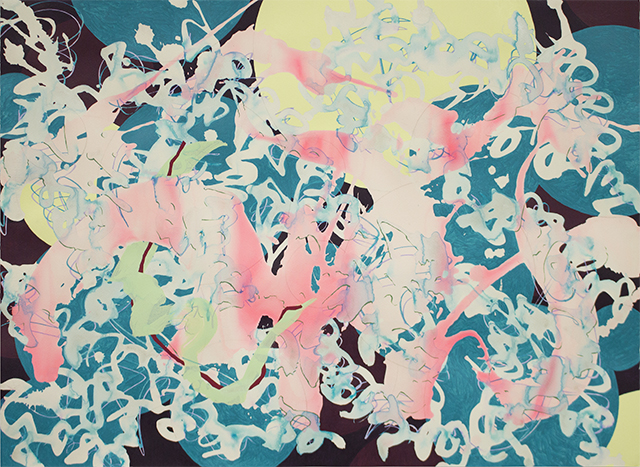
 Sentience II, acrylic and watercolor on paper, 22”x30”, 2014

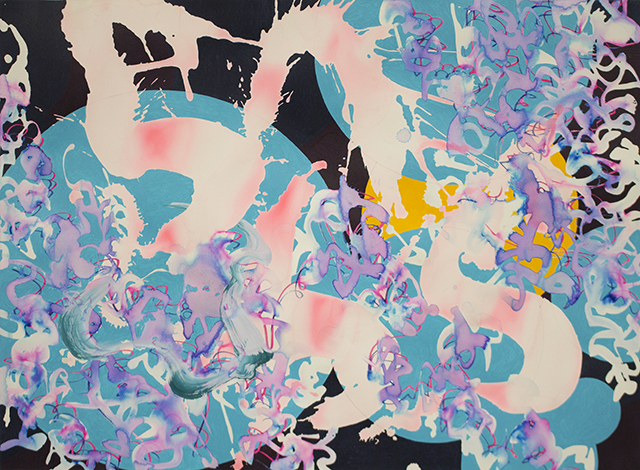
Sentience I, acrylic and watercolor on paper, 22”x30”, 2014

Briefly describe the work you do.

As a child, I learned Japanese calligraphy at school. When I was growing up, I watched my father, a calligrapher, practicing and saw how he approached his work. We talked about the meaning behind each proverb he was writing or about his practice itself. We still do. He continues to open up the gate for me to understand the world of Japanese calligraphy. Together with Sumi-e (Japanese ink painting), Japanese calligraphy has become an activity that immediately connects me to my foundation as an individual and artist.

In my current series of work, I use this foundation as a basis for exploring the relationship between written language and visual images in both virtual and physical spaces. For painting, I start by searching for characters that embody a phrase or word expressing a particular theme. I draw the phrase in one layer and add another layer that explores possible nuances of the phrase, which creates a sense of space. I prefer paper as my surface, for the immediacy and finality with which it actively drinks up the ink. Finally, I add other elements that travel through the space, introducing more nuance, supporting the ideas, and making the space more complex or contradictory. 

Sentience II, acrylic and watercolor on paper, 22”x30”, 2014

Sentience II, acrylic and watercolor on paper, 22”x30”, 2014

Tell us a little about your background and how that influences you as an artist.

I was grown up in a family that cherish original and do-it-yourself. Also growing up in my native country, Japan, allowed me to develop intricate and intentional design skills. Having traveled extensively around the world, I am digesting all the cultures that I have encountered and proposing new hybrid cultures visually and conceptually.

The concept of the “artist studio” has a broad range of meanings, especially in contemporary practice. The idea of the artist toiling away alone in a room may not necessarily reflect what many artists do from day to day anymore. Describe your studio practice and how it differs from (or is the same as) traditional notions of “being in the studio.”

Although my ideas and inspirations come from interactions with other people and their cultures, for the most part, my studio practice is a solitary experience.

What unique roles do you see yourself as the artist playing that you may not have envisioned yourself in when you first started making art?

I enjoy sharing various aspects of cultural significance through my work.

When do you find is the best time of day to make art? Do you have time set aside every day, every week or do you just work whenever you can? 

My main production occurs during summer. I teach at a university and get busy during semesters, so during academic year, I develop future concepts and reflect on what I have created in the previous summer.

Oxymoron, acrylic and watercolor on paper, 30”x44”, 2014

Oxymoron, acrylic and watercolor on paper, 30”x44”, 2014

How has your work changed in the last five years? How is it the same?

My core interests have been the same, but medium has been changing in order to better serve my concept.

Are there people such as family, friends, writers, philosophers or even pop icons that have had an impact on the work you do?

My family and Japanese culture that cherish other cultures and the state of search for new perspectives.

If you had an occupation outside of being an artist, what would that be and why?

I would still choose a teacher. It is such a rewording job. I would also enjoy being a multilingual translator and an apple picker.

About

Headshot Nishiki 72 640_1Born and raised in Japan, Nishiki Sugawara-Beda immigrated to the US as a young adult. She creates art works that deals with the examination of various cultures. Her work has been presented in solo exhibitions as well as numerous group shows, at national and international level. She has been shortlisted for various art competitions, including the Door Prize (Bristol, England), Paint Like You Mean It (Edinburgh, Scotland), ArtGemini Prize (London, England), and 7th National Juried Exhibition at Prince Street Gallery (New York). Her work has been published in the 87th issue of New American Paintings, Fresh Paint Magazine, and Expose Art Magazine: Special Edition. She graduated from Portland State University with a BA, and earned her MFA in Painting at the Indiana University. She is currently an Assistant Professor at the University of Idaho.

Studio view 72 640_1

www.nishikibeda.com

All images copyright of the artist and used with their permission.  
Posted in Uncategorized | Leave a comment