Therese Conte – Laguna Niguel, California

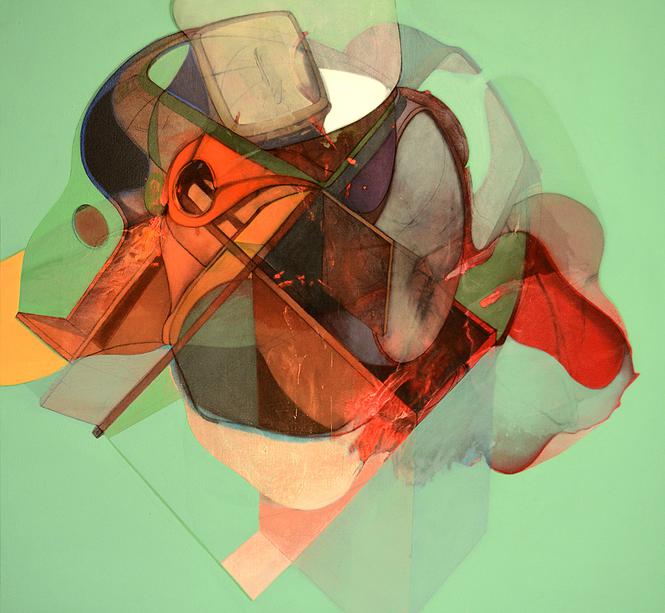
Discord in the Garden      oil on canvas      54" x 40"      2015

Discord in the Garden
oil on canvas
54″ x 40″
2015

Briefly describe the work you do. 

The oil paintings and drawings that I make are born from ideas, explorations and observations from my daily existence. A subject will pique my interest and I will ruminate over ideas until a visual language starts to present itself. Human sexuality and the multitude of ways we use our sexuality to negotiate our way through the world continue to draw my attention. As of late, my observations of the ongoing breakdown of gender binary identification as the norm has made me question the permeability of gender. What does it mean to be a man or a woman? How heavily do social constructs influence our masculine or feminine behaviors? Does our public persona mask our interior private self? Does this duality color our most primary relationship; the relationship with ourselves.

It is this questioning which moves me to probe into the broader themes of feminism, cultural stereotypes, gender roles and sexual power. I am interested in exploring objective and subjective realities, experienced in the visual language of painting and drawing. The human figure is the central focus of my art. I work from life and from my own photographs. These references become a vehicle to explore my ideas and experiences.

Tell us about your background and how that has had an influence on your work and on you as an artist.

I grew up in a large Italian Catholic Family. My father was a school teacher and my mother was a homemaker. Both shared a deep commitment to Catholicism and a love and appreciation for all of the arts. Music, fine art, literature and movies were an integral part of my upbringing. All of these things filled me with a rich and complicated imagination and a desire to probe and question the world around me. My parents always encouraged me and my siblings to follow our muses. Two of my brothers are musicians one of my sisters designs jewelry and another sister is a budding writer. My mother was really quite indulgent of my art obsession taking me to museums at a fairly early age. She always managed to scrape together enough money from the family budget so that I could take painting lessons. As a shy and introverted child I lived a lot inside my head, inside my imagination. To this day I still feel like an outsider, an observer more than a participant of life. I think this is what drives the way I approach the world and my art making.

For the Moon Never Beams Without Bringing Me Dreams     oil on canvas     54" x 40"     2015

For the Moon Never Beams Without Bringing Me Dreams
oil on canvas
54″ x 40″
2015

The concept of the artist studio has a broad range of meanings in contemporary practice. Artists may spend much of their time in the actual studio, or they may spend very little time in it. Tell us about your individual studio practice and how it differs from or is the same as traditional notions of “being in the studio.”

I tend to think about, organize and compose my work in my head for a long time. It’s like a slow simmer of ideas and it may take me awhile to manifest my conceptual ideas. When this is happening, I don’t spend a lot of time in my studio. I will however spend a lot of time looking at other artists’ work, going to galleries, researching and reading. So, even though I am not in the studio, I am constantly thinking about my work. The next phase will usually involve some sort of photo-shoot to materialize my concept and then I work on composing the images with Photoshop or with sketches. Once I have a general idea of the layout of a painting I will get to work and spend a lot of time in the studio painting. For me, there is nothing better than getting lost in the act of painting and it is not unusual for me to spend 10-12 hours in my studio. I prefer to work on more than one painting at a time. This helps to keep the painting process fluid and the work cohesive.

What roles do you find yourself playing that you may not have envisioned yourself in when you first started making art?

As an artist, one tends to wear many hats, if one wants to continue making art over a lifetime. Some of the roles I really enjoy are teacher, mentor, confidant, encourager and muse. Some of the roles I am less comfortable with are self-promoter, disciplinarian, and critic. I think what surprises me the most is the level of commitment I give to art-making through good times and bad.

When do you find is the best time to make art? Do you set aside a specific time everyday or do you have to work whenever time allows?

Anytime I can get in the studio is a good time for me. Though I do teach and have other obligations, I am at a point in my life where my time is really my own. I have the luxury of coming and going as I please. I will usually spend the early morning hours on the computer taking care of business and then the rest of day I am free to spend as much time in the studio as I desire.

Midnight in June     oil on canvas     54" x 40"     2015

Midnight in June
oil on canvas
54″ x 40″
2015

How has your work changed in the past five years? How is it the same?

My work always changes because each body of work is an exploration of a new concept. However, I think that I have changed as an artist. I am more confident in my ideas and in my technical ability. I am not afraid to paint out whole sections of a painting or move a figure or an arm here or there if need be to improve the composition. This gives me a tremendous amount of freedom to work more organically, truly enjoy the process of painting and let the painting evolve as I go.

How have people such as family, friends, writers, philosophers, other artists or even pop icons had an impact on the work you do?

My daughter is my most important muse and she and many of her friends model for me quite often. She is my biggest supporter. I know many amazing artists who are also supportive friends. It is this network of support that has sustained me over the years. When I am feeling discouraged or have an area in a painting that is just not working, I always go back to looking at and reading about artists whose work I admire. I am really all over the map as far as artists, but some of my favorites are Richard Diebenkorn, Jenny Saville, Pierre Bonnard, and Clair Morgan.

Have you ever been pulled in the direction of a pursuit other than being an artist? What are your other interests? 

Yes, I suffer from having many, many interests and I am sure that in my next few lifetimes I am going to be an Oceanographer, a Psychologist a Judge and possibly a landscape designer for huge palatial estates.

About

Conte_ Head shotTherese Conte was born in Hollywood, California. She earned her MFA in painting at the prestigious Laguna College of Art and Design. Ms. Conte received her MA and BA in Studio Art, Painting/Drawing from California State University, Northridge CA. She studied at the prestigious Art Center College of Design, Pasadena, CA. and the Los Angeles Academy of Figurative Art, Los Angeles, CA.

Her work has been exhibited nationally at the University of New England Gallery; Laguna Beach Museum of Art; Hillel Gallery USC, Los Angeles; Bridge Gallery, Los Angeles City Hall; Orange County Center for Contemporary Art, Santa Ana; Los Angeles Municipal Art Gallery; the Brand Library Gallery, Glendale and Los Angeles Art Association Gallery 825 among other venues.

She is the recipient of numerous grants and awards including, the Albert K Murray Fine Art Foundation Scholarship; Beautification Grants from the Department of Cultural affairs, Los Angeles and the Valley Cultural Center, Los Angeles; and the Walt Disney Company’s ‘Show Your Character’ program grant.    

Ms. Conte has taught seminars in figure painting, drawing and color theory along with fine art for both the Los Angeles Unified and La Canada Unified School Districts, CA. She currently teaches at The Orange County School of the Arts and Columbia College Hollywood along with teaching privately.

She maintains a studio in Laguna Beach and continues to work with the figure and related subjects in her paintings.

8. Conte_ Working process

thereseconte.com

All images copyright of the artist and used with their permission. 


Posted in Painting | Tagged , , , , | 2 Comments

Angelica Verdan – Charlottesville, Virginia

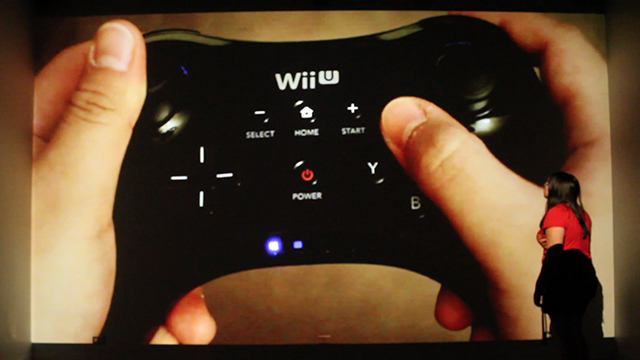
Pass the Sticks, single channel video projection, 6:47, 2015

Pass the Sticks, single channel video projection, 6:47, 2015

Briefly describe the work you do. 

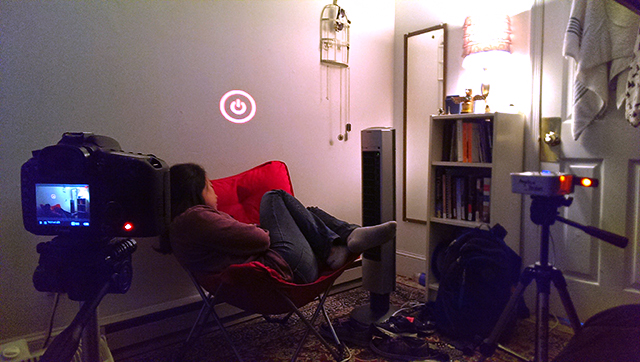
My work deconstructs the form and function of technology in society. Using projection, video, and appropriation, I isolate individual elements of the digital world and juxtapose them with the physical world to highlight our inherent knowledge of interactivity and digital literacy. Sometimes this involves carrying around a micro projector and portable battery so I can project recognizable digital icons out anywhere in the physical world. Other times I’ll pull things from the Internet or generate content with my computer and edit them together.

Tell us about your background and how that has had an influence on your work and on you as an artist.

Much of my interest in the digital world is rooted in my identity as a video gamer. I grew up playing video games with my family all the time (we still play whenever we’re together). At its core, a video game is just a game that requires the interaction between a human and an interface that generates visual feedback on a screen. Deconstructing this interaction is where my interest in the digital world at large started.

My academic background is in biochemistry. My comfort with methodology, procedure, and experimentation gave me a framework to investigate the world and evaluate my art.

I am also Filipino American. My journey to fully understand my cultural identity and pinpoint where I fall on the spectrum of Asian American culture influenced how I compare and contrast. My internal comparison of Filipino versus American parallels my interest in the digital versus physical.

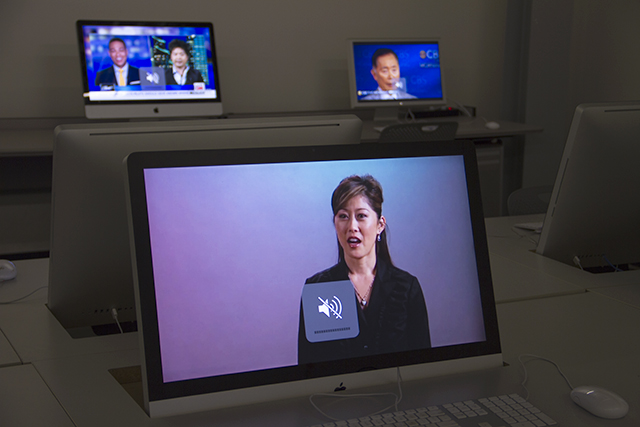
The Buffoon, the Quiet Servant, the Enemy; 16 channel video installation, 2014-15

The Buffoon, the Quiet Servant, the Enemy; 16 channel video installation, 2014-15

The concept of the artist studio has a broad range of meanings in contemporary practice. Artists may spend much of their time in the actual studio, or they may spend very little time in it. Tell us about your individual studio practice and how it differs from or is the same as traditional notions of “being in the studio.”

My studio is pretty much anywhere I have my laptop and headphones. Usually this is at my desk at home, but I’m happy to work anywhere so long as I’ve got a power source and there’s no glare on my screen.

Even when I had access to a shared studio space I never did any work there. That studio became a place for me to engage with the other artists and enjoy being a part of the artist community.

What roles do you find yourself playing that you may not have envisioned yourself in when you first started making art?

I never thought I’d get involved in teaching. I had the opportunity to be a teaching assistant and now I hope to teach at the college level.

I also didn’t envision learning such a wide range of things while installing or troubleshooting my own tech. For example, I know how to properly wall mount a television, how to set up a synchronized multi-channel video installation, and how to install projectors on the ceiling of a gallery without a proper ceiling.

When do you find is the best time to make art? Do you set aside a specific time everyday or do you have to work whenever time allows?

Nighttime is the right time. Though I do some planning in the daytime, the majority of my work happens in the evening. Some of it is out of necessity. In order to minimize light pollution in my projection work outside, I need to wait until after sunset to get video documentation. I don’t have a regular schedule set aside for art, so the amount of work I do varies each night.

Double Click to Open, HD video, 3:32, 2014

Double Click to Open, HD video, 3:32, 2014

How has your work changed in the past five years? How is it the same?

My work has always been digital, but it has transitioned from cartoon illustrations and animation to video art and appropriation. Though I still enjoy drawing cartoons or caricatures for fun, my interests are now more conceptually driven. My sense of humor has been a subtle constant in my work.

How have people such as family, friends, writers, philosophers, other artists or even pop icons had an impact on the work you do?

All the communities I’ve been a part of have influenced my work. Whether our conversation is about emerging artists, keeping up with social media, or minority issues, I am eager to learn from others while also sharing my own experiences. Audience accessibility is important to me. The incredible people around me humble me constantly.

Have you ever been pulled in the direction of a pursuit other than being an artist? What are your other interests? 

For a long time, I wanted to become a medical doctor. I still believe in the power of medicine, but I eventually realized a career in medicine was not my vocation. My passion for art and science is ultimately rooted in their pursuit of the truth.

Occasionally I dream about playing video games professionally.

About

Verdan_HeadshotAngelica Verdan is a video artist hailing from Northern Virginia. She earned a B.S. in Chemistry specializing in Biochemistry from the University of Virginia in 2014. Angelica was awarded the Aunspaugh Fellowship from the McIntire Department of Art at UVA. Her work investigates the integration of the digital and physical world and how people interact with the interface. She invites the viewer to see the depth of our relationship with technology.

Verdan_Studio Detail

angelicaverdan.wordpress.com

All images copyright of the artist and used with their permission. 
Posted in New Media, Video | Tagged , , , , | Leave a comment

Jimena Moreno – Mexico City, Mexico

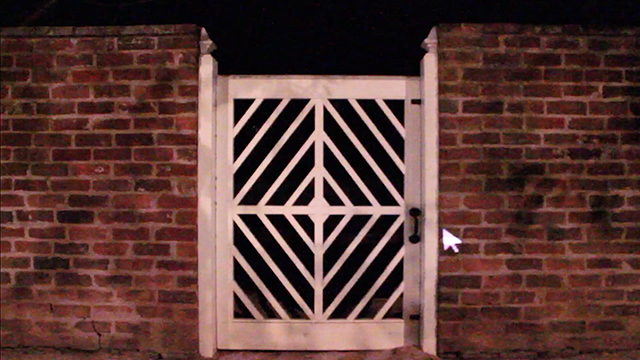
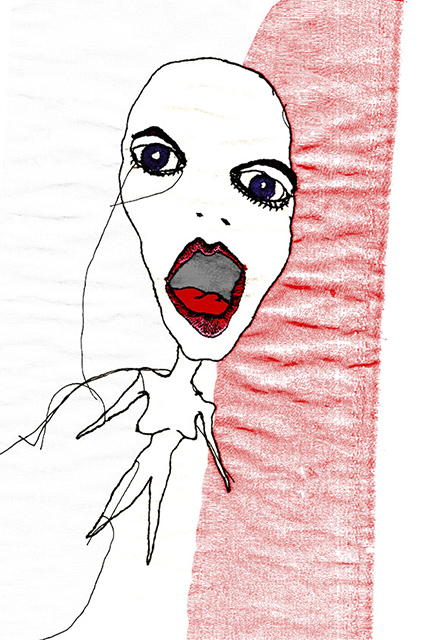
ELLE Mixed media (embroidery and digital) 2014

ELLE
Mixed media (embroidery and digital)
2014

Briefly describe the work you do.  

I am lucky to say that my job is drawing.

I am really into the human being as a form and matter, the human body and anatomy; its perfection and its distortion. It is my main interest as a subject because it is infinite, there will always be a different approach to represent it. I have been able to experiment with many different mediums and techniques but definitely I enjoy mostly the simplicity of the black ink along with the needle and thread. Embroidery gives me a special intimacy between me and my pieces.

Tell us about your background and how that has had an influence on your work and on you as an artist.

My brother is a visual artist too. He is six years older than me so I grew up watching him painting and drawing and being surrounded by art books. I suppose my interest in art started because of him.

The concept of the artist studio has a broad range of meanings in contemporary practice. Artists may spend much of their time in the actual studio, or they may spend very little time in it. Tell us about your individual studio practice and how it differs from or is the same as traditional notions of “being in the studio.”

I do have a place at home with a working table, good lighting and all my tools, however my practice doesn´t necessarily come about there. It is weird but my job is also one of my leisure activities, so I can do it anywhere as long as I have some paper and ink. 

BIGIDIRI ZINIA Mixed media (ink on papel + digital) 2014

BIGIDIRI ZINIA
Mixed media (ink on papel + digital)
2014

What roles do you find yourself playing that you may not have envisioned yourself in when you first started making art?

Self-promotion is crucial, but definitely much more fun than accounting.

When do you find it is the best time to make art? Do you set aside a specific time every day or do you have to work whenever time allows?

Ideas come up whenever they want, nevertheless I feel much more productive when I start working early in the morning.

How has your work changed in the past five years? How is it the same? 

Not only my work has changed in the past years, but also my whole life. I like to think that everything I have been through and everything I have seen shows up one way or another on my production. One of the priorities in my life has been to see the world, I always say that if we are in this planet is to see it, so traveling is very important for me and I try my best to keep doing it. Watching other cultures and learning about them has positively changed my perception and it definitely has reflected on my artistic labor. Technically I feel I have established my own style but one thing is for sure, this job is about continuously evolving.

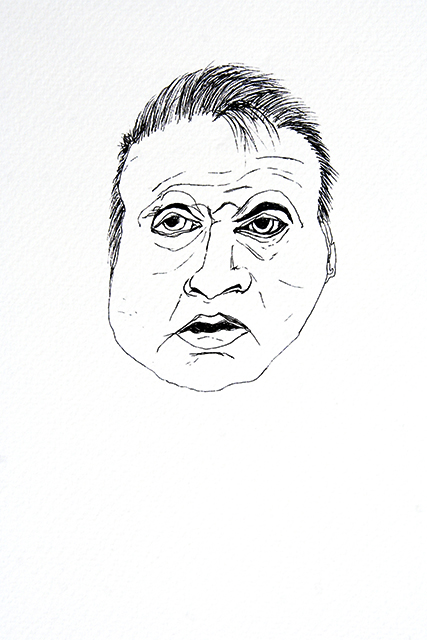
QUE PASO FRANCIS Ink on paper 2014

QUE PASO FRANCIS
Ink on paper
2014

How have people such as family, friends, writers, philosophers, other artists or even pop icons had an impact on the work you do?

Everything around us becomes an influence in some way. Constant reading and observing is important, as well as knowing when to disconnect and focus on other things. Besides, I love Francis Bacon and enjoy working while Björk sings.

Have you ever been pulled in the direction of a pursuit other than being an artist? What are your other interests? 

Somewhere in the middle of my career I was about to quit to become an archaeologist (my childhood´s dream job) but it was only a fleeting desire mixed of some frustration and fear. I am truly happy with what I do now.

I work as a model as well.

About

jimenamoreno_headJimena Moreno (1989) is a freelance illustrator and artist, graduated from the Faculty of Arts and Design at UNAM (Universidad Nacional Autónoma de México), with a diploma in Artistic Anatomy. Her work is inspired by the forms of nature, the human body and the woman. She enjoys working with black indian ink and sometimes a touch of colour. Embroidery has slowly become her favourite modus operandi, giving favorable results to her work. Currently, she lives in Mexico City and is a colaborator with both mexican and international publications.

jimenamoreno_draw

jimenamoreno.com

All images copyright of the artist and used with their permission. 
Posted in Drawing, Illustration | Tagged , , , | Leave a comment

Matt Babcock – Seattle, Washington

title:  Great Blue media:  powder coated steel, stainless steel, and clock dimensions:  13'H x 8'W x 3'D year:  2015

title: Great Blue
media: powder coated steel, stainless steel, and clock
dimensions: 13’H x 8’W x 3’D
year: 2015

Briefly describe the work you do.

I build metal sculptures. I think of my work as an aerial form of calligraphy that captures a subject’s gesture or action. It is representational, in that my subjects are easily recognizable. At the same time, my sculptures distill form and movement in a way that rewards inspection. Often the images portrayed in my work resolve as viewers move around and see it from different angles. Creating a sense of discovery or revelation is a way to draw people in and make a connection with them.

I focus on public art as a way of making things that benefit whole communities. Public art is important because public spaces reflect the ways communities and individuals think of themselves in relation to others and to the larger world.

Tell us about your background and how that has had an influence on your work and on you as an artist.

When I was five my dad set me up with a workbench and tools. I spent many hours making things that I thought of as functional, even though the function was often mysterious or imaginary. I continue to work in this vein, producing artwork that typically has an active or functional aspect.

I approach art from the approximate direction of craft. The objects I find most moving reveal their makers’ appreciation for materials and the ways things are made. I went to welding school rather than art school to learn to make beautiful things. The critics whose opinions I value most are fellow welders.

At the same time there is a strong element of form for form’s sake in my work. My background in mathematics and art history led to an interest in exploring the ways unadorned shapes can resonate with a viewer on an emotional or visceral level.

title:  Big Wet Dog medium:  powder coated steel dimensions:  52"H x 92"W x 28"D year:  2014

title: Big Wet Dog
medium: powder coated steel
dimensions: 52″H x 92″W x 28″D
year: 2014

The concept of the artist studio has a broad range of meanings in contemporary practice. Artists may spend much of their time in the actual studio, or they may spend very little time in it. Tell us about your individual studio practice and how it differs from or is the same as traditional notions of “being in the studio.”

There’s an analytical aspect to my practice. At least half of my sketchbook is filled with research notes, engineering calculations, materials lists, etc. I spend a lot of time in cafes and libraries working on my laptop, where a lot of my design work takes place.

I try to spend at least half of my time in the welding shop. My best designs are those most firmly grounded in the physical intuition or “feel” for tools and materials that comes from hands-on work. Shop time is also rewarding because it gratifies my inner child’s appreciation for fire and big noisy tools. I’m just getting to the point where I’m hiring other people to do some of the fabrication on my larger projects. Working with other fabricators makes me feel the need for hands-on shop time even more acutely.

What roles do you find yourself playing that you may not have envisioned yourself in when you first started making art?

I’ve been making art as long as I can remember. For most of my life I didn’t think of myself as a businessperson, and didn’t think I’d want to become one. While I begrudge the time I spend applying for commissions, marketing, bookkeeping, and otherwise running a business, I generally enjoy learning new skills. The bloom may fade when I’ve been at this a few more years, but for now I’m engaged by the process.

When do you find is the best time to make art? Do you set aside a specific time everyday or do you have to work whenever time allows?

I’m fortunate that I can be an artist full time. I limit myself to a standard 40-hour week as much as possible, so that I can stay connected with family and friends.

title:  Equestrian medium:  steel dimensions:  57"H x 63"W x 18"D year:  2013

title: Equestrian
medium: steel
dimensions: 57″H x 63″W x 18″D
year: 2013

How has your work changed in the past five years? How is it the same?

The biggest change has been the switch to doing much of my design development on the computer. 3D cad software has come a long way. It allows me to design things I couldn’t have conceived of before. It’s a great tool for visualizing (and showing other people) what a piece is actually going to look like. It also allows me to go into the workshop with a set of accurate shop drawings, so fabrication has become more efficient and enjoyable.

How have people such as family, friends, writers, philosophers, other artists or even pop icons had an impact on the work you do?

I’m interested in traditional Chinese and Japanese ink painting. It’s amazing how much a skilled painter can reveal about a subject’s movement and feeling or essence using a minimum of brushwork. Looking at ink paintings has helped me clarify some of my goals for my own work in terms of economy and revelation.

Have you ever been pulled in the direction of a pursuit other than being an artist? What are your other interests? 

I studied a lot of math and physics in college, and still take up a class or textbook occasionally. I became an architect and practiced for 13 years because I liked the idea of combining that rational, mathematical approach with a more intangible, intuitive design sensibility. As an artist I can explore that right brain/left brain synergy more freely.

About

Babcock_head_shotI’m a sculptor who builds with metal. My goal is to create complex, changing impressions using simple forms and materials.

When I was five my dad set me up with a workbench and tools. I spent countless hours making things that I thought of as functional, even though the function was often mysterious or imaginary.

I have experience and training in architecture, engineering, metal fabrication, mathematics, and art history. My art reflects my lifelong interest in nature and how things work.

title:  Crane in its Vigilance medium:  computer-generated proposal rendering; finished work will be bronze dimensions:  17'H x 11'W x 5'D year:  work in progress, installation expected October 2015

title: Crane in its Vigilance
medium: computer-generated proposal rendering; finished work will be bronze
dimensions: 17’H x 11’W x 5’D
year: work in progress, installation expected October 2015

mattbabcock.com

All images copyright of the artist and used with their permission. 
Posted in Sculpture | Tagged , , , , | Leave a comment

Gregg Schlanger – Ellensburg, Washington

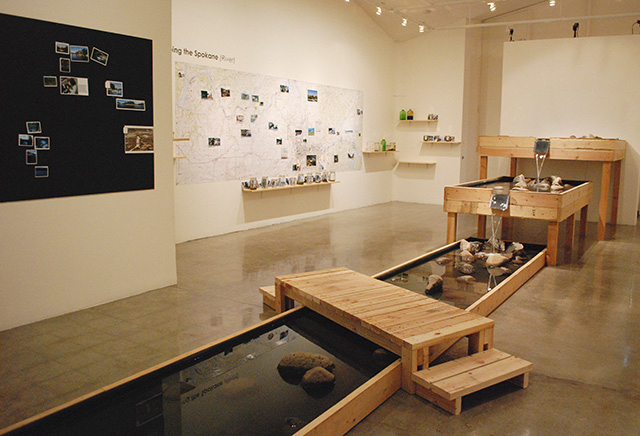
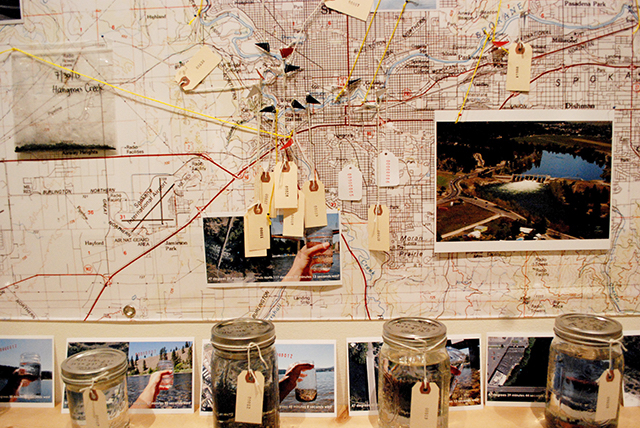
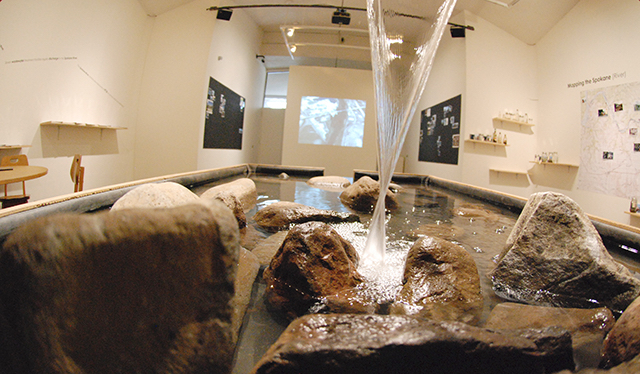
Title: Mapping the Spokane (River) Medium: water, rubber, rocks, photos, glass, etc... Dimensions: 10’ x 16’ x 40’ Year: 2013

Title: Mapping the Spokane (River)
Medium: water, rubber, rocks, photos, glass, etc…
Dimensions: 10’ x 16’ x 40’
Year: 2013

Briefly describe the work you do

I work primarily in installations and community public art projects. Many of my projects continue to reinforce my objective to collaborate with the sciences. I examine environmental issues through a long process of educating myself on the subject. It is exciting for me as an artist to work with biologists who share a similar passion. Many of my installations are in public areas. I am extremely interested in working in this environment. Through my work I am concerned with the issues of public art and public accessibility to it.

Tell us about your background and how that has had an influence on your work and on you as an artist. 

I grew up in Idaho and spend a great deal of time outdoors. It was there that I gained a respect for the rivers and land and the wild. This is a large part of what informs my work.

The concept of the artist studio has a broad range of meanings in contemporary practice. Artists may spend much of their time in the actual studio, or they may spend very little time in it. Tell us about your individual studio practice and how it differs from or is the same as traditional notions of “being in the studio.” 

While I am currently in the process of building a studio in my backyard quite often my studio the gallery where I exhibit. I work for the project and working on site is a big part of my practice. The studio is my place to think and work on the concepts for my projects.

Title: Mapping the Spokane (River) Medium: water, rubber, rocks, photos, glass, etc... Dimensions: 10’ x 16’ x 40’ Year: 2013

Title: Mapping the Spokane (River)
Medium: water, rubber, rocks, photos, glass, etc…
Dimensions: 10’ x 16’ x 40’
Year: 2013

What roles do you find yourself playing that you may not have envisioned yourself in when you first started making art?

Paperwork is at least 50% or more of my art practice. As a public artist I find myself spending a great deal of time writing proposals, budgets, letters and conducting research. These are aspects of a working artist that I hadn’t considered when I began.

When do you find is the best time to make art? Do you set aside a specific time everyday or do you have to work whenever time allows? 

At one time late at night was a creative time for me. Now, I find early mornings to be much more productive. I do not have a consistent time in the studio. I work when I can find the time.

Title: Mapping the Spokane (River) Medium: water, rubber, rocks, photos, glass, etc... Dimensions: 10’ x 16’ x 40’ Year: 2013

Title: Mapping the Spokane (River)
Medium: water, rubber, rocks, photos, glass, etc…
Dimensions: 10’ x 16’ x 40’
Year: 2013

How has your work changed in the past five years? How is it the same?

With my work, I am able to continue the development of my visual vocabulary through the use of common visual languages. I hope to bring to the dialogue on public art new questions about public space, public accessibility, and community involvement and to address issues on low versus high art forms.

How have people such as family, friends, writers, philosophers, other artists or even pop icons had an impact on the work you do? 

I learn from them all. Well, probably not the pop icons.

Have you ever been pulled in the direction of a pursuit other than being an artist? What are your other interests? 

During the last several years I have developed a passion for competition BBQ. This expensive hobby can be a big distraction from the studio.

About

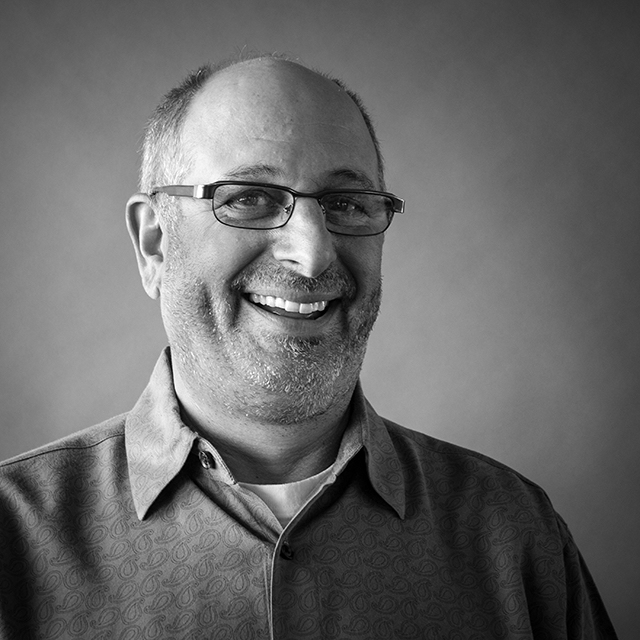
Gregg SchlangerGregg Schlanger is a Professor of Art and Chair of the Department of Art at Central Washington University in Ellensburg, Washington. He received his BFA from Boise State University in 1987 and his MFA from Northern Illinois University in 1989. Gregg’s work has been exhibited both nationally and internationally. This includes a community public art commission for the City of Memphis, Tennessee, a community project for the City of Providence, Rhode Island and a commission for the public library in Owensboro, Kentucky. Gregg has participated in exhibitions in New York, Illinois, Iowa, Nevada, California, North Carolina, Arkansas, Idaho, Oregon, Tennessee, Virginia and Washington. His work has also been exhibited in Berlin, Erfurt, Potsdam and Jena, Germany. He has received many awards including Sponsorship by the New York Foundation for the Arts, Israel-Tennessee Visual Artist Exchange Project Fellowship, USIA Arts America Grant and New Forms Regional Initiative Grant from the NEA.

schlanger studio construction

greggschlanger.com

All images copyright of the artist and used with their permission. 


Posted in Installation | Tagged , , , , , | Leave a comment

Mohammad Zaza – Istanbul, Turkey

_Imagination is more important than Knowledge_, Charcoal on paper A4, 2014

_Imagination is more important than Knowledge_, Charcoal on paper A4, 2014

Briefly describe the work you do. 

I mainly paint on big size canvases using acrylic and charcoal. In my paintings, I usually collect all kind of forms and arrange them in psychologically familiar shapes, adding a unique background. I am always looking for the perpetual movement that lies behind fixed scenes. Because of this, I also work on animation in video art and on illustration.

Tell us about your background and how that has had an influence on your work and on you as an artist. 

I was born and lived in Saudi Arabia until I was 18. The quietness, the loneliness, the stillness and the greatness of the space, especially the desert, opened a new dimension within my imagination. Moving to Aleppo for my studies in Fine Arts was a whole different experience: There I met many artists and professors with whom I used to work. It was an intense period of time, during which many artistic thoughts and projects were shared amongst passionate people. Now, as art became my identity and that all aspects of my life are deeply connected to it, everything around me has an influence on the work I do.

Face of the Machine, Acrylic on canvas, 160 x 170 cm, 2014

Face of the Machine, Acrylic on canvas, 160 x 170 cm, 2014

The concept of the artist studio has a broad range of meanings in contemporary practice. Artists may spend much of their time in the actual studio, or they may spend very little time in it. Tell us about your individual studio practice and how it differs from or is the same as traditional notions of “being in the studio.”

Since I started painting, I have managed to create a work space in the places I have lived, and it has always been in the living room. My studio is also the area where I welcome friends, play music, organize dinners and jam sessions,… I don’t dissociate my work from my life much and this multipurpose space aims on influencing each other on a human and artistic level.

What roles do you find yourself playing that you may not have envisioned yourself in when you first started making art?

I am currently not playing any other roles other than being a full time artist.

When do you find is the best time to make art? Do you set aside a specific time everyday or do you have to work whenever time allows?

I don’t have any fixed time for working. However, I try to do it everyday. Sometimes I enjoy waking up very early in the morning in order to work along with the sunrise, and other times I can stay up until very late: It really depends on my mood and on my inspiration. 

Homogeneity, Acrylic on canvas, 170x150cm, 2014

Homogeneity, Acrylic on canvas, 170x150cm, 2014

How has your work changed in the past five years? How is it the same?

There has been a big difference. Before, when I was a student, I would experiment different artistic movements and techniques in order to find myself. But art cannot be limited to these ideas, and now, after a few years, I can say that I reached some kind of artistic identity to which I feel close. I know what I do and why I do it.

How have people such as family, friends, writers, philosophers, other artists or even pop icons had an impact on the work you do?

Philosophers, artists and my family have an influence on the work I do. But if I knew exactly from where my inspiration came from, I would keep it with me all the time and would not stop making art! However, this thing is moving around me quickly and I try to catch it as often as possible.

Have you ever been pulled in the direction of a pursuit other than being an artist? What are your other interests? 

I recall always wanting to be an artist. However, if I hadn’t been an artist, I would probably be a craftsman or a joiner. Other than that, I enjoy playing some music, singing, cooking pasta with yoghourt and garlic, keeping my cat Shayboob company and fixing things in my flat/studio.

About

Head shot ZazaMohammad Zaza, Syrian artist, was born in Riyadh in 1987. Growing up in an artistic family, he started drawing and painting at an early age. After completing high school in Saudi Arabia, he moved to Syria in 2006 to study at the faculty of Fine Arts in Aleppo University. He held his first solo exhibition in 2008 and, after his graduation in 2010, was appointed as a painting teacher assistant at the University until 2012. Besides painting on big size canvases mainly, he also works on illustrations and animations.

In his artworks, Mohammad Zaza focuses on the movement that lies behind fixed scenes, enhancing the subject in order to open new scopes of reality. Because his paintings aspire to work as a window to another dimension of life, his shapes emphasize the unity of the source of thoughts, allowing the viewer to apprehend with him the Origins.

Zaza studio

mohammadzaza.com

All images copyright of the artist and used with their permission. 
Posted in Painting | Leave a comment

Beatriz Albuquerque – Porto, Portugal

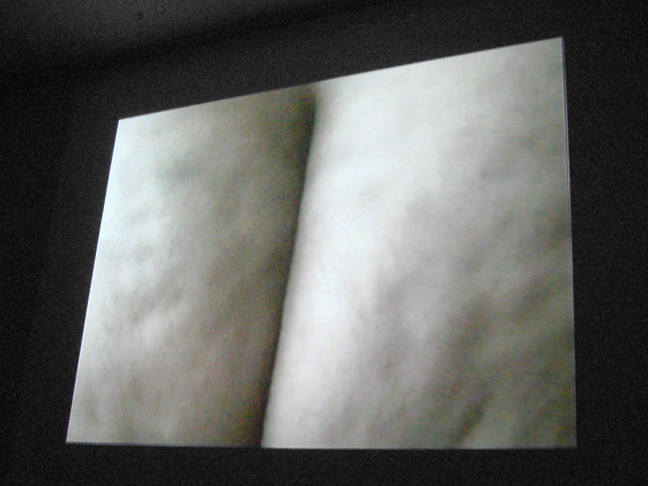
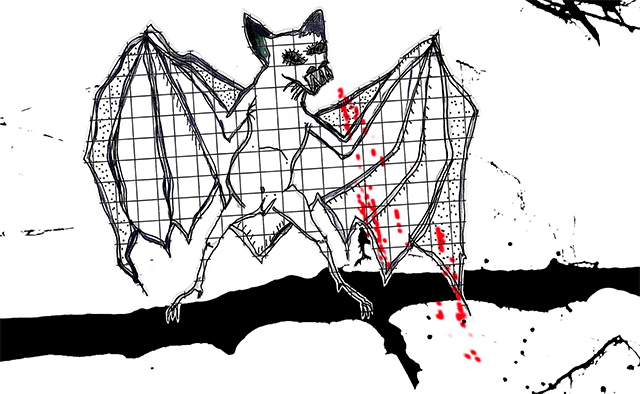
After Yoko Ono Bottoms...BUTt, Video Installation, 9 min., 2010 - 2008.

After Yoko Ono Bottoms…BUTt, Video Installation, 9 min., 2010 – 2008.

Briefly describe the work you do.

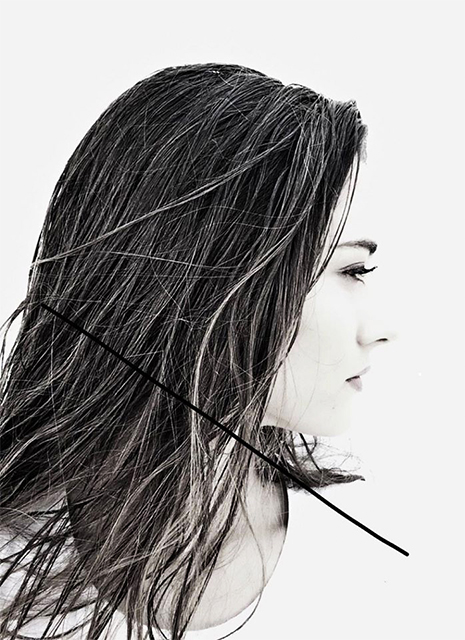
I am an interdisciplinary and cross-media performance artist from Porto, Portugal.
I believe that art should reach out to all persons. Thinking about this and the Capitalistic society and commercial world that we live in, I created my on-going performance project “Work For Free,” in which I offer myself to work for free creating any artwork that the public desires. This performance action is a social gift in which a work of art is fashioned especially for the person that interacts with the performance. This free artwork can be chosen from a pool of different mediums such as: e-mail art, digital photo, web art, digital drawing, decollage, among others. Until now, this Project has been done in different countries and venues such as New York, Macy Gallery and in Greece at the Biennial of Thessaloniki, and I created up to now a total of 183 free works of art customized for the active audience.

I believe that art can bring change to the persons that are touched by it and then these persons change the world. Activism is a practice that is always present in my artwork and Projects. An example of this is my recent performance/installation on-going project called Crisis of Luck, as a response to the crisis in Portugal and Europe, where I presented myself as an oracle-priestess who foretells and responds to questions asked pertaining to the crisis that we live with, and provides a solution to problems. From this premise, I created an installation in the space using 3D sculpture, photo, video and food in which the public was invited to enter and interact with me as a performer, and I responded to their problems and misfortunes. I became an oracle that answered all questions for the audience in three forms: verbally, in written form and via the gift of a customized cake made for each person. 

Crise na Fortuna / Crisis of Luck, Performance & Installation, 7 x 10 x 4 m, 2013.

Crise na Fortuna / Crisis of Luck, Performance & Installation, 7 x 10 x 4 m, 2013.

Tell us about your background and how that has had an influence on your work and on you as an artist.

I remember that I was a child in Portugal when the dictatorship had just ended, and I saw a performance from a Portuguese artist that I know now as Albuquerque Mendes. I remember thinking until that moment that art was defined by embodiment in a physical object such as with painting and sculpture and nothing else. But on this first encounter, I remember when I entered the space and saw the crowd watching a person do movements with dust and fire, I was fascinated. I turned to my mother and asked, “What is this?” And she replied “It is art. It is a performance.”

The concept of the artist studio has a broad range of meanings in contemporary practice. Artists may spend much of their time in the actual studio, or they may spend very little time in it. Tell us about your individual studio practice and how it differs from or is the same as traditional notions of “being in the studio.”

The concept of the studio exists first in my head and my mind, and the ideas and conceptualization of a performance or artwork can happen there anytime, anywhere. The manifestation of the art piece happens in an organic way and depending upon the medium, I might use different spaces or studios. For example, in the project “Happy Birthday Mr. President”, I nurtured the idea, concepts, material need, etc, in my “studio mind.” For the performance in April 2015 at Rooster Gallery entitled Bathroom Project (NYC), I created previously in a ceramic studio all the pieces used on site such as a toothbrush, soap, comb, lipstick, and cup. In the New Media Studio at Columbia University I took the photos of my underwear and printed them. As also in this studio I scanned and 3D printed my own figure, as a mimic of the action of the performance that I was going to perform. Then, all the work came together when I performed it during four hours in the gallery bathroom were the public could interact with me. At this time, a surveillance camera was showing what was happening in the bathroom in the Gallery entrance through a monitor. The studio that connected all these ideas and mediums was what I call the “studio or office mind”.

What roles do you find yourself playing that you may not have envisioned yourself in when you first started making art?

I envisioned no roles.

When do you find is the best time to make art? Do you set aside a specific time everyday or do you have to work whenever time allows?

Anytime is good since my “office” is inside my mind and I work there 24/7.
My inspiration comes from everyday life and the office is in my head, so I am always creating and developing projects wherever I am physically. My process continues after the initial inspiration and by creating 2-D forms through writing, drawing, sketches and photos of the project. Then I transform it into 3-D forms such as mockups or even 3-D printed sculptures which then become an installation in which I perform in it. I believe that the body is what gives identity and through the body, performance appears. Performance is an extension of the body. The extension of the performance is 3-D sculpture, photography or video, and an extension of this is installation.

Happy Birthday Mr. President I, Photography, B2: photo print 25 x 35 cm, 2015.

Happy Birthday Mr. President I, Photography, B2: photo print 25 x 35 cm, 2015.

How has your work changed in the past five years? How is it the same?

I believe that all men and women are equal and deserve the same opportunities and rights. In this way feminism always plays a role in my performances.
However, before 2005, I created performance pieces that addressed the gap or lack of equal rights between men and women, the condition and discrimination of women in relation with men. At this time I was living in Portugal and I could see the lack of opportunities and discrimination that women were suffering from, for example in the job/work force. Once, I saw an ad asking for a white man (computer trouble shooting) for one job and a woman for another (secretary). So I was developing themes in my artwork and performances related to the environment and daily life that I experienced. In 2005, I went to pursue an MFA at The School of the Art Institute of Chicago (SAIC), and this was my first contact with the USA. This lead me to explore different themes in my performances (2005-2015) as it was such a shock coming from a socialist society to be confronted with a capitalist society. However, this old theme has recently reemerged in my art practice within the project “Happy Birthday Mr. President”, that is a nod to Marilyn Monroe’s famous 1962 address to President Kennedy at a fundraising gala for the Democratic Party at Madison Square Garden.

How have people such as family, friends, writers, philosophers, other artists or even pop icons had an impact on the work you do?

I believe that the sum of my historical, societal, cultural and national background that has impacted my artwork and beliefs. I suffer from different influences and I embrace all of them to the extent that I cherish them and I reference them, almost as citations within the context of my artwork. For example, in my video-performance “VI” (2013) I was influenced by the same movement in a rubber-women (Freak shows) and influenced by the Fluxfilm Nº28: Wrist Trick and Unrolling Event by Paul Sharits États-Unis (1965). Another example is the video-art “After Yoko Ono Bottoms…BUTt”. This video-performance explores the repetition of the same movement in male bodies with 3 different skin colors (white, brown and black). The body movements were influenced by Yoko Ono´s film “Bottoms or No. 4” (1966).  I can continue on and on, for example, in my performance “Love me Tender” that was a collaboration piece with Albuquerque Mendes performed at Festival Trama, Serralves Museum, Porto, Portugal in 2010, we were influenced by the Elvis Presley song, “Love me Tender” (1956).

Have you ever been pulled in the direction of a pursuit other than being an artist? What are your other interests?

It is not a choice. I was born this way. Creating is like breathing and I need both to survive.

01B_Albuquerque_HeadshotAbout

beatrizalbuquerque.web.pt

05B_Albuquerque_Studio

All images copyright of the artist and used with their permission. 
Posted in Performance | Tagged , , , , | Leave a comment

Gary Setzer – Tucson, Arizona

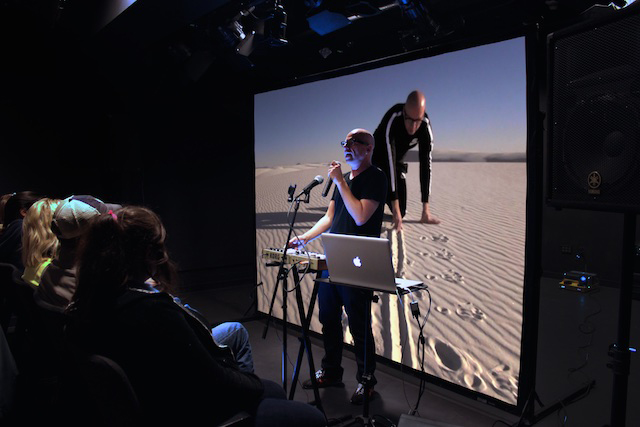
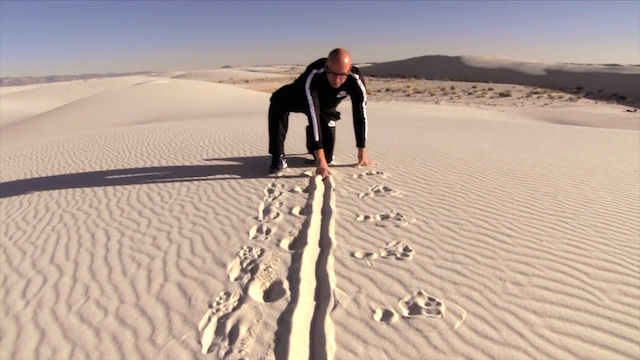
Title: Draw a Line So Long it Can’t Be Wrong Medium: Performance Art Size: Variable Year: 2014

Title: Draw a Line So Long it Can’t Be Wrong
Medium: Performance Art
Size: Variable
Year: 2014

Briefly describe the work you do. 

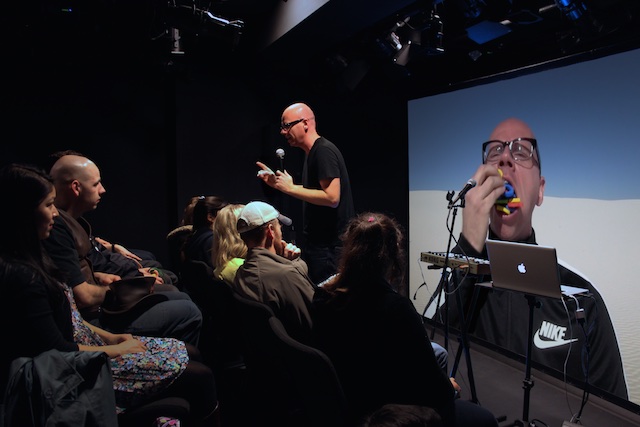
My recent work is interdisciplinary. If you can imagine equal parts Erwin Wurm or Marina Abramović and equal parts Talking Heads or Devo that’s a great start. It’s process-oriented performance art with a live dance punk soundtrack. I project video of myself interacting with the landscape while I sing quirky metaphor-laden songs about what’s unfolding in the video.

Tell us about your background and how that has had an influence on your work and on you as an artist.

I grew up in a tiny village on the Ohio River called Shadyside. Being a creative kid that never gave a damn about football, baseball, or basketball in a small high school sports-driven town like that was alienating. So I drew pictures and made weird music with my friends. When I finally went to study painting in college amongst other like-minded folks, I immediately respected the challenges of that environment. Art school is inimitable.

Everything about my practice today is rooted in those days of painting and drawing. My early interest in rendering the human form—specifically how it can convey meaning—is what ultimately (many years later) led me to process-oriented performance art. At that time, I thought performance art was a scam. A lot of people don’t initially trust it. It’s like a bizarre and unfamiliar religion from the outside with all of its unusual foreign rituals. Everything I do, whether performance, video, installation, or sound, still begins with drawing. I am a huge drawing advocate.

Title: Draw a Line So Long it Can’t Be Wrong Medium: Performance Art Size: Variable Year: 2014

Title: Draw a Line So Long it Can’t Be Wrong
Medium: Performance Art
Size: Variable
Year: 2014

The concept of the artist studio has a broad range of meanings in contemporary practice. Artists may spend much of their time in the actual studio, or they may spend very little time in it. Tell us about your individual studio practice and how it differs from or is the same as traditional notions of “being in the studio.”

I wouldn’t call myself a post-studio artist. I love the idea of a dedicated laboratory-like space—a safe and familiar room that allows you to take risks without anybody watching. All of your shit, drawings, and notes around you; it functions like a concrete model of your neural net that you can walk around in. The space makes you accountable. While my final works are very public, I am deeply particular about absolute privacy when I’m working. I am easily distracted and like to work at night when nobody is around in the building my studio is in. I find that quietude conducive to switching into my magical make-it-happen zone.

While the studio plays a critical role in my practice I can’t discount the landscape. Hell, I could probably call myself a landscape artist—but not of the ready-for-grandma’s-calendar variety. I have deep respect for the tradition of the plein air painters. There is real romance for me in the idea of the artist situating him or herself in the sweltering heat, being eaten alive by mosquitos, standing in the mud, and isolating themself all in a quest to frame the idyllic—something purely theoretical that only manifests through the artists altogether fictional view. We’re storytellers and we help people see.

What roles do you find yourself playing that you may not have envisioned yourself in when you first started making art?

I am ridiculously organized. Everything goes on my calendar. That’s a reality that art school doesn’t necessarily prepare you for—that you not only need to continue busting your ass in the studio but that you’ll also have to schedule that around your day job. I love the familiarity and the ritual of studio labor. And that so much of what an artist does remains unseen. Intangible labor. Invisible labor.

When do you find is the best time to make art? Do you set aside a specific time everyday or do you have to work whenever time allows?

Between 7PM and 3AM is ideal. I am not somebody who can do much with an hour or two here or there. I need a good block of time—and preferably a few days in a row so I can be a little manic about it. I am a professor so I have the summers entirely open for creative work—and that unfettered research time is irreplaceable.

Title: Panphonemic Mover (Aphasic Latency II) Medium: Performance Art Size: Variable Year: 2014

Title: Panphonemic Mover (Aphasic Latency II)
Medium: Performance Art
Size: Variable
Year: 2014

How has your work changed in the past five years? How is it the same?

I began doing this performance-music hybrid work five years ago. Prior to that I did both art and music separately. Smashing them together made perfect sense. I think my work is the most “me,” that it’s ever been. It’s what I’m supposed to do. While I’m still developing this body of work, I’m also exploring new directions.

I started a new long-term project last year at the Brush Creek Ranch Artist-in-Residence program that represents another very sharp turn for me. It’s really far along now and I am excited because it’s unlike anything else I’ve ever done. It will likely be another year in progress. It might totally fail, but if there was no risk and the stakes weren’t real it most certainly would flop. There’s nothing worse than safe, flavorless mediocrity.

How have people such as family, friends, writers, philosophers, other artists or even pop icons had an impact on the work you do?

I love philosophy—especially because as an artist I can use and abuse it. I can peruse it casually, pulling from certain ideas to ascertain a wanted flavor without all of the baggage that a scholar might encounter. I don’t think I’ll ever need to finish Merleau-Ponty’s Phenomenology of Perception, because sometimes one word or one sentence is all I need to open up a world or two. I respect the voices of logic and the flights of alchemy as equitable harmonies at the heart of my work and I use both intellect and absurdity to situate the viewer at the seam where mind and body touch. So Merleau-Ponty has had as much impact on me as Gary Numan. Rhythm is meaning at its most basic. It’s bodily.

I had the good fortune of seeing Ann Hamilton lecture twice when I was a student. I was still a painter the first time I saw her speak. I was familiar with her art but hearing her illuminate it changed everything for me. Her works are nothing short of genius and the parting poetic resonance they instilled were the first seeds of my realization that I might not be a painter. Shortly thereafter I had a studio visit with Joan Jonas that was also incredibly formative. The influences kept snowballing. Another key ingredient was seeing Miranda July’s performance, The Swan Tool, live in 2001.

Have you ever been pulled in the direction of a pursuit other than being an artist? What are your other interests?

I enjoy writing and might have liked to head down that path. It’s never too late. I’d also like to be Neil deGrasse Tyson, but I understand that Neil currently holds that position. It is so great to see science literacy back on the radar of popular culture in the United States and I think that he has a lot to do with that.

About

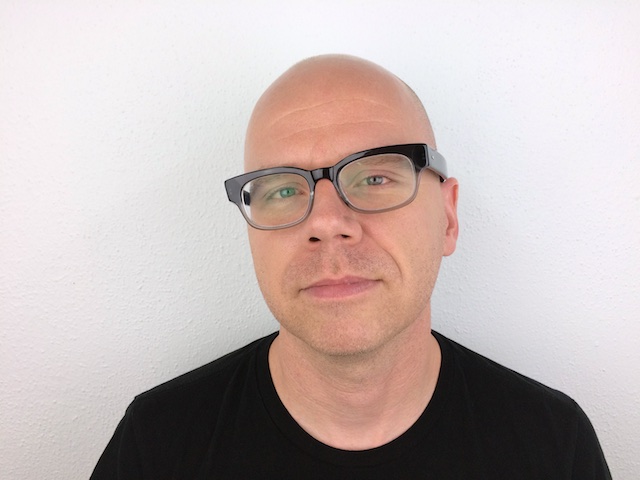
SETZER_head_shotInterdisciplinary artist, Gary Setzer, provides gallery audiences with an experience that the Huffington Post called “a phenomenal hybrid of his own, integrating video, music and performance.” His works have been performed, exhibited and screened across the nation. In 2012, Setzer released the soundtrack for his performance, Supralingual/Sublingual: The Tongue is the Terrain, on Pretend Records. Setzer currently lives and works in Tucson where he is an Associate Professor of Art at the University of Arizona.

SETZER_working_in_studio

garysetzer.com

All images copyright of the artist and used with their permission. 
Posted in Conceptual Art, Interdisciplinary, Performance, Uncategorized, Video | Tagged , , , , | 1 Comment

Josh Johnson – Dekalb, Illinois

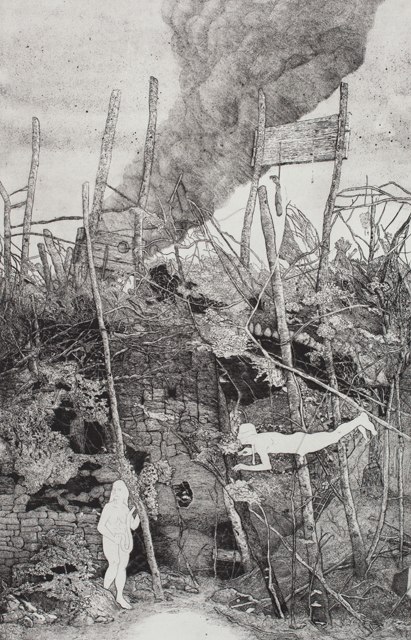
Kamikaze  etching/engraving 15.75" x 24" 2014

Kamikaze
etching/engraving
15.75″ x 24″
2014

Briefly describe the work you do.

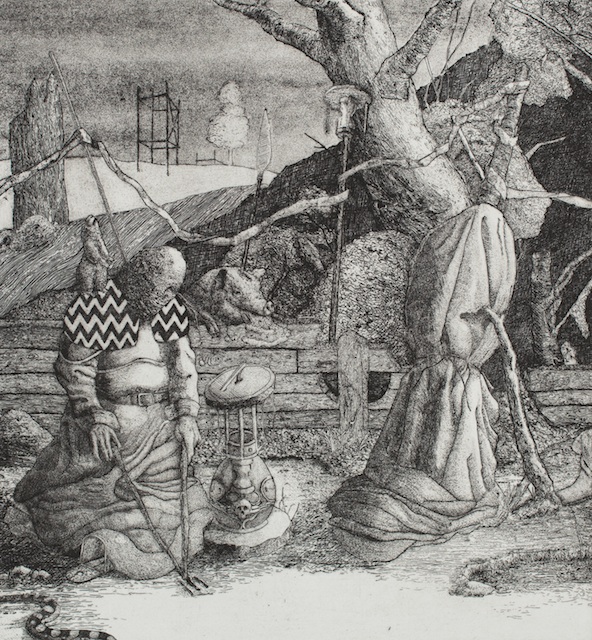
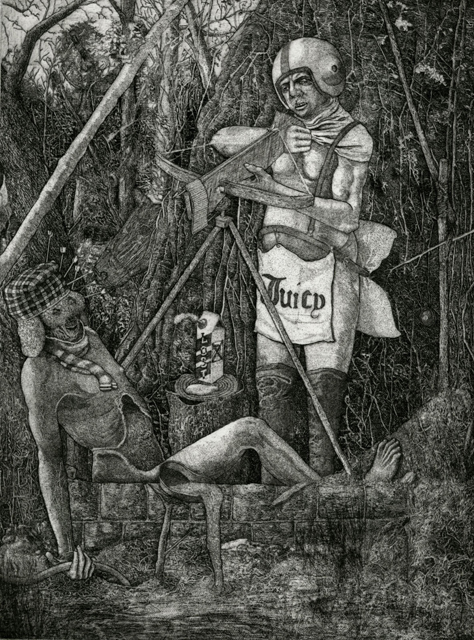
I create figurative landscapes of individuals traversing a harsh, post-civilized environment. These images examine one’s relationship within a society increasingly devoid of shared meaning or consequence. Detached figures are left to meander through an anonymous world, performing acts of violence and deviance. Attempts at reconciling lost purpose arise in the form of futile contraptions or makeshift rituals.

Tell us about your background and how that has had an influence on your work and on you as an artist.

I received a BFA from the University of Iowa in printmaking, and an MFA from Northern Illinois University. I was very fortunate to work with faculty at both institutions that understood my interests, and not only put up with, but encouraged me to obsess over individual pieces of work. This allowed me to develop a somewhat unique but time consuming approach to making an image.

The concept of the artist in the studio has a broad range of meanings in contemporary practice. Artists may spend much of their time in the actual studio, or they may spend very little time in it. Tell us about your individual studio practice and how it differs from or is the same as traditional notions of “being in the studio.”

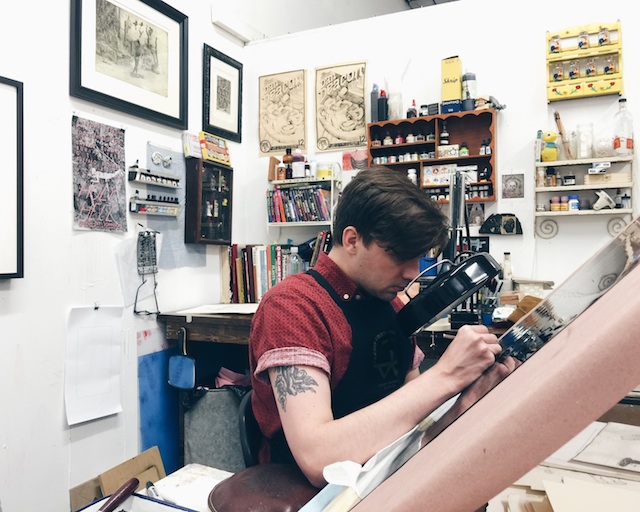
My studio practice probably seems painfully traditional to some. The process for each piece can be lengthy, so time in the studio is essential if I want to maintain a consistent output. I keep a minimum 40-hour week in the studio in addition to any other obligations I may have. The actual work taking place in the studio consists of preliminary drawing and sketching, a lot of drawing on the copper, and the occasional night at the press to proof or edition a plate.

You're the doctor etching/engraving 10.5" x 11.25" 2014

You’re the doctor
etching/engraving
10.5″ x 11.25″
2014

What  roles do you find yourself plaything that you may not have envisioned yourself in when you first started making art?

I never really stopped to think about the nuts and bolts business end of being an artist until after undergrad. Everything from managing social media to boxing and shipping work are tasks that weren’t necessarily in my periphery.

When do you find is the best time to make art? Do you set aside a specific time everyday or do you have to work whenever time allows?

I’ve always been a night owl and preferred working late. Since I’ve been teaching, however, I find myself in the studio from mid morning through 8 or 9 at night on free days. This schedule allows me to maintain a hint of night owl status without being too worn out in the classroom. On days that I teach or have other responsibilities that schedule usually shifts a bit later into the day.

Victory Lap etching/engraving 9" x 12" 2015

Victory Lap
etching/engraving
9″ x 12″
2015

How has your work changed in the past 5 years? How is it the same?

The underlying motivation for making work has remained consistent for quite awhile now. I’ve been exploring similar themes since around the end of my undergraduate work. The aesthetics have changed dramatically however. Several years ago I made the shift from what was almost pure abstraction to a more historical imagined representation.

How have people such as family, friends, writers, philosophers other artists or even pop icons had an impact on the work you do?

Family members have had a great impact by inspiring a strong work ethic. Authors such as Cormac McCarthy, Brett Easton Ellis, and Katherine Dunn provide inspiration as well. I get a lot of ideas and titles while listening to music in the studio from misheard song lyrics. This seems to happen a lot with Marc Bolan.

Have you even been pulled in the direction of a pursuit other than being an artist? What are your other interests?

Fortunately I’ve been able to have a pretty single-minded approach to art making for quite some time. I’ve had full time jobs, and worked outside of the art world, but have never really been distracted by anything else. As far as interests go, for some time now everything seems to be in service of the art practice. If I do sit down and read or watch something, it’s usually with the hope of pulling part of it back into the studio practice. Any real hobbies I had faded away while I was working towards applying to graduate school.

About

Joshua Jay Johnson-HeadshotJoshua Johnson was born in Clinton, Iowa, 1984. He received his BFA in Printmaking from the University of Iowa, and holds an MFA in Printmaking from Northern Illinois University. He currently lives and works in Illinois. Additional work may be viewed at www.joshuajayjohnson.com.

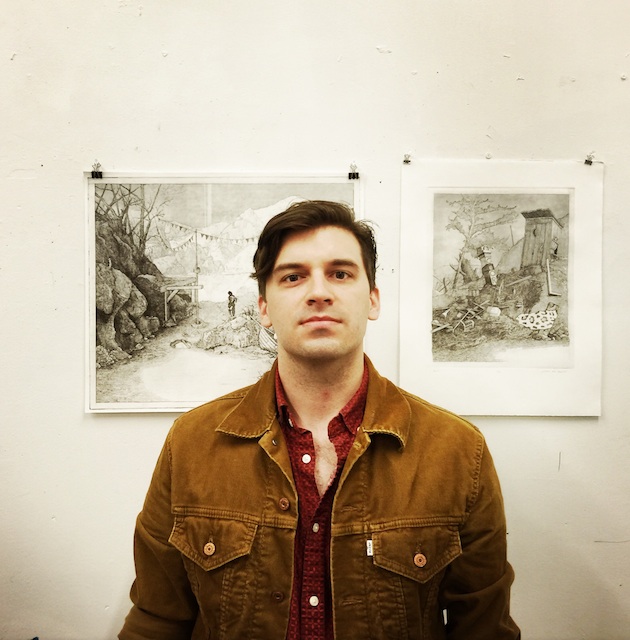
Processed with VSCOcam with hb1 preset

Processed with VSCOcam with hb1 preset

All images copyright of the artist and used with their permission. 
 

Posted in Drawing, Printmaking | Tagged , , , , | Leave a comment

Ashley Kauschinger – Columbia, South Carolina

Echo, Archival Pigment Print, 30x38”, 2013-2014

Echo, Archival Pigment Print, 30×38”, 2013-2014

Briefly describe the work you do. 

I am a photographer, book artist, and educator. I’m also the Founding Editor of Light Leaked, an online photography magazine that creates dialogue and community. This series, Questions of Origin, investigates complicated aspects of the mother/daughter relationship and distills them into constructed narratives that evolved from my childhood memories.

Tell us about your background and how that has had an influence on your work and on you as an artist.

It’s difficult to look at your life and think, “How did I end up here, anyway?” In a lot of ways, this is a question that I address in this series. Through this work I am looking at my mother and the southern landscape where I grew up to consider how identity is formed and what IT all means. There aren’t really answers to any of this. I’m not sure what makes someone one-way and not another. But I am a curious type of person who likes to investigate, and consider the world. This led me to explore through art.

The concept of the artist studio has a broad range of meanings in contemporary practice. Artists may spend much of their time in the actual studio, or they may spend very little time in it. Tell us about your individual studio practice and how it differs from or is the same as traditional notions of “being in the studio.”

How I use my studio changes a lot depending on what I am working on. I do spend an incredible amount of time in front of the computer: editing images, scanning, printing, and doing administrative type work. Some of the physical making of my work (props, book editions, framed pieces) is also done there.

I believe in having a clean studio where everything has its place. Even if my house is a mess, my studio is an organized retreat. I think of it as my space where I am allowed to be an artist and go down any path of thought that might seem crazy in regular life.

Morning Ritual, Archival Pigment Print, 20x25”, 2013-2014

Morning Ritual, Archival Pigment Print, 20×25”, 2013-2014

What roles do you find yourself playing that you may not have envisioned yourself in when you first started making art?

So many! When I first started I had a romantic idea of waking up and making art all day with no other worries. Of course that is what I thought it would be like, and non-artists still think that is what being an artist is like. But every artist is just a regular person who has a certain passion and drive for the arts. It’s because of this passion that I have taken on other roles: as an educator, community builder running Light Leaked, occasional curator, book keeper, accountant, etc… all roles that are necessary for me and are part of the practicality of being an artist.

When do you find is the best time to make art? Do you set aside a specific time everyday or do you have to work whenever time allows?

I’m a night person, and feel like I get the best work done when I shoot at sunset and then work through the night. This is an ideal that is becoming less and less possible. I have to put time structures into place to get work done. Time can always slip away if you let it. And hey, sometimes it does. Forgiving yourself, accepting each day as a new opportunity to do better, and finding whatever time you can to make art is the only way forward.

Kauschinger_03

Origin, Handmade Artists Book, ed. of 6, 2013 – 2014

How has your work changed in the past five years? How is it the same?

In some aspects of my work, I am standing on stronger ground. I feel like I understand myself better as an artist, and the essential questions my work is interested in. Because of this, I am interested in starting new paths in my work to answer these questions. This is all really vague as I am in a stage where I am figuring out the physical forms this will take, but I hope this state of unrest will continue as I explore new ground.

How have people such as family, friends, writers, philosophers, other artists or even pop icons had an impact on the work you do?

I try to be open and follow whatever curiosity strikes me: science, the Renaissance, nature, poetry… I like to research whatever interests me at the moment, and hope that it all comes together to create ideas for work. So far it has always led to something more focused.

Beyond that, I also take inspiration from what surrounds me: the southern landscape, my loved ones, and other artists.

Have you ever been pulled in the direction of a pursuit other than being an artist? What are your other interests? 

Not in a way that has taken any kind of real form. I think that most artists are critical thinkers that are resourceful and smart. So naturally we usually have thought of some more practical arena to place our efforts. I’ve thought about being a librarian, an astronomer, a politician. To me, what is so great about being an artist is that you can be anything you want for a little while. You can pursue all your interests in your work.

About

Kauschinger_04Ashley Kauschinger is a narrative photographer and book artist that explores identity and family. She received her BFA from Savannah College of Art and Design and her MFA from Texas Woman’s University in Denton, Texas. Her photographs have been exhibited nationally in venues such as the Griffin Museum of Photography and the RayKo Gallery. She has been published in the PDN Photo Annual, the South Atlantic Review, Lenscratch, Fototazo, F-Stop Magazine, and Flak Photo. She was a Critical Mass Finalist in 2012 and 2014.

Ashley is also the Founding Editor of Light Leaked, an online photography magazine that creates dialogue and community. Ashley lives and works in Columbia, SC where she is an adjunct professor at the University of South Carolina.

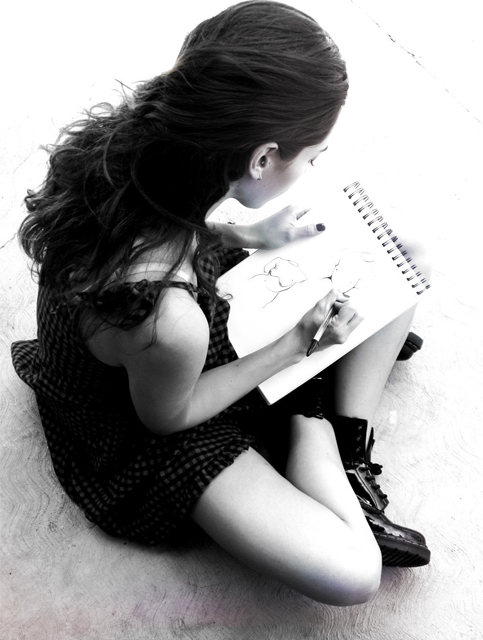
Working in letterpress studio

Working in letterpress studio

www.ashleykauschinger.com

All images copyright of the artist and used with their permission. 
 

Posted in Photography | Tagged , , , , | Leave a comment