John Chang – Southern California

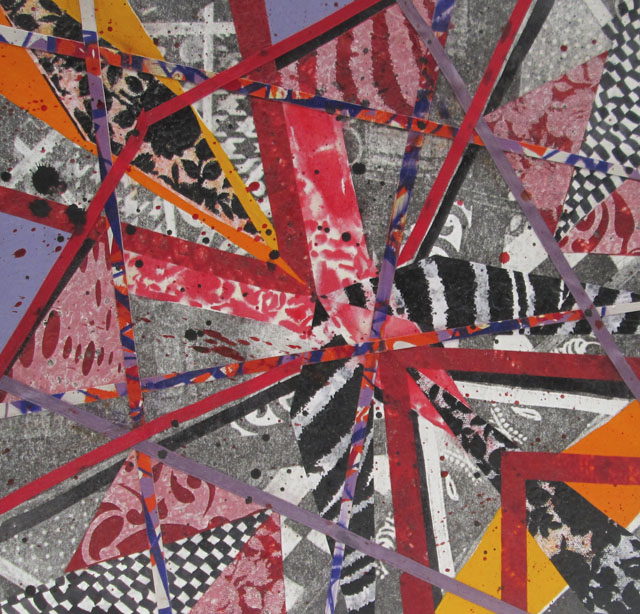
Untitled  Acrylic, News paper and Mixed Media on canvas 36x48" 2013

Untitled
Acrylic, News paper and Mixed Media on canvas
36×48″
2013

Briefly describe the work do you do.

The themes of my works are the relationship between language and its environment, the role that language has played in contemporary art, and the positive and negative effects that contemporary art has brought with the changing times. I try to express a period of experience, a segment of history, and a type of hope, by combining and commingling the beauty of traditional painting with the volatile aesthetic of Abstract Expressionism and its offshoots. Inspired by select modern Eastern and Western arts and artists and representing my own personal cultural confrontations, I draw upon the dualities of my two cultures and languages. My works are an attempt to communicate newfound perceptions gained through my creative process.

At what point in your life did you decide to become an artist?

My mother was a classically trained pianist and wanted me to follow her example when I was ten.
One day she took me to private lesson, and I saw a few young peoples were practicing pencil drawing from cast statue. Drawing which I have been to that inspired me, fascinated me & changed me profoundly from that day; I think I am the artist instead of the pianist. I spent all my time to practice my pencil drawing at kitchen since then.

Tell us a little about your background and how that influences you as an artist.

I was born and raised in Shanghai. By the 1980s, Deng Xiaoping initiated a more open-door policy, but I still had a deep desire to experience America and Western culture. Immigrating to Boston to study art in graduate school, I discovered a more complex society than I had imagined. Longing for a democratic system, I wasn’t prepared for the magnitude of consumption both promoted and practiced. The great chasm between Communist China and capitalist America was quite a shock and heightened my awareness of self. Belonging to both worlds and to neither, I recognized the social construction of cultural codes and their impact on identity.

Untitled  Acrylic, News paper and Mixed Media on canvas 36x48" 2013

Untitled
Acrylic, News paper and Mixed Media on canvas
36×48″
2013

What types of conceptual concerns are present in your work? How do those relate to the specific process(es) or media you use?

I am especially interested in making and unmaking meaning with the combination of word and image — particularly in this age of digital communication. Incorporating contemporary events and pop culture, I collect daily newspapers in English and Chinese, cut specific text, graphics and articles, and put them in categories. I also gather postproduction material from local ad agencies. Influenced by artists like MARCEL DUCHAMP, and ANDY WARHOL, my calligraphic strokes commingle with expressive brushwork and drips, and the freedom of such abstract artists allows me to explore Chinese characters in a personal, reinvigorated way — connecting to and balancing vital energy. The cross-cultural exchange mediated in my creative process continues to unfold and push beyond duality. In merging the beauty of traditional painting technique, modernist performance-like gestures, as well as typography and imagery, I am forging an art that both creates and expresses my self.  Embracing the chaos, or ran, I stand hopefully poised between ambivalent remembrance and undetermined tomorrow.

Untitled  Acrylic, News paper and Mixed Media on canvas 36x48" 2013

Untitled
Acrylic, News paper and Mixed Media on canvas
36×48″
2013

We once heard Chuck Close say he did not believe in being inspired, rather in working hard everyday. What motivates you in your studio practice?

That’s absolutely what I think and what I do my daily life.
Be a cultural ambassador, an important international artist and recorded by the art history.

What artists living or non-living influence your work?

Pablo Picasso, Marcel Duchamp, Andy Warhol. They were truly inspiring and courage us to breaking the boundaries and thinking outside the canvas.

When you are not making art what types of activities and interests do you engage in? 

I like to read artist biography, and go to museums and local galleries when I am not making art. I also like to walk, and a long walk. Having a long conversation with my mother about music, poem and history culture we live in…

About John Chang

John ChangJohn Chang’s work expresses the duality of his Chinese and American experience by juxtaposing traditional and unconventional symbols and images through the application of mixed media. Deconstructed Chinese Calligraphy layered over segments of world history and references to modern pop-culture depict his personal transformation.

Born and raised in Shanghai, China. John Chang is an artist based in Southern California. John’s works have been widely exhibited, including, Alexander Brest Museum at Jacksonville University, Jacksonville, FL. Julina Togonon Fine Art, San Francisco, CA. Fresh Paint Art Gallery, Culver City, CA. S Cube Gallery, Laguna Beach, CA. Chang’s work has been featured in various publications such as Pasadena Star News, KTLA, and Art In America, Art Ltd. John Chang is a recipient Spring 2011 Working Art Grant from WAO.

John Chang holds an MFA in Visual Art from The Art Institute of Boston. He also earned a BA in Decorative Arts and Design from Shanghai Light Industry College. He also studied with the well know Chinese artist Xu Bing.

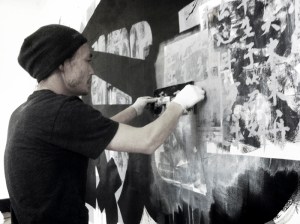
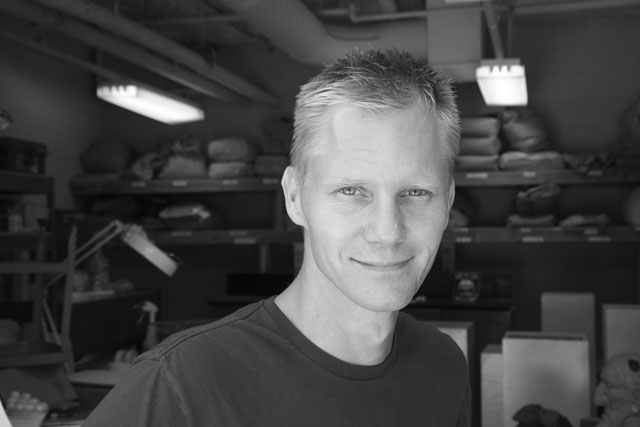
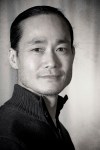
John in his studio.

John in his studio.

studio

www.johnychang.net

All images copyright of the artist and used with their permission. 

Posted in mixed media | Tagged | Leave a comment

Erin Coleman-Cruz – Salt Lake City, Utah

Pluerer toutes les larmes de son corps

“Pluerer toutes les larmes de son corps”
Graphite and incised lines on found cabinet door.
Two-sided. Approx.
15” x 24” x 3”
2013

Briefly describe the work you do.

My work is about the personal accumulations of mixed- and multi-media approaches. I can separate my work into two separate, yet overlapping approaches. The first one is the mainstay of my identity as an artist—I create works from my own personal narrative and identity that includes my histories, memories, dreams, experiences, and relationships. This work is diaristic and yet it shares human commonalities such as the experience of loss, pain, and a desire for nurture and love.

I will quote from my Artist’s Statement:

As an artist, I find that there is the opportunity to create via a “magical process”—using an item of little value and transforming it into something of great meaning—which is central to my work. I transform my own difficult, yet often common, experiences into meaningful expressions by selecting simple and abundant materials such as household goods, garments, thread, plants, and salt, and transforming them via an alchemical-esque process. My use of embroidery and other traditional “women’s work” techniques along with lived-used domestic objects that have passed from one use to the next over time serves to remind us that the home is the site of our first “world,” and the objects and functions in those homes are charged with meaning.

The other portion of my work is more public and includes collaborations that range from environmental awareness to body/sexual politics and the outward representations of being comfortable in one’s own skin as an artist. Tied to this are also designer/client relationships that cause me to step away from work that is about my internalized Self.

Tell us a little about your background and how that influences you as an artist.

I grew up in South Bend, Indiana, in a working-class family where my desire to study art stemmed from constantly creating: writing, sewing, drawing, building. I attended Goshen College for my BA in Art Education with the idea that I wanted to teach art and make art, the two being inextricably linked. Education was transformative for me, being a first generation college graduate on my father’s side, I did not come from an intellectual family, and yet I was determined to attend school. This has caused an interesting binary in my work. Aesthetically there are references to my rural, working-class background through the lived-used objects that I incorporate, and yet my work is also very cerebral, coming from a place of layered thought and archetypal in its underpinnings. I see a direct correlation in my training and education with my identity as an artist because my lens for seeing the world was most honed during my time as a student, especially while studying in Mali, West Africa in 2001. After my undergraduate years I tried to maintain a strong studio practice, but realized that I wanted to go to graduate school to hone my skills. Although I wanted to focus on my studio practice at Northern Illinois University, the connection between art-making and teaching became further entwined.

un/raveling

“un/raveling”
Unraveling fabric, wood, antique mirror, thread portrait, looping video of hands unraveling thread, and DVD player
6’ x 8’ x 4”
2013

The concept of the “artist studio” has a broad range of meanings, especially in contemporary practice. The idea of the artist toiling away alone in a room may not necessarily reflect what many artists do from day to day anymore. Describe your studio practice and how it differs from (or is the same as) traditional notions of “being in the studio.”

My studio practice has shifted from the more Romantic notion of a solitary figure toiling away alone in the studio making objects to being more public, performative, collaborative, and dialogical. I have had the opportunity to curate and collaborate with several different artists on some major projects (e.g., public installation, large-scale installation, performance, and exhibition curation). What I have learned from working with others is that I am more likely to push outside of my particular patterns starting with self-reflection, moving to contemplation/planning, and on to the final execution of the project. Instead, with collaboration, the very act of dialogue and exchange with another person becomes the living, breathing part of the work—a part that does not exist when I work alone in my studio—that becomes a multi-layered voice, which in turn seeks a multi-faceted audience.

we are the salt seas

“we are the salt seas”
Screen of flattened tin cans, looping video projection of hands crocheting
4’ x 3’
2013
Click to view video

What unique roles do you see yourself as the artist playing that you may not have envisioned yourself in when you first started making art?

I am surprised to see myself learning to parlay my art-making, design-thinking, and creative/critical thinking skills into entrepreneurial, collaborative, and community-based work. For example, I volunteer as the Education Outreach Coordinator on the board of the Sugar House Farmers Market (my neighborhood market) and I run initiatives for youth entrepreneurs, help educate children about where their food comes from and link that up with creative material re-use art projects. Although I did not study graphic design exclusively, I have had a series of jobs involving digital library collections, museums, freelancing, teaching, and the like that has turned into a job as Program Chair in Graphic Design at Broadview Entertainment Arts University. Although I started with more traditional fine art training, I find myself at the cusp of innovation, practicing transmedia (multi-media methods of story telling) methods via objects and installation that contain mini-performances in video form. This is a far cry from where I started from constructing sculptures out of found objects gleaned from the scrap yard.

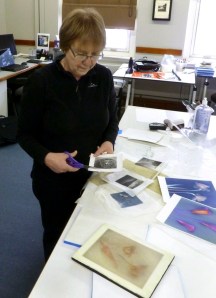
Coleman-Cruz process

Coleman-Cruz process

I used to work every day—never differentiating between art as a hobby and art as a practice because it was art and only art. But I have had some life changes. For instance, two years ago I moved to Salt Lake City from the Midwest, where I had lived all my life, and that geographical shift signifies a shift in the ways in which I make, think about, and exhibit art. Living in a different art community, the opportunities have been, if not fewer, at least more select recently. I work whenever I can and I work more regularly in the studio when I have an exhibition or opportunity to work towards. I tend to make work for exhibitions and site-specific locales rather than to make work and turn it into a proposal.

When I am not preparing for a show, I do work differently. I like to exercise my creative and technical muscles by always having my hands in some project, and I use this work to primarily grow my technical skills, but sometimes it does turn into new work. For example, I recently taught myself to crochet doilies from a women’s 1950s craft magazine as a mental and physical form of training. I am just now figuring out how that will come to play in my work, and although some of the work isn’t being created as a work for exhibition, it is still “studio time.”

How has your work changed in the last five years? How is it the same?

The biggest change in my work is not the aesthetic style—which in some ways is very similar to what it was when I left graduate school in 2008—but it is the framework by which I develop the work and the lens in which I view it. Just when I thought I would start doing something different, I moved to Salt Lake City and discovered that I had a whole new audience who had not seen my work before. That brought me to question the relevancy of my work, and look at how the work naturally evolves or expands and contracts based upon audience or location. The biggest expansion in my work over the past five years is the collaborative and transmedia element, fur instance, the inclusion of sound, performance, or video.

Also, I cannot forget to mention the biggest thing. Five years ago I would not have imagined myself doing a collaborative performance/installation with Bianca McGraw called the Merkeyna Coif Boutique, where we perform as the entrepreneurial Coif sisters who specialize in the twenty-first century merkin (what we call the “merkeyna”). The performance is structured around a dialogical humor-theory based performance where we make, sell, and educate about merkins in a boutique installation piece. The installation creates a safe space within for sharing about body/sexual politics and identity. There is nothing like talking about pubic hair in public spaces to get a conversation going in an unexpected direction. We found that although the project was a humorous topic, many individuals took the opportunity to talk openly about their body image and ask poignant questions. In the performance role we became instant knowledgeable professionals on the topics of body politics, something that exists outside of my realm of normal expertise. I am so appreciative of this collaboration for the framework that it has created in which I push myself to do this work. If I would not have done so, I don’t think that we would have created a true conversation about the very real perceptions people have about their bodies and sexuality. The dialogical nature of this performance allows its own meanings to build around itself.

Are there people such as family, friends, writers, philosophers or even pop icons that have had an impact on the work you do?

I am most influenced by women artists and writers, including the writing of Margaret Atwood, Alice Walker, Toni Morrison, and bell hooks, who have been consistent sources of inspiration and also provide words for my images. The visual artists whom I continually return to are Doris Salcedo, Kiki Smith, Louise Bourgeois, and Mona Hatoum. They transform their media and narratives into threads between the visceral body and the domestic object as alchemist/creator archetypes.

Some individuals (unfortunately I cannot include them all here) who have impacted me most are my best friend and partner Daniel Shank Cruz, my collaborators Bianca McGraw, Bradley Cahill, and Christina Gregor, Casey Landau, John Kaly, and Jenelle Steele. Also, much of my family, who either support, inspire, or provide fodder for my artwork.

I have had some amazing teachers and mentors, but the one who stands out as having taught me the most about my identity as an artist is artist/art dealer David Parker. He has modeled for me that we pave our own way as artists in the world, that there is no one model for being an art professional, and that I need to have courage as an artist.

If you had an occupation outside of being an artist, what would that be and why?

Besides being an artist? Well, definitely teaching, but since I already do that I find this to be a challenging question. I deliberately choose to be an artist and my identity hinges upon what that means for me. But if I did choose another occupation, I believe it would be a socially-engaged and humanitarian field—working with populations and individuals to help transform their lives. Projects like clean-water initiatives, designing for good, training to help promote economic self-sufficiency for women and their families in developing countries or low-income scenarios.

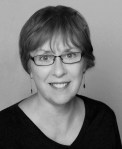
EColeman-Cruz_HeadshotAbout Erin Coleman-Cruz

Erin Coleman-Cruz received her MFA in Studio Art from Northern Illinois University and her BA in Art Education from Goshen College in Indiana. She moved to Salt Lake City, Utah in 2011, where she is a practicing artist and teaches Graphic Design while chairing the Graphic Design program at Broadview Entertainment Arts University.

Both Coleman-Cruz’s art-making and design practices range between personal narratives and public collaborative works that address issues such as creative re-use, sustainable design, domestic space, wearable arts, and social issues pertaining to women and gender. Her skills and interests include teaching, museum and exhibition curation, sewing and needlework, and collaborative projects. Coleman-Cruz serves on the board of the Sugar House Farmers Market as Education Outreach Coordinator and leads programing for children to teach them about where their food comes from while they learn skills for upcycling used materials into art and craft. She exhibits locally and nationally, and made her international debut in 2011 with a work of collaborative performance art, The Merkeyna Coif Boutique. Recent exhibitions include “I’m thinking of changing my smile” at the Dole Mansion in Crystal Lake, Illinois, and “35 x 35” at Finch Lane Gallery in Salt Lake City, Utah. Her portfolio can be found at erincolemancruz.com.

www.erincolemancruz.com

All images copyright of the artist and used with their permission. 

Posted in Uncategorized | Tagged , , , , | Leave a comment

Vicki Reed – Cedarburg, Wisconsin

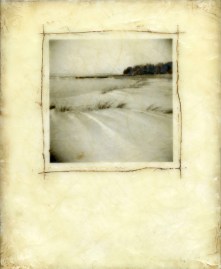
Windswept

“Windswept”
Encaustic photograph
12.5” x 10.5”
2012

Briefly describe the work do you do.

I capture images with a variety of cameras from a simple pinhole, vintage and plastic cameras to the iPhone. I then use the images in different ways. With film images I often print them in my wet darkroom using the alternative lith process or in the sun using the cyanotype process. I also use camera-less techniques such as lumen (putting plants directly on photographic paper in sunlight) or digital photograms of live plants. I scan many of these images and print them on rice paper and then embed them in wax for my encaustic pieces. The encaustic pieces consist of many layers of paper and wax. I enjoy patterns so I also experiment with encaustic pieces made up of mosaic-like tiles.

At what point in your life did you decide to become an artist?

I took private classes from an artist in our small town when I was in high school but pursuing a career as an artist never occurred to me until I had graduated from college with a degree in psychology. When it came time to decide whether to go on to graduate school in my field, I chose to try something hands on first. After the first week in the Commercial and Industrial Photography Program, I knew I had found what I wanted to do for the rest of my life.

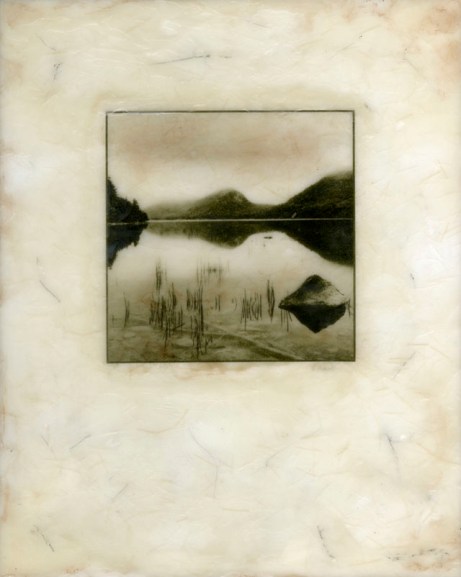
Jordon Pond 2

Jordon Pond 2
Encaustic photograph
12.5” x 10.5”
2012

Tell us a little about your background and how that influences you as an artist.

I grew up in a small town by a lake in central Maine. Our family had a cottage on the lake and my fondest memories of my youth are swimming, fishing, boating and camping. Water has always been an important part of my life and now has a great influence in my photography. Water is constantly changing with the weather and seasons and I love it in all of its forms, be it fog, snow, ice, or a calm lake. I also began work as a daily news photographer where I never knew what I would be shooting from day to day. I loved the variety of aerial, industrial, landscape, portraits and disaster/breaking news assignments I had and I think it contributes to the wide diversity of subjects that interest me today. Wherever I am, I can find something that interests me and my camera.

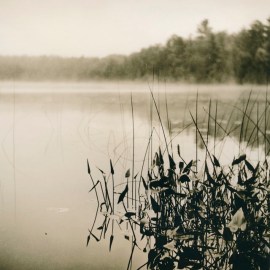
Pekor Lake

“Pekor Lake”
Lith photograph
6”x6” 2012

What types of conceptual concerns are present in your work? How do those relate to the specific process(es) or media you use?

I like to present the common and ordinary in a different way so I enjoy experimenting with alternative photographic processes like lumen prints, cyanotypes, lith printing and encaustic. I hope that my images will make people pause in their busy lives and see something they had not noticed before or see something familiar in a different way.

We once heard Chuck Close say he did not believe in being inspired, rather in working hard everyday. What motivates you in your studio practice?

I simply love creating a new image or exploring a new process so it is not hard for me to get into the studio and work. Often the process is more important to me than the final image. I like having a loose concept as to what I want to create and then trying different processes to get there. Being fluid and being willing to go with the flow keeps my interest alive. Having a good workspace where I can spread out and have several projects going at the same time also helps with motivation as one project often feeds off another.

When artists living or non-living influence your work?

I grew up in Maine where I was exposed to the work of Andrew Wyeth. His attention to light and the quietness of his work appealed to me, even at a young age. Another inspiration was my husband’s great grandfather, Albert Lincoln Call, who was a photographer in the late 1800’s and early 1900’s. His black and white and hand-colored images of the land and people of Maine are beautiful and a hundred years later still grace our home. Georgia O’Keefe influences my botanical images. I also find inspiration in many of the great photographers of the past, many of whom worked in historic processes that are considered alternative today. There are also several contemporary photographers who are working in alternative processes that inspire me, too many to mention.

When you are not making art what types of activities and interests do you engage in? 

I love road trips whether they are short day trips from my home or longer ones exploring different areas of the country. I love hiking in local parks and kayaking. I of course always have cameras with me. I enjoy visiting other artists’ studios. It does not matter what media they work in. I find it inspiring to see their space and how they work. I love movies and reading.

About Vicki Reed

VickiReed_HeadshotVicki Reed is a former newspaper photographer and magazine art editor who specializes in limited edition fine art photographs. She uses vintage, pinhole and plastic toy cameras to capture her images and custom prints them in her wet darkroom. She loves exploring alternative processes, including lith, hand coloring, and encaustic as well as numerous camera-less techniques such as lumen and cyanotype.

Born and raised in Maine, close to lakes, mountains and the ocean she developed a love of the natural landscape. Now living in Wisconsin, she continues to capture the landscape during hikes and kayak outings.

She has won numerous awards and has been widely published, including Tim Rudman’s, The World of Lith Printing, Fuzion Magazine (UK), and Fine Art Photo (Germany).
Ice Crystals, a video she captured on the shores of Lake Michigan was recently acquired by the National Geographic Channel and an image from her series, The Growing Season, has been purchased by the Racine Art Museum for their permanent collection. She is represented by the Unlimited Grain Gallery in Rotterdam, NL.

Vicki working

Vicki working

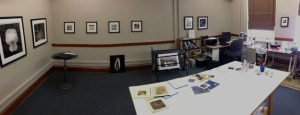
Vicki's studio

Vicki’s studio

www.vickireed.com

All images copyright of the artist and used with their permission. 

Posted in Photography | Tagged , , , , | Leave a comment

Scott Ziegler – Southern Pines, North Carolina

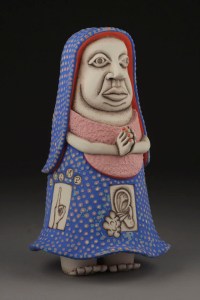
Debauched Morals

“Debauched Morals”
Porcelain
10” x 6” x 6”
2013

Briefly describe the work you do.

When developing my ceramic work, I use a variety of building techniques—throwing, slip-casting, and hand-building—and allow the work to become bone dry. At this point, I use a variety of grades of sandpaper to smooth out imperfections. After it is completely smooth, I begin to lay in my color. I create my own colored slips by adding different percentages of commercial stains to the porcelain clay body used for my pieces, and adding water until they become quite fluid. When all the color has been applied, I’m finally able to bisque fire the piece. For the glaze firing, I determine where I want glossy surfaces and where I desire matt surfaces, apply the glaze, and fire to cone 6.

At what point in your life did you decide to become an artist?

I was a biology major in college taking 2-D art classes to provide a break from all the science knowledge that was required that I ingest. It was fall semester of my junior year where I took my first ceramics course and I was hooked. By the end of the year, I switched my major to Ceramics!

Code Red

“Code Red, Porcelain”
5” x 10” x 5”
2012

Tell us a little about your background and how that influences you as an artist.

I believe everything from how I was raised to my individual experiences have influenced who I am. One of my biggest influences was after graduating college, working as a toy designer for a small design firm in Chicago.  Side-by-side with the owner, learning the detailed work required to produce sculpture to scale, I acquired the skills necessary to take my sculpting ability to the next level.  I explored materials, cultivated patience, and discovered the many processes needed to take a project from inception to completion.  I was encouraged to be part of the process, and taught not to accept my first idea, or a good idea, as the gold standard.

Code Red detail

“Code Red”
Porcelain
5” x 10” x 5”
2012

As a graduate student, I began to develop a body of work that pushed myself outside my comfort zone as I began to confront childhood experiences I had ignored for years—I grew up in a dysfunctional family, one rooted in alcohol addiction.  Building on the precision I had learned as a toy designer, my pieces became more detailed than ever before.  Because I spent so much time working with and mastering my materials, I felt a sense of control over my work for the first time.  I realized the detail I put into my pieces was for more than just the viewer—it was a way for myself to counteract the chaos I had grown up in; the detail gave me a feeling of control.  I had finally discovered a way to express my experiences in a way I was comfortable with.

Seven-Out Loses

“Seven-Out Loses”
Porcelain
13” x 16” x 12”
2012

We once heard Chuck Close say he did not believe in being inspired, rather in working hard everyday. What motivates you in your studio practice?

As I complete each piece, I am able to learn an incredible amount about myself and my materials, I develop and refine techniques that will last a lifetime. I know I must continue to evolve today to get where I want to be tomorrow.  After all, the perfect piece is a result of a multifaceted, always evolving process, and perfection is always one step away.

What artists living or non-living influence your work?

My hero, my mentor, my friend – Val Cushing. Val was a person that encouraged perfection.

When you are not making art what types of activities and interests do you engage in? 

Raising my two boys, cooking, and travel

About Scott Ziegler

HeadshotZiegler, Scott, 1973 – b. Park Ridge, Illinois. He graduated with an MFA degree in Ceramics from Northern Illinois University in 2008, currently teaches classes at University of North Carolina at Pembroke. His work has been juried into many competitive international exhibitions in recent years, including “Big Fish, Small Pot V: Fifth International Small Teapot Competition and Show,” in Pomona, California where he received an Honorable Mention and his work was purchased by the Kamm Teapot Foundation both in 2010 and 2012, the “4th Biennial Concordia Continental Ceramics Competition” at Concordia University in St. Paul, Minnesota where Scott also received an Honorable Mention, and the “Potent Object” at Baltimore Clayworks in Baltimore, Maryland.

Scott was selected as an Emerging Artist by Ceramics Monthly magazine in 2006, and was a featured artist for the magazine in 2009 when the article “The Pursuit of Perfection” was published. In addition to having been selected for publication in Ceramics Monthly and Clay Times magazines, his work is featured overseas in a Chinese book, The Appreciations and Collections of Modern and Contemporary Ceramic Art and was included in “Studio Ceramics: Advanced Techniques,” published by The American Ceramic Society in 2010. Scott’s professional experiences also include serving as a clay mentor for the Potter’s Council, receiving the Kiln God Residency Award at the Watershed Center for the Ceramic Arts, and being featured as an artist for the PBS television show “Broadstrokes.”

http://scottzieglerceramics.com/

All images copyright of the artist and used with their permission. 

Posted in 3D, Ceramic | Tagged , , , , , | Leave a comment

John Kowalczyk – Milwaukee, Wisconsin

Transverse Orientation

“Transverse Orientation”
acrylic, fabric, ribbon,
12”x 12”
2013

Briefly describe the work do you do.

I call myself a painter but my work inhabits a space between 2D and 3D. I use anything and everything in my paintings, sculptures, and installations which are layered collaged surfaces with paint over top usually. I am obsessed with pattern and symmetry.

At what point in your life did you decide to become an artist?

When I was in kindergarten we had troll day. I forgot my troll but decided to draw one and cut it out so I could have my own troll without help from my teacher. That night my teacher informed my parents about what a talented artist I was. So, I guess it was troll day when I was 5 years old that I decided I was an artist.

Tell us a little about your background and how that influences you as an artist.

I went to a catholic school until I was in 8th grade and this has influenced my art more than I want to admit. Although traumatized by the conformist mindset of a catholic school and uniform policy; the architecture, stained glass windows, icons, mysticism, gold leaf facades, ornate marble work, and the stories have stuck with me. The aesthetic of the Catholic Church is present in my work but I strive for a more universal meaning.

Snowflake #1

“Snowflake #1”
acrylic, paper, ribbon, ink, screen print
12”x 12″
2013

What types of conceptual concerns are present in your work? How do those relate to the specific process(es) or media you use?

I am concerned with power structures whether it relates to painting hierarches, governments, religions, and even hunting. My abstracted compositions borrow powerful symbols from churches, government buildings, formal design concepts, and the natural world. Symmetry is at the heart of this concept of showing importance. I like to use low brow materials in my collage work and elevate them to high art context in order to illustrate a confusion of this power system and present a piece that has become more than the sum of its parts.

Pink Moon Blue Moon

“Pink Moon Blue Moon”
acrylic, fabric, ribbon, paper
28”x 18” diptych
2013

We once heard Chuck Close say he did not believe in being inspired, rather in working hard everyday. What motivates you in your studio practice?

I have an incessant need to produce art work, it has a direct relationship to my feeling of self-worth, not sure if this is a good thing or not. Deadlines are a huge motivator for me though. I load up my calendar with shows and then I strive to make new work for each one.

When artists living or non-living influence your work?

Jules de Balincourt, Tal R, Gert and Uwe Tobias, Daniel Richter, Jason Rolf, Wangechi Mutu, Jeff Sonhouse, this list could go on for days…

When you are not making art what types of activities and interests do you engage in? 

When I’m not making art I enjoy teaching others to make art, riding bikes, treasure hunting at thrift stores, petting my cat, dancing, road trips and making wishes.

1013207_10151769347212527_831863850_nAbout John Kowalczyk

Born in Chicago, IL in 1988, John Kowalczyk currently lives and works in Milwaukee, WI as an artist, curator, and educator. Before moving to Wisconsin Kowalczyk was the winter artist-in-resident at the Around the Coyote Gallery in Chicago.

After receiving his BFA in painting from Milwaukee Institute of Art and Design in 2010, John began his residency with RedLine Milwaukee, where he curated gallery shows and taught workshops. Currently he is the artist-in-resident at Bay View High School. Kowalczyk’s work has been exhibited at the Sienna Art Institute in Italy, The Charles Allis Art Museum, The Harley Davidson Museum, The Cedarburg Cultural Center, and The Racine Art Center along with other galleries across the U.S. His work is comprised of mixed media paintings and installations that incorporate vintage fabrics, thrift store treasures, glitter and gold. The collaged elements of his paintings become more than the sum of their parts exhibiting a spiritual nature.

John's studio

John’s studio

www.johnkowalczyk.tumblr.com

All images copyright of the artist and used with their permission. 

Posted in mixed media | Leave a comment

R Eric McMaster – Austin, Texas

Uniform Series: Football

“Uniform Series: Football”
c-print of an athlete wearing a uniform made of vinyl, acrylic, and butyrate
36″ x 26″
2008

Briefly describe the work you do.

My work ranges from video, photo, objects, installations, and performance.  Exhibitions are often a combination of these modes of working. I use the familiarity of team sports to echo societal stratification, restriction, and the individual’s lack of agency.

Tell us a little about your background and how that influences you as an artist.

Years ago, I was playing a specific sport for the first time. I decided to participate in a competition and was repeatedly called for infractions that were unknown to me. My playing went from aggressive and confident, to reserved. As I reflected on this experience, I was amazed by my personal transformation and started to see a correlation between the influence of authority in sport and societal rules and norms. Around this time I also had lost confidence in the ability of objects to solely convey analogies, so I started to expand my studio practice to include lens-based approaches with performance. Eventually, I realized that portions of sport can constitute a performance and my productions grew from there.

The concept of the “artist studio” has a broad range of meanings, especially in contemporary practice. The idea of the artist toiling away alone in a room may not necessarily reflect what many artists do from day to day anymore. Describe your studio practice and how it differs from (or is the same as) traditional notions of “being in the studio.”

My more involved performances have many stages. Early in the production, I work by myself in my studio fabricating objects and environments and planning shoots. Eventually I hire assistants to help complete pre-production. I then recruit athletes to perform, reserve and travel to a specific venue, and shoot my productions with 3-4 production assistants and up to twenty athletes. Afterwards, I’m at a computer editing photos and video, and back at the studio I put the final touches on objects to prepare them for display.

The Obstruction of Action by the Existence of Form

“The Obstruction of Action by the Existence of Form”
inkjet print and video documenting a hockey game played in a fabricated rink measuring 18′ x 12′ x 8′
print: 46″ x 30″
video: 17:47
2013

What unique roles do you see yourself as the artist playing that you may not have envisioned yourself in when you first started making art?

I spend a lot of studio time with logistical concerns. A recent video project consisted of me trying to track down Olympic-bound athletes.  After months of communication with scores of athletes, I succeeded in convincing someone to do the shoot, flew to their location, reserved a venue, rented video equipment, secured assistants, and shot the piece. The actual piece took barely any time to shoot and edit, but it took months of studio time to bring everything together. I found that I tend to play the role of director; spending more time making things happen, than making things.

The Obstruction of Action by the Absence of Other

“The Obstruction of Action by the Absence of Other”
inkjet print and video documenting a competitive pairs figure skater performing a routine without his partner present
print: 18.5″ x 12″
video: 4:45

When do you find is the best time of day to make art? Do you have time set aside every day, every week or do you just work whenever you can? 

I tend to refine, research, and plan my projects each day, but the majority of my work happens in condensed, productive, multi-day stints in the studio working on objects or editing after a shoot.

How has your work changed in the last five years? How is it the same?

My kinesthetic awareness of my work and an overall consideration of objects and materiality has increased in the last five years. Even though I shoot a lot of video and photos, I am still concerned with the object and how the performance participants interact with the created objects. I’m starting to believe in the power of objects again.

Are there people such as family, friends, writers, philosophers or even pop icons that have had an impact on the work you do?

There is a recent surge in the research concerning organized sports and sociology.  Whenever my ideas slow down, I turn to some books published on the matter.  Some recent influential reads have been “Players All: Performances in Contemporary Sport” by Robert E. Rinehart and “Sport, Theory and Social Problems” by Eric Anderson.

If you had an occupation outside of being an artist, what would that be and why?

I’d probably be involved with production in the film industry.  It would be a toss-up between set design and cinematography.

McMaster_HeadshotAbout Eric McMaster

R. Eric McMaster received his Bachelor of Fine Arts degree from The Pennsylvania State University in 2003 and a Master’s degree in Sculpture from Arizona State University in 2008. He has shown extensively, including exhibitions in New York, Paris, New Delhi, Miami, Los Angeles, Philadelphia, Seattle, and Phoenix, among others. He is a recipient of the Virginia Museum of Fine Arts Professional Fellowship, the Ted Decker Catalyst Fund and numerous scholastic grants and scholarships. Competitive sports are the current vehicle through which McMaster explores themes of order, resistance, and the individual versus the collective. His works often involve fabricated objects, installations, video, photography, performance, and/or athletes. R. Eric McMaster currently lives in Austin, TX where he teaches at the University of Texas at Austin’s Art and Art History Department.

McMaster_StudioShot

 www.rericmcmaster.com

All images copyright of the artist and used with their permission. 
Posted in mixed media | Tagged , , , , | Leave a comment

Ellen Mueller – Buckhannon, West Virginia

Erma Series: Look to the Sky

“Erma Series: Look to the Sky”
mixed media and watercolor on paper
12″x13″
2013

Briefly describe the work you do.

I am an interdisciplinary artist exploring the shared, everyday challenge of resisting change and maintaining control. Within my work I strive to create experiences that engage the cultural conscience of the audience, while addressing social and political issues through image, performance and installation.

Tell us a little about your background and how that influences you as an artist.

I was raised in Fargo, ND and currently live and work in Buckhannon WV as an Assistant Professor of Art at West Virginia Wesleyan College. I received my MFA in Studio Art from University of South Florida, as well as a BA in Theatre and Art, and a BS in Design Technology from Bemidji State University. Additionally, I have obtained training at Dell’Arte International and the Brave New Institute. My experiences in theater, office settings, and mass media consumption all influence my work. When creating works, I attempt to avoid specific media categories and instead allow my concept to drive creation.

Erma Series: Prisoners

“Erma Series: Prisoners”
mixed media and watercolor on paper
12″x24″
2012

The concept of the “artist studio” has a broad range of meanings, especially in contemporary practice. The idea of the artist toiling away alone in a room may not necessarily reflect what many artists do from day to day anymore. Describe your studio practice and how it differs from (or is the same as) traditional notions of “being in the studio.”

Erma Series: Prisoners

“Erma Series: Prisoners” detail
mixed media and watercolor on paper
12″x24″
2012

My studio practice waffles between the classic idea of an artist toiling alone in a secluded room and large collaborative creations, which are often a part of my performances and videos. Because my practice includes both secluded drawing and team-based work, I get to reap the benefits of both worlds, and can simply switch to the other when I get bored.

What unique roles do you see yourself as the artist playing that you may not have envisioned yourself in when you first started making art?

I often find myself in an endless cycle of applying for various exhibitions, grants, residencies, etc. When I first started making art, I had no idea how time consuming this part of the job is.

Erma Series: Lift Away

“Erma Series: Lift Away”
mixed media and watercolor on paper
12″x24″
2012

When do you find is the best time of day to make art? Do you have time set aside every day, every week or do you just work whenever you can? 

Late morning is the best time of day for my practice. I try to set aside time every week during the school year for my creative work, and during summer I try to use residencies for extremely focused work for weeks or months at a time.

How has your work changed in the last five years? How is it the same?

In the past five years my work has changed according to the various landscapes I have encountered. Florida, where I completed my MFA was very different from Colorado, where I lived for one year as a visiting artist, and that is also very different from West Virginia, where I current live and teach. Each landscape leaks into my work in one way or another.

Mueller_Ellen_Working

Are there people such as family, friends, writers, philosophers or even pop icons that have had an impact on the work you do?

Often, my work includes some form of adapted personae, or character, following in the footsteps of The Yes Men, Sacha Baron Cohen, and Henry Darger.

If you had an occupation outside of being an artist, what would that be and why?

I can’t think of an occupation I’d like more than being an artist!

Mueller_Ellen_headshotAbout Ellen Mueller

Ellen Mueller has exhibited nationally and internationally as an interdisciplinary artist exploring the everyday challenge of resisting change and maintaining control. She received her MFA in Studio Art from University of South Florida. Recent exhibitions span a variety of venues including CNN.com, the Cardiff Story Museum, and the Taubman Museum of Art. Recently, she has been selected for residencies at Vermont Studio Center, Ucross Foundation, Santa Fe Art Institute, and Nes Artist Residency in Iceland.

Ellen's studio

Ellen’s studio

http://ellenmueller.com/

All images copyright of the artist and used with their permission. 

Posted in mixed media | Tagged , , , , | Leave a comment

Welcome to 365 Artists in 365 Days

365 Artists | 365 Days is a new collaborative project, which will be launched on January 1, 2014 by the Frank Juarez Gallery (Sheboygan) and Greymatter Gallery (Milwaukee).

The aim of this project is to share daily a diverse selection of works by contemporary visual artists from across the country and perhaps the world. To learn how you can submit to this project click here.

For more information contact Zina Mussmann at 414.687.2598 or 365artists365days(at)gmail.com

We look forward to receiving your submissions. 

Rachel, Zina, and Frank

Posted in Uncategorized | Leave a comment