Kiran Patel – Bedfordshire, United Kingdom

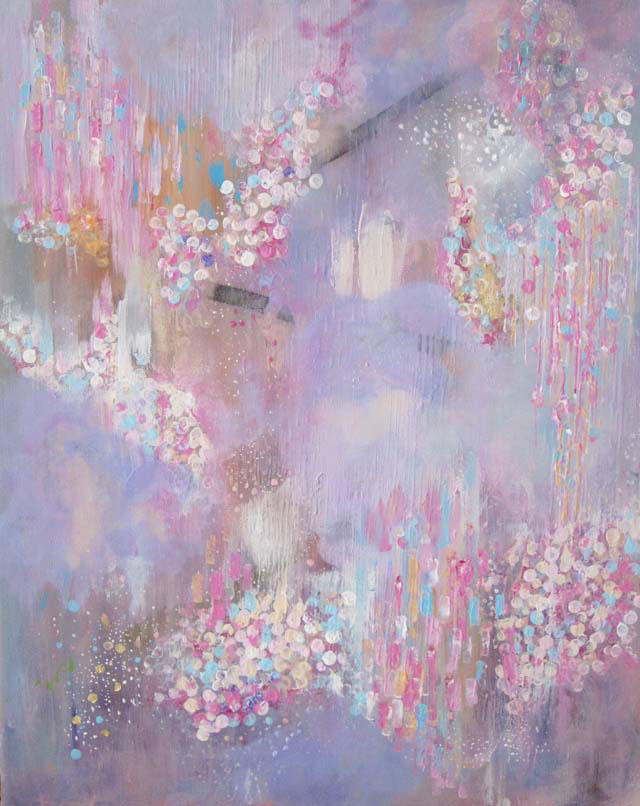
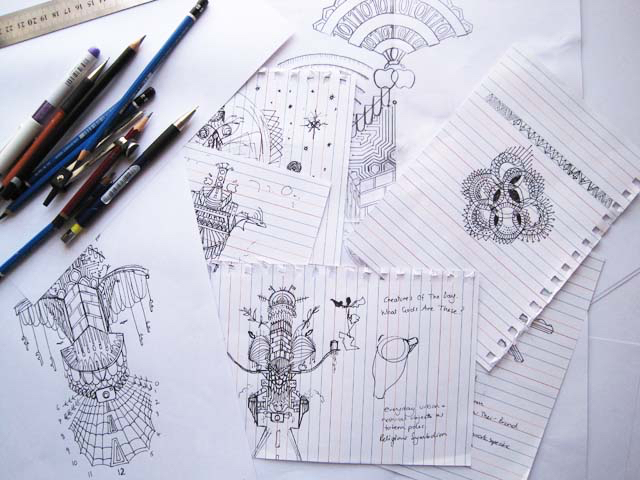
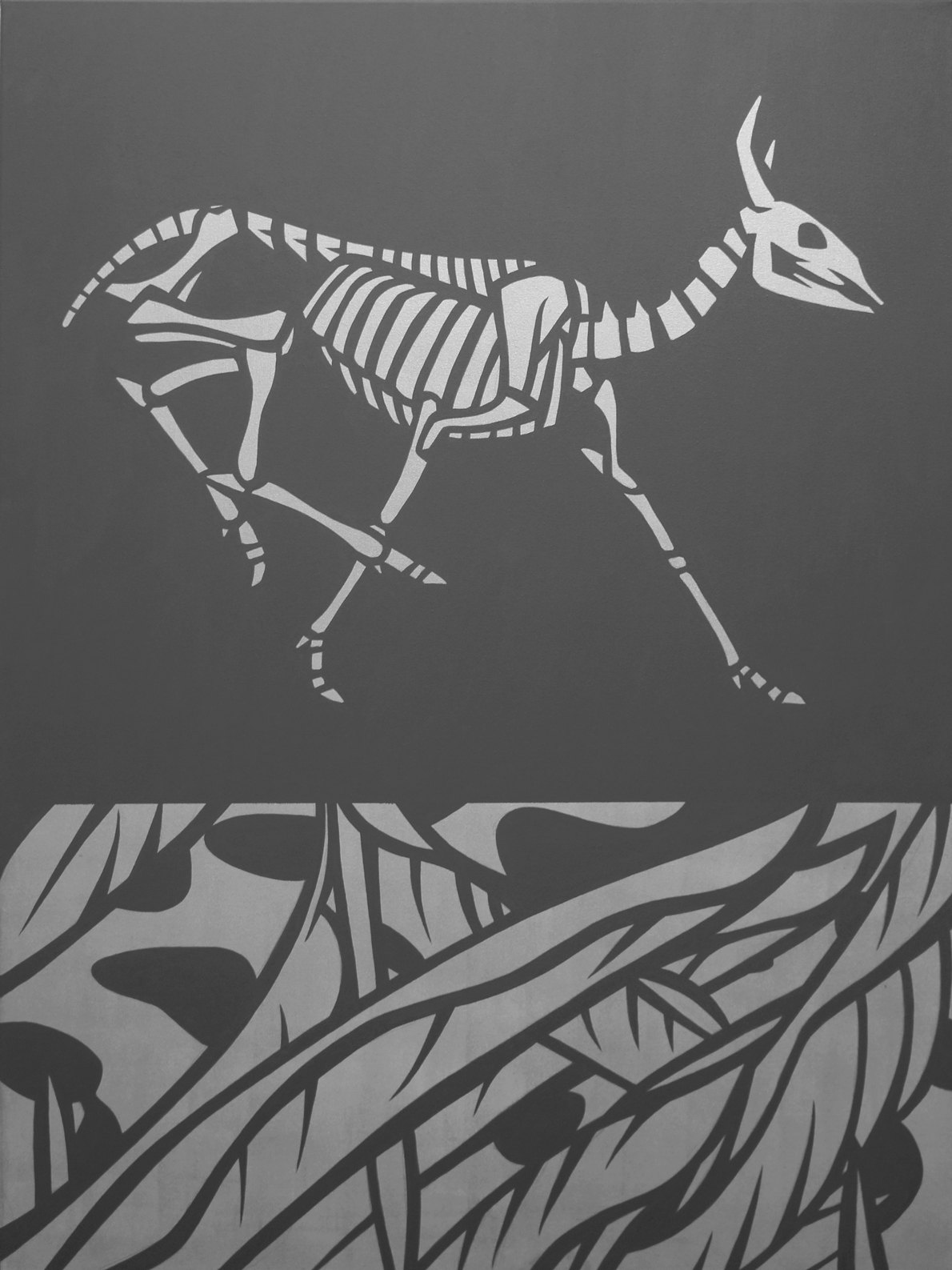
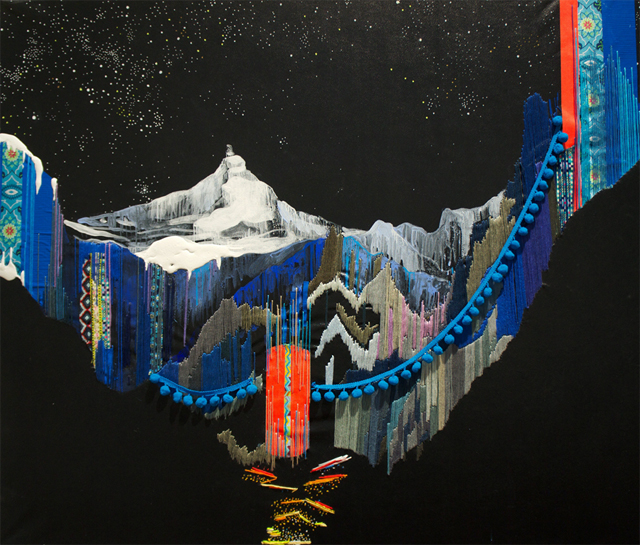
The Beauty of the Unknown - Acrylic, pastels and ink on canvas 16"x 20" 2015

The Beauty of the Unknown – Acrylic, pastels and ink on canvas 16″x 20″ 2015

Briefly describe the work you do. 

 I am currently exploring the ephemeral nature of thought and how that translates to creating the worlds that we perceive and relate to through the medium of painting. The concept of translating the ephemeral nature of thought to a visual form, where the spoken words are silenced and the art imagery is tuned into the invisible forms of engagement, where emotions are aroused and intuition is channeled. Where the conventional forms of communication are suspended in favor of the unspoken through the seen. All works are open to the personal perceptions of the viewer for each is impacted through their own processes of personal and impersonal thought.

Tell us about your background and how that has had an influence on your work and on you as an artist.

 As early as I can remember I was always creating whether that was drawing, painting, making clothes, doing embroidery, making my own gift-wrap and cards. And I was lucky enough to be around parents who fostered that need without curtailing it. The desire to create has always been there and never left and really I do not recognise it as something other than an integral part of who I am. It has never been something I am able to leave alone and not engage in and I can’t honestly say it has ever felt like a choice, it has always felt more like an inevitable need, like taking a breath. 

The concept of the artist studio has a broad range of meanings in contemporary practice. Artists may spend much of their time in the actual studio, or they may spend very little time in it. Tell us about your individual studio practice and how it differs from or is the same as traditional notions of “being in the studio.”

 I love being in my studio and view it as a place where I can partake in creating that which resides in my minds eye. It is the place I get to experiment and try out new ideas and go through the cyclical process of trying to solve the many problems that arise when creating a piece of art. I can have music playing in the background or be listening to a podcast and am relatively undisturbed whilst there. I may sketch a little outside of the studio but the vast majority of my work is conceived and completed there.

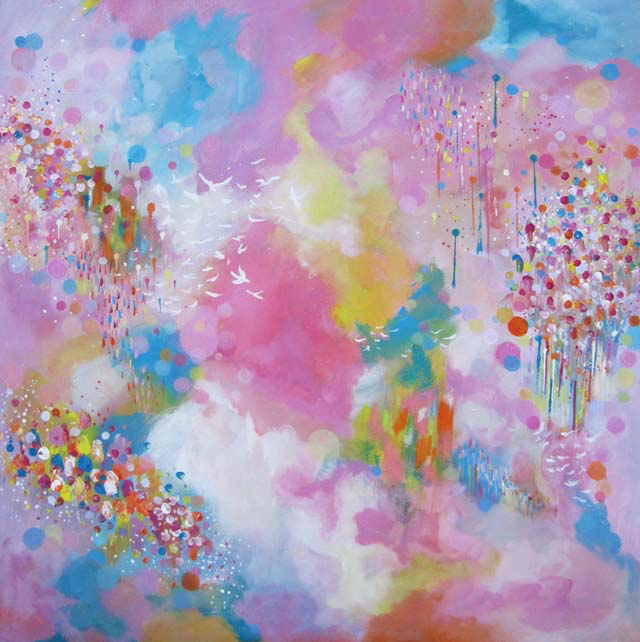
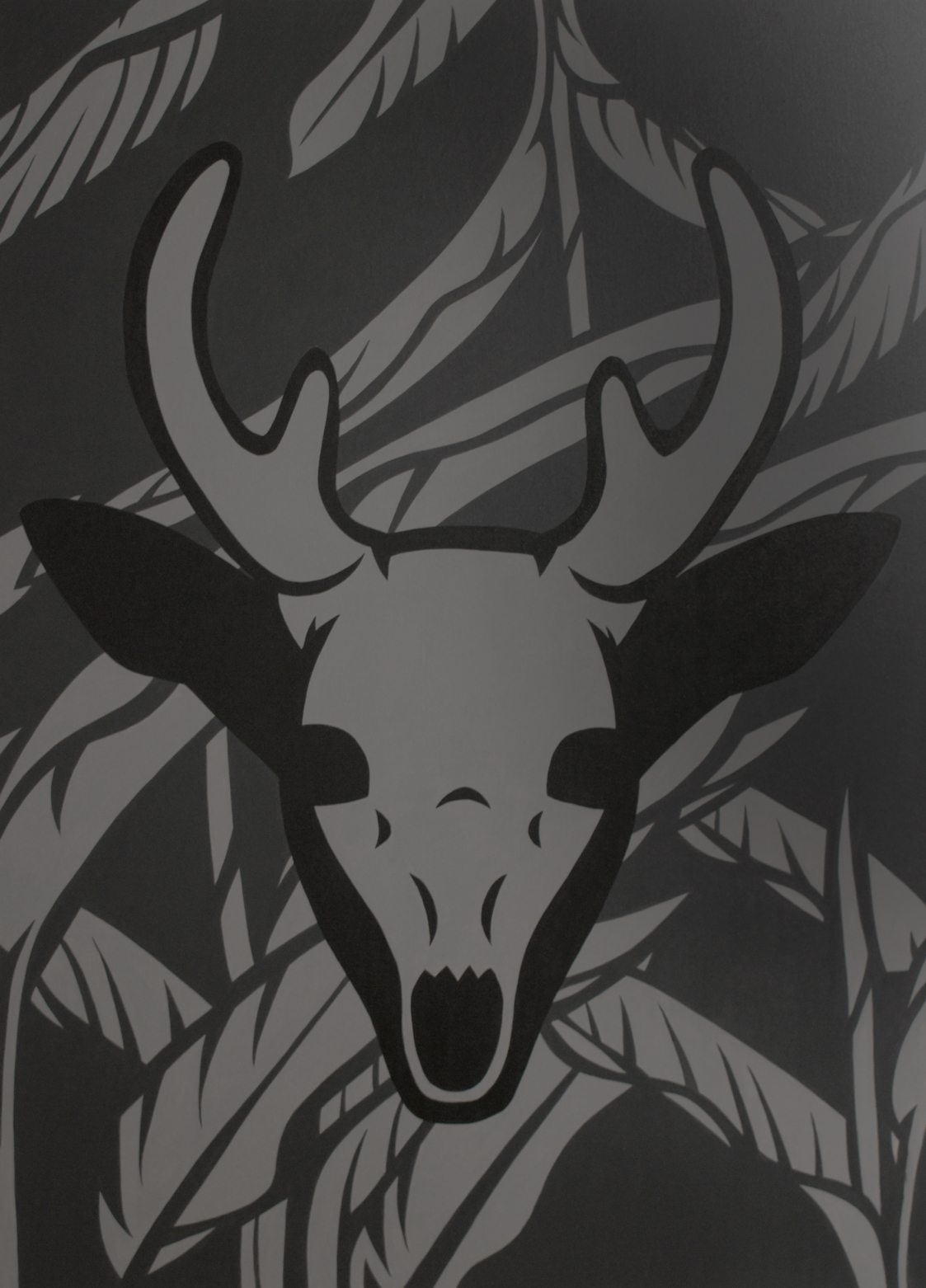
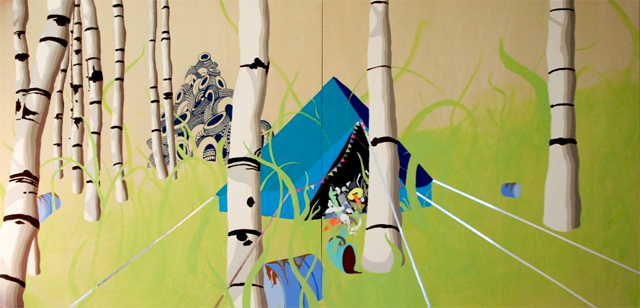
When I See You Again - Acrylic and Pastel on Canvas 24" x 24" 2015

When I See You Again – Acrylic and Pastel on Canvas 24″ x 24″ 2015

What roles do you find yourself playing that you may not have envisioned yourself in when you first started making art?

 There are so many hidden roles that come to the surface once you begin. You need to be the artist creating new ideas and executing them, problem solving, marketing them and yourself through social media and pitching to blogs, magazines and galleries. You have to be a bookkeeper and keep on top of expenses and inventory. Ordering materials and scheduling imagined and actual deadlines. Forecasting what the time ahead may require.

When do you find is the best time to make art? Do you set aside a specific time everyday or do you have to work whenever time allows?

 I predominantly spend the first half of the week, so Monday to Wednesday painting.  I am definitely more of a day person than a night owl. The rest of the week is spent on editing images, posting work, responding to emails and sending submissions. The weekend is spent ruminating over new ideas and sketching out what future projects could be. I

How has your work changed in the past five years? How is it the same?

 It has changed quite a lot. Five years ago, I was also working in schools as a creative practitioner incorporating art into the curriculum. I also created carnival costumes. I felt more that I was in a creative field but not necessarily doing that which I most wanted to do. Now I am painting full time and that has been true for the past year and a half and so my work has progressed in a different way because of the time I have lent to it. Previously my work was tight and on a smaller scale using pen and ink and the computer. Now it is on a larger scale and I am using paint, pastels and ink. 

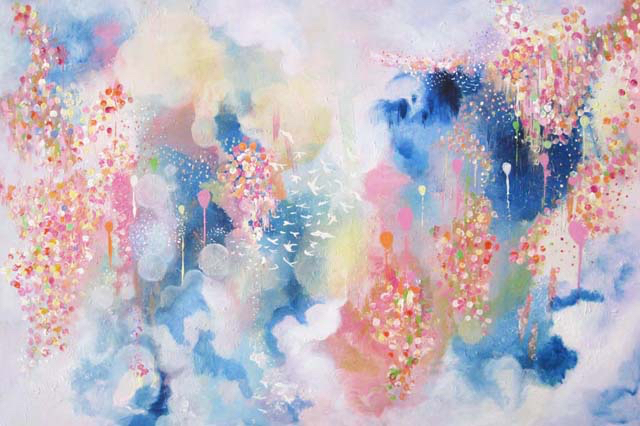
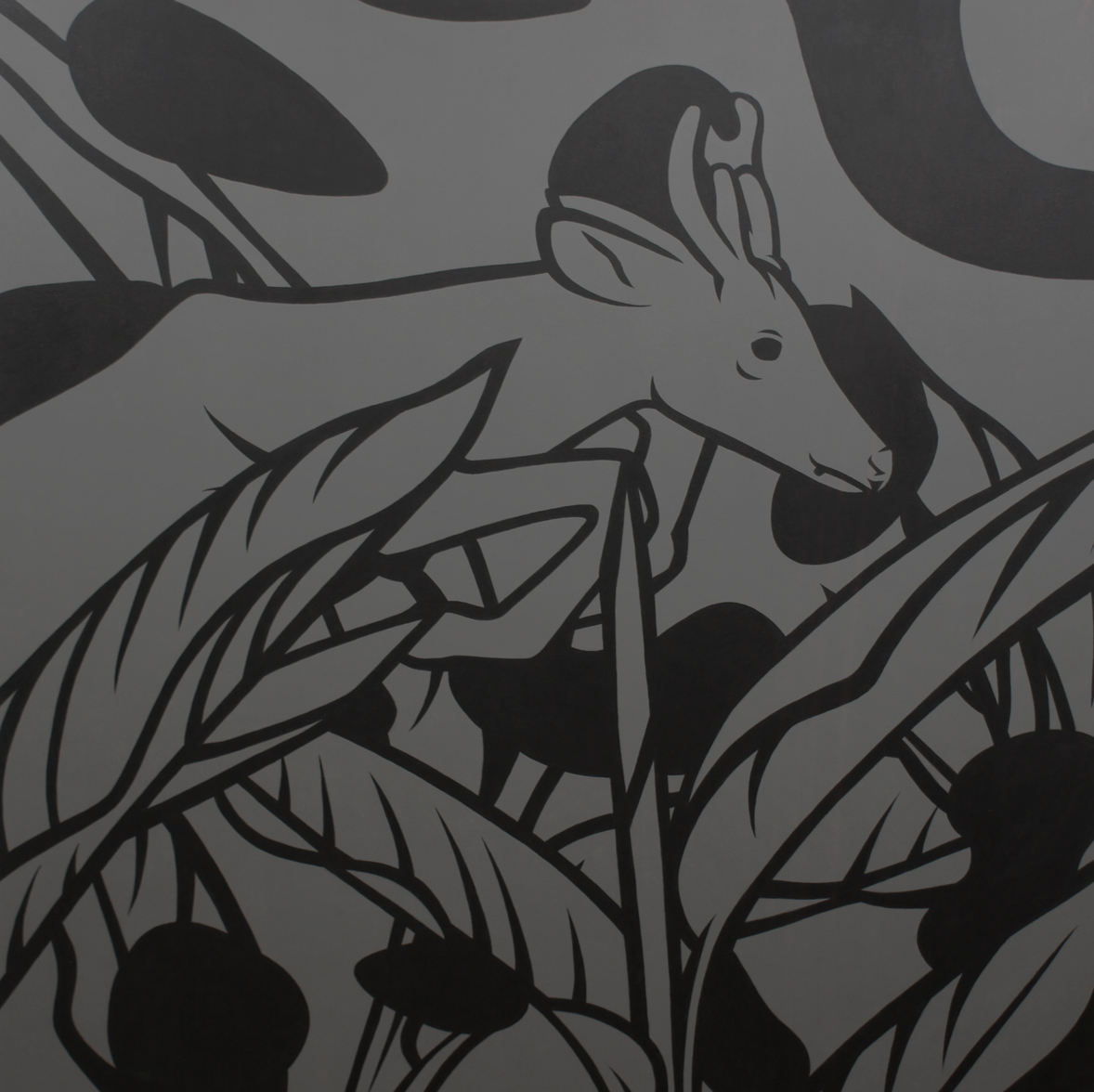
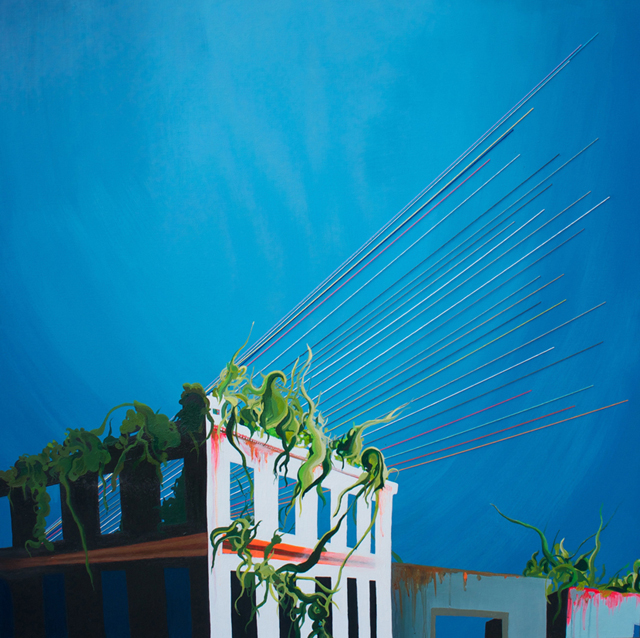
Hope Floats Acrylic and Pastel on Canvas 30" x 20" 2015

Hope Floats Acrylic and Pastel on Canvas 30″ x 20″ 2015

How have people such as family, friends, writers, philosophers, other artists or even pop icons had an impact on the work you do?

 My family and friends have always been accepting of the work I do and are supportive of it. I am a prolific reader and am hugely inspired and influenced by many of the books I read and a lot of them are related to areas of the mind and the duality of a material and spiritual world. I collect quotes from philosophers and authors and they can be the starting points for new works. I am also very grateful for the communication that is enabled through social media and blogs as a way to connect with other artists and creative and share our experiences.  And of course I have artists both new and old that are inspirational such as Lucian Freud, Lola Donoghue, Maria Kalman and Mark Rothko to name a few.

Have you ever been pulled in the direction of a pursuit other than being an artist? What are your other interests? 

 There has never in my mind been anything that I wanted to do other than be an artist and in one way or another that has always been something I was and still am pursuing. I have done other work but always with art somewhere in the picture.

About

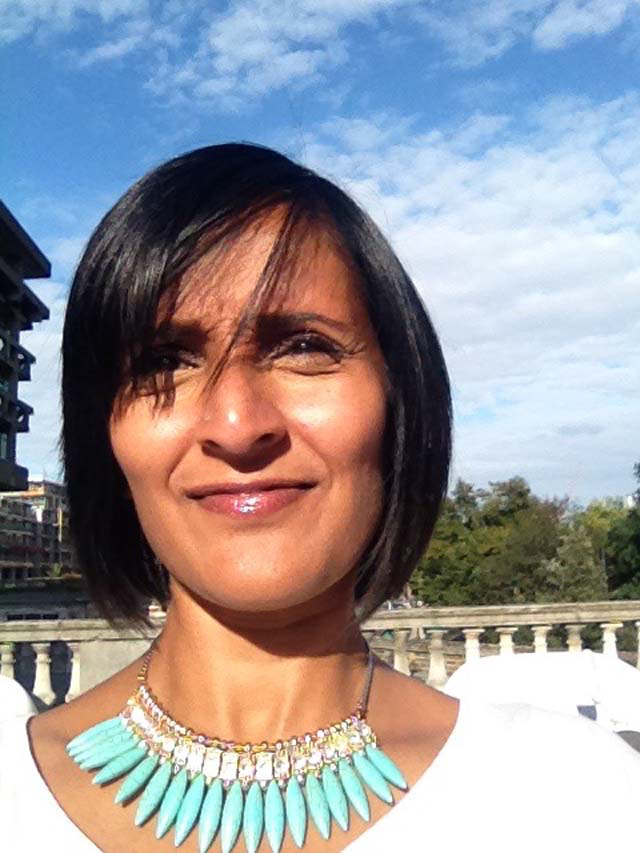
headshot (5)I am a self – taught artist working under the name of Illustrating Rain. I graduated with a BA in Sociology & Black and S.Asian Studies. I have worked as a creative practitioner within schools, created carnival costumes, and was the visual artist for the book titled “The Future We Choose”. I have previously exhibited works throughout London and have had numerous features in online and magazine publications. Currently living and working in the East of England. 

work

cargocollective.com/illustratingrain

All images copyright of the artist and used with their permission.

Posted in Painting | Tagged , , , , | Leave a comment

Adam Matak – Hamilton, Ontario, Canada

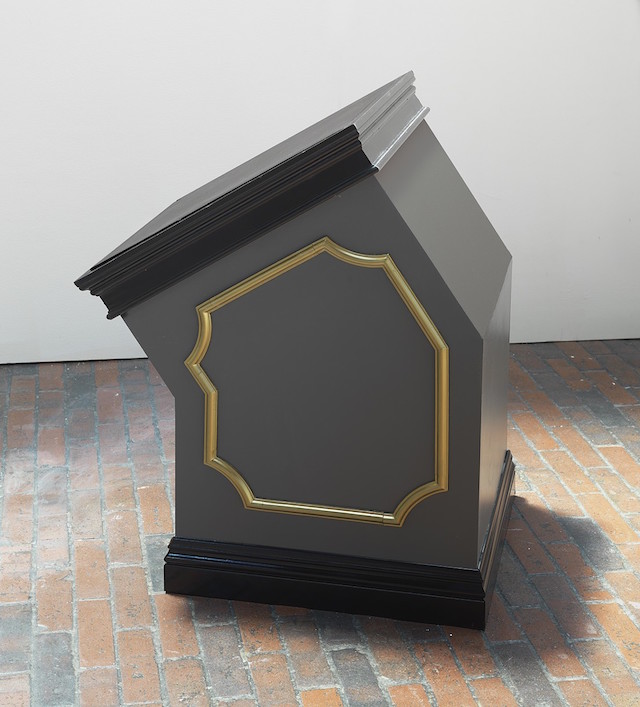
Genuflect, 2015, Acrylic & Enamel on Wood. 28"x36"x24".

Genuflect, 2015, Acrylic & Enamel on Wood. 28″x36″x24″.

Briefly describe the work you do. 

I make drawings, paintings and sculpture which create environments that complicate notions of cultural value and the function of historic objects.I work in a visual style with the idealization somewhere between a graphic novel, and a stained glass window. This aesthetic helps evoke a narrative the viewer is often left to complete.

Tell us about your background and how that has had an influence on your work and on you as an artist.

The different forms of storytelling that I consumed as a kid really formed the way I work. The things I read, watched and listened to laid the foundation for how I would later express myself artistically. MAD magazines and watching Saturday Night Live taught me about visual humour and storytelling. I couldn’t get enough of either. Hip-hop music was huge for me as well. There was something beyond the storytelling and the beat in hip-hop that pulled me right in. When I could pick out some of the samples I would hear in a De La Soul song, something clicked in me that explained what I saw also on SNL and in the MAD magazines: you could use things that already exist to make something new.

The concept of the artist studio has a broad range of meanings in contemporary practice. Artists may spend much of their time in the actual studio, or they may spend very little time in it. Tell us about your individual studio practice and how it differs from or is the same as traditional notions of “being in the studio.”

My studio is where images and objects get made. Designing works, research, hashing out ideas with others, often happens elsewhere. Even when the inspiration happens in the studio, I will work them out in the world. I see it a lot like the NBA draft. When an idea or image is strong enough or comes up enough times in my sketchbook, it gets brought up to the big leagues in my studio. That “player” may become a star, or be a role player, I still have space for an idea to develop, but the basic refinement happens elsewhere.

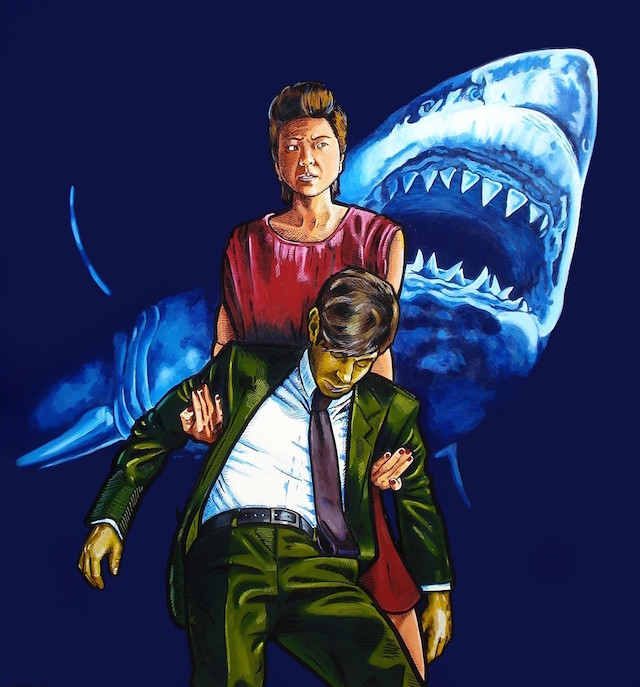
Cast Away, 2013, acrylic & graffiti marker on canvas.48"x54".

Cast Away, 2013, acrylic & graffiti marker on canvas.48″x54″.

What roles do you find yourself playing that you may not have envisioned yourself in when you first started making art?

Many of my friends are entrepreneurs. They are gifted with the ability to see what is needed in society, or where there is room for improvement. I think artists today also need to be entrepreneurial. There is a hat that I wear of the co-coordinator or facilitator, and bringing people together is something I hadn’t considered to be a part of art making. I find many artists to be introverted, and shy about promoting their own work. When I am excited about someone’s work, I have no problem with talking about their work and their stories wherever I go.

When do you find is the best time to make art? Do you set aside a specific time everyday or do you have to work whenever time allows?

I feel like mornings for me are for micro-movements, small detail work. This would include writing, smaller drawings, and any detail-oriented work. Perhaps only my head and hands are fully functional at this point. After 1pm is when I would do larger scale movements, building things; tasks that would include my full body.

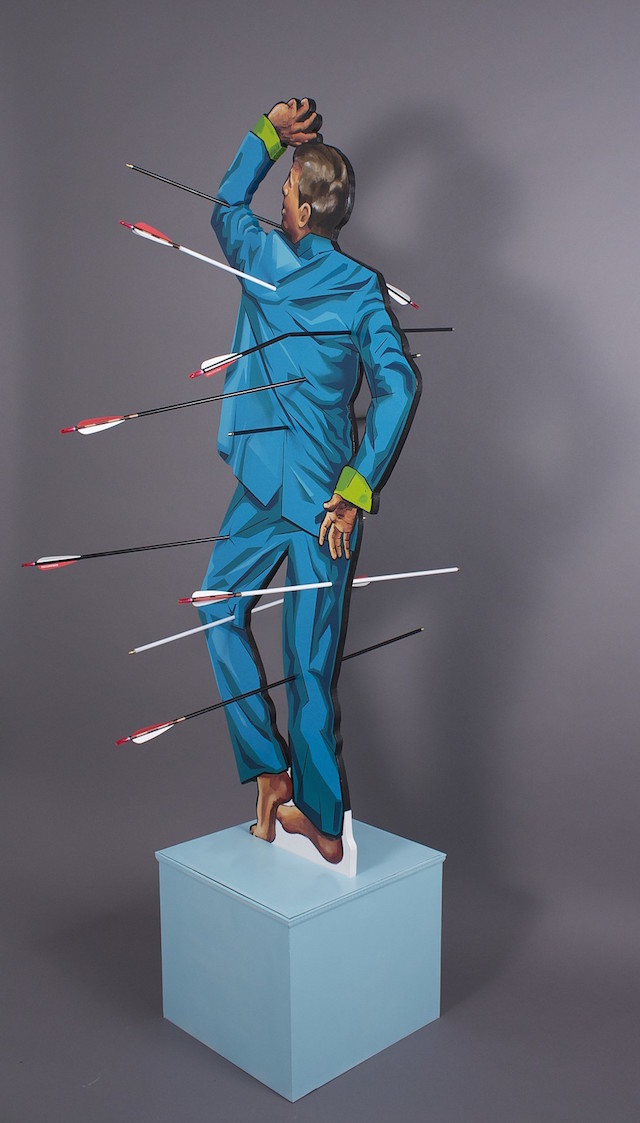
Martyr, 2014, Acrylic, graffiti marker & arrows on wood. 28"x26"x92"

Martyr, 2014, Acrylic, graffiti marker & arrows on wood. 28″x26″x92″

How has your work changed in the past five years? How is it the same?

5 years ago I was using text in my work, and I work very flat and quick.

I still make space for the kind of work that give immediate gratification, but more of my work now is larger and required more thought and planning.

How have people such as family, friends, writers, philosophers, other artists or even pop icons had an impact on the work you do?

I am a big fan of Kerry James Marshall’s work, but what has made a larger impact on me is his work as an educator. The way he speaks about the art world, educating artists, and the reason to make art is a continuous source of inspiration for me.

Chris Cran, Kent Monkman and Shary Boyle’s work had an early impact on what would be the major focus of my work. Their mixture of gravitas and humour in their approach history, culture and myth is something I keep striving for.

Artists who work in narratives that are often puzzling inform my work: Barnaby Furnas, Dana Schutz, and to some extent Mark Tansey. I’m drawn to artists and performers involved in storytelling and humour. I worked for a brief stint at Second City in Toronto. Mind you, I only worked in the box office, but there were a ton of funny, sharp witted, extremely clever people that I was able to meet there. I would often slip into the shows after my shift and sketch at the little bistro tables in the theatre. I’m dying to do a project with improvisers.

My wife, Phillipa Chong is a sociologist and studies value, evaluation and is working on a book about critics right now. The lens that she sees through always helps me think in a more refined manner about perception and inequality. She has probably had the largest impact on my work.

Have you ever been pulled in the direction of a pursuit other than being an artist? What are your other interests? 

I’ve always performed in front of people. In grade school I performed magic, and told jokes, in high school I ripped off SNL sketches, and spoofed popular songs over the announcements. Then in university I worked as a motivational speaker, and then later travelled Canada and the US as a tour guide. For over 15 years now I have been teaching at the secondary and post secondary levels. People often forget that teaching is very much a performance. So when my images and objects aren’t in front of people, I guess I prefer that I am.

About

matak_headshot#4Adam Matak is an artist that exhibits in both private and public galleries and is collected internationally. He received his MFA from Tufts University in conjunction with the School of the Museum of Fine Arts Boston in 2015. His work was used for Art Toronto’s (formerly Toronto International Art Fair) advertising campaign, he has been published in Art Works, a Canadian art history textbook, and reviewed by The Globe & Mail, The National Post, and the Boston Globe.

MatakStudio#1

adammatak.com

All images copyright of the artist and used with their permission.

Posted in Painting | Tagged , , , , | Leave a comment

Yamila Marañón – City Of Mendoza, Mendoza, Argentina

Yamila Marañon3Briefly describe the work you do. 

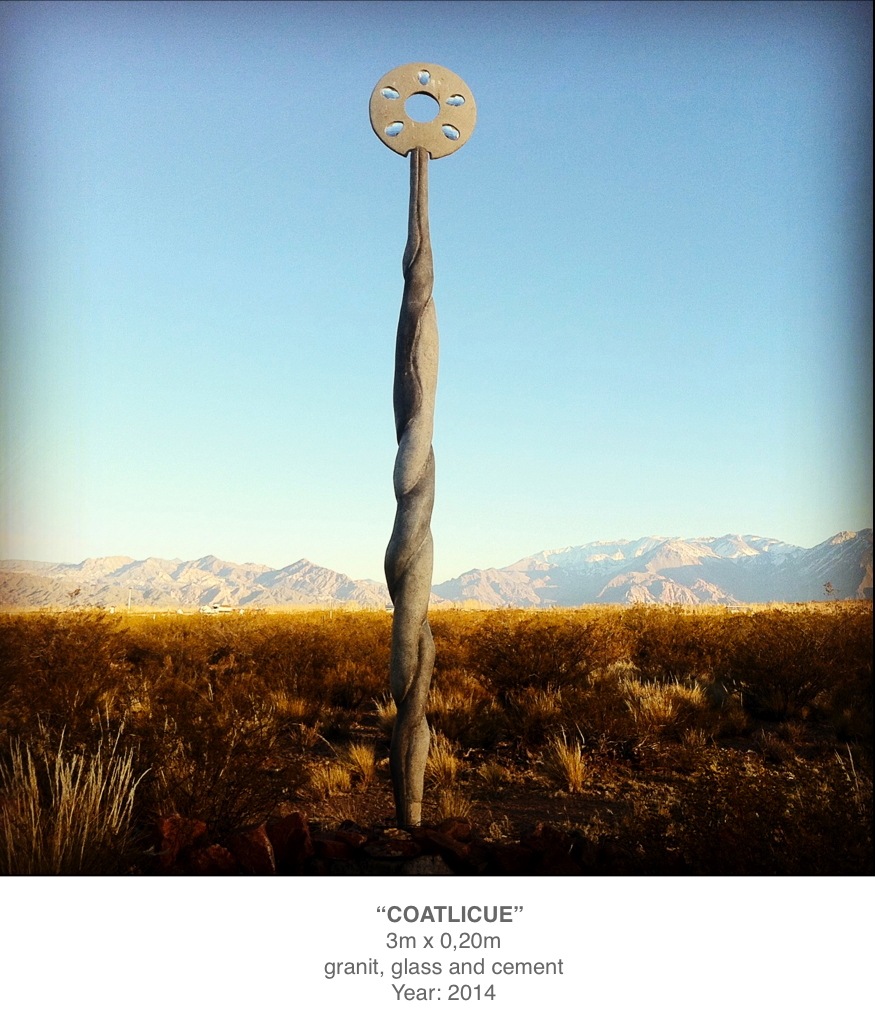
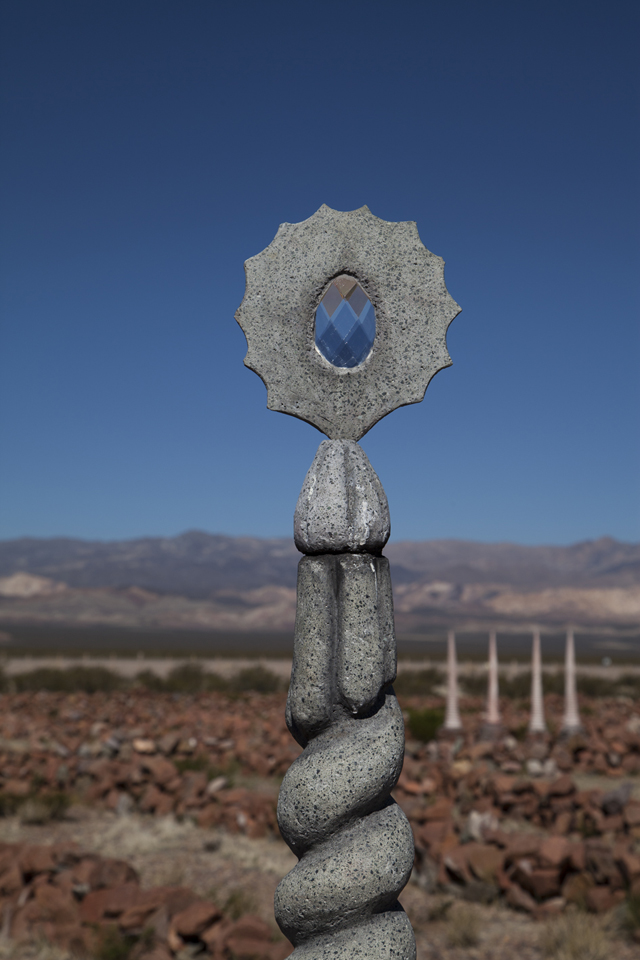
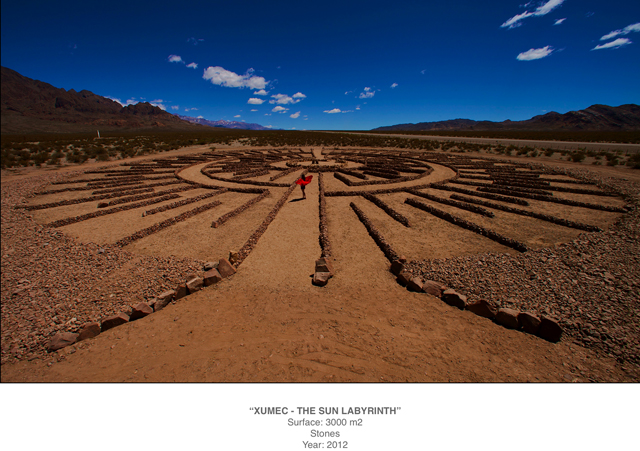
I do land art, sculpture, installation and performance. I work with granite, cement, ceramic, glass, I develop in big surfaces of land permanents labyrinths made by stones. I compose experimental music sets for each of my pieces. My art is rooted in a close relation with nature, the cycles and unconscious. Searching in the connections between my internal evolution and the external changes that I perceive, the essential meaning behind matter, simplicity of forms and movements. I work with Symbolism to simply resume my complexity. The performances i do are the result of observation and are produced by the feeling of the experience I’m living at that moment, in a “Art/Ritual” way of expression, focus on the ancients and sacred origins of ceremonies fused with contemporary perfomances and technology.

Tell us about your background and how that has had an influence on your work and on you as an artist.

I am the descendant of a line of artist’s, and this has been the most important background. I did an artistic high school, at the age of 20 I moved to Paris, where I stay living and working for 7 years. I worked in a very important contemporary art center, with many other artists of all around the globe, It changed me totally and   opened my mind. Then I decided to come back to my country, and develop a cultural Foundation with my family, we created a Sculptural Park, an open air museum in the Andes mountains, call “Parque de Las Artes, Reserva Cultural / Art’s Park, Cultural Reserve”. All this experience of life gives me what I am in the present and give me the foundations, concepts, techniques, the depth and the force of expressions of my art.

Yamila Marañon2

The concept of the artist studio has a broad range of meanings in contemporary practice. Artists may spend much of their time in the actual studio, or they may spend very little time in it. Tell us about your individual studio practice and how it differs from or is the same as traditional notions of “being in the studio.”

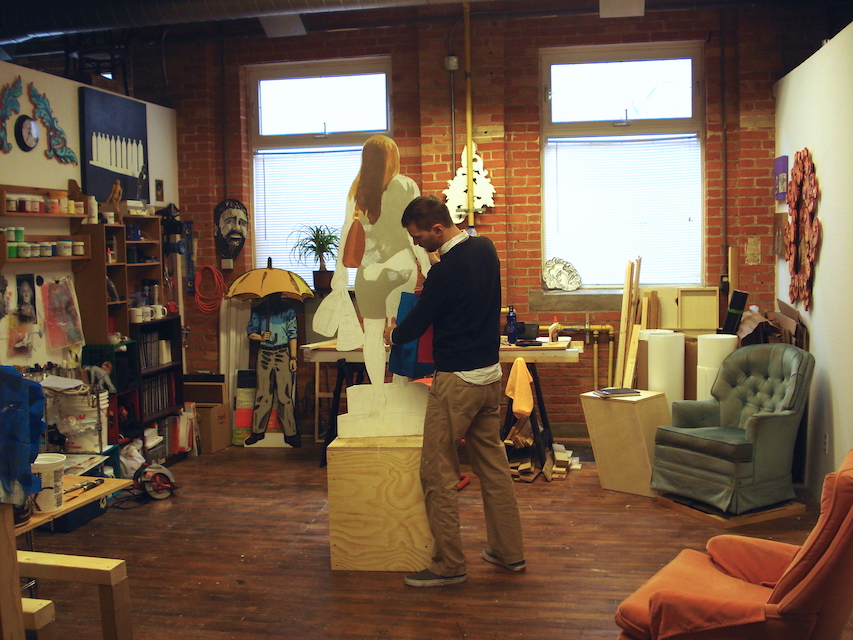
I spend much time working in my studio, to sculpt I need a wide work space, I use heavy materials, tools and machines, and I need a big concentration, but also I work outdoors, I can say that most of the time the roof of my studio is the sky.

What roles do you find yourself playing that you may not have envisioned yourself in when you first started making art?

I started doing art at a very early time in my life, so I couldn’t imagine any future, i was playing. Now, when I think all the techniques, expressions and forms of art I have used, and the expansion of possibilities to express myself, I’m amazed. Doing performances, video projections, and sound landscapes, to my sculptures and installations, and travel with my art is something I never have envisioned, in a way is always a big surprise, new roles are necessary to be played, and i’m ready for that. 

When do you find is the best time to make art? Do you set aside a specific time everyday or do you have to work whenever time allows?

I think each art piece has their own time to be born. I’m every day working in different forms, and if is not the time to work outside in nature, will be a good moment to work in the computer inside, or drawing, or working on concepts, for new or for older pieces. When I work in land art, I work during the day time, when nature allows me, it depends if is not raining or snowing or if is a sunny day. For sculptures I work in the afternoons, but if I have an exhibition I work 100 percent on that, for music I prefer the night. But my time for work is always changing, depending on the projects that I have to achieve.

Photo credit: Ilka Floeren

Photo credit: Ilka Floeren

How has your work changed in the past five years? How is it the same?

My work has changed a lot since I’m back in the Andes mountains before living in Paris. I used to have a very little atelier, so my sculptures and installations corresponded to that reality. Since I have all this land in my own place, I have a totally different perspective of art and possibilities in a wide space. I believe that a sensible artist is always influenced by the entourage, he transformed what he sees and fells all around him, if he is capable to get out of his own psyche, to perceive, reflect and be aware of a more universal reality, he will change, because I feel life is change. And in this way I can create an original form of art.

How have people such as family, friends, writers, philosophers, other artists or even pop icons had an impact on the work you do?

There are some artist that makes me feel a big inspiration, because of the forms they use, or their performances, concepts, or in the way they live their lives. My family also has a very strong and positive impact on my work.To see other artists is for me always a great impulse to create and continue working and believing.

Have you ever been pulled in the direction of a pursuit other than being an artist? What are your other interests? 

I am a multidisciplinary artist, my main focus is sculpture, but I researched also in contemporary dance, music therapy, I worked like VJ, transforming my paintings into psychedelic videos to be projected in music concerts, dance shows, theater pieces or discotheques. I worked like art producer, there are many things that interest me, but I think life is a creative flow, and my life is a piece of art that I create and perfect day after day, no matter what I do. 

About

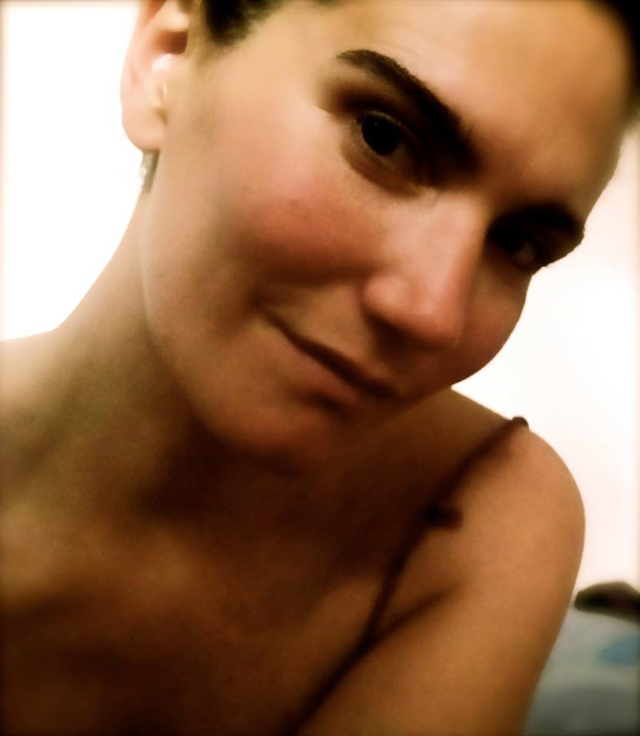
Yamila Marañon5Yamila Marañón was born in Mendoza, Argentina, in 1977. She comes from a family of artists, she studies at an art high school and at the age of 20 she moved to Paris, where she stay for 7 years, being part of a project of an important contemporary art center where she lived and worked. Then she comes back to Argentina to create a Cultural Foundation with the purpose of building a Sculptural Park, an open air museum in the Andes mountains, and she continue going to France and Germany to show her work. She has participated in several group and solo exhibitions in different cities of Europe and South America. Yamila Marañón currently lives and works in Uspallata Valley and Mendoza City, in Argentina.

Photo credit: Ilka Floeren

Photo credit: Ilka Floeren

yamyla.com.ar

All images copyright of the artist and used with their permission.

Posted in Sculpture | Tagged , , , , | Leave a comment

Paloma Marquez – Capital Federal, Buenos Aires, Argentina

Contemplando el repertorio - 55 x 80 cm - acrilico sobre tela

Contemplando el repertorio – 55 x 80 cm – acrilico sobre tela

Briefly describe the work you do. 

My works speak of man, in its simplest aspect … of their cycles and processes, thoughts, and especially situations that stand in their way and must solve, analyzing obstacles, but always “calmly active and actively calm ” (P.Yogananda). The whole society is a reflection of each individual, I like to observe (from inside and outside) as the crowds move like a choreography, split, compress and disperse. These piles of people, objects, thoughts, generate noise, an eternal murmur. Just as everything is nothing … the noise becomes silences opposition. That primary human schema, stripped, black and white, is what ends up reinforcing the message, if these clusters of figures they had a more realistic representation may become the work into something extremely baroque. The counterpoint created from the representation of a complex situation with simple images, the motley sum of small figures that generate volumes, create a work that is read from the general to the particular.

In my recent works appear as protagonists one or more bags and other objects as doors, boots, glasses,etc, its format is old and its representation in color is very realistic, these objects dialogue with schematic figures of the previous works. The human figures remain small scale, not keeping any logical relationship sized suitcases, interacting create situations that range from the dramatic to the irony. I also work on multiple media: paintings, sound sculptures, video and poems. An example is the series of photographs and videos that I made in Los Bordos of Guachin, La Rioja, Argentina, becomes in turn a mirror, showing natural desolation of many of the recesses of our being. In the experience I had when making this record, always look to the immensity of the landscape is the protagonist and protector of that helpless self-absorbed individual.

Tell us about your background and how that has had an influence on your work and on you as an artist.

I grew up in a small town between mountains, called Chilecito, in La Rioja, Argentina, my mother is also an artist, so being in that context surely influenced me. After finishing school I moved to Buenos Aires, I studied with several artists meanwhile I went to University.

Permanecia estrechamente enlazado, y mil veces entremezclado - 40 x 50 cm - acrílico sobre tela - 2015 -

Permanecia estrechamente enlazado, y mil veces entremezclado – 40 x 50 cm – acrílico sobre tela – 2015 –

The concept of the artist studio has a broad range of meanings in contemporary practice. Artists may spend much of their time in the actual studio, or they may spend very little time in it. Tell us about your individual studio practice and how it differs from or is the same as traditional notions of “being in the studio.”

I find myself working all the time, thinking in new projects, during travels or between other activities. I found peace in my studio, being alone there I can develop better my activities. Always with music and tea.

What roles do you find yourself playing that you may not have envisioned yourself in when you first started making art?

Well I found myself as a painter, carpenter, photographer, writer, and a lot of time as an administrator/ office work.

When do you find is the best time to make art? Do you set aside a specific time everyday or do you have to work whenever time allows?

In general I spent 2 or 3 entire days a the studio… as long as I stay in concentration… the best, because it´s hard to connect with distractions, for me the quiet of the night is a great time for work.

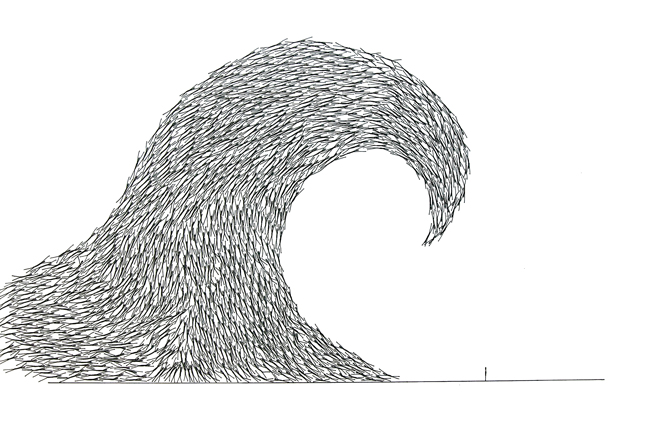
Olas I - 65 x 47,5 cm - Tinta sobre Papel - Serie Olas - 2007

Olas I – 65 x 47,5 cm – Tinta sobre Papel – Serie Olas – 2007

How has your work changed in the past five years? How is it the same?

In the last years, I add colors and objects with realistic technique of painting, I also made a few video-poems, and installations, with video and sound. the idea is to work more with interactive projects.

How have people such as family, friends, writers, philosophers, other artists or even pop icons had an impact on the work you do?

As I said before my mother is an artist.. so from my childhood I´ve been surrounded by art and he example of the greatest ones, also musicians influenced me a lot, as Dylan, and Argentinian traditional music.

Have you ever been pulled in the direction of a pursuit other than being an artist? What are your other interests? 

In my personal case, I couldn´t choose, is like my hands where made for this, I´m always thinking about concepts and meanin, searching for new ideas, for messages to spread, I cant imagine myself in a noncreative work.

About

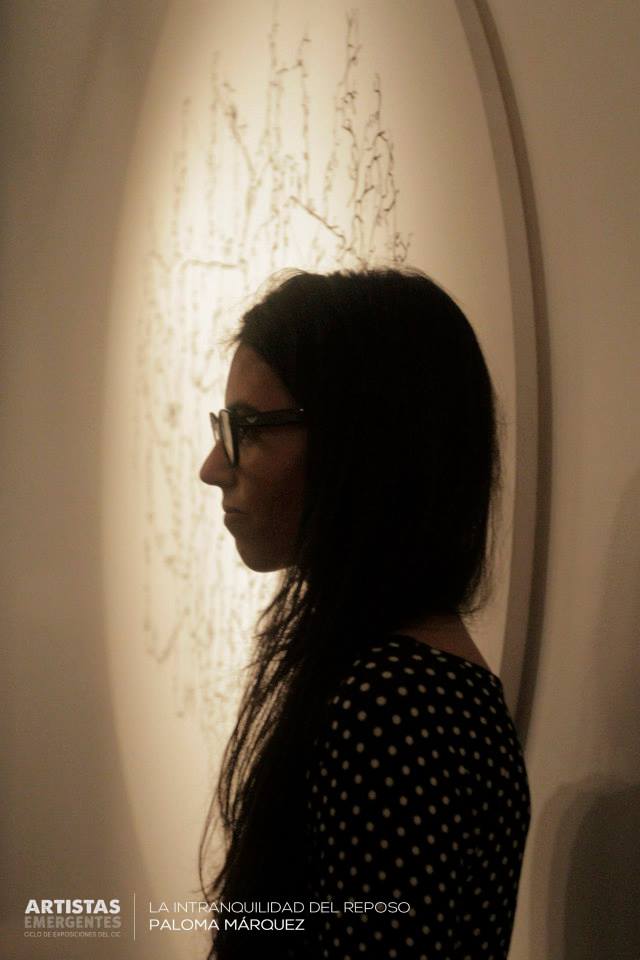
Paloma Marquez- headshoT_1I came to art when I was in school and trying to express my views on the society surrounding me. I’m from a small town called Chilecito, in the west of Argentina. When I moved to Buenos Aires to study, the change enriched my visual work: the crowds, the spaces, the busy paths and streets, the relationships and behaviors that I constantly observe here are the inspiration to my images.

In 2006 I graduated from high school at the Joaquin V. Gonzalez School in Chilecito and moved to Buenos Aires, where I studied Sound and Recording at the Universidad Nacional de Lanus. That same year I obtained an art scholarship at Proyectarte (a non-profit organization which creates, develops, and supports innovative art projects in the United States), which gave me the opportunity to exhibit my drawings and paintings and start making my way into the city’s art circuit. That year I also completed another degree in Audiovisuals (Licenciatura en Audiovisión) at the Universidad Nacional de Lanus.

Nowadays I take classes with several important Argentinean artists, such as Leonel Luna and Jorge Gonzalez Perrín. I worked as assistant of serveral artists as Eugenio Cuttica, Daniel Corvino and the photographer Jorge Roiger.  I´m studying a Master degree in electronics and newmedia art at UNTREF. My work has been exhibited in artistic events and art galleries in Chilecito, La Rioja, Cordoba, La Pampa, Buenos Aires, and Los Angeles, as well as at the Argentinian Consulate in New York, in Rockefeller Art Center in Boston, at Starchariot Gallery, Los Angeles, CA and in  Zurich.

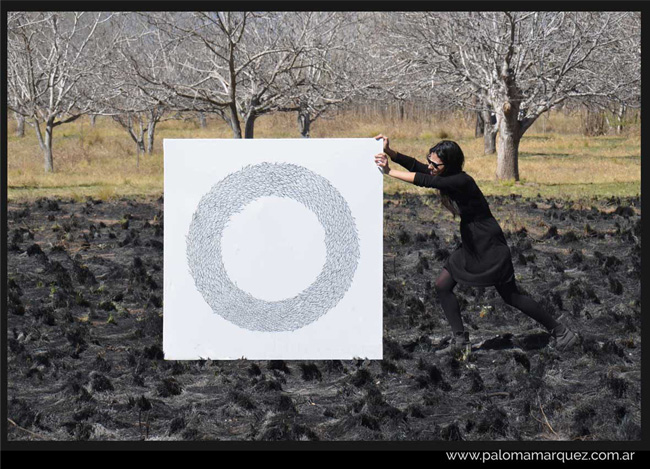
Paloma Marquez-working

palomamarquez.com.ar

All images copyright of the artist and used with their permission.

Posted in Conceptual Art, Painting | Tagged , , , , | Leave a comment

Jovanni Luna – Nashville, Tennessee

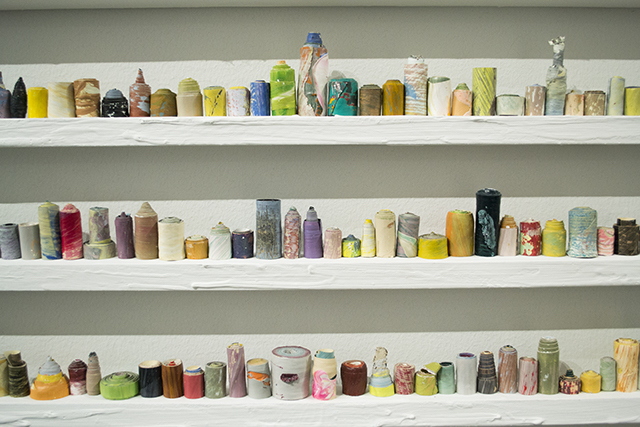
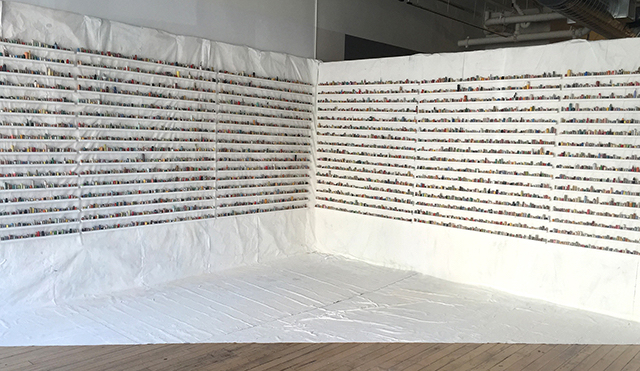
“the sculptural painting: number two” (detail shot), rolled up paintskin on wooden shelves, 2015

“the sculptural painting: number two” (detail shot), rolled up paint skin on wooden shelves, 2015

Briefly describe the work you do. 

By layering house paint, I construct paint skins from which I then laboriously manipulate to create sculptural paintings and installations. 

Tell us about your background and how that has had an influence on your work and on you as an artist.

I grew up around orchards and was surrounded by thousands of trees and all the natural textures that come with it. I attempt to mimic these natural textures in my work, by allowing imperfections and constant manipulation to occur in order to avoid a manufactured look. My early desire for becoming an architect and studying two years of architecture in college has also unconsciously influenced my work and I have begun to notice architectural elements in almost everything I do. 

The concept of the artist studio has a broad range of meanings in contemporary practice. Artists may spend much of their time in the actual studio, or they may spend very little time in it. Tell us about your individual studio practice and how it differs from or is the same as traditional notions of “being in the studio.”

The studio space is an art piece in itself, and one that is constantly changing and evolving. I spend as much time as I can in the studio making individual pieces, but it’s also used as a way to create small versions of large installations. By making these small installations, I am able to test out aesthetic and logistics for the larger ideas. 

“the sculptural painting: number two” rolled up paintskins on wooden shelves, 8’x15’10’, 2015

“the sculptural painting: number two” rolled up paint skins on wooden shelves, 8’x15’10’, 2015

What roles do you find yourself playing that you may not have envisioned yourself in when you first started making art?

Being considered a painter, and the possible impact my work could have in the history of art. Ive also only been pursuing being an artist for five years, so when I started I was unaware of what other artists had previously done to define painting. Making “traditional” or two dimensional paintings wasn’t an interest, but the idea that painting can take any form, and have it be more than just a medium, but a way of experiencing art, excites me. 

When do you find is the best time to make art? Do you set aside a specific time everyday or do you have to work whenever time allows?

I’m definitely a night person, and enjoy to do most of my work late in the night if possible That being said I am not always able to work at night, so I’ve learned to work when time allows through out the day, with my only requirement being that I spent at least an hour a day.

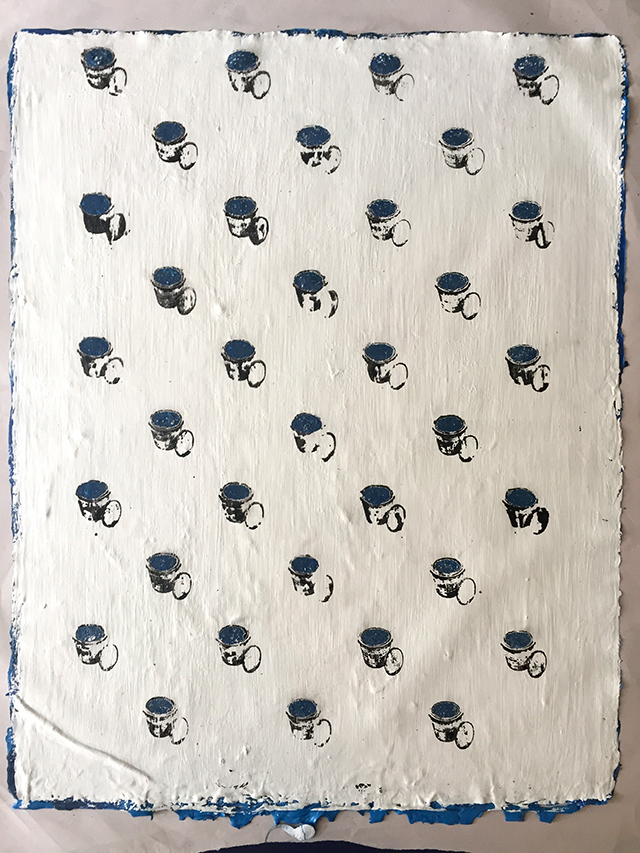
“paint can: pattern test”, screen print on paintskin, 22’’x30’’, 2015

“paint can: pattern test”, screen print on paint skin, 22’’x30’’, 2015

How has your work changed in the past five years? How is it the same?

Like I previously mentioned I’ve only been creating work for five years, the first year was focused on printmaking, and more than having a style it was all about exploring and learning the techniques. Style drastically changed when I began layering paint and making sculptural paintings, five years ago I wouldn’t of thought I would be making objects and installations. The idea of process, experimentation, and learning about a material/technique has stayed with me. The laborious, tedious process to produce an image, has now converted to that same laborious an tedious process to construct paint skins in order to make sculptural paintings. 

How have people such as family, friends, writers, philosophers, other artists or even pop icons had an impact on the work you do?

There have been multiple professors that have reminded me to be patient with the process in order to accomplish successful work, to be more observant of the world and all its textures and details, and also how to know when to stop making when working with multiples. Family and friends have been there to listen to me rant about my artwork even when they have no idea what it is that I am talking about.

Have you ever been pulled in the direction of a pursuit other than being an artist? What are your other interests? 

When I was 12, I told myself that I was going to be an architect, and whenever there was an opportunity in school to take a class to help me achieve that goal, I would take it. In college I studied two years of architecture before I realized it was a false childhood dream, and it wasn’t what I wanted to do for the rest of my life. My interests lie on the idea of exploration and continuation of learning new forms of creativity, and being an artist would allow my to do this. I have currently been sketching and planning ideas for a fashion collection that will tie in with my next paint skin installation. 

About

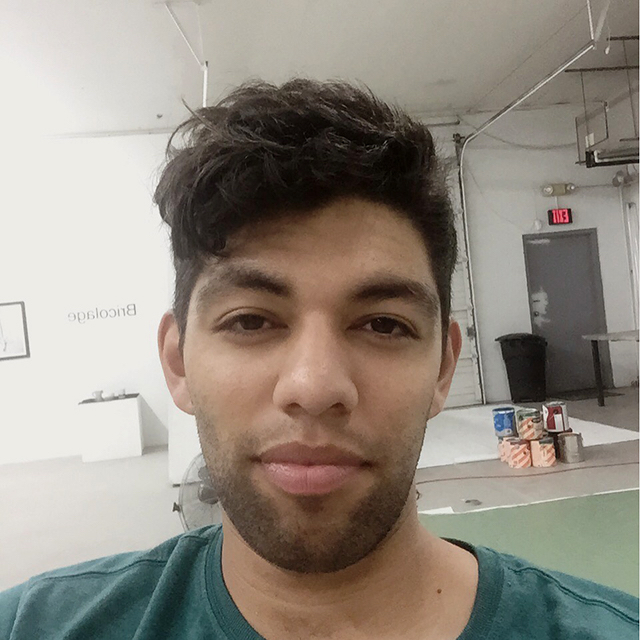
luna_jovanni_headshotJovanni Luna was born in Wenatchee, Washington. He received his BFA from Washington State University, and MFA from Columbus College of Art and Design. He is currently living in Nashville, TN, with a studio space at Ground Floor Gallery+Studios. 

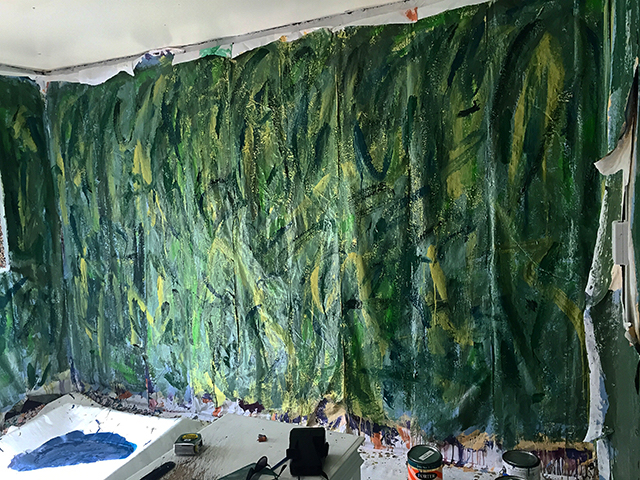
studio space showcasing tests for the next installation idea, “the landscape painting”

studio space showcasing tests for the next installation idea, “the landscape painting”

jovanniluna.com

All images copyright of the artist and used with their permission.

Posted in Installation, Painting, Sculpture | Tagged , , , , | Leave a comment

Alexander Wtges – Panamá, República de Panamá

art1_viaje-acrylic-76x120cm-2015

viaje-acrylic-76x120cm-2015

Briefly describe the work you do. 

I design icons and images with which to make a series of compositions to play with the perception.

Tell us about your background and how that has had an influence on your work and on you as an artist.

All my life i did drawing and illustration, at 17 year old i learned the art of tattoo and  years later I just started to graphic design.

Today this is reflected in my work.

The concept of the artist studio has a broad range of meanings in contemporary practice. Artists may spend much of their time in the actual studio, or they may spend very little time in it. Tell us about your individual studio practice and how it differs from or is the same as traditional notions of “being in the studio.”

My studio is in my house, I spent time looking for information and ideas.

What roles do you find yourself playing that you may not have envisioned yourself in when you first started making art?

Investigate, study, make sketches, look materials , learn new techniques, experiment and think how make the next artwork.

infinito-acrylic-76x120cm-2015

infinito-acrylic-76x120cm-2015

When do you find is the best time to make art? Do you set aside a specific time everyday or do you have to work whenever time allows?

I can not paint always, but I like make art in the morning and in the afternoon to take advantage of daylight, when I start I can not stop.

gambeta-acrylic-150x150cm-2015

gambeta-acrylic-150x150cm-2015

How has your work changed in the past five years? How is it the same?

My personal work was changed, before it was a hobby, today is my job. I  taken this very seriously and I think every day in my personal work.

How have people such as family, friends, writers, philosophers, other artists or even pop icons had an impact on the work you do?

My wife is my closest influence, she is my partner.

I like also the works of others painters, tattoo artists, graffiti artists, designers and musicians. are many in my favourites lists and somehow all encourage me to improve and work harder every day.

Have you ever been pulled in the direction of a pursuit other than being an artist? What are your other interests? 

Surf, I could surf every day.

About

headshotStudied graphic design at the University of Panama and began career with his tattoo studio and an alternative magazine. After he turned to advertising work, playing for eight years as Art Director in Revolver Advertising. Currently directed his studio Hexagram and the same time develop personal projects as a visual artist.

studio

alexanderwtges.com

All images copyright of the artist and used with their permission.


Posted in Uncategorized | Tagged , , , , | Leave a comment

Suchitra Mattai – Denver, Colorado

Generally, I don’t think that way, mixed media on vinyl, 30” x 40”, 2015

Generally, I don’t think that way, mixed media on vinyl, 30” x 40”, 2015

Briefly describe the work you do.

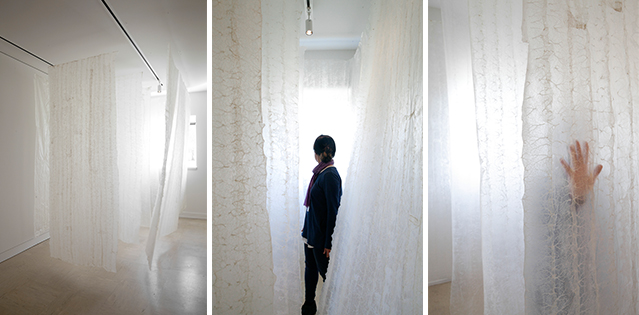
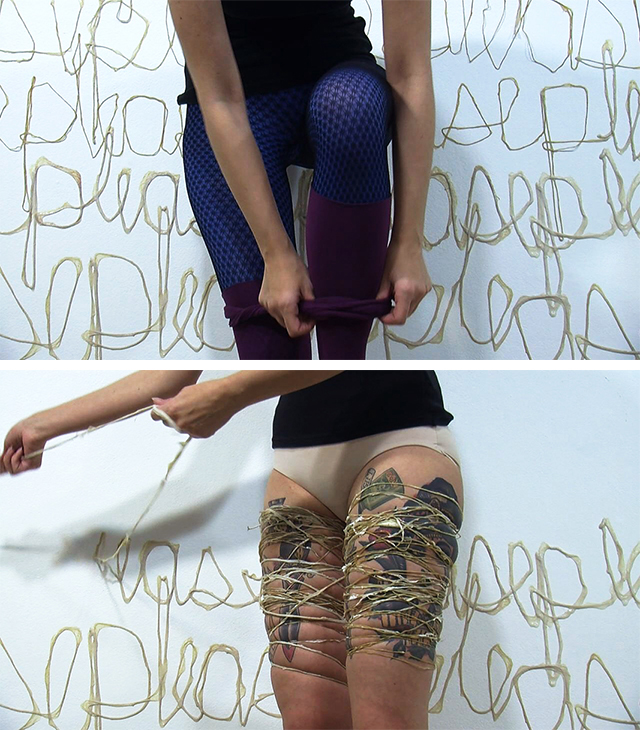
My paintings, drawings and installations center on the general themes of identity and globalization through the tropes of landscape and embroidery. I draw from memory, history, travel, and pop-culture, and employ bright bold colors and patterns to ignite otherwise barren, abstract, and often highly conceptualized landscapes. While these landscapes are unpopulated, their mountains, oceans, plains, and cities often bear the trace of human activity. The embroidered elements allude to the work of the “other,” referencing women and sweatshop workers.

Currently, I am working on a project called “the Intrepid Garden,” in which I investigate the nature of the “garden” as a site of decay and rebirth. The garden, as the cultivated place between the untamed woods and the domestic realm, acts as a space of mediation. It can be nurtured, maintained, and controlled, but has the potential to become over-grown, unruly, and unkempt. As nature bears its force, the garden transforms from a peaceful haven to an inhospitable wilderness. But, historically speaking, the gardener’s effort to manipulate and control our natural world has often, if not always, been accompanied by a tacit recognition of the aesthetic primacy of nature itself. Nature is at once to be mastered and to be mimicked. I am excited to investigate this theme through multiple mediums.

Tell us about your background and how that has had an influence on your work and on you as an artist.

I have had the pleasure of living in and traveling to many places. I am South Asian, but was born in South America and grew up in Nova Scotia, Canada, and all over the East Coast. My travels have brought me to Africa, Asia, South America, Europe, etc. These experiences have led me to make art about the feeling of disorientation associated with living in a global context.   I was specifically struck by the industrial waste and detritus within the various landscapes and made a body of work surrounding these spaces.

Ten Mile, mixed media on wood, 72” x 36,” 2013

Ten Mile, mixed media on wood, 72” x 36,” 2013

The concept of the artist studio has a broad range of meanings in contemporary practice. Artists may spend much of their time in the actual studio, or they may spend very little time in it. Tell us about your individual studio practice and how it differs from or is the same as traditional notions of “being in the studio.”

I cherish the moments I have in my studio, which I consider to be an “inner sanctum” of sorts. But I collect visual data every moment of the day. Taking the time to observe the world leads to moments of fantastic inspiration.

What roles do you find yourself playing that you may not have envisioned yourself in when you first started making art?

Teaching plays a significant role in my life. I believe in teaching students to understand the integration of art and life. The marriage of a strong mastery over materials and a powerful conceptual framework is our key to making great works of art. My students, in turn, show me how to see the world with fresh perspectives.

When do you find is the best time to make art? Do you set aside a specific time everyday or do you have to work whenever time allows?

I work whenever I can but I am most productive when I have several hours to ruminate and create, but I basically work whenever and wherever I can. Right now I have a residency that gives me the conceptual and physical space to expand my practice, but I maintain a small workspace at home as well because inspiration is unpredictable.

Don’t underestimate me, acrylic and thread on canvas, 36” x 36,” 2015

Don’t underestimate me, acrylic and thread on canvas, 36” x 36,” 2015

How has your work changed in the past five years? How is it the same?

My work has diversified in terms of materials. I have expanded my practice to include video and sculpture and look forward to what the future will bring. Embroidery and the handmade have also played a major role in my work recently and I look forward to expanding my practice to include animation as well. The conceptual thread and allusions to identity within a global and multi-cultural world have stayed the same.

How have people such as family, friends, writers, philosophers, other artists or even pop icons had an impact on the work you do?

I am deeply influenced by discussions with other artists and especially those with my philosopher husband, Adam Graves. Some of my favorite contemporary artists include Peter Doig, Kara Walker, Janine Antoni, Amy Cutler, Marcel Dzama, etc.

Have you ever been pulled in the direction of a pursuit other than being an artist? What are your other interests?

I majored in statistics in college and started a PhD program in South Asian contemporary art before I felt the courage to follow my dream of being an artist. Travel is my most passionate hobby. The insight that you gain from seeing and internalizing other cultures and landscapes is overwhelmingly exciting for me.

About

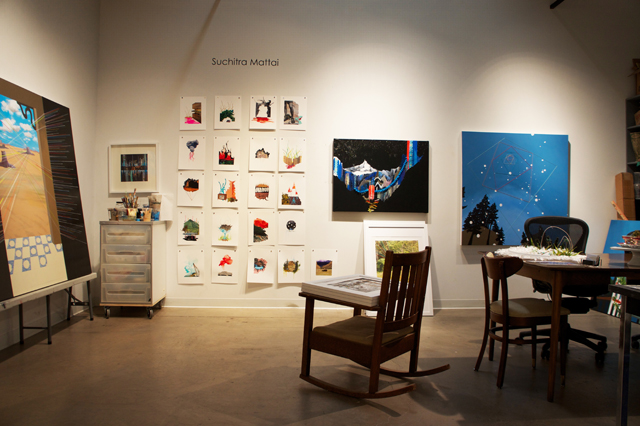
365 photoSuchitra Mattai lives and works in Denver, Colorado.  She received an MFA in painting and drawing and an MA in South Asian Art, both from the University of Pennsylvania, Philadelphia.   She was also awarded fellowships to study at the Royal College of Art, London and at the American Institute of Indian Studies, Udaipur, India. Suchitra has exhibited her work in Philadelphia, Minneapolis, Denver, Austin, Berlin, and Wales.  Her work has also appeared in New American Paintings and she is currently a resident artist at RedLine Denver.   Suchitra teaches studio classes at the University of Denver.

SONY DSC

SONY DSC

suchitramattai.com

All images copyright of the artist and used with their permission.  

Posted in Collage, Embroidery | Tagged , , , , | Leave a comment

Kristen Miologos – Phoenix, Arizona and Austin, Texas

Repulsive Attraction hog gut 8’×8’×5.5’ 2013

Repulsive Attraction
hog gut 8’×8’×5.5’ 2013

Briefly describe the work you do.

I seek out the emotional liminal space of my hyphenated Greek-American identity through the production of objects, performance, and sound.

Tell us about your background and how that has had an influence on your work and on you as an artist.

I was raised in a very traditional Greek-American household. Growing up, I had to attend Greek language school for 8 years outside of “American school,” dance in a Greek folk troop, while being an active participant in my local Greek Orthodox Church. In contrast, much of my early adulthood was spent working at tattoo parlors and listening to heavier music like metal and hardcore. Struggling to live the life of a “good Greek girl” like my family expects of me, but having aggressive interests that oppose the fundamental tenets of my upbringing, has led to a lot of tension in my personal life. In my earlier works, I was using a lot of symbols from both American and Greek culture to create coded works on identity. Since then, I have transitioned into using materials like hog gut (pig intestines) to represent these themes of emotional conflict without having to rely solely on imagery. I also draw influence from the theatrical stage shows of bands I listen to (particularly within Black and Doom metal), as well as their movements as musicians, to influence my own performative works and sound pieces.

digital video stills (performance with hog gut) 00:09:23 2012

digital video stills (performance with hog gut) 00:09:23 2012

The concept of the artist studio has a broad range of meanings in contemporary practice. Artists may spend much of their time in the actual studio, or they may spend very little time in it. Tell us about your individual studio practice and how it differs from or is the same as traditional notions of “being in the studio.”

I think my studio environment is fairly common for a young artist in that it has been in constant flux over the years. During periods of schooling, I’ve had the most luxurious spaces in which to make, and oftentimes, the works made during those periods were large in scale. I have had an extra bedroom in my house be utilized as a studio space; I’ve stuck a giant worktable in my kitchen instead of a dining room table; in more cramped environments, I’ve only had my bedroom, coffee table, or couch. Work that is portable such as embroidery, as well as non-object works, tend to be made during those cramped periods.

What roles do you find yourself playing that you may not have envisioned yourself in when you first started making art?Artist as PR machine.When do you find is the best time to make art? Do you set aside a specific time everyday or do you have to work whenever time allows?

I feel most focused at night, but I do not regiment my making to any specific times. My schedule changes almost daily, so my making habits change with it.

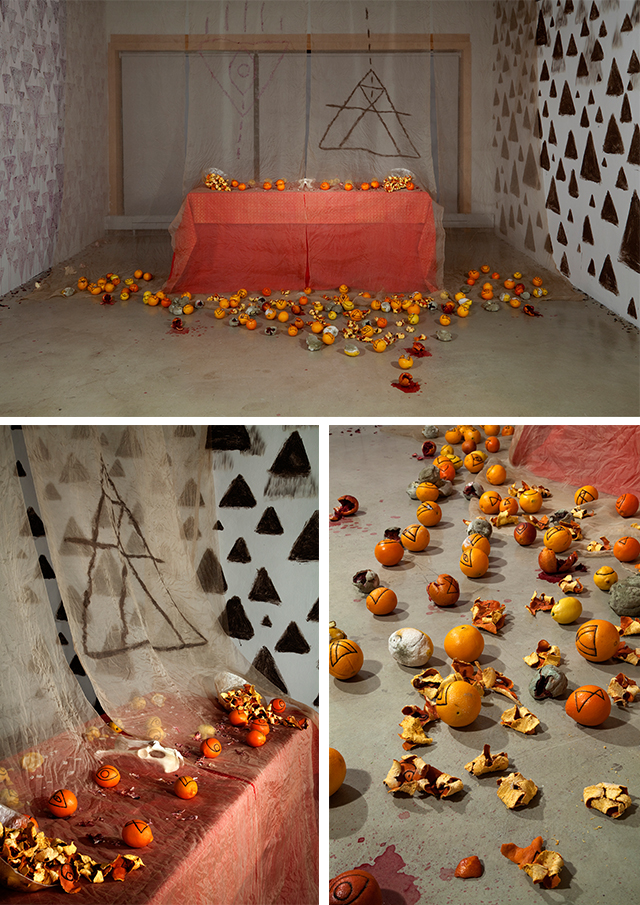
V silk organza, cotton, discharge, india ink, blood oranges, lemons, mud, smoke, hog gut, sheep pelvis & teeth installation (variable dimensions) 2012

V
silk organza, cotton, discharge, india ink, blood oranges, lemons, mud, smoke, hog gut, sheep pelvis & teeth
installation (variable dimensions)
2012

How has your work changed in the past five years? How is it the same?

Visually, my work has changed greatly: I started out making very traditional looking fiber works like screen-printing hand drawn repeat patterns onto fabric yardage. With graduate school came an intense period of experimentation. I began hand-tattooing fruit, and working with hog gut — then performance and video were thrown into the mix. My most recent works have been sound pieces that I have made with the help of a theremin. I believe the work has stayed the same conceptually, even though I am trying to evolve in that area. I’ve been trying to make my work less about Greek v. American, and more about the emotions one may face when experiencing identity conflicts; however, I believe I have failed at this so far, and the work still looks like one identity trying to take over the other.

How have people such as family, friends, writers, philosophers, other artists or even pop icons had an impact on the work you do?

The people around me have greatly influenced my work, as I tend to make work that relates to the various social groups I associate with. Musical artists and bands possibly influence me in a greater way than visual artists do. Doom metal bands especially: I study their movements as performers, and have found a correlation between the slow repetitive music they make and hand processes used within fiber, which is a great inspiration to me.

Have you ever been pulled in the direction of a pursuit other than being an artist? What are your other interests?

Making art and being an artist has always been my primary pursuit. Other paths I have taken still relate to art: working for tattoo artists in Phoenix, being an artist assistant on the Southside of Chicago, doing custom framing in Austin, and now I’m back in Phoenix teaching fibers at Arizona State University. I do really enjoy teaching art at the college level and hope to continue that pursuit. I am really inspired by the energy and creativity that occurs when students are experimenting (and sometimes failing) while seeking out their voices as artists. I feel that the most exciting work happens during those periods of risk taking, so I am happy to be a part of that energy and help guide students to make work they are enthusiastic about.

About

miologos_headshotKristen Miologos is a fiber and performance artist who seeks harmonious-hybridization within her Greek-American identity. Through the use of ritualized gesture, she searches for similarities within her polarized worlds. She holds an MFA in Fiber from Cranbrook Academy of Art and an undergraduate degree in Fibers from Arizona State University. Kristen is currently a Faculty Associate in Fibers at Arizona State University, and splits her time between Phoenix, AZ and Austin, TX.

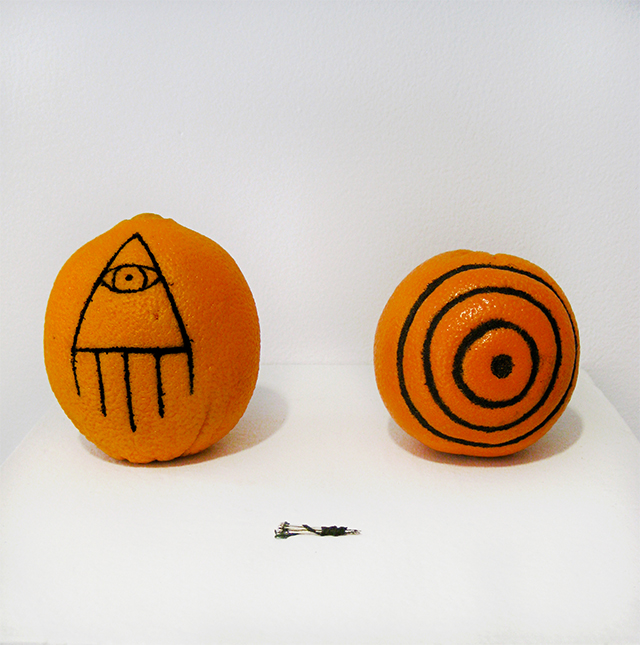
Poke oranges, india ink, needles variable dimensions 2012

Poke
oranges, india ink, needles variable dimensions
2012

kristenmiologos.com

All images copyright of the artist and used with their permission.  


Posted in Performance | Tagged , , , , | Leave a comment

Dan Gemkow – Surry Hills, NSW, Australia

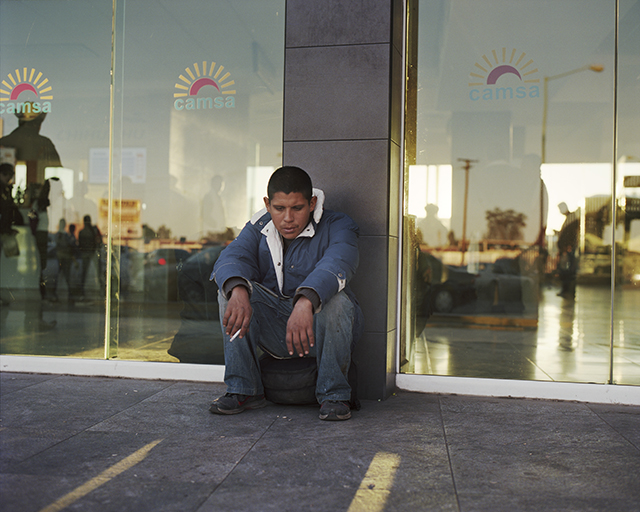
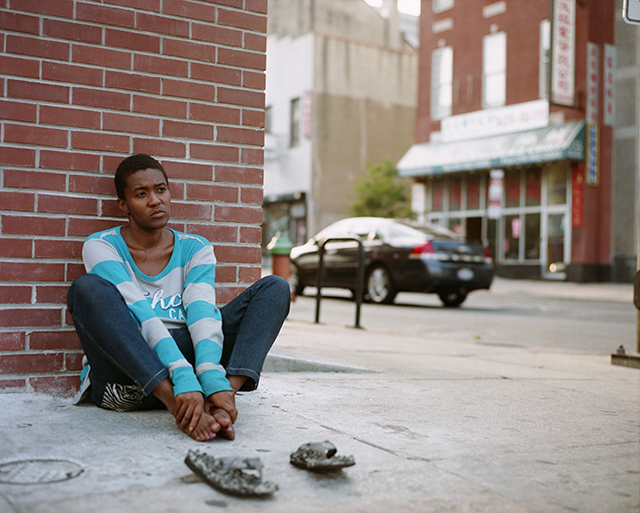
Omar_MexicaliMexico_FromSeries_InTransit_Inkjet_24x30_2013

Omar_MexicaliMexico_FromSeries_InTransit_Inkjet_24x30_2013

Briefly describe the work you do.

As a photographer, I look for places and subjects that describe the relationship between the built environment and the human experience. The landscape that we construct has a strong influence on our lives. It is where we sleep, eat, work, purchase goods and services, travel and ultimately reflects what we value as a culture. Through the use of portrait and landscape photography, my work is an exploration of the different ways in which the reality of our cultural values becomes evident within the built environment. I have searched for these subjects in places such as residential neighborhoods, strip malls, bus stations and most recently the interstate highway system.

Tell us about your background and how that has had an influence on your work and on you as an artist.

When I was in college, I often traveled long distances by commercial bus lines. It was and continues to be the most affordable means of transportation. I learned that a trip by bus demands a greater level of endurance than any other form of travel. I remembered making many stops in every major city at all hours of the day and night. After 52 hours on a bus, myself and fellow passengers all started to physically show the effects of a long bus trip. Four years ago, inspired by these memories, I began a portrait series of bus passengers, titled In Transit.

Autosave-File vom d-lab2/3 der AgfaPhoto GmbH

Autosave-File vom d-lab2/3 der AgfaPhoto GmbH

The concept of the artist studio has a broad range of meanings in contemporary practice. Artists may spend much of their time in the actual studio, or they may spend very little time in it. Tell us about your individual studio practice and how it differs from or is the same as traditional notions of “being in the studio.”

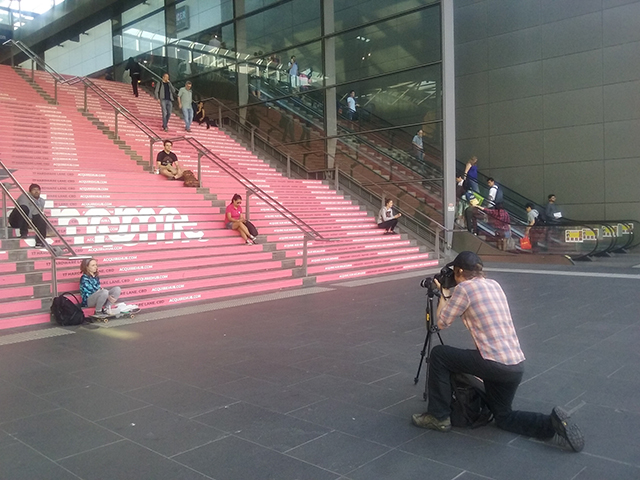
My current projects are all made outside of a studio environment. I am interested in subjects and landscapes that exist unedited without preparation to be photographed. So, in order to create my work, I need to find people and places that exhibit the ideas I am trying to convey. That requires getting out into the places where public life is happening. In order to work on my portrait series, In Transit, I have traveled over 40,000 miles through 4 countries and I am currently in Australia to complete the project.

Most of my editing can be done on a laptop and while traveling. The only real studio time I need is when printing. A properly calibrated monitor and an inkjet printer are essential to the printing process.

What roles do you find yourself playing that you may not have envisioned yourself in when you first started making art?

While I was in graduate school, I began teaching. This was certainly something I never expected to do. After the completion of my MFA, I continued teaching both traditional film and digital photography. I also worked as a photo-journalist and shot video for a television news station. Although I had worked with filmmaking on a number of independent projects, I never thought of actually doing it for a media outlet. These were both excellent experiences and helped to broaden my understanding of the medium and made me a better photographer.

When do you find is the best time to make art? Do you set aside a specific time everyday or do you have to work whenever time allows?

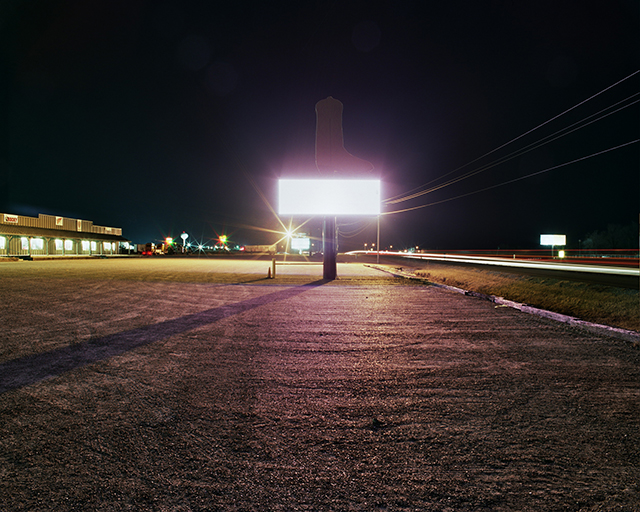
I have found that I am most productive when I have established the conceptual framework for a project. Once I know what I am looking for and what my project is about, I can really create a lot of work and I go out as often as I can. Also, the idea for the project dictates the right time to make it. For my series Electronic Billboards, I had to shoot at night to get the proper exposure. Weather was a factor and I often had to travel over one hundred miles per shoot, but I wanted to make those pictures and that was the necessary time and process. In between projects, regardless of the medium, I think it is important to be active and try to begin a new series. Often, when I start a new body of work, a different and better idea comes along and I develop that instead.

Karen_FromSeries_InTransit_Inkjet_32x40_2012

Karen_FromSeries_InTransit_Inkjet_32x40_2012

How has your work changed in the past five years? How is it the same?

I was still in pursuit of my MFA five years ago. I went to school as a black and white photographer and I was used to working long hours in a darkroom and heavily manipulating the negatives I shot. At that time, I marveled at the possibilities of what an ordinary negative could become through post-production darkroom processes. However, while in school, I gained an interest in the documentary process. So, I now shoot subjects as they are and not how I later decide they should be. I still shoot film, although almost exclusively color film, but I print in a digital lab and rarely use the darkroom.

How have people such as family, friends, writers, philosophers, other artists or even pop icons had an impact on the work you do?

Learning about the work that was featured in the 1975 exhibition, New Topographics: Photographs of a Man Altered Landscape, really changed the way I thought about making a series of pictures. All ten of those photographers, particularly Robert Adams and Lewis Baltz, have impacted my work. Philip-Lorca diCorcia and Paul Graham have also been a big influence. I am also a Beatles fan and found inspiration in their prolific output that consistently redefined who they were as artists and challenged what music could be. 

Have you ever been pulled in the direction of a pursuit other than being an artist? What are your other interests? 

It was not until after I graduated from college that I got into art. I was not serious or passionate about my first college degree and it really had very little to do with the creative field. Shortly after I finished school, a friend handed me her 35mm Pentax SLR and suggested that I check it out for awhile. We were in a forest preserve and her camera had a telephoto lens that enabled me to zoom in on a fisherman far off in the landscape. I took the picture and as soon as the shutter clicked, I had one of those moments when I knew what I had to pursue for the rest of my life. I really have never felt inspired to do anything else. I am also very interested in music and astronomy, but photography is definitely my channel of communication.

About

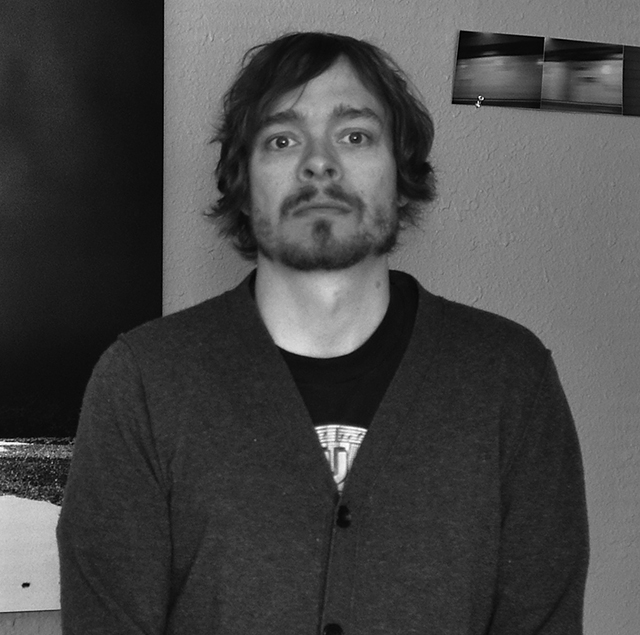
365_headshotDan Gemkow is a photographer and Instructor of Fine Arts. He is originally from New Hampshire and grew up in the suburban Chicago area. He received a Master’s degree in Fine Arts in 2010 from the University of Missouri. Since completion of his MFA, Gemkow taught both traditional darkroom and digital photography for three years at Missouri Valley College. Currently, he is traveling across Australia to complete his project, In Transit.

Gemkow has participated in exhibitions at the Center for Fine Art Photography in Fort Collins, Colorado, the Kaunas Photo Festival in Kaunas, Lithuania, the PH21 Gallery in Budapest, Hungary, the Masur Museum of Art in Louisiana, the Foundry Art Center in St. Charles, Missouri, the Kevin Milligan Gallery in the Bay Area of California, the Rogue Space Chelsea in New York City, the Black Box Gallery in Oregon, the PhotoPlace Gallery in Vermont, the Midwest Center for Photography in Kansas, the Tubac Center for the Arts in Arizona, several galleries around the Midwest and Gallery MM in Yokohama, Japan.

365_MakingWork

dangemkow.com

All images copyright of the artist and used with their permission.  

Posted in Photography | Tagged , , , , | Leave a comment

Essi Zimm – Culver City, California

Tikba Nita, Collage and Oil on Panel Board, 44" x 66", 2014

Tikba Nita, Collage and Oil on Panel Board, 44″ x 66″, 2014

Briefly describe the work you do. 

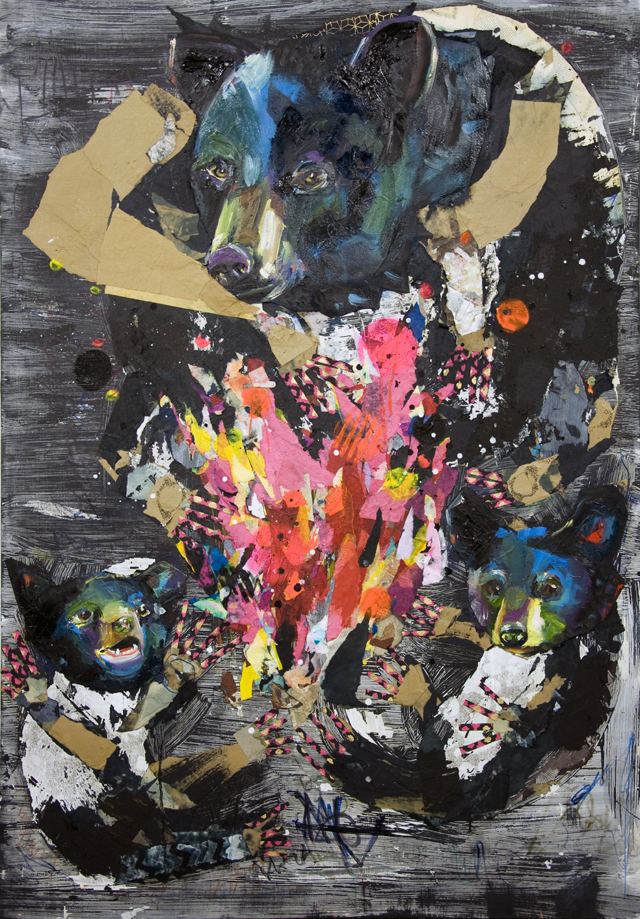
I am a painter that focuses primarily on folklore and how such tales describe prevalent teachings. My medium focuses on the use of collage and oil paint and how both create incredible layering techniques that go along with the art of storytelling, the revealing of things beyond the surface context.

Tell us about your background and how that has had an influence on your work and on you as an artist.

I grew up in the mountains of Colorado, in a bookstore, to a European mother and an engineering father. So the act of storytelling was always a very important aspect to how I was raised. I was surrounded by very interesting types in the bookstore who always postulated on their absolute truths, and then my German side of the family would always weave tales of superstitions that one had to live by. My grandmother would always say, “Spinnen am morgen bringen Unglueck, Spinnen am abend bringen Glueck.” (See a spider in the morning brings bad luck, see a spider in the evening brings good luck). I became incredibly absorbed with the aspect of fairy tales and folk lore and the truths they were trying to paint through references; often animalistic or natural in their meanings, as if to say at the heart of all our immorality we can learn from nature.  I took a different course through life by going to architecture school, where I received my bachelors from the Colorado University at Boulder, and my Masters from Savannah College of Art and Design (where I was awarded graduate valedictorian), I then move to Boston, Japan, and eventually settled in Los Angeles working for famed architect Frank Gehry. I was always on the precipice of painting, as I would fill my sketchbooks with inked drawings, and at SCAD I took as many non-architecture courses as I could muster. Painting, I found, was one of the few things that made my world calm. It really wasn’t until year 2 of working for Frank, that I fully invested into pursuing a life as a painter. I started taking local classes at Otis College of Art and Design and studied under the late Franklyn Liegel, Bonita Helmer, and privately mentored under Rebecca Campbell.  I would say that my roundabout upbringing to storytelling, as well as my living abroad, and coming at art through the architecture route, allowed me the grace to really explore being a painter.  
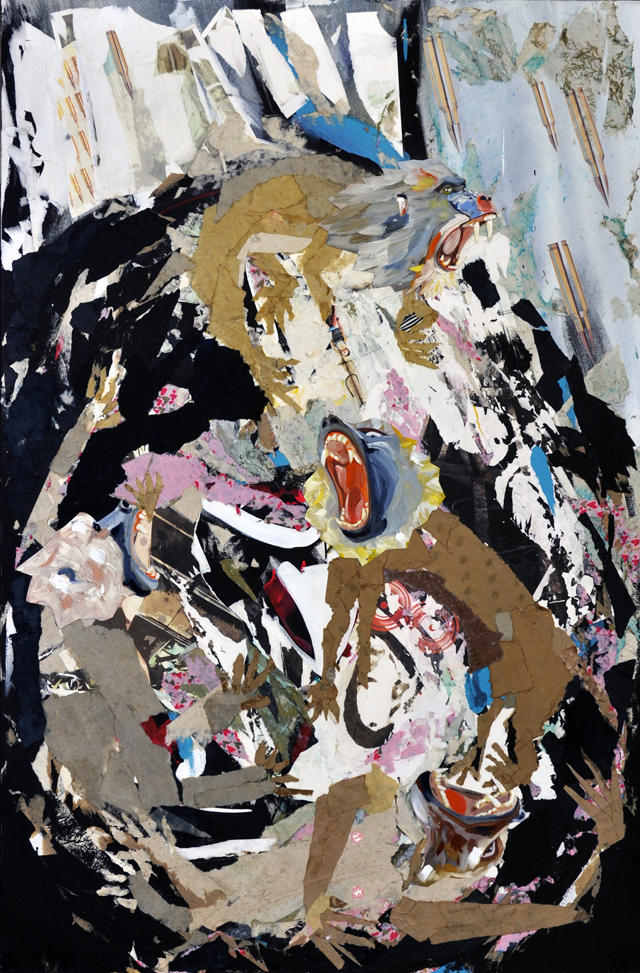
The End is Nigh, Collage and Oil on Canvas 44" x 66", 2015

The End is Nigh, Collage and Oil on Canvas 44″ x 66″, 2015

The concept of the artist studio has a broad range of meanings in contemporary practice. Artists may spend much of their time in the actual studio, or they may spend very little time in it. Tell us about your individual studio practice and how it differs from or is the same as traditional notions of “being in the studio.”

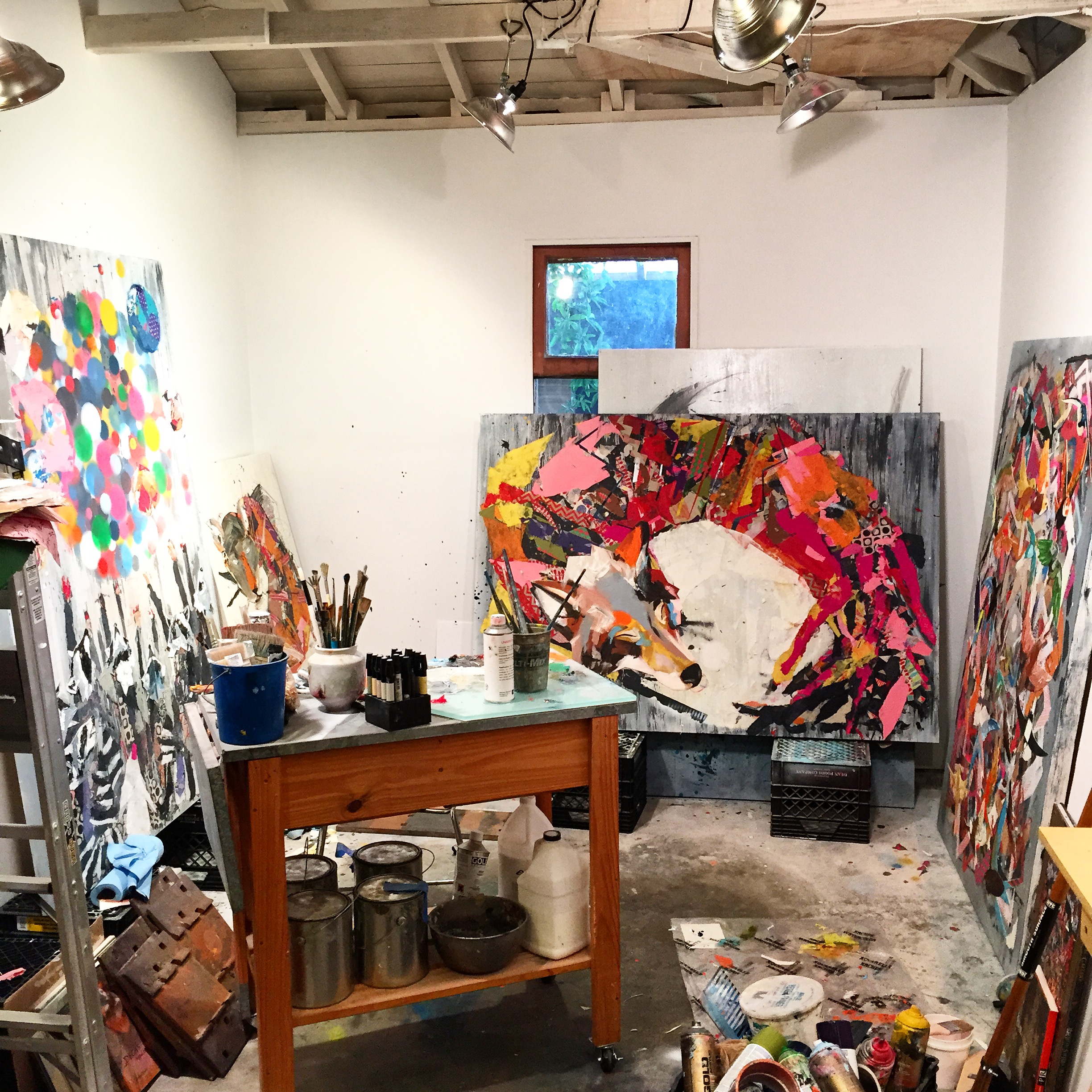
My studio practice is my home away from home. I have a day job as an architect, so I don’t have the luxury of spending day light hours in the studio. My time is in the night. This may influence my use of bright colors a tad, but I have found that I have always worked well in the evenings. I find that it has also become very therapeutic for me to paint in the night, as it is a way to release all the tension from the day. There is rarely a bad day in the studio, more than anything it is a glorious relief.

What roles do you find yourself playing that you may not have envisioned yourself in when you first started making art?

Networker. Coming from architecture, there is this kind of incestuous club that people are just inherently a part of, and if you don’t happen to know fellow architects, then you know fellow contractors, engineers, etc etc; and it is generally started by a client coming to an architect to design something, so you have your patron built in from the beginning. In the art world, it’s a little bit flipped, you are smoozing the galleries, you are smoozing other artists, you are smoozing to get noticed. There is a whole network of trying to prove your worth to the world via a medium that is very subjective. In the architecture world you develop a design off a clients needs and your own ideologies as a designer, and at the end it is a conglomeration of teamwork to get something done. In the art world, it is often times based off whom you know, and so there are a number of hours that need to be allocated to “face time”.  I’m still navigating the ins and outs of the networking world. 

When do you find is the best time to make art? Do you set aside a specific time everyday or do you have to work whenever time allows?

In the evenings most definitely. Aside from the obvious reason stated above, I have found that I work the best when the daylight has gone away. When it’s light out I become so distracted, I want to go blow a dandelion and frolic in the trees, I feel almost guilty being in the studio during the day time. In the night though, it beckons me. I also have to be on a set schedule, and I work definitely better under time crunches with deadlines, which I think was something that I just learned from architecture school. If I have six months to create something, I will probably wait until month three to start it, and then work well into the evening and weekends, and lose sleep. Its not very conducive, but that sense of pressure seems to be the added element to how I create, as my work is often times very reactionary. I rarely, if ever, do studies prior to a painting. I just go into it, guns blazing. Yes, I have an idea of what I want to do, and the story I want to tell, but sometimes the brush can go a different way than planned, or a paper can fold a different way then expected, and I have learned early on to say “happy accident” and work it into the whole piece.
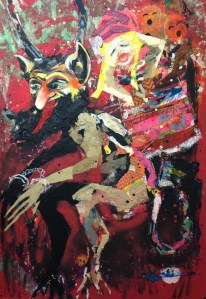
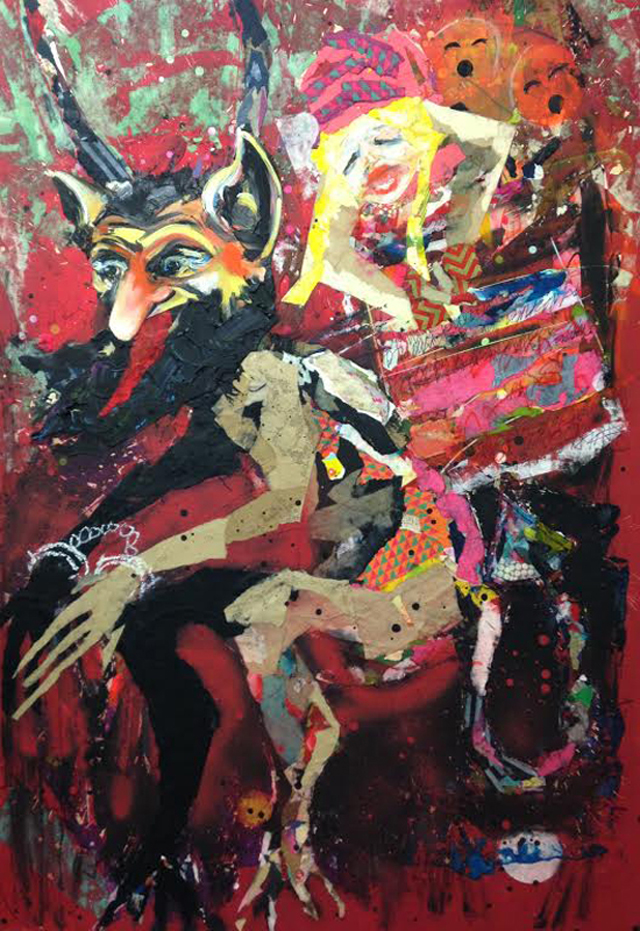
Krampus, Collage and Oil on Panel Board, 44" x 66", 2013

Krampus, Collage and Oil on Panel Board, 44″ x 66″, 2013

How has your work changed in the past five years? How is it the same?

I use to illustrate black and white folk tales and I use to abstractly collage paint, but I didn’t know how to merge the two, and then within one year, I had four people influence me in different ways that allowed me to blend it all together. Franklyn Liegel and Bonita Helmer really allowed me to grow in my painting style, by pushing the sub context of abstraction and collage.  Rebecca Campbell who mentored me, and pushed me to get a studio, which drastically changed my practice, from painting one painting a month in my dinky studio, to cranking out four paintings at a time, and really being able to stand back and contemplate on them as a whole, and fellow artist Emily Silver, who really reminded me of who I am as a collage painter.  Those four really spurred me into my niche today.

How have people such as family, friends, writers, philosophers, other artists or even pop icons had an impact on the work you do?

Growing up in the bookstore, I was blessed to be surrounded by madmen, philosophers, first people, UFO hunters, creatives, and books, scours and scours of books, which have heavily influenced me over the years. My mentor Jesse Mckean, the owner of Mountain Books, told me that to be an architect you have to be a master artist and a master builder. That always stuck with me. And it is one of the reasons that I cannot just be an architect, and I cannot just be an artist. There is this inherent pull to be both, and they have both influenced each other. The art world has this fascination with the architecture world in where they are drawn to our rigidity, and I love that I know how to be confined, but I can break this by using mythos. My work has a lot of energy in it, but it also has been neatly structured from the years of training I have had to lay out a space. The canvas is just another space, but this time I can tell a story upon its surface. But as for artists who have directly influenced me, I have three that I always go back to, which are all directly opposite each other. One Basquiat, two John William Waterhouse, and three Rothko. Basquiat could break down a painting, in very simple gestures, but you almost immediately responded to the context of these marks. From his color schemes, to his scribbles, to his words, he had a layering to him that I most definitely emulate in my own work. As for Waterhouse, he is the ultimate storyteller. The “Mermaid” captivated me from early on. He had this obsession with this one particular face, and it shows up in almost all of his works, as a little girl, I often imagined being this person that could travel from story to story on the face of a painting.   And lastly Rothko, oh Rothko. I hated Rothko when I was little. I was one hundred percent the person who went into a museum as a little kid and said “it’s just colored squares, even I could do this”, it wasn’t until I was in college and was given an assignment to make a mock “bone box” (aka final resting place) for Rothko that I really began to study the man, and I was just blown away. His language of colors to this day, in my mind, has never been surpassed. Surrounded by his paintings, I have seen grown men cry; I have even been brought to tears myself. The things that always stood out to me was that he made his own paints, and that he is a curators nightmare, and that towards his death his works began to take on a very dark tone, and you could almost see him spiraling into depression due to these colors, but now, years later, his works are bleaching to white, his pigments not meant for longevity, and I cant help but think that he planned this, that he planned for his paintings to change with the seasons, and to change with life. That to me is so powerful, and I bow to him as supreme.

Have you ever been pulled in the direction of a pursuit other than being an artist? What are your other interests? 

Aside from architecture, I have dabbled in fashion, in music (violin), and in many other artist creative endeavors. I don’t really like calling myself an artist, because I think you have to wear many hats and you have to be very good at what you do to claim that all encompassing title, but I am a painter, and I will always dabble in new mediums, via that pottery, welding, fashion, writing. I wish I could say rocket science, but honestly my brain shuts down when it sees mathematical equations, I would much rather see colors. If math could be explained in colors, it would be a game changer.

About
essizmm_headshotMy biological father, a religious fanatic, claimed to know the truth. A woman’s value could be precisely calculated according to metrics of surface: dress, speech, piety, observance. My mother, a free spirited German, claimed her own truth. Beyond surface, there were things that dictated an individual’s fate: signs, symbols, curses, miracles. Being raised in a bookstore, I was imbued with many truths from the local UFO hunters, the psychics, the paranoid philosophers, the zealots, the hippies, all fervently declaring the objective truth to be found in their recommended codexes. These books were the saving graces of my childhood. With no other children around, I befriended the books and they became a catalyst to how I related to everything and everyone. They became my myriad of axioms. Folklore is the human attempt to pass on these truths. Henry Glassie said it best, “it stresses the interdependence of the personal, the social; the aesthetic, the ethical, the cosmological; the beautiful, the good, the true. Practically, folklore is the study of human creativity in its own context”

My art can be summed up as confessions of paper, a way to visually communicate truths, accessing the space occupied by folklore. Paper conceals and communicates meaning, and can be destroyed and overlaid in various modes. I begin a piece by abstractly representing an image in paint, which I then cover with paper: scraps found, created from pulp, or hand illustrated. I then peel away the paper, leaving a construction bearing a nonlinear but viscerally personal connection to its origin. The accumulated papers mimic the debris that sticks to memories; it mirrors waking life’s uncanny transfiguration in our dreams. Where realism trusts only what can be tested and seen, folklore presents a world vibrating with meaning, a morally charged and heavily fated universe that rejects logic in favor of the non-linear.
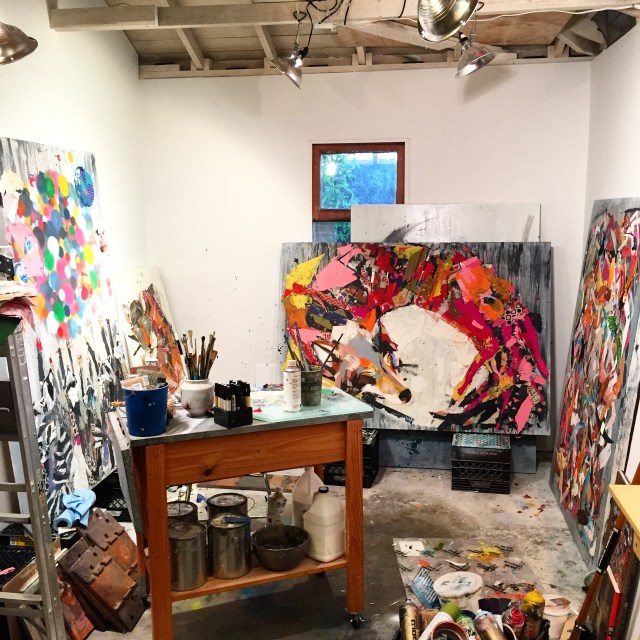
essizimm_studio

essizimm.com 

All images copyright of the artist and used with their permission.  


Posted in Collage, Painting | Tagged , , , , | Leave a comment