Patricia Corrêa – Krakow, Malopolska, Poland

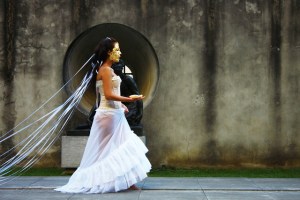
performance_11xMaria_ 2015_documentation by João Carneiro

performance_11xMaria_ 2015_documentation by João Carneiro

Briefly describe the work you do.

In my work I explore the constant and incorporeal presence of Time, using excerpts of general life and expanded memories, as my base material. My memories, memories transmitted to me, collective memory, lived times transformed in to symbolic images.

Using different mediums, with a main focus on performance art, I built memory repositories to explore the complexity of memory behavior itself. Memory as a temporal phenomenon that reverberates hybridity on the body, on the mind and on external beings and objects. By reframing a given memory and agglutinating my personal narrative I create a new imagery, a new visual emotion, a new frame for visual external recollection.In my recent works I have been exploring the beautiful lie created by the natural process of the mind movements over time. I bring into existence new realities that I share with the audience to be experienced, taken in and rebuilt. My works are open metaphors of the collective Time intangible presence. The movement and aesthetics of memory is the core of my work, for exploring parallel correlated issues, around the body and it’s the place l​ato sensu.​An aestheticized past constructed and codified in a visual work, a conceptual link that leads the O​ther to a body of gaze. Visualized or abstracted form emerged in a performance, in a video, in an audio poem, in a photography or in an installation work.

Tell us about your background and how that has had an influence on your work and on you as an artist.

My background can be described as a constant research of a missing piece or maybe a missing medium. Growing up in the outskirts of Lisbon in the 80s allowed me just to experience the conventional art classes and mediums. On and on I found myself in creative writing classes because it was the only medium that did not confine me to the limit of the medium itself. I just found my voice many years later.In high school I start theater and dance lessons. In University I study photography and finally graduated in Art History. Continue with theater and dance workshops until I found the medium to give voice to my writing.

Since I remember I always write about UNcategorized nameless projects. Performance art and all the performance environment is my main medium to create any work and my work is definitely influenced by my background experiences.
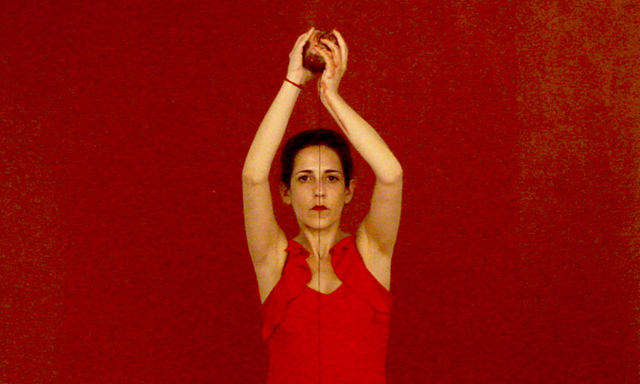
performance_Maria#2_ 2014_video still

performance_Maria#2_ 2014_video still

The concept of the artist studio has a broad range of meanings in contemporary practice. Artists may spend much of their time in the actual studio, or they may spend very little time in it. Tell us about your individual studio practice and how it differs from or is the same as traditional notions of “being in the studio.”

My studio is my body and the space it occupies. I am a breading studio that travels. In my individual practice I do not need a physical space to work. But I think that is very important to have a working area or a reserved space to experiment and produce my work. Because I work several times with site specific installations the notion of being in the studio is open enough to the space where I can materialize my ideas.

What roles do you find yourself playing that you may not have envisioned yourself in when you first started making art?

Producing and promoting my own work. I understand now that, yes we can have other people filling this roles for us, but to be an artist is a full-time job with many different roles. I am happy to fulfill any role for continuing sharing my work with an audience.

When do you find is the best time to make art? Do you set aside a specific time everyday or do you have to work whenever time allows?

I do not know if a fully understand the concept of ‘’making art’’ in this question because, I am always creating. There is no specific time, this is a 24/7 job. My conceptual process can occur everywhere at any time of the day or during all day. Anyway I found myself more productive during the nights.
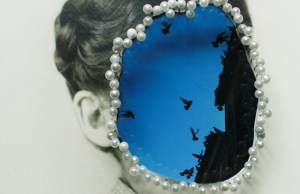
Patrícia Corrêa_work detail_Maryja z Nieba_photographic collage mixed technique_22x33 cm_2015How has your work changed in the past five years? How is it the same?

It’s my belief that we are constantly changing. In the last five years I experienced different changes in the process of executing an idea. I constantly use repetition to deepen my work. For example, T​empo 4 (Time 4) is a long duration performance based on the daily repetition of a simple action. This project started on February 29th, 2012 and will finish on February 29th, 2016. Every day, for 4 years, at 4 pm I repeat and register an action. Through the ritualization of a simple action I deepen the time imprint in my body and in my work, as well as, I explore my understanding of time as an existential and cultural concept. In other series of works I use the same core concept over the years, returning several times to the same subject. l started M​aria series 2013 and continue developing it until the present day. My work changes, grows and develops as I deepen, explore and experiment my core concepts over and over again.

How have people such as family, friends, writers, philosophers, other artists or even pop icons had an impact on the work you do?

An artist without references is a dead garden! I believe that we are influenced by everything around that surround us. My father was a poet and I started my artistic discovery through poetry and creative writing. I am inspired every day by people, other artist’s art, music, my mother, my grandmother… because I work with memories as my base material all that I live inspire me, all that I hear and other people’s memories inspire me. I can refuse some idea and work the opposite of it making sometimes what I refuse, or do not like trigger my inspiration. Is a very abstract subject because we are sponges living in a collective memory pool.From all the creative external impulses maybe writers are who influence me the most… writers and the unknown Other.​

Have you ever been pulled in the direction of a pursuit other than being an artist? What are your other interests?

Yes. I also worked as a curator assistant and has a producer. I like to work with other artists and especially to produce their works. But at the end I am an artist. I can do other jobs to pay the rent, but being an artist is who I am.

About
Patrícia Corrêa_ headshotArtist, teacher and researcher in contemporary art. Studied photography at IADE (Creative University, 2002), graduated in Art History (FLUL- University of Lisbon, 2007), and pursued her studies in the same area specializing in Contemporary Art (FLUL – University of Lisbon, 2009). Working with performance, photography, video and installation, in her investigations she explores the fragility of the presence of time, using excerpts of life and her memories, as a metaphor of that intangible presence. Currently, she is developing a four-year performance entitled T​empo 4 (Time 4).

In this work she is exploring her understanding of time as an existential and cultural concept, as well as, its imprint on her by the repetition of a daily action.Patrícia has exhibited and performed in public spaces, galleries, festivals and museums, such as, Grimmuseum (Berlin, Germany), City Museum of Lisbon (Portugal), VI Art and Culture Biennial of Sao Tome (Sao Tome and Principe), BU – Performing Arts Festival (Bangkok, Thailand), CWS Gallery (Toruń, Poland), WAR<SO>VIE 2013 performance festival (Warsaw, Poland), CIPAF – International Performance Festival (Nicosia, Cyprus), 3rd edition of Visual Arts Festival (Bielsko-Biała, Poland) and National Museum of Contemporary Art (Lisbon, Portugal).
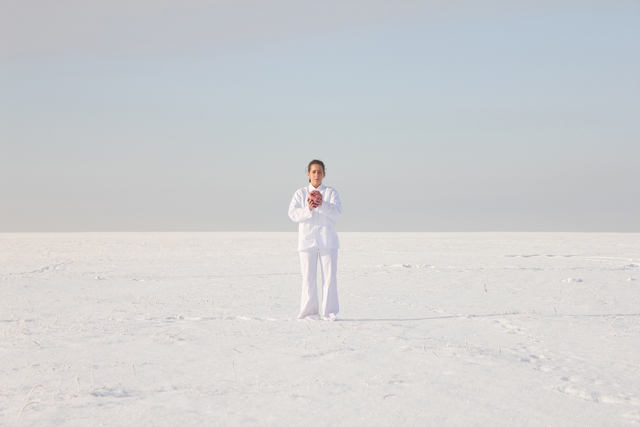
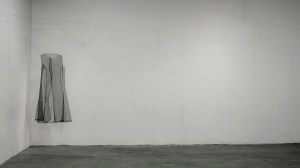
Patrícia Corrêa_video performance_Body without Organs_2012_documentation by Krzysztof Kaczmar

atriciacorrea.net

All images copyright of the artist and used with their permission.


Posted in Performance, Video | Tagged , , , , | Leave a comment

Diana Jean Puglisi – Boston, Massachusetts

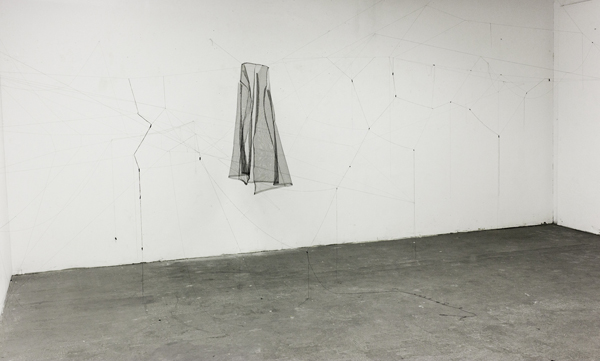
Bring Closer, Tulle and thread, Installation, 2015

Bring Closer, Tulle and thread, Installation, 2015

Briefly describe the work you do.

I produce evocative installations that respond to the impermanence of our body and our memory.  My recent works investigate the anxiety created by waiting for something to emerge that won’t show. Instead stillness, quietness, or emptiness confronts you.  

Tell us about your background and how that has had an influence on your work and on you as an artist.

Art is not very prominent in my family, but am told creativity comes from my Grandmother, Jean, who I never met. She passed away before I was born. I also come from a family where both of my grandmothers were seamstress. Because I started out as a formal painter, I never thought that I would be using sewing in my practice, but I guess it is in my blood.

The concept of the artist studio has a broad range of meanings in contemporary practice. Artists may spend much of their time in the actual studio, or they may spend very little time in it. Tell us about your individual studio practice and how it differs from or is the same as traditional notions of “being in the studio.

My studio is more of a place for me to experiment. I spend most of my time in my studio. Even if I am just reading or writing. I think it is important to be around the things i make especially my small material studies. I move my studio around about every two weeks, sometimes even the furniture. It keeps me on my toes. I like to change things up, it helps fuel my mind.

My process differs from the traditional notions of being in the studio because my pieces aren’t complete until after they are installed. The process of installing is where everything comes together. I tend to be more reactive and intuitive than when I am working in my studio. The work transforms based upon where it is installed, which is the most exciting part of my process. I feel the constant change of the piece based upon the environment is really true to our human condition and the recollection of memories, two topics I find fascinating.

Up & Over, Tulle, linen tape, and thread, Installation, 2015

Up & Over, Tulle, linen tape, and thread, Installation, 2015

What roles do you find yourself playing that you may not have envisioned yourself in when you first started making art

I think like a painter, but now I make work that crosses mediums (painting, sculpture, sound, video, and installation).  I choose to make work that makes us more aware of our mortality and fragility. I am terrified of death, I really fear it and have anxiety that is caused by my fear. I never thought I would be making work about it because it is such a struggle for me emotionally. This fear is a real emotion for me, and trying to create that emotion by investigating it more gives me a point from where to start.

When do you find is the best time to make art? Do you set aside a specific time everyday or do you have to work whenever time allows?

Working late at night seems to work best for me. Something turns off in my mind and I take more risks. I hardly listen to music when I create. I like to work in silence because it keeps me focused and thinking about each move.  

I am in the MFA program at Massachusetts College of Art & Design (MassART) and am lucky because I can make art every day for another six months! My thesis exhibition is in April.

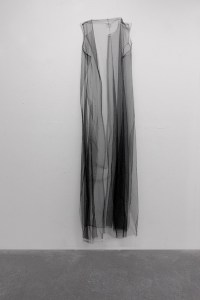
Black Slip, Tulle and thread, 80" x 22", 2015

Black Slip, Tulle and thread, 80″ x 22″, 2015

How has your work changed in the past five years? How is it the same?

My work has drastically shifted since 2011.  It went from painting formally to using a variety of materials. I just wanted to learn everything and anything I could.  While I was at Virginia Commonwealth University, I learned how to use the laser cutter and projectors. These technologies were new to me and opened up my mind. This is where the shift in my work happened. I was not satisfied with making the paintings I had been making, they had no point or meaning to me. At the time, my grandmother was sick with Alzheimer’s Disease and I started to make work about her loss of identity. She was a Croatian lacemaker, so I was trying to find a correlation between the language of lace and how our minds work. Something I am still investigating. I began to think like a seamstress, which wasn’t far out of my comfort zone. When I was little, about ten years old, I began making patterns and sewing.  I always separated the two, art and sewing that is, but now I work them together and it feels honest.

How have people such as family, friends, writers, philosophers, other artists or even pop icons had an impact on the work you do?

My family is extremely supportive, and I am very privileged to have such amazing support. My grandparents lives and stories have been inspiring my work for the last four years.  My grandfather recently passed away and we were very close, so at this moment I am seeing a shift in my work due to my personal history. 

Artists that have impacted my work are Janine Antoni, Doris Salcedo, and Ann Hamilton.  I like the emotional quality of their work, it feels so real.  Doris Salcedo’s exhibition at the Guggenheim this year in NYC changed the way I thought about the absent body, and it moved me emotionally.  I knew that art could do this, I also feel this way about the work of Felix Gonzalez-Torres, but I didn’t realize how extreme it could shift your mood and thoughts until experiencing it.

Have you ever been pulled in the direction of a pursuit other than being an artist? What are your other interests?

I entertained being a math teacher for a bit and a fashion designer. I definitely feel like I made the right choice. I could never imagine myself in those roles now.

About

Puglisi_HeadshotDiana Jean Puglisi was born in Brooklyn, NY and works in Boston and New Jersey. Diana is an interdisciplinary artist— her work manifests as drawing, painting, sculpture, installation, social practice, sound, and video.

She is currently an MFA candidate at Massachusetts College of Art and Design and the recipient of their prestigious Beker Family Scholarship. In 2011, she received a BFA from William Paterson University and a Post-Baccalaureate from Virginia Commonwealth University

Diana was selected this summer to be a 2015 Artist in Residence at Gallery 263 in Cambridge, MA.  Her work has been exhibited nationally.  Recently, she was selected for exhibitions such as Feelers at the Mills Gallery, Bouncing in the Corner at subSamson, and The 26th Annual MassArt Auction in Boston as well as New Print Horizons at offLine Central Booking Gallery in New York City. Her collaborative project with Brittany Marcoux has been selected for shows such as All Visual Boston at the Institute of Contemporary Art/Boston and Reclamation: Emerging Female Artists at Nave Gallery in Somerville, MA.

Diana’s work is featured in publications, including The Drawing Center’s blog The Bottom Line, The Record, NJ.com, and Vellum Art Magazine.

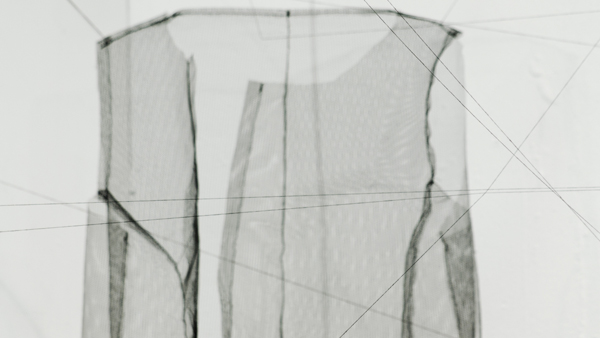
Bring Closer, detail

Bring Closer, detail

dianapuglisi.com

All images copyright of the artist and used with their permission.


Posted in Feminist Art, Sculpture | Tagged , , , , | Leave a comment

Aljaz Celarc – Rotterdam, Netherlands

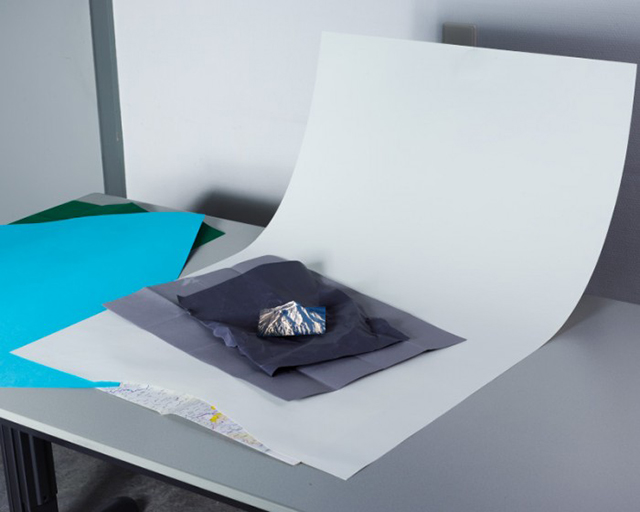
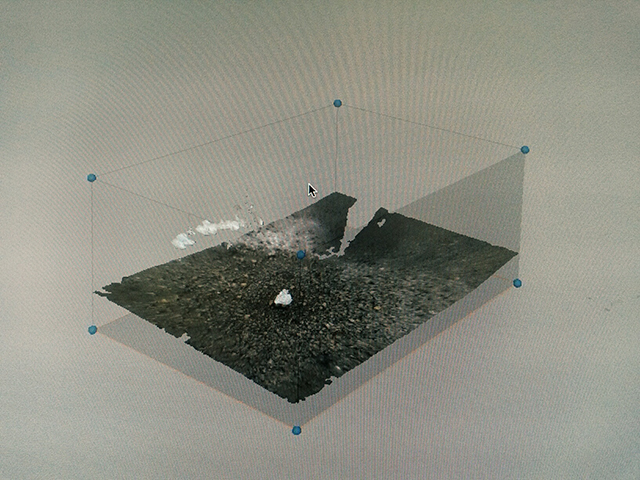
In Vitro.jpg In Vitro (2015), Installation, various materials, various sizes, Scanned Sand

In Vitro.jpg
In Vitro (2015), Installation, various materials, various sizes, Scanned Sand

Briefly describe the work you do.

I am an artist and a geographer. In order to communicate my ideas I fuse sculpture, installation, land art and photography. A multimedia practice offers me a chance to establish a learning connection with the past and the notion of procreative dwelling in space: a characteristic of human nature from which my work aspires and the legacy that it embraces.

Tell us about your background and how that has had an influence on your work and on you as an artist.

Geography training made me aware that society can benefit from the multidisciplinary discourses, which have lately become obscure, while sciences are more as ever before inclined towards the diversification and specialization of knowledge. My objective is to use the multidisciplinary approach and present my findings to a brother audience.

I study the contemporary landscape, the human imprint and the impact of image culture on the landscape’s ontology. Traditionally speaking it seems society and the nature are still caught in an splitting duality, while in an increasingly urbanized world such duality seems rather inappropriate and outdated, while both society and the nature are two components of environment.

The concept of the artist studio has a broad range of meanings in contemporary practice. Artists may spend much of their time in the actual studio, or they may spend very little time in it. Tell us about your individual studio practice and how it differs from or is the same as traditional notions of “being in the studio.”

My work begins in the landscape, which is my biggest inspiration. Later I try to transpose parts of the landscape in to the studio or the presentation space. For me studio is a space where I conduct my research and finalise the work, while the work and the process is greatly influenced by the landscape.

Herschel Island (2013), scan, archival inkjet print, 120 x 100cm

Scanned Sand, Herschel Island (2013), scan, archival inkjet print, 120 x 100cm

What roles do you find yourself playing that you may not have envisioned yourself in when you first started making art?

I wanted to become a photographer. The romantic notion of wonderer with the camera attracted me. Then I realised I can achieve much more than that if I make actual objects. I now always make everything myself.

When do you find is the best time to make art? Do you set aside a specific time everyday or do you have to work whenever time allows?

I always work in phases. Sometimes I just read and write what I want to work, such periods can last for months. After the idea crystallises I execute the work, what often makes me tired. During the day I love to work in the morning and go to sleep early in the evening.

Volcanos 5 (2014), photograph, archival inkjet print, 60 x 45cm

Volcanos 5 (2014), photograph, archival inkjet print, 60 x 45cm

How has your work changed in the past five years? How is it the same?

It aspires from the same interest how humanity inhibits the landscape. As I am still a young artist I cannot really reflect on that, because I only started making art three years ago. What is different is the sincerity with which I approach the projects.

How have people such as family, friends, writers, philosophers, other artists or even pop icons had an impact on the work you do?

My work is greatly inspired by geography thinkers such as David Harvey.

Have you ever been pulled in the direction of a pursuit other than being an artist? What are your other interests? 

I like building and making things from scratch, so I was always drawn to simple work like construction. I really like to work outside in the garden or on a farm. From leisure activity I enjoy mountain hiking and camping the most.

About

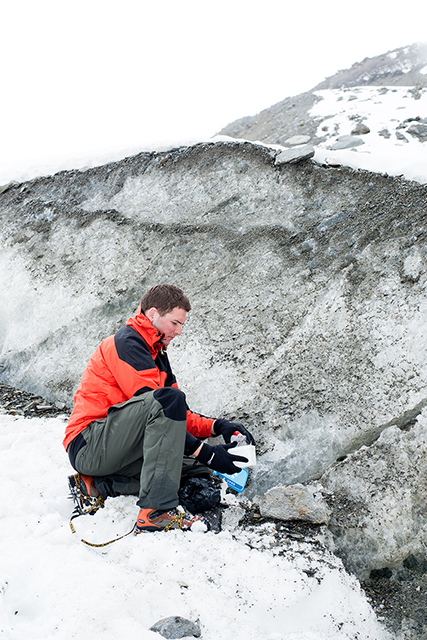
headshotI was born in Slovenia in 1989. After high school I enrolled to University of Ljubljana, where I studied geography. During the study I became increasingly interested in photography and art. I have graduated with a thesis that pioneered the theory of the use of the archival photographic materials in Slovenian geography. After the bachelor I enrolled to Master of photography at AKV St. Joost in Breda The Netherlands, where I graduated as top of the class with the work In Vitro. Currently I reside and work in Rotterdam, The Netherlands.  

1

aljazcelarc.org

All images copyright of the artist and used with their permission.

Posted in Installation | Tagged , , , , | Leave a comment

Nieves de la Fuente Gutierrez – Cologne, North Rhine-Westphalia, Germany

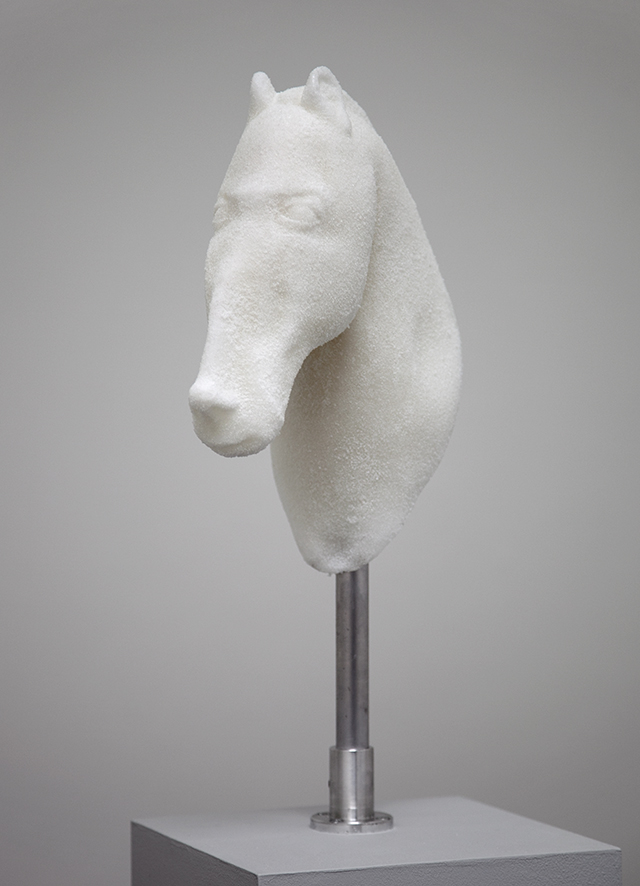
Caracaballo, 2015, wax and sugar, 40x33x18cm

Caracaballo, 2015, wax and sugar, 40x33x18cm

Briefly describe the work you do.

In my artistic praxis I serve myself of images and texts by transforming them and taking advantage of their “fragile” digital structure. Let’s say I work with the genotype and phenotype of pictures and texts and with the transformation from one in another. I play with the coding of these visual systems, that we could consider as the “genotypical part” and introduce little mistakes that will influence their appearance.

For me the creation process is a discursive one, where I turn to different sources in order to support my research and create a thesis.

Tell us about your background and how that has had an influence on your work and on you as an artist.

Growing up in Madrid (Spain) with my family and a couple of friends really interested in culture, had a big influence in my future decisions. Weekends were full with cultural activities and seeing my parents with a book in the hand almost every time was doubtless a way to add art and culture in my life as completely normal thing.

The concept of the artist studio has a broad range of meanings in contemporary practice. Artists may spend much of their time in the actual studio, or they may spend very little time in it. Tell us about your individual studio practice and how it differs from or is the same as traditional notions of “being in the studio.”

I try to keep a routine in my studio, planning carefully my time, so I spend there as much time as I can besides my other job. And I say my “other job”, because, despite of being Creation such an abstract concept, I try to give my productive phases an structure, so I can regularly jump into them, and so to say, also push them a little. Maybe one of the things that differs the most from traditional notions of “being in the studio” is that the first thing I do when I arrive is turning my computer on.

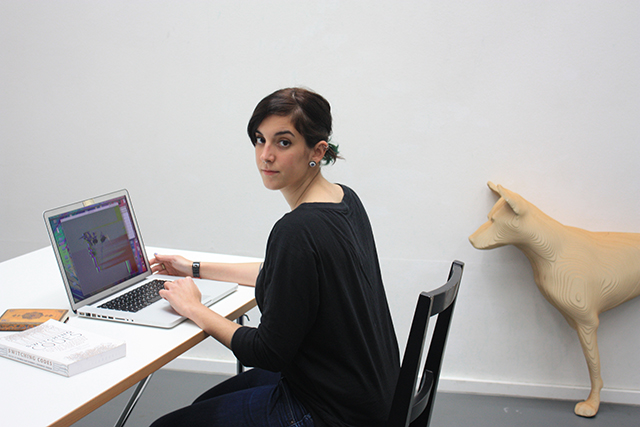
detail shot of he sculpture of "Reliquia de las disciplinas geograficas"

detail shot of he sculpture of “Reliquia de las disciplinas geograficas”

What roles do you find yourself playing that you may not have envisioned yourself in when you first started making art?

When I first started making art I was more into traditional sculpture. Now I choose some new media as a way to produce my work I never thought I would use before; maybe also because of the fact that the industry of 3D printing, for example, was not much developed in that period.

When do you find is the best time to make art? Do you set aside a specific time everyday or do you have to work whenever time allows?

As I can not allow myself to be a full time artist for the moment, I need to plan specific days and periods of time I can produce. In fact, this planning is working very good for me, since I get to make the most of my time when I have it.

I like to structure the days like regular workdays, when I arrive at the studio at 10 and leave late in the afternoon.

ode on a grecian urn, 2015, Fotoseries (3), 50x70cm, lambda

ode on a grecian urn, 2015, Fotoseries (3), 50x70cm, lambda

How has your work changed in the past five years? How is it the same?

I have been 5 years based as an artist in Germany. That has really influenced me on my praxis, since all this years I have kept making a research based art but also moved towards new media as medium. On a conceptual level, I think I started to occupy myself with themes like speech and language, as I moved in a country were I can not use my mother tongue so often.

How have people such as family, friends, writers, philosophers, other artists or even pop icons had an impact on the work you do?

I don’t usually work with biographical issues in my pieces. I think the impact of friends and family in my work is more a dialectical one. It comes from the discussions I have with them when I am producing a new piece, as advice and exchange for my research that are really important and make me go further.

Have you ever been pulled in the direction of a pursuit other than being an artist? What are your other interests?

Art is not the easiest way to make a living. People that care have always been concerned with this issue and tried to make me think in a more practical way. Somehow they have seen me struggling now for 9 years to get better and settle with my art, so I think they have just given up pulling and start pushing me in this direction. 

me studio

nievesdelafuente.es

All images copyright of the artist and used with their permission.

Posted in Installation | Tagged , , , , | Leave a comment

Luis San Sebastián – Salamanca, Spain

Reptilia,-2015,-paint-on-aluminium,-20x30x3-cm

Reptilia,-2015,-paint-on-aluminium,-20x30x3-cm

Briefly describe the work you do

I use art-rock as a reference to reflect on the use of counter-cultural esthetics by the mass media, where pop culture, minimalism and conceptual art cross paths.

Tell us about your background and how that has had an influence on your work and on you as an artist.

When I was a kid my parents gave me a record specially made for me. They included a pair of songs from the Sex Pistols at the end of the record accidentally and I listened to them as well. It was one of the biggest influences that made me start to be interested in art and rock’n’roll. 

The concept of the artist studio has a broad range of meanings in contemporary practice. Artists may spend much of their time in the actual studio, or they may spend very little time in it. Tell us about your individual studio practice and how it differs from or is the same as traditional notions of “being in the studio.”

I usually first take notes and this is an important part for me before to the studio-practice, because it allows me to make a plan of the work. Sometimes i leave things to chance and do the process the other way around. Anyway there is a part of documentation in both ways that is really important to me.

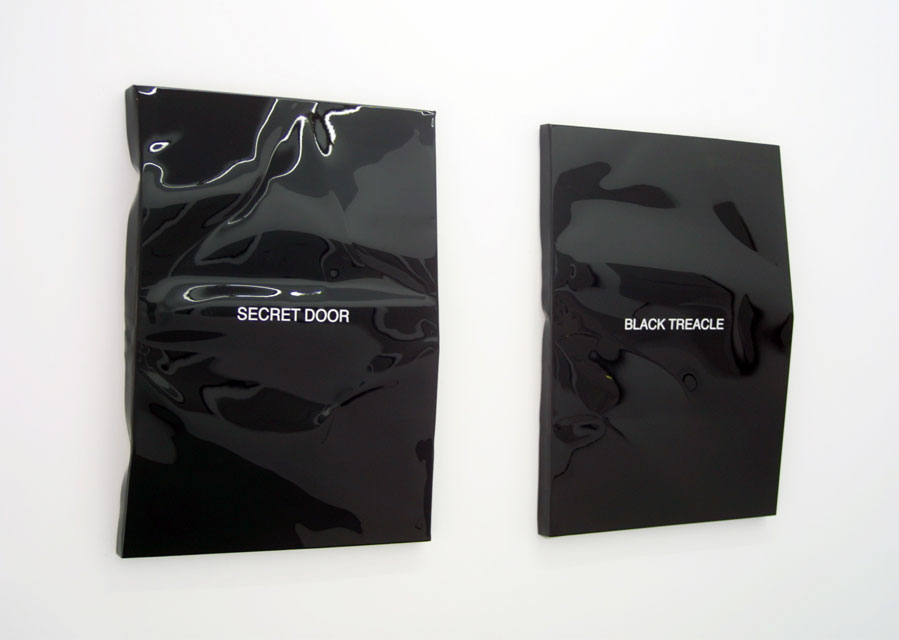
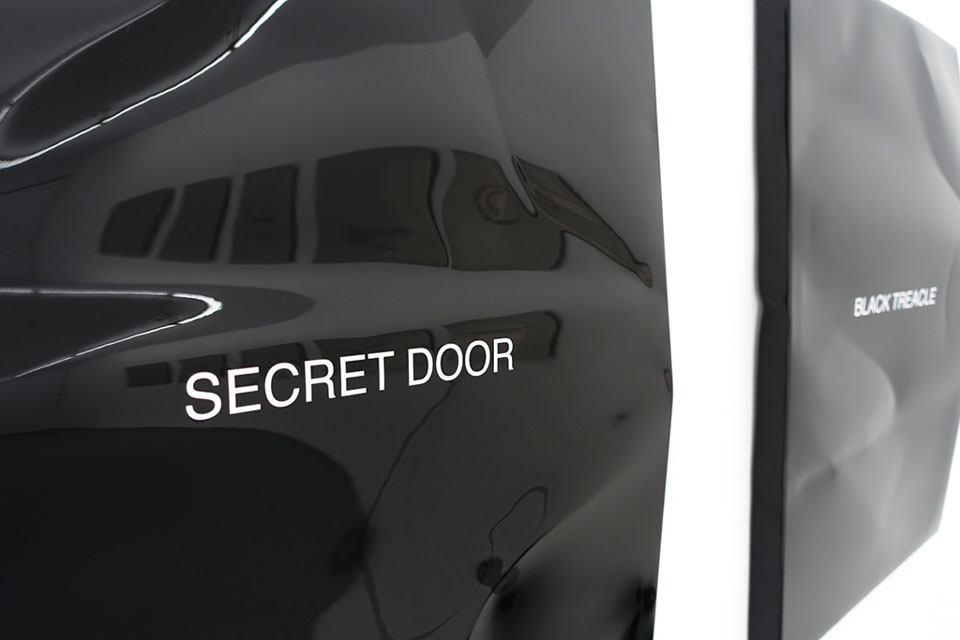
Secret-door,-2015,-paint-on-aluminium,-74x54x3-cm-Black-Treacle,-2015,-paint-on-aluminium,-74x54x3-cm

Secret-door,-2015,-paint-on-aluminium,-74x54x3-cm-Black-Treacle,-2015,-paint-on-aluminium,-74x54x3-cm

What roles do you find yourself playing that you may not have envisioned yourself in when you first started making art?

Maybe the role that i never envisioned is chef, I had to cook once spaghettis with tomatoes after the opening party.  

When do you find is the best time to make art? Do you set aside a specific time everyday or do you have to work whenever time allows?

Any time is good for me. Inspiration use to comes working and sometimes the answer comes when i am taking a break.

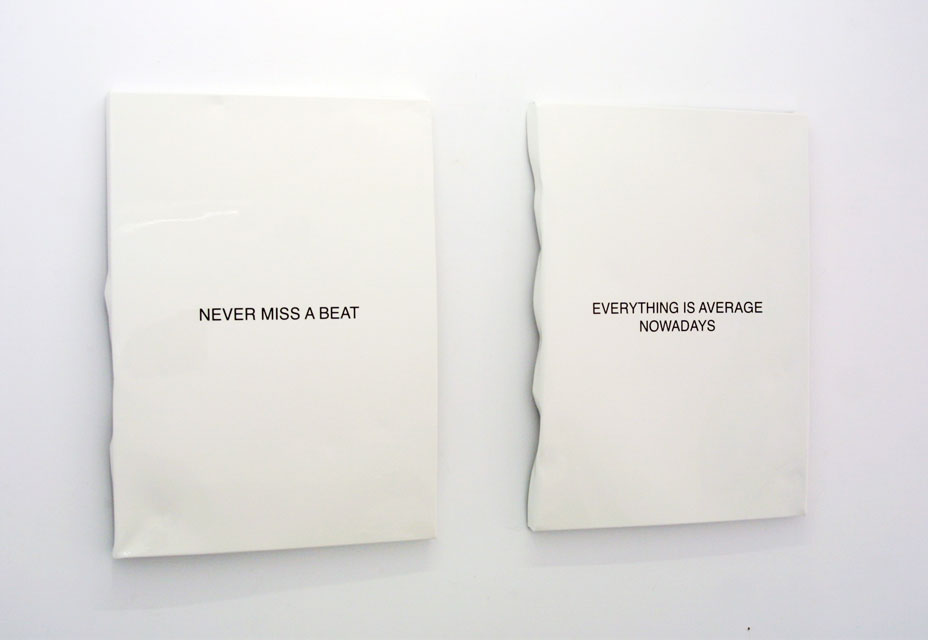
Never-miss-a-beat,-2015,-paint-on-aluminium,-74x54x3-cm-Everything-is-average-nowadays,-2015,-paint-on-aluminium,-74x54x3-cm

Never-miss-a-beat,-2015,-paint-on-aluminium,-74x54x3-cm-Everything-is-average-nowadays,-2015,-paint-on-aluminium,-74x54x3-cm

How has your work changed in the past five years? How is it the same?

In the last five years i discovered new ways of work that changed the way i do things now. The continue process of learning, discovering new texts about art theory, and also the interaction with classmates at college talking about art and another interests in common were one of the most important things.

How have people such as family, friends, writers, philosophers, other artists or even pop icons had an impact on the work you do?

When some friends show me something new, that i find great, it could be an influence in my artwork. Writers, philosophers and pop icons are also an important influence. Rock and roll icons are one of the biggest influence, due to my interest in counter-culture.

Have you ever been pulled in the direction of a pursuit other than being an artist? What are your other interests?

Yes, but for me all have a relationship in between with art, Let´s say:  “life is art”. I like graphic design and music and that is also included in my artwork and interests.

About

Luis San Sebastián received his BFA from the University of Salamanca (Spain). Along his career he was selected in various contests, like the San Marcos Prize from the University of Salamanca. His artwork has been exhibited at DA2 (Museum of Contemporary Art, Salamanca) and another national places. In 2015 he graduated with a MFA from the University of Vigo (Spain)  He has recently showed his work in a solo project for the Adora Calvo Gallery. Actually lives and works in Salamanca.

detail

luissansebastian.com

All images copyright of the artist and used with their permission.

Posted in Sculpture | Tagged , , , , | Leave a comment

Marie Skeie – Oslo, Norway

586 days, photo, 120 x 40 cm, 2013 (I´ve added another work as well, The Stitch Project as an alternative if the format of the photo does not fit.

586 days, photo, 120 x 40 cm, 2013 (I´ve added another work as well, The Stitch Project as an alternative if the format of the photo does not fit.

Briefly describe the work you do. 

Most of my work has a starting point in personal experience and often from social engagement. My art projects have the aim of triggering conversations that can create new questions. Through the project I’m looking for ways to create new spaces for communication often crossing borders. The materials I’m working with is textile, photo, video and text.

Tell us about your background and how that has had an influence on your work and on you as an artist.

I grew up in Japan, moved to Norway, have been living in Brazil, Scotland, Italy and Palestine. From childhood on I had been interesting in literature and art, dreaming about being a poet. However when choosing higher education I ended up studying Sociology and Japanese, before going into art education. I studied painting, photography and installation in Brazil, took a Bachelor degree in Textile in Norway, before starting an MA in Art and public space. My background has influenced me in how I work and the themes I’m working with. I’m often working on cross-bordering projects and topics of social and political issues.

The concept of the artist studio has a broad range of meanings in contemporary practice. Artists may spend much of their time in the actual studio, or they may spend very little time in it. Tell us about your individual studio practice and how it differs from or is the same as traditional notions of “being in the studio.”

After finishing my BA, I built with the help of my family my own studio in the fjords of Norway. In addition I have a studio in the city. When doing larger works or needing time away from the city, I’ll go to my studio by the fjords. In the city I’m mainly using my studio as an office, as there is always much organizing behind each project.  My work of art is mainly happening outside the studio, what is happening in the studio is mainly the preparation for it to happen.

Threads Art Project - 1000 birds, installation, 300 x 1100 cm, 2014- continuing

Threads Art Project – 1000 birds, installation, 300 x 1100 cm, 2014- continuing

What roles do you find yourself playing that you may not have envisioned yourself in when you first started making art?

When I started to take art classes I was more concerned with materials, experimenting with natural materials and also with writing. I didn’t see myself being an artist doing some larger international project and also working as an art producer.

When do you find is the best time to make art? Do you set aside a specific time everyday or do you have to work whenever time allows?

For me the making of art is a constant process and the project staying in the back of the mind all the time. There is never enough time, but I’m working with art every day, either through planning, making, researching, writing, administration.

 In 100 year every thing is forgotten, collaborative work with Vibeke Frost Andersen, Kebreab Demeke, Jean- Baptiste Beovardi, installation ca.2000 books, 2015

In 100 year every thing is forgotten, collaborative work with Vibeke Frost Andersen, Kebreab Demeke, Jean- Baptiste Beovardi, installation ca.2000 books, 2015

How has your work changed in the past five years? How is it the same?

In the last five years my work has opened up more from being more of a studio practice to be mainly a practice outside the studio. The process of making is still the most important for me as well as involving the project into other sphere than only the art sphere.

How have people such as family, friends, writers, philosophers, other artists or even pop icons had an impact on the work you do?

People around me impact my work in the topics I’m working with and I try to have conversations with them about my works. For a long time I was inspired with the thinker Zygmunt Bauman about our contemporary society. Right now I´m reading Slavoj Žižek and Nato Thompson, as well as a auto-biography by Shirin Ebadi

Have you ever been pulled in the direction of a pursuit other than being an artist? What are your other interests? 

No, but I love alternative circus and Bollywood dance, none that I have pursuit so far, but you never know…  

About

Marie Skeie is based in Oslo and has lived in Japan, Brazil and Scotland. She has her educational background from the Academy of Art and Design in Bergen with specialization in Textile and a Bachelor degree in Sociology from the University of Bergen. Currently she is taking a master in Art and Public Space at the National Academy of Art and Design in Oslo.   

PhotoStudio

marieskeie.com

All images copyright of the artist and used with their permission.

Posted in Uncategorized | Leave a comment

OPN Studio – Bilbao, Spain

Sincronica II (detail photo) Year: 2010 Size: 130 x 190 x 15 – 40 cm (variable) Materials and Technic: Stainless Steel and robotic.

Sincronica II (detail photo)
Year: 2010
Size: 130 x 190 x 15 – 40 cm (variable)
Materials and Technic: Stainless Steel and robotic.

Briefly describe the work you do. 

Our investigation reflects on the individual as a social being in a broad context. The work unifies several fields : Art , Science and Technology, deepens topics as present as individualism, isolation, narcissism and social behavior among others, through new technologies, such as electronics, robotics, video and interactive installation as the primary means of expression and direct transmitter, thus facilitating reflection by creating a more direct dialogue with the viewer.

Tell us about your background and how that has had an influence on your work and on you as an artist.

Both we combine complementary training based on, Art, Design, Programming, Mechanical, Electronics and Audiovisual that clearly mark all our line of work. That’s why our media is technology.

The concept of the artist studio has a broad range of meanings in contemporary practice. Artists may spend much of their time in the actual studio, or they may spend very little time in it. Tell us about your individual studio practice and how it differs from or is the same as traditional notions of “being in the studio.”

Well, during our beginning, We spent most whole 5 years inside our studio, thinking, sketching, designing and developing some of our early works. After this intensive period of time a new stage came, a new reborn, fresh ideas, further perspectives, renewed minds, all of them in relation to the maturity we got during the past phase.

Actually, our work and investigation has new views, therefore new methodology, new studio concept and new artists in body and soul.

Sincronica II (detail photo) Year: 2010 Size: 130 x 190 x 15 – 40 cm (variable) Materials and Technic: Stainless Steel and robotic.

Sincronica II (detail photo)
Year: 2010
Size: 130 x 190 x 15 – 40 cm (variable)
Materials and Technic: Stainless Steel and robotic.

What roles do you find yourself playing that you may not have envisioned yourself in when you first started making art?

Speaker, public relations, traveler, businessman / businesswoman, promoter, carrier, assembler, designer, community manager, seller, accountant…and finally Art works.

When do you find is the best time to make art? Do you set aside a specific time everyday or do you have to work whenever time allows?

Inspiration = Art

Synesthesia II – Grapheme colour Date: 2014 Dimensions: 40 x 40 x 3 cm Materials/Technique: Infrared LED’s, mirror, electronics.

Synesthesia II – Grapheme colour
Date: 2014
Dimensions: 40 x 40 x 3 cm
Materials/Technique: Infrared LED’s, mirror, electronics.

is welcome at any time. We mean, life and our environment is the showcase which help us to generate new dialogues. Artists, designers, creatives in a wide range are always working at any time, heads never stop, too many information around us everyday. And any place or situation could be the unique chance to print the idea, so choose a medium.

The best time to develop the idea…if we could choose a time, it’d be the exactly moment when you get the impulse to keep on thinking about that idea. It’s the right time!

How has your work changed in the past five years? How is it the same?

Materials and media have evolved or changed, sometimes just a reason of technology transition others not. The factor experimentation with other materials and media is inevitable. Other wise, we still taking under consideration our usual statement.

How have people such as family, friends, writers, philosophers, other artists or even pop icons had an impact on the work you do?

Culture, lectures, music, draws, pics, dialogues, texts, happiness, disappointment, fear, love, are all inspiration.

Knowledge opens you up as a person and expands who you are, just as much as it can expand your work.

Have you ever been pulled in the direction of a pursuit other than being an artist? What are your other interests? 

When you are little your imagination wanders and shows you a future with multiple pursuits such as ship captain, car designer, secret agent, scientist, treasure hunter…

As a pair we share different training and interests, we enjoy a mutual enrichment.  

About

DualThe investigation, takes under consideration the individualism, the isolation and the conception of the individual as a social being, as well as the analysis of its instinctive reactions, which face the unknown, the “non-scheduled”, the undefined, its observations and affiliation pursuit, the claim for recognition. All this analytic thinking in which diverse personal agents from the individual itself are considered, it triggers the beginning of conversation, of interaction, of experimentation, of discovering…, which transmits unique personal experiences.

The art piece is based in several factors which include dynamism, movement and synchronization, giving birth to living entities through the optical illusions, the mechanical kineticism and the robotics, by way of exploring inorganic shapes which are not defiled by the coercion of the social perception, that transmute through the abstraction to a conceptual readjustment.

To achieve all these conceptions, our medium is the creation of shadows, reflected lights and sensors which interact directly with the visitor, obtaining as a final upshot an “alive theatre”.

Our studio

opnstudio.com

All images copyright of the artist and used with their permission.

Posted in Installation | Tagged , , , , | Leave a comment

Crystal Cudworth – Sauk City, Wisconsin

“Lightstick” Oil on canvas 72 x 50 inches 2014

“Lightstick”
Oil on canvas
72 x 50 inches
2014

Briefly describe the work you do. 

My practice investigates the deep sea fishing industry and its rapid decline due to federal fish quotas. My father was a long-lining captain for fifty years, so the subject interests me as a way to re-connect to my own family narrative. I have been interviewing fishermen, gathering imagery through photographing and drawing on the fishing docks and markets to use as resource material. I have also painted on boats while observing the process of fishing for swordfish.

Tell us about your background and how that has had an influence on your work and on you as an artist.

Both of my parents have been creative role models for me. My father was one of the original long-lining captains. He began fishing as a career at the age of fourteen. He caught swordfish and tuna and would travel up to five hundred miles out for up to six weeks. I went with him on several chartered trips after he retired from fishing commercially. His passion for the sea and also his talent as a singer and storyteller influences my career vision. My mother drift fished, shrimped and caught swordfish with my father. Her Irish father was a plumber and sheriff in rural southern Wisconsin. My mother also catered on boats and created and marketed her own salsa. I grew up in South Florida and its festive culture has its imprint on me.

The concept of the artist studio has a broad range of meanings in contemporary practice. Artists may spend much of their time in the actual studio, or they may spend very little time in it. Tell us about your individual studio practice and how it differs from or is the same as traditional notions of “being in the studio.”

My goal is to spend as much time painting in the studio as possible. I have been taught to begin painting immediately when I enter my studio. This test has been serving me well. Painting in plein air is preferred; however, sticking to a studio routine is critical in bringing works together by seeing them all in one place. Also, the size of the studio is important. Too small of one may produce pigeon-holed ideas and too large of one may produce stale work by not being forced to physically switch works around and letting go of “expired” resource materials. Dedication to a studio routine is like being a responsible dog owner. It must be fed regularly, protected, and brought into the community in a state of awareness in order to stay enthusiastic.

“Off the Shore: Wind and Water” Oil on panel 5 x 15 inches 2015

“Off the Shore: Wind and Water”
Oil on panel
5 x 15 inches
2015

What roles do you find yourself playing that you may not have envisioned yourself in when you first started making art?

I play the mathematician role as a problem solver. The process of art making is similar to the drive to find problems, break them down, and make sense of it. I have also found the value in performing the role as a friend to my paintings. I keep my touch light enough to allow more freedom to exist in the process of making and I tighten the work up later after familiarizing myself with it and allowing a collaboration to exist with the unexpected. Finally, I play hostess with the knowledge that the attitude of the painting and its point of entry are equally as important as its confidence as a whole. Along these lines, the last mark made will be the first mark read.

When do you find is the best time to make art? Do you set aside a specific time everyday or do you have to work whenever time allows?

I like making work early in the morning because it gives it a sense of urgency since its the first task being done for the new day. It also gives me more time to revise, ask friends for feedback, and let the works rest while leaving the studio for new resource material. I am good at remembering my dreams the previous night and I allow this to inspire my practice. I like being slightly out of touch with reality when painting and performing right away in the morning before any other stressors carries a dream-like quality into the painting. This compliments my glazing and collage techniques through emphasizing the medium’s ability to be both flexible and crude in juxtaposition.

“Nocturne: Revere Beach” Oil on canvas 15 x 25 inches 2014

“Nocturne: Revere Beach”
Oil on canvas
15 x 25 inches
2014

How has your work changed in the past five years? How is it the same?

My work has changed through a greater specificity and faith. Through working to support my studio practice, I have made dozens of terrible pieces. I also took a risk to further my education. Taking risk to change directions and schooling with others has put demands on the work to force change and innovation. The ambient space I desired in my work five years ago has transformed into a declarative space. The physical properties of oil paint have become more meaningful to my intended psychology and also to welcoming an element of surprise.

How have people such as family, friends, writers, philosophers, other artists or even pop icons had an impact on the work you do?

My family and friends have been wholly supportive to the work I do. Traveling away from my hometown and its culture has made my understanding of it more complex, including realizing how it has shaped my beliefs and habits. Unabashed critiques and intimate conversations with friends impact the work and keep things brewing longer. It also helps to vocalize inner thoughts. Artists and philosopher icons create similar feelings of anticipation and excitement in a similar manner as dear friends. I am thrilled when other painters come to mind through noticing in my artwork similar paint handling choices and shared philosophies.

Have you ever been pulled in the direction of a pursuit other than being an artist? What are your other interests? 

Yes. Outside work has pulled me in the opposite direction from the pursuit of being an artist. Not having enough blocks of time and energy remaining after a day job depletes more rapid progress and breakthroughs. I have a deep respect for hard work, so it does not seem problematic until after the fact. My work connects to my own experiences with labor and I am pleased to have begun to digest my family roots in order to comment more fully and preserve human reactions to mechanical and physically exhausting types of labor.

About

Cudworth_headshotCrystal Cudworth is a painter and photographer. She received her Bachelor of Fine Arts from the Milwaukee Institute of Art & Design in Milwaukee, Wisconsin in 2011 and her Master of Fine Arts from the School of the Museum of Fine Arts (SMFA) in Boston, Massachusetts in 2015. She has exhibited her artwork in Boston including “Go Places” at the Boston Youth Hostel as part of the Darkroom Project Series, “Same Story, Fish Story,” at the Cyclorama as part of the Master of Fine Arts exhibition, and juried exhibitions including “Spectrum 2015,” “Refraction,” and “Yes-Paint” at the Museum School. Cudworth was awarded the President’s Award and the Montague Travel Grant from SMFA in 2015.

Cudworth_working in studio

crystalcudworth.com

All images copyright of the artist and used with their permission.

Posted in Painting | Tagged , , , , | Leave a comment

Ilaria Ortensi – New York

Untitled from the series Variations, 2015, color lightjet prints, 72x92 inches.

Untitled from the series Variations, 2015, color lightjet prints, 72×92 inches.

Briefly describe the work you do. 

In my work I combine different media and strategies to investigate how the construction of space influences contemporary life. By examining the relationship that architecture establishes with its environment I want to understand the effects that it produces on our social and private sphere. Residential urban sites, abandoned places, and virtual spaces were among some of the source of inspirations of my most recent projects.

Tell us about your background and how that has had an influence on your work and on you as an artist.

I grew up in the city of Rome, in Italy, where the simultaneous presence of ancient and contemporary urban landscapes triggered my interest in both the historical and transitory nature of architecture. Being exposed to this particular environment I developed a sensitivity toward space that is very connected to time. In my work this is reflected in the way I often approach architecture as a construction in a continuos process of transformation.

The concept of the artist studio has a broad range of meanings in contemporary practice. Artists may spend much of their time in the actual studio, or they may spend very little time in it. Tell us about your individual studio practice and how it differs from or is the same as traditional notions of “being in the studio.”

Since my work involves both documentation and fiction I usually spend some time outside before starting to work in the studio. However I certainly need the comfort of a familiar space to make the work. Once I’m ready to start the material production of a project I have a very consistent studio practice.

Untitled from the series Variations, 2015, color lightjet prints, 72x92 inches.

Untitled from the series Variations, 2015, color lightjet prints, 72×92 inches.

What roles do you find yourself playing that you may not have envisioned yourself in when you first started making art?

I didn’t imagine I would be constantly teaching myself new techniques. As my work has started to incorporates different disciplines I find myself having to quickly pick up new skills each time I develop a new project.

When do you find is the best time to make art? Do you set aside a specific time everyday or do you have to work whenever time allows?

When I have the possibility to work full time in the studio I usually find myself working from the afternoon until late at night. The quiet of the latest hours of the day helps me to focus better.

Untitled from the series Windows, 2014, color inkjet prints, 40x30 inches.

Untitled from the series Windows, 2014, color inkjet prints, 40×30 inches.

How has your work changed in the past five years? How is it the same?

Over the last years my work has become increasingly multi-disciplinary and larger in scale. Coming from a straight photography practice I have progressively expanded towards sculpture, installation and video. Photography remains a central role in my production but it’s always in conversation with other media.

How have people such as family, friends, writers, philosophers, other artists or even pop icons had an impact on the work you do?

More than from specific artists I found myself to be influenced by certain historical moments where art and architecture were strongly intertwined. Early modernist movements, like Russian constructivism, De Stijl, Bauhaus, as much as the minimalism and the Land art of the sixties, are some of my biggest source of inspiration.

Have you ever been pulled in the direction of a pursuit other than being an artist? What are your other interests? 

In my early years of studies I took classes of architecture before transferring to humanities and graduating in film studies. I’ve definitely considered pursuing a career as an architect or a film director but neither of these directions seemed to give me the same amount of freedom of expression as the visual art field.

About

Ortensi_Ilaria_HeadshotIn her work Ilaria Ortensi uses both different media and strategies to create images that viewers are encouraged to question. Recent works have investigated iconic residential urban sites (Windows, 2014), and ideas implied in the creation of virtual space (Variations, 2015). Ortensi’s work has been featured in New York in exhibitions at The Jewish Museum, Fisher Landau Center for Art and Judith Charles Gallery. Born in Italy in 1982 she received her MFA from Columbia University and in 2016 she will be part of the Hercules Art/Studio Program in New York City. 

Ortensi_Ilaria_Detail

ilariaortensi.com 

All images copyright of the artist and used with their permission.

Posted in Printmaking | Leave a comment

Brian Gaither – Pittsburgh, Pennsylvania

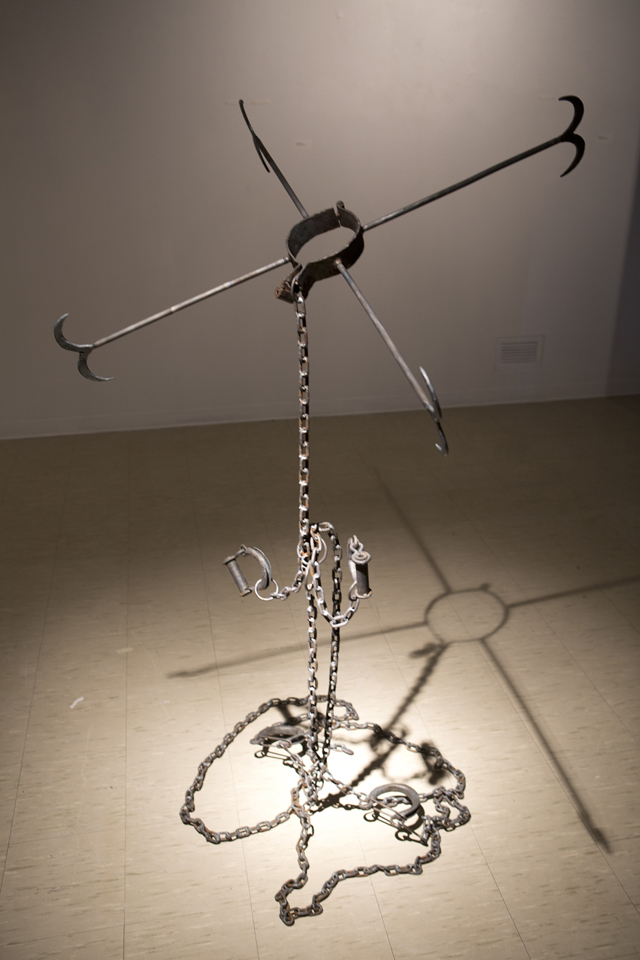
Eternal Verities No.1, Metal, 60"X48"X48", 2015

Eternal Verities No.1, Metal, 60″X48″X48″, 2015

Briefly describe the work you do.

My current work functions as a mechanism to create dialogue about the social issues that confront us in our daily life. My work critiques hierarchies within society and how those hierarchies uphold social relations that perpetuate injustices. I question the ideals we are expected to accept by revealing a reality of contradictions through subject matter and materiality that stand as traces of experience. My work offers viewers an opportunity to consider a range of pressing social issues that are typically understood strictly within the context of the spectacle.

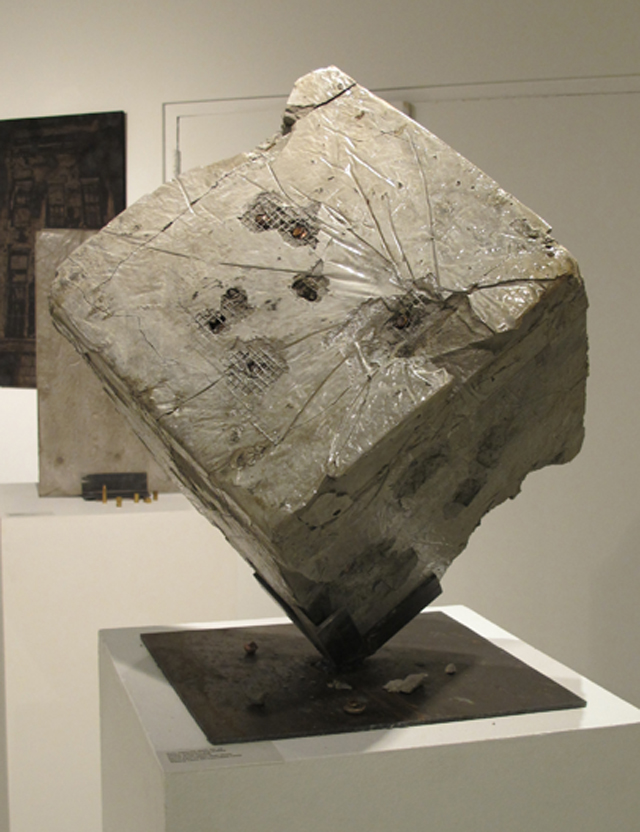
In my largescale monochrome paintings, depictions of iconic figures confront the viewer, conjuring uncanny relationships against stark black canvas. Diffused light introduced through the use of tinted pigments, allude to apparitions of memory. In my concrete sculptures, ruined concrete forms act as metaphors for moments in time. Bullets embed and riddle these surfaces marking moments of past trauma and distress. Through the use of figural elements and surface texture, I gather traces of memory from the ruins of history, recontextualizing fragments of perception to conceive a more dynamic present. My most recent sculpture attempts to convey society’s movement towards a post-human world. Found objects signify different periods of technology and speak to the irony of that pursuit. The diversity of histories I engage, and the complex conflicts that result from their convergence, require flexible, diverse and eclectic methods in the construction of the resulting works.

Tell us about your background and how that has had an influence on your work and on you as an artist.

From a young age, social circumstances and experiences related to my ethnic background caused me to unconsciously observe social behaviors and relationships. I am from a mixed cultural heritage of both black and white which positioned me in a grey area. My parents’ unwillingness to address social issues in the context of race also left me in a grey area, yet both would address social issues in the context of human nature and history. My father often used his knowledge of economics, history and world cultures to provide me with examples of social phenomena. As a result, history, a subset of memory, became an early passion eventually led to my interest in sociology. Sociological perspectives provide me with lenses to critically interpret society. Those lenses facilitate my attempts to understand my experience. The process of gaining an understanding and clarity of my experience is what inspires me. My work gives form to my understanding of the individual’s place within the conflict of ideologies that shape social institutions and the need for social change.

Cube No.1, Concrete & bullets, 18"X18"X18", 2014

Cube No.1, Concrete & bullets, 18″X18″X18″, 2014

The concept of the artist studio has a broad range of meanings in contemporary practice. Artists may spend much of their time in the actual studio, or they may spend very little time in it. Tell us about your individual studio practice and how it differs from or is the same as traditional notions of “being in the studio.”

In a traditional sense, the studio is a refuge for my creativity. It contains the tools of my visual language which allows me to articulate what I conceive based on my ritualistic activity that stimulates creative thought. While the studio is a special place for making, being outside the studio is equally or even more important to my practice. When I am out of the studio, I am in a mode of being where almost everything I do is done with a foresight of being in the studio. There is a conceptual process of making that is fed by everything in my environment that percolates, culminates and then manifests itself as an idea or object. My continuing struggle is trying to find a balance between the being in and out of the studio.

What roles do you find yourself playing that you may not have envisioned yourself in when you first started making art?

Roles I find myself playing that I did not envision myself in when I first started making art was that of a facilitator, entrepreneur, researcher, and public speaker. As I expand my ability to work in different mediums, I find that my roles expand.

When do you find is the best time to make art? Do you set aside a specific time everyday or do you have to work whenever time allows?

I work whenever I have time; I don’t have a “best” time. Sometimes I will be lying in bed and an idea will come to me. Sometimes, my most creative ideas begin when I am not in the studio; I might be out talking to people, observing my environment or looking for specific information that is relevant to my practice. I am always relating what I experience and see toward my passion to express and perceive of something more.

Standardization, Acrylic on Canvas, 48"X72", 2013

Standardization, Acrylic on Canvas, 48″X72″, 2013

How has your work changed in the past five years? How is it the same?

Over the past five years, the aesthetic of my work has changed dramatically due to my investigation into materiality and how it can augment my expression. The characteristics of the material and possible techniques that can be used to manipulate the material, can increase the layers of meaning within my work. I believe the most recent change to my work with regard to medium is my investigation and facilitation of socially engaged art. Community as a medium that is engaged through the creative process is new and exciting prospect that complements conceptual foundations of my practice. Aspects of my work that have remained the same is my passion to understand and express social issues.       

How have people such as family, friends, writers, philosophers, other artists or even pop icons had an impact on the work you do?

As I stated in the question regarding my background, my father and mother’s background has had a significant impact on my work. My father taught english, history and economics. My mother has an extensive background in social work and is a psychologist working with trauma victims. My mother would take me to the Carnegie Museum of Pittsburgh as a child and I believe that the figurative characteristics of Renaissance and classical artists had a significant impact on how I use the visual language. Thanks Mom! I think if you look at my work you will, figuratively speaking, see my parents. Besides my parents, my life experience has had a significant impact on my work. In terms of philosophers, writers and artists that impact my work there are too many to list but I can tell you that I usually find any of the above that increase the breadth and depth of my understanding and inspire creativity. In terms of Pop icons, early HipHop up to the Golden age of Hiphop had a significant impact on my knowledge of self and development as an artist. Artists like Eric B. & Rakim, KRS-1, A Tribe Called Quest, De La Soul, Gang Starr, Big Daddy Kane, Prince Paul, etc. Shout out to all my teachers, Tom Beemsterboer, Dale Huffman, Mrs. Chung, Lonnie Graham, John Bowman, Simone Osthoff, Bonnie Collura, Matt Olson, Tom Canada, Peter Gilmore, Maureen Crossen, William DeBernardi, Bev Bates, Ann Shostrom, Robert Yarber, Paul Chidester.

Have you ever been pulled in the direction of a pursuit other than being an artist? What are your other interests?

My desire to understand life experiences, which what I now know fuels my practice, pulled me away from the arts. That and the responsibilities and obstacles that confronted me pulled me away. With the help of self doubt and my parents expectations to find a practical way to earn a living, I was pushed away from the arts. I explored professions as a computer technician, massage therapist, construction, custodian, food service, administrative work. I have pursued education in business, teaching and art history. My other interests are Sociology, Philosophy, Language, History, Postmodernism, Post-postmodernism, Posthumanism, Axiology, Socio-economics, Inverted Totalitarianism,

About

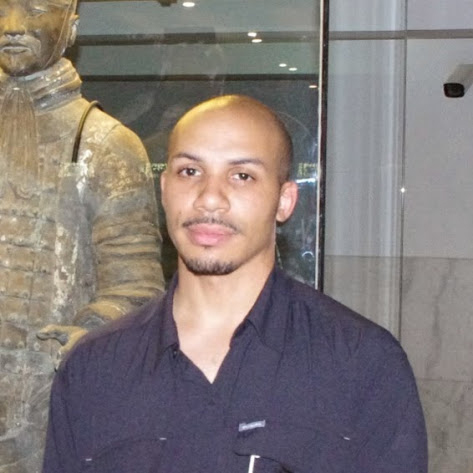
HeadshotBrian Gaither received his BA in Art from Carlow University and his MFA in Studio Art from Pennsylvania State University. 

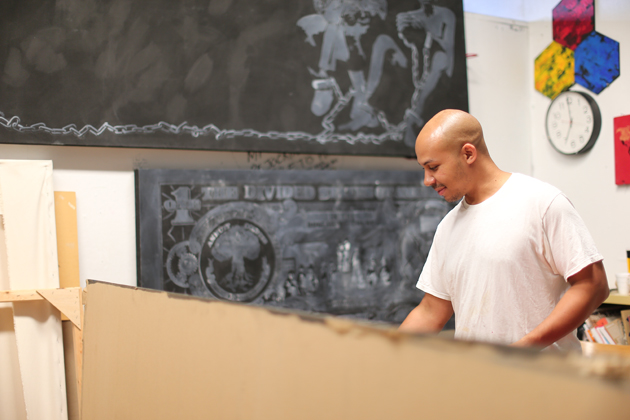
Gaither_InStudio_365

bdgaither.net

All images copyright of the artist and used with their permission.

Posted in Assemblage, Painting, Uncategorized | Tagged , , , , | Leave a comment