Laura Moriarty – Rosendale, New York

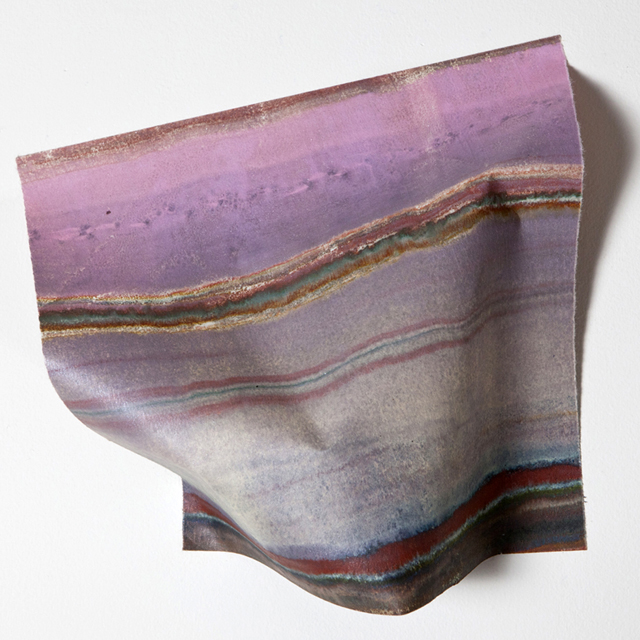
Slump | 2014, Encaustic monotype, 10 x 10 x 3 inches

Slump | 2014, Encaustic monotype, 10 x 10 x 3 inches

Briefly describe the work you do.

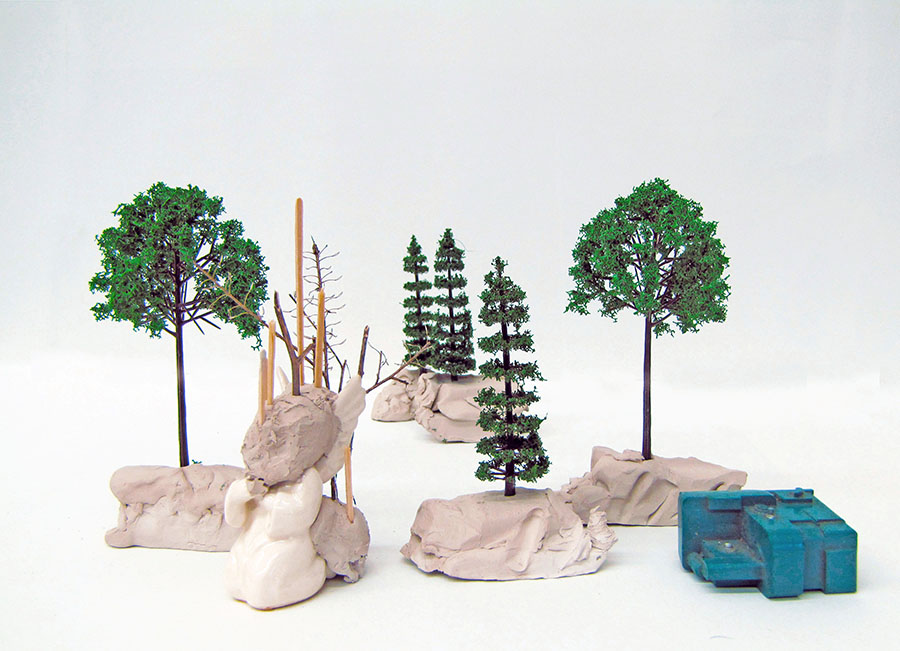
Considering strata as historical formations, I make freestanding sculptural paintings comprised of layers of pigmented beeswax. Resonating with the geologic, these hybrid objects are created through processes such as erosion, compression, friction, and enfolding. Configured as cross-sectional architectonic blocks, the pieces function as core samples, with exposed layers containing delicate embedments, much like fossils in sediment. My aim is to render sense-able the phenomenal divergence and convergence of the earth, yet the relatively small scale of the pieces also suggests a miniaturization that relates to educational models, distilling the vast time/space continuum of geology into something containable. 

Tell us a little about your background and how that influences you as an artist.

I was born in Beacon, New York in 1960, and knew from an early age that I would be an artist. I studied art for a brief period in college before setting out in search of real life mentors. After studying  with the painter Franklin Alexander in his Woodstock studio, I entered into training as an apprentice papermaker at Women’s Studio Workshop. The atmosphere at WSW disciplined me to see the studio as a laboratory for ideas and testing ground for methods and materials. This influence is still with me today; ideas, materials and techniques must all reinforce each other.

The concept of the “artist studio” has a broad range of meanings, especially in contemporary practice. The idea of the artist toiling away alone in a room may not necessarily reflect what many artists do from day to day anymore. Describe your studio practice and how it differs from (or is the same as) traditional notions of “being in the studio.”

Though the pieces I make do not push an overtly political message, an important criteria for me has always been to work in way that is ecologically conscious and self-contained. The organization of my workspace is centered around this principle. My studio functions as a kind of eco-system where nothing is wasted or sits around gathering dust. My work is not about the precious object; it privileges the energy that goes into making it, therefore everything in the studio is constantly in play, getting used, recycled, or repurposed. 

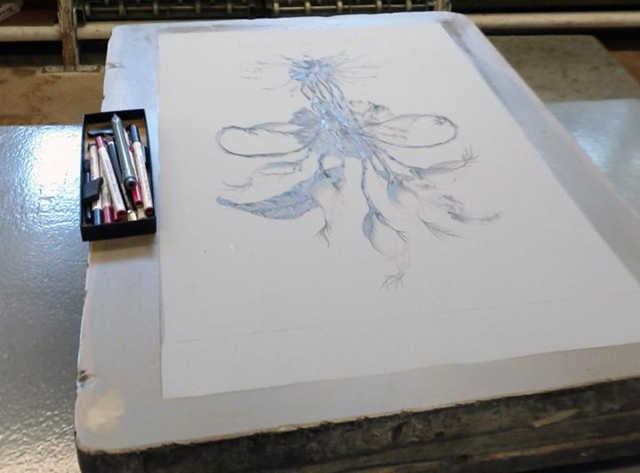
Even aesthetic decisions are informed by this no-waste mandate. For example, I make monotypes that are a by-product of my sculptural paintings. I use a heated metal plate to shape my sculptures. When done carefully, this can produce finely detailed paint trails as the mass of striated wax slides along the hot plate. I recognized this as an opportunity to use the piece-in-process as a mark making tool and began capturing these mini-landslides on paper as another way of recording process and time.

As my work has evolved to consider geologic time, so has my activity in the studio. It’s almost like an unseen performance. Acting on a playful intention to mimic the rock cycle, I put my work through the processes of heating, melting, cooling, weathering and sliding around (sometimes all the way across the country) – building up and breaking down in a dizzying cycle that never stops. My works are little chunks of output from this mechanism that is my studio practice.
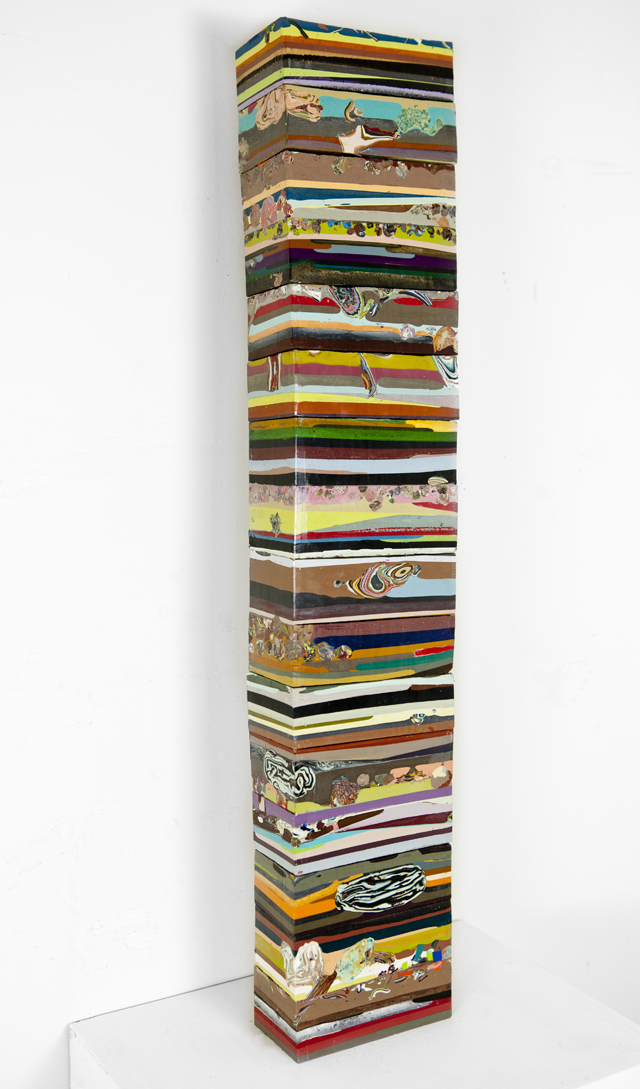
Legend | 2013, Pigmented beeswax, 26 x 4.5 x 2.25 inches

Legend | 2013, Pigmented beeswax, 26 x 4.5 x 2.25 inches

What unique roles do you see yourself as the artist playing that you may not have envisioned yourself in when you first started making art?

Being an artist has brought out my skill as a writer, and that has been used in ways that I would not have anticipated. For example, I administered an online technical forum for encaustic painters for many years. As an artist who is very experimental, and not at all hung up on following rules, I was surprised at how well I was able to communicate technical data. I also published an artist’s book about my own work in 2012.

When do you find is the best time of day to make art? Do you have time set aside every day, every week or do you just work whenever you can? 

It depends on what I am doing. I am clear-headed first thing in the morning, so that is my best time for solving problems and strategizing. Night time is good for getting out of my head and possibly surprising myself.
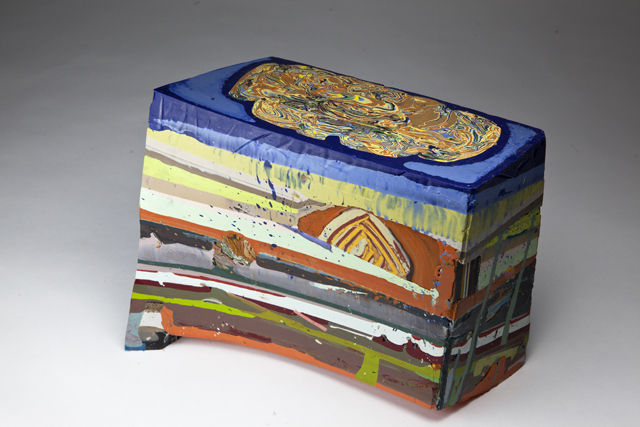
Swale | 2014, Pigmented beeswax, 8.75 x 9.5 x 4.25 inches

Swale | 2014, Pigmented beeswax, 8.75 x 9.5 x 4.25 inches

How has your work changed in the last five years? How is it the same?

Prior to 2009, I was making lots of small elements that I used in grand collections and sprawling installations. For various practical reasons, I wanted to make work that was more portable and did not require assembly. That desire led me to produce a group of small works inspired by textbook diagrams of cutaways of terrain. I achieved this by making mini versions of the installations on panels, almost like maquettes. I built reservoirs around them, filling it with layers of poured wax, and then used excavational techniques to reveal what was buried. That was an important breakthrough which my work has been evolving out of ever since. I am still focused on process and time, but I am now thinking about how those ideas can be contained. My recent work has a relationship to books, and the pouring techniques I use add a linear quality that relates to charts, maps, diagrams and visual information. These are things that I get a visual kick from, so I enjoy bringing that design aspect to my work. 

Are there people such as family, friends, writers, philosophers or even pop icons that have had an impact on the work you do?

I don’t believe anything exciting happens in isolation, so my imagination is sparked when the disciplines of art, science, history, philosophy, nature, culture, technology and design merge. I like when ideas reach out in many directions, the quirkier or more idiosyncratic, the better. I find this merging through lots of reading, (John McPhee is a favorite), following obscure blogs like Friends of the Pleistocene, or listening to podcasts like RadioLab, and even in the mainstream, (love Project Runway). 

If you had an occupation outside of being an artist, what would that be and why?

I’ve been considering becoming a bee keeper for the past several years. I like tending to things that are cyclical and require care. I’ve also thought about doing Hospice work.

About
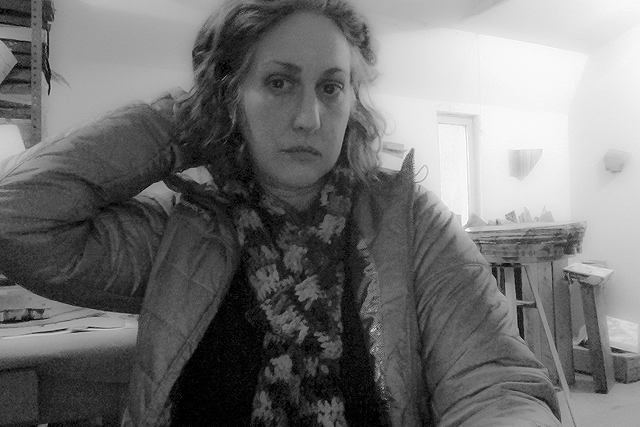
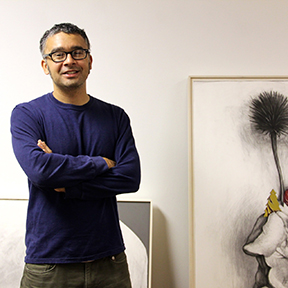
Laura_Moriarty_me in studioLaura Moriarty’s honors include two grants from the Pollock-Krasner Foundation, Strategic Opportunities Stipends from the New York Foundation for the Arts, and a Projects Grant from United States Artists. Laura has participated in many residencies, including at the Ucross Foundation in Wyoming and the Frans Masereel Center in Belgium. She is the author of ‘Table of Contents’, a limited-edition artist’s book published in 2012. Laura lives in the Hudson Valley region of New York, where she is currently working toward a solo exhibition at Conrad-Wilde Gallery in Tucson, Arizona.
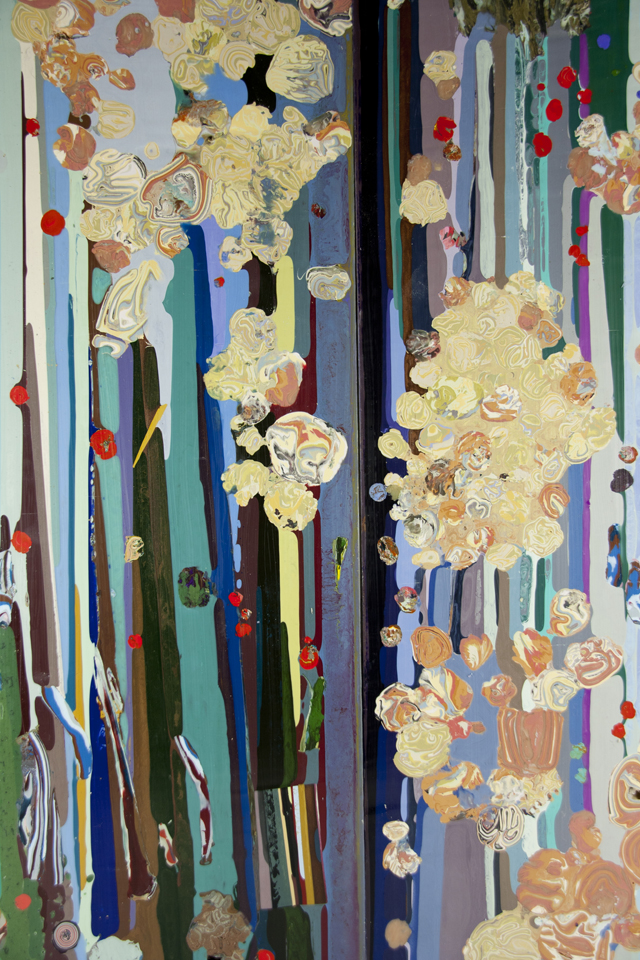
Surface detail of The Clouds | 2014, pigmented beeswax, 21 x 15 x 2.5 inches
Surface detail of The Clouds | 2014, pigmented beeswax, 21 x 15 x 2.5 inches
All images copyright of the artist and used with their permission. 
 
Posted in Sculpture | Tagged , , , , | Leave a comment

Jennifer Barnett Hensel – Los Angeles, California

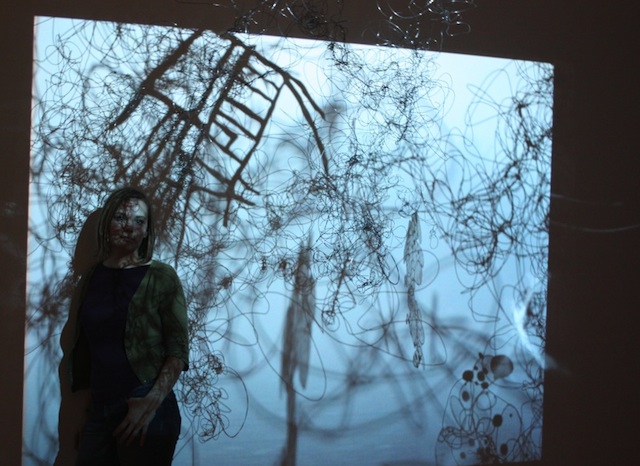
Centered, Installation, Light Projected Image, Aluminum Wire, and Mylar, 2009

Centered, Installation, Light Projected Image, Aluminum Wire, and Mylar, 2009

Briefly describe the work you do.

My work examines notions of memory, time, and the connections we share as humans with each other and with the natural world that surrounds us. These ideas are explored through mixed media and installation.  I find inspiration from my personal experiences, collection of objects, and reflections of time spent in a place.  My artwork is heavily rooted in process- the outcome of a work is secondary to the layering and investigation of my concepts through artistic means and materials. 

Tell us a little about your background and how that influences you as an artist.

As a young child, growing up in Cincinnati, Ohio, my family and I moved house a lot.  All of the moving encouraged a strong internal desire for exploration and change- staying still for too long never felt quite right.  The constants in my life became my family members and the general landscape found in southern Ohio.  These were the elements throughout my youth that I identify with and compose my sense of home.  Upon graduating high school, I found myself moving around on my own. I finally left Ohio in 2001 and only returned for short visits.  My artwork during this period shifted as I tried to hold onto the place and people I had left behind.  This would become a resonating theme from that point on.

The effects of moving on my person sparked my desire to understand the places I find myself living- the people, flora and fauna, and the interactions of these things in the landscape.  My need for travel and exploration has guided me from place to place.  I have lived in Ohio, Kentucky, Minnesota, Massachusetts, Tennessee, England (for a summer), and finally California.  My transient nature has often left me feeling uprooted and lost at times.  My artwork has become a way in which I explore my surroundings and in doing so, create a connectedness to the place I have come to reside. 

Resistance, Mixed Media on Paper,  30" x 22", 2011

Resistance, Mixed Media on Paper, 30″ x 22″, 2011

The concept of the “artist studio” has a broad range of meanings, especially in contemporary practice. The idea of the artist toiling away alone in a room may not necessarily reflect what many artists do from day to day anymore. Describe your studio practice and how it differs from (or is the same as) traditional notions of “being in the studio.”

My work begins outside of the traditional studio space.  I am a gatherer and my process begins with experiences.  I collect these in various forms- photos, found objects, and sketches mostly. From these jumping points I return to the studio space to investigate my ideas and concepts in the medium that is best suited. 

What unique roles do you see yourself as the artist playing that you may not have envisioned yourself in when you first started making art?

Over the past few years I have begun teaching children art history, foundations, and studio practices.  I found that there is a gap in arts education, especially in Los Angeles, for younger people interested in the art world. There is a real gratification seeing young people get authentically excited about something you are showing them.  I owe this love for teaching youth to my own two kids- having them opened my eyes up to the importance of passing along my knowledge to a younger generation of growing artists.

When do you find is the best time of day to make art? Do you have time set aside every day, every week or do you just work whenever you can?  

I work whenever I can.  As a parent, my schedule is not my own.  I am fortunate to have a studio space at my home, so when there is a free moment, I can simply walk outside and into my creative place.  I get a few mornings every week to focus solely on my artwork.  I try to schedule time in the studio or for doing research- I am very deadline and goal driven and it helps to be on a regimented schedule.  When I don’t put myself on a schedule I find that my focus drifts and will remain in a state of creative neglect until I put structure back in place.

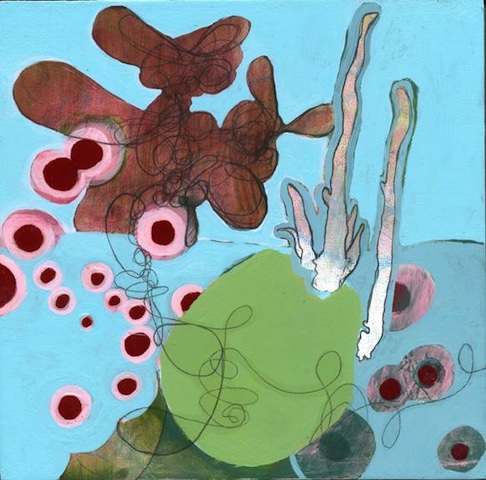
Lasting Conversation, mixed media on panel, 8" x 8", 2009

Lasting Conversation, mixed media on panel, 8″ x 8″, 2009

How has your work changed in the last five years? How is it the same?

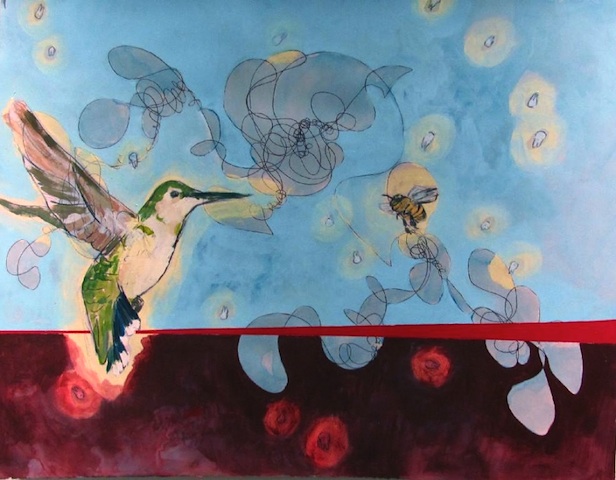
The biggest change over the past five years has been a reemergence of narrative elements in my work.  Birds, bees, found objects, and plant elements have been incorporated in my mostly abstracted scenes.  My concepts and interests have remained constant but my way of presenting them has definitely evolved. 

Are there people such as family, friends, writers, philosophers or even pop icons that have had an impact on the work you do?

People that I am close with have always impacted my work and often become a focus for my subject matter.  I find that concentrating on personal relationships helps one to better understand the workings of broader relationships in the world.  I often return to the written works of John Muir, Lucy Lippard (The Lure of the Local), Susan Stewart (On Longing), and Kandinsky. 

If you had an occupation outside of being an artist, what would that be and why?

A farmer.  I love the idea of living, growing, and working on a piece of land.  One’s life cycles, the changing of seasons, and the passing of time become more obvious and in tune with that kind of work and lifestyle.

About

JBH_HeadshotJennifer Barnett Hensel is a freelance artist working in Los Angeles, California.  She received her MFA in studio arts from the Memphis College of Art in 2009 and her BFA from the University of Minnesota in 2005. She has exhibited her artwork in galleries and museums across North America with inclusion into over 50 group and solo shows since 2002. 

JBH_StudioWall

jenniferbarnetthensel.com

All images copyright of the artist and used with their permission. 


Posted in mixed media | Tagged , , , , | 1 Comment

Rafael Salas – Ripon, Wisconsin

...snow and sky and pine #2 2014, digital photograph variable dimensions

…snow and sky and pine #2
2014, digital photograph
variable dimensions

Briefly describe the work you do.

I work around themes of landscape, religious iconography and country music to create poetic reflections on midwestern traditions and notions of place. 

Tell us a little about your background and how that influences you as an artist.

I am originally from a farm community in Wisconsin, am of mixed race descent, and attended the New York Academy of Art for my graduate work in painting. I am influenced by my identity, by the wealth of artists I have encountered over the years and by trying to trust my instincts. 

The concept of the “artist studio” has a broad range of meanings, especially in contemporary practice. The idea of the artist toiling away alone in a room may not necessarily reflect what many artists do from day to day anymore. Describe your studio practice and how it differs from (or is the same as) traditional notions of “being in the studio.”

Being trained in painting, my studio reflects the traditional concepts of making work in relative isolation. 

The Garden 2013, mixed media on paper 36 x 60 inches
The Garden
2013, mixed media on paper
36 x 60 inches
What unique roles do you see yourself as the artist playing that you may not have envisioned yourself in when you first started making art?

Teaching and writing. I enjoy my work as a professor of art at Ripon College, and also write reviews for the Milwaukee Journal Sentinel. It has been a wonderful experience to reflect on art in these different ways. 

When do you find is the best time of day to make art? Do you have time set aside every day, every week or do you just work whenever you can? 

I work as often as I can. It’s hard. 

...snow and sky and pine #1 2014, digital photograph variable dimensions

…snow and sky and pine #1
2014, digital photograph
variable dimensions

How has your work changed in the last five years? How is it the same?

I am currently working three dimensionally, and this has given me lots of ways to reflect on texture and surface that I am excited to apply to painting when I return to it. If that happens. 

Are there people such as family, friends, writers, philosophers or even pop icons that have had an impact on the work you do?

Elvis Presley, Hank Williams, Bob Dylan, Waylon Jennings, Gabriel Garcia Marquez, Alice Munro, Juan Rulfo. I am only stopping here to be brief. The list continues. 

If you had an occupation outside of being an artist, what would that be and why?

I aspire to be a washed up country star someday. I may have to skip the getting famous part entirely, though. 

About

unnamed-4Rafael Francisco Salas is a Wisconsin based painter.   The Milwaukee Journal Sentinel has described him as “one of the best painters working in Wisconsin today”. (Milwaukee Journal Sentinel, Oct. 7, 2009)

Using landscape along with narrative and symbolic elements, Salas creates artwork that investigates the Midwestern landscape, portraiture, architecture, abstraction, the legacy of Byzantine iconography and country music. His work has been exhibited in New York City, San Diego, Boston, as well as many venues in the Midwest including The Neville Public Museum, The Museum of Wisconsin Art, The John Kohler Arts Center, Dean Jensen gallery, Circa Gallery, Frank Juarez Gallery and Portrait Society Gallery.   Salas is also a contributing writer at the Milwaukee Journal Sentinel. He is an Associate Professor or Art at Ripon College in Ripon, WI.

sketchbook

sketchbook

rafaelsalas.com

All images copyright of the artist and used with their permission. 


Posted in Painting | Tagged , , , , | Leave a comment

Jennifer Scheuer -Ithaca, New York

Thecla Box, Book Arts, Letterpress, Relief, Found Objects 2012

Thecla Box, Book Arts, Letterpress, Relief, Found Objects 2012

Briefly describe the work you do.

I often work in lithography, photogravure, papermaking and book arts; and as a printmaker really enjoy thinking about how to construct an image through technique and materials. I am specifically interested in art and social commentary, narrative, and history. My art is motivated by an investigation of how historical ideas have shaped how we understand our surroundings and our bodies.

Over the past few years I have been very focused on creating work about a medieval theory “The Doctrine of Signatures” an idea that the world is connected through visual imagery and our senses. I am fascinated how this idea can be interpreted to suggest different ways in which we see our relationship within the world; as a divine ruling, a matter of chance, or superstitious associations. In the end, it is the question and conversation that these ideas generate that I find interesting rather than personal ideology. I am curious how past scientific ideas that have been proven wrong continue to hold values or impact our thoughts, world view, and medicine.

I am also very interested in the history of women’s bodies and health, and the body in the context of Catholicism, religion, visionaries, and lesser known historical figures.

Tell us a little about your background and how that influences you as an artist.

History, museums, religious objects and art have always been exciting to me; and I am amazed how one artifact or object can offer an entire story. Early on I had a strong vision that I would have a career in social or community service to serve and advocate ideas. As my interest in art grew, I realized that I was more excited about how I could work with others in the arts in contrast to a solitary studio practice, so the values and experience of printmaking, collaboration, and sharing of knowledge are attractive to these sensibilities.

Perspectives, Book Arts, Lithograph, Digital Print, 2014

Perspectives, Book Arts, Lithograph, Digital Print, 2014

The concept of the “artist studio” has a broad range of meanings, especially in contemporary practice. The idea of the artist toiling away alone in a room may not necessarily reflect what many artists do from day to day anymore. Describe your studio practice and how it differs from (or is the same as) traditional notions of “being in the studio.”

My studio practice is not a solitary experience as I make art in a collaborative and shared space, and this environment and all the technical aspects to print media are what keep me interested in making. How I think as an artist is very research driven, so I am really fortunate to have a job as a studio technician as I get to spend time working with students and see how they approach visualizing information. In the print classes at Cornell students are encouraged to research techniques and specific themes and I really enjoy working with students to bring these technical practices to use in the studio.

What unique roles do you see yourself as the artist playing that you may not have envisioned yourself in when you first started making art?

I enjoy the roles that being an artist affords me, to not only make artwork, but to participate in technical research, study history, build community, collaborate, share information, and contribute to and learn from the arts community.

When do you find is the best time of day to make art? Do you have time set aside every day, every week or do you just work whenever you can?

My process tends to be condensed creative bursts when generating new ideas. I have highly concentrated days of research, where I read texts, talk with historians/experts, and collect visual information; and a week or two later I sketch 10-20 ideas.

Generating matrixes after the initial sketches are completed, proofing and editioning are what I love; I find these actions very meditative. I am usually working on many projects and prints simultaneously – I like to work in very different mediums and projects at the same time such as complex transparent color layering in lithography paired with making photo intaglio plates. I enjoy this because it requires very different forms of thinking and visualization from one medium to the next to create the images, it’s like solving puzzles.

Armarunca Plena Obscuritatis, Color Lithograph, 15” x 20” 2012 From the Pharmacopeia series, 2012-2014.

Armarunca Plena Obscuritatis, Color Lithograph, 15” x 20” 2012
From the Pharmacopeia series, 2012-2014.

How has your work changed in the last five years? How is it the same?

I think my values and concerns have remained the same over the years, but my ability to research and communicate my ideas and different perspectives has become more sophisticated. Throughout undergraduate I hadn’t worked much digitally, so bringing the use of computers, software, text, printers into my artistic practices has changed how I approach realizing my ideas.

Are there people such as family, friends, writers, philosophers or even pop icons that have had an impact on the work you do?

I have to admit that I really love nuns, so some really important influences for me have been the research, literature, and artwork of 12th century Hildegard von Bingen. I also find the Sister Corita Kent very engaging for her ability to communicate love within political ideas.

The writings, prints, and paintings of William Blake are also dear to my heart, as I really like his interpretations of the world.  History has also deeply impacted my artistic practice. I am endlessly fascinated with the blended history of printmaking as art and industry; and its role of distribution of knowledge, ideas, and social changes. I also find the artifacts of the ancient near east and the Roman Empire very interesting, as well as religious ritual.   

If you had an occupation outside of being an artist, what would that be and why?

To support my education and artistic practice I had been a cake decorator for many years, and really enjoy this process of construction – it takes skill and muscle memory but also is a very clear step-by-step form of art to complete.

Now, if I had to choose any career outside of being an artist; it would be to serve as a teacher, technical researcher, archivist or historian. I am interested in occupations that communicate and advocate the value of art, history, and dissemination of information.

About

Scheuer_HeadshotJennifer Scheuer is the Printmaking Technician at Cornell University, Ithaca, NY. She creates art discussing history, gender, healing and the body through the processes of photogravure, lithography, and book arts. Scheuer graduated with her MFA in Studio Art (Printmaking) from the University of Tennessee, Knoxville in 2014. Scheuer attended the Tamarind Institute’s Printer Training Program in 2010, and is a recipient of the 2013 SGC International Graduate Fellowship. Jennifer Scheuer interned at the Hannaher Print Studio at the Plains Art Museum in Fargo, ND during her senior year of undergraduate study at Minnesota State University Moorhead. 

Scheuer_Studio

 jenniferscheuer.com

All images copyright of the artist and used with their permission. 

Posted in Photography, Printmaking | Tagged , , , , | Leave a comment

Ron Longsdorf – Reading, Pennsylvania

We ascend each day as heat rising, 2013, wall studs, drywall, polystyrene, screen, pulley, rope, light. Approx. 84” x 50” x 12”

We ascend each day as heat rising, 2013, wall studs, drywall, polystyrene, screen, pulley, rope, light. Approx. 84” x 50” x 12”

Briefly describe the work you do.

The philosophical questions surrounding existence in connection to personal relationships, architectural interiors and exteriors, home furnishings, and objects is a dialogue inherent in my work. I personify inanimate objects to shift the context to the body, acting as a character, to create situations exploring mental and physical proximity of personal relationships. My sculptures and installations use various combinations of altered domestic objects, building materials, audio, video, and/or photography to create an experimental aesthetic experience. I use ideas of building, construction, removal, and exposure to investigate the emotion of personal relationships and experiences.

Tell us a little about your background and how that influences you as an artist.

I grew up in a fairly average middle class suburban area. My father, uncle and grandfather built the house I grew up in. The house was livable, but many areas remained unfinished, such as the outer cinder block, and exposed trusses and insulation foam in the attic. So i grew up seeing the house evolve become more complete. Later in graduate school i realized how the building and exposed structures really stayed with me over time, and growing up in that space truly made a lot of sense for me to explore in art making.

The concept of the “artist studio” has a broad range of meanings, especially in contemporary practice. The idea of the artist toiling away alone in a room may not necessarily reflect what many artists do from day to day anymore. Describe your studio practice and how it differs from (or is the same as) traditional notions of “being in the studio.”

I think studio practice is constantly changing and evolving over time depending on where you are and what you have available to you. When you are in school you have constant access to space and tools. Having studio space and time becomes more precious over time. In the past I spent more time in the studio just looking and thinking than physically making. Now I let ideas evolve over time with me in daily life, then when time is available I will use pockets of time to physically build work. My wife, Emily and I share a studio space which is also a part of our apartment, so the studio is always there visually, but not always occupied. We move in and out of the space as needed, but the presence of the space is always there.

Navigation…,2014, polystyrene, thermal foam, wood, paint, carpet padding, Approx. 72” x 48” x 48” installed.

Navigation…,2014, polystyrene, thermal foam, wood, paint, carpet padding, Approx. 72” x 48” x 48” installed.

What unique roles do you see yourself as the artist playing that you may not have envisioned yourself in when you first started making art?

When I first started making art I just liked making stuff. I learned a lot in school about combining strong technical skills with strong content. I reached a point where I thought I needed to make highly conceptual art, yet it lacked personality. Eventually my body of work become more personal and much more visually interesting for me. I never thought that anyone would care about personal narratives in work, or just be alright with unfinished materials. I love the beauty in the aesthetic of raw 2X4 lumber, drywall, and bright pink insulation foam.

When do you find is the best time of day to make art? Do you have time set aside every day, every week or do you just work whenever you can? 

Weekends tend to be the best days. Or any free days I am not teaching. I tend to work the best in the later morning or early afternoons. I need to have been awake for a while to actually get going in the studio.

We ascend each day as heat rising, 2013, wall studs, drywall, polystyrene, screen, pulley, rope, light. Approx. 84” x 50” x 12”

We ascend each day as heat rising, 2013, wall studs, drywall, polystyrene, screen, pulley, rope, light. Approx. 84” x 50” x 12”

How has your work changed in the last five years? How is it the same?

I feel I have began to refine my technical finish of works more while still maintaining a sense of exposed materials. Now I paint things more and use clear finish to seal the exposed wood. I’ve experimented with more fluid material such as carpet padding and fabric in recent works. It remains the same in a consistent interest in building materials and mimicking small elements of furniture and architecture around me in daily life.

Are there people such as family, friends, writers, philosophers or even pop icons that have had an impact on the work you do?

As I mentioned earlier, I was influenced by my father, uncle and grandfather building the house I grew up in. I’m influenced by my wife’s creativity, i consider her one of the most intelligent and interesting minds I’ve had the privilege to know. The layers and connections in making art in work fascinate me. We have collaborated on a few works. I have always been interested in the work of artists Bruce Nauman, Tim Hawksinson, and in some senses James Turrell.

If you had an occupation outside of being an artist, what would that be and why?

Outside of being an artist I do teach, which I love. Part of me has always wanted to pursue music, some thing with drums/percussion. But I always see those cars on the highway with the WIDE LOAD signs, and always thought that was great. I could just lead or follow some giant thing on a truck around the country.

About

Ron_Longsdorf_HeadShotRon Longsdorf (b. Greensburg, PA) has training in sculpture and he considers himself a curator of objects and materials. His body of work combines various elements of sculpture, installation, video, audio, and performance. Ron holds an MFA in Sculpture from the University of Delaware and a BFA in Sculpture from Pennsylvania State University. He has exhibited nationally and internationally, including, Delaware; Pennsylvania; New Jersey; Ohio; Virginia; California; Texas; Brooklyn, NY; Baltimore, MD; Lexington, KY; Minneapolis, MN; North Carolina; South Carolina; Berlin, Germany; and Limassol, Cyprus. Ron has attended residencies at the Vermont Studio Center, Art Farm in Nebraska, Elsewhere Artist Collaborative in Greensboro, NC, HUB-BUB in Spartanburg, SC, and Stonehouse in Miramonte, CA. In 2009, he received an Individual Artist Fellowship from the Delaware Division of the Arts, as well as several Individual Artist Opportunity Grants from the Delaware Division of the Arts. Ron is currently an Assistant Professor at Kutztown University of Pennsylvania, Kutztown, PA.

Your presence, a lasting force, places me in motion, 2014, wood, paint, stain, fabric, light, fan. 87” x 32” x 26”

Your presence, a lasting force, places me in motion, 2014, wood, paint, stain, fabric, light, fan. 87” x 32” x 26”

ronlongsdorf.com

All images copyright of the artist and used with their permission. 


Posted in Installation, Sculpture | Tagged , , , , | Leave a comment

Bryana Siobhan – Boston, Massachusetts

Steady, Performance Installation, 2014, The Emerald Necklace, Boston

Steady, Performance Installation, 2014, The Emerald Necklace, Boston

Briefly describe the work you do.

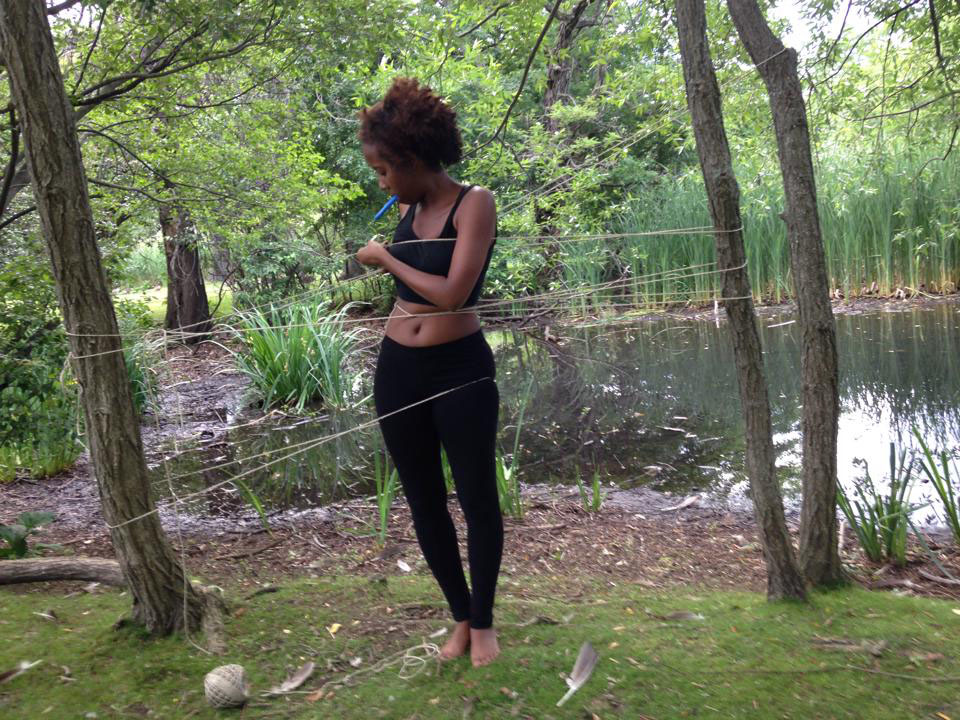
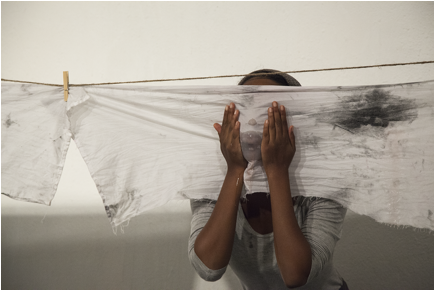
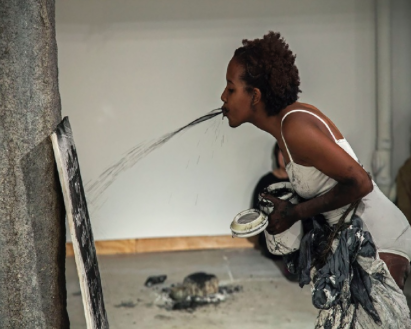
I work as a performance artist, specializing in performative installation work.  I look to transform significant cultural materials, concepts, and personal spirituality, ultimately working to navigate the creation of text through the body. 

Tell us a little about your background and how that influences you as an artist.

I originally started working as a sculptor working in ceramics. Working with ceramics opened me up to working and understanding materials and processes. A lot of my work has to do the process of merging performance, drawing and text, and transforming the physical  materials I am working with. 

The concept of the “artist studio” has a broad range of meanings, especially in contemporary practice. The idea of the artist toiling away alone in a room may not necessarily reflect what many artists do from day to day anymore. Describe your studio practice and how it differs from (or is the same as) traditional notions of “being in the studio.”

My studio practice consists of lots of research and coffee dates. I love engaging with other artists/social justice fighters to talk about the creation of new pieces. I am almost never in my physical studio space, instead opting for experiences and moments in time that I share with those around me. 

Filipines 4:3, Performance Installation, 2014. Panopoly Performance Lab

Filipines 4:3, Performance Installation, 2014. Panopoly Performance Lab

What unique roles do you see yourself as the artist playing that you may not have envisioned yourself in when you first started making art?

I never thought I would get into social justice, but as my work has evolved my thoughts about the world and how we function as a people in it have changed dramatically. 

When do you find is the best time of day to make art? Do you have time set aside every day, every week or do you just work whenever you can? 

I make work whenever I can, but I work best late afternoon/late night/graveyard shifts. There is something about being awake when no one else is, working when the world is quiet that relaxes me. 

Azul Negro, Performance Installation, 2014. Piano Craft Guild, Boston

Azul Negro, Performance Installation, 2014. Piano Craft Guild, Boston

How has your work changed in the last five years? How is it the same?

I have been working in the arts for about 6 years now and over that past amount of time I have grown so much as an individual which directly relates to the type of work I am making. I am no longer scared to make work that I am passionate about. I now have the resources, resiliency and know how to create work that I feel reflects certain stories and experiences. I really believe in inter-generational memory and my ability to share that with others has become extremely important to me. 

Are there people such as family, friends, writers, philosophers or even pop icons that have had an impact on the work you do?

My mother and grandmother inspire me tremendously, both working as art teachers for the past few years. Their work ethic astounds me and I seek to follow in their footsteps. My work can come off as very autobiographical, because i draw signifiers from my childhood, I would say my family and my spirituality have the most impact on my current work. 

If you had an occupation outside of being an artist, what would that be and why?

I would be a social worker or art therapist I love working with kids, I love helping people through tough times in their life and I just really like being apart of something that encourages and provides solace to communities. 

About

HeadshotEmerging artist Bryana Siobhan is currently a Masters Candidate at the School of the Museum of Fine Arts of Boston, and an Alumni of the Corcoran College of Art + Design with her Bachelors in Fine Art.  She has been living and working in Boston, MA for the past 2 years as a performance artist, founder of revolutionaryperformance.tumblr.com (a performance art archive) and as a founding member of Petrichor Performance Collective. Working in the topic of US-centric social politics regarding race, gender, and mental health, Siobhan draws cultural cues and signifiers from the Black American, Afro-Cuban and Indigenous American (NDN) cultures.  

Studio Work1

bryanasiobhan.net

 All images copyright of the artist and used with their permission. 


Posted in Performance | Tagged , , , , | Leave a comment

Dinora Justice – Boston, Massachusetts

Untitled #1, Oil on Canvas, 72" x 84", 2012

Untitled #1, Oil on Canvas, 72″ x 84″, 2012

Briefly describe the work you do

I paint, draw, make videos and build things. My work is a personal, highly biographical exploration of the complicated relationship between humans and the natural environment.

Tell us a little about your background and how that influences you as an artist

I grew up in southern Brazil in the seventies, in a small town that rapidly went from rural to industrial. My mother is a retired art teacher, and I was fortunate to have had access to art history books and art instruction from an early age.

The spiritual energy of Brazil is in my work.

The concept of the “artist studio” has a broad range of meanings, especially in contemporary practice. The idea of the artist toiling away alone in a room may not necessarily reflect what many artists do from day to day anymore. Describe your studio practice and how it differs from (or is the same as) traditional notions of “being in the studio”.

I have the most wonderful studio in the backyard of my house, built by my husband and his mother when he was seventeen to be her pottery studio. After grad school, I spent two months cleaning it up, leveling the loose brick floor, recycling wood and building shelves and tables, getting my collection of books and art materials organized. I love working alone in there – when Virginia Woolf wrote “A Room of Her Own”, I feel that she wrote it for me. My studio is my sanctuary, a place where I spend most of the day happily at work.

OOO-Me, Oil on Canvas, 40" x 60", 2014

OOO-Me, Oil on Canvas, 40″ x 60″, 2014

What unique roles do you see yourself as the artist playing that you may not have envisioned yourself in when you first started making art?

I feel that today there is an expectation of artists to be extroverted marketers not only of their work, but of themselves.

On the positive side, artists today have more visibility and may use it to promote issues that they care about, provided that the whole thing does not devolve into a celebrity-style plot for self-promotion or a feel-good pill for artists, curators and audiences alike.

When do you find is the best time of day to make art? Do you have time set aside every day, every week or do you just work whenever you can?

I get into the studio right after breakfast in the morning and come out at three. I go back again in the evening. I find that this routine helps me stay put with projects that are challenging, as well as promoting chance discoveries.

Untitled #6, Oil on Canvas, 72" x 72", 2013

Untitled #6, Oil on Canvas, 72″ x 72″, 2013

Has your work changed in the last five years? How is it the same?

My work changed noticeably four years ago. I emerged from early motherhood with a strong desire to make the kind of work I am making now – much more personal, searching for a deeper connection with life and nature through art. I am still painting trees, but now they are like family to me, and the planet ceased to be this immense, abstract entity to become a very intimate place of bonding and discovery. 

Are there people such as family, friends, writers, philosophers or even pop icons that have had an impact on the work you do?

Absolutely, and the list is long and eclectic. First of all, my husband, a talented photographer and my most trusted critic.
In poetry and poetic writing, Loren Eiseley, Barry Lopez, Mary Oliver and Mario Quintana. The classics: Dostoyevsky, Borges, Goethe, and Tolstoy. The cultural criticism of Roland Barthes, and the scientific writings of Edward O. Wilson, which I discovered recently. In a special place is the recent work of philosopher Timothy Morton, who writes about ecology, especially his latest publication “Hyperobjects”.

If you had an occupation outside of being an artist, what would that be and why?

I am the mother of a wonderful boy, and the love he brings to our lives makes everything worthwhile.

About

DJheadshotDinora is a Brazilian artist who received her MFA from the School of the Museum of Fine Arts Boston in 2014, and her BFA from the Art Institute of Boston at Lesley University in 2001. She works primarily in painting and video. Dinora has won awards for her work in painting, video/animation and writing. She started exhibiting in solo and group shows in 2002 and is avidly collected in the US and abroad. She lives and works in Newton, MA.

DJstudio

dinorajustice.com

 All images copyright of the artist and used with their permission. 

Posted in Painting | Tagged , , , , | Leave a comment

Claire Elliott – San Francisco, California

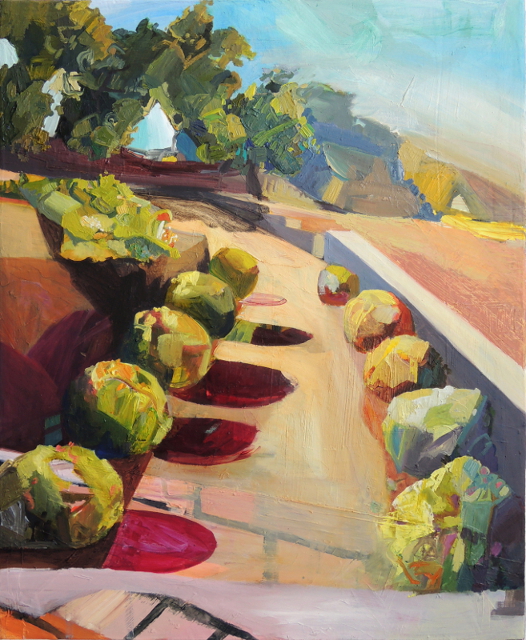
Desire Path Oil on Wood Panel 20” x 24” 2014

Desire Path
Oil on Wood Panel
20” x 24”
2014

Briefly describe the work you do.

I am a painter, and as such I have an obsessive dedication to investigating what paint can do as well as the act of painting itself. In the work I am currently making, I use painting to uncover contemporary landscape and examine how it differs from the past. Right now, I am drawn to spaces where landscape is either manufactured or controlled to a degree where the tension between man and nature is highlighted. Working from personal photos, I construct new and exaggerated spaces out of these constructed landscapes by using composition, intensified palettes and the physicality of the paint. One of the things I like most about painting is all of the inherent potential it holds while being simultaneously doomed to a certain level of failure. In my work, flickers of illusionistic realism in rendering and perspective can easily be contradicted by dissolution into abstraction and careful skewing and shifting. I’m interested in making a painting that reveals it’s a construction, while asking the viewer to believe it. Lately I’ve been captivated by the forced perspectives and rigid lines of formal gardens and the empty, apparent purposelessness of public parks and lawns. I often use small paintings to explore the more mundane aspects of everyday landscape: piles of garbage bags massing into a mountain, the charred debris of a beach bonfire or a pile of fallen leaves on asphalt. Taken all together, the work reflects current and historical attitudes towards landscape, planned spaces versus natural ones and the beauty daily happenstance alongside meticulous pruning and control.

Tell us a little about your background and how that influences you as an artist.

I grew up surrounded by art and raised by an art-loving family. In particular, I’m grateful for early and frequent exposure to Modernist and Abstract Expressionist painting. Spending time wondering at the soft edged pours of a Frankenthaler and contrasting them to the confident layering of a Diebenkorn shaped my thinking and my art.

In college I studied French alongside Art and mostly concentrated on poetry and film. Visually, studying film has had a huge impact on the way I compose and construct images. Learning another language gave me a useful framework for analyzing and creating visual art. It helps me to break images down into component parts and to find the relationships within those parts. My love of poetry (in English and French) has been and endless source of new images and feelings to exploit in my work.

Double Viewpoint, Jardin du Luxembourg Oil on Canvas 28" x 36" 2014

Double Viewpoint, Jardin du Luxembourg
Oil on Canvas
28″ x 36″
2014

The concept of the “artist studio” has a broad range of meanings, especially in contemporary practice. The idea of the artist toiling away alone in a room may not necessarily reflect what many artists do from day to day anymore. Describe your studio practice and how it differs from (or is the same as) traditional notions of “being in the studio.”

My studio practice is a fairly traditional one. Nine times out of ten, the source of everything that’s going well and the answer to anything that’s going wrong can be found in the studio. The more I work, the more I learn and solutions are rarely found outside the studio. I can usually be found toiling away alone in a room and usually, I’m pretty happy about it. That being said, preparing for my paintings involves taking photos and observing the natural world, which means that even when I’m not physically in the studio, part of my mind still is.

What unique roles do you see yourself as the artist playing that you may not have envisioned yourself in when you first started making art?

When I first began making art (in high school and college) my work was driven by formal visual concerns and deeply personal, narrative subjects. After I graduated from Skidmore College in 2007, I spent the next five years making work in a vacuum. I had never considered how much of being an artist lies in allowing my peers and the public interact with my work. I had imagined that making art could be an exclusively individualistic pursuit. And while producing art can happen all on one’s own, sharing it, explaining and debating it, and the consequences of doing so are absolutely essential for me. By being open about my work, I can change and improve how the average person sees artists. It’s become increasingly important to me to make my art world as transparent and accessible as possible for the benefit of myself and others.

When do you find is the best time of day to make art? Do you have time set aside every day, every week or do you just work whenever you can? 

Ideally, I would work every day from 10 am to 6 pm. I was able to do this for a few moths this summer and it was invigorating. The reality is that my schedule is never this open and I must find the time to make work when I can. I still prefer to work during the day rather than in the evening and I do try to be as regimented about this as possible. For me, the most important thing is to be in the studio often and not to lose the hard won productivity and confidence that is born of that routine. Long stretches away from the studio (more than a week) can be deadly to productivity and make me question my every move when I return.

Out of Bounds, Hearst Castle Oil on Canvas 20" x 36" 2014

Out of Bounds, Hearst Castle
Oil on Canvas
20″ x 36″
2014

How has your work changed in the last five years? How is it the same?

To me, my work has changed immensely in the last few years, though to other eyes the shifts may not be so dramatic. Getting my MFA at The School of the Museum of Fine Arts/Tufts University gave me the tools and confidence to become a better painter and a mature artist. Constantly discussing and critiquing my work allowed me to pinpoint what really excited me about it and to let go of the things that didn’t matter to me or to the success of the work. Concretely, that meant letting go of concerns about categorization and beauty and pursuing a greater engagement with abstraction as well as with issues contemporary to painting. I’ve become less concerned about finding a great idea to paint and more dedicated to finding the idea that lets me make the best possible painting.

Are there people such as family, friends, writers, philosophers or even pop icons that have had an impact on the work you do?

My family has had a huge impact in my work, my exposure to great work as a child is the result of my grandparents’ keen collectors instincts and my parents and siblings have always given me encouragement and insight on every level. The person I talk to my work the most about is my husband, who comes to it not from an artistic background, but a scientific one. His insights are usually clear and logical, helping me to see through the distractions and nonsense while redefining my sense of purpose.

Outside of the wonderful people in my life, I owe a lot of my inspiration to the things I let in while making my work. I’m a voracious consumer of podcasts and audiobooks while working and the ideas and stories tend to filter through my mind and flavor the work I’m making. I have a great enthusiasm for history and I enjoy placing myself and the world around me into historical context, something that certainly is a part of my painting practice as well.

If you had an occupation outside of being an artist, what would that be and why?

Of course, like most artists, producing work is not my sole occupation. Currently, I am also a teacher, a profession I love. If I wasn’t an artist, you would probably find me deep in a library, writing rapturously about Art or Modern European History or in the back of a screening room writing film reviews. But in any parallel universe, I would still be scribbling drawings in the margins of my notebooks.

IMG_0399

claireelliott.com

All images copyright of the artist and used with their permission. 


Posted in Painting | Tagged , , , , | Leave a comment

Lucrecia Troncoso – Santa Fe, New Mexico

Not my tongue tied, 2011. Paint on plastic tarp, cardboard, thumbtacks, 68" x 15" x 30"

Not my tongue tied, 2011. Paint on plastic tarp, cardboard, thumbtacks, 68″ x 15″ x 30″

Briefly describe the work you do.

I work with a material’s core essence. I buy materials that eagerly await the hand of an artist to become a landscape, a figure, or an abstraction. My interest, however, is not into what the material can be manipulated, but in the material itself. I play with a material’s autonomy, its core essence, and self-sufficiency. Purposely overworking a material’s main function, I expose it until it pushes past its utility. I work systematically to achieve a balanced result that is sometimes poetic, and other times, matter-of-fact.

Tell us a little about your background and how that influences you as an artist.

My background is in ceramics. I started working with clay when I was 8. Once a week after school I would spend three precious hours in Susana’s studio. I continued up until Grad School when I got interested in exploring other materials. All those years of ceramics taught me the importance of working with my hands, the value of making mistakes, a respect for material, and a love of processes.

The concept of the “artist studio” has a broad range of meanings, especially in contemporary practice. The idea of the artist toiling away alone in a room may not necessarily reflect what many artists do from day to day anymore. Describe your studio practice and how it differs from (or is the same as) traditional notions of “being in the studio.”

My studio practice in the past few years starts in an art or craft supply store, or in a hardware store. I go there and look at what’s on the shelves until something calls me. I then approach it and ask a few basic questions like “what is this?” “what is this sold for?” If I feel there’s enough conceptual material to work with, I take it to my studio and start a process of contemplation, conversation, and collaboration with the material.

Ultramarine Blue, 2010, Acrylic paint and cotton thread on canvas

Ultramarine Blue, 2010, Acrylic paint and cotton thread on canvas

What unique roles do you see yourself as the artist playing that you may not have envisioned yourself in when you first started making art?

My role is that of an advocate for the material with which I’m working. For many years I was an artist who transformed materials to make things. My role now is that of an artist who listens to a material and exposes its essence. With each material, I create working methods that serves the material rather than serving me. I like to have as little intervention as I can without loosing balance and conceptual content.

When do you find is the best time of day to make art? Do you have time set aside every day, every week or do you just work whenever you can? 

It varies, but I like working in the morning the best. I am more focused at that time, and if it’s really early, it helps that the world is silent still.

 Untitled (Lighthearted is the light), 2011, Plaster, gauze, wire, 42" x 30" x 1" each

Untitled (Lighthearted is the light), 2011, Plaster, gauze, wire, 42″ x 30″ x 1″ each

How has your work changed in the last five years? How is it the same?

I think the main difference is in learning to step aside and allow the material to speak its voice. I still hold a curiosity for materiality.

Are there people such as family, friends, writers, philosophers or even pop icons that have had an impact on the work you do?

Yes, many. Friends and teachers have helped me many times to see what I don’t see. Throughout my family, going back a few generations, there’s been an interest in work being done with their hands, whether it’s wood turning, weaving fibers, making furniture, playing piano, giving massage, or pollinating corn. There are also teachers in my family and that’s probably how I learned to listen to materials and follow their needs. In terms of philosophy, Object-Oriented Ontology has been influencing my thinking in my work.

If you had an occupation outside of being an artist, what would that be and why?

A cook, a traveler, a potter, a musician, a writer, a teacher, a yoga/meditation/tai chi practitioner, a farmer, a hermit. I do these things to some degree regularly because they enrich my life and that of others.

About

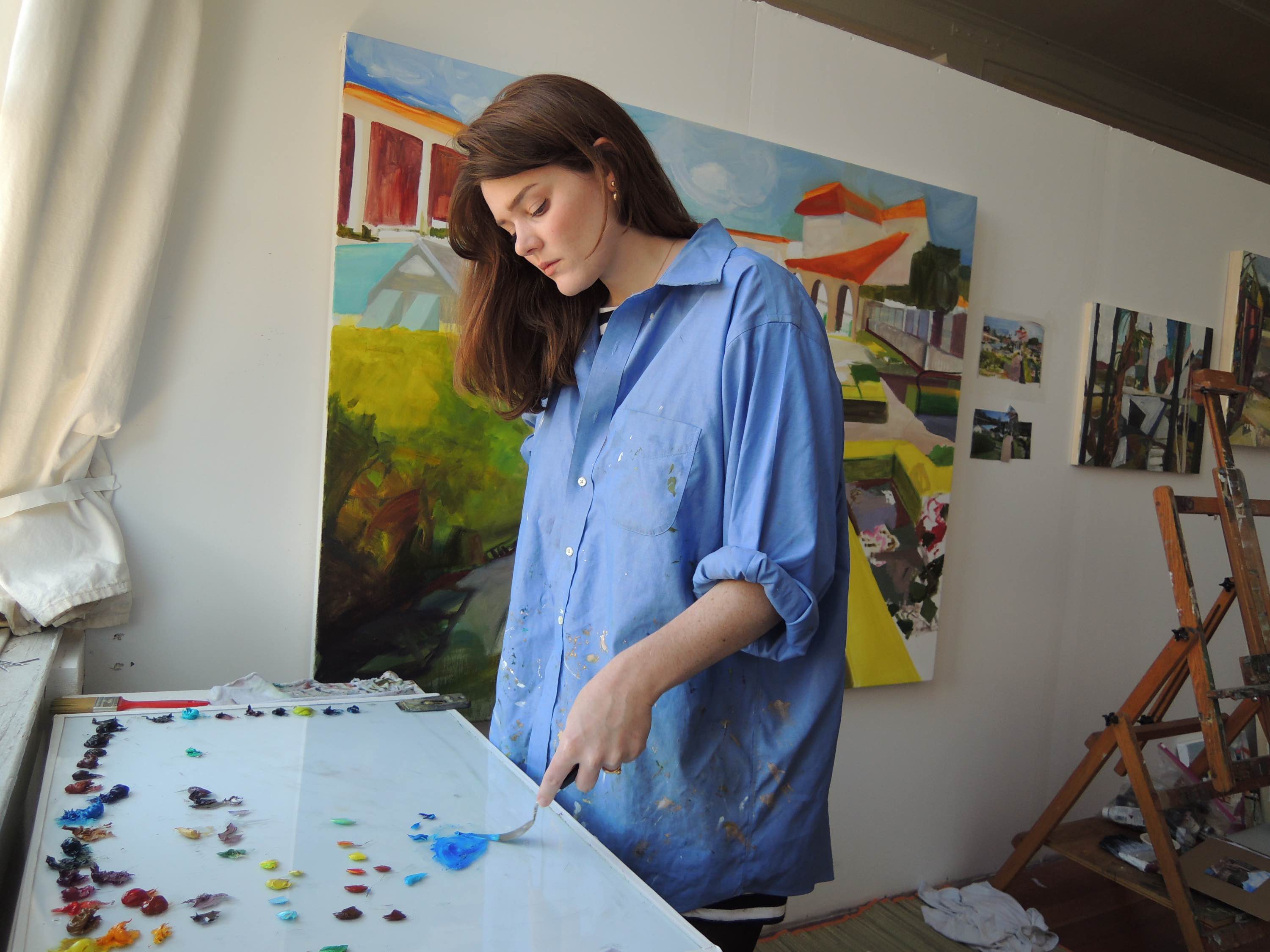
PortraitI am a multimedia artist. I grew up in Argentina and received an MFA in New Practices from San Francisco State University in 2005. My work is an exploration on materiality, the natural world, and methodical processes. My work has been shown in the San Francisco, Los Angeles, New York, Chicago, Miami, Santa Fe, and internationally in Argentina, Turkey, and Spain. I recently completed a residency at the Bemis Center for Contemporary Art in Omaha, NE where I was awarded the Emmy Gifford Foundation Fellowship. My most recent shows have taken place at Morgan Lehman Gallery in New York, the New Mexico Museum of Art as part of the Alcove Exhibitions, 333 Montezuma Arts, in Santa Fe, the Montgomery Museum of Fine Arts, and the Jacksonville Museum of Contemporary Art.

working in the studio

lucreciatroncoso.net

All images copyright of the artist and used with their permission. 

Posted in Painting, Sculpture | Tagged , , , , | Leave a comment

Matthew Freel – Baltimore, Maryland

Apollo (Son of Krypton), Oil on canvas, 18” x 24” ,2012

Apollo (Son of Krypton), Oil on canvas, 18” x 24” , 2012

Briefly describe the work you do.

I make paintings and drawings that are influenced by history, mythology, and contemporary culture. Part of this is a way of delving into my own identity & background as well as that of our country. Part of it is a celebration and warning of the triumphs and terrors of powerful figures. And part of it is being able to paint and draw and explore what I love – people, mark-making & storytelling.

Tell us a little about your background and how that influences you as an artist.

I grew up drawing superheroes but also learning about everything else I could – science, math, stories in literature, and I have siblings and a group of friends that played lots of sports. So even though I knew art was a passion and a life’s pursuit, I wanted to be influenced and learn about these other things. As an artist today the quest for knowledge and inspiration is still present in my life and reflected in my work – I love finding new stories and symbols for the human experience, both good and bad. I think all of this ancillary knowledge creates great layers of depth in a successful piece. And even something like my (very minor!) triumphs in sports has taught me some intangible lessons in art-making – toughness, persistence, and a willingness to succeed.

The concept of the “artist studio” has a broad range of meanings, especially in contemporary practice. The idea of the artist toiling away alone in a room may not necessarily reflect what many artists do from day to day anymore. Describe your studio practice and how it differs from (or is the same as) traditional notions of “being in the studio.”

Well this is one area where I may be very old-school but most of my work comes simply from being present and working in the studio, regardless of whether or not I feel “inspired”. But it has to do with not just toiling blindly but constantly assessing what’s working and what’s not; when I need to put my head down and power through a tough part of the process and when I need to switch directions because I’m just not being productive anymore. There are other parts of “being in the studio” that happen outside the room and are vital – research whatever/wherever is necessary, museum visits and looking at art, discussions with other artists, administrative toils – all of these serve an important purpose in the larger practice.

African Safari, Oil on canvas, 52” x 78”, 2011

African Safari, Oil on canvas, 52” x 78”, 2011

What unique roles do you see yourself as the artist playing that you may not have envisioned yourself in when you first started making art?

Artist as businessperson! Getting people to engage with and support my work is something I thought was important and I knew I would have to work at, but the practical application of the career of art-making is exhausting and difficult, but still very worthwhile. I try to approach this as finding the ways and means to introduce people to my work and engage them in learning more about what I do.

When do you find is the best time of day to make art? Do you have time set aside every day, every week or do you just work whenever you can?

All of the above – I like to work every day in the morning, but sometimes this is not possible. As a result, any time I can get in my studio is great time to work. I think short bursts of time in the studio can be incredibly productive, but I dream of being able to do it every day for the majority of the day. Until I reach that point, I plan ahead to have extended periods of studio time as the work dictates.

Untitled (Prometheus/Firestorm), Oil & acrylic on canvas, 56” x 80”, 2014

Untitled (Prometheus/Firestorm), Oil & acrylic on canvas, 56” x 80”, 2014

How has your work changed in the last five years? How is it the same?

It’s still painting and drawing but I have found ways, both in making and in concept, to be more responsive to my process and allow work to grow and build momentum as part of its creation. I still work with ideas of myth, history and heroes, but I find myself blurring these lines today.

Are there people such as family, friends, writers, philosophers or even pop icons that have had an impact on the work you do?

Family always, but recently I have returned to superheroes of my childhood, not in an ironic or kitschy way but in a sincere way that looks at the stories and characters behind them. As an artist I will always look to Michelangelo and Francis Bacon, but lately I’ve also been examining deKooning, Joan Mitchell, Anselm Keifer, and Marlene Dumas.

If you had an occupation outside of being an artist, what would that be and why?

Unfortunately I already do – I am a sommelier by day, working with a restaurant group in Baltimore called Foreman Wolf, and I love doing that work because of the sensory and artistic experience that comes with wine. It has many parallels to art but is completely temporal – you drink wine, and then it’s gone. Still if it’s great wine you remember it, and it reflects a time and place and culture, just like art. Now ideally I will be able to flip these in the future – make art as a career and enjoy wine outside of work!

About

headshotI spent my childhood in Columbus, Ohio drawing superheroes before studying art intensely in high school. Knowing I wanted to explore other areas of art and science, I went to college at Washington University in St. Louis. My experience included a semester in Florence, Italy as well as classes in a range of other liberal arts. Led by the lure of the big city and graduate school at the School of Visual Arts, I went to New York City after St. Louis. In 2008 I moved to Baltimore where I currently live, working in my studio with the heroic figure, mythology, history & personal experience.

studio

www.matthewfreel.com

All images copyright of the artist and used with their permission. 


Posted in Drawing, Painting | Tagged , , , , | Leave a comment