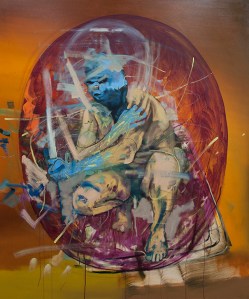
Nevena Vuksanovic – Serbia, Belgrade

Paternity of hunchbacks - gypsum, patina  2,15 x 1,20m; 2012

Paternity of hunchbacks – gypsum, patina 2,15 x 1,20m; 2012

Briefly describe the work you do.

To build a sculpture I need physical involvement, great immediacy. Forms mature upon their long being created in imagination. At the moment of personal separation from them, during the tension of my overall sensibility, I become one with the created object. My body is released from something that was up to then part of it.

Tell us a little about your background and how that influences you as an artist.

I was born in Belgrade, Serbia. I have finished high school for graphic design where my professor discovered my talent for sculpture .After I enrolled in Faculty for Fine Arts in Belgrade department of sculpture and 2012 I finished master studies at the class of professor Mrdjan Bajic.

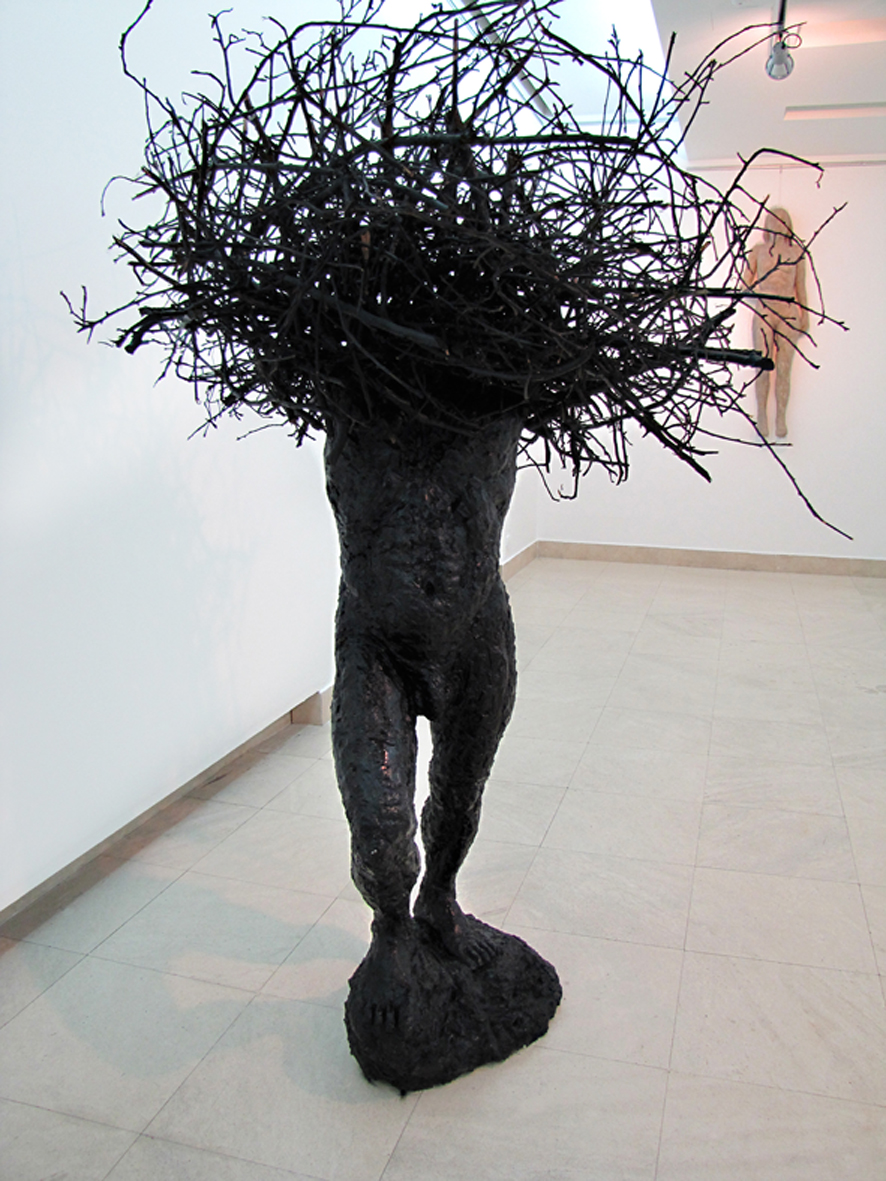
Chaos - gypsum, branches, paint, 2m x 1,30m

Chaos – gypsum, branches, paint, 2m x 1,30m

The concept of the “artist studio” has a broad range of meanings, especially in contemporary practice. The idea of the artist toiling away alone in a room may not necessarily reflect what many artists do from day to day anymore. Describe your studio practice and how it differs from traditional notions of “being in the studio”.

My studio is my living room in the same time. I also  draw , read, watch movies and make smaller sculptures there. During the summer I work mostly in the yard because I like to change places and natural environment.

What unique roles do you see yourself as the artist playing that you may not have envisioned yourself in when you first started making art?

When I first started making art I didn’t think that I would become so serious and sincere in what I do. Also, I didn’t imagine that, while I’m working, I would have to distance myself from those who mostly strive towards cheap and down to earth matters.

When do you find is the best time of day to make art? Do You have time set aside every day, every week or do you just work whenever you can?

I mostly like to work late at night while some music that I like is playing in the background. That is when my focus is most intense.

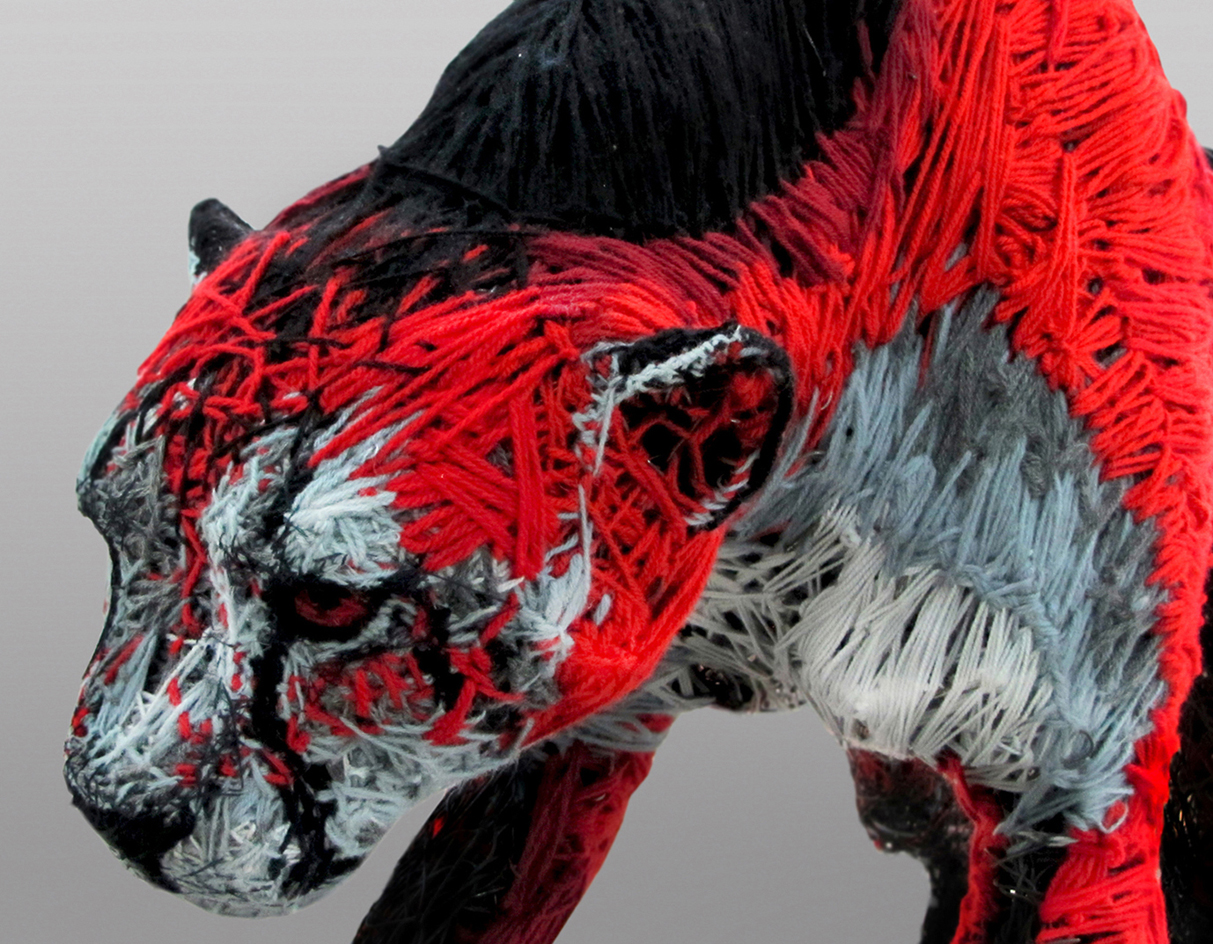
Cheetah - wire, wool, 1,20 x 2m; 2008

Cheetah – wire, wool, 1,20 x 2m; 2008

How has your work changed in the last 5 years? How is it the same?

My work has changed once I started to get to know myself. It became more intense , more compact and more connected with me.

Are there people such as family, friends, writers, philosophers or even pop icons that have had an impact on the work you do?

My work was mostly influenced by my professors from the Academy, certain competent literature, movies and music. Artists that I find most distinguished are Kiki Smith and Louise Bourgeois.

If you had an occupation outside of being an artist, what would that be and why?

If I was’t an artist I would probably be a researcher. I would go to the little explored lands and be in contact with wild animals.

dok vizaAbout

Click here to read her bio

www.nevenavuksanovic.com

All images copyright of the artist and used with their permission.  

Posted in Sculpture | Tagged , , , , , | Leave a comment

Michael Waraksa – Chicago, Illinois

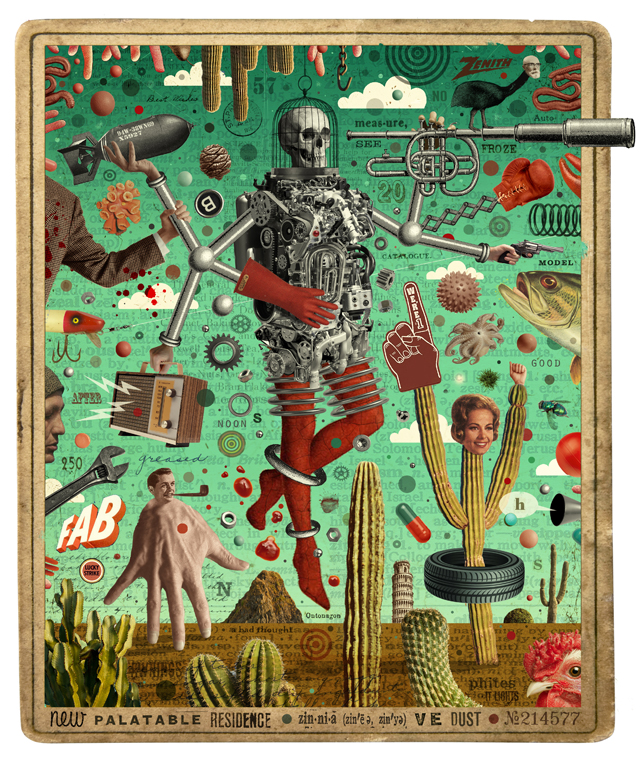
Good Morning, 2012 Collage (digital) 11W X 14H

Good Morning, 2012
Collage (digital)
11W X 14H

Briefly describe the work you do.

 
I make collages both digitally and also by hand. Recently, I have been concentrating more on working digitally. I enjoy the process of building something new and unexpected using elements that were once part of something else. I usually have only a vague idea of what the finished piece will eventually look like. I basically make it up as I go along, putting different combinations of cut out images together and observing how they play off each other. I get source material from many different places- My own photography, old books and magazines, the web, etc. I also like to incorporate typography into the compositions.
 
Tell us a little about your background and how that influences you as an artist.
 
I grew up in Wisconsin and attended the Milwaukee Institute go Art & Design. I do editorial illustrations from time to time for various publications as well as making my own personal art. I think that growing up in the 70’s and 80’s has probably influenced my art somewhat. Images from specific time periods can have a certain sensibility and style to them that can evoke many different feelings and memories and I do use quite a bit of imagery from the past. I was into music growing up and was always drawn to the surreal album cover art which was plentiful back then. I also really enjoyed the collaged animated segues that were featured on Monty Python’s Flying Circus. I think some of that stuck with me and subconsciously influences me today. I had a teacher at MIAD named Tom Noffsinger who makes wonderful assemblages and his work definitely had an affect on me as well.
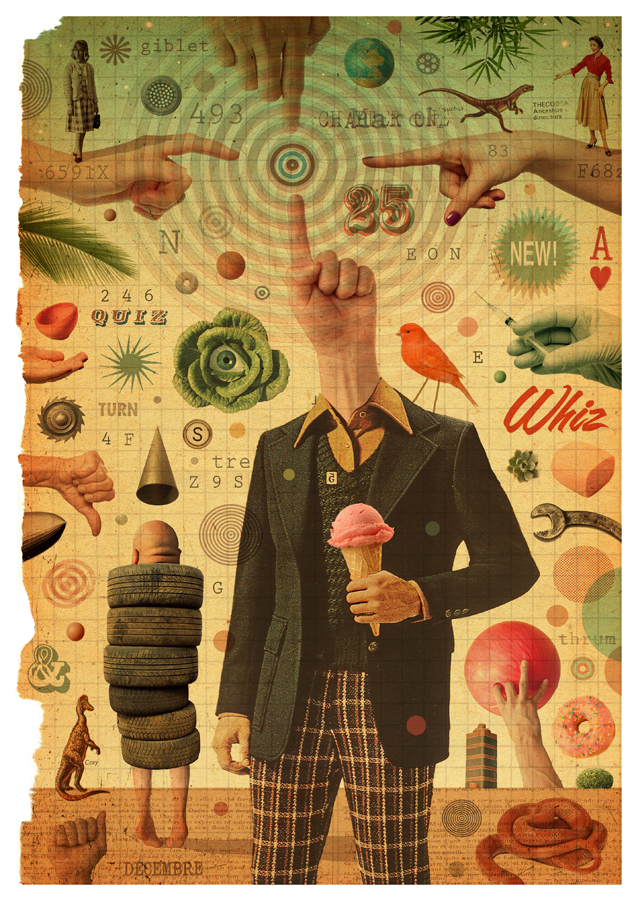
Whiz, 2012 Collage (digital) 8.5W X 12H

Whiz, 2012
Collage (digital)
8.5W X 12H

 
The concept of the “artist studio” has a broad range of meanings, especially in contemporary practice. The idea of the artist toiling away alone in a room may not necessarily reflect what many artists do from day to day anymore. Describe your studio practice and how it differs from traditional notions of “being in the studio”.
 
I usually work from home. I do most of my work on a laptop so I feel like I can work almost anywhere if I choose to. I do need a space where the distractions are minimal and my studio is a converted 2nd bedroom. I work on my own collages whenever I get a chance even if it just for 15 minutes at a time. Quite often I am busy with freelance illustration jobs so my own projects take a back seat. I gather ideas and see things that inspire me pretty much anywhere and anytime throughout the day whether or not I am in a studio. That is all part of the process.
 
What unique roles do you see yourself as the artist playing that you may not have envisioned yourself in when you first started making art?
 
I guess that when I first started making art at a young age I probably would not have foreseen myself making art on a computer.
 
When do you find is the best time of day to make art? Do You have time set aside every day, every week or do you just work whenever you can?
 
I Try to work on it whenever I can. As I stated above, there are periods where my plate is full of illustration assignments which other than pushing your own personal projects back, tend to drain some my creative energy. I do find myself working mornings and at the very end of the day quite often.
 
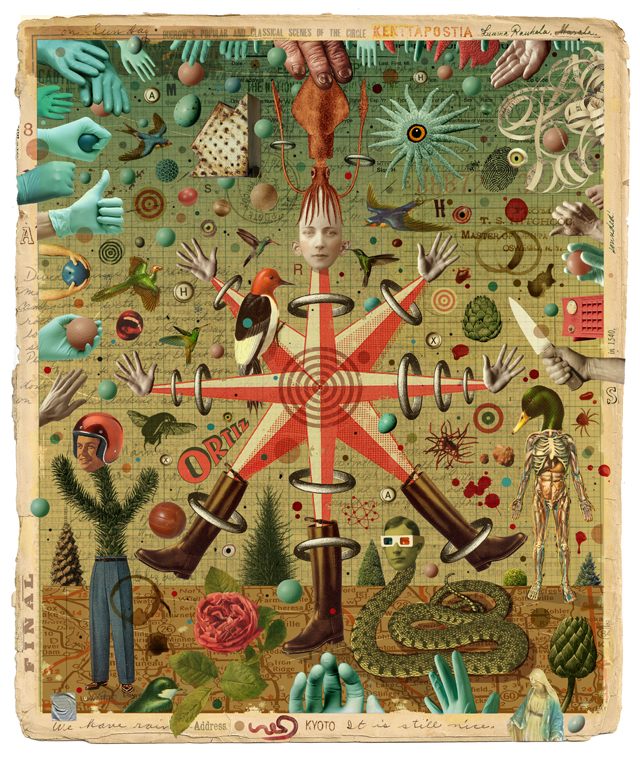
Indirection, 2011 Collage (digital) 10W X 14H inches

Indirection, 2011
Collage (digital)
10W X 14H inches

How has your work changed in the last 5 years? How is it the same?

 
I feel like I have a better grasp on my technique just by doing things over and over and thus I think my work keeps improving on some levels. I am still working in the same media as I was 5 years ago.
 
Are there people such as family, friends, writers, philosophers or even pop icons that have had an impact on the work you do?
Some of my friends are people who were with me in art school so they definitely had an impact on my development as an artist. You tend to push one another. As far as writers (or musicians) having an impact on my work I would say anything that inspires you artistically even if it is a different medium or art form is something of value to you and can somehow creep into your work. Visual artists such as John Heartfield, Hannah Hoch, Max Ernst, John Craig and Lou Beach (to name just a few) have had an impact.
 
If you had an occupation outside of being an artist, what would that be and why?
 
I know many artists that already have another occupation. I do not really have a plan B at the moment.
 
About
 
headshotMichael Waraksa is a Chicago based artist and a graduate of The Milwaukee Institute of Art & Design. He has exhibited his work at various venues around the United States and his illustrations have been published in numerous magazines and newspapers including TIME, The New York Times and The Los Angeles Times. His work has also been selected to appear in Communication Arts, American Illustration, Creative Quarterly, 3X3 and Society of Illustrators.
 
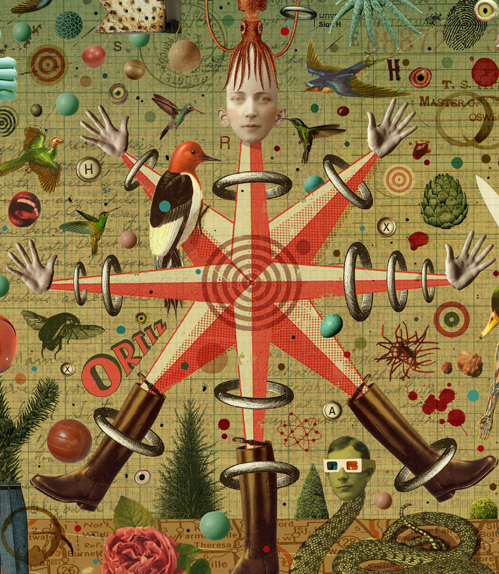
Indirection (detail), 2011 Collage (digital) 10W X 14H inches

Indirection (detail), 2011
Collage (digital)
10W X 14H inches

www.michaelwaraksa.com

All images copyright of the artist and used with their permission.  


Posted in Collage | Tagged , , , , | Leave a comment

FRANK JUAREZ GALLERY AND GREYMATTER LAUNCH 365 ARTISTS / 365 DAYS PROJECT—YEAR TWO

Greymatter Gallery

207 E Buffalo St. #222

Milwaukee, WI 53202

414-687-2598


FOR IMMEDIATE RELEASE:

FRANK JUAREZ GALLERY AND GREYMATTER LAUNCH

365 ARTISTS / 365 DAYS PROJECT—YEAR TWO

Sheboygan, WI and Milwaukee, WI – January 1, 2015

The Frank Juarez Gallery (Sheboygan, WI) and Greymatter Gallery (Milwaukee, WI) are pleased to announce the continuation of the 365 Artists/365 Days online project. Starting January 1st, 2014, 365artists365days.com featured the work of one artist per day. Selected artists took part in an interview and answered questions regarding their artistic processes, influences and concerns. The project received worldwide attention among artists and art lovers. In 2015, 365 Artists 365 Days will present another 365 artist interviews, along with special monthly follow-up interviews with selected 2014 participants.

LtoR: Zina Mussman, Rachel Quirk, and Frank Juarez. Photo by Irma Roman

LtoR: Zina Mussman, Rachel Quirk, and Frank Juarez.      Photo by Irma Roman

The purpose of this project is to continue to introduce its readership to a diverse collection of art that is being produced at the local, national and international level. The goal is to engage the public with information regarding a wide array of creative processes, and present the successes and challenges that artists face from day to day. The collaborators hope that this project can become a source for exploring and experiencing contemporary art in all its forms.

The Frank Juarez Gallery specializes in painting, photography, sculpture, video, installation and mixed media work by contemporary artists based in Wisconsin, and throughout the United States. Juarez aims to create an accessible, educational and engaging exhibition space for artists, audience and community.

Greymatter is an artist-run space established in 2011 out of the remnants of a former storage room by Rachel Quirk and Zina Mussmann. They believe in the power of artists to build new and meaningful institutions through collaboration. The couple’s goal is to be a part of this dialogue by working with local and national artists in organizing diverse and thought provoking exhibitions.

For more information contact Zina Mussmann at 414-687-2598 or 365artists365days@gmail.com.

###

Posted in Uncategorized | 2 Comments

Tal Avitzur – Santa Barbara, California

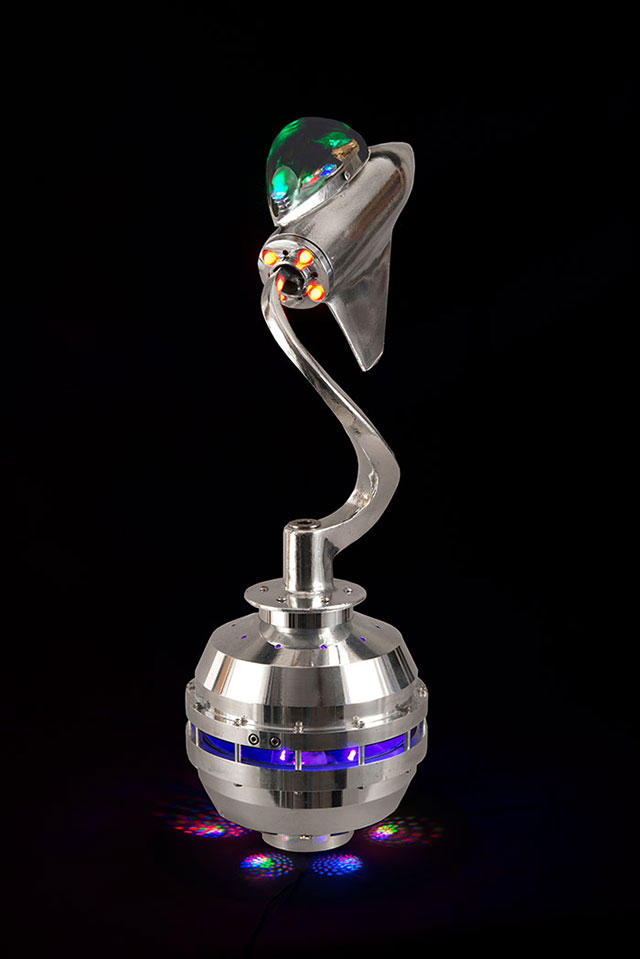
Space Squid, sculpture, 14 inches tall, 16 inches wide, 2013

Space Squid, sculpture, 14 inches tall, 16 inches wide, 2013

Briefly describe the work you do.

I scavenge for retro looking junk at scrap metal and salvage yards for material to create sci-fi sculptures.

Tell us a little about your background and how that influences you as an artist.

I spent much of my childhood watching many sci-fi and fantasy movies and reading lots of Marvel and DC comics.

The concept of the “artist studio” has a broad range of meanings, especially in contemporary practice. The idea of the artist toiling away alone in a room may not necessarily reflect what many artists do from day to day anymore. Describe your studio practice and how it differs from (or is the same as) traditional notions of “being in the studio.”

I spend a few hours a week hunting for ingredients and many hours disassembling, cleaning, polishing and sorting parts.  The work I create is dictated by the parts I have on hand.   A piece usually begins with finding the personality in an object, one that looks like a head or an arm … and I then build something based on that one found object.  It’s like putting together a puzzle, laying out many parts to see which, I think, look best together, then cutting, drilling and grinding until reaching a natural-looking fit.

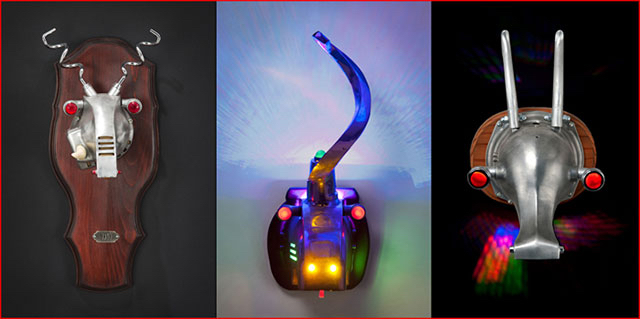
Vegan Taxidermy, sculptures, 9.5 inches to 22 inches tall, 6.5 inches to 9 inches wide, 2013

Vegan Taxidermy, sculptures, 9.5 inches to 22 inches tall, 6.5 inches to 9 inches wide, 2013

What unique roles do you see yourself as the artist playing that you may not have envisioned yourself in when you first started making art?

I try to create something that makes people smile … something that brings out a child-like wonder.

When do you find is the best time of day to make art? Do you have time set aside every day, every week or do you just work whenever you can? 

I truly love creating and spend as much time as possible doing it.  I find if I don’t spend a few hours a day involved in some aspect of this then I get antsy.  It truly is calming.

Get Me Out Of Here, sculpture, 31 inches tall, 18 inches wide, 2014

Get Me Out Of Here, sculpture, 31 inches tall, 18 inches wide, 2014

How has your work changed in the last five years? How is it the same?

I started out making robots, but this past year I began making creatures, spaceships and hot rods and find that just as enjoyable.  It takes a while to adjust, but it really is the same in that I am still trying to figure out how to connect parts together that were never meant to be put together.

Are there people such as family, friends, writers, philosophers or even pop icons that have had an impact on the work you do?

I’ve worked for sculptor George Rickey, who lived to be 95, ceramicist Beatrice Wood, who lived to be 105, and various other artists.  It was obvious to me that they loved what they were doing and it kept them vibrant and young.  They motivated me to do the same.  

If you had an occupation outside of being an artist, what would that be and why?

Set designer or props creator.  It’s kind of like what I am doing, just on a bigger scale.

About

Headshot640Tal Avitzur was raised in Pennsylvania in a family where the sciences were emphasized more than the arts. He moved to California to attend college in Santa Barbara.  While in school Tal lived in a large communal artist compound with a constant stream of artists coming and going. After earning a Masters in math Tal worked for the US Navy in Washington, DC determining the best collection of spare parts that carriers should keep stocked in order to maximize readiness of planes.  However the call of Santa Barbara was too great.  So Tal returned and began teaching part-time, which left ample time for artistic pursuits.  Home improvement projects took him to scrap metal yards, which sealed his fate.

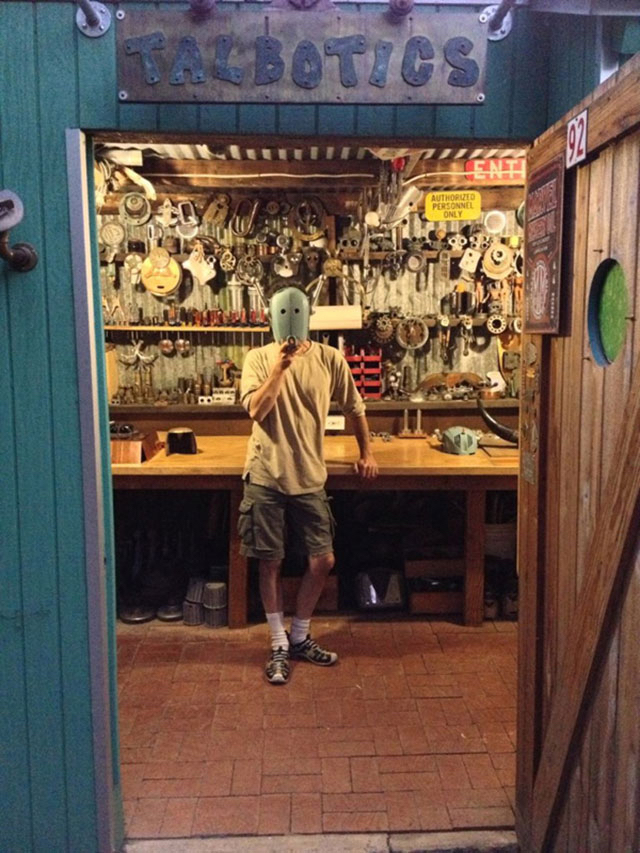
StudioDoor640

http://www.talbotics.com

All images copyright of the artist and used with their permission.  

Posted in Assemblage, Sculpture | Tagged , , , , | Leave a comment

Megan Foldenauer – Ypsilanti, Michigan

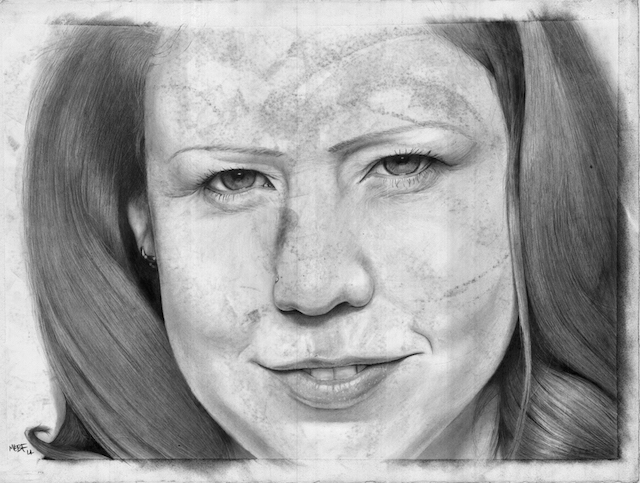
derby portrait

derby portrait

Briefly describe the work you do.

Of late, my work has been quite varied – different media, sizes, subjects. That said, it is always firmly planted in realism. Professionally, I am a medical illustrator and work in a Department of Neurosurgery. There I create anatomical and surgical images alongside health professionals for print and online use. Personally, I am about to reach my 500th drawing/painting in my small drawing-a-day series and I recently finished a series of large portraiture. My media-of-choice are pencil (Berol 3H/HB/4B are always in my arsenal), watercolor, Verithin colored pencils, and carbon dust. At work, I primarily draw and use digital media.

Tell us a little about your background and how that influences you as an artist.

I began drawing at a young age and was mentored as a “gifted” artist. After high school, I began my studies in science and then switched to fine art in the mid-90s when I attended the School of the Art Institute of Chicago. I knew I wanted to do some form of scientific illustration as it was a way for me to do art as my job and it allowed me to remain representational. I was never interested in creating abstract or conceptual art (although, I can appreciate that work as a viewer).

Then, I attended the Johns Hopkins School of Medicine as a Masters’ student in biomedical illustration, completing that work in 2002. It was the culmination of all of my undergraduate work and something I’d been working toward for 10 years (at that point). Soon after graduating and setting up my own studio, I realized that I wanted just a little more education, so I enrolled in an Anatomy PhD program. I successfully defended my dissertation in 2012.

Beyond school, I was drawing with more and more frequency (aside from a hiatus during the height of my PhD work), but nothing of a medical nature. I began my drawing-a-day in October of 2006 and just allowed myself to draw anything I liked. This turned out to be mostly everyday items, food (especially candy), and the occasional small animal/insect/plant. This project has ebbed and flowed ever since and I’m now actively working to truly complete an entire year of drawings. This time, however, the public are suggesting the subjects I create rather than my trying to do that on my own (something I found very hard to do – hence the ‘ebbs’).

Lastly, I went in a total opposite direction (of these small works) earlier this year and began drawing large (for me – 2’ x 3’) portraits of my roller derby teammates. These are carbon dust/pencil drawings on paper that has been toned by folks roller skating on it.

med_illustration

medical illustration

The concept of the “artist studio” has a broad range of meanings, especially in contemporary practice. The idea of the artist toiling away alone in a room may not necessarily reflect what many artists do from day to day anymore. Describe your studio practice and how it differs from (or is the same as) traditional notions of “being in the studio.”

For a time I had an actual traditional studio from which I ran my illustration business. Nowadays, I have an office at a large hospital/university for the professional stuff and for everything else, honestly, I sit at my dining room table and work. I have a young son and running off to my studio (now a corner in the basement) just isn’t something I find myself able to do. Also, in this setting I can share the idea of what an artist does with him… and that’s very important to me. Some day I’d like to return to having my own space – particularly for the larger work.

What unique roles do you see yourself as the artist playing that you may not have envisioned yourself in when you first started making art?

The idea of standing in front of people and talking filled me with dread as a kid and I would have NEVER anticipated being in the role of speaker and teacher. Now, I find myself in that position with fair regularity and I thoroughly enjoy it. I give lectures about the journey toward becoming a professional scientific illustrator, my art techniques/projects, and human anatomy.

When do you find is the best time of day to make art? Do you have time set aside every day, every week or do you just work whenever you can?

I must do my professional work during normal work hours (9-5), but even in that paradigm, I still find myself most productive in the afternoon. I will usually do other work in the morning (website editing, video work – I’m a ‘multimedia specialist’, you see) and save the art for the afternoon. In addition, I work on my personal projects in the later evening and well into the night on occasion. With my current drawing-a-day project, I work every day for at least an hour.

drawing-a-day

drawing-a-day

How has your work changed in the last five years? How is it the same?

I’ve become far more efficient in my sketching over the years. I’m very fast when I’m drawing (not so much when I’m painting). Also, painting! I have become a regular watercolorist of late and that’s not something I would’ve envisioned in the past. Previously, black and white media was where I wanted to be. Also, within the last year I have reintroduced carbon dust into my repertoire – something that I hadn’t used in almost 15 years.

My work is still as realistic as it’s always been. I don’t envision that ever changing.

Are there people such as family, friends, writers, philosophers or even pop icons that have had an impact on the work you do?

Oh yes! I’ve been very influenced by my creative family – musicians, theatre professionals, photographers, painters. I come from a long line of artists/artisans. Also, I was lucky to find excellent mentors and teachers all through my education, many of whom I’m still in contact with and influence my decisions/work today (look up Peggy Macnamara for an example).

I’ve always had a very diverse set of friends who support my endeavors – driving long distances to my shows, buying my self-published books and prints, sharing my information online, etc. I look to a lot of the big name realism artists of the past to inform my work – Vermeer, Rembrandt, Chuck Close, Sergeant, and Wyeth. Lastly, I relish the wealth of online resources for inspiration – other contemporaries and their galleries, collecting sites like pinterest, online magazines like Juxtapoz and Hi-Fructose…

If you had an occupation outside of being an artist, what would that be and why?

Well, I have taught anatomy in the past. It’s a passion of mine and it informs my work as a medical illustrator. In another lifetime (or maybe down the road in this one, who knows?) I would love to expand into the realms of forensics and pathology. I am fascinated by the human mind and form at its worst, its best, and at its most mysterious.

About

foldenauer_headshotMegan E. B. Foldenauer is a native Chicagoan, alumna of The School of the Art Institute of Chicago, and has been a certified medical and biological illustrator for a decade. Now residing in southeast Michigan, she completed her PhD in Anatomy & Cell Biology at Wayne State School of Medicine in 2012.Creative, accessible edification of scientific information is something for which she has a great deal of passion. Her background is diverse but all of her professional work disseminates complex didactic concepts in a variety of media and to a highly varied audience.Drawing is integral to this, and a passion that she feels fortunate enough to do daily. Her creative endeavors are an extension of her professional work, but in style only. They explore everyday/mundane items to reveal and enhance their beauty. Recently, Megan’s work has expanded into large-format portraiture.Megan spends a large amount of time leading and playing roller derby with the Ann Arbor Derby Dimes (subjects of the current work), obsessing over music, and spending time with her family.
Screen Shot 2014-12-23 at 8.14.35 PM

In the Studio

All images copyright of the artist and used with their permission.  


Posted in Illustration | Tagged , , , , | Leave a comment

Carl Vestweber – Boston, Massachusetts

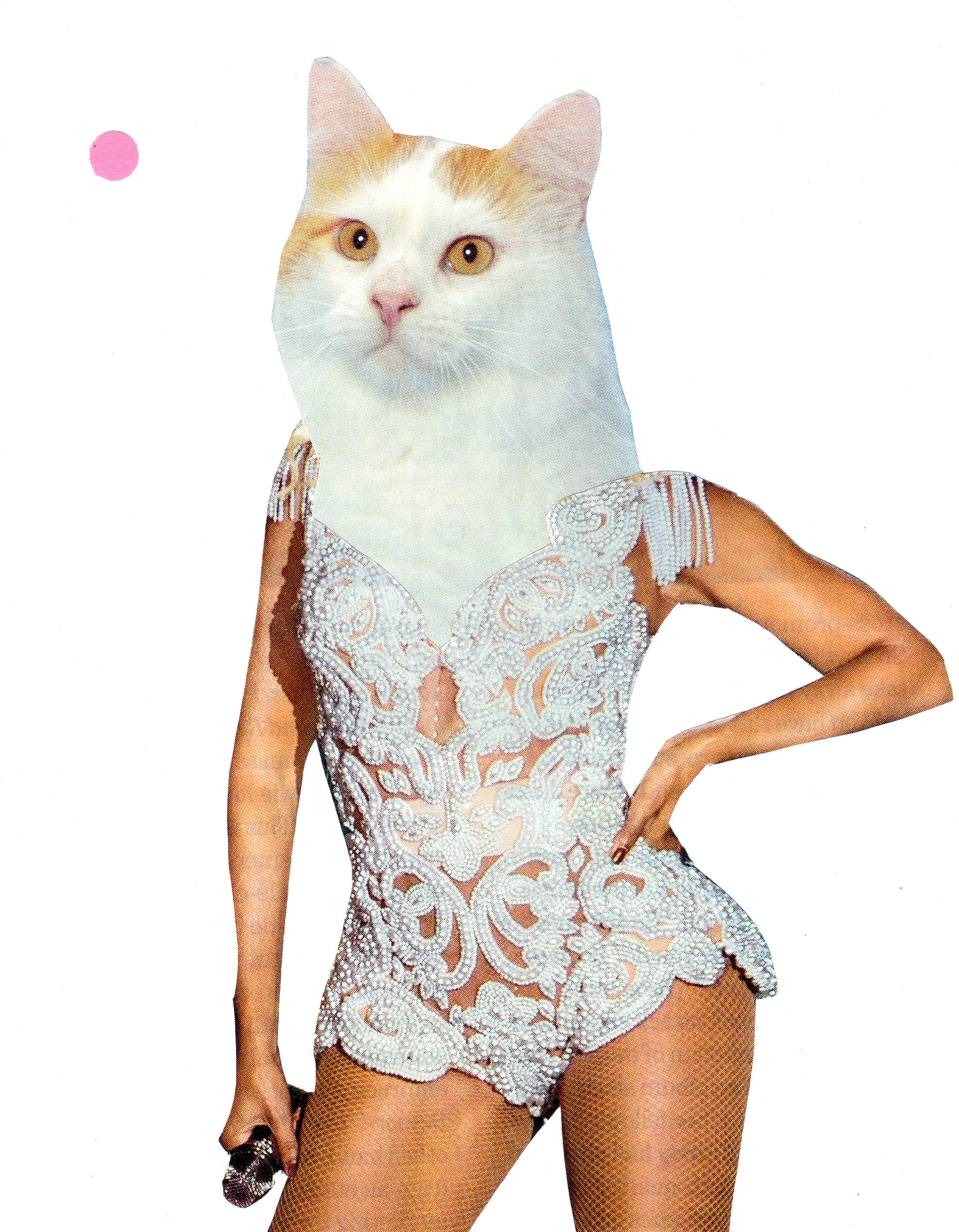
Get Into the Zone, collage on paper, 2013

Get Into the Zone, collage on paper, 2013

Briefly describe the work you do.

Through the use of humor and play, my work examines the intersections between domestic life and the culture in which that life resides. 

Tell us a little about your background and how that influences you as an artist.

I spent the first six years of my life growing up on a farm in Iowa. When I was six or seven, I moved to South Texas. I remember being in awe of the bright colors, the hand painted signs, and the ever present piñatas of the borderland, all of which seemed extremely foreign to me. Especially now after having lived in Boston for the last three and a half years, I realize how big of an impact Texas had on my creative practice.

The concept of the “artist studio” has a broad range of meanings, especially in contemporary practice. The idea of the artist toiling away alone in a room may not necessarily reflect what many artists do from day to day anymore. Describe your studio practice and how it differs from (or is the same as) traditional notions of “being in the studio.”

My work is dependent on the space in which I have to make it. I am currently working out of coffee shops, my friends’ homes, and on my dining room table. This means that my current work is usually small and easy to transport.

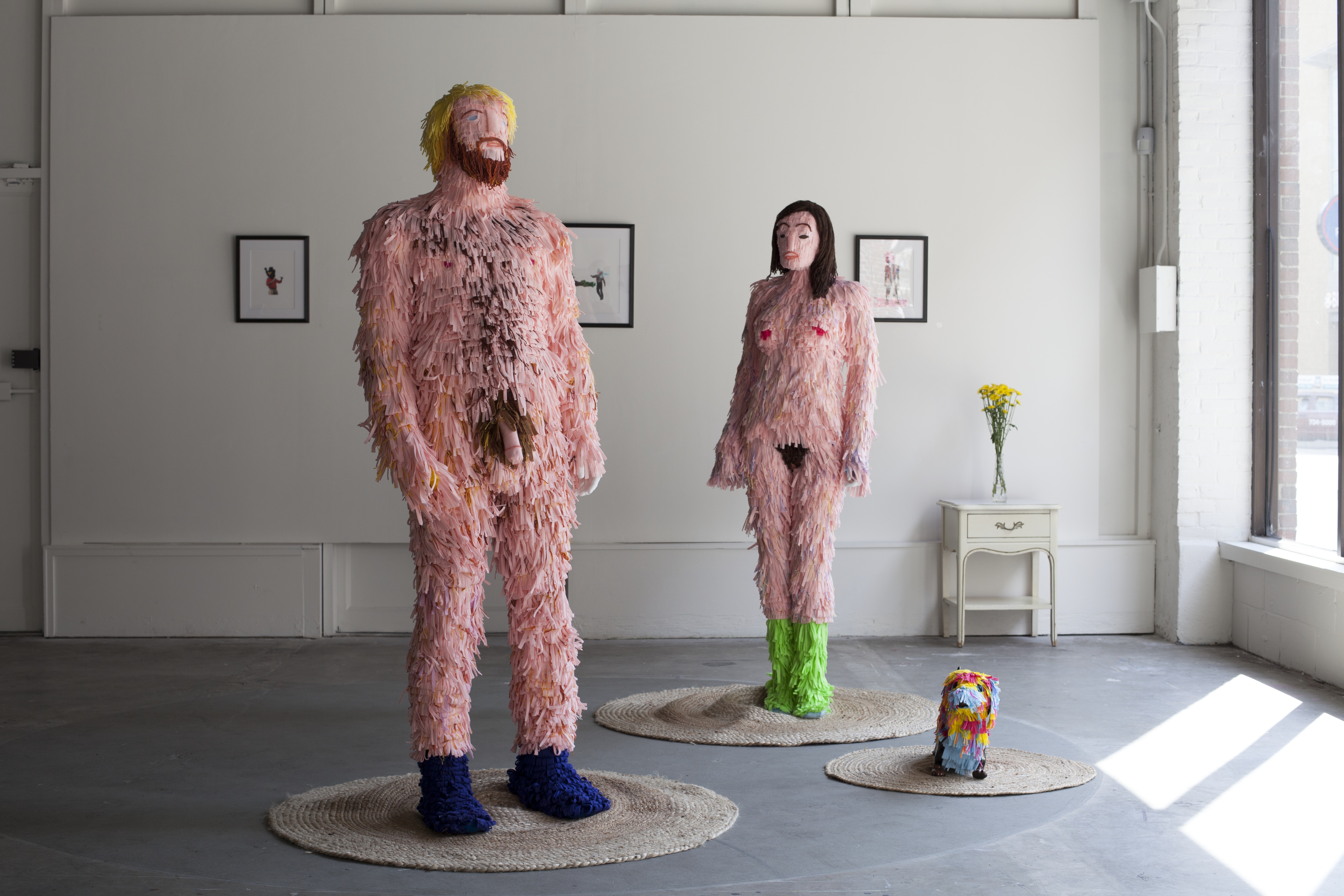
His & Hers, felt, string, mannequins, 2013

His & Hers, felt, string, mannequins, 2013

What unique roles do you see yourself as the artist playing that you may not have envisioned yourself in when you first started making art?

Trickster, shaman, and satirist are roles of the artist that I have been considering lately. I will say that if I would have known five years ago that I would have a significant body of work consisting of human bodies with cat heads, I would have been completely perplexed.

When do you find is the best time of day to make art? Do you have time set aside every day, every week or do you just work whenever you can?

I work whenever I have a couple of hours to spare. This is usually in the morning or early afternoon as I’m much more creative after I’ve just woken up.

Star Struck, collage on paper, 2014

Star Struck, collage on paper, 2014

How has your work changed in the last five years? How is it the same?

There has always been a sense of humor and play in my work. This is also evident in my illustrations and paintings. Since earning my MFA, I have focused more on collage and sculpture. That isn’t to say that I don’t see myself coming back to drawing and painting in the future.

Are there people such as family, friends, writers, philosophers or even pop icons that have had an impact on the work you do?

When I was twenty three, I went to a Flaming Lips concert in Austin, Texas that basically helped create a palette of inspiration that I have drawn from ever since. After having earned a BFA from The University of Texas-Pan American, and my MFA from The School of the Museum of Fine Arts, Boston, my inspirations have understandably expanded. There are artists, movies, musicians and books that I tend to fixate on for periods of time before moving onto something else. Currently, I am looking at a lot of John Baldessari. I am also obsessed with the movie, Elf. Aside from all of these shifting sources, my wife Sofia is a constant inspiration that never falters.

If you had an occupation outside of being an artist, what would that be and why?

In a way, I consider the work that I do now as a sort of weird anthropology. If I wasn’t making my own work, I imagine that I might be studying the bone carvings of some 30,000 year old cave dweller.

About

Carl VestweberCarl Vestweber lives and works in Boston, MA. He received his MFA from The School of the Museum of Fine Arts, Boston and Tufts University. He received his BFA from The University of Texas-Pan American. He is currently working on a series of “cat collages” and has compiled his first collection of these works in a book entitled Cat Collage by Carl Vestweber ,which is available for purchase on his website.

The Studio

The Studio

www.carlvestweber.com

All images copyright of the artist and used with their permission.  


Posted in Sculpture | Tagged , , , , | Leave a comment

Kevin Mercer – Pittsburgh, Pennsylvania

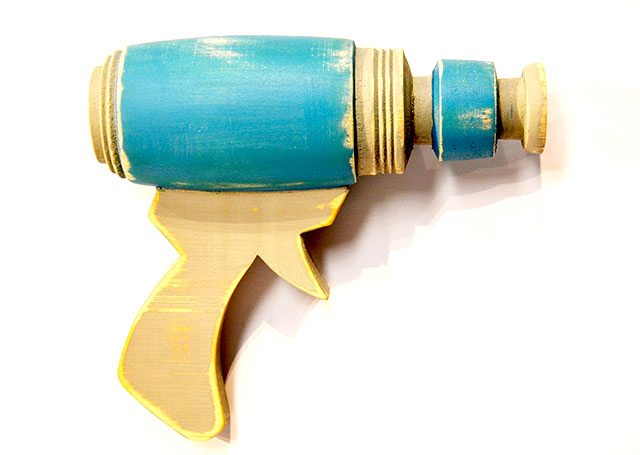
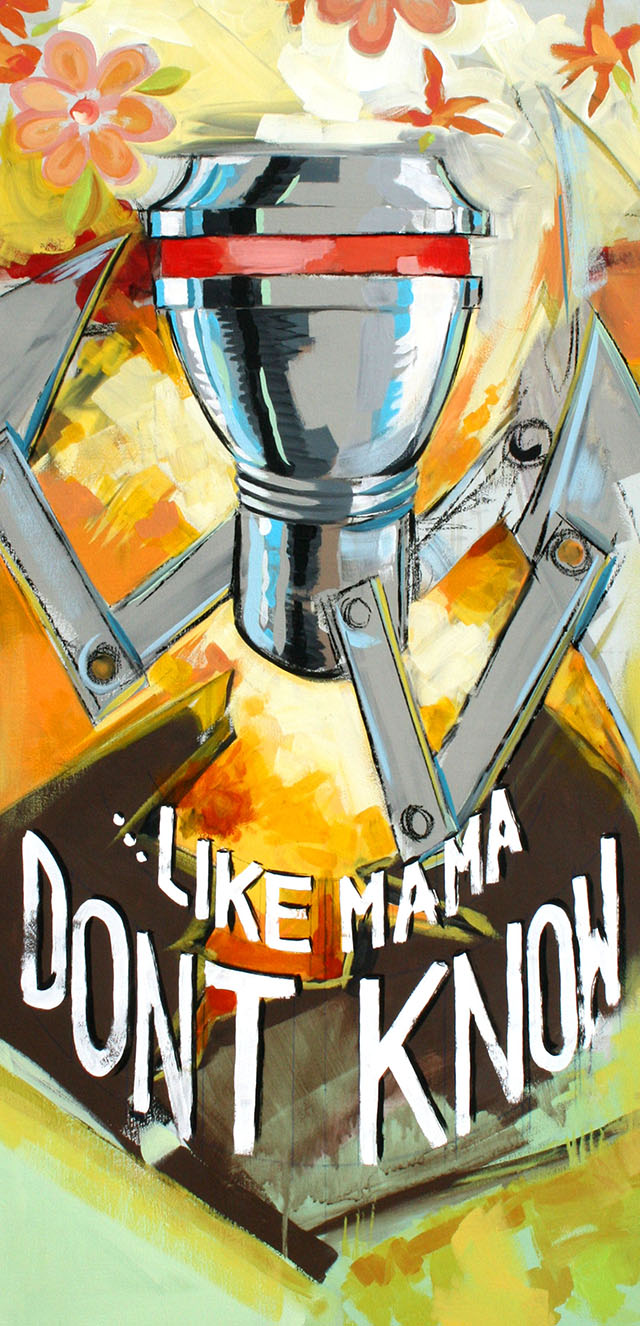
Blue Ray Gun – 2014     1:1 scale prop ray gun made from pine, turned poplar, & paint     approximately 6 x 8 x 3 inches

Blue Ray Gun – 2014
1:1 scale prop ray gun made from pine, turned poplar, & paint
approximately 6 x 8 x 3 inches

Briefly describe the work you do.

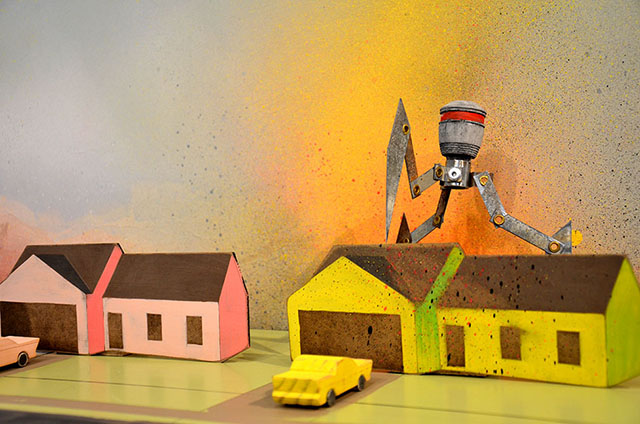
My recent body of work blends woodworking, painting, printmaking, and other media to recreate a mid-century, science fiction aesthetic. Movie posters, wooden props, and miniature set pieces serve to craft a narrative born from real-life, small town events in which the all-too-human aggressors are replaced with extraterrestrials. Midwestern comedies and tragedies constitute the bulk of my story.

Tell us a little about your background and how that influences you as an artist.

My family moved frequently when I was a kid, and I think that constantly meeting new people spurred my interest in characters and stories. As I got older, I performed more and more carpentry work. During undergraduate school, I worked for a few contractors and naturally carried over a theme a craftsmanship into my studio.

It’s Real Bad – 2014     acrylic, pencil, & charcoal on panel     23.5 x 47.5 inches

It’s Real Bad – 2014
acrylic, pencil, & charcoal on panel
23.5 x 47.5 inches

The concept of the “artist studio” has a broad range of meanings, especially in contemporary practice. The idea of the artist toiling away alone in a room may not necessarily reflect what many artists do from day to day anymore. Describe your studio practice and how it differs from (or is the same as) traditional notions of “being in the studio.”

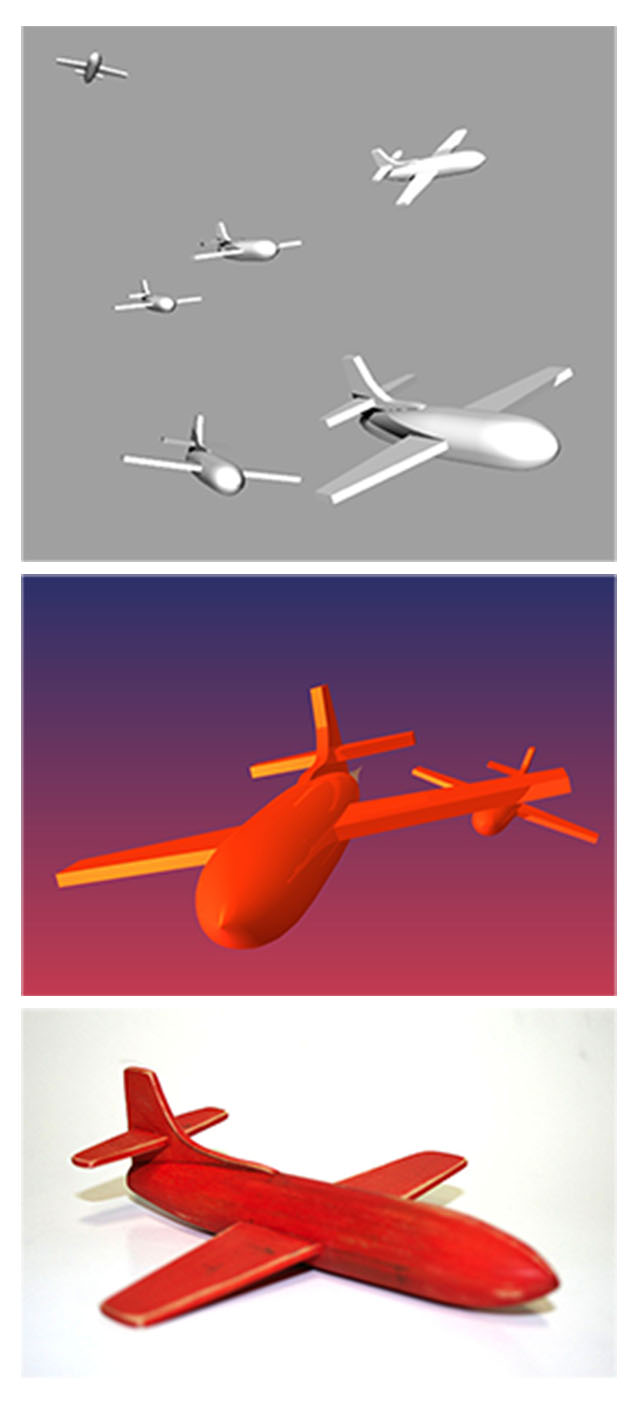
My studio practice is a combination of very traditional methods and contemporary practices. I believe whole-heartedly in the value of under-painting and I spend a lot of time working with wood and sharpening hand tools. To compliment these old fashioned techniques, I utilize modeling software to better understand 3D forms before and during their construction. I am interested in the translation of a theoretical, screen-bound model to an object cut from wood. Navigating between these two ways of working has invigorated my studio practice.

What unique roles do you see yourself as the artist playing that you may not have envisioned yourself in when you first started making art?

I suppose I am a storyteller. Early on, I made things simply for the joy of making. I never saw myself as someone who had something to say, but as I have paid closer attention to my interests and investigated them more fully, I have realized that I, too, have a story to tell; a lot of them, in fact.

When do you find is the best time of day to make art? Do you have time set aside every day, every week or do you just work whenever you can? 

I really prefer to work early in the day. If it were not for my day job, I would be in the studio at 5:00 every morning. The problem is that I peak at 10:00 am and need a nap. Currently, evenings and weekends are the best for studio work.

The Neighborhood Is On Fire: She Gone And Done It – 2014            1:72 scale model of alien attack made from wood, paint, sheet metal, lathe-turned parts, & laser cut childhood home            variable dimensions

The Neighborhood Is On Fire: She Gone And Done It – 2014
1:72 scale model of alien attack made from wood, paint, sheet metal, lathe-turned parts, & laser cut childhood home
variable dimensions

How has your work changed in the last five years? How is it the same?

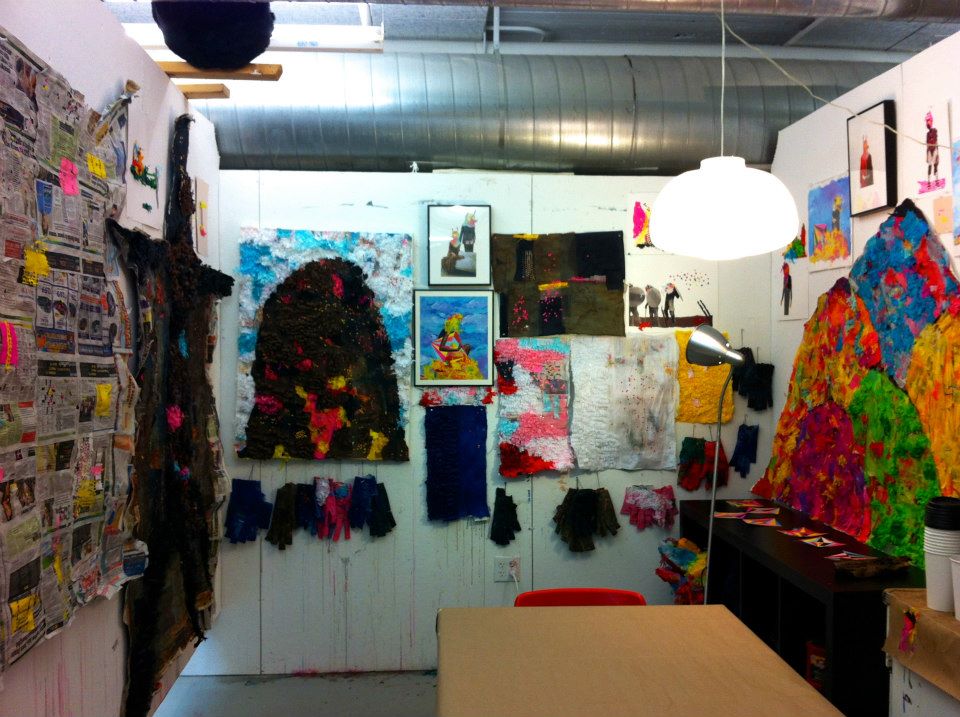
Just a few years ago, I almost exclusively painted. When I did make 3D work, or anything object-like, I treated it as a very separate process. I have maintained an interest in paint, but have also reached into areas of sculpture and installation. Wood, sheet metal, and found objects have all found homes amongst the paintings. All of the parts work together.

Are there people such as family, friends, writers, philosophers or even pop icons that have had an impact on the work you do?

The short stories of Haruki Murakami have been very influential because they tend to make a surreal spectacle of everyday happenings.  I think Jack White is one of the most important artists in history. I like his blend of homemade and high-tech. My parents have probably been my largest influences. They have been extremely supportive of my artistic endeavors, and I greatly appreciate that.

If you had an occupation outside of being an artist, what would that be and why?

I think I would enjoy working with animals. I saw some elephants getting baths at the zoo recently, and I thought, “That looks pretty fun.”

About

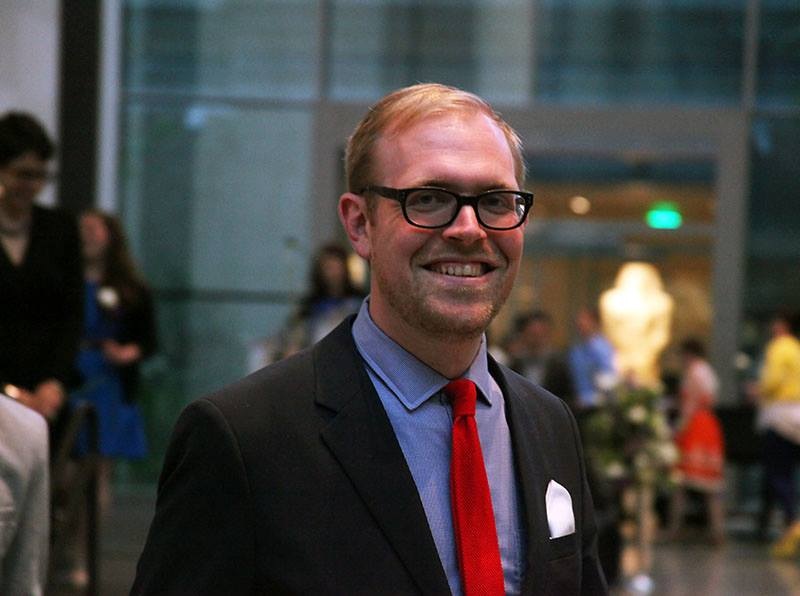
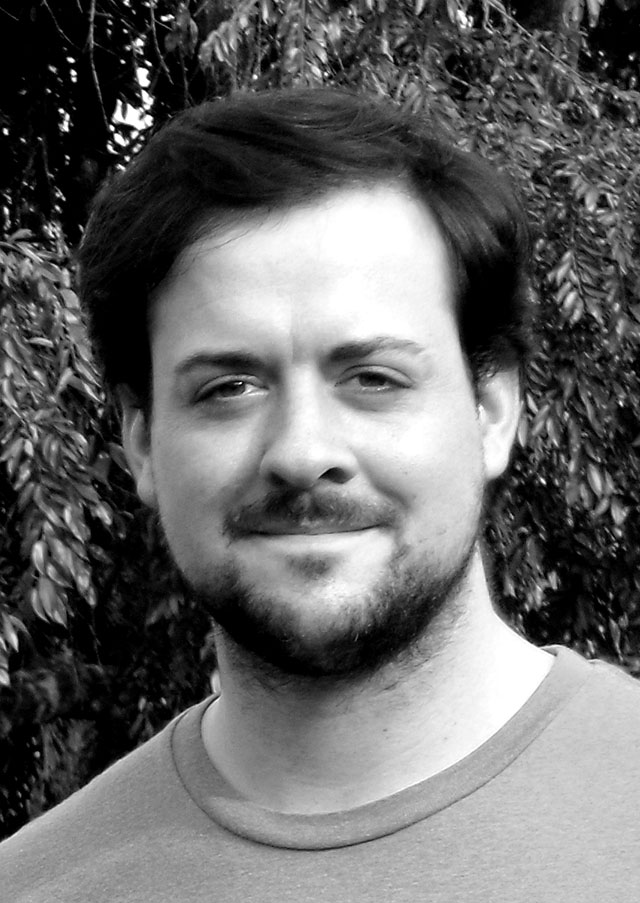
5. HeadshotKevin Mercer lives and works in Pittsburgh, Pennsylvania. He received an MFA degree from The Pennsylvania State University where he developed curricula for 2D & 3D Foundations courses and received the Gerald Davis Painting Prize. He has shown in such cities as Chicago, Cincinnati, NYC, Philadelphia, and Pittsburgh. Kevin is currently employed by Carnegie Museum of Art as the institution’s Construction & Facilities Coordinator.

(Studio Process/Sketch) 3D model and render with hand-carved 1:72 scale wooden model of Bell X-I Plane - 2014     Approximately 3 x 4 x 1 inches

(Studio Process/Sketch) 3D model and render with hand-carved 1:72 scale wooden model of Bell X-I Plane – 2014
Approximately 3 x 4 x 1 inches

www.KevinMercerArt.com

All images copyright of the artist and used with their permission.  

Posted in Sculpture | Tagged , , , , | Leave a comment

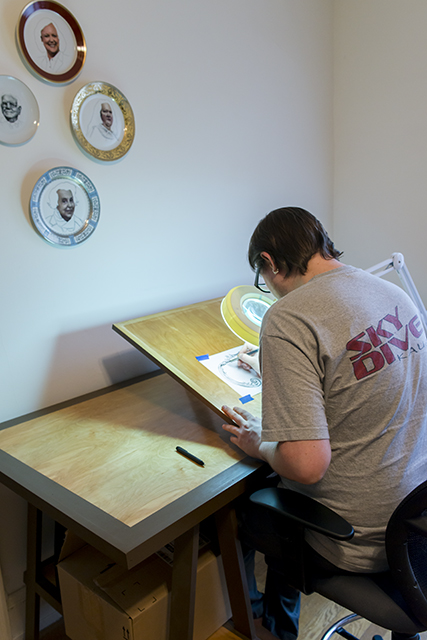
Michael Wallace – Cleveland, Ohio

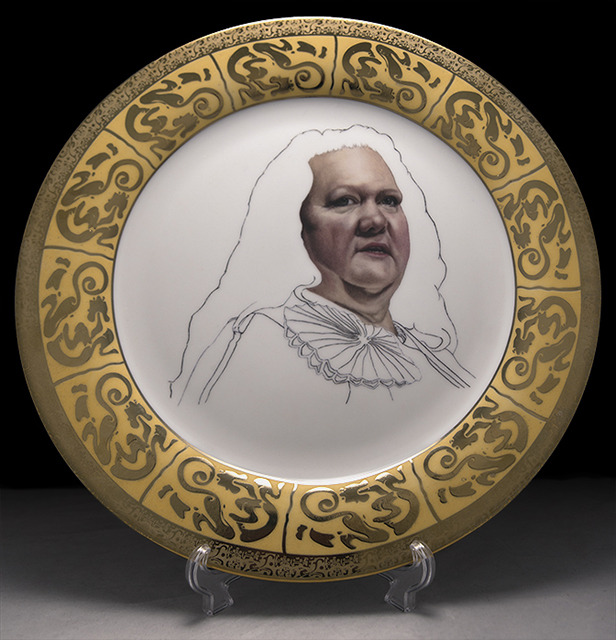
Guess Who's Coming to Lunch (More Important People We Can't Afford to Know- Ms. Rinehart),White Porcelain, 22ct. Gold, Decal, 10" dia., 2013

Guess Who’s Coming to Lunch (More Important People We Can’t Afford to Know- Ms. Rinehart),White Porcelain, 22ct. Gold, Decal, 10″ dia., 2013

Briefly describe the work you do

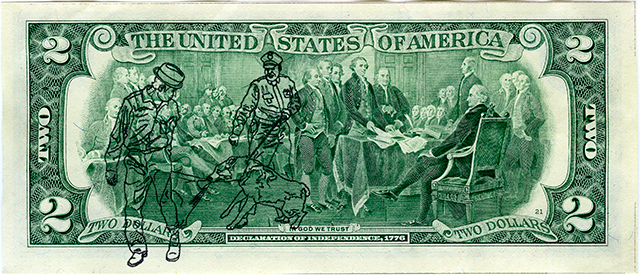
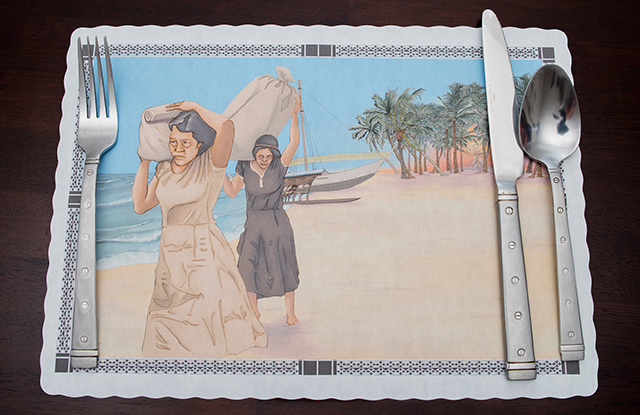
My work examines the socio-economic gap that exists between the majority of people and the corporate/political apparatus that shapes our world. By scrutinizing and questioning the way these institutions perpetuate this gap and are presented to us by the media, politicians, and our peers; I am providing the viewer with a lens to see the world through. This lens offers them an opportunity to re-witness their world through an alternative perspective. The use of familiar objects provides the viewer with a common vernacular, and this allows them to more easily understand the works. Introducing elements of satire and subversion into the works enables them to deal with difficult subjects in a more approachable way. And, this understanding and approachability can in turn provoke the viewers to begin to raise questions of their own.

Tell us a little about your background and how that influences you as an artist.

Growing up in a suburb of Youngstown, OH I think had a big impact on my work.  The area is known for political corruption, and seeing several of our local politicians go to prison while I was growing up illustrated what can go wrong in politics.

American History/Money (Civil Rights Movement), Archival Pigment Print, 6.183" x 2.365", 2012

American History/Money (Civil Rights Movement), Archival Pigment Print, 6.183″ x 2.365″, 2012

The concept of the “artist studio” has a broad range of meanings, especially in contemporary practice. The idea of the artist toiling away alone in a room may not necessarily reflect what many artists do from day to day anymore. Describe your studio practice and how it differs from (or is the same as) traditional notions of “being in the studio.”

I always have a sketch book with me, so my ideas are not usually born in the studio.  Being able to commit an idea on paper whenever it comes to me has extremely useful, and it allows me to be more focused when I am in my studio.   My studio time is me time.  I like to use that opportunity to forget about everyone else’s demands and focus on my work.

What unique roles do you see yourself as the artist playing that you may not have envisioned yourself in when you first started making art?

I don’t think that I thought that I would be using digital as a primary tool for making.  When I was an undergraduate student I was extremely against the use of digital technology, and had no desire to explore its potential.  After graduate school though I quickly realized that it was far more useful than I had thought.   

When do you find is the best time of day to make art? Do you have time set aside every day, every week or do you just work whenever you can?

My work schedule can be pretty hectic, so I make work when I can in the evenings.  About a year ago, I began setting aside Saturdays as a studio day as well.

Disposable History (Bikini Island), Archival Pigment Print, 9.45" x 13.25", 2014

Disposable History (Bikini Island), Archival Pigment Print, 9.45″ x 13.25″, 2014

How has your work changed in the last five years? How is it the same?

Probably the biggest change in my work is the form that it has taken.  The main focus of my work has remained consistent over that time though.

Are there people such as family, friends, writers, philosophers or even pop icons that have had an impact on the work you do?

I’ve been lucky enough to have some great people around me that have had a huge impact on my.  My good friends Barry Underwood and Sarah Kabot, both amazing artists, have both influenced me.  As has my best friend, Timothy Harriett who usually acts as my conceptual filter.

If you had an occupation outside of being an artist, what would that be and why?

I would be interested in running for political office. I think that the position could create a very positive influence on the community.

About

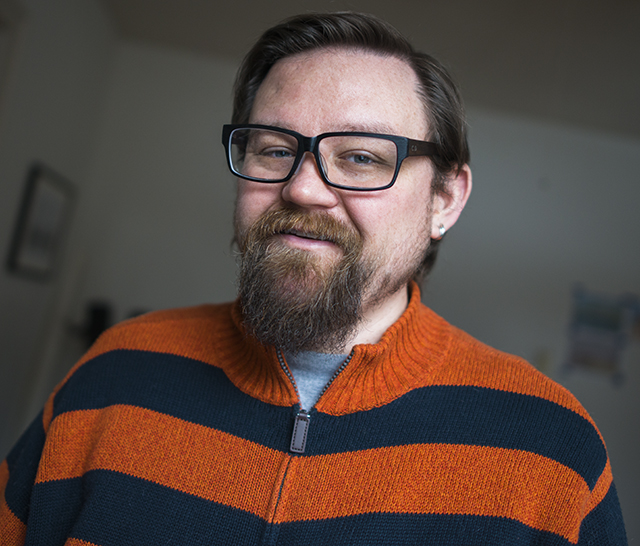
Wallace_headshotMichael was born in Youngstown, OH in 1981. After receiving his BFA in Photography, from the Cleveland Institute of Art, he moved to San Francisco. While in San Francisco he attended the California College of Art, where he received a MFA in Social Practices. His work has been exhibited both nationally and internationally. Michael is currently the Checkout Coordinator and Adjunct Faculty member at The Cleveland Institute of Art in Cleveland, OH.

In the Studio

In the Studio

www.michaelwallaceart.com

All images copyright of the artist and used with their permission.  

Posted in Digital Art | Tagged , , , , , | Leave a comment

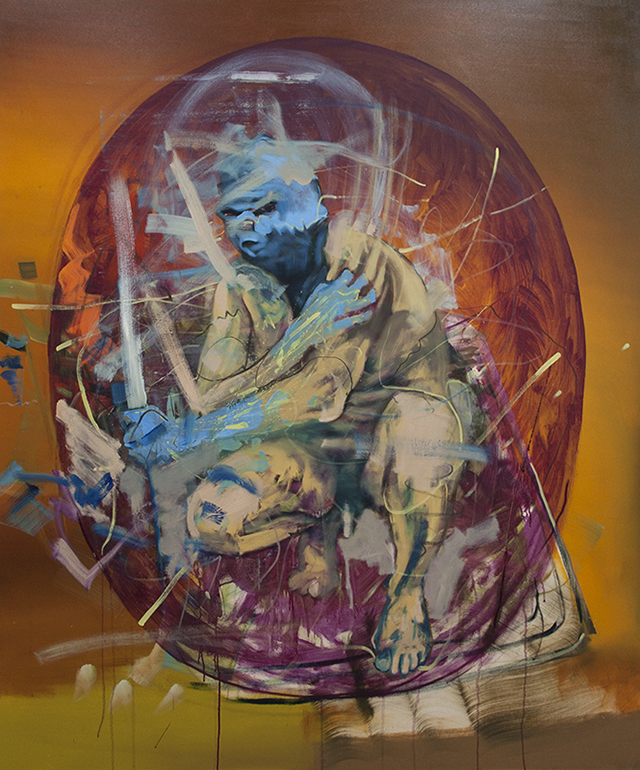
Bartosz Beda – Moscow and Idaho

Extraordinarius - self-portrait, oil on canvas, 183x153cm, 2014

Extraordinarius – self-portrait, oil on canvas, 183x153cm, 2014

Briefly describe the work you do.

I am a painter and I work mostly with oil medium. I spend long hours in the studio making big and small-scale paintings. I like to work on series, because that allows me to develop the subject and focus a bit more on something what challenge me.

My paintings explore the relation between daily life and human nature. I perceive humanity as a chocolate cake, where beneath the ‘iced’ surface lies those more intriguing and challenging mixtures, with fears and social pathology.

Through the application and process of painting, I cut a piece of that cake to explore the nature of these problems.

Simple yet powerful gestural strokes and mark making, search and re-investigate solutions to bring these hidden depths to the surface.

Tell us a little about your background and how that influences you as an artist.

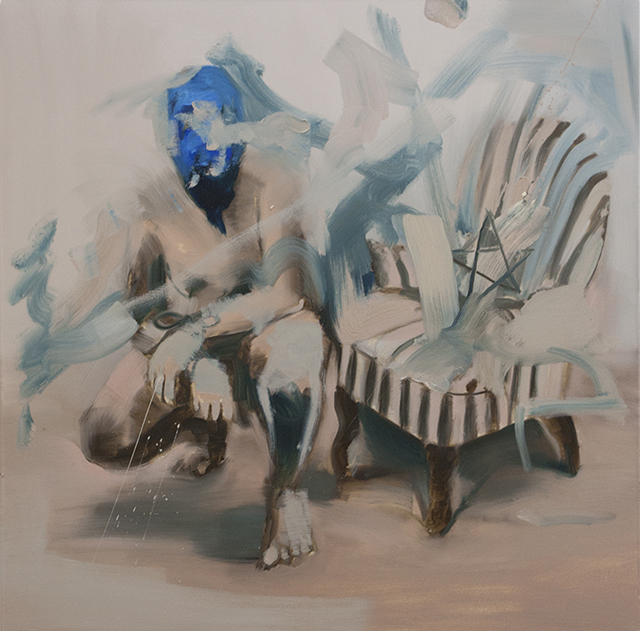
I was born in 1984 in Poland and since age 7 I was drawing and painting. I went to Private Fine Art Secondary School where I developed my skills in fine arts. After the school I was working in the movie studio for two-animation production. One of them was ‘Peter and the Wolf’, which got Oscar prize in 2007. After that, I knew that I want something more then working only for animation, so I decided to move to UK and dedicate myself for painting. After graduating from BA at Manchester Metropolitan University, I was selected for Catlin Guide 2012 for the most promising emerging artist in UK. I progressed onto the Masters program to develop my practice as a painter. The same year I graduated, I was selected for Saatchi New Sensation 2012 and won the prize for National Competition. The same year, I was also awarded with six months scholarship to Dresden Academy of Art in Germany. The next following years I was showing nationally and internationally. I had a solo exhibition in Spain, United Kingdom, and Colombia. Now, I am making a new body of work for my forthcoming solo exhibition in Los Angeles, USA. In 2013 I moved to United States, where I have my live and work.
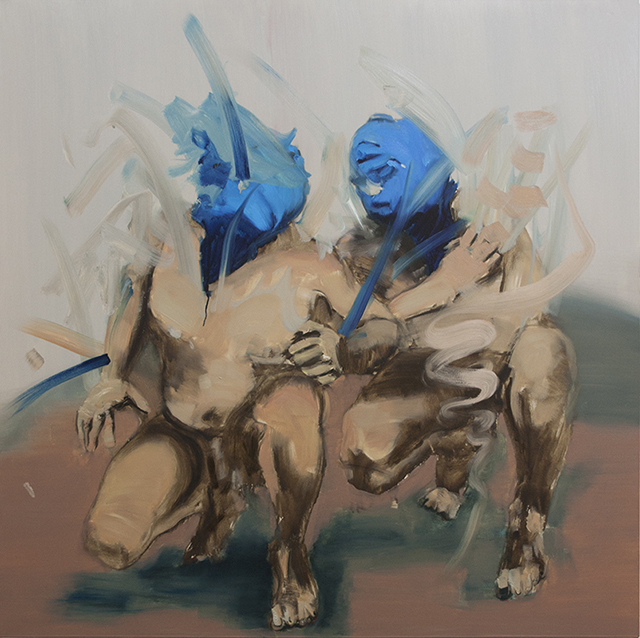
Othello I, oil on canvas, 153x153cm, 2014

Othello I, oil on canvas, 153x153cm, 2014

The concept of the “artist studio” has a broad range of meanings, especially in contemporary practice. The idea of the artist toiling away alone in a room may not necessarily reflect what many artists do from day to day anymore. Describe your studio practice and how it differs from (or is the same as) traditional notions of “being in the studio.”

Anybody who is entering my studio can smell the oil paints and mediums. Studio is an important part of my daily practice. I come to studio in the morning and leave in the late evening. My studio is not in the complex with other studios, so often times I don’t see many people during the day. It is good for working, but at the same time I make breaks and go out for lunch to be between people. During my day I try to paint at least 8 hours. Rest of the time is administration things.

What unique roles do you see yourself as the artist playing that you may not have envisioned yourself in when you first started making art?

Since I remember I always wanted to be an artist. That thought was motivating me to make paintings and keep going with studio practice. That was the best opportunity I created in my live. I think that the best opportunities in our lives are those we create. Everything is about making right decision and even if they are not good, we still can learn a lot from that experience. It is always important to keep right goals and don’t forget to make them happen. I always say, keep your studio and your studio will keep you.

When do you find is the best time of day to make art? Do you have time set aside every day, every week or do you just work whenever you can? 

It depends on many things. They are days that I have to prepare packages for paintings, which got sold, or boxes for exhibitions. It is a time consuming process and keep me away from the painting. Nowadays, I try to involve other people to help me in the studio with packing or administration things, but still I need to keep control on that to make sure that everything goes smoothly. Often times I respond to emails in the morning, but I am thinking to change that habit. I can give maximum focus for painting in the morning and evening hours. It is important to make a schedule for my day. It helps my goals. Basically, I make a little goals and big goals. Everyday I make a little to get better. Today my goal was to write about my practice and it is important for my painting too.
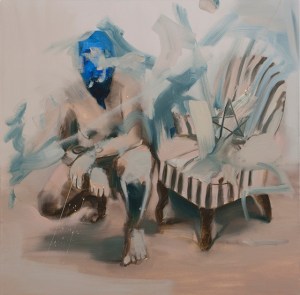
One side-other side IV, oil on canvas, 77x77cm, 2014

One side-other side IV, oil on canvas, 77x77cm, 2014

How has your work changed in the last five years? How is it the same?

I graduated two years ago from my Masters program and since that time my work changed a lot. I challenge myself everyday and experiment a lot. Long hours in the studio helps me to make body of work I am satisfied. I always want to do better and think a lot how I can change or improve in my painting. Painting needs long hours of thinking and experimenting. I try to create limitless space, as Rothko did in his paintings. I don’t know where it will take me, but it’s good practice for something new. Now I’m trying to find my own vision of painting, to bring a new perspective to painting. This is a long process. We all copy and use the ideas of others and it’s not a bad thing. It is a process of learning, but right now I’m moving away from using images as sources.

Are there people such as family, friends, writers, philosophers or even pop icons that have had an impact on the work you do?

I love Mark Rothko paintings. I have books with his biography and I come back to them many times. That would be it.

If you had an occupation outside of being an artist, what would that be and why?

I would be different kind of artist. Maybe sculptor.

About
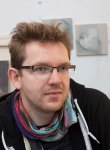
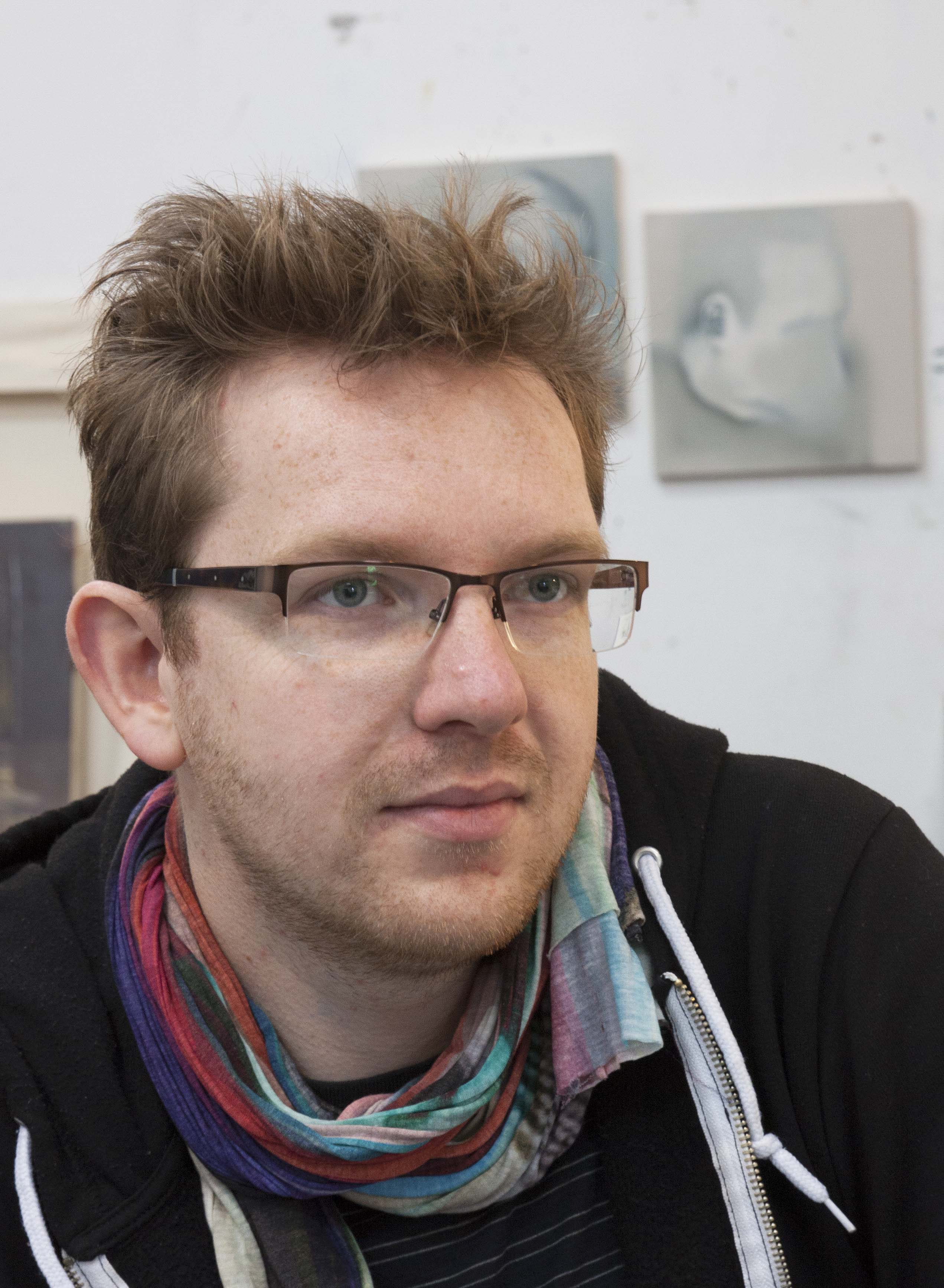
FGAP 2014Born in Poland in 1984, Bartosz Beda relocated himself to the UK in 2008 to study at the Manchester School of Art. After graduating with a BA (Hons) in Fine Art in 2011, and selected for the 2012 Catlin Art Guide for most promising emerging artists in UK, he progressed onto the Masters programme at Manchester Metropolitan University to develop his practice as a painter. Beda has been short-listed for the Title Art Prize, the Door Prize, and The Saatchi New Sensations 2012, and won the esteemed Torwy Award for the Best of the North of England in 2012. In 2014, Beda was short-listed for Combat Art Prize, Italy, finalist for Williams Drawing Prize, Connecticut, US and won the second prize for Viewpoints 2014 at Aljira, Center for Contempoary Art, New Jersey, US. He was awarded for a six-month scholarship between Manchester Metropolitan University and Academy of fine Arts in Dresden, Germany, in 2012/13, where he developed the concepts of his work. Beda has been showing nationally and internationally. He has participated in many group shows in Poland, Germany, Spain, United States, United Kingdom, Colombia to name four: Schools of Art. Voll.3, Oktogon der HfBK Dresden, Germany, 2013; Petty Theft, Launch f18, New York, USA, 2013; Microarte. El tamano si importa, Galeria Liebre, Madrid, Spain, 2012; 9th National Exhibition at Axis Gallery, California, United States. He had his solo exhibitions in Poland, United Kindgom, Spain and Colombia and forthcoming in United States . His works are in private collections throughout Europe, United States, South Africa and Colombia.

Before relocating himself to England, Beda was involved with animation within the film making industry. He has worked in two movie productions, Ichthis by Marek Skrobecki (2005) and Peter and the Wolf by Suzieh Tempelton (2006), which received the Oscar Prize in 2007. This involvment has provoked his interest in moving images and ultimately images themselves. His interest in painting began from a young age, and he knew painting would be his profession. He is a very dedicated painter and for him painting is a medium where he can fully express his passion.

Beda’s work has been widely reviewed and referenced. He was interviewed for The Independend, A-N Magazine, Mastars at Axisweb, Arteon Art Magazine, Expose and featured in The Guardian, The Telegraph and many others. He was mentioned as a ‘one to watch’ at BBC Radio 4 in February 2013. He discribes himself as an artist who explores the idea of painting across the world and outside the local environment. He lives and works both in United States and United Kingdom.
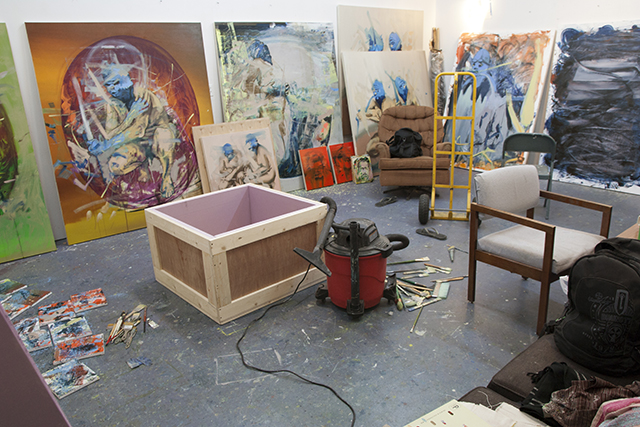
The Studio

The Studio

www.bartoszbeda.com

www.facebook.com/bartoszbeda

All images copyright of the artist and used with their permission.  


Posted in Painting | Tagged , , , , | Leave a comment

Carolina Maki Kitagawa – Tucson, Arizona

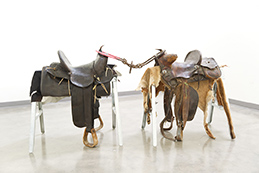
the talk,  American western saddle, Mexican western saddle, saw horses, iron horse shoes, mountain lion hide, and still born pelt; 6’ x 4’ x 3’ , 2014

the talk, American western saddle, Mexican western saddle, saw horses, iron horse shoes, mountain lion hide, and still born pelt; 6’ x 4’ x 3’ , 2014

Briefly describe the work you do.

In recent works, I challenge modalities of identification with the encompassing human need for a told story. My method of live story telling allows me to wrap myself in words to the exclusion of the audience. I strategically mediate a fragmented stream of communication, placing the viewer in a vulnerable position of not knowing everything needed for the intended situation, providing a glimpse into the discomfort of inaccessible knowledge. I work on my art with the knowledge that life is a temporally based venture. As the inferior director of an uncontrollable presence, I document and sculpt narrations that question the audacity of those in the position to construct and impose social distortions.  My work reorients what I perceive as the disorientation that has taken over the daily life of tolerating oneself.

Tell us a little about your background and how that influences you as an artist.

I come from East L.A. and I like to do full marathons.  I come from a world where accessibility to anything was a big concern and affected my upbringing enough so, that it still plays a role in my being a disjointed artist.

The concept of the “artist studio” has a broad range of meanings, especially in contemporary practice.  The idea of the artist toiling away alone in a room may not necessarily reflect what many artists do from day to day anymore.  Describe your studio practice and how it differs from (or is the same as) traditional notions of “being in the studio”.

I go to Mexico as much as I can and get inspired by listening to stories of my family and ride horses at the ranch with the cowboys.  I also work a lot on my ideas while I run long distances through busy city streets and keep my heart healthy.

What unique roles do you see yourself as the artist playing that you may not have envisioned yourself in when you first started making art?

I hadn’t considered the responsibility aspect of undertaking the role of an artist.  I felt it with children, when I used to teach art and mentor kids from my neighborhood.  I saw how fruitful it was to them to spend time with me showing them museums and do things painterly or sculpturally and give them an idea of what they are capable of.  I hadn’t considered the responsibility in relation to other adults, professors, viewers, or fellow contemporaries.  As Spiderman’s uncle so eloquently phrased it, “ …  With great power comes great responsibility. 

When do you find is the best time of day to make art?  Do you have time set aside every day, every week or do you just work whenever you can?

The best time of day to work is when no one is around.  I am easily distracted by casual conversations.  I come into my studio either in the early morning or late into the night.  I am in my studio in between as well, but usually I am writing or flipping through library books.

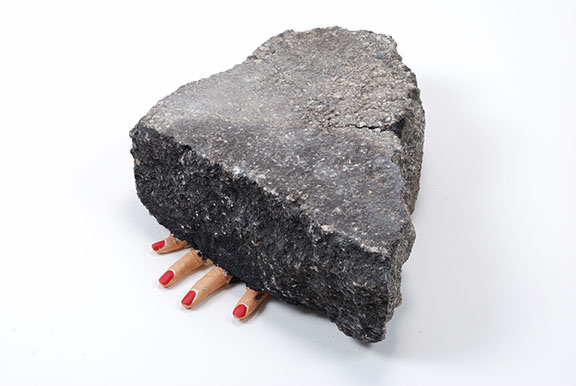
ouch, road rubble, plaster, acrylic paint, 12’ x 13” x 6”, 2013

ouch, road rubble, plaster, acrylic paint, 12’ x 13” x 6”, 2013

How has your work changed in the last five years?  How is it the same?

Five years ago, I was working for other artists in their studios as a mold making and casting assistant.  I had no time or mental energy to focus entirely on my work.  What has changed most is the amount of attention I am able to give to my work. Prioritizing my work over other various life related matters has been a great benefit in progressing and furthering my growth as an artist.

Are there people such as family, friends, writers, and philosophers or even pop icons that have had an impact on the work you do?

Since I was a kid I have been inspired by a few artists, some are, Liza Minnelli, Richard Pryor, Maria Felix, Yoko Ono, Ann Hamilton, and Bette Davis.  I also read a great deal of Russian literature, Japanese fiction from the 60s and 70s, and Kundera.  I have a very supportive family and life long friends spanning from the west coast and the east, south of the border and across the Pacific Ocean.  Of all places, I found an awesome person just a few blocks away from my house in Tucson who fully understands me and completely supports my work. 

If you had an occupation outside of being an artist, what would that be and why?

I don’t see being an artist solely as an occupation.  It encompasses many things and jobs.  I would pursue a more lavish private session training program for upscale marathon runners. 

About

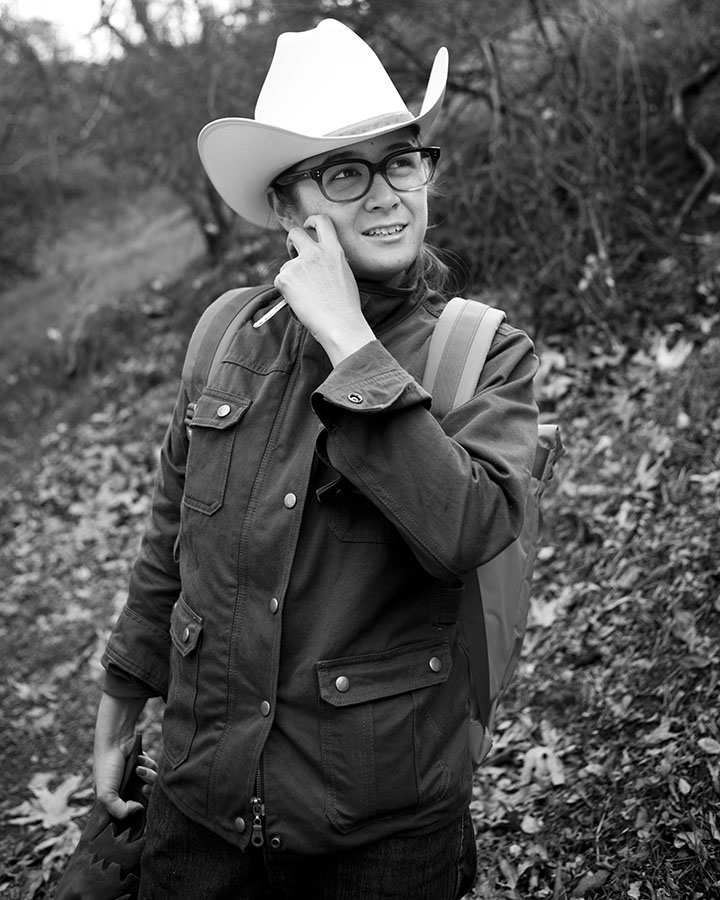
headshotCarolina Maki Kitagawa (b. 1982) is a multi-disciplinary artist whose work employs video, sculpture, performance, and drawing.  In her recent work Carolina examines absence, love and deviations from conventions of social behaviors; within this, she concentrates on moments of failure, flirtation, and awkwardness.  Carolina currently resides in Tucson where she an MFA candidate in performance, ceramics, and sculpture at the University of Arizona.  Carolina exhibits her work both locally and nationally, including a recent exhibition at Cathouse FUNeral Gallery in Brooklyn, NY.  Most recently she won an honorable mention in the October 2014 issue of Sculpture magazine.

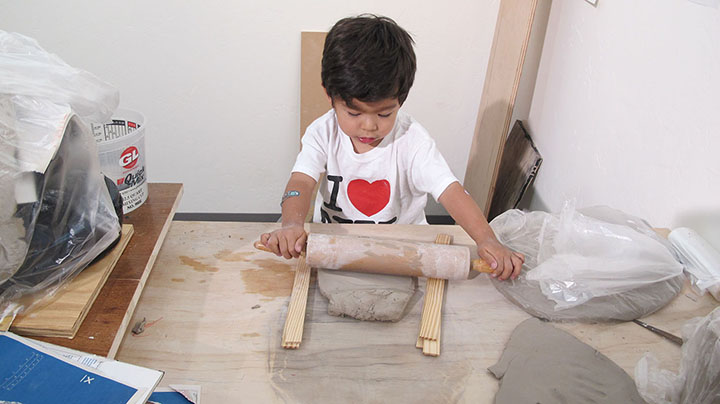
Me in my Studio

Me in my Studio

makibolas.com

All images copyright of the artist and used with their permission.  
Posted in Installation | Tagged , , , , | Leave a comment