Olliemoonsta – Vancouver, British Columbia, Canada

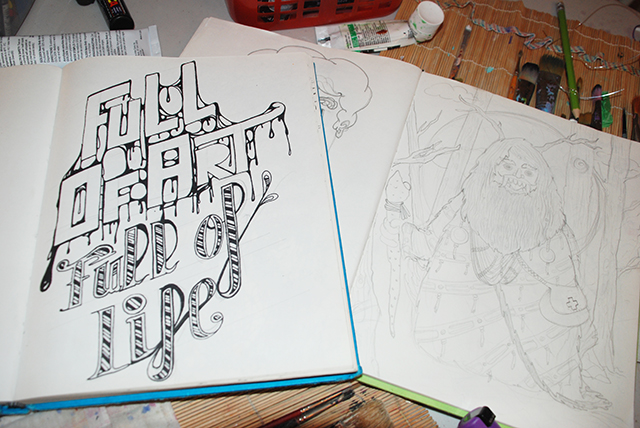
sketches

sketches

Briefly describe the work you do.

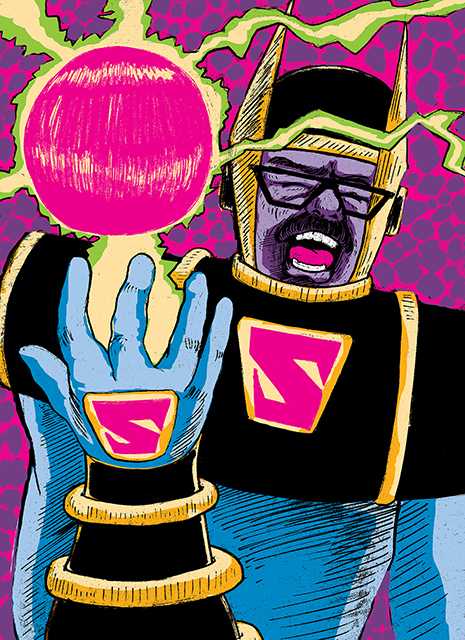
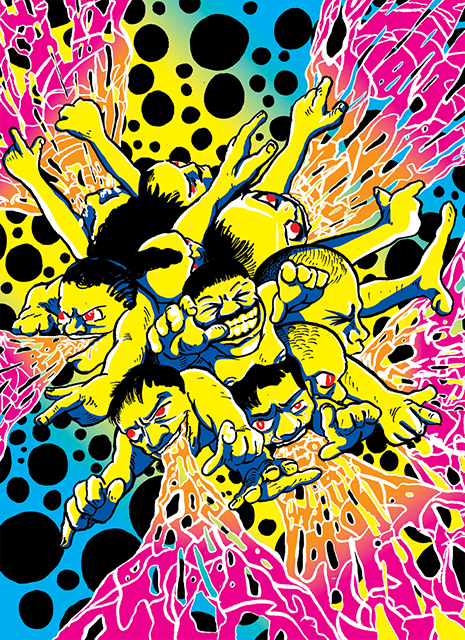
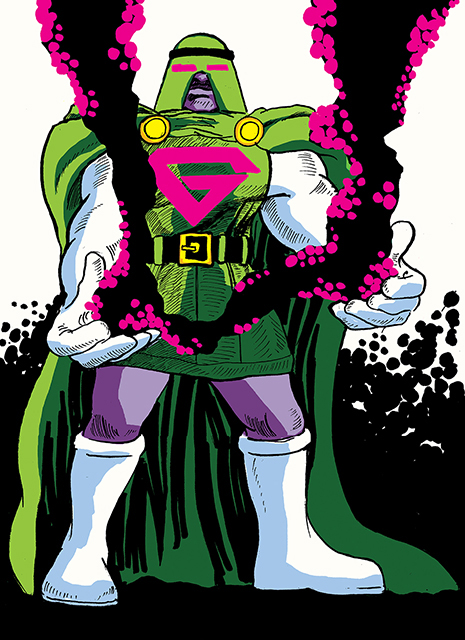
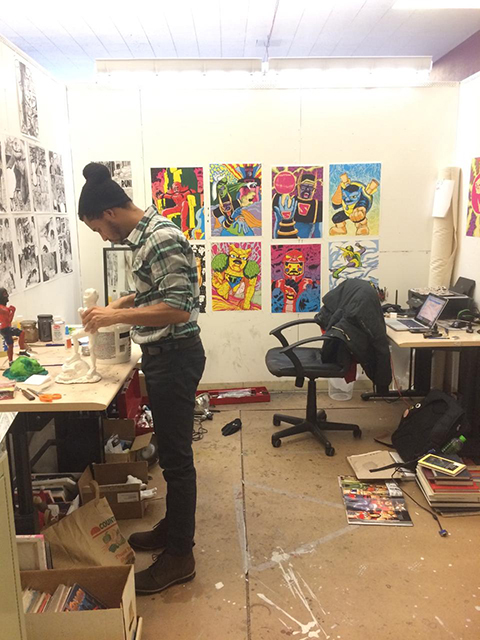
We normally work with acrylic paint on canvas and digital illustration. Our work is a weird mixture between urban tribes and traditional tribes. We have always seen how people treat indigenous tribes as primitives but we think they are just like us in so many aspects of our lives.

Tell us a little about your background and how that influences you as an artist.

We grew up in Europe (Spain) where cities are completely full of graffiti, so the first kind of art that we met in our lives was the one on the streets. Next thing was when we started to have knowledge about anthropology, we completely felt amazed about indigenous cultures and we started to make some reflections about it.
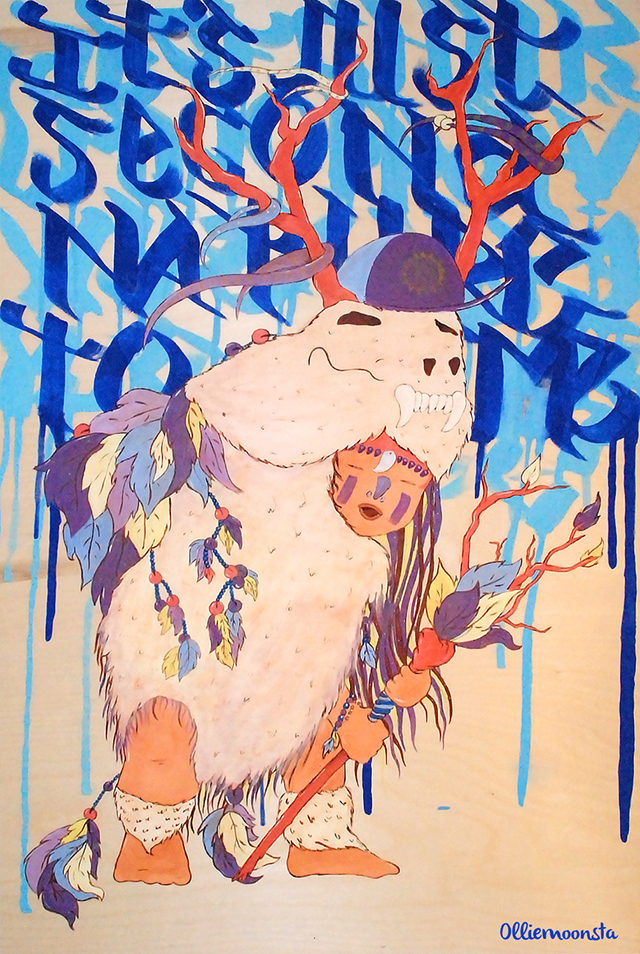
It’s just second nature to me. Acrylic on canvas, 91x61cm, 2014

It’s just second nature to me. Acrylic on canvas, 91x61cm, 2014

The concept of the “artist studio” has a broad range of meanings, especially in contemporary practice. The idea of the artist toiling away alone in a room may not necessarily reflect what many artists do from day to day anymore. Describe your studio practice and how it differs from (or is the same as) traditional notions of “being in the studio.”

As a duo, get agreeing with the same ideas is not always easy. We normally need to work in two different rooms to concentrate in what we are doing and come out with some fresh ideas. Each of us has a particular way to get them and working together in the same room just doesn’t work. Once our sketches are ready, we can work together at the studio for hours, compare sketches and ideas and mix them.

What unique roles do you see yourself as the artist playing that you may not have envisioned yourself in when you first started making art?

We both thought the only way to be an artist was to work in traditional media like painting or sculpture. We didn’t have any idea about the possibilities that the digital art could give us as artists. Not only we can have our digital art in galleries but also we can produce works on commission for newspapers, magazines and so on.

When do you find is the best time of day to make art? Do you have time set aside every day, every week or do you just work whenever you can? 

We normally work a few hours in the evening or night. Mornings are frequently dedicated on commissioned work. It also depends of what we have in that moment, if we are working in art residencies or for an exhibition we can work all day long.
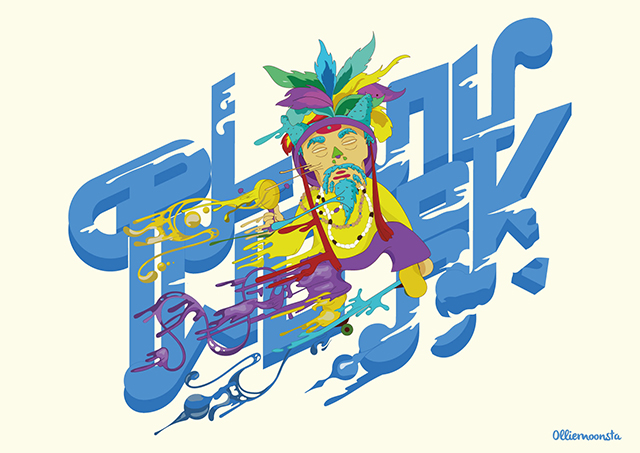
Shaman, digital illustration, 2014

Shaman, digital illustration, 2014

How has your work changed in the last five years? How is it the same?

In the beginning we couldn’t even think about living the way we do it now. During the last five years we have learnt to take it seriously, just like any other job. We are more focused on improving our statement and applying to open calls. We have turned our hobby into our job.

Are there people such as family, friends, writers, philosophers or even pop icons that have had an impact on the work you do?

Indigenous art and street art are our main source of inspiration.

If you had an occupation outside of being an artist, what would that be and why?

Both of us have extra jobs. Naza works in a contemporary Northwest Coast native art gallery and as a freelance curator. Juan works as an Art and Illustrator software Teacher. Those jobs are also related to art, but if we have to choose an occupation outside the art field, Juan would probably be a cook and Naza would love to work as an anthropologist.

About
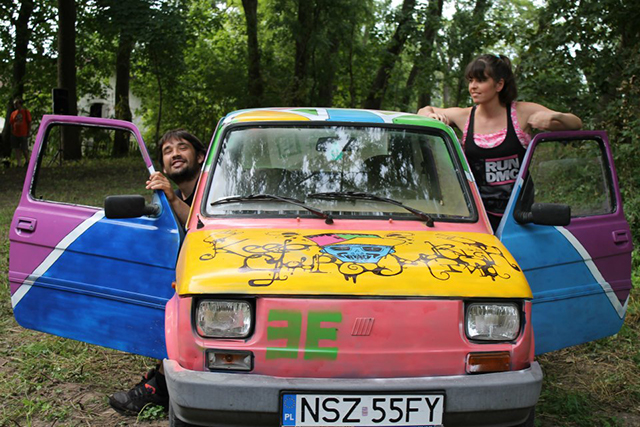
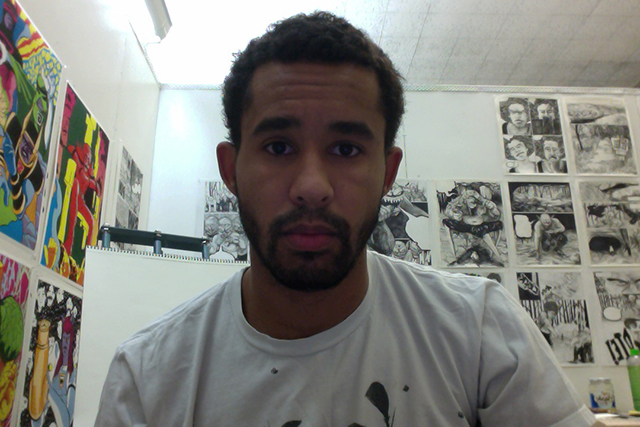
Olliemoonsta-headshotOlliemoonsta are Naza del Rosal and Juan Rico. Two artists from Spain with a background in Fine Arts and Graphic Design. In 2009 they came together to form Studio Po, an illustration, graphic and web design studio, which was gradually focusing more on art and illustration creating the duo Olliemoonsta.Over the years they have created a series of paintings and digital illustrations drawn by the concept of beauty among the traditional tribes and cultures around the world and the current urban tribes and graffiti, making special enphasis on typography.

Olliemoonsta’s work has been seen in numerous exhibitions worldwide. In July 2011 they were invited to the International Percussion Festival of Montreal, Canada. These paintings were part of a travelling exhibition in Montreal, Toronto and Vancouver. In the summer of 2012 they participated in the Artists’ Residence “Beyond Time”, in Poland, where in addition to their work in developing BWA Bielsko Galery in Bielsko-Biala and Targowo, were invited to several festivals to paint murals and site-specific installations in the streets. In October 2012 they were artists in residence in “Pedra Sina Residence”, in Madeira, Portugal, where they were invited to paint a couple of murals in the harbor of the island.

In 2013 and 2014 they have been living and working in Vancouver, Canada.
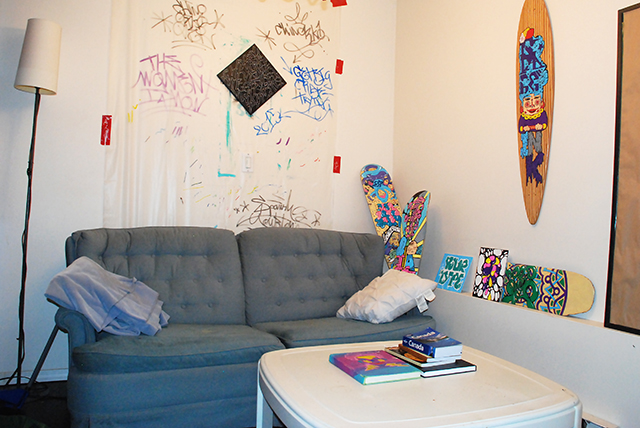
Olliemoonsta-favorite place to hang out-sm

olliemoonsta.com

All images copyright of the artist and used with their permission.   
 

Posted in Illustration | Tagged , , , , | Leave a comment

Robyn Ellenbogen – Shrewsbury, New Jersey

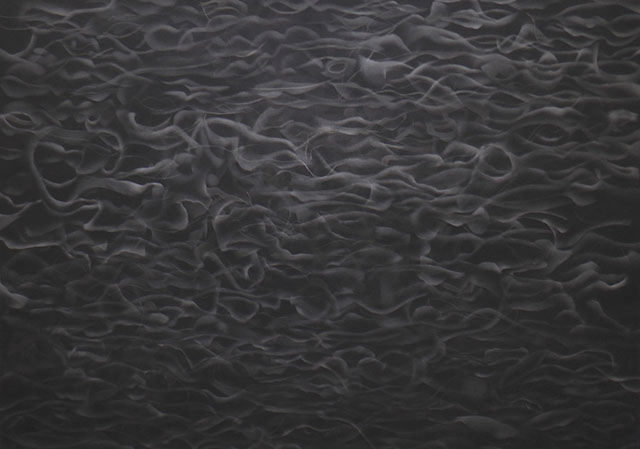
The Mouth is an Opening, assorted metallic wool pads, silverpoint, on black Plike paper, 25” x 40”, 2015

The Mouth is an Opening, assorted metallic wool pads, silverpoint, on black Plike paper, 25” x 40” , 2015

Briefly describe the work you do.

I make images in a broad variety of media ranging from 12th century techniques of silverpoint and egg tempera to digital animation, artist books, and interactive installations. The installations combine bamboo structures, and handmade felt with sewing. They offer the viewer an opportunity to share a direct message via text or drawing regarding human experience.

My work is abstract, with dream-like forms, evoking sensation, flux, imagery that requires contemplative time on the part of the viewer.

Tell us a little about your background and how that influences you as an artist.

I grew up in New York City and vowed to become an artist when I was in kindergarten. During elementary school I attended Saturday classes at Pratt Institute, and often visited the Brooklyn Museum with my mom after my dad died. These early opportunities to see art opened my mind to a larger world than the one I inhabited, as my formative years were characterized by loss, loneliness and a preoccupation with death. During the 1970’s while at the School of Visual Arts, I worked for Louise Bourgeois who deeply influenced my feeling for materials and furthered my appreciation for the phenomenal and internal experience involved in making art. The psychological dimension was a basis for the way I thought about art and created a foundation for my interest in Buddhist practice. I worked at M.o.M.A for several years in the Education Department and became fluent in speaking about art with diverse audiences. It became clear that no matter what a person’s background, experience, gender or age, people sought to make meaning of their experience looking at art.

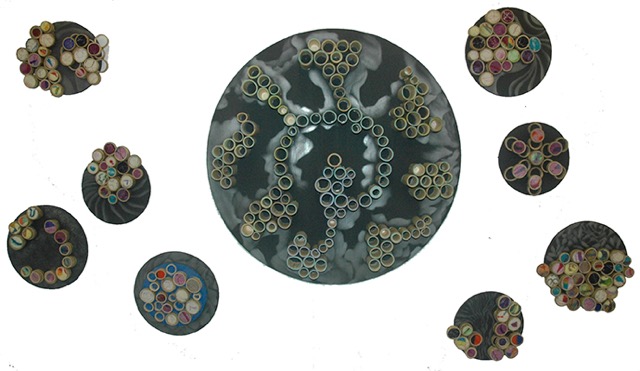
Call and Response with 8 Satellites, large disc 36” smaller discs, bamboo, hand made felt, sewing, dye, metallic wool on black gesso panels, 8” -10”,2014

Call and Response with 8 Satellites, large disc 36” smaller discs, bamboo, hand made felt, sewing, dye, metallic wool on black gesso panels , 8” -10”, 2014

The concept of the “artist studio” has a broad range of meanings, especially in contemporary practice. The idea of the artist toiling away alone in a room may not necessarily reflect what many artists do from day today anymore. Describe your studio practice and how it differs from (or is the same as) traditional notions of “being in the studio.”

I maintain an engaged studio practice in an old barn with many rooms in which diverse activities take place. My years struggling for substantial workspace in New York City was the impetus to find a space bigger than what I thought I needed in which to grow and develop.My work areas vary in scale and provide space for separate mediums. except animation, which requires my computer. Additionally, the studio has been a site for performance work and recently hosted a Buddhist sangha.

For me, the praxis of “being in the studio” has expanded in geography and circumstance through my involvement with diverse communities, people who have been marginalized through mental and physical illness, poverty and the inevitable lack of resources.

I do extensive collaborative work with children, young adults and their families in the context of hospitals where I have worked for several years as an artist in residence. Collaborative practice is an amazing vehicle that allows everyone the opportunity to participate without feeling the necessity for an art background. This is much different than teaching art. Collaboration is based on free play, improvisation and simply being present in the moment.

What unique roles do you see yourself as the artist playing that you may not have envisioned yourself in when you first started making art?

When I was a teenager, I lied about my age to gain employment at the infamous Willowbrook State Institution on Staten Island. I attempted to make art with people who had been institutionalized all their lives. This provided me with invaluable insight into the nature of suffering and the powerful refuge art could provide. Reading Paul Klee’s writings where he mentioned his interest in the art of the insane inspired me. Today we would more likely use the term mentally challenged. My art school education provided little support for these emotional perspectives. Later, when I attended graduate school, I became immersed in the seminal post-modern texts. In particular, Foucault’s work helped me re-think and re-examine cultural and historic issues in a way that felt closer to my experience. The vow to be an artist provided me with the chance to step outside of formal education and certainly while I was participating in the art education system it was difficult to imagine the alternative places I would investigate through my work.

When do you find is the best time of the day to make art? Do you have time set aside every day, every week or do you just work whenever you can?

I am amused by the idea of a best time to make art and puzzled by the notion of how time can be set aside. We seem to be creatures of time. I have a daily practice of zazen in the morning and my intention is to show up for my work whenever I am able. Mornings are always filled with possibility and I like early light. I wish it were easier to work by moonlight!

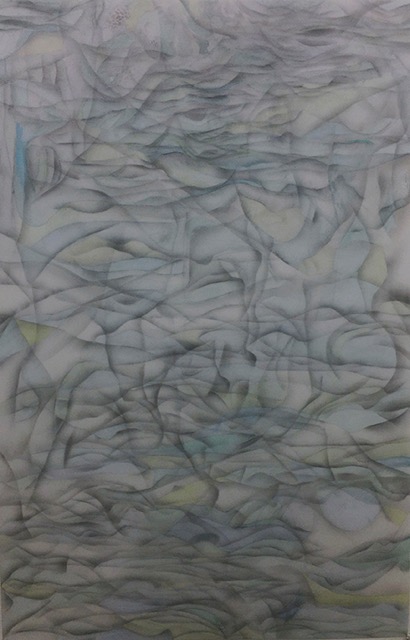
Drifting, stainless steel wool pads, silverpoint,acrylic,  on Yupo paper with transparent gesso  35” x 23”, 2014

Drifting, stainless steel wool pads, silverpoint,acrylic, on Yupo paper with transparent gesso
35” x 23”, 2014

How has your work changed in the last five years? How is it the same?

The last five years represent a continuous unfolding of my work, filled with new awareness and an ever-deepening appreciation for tactile and sensory experience. I have been exploring new areas and materials yet the underlying concerns and interests have not changed. I’ve been immersed in silverpoint, metallic wool and egg tempera. My linear work with silverpoint now incorporates a more atmospheric, painterly quality with the addition of metallic wool pads. I have added the use of stencils and templates to my drawings and all are hand cut out of aluminum sheets. Metallic wool is rubbed against the aluminum edge and the results vary according to the support. The range of support can include, paper, boards, panels with gesso and clear panels. Each combination of metal and its underlying support will vary in oxidation and the way it will shift color over time.   Additionally, I’ve been exploring digital animation via my iPhone. My animations have a journalistic quality and I have used stills from the animations as a basis for drawings. In the past year I have been making inter-active installations using bamboo as a primary material combined with exchanged texts between the viewer and the object. The bamboo is from a grove behind my studio. This installation work has been shared at many hospitals and galleries affording families, staff, visitors to offer and exchange healing words and thoughts. I am currently compiling a book of these messages.

Are there people such as family, friends, writers, philosophers or even pop icons that have had an impact on the work you do?

I have had rich and enduring engagements with all of the groups that you mention! Poetry and philosophy have been critical for me, especially in difficult times. My initial encounter with philosophy was via the work of French phenomenologist Merleau-Ponty. His work indicated an approach to seeing and perception that felt right. This past summer, I read Paul Celan’s late poetry and I was fascinated by his interest in geology which has become an environmental message that became suffused in my drawings. Currently, I am reading a collection of the Chinese painter and writer Mu Xin’s short stories, “ An Empty Room.”   Mu Xin was incarcerated during the Cultural Revolution in China and his art enabled him to survive solitary imprisonment. I’m drawn to poets whose work has helped them save their lives and eased dire circumstance.

If you had an occupation outside of being an artist what would that be and why?

I have imagined being a microbiologist or an astronomer. Seeing deep into unseen places both internal and external would feel like a natural extension of my curiosity about the universe.

About

Robyn EllenbogensmallRobyn Ellenbogen shows her work throughout the country. She recently had an interactive installation at Memorial Sloan Kettering Hospital in New York where hundreds of messages were exchanged with patients, families, visitors and staff. In 2014, she was pleased to win a Juror’s Choice award from the Williams Prize in Drawing. Robyn resides in a house and studio built in 1789 and she is fairly certain there are no ghosts.

studio

robynellenbogen.com

All images copyright of the artist and used with their permission.   
Posted in Uncategorized | Leave a comment

Susan Meyer – Hudson, New York

Together, laser cut acrylic hanging and standing sculptures, wood, HO-scale figures, aluminum, video and sound, dimensions variable, 2008

Together, laser cut acrylic hanging and standing sculptures, wood, HO-scale figures, aluminum, video and sound, dimensions variable, 2008

Briefly describe the work you do.

I make sculptures and sculptural installations. They reference architecture and landscape, often suggesting other worlds. Recently the forms are a little bit figurative, in my mind anyway, something of a mash-up of humanoid, scholar’s stone and eccentric architecture.

Tell us a little about your background and how that influences you as an artist.

When I was in school, undergrad and most of grad, I considered myself a painter. Paintings are as much of an influence on my work as are sculptures. There’s a Christian Schumann painting, “Conglomathedral,” that’s been big for me; I have a photocopy of it in my studio. Franz West and Rachel Harrison are two favorite sculptors. Utopian communities and Modernist architecture are influences. I lived in Japan for a while many years back and that’s in there as well.  Also, my husband, Jeff Starr, is a painter and our dialogue back and forth is a daily influence.

The concept of the “artist studio” has a broad range of meanings, especially in contemporary practice. The idea of the artist toiling away alone in a room may not necessarily reflect what many artists do from day to day anymore. Describe your studio practice and how it differs from (or is the same as) traditional notions of “being in the studio.”

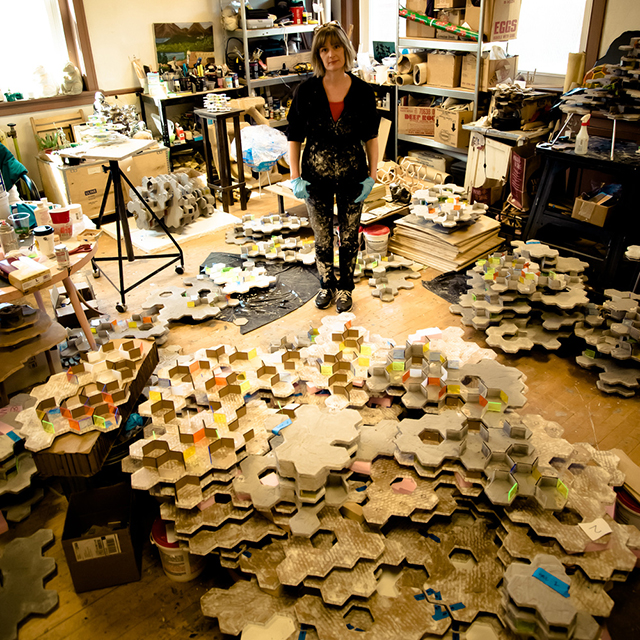
A lot of my work begins digitally, so I spend a fair amount of “studio time” on my laptop. This is not my favorite part of the process, but it does allow me to get work done in a variety of places which is really, really helpful. I recently moved from Denver, Colorado to upstate New York. I teach in Albany at The Center for Art and Design at The College of Saint Rose. I live in Hudson, NY where I have a studio. At school, there’s a nice Sculpture facility and a new “Fab Lab” with a laser cutter, and 3D printer and scanner. So, I’m a little all over the place. As I write this I’m cutting many layers of cardboard on the laser cutter for a model for a new piece.

Plato’s Retreat, concrete, cardboard, acrylic, HO-scale figures, led lights, paint and plants, 60 x 75 x 65”, 2012

Plato’s Retreat, concrete, cardboard, acrylic, HO-scale figures, led lights, paint and plants, 60 x 75 x 65”, 2012

What unique roles do you see yourself as the artist playing that you may not have envisioned yourself in when you first started making art?

Well, teacher for one; when I was younger, I didn’t see myself in that role, but it’s great, I enjoy it. Also, the younger me would not have envisioned the sculptures and installations, but again, I really enjoy this type of making.

When do you find is the best time of day to make art? Do you have time set aside every day, every week or do you just work whenever you can? 

It’s a little all over the place. I teach 9 hours straight on T/TH. I get up an hour earlier those mornings so that I can work on pieces on my computer; it’s not much time, but it makes me feel good. M/W there are a lot of meetings, but I find small chunks of time here and there to work. I do a lot of work on Friday and the weekend. School vacations are pretty heavy studio. It’s great that my husband is an artist and doing the same.

House of Windows, wood, steel, acrylic, flocking, toy deer, succulents, 60 x 36 x 24”, 2014

House of Windows, wood, steel, acrylic, flocking, toy deer, succulents, 60 x 36 x 24”, 2014

How has your work changed in the last five years? How is it the same?

I’m somewhat more interested in discrete sculpture over installation. I’ve been exploring the idea of ruin, or repurposed ruin and also, recently, a loose idea of the figurative.

Are there people such as family, friends, writers, philosophers or even pop icons that have had an impact on the work you do?

Mikhail Baktin writing on the Carnivalesque, Robert Storr’s essays on Philip Guston; utopian communities/experiments in the mid-1800’s in the Northeast, Fruitlands is an example, and in the 1960’s and 70’s in the West, like Drop City; Chinese scholar’s stones; my husband, Jeff; and Joan Rivers.

If you had an occupation outside of being an artist, what would that be and why?

I have no idea. Teaching is my “other” occupation, but it’s completely tied to my art making.

About

Hudson, NY artist, Susan Meyer makes fantastical environments and sculptures that explore tensions between the communal and individual. 

Meyer’s past exhibitions include:

2014 Exhibition by Artists of the Mohawk-Hudson Region at Albany Institute of History and Art, Albany, NY, Stephen Westfall, juror; Odds and Ends, take one at Valley Variety in Hudson, NY, co-organized with Jeff Starr, exhibition essay by Cydney M. Payton; Incident #69 at Incident Report Viewing Station, Hudson, NY; Plato’s Retreat at Plus Gallery in Denver, CO; Fringe Frontier, 2012 and Hi Tide, 2010 at Art Aqua in Miami, both exhibitions curated and sponsored by ARTslant; Together, a sculptural installation, exhibited at Artspace in New Haven, CT, the Islip Art Museum Carriage House in East Islip, NY and Redux Contemporary Art Center in Charleston, South Carolina; Decades of Influence, at MCA/Denver and CVA Denver, curated by Cydney Payton, MCA/Denver Director and Chief Curator; Biennial Blowout, juried by Kenny Schachter and Elegy: Contemporary Ruins, curated by Katharine Smith Warren, both at the Museum of Contemporary Art/Denver.

Meyer received a B.S. in Studio Art from Skidmore College and a M.F.A. from the Boston Museum School and Tufts University.  She is an Assistant Professor at The Center for Art and Design at The College of Saint Rose in Albany, NY.

unnamed

susanmeyersculpture.com

All images copyright of the artist and used with their permission.   
 

Posted in Installation, Sculpture | Tagged , , , , , | Leave a comment

Raluca Iancu – Knoxville, Tennessee

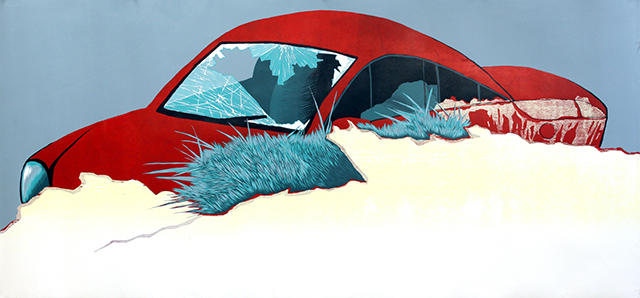
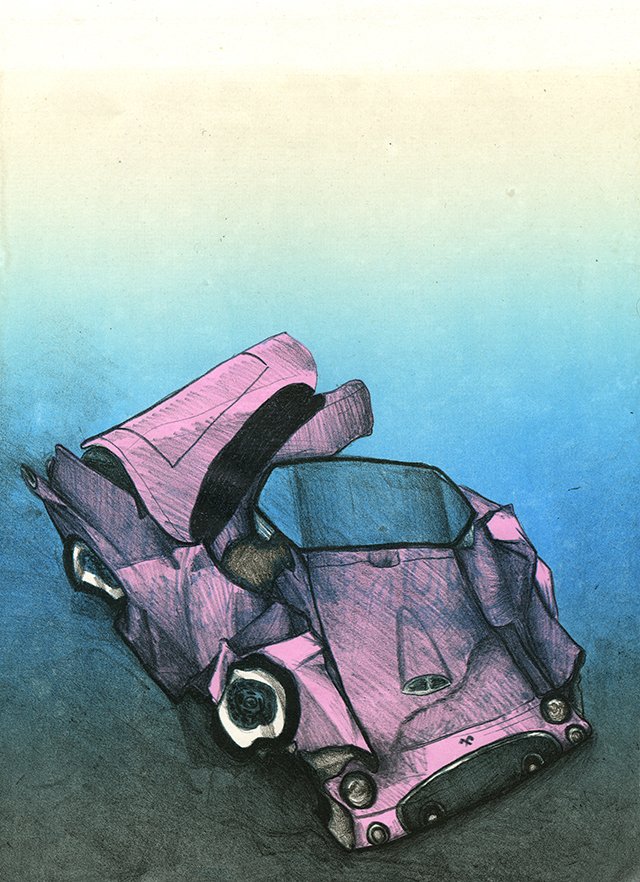
Leftovers, 2014, stone lithograph + screenprint, 15 x 11 in

Leftovers, 2014, stone lithograph + screenprint, 15 x 11 in

Briefly describe the work you do.

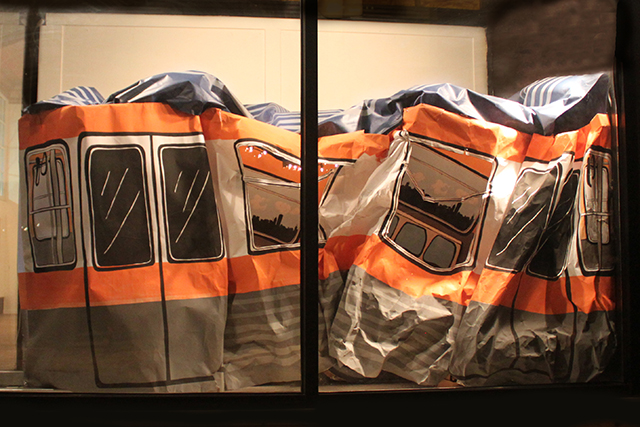
I explore disaster, tragedy, memory and vulnerability through different mediums, ranging from printmaking to performance, to edible art and printed objects. I question the way we look at tragedy as well as the way we deal with the aftermath.  In this series,  all physical contact is a collision with permanent visible repercussions.

Crashes, of all kinds, are trivialized by their frequent appearances across the spectrum of information mediums. We have become desensitized to this sort of event, to the point of seeing it in a childish manner. We chew things up and spit them back out with no attempt at recuperation and no thought of consequences.

The viewers become voyeurs through the simple act of looking and emulating the rubbernecking that is so common on the roads. My work is funny, but car crashes are not – this is a difficult reconciliation in the viewer’s mind. I rely on humour, not only for providing an access point to the viewers, but also for challenging their morality. I use bright, friendly colours because the content is traumatic.

Oops, 2014, installation with screenprints on paper and foamcore, LED lights, cardboard, 5 x 9 x 5 feet

Oops, 2014, installation with screenprints on paper and foamcore, LED lights, cardboard, 5 x 9 x 5 feet

Tell us a little about your background and how that influences you as an artist.

I was born in Romania but my family moved to Canada when I was nine years old. Since then, I have moved around quite a bit, I have lived in places such as Montreal, QC, Halifax, NS, Dundee, Scotland and finally Knoxville, TN. In retrospect, I believe that I am preoccupied with different forms of public transit because I have spent so much time traveling from one place to another. I think that I have been very fortunate in being able to experience so many different cultures and that also informs my work.

The concept of the “artist studio” has a broad range of meanings, especially in contemporary practice. The idea of the artist toiling away alone in a room may not necessarily reflect what many artists do from day to day anymore. Describe your studio practice and how it differs from (or is the same as) traditional notions of “being in the studio.”

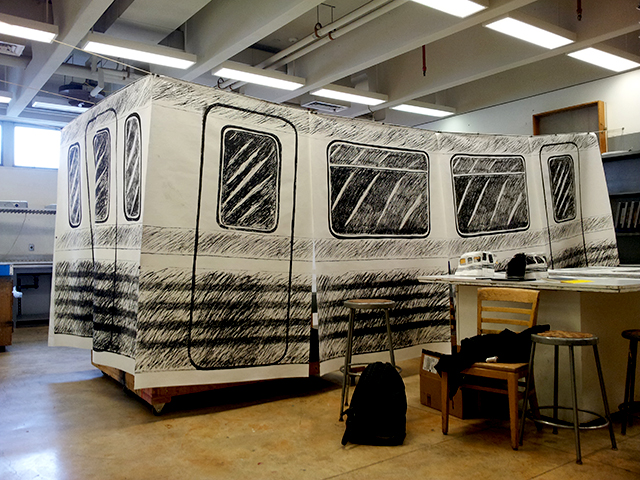
As a printmaker, I consider the printshop my studio. Although I have a personal studio as well, I really thrive when I am surrounded by other artists making work so I prefer spending most of my time in the printshop. I spend time in my personal studio when I need to read and research, write or draw (this is when I toil away in one room). When it comes time to making prints though, all of my activity takes place in the printshop, from drawing on the stone or drawing the transparencies to printing and, if it’s a book or sculpture, assembling the prints.

What unique roles do you see yourself as the artist playing that you may not have envisioned yourself in when you first started making art?

I hadn’t envisioned myself as an educator when I first started making art but I have discovered that I love teaching. I love being able to share my passion for printmaking with people who are new to it! It’s such a delight to see them exploring my favourite medium.

When do you find is the best time of day to make art? Do you have time set aside every day, every week or do you just work whenever you can?

I try and work as much as I can in the studio all day, every day. I’m in grad school working on my thesis right now so studio work is really my main focus. I generally tend to prefer mornings though.

Sandy, 2013, reduction woodcut, 42 x 90 in

Sandy, 2013, reduction woodcut, 42 x 90 in

How has your work changed in the last five years? How is it the same?7. Are there people such as family, friends, writers, philosophers or even pop icons that have had an impact on the work you do?

I actually started this body of work exactly five years ago! The crashes are consistent throughout but the way that I approach my work has changed quite a lot! When I began this project, I was mainly thinking about how desensitized we are, as a society, to crashes and other similar catastrophic events because they have become a spectacle in the media. Now I am also thinking about how we deal with the aftermath from disasters and the rift between those who are spectators and those who have experienced such life shattering events. Finally, although I started off making two dimensional prints, now I am making large installations or sculptural works with my prints.

As far as influences go, of course, Warhol has had a big impact on my work!  I also really enjoy the work of Jonathan Schipper. Other influences include philosophers such as Paul Virilio, Jean Baudrilard, Guy Debord and author J. G. Ballard. Most of my inspiration for new work comes from the media though. I constantly keep my eye on the news for new spectacular crashes.

If you had an occupation outside of being an artist, what would that be and why?

I think I would have been a mathematician. I used to compete in math contests at the national level in Canada and I really enjoyed the problem solving aspect of it. Even after I decided to study art in college, I took Calculus just for fun!

About

Raluca_Iancu_headshotRaluca Iancu would like it known that she has never been involved in a horrific crash – that tumble on her bike while riding in Montreal notwithstanding. Nevertheless there’s something about vehicle collisions that she can’t look away from, returning to them as inspiration time and again.

Raluca Iancu works both two and three dimensionally, through several printmaking techniques, on
paper and on canvas. Her prints rarely deviate from the 8­color crayon box palette, and when paired with thick line work, they become unobtrusive representations of fateful vehicular collisions. The pieces are superficially innocuous, even playful, but the lack of human presence makes the deserted, crumpled automobiles all the more perplexing.

Raluca Iancu received her BFA in Printmaking from the Nova Scotia College of Art and Design in 2012, and will earn her MFA in Studio Art, Printmaking, from The University of Tennessee, Knoxville in 2015. She has exhibited internationally, and has held residencies in Newfoundland, New York City, Poland and Romania.

Studio Process picture

Studio Process picture

www.ralu.ca

All images copyright of the artist and used with their permission.   
Posted in Printmaking | Tagged , , , , | Leave a comment

Jeffrey Markworth – Warrensburg, Missouri

Supremus: Creator of Worlds Digitally Manipulated Ink Drawing 22in x 16in 2014

Supremus: Creator of Worlds
Digitally Manipulated Ink Drawing
22in x 16in
2014

Briefly describe the work you do.

My work focuses on the concept of escapism as a means to develop an imaginative universe. Primarily, the work is interdisciplinary, spanning the mediums of painting, drawing, and sculpture.

Tell us a little about your background and how that influences you as an artist.

Currently, I am a graduate student at the University of Missouri working towards my MFA in painting. I am influenced by various media from classical and figurative painting and sculpture to comics and video games.

The concept of the “artist studio” has a broad range of meanings, especially in contemporary practice. The idea of the artist toiling away alone in a room may not necessarily reflect what many artists do from day to day anymore. Describe your studio practice and how it differs from (or is the same as) traditional notions of “being in the studio.”

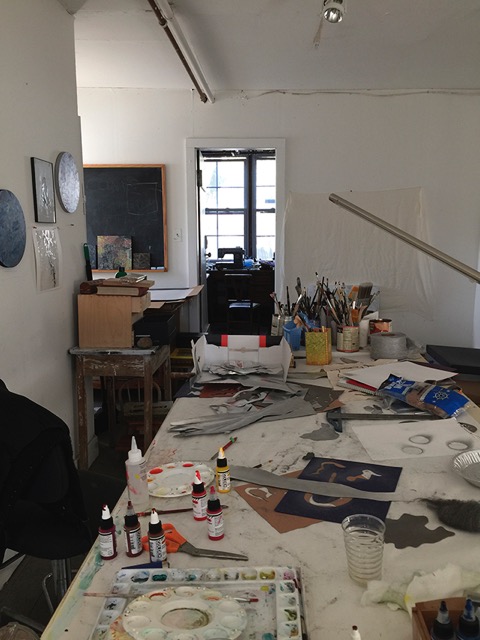
My studio practice consist of working on drawings, paintings, and sculpture in a cubical-like space. however, even when I am not in my studio I am still researching and creating work on my computer or drawing in my sketchbook. I believe that the idea of a studio practice has expanded from working in a confined room to working anywhere, researching and absorbing media and images.

Planet Chaos Digitally Manipulated Ink Drawing 22in x 16in 2015

Planet Chaos
Digitally Manipulated Ink Drawing
22in x 16in
2015

What unique roles do you see yourself as the artist playing that you may not have envisioned yourself in when you first started making art?

A role I see myself as the artist is the means to provide an effective meaning for everything developed in the creation of work from mark-making and medium to content and concept.

When do you find is the best time of day to make art? Do you have time set aside every day, every week or do you just work whenever you can?

Since I am in graduate school I am constantly in the studio working.

Ghoom: The Cosmic Wizard Digitally Manipulated Ink Drawing 22in x16in 2015

Ghoom: The Cosmic Wizard
Digitally Manipulated Ink Drawing
22in x16in
2015

How has your work changed in the last five years? How is it the same?

My work has changed from learning specific techniques to learning how to create work specifically tied to a developing concept.

Are there people such as family, friends, writers, philosophers or even pop icons that have had an impact on the work you do?

I am influenced by the work of Art Spiegelman, Robert Krumb, Jack Kirby, Kehinde Wiley etc.  

If you had an occupation outside of being an artist, what would that be and why?

I would possibly go into teaching because of the high moral reward of helping and educating others.

About

Markworth_HeadshotJeffrey Markworth is a visual artist from Warrensburg, MO, who is currently pursuing an MFA in Painting at The University of Missouri, Columbia. Markworth’s work focuses on the concept of escapism as a means to develop an imaginative universe. Primarily, the work is interdisciplinary, spanning the mediums of painting, drawing, and sculpture.

In the Studio

In the Studio

jeffreymarkworthjr.com

All images copyright of the artist and used with their permission.   
Posted in Digital Art, Digital Media, Painting | Tagged , , , , | Leave a comment

Alexander Kevin Wrencher – Milwaukee, Wisconsin

Title: Silent Eyes Silkscreen and Oil Pastels L80xW90 2014

Title: Silent Eyes
Silkscreen and Oil Pastels
L80xW90
2014

Briefly describe the work you do.

I’m interested in how the past can inform your current feelings; your personality traits and your current behavior are shaped by the past events you have been through. All the experiences that you have been through since you were a little child are dramatically impacting your life right now, even the ones that might seem irrelevant or insignificant. For this reason, the past influence continues to be the main theme behind my work. Currently, I’m at the beginning stages of unfolding my past, examining it, and seeing just how it impacts me.

Tell us a little about your background and how that influences you as an artist.

My mom death is a great influence for me as an artist.  I barely knew  her or who she was,  she was always told me that the past is in the past. I hated that saying because I always thought the was worth sharing and talking about.  As a kid I always loved the stories of others lives, especially family members, but I missed out on my moms stories of her life, she died and so did the story of her.I don’t want that to happen to me.

Title:The Unruly Series: Unruly Scissors. Silkscreen and Oil Pastels L70xW50 2014

Title:The Unruly Series: Unruly Scissors.
Silkscreen and Oil Pastels
L70xW50
2014

The concept of the “artist studio” has a broad range of meanings, especially in contemporary practice. The idea of the artist toiling away alone in a room may not necessarily reflect what many artists do from day to day anymore. Describe your studio practice and how it differs from (or is the same as) traditional notions of “being in the studio.”

All of my critical ideas alway formulat through my writing first, then trickle down into my studio practice. I’m not sure if I have a traditional or nontraditional practices.

What unique roles do you see yourself as the artist playing that you may not have envisioned yourself in when you first started making art?

Actually didn’t see myself as an visual artist!  Never in a zillion years would I have even thought I be where I am, and making the type of working I’m making. Now that I am an artist, I never thought that I would be making autobiographical work.

When do you find is the best time of day to make art? Do you have time set aside every day, every week or do you just work whenever you can?

Whenever I can…I don’t really have a set time of when I make work.

Title:Dear Gloria, Silkscreen, Sewing and Oil Pastels. L48xW38 2014

Title:Dear Gloria,
Silkscreen, Sewing and Oil Pastels.
L48xW38
2014

How has your work changed in the last five years? How is it the same?

My work has significantly involved over the last five years. I started off doing only digital/design base work, now I’m an completely fine arts and printmaking.

Are there people such as family, friends, writers, philosophers or even pop icons that have had an impact on the work you do?

Within my work I’m starting to realize more and more of the influence of The Gaze theory, this interesting concept continues insert itself within my work. It was first developed by Jacques Lacan a french writer and psychoanalyst.

If you had an occupation outside of being an artist, what would that be and why?

I always wanted to be a lawyer.

About

Wrencher_HeadshotBorn in 1994 in Chicago, IL Wrencher considers himself an interdisciplinary emerging printmaker. Wrencher is currently in his Junior year of study at Milwaukee institute of Art & Design, where he also has an emphasis in design and advertising, with addition to his major, Integrated Studio Arts. Wrencher has also been recognized locally and nationally. His first exhibition was an exhibit in YoungArts Miami Gallery, which was part of the YoungArt National Winner Exhibition. Locally, Wrencher was selected as one of the four-member artist who received an solo at Walker’s Point Art Center. Wrencher will be exhibiting coming this summer in July at Walker’s Point Art Center.

alexanderkevinwrencher.info

All images copyright of the artist and used with their permission.   

Posted in Printmaking | Tagged , , , , | Leave a comment

Elodie Abergel – Jerusalem, Israel

Little Finger, 2013 Collages, composite materials, 2.3 x 2.7 feet

Little Finger, 2013
Collages, composite materials, 2.3 x 2.7 feet

Briefly describe the work you do.

My artistic work is contextual art, a type of art committed to serving mankind. I feel like what I call an “artivist” because I chose to create art and to live in Jerusalem and I think that my artwork offers a sensitive and off-beat perspective on the complexity of what is taking place in this specific part of the world. To realize my artworks, I use various materials (paint(painting), photography, video, collage and mixed techniques) to set up projects such as installations. What concerns me most is to express what I wish for, and techniques are not a constraint for me but ” as many ways to tame reality” in the service of an idea.

Tell us a little about your background and how that influences you as an artist.

Being the last in a family of four girls, I’ve always been a dreamer child, immersing myself constantly in the imagination to reinvent reality. The product of a double culture – Jewish-Moroccan on my father’s side and French-communist, having adopted Judaism from my mother, I was bathed in a family atmosphere that was both warm and surreal. From there, I did what I could to keep up with traditional schooling but I was always caught up in my dreams. Even though I persisted on a path that was not mine, I was lucky to have been somehow “jolted” by one of my sisters, Deborah (with whom I still work today) and this allowed me to do what I really wanted to do: CREATE!

Then, I went to the School of Fine Arts in Nantes where I acquired a robust formation to the various techniques. I especially learned how to get to the end of a creative process and to follow my own progress under the expert supervision and mentoring of very open minded teachers.

As soon as i finished the Fine Arts School, I decided to settle in Jerusalem to pursue my work on the subject of ” Territories of Division * “, which started during my studies. Thanks to these teachings, I developed my artistic practice by using various plastic art mediums (painting, collage, photography, vidéo…) but it’s essentially immersion in a new environment that was the source of creativity as shown by the works grouped under the title Shambles (Capharnaüm).

More recently, I had an experience as an artist in residence at NARS in New York, which was also very stimulating by the presence of other artists  from various countries and meetings with actors of the world of the contemporary art. To show my work encouraged me to pursue my personal progress.

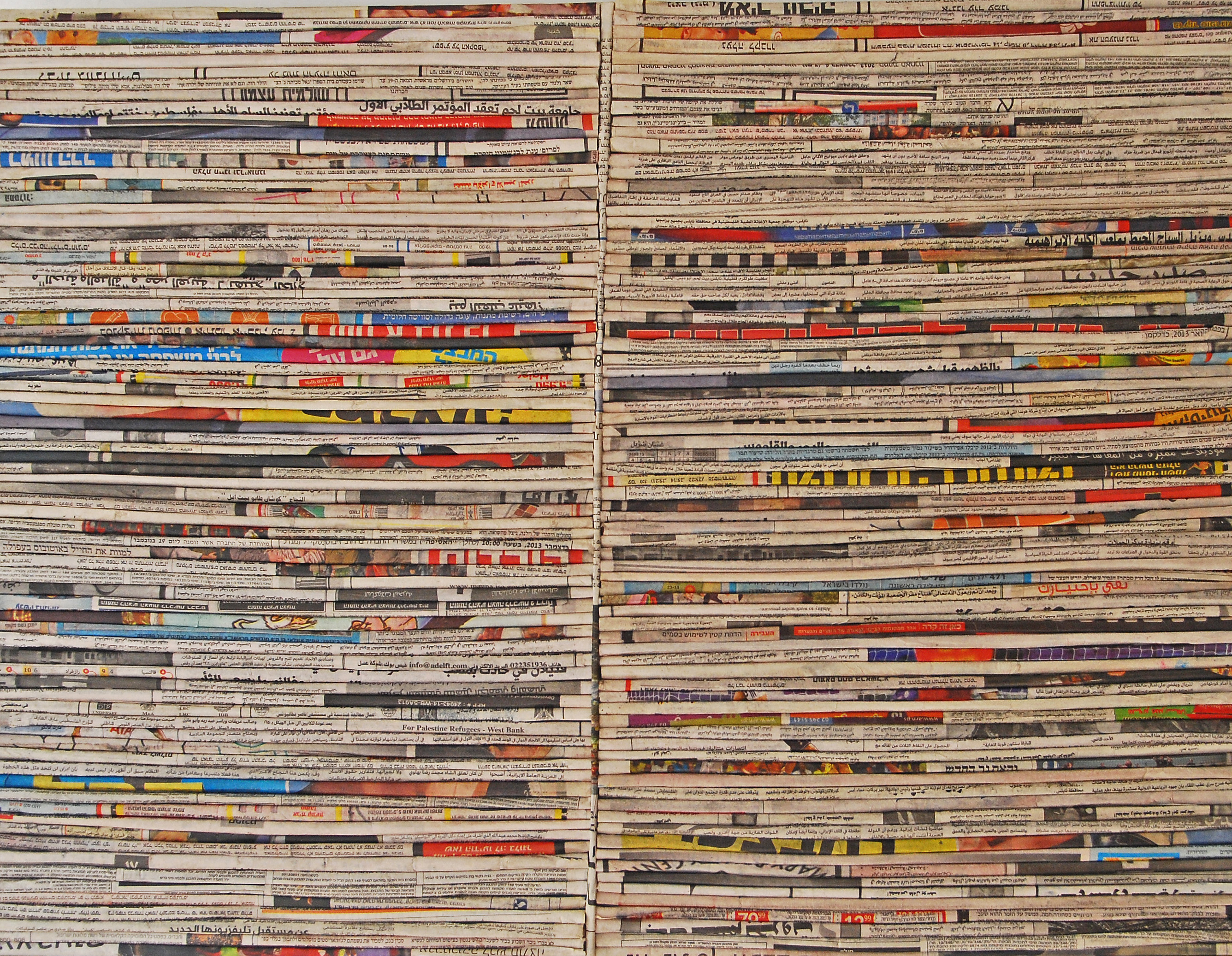
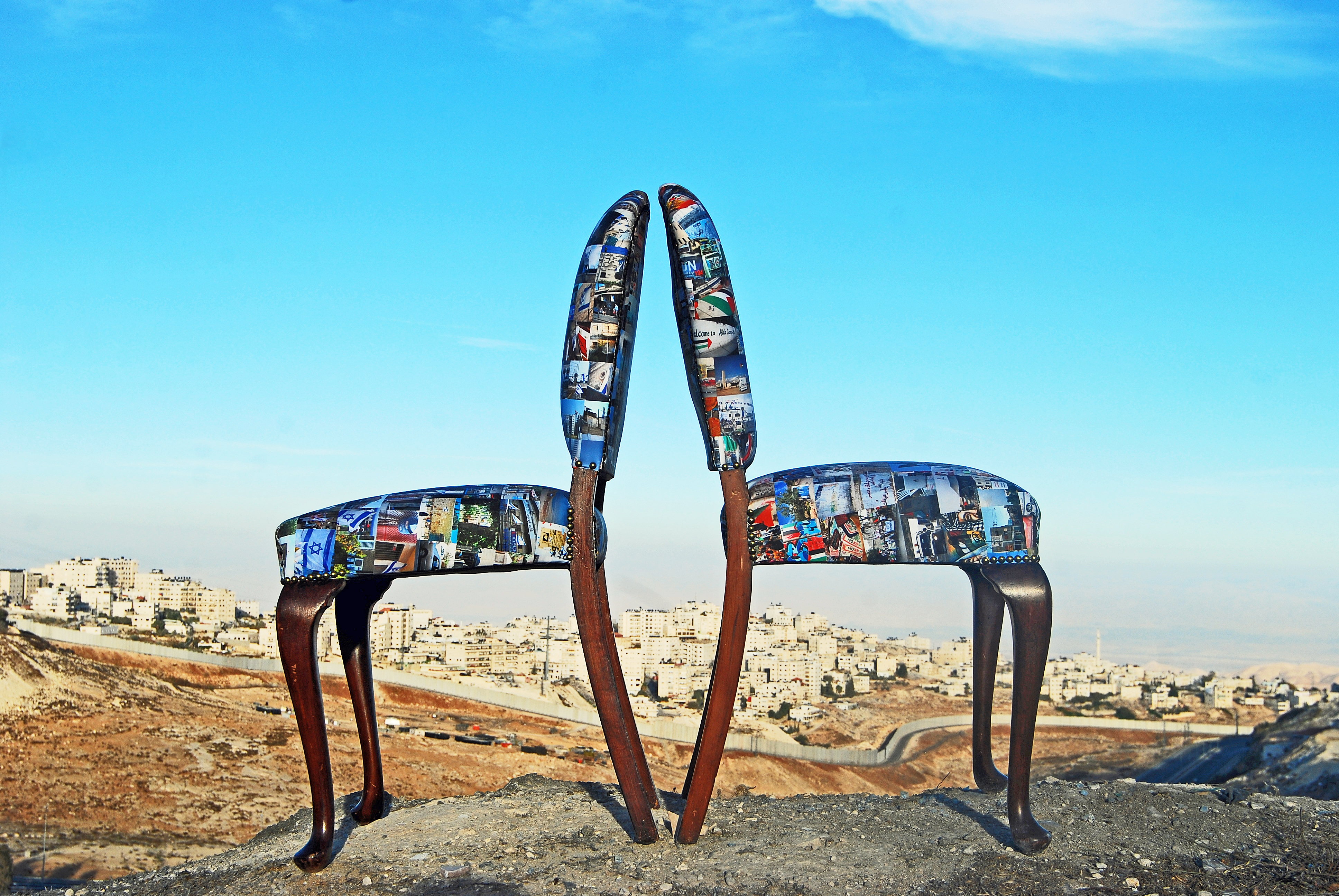
United Nation without "s", 2012 Prints on matte paper and chairs, 13 x 5.9 x 13 feet

United Nation without “s”, 2012
Prints on matte paper and chairs, 13 x 5.9 x 13 feet

The concept of the “artist studio” has a broad range of meanings, especially in contemporary practice. The idea of the artist toiling away alone in a room may not necessarily reflect what many artists do from day to day anymore. Describe your studio practice and how it differs from (or is the same as) traditional notions of “being in the studio.”

My studio is where I draw my materials, where my ideas occur, the streets where I walk with my camera, the traces of exchanges I film between moving walls; whether I find myself in Jerusalem, New York or in Paris, I assemble what I can find in my path.

What unique roles do you see yourself as the artist playing that you may not have envisioned yourself in when you first started making art?

The most difficult when i allow to call myself « an artist » is to think that what one has to express and what takes shape in one’s work may not only interest others but also bring them closer together. As such, I never thought that I could act as a mediator, or even an “agitator” through my artwork in the face of political events.

When do you find is the best time of day to make art? Do you have time set aside every day, every week or do you just work whenever you can? 

The best time is when an idea comes to me! Most often it is true that this happens rather at night, but this is not always the case. Sometimes an idea comes to my mind and a whole series of ideas keep coming. Once I have an idea, there really is no preferential moment to realize it and usually I cannot stop until the work is fully accomplished, sometimes to the point where I lose all sense of time.

Unveiled, 2014, Installation (print on canvas and ironing board), 6.2 x 5.5 feet

Unveiled, 2014,
Installation (print on canvas and ironing board), 6.2 x 5.5 feet

How has your work changed in the last five years? How is it the same?

I feel that my work always addresses the same issues, but my techniques have been refined through my artistic research. I am probably bolder with the materials I use and I have also developed some techniques of my own which I continue to explore. As to the substance of my work, it still questions the world around me, the present times, and the notion of “living together”.

Are there people such as family, friends, writers, philosophers or even pop icons that have had an impact on the work you do?

As I explained earlier, I take inspiration from everything around me, the list of people who have had an impact on my work is therefore immense.

If you had an occupation outside of being an artist, what would that be and why?

If I had an occupation except that of artist, it would probably be a manual one close enough to the realm of art (fashion, decoration, design …) or a social occupation. Besides, social work is quite similar to my artistic mediation activities between the Israeli and Palestinian people for the Zellige Paris-Jerusalem association and also with disadvantaged young people (Israel, Palestine, France, Brazil …)

About

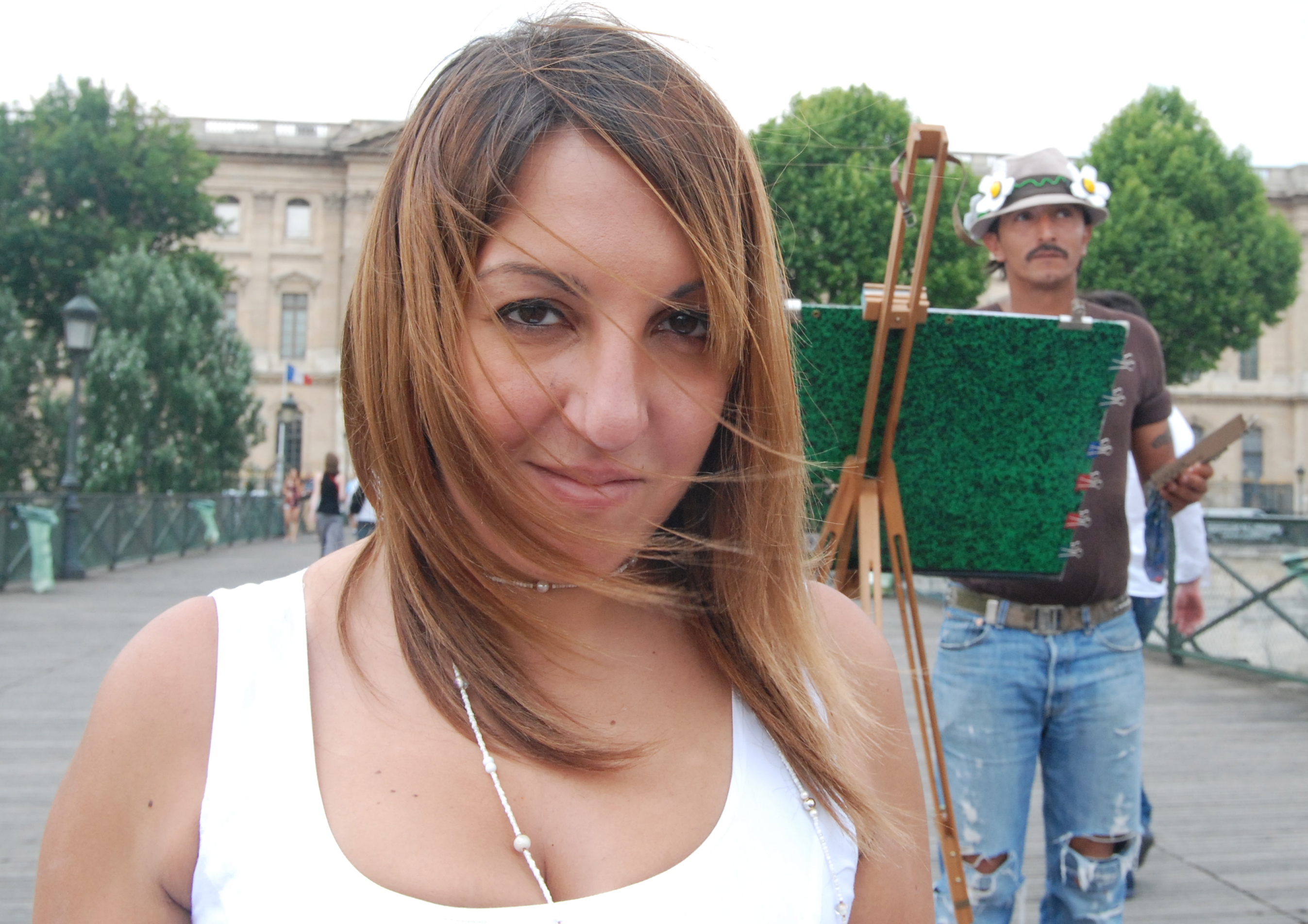
Headshot_elodie abergelThe young Franco-Israeli artist Elodie Abergel has been part of the “contextual art” movement for several years, coupling her artistic work with her associative commitment to “Zellige Paris-Jerusalem”, where she is both the founder and coordinator. After her studies in Fine Arts in Nantes, she moved to Jerusalem to pursue her work on what she calls the “Territories of Sharing” (“Territoires de Partages”)*.

Through her artistic vision and works, she has developed the concept of “art of the present moment”, offering up a humanistic yet poetic and critical view of politics in the Middle East. She identifies herself as a committed activist and sees this land as an open workshop. By immersing herself in the heart of the Israeli and Palestinian culture, she has developed an art which is participatory and engaging. 

The focal point of her art is the territory she works within, the borders of which house her energy, whether they are visible or not. To convey this focus to her audience, she uses materials found in her surroundings, transforming them through different mediums (photography, installations, video, performance…) as a function of her expression.

In her work, she also focuses on “repetition” to highlight the absurdity of the Israeli-Palestinian conflict.

6)outside studio

elodieabergel.com

All images copyright of the artist and used with their permission.   


Posted in Performance, Uncategorized | Tagged , , , , , | Leave a comment

Jodie Masterman – Gainesville, Florida

Coffee Cup and Saucer, 2014  Photo Credit Charlie Cummings

Coffee Cup and Saucer, 2014 Photo Credit Charlie Cummings

Briefly describe the work you do.

I create hand-built and thrown porcelain vessels. My work aims to inform an audience that is interested in the homemade and how handmade tableware can enrich the home. I envision my pieces making every dining opportunity a celebratory and uniquely appetizing experience.

Tell us a little about your background and how that influences you as an artist.

As a child, I would sketch images from books, spend endless hours cross stitching images of pigs, or take photos of seagulls down by the sea, while my friends were playing with Barbies or later on, make-up and boys..I have always been drawn to 2D art, but it wasn’t until after high school, when I took a throwing class at a local studio that I fell in love with clay. I admit that part of the reason I actively pursued and fought for clay was my competitive nature. Everyone in the class was advancing during the year, while I was still making thick ash trays and pots for pencils. Centering was my enemy. Despite the challenge, clay won me over and quickly lured me in with its unique canvas for my drawings and the endless possibilities it presented. I loved the idea of filling my friends’ and families’ cupboards and tables with my pottery, which I continue to do. After a couple years of having a space at this studio and taking classes at a community college, I transferred to the Appalachian Center for Craft and studied with incredibly knowledgeable professors and artists in residences who continue to encourage me to try new approaches in clay and experiment with all it has to offer.

Tea Time, 2013 Photo Credit Ben Corda

Tea Time, 2013 Photo Credit Ben Corda

The concept of the “artist studio” has a broad range of meanings, especially in contemporary practice. The idea of the artist toiling away alone in a room may not necessarily reflect what many artists do from day to day anymore. Describe your studio practice and how it differs from (or is the same as) traditional notions of “being in the studio.”

Being the type of artist that relies on a space that is well equipped with kilns, wheels, and slab rollers, I have learned to adapt to being in all different types of studios that give me the opportunity to make. In undergrad, I had a large and beautiful study overlooking an expansive lake, yet I took this for granted. I often fantasize about this far off land of sinks, tables and ceiling high shelving. Today, I have a smaller space, but it teaches me to let go of work and move on towards bigger and better horizons. As always, a long day in the studio always involves countless cups of coffee and a good audiobook to keep my energy levels up.

What unique roles do you see yourself as the artist playing that you may not have envisioned yourself in when you first started making art?

I always knew you could be famous and have this brilliant career as an actor, a writer, or a musician but it took me a while to realize that you can also have the same fame and make a career out of being a visual artist. I guess I thought that visual art was on the sideline to other chosen paths and artists who found fame didn’t find it until they were dead, when strangers were scavenging through their homes and finding cut off ears and pretty great paintings. Being an artist is a lifelong career and lesson, it gives you this position of being a unique and integral part of the growth and wellbeing of a community. Being an artist, has given me endless opportunities to help people and places succeed and gives me a wealth of knowledge and problem solving skills that I could never have imagined receiving and couldn’t imagine receiving from anything else. I always tell my students that if you really want to succeed as an artist you need that drive and passion to keep you on your toes and to have the motivation to put in the hours to stand out. I remind them that talent plays little or no role in success, which is something I have to remind myself of every day.

When do you find is the best time of day to make art? Do you have time set aside every day, every week or do you just work whenever you can? 

I find that the morning is the best time to make work. It’s the best feeling to have accomplished something before noon, while others are still deep in slumber after late-nights in the studio. I love leaving the studio at a descent hour, and be able to make a nice dinner and bump in to the night-goers as they begin their routine. Don’t get me wrong, I will stay through the night if need be, but I do get a little scared of the dark and the monsters that lurk in studio corners. When I’m not in school or teaching, I try to make it to the studio every day. If I can’t make it there, I am scheming in my sketchbook and researching. I’m currently working on trying to schedule my studio time as well as some relaxation, cooking, and drinking of wine, time.

Coffee Cups and Saucers, 2014 Photo Credit Charlie Cummings

Coffee Cups and Saucers, 2014 Photo Credit Charlie Cummings

How has your work changed in the last five years? How is it the same?

My approach to clay has gotten a little looser and more experimental in the last few years. My earlier work was thrown tighter and was heavily influenced by Royal Doulton and Royal Albert China. I am currently interested in designing and executing tableware that best illuminates food and remains practical but also playful.

Are there people such as family, friends, writers, philosophers or even pop icons that have had an impact on the work you do?

The structure of my family is built on meals and countless cups of tea, so creating vessels that could be used in the home of another family, similar to my own, gives me the drive and passion to continue to make functional ceramics. I am inspired by the feedback from family and friends while they are eating a meal utilizing my dishes. My Welsh and English Grandmother have had a huge impact on my work ethic and ideas on. Thinking back to my childhood, I can’t imagine them without something in their hands, whether it was a paint brush, an  embroidery needle, a whisk or rack of lamb. This handmade and homemade sensibility is represented in all aspects of my life.

If you had an occupation outside of being an artist, what would that be and why?

This is the question that keeps me up at night. I get frustrated that I can’t have a career and succeed in many kinds of various occupations. As a child, I fantasized about being a window cleaner (to be able to snoop in people’s houses while they were at work and to get to use that squeegee!) or being a cashier at a supermarket (I thought they were the luckiest people in the world to be able to do the magical, “beep!” “beep!” every day). It’s safe to say that unlike most parents, when I decided to go to college to pursue a career in ceramics, they were quite relieved. These days, I spend more of my energy day dreaming of being a brain surgeon or a lawyer (blame Greys Anatomy and Scandal) or being a Yogi Master or a world renowned chef. You could say I have a desire for fame. I better get to cleaning those windows!

About

JodieMastermanJodie Masterman is a ceramic artist, born in Swansea, Wales who moved to Knoxville, TN during High School. Jodie holds a BFA from the Appalachian Center for Craft, in Smithville TN. After receiving her BFA, Jodie spent a summer as an apprentice potter at Leach Pottery in St. Ives and later returned to the US to pursue her licensure in K-12 Art Education. Jodie is currently at the University of Florida as a Post- Baccalaureate Student.

JodieMasterman_DinnerRitual_2014

jodiemasterman.com

All images copyright of the artist and used with their permission.   


Posted in Ceramics | Tagged , , , , | Leave a comment

Meredith Kennedy – Elgin, Illinois

Untitled (from Surveillance), Inkjet print, 17x22", 2013

Untitled (from Surveillance), Inkjet print, 17×22″, 2013

Briefly describe the work you do.

I make photographs about themes or subjects that have had some sort of an impact in my life. My work ranges from depictions of depression to themes about Christian culture and even my documented travels. This all leads back to my personal narrative in some way. My primary medium is photography because ultimately I’m interested in telling visual stories about the things that are most important to me, and I find that using a camera is the most relatable and accessible way to do that.

Tell us a little about your background and how that influences you as an artist.

I was born in Eastern Kentucky where I lived until I was 15 when my family moved overseas to Singapore. I lived there for 3 years until I moved to Chicago to study fine art at Judson University where I’ll graduate from this year. In the grand scheme of things, I am incredibly young, especially as an artist, but I’ve had some pretty unique experiences so far in my life. This has given me a pretty diverse portfolio, which I don’t really consider to be a weakness as some might. 

Growing up, I heard my dad and my grandpa tell the same stories over and over. Even now I could probably tell you every one of them word for word, because I grew up absolutely loving any and all stories. No one else in my family is really an artist, but they’re certainly storytellers. I came to believe that my story, as well as everyone else’s, is worth telling. As long as my work reflects what is important to me, I’ll never tire of exploring different subjects and themes. This may sound a little self-centered, but everyone’s stories are interconnected. We all deal with many of the same things, and I think this is why people are drawn to certain universal themes. Aside from my work, I want to live deeply and honestly in whatever situation I’m in, but I want that to just naturally carry over into my work.

Untitled, 35mm scan, 2012

Untitled, 35mm scan, 2012

The concept of the “artist studio” has a broad range of meanings, especially in contemporary practice. The idea of the artist toiling away alone in a room may not necessarily reflect what many artists do from day to day anymore. Describe your studio practice and how it differs from (or is the same as) traditional notions of “being in the studio.”

When I think of a stereotypical “artist studio”, I think of a dark basement absolutely covered with papers and paint strewn all over the place. There’s probably old rags creating mold in a corner and a “do not disturb” sign on the door. Thankfully, my studio routines look nothing like this! I share space at my university with several other artists, and I absolutely love getting to work with them. We get to share ideas and help critique each other when needed, and I think this kind of studio culture creates a sort of family that’s really unique. My routine differs depending on what stage of a project I’m in, but I always feel like I spend too much time on a computer either researching or editing. However, as much as I love working in community with other artists, I think my happy place is definitely when I’m behind my camera in a photo studio, even if it’s in a dark basement!

What unique roles do you see yourself as the artist playing that you may not have envisioned yourself in when you first started making art?

I’m still very much working on finding my voice as an artist. What I’ve continually had to learn and relearn throughout my projects is that making art takes a lot of courage. It takes guts to be truly honest with both myself and the viewer, and I’m not sure if I’ll ever really master that. But I think I have a really unique opportunity as an artist to use a medium that is so accessible for so many. Just by nature of the medium, photography holds a lot of power and therefore responsibility as well. 

When do you find is the best time of day to make art? Do you have time set aside every day, every week or do you just work whenever you can? 

This changes so much for me. Sometimes, I make work every day, and sometimes, I have weeks where I just feel like I’m stuck or unable to make work until I resolve something. I guess my routines are rarely consistent. 

Christian Living No.4, Inkjet print, 22x17", 2013

Christian Living No.4, Inkjet print, 22×17″, 2013

How has your work changed in the last five years? How is it the same?

I’ve really only been making work for about five years, so my work has changed drastically since then. I think the biggest change is that now I want to make work that actually means something to me rather than blindly shooting whatever I can, so basically there’s more thought process in my work now. As much as I love experimenting just for fun, I’m not striving to make things simply to ‘wow’ my friends anymore.

Are there people such as family, friends, writers, philosophers or even pop icons that have had an impact on the work you do?

I find so much inspiration from photojournalism and travel writers, and I’m sure I’ll never tire of looking at the work of people like Carolyn Drake, Cig Harvey, Alec Soth, Anna Gaskell, William Eggleston, Lalla Essaydi, and Sally Mann, to name a few. 

If you had an occupation outside of being an artist, what would that be and why?

I have absolutely no musical ability, but I think it’d be so fun to be in a band and just tour for a living. If I could choose, I’d definitely play the bass. 

About

01-headshot(72-640px)Meredith Kennedy is currently a university student at Judson University near Chicago majoring in Fine Art/ Photography with a minor in Graphic Design. She graduates in May and is planning on working towards getting a teaching certificate to teach high school art. She loves exploring new places and cultures almost more than she loves hearing the stories of those she has met along the way.

02-studio(72-640px)

www.meredithkennedy.net

All images copyright of the artist and used with their permission.   
Posted in Photography | Tagged , , , , | 1 Comment

Kelly Hider – Knoxville, Tennessee

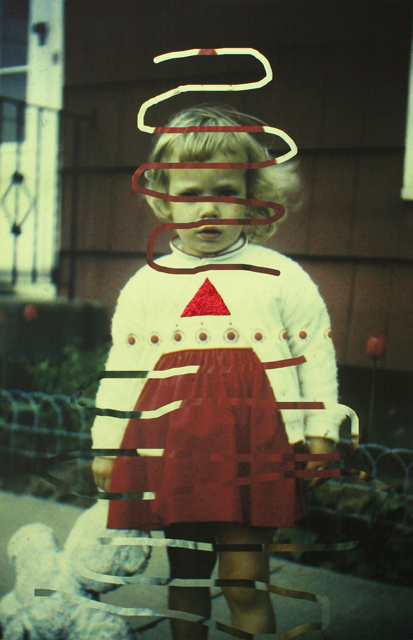
Girl / Power Triangle Enlarged photograph, Photoshop, and glitter flocking 36" x 24" 2014

Girl / Power Triangle
Enlarged photograph, Photoshop, and glitter flocking
36″ x 24″
2014

Briefly describe the work you do.

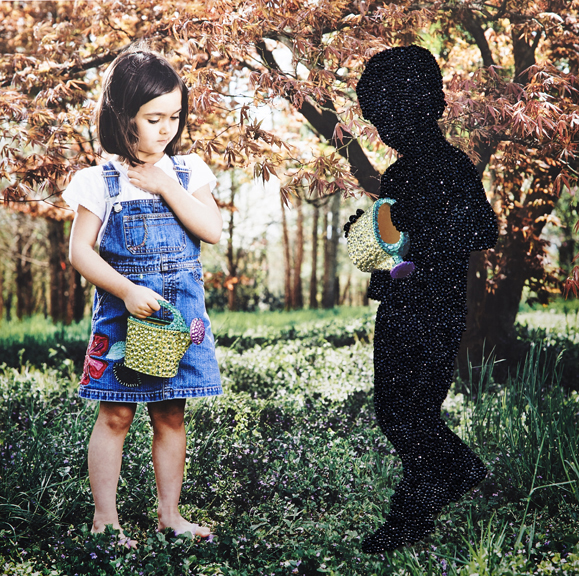
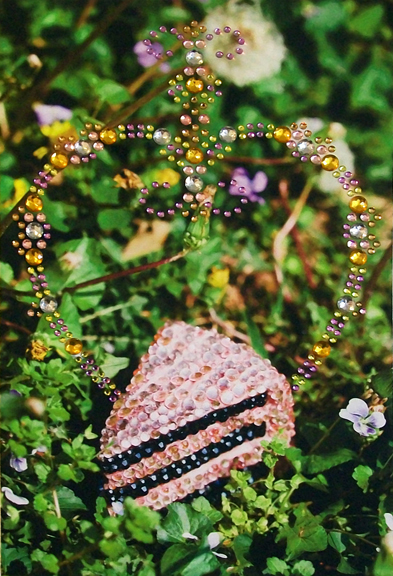
While my academic background is in painting and drawing, I work closely with photography, collage, and am drawn to working with untraditional materials, which recently has been sparkly materials like rhinestones and glitter. I either repurpose found photographs or create photographs whose subjects are domestic, and manipulate the images to create somber narratives which are often balanced with humorous or bizarre elements. While different photographic archives are utilized as source material, all of the work employs a visual language of decoration and cancellation to support reoccurring themes of death and resurrection. They evoke emotions ranging from melancholic to celebratory, leading viewers to contemplate their own personal family histories. 

Tell us a little about your background and how that influences you as an artist.

Growing up in Rochester, NY, I spent my first 18 years living in a 225-year-old haunted house. As young children there were ghosts that my sister and I talked to, completely unfazed, yet were tormented by others as older, more aware, teenagers. I also had a complicated and difficult upbringing. This has definitely had an influence on the subject matter of my work which can be of a haunting nature and often showcases the precariousness of family and childhood innocence. Some of the figures in my work are literally ghosts, and some represent “personal ghosts.”

Another Helper Inkjet print mounted on Sintra with glued rhinestones  36” x 36.5” 2013

Another Helper
Inkjet print mounted on Sintra with glued rhinestones
36” x 36.5”
2013

The concept of the “artist studio” has a broad range of meanings, especially in contemporary practice. The idea of the artist toiling away alone in a room may not necessarily reflect what many artists do from day to day anymore. Describe your studio practice and how it differs from (or is the same as) traditional notions of “being in the studio.”

My studio is fairly traditional, although I don’t have the luxury of immense amounts of time to spend there like I did in graduate school to sit and think, read, or toil for long stretches. Because of this my studio practice is very efficient, and while I do spend time brainstorming and working things out, it can happen remotely. I carry a small sketchbook in my purse, as well as print small snapshot-sized photographs to sketch on top of with sharpie, which I can do in my studio or anywhere. I often solve pieces in my head while I’m driving in the car. Also, a lot of my process involves working with images in Photoshop on the computer, which again, I can do anywhere. Once the images are printed and mounted, I work in the studio more frequently to complete the surface manipulations and by that time It’s mostly execution.

What unique roles do you see yourself as the artist playing that you may not have envisioned yourself in when you first started making art?

I enjoy being an emerging artist and having a dialogue with the larger contemporary art world, as well as being an active artist in the local art community here in Knoxville. Being an artist can be such a self-indulgent practice, and I have learned that I need to balance that out with a career serving other artists and the larger art community. I spent years after grad school as an adjunct instructor at various community colleges, teaching young artists foundations-level skills in Drawing, Painting, Photography, and Art History. I was also there to fuel the few who had intense passions to be artists and many of my old students have gone on to BFA and MFA programs. I am now working full-time as a Gallery Manager, and enjoy promoting the careers of other artists by organizing and installing exhibits. 

When do you find is the best time of day to make art? Do you have time set aside every day, every week or do you just work whenever you can? 

Because I have a full-time job, I set aside one night a week after work, and a day on the weekend for time in the studio. But, as I said before the “studio” is portable, and a state of mind that I take with me in the car or even home.

Baby Cakes Inkjet print mounted on Sintra with glued rhinestones  16” x 10.5”   2012

Baby Cakes
Inkjet print mounted on Sintra with glued rhinestones
16” x 10.5”
2012

How has your work changed in the last five years? How is it the same?

Five years ago I had finally abandoned the notions of being a painter, and embraced what I really wanted to do which was manipulate old photographs. I was just beginning to build a visual language with these new materials, and had started with what was familiar and emotionally potent: personal photographs from my childhood. Since then it has been a slowly evolving exploration of new archives of photographs, found and created, as well as pushing my manipulations of them. As of recently, I’m working with an archive of slide film images from the 1950’s and 60’s. While the imagery is still domestic and familial, they were taken during decades that I don’t relate to since I wasn’t alive yet. It has changed my treatment of them significantly, and I am having more of a formal dialogue with them, and am taking way more risks.

Are there people such as family, friends, writers, philosophers or even pop icons that have had an impact on the work you do?

The most influential artists are the ones who remind me that it doesn’t take a lot of effort for an image to make an impact. Artists like John Stezaker, Ralph Eugene Meatyard, John Baldessari, Robert Ryman, and John Pfahl, prove that important lesson to me over and over again. Then there are the mixed-media greats: Robert Rauschenberg, Louise Bourgeois, and Bruce Conner. I attribute my humor- both in my work and as a person- to the endless hours of Pee Wee Herman I watched as a kid. I can honestly say that the musician best known as Bonnie Prince Billy, and all of his early work as Palace Brothers and Palace Music has also impacted the tone of my work.

If you had an occupation outside of being an artist, what would that be and why?

If I wasn’t an artist, I’d probably be a psychologist. I came very close to pursuing Art Therapy as a career, but was discouraged because in 2000 when I started college it wasn’t yet an accredited field, even in New York State where I’m from. Now Art Therapy programs and jobs are popping up all over the place.

About

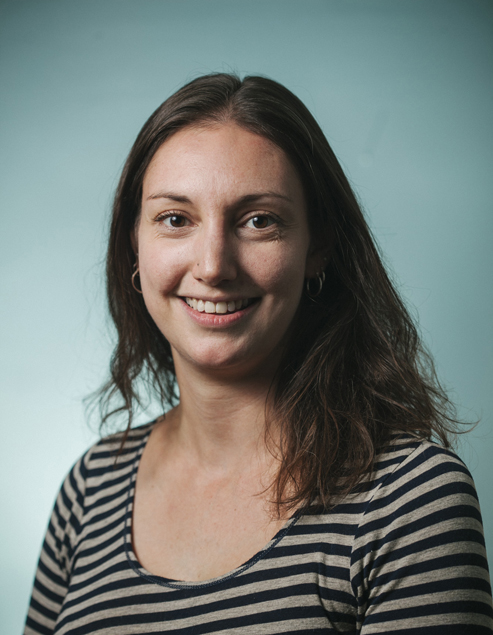
KellyHider-headshotKelly Hider was raised in Rochester, NY. While she began her artistic career focused on painting and drawing, she steadily gravitated toward working with photography, mixed media, and installation. Kelly Hider received her BFA from SUNY Brockport in 2007, and an MFA from the University of Tennessee in 2011. She has had solo exhibitions at the University of Rochester and at SUNY Brockport in Rochester, NY, The Ewing Gallery and Gallery 1010 in Knoxville, TN, and the Blackberry Farm Gallery at the Clayton Arts Center in Maryville, TN. Hider has recently gave a lecture and participated in a two-person show outside of St. Louis at the Boyle Family Gallery, at Lindenwood University, called Remnants. She is the Gallery Manager at Arrowmont School of Arts and Crafts and resides in Knoxville, TN where her studio is located.

Sketchbook

www.kellyhider.com

All images copyright of the artist and used with their permission.   
Posted in mixed media, Photography | Tagged , , , , | Leave a comment