Lauren Schmidt – Glen Ellyn, Illinois

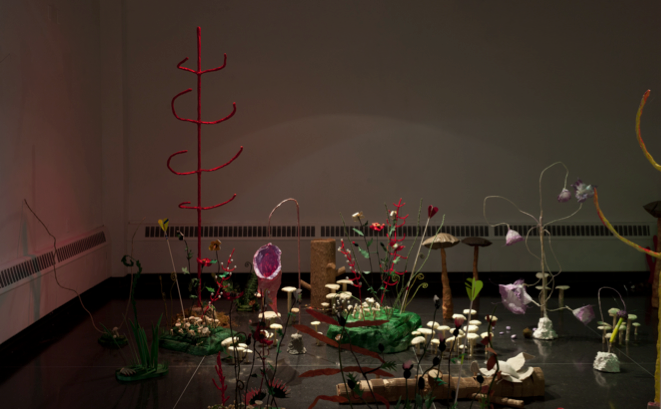
Veneficus, installation view, mixed media (steel, plaster, polystyrene, wire, tissue paper, acrylic, concrete, cardboard, tape, wood, yarn, enamel, glazed ceramic, leather, wax, found objects), dimensions variable, 2015

Veneficus, installation view, mixed media (steel, plaster, polystyrene, wire, tissue paper, acrylic, concrete, cardboard, tape, wood, yarn, enamel, glazed ceramic, leather, wax, found objects), dimensions variable, 2015

Briefly describe the work you do. 

I construct immersive installations and cut paper works which serve as allegories of survival within hostile yet appealing environments. Among treacherous environments, certain survival behaviors are necessary in order to navigate the hazardous landscape. My works divulge into the aftereffects of toxic people and elements in our surroundings as well as destructive human behaviors such as deceit, manipulation, envy, anger, and resentment which can be self-poisoning. My work serves as a warning and as an antidote to the venom spread by wrongdoers who use appealing sweetness to lure and victimize their prey. As the saying goes, ‘you catch more flies with honey than vinegar.’

For the past year, I have been researching poisonous plants native to North America, and have become bewitched by their power, beauty, link to cosmetics, illegal drugs, and medicines as well as witchcraft and Greek mythology. My most recent show, my MFA thesis exhibition, was a massive installation in which the viewer had to maneuver around a charming yet strange garden of such poisonous plants— beautiful on the surface yet dangerous if approached too closely. The work serves as a reminder to keep such dangers, both physical and metaphorical, at bay.
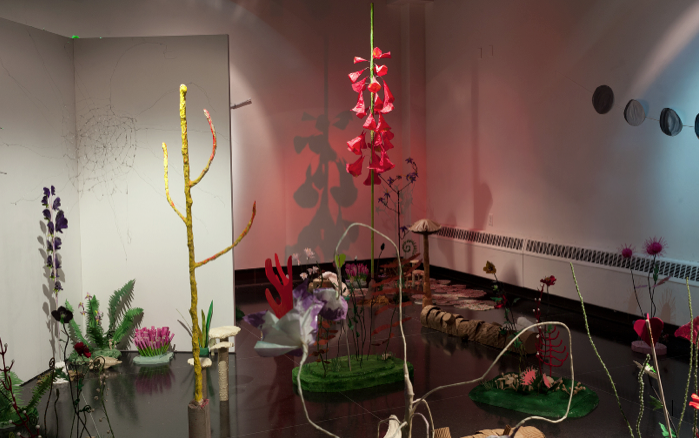
Veneficus, installation view, mixed media (steel, plaster, polystyrene, wire, tissue paper, acrylic, concrete, cardboard, tape, wood, yarn, enamel, glazed ceramic, leather, wax, found objects), dimensions variable, 2015

Veneficus, installation view, mixed media (steel, plaster, polystyrene, wire, tissue paper, acrylic, concrete, cardboard, tape, wood, yarn, enamel, glazed ceramic, leather, wax, found objects), dimensions variable, 2015

Tell us about your background and how that has had an influence on your work and on you as an artist.

I knew I wanted to be an artist in one capacity or another since I was six years old, spending hours on end working in the basement that functioned as my studio in my parents’ house. From elementary school through high school, I loved everything and anything that had to do with art—I remember impressing my peers and teachers in middle school with drawings I would make on the chalkboards. I participated in many art shows and doing so fostered my interest in the arts. I entered the Art Education program at NIU, and realized my true calling as an artist and educator. My past experiences in theater and fashion have informed my current art practice; theatricality, fashion, sewing, set construction and installation, character design—everything interweaves in odd and unexpected ways.

The concept of the artist studio has a broad range of meanings in contemporary practice. Artists may spend much of their time in the actual studio, or they may spend very little time in it. Tell us about your individual studio practice and how it differs from or is the same as traditional notions of “being in the studio.”

My studio practice often begins with writing and researching. I have sketchbooks full of very little drawing, but writing instead. Putting thoughts into words helps me visualize concepts, giving me the rules and structure that I need when working in the physical realm. Reading books, online articles, and looking at artists of a similar vein guides my ‘pre-studio’ work, inspiring a flow of ideas. Since I have been in graduate school the past three years, it has felt like a luxury to have a great amount of independent studio time—when I was working post-undergrad as an art instructor, studio time was little to none. Therefore, any time during grad school when I wasn’t in class or teaching, I went to my studio for solid chunks at a time. I often lost track of time and felt like the day went by way too quickly!

What roles do you find yourself playing that you may not have envisioned yourself in when you first started making art?

Entering the teaching profession has prepared me for the responsibilities of working as a professional teacher and artist. I never envisioned that I would one day become a teacher or professional artist, nor that I would enter graduate school and teach digital design (when I didn’t even have much experience in Adobe Illustrator). My experiences as an art teacher taught me that we play multiple roles: leader, disciplinarian, advisor, cafeteria monitor, comedian, philosopher, entrepreneur, etc. To be an artist or professional of any kind requires a lot of skills other than making art—organization, self-promotion, researching, writing, budgeting, resourcefulness, and flexible thinking. An artist or creative person’s life is full of surprises, twists, and turns.

When do you find is the best time to make art? Do you set aside a specific time everyday or do you have to work whenever time allows?

For the past three years in graduate school, my class/teaching/work schedule has dictated when I get to go to the studio—luckily, I have had most afternoons and evenings free, so I have had the luxury of spending a great deal of time in the studio during the day. Strangely, I am a morning person and not a night owl anymore. I work in an office or teach in the mornings, and usually around noon or four p.m. I head to the studio for the rest of the day or evening. For the past six months of working on my MFA thesis show, I spent almost every single afternoon and stayed until eleven or midnight most nights. On average, I spend about five or six hours per day in the studio. To stay on a schedule, I think of the studio as a ‘job’ albeit a really enjoyable one —I try to put in at least thirty hours a week. I was lucky to have an absolutely huge studio in grad school so I wanted to take advantage of the space as much as possible, especially since it was rent-free!
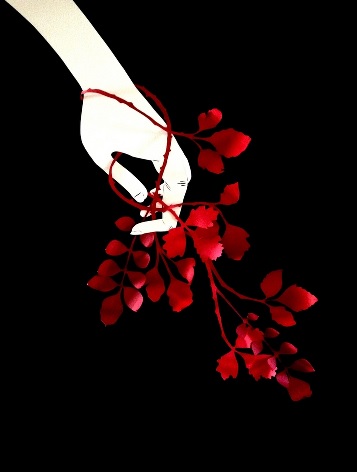
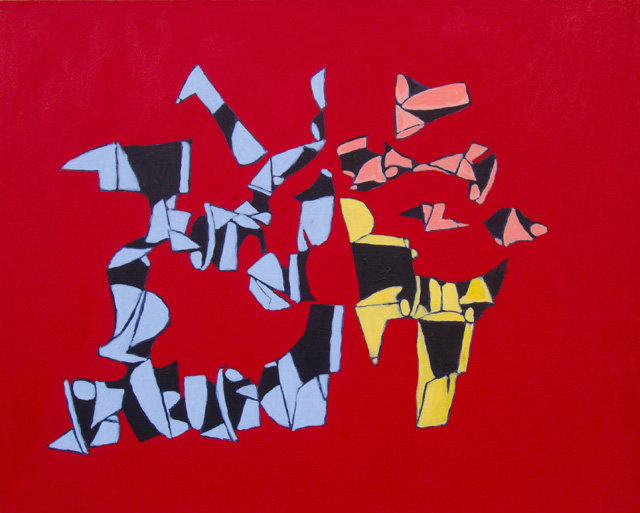
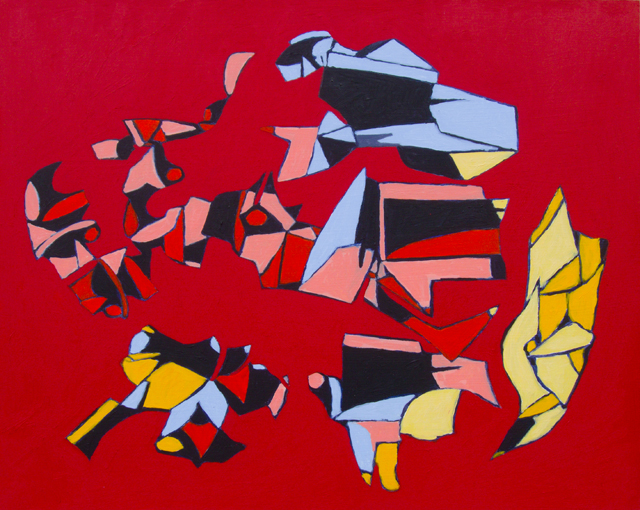
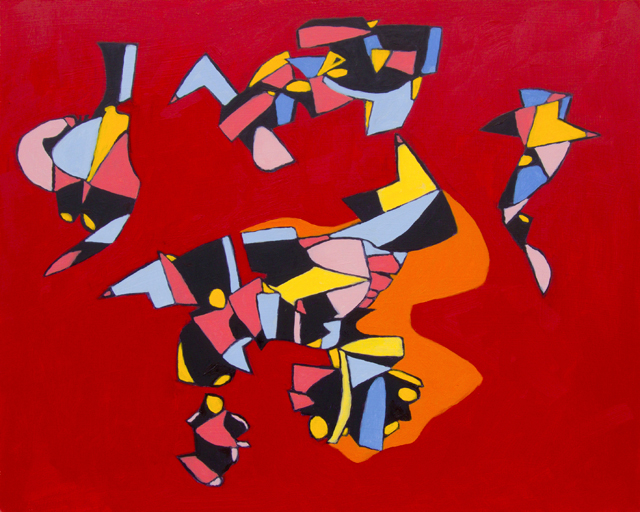
The Remedy, hand-cut paper, 19.5” x 25.5”, 2015

The Remedy, hand-cut paper, 19.5” x 25.5”, 2015

How has your work changed in the past five years? How is it the same?

My interests are varied and I like to dabble in many mediums, including sculpture, paper-cutting, puppetry, stop-motion animation, costumes, installation, ceramics, fibers, among other things…so I feel my work is in a constant state of flux. I almost think I have a form of artistic ADD, since I get bored with one thing pretty easily, but I find ways of tying disparate things together. Entering grad school, I had a very random portfolio of experimental stuff, such as altered teddy bears and resin sculptures. Through trial and error, I narrowed my work to the current collective of art I’m working on, and see it going forward into interesting directions in the future. I recommend artists keep making things, no matter how terrible or strange, and then make ten more.

How have people such as family, friends, writers, philosophers, other artists or even pop icons had an impact on the work you do?

A great deal of things outside of “art” inspire the work I do—folklore, myths, magick, spirituality, chemistry, medicine, detoxing, poisonous plants and animals, toxins in our bodies, souls, and environments, Netflix documentaries about food and the history of narcotics, stop-motion, animation, the 1960s, Michel Gondry, William Blake poetry, Snow White, Allison Schulnik, Nathalie Djurberg, Hayley Morris, Elsa Mora, Bruce Bickford, Jim Henson, Yayoi Kusama, Kako Ueda, Lilli Carre, my friend Jessie Brugger, Chiaozza, Danielle Peters, the forest in moonlight, the desert at dusk, modest materials, cheap things, transformations, dioramas at the Field Museum, movies before the CGI takeover, shadowboxes, secretes, mysteries, human behavior, Guillermo del Toro, theatrical lighting, window store displays, psychology, Simon Doonan, thrift stores, even (gasp!) Pinterest. I think many sources should inform our art practice; how we process things we are exposed to everyday is where I think intriguing art comes from.

Have you ever been pulled in the direction of a pursuit other than being an artist? What are your other interests? 

Absolutely. I think growing up, I had many dreams and pursuits in mind and have tinkered with the idea of multiple avenues of expression. During my young school years, in addition to art I was also deeply invested in my schools’ Theatre programs, where I began designing costumes for productions starting in middle school. In high school, I was the main costume designer for four stage shows, and that was the catalyst for me to enter fashion design school to become a fashion designer. After a semester at a small private school and showing work in a few runway shows, I realized that as much as I loved fashion, a career (other than retail management) as a designer was not in the cards. I still love fashion of course though, and have started incorporating costumes into my art practice—I think adding a performance aspect to my work would be exciting to embark upon. Since I was very young, I have also had a deep love for stop-motion animation throughout the years, as I grew up watching such films and made several of my own in my adolescence. One of my animated films was even chosen for a television show on HBO, which to this day has been one of my most favorite and proud accomplishments. My work reflects my interest in the medium, as many of my sculptures are intended as ‘puppets’ which can be posed and activated through the process of animation.

About
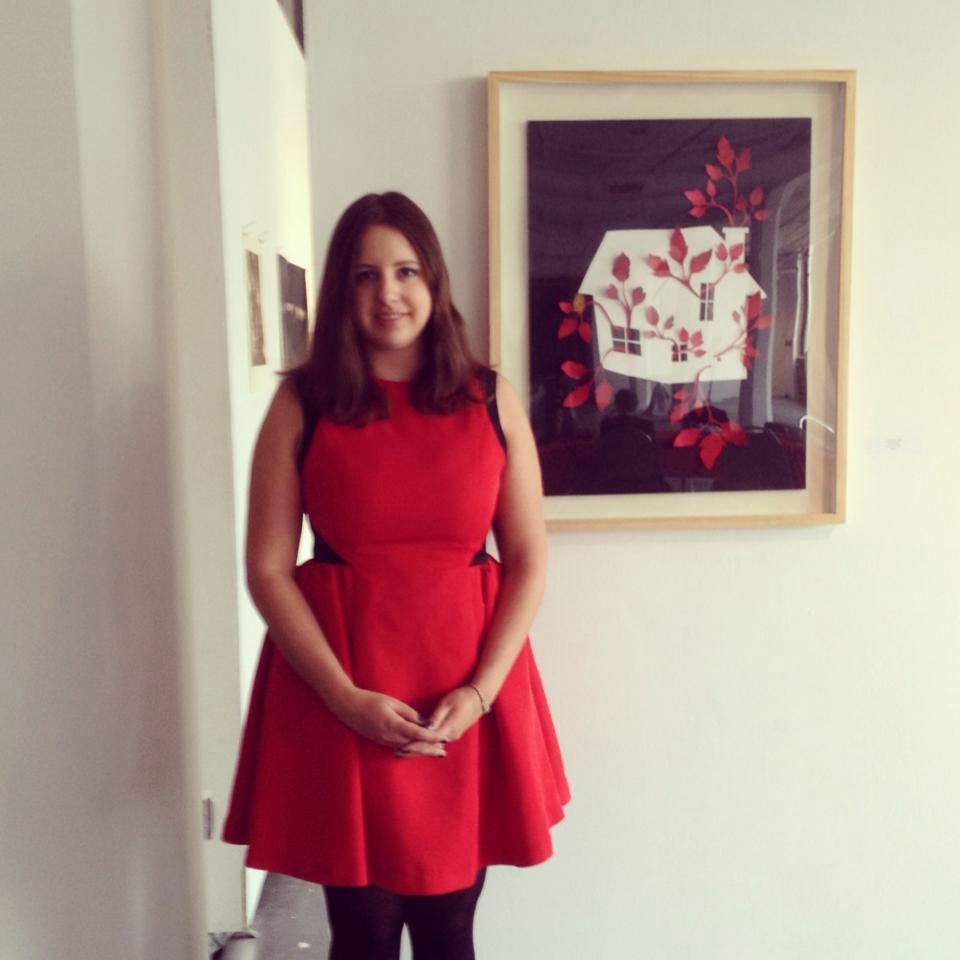
image001Schmidt is a recent graduate of the MFA program from Northern Illinois University (2015) and also holds a Bachelors of Science in Art Education from Northern Illinois University (2010). She has shown her work at the Zhou B. Art Center in Chicago as well as the Lacuna Artist Lofts and Studios, the Silver Room in Wicker Park, and various galleries in the DeKalb area. As a former fashion student, her work has been featured in fashion shows at the Victor Hotel in Chicago and Heat Nightclub in Schaumburg, where her designs walked the runway with Forever 21, Evil Kitty, and independent Chicago designers. With a background in education, she has taught the visual arts in various capacities to students of all ages throughout the Chicagoland area.
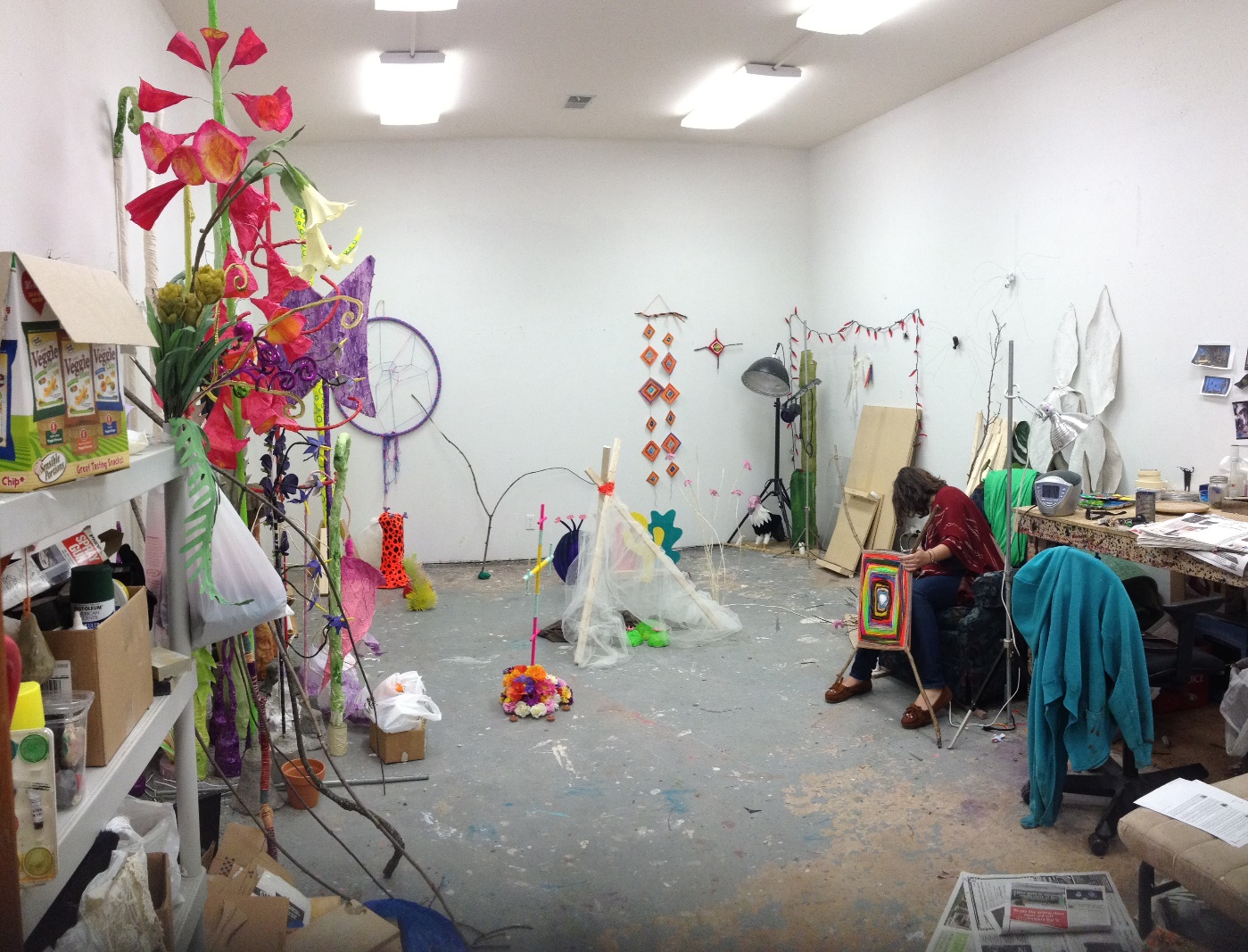
image009

lauren-schmidt.com

All images copyright of the artist and used with their permission.
 

Posted in Installation | Tagged , , , , | Leave a comment

Emily Swinsick – Sacramento, California

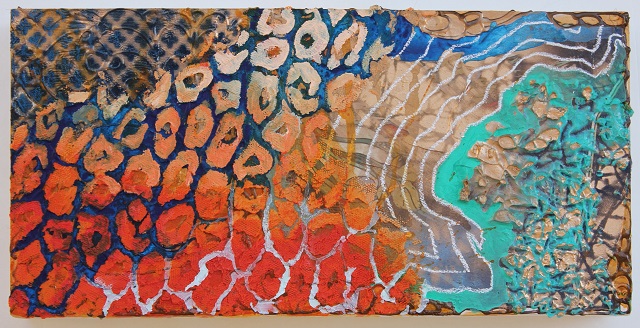
"O.K.", Mixed media, 9'' x 18'', 2015

“O.K.”, Mixed media, 9” x 18”, 2015

Briefly describe the work you do.

My work is strongly defined by the materials I use and the process of making. My goal is to manipulate the media as far is it will allow me to push it. I build up pattern and texture using found and re-purposed items; working strongly with duality in the aesthetic sense as well as the contextual. I strive to break down the lines between hand-made and manufactured using techniques that aren’t always recognized in “fine art”.

Tell us about your background and how that has had an influence on your work and on you as an artist.

Lace and doilies are the main items I use to pull uniform textures in my work. My grandmother was always knitting and her sisters’ tattings were found around my mom’s house from as long as I can remember. I wish I was able to continue the legacy, but I don’t have the patience needed for the repetition. I feel like my work is a way of passing down their textile arts, just in a different facet.

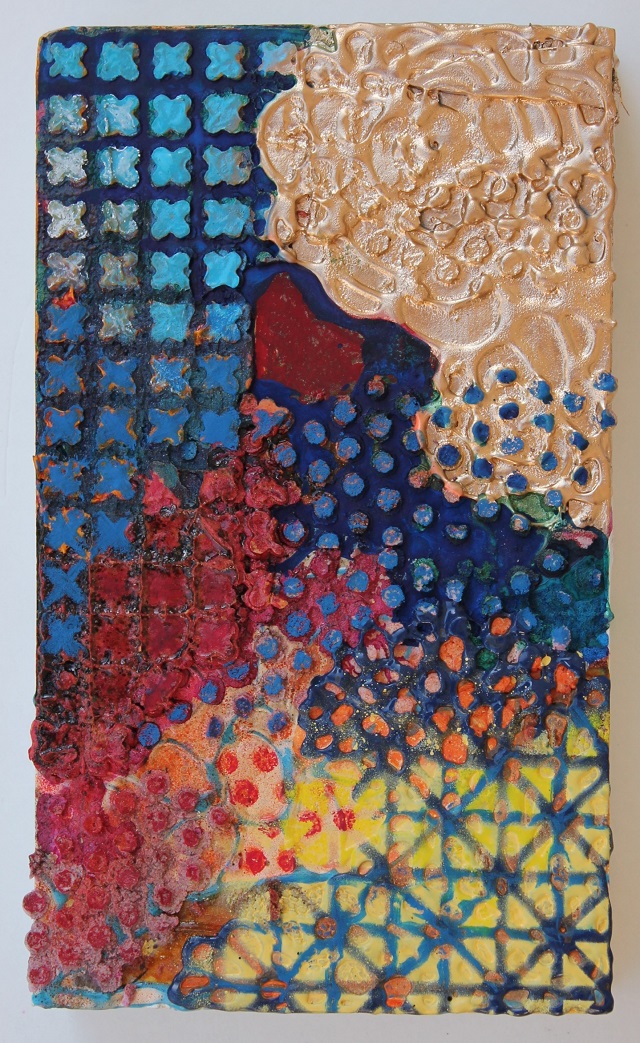
"Raster", Mixed media, 10'' x 6'', 2015

“Raster”, Mixed media, 10” x 6”, 2015

The concept of the artist studio has a broad range of meanings in contemporary practice. Artists may spend much of their time in the actual studio, or they may spend very little time in it. Tell us about your individual studio practice and how it differs from or is the same as traditional notions of “being in the studio.”

I consider myself a hunter-gatherer. I have to spend a lot of time finding vintage scarves and little doodads before I start any time in the studio. I find a lot of influence in thrift stores. I love the notion that each item has a past; thrown away, but now gets to live on forever in a new fashion.

What roles do you find yourself playing that you may not have envisioned yourself in when you first started making art?

After school it took a while to realize that no one knows your work unless you go out and talk about it. Marketing is so hard and strange. It is uncomfortable until you find someone who appreciates what you do. The role of salesperson doesn’t feel as foreign once you get that satisfaction. It is about building confidence in your work as well in yourself as a maker. It’s a slow process; one that might not have a finite end.

When do you find is the best time to make art? Do you set aside a specific time every day or do you have to work whenever time allows?

If it’s a warm, beautiful day out, I try and move my studio outside in the morning. I am able to get a little Vitamin D and all the work dries in record time. The faster each layer dries, the quicker the next can go on. This changes the way the entire piece develops. A shorter reaction time works in my favor (sometimes). On the other hand, if I keep all my pieces in my studio, I try and work at night when the air blows through the open windows. Inside, I can sit and stare. Slow drying time allows me to process my next move more cautiously. I can’t say if I prefer working quickly or slowly. I feel like both ways are needed to produce different moments in each piece.

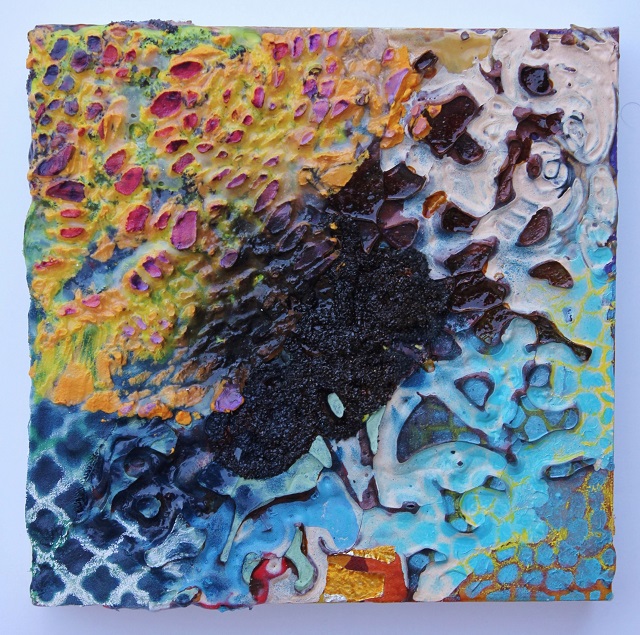
"Roe", Mixed media, 8'' x 8'', 2015

“Roe”, Mixed media, 8” x 8”, 2015

How has your work changed in the past five years? How is it the same?

I feel as though I’ve always had the same ideas, just the way I’ve been able to express them has changed. I remember wanting to build up layers but only hinting at it. I was scared of making mistakes so nothing came of it. I have always been my work enemy when it comes to creating. About three or four years ago, I finally realized that chance plays a major role in everything I do. I try not to overthink what I am doing with each piece. I allow spills and drips to happen. If there is something I don’t like, I have to have to confidence in myself as maker that I will be able to resolve it. Fixing a problem I created in the piece is just as important as creating a single pivotal moment. Once I was able to understand that, everything just came a little easier.

How have people such as family, friends, writers, philosophers, other artists or even pop icons had an impact on the work you do?

Looking to the work of Joseph Cornell and El Anatsui is the best thing I can do when I feel like I need guidance. The material in their work is elevated beyond its typical use. I love to look to them when I feel as though what I’m doing isn’t enough. My friends and peers are also such an important part of how I view my work. They tell me like it is. No one sugar coats anything and I couldn’t be more grateful for that. Having someone you trust is key. You need a second (and sometimes third) pair of fresh eyes to see what you’ve been missing.

Have you ever been pulled in the direction of a pursuit other than being an artist? What are your other interests?

It’s hard to not be pulled in a million directions. Making is satisfying, but it doesn’t always support the maker. You have to love it and do it just because you want to. I went to grad school in hopes of becoming a professor and found a job teaching elementary school art right after. Sharing what you love becomes such an innate part of yourself. It’s hard to separate that. I left teaching after realizing I would have to maintain a second job just to make minimum payments on my student loans. My generation is stuck in such a crossroads. I have friends who are doctors/lawyers and ones who never went to school and are making double what I make. It’s honestly a daily struggle of deciding what is important. Is making a lot of money at a “normal” desk job more crucial than happiness? That’s what I am trying to figure out.

About

EmilySwinsickHeadshotEmily Swinsick lives and works outside of Sacramento, CA. She received both her BA and MA in Studio Art from Sacramento State University. Her work continues to be exhibited in the greater Northern California region. She is working on proposing collaborative multi-discipline public works. She is also currently seeking an international residency program.

EmilySwinsickStudio

emilyswinsick.com

All images copyright of the artist and used with their permission.
Posted in mixed media | Tagged , , , , | Leave a comment

Kim Benson – Madison, Wisconsin

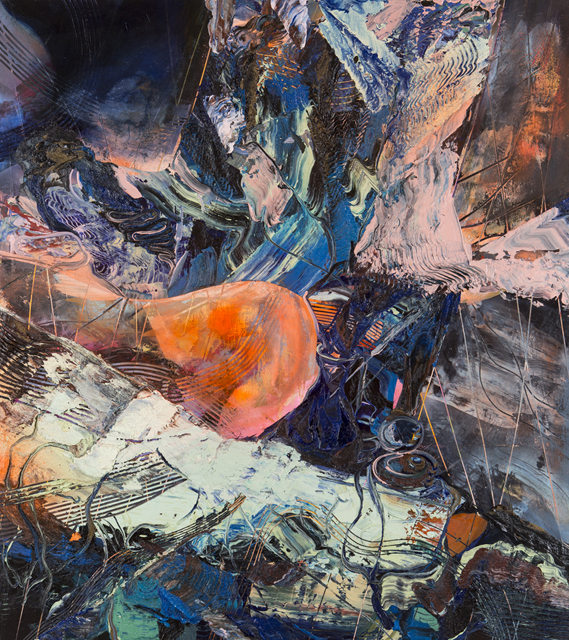
Night Games, 2015, 72" x 60”, oil, enamel, collage, and acrylic on canvas

Night Games, 2015, 72″ x 60”, oil, enamel, collage, and acrylic on canvas

Briefly describe the work you do.

 Painting is the primary focus of my work. I work with oil and enamel on a variety of substrates. I am interested in the interaction of materials and the endless formal and conceptual possibilities of painting. Currently, my work was created with two questions in mind: What does radical separation look like and how can I create beauty within perversity? My process became a type of chaos management. Multiple layers built up and taken back in search of unexpected spacial arrangements. By dissolving and disintegrating the figure-ground relationship I discovered an unsettling territory within abstraction. The guttural-like combinations of mark-making, range of texture and thickness, and intersecting lines create dynamic visual rhythms and conflicting structures. I hope the work simultaneously suggests ideas of disorder, decay, mystery, and the sublime. While my work recalls the history of painting, specifically the richness of 17th century Dutch still life genre, I am after an image that is beyond these subjects.

Tell us about your background and how that has had an influence on your work and on you as an artist.

My background is ordinary: raised in the suburbs of Saint Paul, MN to hard-working, blue-collar parents, who instilled in me a strong work ethic and political awareness. I graduated from the Collage of Visual Arts in 2004 and recently from the University of Wisconsin-Madison with a MFA in studio arts. I assume as the years go on I will understand more of how my background has informed my creative process. I know that specific themes I focused on ten years ago have resurfaced in my current work and might continue to influence my work for decades to come.

Earthly Delights, 2015, 72" x 60”, oil, enamel, collage, and acrylic on canvas

Earthly Delights, 2015, 72″ x 60”, oil, enamel, collage, and acrylic on canvas

The concept of the artist studio has a broad range of meanings in contemporary practice. Artists may spend much of their time in the actual studio, or they may spend very little time in it. Tell us about your individual studio practice and how it differs from or is the same as traditional notions of “being in the studio.”

I have a very rigorous practice that involves a significant amount of time dedication in my studio. The numerous hours spent in my studio have given me the chance to examine my work and to delve deeper into the minutiae of visual decision making. Unlike the prevailing wave of “post-studio” artists, I find that the physical place where I make my work is absolutely integral to my painting practice.        

What roles do you find yourself playing that you may not have envisioned yourself in when you first started making art?

I am most surprised to understand now what my primary role is: being an artist. My initial thoughts years ago on pursuing an art career were full of skepticism, but I am now confident in what I do and my ability to work in a diverse and ever-changing art market. I think one of the biggest challenges will be to think about my career with both a critical creativity and an entrepreneurial spirit. Ideally, I need my studio practice to be sustainable.

When do you find is the best time to make art? Do you set aside a specific time everyday or do you have to work whenever time allows?

I enjoy working in my studio in the morning and in the evening/night. I have been fortunate to have time every day to work in my studio and I will try to maintain this regular schedule in the future. Painting is a daily (or nightly) practice and my work requires that I spent numerous hours in my studio. For me, there has to be a level of full absorption, where I get completely into my studio brain.

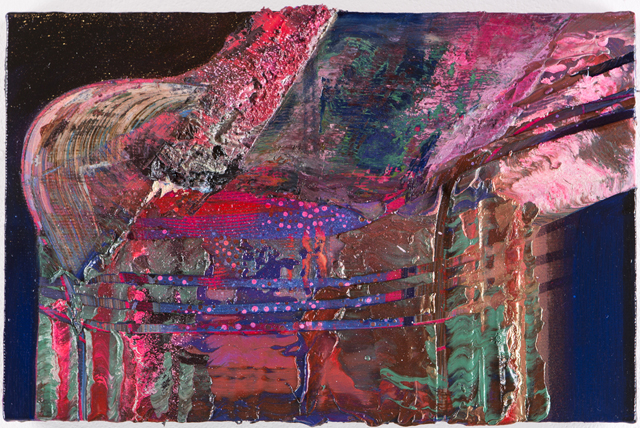
Carnal-val Seat, 2015, 11” x 17”, oil, enamel, acrylic on fabric on panel

Carnal-val Seat, 2015, 11” x 17”, oil, enamel, acrylic on fabric on panel

How has your work changed in the past five years? How is it the same?

My work over the past five years has always been an investigation of painting, of creating an image through paint, but I am now much more interested in abstraction and materiality of painting. The myriad ways that paint can be applied has influenced every facet of my current work. Whether it is combining spray enamel with oil paint to achieve a cracked surface, using sandpaper to abrade and reveal the history underneath, pouring, brushing, rolling, or masking off, each process that I use is done in the service of creating a complex and thought provoking whole.

How have people such as family, friends, writers, philosophers, other artists or even pop icons had an impact on the work you do?

There are many people in my life that have influenced my practice including friends and family. My friendship with a few artists in Minneapolis and Madison have mentors to me. I am grateful for their support and critical feedback. I read as much as I can and look at specific artists that fuel my creative work. I am interested in my connection to the history of painting. As of right now I am influenced by the 16th and 17th century Dutch Still-Life genre and Baroque aesthetics. I have enjoyed reading about and looking at the work of Sigmar Polke, Edouard Manet, and Georges Braque, just to name a few.

Have you ever been pulled in the direction of a pursuit other than being an artist? What are your other interests?

I considered forensic science as a teenage because I enjoyed crime television and thought paring detective work with biology and chemistry would be thrilling. This might be a stretch, but in some ways I am doing a kind of investigation based on some science within my own studio practice, as I search for ways to create visual images and explore the alchemy of painting. I am a novice wild plant and mushroom forager.

About

BensonHeadShotKimberly Benson currently works in Minneapolis, MN. Her paintings have been exhibited widely, including solo and group shows across the Midwest: MANA Contemporary in Chicago, IL, Minneapolis College of Art and Design in Minneapolis, MN, and Plains Art Museum in Fargo, ND. She has been awarded multiple grants from the University of Wisconsin-Madison: 2014/15 Teaching Assistantship: Drawing 1, 2014 Project As- sistantship, 2013 Academic Scholarship, and most recently 2015 Temkin MFA Exhibition Award. She received her Bachelor of Fine Arts from the College of Visual Arts in Saint Paul, MN. Her work will be featured this this year in Fred Stonehouse’s solo exhibition at the Museum of Wisconsin Art and North of the 45 exhibition at the DeVos Art Museum. She will have a two-person exhibition at the Overture Center in Madison, WI Spring 2016.

BensonStudio

kimberlybenson.net

All images copyright of the artist and used with their permission.
Posted in Uncategorized | Leave a comment

Aubrey J. Kauffman – Ewing, New Jersey

Graffiti Archival Pigment Print 17

Graffiti
Archival Pigment Print
17″x26″

Briefly describe the work you do.

I am a fine art photographer. My work is mostly urban landscapes. I don’t shoot the pure landscapes of classical photography, but the minimalist attitude of lines, abstract shapes, contrasts and emptiness that I see as I look through my viewfinder.

Tell us about your background and how that has had an influence on your work and on you as an artist.

My background is in television. I have a MFA in visual arts from Rutgers University’s Mason Gross School of the Arts. I have a BA in media arts from New Jersey City University. I also took several courses in photography in college and did some post graduate work at University of the Arts. For 30 years I worked as a cinematographer for the local public TV affiliate in New Jersey. The job allowed me to travel the region. Having grown up in the northeast, it is the basis of the photographs I take, so on many occasions I would see something while on the job and come back later with my still camera and spend time there. In 2011 the state decided to let WNET in New York take over the operations. I was one of many who were let go. I applied to the MFA program at Rutgers and was accepted at Mason Gross. It was there that I was able to immerse myself in my art for the first time in years.

Yellow Rail (From the series:

Yellow Rail (From the series:”Light Of The Sun On My Back”)
Archival Pigment Print
36″x56″

The concept of the artist studio has a broad range of meanings in contemporary practice. Artists may spend much of their time in the actual studio, or they may spend very little time in it. Tell us about your individual studio practice and how it differs from or is the same as traditional notions of “being in the studio.”

I gave up my darkroom space when my wife and I moved. Though I had planned to build another darkroom in our new home, it never materialized. I had started to learn digital photography so a darkroom wasn’t really important. A computer set up in the spare bedroom became my studio as such, but it wasn’t until I enrolled at Mason Gross that I had a true studio space. Everything in one place instead of scattered throughout the house.

After I graduated, I realized I had too much to bring home. After a short time in storage I found a studio space in downtown Trenton. I find that I don’t spend much time there. I shoot on location. I have a computer at home and sometimes process files there. I have access to a high-end printer for my large photographs. I use my studio to prepare work for exhibitions, have studio visits, and to look at finished work and other projects that I am have. Sometimes I just want the solitude of just being around my work. How that differs from or relates to other studio practices or experiences is not something I can speak to.

What roles do you find yourself playing that you may not have envisioned yourself in when you first started making art?

I never thought I would find myself in the place that I am now. I had an amazing experience at Mason Gross. As a graduate student, I was offered a part-time teaching position. In my second year I shared teaching responsibilities with Latoya Ruby Frazier, the Assistant Curator for the Mason Gross Galleries, so she could fulfill her obligations with the Whitney Biennial. She also invited me to co-curate a photography show at Mason Gross that she was putting together. That led to me being offered the job of Gallery Manager. Latoya was leaving and had recommended me to take over. I am also a freelance writer for a local weekly business, arts, and cultural weekly.

Never in my wildest dreams did I ever image being blessed with these opportunities.

When do you find is the best time to make art? Do you set aside a specific time everyday or do you have to work whenever time allows?

The best time is when I make time. I had learned how to do that during the years I worked TV.  

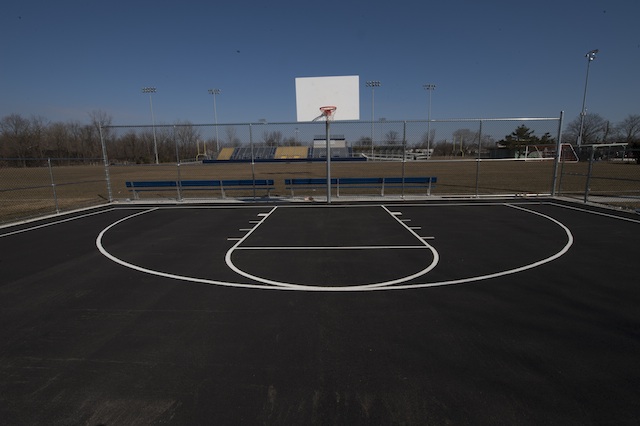
Basketball Court Archival Pigment Print 36

Basketball Court
Archival Pigment Print
36″x56″

How has your work changed in the past five years? How is it the same?

I think the biggest change happened when I began working in color. When I started at Mason Gross, I intended to work with film. I realized it was becoming too cumbersome and time consuming. With the help of Gary Schneider, a professor at Mason Gross, I fully immersed myself in the digital technology. He also helped me amplify my voice.  

How have people such as family, friends, writers, philosophers, other artists or even pop icons had an impact on the work you do?

To have family support is vital. My wife has been a constant source of support since we’ve been together. She invites her family and friends to my exhibits and they have been supportive as well. She helps to edit my writings so that I don’t get too far into the weeds. There have always been people along the way who have been supportive or encouraging. My friend for more than 30 years, Mel Leipzig, a painter and professor, had encouraged me for most of that time to get a masters degree. I never thought I would actually do it since I already had a job. He has also told curators and gallery directors about my work, which has led to my inclusion in several exhibits. Then there is the R&B artist Jill Scott. I’ve never met her, but I am a big fan of her music. I have a series of works that I’ve titled “Light of The Sun On My Back” after her song of the same name. It is a series of self-portraits, all in shadow in different landscapes. The song is just one line repeated over by Jill in a syncopated rhythm as the band vamps behind her.

Have you ever been pulled in the direction of a pursuit other than being an artist? What are your other interests? 

I am sure we all have been pulled in different directions. For more than 30 years I was working in a different profession. For several years I did not even make any art.

About

Aubrey J. Kauffman (1 of 1)Aubrey J. Kauffman is a photographer living and working in New Jersey. He received his BA in Media Arts from New Jersey City University and his MFA in Visual Arts from Rutgers University’s Mason Gross School of the Arts. He has taught photography at Mason Gross, Middlesex County College, Mercer County Community College and Community College of Philadelphia.

He served as president of the Trenton Artists’ Workshop Association for ten years. While president of TAWA, he created and curated “Trenton Takes: 24 Hours in the City,” a photo-documentary project that featured the work of 29 photographers who spent one 24 hour period photographing life in the city of Trenton. The ensuing exhibit with a catalogue was edited by Mr. Kauffman.

He was the curator of “Landscapes: Social Political Traditional” for Rider University and was Co-Curator for “On Photography: Culture, History and the Narrative” with LaToya Ruby Frazier at Mason Gross Galleries.

His photography has been included in group exhibitions at The Newark Museum, Newark, NJ; Rider University, Lawrenceville, NJ; Southern Light Gallery in Amarillo, Texas; The Biggs Museum of American Art in Dover DE and The Morris Museum, Morristown, NJ.

He has exhibited in solo shows at The New Jeresey State Museum, Trenton, NJ; Enfoco at 7th and 2ND Street Gallery, New York, NYn ans Southern Light Gallery in Amarillo, Texas.

He was awarded the Brovero Photography Prize by Mason Gross and his work was named “Best in Collection” by Alpha Art Gallery in New Brunswick, NJ.

His work is represented in the permanent collections of Rider University in Lawrenceville, NJ and Johnson & Johnson’s Corporate Headquarters in New Brunswick, NJ.

At present he is the Gallery Manager for Mason Gross Galleries at Mason Gross School of the Arts in New Brunswick, NJ and a contributing writer on photography for US 1 in Princeton, NJ.

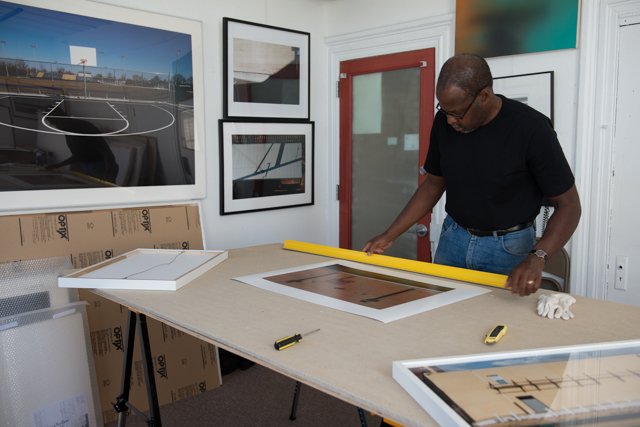
Aubrey in studio-2711

aubreyjkauffman.com

All images copyright of the artist and used with their permission.
 

Posted in Photography | Tagged , , , , | Leave a comment

Kim Miller – Milwaukee, Wisconsin

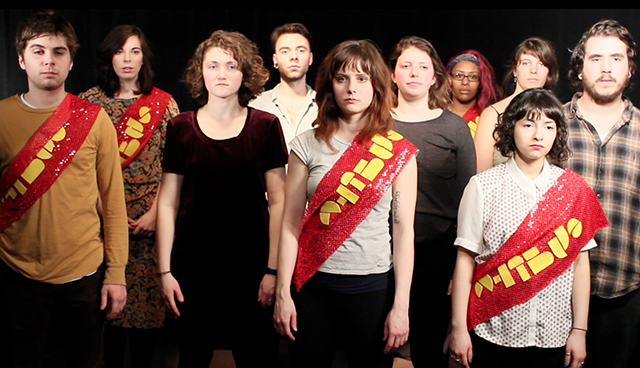
"Law_and_Order_Night_Journey_640" still from digital video titled "Law and Order: Night Journey" shown at The Suburban in Oak Park, IL; 4:00 runtime, looped; 2015.

“Law_and_Order_Night_Journey_640” still from digital video titled “Law and Order: Night Journey” shown at The Suburban in Oak Park, IL; 4:00 runtime, looped; 2015.

Briefly describe the work you do.  

My video and performance work explores a relationship between action, power and meaning. I borrow forms from stand up comedy, dance, theater, performance art and film.  Questions are structured around a radical democratic model. Is a radical democratic subject possible? How does gesture inform or complicate a subject?   

Tell us about your background and how that has had an influence on your work and on you as an artist.

Going to Cooper Union in NYC was a hugely influential experience. Not only were the faculty, staff and students incredibly smart, challenging and motivated, but the spirit of the institution – a place of free learning – was really formative. You had to continuously prove yourself to keep your place there. Education wasn’t seen as a service delivered, but as an experience that required your investment. It was extremely rigorous, encouraging multi-disciplinarity and research.

"Earth and Sky Crew 640" still from digital video titled "Earth and Sky Crew"; 14:00 runtime; 2014.

“Earth and Sky Crew 640” still from digital video titled “Earth and Sky Crew”; 14:00 runtime; 2014.

The concept of the artist studio has a broad range of meanings in contemporary practice. Artists may spend much of their time in the actual studio, or they may spend very little time in it. Tell us about your individual studio practice and how it differs from or is the same as traditional notions of “being in the studio.”

My idea of the studio is shaped around time – a chunk of time devoted everyday to my work, no matter where I am. I have an industrial studio space, but sometimes I work at my home studio, the library, or while driving. I’m not sure how my practice differs from a traditional idea of being in the studio, except that I always keep it moving and try to work no matter where I am. It may not look like work, but thinking is working. Once I get to my actual industrial studio space, many decisions have already been made. That studio is a place of production and getting things done. More free-fall, experimental, ‘aimless’ work takes place elsewhere. 

What roles do you find yourself playing that you may not have envisioned yourself in when you first started making art?

I never imagined myself to be a mother. My daughter has made me a better person in every way, and I’m in awe of her, and it’s all really difficult to juggle.

When do you find is the best time to make art? Do you set aside a specific time everyday or do you have to work whenever time allows?

I try to work as regular hours as possible. Mornings are best for me, but not always available. I’m always working in some way – thinking is working.

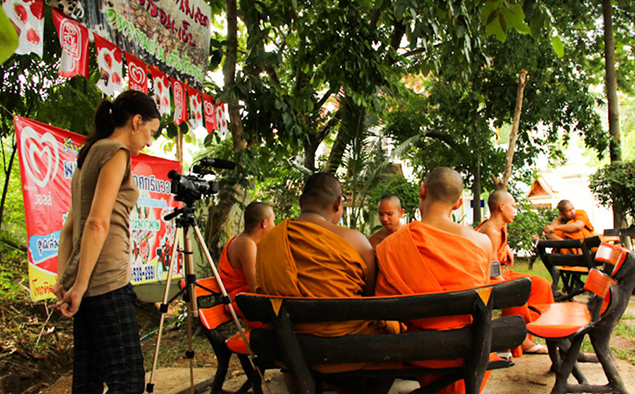
"MadameMae_still_640" still from digital video titled "Madame Mae Nang Nak"; 15:00 runtime, 2015.

“MadameMae_still_640” still from digital video titled “Madame Mae Nang Nak”; 15:00 runtime, 2015.

How has your work changed in the past five years? How is it the same?

I’m thinking bigger – expanding my production levels and learning more technical stuff. Essentially, I’m working with the same ideas – those around power, agency, action and meaning.

How have people such as family, friends, writers, philosophers, other artists or even pop icons had an impact on the work you do?

All of these and more influence my work, at least on the surface. Right now I’m reading Melanie Klein, some Janet Malcolm, and “The Beautiful Fall”…am inspired by dance, music, art history, TV, online stuff and real life.

Have you ever been pulled in the direction of a pursuit other than being an artist? What are your other interests? 

Teaching is something that while I don’t consider to be part of my practice, consumes a huge piece of my time and energy. It’s exciting work that’s rewarding, humbling, exhausting and mundane. Other interests – learning new stuff, experiencing new places, people and things.

About

Thanks for Meeting Me Here 640Miller received her BFA from Cooper Union in New York City and her MFA from Vermont College. Miller has shown videos, performed live and combinations thereof on national tours and international shows, from China to Milwaukee. Was awarded the Mary L. Nohl Individual Artist Fellowship 2009-10, Artist-in-Residence at Compeung, Doi Saket, Thailand in 2011 & 2012, Artist-in-Residence at Lynden Sculpture Garden in 2013-14 and a Puffin Foundation, Ltd. Grant in 2014.

She has taught in the humanities and design department at Chulalongkorn University in Bangkok, Thailand, the film and graphic design departments in the United States at UW-Milwaukee, and in the foundations, fine art, liberal studies and design departments of Milwaukee Institute of Art and Design, and currently serves as the Chair of Fine Art and New Studio Practice at MIAD.

kimmillerkimmiller.com

All images copyright of the artist and used with their permission.


Posted in Performance | Tagged , , , , | Leave a comment

Rodrigo Franzão – Abadiania, Goias, Brazil

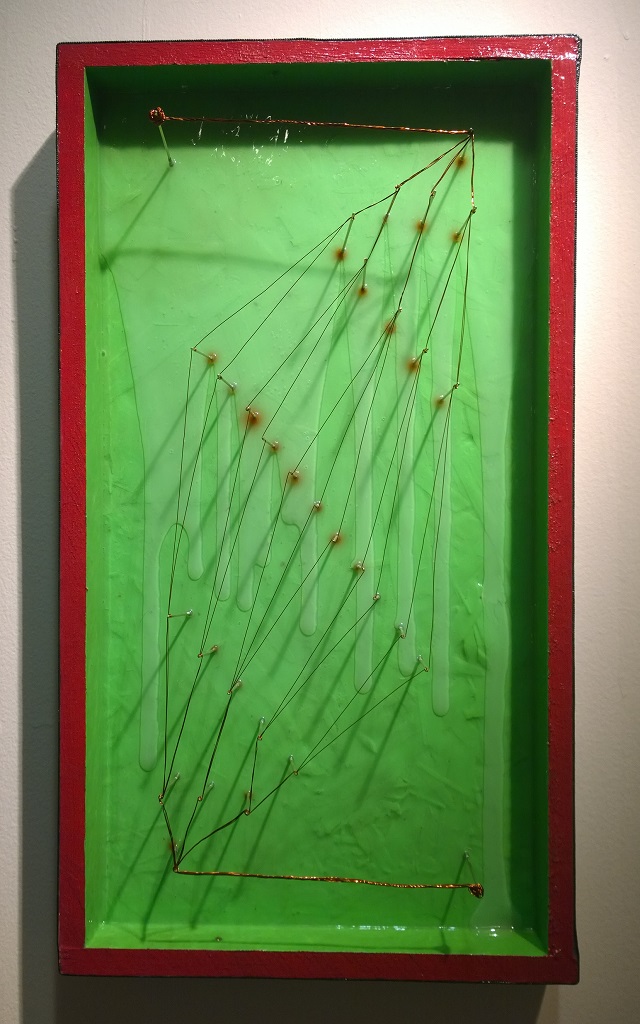
Title: Organelle 7 Medium: Steel needles, copper wire, polyvinyl acetate, wood, acrylic Size: 19 x 10,6 x 2,5in Year: 2015

Title: Organelle 7
Medium: Steel needles, copper wire, polyvinyl acetate, wood, acrylic
Size: 19 x 10,6 x 2,5in
Year: 2015

Briefly describe the work you do.

I work mainly with textile, copper wire, paper and acrylic paints creating and shaping geometric forms.

Tell us about your background and how that has had an influence on your work and on you as an artist.

I was a teacher for over 9 years teaching Portuguese to mid school students. I have always integrate art into my classes even before I realized that I was going to become an artist. So art has been playing a big part in my life since an early age.

The concept of the artist studio has a broad range of meanings in contemporary practice. Artists may spend much of their time in the actual studio, or they may spend very little time in it. Tell us about your individual studio practice and how it differs from or is the same as traditional notions of “being in the studio.”

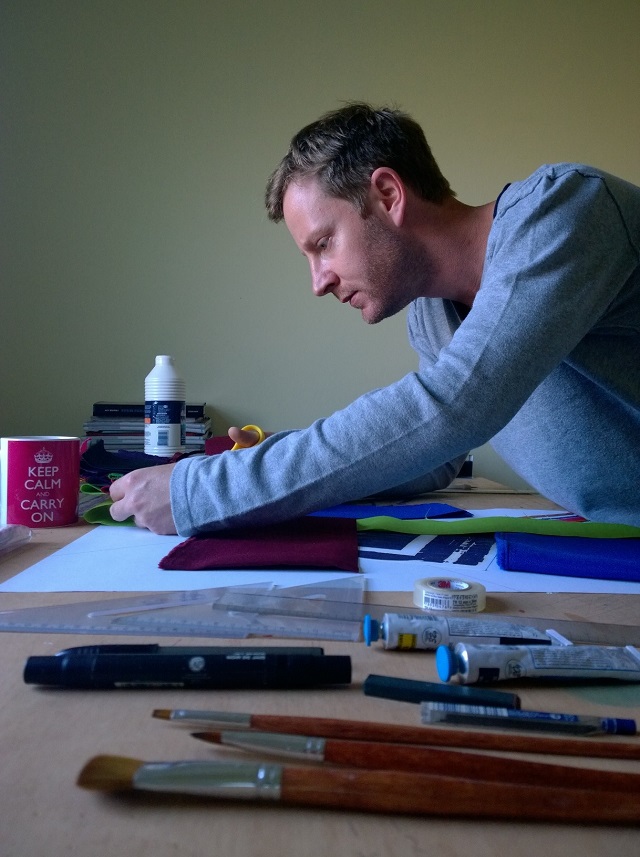
I wake up, make myself a cup of coffee and off to my studio I go. I tend to spend as much time as I can in my studio creating pieces and experimenting new ideas. Classical music plays an important role during my creative process.

Title: Mass Consumption Medium: Fabric, polyvinyl acetate and wood Size: 18,9 x 12,9 x 2,7in Year: 2015

Title: Mass Consumption
Medium: Fabric, polyvinyl acetate and wood
Size: 18,9 x 12,9 x 2,7in
Year: 2015

What roles do you find yourself playing that you may not have envisioned yourself in when you first started making art?

The role of marketing myself, which I did not realized how important it is in this process. At first, you just want to make art for the sake of it then you realize that there is a bigger part that needs to be taken care of.

When do you find is the best time to make art? Do you set aside a specific time everyday or do you have to work whenever time allows?

I tend to feel more in tune with my creative self at a very early hours in the morning around 5 or 6 AM as my mind is rested and full of ideas.

How has your work changed in the past five years? How is it the same?

I believe that my work has been evolving and becoming more mature in terms of technics and boldness of materials and colors I have been using. I realized that in Art being conservative may limit yourself of creating strong impressive pieces.

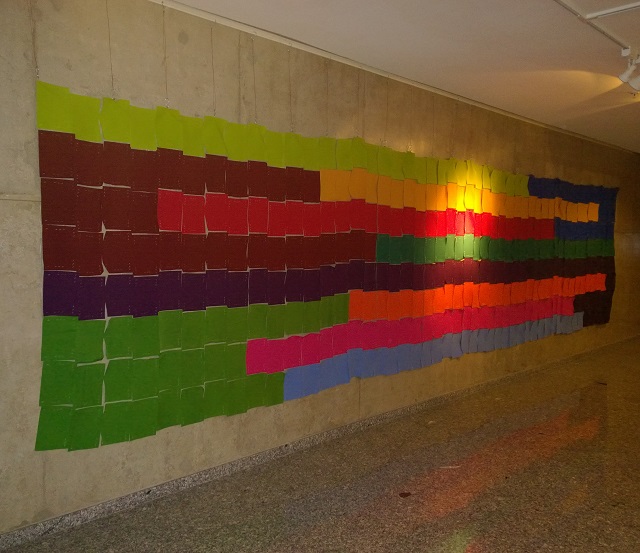
Title: Untitled Medium: Fabric and plastic pin Size: 69.6 x 354.3in Year: 2015

Title: Untitled
Medium: Fabric and plastic pin
Size: 69.6 x 354.3in
Year: 2015

How have people such as family, friends, writers, philosophers, other artists or even pop icons had an impact on the work you do?

My partner has played an important role in the work I do as we work strongly as team to focus 100% in the idea that I can make my voice as an artist speak up. The works of Eva Hesse. Roberto Burle Marx. Josef Albers, Kansuke Yamamoto, Sheila Hicks, Nelson Leirner plays a very important role for inspiration in the work I do.

Have you ever been pulled in the direction of a pursuit other than being an artist? What are your other interests?

I am also very interested in Architecture and Furniture Design.

About

HEADSHOT - Rodrigo FranzaoRodrigo Franzão was born in São Paulo in 1982 and currently resides in the town of Abadiânia in the state of Goiás, Brazil since 2013. 
The evolution of his artistic process began to unfold after nearly a decade as a Portuguese teacher, Literature and Fine Arts. 

His interest in the arts began at the College of Language Arts, which through literature encouraged reflective perception. His approach was strengthened through focusing on Psychopedagogy and Art Therapy followed by Communication in Art Education, through which he discovered the crucial relevance of making art for the artist. His evolution as an artist distinctly manifested itself during his tenure at the College of Architecture and Urbanism which emphasized spatial organization and visual communication. In order to put his theoretical knowledge into practice, in 2013 he began studying further in the arts to gain a greater understanding of the historical, social and aesthetic context of art. 

Influenced by geometric abstraction, figurative and constructivist art, the artist expresses himself with the aim of revealing the transparency that exists through the use of every day materials. Through multiple languages he interweaves mixed media to show the minutiae and structure that fragment into dispersion, gap and sound. 

Studio - Rodrigo Franzao

rodrigofranzao.com

All images copyright of the artist and used with their permission.
 

Posted in Textiles | Tagged , , , , | Leave a comment

Juliette Walker – Madison, Wisconsin

Collections of Home, 2015, Website and video (Website link: www.collectionsofhome.tumblr.com

Collections of Home, 2015, Website and video (Website link: www.collectionsofhome.tumblr.com

Briefly describe the work you do.  

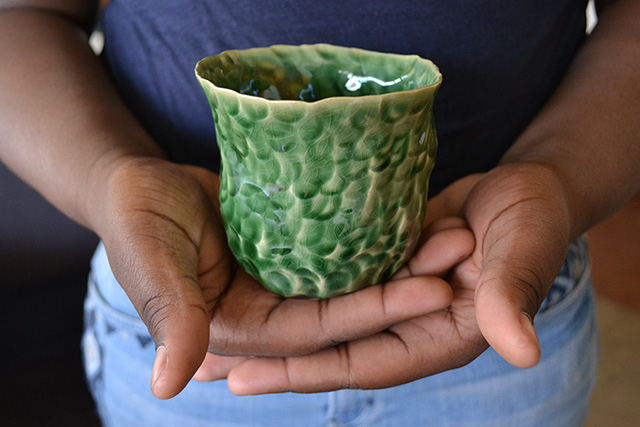
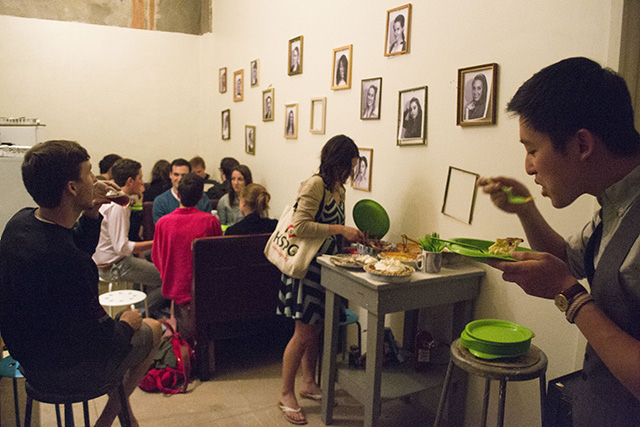
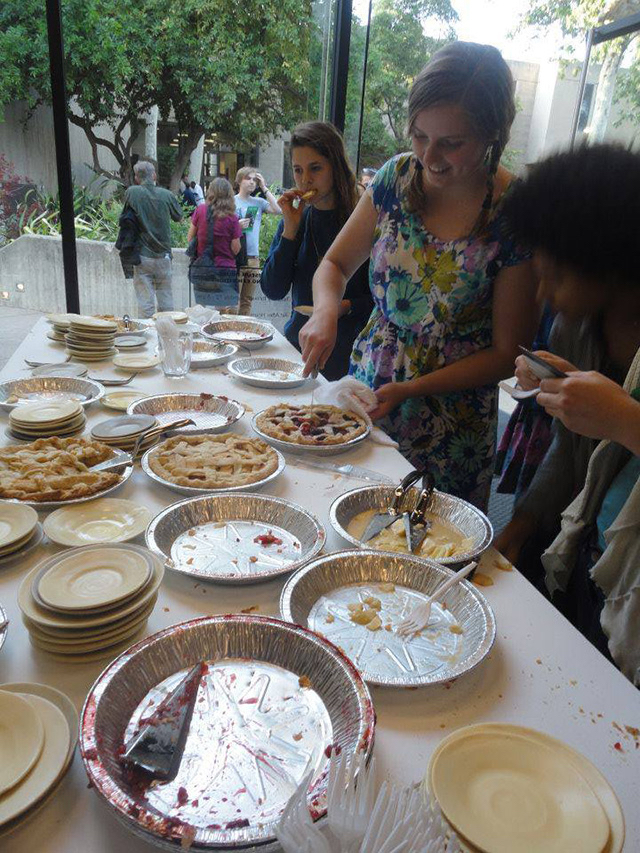
As an artist, I see myself as a maker of objects, spaces, conversations, and communities. My art practice is socially based and often takes form as events, installations, and interactions. In many situations I perform acts of generosity towards the viewer in exchange for an active and personal engagement with the project. My recent projects have ranged from serving homemade pies on handmade plates to museumgoers to creating pop-up diners in forgotten and unused spaces. Most recently, I exchanged handmade ceramic cups for stories about home. I hope to create experiences and art that can allow for a new reflection on our relationships to other humans, spaces, objects, and ideas.

Working with materials that have often been labeled as “craft,” such as ceramics, and baking, leaves me with a vocabulary that reflects my personal imprint on each piece of work. My media ranges from sculptural to performative, and each gesture I make asks the viewer to question the line between art and everyday life, community and individuality, function and aesthetic, and artist and viewer.

Tell us about your background and how that has had an influence on your work and on you as an artist.

My family is full of scientists and engineers, but from very early on both of my parents encouraged my creativity in the arts. As a child I was constantly making something, whether it was a concoction in the kitchen or a sculpture of cartons and cardboard. I was taught to think outside the box, to try things that other people hadn’t tried before, and to work hard. I took many art classes throughout high school, but it wasn’t until I took my first sculpture class in college that I realized making art could be something I pursue for the rest of my life.

Back Room Diner, Video, 2013 (Video link: https://vimeo.com/64753891)

Back Room Diner, Video, 2013 (Video link: https://vimeo.com/64753891)

The concept of the artist studio has a broad range of meanings in contemporary practice. Artists may spend much of their time in the actual studio, or they may spend very little time in it. Tell us about your individual studio practice and how it differs from or is the same as traditional notions of “being in the studio.”

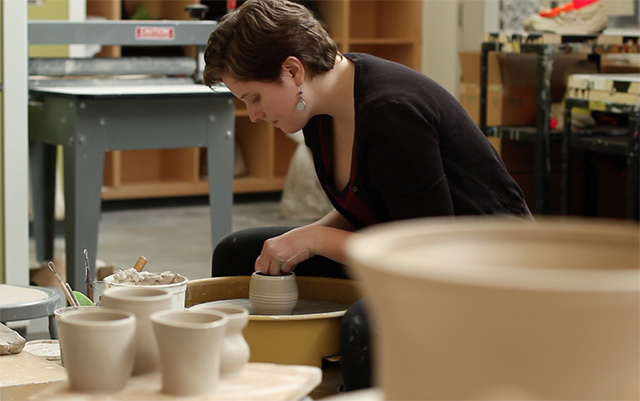
I have somewhat of a nontraditional studio practice. I find that most of my projects require me to escape the artist’s studio and interact with people and the world. I can be found making art and working on my projects in ceramics studios, community centers, my kitchen, anywhere I can work on my laptop, libraries, or simply walking down the street. That being said, I am often drawn to working in community or shared ceramics studios. There is something extremely powerful and motivating in sharing a space with other passionate ceramic-based artists.

What roles do you find yourself playing that you may not have envisioned yourself in when you first started making art?

I never envisioned my art as something that would bring me so far out of the studio and into the world working with so many different people. Making art has given me the roles of event organizer, teacher, community leader, facilitator, and grant writer. The romanticized idea of the solitary artist working alone in her studio for countless lonely hours is so far from what I am doing. Making art is extremely social.

When do you find is the best time to make art? Do you set aside a specific time everyday or do you have to work whenever time allows?

I try to set aside at least some time everyday to make art. Many of my projects involve meeting and engaging with people and working with community centers, so often my art making time revolves around these plans. I like to wake up early to work, because there is a clarity and quietness in the morning. However, I am most productive when I have deadlines. I find a sense of immediacy when I must work late nights and early mornings while the world is sleeping.

Too Much is Never Really Enough, Video, 2013 (Video link: https://vimeo.com/65882130

Too Much is Never Really Enough, Video, 2013 (Video link: https://vimeo.com/65882130

How has your work changed in the past five years? How is it the same?

Five years ago I was making art that was more about the objects and less about how the objects could be used to create social connections. My materials and process are constantly shifting and changing. Five years ago, I wouldn’t have dreamed of working with video or pies, but now these are really important pieces of my art. I hope my practice never stops changing and evolving in unexpected ways.

How have people such as family, friends, writers, philosophers, other artists or even pop icons had an impact on the work you do?

I am fascinated by artists who are pushing the boundaries of form and function in art. Harrell Fletcher and Rirkrit Tiravanija are two artists, amongst countless others, who have greatly informed my art practice. I am constantly gathering ideas from anywhere and anyone; the world is big and there are so many people doing amazing things!

Have you ever been pulled in the direction of a pursuit other than being an artist? What are your other interests? 

I have always loved to create, but I find that we can do this is so many different ways. Art does not always have to be the end product of creative pursuits. I have many interests, including food, social and environmental justice, community development, and teaching. I think art will always be an important focus for me, but will probably coexist with other pursuits in my life.

About

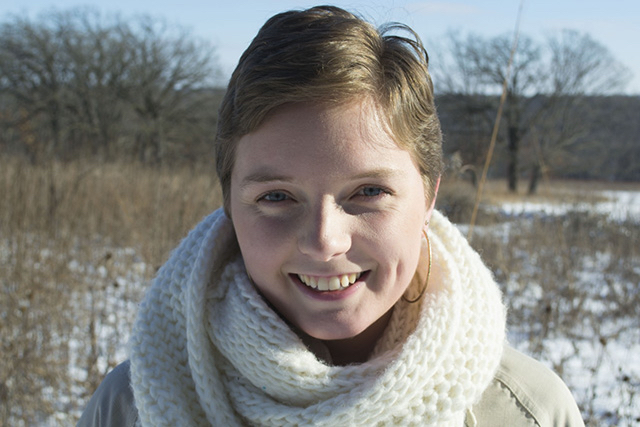
JulietteWalker_headshotJuliette Walker was born in Madison, Wisconsin, and received her BA in Visual Art at Pomona College in Claremont, California. In the spring of 2015 she completed a semester as a post baccalaureate student in ceramics at the University of Wisconsin, Madison. Most recently, she exhibited her project, “Collections of Home,” a project of exchanging handmade ceramic cups for stories about home, at the Madison Central Public Library as a part of Madison Museum of Contemporary Art’s citywide Gallery Night. She is interested in how art and artists can facilitate connections, conversations, and community. 

JulietteWalker_instudio

juliettewalker.com

All images copyright of the artist and used with their permission.


Posted in Ceramics | Tagged , , , , , | 1 Comment

Craig Moran – Washington, DC

Diversions (1 of 9)

Diversions (1 of 9)

Briefly describe the work you do. 

Piles of discarded paintings, decorative paper, and photographs from nature books sit on a table in my studio. I cut out shapes from these materials, rearrange them at random to create new images, and photograph the results. I repeat this process several times, occasionally cutting up the photographed assemblages to rearrange them further. These spontaneous collages are the inspirations for the mysterious, colorful figures in my paintings.

Tell us about your background and how that has had an influence on your work and on you as an artist.

There isn’t anything in my background – personal, professional, or other – that has had an influence on my work and on me as an artist.  My career as an artist didn’t begin until my third year in college.  My full-time profession is an IT consultant.  I keep that profession separate from my life as an artist.

The concept of the artist studio has a broad range of meanings in contemporary practice. Artists may spend much of their time in the actual studio, or they may spend very little time in it. Tell us about your individual studio practice and how it differs from or is the same as traditional notions of “being in the studio.”

My studio practice doesn’t differ from the traditional notions.  I spend most of my art-making time in the studio, while some preliminary work is done at home.  I find it that the preliminary work is best done at home and not the studio, as there is less clutter and – consequently – less distraction at home.

Diversions (2 of 9)

Diversions (2 of 9)

What roles do you find yourself playing that you may not have envisioned yourself in when you first started making art?

The role of the “businessman”.  I never thought I’d see myself in this role, as I always thought — naively, when I was younger — that one never mixed art with business.  As I now actively promote my work, I find that this role is necessary.

When do you find is the best time to make art? Do you set aside a specific time everyday or do you have to work whenever time allows?

The best times are nights and the weekends.  I’m very diligent about setting aside a specific time block to go to the studio.

Diversions (7 of 9)

Diversions (7 of 9)

How has your work changed in the past five years? How is it the same?

Five years ago, I was interested primarily in animal-like figures.  Over time, the figures have become more abstract.  My color selection has remained the same, despite some minor variations.  Recently, I have experimented with different media, such as acrylic paint and acrylic paint pen on plexiglass.

How have people such as family, friends, writers, philosophers, other artists or even pop icons had an impact on the work you do?

I listen to music while I work — The Residents, Captain Beefheart, early Duke Ellington, the Monks, Beethoven — but I don’t think it has a major impact on my work.  Listening to music keep me from rationalizing and analyzing too much about what I’m doing while I’m working.  I have a long list of artists whose work I admire — Phillip Guston, Karel Appel, James Ensor — but I leave the art books at home.  I don’t bring them into the studio, because I don’t want their influence to seep into my work.

Have you ever been pulled in the direction of a pursuit other than being an artist? What are your other interests? 

I have thought about becoming a filmmaker, but I have not reached a point in my life where I want to drop everything to become a filmmaker.  My other interests include reading and long-distance running.

About

HeadShotCraig Moran was born in Washington, DC, and received his Bachelor of Arts degree in English and Studio Art at the University of Virginia (UVA). He received a fifth-year arts fellowship at UVA, and completed a Post-Baccalaureate in Painting and Drawing at the School of Art Institute of Chicago. Mr. Moran has lived in San Francisco and Chicago, as well as various parts of Virginia. He currently resides in Washington, DC and has a studio in Takoma Park.

ArtistPortrait

craigsartwork.com

All images copyright of the artist and used with their permission.
Posted in Collage, Painting | Tagged , , , , | Leave a comment

Lukas Adolphi – Wismar, Germany

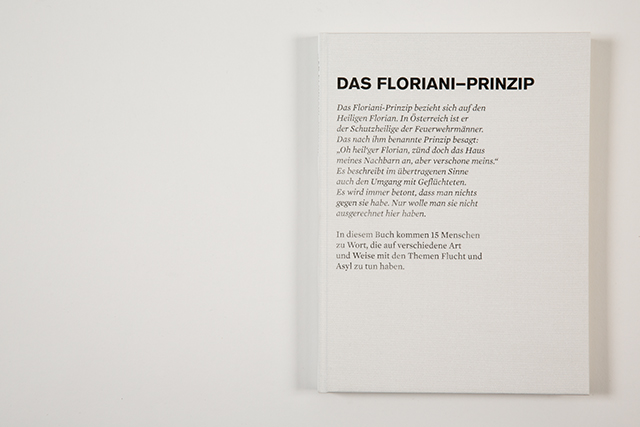
Das Floriani-Prinzip_Book_18x24 cm_2013

Das Floriani-Prinzip_Book_18x24 cm_2013

Briefly describe the work you do. 

I’m working in a lot of different fields, such as graphic design, art books, photography, journalism and installations in public space.

Tell us about your background and how that has had an influence on your work and on you as an artist.

My parents always supported me in my creative way. So when I came to school, I parallel started to attend a private art school. There I learned a broad a variety of techniques. Looking back this definitely shaped my way of doing things, in any way. After graduation from school I studied graphic design at Burg Giebichenstein Art College in Halle in Germany. As they teach there both, art and design, also the graphic design department, where I studied, is in a way art. This means that the students are encouraged to search for their own questions and find answers to them, in both content and esthetics. This shaped my personality a lot. On the one hand it’s good, because I learned to think broad and outside the box. On the other hand I missed a bit straight tools, e.g. how to develop a corporate identity. But the advantages of this sort of education definitely overweigh the disadvantages.

Das Floriani-Prinzip_Book_18x24 cm_2013

Das Floriani-Prinzip_Book_18x24 cm_2013

The concept of the artist studio has a broad range of meanings in contemporary practice. Artists may spend much of their time in the actual studio, or they may spend very little time in it. Tell us about your individual studio practice and how it differs from or is the same as traditional notions of “being in the studio.”

Until now I never had something like an own studio. During my school education I used to work at home in my room. This was a bit difficult sometimes, e.g. when I started to work with spray cans.

During my studies I usually worked in the college. Right now I have a scholarship in Bremen. We are a team of 7 scholars and work together in one studio. After this I’ll move to Leipzig. Maybe that’s the first time to set up an own studio.

What roles do you find yourself playing that you may not have envisioned yourself in when you first started making art?

I don’t really consider myself an artist or a designer. I like the term creator. As such I’m always walking through the fog between art and design. Depending on which side I actually am, there are different tasks. Right now I’m working in a team with six other people. This is on the one side very enriching, but also challenging, e.g. concerning social issues. And one disadvantage is that I don’t find much time and energy left to work on my own stuff. But at least I find some time to apply for several open calls, scholarships, artist-in-residencies and competitions. This is something which I never thought about when considering working in any creative branch – that there is so much paperwork to do. If you want to survive in this business, you need to spin constantly and persistently.

When do you find is the best time to make art? Do you set aside a specific time everyday or do you have to work whenever time allows?

As mentioned, right now I don’t really have time or energy to work on my own stuff. But whenever I get the opportunity, e.g. with an artist-in-residence, an exhibition or a festival, I like to work on something specific for a short amount of time.

Das Floriani-Prinzip_Book_18x24 cm_2013

Das Floriani-Prinzip_Book_18x24 cm_2013

How has your work changed in the past five years? How is it the same?

I think what stayed the same is the fun and joy that drives my work. What’s new is a social matter. During my studies I became more and more aware of my role as a designer within the society. I want to have a positive impact within my means.

How have people such as family, friends, writers, philosophers, other artists or even pop icons had an impact on the work you do?

My family and close friends had and still have definitely a strong impact on my work. I like to show my work to them, get feedback and critic – and keep working.

Have you ever been pulled in the direction of a pursuit other than being an artist? What are your other interests? 

No, not really. Already when I was a small child, I started to sew little leather pockets, inspired by my interest in Indian culture. So, I always felt the need to express myself. It’s just the format that changes from time to time.

About

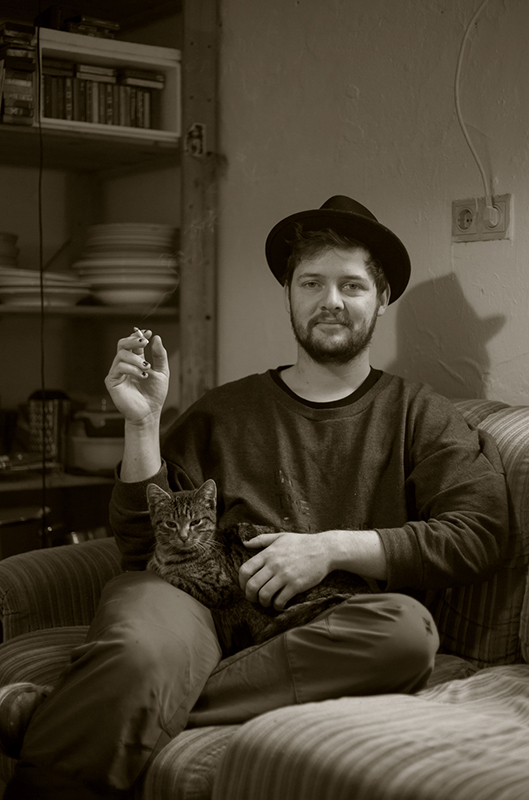
Gestalter (aus der Serie "Menschen des 21. Jahrhunderts")I consider myself neither a designer nor as an artist. I call myself a designer. I am talking about communication, not about categories; Dialogue rather than DIN. This can be stimulated both by text messages in poster or book form as well as temporary installations in public spaces. Allen is my work in common a playful component. The experiment is more important than the stringent way from the initial idea to the final implementation. To visualize my respective idea is not important whether I digital or analog, with pen or brush, marker or watercolor, photograph or moving image, caution tape or cable ties, tacks or magnets, copier or printing techniques work. When working in the public space, I feel just as well as on your home computer.

To read Lukas’s vita click here

lukasadolphi.de

All images copyright of the artist and used with their permission.
Posted in Graphic Design, Installation | Tagged , , , , | Leave a comment

Kate Earl – Kansas City, Missouri

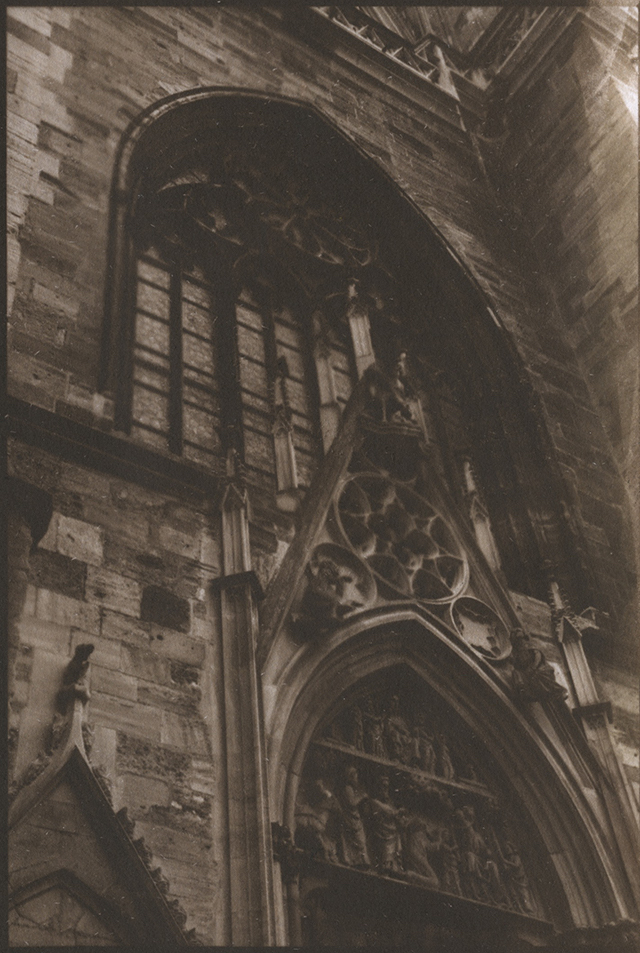
The 3 Kings. Van Dyke Print 5x7 inches 2015

The 3 Kings.
Van Dyke Print
5×7 inches
2015

Briefly describe the work you do.

My work dabbles in a lot of different mediums and I enjoy all different kinds of work drawing, Illustration, film, quilting and photography. It lets me expand my creativity. My main focus is photography. My goal is to explore as many processes as I can. Lately I have had the opportunity to work with tintypes, a wet plate process of photography that started in 1850’s.

Tell us about your background and how that has had an influence on your work and on you as an artist.

When I was a little girl my grandmother had a painting studio. Every so often I would sneak into her studio and stroke her brushes on my little fingertips. That feeling of having the brush in my hand sparked an interest of mark making I never thought I could master. Which unlimitedly gave me the drive to be who I am today. Ever since that moment I worked as hard as I could to set goals for myself throughout high school, college, and after to become the artist I am today.

The concept of the artist studio has a broad range of meanings in contemporary practice. Artists may spend much of their time in the actual studio, or they may spend very little time in it. Tell us about your individual studio practice and how it differs from or is the same as traditional notions of “being in the studio.”

Studios are so handy depending on the days I either need to do research, prepare a piece for post editing, or prepping for my worksite. For my type of work, my studio changes depending the photograph because it could be based outside in the world or developing within light safe four walls. As for my illustrations in my sketchbook I usually do those in my studio at my desk.

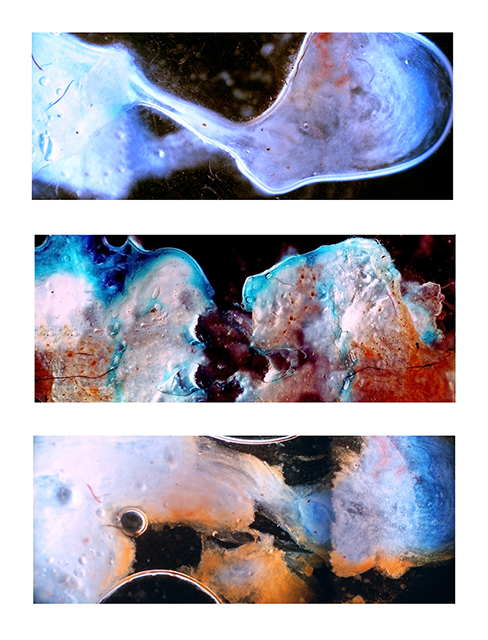
Family Portrait Microscopic Film Photograph 10 x 25 inches (Each) 2012

Family Portrait
Microscopic Film Photograph
10 x 25 inches (Each)
2012

What roles do you find yourself playing that you may not have envisioned yourself in when you first started making art?

When I firsts started school I had no idea what I was to go accomplish as an artist. All I knew was that I wanted to be an artist since I was four years old and I kept that goal throughout my life. I set goals higher and higher each time to hopefully become one step closer to my goal as a little girl. I know am teaching elementary art to students. Inspiring them that art is important and teaching them the history of art. Teaching little ones art has helped inspire me to keep working; maybe because it reminds me of the 4 year old deep inside me. 

When do you find is the best time to make art? Do you set aside a specific time everyday or do you have to work whenever time allows?

I find myself blessed that I enjoy a lot of different mediums. So I don’t set a specific time everyday, I never thought forcing my creativity helped me, but I am constantly thinking. I usually sketch before bed and work on my computer during the day.

Holding The Unavoidable Tintype 3x4 inches 2015

Holding The Unavoidable
Tintype
3×4 inches
2015

How has your work changed in the past five years? How is it the same?

My work five years ago was focusing on digital media, nothing with direction. I made open art; I did it because I liked it. Now I feel like I am more polished. After going on adventures to Argentina and France. I started thinking more on what does it me for me to exist? What does it mean to be in-between point A and point B of an action? This is when my work started to focus on surface. This is why I seek out so many different photographic processes. I believe that the subject of what I take / make can be interrupted differently depending on the process I use.

How have people such as family, friends, writers, philosophers, other artists or even pop icons had an impact on the work you do?

I feel like I am the black sheep of my family, I am a creative thinker. However even though I am the black sheep of the family they have always been supportive of me, even if they don’t understand my artwork. Every once in a great while I will get “Why are you not smiling?” if a family member looks at a tintype. That is when I have to politely explain to them I am not going to sit still and smile for 15 seconds for my plate to expose. I have a few close friends that are also into the arts; mainly photography and they have really pushed me, helped critique, and encourage my work to see where I can go next.

Have you ever been pulled in the direction of a pursuit other than being an artist? What are your other interests? 

I have thought about not being an artist maybe twice in my life. Once I thought if I was not going to be an artist I thought I was going to go into a field with helping animals. The other thought was going into a field like Chemistry. Luckily both of those times I thought to myself “Hey, I can still help animals I can take photographs of them.” Or “If I am working different wet plate processes I am working with chemistry!” In the end no matter what, like to create and tinker, and I kept coming back to being an artist.

About

headshotKate Earl is a graduate from the Kansas City Art Institute with a Bachelors Degree in Fine Arts and Art History, along with her Post-Baccalaureate Certificate Art Education K12. She enjoys working with many different mediums such as drawing, filmmaking and quilting however her focus is photography. Her artwork applies different photographic processes to enhance the concept of her subject.  Her work discusses as well as questions the human interaction and the relationship with other humans. Conveying a deeper thought to the idea of how everyone is connected. Whether it is pushing the idea of identity or death she ultimately questioning what it means to exist. 

me in studio

kateearlphotography.squarespace.com

All images copyright of the artist and used with their permission.


Posted in Photography | Tagged , , , , | Leave a comment