Alyse Rosner – Westport, Connecticut

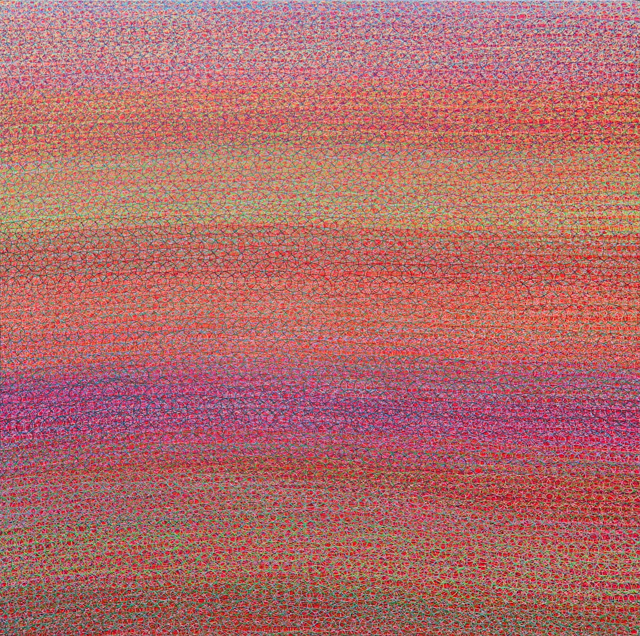
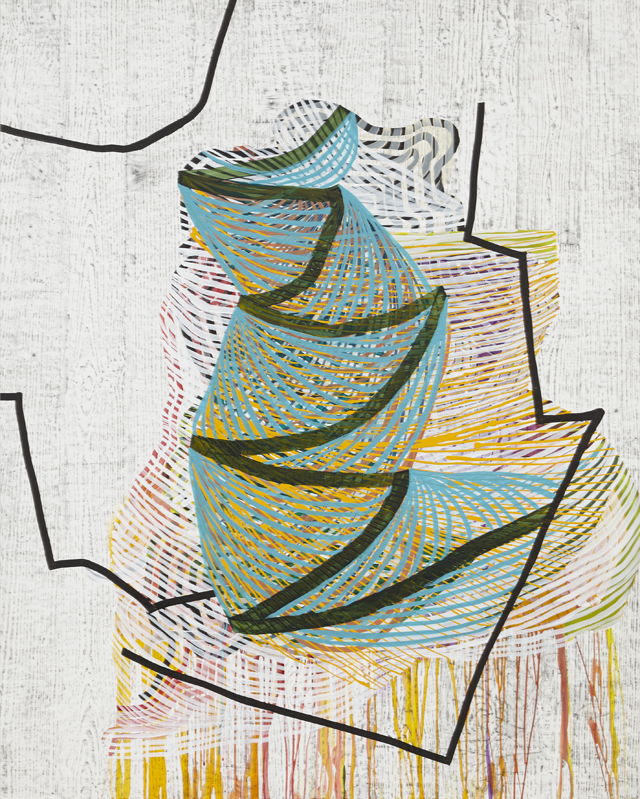
Pining,   Graphite, fluid acrylic and ink on yupo, 60”x48”, 2014  Photo courtesy of Rick Wester Fine Art

Pining, Graphite, fluid acrylic and ink on yupo, 60”x48”, 2014 Photo courtesy of Rick Wester Fine Art

Briefly describe the work you do. 

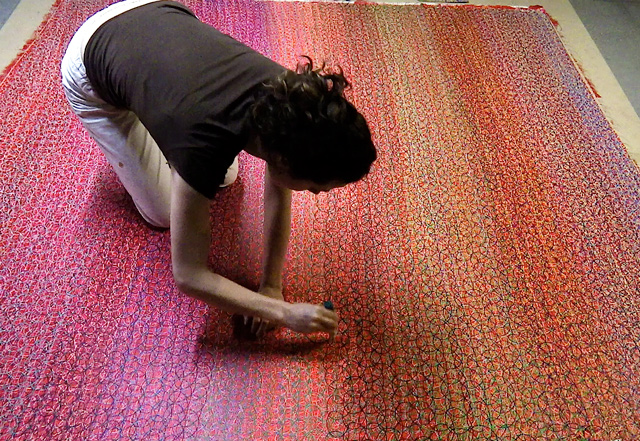
All of my paintings begin on a lustrous bright white sheet of yupo with graphite rubbing of wood grain from the pressure treated decking behind my kitchen. Both the wood and paper are man made: improved upon. This simultaneously toxic and natural impression is captured on synthetic Japanese paper made of polypropylene—which ironically, is a “green” material. On top of this I create layered biomorphic abstractions composed of accumulated mark making and large areas of transparent and painterly color. I incorporate my surroundings, personal experience and environmental concerns into the work, including the pervasive infiltration of chemicals into our daily lives, by combining organic forms, stringy and obsessive lines, pipes, bony protrusions, then viscous pours, slip trailing of paint and direct graphite rubbings of wood grain. My vocabulary has evolved out of the visual residue of making photographs, prints, ceramic objects and drawings as well as the continuous reprocessing my own paintings as source material. Scale and variation contribute to the evolution and create a structure for decision making. I document the work at regular intervals using an iphone and rework and reenvision the photos using drawing apps. These pictures trace the evolution of the layers of imagery within each painting and also serve as source material as a body of work unfolds.

Tell us about your background and how that has had an influence on your work and on you as an artist.

My mother is an intrinsically creative person- not an exhibiting artist but a chronic creator. I grew up immersed in this: our suburban home doubled as her studio and overflowed with the artifacts of her artistic development: almost closed bulbous ceramic forms from her college classes taught by Tashiko Takaezu, torn rough clay sculptures she constructed in the vein of Peter Voulkos, big abstract expressionist figure paintings, then portraiture and still life painting inspired by Alice Neel, Jack Beal and Janet Fish. Later tall stacks of narrative ballpoint pen drawings piled up created on shirt cardboards from the dry cleaner drafted using pens from the Marriott where my father earned points on business trips. Burly itchy weavings covered wicker chairs and an eclectic sensibility pervaded. Later Diane Arbus books and Lucas Samaras imagery entered the conversation as she began class work in photography. I took all of this for granted and absorbed the oddity as an everyday occurrence but under the surface my sensibility was gelling. The objects I was surrounded by were both commonplace and illegible to me: closed forms that were ceramic “pots”, torn scratched slabs of clay that were vessel and sculpture on a coffee table, oddly composed paintings and palettes that were sweet, garish, tasteful and distasteful at once. It was all filtering in. Ultimately, my paintings never resembled my mother’s work in terms of style but perhaps we share other inclinations that led me to make work that is intuitive and materials driven. I learned to seek and recognize the qualities of various materials, question them, experiment, find the unexpected and the obvious- and to value fluency among various media and modes of expression.
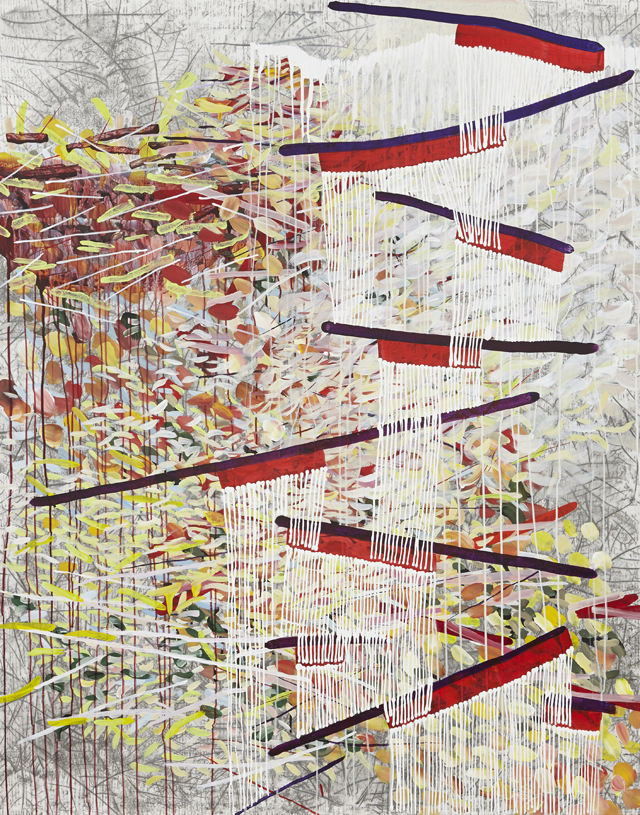
Kilter,   Graphite, fluid acrylic and ink on yupo, 60”x48”, 2015  Photo courtesy of Rick Wester Fine Art

Kilter, Graphite, fluid acrylic and ink on yupo, 60”x48”, 2015 Photo courtesy of Rick Wester Fine Art

The concept of the artist studio has a broad range of meanings in contemporary practice. Artists may spend much of their time in the actual studio, or they may spend very little time in it. Tell us about your individual studio practice and how it differs from or is the same as traditional notions of “being in the studio.”

I have a pretty consistent studio practice- and it’s not that mysterious. My studio is in my home and I value the flexibility of coming and going at any time of the day or night to take a look.  I usually work in 3 hour blocks of time and try to work or spend time looking everyday. 

What roles do you find yourself playing that you may not have envisioned yourself in when you first started making art?

As many other artists have mentioned, I did not realize how much time and effort I would expend doing research, corresponding, writing proposals and advocating for myself. 

Although it seems obvious now, I did not envision how intertwined my studio practice and every day life as a mother and wife would be.  When I finished graduate school I married my longtime boyfriend who happened to be a college football coach. Although football and painting are worlds apart, they are both very consuming and there are always a lot of unknowns. That worked for us and I assumed my life would be this unique combination of studio and stadium. My husband died of cancer at 43 and so now I am a single mother of teenagers which is certainly not a role I ever imagined.  Having my studio at home makes it easier to juggle and join the two worlds I’m living in. When they agree, I bring my kids along to galleries, museums and openings and I love hearing their insights- and on occasion they come into the studio and make things while I am working. 

When do you find is the best time to make art? Do you set aside a specific time everyday or do you have to work whenever time allows?

Typically, the morning is the best time for me and I definitely schedule the first half of the day as studio time. 
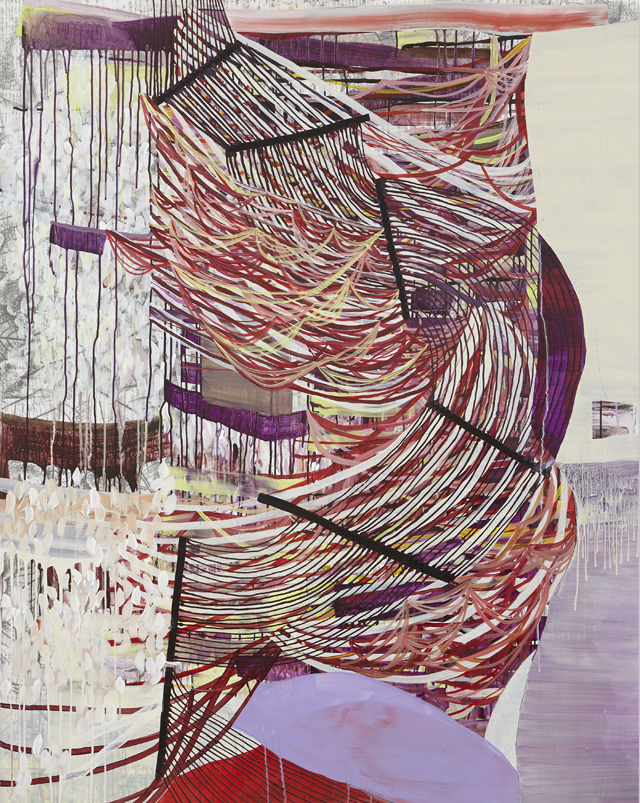
Sway (purple),   Graphite, fluid acrylic and ink on yupo, 60”x48”, 2015  Photo courtesy of Rick Wester Fine Art

Sway (purple), Graphite, fluid acrylic and ink on yupo, 60”x48”, 2015 Photo courtesy of Rick Wester Fine Art

How has your work changed in the past five years? How is it the same? 

In the past five years I transitioned from working monochromatically to using a very broad palette and from exploring a compact composition – almost an organism – to a world that spreads out to every edge.  The work continues to be constructed in layers and evolves over a long period of time and many sessions in the studio. 

How have people such as family, friends, writers, philosophers, other artists or even pop icons had an impact on the work you do?

A few qualities I admire in other artist’s work and strive for in my own include directness, oddity, beauty and discomfort as well a sense of immediacy. Artists whose work I love include Mark Bradford, Philip Guston, Nick Cave, David Altmejd, Ben Degen, Katherine Bradford, Rebecca Morales, Jennifer Reeves, Eva Hesse, Louise Bourgeoise, Barnaby Furnas… of course Giotto. Japanese screen painting, Indian miniatures and Manuscript illuminations are equally compelling. Most recently I saw work by Ruth Root and Paul Wackers that was fantastic. 

Have you ever been pulled in the direction of a pursuit other than being an artist? What are your other interests?

Not really- I’ve been an art teacher in several capacities since 1991. I’ve taught art to young children, teens and adults in private, group and mixed age settings including outreach for high risk youth, preschool and after school enrichment, art school, and museum classes. However, my studio practice has always been my primary focus. 

About
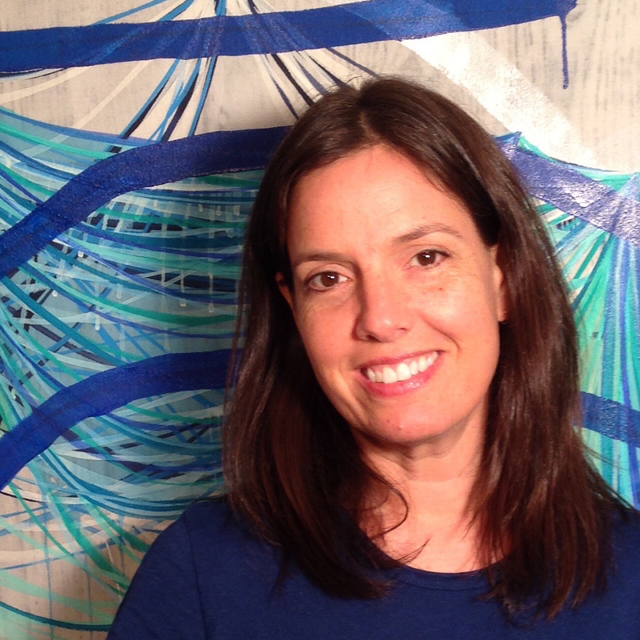
ARheadshotAlyse Rosner, an alumna of the undergraduate arts program at the University of Michigan and the MFA program at The American University, has exhibited her work for the past two decades. Rosner has received awards and fellowships from The American University, The Aldrich Contemporary Art Museum, and the Connecticut Commission on Culture and Tourism.  Her work can be seen in the Connecticut Artist Collection, as well as numerous private collections. Rosner’s exhibition history includes group and solo shows at The Aldrich Contemporary Art Museum,  Rick Wester Fine Art (New York), Artspace (Connecticut), Kathryn Markel Fine Art, (New York), Denise Bibro Fine Art (New York), Metaphor Contemporary Art (Brooklyn), The Clark Gallery (Massachusetts) among others. 

Alyse Rosner is represented by Rick Wester Fine Art. 
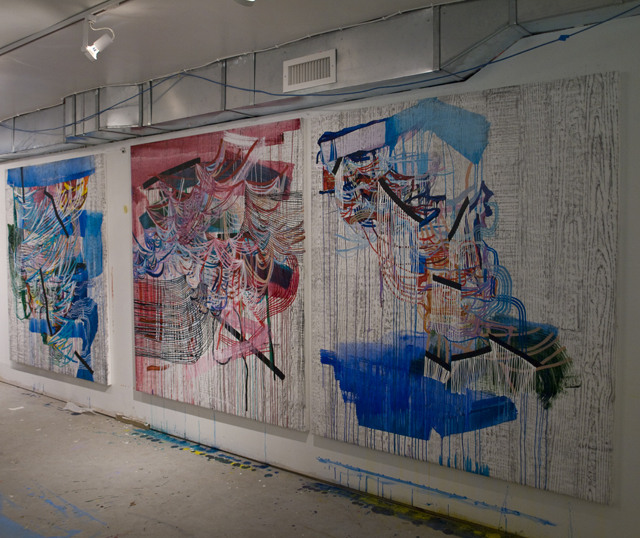
OLYMPUS DIGITAL CAMERA

OLYMPUS DIGITAL CAMERA

alyserosner.com

All images copyright of the artist and used with their permission. 

Posted in Painting | Tagged , , , , , | Leave a comment

Santiago Roldan – Torrejon de Velasco, Madrid, Spain

Title- Ruins one   Technique- Photography and printmaking   Measures- 280x50 cm   Year- 2015

Title- Ruins one Technique- Photography and printmaking Measures- 280×50 cm Year- 2015

Briefly describe the work you do. 

Nowadays the works i´m developing are mainly based on the fusion between engraving technique and photography. Starting from pictures already printed, I involve them into different engraving techniques, impressing on them  different molds. The impressing techniques I’m using to are based in transferring and re-levering. Another works I perform belong to a mix of different artistic disciplines, getting into the performatic engraving, performing sets and street art categories.

The thematic that guides my whole works is my personal point of view about human behaviors in society; how the society we belong to, limits our natural development and thinkings by politics, religion, real and false fears, our sexuality, social and economic state, identity,  the death…vital matters.

Tell us about your background and how that has had an influence on your work and on you as an artist.

I started in 1988 being trained as an engraving artist and printing in different studios and publishers.I was working and collaborating with different artists  like poets,philosophers and critics,in graphic projects.

All these different experiences along my artistic career have given to me the great chance to find out my own personal way of working to develop myself into the contemporary art using and mixing techniques, testing new ideas and methods, becoming a multi-disciplinary artist. 

Title-Penitarum  Technique- Photography and printmaking  Measures- 300x70 cm   Year- 2015

Title-Penitarum Technique- Photography and printmaking Measures- 300×70 cm Year- 2015

The concept of the artist studio has a broad range of meanings in contemporary practice. Artists may spend much of their time in the actual studio, or they may spend very little time in it. Tell us about your individual studio practice and how it differs from or is the same as traditional notions of “being in the studio.”

My  study is  like a part of my everyday routine.It is the place where i I spend most of my time, where i  develop every new artistic project from the first idea until the final result, from the beginning  until the end. So everyday, in the morning and in the evening i have established to myself a working discipline so it is the best way for my creative processes to flow and develop different and new ways of creation.

It’s the perfect environment for the development and experimentation, which smells like wood, paper, inks…

What roles do you find yourself playing that you may not have envisioned yourself in when you first started making art?

There is a huge necessary parallel work i have been performing at every step along my artistic career: you have to work hard and a long time to find out the best way to spread internationally your work.This suppose to me a whole exhaustive searching of  new and interesting exhibition projects, calls,  new openings, competitions…Opportunities like this, the 365ARTIST/365DAYS gives to contemporary artists like me, and from all around the world, the chance to create a new opening way and get in touch with the international scene, abroad and out of Spain (in my case).

When do you find is the best time to make art? Do you set aside a specific time everyday or do you have to work whenever time allows?

I use to be at my study in the morning and in the evening almost everyday per week.Creating, developing, planning…on my own way…That´s why both of the sittings permit me positive characteristics to work.

I´m used to flow and find out new ideas by the way i´m working on…so i get the inspiration.

Title- Fatum   Technique- Photography and printmaking   Measures- 180x40 cm  Year- 2015

Title- Fatum Technique- Photography and printmaking Measures- 180×40 cm Year- 2015

How has your work changed in the past five years? How is it the same?

The progress that has been my work in the last five years is above all on the subject of my pieces, getting closer to the realm of the social and human behavior. I am also in constant evolution in the pursuit of relationship with other artistic currents recorded as performative engraving, installation, street art etc.

The firm idea to use everything offered by the engraving and printing in the field of experimentation to make it available not only for the traditional  uses but in  a new artistic way :the idea of  unique pieces as the results of merging them, one by one,  with other artistic disciplines.This is my encouragement.

How have people such as family, friends, writers, philosophers, other artists or even pop icons had an impact on the work you do?

Since I started my career like a apprentice i have been working hand to hand, in touch with artists, philosophers, poets, critics etc… this has helped me to develop both my training and my evolution as an artist.

All the people I’ve shared my lifetime had improved my life to become the human being i am, involved in the “here and now” of the society around you, around me, around us.

And this´s the central line not only in my artistic works but also in my life.

Have you ever been pulled in the direction of a pursuit other than being an artist? What are your other interests? 

 In my case I have the luck that external activities conducted promptly indirectly have to do with my development as an artist. In the delivery of courses and workshops engraving and implementation issues as coach of graphic work for other artists.

Another of my interests in the art world is music, in my case experimental electronic music, a field in which I have developed some compositions for performance pieces, short etc.

About

12Santiago Roldan Madrid 1973. Starts his training as an engraving in 1988 at different traditional engraving venues and editorial engraving in Madrid. His work mixes photography and engraving uses on them to get unique Works that are into the performatic engraving area, installation and street art. His Works have been shown at museums and art galleries in the United States, Holland, England, France, México, Costa Rica, Italy, Netherlands, Hungary, Brazil, Peru, Turkey, Morocco and Spain.

STUDY 1

santiagoroldanp.wordpress.com

All images copyright of the artist and used with their permission. 


Posted in Printmaking | Tagged , , , , | Leave a comment

Lucila Heinberg – Buenos Aires, Argentina

COBRACOLOR.2009.Instalation

COBRACOLOR.2009.Instalation

Briefly describe the work you do. 

I work the depth of universality, the solitude, the silence, the stillness, the meeting, the importance of the present. I use a 35mm color film trying to achieve timeless colors, lost in the record, but at the same time having some texture, their own skin.

Also, I really like the idea of publishing books, I was lucky to publish one.

Tell us about your background and how that has had an influence on your work and on you as an artist.

When I was 19 I studied photography without knowing it would be my passion, but I soon realized that it would be my way. So after learning the technique I decided to study with artists I admire, like Adriana Lestido, Ignacio Iasparra and Fabiana Barreda, where I began to go in depth in my work and think about it differently. I have worked with many artists and learning about their work processes has greatly enriched me my job. Traveling has always accompanied my photography.

The concept of the artist studio has a broad range of meanings in contemporary practice. Artists may spend much of their time in the actual studio, or they may spend very little time in it. Tell us about your individual studio practice and how it differs from or is the same as traditional notions of “being in the studio.”

Natural light is part of my photography, I find it essential in my photos , its possible to have things under control in an studio, but I enjoy the outdoors more. What I feel for “Studio” is what I would call my workplace, where I spend hours with my photographs and materials, the place where the projects are born.

Hacia.2007.35mmanalogic.120cmx84cm

Hacia.2007.35mmanalogic.120cmx84cm

What roles do you find yourself playing that you may not have envisioned yourself in when you first started making art?

I never imagined that when being an artist I could occupy some production-manager places in an exhibition, from the implementation to getting the founds to carry out my projects.

When do you find is the best time to make art? Do you set aside a specific time everyday or do you have to work whenever time allows?

Definitely, my time is at night, the energy goes up at that time.

AHORA.2011.35mmanalogic.50cmx70cm

AHORA.2011.35mmanalogic.50cmx70cm

How has your work changed in the past five years? How is it the same?

I will only be able to answer this question with my next project.

How have people such as family, friends, writers, philosophers, other artists or even pop icons had an impact on the work you do?

My grandfather was always with the camera taking pictures of everything, I think that always attracted me. Seeing other art works always influences as well, even if it is not because of the empathy, but the process. I really like Nan Goldin, William Eggleston, Josef Koudelka and others.

Have you ever been pulled in the direction of a pursuit other than being an artist? What are your other interests? 

Besides photography I work with collage, fluorescent colors, adhesive tapes and different materials. Working with the energy of color and how it influences on the mood. I call this work “Cobra Color”.

About

lucilaheinbergI was born in Buenos Aires, Argentina in 1979. Since I was 20 years old I have been related to photography, I have studied with many artists and many other schools. I’m  a passionated about color and its influence in people. Nowadays I am leading clinic workshops for others artists. I have a 6 solo exhibitions, an many collective exhibitions.  Also I dedicated to teach.

studio1

lucilaheinberg.com.ar

All images copyright of the artist and used with their permission. 


Posted in Photography | Tagged , , , , | 1 Comment

Kátia Fiera – São Paulo, Brazil

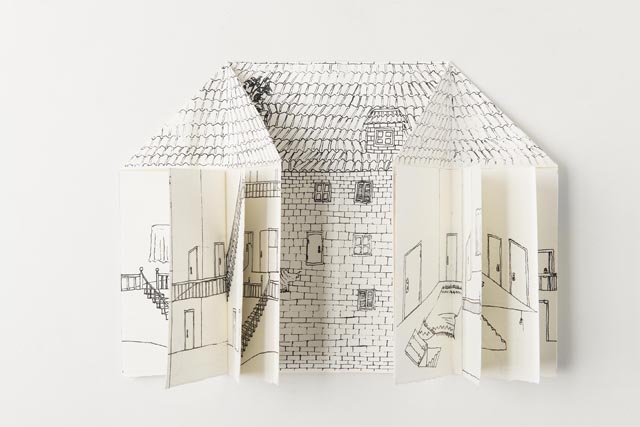
To get there - offset print - 10x10x333cm - 2012

To get there – offset print – 10x10x333cm – 2012

Briefly describe the work you do. 

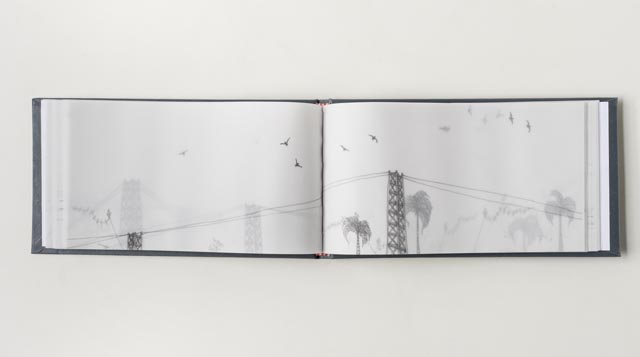
May main activities regards to artist books, drawings and installations.

Tell us about your background and how that has had an influence on your work and on you as an artist.

I graduated in Art but the thing that inspires me the most is not the technician of the art work but to look towards my interaction with my surroundings. I lived, during my childhood, nearby a hydroelectric plant in the Amazon rainforest and the diaspora and major routes and the full panorama if it, because filled my soul with pleasure, always ended up appearing somehow in my work.

The concept of the artist studio has a broad range of meanings in contemporary practice. Artists may spend much of their time in the actual studio, or they may spend very little time in it. Tell us about your individual studio practice and how it differs from or is the same as traditional notions of “being in the studio.”

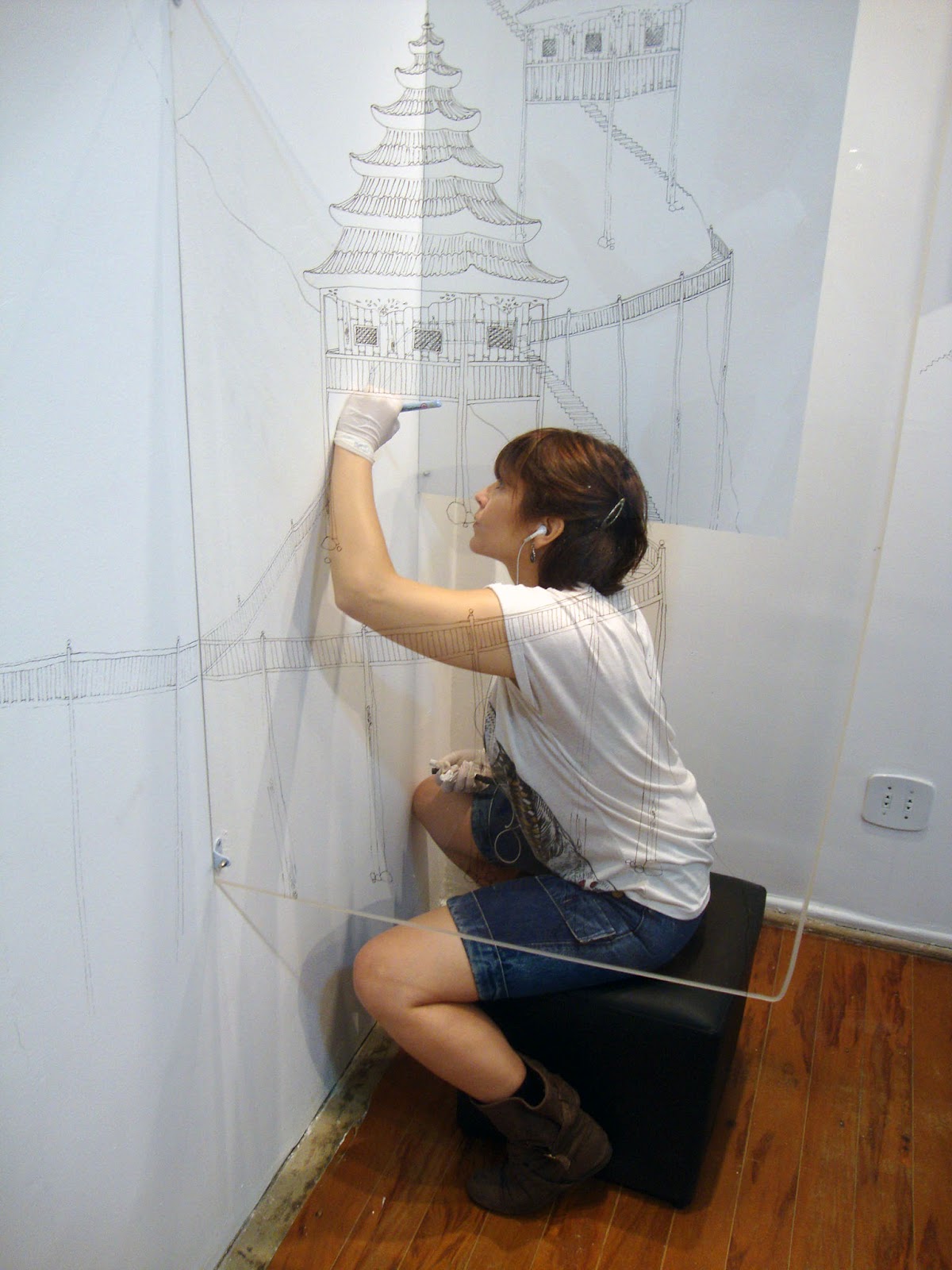
My thoughts are that the Studio plays an important role in every artist work, it might exist. In fact it’s inside the studio that happens all the work planning and some execution, even if part of it is performed elsewhere, as with some impressions or premises when drawing directly in space.

The Map of the infinity house - silk screen on paper - 15x21cm- 2014

The Map of the infinity house – silk screen on paper – 15x21cm- 2014

What roles do you find yourself playing that you may not have envisioned yourself in when you first started making art?

Nowadays my work is related to editing my books and also doing myself a task of its distribution and everything else that relates to that work. When I first started making art I did not even know how to create or produce books. I thought they were a part of my job that hardly represented what I really did at that time, but as times goes by it ended up becoming the main focus of my production. It is super rewarding tho. Today I have my books sold at Printed Matter in New York, something I never imagined in my life.

When do you find is the best time to make art? Do you set aside a specific time everyday or do you have to work whenever time allows?

I don’t have a specific timing to produce art, since I work every day in my home-studio. As I produce and in the same time I do everything else that has to be done in my routine I need to organize well my time, because there is always plenty to do besides work… like now, I find myself answering this questionnaire.

Migration - inkjet printing on vellum - 12x22cm - 2014

Migration – inkjet printing on vellum – 12x22cm – 2014

How has your work changed in the past five years? How is it the same?

Basically I can tell that I used to work with sole/single-unit productions. With the time I moved into book projects what led me to a broader massive production. I used to do single pieces, now I produce multiple ones. Also I entered other art methods such as the use of other alternative medias and photography. What remained the same, tho, was the drawing part. You can still find it within my work.

How have people such as family, friends, writers, philosophers, other artists or even pop icons had an impact on the work you do?

What influences me the most are all the places I ever been and/or lived on and pasts events in my life  – not specific people.

Have you ever been pulled in the direction of a pursuit other than being an artist? What are your other interests? 

Not in my professional life. Besides that, well, I enjoy running, but not that I see myself as a marathoner, but I enjoy being outside and putting up energy outside of me other than producing.

About

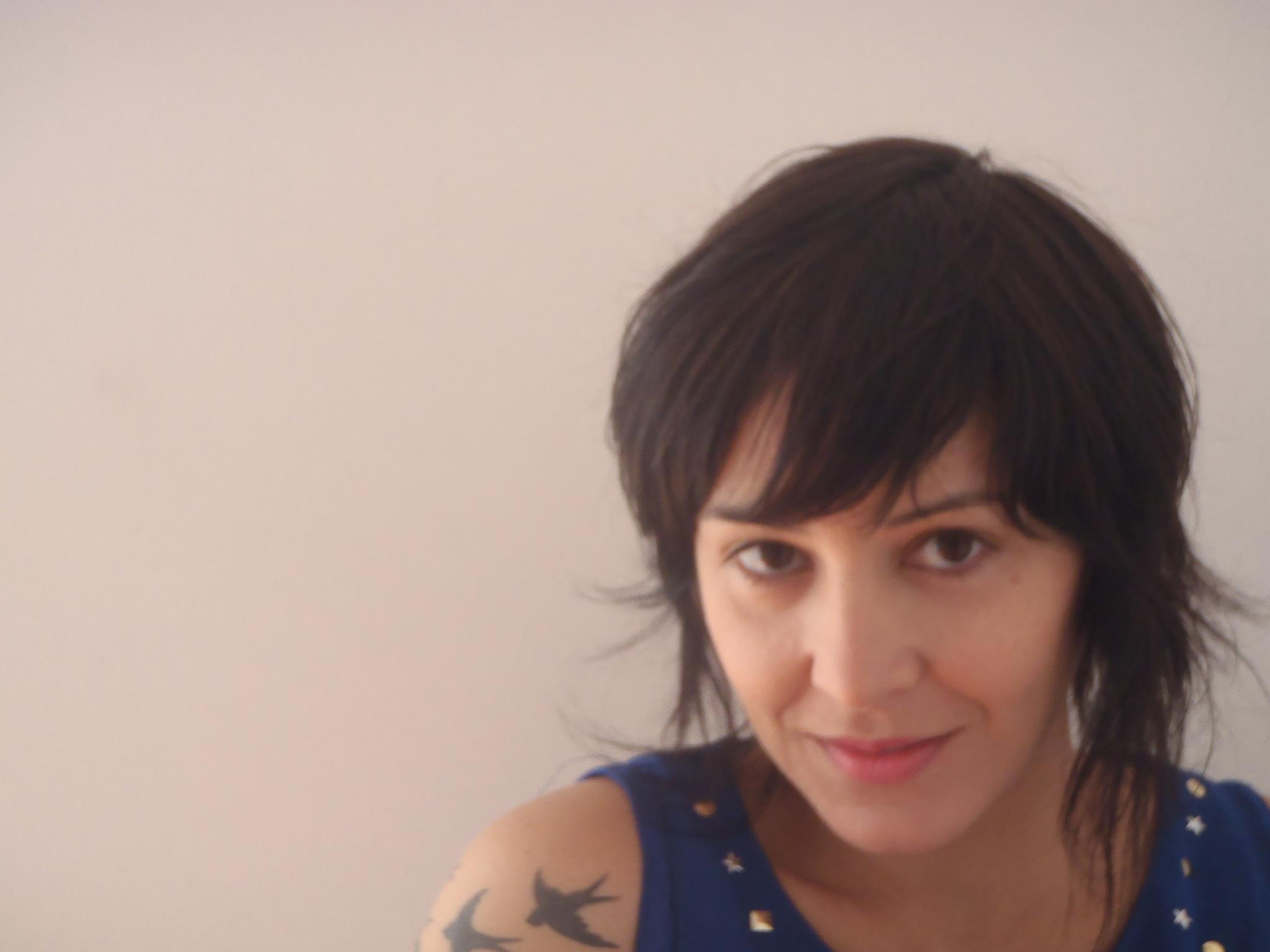
474637_643260115688268_1330718082_oLives and works in São Paulo, Brazil.

Master’s Degree in Visual Poetry by ECA USP and graduated from FAAP, Katia Fiera held eight solo exhibitions, among them “(To Get There, 2012)” with launch of the book of the same name, its first international show was in Paradigms gallery in Barcelona. Recently received the Award PROAC Book Artist 2014. The work, especially in design, investigates the support of this practice, ranging from paper to space, which takes an installation character. The variation of support serves the artist as a way to give a playful journey to the design that folds out into various presentations, ranging from paper and the object to architecture.

DSC03326

katiafiera.net

All images copyright of the artist and used with their permission. 

Posted in Printmaking | Leave a comment

Marina Roca Die – Berlin, Germany

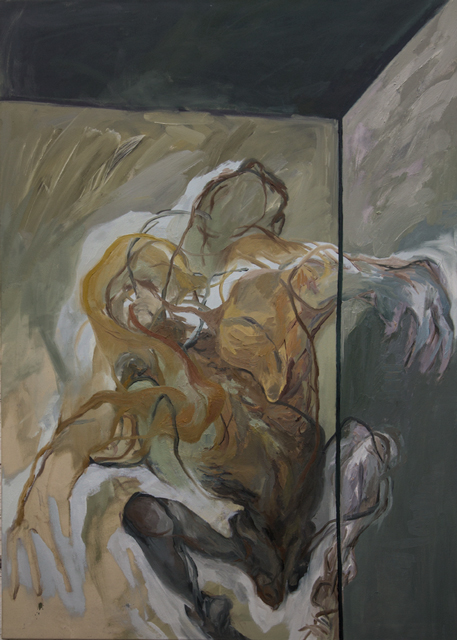
Birdless II (from the series Birdless) Oil on canvas 140x100 cm 2014

Birdless II (from the series Birdless)
Oil on canvas
140×100 cm
2014

Briefly describe the work you do. 

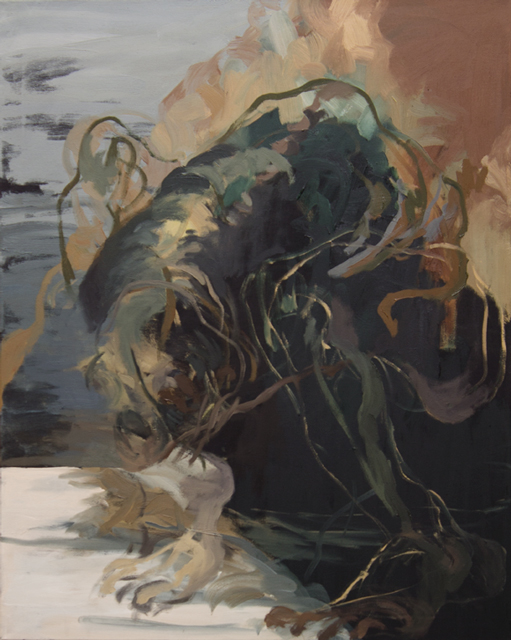
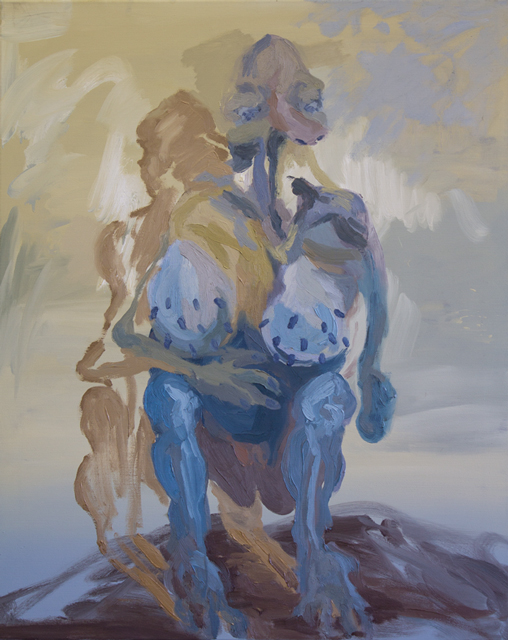
I work primarily with painting and drawing, and I sometimes combine it with fabrics and thread in artworks more focused on the experience of material. My work analyses a psychological representation of the human body. This is done through the transformation and deformation of the human figure, its shapes and proportions. The image then becomes something expressive, out of the traditional understanding of the body. About the subjects, I work with psychoanalytic theory and feminism, as well as with philosophical issues, as for example the relationship between the human and its Other, or the natural encounter between animal and human.

Tell us about your background and how that has had an influence on your work and on you as an artist.

I’ve been always in touch with arts since I was a child because my father is a landscape artist. We used to go to really beautiful places in the Mediterranean Sea and he always had a piece of paper and watercolours ready for me. From my mother I got the ability to explain myself, since she is a journalist. From my sister, my love for cinema. All these elements combined made the best background for me to develop my artwork.

The concept of the artist studio has a broad range of meanings in contemporary practice. Artists may spend much of their time in the actual studio, or they may spend very little time in it. Tell us about your individual studio practice and how it differs from or is the same as traditional notions of “being in the studio.”

Well, I guess my studio practice is quite traditional. When I’m there I prepare my paintings, I build my own canvases, I do color scales, sketches of ideas I have, I make notes, etc, and then when I’m ready to paint the big pictures I just start, normally I do three or four at the same time in order to change what I see and refresh my view of it. Normally I’m a quite fast painter so when I’ve been in the studio for a few hours and my eyes are tired I simply have to stop and continue the next day. At the end my activity in the studio is pretty dynamic.

The Animal Man I (from the series The Animal Man) Oil on canvas 100x80 cm 2014

The Animal Man I (from the series The Animal Man)
Oil on canvas
100×80 cm
2014

What roles do you find yourself playing that you may not have envisioned yourself in when you first started making art?

Because of my obsession with deformation of human figure, very often people understand my artwork as something disturbing, although I have no intention to make it weird and I never had that intention. I think people understand deformation of the body as something aggressive towards their own bodies, which simply shows how powerful art can be. So I could say disturbance is now a part of my work that I didn’t even know it existed in me.

When do you find is the best time to make art? Do you set aside a specific time everyday or do you have to work whenever time allows?

Normally I go to the studio from around 11 h to 18 h, but it really depends on the day, and the specific task. For example if I have to draw often I do it at home and my favourite time to draw is on the evening, from 20 h to 22 h. I’m not very strict with time.

Weird Woman Standing Still IV (from the series Weird Women Standing Still) Oil on canvas 100x80 cm 2015

Weird Woman Standing Still IV (from the series Weird Women Standing Still)
Oil on canvas
100×80 cm
2015

How has your work changed in the past five years? How is it the same?

I’m still very young and five years for me means my whole career, so everything has been changing constantly. But the biggest change occurred when I moved away. I’m from Madrid but I came to Berlin to live three years ago, and that came with an unexpected but great push on my development as an artist on every aspect: the election of subjects, defining the aesthetics I want to pursue, etc. In general terms, in the last couple of years I’ve defined an artistic range in which I want to move. As well as being able to see contemporary art almost every day, around the streets, in galleries or museums, that doesn’t happen in Madrid, and I found it very useful for my personal changes. 

How have people such as family, friends, writers, philosophers, other artists or even pop icons had an impact on the work you do?

My biggest influence in an everyday basis is my boyfriend, who is an artist too, he is the one who knows my work the best, and I feel a direct artistic connection with him and total fluidity on our art conversations. My best teacher was also a great influence for me. In a cultural level I have many artists who had an impact on me, such as Bacon, Baselitz, Cecily Brown, Louise Bourgeois, etc, as well as philosophers like Freud, Judith Butler, Zizek, etc. I have a preference for psychoanalytic theory, in special the work of Lacan, I find extremely pleasurable to analyse his work and I find a lot of inspiration from it that I can apply to myself and to my artwork. 

Have you ever been pulled in the direction of a pursuit other than being an artist? What are your other interests? 

Not really, I’ve been always interested in philosophy and at some point I thought about dedicate myself to music, because I used to play drums when I was a teen. But for real I always wanted to become an artist, the pleasure I feel by mixing oil colours for example is something I couldn’t find in any other field of study.

About

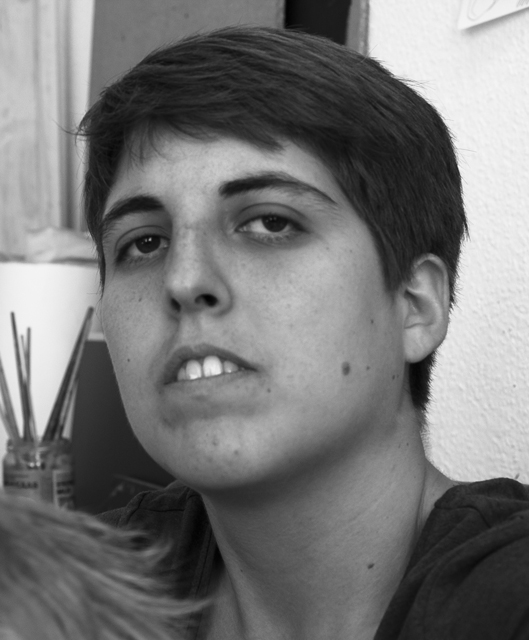
headshot365Marina Roca Die, (Madrid, 1988) is an artist who works with painting and drawing, often combining this with fabrics and strings. She studied the Sculpture Degree in La Palma School of Art in Madrid, as well as Painting at Estudio Arjona, where she won a merit scholarship. After a lot of time spent on learning how the body behaves, how to draw the body in Life Drawing sessions in Círculo de Bellas Artes in Madrid, she started her research on the human body in its psychological dimensions, how the body can be then transformed, reshaped and pulled out of its limits, related with other bodies and other beings, in search of the complete expressive image. The body is often related with philosophical ideas of human condition: the idea of the Other or the limits of humanness as a natural being, as well as with psychoanalytic and feminist theory within sexuality. Marina lives and works in Berlin.

worktable365

marinarocadie.com

All images copyright of the artist and used with their permission. 

Posted in Drawing | Tagged , , , , | 1 Comment

Ana Perez Ventura – Paris, France

Étude nº 187. Acrylic on canvas. 200 x 200 cm. 2014.

Étude nº 187. Acrylic on canvas. 200 x 200 cm. 2014.

Briefly describe the work you do.

In my work I investigate the relationship between time and space with a special emphasis on repetition. My experience of time as a musician, where repetition is part of the everyday routine, plays an important role in my practice as an artist. I wondered what would happen if I visually captured all the time spent while practicing the piano.

In my “Études” series, the paintings are the result of the rhythmic repetition of a circular gesture that leaves a mark on the surface of the canvas. This procedure is repeated over several layers. The term étude (study) comes from music, where studies are typically based on a single piece of musical material, for instance a rhythmic or melodic pattern, which is repeated with slight variations. This creates a continuous musical flow which translates into a repetitive choreography of movements. The repeated circular gesture used on the paintings thus arises from piano playing.

In 100 metros de Do mayor (694 octavas) I continue my interest for the relationship between repetitions in time and space. I transform the repetitive rhythmic gestures encountered in piano practice into explorations of pure abstraction in a different way from the one previously used in the études series. Specifically, I now focus on the repetitive gestures of practicing scales.
In this work I “played” the scale of C major with the right hand over the 100 meters of the PVC tape.  I applied a color to each finger (black for the thumb and white for the other fingers).  

In the Neumas series (neumes) I graphically transpose the musical scores of the Chopin Études in order to show its repetitive nature and structure. The neumes are musical symbols, graphic representations of sounds and inflections, used in the medieval musical notation. I remove the pitch determined by the stave and the rhythmic information. By doing this, I reveal the relative melodic relationship between notes, the shape giving rise to the melodic contour.

Tell us about your background and how that has had an influence on your work and on you as an artist.

My background in music is very important in my work. In order to develop the necessary piano skills, one must spend thousands of hours repeating the same gestures allowing the body to internalize and integrate them.

I graduated in both Fine Arts and Music. My student years were very hard, I was really busy, always rushing against the clock. I think that might be another reason why I am obsessed with recording time.

100 metros de Do mayor ( 694 octavas). Paint on transparent PVC film, ink and pencil on paper. Variable dimensions. 2014. Installation view: “La Vietnamita” exhibition at Espacio OTR. Madrid, Spain, 2014).

100 metros de Do mayor ( 694 octavas). Paint on transparent PVC film, ink and pencil on paper. Variable dimensions. 2014. Installation view: “La Vietnamita” exhibition at Espacio OTR. Madrid, Spain, 2014).

The concept of the artist studio has a broad range of meanings in contemporary practice. Artists may spend much of their time in the actual studio, or they may spend very little time in it. Tell us about your individual studio practice and how it differs from or is the same as traditional notions of “being in the studio.”

My studio is a separate room at home, but somehow I always end up invading the surroundings, spreading my works all around the house. I usually don’t work long hours in a row. Instead I do several shorter sessions in a day. For example, if I’m working on an étude, I might paint a layer and then go and do something else (like practicing the piano) while it dries. Later on I will return with a fresh mind. Finishing one étude can take months and I usually work on several works at the same time.

What roles do you find yourself playing that you may not have envisioned yourself in when you first started making art?

I didn’t imagine at all doing very time-consuming administrative activities like accounting, building a website, promoting, applying for juried shows and grants, etc.

When do you find is the best time to make art? Do you set aside a specific time every day or do you have to work whenever time allows?

I do not have a fixed schedule. Every day is different, but I usually work more in the mornings and early afternoons. I also don’t separate weekdays from weekends.

Neuma nº 9 (Chopin, Étude op. 25 nº 2). Permanent marker on pvc. 42 x 29,7 cm. 2015.

Neuma nº 9 (Chopin, Étude op. 25 nº 2). Permanent marker on pvc. 42 x 29,7 cm. 2015.

How has your work changed in the past five years? How is it the same?

Five years ago I was already working on my Étude series, but since then it has evolved enormously. This was in part due to a technical challenge that I set myself of producing an uninterrupted continuous line. Using a regular brush was not possible because at one point you always have to stop the line in order to dip the brush in paint. As you may have picked up, the process itself is a very important part of my work. The visible evolution in my études is the result of different solutions that I have found to this challenge.

I’ve also started working in other series as neumas, pintura digital and produced the  site-specific work100 metros de Do mayor (694 octavas) for an exhibition at the Espacio OTR in Madrid (Spain).

How have people such as family, friends, writers, philosophers, other artists or even pop icons had an impact on the work you do?

I like to exchange thoughts with other fellow artists. I think it helps me to be exposed to honest feedback from people I trust. Sometimes I get ideas unexpectedly. For example, the main idea of myPintura digital series came to me while teaching the piano. My pupil was having problems understanding the repetitive fingering pattern of an exercise. She insisted on reading the notes one by one without realizing the repetitive pattern. Helping her realizing it gave me the idea of using the finger scale patterns in my paintings.

Have you ever been pulled in the direction of a pursuit other than being an artist? What are your other interests?

Well, I’ve always been negotiating two paths: visual arts and music. I’ve finally realized that I need both in my life. For me they are the same; it is like speaking two different languages, but saying the same thing. Continuing to pursue both of them is my way of keeping an inner balance. I can be a bit of an obsessive character so attending to both music and visual arts prevents me from getting stuck. Other interests include reading and watching good movies.

About

headshot_ANA-PEREZ-VENTURAAna Pérez Ventura (Santiago de Compostela, Spain, 1981) is a contemporary visual artist and musician based in Paris, France. She studied Fine Arts at the Universities of Vigo and Barcelona and Music (piano) at the Conservatories of Vigo and Amsterdam. Ana Pérez Ventura moved to Paris in 2009 where she completed a master’s degree (Paris IV-Sorbonne University) specialising in the relationship between music and visual art. She has been awarded the Segundo Gil Davila’s and Pedro Barrié de la Maza scholarships (Spain) and the Artension Prize (France). She has shown her work in Spain, France, Germany and China. Inspired by her career in music as a pianist, Pérez Ventura showcases the experience of the music practice room, where repetition is part of the everyday routine of a musician.

working-Etude-187

art.anaperezventura.com

All images copyright of the artist and used with their permission. 
 

Posted in Painting | Tagged , , , , | Leave a comment

Rhine Bernardino – Ho Chi Minh City, Vietnam

BDSM, VIDEO, 2010

BDSM, VIDEO, 2010

Briefly describe the work you do. 

My work focuses on the use of body in performance art, coupled with the exploration of the use of video and photography not just as a form of documentation, but also an integral part of the creation process. My practice often revolves around the concept of human endurance in performance art, with performance’s heightened emphasis on presence and process. I emphasize the human body as both artifact and mechanism: an object to be observed, investigated and experimented on, and the body as means of expression through interactions with others.

Aside from my body of work’s dedication to experiment and investigate on the use of body in performance art, I am also exploring more on the possibilities and strength of the discipline – not only its ability to shock, provoke and surprise audiences, but its capacity to give voice to marginalized views and empower the viewers and communities, the people.

Tell us about your background and how that has had an influence on your work and on you as an artist.

I’m a woman from a third world country who experiences the day to day oppression of racism, sexism and discrimination in varying degrees and subtleties. The influences are quite apparent in my body of work.

Beauty over Suffering, video, 2013

Beauty over Suffering, video, 2013

The concept of the artist studio has a broad range of meanings in contemporary practice. Artists may spend much of their time in the actual studio, or they may spend very little time in it. Tell us about your individual studio practice and how it differs from or is the same as traditional notions of “being in the studio.”

I don’t have a studio as I don’t have to be ‘in the studio’ to create. I could say that my world or life is my studio but it doesn’t sound like something that makes sense and is also quite cringe-worthy. Most of my works can be done at my place, outdoors or blur the line between art and my personal day to day life, so there is no compelling need to have a studio that may serve as my ‘office’ or ‘workplace’. It is also a question of financial capacity – of course I’d love to have a studio to be a ‘legit artist’ but my reality and that of a lot of artists is that we don’t have the means to afford one, yes, even the very dingy ones in rough parts of the city.

What roles do you find yourself playing that you may not have envisioned yourself in when you first started making art?

The role of a financially dependent bum, a “house girlfriend” and a manic-depressive joker.

When do you find is the best time to make art? Do you set aside a specific time everyday or do you have to work whenever time allows?

The best time to make art for me is after procrastinating for such a long time that I feel utterly sorry for myself and I feel like I’m wasting my existence. Idleness is very important to me, so after I have my fix of that, I create. On the other hand, it is when I’m idle and/or procrastinating that I get to think of ideas and in this process finalise them in my head. So, I could argue that it is when I’m not creating in the actual “manual labour” sense that I do actually create. 

At the moment, I have works that are set at a specific time like Shellfishperhour, wherein I take a selfie every hour. This is a part of a series of year-long durational projects that take place in various internet platforms and social networking sites such as Facebook, Twitter, Instagram, Youtube and Tumblr, wherein I post hourly and daily contents for a year. I’ve also started “Art Race”, wherein I send at least 1 proposal, application to exhibit or collaborate to galleries, institutions and individuals everyday for a year. With the selfies, I don’t really have much freedom or choice but the rest of the daily projects, I get to it whenever I had my fix of idleness, but before the day ends – I’m a crammer so most of the time, very late at night. 

Detail shot of Mechanize Intimacy, number 7 Yuv

Detail shot of Mechanize Intimacy, number 7 Yuv

How has your work changed in the past five years? How is it the same?

I’ve only been practicing for about five years, including the latter part of my university studies, so I guess I don’t really have that long of a career to analyze and significantly compare. The core is still the same and the focus remains to be the body and the use of multimedia but perhaps not as intense as the earlier works. I can say that the endurance, presence and the process part have been elevated as most of my recent works are longer, more tedious and above all, simultaneous! I seem to be hating and inflicting more suffering on myself or I’m becoming more and more of a masochist, who knows? haha In line with this, I feel that dedication to experimentation and investigation of the disciplines involved in my practice is stronger because I’m trying more to explore the power of my field to give voice to marginalized views and utilize its capacity to empower people and communities.

How have people such as family, friends, writers, philosophers, other artists or even pop icons had an impact on the work you do?

Immensely and profoundly that I’m not even sure how to properly describe and be understood. I’m influenced by random thoughts and people and ideas. Random in the sense that they are not all in one category. Most things just hit me on some levels and make me think of completely differing works or ideas. But influence affects me on a personal level first before it bridges to my work. Teching Tsieh’s body of work is an inspiration to me, so as Van Gogh’s, Andrea Fraser’s, Hemingway’s, Camus’, James Blake’s, Nicholas Pervez’s, graffitti in various cities, poems somewhere, an artwork in a gallery or art shows, and the list goes on. I’ve also been really into pop singers and dancers recently as I’m preparing for a new work series – I’m loving Britney Spears and Shakira, among others.

Have you ever been pulled in the direction of a pursuit other than being an artist? What are your other interests?

I love swimming, the ocean and the thought of being a marine biologist. I actually tried to push myself to it and still delusional about being pulled to that direction, they just don’t correlate. Same goes with being a multiple grand slam champion of a tennis player, a rockstar drummer, a writer, a war photographer, a supermodel, a nun and a big blue whale. I guess the feeling is not mutual. The nun option is still open though, my aunt in Lourdes said I’ll always be welcome.

About

Portrait for AbraajRhine has a BA in Film and Audio Visual Communication from the University of the Philippines and will be taking up MA Photography (Performance pathway) at the Royal College of Art starting October of 2015, for which she was awarded the Abraaj RCA Innovation Scholarship. Her collaborative approach to her craft is based on her belief that art is a catalyst for social change. She has previously established _inventory, a collective/initiative that organizes shows in alternative and public spaces to showcase young artists’ works and offers a residency program to engage communities in art through public performances, events and discussions.

Her work looks to challenge social convention and provoke discussion. She chose to begin one of her recent projects, Female Body Inside, in India to explicitly address the country’s high rates of abuse toward women, which she exhibited at the 2014 India Art Fair in Delhi. Rhine strives to promote the idea that art is non-exclusive, educational, utilizes local resources and is more accessible to people, especially in rural areas. 

me in my studio

rhinebernardino.com

All images copyright of the artist and used with their permission. 
Posted in Performance, Video | Tagged , , , , | Leave a comment

Marina Morón – Sevilla-Granada/Andalucia/Spain

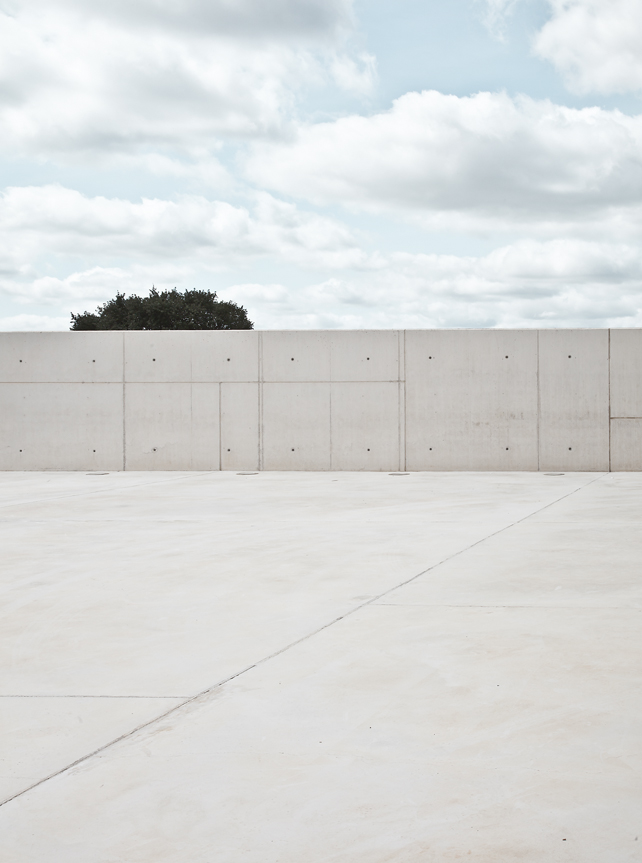
Doors XIV_Digital Photography_60x90cm

Doors XIV_Digital Photography_60x90cm

Briefly describe the work you do.

We are not focused on producing an aesthetic. Against ratio we find intuition. Against the light, representation of the place acquires the status of chromatic sequence that all cultural landscape contains. Image explores the varying limits of perception, presents as border character, when colour no longer as the real reference, when light (white or black) is question and not security. Contrast of the firm and comprehensible, draws a complex, only decipherable horizon for a new calligraphy of the senses. The image is a complex language alphabet, grammar and own syntax that fits poorly in the simplicity of generalizations and stereotypes. Approaching their reality to try to understand it means accepting its own laws, its particular relationship with time and its ability to create combinations of spaces and planes as changing expression of landscape.

Tell us about your background and how that has had an influence on your work and on you as an artist.

Photography forms a part of the investigative process of space and emptiness, of colour and perception. We do not distinguish between an architectural project and a photographic project; the search and the reflection are one and the same. Our interest lies in the space existing between things. This may take the form of an investigative project regarding chromatic landscapes or a sound and image installation in an urban environment. Now, when looking back at our collective trajectory, we can clearly see these issues, which have always been present in distinct formats. Even in proposals for architectural design contests, our perception of the site and the solutions included this unbreakable language.

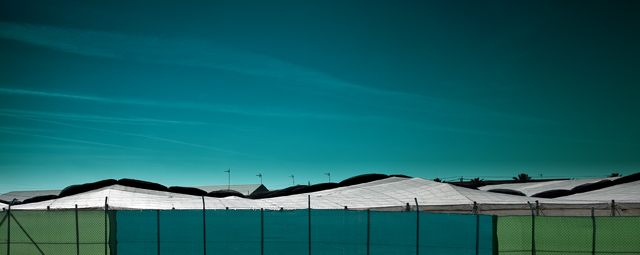
Instant South VIII_Digital Photography_150x60cm

Instant South VIII_Digital Photography_150x60cm

The concept of the artist studio has a broad range of meanings in contemporary practice. Artists may spend much of their time in the actual studio, or they may spend very little time in it. Tell us about your individual studio practice and how it differs from or is the same as traditional notions of “being in the studio”.

Our workspaces are all those spaces we feel. They are anonymous places -of passing (the Stockholm metro, an airport, the exit of a Paris museum)- that still hold onto the human footprint. An absence, the footprints of man that are still felt because they have truly transformed the spaces of the inhabited site. We pay particular attention where inside and outside comes together. Two positions collide: a restrained, quiet language and an explicit, self-reflective expression. Interior and exterior are interwoven. We like to play with the principle of the active presence that materializes itself in the space. “I am the space, where I am”, in the words of Nöel Arnaud.

What roles do you find yourself playing that you may not have envisioned yourself in when you first started making art?

The images we make are results. We are not interested in effect for effect’s sake. A sound, the light, could be the first principle.

We build with the image and building is too slow. We are professors, architects, researches, editors, designers… In an image we are confronted with the development of creative project, the fundaments must always be present and they must highlight the whole process. We communicate all the layers, but our work needs to be self-explanatory. At the same time, there is an unknown story behind, which you do not have to know to enjoy it.

When do you find is the best time to make art? Do you set aside a specific time everyday or do you have to work whenever time allows?

More than an extensive relationship or stereotypical moments, we wish to consider situations. A duet is a permanent cooperation agreement. We have always worked like this so it’s something that we no longer even consider; it has become so natural as a work method and a way of thinking: our only way of understanding work. It helps us to create an on-going discussion. The work becomes a continuous dialogue, a permanent tension. The discussion becomes the process. This dialectic method has the advantage of continually enriching and refining the investigation. Although we must recognize that on occasions, it prolongs and complicates it. This is another advantage as it shows your work when it has been subjected to processes of substantial decanting, settlement and crystallisation. Often we are asked about the difficulty of understanding how photography is collective work, being that it is an instantaneous act, identified by the closing of the camera’s shutter. But more and more in contemporary art, creation is considered to be a process of time. For photography, this begins with the shot selection and it does not end until the final decisions are made regarding support and exposure devices. We make this journey together. In each of its stages, we discuss and compare different options.

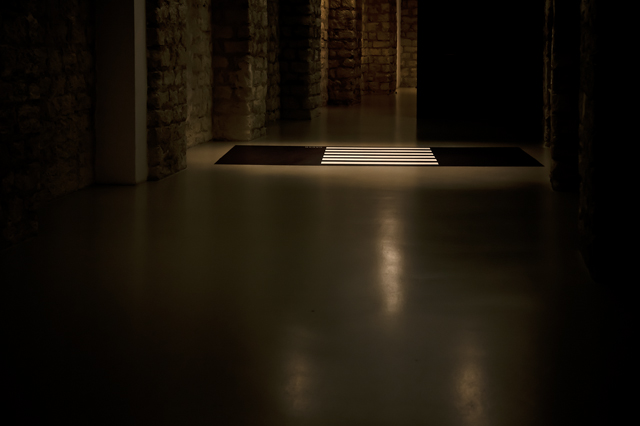
Éclairage XIII_Digital Photography_120x80cm

Éclairage XIII_Digital Photography_120x80cm

How has your work changed in the past five years? How is it the same?

Our work always changes because each body of work is a research of a new idea. The two bases of our images are emptiness and colour. Both of these are related, united by their common quality of communication. In our book, A_chroma, we use this as a proposal and conscious declaration. There are images whose colour scheme must be felt internally by the spectator. Where is the colour? If it is not in what we see, the response is as simple as the possibility: in the emptiness, in the space between the object and myself. We also wish to insist upon the interaction and ability of the creation of architectural projects and images to change over time and we are convinced that they change over time along with our consciousness. The book of architectural projects Sintagmas cromáticos is the result of a considerable amount of time. It is the culmination of a process based on time and its overlapping. But the latest work, K: emptiness, a book published this year 2015, proposes this dual character of individual narration and apprehension of the world: an anonymous individual expressing himself through photography, adding his impressions via personal comments, reviewing and classifying some of the images that have been key in his life. These are scenes that are recorded in his memory, marked by perceptive sensations, capable of recalling the most sensitive moments of his past. Travels, cities, places, viewed based on a need to remember and to defend the uniqueness of each experience.

How have people such as family, friends, writers, philosophers, other artists or even pop icons had an impact on the work you do?

There have been critics who have noted the overlapping of classic foundations with contemporary sensitivity in our work. We cannot separate ourselves from this. It is true that research, like teaching, demands this dual task of knowledge of the past and experimentation and innovation. Once, at the beach with the sand’s textures subjected to strong eastern winds, we felt the touch of Miquel Barceló’s work, and this led to the use of cotton paper and specific types of ink… We have discovered the concept of the “in-between”, the interstices, in the writings of Oteiza and we cannot tell you how long it has been in our language or if we have changed it after the reading of Merlau-Ponty. Thus, we clearly recognize, in strong contrast to the self-educated who often arrogantly and ignorantly proclaims, in the face of this external absorption, to be indiscriminate, that in the end, we are found to have our own personal and distinctive language.

Have you ever been pulled in the direction of a pursuit other than being an artist? What are your other interests?

What are our other interests? Light… The effort to create the light is to control their effects and encourage the architectural space bathed in her life. This space is the fragment of a landscape in which interior and exterior are involved: a camera activated with light variations. The light that filters and their reflections and shades coloured spaces. In that regard, landscape and architecture is not a formula that can accept or reject, does not depend on detailed or arbitrary decision.

About

Headshot_marina_morón is the creative team of Jesús Marina Barba, PhD in History, professor in Granada University, and Elena Morón Serna, PhD in Architecture, whose work explores tangible connections between the image and architectonic space with an emphasis on the experiential qualities of color and the concept of emptiness.

They are an artistic team based in Sevilla and Granada (Spain). They have been directors of various research projects and attend international conferences as speakers. They have written three books. Their publication A-chroma was finalist at PhotoEspaña Book Award 2013. Their current project, K: emptiness (Kehrer Verlag, 2015), proposes a dual character of individual narration and apprehension of the world.

Their Images explores the varying limits of perception, presents as border character, when color no longer as the real reference, when light (white or black) is question and not security.

Studio

marinamoron.com

All images copyright of the artist and used with their permission. 
 

Posted in Photography | Tagged , , , , , , | Leave a comment

Susan Lizotte – Los Angeles, California

King And Country", oil and spray paint on canvas, 24" x 48"

King And Country”, oil and spray paint on canvas, 24″ x 48″

Briefly describe the work you do.

I am a painter currently working on a series entitled Mercury. The paintings trace the history and misuse of the element mercury as well as the abuse of power that has continued for the last five centuries. The paintings are in spray paint and oil paint. I especially love when a charcoal under drawing shows through the layers of paint. Some of the paint layers are very sheer and some of the paint is very thick and opaque. I’m having fun teasing what’s “not being seen” in both reality and the paintings. 

Tell us about your background and how that has had an influence on your work and on you as an artist.

I have always loved art and especially painting. Art was discouraged in my family, you were supposed to get a “real” job. I finally just had to pursue my love of painting and see what happened. So I feel that my freedom now to paint is very special. I also think that it is even more important to paint what I have to say, to take full advantage of the medium and try and convey a message, not just paint something pretty.

"Three Primaries", oil on canvas, 30" x 48"

“Three Primaries”, oil on canvas, 30″ x 48″

The concept of the artist studio has a broad range of meanings in contemporary practice. Artists may spend much of their time in the actual studio, or they may spend very little time in it. Tell us about your individual studio practice and how it differs from or is the same as traditional notions of “being in the studio.”

I’ve been lucky enough to have a studio and I’m in it three or four days a week, more if possible. Studio time allows the freedom to play with new ideas, in both thought and practice. I am able to make mistakes, which often lead to new ideas. The studio also allows me the freedom to work without any distractions which I think is part of the traditional “studio” time. If I have a painting which is going particularly well I can stay and keep working on it. Sometimes I just get inspired and just work through the painting till it’s too dark to see the colors properly anymore!!

What roles do you find yourself playing that you may not have envisioned yourself in when you first started making art?

I never imagined that I would curate! Yet I have and it is tremendously rewarding! Also I really never thought I would be part of a big group and trying to get a consensus with a large group is quite challenging!

When do you find is the best time to make art? Do you set aside a specific time everyday or do you have to work whenever time allows

The best time to make art for me is when I have time, which normally is during the day. The hardest part of making art is letting go, mentally, of all of the day-to-day distractions, or least it is when I begin a painting. Once I’ve started a painting I’ve played around with the composition quite a bit so I’m pretty committed which makes the process easier. I have a small routine, which helps me make my art. I get into the studio, set up my palette, check my brushes, crank the music and get ready to go!

"He Thought It Would Last", 60" x 40", oil on canvas

“He Thought It Would Last”, 60″ x 40″, oil on canvas

How has your work changed in the past five years? How is it the same?

My work has changed so much in the last five years. I used to be more concerned with rendering, now I am concerned with the paint. What has not changed is a very specific color palette for each painting, sometimes breaking the “rules” of color on purpose for specific effect. I am also always so impressed by painters who know color and use it exquisitely, like John Currin or Rebecca Campbell.

How have people such as family, friends, writers, philosophers, other artists or even pop icons had an impact on the work you do?

I have been very impacted by Rebecca Campbell’s paintings. In addition, my painting series was inspired by the writer Mark Blaxill. Mark’s book “The Age of Autism: Mercury, Medicine and a Man-Made Epidemic” is a powerful tale of the last five centuries and the abuses which continue to this day. My paintings were inspired by his words.

Have you ever been pulled in the direction of a pursuit other than being an artist? What are your other interests? 

Yes, making a living interfered with my artistic pursuits a bit! I was a bespoke shirt and suit designer for fifteen years, running my own business for five of the fifteen years! Now I’m a mother of four children and I balance my art with having fun with them!

About

SusanHeadshotSusan Lizotte was born in Los Angeles, California. She attended Marlborough School and received her Bachelor of Arts from UCLA. Susan Lizotte’s paintings utilize both figurative and abstract elements to explore issues of abuse of power and control, often within a mythological setting as metaphor. With a range of stylistic approaches and methodologies she also examines the nature of investigation, via painting, in relation to art history, as a reflection of the myriad journeys of the Mind. She lives and works in Los Angeles.

SusanStudio

susanlizotte.com

All images copyright of the artist and used with their permission. 
Posted in Painting | Tagged , , , , | Leave a comment

Şirin Bahar Demirel – Tallahassee, Florida

Resistance Point, moss graffiti installation, 120cm x 200cm, 2013 (Detail shot)

Resistance Point, moss graffiti installation, 120cm x 200cm, 2013 (Detail shot)

Briefly describe the work you do.

I work with different mediums such as video, photography and street art in the form of sticker and paste – up. The videos and short films I’ve made are in the blurred line between documentary and video art. Even though I choose documentary genre for story telling, I adopt a more experimental style, which allows me to be completely free and creative in terms of form while still documenting a reality.

However, when it comes to my photos, I’m not interested in documen­tary photography or capturing the ‘decisive moment’. My works are usually in the field of conceptual photography where I can combine illustrations and words. My visual approach also gives a big place to negative spaces.

Creating new perceptions by pulling out things and ideas from their context serves as a general approach to all my works. A bit of black humor always accompanies them.

Tell us about your background and how that has had an influence on your work and on you as an artist.

Although I’m working with images, I’ve always been more comfortable with written words. Even now, when I start either a photo or a film project, first I write about it. It’s the only way for me to gather my thoughts. And I believe that it’s a heritage from my childhood. Back then, I read a lot and was writing stories based on the cartoons I watched. I was a quite child, more of an observer with a huge curiosity. I was born in a gigantic city like Istanbul and I spent a lot of time with grown ups when I was a kid, so there was nothing but an enchanting world out there, abundant with exciting details. I’m influenced by this environment both in personal and artistic level.

2.Still image from “Living with Leviathan”, video, 11min, 2013

2. Still image from “Living with Leviathan”, video, 11min, 2013

The concept of the artist studio has a broad range of meanings in contemporary practice. Artists may spend much of their time in the actual studio, or they may spend very little time in it. Tell us about your individual studio practice and how it differs from or is the same as traditional notions of “being in the studio.”

My practice is very solitary which includes just me and my computer. So I don’t generally need a studio space in a traditional sense. For now, my studio is my living room. It may sound kind of weird but I also have a closet in which I hang drafts about my projects and ideas. I think its shelter-like feeling gives me comfort. I feel more productive in a familiar environment so if I decide to have a studio one day, it’d be homey too.

What roles do you find yourself playing that you may not have envisioned yourself in when you first started making art?

At first, I was very naive about the art world and convinced that if I make great art, I’ll automatically have some kind of platform to show my work. But it took a while for me to understand that working is not enough to be seen or heard. You have to step up and demand your place. So I decided to be my own boss. In order to exist, I have to create my resources; I have to get lost in the infinite web to find the right places for what I create. Applications, submissions, proposals and all the opportunities that artists (at least the emerging ones) have to chase take so much time and energy that some days I wind up exhausted and frustrated. This survival mode is no fun but is crucial.

When do you find is the best time to make art? Do you set aside a specific time everyday or do you have to work whenever time allows?

I don’t think that people doing creative work can set aside a specific time for this but for the sake of discipline, I try to work everyday even if it wouldn’t provide a significant contribution to the project I work on. Otherwise it’s so easy to be drifted away by little dramas of daily life or other jobs that you have to do to earn your living.

Besides, reading, watching or following other artists’ works are also nurturing and inspiring activities, which cannot be separated from creating your own work. So I feel like I’m constantly in a state of observing and trying to see how I can make use of what I witness right that moment.

3.From the photo series “What to do with the pieces?”, photography&illustration, 2013

3. From the photo series “What to do with the pieces?”, photography&illustration, 2013

How has your work changed in the past five years? How is it the same?

My work hasn’t gone through dramatic changes in the past five years but I think my approach to my own practice is much different now. I start to take myself more seriously as I see my work being appreciated by others and it gives me some kind of confidence every time I have an idea. And naturally, this reflects on my works, making them more mature.

How have people such as family, friends, writers, philosophers, other artists or even pop icons had an impact on the work you do?

It’s a little redundant to say but my family has the strongest impact on my works. I mean, on a subconscious level. But the real inspiration comes from the strong, smart and witty women artists, especially Miranda July and Agnès Varda. I’m also kind of obsessed with the works of Georges Perec and Roy Andersson,

Other than that, I’ve been friends & working with a documentary filmmaker, Bingöl Elmas, for years. She’s like my mentor who makes me see clearly my goals every time I get confused.

Have you ever been pulled in the direction of a pursuit other than being an artist? What are your other interests?

After studying cinema, I got my master’s degree on artistic direction of cultural projects and I was interested in curation or direction. I still am actually but even though it’s a passionate thing to do just as everything related to art, it’s not fulfilling and satisfying like creating my own work. So for now, I’m sticking with this effort to be an artist.

About

headshot_demirelBorn in 1985 in Turkey, Sirin Bahar Demirel studied cinema in Istanbul and then she finished her MA in Artistic Direction of Cultural Projects at Université Paul Valéry, France. She’s a visual artist working on photography, video and street art projects. She has participated to group exhibitions in Finland, France, Germany and Turkey with her photo works. Her short films have been touring festivals around the world and have won several awards. She currently lives and works in Florida, USA.

From the photo series “Place of Possibilities”, photography, 2013-2015

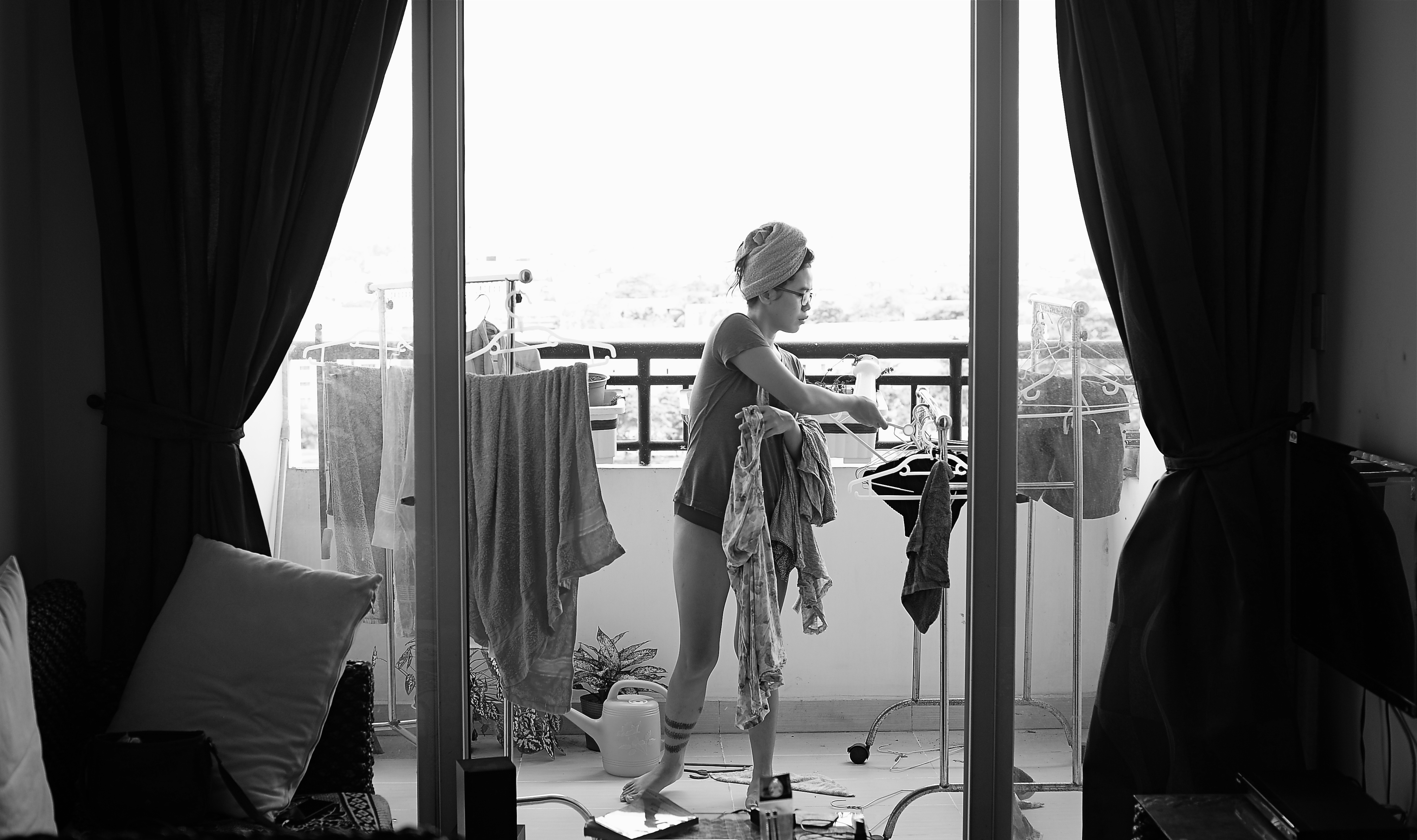
From the photo series “Place of Possibilities”, photography, 2013-2015

sirinbahardemirel.tumblr.com

All images copyright of the artist and used with their permission. 
Posted in Installation | Tagged , , , , | Leave a comment