Alexander Petersen – Portland, Oregon

Mother//Birth, graphite on paper, 50 in by 30 in, 2014

Mother//Birth, graphite on paper, 50 in by 30 in, 2014

Briefly describe the work you do.

My work is characterized by highly refined graphite drawings and illustrations, which are often accompanied by text. Drawings range from small, tightly rendered images to large, gestural articulations. Technical concerns deal almost exclusively with drawing and drawing mediums including graphite, conté, acrylics, water colors, gouache, and a minimum use of oils. Using a black and white medium with minimum color allows me the ability to encompass broad ideas in a specific, memorable, and emotional way.

Current work has evolved to encompass the relationship the human species has with the natural world, specifically that of the Class Mammalia within the Animalia Kingdom. The title, “Figure Relationship” references not only our relationship as a species with others (our dominance, destruction, and preservation for production) but that of techincal skills incorporating multiple images within one drawing. Graphite renderings of animals stand bold while subtle imagery hidden within the drawings provide visual clues conveying notes of maturity and the influence we have on the natural world.

Tell us a little about your background and how that influences you as an artist.

I was raised on a small traditional farm in rural Iowa. My life has been characterized by an intimate understanding of nature, agriculture, and the interconnected fragility of all life. I’ve traveled extensively and the exposure of people and places has been essential in creating depth and understanding both in myself and the work that I create. 
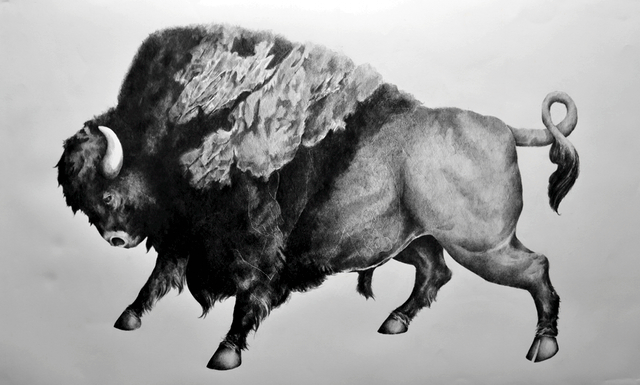
Bison, graphite on paper, 50 in by 30 in, 2013

Bison, graphite on paper, 50 in by 30 in, 2013

The concept of the “artist studio” has a broad range of meanings, especially in contemporary practice. The idea of the artist toiling away alone in a room may not necessarily reflect what many artists do from day to day anymore. Describe your studio practice and how it differs from (or is the same as) traditional notions of “being in the studio.”

Currently my studio is in my home, in the past I’ve moved between shared and solitary spaces near to where I live. I’ve always considered my studio practice traditional, as far as the manipulation of materials within a designated space to create art. Often integrating this space with daily domestic activities, it is my creative habits within that specified space that define “my studio” clearly for myself. The rituals of time spent working, placement of pieces, and processes give life to my studio.    

What unique roles do you see yourself as the artist playing that you may not have envisioned yourself in when you first started making art?

I feel a close connection with spirituality and the roles I imagine mystics to occupy. Drawing for me is a practice in meditation, an occupation devoted to quiet thought. I’m sure many artist feel this way but it was never something I cognitively associated with growing up. I’ve always thought I’d be drawing concept illustration for a paycheck, spirituality seemed reserved for another part of life. I now understand it to be essentially interwoven.
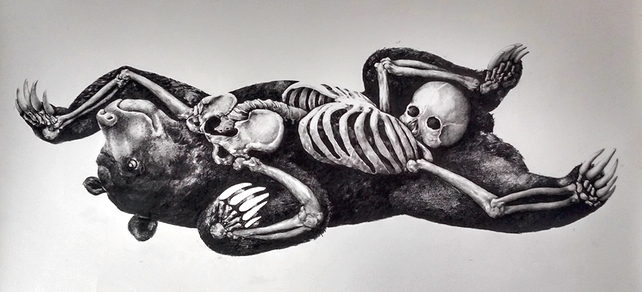
Intertwined, graphite on paper, 50 in by 30 in, 2014

Intertwined, graphite on paper, 50 in by 30 in, 2014

When do you find is the best time of day to make art? Do you have time set aside every day, every week or do you just work whenever you can? 

I can’t imagine limiting myself to a schedule. The physical act of making art is usually reserved for certain hours based on a schedule that isn’t clearly set. My thoughts never stray far from the art I am working on. Therefore when inspiration strikes, I make. Currently this has been during the morning but it is in constant flux. 

How has your work changed in the last five years? How is it the same?

In the last five years my work has shifted from large gestural conté drawings dealing with mythological narratives to small, tightly rendered graphite pieces reflecting societal structures and self-identity. My current work is a progression of graphite drawings to larger and larger scales while remaining highly rendered. 

Are there people such as family, friends, writers, philosophers or even pop icons that have had an impact on the work you do?

My greatest influences have been writers. I’ve always been a voraciously sporadic reader, with interests spanning many genres, periods, and styles. Dostoevsky’s depth and immensity stick out as early influences to pursue higher forms of art. Currently I’ve been captivated by philosophers Slavoj Žižek and John David Ebert as well as writers such as Jonathan Franzen and Thomas Pynchon.  

If you had an occupation outside of being an artist, what would that be and why?

School bus driver. Every kid needs a hero. 

About 
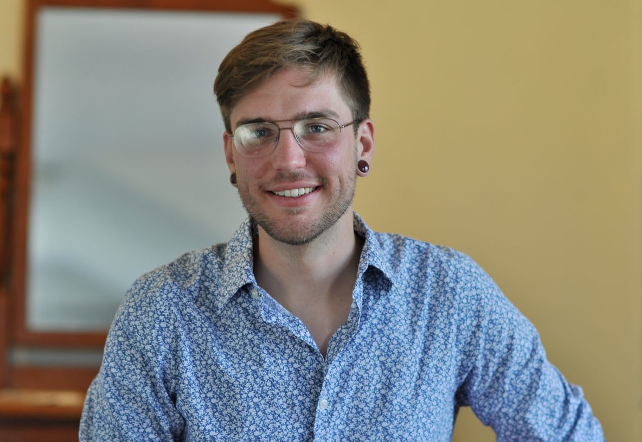
headshotBorn in the Midwest, 1989; raised in eastern Iowa, educated in Cedar Falls at the University of Northern  Iowa. Completion of degree in 2011 with a BFA in studio art; Minor in Art History. He currently resides in Portland, Oregon. Employed teaching children art with non-profit after school arts program, K-5. When awake he spends time making art from his studio, reading books, and writing fiction.
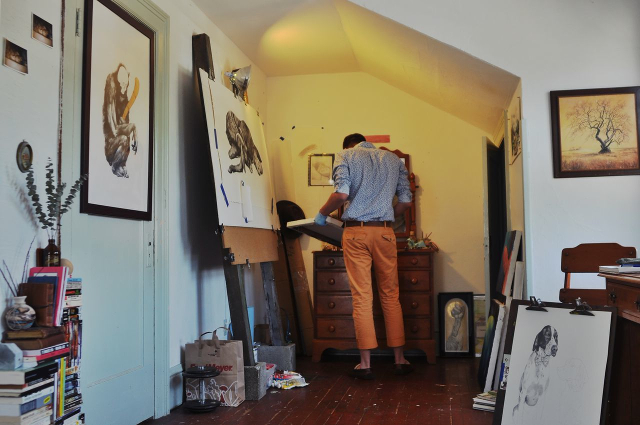
In the Studio

In the Studio

www.behance.net/pederful

All images copyright of the artist and used with their permission. 
Posted in Uncategorized | Tagged , , , , | Leave a comment

Amy Guidry – Lafayette, Louisiana

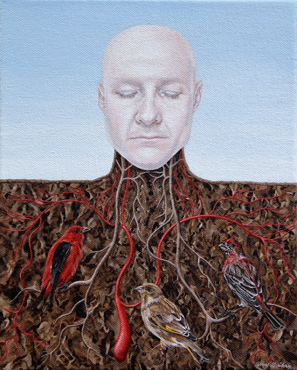
Synergy - acrylic on canvas, 8"w x 10"h, 2010

Synergy – acrylic on canvas, 8″w x 10″h, 2010

Briefly describe the work that you do.

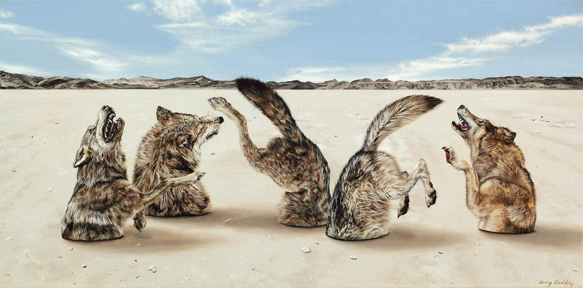
I am a full-time painter, working in acrylic on canvas.  I refer to my work as Contemporary Surrealism.  Themes I explore involve the human psyche- who we are and how we interact with each other, and the world we live in- our relationship with other animals and nature, as well as the cycle of life and connections between all life forms.  I work in series, each painting has its own message, with the overall concept conveying respect for all of nature and humanity. 

At what point in your life did you decide to become an artist?

I have been drawing and painting since I was very young, so art was just something that I’d known all my life and brought me enjoyment.  For me, it was always something I wanted to do, so it was a natural progression for me to pursue art as my major in college and take it to a professional level.

Tell us a little about your background and how that influences you as an artist.

From a young age, I was concerned about the welfare of animals and had an interest in the natural world.  I eventually became a vegetarian for a few years and then went vegan, which I have been for the past 15 years.  My latest body of work In Our Veins, has been greatly influenced by my veganism in addition to my concerns for the environment.  The premise of In Our Veins is to explore the connections between all life forms and the cycle of life through a surreal, psychologically-charged narrative. 

The Pack - acrylic on canvas, 20"w x 10"h, 2011

The Pack – acrylic on canvas, 20″w x 10″h, 2011

What types of conceptual concerns are present in your work? How do those relate to the specific process(es) or media you use?

As mentioned, one of the themes explored with my In Our Veins series is animal welfare.  It’s an important issue for me on a personal level, but I also feel that it is a significant part of the future of our environment.  These issues go hand-in-hand.  In Our Veins explores the connections between all life forms and the process of the life cycle.  This includes the interdependence of the human race to each other and to the rest of the animal kingdom, as well as the planet itself.  One cannot exist without the other, therefore it is of the utmost importance that we care for each and every living thing.  Of course I believe this is important not just for the survival of the planet, but also out of a moral and ethical obligation as well. 

In addition to the message behind my work, my materials are also vegan and animal-friendly.  I paint with acrylic which is much safer to use than oils, and I do not use any toxic mediums or thinners.  My brushes are all synthetic (not animal hair), and even my packing materials are reused and/or recycled. 

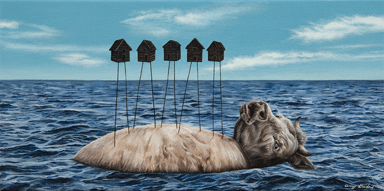
Crutch - acrylic on canvas, 12"w x 6"h, 2014

Crutch – acrylic on canvas, 12″w x 6″h, 2014

We once heard Chuck Close say he did not believe in being inspired, rather in working hard everyday. What motivates you in your studio practice?

I suppose he meant that if you were to rely solely on “inspiration” to further your art, you’d be waiting around a lot because I think inspiration is fairly intermittent.  As far as my own art career is concerned, there is always something to do and not enough time in the day.  I spend a great deal of time painting, working on new sketches, and getting my work “out there” whether its preparing for an exhibit or submitting my portfolio in hopes of a show.  Having it all come together, seeing the work as a whole in a museum exhibit, or just getting a personal email from someone on the other side of the world that was moved by my work, is all motivating and keeps me going.

What artists living or non-living influence your work?

I’ve been inspired by Surrealist artists from a very young age including Salvador Dali, Rene Magritte, and Frida Kahlo.  My interest in art is fairly eclectic- I also like the work of Kiki Smith, Lucian Freud, James Ensor, Wangechi Mutu, just to name a few. 

When you are not making art what types of activities and interests do you engage in? 

Aside from my art, I enjoy reading, cooking new vegan dishes, weightlifting, and spending time with my “fur babies.”

About 

Amy Guidry headshotAmy Guidry (b. 1976, Jacksonville, N.C.) is an American artist residing in Lafayette, Louisiana.  She grew up in Slidell, Louisiana, a suburb of New Orleans.  She attended Loyola University of New Orleans where she received her Bachelors degree in Visual Arts in 1998.  She was the recipient of the Loyola University Art Scholarship, which is awarded to only one student per graduating class.

Guidry’s work has been exhibited in galleries and museums nationwide including the Visual Arts Center of New Jersey, Aljira a Center for Contemporary Art, Brandeis University, the PhilaMOCA, and the Paul & Lulu Hilliard Art Museum.  Her work is present in public and private international collections including the Alexandria Museum of Art, The City of Slidell, and the Cedar Rapids Museum of Art.  Guidry’s paintings have been featured in publications such as American Artist, Professional Artist, and Adbusters.  Her work has also been featured on MTV’s The Real World, Season 20: Hollywood.  She is represented by Wally Workman Gallery in Austin, Texas and The Oak Street Gallery in Hammond, Louisiana. 

The Studio

The Studio

www.AmyGuidry.com

All images copyright of the artist and used with their permission. 
Posted in Uncategorized | Tagged , , , , | Leave a comment

Harry Wirth – Milwaukee, Wisconsin

Briefly describe the work that you do.

Jetstream, Watercolor, 24"x18", 2011

Jetstream, Watercolor, 24″x18″, 2011


The paintings are visuals of my fascination with the dynamics of the natural landscape. The spaces implied on the paper are imaginary glimpses of time and space and do not necessarily represent an actual spot in any particular place.

The simple line of the horizon continues to stir my imagination and is evident in many of the works. To me, the horizon is ever-present as a reminder of where we are on earth. Where sky meets earth is a delicate and mysterious zone. At times the boundary is cold and hard and other times one blends into the other with no real demarcation or boundary. The intent is to create a space of depth, dimension, and intellectual awareness.

The view of the landscape can be obstructed by other natural features or man-made structures that tend to ‘frame’, distort, or obstruct the view. These paintings I call, ‘windows’. The ‘negative’ areas on the paper (white spaces) takes on an equal importance to the actual object of the painted areas.

My material is the memory of an experience on the landscape. I take these memories into the studio and create my special views which I call “Imaginary Spaces”.

The Architecture

My most recent architectural work is my home and studio. The concept here is working with the natural landscape and designing the interior and exterior with the same kind of simplicity as my paintings. Bold and contrasting graphic design elements are incorporated inside and out that emphasize the fenestration and geometric details. There is a balance between the functional and the aesthetic. The house not only is an aesthetic statement, but is also energy efficient incorporating solar heating and minimizing material usage.

Frontline, Watercolor, 18"x24", 2012

Frontline, Watercolor, 18″x24″, 2012

At what point in your life did you decide to become an artist?

Art was part of my life as long as I can remember. Drawing was a daily activity of mine as a youth. “I want to be an artist or designer or architect when I grow up” was the answer to that ubiquitous question given in grade school. My favorite activity was building models or drawing or art class at school.

Tell us a little about your background and how that influences you as an artist.

My early work was applied art and my current work is expressive art. Having always been mechanically inclined, and trained as an architect and designer, my early work always had practical applications. The “art” was in the form of buildings, homes, interiors, graphic designs and other projects that were of a practical nature. This influenced my work in a stressful way that everything had a monetary attachment and business connection that governed the outcome. The recent work I am producing has no attachment to practicality and is purely art expression.  However, one can see the architectural and graphic design influences on my current work.

Standoff, Watercolor, 18"x24", 2012

Standoff, Watercolor, 18″x24″, 2012

What types of conceptual concerns are present in your work? How do those relate to the specific process(es) or media you use?

My basic concept is manipulating images to express space and depth in the picture plane. The watercolor medium tends to accentuate this because of its transparency and ability to represent “spatial light”. In short, what I’m basically doing is staining paper to represent mood, atmosphere and space.

We once heard Chuck Close say he did not believe in being inspired, rather in working hard everyday. What motivates you in your studio practice?

What motivates me in my everyday studio work is the ongoing exploration and search for compositions and shapes that reflect my inner aesthetic. This is an ongoing struggle because there is no real answer to the question, just an ongoing search and experimentation.

What artists living or non-living influence your work?

The list is long and ever changing. It’s comprised of artists, designers, architects, and students of mine. To name a few, Charles Dix (deceased Wisconsin artist), Andrew Wyeth’s watercolor studies, JMW Turner, Winslow Homer, Thom Mayne, Murray Fredericks, Laslo Moholy Nagy, Man Ray and John Cage.

When you are not making art what types of activities and interests do you engage in? 

When I’m not making art, I’m continually upgrading and redesigning the house that I live in. A departure from my creative work is teaching basic and high performance motorcycle training. I’m a retired professional educator of art and design and continually share my life experiences and wisdom through my mentoring and various workshops.

About 

DSCN0020Born in Milwaukee, Wisconsin in 1951. Lived and studied in Arizona 1972-1977. Graduate of University of Wisconsin-Milwaukee School of Architecture. Studied art and architecture, Arizona State University and Phoenix College. Taught as professor of Art and design at MIAD-Milwaukee Institute of Art and Design, Mount Mary College in Milwaukee, UW-Milwaukee-School of Art, and Northern Illinois University. Currently Professor Emeritus from NIU.

Lectured nationally, including SCIARC-Southern California Institute of Architecture and internationally at the Bauhaus University in Weimar, Germany and School of Art in Katowice, Poland. Numerous architectural and art awards. NEA Grant winner. Published in numerous national and international publications. Featured in numerous solo and group art exhibitions. Received numerous art awards and honors. Curated and produced numerous art and design exhibitions nationally and internationally.

Registered Wisconsin Architect and NCIDQ certified Interior designer since 1980. 

In the Studio

In the Studio

www.harrywirth.com

All images copyright of the artist and used with their permission. 
Posted in Uncategorized | Tagged , , , , | Leave a comment

Pimpisa Tinpalit – Melbourne, Australia

 Strangers no.1, 2013, 35x135x85 cm, fiberglass

Strangers no.1, 2013, 35x135x85 cm, fiberglass

Briefly describe the work you do.

My work simply documents my life. My artwork is inspired by my real life experiences;
expressing emotions I have felt, the times I have been through, my feelings and my sense of self. My portfolio of artwork also borrows from literature and poetry to record my journey.

Tell us a little about your background and how that influences you as an artist.

I’m a native of Bangkok, Thailand. I’m currently based in Melbourne. I received my MFA in Sculpture at the University of Silpakorn, Thailand. Shortly after graduation I worked as an art professor for 3 years. I grew up in an artistic family. My father was an art director for an advertising company so I learned how to draw and sculpt in my earliest childhood. I have extensive art teaching experience in multiple Thai Universities. My twelve years as a professional artist have been showcased by several solo and group exhibitions

The concept of the “artist studio” has a broad range of meanings, especially in
contemporary practice. The idea of the artist toiling away alone in a room may not necessarily reflect what many artists do from day to day anymore. Describe your studio practice and how it differs from (or is the same as) traditional notions of “being in the studio.”

A number of years ago I worked at a university based studio but found it distracting as I was frequently visited by my students. I loved my students but this situation decreased my productivity. I now work in my private home studio. I love having my own studio as I work with loud and powerful power tools on large-scale sculptures at times and the private space is useful I generally make a lot of noise and mess in my practice. I often work with fiberglass resin so it is not good idea for me to share a studio with other artists. I love to shut the doors and play my music loudly when I sculpt in order to create my own world. I often visit my friend’s studios as I need some socialization to discuss art and they come to visit mine too.

A Dialogue of Strangers ,2014, 170x400x220 cm, fiberglass

A Dialogue of Strangers ,2014, 170x400x220 cm, fiberglass

What unique roles do you see yourself as the artist playing that you may not have envisioned yourself in when you first started making art?

I heal my soul through sculpting. I sincerely hope to touch my patrons by feeding and guiding their imaginations and emotions with my art. Oftentimes they will smile and find insight. If I can effect such a response with my patrons, I feel I have found success.
“Close your eyes and put the hand to your heart…you will see me once again with your soul.”

When do you find is the best time of day to make art? Do you have time set aside every day, every week or do you just work whenever you can?

I sculpt every day and am always excited to discover new mothods.
I try to be very disciplined with my scheudule. I find that it helps me concentrate, enhances my creativity, and makes me more productive. My best working time is in the morning from 10AM till 12PM. I like to have coffee and sit at my table just thinking for a while. I feel so fresh and bright when I start work in the morning and I feel like I am very productive if I start early.I have worked during the night but I feel it was not good for my health. As with other artists, when a deadline draws near I will often need to start work earlier and end work later in the day.

Strangers,2013, Life size, fiberglass

Strangers,2013, Life size, fiberglass

How has your work changed in the last five years? How is it the same?
It has changed since I became a full time artist. I dealt with more moribund topics in my past works; abandonment, death, solitude, fear, loss, and the strength I needed to survive these tribulations. At the time, that is what I experienced and needed to express through my art. My current work has a more relaxed style and tone compared to my past sculptures but still reflects my life, and is equally important to me. More recently my art explores love, relationships, happiness, and sometimes simply fun! I also like to work with found objects. Some of the materials I find challenge me and inspire a lot of passion.
Lately I think I’ve found more time to enjoy the process of sculpture. This is in contrast to the past when I had little time to create my individual work as I was so busy teaching.
I feel my more recent works have more character as a result.

Are there people such as family, friends, writers, philosophers or even pop icons that have had an impact on the work you do?

I am always looking for inspiration. When I first began thinking sculpturally, Gorge Segal was fundamental in my development. My idol is Louise Bourgeois. I also have a passion for Frida Kahlo, and Ron Mueck. I love to read Franz Kafka, Khalil Gibran even photographers like Jerry N. Uelsmann.

If you had an occupation outside of being an artist, what would that be and why?

I think I’d really enjoy being an Art Therapist. To me, art is the process of talking about and sharing aesthetics with people. I think it would be so rewarding to present people with art with the direct intention of treating their mind and soul.

About

Headshot (1)A native of Thailand, sculptor Pimpisa Tinpalit is currently based in Melbourne. Pimpisa Tinpalit holds a Master’s Degree in Fine Art with emphasis on sculpture, and has extensive art teaching experience in multiple Thai Universities. Her twelve years as a professional artist have been showcased by several solo and group exhibitions in Thailand, Japan, USA and Australia.

She has also produced several public sculptures in Thailand. Pimpisa Tinpalit’s works document the human experience as she lives it. Her art is as integral to her life as is her breath. In her sculpture one can contemplate the relationships between man and woman, cultural body dysmorphism, and concepts of personal boundaries and distance. She utilises literature, poetry, and symbols on various mediums including fibreglass, clay, cement, bronze, and others. She is inspired by various artistic styles including the realistic, abstract, and contemporary.

Her current project is a series of medium to large scale sculptures which have been gaining notoriety in multiple Australian art competitions and solo exhibitions.

The Studio

The Studio

www.pimpisatinpalit.com

All images copyright of the artist and used with their permission. 
Posted in Uncategorized | Tagged , , , | Leave a comment

Eunice Choi – Boston, Massachusetts

#9 (Family Tree series), Colored pencil, graphite on paper, 28 ½ x 40 inches, 2014

#9 (Family Tree series), Colored pencil, graphite on paper, 28 ½ x 40 inches, 2014

Briefly describe the work you do.

My studio work focuses on the idea of a fantasy world that inverts reality. Using sculptures and photographed images, I strive to create environments and creatures that are both familiar and alienated at the same time. The interest to conjure this fantasy world derives from adapting to two contrary cultures and seeking habitual comfort in their common similarity. This led me to explore unique interpretations of the landscape of alternate realities by questioning what would happen if we ignored common expectations and broke the rules of the “known” physical world.  While truly unique and fanciful, the forms that I create interact with their surroundings in a way that is simultaneously logical and perspectival (evoking a traditional figure-ground relationship). 

Tell us a little about your background and how that influences you as an artist.

I immigrated to the United States at the age of fourteen. Since then, I have been living apart from my parents; we visited each other once in two to three years. Under the circumstances, my older sister took a role of parenting through out my teen years. These experiences have been a significant impact on my earlier work where I conveyed the sorrow that was caused by the absence of parents and the role changes in my family.

Bi-cultural experiences that derived from living in different cultures and surroundings play a pivotal role in my recent work. It became my inspiration to create the surreal world that consists of fantastic landscapes/ creatures referencing human biology and living organism.   

(Im)possibility, Oil on canvas, 80 x 80 inches, 2012

(Im)possibility, Oil on canvas, 80 x 80 inches, 2012

The concept of the “artist studio” has a broad range of meanings, especially in contemporary practice. The idea of the artist toiling away alone in a room may not necessarily reflect what many artists do from day to day anymore. Describe your studio practice and how it differs from (or is the same as) traditional notions of “being in the studio.”

The notion of my studio practice falls into both working “in the studio” and outside of studio. Most of my days are spent in the studio I share with a small group of artists. This is a suitable environment where I am not isolated nor distracted because we all have different schedules.  In my practice, interdisciplinary approach becomes an essential part of image creation. The development of my visual language of forms, shapes, colors and texture is inspired from, and the result of working back in forth in different mediums such as painting, drawing and sculpture.  The process allows me to simultaneously think and problem solve both two- and three-dimensionally.

As an emerging artist, being connect with your network and building relationships within your art community is a crucial part of your art career. When I am out of the studio, I usually attend gallery openings or socialize with fellow artists. This is another way of researching and sharing information about other art-related opportunities. 

What unique roles do you see yourself as the artist playing that you may not have envisioned yourself in when you first started making art?

When I first made art, I didn’t see myself to become an artist. In my undergraduate, I majored in art thinking that I would be a graphic designer. I never took any graphic design class; instead I fell in love with drawing and painting. How I can express myself through visual language became almost my own therapy. This was the start of my decision to delve into pursuing a career as an artist. Now, I make my current work hoping that viewers will perceive relationships to their own surroundings.

When do you find is the best time of day to make art? Do you have time set aside every day, every week or do you just work whenever you can? 

I usually work whenever I can but I try to put at least 6 to 8 hours a day in the studio. I have always been a night owl. I tend to easily immerse myself into making art at night – when everything is quiet.

Potentiality, Oil on canvas, 80 x 80 inches, 2012

Potentiality, Oil on canvas, 80 x 80 inches, 2012

How has your work changed in the last five years? How is it the same?

My work has changed tremendously in the past five years. I moved to Boston to pursue my MFA program at the School of the Museum of Fine Arts and Tufts University. Since the program was well supported for an interdisciplinary practices, I began exploring a variety of areas and media, ranging from mixed media drawing and painting that expresses bi-cultural experiences, to sculptural installations that simulate a fantasy world overtaken by waste. Through experimenting and exploring, I was able to comprehend the pattern of my studio practice that demands that I work both two- and three- dimensionally. My current work depicts an inverse reflection of reality created through the observation of previously completed sculptures and photographs.

Are there people such as family, friends, writers, philosophers or even pop icons that have had an impact on the work you do?

From the list of artists that I appreciate and enjoy, Surrealist, Yves Tanguy and Anime Master Hayao Miyazaki have had the biggest impact on my recent work. Also, I’ve been following stop-motion films and videos that are made by Allison Schunlnik and a graffiti artist, Blu.

My family has been unconditional supporters in my art career along with my fellow artists. It is always encouraging and inspiring to see your friends’ success in the art world.

If you had an occupation outside of being an artist, what would that be and why?

When I was young, I always wanted to become a fashion designer. I remember I used to design clothes in my little sketchbook. I let it go because I wasn’t great with the sawing machine. I still have love for fashion. So definitely a fashion designer!  

About 

01. E. Choi_HeadshotEunice Choi (b. 1983 in Seoul, S. Korea) is an interdisciplinary artist who practices in drawing, painting, and sculpture. Choi received her BFA in Painting from the University of Wisconsin-Whitewater and her MFA in Studio Art from the School of the Museum of Fine Arts in partnership with Tufts University.  Choi has received a number of awards and recognition including a Post-Grad teaching Fellowship at the SMFA (MA), Artist-in-Residence Award at the Kimmel Harding Nelson Center for the Arts (NE) and was featured as an emerging artist in the Boston Globe.  She has exhibited nationally and internationally, including the exhibitions Boston Young Contemporaries, 2014 National Prize Show in Boston, Wisconsin Artists Biennial, Whitewater – Beijing in China, Oaxaca Art Exchange in Mexico and Forget Me Not in Seoul, Korea. Currently, she lives and works in Boston, MA.

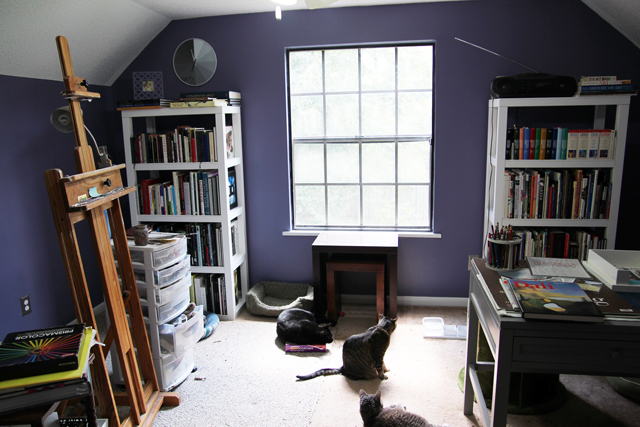
The Studio

The Studio

www.eunicechoi.com

All images copyright of the artist and used with their permission. 
Posted in Uncategorized | Tagged , , , , | Leave a comment

Paul Mitchell – Milwaukee, Wisconsin

  Glitched 3, Digital Image, size variable, 2014

Glitched 3, Digital Image, size variable, 2014

Briefly describe the work you do.

My artistic practice centers on the idea that for the visual to attain the status of  “Art” it must be asserted actively in the world, acting as a means of revelation and self-examination relevant to our time.  That in its essence Art is a search to produce a means in which to lead a meaningful life.  I find such a pursuit has resulted in my working finding form in a wide array of media, where one work or series of works organically leads to the next.  My concepts are equally fluid, though I seem to return to the exploration of the ideas of the human mark, the relic, and the impression.  I am currently working with animating appropriated digital images that will be the central focus of an installation.  I also produce paintings, prints, photographs, sculptures, poetry, books, and event scores.

Tell us a little about your background and how that influences you as an artist.

My background and experience have of course created a strong underlying current in my personal choice of aesthetics, interests, and general temperament.  My mother is a visual artist and her presence, support, work, and personal interests have all greatly influenced me.  I maintain a deep love of the abstract expressionists and their visual language because of this relationship.  My education at both the Rochester Institute of Technology (BFA) and the San Francisco Art Institute have been the impetus for moving across media, beyond painting and drawing.  My partner Amanda Schoofs, a composer, vocalist, and visual artist,who I regularly collaborate with, has constantly pushed me to involve myself in approaches I would never have thought I would be part of, including sound, music, writing, and performance.  All of this has added up to a love of experimentation and a thirst for new knowledge and experience.

Glitched 1, Digital Image, size variable, 2014

Glitched 1, Digital Image, size variable, 2014

The concept of the “artist studio” has a broad range of meanings, especially in contemporary practice. The idea of the artist toiling away alone in a room may not necessarily reflect what many artists do from day to day anymore. Describe your studio practice and how it differs from (or is the same as) traditional notions of “being in the studio.”

My physical studio is a 10’x10’ room in the back of my apartment. After leaving graduate school I’ve never had a large space, especially when I was living in San Francisco. Often my bedroom was my studio, with every corner filled with ongoing projects. This lack of space necessitated working small and ephemerally. My studio therefore has become a base of operations. At times making occurs within its walls at other times it occurs out in the world, or virtually with no physical manifestation occurring. The idea has been to work everywhere, from the bus to my desk and most importantly in my mind. Since moving to Milwaukee I have a bit more space then I have had in the past. I share my apartment with my partner, Amanda Schoofs, who is a composer, performer, and visual artist. Our apartment is more studio then anything else, full of book shelves (and stacks of books), stashes of artwork, musical instruments (including a baby grand piano, which we lugged up to our second story apartment ourselves), and lots of plants. The kitchen ends up being a communal workspace when one or both of us have deadlines approaching, work consuming the house.  As a printmaker I am also apt to work in communal print shops and at residencies when I have the opportunity.

Glitched 2, Digital Image, size variable, 2014

Glitched 2, Digital Image, size variable, 2014

What unique roles do you see yourself as the artist playing that you may not have envisioned yourself in when you first started making art?

The entrepreneur.  Perhaps it should not have been an unexpected role, but it is one that I still struggle with.  As someone who produces visual works for the sake of solitude, reflection, and challenging myself it can be difficult to “sell myself.”

When do you find is the best time of day to make art? Do you have time set aside every day, every week or do you just work whenever you can? 

The pursuit of Art is a practice, but hopefully never a routine. It is the type of work one does not step away from and with my schedule constantly in flux I get “studio time” in when ever I can.  Everything is consumed in its pursuit (The good and the bad):  Films, conversations, books, books, books, music, the comedy and tragedy of life, anything and everything visual.  Each sensory experience and the very essence of being are raw materials to be digested and regurgitated into new forms and experiences, bones, feathers and all.  It is at once the most infuriating and desperate of acts as well as the most satisfying of experiences.  

How has your work changed in the last five years? How is it the same?

My work is always changing.  That is perhaps the one constant.

Are there people such as family, friends, writers, philosophers or even pop icons that have had an impact on the work you do?

My family and friends have always been huge in actively supporting everything I do.  I am constantly reading, with my current interests involving a slew of science fiction, Jean Baudrillard, Brion Gysin, John Kelsey, and anything Dada.  The total chaos, horror, and brilliance that is the internet is constantly seeping in to everything I do.

If you had an occupation outside of being an artist, what would that be and why?

I love to be actively engaged with those around me and also to make some type of tangible difference in the world around me.  In addition to an artist I am also an educator at the Milwaukee Institute of Art and Design, which is something I love.  Beyond that perhaps an architect, perhaps a doctor.

About 

Head ShotPaul Mitchell is an artist whose work incorporates the diverse practices of printmaking, photography, painting, sculpture, writing, and performance. His practice involves blending traditional, digital and experimental printmaking techniques across interdisciplinary boundaries.  He works from a tradition of art that demands images and objects to assert themselves actively in the world, acting as a means of revelation and self examination.

Paul earned his MFA with honors from San Francisco Art Institute with a focus in Printmaking. He earned his Graduate Certificate in Non-Toxic Printmaking, and his BFA in Printmaking and Painting from Rochester Institute of Technology. Paul has engaged in international exchange studies in Printmaking and Art History at Santa Reparata International School of Art in Florence, Italy. Paul has shown both nationally and internationally, at private galleries and museums, with shows in Canada and Portugal, California, Kentucky, Maryland, Massachusetts, New York, and Wisconsin.  His work is held in a number of private collections.

Paul is an Adjunct Professor of Printmaking and foundations at Milwaukee Institute of Art and Design and has also taught Non-Toxic Printmaking at Rochester Institute of Technology. He lives and works in Milwaukee, WI. 

www.paulmitchellart.com

All images copyright of the artist and used with their permission. 

Posted in Uncategorized | Tagged , , , , | Leave a comment

Matthew Neil Gehring – Brooklyn, New York

Lingual Vernacula, 2013, oil on linen, 72" x 84"

Lingual Vernacula, 2013, oil on linen, 72″ x 84″

Briefly describe the work you do.

I am an abstract painter.  I make paintings, drawings, and some sculpture.

Tell us a little about your background and how that influences you as an artist.

I grew up in Indiana and was drawing regularly for as long as I can remember.  Play with friends in my suburban youth usually involved raiding a few construction sites for scraps of wood and making things; bike and skate ramps, forts and the like.  My neighbor’s dad was an engineer and built all kinds of amazing things.  He and his two sons collected butterflies, and I loved helping.  I remember summers spent making butterfly nets out of broom handles, heavy wire, and netting from the fabric store.  We chased monarchs and tiger swallows in the woods and fields and were mostly catch and release hunters.  We caught lightning bugs in jars and snakes with our hands, the former to the delight and the latter to the horror of my mother.  We ran in the woods and fished in the creek. I think these things were deeply influential and writing this, I feel like I’m having a Mark Twain moment.  Although I am very much an urbanite as an adult, I am still drawn to and moved by nature.  Despite this Huck Finn-ish reminiscing, my youth was mostly predictable-suburban, and by my adolescence I started to feel it’s dullness.  I had a great high school art teacher, who really encouraged me and my parents were always very supportive.  I went to undergrad in my hometown.  I knew that I wanted to be an artist and I was sure that meant I needed to leave.  I wanted to leave desperately, but life is complex and the right choice was definitely to stay put for a bit.  I had amazing peers and professors at the University of Southern Indiana who continue to challenge and inspire me.  While in grad school at the University of Delaware, which was also an amazing experience, I spent maybe 30% of my time working as an artist assistant in New York and getting an introduction to things.

Untitled, 2014, oil on linen, 20" x 18"

Untitled, 2014, oil on linen, 20″ x 18″

The concept of the “artist studio” has a broad range of meanings, especially in contemporary practice. The idea of the artist toiling away alone in a room may not necessarily reflect what many artists do from day to day anymore. Describe your studio practice and how it differs from (or is the same as) traditional notions of “being in the studio.”

My relationship to the studio has grown over time.  Coming out of school, I was empowered by a post studio ideal.  I found freedom in needing nothing to make art but ideas, actions, and some sort of record.  This started to change for me about ten years ago.  I had begun making drawings and physical objects again, in my apartment and started spending a lot of time alone, with the work.  In the space and the solitude and the focus, I found my groove.  I’m busy, like most people I know.  I’m the Head of Visual Arts at Suffolk County Community College (Ammerman Campus) and the Director of the Flecker Gallery at the College.  This is quite a demanding job.  My nights and weekends are spent in the studio.  Either in my Bushwick studio, or in my apartment in Greenpoint, about half of which is drawing studio where I also make a little bit of small sculpture.  Breaks from teaching also give me long blocks of studio time.  These stretches are critical.  I am fortunate to be able to spend much of the summer upstate, reading, painting, and spending time in nature and with my family.

What unique roles do you see yourself as the artist playing that you may not have envisioned yourself in when you first started making art?

I think what surprises me most is my role as artist-teacher.  Not that I am surprised to be doing it; my most influential mentors were all teachers.  What I am surprised by is what it means and what it is to run a department.  I am a full time advocate for art.  It is a commitment to get everybody, not just students, on board with the idea that art is essential and to broaden understanding and exposure. This can be a challenging enterprise, no doubt, but those moments when I see that I’ve influenced someone’s point of view, helped them to see more fully and sensitively, or created opportunity for the students, faculty, and artists I work with, those moments are magic.

Untitled, 2014, oil on linen, 20 x 26 inches

Untitled, 2014, oil on linen, 20 x 26 inches

When do you find is the best time of day to make art? Do you have time set aside every day, every week or do you just work whenever you can? 

I often work in the available time in order to find the time.  But when I have a full day, I prefer to read and write in the morning and I like to get to the studio in the early afternoon.  I think I start to lose focus and good judgment after six or seven hours.

How has your work changed in the last five years? How is it the same?

It’s been a very focused five years for me.  Drawing has re-entered my paintings in the last year.  My vocabulary of forms and colors expands and contracts, this brings in additional elements, and then distils again.  It is a slow process, and a relatively narrow, focused range.  I saw a filmed interview not too long a go with Charles Seliger, a younger contemporary of DeKooning whom I was previously unfamiliar with.  In it he said there are two kinds of artists; those who move horizontally from new idea to new idea and those who move vertically plumbing the depths of one thing.  I would say six or seven years ago, I transitioned from being the first kind to the second.  Where I once felt a great enthusiasm for having no parameters other than a loyalty to my own ideas, a very conceptual approach, I now find a sense of infinite freedom working in one vein, with limited materials, one set of basic, ancient, but pertinent tools.  

Are there people such as family, friends, writers, philosophers or even pop icons that have had an impact on the work you do?

My wife, Rebecca Murtaugh, is the best partner on this journey I could imagine.  We share so much common ground.  We support and influence each other beyond measure.  I try to be a good father and to live as an example for my daughter, Cyna, which has always affected my choices.  My parents encouraged me to find my passion.  My teachers and mentors: Jon Siau, Lenny Dowhie, Katie Waters, and Victor Spinski had immeasurable influence.  I saw a Nam Jun Paik retrospective in high school­ and a Mike Kelley show not long after and both completely blew my mind.  Lately I really love Ben Shahn’s writing on art and Frank Stella’s Working Space.  I love to read artists writings and interviews.  Thomas Micchelli is insightful and eloquent, a delight to read.  Thelonious Monk and David Bowie continue to teach me new things.

If you had an occupation outside of being an artist, what would that be and why?

I never entertained the possibility.  I do teach, curate, and direct a small gallery, but I see these roles as hats that I wear as an artist, not separate in any way.  I think if I couldn’t do this or had to move on for some reason, well, I just don’t have an answer and I hope I never have to.

About 

MGheadshotMatthew Neil Gehring studied at the University of Southern Indiana (BS), and the University of Delaware (MFA), and Skidmore College (summer program).  He relocated to the Northern California coast in 2001 after completion of his degrees where he lived for two years, making and exhibiting artwork while teaching sculpture at Humboldt State University.  In 2003, he accepted a faculty position in the Art Department at Syracuse University where he lived and worked for the next four years.  In 2007 he relocated, to Brooklyn, NY where he has been for the last seven years, maintaining an active studio practice and exhibition schedule.  He has exhibited in numerous group exhibitions and eight solo exhibitions, including a recent solo show at the Dishman Art Museum at Lamar University in Beaumont, TX, upcoming solo shows at the Islip Art Museum in East Islip, NY and also City Ice Arts in Kansas City, MO, recent group exhibitions, Meta Vista, at 16 Wilson (formerly Storefront Bushwick), Brooklyn, NY, and Eight Painters, organized by Paul Behnke at Kathryn Markel Fine Arts, New York, NY.  Matthew’s work has been featured or reviewed in publications including The New Criterion, Art Journal, Art Review, and ArtWeek.  He is currently an Associate Professor of Art and Head of Visual Arts at SUNY Suffolk and the Director of the Flecker Gallery at the same institution.  

The Studio

The Studio

www.matthewgehring.com

All images copyright of the artist and used with their permission. 

Posted in Uncategorized | Tagged , , , , | Leave a comment

Jason E. Carter – Detroit, Michigan

MEDUSA'S GAZE #5, 2013, oil on linen,12x 12 inches

MEDUSA’S GAZE #5, 2013, oil on linen,12x 12 inches

Briefly describe the work that you do.

Light has had a continual presence in subject and concept throughout the history of painting, but how it is understood and interpreted has evolved over time.   My current paintings are meditations on a new perception of light. The light we live by today is not what others experienced in the past. The digital age has brought a new age of illumination through glowing rectangles that demand our attention and are used with an almost religious fervor as they are essential to our day-to-day and culture.  A dichotomy arises as we connect to our digital world but disconnect with our present environment.  The sole light source for the paintings comes from a screen (laptop, tablet, smartphone), which with its digital flicker manipulates and defines the space. This particular artificial light not only allows us to see but also is a source of information.

At what point in your life did you decide to become an artist?

I think I always new this was what I wanted to do.  Plus, I could never handle the idea of sitting in a cubicle everyday.    

Tell us a little about your background and how that influences you as an artist.

After receiving my BFA, I eventually got a job assisting in painting conservation for a private conservator in Detroit.  That experience had a profound influence in every aspect of my practice. To physically hold paintings from different periods and see the normally hidden underbelly and provenance on the back, to sit with them intimately face-to-face for long periods of time and study brush stroke layers, all provides a very different understanding and education than standing in front of a painting at a museum or even projected on a wall in a lecture. Equally influential were the types of paintings that were brought into the shop.  I was exposed to artists outside of the big names and movements I was taught in school, along with a better understanding of painting done in the Great Lakes Region. Having that perspective certainly provided me with a greater understanding and direction to my own work. 

DOMESTIC #16, 2013, oil on canvas. 37.5 x 51 inches

DOMESTIC #16, 2013, oil on canvas. 37.5 x 51 inches

What types of conceptual concerns are present in your work? How do those relate to the specific process(es) or media you use?

The conversation of light through out the history of painting drives the concept of my painting.  The way it has been used and understood has evolved over time.  Carravagio and George de la Tour painting’s were dominated by the mood set by a single light source that was either out of the frame or in the painting. The mood and spirituality set up by the artificial light allows the viewer an access into understanding the painting, without having to know the religious narrative just by simple observation.  In the mid 19th Century, Albert Bierstadt, painted large landscapes of the American west.  The drama of light from the sun and the use of scale, by placing a tiny human figure in the foreground in a vast landscape showed the riches and beauty of the land in America.  These images could be interpreted as types of propaganda, and reflected the views and ideology of America at the time.

As part of the art world made a move to a more minimal conceptual art, artists like Dan Flavin and Robert Irwin used actual fluorescent tubes of light.  Dan Flavin following the footsteps of Marcel Duchamp and his readymades, declared that the tube itself could stand alone as the work of art.

What is learned through this history is that light has been continually evolving for human kind in terms of perception, understanding, and manipulation. 

The paintings I create are speaking to a new perception of light.  Light that is produced due to our move into the digital age.  This combination of using the past to inform the present, moves the paintings forward and hopefully adds a new perspective to the conversation on light in painting.

DOMESTIC #17, 2013, oil on canvas, 37.5 x 51 inches

DOMESTIC #17, 2013, oil on canvas, 37.5 x 51 inches

We once heard Chuck Close say he did not believe in being inspired, rather in working hard everyday. What motivates you in your studio practice?

Yes, working hard everyday is undeniably important and every serious artist does.  I cannot though, just dismiss inspiration.  Our environments inform aspects of the work, whether one is aware or not.  Ultimately what motivates me is my everyday walk through my home heading to the studio, I have chosen to surround myself with only objects that challenge and inspire in every aspect of my life.  I collect, and I collect with purpose.  Objects like furniture, fabrics, art, architecture etc., all can reflect design philosophies and or ideologies and not just aesthetics.  So just this simple walk through my home has great impact heading into the studio.

What artists living or non-living influence your work?

Villhelm Hammershoi, Michael Borremans, Zoltan Sepeshy, Charles and Ray Eames, Elliel and Eero Saarinen, Michael Hall and Pat Glasscock, Beverly Fishman, John Frederick Kensett, Frederick Papsdorf, Albert Bierdstadt, Hughie Lee-Smith, Nick Cave, Abigail Anne Newbold.   

When you are not making art what types of activities and interests do you engage in? 

Checking out antiques and record stores, but mostly playing with my daughter.

About 

headshotJason E. Carter received his MFA in Painting from Cranbrook Academy of Art in 2011, and a BFA from the College for Creative Studies in 1999.  Carter was awarded the Joan Mitchell Foundation MFA Grant in 2011, and a 2013 Kresge Visual Arts Fellowship, awarded by Kresge Arts in Detroit, a program of The Kresge Foundation. His work is in many public collections, including the Cranbrook Art Museum.  He is represented by Paul Kotula Projects and currently lives and works in metro Detroit, Michigan.

The Studio

The Studio

www.jecart.com

All images copyright of the artist and used with their permission. 

Posted in Uncategorized | Tagged , , , , | Leave a comment

Liz Tran – Seattle, Washington

Cherry Two, Mixed Media on Panel, 60” x 48”, 2013

Cherry Two, Mixed Media on Panel, 60” x 48”, 2013

Briefly describe the work you do.

My work is influenced by the connection between the natural world and my internal environment. Mountains represent overcoming obstacles, water symbolizes change and trees, growth. My goal is to create an atmosphere that is brighter, more playful, more colorful and more content than the world in which we exist. In short, I create as a form of therapy.

For the majority of my career, I had focused on mixed media painting. But, over the past few years, the imagery from my two dimensional work has taken on new shapes in the form of installation, sculpture and video.

Tell us a little about your background and how that influences you as an artist.

I grew up in Eugene, Oregon. It’s a midsize college town full of hippies and crafts. Between that and working in the family boat-building business, I was always encouraged to make things with my hands. As I grew older, the craft making progressed into fine art and I moved from Eugene to Seattle in search of more culture. 

The concept of the “artist studio” has a broad range of meanings, especially in contemporary practice. The idea of the artist toiling away alone in a room may not necessarily reflect what many artists do from day to day anymore. Describe your studio practice and how it differs from (or is the same as) traditional notions of “being in the studio.”

I definitely do my fair share of toiling, but every once in a while I need to come up for air. I balance the isolation by frequent stays at artist residencies. These provide me much needed interaction with fellow artists as well as give me an opportunity to work in a new environment.

Another way I break out of the traditional “studio” is by working on site-specific, outdoor installations. That way, I can balance working in a “box” by interacting with the natural world.

Party in a Box, Cut Paper, Paint, String, Plastic and Burlap, Dimensions Variable, 2013, Created at the Camac Art Centre

Party in a Box, Cut Paper, Paint, String, Plastic and Burlap, Dimensions Variable, 2013, Created at the Camac Art Centre

What unique roles do you see yourself as the artist playing that you may not have envisioned yourself in when you first started making art?

When I first started my career as an artist it was primarily for selfish reasons. My practice was not only a form of therapy, it also provided a form of escapism from the outside world. Now, I am becoming much more concerned with how my work can impact the greater community. I am seeking more opportunities outside of the galleries in hopes that my work will reach those other than the typical art patron.

When do you find is the best time of day to make art? Do you have time set aside every day, every week or do you just work whenever you can? 

My schedule varies from day to day, depending on what I need to accomplish. Typically, I start each day on the computer. I answer emails, apply to calls, update my website, do bookkeeping, etc… I wander to the studio around noon and work until 6 or 7. I often will work on weekends, but that is something I’m trying to do less of.

North Atlantic, Paper, Paint and Found Buoys, Dimensions Variable, 2013, Created at the Baer Art Center in Hofsós, Iceland, *supported by a Grant for Artist Projects from Artist Trust

North Atlantic, Paper, Paint and Found Buoys, Dimensions Variable, 2013, Created at the Baer Art Center in Hofsós, Iceland, *supported by a Grant for Artist Projects from Artist Trust

How has your work changed in the last five years? How is it the same?

As I mentioned before, I am branching out into many more mediums and media. Nothing is off limits. I give myself a lot more freedom than I did five years ago.

Are there people such as family, friends, writers, philosophers or even pop icons that have had an impact on the work you do?

Music has a huge impact on my work. I listen to almost everything, but my current favorites are Ólafur Arnalds, Antony & the Johnsons and Nick Cave. Seeing my work, no one would ever guess that it was created to such a depressing soundtrack! 

If you had an occupation outside of being an artist, what would that be and why?

A librarian. I’ve had two library jobs and I love the atmosphere in a library. But, as cheesy as it may sound, I could never not be an artist.

About 

HeadshotLiz Tran is a graduate in Print Art and Painting from Cornish College of the Arts.

Public collections of Tran’s work include the City of Seattle’s Portable Works Collection, Baer Art Center, Camac Art Centre, The El Paso Children’s Hospital, Harborview Medical Center, The King County Public Art Collection and The Child Center.

She has been awarded multiple fellowships and grants; including a Grant for Artist Projects (GAP) from Artist Trust, Clowes Fellowship for residency at the Vermont Studio Center, the Nellie Cornish Scholarship and residency at The Camac Art Centre in France, The Baer Art Center in Iceland, Jentel, Millay Colony for the Arts and The Center for Contemporary Printmaking. She resides in Seattle, WA.

The Studio

The Studio

www.liztran.com

All images copyright of the artist and used with their permission. 

Posted in Uncategorized | Tagged , , , , | Leave a comment

Renee Robbins – Chicago, Illinois

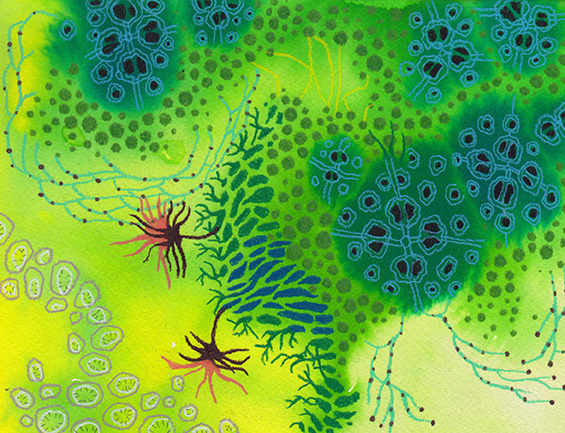
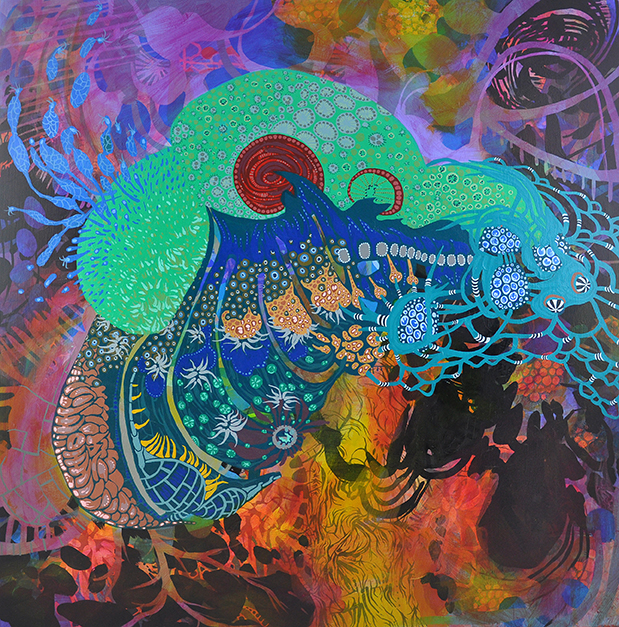
Daily Drawing: Week 40: Underneath All Currents 41°55′3″N 87°41′58″W, 2012

Daily Drawing: Week 40: Underneath All Currents 41°55′3″N 87°41′58″W, 2012

Briefly describe the work that you do.

I create and imagine worlds that are fluid, changing, morphing, and emerging. While the paintings draw from natural phenomena and micro to macro relationships, the work also pulls from the diversity and range within molecular, biological, marine, and celestial systems. I see these systems as a stepping off point that drives the process of painting. Our life experience is layered with complex systems that reach through tiny cells, flowering botanicals, and distant galaxies. I blend, mix, and juxtapose hybrid flora and fauna inside a space that simultaneously evokes the deep sea and the cosmos. I’m interested in bringing together microscopic and telescopic viewpoints. Quantum particles have their own set of guiding principles, such as in atoms, electrons and protons cannot touch each other. It’s nearly impossible to observe this happening with the naked eye. In a similar way, black holes are guided by their own set of rules and principles. No one has actually seen a black hole but there’s evidence to suggest their existence. The death of a star is the beginning of a black hole; it’s a remnant of a supernova’s explosion.

At what point in your life did you decide to become an artist?

I’ve always thought of myself as an artist and I don’t really think it was a choice. It was something that I had to do. I became very serious about making paintings in high school and have created work ever since. I’m deeply compelled to make things. I don’t recall one magical moment or any particular event that motivated me.

Tell us a little about your background and how that influences you as an artist.

Growing up in the Midwest, I signed my class notes as Robin Snake in purple and pink pens. I wanted a pet snake really bad and I relentlessly begged my mother for years to let me have one. I drew the S in snake as bubble letter usually with several snake tongues coming out. I wasn’t able to convince my mother to house a pet snake but eventually she let me have an aquarium. Nature and making things has always been a part of my life and something I have felt compelled to do. My creative work has sourced the biological for almost 15 years. In art school, I learned to draw through observation of still life and the figure. My first series of work in college was based on the human figure. I drew veins, cells, and other systems inside and around the figure. During this time, I also remember creating a painting based on the organelles in a plant cell with tiny mitochondria all over the place. As an art student my interest in nature and obsessive mark making was present. Over time I realized that I was more interested in interior space so the outline of the figure disappeared from my work. As I move into each new series of work, I often organize micro/macro systems in different ways.

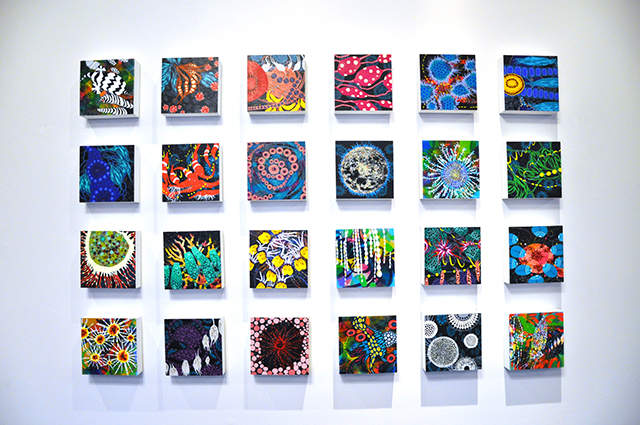
Fieldnotes: A Pond of Stars installation, acrylic on panel, 6” x 6” each, 2014

Fieldnotes: A Pond of Stars installation, acrylic on panel, 6” x 6” each, 2014

What types of conceptual concerns are present in your work? How do those relate to the specific process(es) or media you use?

My current series “Fieldnotes” is a fantastical natural history that ranges from the micro to macro. “Fieldnotes” is a reference to the scientific practice of observing variables, taking notes, and making lists. These notations can be seen as a journal of evolving ideas and I use this system as a way to negotiate between abstraction and representation. Recorded daily on scientific expeditions and adventures, Fieldnotes often include information about an infinite amount of variables such as color, shape, movement, pattern, location, or type of specimen. Oftentimes, the notes are reconfigured for research reports and presentations post-adventure. I view this reconfiguring as similar to my technique of pulling together the micro and the macro into one form. For each composition, rather than one specific specimen, there is a multiplicity or blend of many figures. In this way, my paintings and etchings are a way to respond to the diversity in the natural world, both in and outside of our human experience. It’s important to have a balance between analytical and intuitive modes of working. My process involves visiting the Shedd Aquarium, Chicago Botanical Garden, and the Adler Planetarium and sketching the various species and objects located there. I aspire to create works derived from as many species as possible and I have considered drawing every species of fish in the aquarium and every flower in the garden. I want to combine, layer, and blend all of those small ideas into hybrid compositions that range from the micro to macro. Some of the process is analytical and I’m thinking about it a lot and the other part of my process is more intuitive.

Double Sunset, acrylic on panel, 24” x 24”, 2013

Double Sunset, acrylic on panel, 24” x 24”, 2013

We once heard Chuck Close say he did not believe in being inspired, rather in working hard everyday. What motivates you in your studio practice?

I believe in working hard because things can happen in the studio that you might not be able to predict. I’ve created a lot of work over the last couple of years and I have about 800 works on my website. It’s important to set goals and get right to work in the studio. I did a Daily Drawing Project where I started and completed a work each day for a year. Each week a loose set of parameters were outlined for a series in regard to theme, size, or color, and then the finished pieces were published daily online. The project can be viewed as a macrocosm all at once, as one might imagine, within a sequence of weekly groups, and closer still, the individual pieces for each day. See more of the project here:http://reneerobbins.com/dailydrawings.html  In addition to these small daily drawings, I was also creating larger works on canvas and panel at the same time. The act of creating at this pace really changed my entire studio practice and led me to new avenues. The small works feed the larger works, which in turn feed the silkscreen and etching prints. I started the Daily Drawing Project because I was unhappy with the work that I was creating so I decided to do something about it. I have a faith in creating work and making lots of things. I believe in setting high goals.

What artists living or non-living influence your work?

Well there are a lot of inspirations, and at the moment those include Dr. Seuss, Hieronymus Bosch, Ernest Haeckel, Lee Bontecou, and Inka Essenhigh. Dr. Seuss creates a whimsical world that is entirely his own. The creatures, plants, their names, and the sense of adventure all play into his world. Bosch, a 15th Dutch painter, has always been fascinating to me. One of his triptychs, the garden of Earthly Delights, organizes space with concepts of Heaven and Hell. My work draws from the metaphors in spatial organizations. However, my work is more about binary concepts like above/below, inside/outside, interior/exteriority, natural/synthetic, attraction/repulsion, beauty/danger. Ernest Haeckel, a 19th German biologist, naturalist, and artist, cataloged over 5,000 species of radiolaria during his lifetime. His attention to detail and the amount of work he created during his lifetime is mind-boggling. I aspire to document or incorporate a similar number of specimens into my work during my lifetime. Lee Bontecou’s work has meticulous detail and the quasi-spaceships and voids are completely her own. Her work transports the viewer to another place. It’s something that you can’t quite put your finger on. I’m deeply influenced by Inka Essenhigh’s flat use of space and the color in her work. She constructs, twists, and shapes a rich and complex abstract space.

When you are not making art what types of activities and interests do you engage in? 

I really enjoy hiking, biking, and spending time outdoors in nature preserves, national parks and beaches. My husband and I are attempting to visit all the National Parks in our lifetime. So far we have visited Mammoth Cave, Rocky Mountains, Wind Cave, Badlands, Yellowstone, Grand Teton, Congaree, Smokey Mountains, and Sleeping Bear National Lakeshore. It doesn’t count if we’ve been to the park before we met so it’s something that we do together. Additionally, I read a great deal about science, natural history, and new discoveries in science. While I’m in the city I like to spend a lot of time at the aquarium, natural history museum, the science museum, conservatories, and gardens. I also enjoy cooking and seeing live music as my husband Jim is a musician and has a few side projects. One of my favorite activities is attending art exhibitions and I spend a lot of time going to see art. I really enjoy seeing and experiencing art as it feeds my artistic practice.

About 

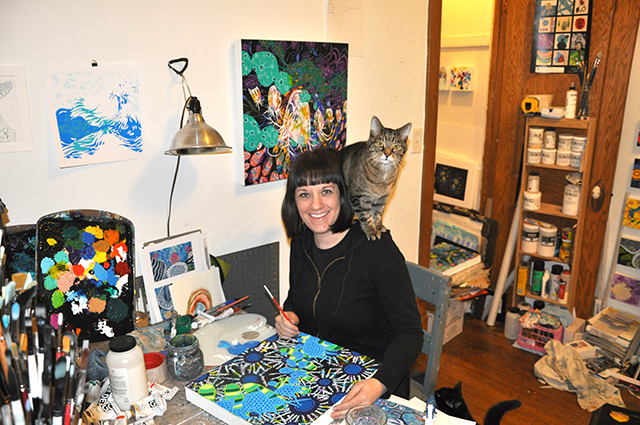
4_RRobbins_profilestudioRenee Robbins works as a visual artist in Chicago’s Logan Square neighborhood. She has a BFA from the University of Kentucky and an MFA from Michigan State University. Most recently she exhibited at Firecat Projects, La Luz de Jesus Gallery, Ann Tower Gallery, and the Union League Club. Her other selected exhibitions include the Alden B Dow Museum of Science and Art, South Bend Art Museum, Alexandria Museum, and the Kresge Art Museum. The Chicago Gallery News featured her work as a ‘Young Chicago Artist’ to watch in the May 2013 issue. A diatom taxonomist classified some of the forms in her paintings in an artist feature in the US Diatoms database at the University of Colorado.

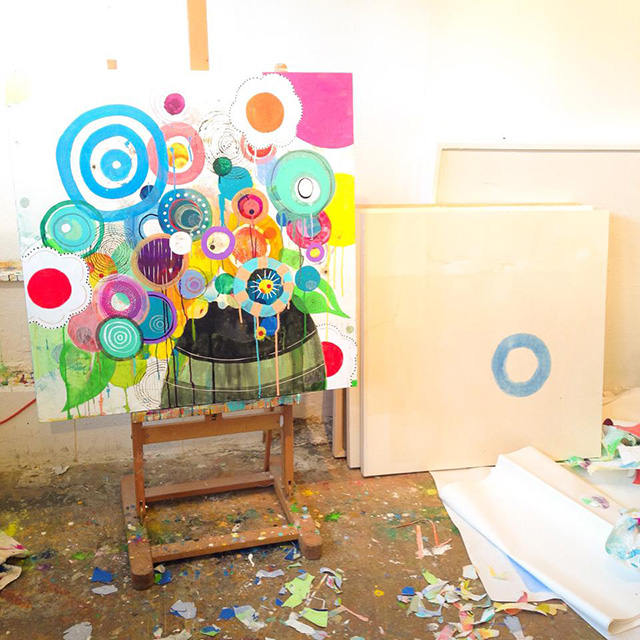
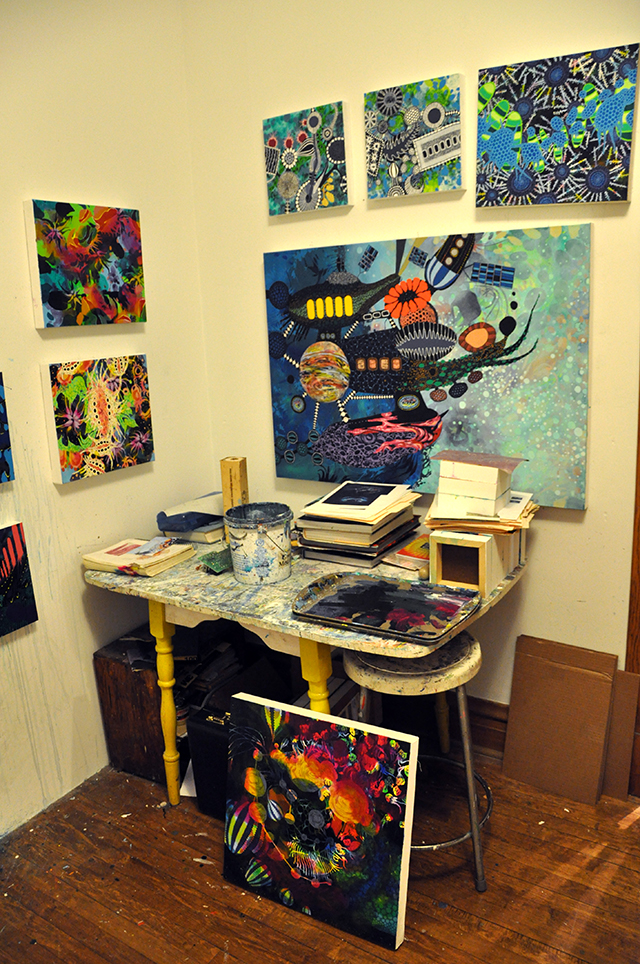
The Studio

The Studio

www.reneerobbins.com

All images copyright of the artist and used with their permission. 

Posted in Uncategorized | Tagged , , , , | Leave a comment