Andi Crist – Chicago, Illinois

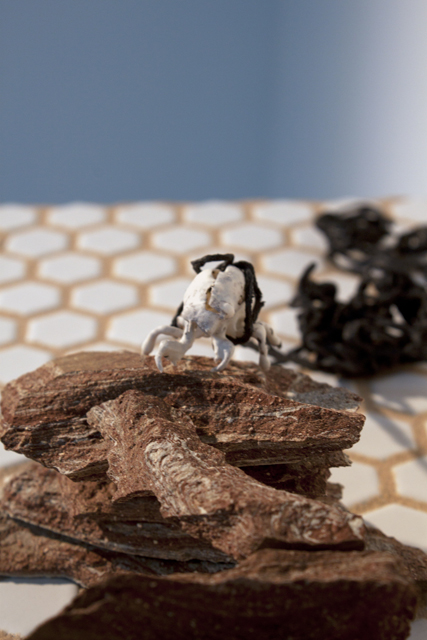
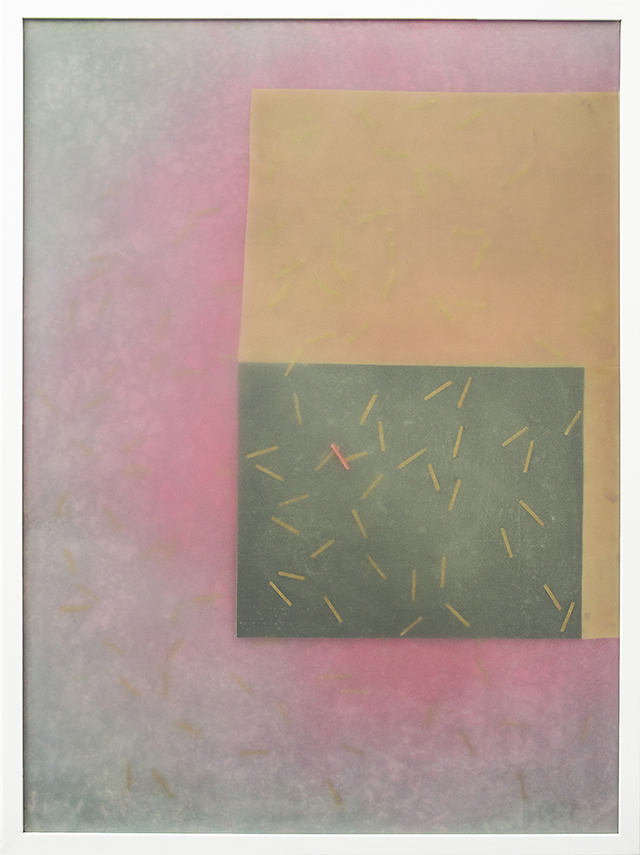
"Buckaroo/Vaquero" photo-collage, plexiglas 9x5x1"

“Buckaroo/Vaquero”
photo-collage, plexiglas
9x5x1″

Briefly describe the work you do.

Though the medium varies, my work is rooted in the utilization of scavenged materials, ranging from appropriated photography to scrap wood found in the alleyways of my neighborhood in Chicago. Recently my subject matter has been focused on different iterations of landscape and how it can be activated in a personal, domestic environment. My most recent body of work After Ansel consists of small-scale sculpture, prints and installations that use material sourced from an Ansel Adams coffee table book, which are copied, layered and cropped in an effort to break down and re-appropriate an esteemed subject.

Tell us a little about your background and how that influences you as an artist.

I’m originally from Birmingham, Alabama and moved to the city after high school to pursue a career in the arts. I left myself open to being involved in the arts in different roles—everything ranging from art-maker to arts administrator—but living in Chicago has undeniably influenced my way of working, how I get my materials and how I interact with other artists. Since moving to the city, I’ve found that I am much more reliant on other artists and organizations, and my work through Autotelic has dramatically impacted how I view artists’ roles in the community. My interest in domesticity is most likely due to my role as a mother and my habit of nesting as a remedy for anxiety. The landscapes are an outlet for me to make tangible a subject that often feels so vast and untouchable.

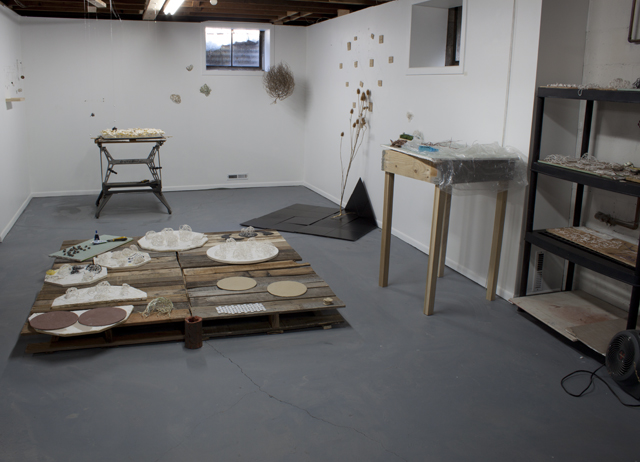
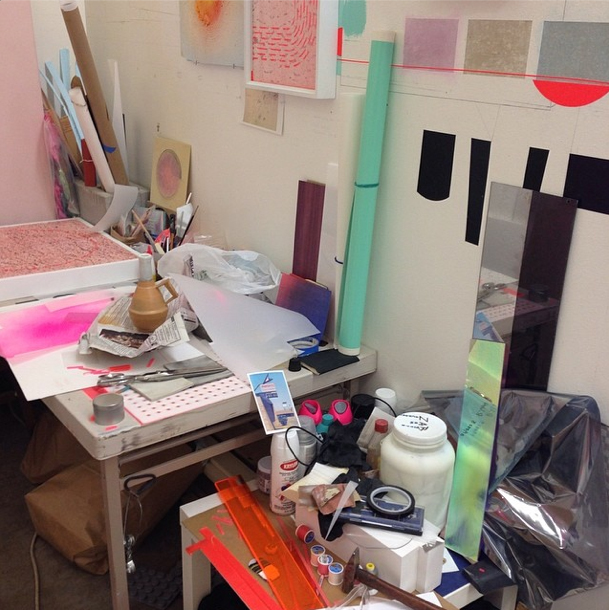
The concept of the “artist studio” has a broad range of meanings, especially in contemporary practice. The idea of the artist toiling away alone in a room may not necessarily reflect what many artists do from day to day anymore. Describe your studio practice and how it differs from (or is the same as) traditional notions of “being in the studio.”

My partner Evan and I established a community art space in 2010 called Autotelic, which started out as a creative venue where we could make work, exhibit and host workshops and multi-disciplinary events. Since then it’s evolved into a visual arts studio where ten of us share an open-layout storefront. Our philosophy about studio practice is very community-oriented because I believe relying on other artists and organizations for support and feedback is essential to filling the gap between making stuff and making stuff that people can really get behind. Staying attuned to what’s going on in other artists’ practices is a really good way to hold yourself accountable and keep your work in line with contemporary theory. It goes without saying that there are a lot of benefits to working in a community setting, like learning new techniques and getting exposure to collectors and curators who visit the studios. I see studio time as a very fluid opportunity for give and take.

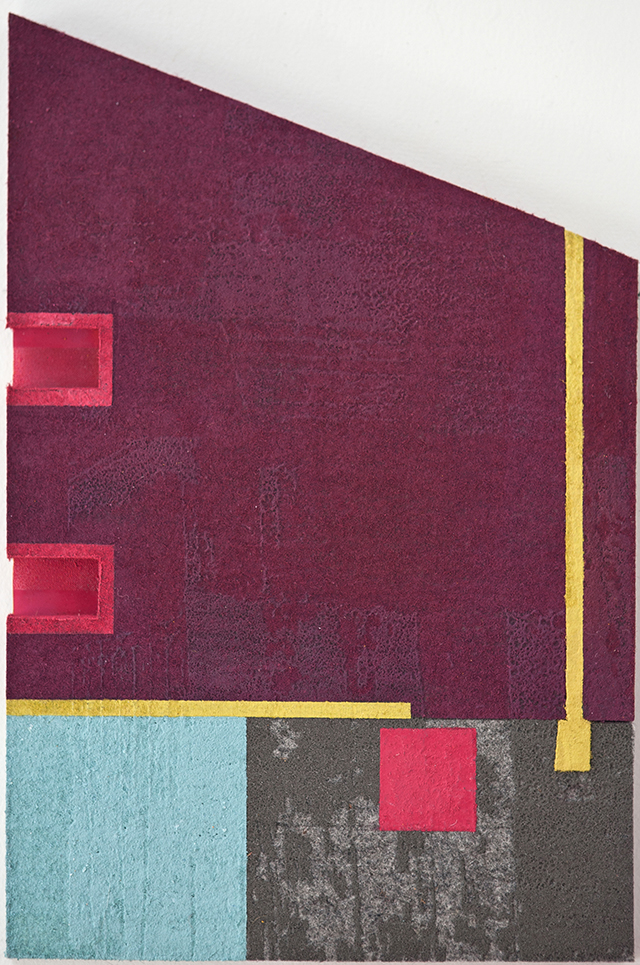
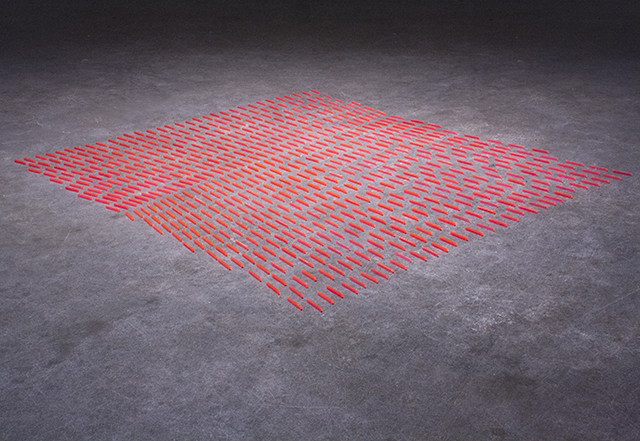
"Wallpaper" wallpaper 9x10' 2014

“Wallpaper”
wallpaper
9×10′
2014

What unique roles do you see yourself as the artist playing that you may not have envisioned yourself in when you first started making art?

When I started making work I don’t think I ever saw myself “being an artist” full-time, and I’m not sure now I would say that I’m an artist playing different roles. It would probably be more accurate to say I’m a creative person that sees making as an important cultural outlet and I care about how that product lives in the public forum. I see “being an artist” as a very multi-faceted role with a fluid definition, but I think that just having an activated life can inform your practice and work in unseen ways. I play many roles as a mother, a maker, a partner, an advocate and a facilitator, and I wouldn’t necessarily say my creative practice has influenced those things. It’s more likely the other way around.

When do you find is the best time of day to make art? Do you have time set aside every day, every week or do you just work whenever you can? 

I tend to work better in the morning but I always end up heading to the studio after my son is down for the night. I have a more longterm approach to making that has a swift turn around, and I tend to make a lot of notes so my sketchbook is primarily vague writing with very little context. Those broad ideas stew for a while and then I’ll come across a material or opportunity that suits a concept—that’s when I try to schedule time to execute a project, which is generally completed in a few days.

I think my lack of space and time keeps my portfolio pretty tight, so I’m not one of those people that has a studio overflowing with works in progress. It’s mostly raw materials and books. I try to sit in my studio for at least an hour every other day or so, which helps keep the archive of materials and ideas accessible and fresh in my mind. Then when I come up with something I think is clever enough, I try to churn it out before I second guess the idea or forget about it.

"Four Waterscapes" (installation, 4 posters) each poster 24x36" 2014

“Four Waterscapes” (installation, 4 posters)
each poster 24×36″
2014

How has your work changed in the last five years? How is it the same?

I graduated from Columbia College in 2011 but I only had a studio there for one semester, so I mostly worked out of my apartment and was trying to paint a lot. I never really took to painting as a medium because I am not so interested in the autonomy of mark-making, and I’m honestly not very good at it. I far prefer to use materials that have already served a purpose or existed in some other form, and that seems to serve my ideas about appropriation and function in a meaningful way.

I have always had an interest in wood, collage and collecting, but those elements have only recently started to become a big part of what I make. Now I am starting to hone down on the techniques and materials so the work is becoming more consistent in theme and execution. I still feel that I’m learning a lot of new techniques (most recently casting and mold-making) and deciding what kind of work I like and why, so in that sense my practice is still very much the same.

Are there people such as family, friends, writers, philosophers or even pop icons that have had an impact on the work you do?

"Four Waterscapes" (installation, 4 posters) each poster 24x36" 2014

“Four Waterscapes” (installation, 4 posters)
each poster 24×36″
2014

My father is a woodworker and he has had a big impact on my confidence working with wood. He’s contributed a lot of material, tools and insight into this medium and I credit a lot of my interest in woodworking to him. His philosophy on creativity and how people influence each other has also had a made an impression on my approach to making and interacting with other artists.

My partner Evan is a big influence as well, both personally and professionally. He introduced me to the concept of working in an “autotelic” mindset we co-founded the studio together. Evan is constantly encouraging me to strive for a higher quality of work and challenging my theory. His work is much more precise and calculated than mine, but his commitment to reaching a polished end product has really affected how I approach my materials, and he continues to push me to take the work beyond what is easy or comfortable. His support has been essential to my practice and I owe him a great deal for his commitment and positivity.

If you had an occupation outside of being an artist, what would that be and why?

My jobs outside of my creative practice are already pretty well suited to my interests. If I’m not actively making something in my studio I want my work to still be contributing to the arts community and artists somehow, ideally in the nonprofit sector dealing directly with artists or arts administrators. I currently work at Chicago Artists Coalition as the Community Content Manager for Chicago Artists Resource, a nonprofit organization and artists resource website. I think working for an organization like CAC allows me to be passionate about my job because I can see and feel the impact of its work on the creative community. If my job has a mission I can really get behind, I know I’ll be happy there.

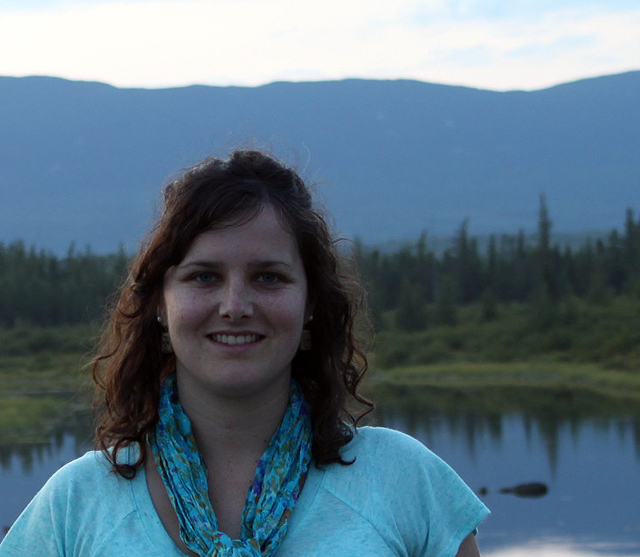
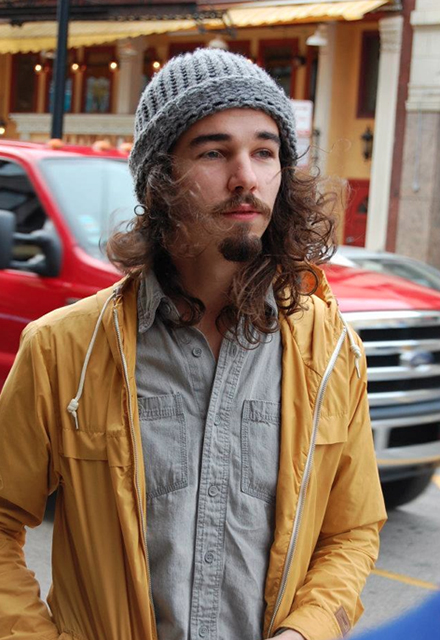
Andi Crist ACrist headshotAbout 

ANDI CRIST was born in Birmingham, Alabama and received her BFA from Columbia College Chicago in 2011. She is the co-founder of Autotelic, a fiscally sponsored nonprofit community studio located in Logan Square. Crist’s furniture and works on paper are conceptually rooted in themes of re-purposing and taming “vastness” into more intimate, tangible structures that relate to the body and familiarity. An interest in home furnishings comes from a personal history of nesting as a remedy for anxiety. Recent works references domestic themes such as furniture, organizing and traditional craftwork through site-specific installations, multiples and small-scale sculpture.

www.ACrist.com

All images copyright of the artist and used with their permission. 
Posted in Uncategorized | Tagged , , , , | Leave a comment

Susan Schwalb – New York, New York

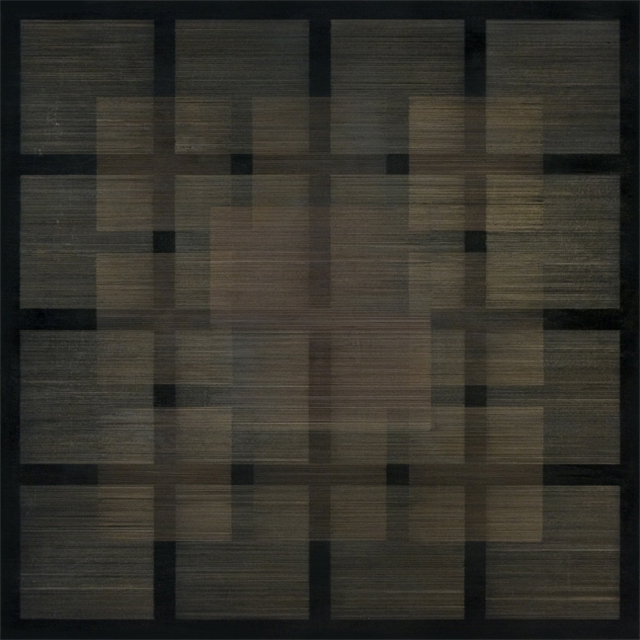
Polyphony I, 2013, 30x30in. Silver/gold/copperpoint, black gesso on panel

Polyphony I, 2013, 30x30in. Silver/gold/copperpoint, black gesso on panel

Briefly describe the work that you do.

I am an artist specializing in silverpoint and metalpoint drawing and painting. My work is reductive, abstract and sometimes minimal. At this moment I am thrilled to be included in an upcoming historical metalpoint show entitled “Drawing in Silver and Gold: From Leonardo to Jasper Johns” opening on May 3, 2015 at the National Gallery of Art, Wash DC. I am one of two or 3 living artists in the show and perhaps one of the only women in the show. This exhibition will travel to The British Museum, London opening in September 2015.

At what point in your life did you decide to become an artist?

Ever since I was a little girl (maybe around 5) I knew I wanted to be an artist, even though I wasn’t sure what an artist did. My mother was also an artist so we visited museums all the time. The Metropolitan Museum was my playground.

Tell us a little about your background and how that influences you as an artist.

I was born in New York City and studied at the High School of Music and Art, and Carnegie-Mellon University. For the past 40 years I have been part of the revival of the old technique of silverpoint drawing in America and am considered by many to be one of the foremost figures. Most contemporary artists who draw with a metal stylus continue the tradition of Leonardo and Dürer by using the soft, delicate line for figurative imagery. My work, on the other hand, is resolutely abstract, and my handling of the technique has been very varied and innovative. In works from the 1970’s I tore and burned paper to provide an emotionally free and dramatic contrast to the precise linearity of silverpoint. In works from the 1980’s I combined silverpoint with flat expanses of acrylic paint or gold leaf. At times I have used a wide variety of metals so that subtle shifts of tone and color would emerge. Finally, in 1996, I began what many think of as signature works, as I abandoned the stylus altogether in favor of wide metal bands.  In 2010 I began to use a stylus once again but in a manner completely different than earlier works.

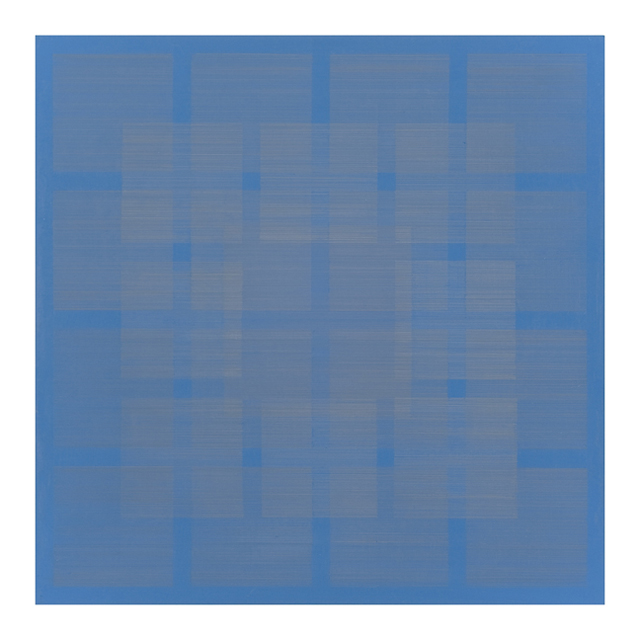
Polyphony VI, 2013, 16x16in, silver/gold/copperpoint, cerulean blue gesso on panel

Polyphony VI, 2013, 16x16in, silver/gold/copperpoint, cerulean blue gesso on panel

What types of conceptual concerns are present in your work? How do those relate to the specific process(es) or media you use?

My drawings use the classical Renaissance technique of metalpoint in ways which challenge all the traditional concepts. Juxtaposing a wide variety of metals (silver, gold, brass, copper, platinum, pewter, bronze and aluminum) I obtain soft shifts in tone and color reminiscent of the luminous transparency of watercolor. Horizontal lines and tone evoke an atmosphere of serenity, and the shimmer of light on the surface, created by the metals, is quite unlike any of the usual effects of metalpoint.
 
I have been working within a square format almost exclusively since 1997. An even grid of narrow horizontal lines forms the basic structure of my drawings and paintings. But unlike the work of Agnes Martin, with whom I am often compared, this geometric regularity serves as a spatial context for irregular events on the surface. 
 
Tone and line are the most important features of these works. In my wood panels I began by carving thin lines into the surface after which I applied several layers of paint or gesso. Then, after lightly sanding the surface, I enriched the surface with bronze tones and metalpoint drawing. The works seem to vibrate as the eye moves around the painting. 
 
Many of the drawings, particularly those entitled Madrigal, create a counterpoint between fine lines drawn with a stylus and broad swatches of bronze or copper tone. Those entitled Toccata have a stronger linear presence, and on occasion I have actually used fine pencil lines as a dark black contrast to the metalpoint. 
 
There is considerable variety in these works. A ground of black gesso alters the tones and colors of the metals in the drawings entitled Aurora. A particular variant of the linear texture characterizes the three-dimensional drawings entitled Toccata or Intermezzo, where lines wrap around the edges of the panels. And finally, the panels and drawings entitled  Polyphony feature multiple square units, often arranged in layers so that an illusion of depth, in sharp contrast to my other works, frequently seems to emerge.

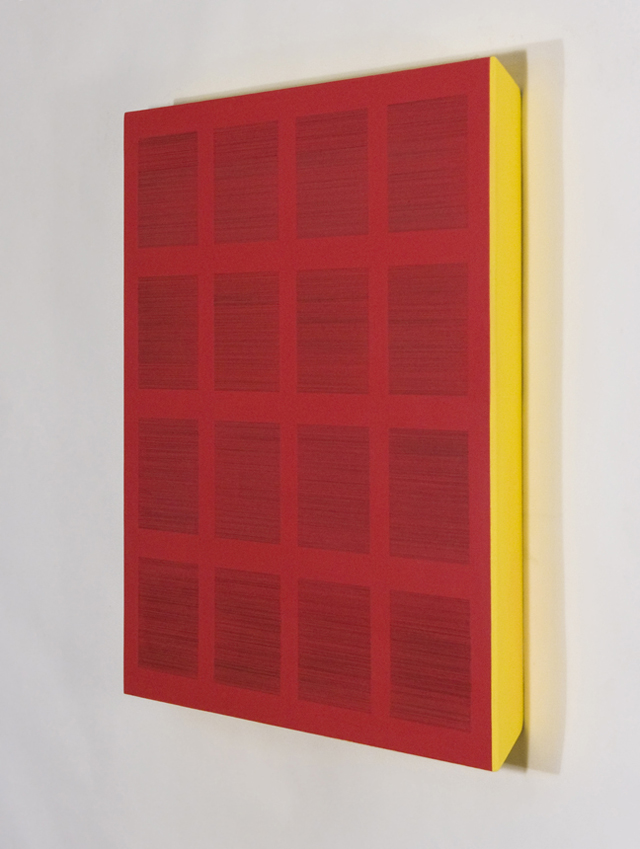
Polyphony VIII , 2013, 16x16in,  gold/silverpoint, carmine gesso, acrylic on panel - side view

Polyphony VIII , 2013, 16x16in, gold/silverpoint, carmine gesso, acrylic on panel – side view

We once heard Chuck Close say he did not believe in being inspired, rather in working hard everyday. What motivates you in your studio practice?

I agree with Close, I just try to work everyday some days are amazing and others one just slogs along.

What artists living or non-living influence your work?

I have been inspired by many artists, from Jackson Pollack to Agnes Martin. I am particularly interested in younger artists, especially those working in metalpoint such as Marietta Hoferer. 

When you are not making art what types of activities and interests do you engage in? 

I adore swimming and try to swim everyday. I love looking at art and spend lots of time in galleries and museums. I follow the work of many people, especially sculptors like Ursula Von Rydingsvard. I have never made sculpture so I admire those who do. Lately I have enamored with the abstract and concrete work of Latin American and South American artists. I also write about art, most recently for Art New England magazine.

About 

ss 3-2012 copy_1Susan Schwalb is one of the foremost figures in the revival of the ancient technique of silverpoint drawing in America. Most of the contemporary artists who draw with a metal stylus continue the tradition of Leonardo and Durer by using the soft, delicate line for figurative imagery. By contrast, Schwalb’s work is resolutely abstract, and her handling of the technique is extremely innovative. Paper is torn and burned to provide an emotionally free and dramatic contrast to the precise linearity of silverpoint. In other works, silverpoint is combined with flat expanses of acrylic paint or gold leaf. Sometimes, subtle shifts of tone and color emerge from the juxtaposition of a wide variety of metals. From 1997-2008 Schwalb abandoned the stylus altogether in favor of wide metal bands that achieve a shimmering atmosphere reminiscent of the luminous transparency of watercolor. In recent works, Schwalb creates a counterpoint between fine lines drawn with a stylus and broad swatches of bronze or copper tones. Those entitled “Toccata” have a stronger linear presence, and on occasion she has actually used fine pencil lines as a dark back contract to the metal point. 

Schwalb was born in New York City and studied at the High School of M&A, and at Carnegie-Mellon University. Her current drawings juxtapose a wide variety of metals (silver, gold, brass, copper, platinum, pewter, bronze and aluminum) to obtain soft shifts in tone and color. Horizontal bands evoke an atmosphere of serenity, and the shimmer of light on the surface, created by the metals, is quite unlike any of the usual effects of metalpoint.

Schwalb’s oeuvre ranges from drawings on paper to artist books and paintings on canvas or wood panels.; many of these panels are carefully beveled so that the imagery seems to float off the wall. Her work is represented in most of the major public collections, including the Museum of Modern Art, New York, The Metropolitan Museum of Art, New York, the National Gallery, Washington DC, The British Museum, London, The Brooklyn Museum, NY, The Fogg Art Museum, Harvard University, Kupferstichkabinett – Staatliche Museen zu Berlin, Germany, Victoria and Albert Museum, London, The Ashmolean Museum, Oxford, England, Museum of Fine Arts, Houston, TX, The Achenbach Foundation of Graphic Arts, The Fine Arts Museums of San Francisco, The Library of Congress, Washington, DC, The Rose Art Museum, Brandeis University, Waltham, MA, Yale University Art Gallery, New Haven, CT, Rhode Island School of Design Museum of Art, The National September 11 Memorial and Museum, New York, NY, The Columbus Museum, Columbus, GA, Evansville Museum of Art and Science, the Arkansas Arts Center, Little Rock, AK and The Isreal Museum, Jerusalem.

Susan Schwalb has been in residence at the Virginia Center for the Creative Arts (2010,’07, ‘92,’73), the MacDowell Colony (1989, ’75,’74), Yaddo, 1981 and has had two residencies in Isreal in 1994 at Mishkenot Sha’ananim, Jerusalem and the Tel Aviv Artists’ Studios. She has had over 35 solo exhibitions and has exhibited nationally and internationally. 

In 2015 the historical metalpoint exhibition entitled, “Drawing with Silver and Gold: From Leonardo to Jasper Johns”, will open at the National Gallery of Art, Wash. DC and then travel to The British Museum, London. Schwalb will be one of a  very few living artists included in the show.

In the Studio

In the Studio

www.susanschwalb.com

All images copyright of the artist and used with their permission. 
Posted in Uncategorized | Tagged , , , , | 8 Comments

Mary Henderson – Philadelphia, Pennsylvania

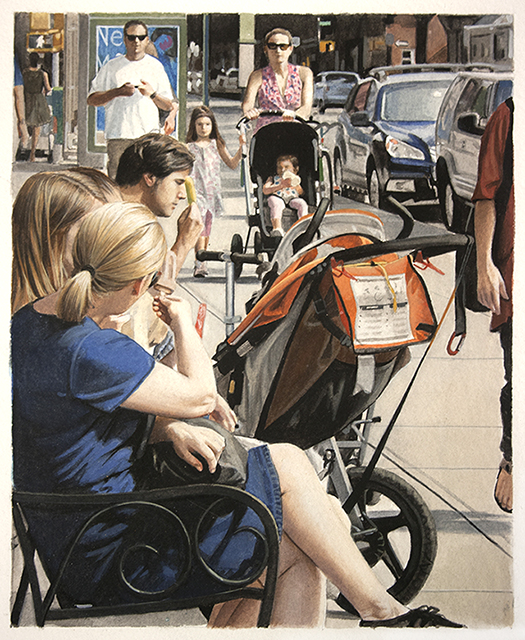
Popsicles, oil on panel, 10”x8” (image), gouache on paper, 2014

Popsicles, oil on panel, 10”x8” (image), gouache on paper, 2014

Briefly describe the work you do.

I’m a painter, working mostly in oil on panel and gouache on paper. I make representational paintings that are based (at least initially) on found images from the internet. My work has a strong sociological bent: each series is focused on a particular American subculture or experience. Most recently, I’ve been dealing with themes of class and leisure, focusing on everyday experiences that raise questions about privilege and satisfaction. The last series is about the recreational activities of well-to-do urbanites, depicting the weekend pastimes of the professional, gentrifying class. I like to think of myself as making contemporary genre paintings.

I paint in a fairly time-consuming and tightly resolved style, in part, as a response to the ephemeral nature of my source images, most of which are jpeg snapshots that I find on photo-sharing sites. Psychological studies have found that taking snapshots impairs our memories of the events that we are recording. The democratization of digital photography has made producing an image easy and nearly costless, creating a flood of visual documentation in which individual moments are quickly lost or forgotten. Painting, meanwhile, is a completely different sort of medium – one that is based on memory and repetition, focus and intentionality. The tension between those two kinds of image-making is part of what I’m interested in exploring in the work. What makes a moment worth looking at, thinking about, remembering?

Tell us a little about your background and how that influences you as an artist.

I live in the Northeast but I grew up in the San Fernando Valley in Los Angeles. We were a blue-/pink-collar family, more or less straight-up-the-middle class, but through scrimping and scholarships I was able to go to very expensive schools from a fairly early age. The details of my life were very different from those of my peers’ lives. I think most people who find themselves in those kinds of fish-out-of-water environments become pretty careful social observers. I’m sure that experience has a lot to do with the content of my work.

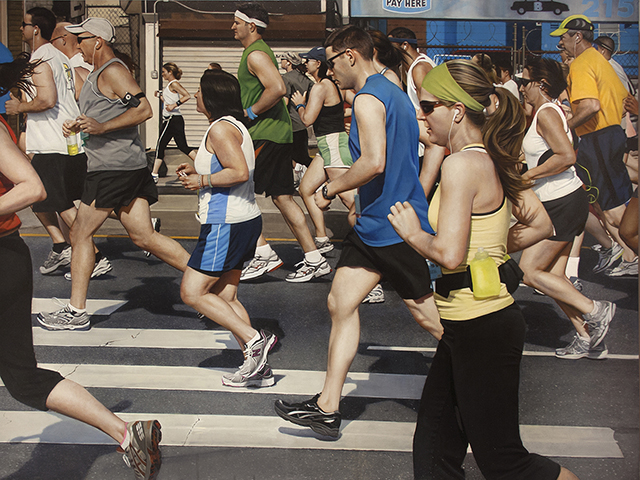
Broad Street Run, oil on panel, 30”x40”, 2014

Broad Street Run, oil on panel, 30”x40”, 2014

The concept of the “artist studio” has a broad range of meanings, especially in contemporary practice. The idea of the artist toiling away alone in a room may not necessarily reflect what many artists do from day to day anymore. Describe your studio practice and how it differs from (or is the same as) traditional notions of “being in the studio.”

My studio is in the house where I live with my family, so it’s not necessarily a private oasis. A lot of my studio time happens during the work week, which is fairly solitary but also includes a lot of interruptions for household stuff. I also need to get some work in while family is around, especially when I have looming deadlines. That has been a difficult adjustment for me, since I’m terrible at multi-tasking and hate showing or talking about work in progress – even if it’s just with little kids. But I think I’m getting better. (My family might disagree).

I have a somewhat different studio set-up than a traditional painting studio. I do most of my preparatory work on the computer and often paint directly from studies on the screen, so it’s sort of a hybrid digital/painting space. I spend a lot of time looking at monitors. I usually have one screen opened to Photoshop and one running a podcast or TV show. It’s a pretty awful setup, ergonomically speaking, but it’s the most efficient way for me to work.

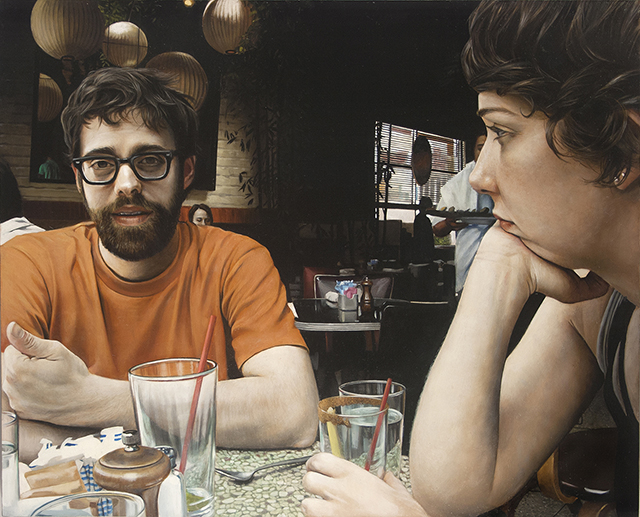
Brunch, oil on panel, 16”x20”, 2014

Brunch, oil on panel, 16”x20”, 2014

What unique roles do you see yourself as the artist playing that you may not have envisioned yourself in when you first started making art?

All the non-solitary aspects of an artist’s life, going to openings and talks and making connections, are still a little unnatural for me. I’ve been out of school and showing my work for quite a while, but these are still things that I have to remind myself to do. It’s not a unique role, exactly, but it’s an uneasy one.

When do you find is the best time of day to make art? Do you have time set aside every day, every week or do you just work whenever you can? 

Before I had kids, my peak hours were from 8pm-1am. That would still be my preference if I could manage it, but I need more sleep than that that would allow. So I work primarily during school hours on my non-teaching days, and in the evening after the kids go to bed when I can manage it.

How has your work changed in the last five years? How is it the same?

Because I work in series, change happens in periodic episodes of upheaval. Five years isn’t very long for someone who paints as slowly as I do. It’s basically one series back. But I just finished a body of work and am getting ready to start a new one, so I’m about to make some big changes – I just don’t quite know what they are yet.

Are there people such as family, friends, writers, philosophers or even pop icons that have had an impact on the work you do?

My work is driven more by narrative issues than formal ones, so people and events around me have a huge impact on the stories that come into the images. Obviously, all painters are engaged in a dialog with art history and with other painters, which is part of the appeal of the medium. But I also spend a lot of time thinking about the look on the face of person in front of me in the Trader Joe’s line, and how I might be able to make a painting about it. That’s at least as important to the work I make as what I see when I go to the Barnes Collection.

If you had an occupation outside of being an artist, what would that be and why?

My fantasy job is to be a professional pop-culture blogger.

About 

head shotMary Henderson lives and works in Philadelphia, PA. She received her BA in Fine Arts from Amherst College in Amherst, MA, and her MFA in Painting from the University of Pennsylvania in Philadelphia, PA. Recent exhibitions include “Sunday Paintings,” (Lyons Wier Gallery, New York, NY), “We Could Be Heroes: The Mythology of Monsters and Heroes in Contemporary Art, The Museum of Art, Brigham Young University, Provo, UT), and “As Others See Us” (Brattleboro Museum, Brattleboro, VT). Her work has been featured in Harper’s MagazineNew American Paintings and Art in America, among other publications. She teaches painting at St. Joseph’s University (Philadelphia, PA) and is represented by Lyons Wier Gallery (New York, NY).

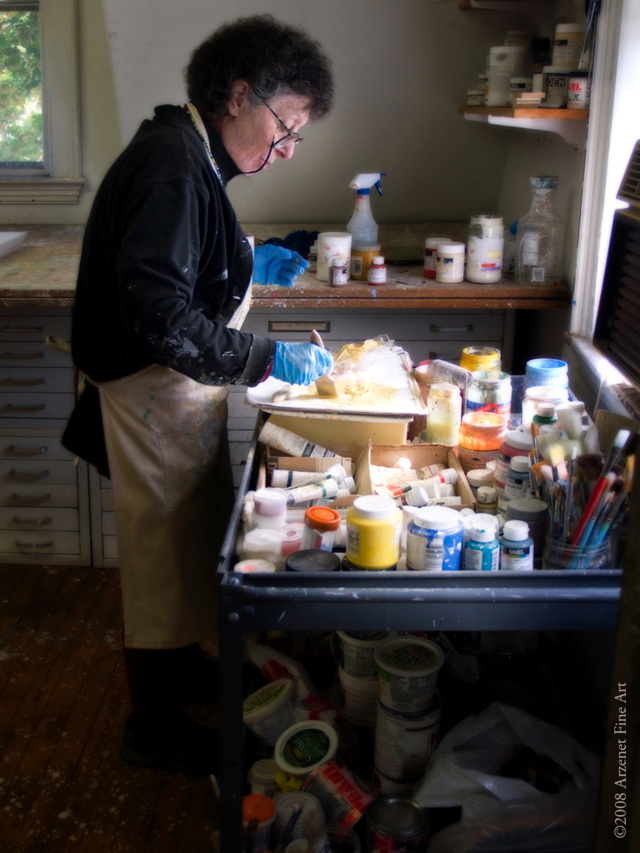
In the Studio

In the Studio

www.maryhenderson.net

All images copyright of the artist and used with their permission. 
Posted in Uncategorized | Tagged , , , , | Leave a comment

Joanna Tam – Boston, Massachusetts

Athletes Study (An Imported Edition) - Carlos Gómez, Archival Inkjet Print, 15 x 22, 2013

Athletes Study (An Imported Edition) – Carlos Gómez, Archival Inkjet Print, 15 x 22, 2013

Briefly describe the work you do.

Using performtive techniques and humor, my work examines the issues of standardization, displacement and the construction of ethnic and national identities.  The medium I use ranges from video, photography, performance, text and installation.

Tell us a little about your background and how that influences you as an artist.

I came to the U.S. from Hong Kong to study Computer Science.  My experiences growing up in a British colony and then living in the U.S. for most of my adult life have been driving the themes in my work.  

The medium that I first learnt to use was photography. Since I did not go to art school before I enrolled to the Museum School MFA program, I did not know a big group of artists to collaborate with in terms of being models of each other’s projects.  I started taking pictures of myself.  At the beginning making self-portraits was purely out of convenience. It was not until I studied performance in graduate school that I started to think about utilizing the body in a more critical manner. 

I was told that my work has a clinical element and I believe it is related to my background in Computer Science.  This may also be the reason that I engage in research-based practice. 

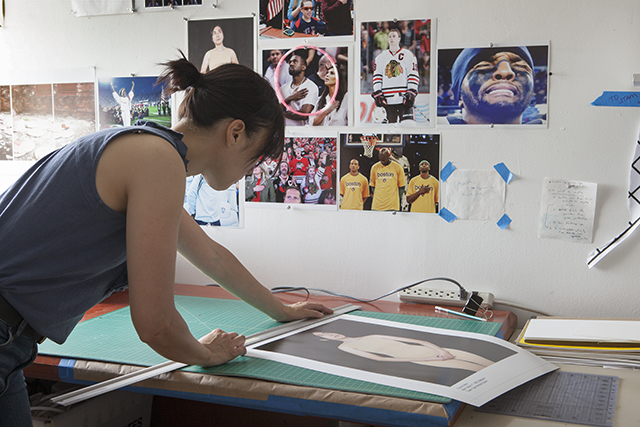
detail Shot Of My Piece

detail Shot Of My Piece

The concept of the “artist studio” has a broad range of meanings, especially in contemporary practice. The idea of the artist toiling away alone in a room may not necessarily reflect what many artists do from day to day anymore. Describe your studio practice and how it differs from (or is the same as) traditional notions of “being in the studio.”

I typically spend a lot of time researching, reading and thinking before I start working on my projects. I consider all these activities my studio practice. 

What unique roles do you see yourself as the artist playing that you may not have envisioned yourself in when you first started making art?

I recently started to realize the kind of social capital that artists have in a lot of circumstances. There is a lot of potential in using our social capital to make positive changes in our society.

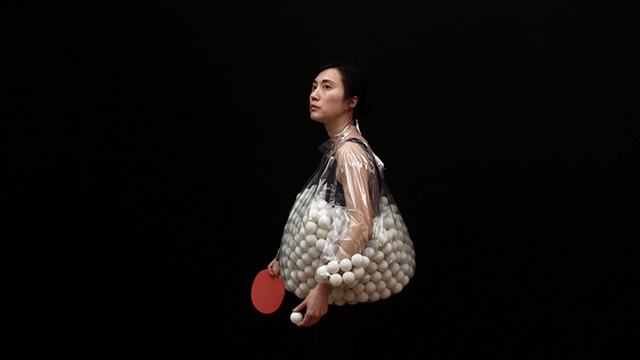
Reduction Study (Ping Pong) - Video Still, HD Video, 7 Minutes, 2012

Reduction Study (Ping Pong) – Video Still, HD Video, 7 Minutes, 2012

When do you find is the best time of day to make art? Do you have time set aside every day, every week or do you just work whenever you can? 

I can work pretty well as long as I am in a rather quiet space regardless of the time of the day and I work whenever I can.

How has your work changed in the last five years? How is it the same?

There was a period of time during that past five years that my main focus was the concepts of the piece and did not concern that much about the aesthetics.  In other words I did not think too much about engaging the viewers. I am happy that I had gone through this phase in my artistic development.  I am also happy that I focus equally on concepts and aesthetics now. 

Are there people such as family, friends, writers, philosophers or even pop icons that have had an impact on the work you do?

Coco Fusco, Andrea Fraser and Francis Alÿs are all big ones.  The colleagues I met in graduate school also have influenced my work a lot.

If you had an occupation outside of being an artist, what would that be and why?

I had a career in software development before I went to art school.  So this is what I would be doing if I was not an artist. 

About 

headshotJoanna Tam is a Boston-based visual artist originally from Hong Kong.  Her work has been exhibited nationally and internationally including venues in York, UK; Istanbul, Turkey; Cusco, Peru; New York; Brooklyn; Denver; Kansas City; Boston among others. Joanna’s projects have been awarded the Best Art Film at the Aesthetica Short Film Festival in York, UK (2012), the People’s Choice Award (Sub-Category) and the Third Prize (Sub-Category) at the Prix de la Photographie, Paris (2009). She was the resident artist at the Center for Photography at Woodstock and the Kimmel Harding Nelson Center for the Arts. Joanna holds an MFA degree from the School of the Museum of Fine Arts, Boston / Tufts University and is the co-founder of Howard Art Project, an artist-run gallery / studio space in Dorchester, MA.

In the Studio

In the Studio

www.joannatam.net

All images copyright of the artist and used with their permission. 
Posted in Uncategorized | Tagged , , , , | Leave a comment

Casey Whittier – Overland Park, Kansas

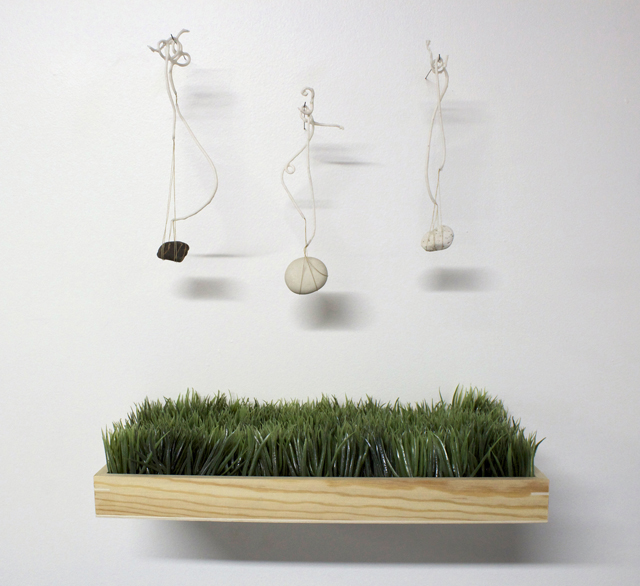
The Weight of Translation, 2014, Porcelain thread, cotton thread, rocks from my collection: gneiss, porcelain, pumice, synthetic grass, wood.

The Weight of Translation, 2014, Porcelain thread, cotton thread, rocks from my collection: gneiss, porcelain, pumice, synthetic grass, wood.

Briefly describe the work you do.

I am a sculptor with a particular interest in making work that deals with scale, repetition and creates a physical environment for itself within the gallery. Conceptually, my work deals with the idea of palimpsest, mortality, longing, desire and human interaction with landscape. Organic and natural elements are almost always present in my work. 

Tell us a little about your background and how that influences you as an artist.

I grew up in Maine, spent much of my childhood outside and was always collecting things and altering them. I am a perpetual schemer and have an insatiable interest in non-human ecosystems. The act of collecting is still a big part of my practice. I rarely go for a walk without coming back with something. In some ways, this act of taking something and holding onto it is both a source of joy and despair—I often feel a sense of guilt in the act of collecting things that I use for my work because the act interrupts the natural cycle. For example, the flowers that I use are all made from dipping real daisies in porcelain and firing them. The organic matter burns out and we are left with a fragile shell. Prepping these flowers to be dipped is an intense process.  They have to be cut, washed, rinsed, dried to a certain point, etc., and in the end, I spend all that time just to eliminate the actual objects in favor of a memory of them. My studio practice is riddled with questions of sustainability, mortality and the fine line between destruction and desire. 

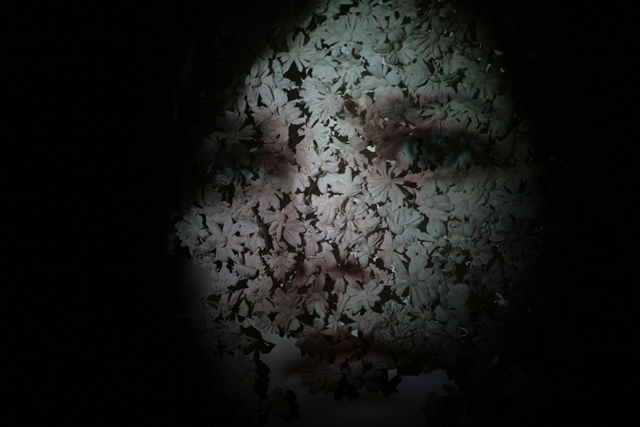
Elements of Oneiric Preservation, 2012, Original Video Projection, Porcelain daisies, music wire.

Elements of Oneiric Preservation, 2012, Original Video Projection, Porcelain daisies, music wire.

The concept of the “artist studio” has a broad range of meanings, especially in contemporary practice. The idea of the artist toiling away alone in a room may not necessarily reflect what many artists do from day to day anymore. Describe your studio practice and how it differs from (or is the same as) traditional notions of “being in the studio.”

Again, a lot of my work is conceived outside of the studio. Right now I am primarily working out of my home. I have a secondary space in a local art center that I use more for teaching privately and doing office work (grading, writing, editing images). As someone who uses clay, I feel a little more bound to the traditional studio than other artists might because there are a lot of necessary tools and space issues that I deal with when I work. I can never have enough table space at the beginning of a project and because most of my work hangs, I can never have enough wall space either. I am lucky in that I also teach college ceramics and that gives me access to some extra resources that I would not have on my own. I occasionally make work at the school, although finding a moment of peace in the school studio is quite rare.

I do, however, consider teaching to be part of my practice. I love interacting with students and problem solving. I feel like I run into a lot of technical problems in my work and often those answers come to me when I am in the middle of solving another conundrum with my students.

Being in the studio is important for me because it is often one of the only times in my day when I am alone and can physically work out the things I have been visualizing and scheming up in my head. The timeline for conception is all over the place for me. Some days I think of something and make it immediately, other times I will consider a project or piece for years at a time before starting it. That interplay between acting intuitively and being meticulous and calculated with the work is a very important (and sometimes frustrating) part of my time in the studio. 

Traverse, 2014, porcelain cicada, marbled stoneware, industrial tile, grout and wood.

Traverse, 2014, porcelain cicada, marbled stoneware, industrial tile, grout and wood.

What unique roles do you see yourself as the artist playing that you may not have envisioned yourself in when you first started making art?

I think the biggest surprise for me was that I ended up doing it at all. I had no intention of being an artist until I spent four months on crutches due to foot surgery. My high school art teacher lent me a potter’s wheel while I recovered and after I had run through my reading list of books, I spent all of my time teaching myself to throw. I decided to continue taking art in college and had the distinct luck of meeting Barry Bartlett, who finally convinced me to go to art school. I went to one of his openings this past spring. I don’t think I ever understood the power of connections, community and how important it is for all of us to keep that in mind at all stages of our careers—lending a helping hand and encouraging others even in the smallest ways can really make a difference. 

When do you find is the best time of day to make art? Do you have time set aside every day, every week or do you just work whenever you can? 

It really changes every day for me. I have noticed that if I have too much on my mind, I am not nearly as productive in the studio. I often make lists and try to distribute my time productively. I teach at two to three different schools in any given semester and being in the mindset to make work is something that I took for granted when I was a student. Sometimes I have to go for a walk first and clear my head. Other days I can walk down to the studio and start ten things in ten minutes. If I have a totally open day, I like to start working in the morning, run errands and workout in the afternoon, then work before and after dinner in the studio. 

How has your work changed in the last five years? How is it the same?

Five years ago I was tirelessly working with found images and translating them into porcelain. My work was very focused on a specific story and experience and that quest lasted for nearly two full years. Within that body of work were quite a few other ideas and some themes that are still present in my work: particularly the human relationship to mortal time, materiality and making my practice a place for reflection.

These images aren’t completely lost in my present practice, although my focus has shifted and the spectrum of possibilities within the work has expanded. Over the past five years I have had the opportunity to gain a lot of artistic skills, knowledge and the time to experiment. This has allowed me to understand my work in a different way (the language of clay, although vast, at times felt limiting as a student). I am constantly playing with new ideas and really love the challenge of reinterpreting objects and installations to accommodate new situations (both intellectually and physically). 

Are there people such as family, friends, writers, philosophers or even pop icons that have had an impact on the work you do?

Oh, most definitely. Writers mostly: Wallace Stegner, Wendell Barry, Milan Kundera, Susan Sontag and Gaston Bachelard to name a few. Great music keeps me in the studio; and traveling, teaching and meeting new people keep me invigorated. I also strongly believe in the power of spending time alone with my thoughts. 

If you had an occupation outside of being an artist, what would that be and why?

Well, I love to teach and I am very intent on continuing to do that. If all pragmatism and limitations were lifted, I would work for the Boston Celtics. I love basketball and I could watch it all day. 

About 

headshotWhittier received her BFA from KCAI in ceramics and her MFA from the University of Colorado at Boulder. She currently teaches at Johnson County Community College, Park University and Kansas City Art Institute and works in her home studio in Overland Park. Her work has been exhibited nationally and she is currently preparing for two solo exhibitions. In addition to teaching college art and running community workshops, she enjoys spending her time scheming, reading, hanging out in bookstores with her fiancé, and playing with her dogs. 

The Studio

The Studio

www.caseywhittier.com

All images copyright of the artist and used with their permission. 
Posted in Uncategorized | Tagged , , , , | Leave a comment

Krista Svalbonas – Red Lion, Pennsylvania

In the Presence of Memory (8,) oil and mixed media on industrial felt, 15x9, 2014

In the Presence of Memory (8,) oil and mixed media on industrial felt, 15×9, 2014

Briefly describe the work you do.

I am fascinated by the language of spatial relationships and by the effect of architectural form and structure on the psychology of the human environment. I work in series; each one begins with extensive photographic documentation that is an integral part of my process. From these photographic “sketches” I extract elements of the built environment that inform my geometric abstractions: spaces between and above buildings, grids of windows, exterior piping, fire escapes, doorways, gables and entablatures all manifest themselves in my paintings. I often exhibit the paintings in combination with site-responsive wall drawings that extend this vocabulary onto the surfaces of the room. 

Tell us a little about your background and how that influences you as an artist.

I was raised in Pennsylvania, near the New Jersey border, in a town nicknamed “The Christmas City,” Bethlehem. From a very young age,  I was always experimenting with some kind of art. My parents encouraged and supported my curiosity about the arts, allowing me to try my hand at sculpting, painting, drawing and photography. In middle school I had a fascination with metalsmithing and took an after-school class at a local arts center. In high school I fell in love with photography and set up a mini darkroom in a closet under the stairs. I had, and still have, a thirst to learn and try new things. All through my education I was an alchemist, combining media and devising experiments. My mother was a huge influence. Although she never pursued a career in the arts, she is very artistic. I grew up with art all over the house. If it wasn’t my mother’s drawings, it was was my  stepfather’s paintings and pottery. At one point my mother was part of a program sponsored by the Philadelphia Art Museum called ” Art Goes to School,” which  introduced elementary students in Pennsylvania to various artists through show-and-tell poster prints. My mother had all sorts of prints of paintings and sculptures around the house. I remember falling in love with Chagall as a child through those posters.

In the Presence of Memory (4) (detail),  oil and mixed media on industrial felt, 15x9, 2014

In the Presence of Memory (4) (detail), oil and mixed media on industrial felt, 15×9, 2014

The concept of the “artist studio” has a broad range of meanings, especially in contemporary practice. The idea of the artist toiling away alone in a room may not necessarily reflect what many artists do from day to day anymore. Describe your studio practice and how it differs from (or is the same as) traditional notions of “being in the studio.”

Studio days for me don’t always consist of “making.” Sometimes I’m writing a grant, or documenting work, or packing work. The realities of being an artist are things you only find out once you start being an artist. No one in college told me or taught me how to create a digital database of work, or catalog contacts. Those are things you find out are part of your studio practice much later. I definitely think the romantic notion of an artist toiling away in the studio day after day covered in paint might be a bit old-fashioned. All my work starts with photographic documentation of the built environment, so some days my studio may be my car, or it may be the street I’m walking on. 

What unique roles do you see yourself as the artist playing that you may not have envisioned yourself in when you first started making art?

I may have answered this partially above. A lot of artists these days, including me, are finding that we have to juggle many professions at once: making work, doing administrative tasks, being an art handler and making a steady income.  I definitely didn’t think administrative tasks would take up such large a large part of my life as an working artist. In school, I think we all thought we would work away in the studio and magically all the pieces would fall into place. There are days I spend just updating my website, creating various digital versions of work, researching grants. I found out rather quickly that the roles of an artist are diverse and divided and don’t always mean getting dirty in the studio. 

In the Presence of Memory (3),  oil and mixed media on industrial felt, 15x9, 2014

In the Presence of Memory (3), oil and mixed media on industrial felt, 15×9, 2014

When do you find is the best time of day to make art? Do you have time set aside every day, every week or do you just work whenever you can? 

Having been a teacher for some time now, my schedule tends to be fluid. My teaching schedule isn’t always set in stone, so I find my hours shifting in the studio. That said, you’ll find me there the days I’m not teaching. My favorite time to work is in the afternoon when I can get the most light in my studio space, but I often find myself working late into the evening.

How has your work changed in the last five years? How is it the same?

My work hasn’t changed conceptually as much as I’ve changed some of my working methods. Five years ago I was working extensively with encaustic and my materials have shifted since then. I started thinking about my painting substrate and pigments as part of the conceptual information of the work, using industrial materials such as felt, steel and iron to connect more with the ideas of modern architecture.

Are there people such as family, friends, writers, philosophers or even pop icons that have had an impact on the work you do?

My peers have always been a great influence on my work, I’m lucky to know some pretty fabulous artists who have pushed me to make the best work I can. My work has a lot to do with architecture, so I tend to find a lot of inspiration there. I recently found a Soviet architectural blog that I’ve become addicted to:  http://sovietbuildings.tumblr.com/. Many of the buildings are familiar to me personally, since my parents were born in Latvia and Lithuania.  I’ve had an inside peek into the nature, culturally, politically and structurally, of Soviet architecture. I’m also a big fan of http://thecharnelhouse.org/ whose subtitle is “from Bauhaus to Beinhaus,” and features some great short essays, visual and written, of the history of Modernist architecture.

If you had an occupation outside of being an artist, what would that be and why?

I teach in addition to making my own work, but I’ve found one often feeds the other. I truly enjoy teaching and feel it’s a natural compliment to my life as an artist. I’ve tried on a couple other creative roles in tandem to my practice —  art director and commercial photographer — but teaching has really been the best fit for me. I can’t really imagine myself without art.

About 

HeadshotKrista Svalbonas is a mixed media artist based in Pennsylvania. Her studies lead her to a BFA degree in Photography and Design from Syracuse University and an interdisciplinary MFA degree in Photography, Sculpture and Design from SUNY New Paltz. Benefiting from her extensive media knowledge, Krista enjoys experimenting with traditional materials in unexpected ways. She is heavily influenced by Modern architecture in her work and focuses on spatial relationships and industrial architecture when developing her abstract pieces and installations.

Krista was recently awarded a New Arts Program Residency and Exhibition. She has had numerous solo, two-person and group exhibitions throughout the United States. Recently Krista completed a large scale site specific installation at the Ise Cultural Foundation in New York. She has exhibited at venues including the Dairy Center of the Arts in Boulder Colorado; Kenise Barnes Fine Art in Larchmont, New York; Watchung Art Center in New Jersey; Monterey Peninsula Art Gallery in California; The Painting Center, Trestle Gallery, Virdian Gallery and BWAC in New York; Tubac Center For The Arts, Arizona; George Segal Gallery, New Jersey. She was also part of a two-year traveling group exhibition in Latvia, Europe, where her piece remains in the permanent collection at the Cesis Art Museum. She is a recipient of a Cooper Union Artist residency and has works in numerous private collections.

In the Studio

In the Studio

www.kristasvalbonas.com

All images copyright of the artist and used with their permission. 
Posted in Uncategorized | Tagged , , , , | Leave a comment

Alison Ho – Eugene, Oregon

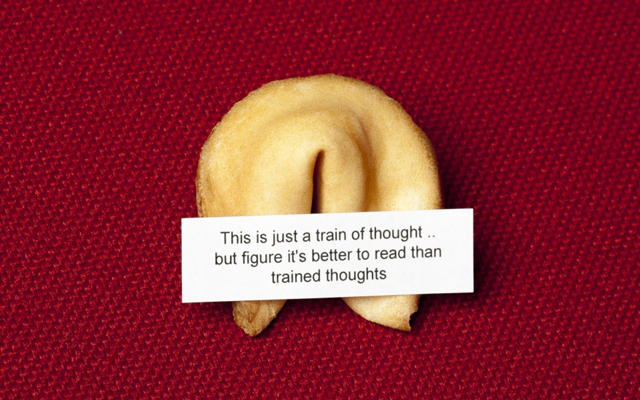
Cookies of the West: The Lost Wisdom of Kanye, fortune cookies, 2” x 4” x 1.5”, 2012

Cookies of the West: The Lost Wisdom of Kanye, fortune cookies, 2” x 4” x 1.5”, 2012


I work with narrative, language, and identity. Specifically, with the politics of Asian American identity. I work across multiple mediums. I guess you could call it interdisciplinary, but really it’s just that I don’t feel a particular affinity to any one in particular. I create books, photographs, installations and performances. I’m very interested in race. Especially the idea that whole swaths of people can be boiled down to a color, and that shapes so much of our experiences in this world. 

Tell us a little about your background and how that influences you as an artist.

When I was a kid I didn’t start talking until the second or third grade. My parents got lot of notes from my kindergarden teacher saying that I was shy, and quiet, and not

participating. Really, I think I was just confused about which language to speak. I was being exposed constantly to English, Cantonese, Mandarin, Taiwanese, Thai, French, etc. I had a bit of a language identity crisis. So instead, I just watched people and didn’t say much.

In my art I’m sort of doing the same thing. I’m still dealing with an identity crisis, though no longer about which language to speak. Instead, a lot of my work is trying to rationalize being young, short, female, and Asian American and figuring out how that affects my life. I’m definitely driven by the desire to tell stories and work through experiences that shock me. It’s all very actively passive. I grew up around San Jose, CA where Asian people make up 32% of the population. When I went to college, I moved to Eugene, OR that demographic shrunk to 4%. The difference in experiences was very striking. 

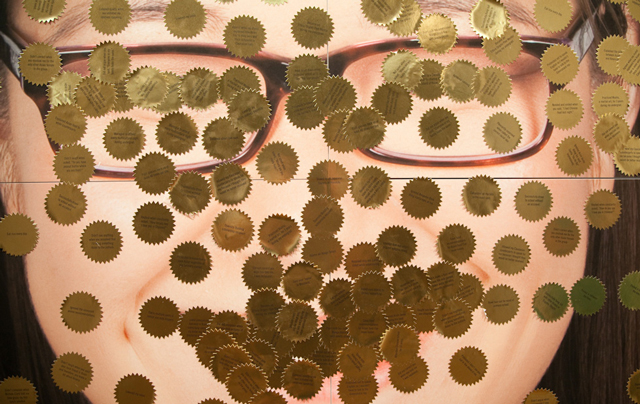
Seal of Approval, digital print and gold foil seals, 6’ x 6’, 2013 Photographer: Troy David Photo

Seal of Approval, digital print and gold foil seals, 6’ x 6’, 2013 Photographer: Troy David Photo

The concept of the “artist studio” has a broad range of meanings, especially in contemporary practice. The idea of the artist toiling away alone in a room may not necessarily reflect what many artists do from day to day anymore. Describe your studio practice and how it differs from (or is the same as) traditional notions of “being in the studio.”

Right now my studio is a computer and two tables, which also doubles as my office and dining space. It’s certainly not ideal. So I find myself to be working all over the place. I’m collaborating with a lot of other parties to get work done. It’s certainly not the isolated scene we expect. 

What unique roles do you see yourself as the artist playing that you may not have envisioned yourself in when you first started making art?

I never realized how much logistics work is involved in art making. Packing and shipping art, procuring supplies, reading contracts, managing correspondence, researching shows, it’s all a lot of stuff. I had the image in my mind of the artist painting away in their studio (I don’t paint, but that was the vision). But the reality is that there are so many other roles to fill. I also never saw myself as a performer. I’m a pretty introverted person. However, I’m not comfortable asking someone else to do what I want done on camera. Asking someone else to contort themselves to meet my vision, and to make themselves uncomfortable, doesn’t seem right. Plus, I’m already there, so I might as well just do it. 

Patrick Ewing’s Father, edition of seven, laser printed text, photopolymer printed illustrations, 6” x 9”, 2013

Patrick Ewing’s Father, edition of seven, laser printed text, photopolymer printed illustrations, 6” x 9”, 2013

When do you find is the best time of day to make art? Do you have time set aside every day, every week or do you just work whenever you can? 

I tend to get the best ideas either in the shower or when I’m falling asleep. Since I’ve begun teaching full time, I’ve found that my time to make work is heavily influenced by what’s going on in my classes. When my students are really busy making work, so am I. But once they’ve turned it in, my focus has to be on their work. The academic calendar is great though in that it provides plenty of opportunities for focused work. 

How has your work changed in the last five years? How is it the same?

Five years ago, I was still trying to figure out what sort of work I was interested in doing. I didn’t really know why I was doing it, I just was. I was kind of going through the motions of “doing school.” Looking back, I can see similar ideas and interests in portraiture and language. Since then I’ve added a lot more humor and involved myself a lot more literally in the work. The topics I deal with are “serious” but that doesn’t mean I can’t poke fun at them. It’s also become more performative. 

Are there people such as family, friends, writers, philosophers or even pop icons that have had an impact on the work you do?

I have a broad set of influences. My family has had a tremendous effect on the work I do. My father probably finds himself inserted into my work more than he would like. My sister tells me he complains about it. I’m sure he’ll be thrilled when he sees this interview. Beyond that, I take my influences from a variety of artists and theorists such as: Carsten Höller (Test Site, 2006-7), Edward Ruscha, Jessica Hische, Valerie Soe (All Orientals Look the Same, 1986), Kip Fulbeck, Edward Said, and Stuart Hall. The US Census (Ok, not really an artist, so much as a demographics survey. But I’m really interested in human populations, as well as how they shift and change over time. Also, I think this is one of the most thorough and well designed document the US government publishes. The maps are beautiful.) I also watch a fair number of corgi videos. Do corgis count as pop icons? 

If you had an occupation outside of being an artist, what would that be and why?

I would want to be a dog whisperer. I think it would be cool to talk to dogs. Well, not talk to them… Right now, I teach, but I think it would be interesting to take on a career that was still highly interactive, but where the other participant was not human. 

About 

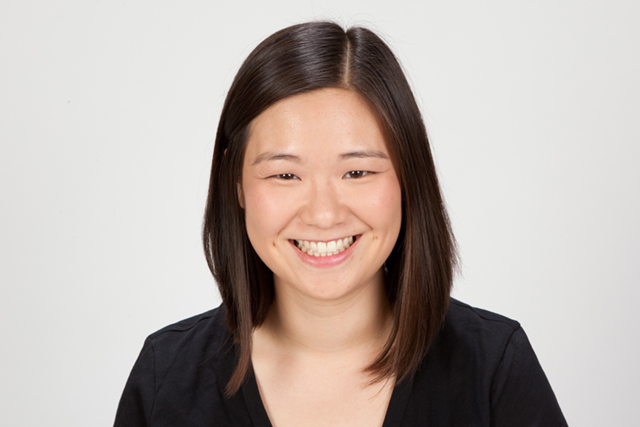
ho_alison_headshotAlison Ho is an interdisciplinary artist. Originally from Campbell, California, she is currently a Career Instructor at the University of Oregon in Eugene, Oregon. In 2013, she graduated from the University of California Santa Barbara as a Regents Special Fellow and holds an MFA in Art. In 2010, she graduated Magna Cum Laude from the University of Oregon and holds a BFA in Digital Arts. In her spare time, she travels the world battling foes and learning valuable lessons of friendship. 

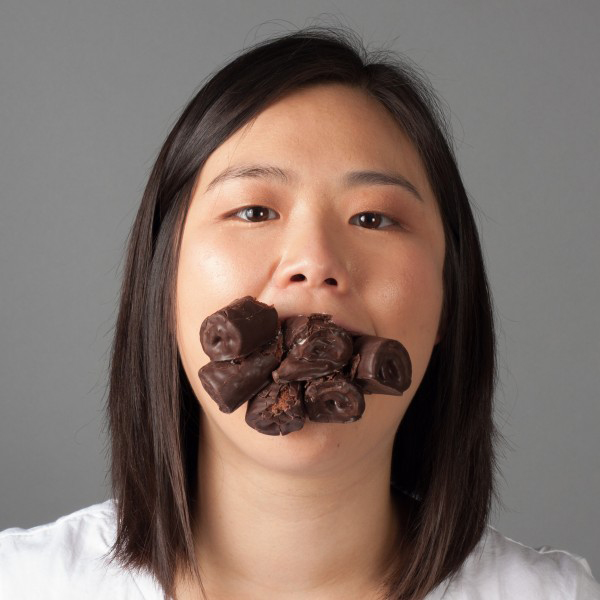
Chubby Ho, series of five digital prints, 12” x 12”, 2014

Chubby Ho, series of five digital prints, 12” x 12”, 2014

http://alisonho.net 

All images copyright of the artist and used with their permission. 
Posted in Uncategorized | Tagged , , , , | Leave a comment

Darlene Wesenberg Rzezotarski – Milwaukee, Wisconsin

From the Loose Cannon Series, 2013  - Balancing Act: Spirit of Pine with Duck Disguised as the Bluebird of Happiness , Ceramic Sculpture, 16 x 11 x 9 inches

From the Loose Cannon Series, 2013 – Balancing Act: Spirit of Pine with Duck Disguised as the Bluebird of Happiness , Ceramic Sculpture, 16 x 11 x 9 inches

Briefly describe the work that you do.

Welcome to my world, where clay and words mingle and entangle. I create hand-built ceramic sculptural works finished with a variety of layered lusters and glazes. Archetypal images emerge as I give my imagination free play, drawing on a vast array of sources from realms of dream and folklore alike.

At what point in your life did you decide to become an artist?

I never made a conscious decision. I was nourished on a rich Wisconsin diet that included a belief in incredible occurrences, the power of love, the value of an education, and the falsity of colored oleomargarine. Nursery rhymes and unadulterated Brothers Grimm, radio music of singing cowboys, a grandpa who lived with us and brought me puzzles, a cigar box of crayons, and a generous sandbox of silica sand from the banks of the Wisconsin River all came together to create this self that could not live without artistic enterprise in word and deed. 

Tell us a little about your background and how that influences you as an artist.

As the eldest of five children, I was expected to set the standard of academic excellence. That wasn’t hard, because I loved school. When I was thirteen, I wrote an ode to the statue on top of our capital building in Madison. It began: “Miss Forward, way up there so high, where all can see as they pass by…” Amusing in retrospect, but through its many stanzas of rumination on the human spirit, it opened a door to the power of words and ideas within my grasp.

Fast forward almost two decades: My husband, our toddler, and I are living in a basement apartment by the University of Wisconsin-Milwaukee. We are the building caretakers; in exchange, we get free rent. It seems to be taking us forever to finish our degrees—and readings for my MA in Comparative Literature have become arduous. I stop writing anything other than papers. I need something creative, but non-verbal; words fail. Then the opportunity arises through Theater X to learn how to make plastic wood puppets. I juggle schedules and jump into puppet-making.

Fast forward another decade: Degrees completed, two babies half raised, living in a Queen Anne house on the Lower East Side, teaching English, making puppets and collages, writing again. My daughter is taking a ceramics class at the UWM Craft Centre and I “sit in,” as parents are encouraged to do. I am permitted a lump of clay. I make a base, coil the sides. I see a snake pot! I add a head with bulging eyes and forked tongue: Inside, I inscribe the word: Hiss-tory, and the date: 2/2/82. I am on the threshold of the next phase of my life! Instant affinity: Clay!

From the Brothers Grimm Series, 2014 - Snow White, King’s Child Ceramic Sculpture, 12 x 17 x 10 inches

From the Brothers Grimm Series, 2014 – Snow White, King’s Child Ceramic Sculpture, 12 x 17 x 10 inches

What types of conceptual concerns are present in your work? How do those relate to the specific process(es) or media you use?

The process of ceramic sculpture allows me to enter a timeless state of mind as I concentrate on creating a piece. During creation, the process and the outcome are not separate entities, just as a human is not just that flesh appearing before you at one single instance in time. Clay speaks to me and I talk back and punch, pick, soothe, smooth it until it is shaped to my liking. I let surprises happen. As I work, sometimes words and voices emerge; I never stop the sculpting to write things down. They will float around and have their due. Since I have taught myself how to work with clay, I don’t have to play by anyone else’s rules. This is a freedom I revel in, since so many other areas of my life are so proscribed.

Clay work must go through several stages. After sculpting comes the drying process—which teaches patience. I always take pictures of my work at this point in case a piece explodes in the kiln.

Glazing: In recent years, I have taken up icon writing using egg tempera, mixing the minerals and meticulously applying the colors. When I began, I thought I was taking my art in an entirely different direction; but like many aspects of a life, things begin to merge after they are internalized. I realized a year ago that my method of applying ceramic glazes has subtly changed: I layer color upon color, using floats and highlights as one does in iconography. It has given my glazes a new depth and luminescence. 

Some works might undergo one or two more glaze applications and firings, each firing temperature lower than the previous one, ending with an 018 firing for lusters or metallics.

From the Lost Milwaukee Series, 2011 - The Child Liberace Meets the Great Paderewski: “Someday this boy may take my place!”, Ceramic Sculpture 18 x 14 x 9 inches

From the Lost Milwaukee Series, 2011 – The Child Liberace Meets the Great Paderewski: “Someday this boy may take my place!”, Ceramic Sculpture , 18 x 14 x 9 inches

We once heard Chuck Close say he did not believe in being inspired, rather in working hard everyday. What motivates you in your studio practice?

My life is still a juggling act. I teach part-time; I am part owner of an art gallery; I am a caregiver. Since retiring from full-time teaching, I have more time to devote to my clay work, and I am loving it.  Even when not in my studio, I remain immersed in the process. I find that having a goal such as a one-person show can be a great motivator. I often create a series of related works. For this blog, I am including one image each from the Brothers Grimm Series, the Lost Milwaukee Series, and the Loose Cannon Series.

In the past five years, through part-ownership of THE Fine Art Gallery, I have had the opportunity to display my work on an ongoing basis. I have discovered that I actually enjoy sharing my work—the images and the words. 

What artists living or non-living influence your work?

I am influenced by Beatrice Wood, Maurice Sendak, Franz Hals, Gabriela Munter, Jack Earl, Henry Varnum Poor, Gary Schlapal, Mary Nohl, Marc Chagall, Albrecht Duerer, Katherine de Shazar, Anne Kingsbury, Susan Falkman, Georgia O’Keeffe, Lucas della Robbia, Monica Leo, Jim Henson, Mary Frank, Minoan sculptors whose names are lost, and a host of others depending on the day of the week. 

When you are not making art what types of activities and interests do you engage in? 

When you are not making art what types of activities and interests do you engage in? Reading, writing, swimming, playing Scrabble, leading workshops, teaching, caregiving. I am immersed in a large, expanding circle of family and friends. I cherish time spent in their presence.    

About 

image002Darlene (Lolly) Wesenberg Rzezotarski is an artist, educator, mythologist, writer, and gallery owner in Milwaukee, Wisconsin.  Working out of her home studio, she combines her love of storytelling with her love of sculpting, creating vivid folkloric pieces that speak their own tales to the beholder. Basically self-taught, Darlene has taken independent study classes in ceramics at the University of Wisconsin-Milwaukee under the supervision of Professor Gary Schlappal. Additionally, she holds a master’s degree in Comparative Literature from UWM. 

Darlene’s work has been featured in various exhibits including the Museum of Wisconsin Art, the John Michael Kohler Art Center, the Cudahy Gallery of Wisconsin Art at the Milwaukee Art Museum, and yearly Wisconsin Visual Artists shows.  Her recent publication, Trick a Witch, Wed a Hedgehog, Save your Soul: An American Artist Encounters Poland, contains original renditions of Polish folklore illustrated with over 25 of her ceramic sculptures. Currently Darlene is an adjunct professor at the Art Institute of Wisconsin and part-owner of THE Fine Art Gallery LLC, 207 East Buffalo Street, Suite 210, Milwaukee, WI 53202. Several of her pieces are always on display there.  

In the Studio

In the Studio

 www.Lollyclay.net  

Accompanying Text to Image 1:
Discovering Snow White

When we walked inside, we knew that something was strange,
But in a good way.
The floor was swept, the beds were made,
There was a hearty beet and bramble soup bubbling in the cauldron.
We asked ourselves,
“Are we dreaming? Brothers, it’s tidy here! Brothers, what do you see?”
Then we spotted her and we gasped— o largely splendid, deep in slumber
Snow-white skin
Blood red lips
Ebony black hair
“SHHH! Don’t disturb her,”
We whispered among ourselves.
“She must be a dream princess.”

All images copyright of the artist and used with their permission. 
Posted in Uncategorized | Tagged , , , , | Leave a comment

Mikey Winsor – Asheville, North Carolina

Here You Go, oil on canvas, 24 x 36 in, 2014

Here You Go, oil on canvas, 24 x 36 in, 2014

Briefly describe the work you do.

My work deals with a force that moves life. Sometimes it is plant stretching its branches. Sometimes an animal defending its territory. Sometimes a human seeking a calm place to exist in. Whatever it is; it is a ubiquitous yearning, yet intangible. In science, it might be an evolutionary initiation. In religion, a desire to be Godly. It is more like a thirst of possibility – than a thing. My work is a conglomerate of pieces accepting this journey. Myth, illustration, and expression weave into a situation in each work. Each situation involving time, possibility, and ultimately an action.

Tell us a little about your background and how that influences you as an artist.

I have lived in the city, the countryside, the suburbs, by the beach, in the mountains, in the orient, and around the ancient. The variety of scenery has been great. It seems like the things that did not change, from place to place, have sunk into my work more. Everywhere you go plants are trying to break through concrete. Moss and roots cover the past. Oily water leaks into sewers. No matter where you live, you establish a home. At home, you take on time.

The concept of the “artist studio” has a broad range of meanings, especially in contemporary practice. The idea of the artist toiling away alone in a room may not necessarily reflect what many artists do from day to day anymore. Describe your studio practice and how it differs from (or is the same as) traditional notions of “being in the studio.”

My studio is traditional in the sense I go in there and paint most of the time. I do have a corner set up for stop-motion animation. I also have a blue screen set up for some puppet work I recently started. It seems like technology is something I keep trying to push out of my studio, but it leaks in. There is no computer in my studio, that is for sure. I try to keep art books on my bookshelf downstairs, so I don’t spill paint on them. And downstairs is where I do all my computer work, like animation and editing. 

Taken by Notus, oil on canvas, 36 x 24 in, 2014

Taken by Notus, oil on canvas, 36 x 24 in, 2014

What unique roles do you see yourself as the artist playing that you may not have envisioned yourself in when you first started making art?

When I first started making art, the ideas and involvement where sincere, but shallow. I saw artists as great thinkers, or talented visionaries. I didn’t get a lot of the political importance. I didn’t really get the societal push. Artists do that. I have their records, books, exhibition catalogs and when I partake of an artwork, they fulfill. Those artists have become societal totems. 

Persistence of Ghosts, oil on canvas, 30 x 24 in, 2014

Persistence of Ghosts, oil on canvas, 30 x 24 in, 2014

When do you find is the best time of day to make art? Do you have time set aside every day, every week or do you just work whenever you can? 

My studio is in my house. I go in at 8am, and get out at 5pm, minus naps and lunch. I work everyday, Monday through Friday. I feel fresh in the morning, and if I know I have all day, I can really get into something. 

How has your work changed in the last five years? How is it the same?

Five years ago I was painting mountains and thinking about time. I was into this notion that in our minds we can perceive time in thousands of years and we can see mountains bubbling and breaking up as the earth’s crust grinds its plates. In other words, quite specific imaginative stuff. These days I sketch more, and try to verbalize less. I try to get it all in pictures. I arrange pieces and let a situation happen. Watch for an action, rather than make an action. 

Are there people such as family, friends, writers, philosophers or even pop icons that have had an impact on the work you do?

Authors influence me. I read a good bit. Reading is a luxury I cherish. But I don’t read all that much. I listen to records and play video games too. Like Zelda. Link would be my pop icon influence.

If you had an occupation outside of being an artist, what would that be and why?

I would probably be a computer programmer. I communicate with the machines well. My little brother and I could develop something. There would always be the dream, no matter what the work. Fortunately, my wife believes in me. And for now she gives me the gift of not having to work, and really letting me focus in the studio. Her support is amazing.

About 

headshotMikey was born in Alabama, grew up in Georgia, lived in Europe, then Japan, and now is back in the states. He was the second oldest of five children. He got his BA from Georgia Southern University and his MFA in Philadelphia from Penn. Mikey currently lives in the mountains outside of Asheville North Carolina. He lives with his family; a wife, yoko, and two dogs, shiro and rika. He is a full time artist. He likes drinking beer, cooking, and going on hikes with his wife and dogs.

In the Studio

In the Studio

www.mikeywinsor.com

All images copyright of the artist and used with their permission. 
Posted in Uncategorized | Tagged , , , , | Leave a comment

Zachary Betts – Menomonie, Wisconsin

3.An act harmful not only to some individual, but also to the community. Various Plastics, Flashe Vinyl, Latex, Spray Paint, Wrapped in Vellum. 36" x 24"

3. An act harmful not only to some individual, but also to the community. Various Plastics, Flashe Vinyl, Latex, Spray Paint, Wrapped in Vellum. 36″ x 24″

Briefly describe the work that you do.

I create abstract work that portrays reality for people to perceive it. 

At what point in your life did you decide to become an artist?

When someone told me I could. 

Tell us a little about your background and how that influences you as an artist.

My mother has always been a kind individual. She taught me sense and sensibility. She dabbled in oil as a medium throughout my uprising. My father is a mechanical engineer. A driven man, deadlines push him and his creative process in extraordinary ways. I had worked by his side for many years as a young one. The integration of these two has made me. 

What types of conceptual concerns are present in your work? How do those relate to the specific process(es) or media you use?

The work does not exist for its own sake; rather, its purpose is catalytic and interactive to make the viewer aware of oneself as a perceiving, contemplative subject inside a particular time and place – a space which has been altered in such a way as to make the general environment more conspicuous. Through these forms I enhance conversations that ultimately influence the well being in oneself. The work dispenses the tacit patterns of human ritual and communication through small movements that are both inconsequential and profound. 

1.If we allow ourselves to see what it is we do everyday, we might think of ourselves as nauseating. Fluorescent Acrylic. 36" x 36"

1. If we allow ourselves to see what it is we do everyday, we might think of ourselves as nauseating. Fluorescent Acrylic. 36″ x 36″

We once heard Chuck Close say he did not believe in being inspired, rather in working hard everyday. What motivates you in your studio practice?

First thing, a hot cup of joe, black as midnight on a moonless night. The second is a cold brew from the great state of Wisconsin at the end of the day. Finally, Every day, once a day, give yourself a present. Don’t plan it. Don’t wait for it. Just let it happen. – some text taken from Dale Cooper, Twin Peaks

What artists living or non-living influence your work?

Dan Graham, Fred Sandback, and collaborative duo Annica Cuppetelli and Cristobal Mendoza    

When you are not making art what types of activities and interests do you engage in? 

I find myself interested in activities that are always providing me with new perspectives. Rock climbing takes me to various places and continually provides new challenges and techniques to overcome with every route. Trying new foods and experimenting in the kitchen also comes with a certain creative challenge that I enjoy. Less challenging but equally enjoyable is the search for a delicious fermented beverage.

About 

Betts_Zachary_HeadshotZachary Betts studied at the University of Wisconsin – Stout where he received his BFA in Painting. He currently works and resides in Menomonie, WI, where he is still an active member of the Fine Arts Association and continues to push forth opportunities for emerging artists within the community. He was selected as an installation intern for the Soap Factory non-profit gallery stationed in Minneapolis Minnesota for Resonating Bodies, 2013. Betts has exhibited nationally, including galleries at Arizona State University in Tempe, AZ and DeVos Art Museum of North Michigan University in Marquette, MI. He has been awarded a scholarship to study at Anderson Ranch Arts Center based out of Snowmass Village, CO. Betts’ work has been featured in various publications including University of Wisconsin – Stout’s Prometheus, the Institute for Humanities Research department of Arizona State University, and is a selected artist featured in the 2014 issue of Studio Visit Magazine. 

The Studio

The Studio

www.zacharybetts.com

All images copyright of the artist and used with their permission. 
Posted in Uncategorized | Tagged , , , , | Leave a comment