Erica Jane Huntzinger – Sheboygan, Wisconsin

Durations 12, ceramic 5.25x22x4.25x22",  2013

Durations 12, ceramic, 2013

Briefly describe the work you do.

My works are visual documentations of internal landscapes. The paintings I create are an attempt to bridge the dualities of the conscious and the unconscious through sensitive attention to experience, perception, and sensation. Each piece is realized through the use and manipulation of color, texture, text and space; filtered, steeped in and manifested through paint and clay.

At what point in your life did you want to become an artist?

It didn’t occur to me to become an artist. From early childhood I created, and it seemed a natural extension of my self.

Tell us a little about your background and how that influences you as an artist.

I was and continue to be influenced by the spaces of my parent’s home states; Maine and Pennsylvania.  The rural landscapes and very small towns they were near fostered a unique and stimulating visual range for me.  The windows, the environment, our collective voices in song and thought, for me, all helped to create a state of connectedness between the visual and the musical. Each are ingredients integral to the growth and development for me as an artist.  I travel between the two spaces, capturing and distilling the essence of what I experience through my bonds with family and friends, the visual and musical stories of each place.  Because I consider my paintings as visual documentations, my perceptions of the world in each season, relationships, books, the news, my cats, water, rocks and stones, barns and houses, peeling paint, music, great food, the changing sky, children’s creativity: all of these things help to shape what I create.  I always carry a sketchbook to document thoughts, quotes, notes and ideas. They are also filled with blind contour drawings, small abstractions and writings. My paintings are multilayered and change several times before finished.  For me, it is a tapping of the conscious and unconscious material and is manifested through manipulation of color, texture, writing and space. I paint as an intuitive act expressed and influenced by interactions, cognitions and feelings, the weather, contemplations of my self and world with music in my head. It is the blood in which the art is formed imbuing meaning to each structure; an inner landscape. 
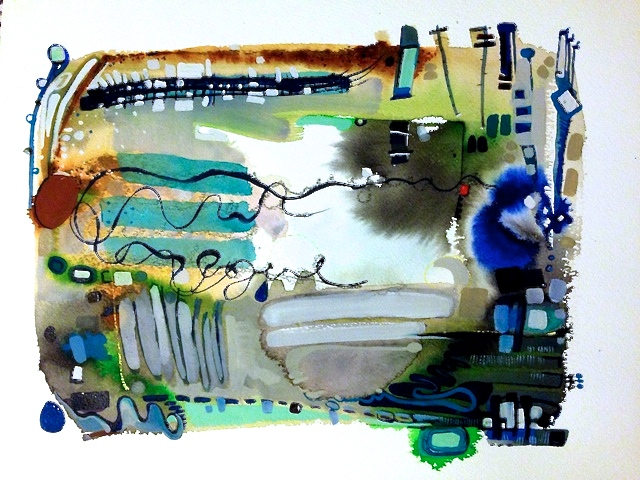
For John, Watercolor, 2014

For John, Watercolor, 2014

What types of conceptual concerns are present in your work? How do those relate to the specific process(es) or media you use?

I consider myself a painter. I am interested in exploring how I can shape space, manipulate texture and line basked in colors to most closely represent my day, my self. Paintings as objects are a window to make and view the world as I see and experience it.  Paint and clay are have a certain viscosity that creates a fluidity to more easily engage and explore internal spheres. By its nature it allows to be mixed, pushed, scraped and glazed to represent spaces nearest connected to my state of being.

We once heard Chuck Close say he did not believe in being inspired, rather in working hard everyday. What motivates you in your studio practice?

I am motivated by rest, time, exploration, research and discovery. I am motivated by conversation, travel, and beauty found in small arenas and sublime environments.  I am motivated through tears and joys, deadlines and playful times, dreams, rememberings, meditation and connection and aloneness. I am motivated by much.

What artists living or non-living influence your work? 

Good golly, I’ll try to be brief but i’m going to have to edit my long long list and I’ll miss a lot: Cy Twombly, JB Daniel, Byron Gin, Carrie Iverson, Wassily Kandinsky, Mark Rothko, Eva Hesse, Beth Lipman, Josef Beuys, Joseph Cornell, Jeffrey Cortland Jones, Jim Nutt, Gladys Nilsson, Squeak Carnwath, James Kennedy, Henri Matisse, Wayne Thiebaud, Francis Bacon, Richard Diebenkorn, Lucien Freud, Anselm Kiefer, Joan Miro, Franz Klein, Le Corbusier, Louise Nevelson, Robert Rauschenberg, Frank Stella, Edouard Vuillard, Rachel Whiteread, John James Audubon, Frank Stella, Henri de Toulouse-Lautrec, Peter Voulkos, and James Castle…and…

When you are not making art what types of activities and interests do you engage in?

I like listening to live music, spending time engrossed in nature, city time, but most importantly spending quality time with family and friends.

About
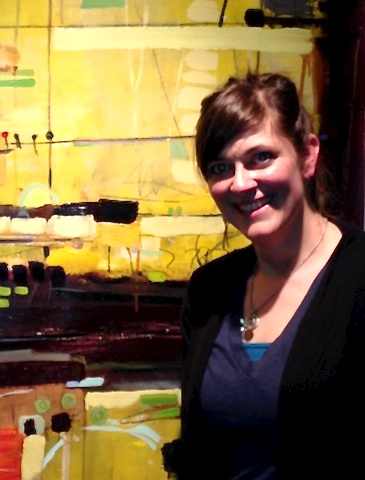
EJH HeadshotI was born and grew up in Elmhurst, IL. My father was a minister who would sing regularly during services in his beautiful tenor voice.  I was influenced by the glowing jewel toned stained glass windows within the sanctuary. The church choir and the hymns I listened and sang to, created a mesmerizing experience while staring into the leaded glass windows all around.  My mother is a thoughtful and wonderful Psychologist who also spoke about metaphor, relationships, the vast range of feelings we contain as well as and the extraordinary beauty of our world.  My brother and I enjoyed our pets and our family regularly talked about correlations and connections, analogies, visual elements, with singing, playing instruments and particularly listening to a variety of music.

In college, I pursued the humanities, specifically painting and ceramics, and studied art and English literature at Illinois State University and transferred into the painting department at The University of Illinois. In my last semester, I studied art and ecology in England at Wolverhampton Polytechnic.  I graduated from The University of Illinois in Champaign-Urbana with a Bachelor’s Degree in Fine Arts and a Major in Painting. Desiring deeper meaning into art and the self, I pursued further education and received my Masters Degree in Art Therapy at The School of The Art Institute of Chicago. Through my education and personal experience I grew more aware and invested in my art work as well as the act of its creation. I lived and had studio space in the extraordinary city of Chicago for 15 years before moving to Wisconsin 6 years ago. Along the same lake as, I found there, a space close to Chicago that had similar elements of nature that resonated with my parent’s birth landscapes.
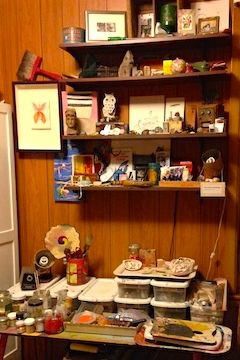
favorite place in studio ejhI have shown throughout the country, mainly in my home state of Illinois and Chicago, where several of my paintings are permanently installed at the following: Uncommon Ground (Devon and Grace locations), The University of Illinois at Chicago Children’s Center, and Delilah’s. I was co-owner of a gallery called The Gathering Place in the Lakeview neighborhood of Chicago, IL. I have frequently shown professionally, most notably at The Chicago Cultural Center‘s “People of the Mud II: Another look at Chicago Ceramics”, Silvermine Guild Art Center’s “Craft USA”, The John Michael Kohler Arts Center’s “Eight Counties Art Show”, Prak Sis Gallery’s “Axis International Art Festival”, several shows with Margin Gallery, including their “Sojourn”, “Geographies of the Mind”, and “Retrospective” exhibits, and at The Hudson in Milwaukee, WI. I currently live and work in Sheboygan, Wisconsin and commute often to Chicago and Milwaukee to exhibit my work. 

 www.ericahuntzinger.com

All images copyright of the artist and used with their permission.
Posted in Uncategorized | Tagged , , , , | Leave a comment

Anthony Castronovo – Gainesville, Florida

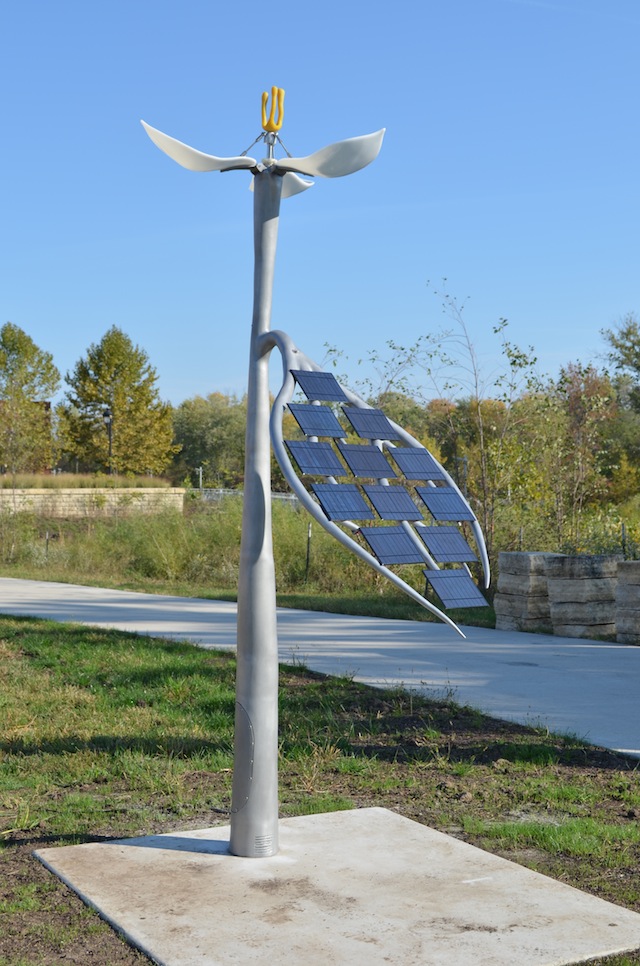
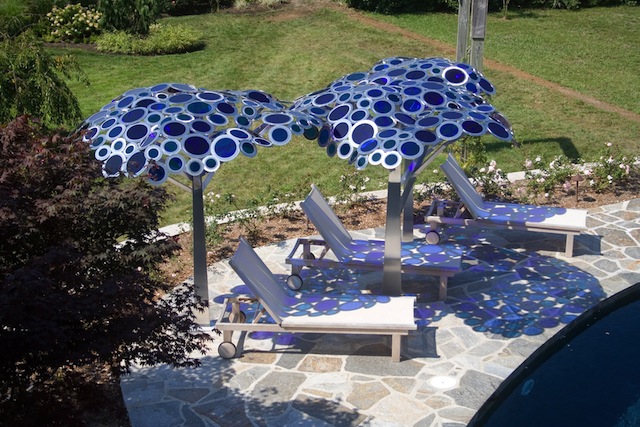
After Trillium, 2013, cast aluminum, glass, custom photovoltaic and electronics, 108"x24"x36"

After Trillium, 2013, cast aluminum, glass, custom photovoltaic and electronics, 108″x24″x36″

Briefly describe the work you do.

I am a hybrid artist and I combine elements of traditional sculpture with new media practices like robotics and digital fabrication to explore the resonances and dissonances between nature and technology. My most recent commission was for a solar powered robotic sculpture called After Trillium, which was modeled on the Iowa native Trillium flower. This solar powered robotic sculpture was made of cast aluminum and glass and the flower opens and closes and changes form in response to its environment. Much of my work has always been concerned with ecology in some way, and my recent sculptures continue to reflect this interest.

Tell us a little about your background and how that influences you as an artist.

I grew up in rural North Central Florida and had lots of time outside to play and explore the natural world. I loved hunting, swimming in the natural springs and rivers, and especially camping. I also was always interested in technology, initially in the form of electronic games and r/c cars. I loved taking things apart and putting them back together. All of these interests have influenced me as an artist. My love for nature and technology has driven my concern for the natural world and my desire to make work that contributes to a positive future with a healthy environment. In addition, my father is a civil engineer and a skilled carpenter and he taught me how to make things early on. This ability to work with my hands is a huge part of my fluency as an artist.

The concept of the “artist studio” has a broad range of meanings, especially in contemporary practice. The idea of the artist toiling away alone in a room may not necessarily reflect what many artists do from day to day anymore. Describe your studio practice and how it differs from (or is the same as) traditional notions of “being in the studio.”

Well, at least considering the last four years, any regularity in my studio practice has been challenged by the responsibilities of becoming a parent to two beautiful and amazing children. This has given me a new appreciation for my time in the studio, and I value that time so much. I come from a serious and committed academic background which was established early on as an undergraduate at the University of Florida. I was taught that a dedicated daily studio practice was essential to any success not just as an artist, but as a person and in everything we do. I am excited to have finally gotten back to a dedicated daily practice, and I look forward to the many new projects that will come. In regards to the studio practice being solitary, I do have those times when the work requires me to just be totally wrapped up and alone in the process. However, since my studio is at home and I work for myself I get to see my family often. Furthermore, many of my projects are completed on site and in different locations than my studio. So, sometimes I travel a lot and work in the field, which can be challenging to coordinate logistically with tools and materials. But as for traditional notions, I think that most people would be surprised at how diverse the skill set is that is employed to make the work. On any given day I might be welding and grinding aluminum or bronze, while other times I might be doing 3D drawings in the computer and then printing something three-dimensionally to make a mold and cast the final piece in bronze.

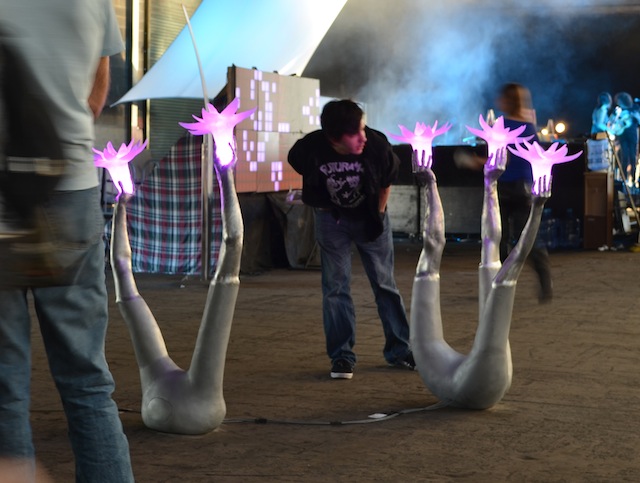
Hybrid Collaboration, 2012, cast aluminum, glass, custom electronics, 48"x72"x36"

Hybrid Collaboration, 2012, cast aluminum, glass, custom electronics, 48″x72″x36″

What unique roles do you see yourself as the artist playing that you may not have envisioned yourself in when you first started making art?

I never imagined that I would be doing large scale community based educational projects like the work that I did in Michigan for the Art and Sol Festival. In this project I developed a series of workshops to teach kids how about solar power and art. I was essentially creating curriculum for public school kids in Michigan about one of the most exciting topics I can imagine.

When do you find is the best time of day to make art? Do you have time set aside every day, every week or do you just work whenever you can? 

I love to work early in the morning. Getting started at sunrise is ideal for me and helps me to be inspired and focused in whatever I need to do. I work full-time as an artist, so mainly Monday through Friday from 9am to 5pm I’m in the studio.

After Trillium, 2013, cast aluminum, glass, custom photovoltaic and electronics, 108"x24"x36"

After Trillium, 2013, cast aluminum, glass, custom photovoltaic and electronics, 108″x24″x36″

How has your work changed in the last five years? How is it the same?

Over the past five years I have explored many new venues and found many new collaborators for my work. While teaching as a Visiting Assistant Professor of Sculpture at the University of Iowa, I made lots of contacts in the College of Engineering who were eager to collaborate. As a result, I now have multiple projects in the works related to data visualization from water quality or air quality sensors. This is an extension of what I was already doing with projects like Heliotropis, but working with renowned professionals allows a much more refined and scientific conclusion or result. My interest in ecology and the natural world as well as my interest in technology and robotics is an aspect of my work that always been there. Over the past five years I have continued to evolve my kinetic works like the robotic flowers and I have refined many aspects of this work from technical function to aesthetic refinement. Community based projects are a recent area of interest for me and projects like the Superfund Art Project, Ingenuity Festival, and the Art and Sol Festival have given me a new sense of public involvement in my work. Though each of these experiences are different they all involve an open sense of collaboration, and the work is experienced by a diverse public audience which I also interact with.

Are there people such as family, friends, writers, philosophers or even pop icons that have had an impact on the work you do?

I have been influenced by so many people, it is hard to pick less than a handful but I would have to start with Edgar Cayce and Nicola Tesla. Edgar Cayce was a well know visionary and medium who could communicate with other realms in order to heal physical ailments. I believe I read about Cayce first when I was about 19 or 20 which was about the same time that I began seriously making sculpture. Since I didn’t know Cayce myself I can’t say for sure if he really had the powers that are claimed but I love the idea that this is even possible. So Edgar Cayce gave me a sense that magic was possible and I have always thought of my work as an artist as tapping into a similar potential. Likewise, Nicola Tesla was an engineer and inventor who challenged the conventional knowledge base and created his own system of knowledge about electricity and physics. I love the image of Tesla as this humble wizard who dedicated his life to deepening our understanding of electricity for the good of all people. I have also had many amazing teachers and Celeste Roberge was one of my first teachers and one who had an huge impact on my practice as an artist. Celeste taught me what a dedicated studio practice looked like and encouraged a diverse and multi-disciplinary research practice as a creative driver in the work. She was the first person to show me that art and science were symbiotic.

If you had an occupation outside of being an artist, what would that be and why?

Engineering is obviously something I’m interested in and I would be excited to explore robotics in this field possibly even biomedical engineering using robotics in some way. The field of robotics is still very young and we are really at an exciting point with many new materials and processes drastically expanding our potential here. I would love to have access to cutting edge materials and tools to create innovative solutions to some of the many complex challenges we face.

About

BioPic01cAnthony Castronovo is an American artist who’s works blur the line between sculpture, ecology, engineering, and robotics. Born in Gainesville, FL, he received his B.F.A. in Sculpture from the University of Florida in 2003, and his M.F.A. in Art and Technology from The Ohio State University in 2006. Through his diverse interests he has explored the potential for public art to actively engage participants and create dialogue about the environment. He has taught various art courses from sculpture to performance art, robotics, and art & engineering collaborations. After Trillium is his latest outdoor commission and is a large solar powered robotic flower that changes its form based on environmental conditions. In addition to his sculptures he is a founding member of the Superfund Art Project and Technergeia.org. Anthony lives in Gainesville, Florida with his amazing wife Katy, daughter Raya, and son Leo.

Revision, 2007, stainless steel and glass, 96"x144"x96"

Revision, 2007, stainless steel and glass, 96″x144″x96″

www.acastronovo.com

All images copyright of the artist and used with their permission.
Posted in Uncategorized | Tagged , , , , | Leave a comment

Francesca Ricci – London, England


Fondale XXII mixed media on paper 15×21 cm, 2014

Fondale XXII
mixed media on paper
15×21 cm, 2014

Briefly describe the work you do.

My work is often project-based. An idea comes and linger at the back of my mind and slowly take the shape that best suits it. I work in a variety of media, depending on what project I am developing. I also write, and sometimes collaborate with writers and other creatives, so at times text can accompany or be integrated into my work.At present I am working on a body of small oil paintings based on film stills, as well as continuing developing an ongoing, composite and multi-layered project, ‘Tabula Impressa’. This started in 2011 and was partly developed in collaboration with writer Kiril Bozhinov; it is based on signs found on London’s pavements and broadly inspired by the Jungian concept of the collective unconscious. With Kiril, I am also collecting into a graphic novel-style book, an earlier joint project, ‘I Beg You to Hear Me!’ (2011), based on the life of works of Russian writers active in the 1920s and 1930s. 

Finally, I am also completing an experimental videoclip for the song ‘Colores’ by Uruguayan musician Gaston Gorga, to be released in the forthcoming months.

At what point I your life did you want to become an artist?

I have always been interested in all aspects of creativity, and have been both drawing and writing, but I could properly engage with art only after high school. I enrolled in a Set Design course at the Academy of Arts in Florence, moved to London after graduation and started pursuing my own writing as well collaborating with several fringe theatre companies. However I felt that set design in itself was not my call. Between 2004-2009 I co-funded and co-edited two independent publications for writing, visual art and multidisciplinary projects,Interlude and 20×20 magazine. This experience allowed me to experiment with ideas, and helped me in finding my way again into producing visual work and developing my own language as an artist. It was around 2008 that I felt ready and focussed to start pouring back all I had learned and dealt with ’til that moment into my very own artistic path.

Pessoa High Street digital drawing, then transposed into a wall stencil, 2010

Pessoa High Street
digital drawing, then transposed into a wall stencil, 2010

Tell us a little about your background and how that influences you as an artist.

Taking a long time and tortuous road towards being a visual artist has let me integrate the acquired experiences in my practise. I often relate to other fields of expression and disciplines that I have encountered either in my studies or during my early adult years.

Going to the Academy of Arts opened a whole new world of discoveries that overlapped onto my more classical and literary formation. Stage design encouraged a wide and multi-directional approach both on a theoretical and technical level – pushing me to find inspiration anywhere and to use whichever media to develop a visual interpretation of a piece of writing for a live performance. This cross-contamination between disciplines and techniques is a constant feature of my work: literature, poetry, photography, the cinematic image, music, psychology, and the esoteric are all either an inspiration or a presence.

For this reason, each series of work has a genesis and a concept of its own, which is never fully pre-constructed, but develops organically as the work progresses.

Recently I am revisiting my stage design formation, which is inspiring a new branch of the ‘Tabula Impressa’ project: a series of works called ‘Fondali’, which in Italian means at the same time, ‘Sea-beds’ and ‘Backdrops’.

What types of conceptual concerns are present in your work? How do those relate to the specific process(es) or media you use?

I very much see the artist as a seeker and the making of art a sort of alchemical operation. I do not try to make a statement with my work, I see it more as an investigation, a question, an interpretation, a reflection, a comparison, a contamination or an homage – each body of work, for its specific nature, deals with one of those aspects.

For example, in ‘Life Stills’, my current series of small oil painting based on film scenes, I want to both pay a tribute to those film masters that could ‘paint’ with the camera; but I am also trying to crystallise in a captured still that inner experience of cinema, the moment in which the image strikes a deep chord inside of us, whatever that is. Something that appears on a big screen for a fraction of a second is reproduced with the lengthy process of oil paint into a small format; I guess this process in a way mirrors the film experience, through which we are exposed to fleeting images that nevertheless may leave a long-lasting effect within us. 

Another example of contamination of genres was the Pessoa High Street work (2010) Here I took a sentence from Fernando Pessoa’s Book of Disquiet and re-wrote it using logos of high street brands. The digital drawing was then turned back into a wall stencil frieze, in the attempt to give back to it its halo of poetry. 

The composite project ‘Tabula Impressa’ has been also an interesting platform to explore exactly this relation between conceptuality, medium and process. In this case, the collection of signs at the origin of the project has transmuted from subject of exploration into part of the process of investigation. The signs were firstly appreciated for their more direct visual qualities, then for their symbolic echoes; then they were catalogued and re-arranged into a new, subjective alphabet and system of interpretation; this was applied to either ‘interpret’ existing compositions of those signs as photographed on the pavement, or to ‘translate’ visually a piece of literary writing. Each of these sections was developed with a different method/technique, and the project keeps branching off in exciting, different directions…


LS#12-PP1968 from the 'Life Stills' series oil paint on canvas board 12×17.5 cm, 2014

LS#12-PP1968 from the ‘Life Stills’ series
oil paint on canvas board
12×17.5 cm, 2014

We once heard Chuck Close say he did not believe in being inspired, rather in working hard everyday. What motivates you in your studio practice?

Inspiration and hard work go hand in hand for me, and one is virtually useless without the other. An intuition appears – usually that’s how it happens for me – and it brews in a cocoon for a while. But then it can only materialise by trial and error, so the more I work, the quicker the solution will come and the final shape of a work will materialise. Sometimes it can be an easy process, some other times it can detour thanks to a ‘happy accident’, or it can be a rocky, endless path of which I may doubt the destination. But I would not enjoy applying myself to hard-working in something that does not come out of a strong inspiration. This is one of the reasons why I didn’t pursue stage design as a professional career.I also believe in deadlines, whether external or self imposed; I do not see them as a constrain, but as the best way to keep my drifting mind in focus and pin down those floating ideas.

What artists living or non-living influence your work? 

Dipping into my Tuscan origins, the Florentine Mannerism of Pontormo, Rosso Fiorentino and Andrea del Sarto are endless sources of inspiration in their non-conformist and dramatic use of colour, composition and depiction of human traits; as much as the timeless Renaissance of Leonardo and Piero della Francesca.

I like to explore again and again some aspects of the 19th century Avant-garde, never short of surprises. And a big influence has been also the cinematography of Andrei Tarkovsky, Ingmar Bergman and Michelangelo Antonioni, to name a few.

Amongst more contemporary names, I privilege the work of those artists that manage to combine an idea with poetic imagery, producing works that are both visually and conceptually strong. Giuseppe Penone from the Arte Povera movement, Iranian/Australian artist Hossein Valamanesh, and British artist, marbling master and friend, Graham Day. All of them have in common the capacity of revealing the magic in the simplest and most ordinary things – whether elements of the natural world, geometric shapes or manmade trivial, daily objects. Their work is both truly contemporary and timeless.

When you are not making art what types of activities and interests do you engage in?

I have a alternating phases of predilection for the following activities: writing and reading; listening to music; watching films, mostly World and European cinema; going to hand-picked exhibitions and for long walks in London’s neighbourhoods which I still haven’t explored; or escape to the Mediterranean sea when possible; going to milongas –either to dance, or to watch others dance tango; and conversing about matters of life and art with a few, very close friends.

About

Francesca_Ricci_Head-shotFrancesca Ricci was born in Florence, Italy, and has been living in London since 1998, after graduating in Stage Design at the Academy of Art in Florence. She has been involved in several independent projects, collaborating with theatre companies in fringe shows, writing on art and cinema for magazines and publishing a collection of short stories in Italian in 2003. In 2005 she co-founded and co-edited the independent art magazines Interlude and 20×20 magazine

Forthcoming exhibitions include ‘OFF THE WALL’, The 9th Terrace Annual, London (2014) and a group show at dalla Rosa Gallery (Nov/Dec 2014); other recent exhibitions at dalla Rosa Gallery include ‘Tabula Impressa‘ (Bozhinov/Ricci, 2013); ‘Celestial Bodies’, dalla Rosa Gallery at the London Art Fair (2013), ‘Cross Sections/01′ (2012); ‘I Beg You to Hear Me!’, (Bozhinov/Ricci, 2011); other group shows include ‘20×20 magazine: collected visions’, Madame Lillie’s, London (2010); ‘agency@theAgency’, The Agency Gallery, London (2010); and ‘Art/Value/Currency’, The Pigeon Wing, London (2009).

Her work is in the collection of the Museum of Tarot (Museo dei Tarocchi) in Riola (Bologna), Italy and in several private collections in UK, Italy and Sweden. It has also been featured or mentioned in several magazines, including Dazed and Confused (November 2013) and Abraxas Journal (September 2013).

The Studio

The Studio

francesca-ricci.com

All images copyright of the artist and used with their permission.

Posted in Uncategorized | Tagged , , , , | Leave a comment

Brennen Steines – Roscoe, Illinois

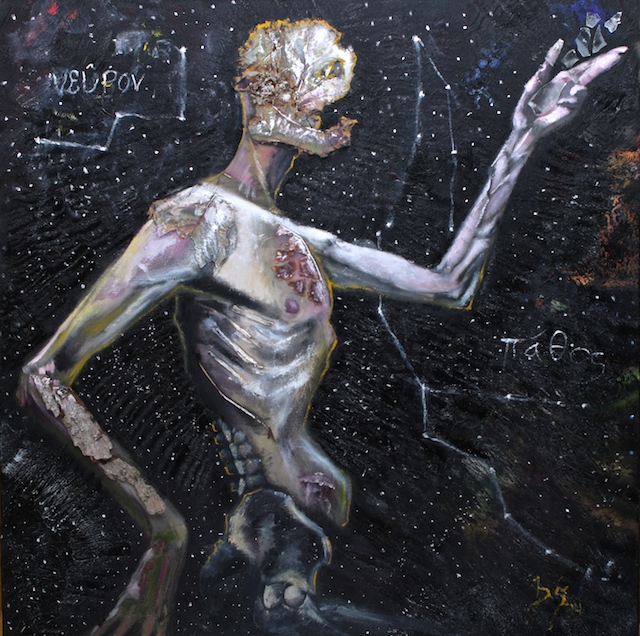
Neuropathy. 36x36in. mixed-media on canvas

Neuropathy. 36x36in. mixed-media on canvas

Briefly describe the work you do.

Making art is my way of processing my experiences.  Whether it be my experience as a child to my experience as a patient.  Through the use of oil paint and found objects I am able to assess my stance towards a certain experience. Currently I am working on a series that looks at my past traumas with my Immune Deficiency, CVID.  These pictures represent my experience battling my illness.  Making art helps me digest trauma and I believe it helps others gain a further understanding into what plays in the mind of someone afflicted with an Immune Deficiency or a similar disorder.  My work is aimed at not alleviating my experiences, but trying to process them in a way in which I can understand.  It is very much like therapy.

At what point I your life did you want to become an artist?

Ive been drawing since I was young, but I hadn’t thought of myself as an artist until six months ago, after my three month long hospitalization.  After I was discharged, I felt an overwhelming urge to create. A brush with death is what it took for me to evaluate my life and really sort out what was important. Art is important.

Tell us a little about your background and how that influences you as an artist.

I was born in July of 1993, in the small town of Roscoe, Illinois.  Despite my disorder, a lot of my youth was devoted to exploring and imagining.  There used to be a large grass field behind the house I grew up in. My sister and I used to ride through it on our ATV.  We would go out, wearing fishing hats and carrying shovels, looking for dinosaur fossils.

After high school, I moved to New York City, where I was a fashion model for Ford Models. Occasionally I would act in a short film. I lived there for three years, but had to move back to the Midwest due to my health.  The city was a great resource for someone like me, who was looking to pursue the arts. New York City is a pool of creativity and inspiration.

I am the oldest of three children. The youngest of my two sisters caught a viral encephalitis, when she was two, that spread to her brain and caused disabling epilepsy.  She is now fifteen.  She is bedridden, is fed through a G-tube, and has a tracheotomy, but when she smiles at you, you can see a youthfulness and purity that you would be hard pressed to find anywhere else. She is the primary inspiration in my life.

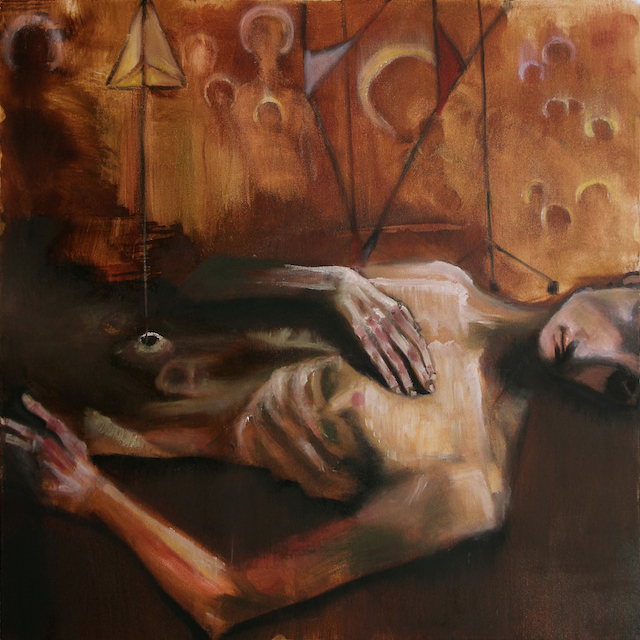
Auto-Immune. 36x36in. Oil on canvas

Auto-Immune. 36x36in. Oil on canvas

What types of conceptual concerns are present in your work? How do those relate to the specific process(es) or media you use?

My work mainly focuses on the psychological impact of disease and the impact to those who are close with the person diagnosed.

I use Greek mythos to aid me in telling the story that the painting is displaying.  I use what I call the “Three Gorgons of Life”, birth, death, and disease. Disease is the only one of these three that is defeatable, much like the only mortal gorgon, Medusa. I think each one of these Gorgons are present in my work.

Cognitive dissonance, the opposition of light and dark, as well as serenity in choas all play a factor in my work.

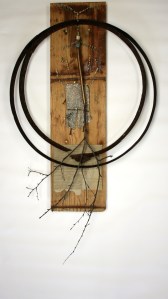
The use of oil paint along with both non-organic and organic materials, such as bark, leaves, glass, and branches, help project my ideas.

Found Objects

Found Objects

We once heard Chuck Close say he did not believe in being inspired, rather in working hard everyday. What motivates you in your studio practice?

That’s tricky because I think most artists would sympathize with Chuck Close here.  I agree with working hard everyday, but I think for me, the pictures have to come from a place of inspiration. My family has always been a huge motivator.

What artists living or non-living influence your work?

Anselm Kiefer, Egon Schiele, Hedi Slimane, Francis Bacon, Frank Gehry, Christy Brown, Yves Tanguy, Thom Yorke, Jason Shawn Alexander, and Zak Krevitt are all artists who have influenced my work.

When you are not making art what types of activities and interests do you engage in?

I enjoy reading as well as grabbing a cup of coffee at the cafe, talking with friends.  Movies have always been a large part of my life Kazan’s, East of Eden, Jim Sheridan’s, My Left Foot, and Fellini’s, 8 1/2 have had a lasting impression on me. Lately I have taken up fishing and I’ve been told that I am quite the sand volleyball player.

About

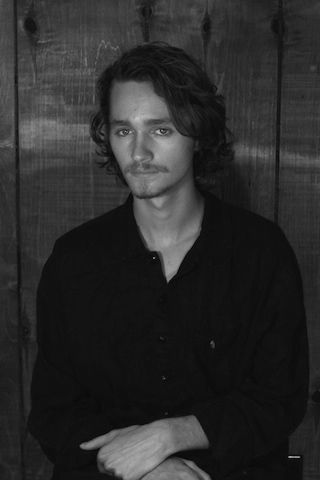
portraitBrennen Steines is a self taught artist from Rosoce, Illinois. His work focuses psychological tole of disease and believes painting serves as a way to process experience. His work can be seen in Hedi Slimane’s L.A. issue of Man About Town Magazine. He is also a fashion model for Ford Models and is going into his freshman year of undergraduate school at the University of Wisconsin-Milwaukee.

In the Studio

In the Studio

www.brennensteines.com/journal

All images copyright of the artist and used with their permission.
Posted in Uncategorized | 1 Comment

Lana Z Caplan – Brooklyn, New York

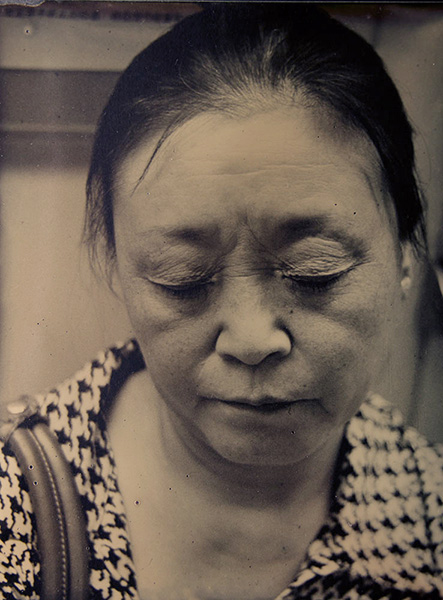
"Subway Sleeper 1", from the series Subway Sleepers, Beijing 8"x10" Tintype (photograph on blackened aluminum) 2014

“Subway Sleeper 1”, from the series Subway Sleepers, Beijing
8″x10″ Tintype (photograph on blackened aluminum)
2014

Briefly describe the work you do.

I make photographs, videos, films and interactive installations.  The content of my recent work is focused on the uncomfortable co-existence of the natural world with the man-made world in experimental short HD videos, large color photographs and multi-channel video installations.  For many years, my work has been about shifting, changing and contradictory relationships (societal, familial, sexual, environmental), as well as the relationship we have with the gaze of the camera.

Tell us a little about your background and how that influences you as an artist.

When I was four years old, my dad gave me a Polaroid camera and I think this was instrumental in making me see the world photographically. By high school, I was hooked on the darkroom and have carried a camera with me every day since.  In college, I was introduced to Art History and fell in love with the historic processes of Photography.  For many years after college, I made most of my work in the darkroom with Alternative Processes – Tintypes, Palladium Prints, Cyanotypes, and hand-coated silver gelatin watercolor paper.  I like the hands-on feeling of making a print with these processes, probably because I had been using my hands to make all types of art since I was young.

I became interested in experimental film because of the possibilities of working with time as an element in the work, slowly unfolding meaning over the duration of the experience.  I started with super8, enjoying of the tactile feeling of the grain.  Eventually I moved to video, which introduced me to digital editing and opened up the options of working with technology and new media.

Another big influence has been live music.  The desire to create a similar experience in my work pushed me to make pieces that encourage or require viewer interaction and use the passage of time for transformation. 

I have also traveled quite a bit, and visiting other cultures has been a huge influence in my work. 

The concept of the “artist studio” has a broad range of meanings, especially in contemporary practice. The idea of the artist toiling away alone in a room may not necessarily reflect what many artists do from day to day anymore. Describe your studio practice and how it differs from (or is the same as) traditional notions of “being in the studio.”

My studio practice varies based on where I am working.  When I am in my studio I am usually on the computer, editing, printing, emailing, and researching.  But when I am out in the world I am shooting.  I always have at least one camera with me, and now with the iPhone, I have at least two.  These are my sketchbooks, journals, and tools to make new images.  Because of the nature of my work, I can travel with a camera, laptop and hard drive and set-up a studio anywhere.  But being in my own space, not a café or friend’s place, is important for focus for any length of time. 

Installation View, “The Loveliest Mountain of China”, 3-channel 50-minute looping HD video with sound, three 42″ wall-mounted HD monitors, two wall-mounted horn speakers 2014

What unique roles do you see yourself as the artist playing that you may not have envisioned yourself in when you first started making art?

My work increasingly looks outside of myself, rather than inside, for content.  I have always been drawn to universal themes, but historically from a personal viewpoint. These days I see the world in a larger context and I am interested in discussing bigger subjects like the environment, the nature of man and the exploration of perception.I believe that art can create emotional engagement with difficult subjects beyond academic discourse, scientific research and news reports. I aim to create a metaphysical experience with my work and visual beauty is an important element for me to draw the viewer in and guide the journey. 

When do you find is the best time of day to make art? Do you have time set aside every day, every week or do you just work whenever you can? 

I work all the time – shooting, editing, reading, writing, watching films – even when I am “playing” I am taking photographs.  I never stop working, it is what I love to do. 

"Spectrum", from the series Peach Blossom Spring 30"x20" Archival ink jet print 2014

“Spectrum”, from the series Peach Blossom Spring
30″x20″ Archival ink jet print
2014

How has your work changed in the last five years? How is it the same?

I work with more video and color digital photography now.  I used to shoot all black and white film, now I rarely shoot film.  As I mentioned earlier, my interests have shifted as well.  I have always been and continue to be seduced by visual beauty and strive to communicate and create an experience for the visitor.  I think my work feels very much the same (though more digitally produced), but it is stretching and pushing harder, while somewhat looser and more immediate.

Are there people such as family, friends, writers, philosophers or even pop icons that have had an impact on the work you do?

So many people and artists have influenced me. For example, artist and friend Fred Liang curated me into an exhibition at the Inside Out Art Museum in Beijing in 2012, where I stayed in residence most of the summer leading up to the show.  This experience profoundly influenced all of my work since.  My friend and teacher, filmmaker Saul Levine, taught me everything I love about film.  Lots of other artists are a consistent inspiration and influence, though the names are constantly changing. 

If you had an occupation outside of being an artist, what would that be and why?

I have no idea, nothing else ever appealed to me.  I remember trying to figure out “what I want to be when I grow-up” and I could never come up with an answer. I only knew what I did not want, so I stayed away from the office route and kept wandering with my cameras.

About

LZC_HeadshotLana Z Caplan is a photographer, video/filmmaker, curator and installation artist.  Her work has been exhibited in galleries, museums, basements and backyards on four continents, including in solo and group exhibitions in cities such as Beijing, New York, San Francisco, San Juan, Edinburgh, Mexico City, Philadelphia, Boston, Manitoba, New Delhi, Tel Aviv, Valparaiso, and Barcelona.  Her work has been widely reviewed online and in print, most recently in ARTnews (April 2014), and included in publications about New Media and Photography. 

Caplan spent five years living in both Italy and the US, culminating with Sospira (2010), a 50-minute experimental documentary made with a production residency at theWexner Center for the Arts. In 2012, she spent the summer in Beijing making new video installations in residence at the Inside Out Art Museum for a show later that year. Traveling has a deep influence on her projects.  She often creates site responsive pieces with a focus on human relationships as well as the relationships between humans and the natural or built environment. 

Caplan has a BA from Boston University and MFA from Massachusetts College of Art and Design.  She has worked as a curatorial assistant at Harvard University’s Fogg Art Museum and has been a member of the faculty of several colleges including Wellesley College, Simmons College and Massachusetts College of Art of Design.

Studio

Studio

lanazcaplan.com/

All images copyright of the artist and used with their permission.
Posted in Uncategorized | Tagged , , , , | Leave a comment

Adam White – St. Paul, Minnesota

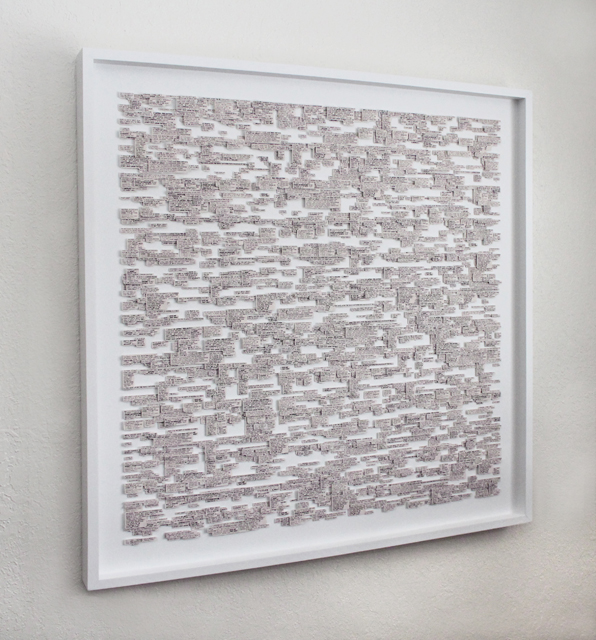
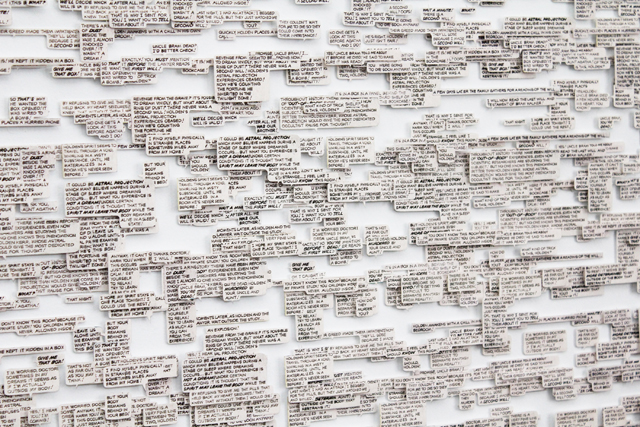
The Second Will Cut Paper 38.5” x 38.5” 2014

The Second Will Cut Paper
38.5” x 38.5”
2014

Briefly describe the work you do.

I use comic book text and imagery as a physical representation of information. The work bounces between medium to large-scale installations of word balloons and smaller drawings on top of actual comic pages. The work is symbolic of how information is presented by one party and then received by a secondary party. I’m interested in the product of information that has been filtered through a series of omissions or alterations and the affects this has upon the original. This reorganization is an example of the confusion caused between two parties who are trying to share an idea but are hampered by the lack or perversion of total information.

Tell us a little about your background and how that influences you as an artist.

I grew up in eastern Tennessee, which was an unbelievable place for a kid to be a kid. Miles of wilderness, all fodder for my imagination, surrounded my house. I truly believe that this childhood molded me into a naturally inquisitive person and laid the groundwork necessary for me to be an artist.

I discovered comics when I was around nine or ten and was immediately hooked. My allowance, seeing its death before it, didn’t stand a chance. After that it was a natural progression to high school art classes, the inevitable decision to devote my life to being an artist, and eventually higher education.

The Second Will (Detail) Cut Paper 38.5” x 38.5”  2014

The Second Will (Detail) Cut Paper
38.5” x 38.5”
2014

The concept of the “artist studio” has a broad range of meanings, especially in contemporary practice. The idea of the artist toiling away alone in a room may not necessarily reflect what many artists do from day to day anymore. Describe your studio practice and how it differs from (or is the same as) traditional notions of “being in the studio.”

My work has a large level of assembly line grunt work. Once I have my concept and the design worked out I can knuckle-down and plow through, which is a wonderful opportunity to catch-up on music and movies. This process also means that I don’t necessarily need a large space. A table and a comfortable office chair suit me just fine.

I can’t say that my practice is really that different from anyone else. If I know what I want to do then I can jump right in. I have a home studio, which allows the “pop-in” of 5-30 minutes worth of work when there isn’t enough time for a full day.

What unique roles do you see yourself as the artist playing that you may not have envisioned yourself in when you first started making art?

When I began making serious work I thought I had to have all of the answers, all the whys and hows figured out long before anything came to fruition. It was suffocating. I soon learned that this unnecessary weight was me trying to fill the role of the maker and the viewer. Once I let go of that weight, of trying to understand and explain every aspect of the art, I was liberated. A little mystery goes a long way to not boring yourself.

When do you find is the best time of day to make art? Do you have time set aside every day, every week or do you just work whenever you can?

Admittedly, I’m a 9 to 5 guy. I enjoy the quiet of the day and if I need to run an errand for supplies then everything is open and most people are at work. But when it comes down to it, I’ll take whatever I can get.


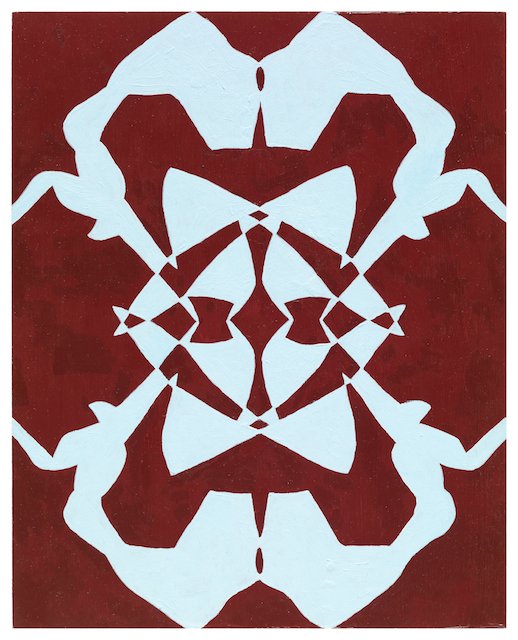
Untitled Ink on Paper 18” x 18.5”  2014

Untitled
Ink on Paper
18” x 18.5”
2014

How has your work changed in the last five years? How is it the same?

The content of my work has remained similar, I just have far more variations of a theme. The process has certainly become more focused. There’s still a fair amount of experimentation, but now the experiments tend to end without the lab exploding in my face. I feel that I’m better able to dispose of bad ideas sooner and move ahead with what interests me. In the end, this makes me more excited to always get back into the studio.

Are there people such as family, friends, writers, philosophers or even pop icons that have had an impact on the work you do?

One of the greatest gifts is to be surround by creative and enjoyable people. Family and friends with fun and exciting ideas, art related or not, recharge my batteries like nothing else. Being depressed in the studio is a disservice to the work.

John Steinbeck’s Journal of a Novel: The East of Eden Letters is, by far, one the most inspirational books I’ve ever read. He started each day with a letter to his editor to get the creative juices flowing and it’s fascinating to watch him struggle through the building of an expansive story. I find it encouraging seeing a person toil through a process that yielded such impressive results.

If you had an occupation outside of being an artist, what would that be and why?

I’ve worked on and off as an art handler in museums since undergraduate school. It’s fulfilling and inspiring…and you get free access to a woodshop.

Or a Ghostbuster. Those guys make $5000 a ghost.

About

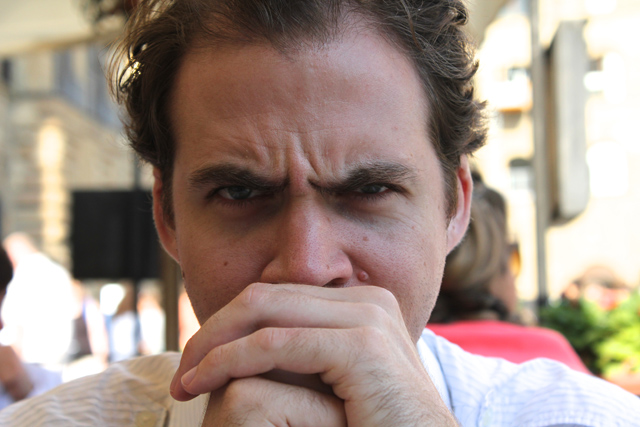
HeadshotAdam White is an artist living and working in St. Paul, MN. In 2007 he received an MFA with a focus on Installation and Paper Sculpture from the University of Maryland, College Park and in 2004 he received a BFA in Painting and Drawing from the University of Tennessee at Chattanooga.

His current studio work focuses on story/information narrative and how information can be processed and confused by and through people. The work takes on two formats: medium to large-scale installations composed of paper word balloons taken from comic books and smaller crosshatch drawings on top of comic pages.

He has exhibited work in Cincinnati, Detroit, Philadelphia, Baltimore, Minneapolis, and Washington DC.

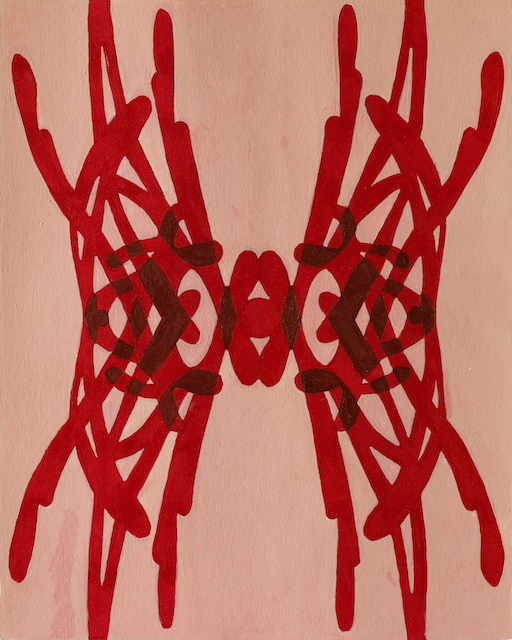
up and at ‘em Ink on Paper 6” x 6.5” (10” x 10” framed)  2014

up and at ‘em Ink on Paper
6” x 6.5” (10” x 10” framed)
2014

www.a-white.com

All images copyright of the artist and used with their permission.
Posted in Uncategorized | Tagged , , , , | Leave a comment

Aaron Olson-Reiners – St. Paul, Minnesota

"Untitled (Reflection Series)," Acrylic on Paper, 10 x 8 inches, 2014.

“Untitled (Reflection Series),” Acrylic on Paper, 10 x 8 inches, 2014.

Briefly describe the work you do.

My work centers on drawing. Sometimes paint gets involved. I primarily work on paper so I’ve also described them as works on paper. I explore ideas and concerns that emerge from my day to day experience through the language of abstraction.

Tell us a little about your background and how that influences you as an artist.

My family has always been supportive of my obsession with drawing and art. In recent years I’ve come to appreciate that my parents, a professional fundraiser and a nurse, never tried to steer me toward a “safer” path. They would patiently listen to my living room lectures about art being my calling and not just a hobby. I grew up in an environment that emphasized anything was possible if you “worked hard and worked smart.”

The concept of the “artist studio” has a broad range of meanings, especially in contemporary practice. The idea of the artist toiling away alone in a room may not necessarily reflect what many artists do from day to day anymore. Describe your studio practice and how it differs from (or is the same as) traditional notions of “being in the studio.”

I do have a dedicated studio space where I can be found “toiling away alone” in a more traditional sense. It helps me reach a more focused mental space. Just as important, however, is always having a pen and a small notebook nearby. Preferably in my pocket. A bus, a restaurant, a library, a museum, a sofa, or a bathroom can become my studio. New environments can shake loose ideas and solutions I sometimes overlook when my familiar workspace unconsciously lulls me into a routine way of thinking.

"Untitled (Reflection Series)," Acrylic on Panel, 10 x 8 inches, 2013.

“Untitled (Reflection Series),” Acrylic on Panel, 10 x 8 inches, 2013.

What unique roles do you see yourself as the artist playing that you may not have envisioned yourself in when you first started making art?

As a kid, my understanding of being an artist was pretty straightforward: make something, show people, and hopefully they like it. I didn’t anticipate how complicated this equation can become. If I’m being completely honest, I’ll admit that I spend much more time scrutinizing what I’m creating than I do actually making it. “Why am I going in this direction? Should I continue or change course? Who is my intended audience? Who am I trying to please? Should I care? How does this affect what I’m creating?” When I began, I had no idea this “artist as analyst” role would be such a central and vital aspect of my art practice.

When do you find is the best time of day to make art? Do you have time set aside every day, every week or do you just work whenever you can?

I’m prefer working at night between 9pm and 2am. I can adjust when necessary but it’s easier for me to focus when the rest of the world is asleep.

"Untitled (Reflection Series)," Ink on Paper, 10 x 8 inches, 2013.

“Untitled (Reflection Series),” Ink on Paper, 10 x 8 inches, 2013.

How has your work changed in the last five years? How is it the same?

My current body of work explores repetition and pattern. It started in 2008 with cut-paper pieces, evolved into paintings and photo manipulations, and currently employs more traditional drawing media. The thematic underpinnings have remained pretty constant while the material elements have taken more of a journey. I occasionally wandering off in a different direction but in the end I always return to this body of work.

Are there people such as family, friends, writers, philosophers or even pop icons that have had an impact on the work you do?

I’ve definitely benefited from the guidance and example of other visual artists like John Feagler, Wendell Arneson, John Saurer, Liz Miller, Brian Frink, Bart Vargas, and David Rathman. I also cannot overstate impact of music and its importance to my creative process. It’s propels me forward and patches up my wounds when I fall on my face. A day without listening to music is an incomplete day.

If you had an occupation outside of being an artist, what would that be and why?

I need to make things with my hands. I can’t realistically imagine being satisfied in an occupation where I’m not creating something. I’ve had a variety of jobs to pay the bills but always maintain the fact that being an artist is my career and life path.

AOlson-Reiners headshotAbout

(b. 1981) Aaron Olson-Reiners spent most of his early years in Stillwater, Minnesota. He earned a BA in studio art from St. Olaf College in 2004 and has called the Twin Cities home since 2005. Aaron lives in St. Paul, Minnesota with his wife and daughter. “My work captures and reinterprets details I notice in my daily routine. I elaborate these bits of memory and distill their essential qualities into an image.”

www.aaronolsonreiners.com

Studio

Studio

All images copyright of the artist and used with their permission.
Posted in Uncategorized | Tagged , , , , | Leave a comment

Thomas Willis – Boston, Massachusetts

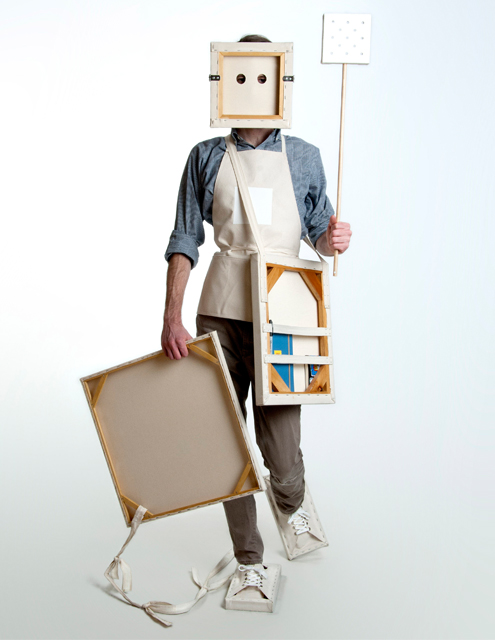
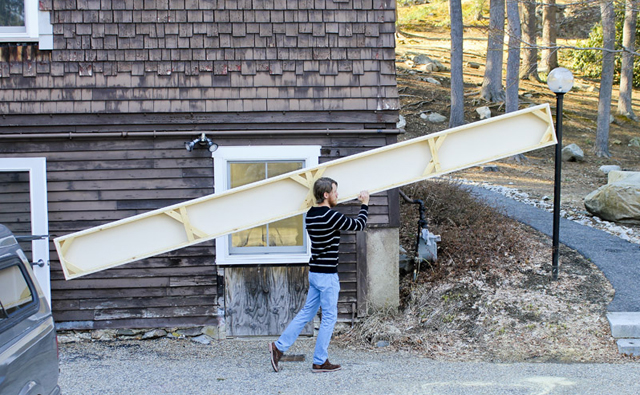
Promotional image for Willis' corporation, Retrofit Painting®.  2014

Promotional image for Willis’ corporation, Retrofit Painting®. 2014

Briefly describe the work you do.

I have a painting/drawing-derived practice that examines the ideologies of image-making through multimedia and performative approaches. My projects can range from participatory painting installations, to painting on pizza boxes, corporate website campaigns for canvas manufacturing, and even lighting paintings on fire.

Tell us a little about your background and how that influences you as an artist.

I was born and raised in Las Vegas, Nevada. At a young age I had been labeled “an artist” by my family, merely by my ability to draw realistic pictures. This observational ability I had as a kid was responsive to the spectacle of the Las Vegas Strip. The city’s extravagant neon structures and themed buildings functioned as a visual toy-box for me, acting as an early lesson in design, architecture, and advertising.

I also worked on the Strip as a green-screen retail photographer during all of college, humorously capturing and superimposing backdrops of Las Vegas behind thousands of tourists a week. Here I was exposed to the comedic kitsch of the Strip through the behaviors of the casino industry and its consumer decadence. I would experience how these gambling establishments would socially target their clientele through the design, architecture, and advertising structures that I would admire most. This is when I began questioning the value of these visually enticing spaces along with the visually enticing pictures I had been creating in my art.

The concept of the “artist studio” has a broad range of meanings, especially in contemporary practice. The idea of the artist toiling away alone in a room may not necessarily reflect what many artists do from day to day anymore. Describe your studio practice and how it differs from (or is the same as) traditional notions of “being in the studio.”

The emphasis of labor is important to my practice, so I do find that a traditional studio is sometimes necessary for achieving the level of craft that is present in my art. However, I also do not limit myself to this select method of art making. Depending on the idea, my creations can take place in a relational space too. For example, I have an ongoing collaborative practice with artist John C. Gonzalez where we create improvisational site specific works that exist candidly within spaces. The viewers are invited to actively search and question where the works are and what they could even possibly be, and their discoveries are verbally passed onto other viewers as well. This allows for the interpretation and content of the works to change over time.

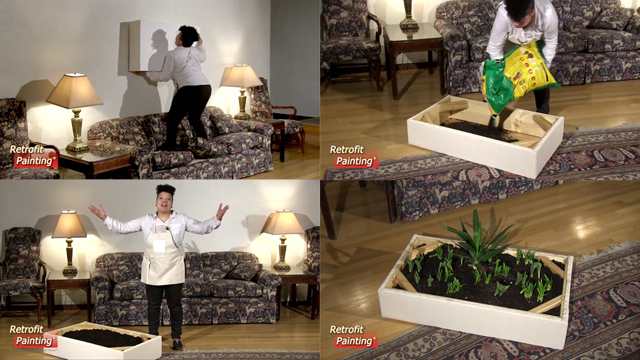
Video stills from "How to Make a Garden Painting," by Retrofit Painting®. 2014

Video stills from “How to Make a Garden Painting,” by Retrofit Painting®. 2014

What unique roles do you see yourself as the artist playing that you may not have envisioned yourself in when you first started making art?

A life in art has taught me how to sustain a life of curiosity, clairvoyance, and enterprise, all of which I find are gained as a kid but are not commonly preserved as an adult. I believe exposure to art can shift these coded behaviors in an individual or even a society over time.

When do you find is the best time of day to make art? Do you have time set aside every day, every week or do you just work whenever you can?

I am the most creatively accomplished from around 8pm to 4am. I will forever be a nocturnal desert creature. I can also feel guilty when I’m not “working” on art, so I find that I sometimes deceive myself into thinking that I am always working on something even when I’m not actually doing anything at all. It is an unfortunate trait that the American workforce has taught me.

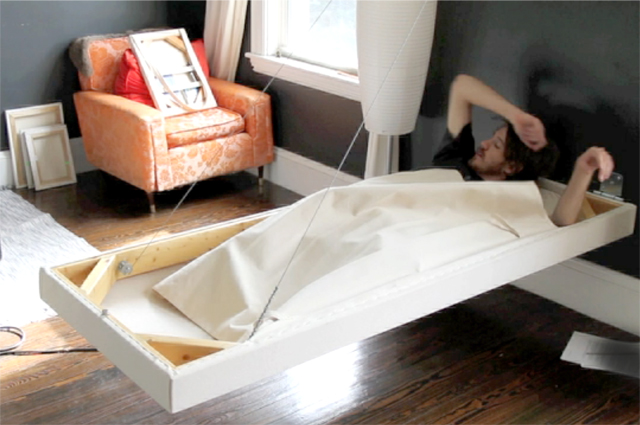
Video still from "Murphy Painting Nights," where Willis slept inside a painting for 8 consecutive months. 2013

Video still from “Murphy Painting Nights,” where Willis slept inside a painting for 8 consecutive months. 2013

How has your work changed in the last five years? How is it the same?

Living outside of Las Vegas and traveling more has helped my work a lot. I feel like I still reference my Vegas-rooted interests more than ever, but with a more-farsighted/less-myopic gaze.

Are there people such as family, friends, writers, philosophers or even pop icons that have had an impact on the work you do?

My brother Brian Willis and artist/friend Justin Favela are two of the funniest, most imaginative, and awe-inspiring people I know, and I am fortunate to have them in my life and to bounce ideas off of. As for a pop impact, my latest paintings could be seen as a love-child between Robert Ryman and Carrot Top.

If you had an occupation outside of being an artist, what would that be and why?

In another life I would like to be an r&b soul singer.

Thomas Willis - ArtistAbout

Thomas Willis is a Boston-based artist who is originally from Las Vegas, NV. His art has shown in over 30 national and international exhibitions, with works in institutions such as the Luo Ruvo Center for Brain Health, Bentley University, and the deCordova Museum. Willis received his BFA from the University of Nevada, Las Vegas in 2009. He currently works at the Art Department at Wellesley College and has a studio at the Howard Art Project in Field’s Corner, Dorchester.

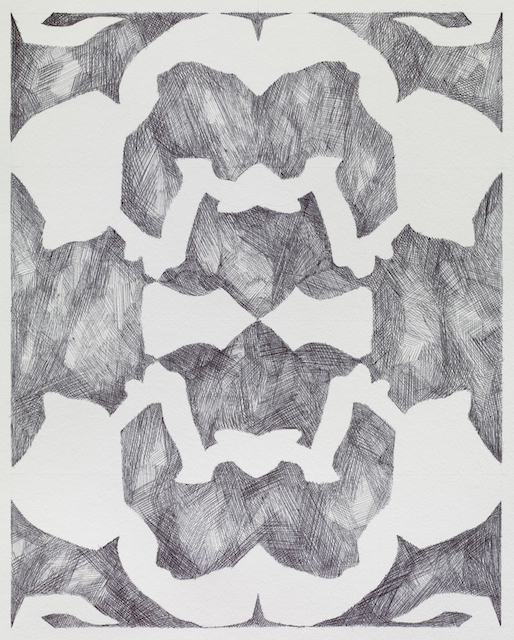
www.thomaswillis.net

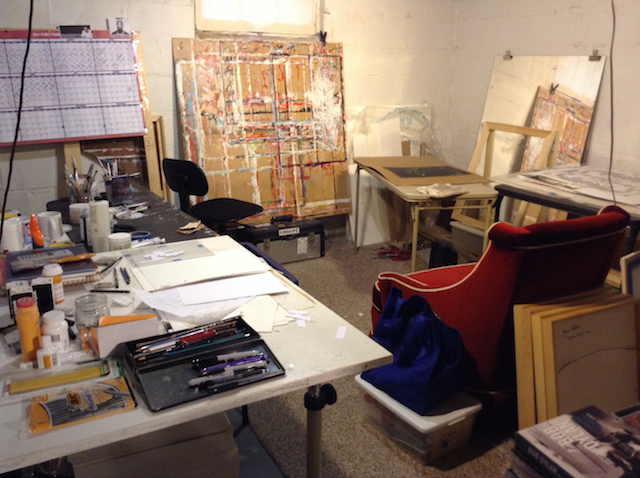
Studio

Studio

All images copyright of the artist and used with their permission.
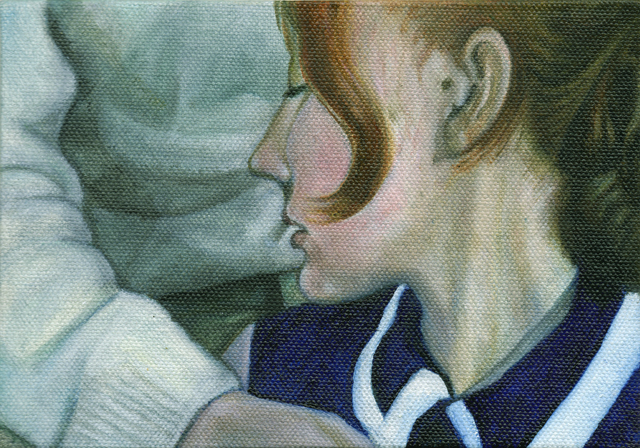
Posted in Uncategorized | Leave a comment

Ian Etter – Queens, New York

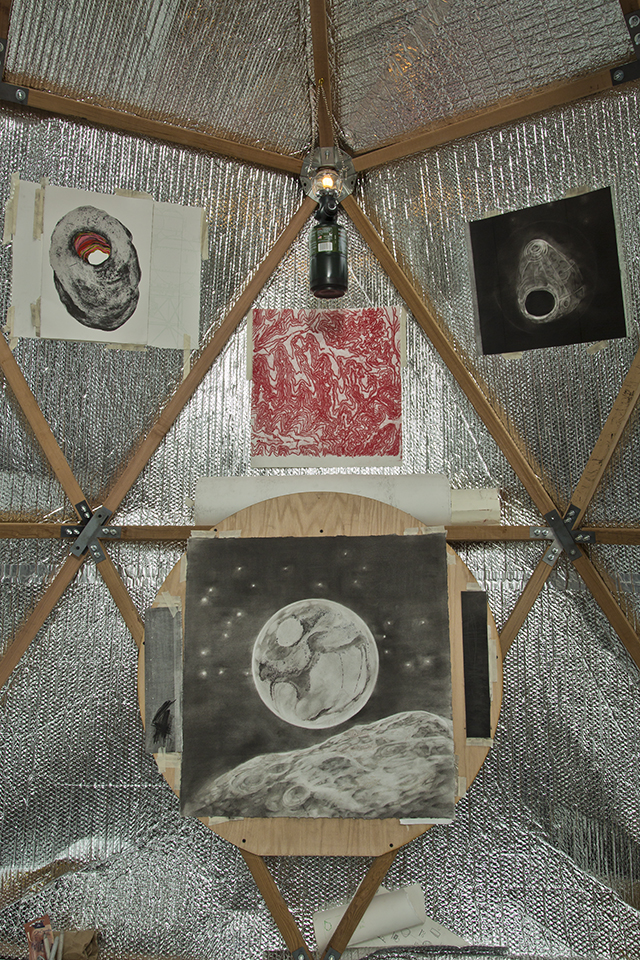
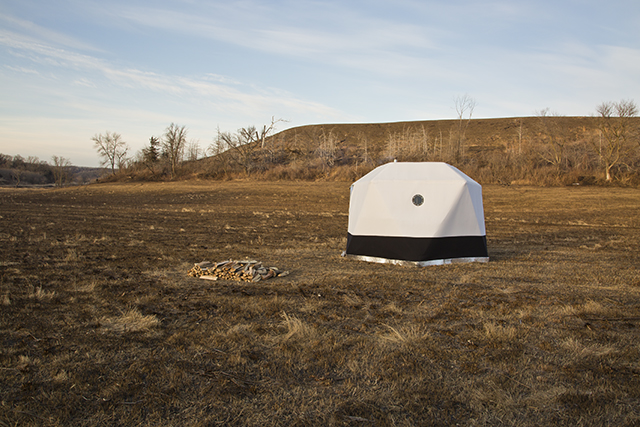
"Manned Mock Mars Mission" Mixed Media/Performance Dimensions Variable 2014

“Manned Mock Mars Mission”
Mixed Media/Performance
Dimensions Variable
2014

Briefly describe the work you do.

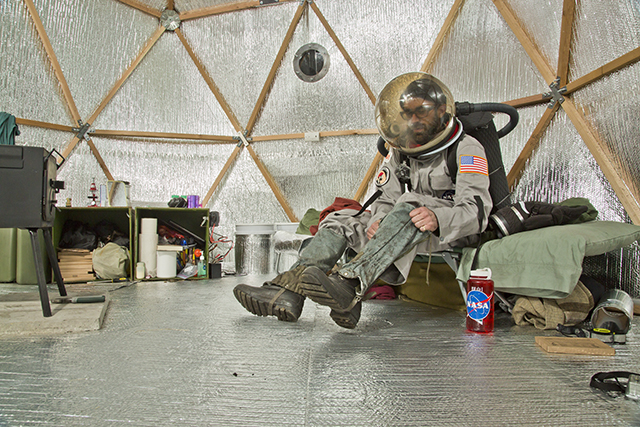
I’m a drawing based, multi-media artist. My work has developed from an interest in drawing’s role in the observational history of astronomy. My most recent project involved a two week rotation aboard the Mars Desert Research Station in Utah, and a two week solo Mars simulation in western Iowa. This project incorporated a lot of 2D works, video and sculpture. It focused on the cyclical nature of things and the parallels between the expansion of the American West and our current desires to colonize Mars. My current plans involve lunar paleontology and Martian Darwinism.

Tell us a little about your background and how that influences you as an artist.

I grew up on Army bases, and maybe an Air Force base or two. I was raised in a culture of discipline and had daily exposure to tanks, helicopters, cargo planes, armed soldiers and the like. There is probably some lineage between this background and my interest in astronomy and the space program. My work ethic is most likely a result of this, I’m fairly steadfast.

The concept of the “artist studio” has a broad range of meanings, especially in contemporary practice. The idea of the artist toiling away alone in a room may not necessarily reflect what many artists do from day to day anymore. Describe your studio practice and how it differs from (or is the same as) traditional notions of “being in the studio.”

All of my drawing takes place alone, behind a closed door. I do a lot of research and am constantly dreaming up practical methods to achieve goals that seem impossible when I begin them. Once the work leaves drawing it becomes a different beast entirely. I typically need assistance from other artists, sometimes this is done for pay and sometimes it ends up being collaborative. Most of the work from the MMMM project was created by sneaking into spaces I shouldn’t have been. I’d come into this space, build things, assemble them, break them down and then hide everything until the next weekend, hoping that no one would expose me.

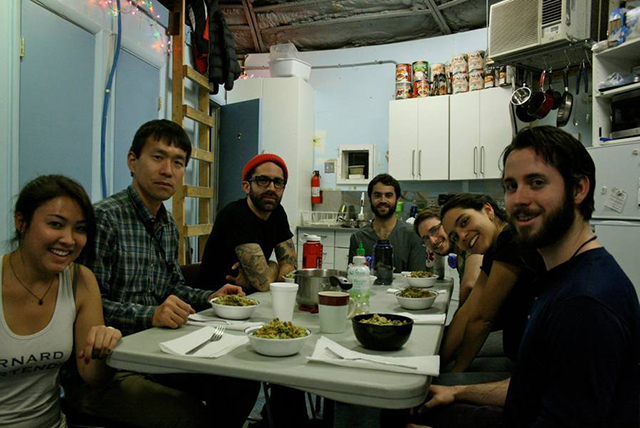
"Manned Mock Mars Mission"  Mixed Media/Performance Dimensions Variable 2014

“Manned Mock Mars Mission”
Mixed Media/Performance
Dimensions Variable
2014

What unique roles do you see yourself as the artist playing that you may not have envisioned yourself in when you first started making art?

I’ve done some performative work, which I never would have imagined myself doing a few years ago. Besides that there are no real surprises. I always had this idea that I’d begin to figure things out around 30 and everything up to that point would be confused, and that’s pretty much how it’s been. I had no expectations.

When do you find is the best time of day to make art? Do you have time set aside every day, every week or do you just work whenever you can?

I can usually get a solid four hours of drawing in between 2-6 PM, I can’t work much before or after. Sculpture, video, print or any other medium is much more like work, like a job. I can begin at 10 AM and work late into the night. I typically work on projects that might take a year or more to complete. I’ll begin drawing early in the project and work on them for the year, and then usually cram everything else into the last few months.

"Manned Mock Mars Mission" Mixed Media/Performance Dimensions Variable 2014

“Manned Mock Mars Mission”
Mixed Media/Performance
Dimensions Variable
2014

How has your work changed in the last five years? How is it the same?

Five years ago I had no idea what I was doing, but I drew a lot. The drawing has slowly progressed, about what you would expect of five years primarily in grad school. Working multi-media is new. Once I really began to tap into the subject matter I was interested in and do a little research, my practice exploded. I used to be satisfied with being able to make the thing look the way I wanted it to, now I’m primarily interested in chasing the most challenging idea I can come up with.

Are there people such as family, friends, writers, philosophers or even pop icons that have had an impact on the work you do?

Yes, Jacques Cousteau and early astronomers.

If you had an occupation outside of being an artist, what would that be and why?

I’m a fishmonger and have been for a long time. I like having a job where I can run around, throw things and yell. I might teach when I’m older. I think I could have been satisfied by being a marine biologist.

headshotAbout

Ian Etter was born on Elmendorf Air Force Base in Alaska and traveled the world as the son of a soldier. He earned his MFA in Drawing from the University of Iowa in 2013 and now resides in Queens, NY. He was awarded the A.I.R. at the Mars Desert Research Station over the 2013-2014 season and was recently awarded VAN Residency for his exhibition at CSPS in Cedar Rapids, Iowa.

ianetter.com

Studio

Studio

All images copyright of the artist and used with their permission.
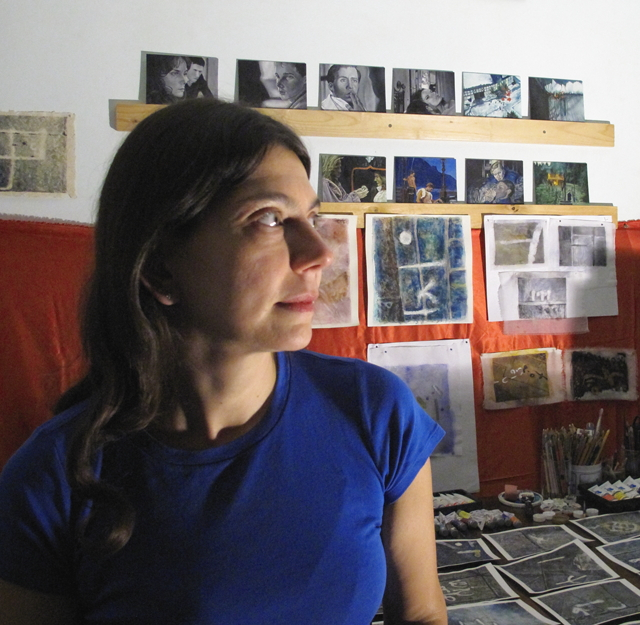
Posted in Uncategorized | Tagged , , , , | Leave a comment

Heidi Hogden – Boston, Massachusetts

Image 2

“08/21/2011 8:23 AM” 2011 graphite on paper 40 x 60 inches

Briefly describe the work that you do.

My recent body of work consists of a series of graphite drawings on paper that investigate the area around my childhood home in the township of Franklin, Wisconsin. Each drawing presents a unique interpretation of the land. The imagery for my drawings are inspired by direct observational experience, memory, and photographic source material (including images from digital motion cameras used for hunting). Through the process of drawing, I revisit the landscape of  my childhood as it was, as it is and as I imagine it to be. My subjects range from the intimacy of a found bird’s nest to broader landscape scenes of life-size animals and humans.

At what point in your life did you decide to become an artist?

Art was ingrained in me. As a child, I participated in the art classes my mother taught out of our home. I filled with excitement every time I learned a particular drawing or painting technique during a lesson. The classes also meant that there were artists coming into our home and getting excited about their artwork. I had experiences creating, thinking, and talking about art alongside these creative people. From a young age, I knew that I wanted to be an artist and teacher. This drive has lead me to where I am today.

Tell us a little about your background and how that influences you as an artist.

I have always had a fascination with the land and environment. From outdoor activities, to painting outdoors, or helping my father plant trees, the land has been an essential source of passion and inspiration for me. What I did not realize until moving to Boston was how important the specific land in Wisconsin is to me. My memories, ideas, and my emotions were connected to this specific place. As research for this body of work, I visited my home in Wisconsin, photographed the land, and communicated with my family about their attachment to our farm, their hunting rituals, and the animals on the land.

“Untitled” 2013 Graphite on paper 60 x 40 inches

“Untitled”
2013
Graphite on paper
60 x 40 inches

What types of conceptual concerns are present in your work? How do those relate to the specific process(es) or media you use?

This work has enabled me to express my own personal narrative as well as reflect on what ‘home’ means and how it is linked to specific ideas of place. Each drawing interweaves the present moment mixed with a somber meditation on the past. My memories of home are full of nostalgia, something I have tried to imbue in these works. The work also reflects on the tragic and sublime aspect of mortality and of the physical and psychological frailty of the natural world. I draw places in which there is living and decaying matter and growth and life cycles of nature: a deer mount is now useless, deteriorating and returning to dust, while a fawn hints at birth and renewal.

We once heard Chuck Close say he did not believe in being inspired, rather in working hard everyday. What motivates you in your studio practice?

Sometimes a single work will take months to complete because of it’s scale and/or detail. In my studio, I draw and write about my work, while trying to maintain my patience. I try to not get distracted while I am drawing and often listen to the constant buzzing of the tv or radio in the background to stay focused. I take a photo of the progress of my drawing at the end of each day in order to look at it later when I am off doing other things. It is how I stay involved in the progress of the work when I am not physically at the studio. Watching as the drawing emerges on the paper is motivation for me to come back and continue working.

“05/13/2012 7:08 AM” 2012 graphite on paper 19 x 23.5 inches

“05/13/2012 7:08 AM”
2012
graphite on paper
19 x 23.5 inches

What artists living or non-living influence your work?

Vija Celmins, KiKi Smith, Hiroshi Sugimoto, and George Slaw have had the biggest influence on my recent work. I feel that these artists have a genuine and deep connection to the land in their work. I am also inspired by the expansive landscapes of the Hudson River Painters and Joseph Mallord William Turner.

When you are not making art what types of activities and interests do you engage in?

The main activity that I do when I am not creating art is teaching. I gain a sense of fulfillment from teaching various forms of painting and drawing and talking about art every day. I want my students to have meaningful experiences with art because it has played such a big role in my life and I am able to share my passion with them. My students inspire me, which consequently motivates me to make my own work.

Heidi HeadshotAbout

Heidi Hogden received a BFA in painting from Minneapolis College of Art and Design (2008) and a MFA in studio art from the School of the Museum of Fine Arts in affiliation with Tufts University (2012). While a MFA student, she was the recipient of a Graduate and Post Graduate Teaching Fellowship, the Montague International Travel Grant to study abroad in Italy, and the President’s Award in Painting (juried by Al Miner). Hogden was featured in the Boston Globe as one of six emerging artists following her Thesis Exhibition in 2012. Since then, her drawings have been featured in several group shows, including “New Talent” at Alpha Gallery in Boston, MA, and “Topographies of Space: Between Somewhere and Nowhere” at the Museum of Fine Arts, Boston, MA. Hogden has also had the opportunity to present and show her work in four solo exhibitions at the McGladrey Art Gallery at Bentley University in Waltham, MA, the Cornelius Ayer Wood Gallery at Middlesex School in Concord, MA, the Elizabeth A. Beland Gallery at Essex Art Center in Lawrence, MA, and the Upper Gallery at Buckingham Browne and Nichols, Cambridge, MA. Recently, Hogden was awarded a grant to attend the Vermont Studio Center Artist Residency in Johnson, VT. Her work can be seen in the upcoming South Dakota Governor’s 6th Biennial (touring) Art Exhibition at the South Dakota Art Museum, Brookings, the Dahl Arts Center, Rapids City, the Washington Pavilion of Arts And Science, Sioux Falls, the John A. Day Gallery, Vermillion and the Dacotah Prairie Museum, Aberdeen, SD.

www.heidihogden.com

Studio

Studio

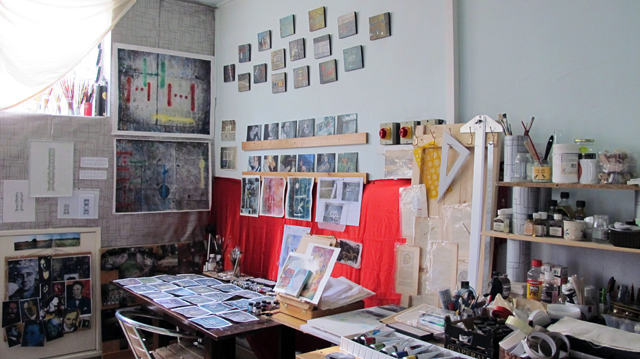
All images copyright of the artist and used with their permission.
Posted in Uncategorized | Tagged , , , , | 1 Comment