Andrew Cozzens – Louisville, Kentucky

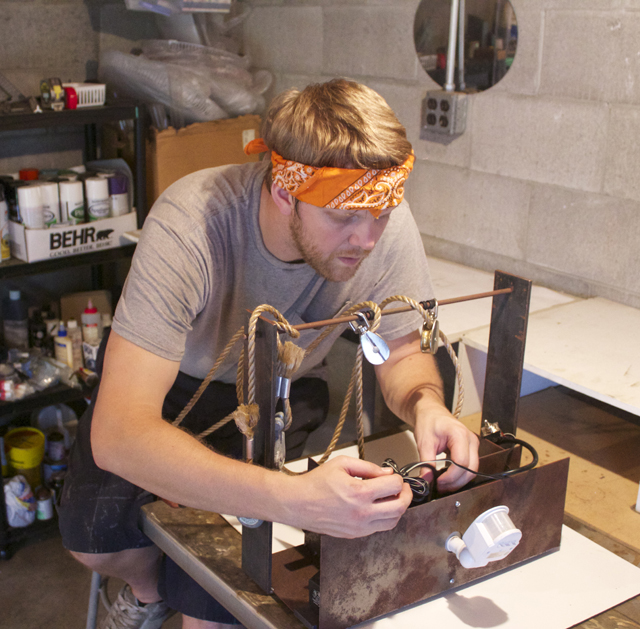
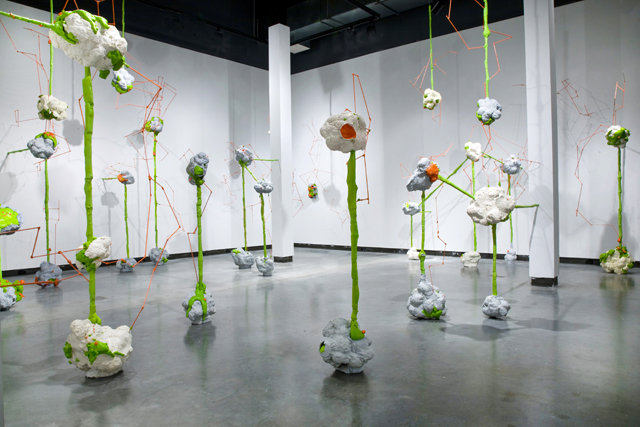
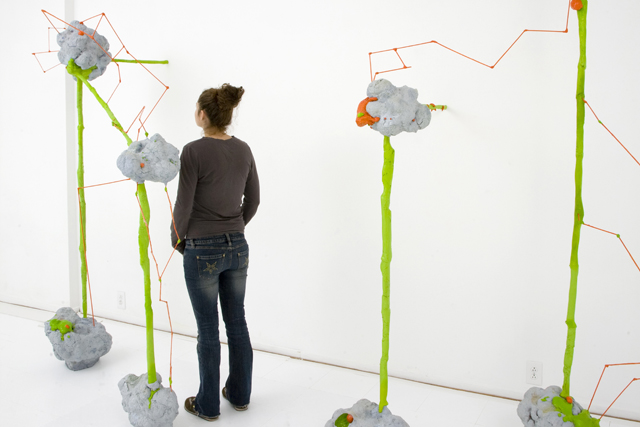
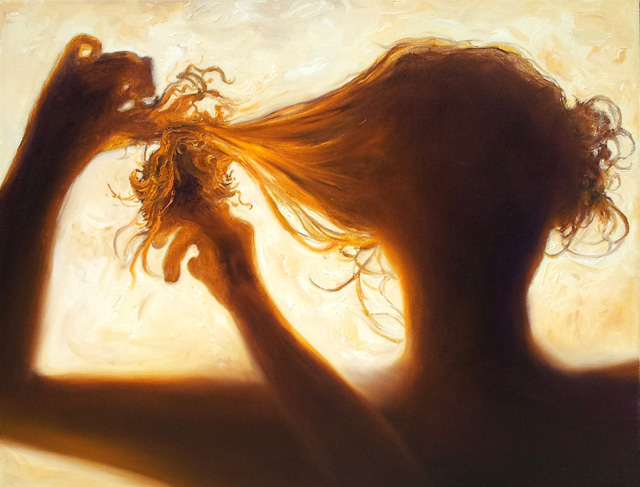
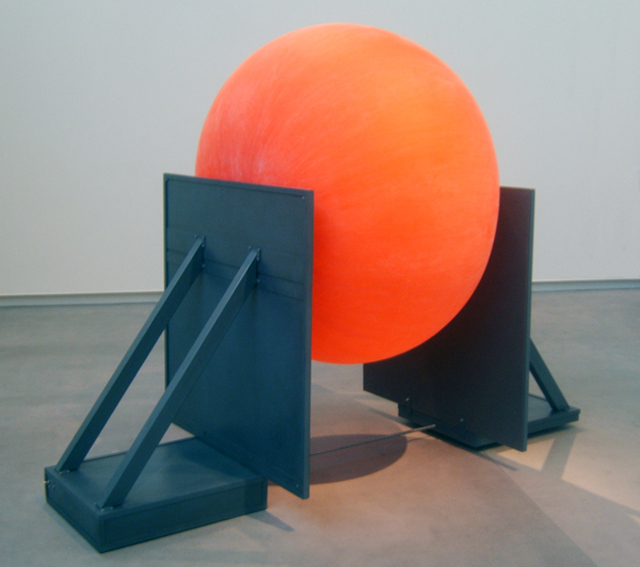
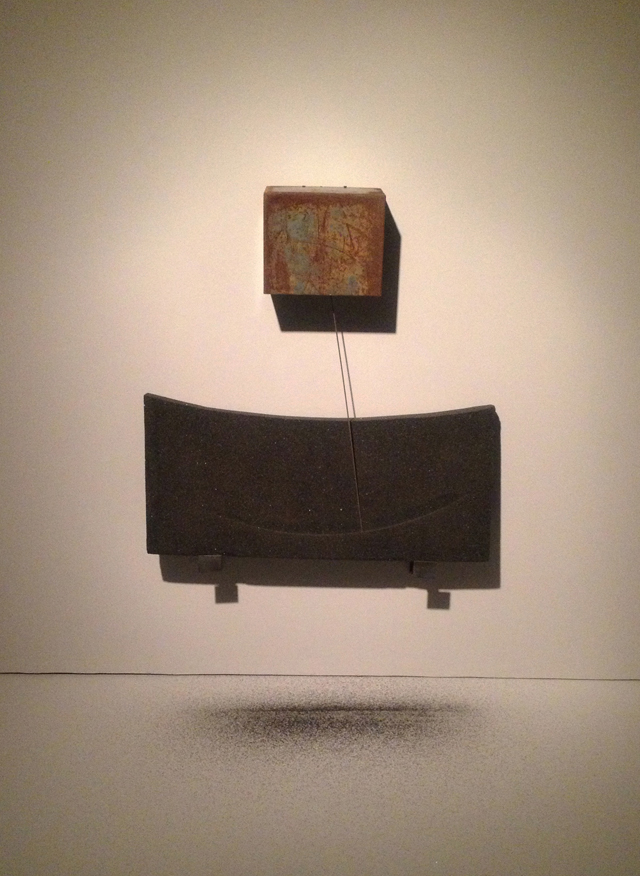
An Emotive Model of Time Perception Steel, Latex balloon, motion sensor, motor, time 8’x10’x5’ 2011

An Emotive Model of Time Perception
Steel, Latex balloon, motion sensor, motor, time
8’x10’x5’
2011

Briefly describe the work you do.

I aim to create a phenomenological based situation in which the time duration of the exhibited occurrence becomes an experience rather than a measured interval. With an array of materials, I utilize both natural and synthetic processes to give my work a lifespan beyond the instantaneous viewing. By virtue of one’s own sensual impulses, I encourage the viewer to experience the present, develop a past, consider the future, and realize their place within the continuum of the work.

At what point I your life did you want to become an artist?

I feel like the urge to create and learn has always been there, but I didn’t know that I wanted to be a professional artist until high school when I realized you could go to college and pursue it seriously as a career.

Tell us a little about your background and how that influences you as an artist.

I was born and raised in a blue-collar family. I think this is where I get my work ethic. Born into a household where there wasn’t much art exposure growing up, helped me make more authentic work. I believe this gave me a different perspective and made it easier to think outside of the art context and more from a real world perspective.

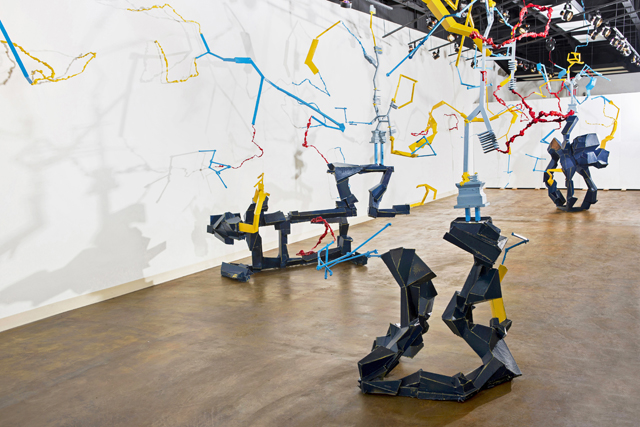
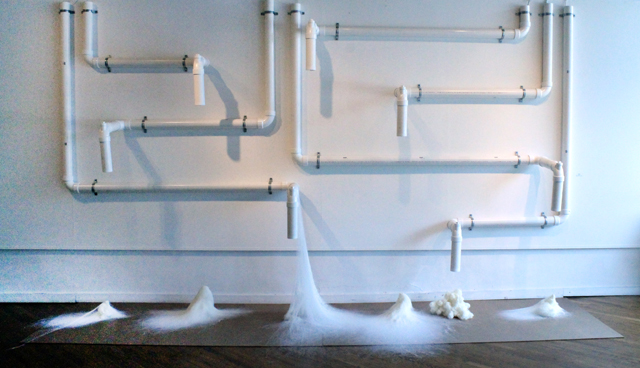
Drained PVC,  HMA, time 8”x16”x4” 2013

Drained
PVC, HMA, time
8”x16”x4”
2013

What types of conceptual concerns are present in your work? How do those relate to the specific process(es) or media you use?

Time: my concern is the temporality of my artwork, which causes me to use processes that are durational. My work usually has a lifespan.

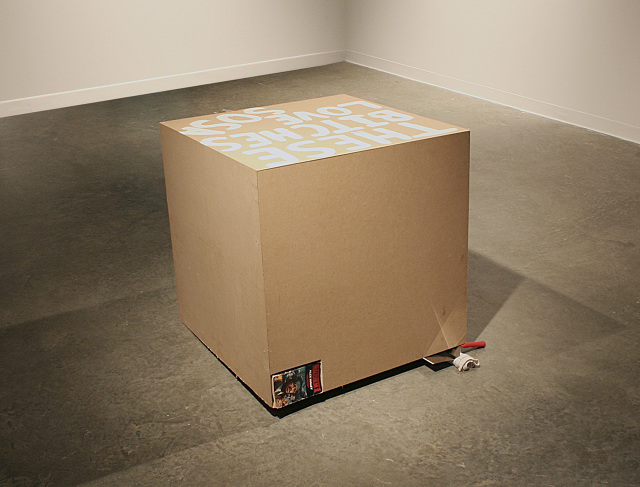
Simultaneity Steel, Chromite, oscillating motor, time 4”x4”x3” 2013

Simultaneity
Steel, Chromite, oscillating motor, time
4”x4”x3”
2013

We once heard Chuck Close say he did not believe in being inspired, rather in working hard everyday. What motivates you in your studio practice?

I think of every artwork as a stepping-stone. It is how I grow- knowing every work will simply lead me to the next, which I hope will keep me progressing in my research and making.

What artists living or non-living influence your work? 

Ceal Floyer, Francis Alys, Roman Signer, Anne Hamilton, Anish Kapoor, Giuseppe Penone… among many others.

When you are not making art what types of activities and interests do you engage in?

I teach at several universities. I enjoy bowling, traveling and live music. When I’m not working, I volunteer for many arts organizations

About

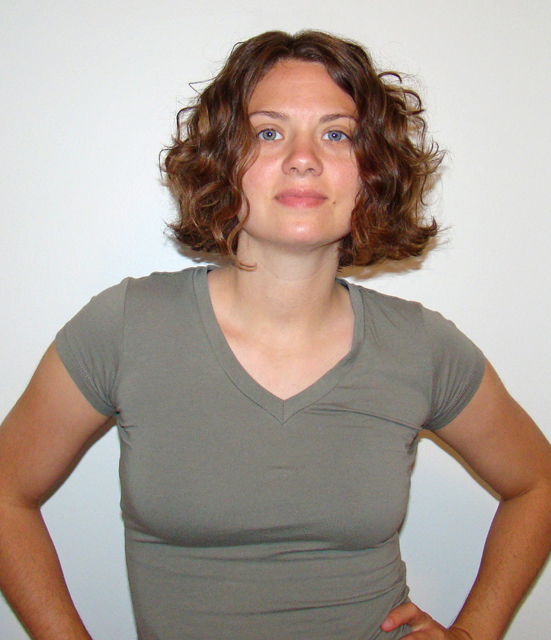
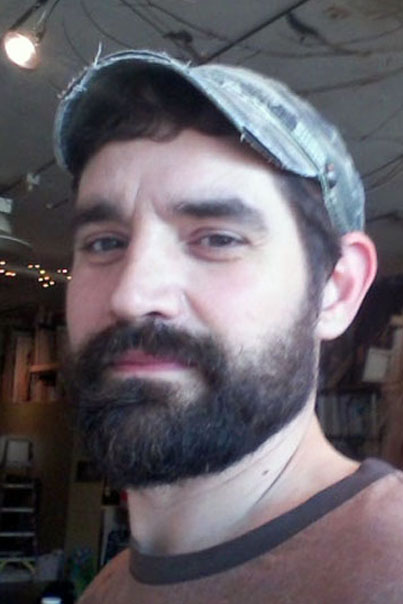
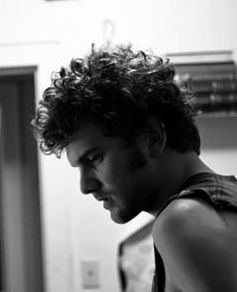
artist selfAndrew Cozzens (b. 1983) is a Louisville native who received his MFA from Washington University in St. Louis in 2010 after earning his BFA from Murray State University in 2008. He has exhibited his work nationally and internationally at Laumeier Sculpture Park, St. Louis, MO, the Arenes du Lutece, Paris, France, SLOSS Furnaces Historical Gallery, Birmingham, AL, and the Siena Art Institute, Siena, Italy. In 2010 he was the recipient of the Milliken Travel Grant and the Cite’ Internationale Des Arts Residency in Paris, France. He currently lives and works in Louisville, KY.

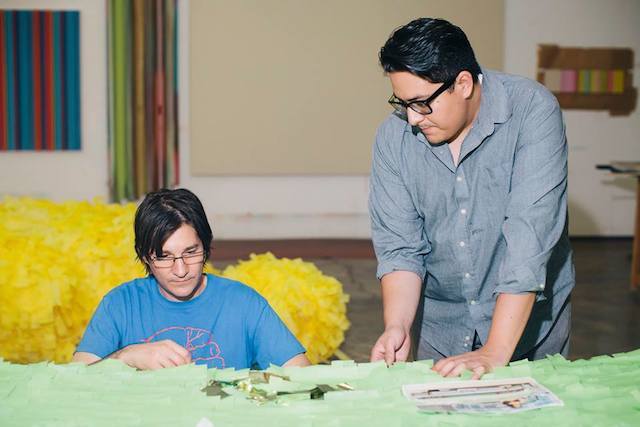
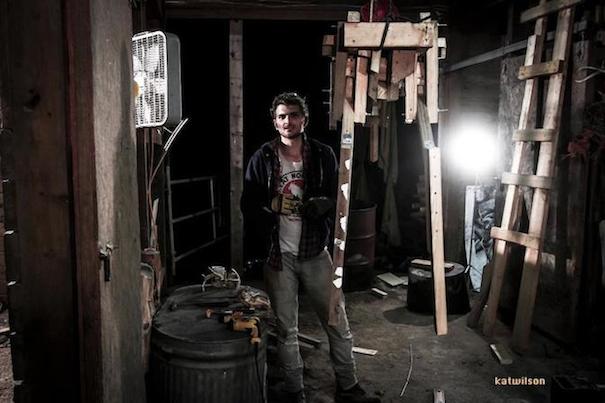
In the Studio

In the Studio

www.andrewcozzens.com

All images copyright of the artist and used with their permission.

Posted in Uncategorized | Tagged , , , , | Leave a comment

Justin Favela – Las Vegas, Nevada

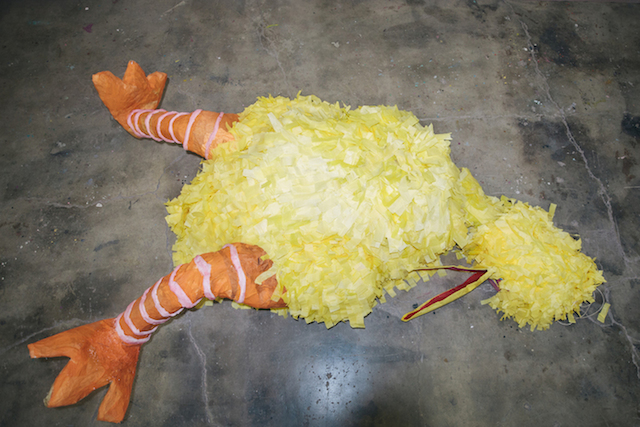
Untitled (Big Bird). 2014. Found objects, paper, glue, wire. 3'x9'x6'

Untitled (Big Bird). 2014. Found objects, paper, glue, wire. 3’x9’x6′

Briefly describe the work you do.

I mostly make sculpture out of paper and found objects. I consider myself an interdisciplinary artist that is naturally drawn to expressing ideas three dimensionally.  
Tell us a little about your background and how that influences you as an artist.
I was born and raised in Las Vegas, Nevada. This city is always reinventing itself, which can be difficult for someone as nostalgic and afraid of change as myself. I always find myself longing for the ”good ol’ days” that never really happened. When I think back, my fondest memories are of watching television everyday for hours at a time and listening to stories told at family gatherings. Pop culture and my Guatemalan/Mexican heritage are big influences on my work. 
 
The concept of the “artist studio” has a broad range of meanings, especially in contemporary practice. The idea of the artist toiling away alone in a room may not necessarily reflect what many artists do from day to day anymore. Describe your studio practice and how it differs from (or is the same as) traditional notions of “being in the studio.”
 
I think I have a fairly average studio practice. I work a day job from 9 to 5 and then head to my studio most days. I try to break that up with “research projects” like ‘Taco Takeover’, where I document myself eating tacos at restaurants and also the hours of what I like to call ‘Youtube observations’ are now a part of my practice. 
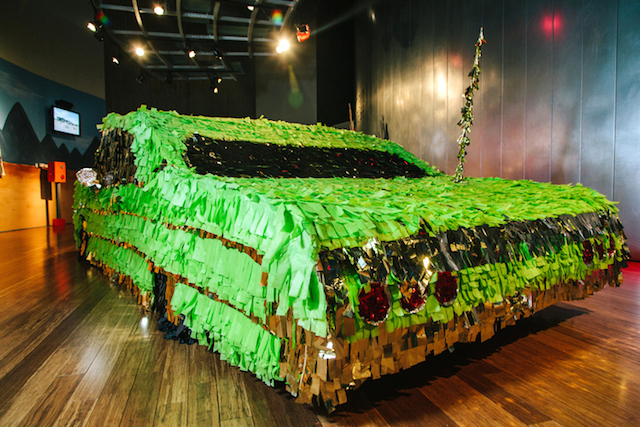
Lowrider Piñata. 2013. Cardboard, paper, glue. 5'x19.5'x6.5'

Lowrider Piñata. 2013. Cardboard, paper, glue. 5’x19.5’x6.5′

What unique roles do you see yourself as the artist playing that you may not have envisioned yourself in when you first started making art?
I have recently been thinking a lot about my identity as an artist. I was just described as “Las Vegas’ one-man Chicano movement.” That made me a little nervous, not because I don’t identify as Chicano but because I feel like now I am seen as representative for local Chicanos and I don’t want to let them down. I just want everyone to like me… is that too much to ask?
5. When do you find is the best time of day to make art? Do you have time set aside every day, every week or do you just work whenever you can? 
I try to work whenever I can. I am most productive from 5pm to 10pm, especially if there is a food break involved.
 
How has your work changed in the last five years? How is it the same?
My work has been slowly evolving in last 5 years. I have noticed that I am making a lot more large scale piñatas nowadays. I am giving the people what they want. 
 
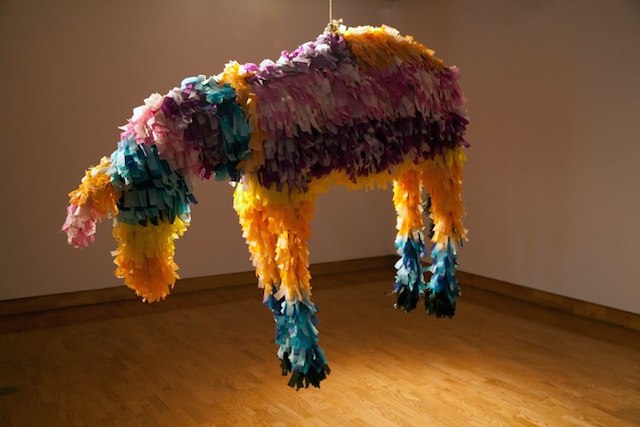
Donkey Piñata. 2010. mixed media. 4.5'x6'x2.5'

Donkey Piñata. 2010. mixed media. 4.5’x6’x2.5′

Are there people such as family, friends, writers, philosophers or even pop icons that have had an impact on the work you do?

 
My family and circle of extremely supportive friends are a huge influence on my work. My best friend/artist, Thomas Willis, has also been very important in my life. He’s wicked smart, wicked funny and an amazing artist. Art historian, Emmanuel Ortega, has recently become a dear friend that keeps me in check with his knowledge and is making me less ignorant by the minute. As for pop icons, there are so many that impact my work! Here a few that I have been thinking about recently, in no particular order: Paul Mooney, Joan Rivers, Beyoncé, John Goodman, Sarah Silverman, Alyssa Edwards, Whoopi Goldberg, Selena Quintanilla, Lena Dunham, Maria Bamford, Liberace, Don Rickles, and Donny and Marie.
 
If you had an occupation outside of being an artist, what would that be and why?
 
I have been daydreaming of being a stand-up comedian lately. Making people laugh is very important. Stand-up comedy is an escape and a reality check wrapped up into a nice little package, like a 5 dollar foot long sandwich from Subway. I also wanted to be a firefighter when I was kid. Saving lives and cashing checks! 
About
FavelaHeadshotJustin Favela is a Las Vegas native working in the mediums of sculpture, painting and performance. He has participated in numerous group exhibitions in Nevada and nationally. His Las Vegas exhibition venues include the Contemporary Arts Center, Trifecta Gallery, and Gamma Gamma Gallery. Favela‘s work is currently exhibited at Crystal Bridges Museum of American Art as part of the exhibition, “State of the Art: Discovering American Art Now.” He works at Caesars Palace in Las Vegas and earned a B.F.A. in Studio Arts at the University of Nevada, Las Vegas in 2010.
Image4
All images copyright of the artist and used with their permission.
Posted in Uncategorized | Tagged , , , , | Leave a comment

Jackie Marie Brown – Brunswick, Maine

BRAIN FRUIT - MIXED MEDIA INSTALLATION 2011

BRAIN FRUIT – MIXED MEDIA INSTALLATION 2011

Briefly describe the work you do.

My primary focus is sculpture and I work to create immersive sculpture environments that invite viewers into imagined biological systems. I intend for the works to be moved through and experienced both visually and spatially. I also work on related drawings that involve a process of cutting and layering paper. The drawings started as a bi-product of the installations but they’ve emerged as an important counterpart in my studio practice.

Tell us a little about your background and how that influences you as an artist.

My liberal arts experience at Hamilton College was transformative. It provided an essential foundation that was rooted in making connections across disciplines, and seeking news ways of synthesizing ideas. I majored in Art, minored in Anthropology, and took a range of courses, from Discrete Mathematics to Islamic Thought. Pursuing art within this context offered so much fodder for creative inquiry and the experience continues to influence my thinking. It was here that I learned to see art as a powerful access point into anything and everything, and as having the capacity to revolutionize the way I see and experience my surroundings on a daily basis.

SURGING SEEPAGE - MIXED MEDIA INSTALLATION 2008

SURGING SEEPAGE – MIXED MEDIA INSTALLATION 2008

The concept of the “artist studio” has a broad range of meanings, especially in contemporary practice. Describe your studio practice and how it differs from (or is the same as) traditional notions of “being in the studio.”

I’m a maker. I value hands on interaction with material and the kind of experimental problem solving that can happen in a studio setting. The studio is a place where I can be completely engrossed in the present and I live for those elongated moments when I’m in the thick of it. Grappling with the work and the ideas is invigorating and leaves me feeling more alive and more in tune with my sense of self and the world around me.

It’s also important that the works continue to change each time they’re installed, so this idea of “being in the studio” extends to each exhibition space where I install the work. I think of each installation as a frozen moment in the life of the work and exhibitions are a way of thinking through each system. They allow for the works to shift and expand in vital ways.

What unique roles do you see yourself as the artist playing that you may not have envisioned yourself in when you first started making art?

Developing an installation requires both design and engineering. There’s a push and pull between my desire to fabricate an imaginative landscape and the physical limitations of the space itself. I need to consider the technical logistics early on in the process and resolve how the forms are going to exist in space. I also have to determine how the parts are going to break down so I can efficiently transport the work and then reassemble it quickly on site. As a result, I work to design compact parts that readily expand in volume to fill and activate the exhibition space available.

When do you find is the best time of day to make art? Do you have time set aside every day, every week or do you just work whenever you can? 

There’s not necessarily a certain time of day that’s important but I have noticed a cycle to my practice. Each installation takes about 12 to 16 months and there’s an arc to the evolution of each work. Momentum builds slowly as I test initial forms and then I’ll have a stretch of high activity where I’m working every day, often more than once a day, for weeks on end. This momentum builds towards a series of installations where the work continues to grow, move, and expand. I also find that stretches of time between bodies of work are necessary. This critical distance allows me to shift gears and gain a better understanding of how the work is evolving.

IGNITION SEQUENCE - MIXED MEDIA INSTALLATION 2013

IGNITION SEQUENCE – MIXED MEDIA INSTALLATION 2013

How has your work changed in the last five years? How is it the same?

Each installation is an extension from the previous work and adds to this ongoing dialogue about biological flux and potential for growth. I’m starting to see the systems as symbiotic parts to something larger and I’m currently in the process of combining the installations into one massive growth.

From a macro perspective, I’m interested in taking on the role of bioengineer and splicing the systems together. I’m painting everything white and in a sense, I’m bleaching the forms as a means to knock them back and let them grow anew. Color will seep through in select areas, referencing the history of each work, and serving as a visual link between forms. I see this as the final stage in the life of these works and I’m excited to see where my studio practice might go next. I recently moved to Maine, which has this incredible coastline and seasons that are both beautiful and fierce so I’m excited to see how living in the Maine landscape might influence future work.

Are there people such as family, friends, writers, philosophers or even pop icons that have had an impact on the work you do?

On a personal level, Rebecca Murtaugh has been instrumental. Rebecca is an active artist and Chair of the Art Department at Hamilton College. Her mentorship has been indispensable and she’s been cheering me on for over ten years. I’m so thankful for our friendship and I think this kind of mentorship is extremely valuable for young artists to seek out.

An author whose work has been meaningful is Oliver Sacks. He writes about anomalies of the brain and he makes a compelling case for how neurological conditions offer exciting glimpses into the brain’s capacity for adaptation and transformation. His books fueled my interest in the biological early on and have continued to serve as an important pivot point for my work.

If you had an occupation outside of being an artist, what would that be and why?

I have it made. I love being both an artist and an educator and the two are inextricably linked.

About

HEADSHOTJackie Marie Brown has been featured in group and solo exhibitions across the United States, including installations at the Saratoga Arts Center and the Delaware Center for the Contemporary Arts. She was an artist-in-residence at the Museum of Arts and Design in NYC and most recently, the West Collection invited her to install Ignition Sequence at SEI Investments, where the work was on view from November 2013 to May 2014.

Brown also recently joined the Visual Arts faculty at Bowdoin College and relocated to Brunswick, Maine. She was previously based in Philadelphia where she served as full-time faculty at Ursinus College and as an MFA mentor for the University of the Arts. She received her BA from Hamilton College and her MFA from Virginia Commonwealth University.

BRAIN FRUIT INSTALLATION SHOT

BRAIN FRUIT INSTALLATION SHOT

www.jackiemariebrown.com

All images copyright of the artist and used with their permission.

Posted in Uncategorized | Tagged , , , , | Leave a comment

Andrea Sherrill Evans – Boston, Massachusetts


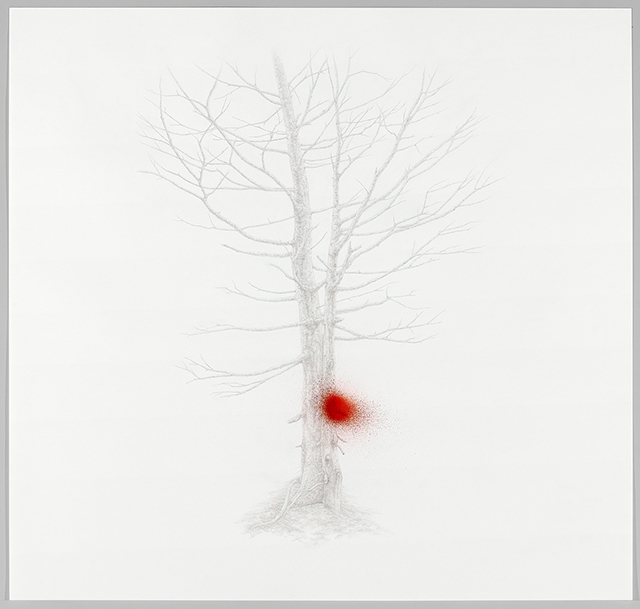
Marker #4, silverpoint and acrylic on prepared paper, 29.5” x 31”, 2012.

Marker #4, silverpoint and acrylic on prepared paper, 29.5” x 31”, 2012.

Briefly describe the work you do.

My work uses detailed and slow processes of making to examine the subtleties of human interactions with other bodies and the natural world. While performative work and sculpture holds an important place in my practice, drawing has become a primary process of investigation. Prepared images and objects are edited, manipulated, and represented through the process of drawing as a way to isolate particular moments and points of contact. The presence of the human, both depicted and implied, frequently appears alongside imagery commonly associated with the idea of nature: trees, cacti, earth, and “landscape”. Throughout the work is an ongoing attempt to make connections from the experience of an individual to the larger world, with a particular interest in unraveling our shifting concepts of nature, and understanding our role and place within it.  

Tell us a little about your background and how that influences you as an artist.

I grew up in Arizona, in a landscape that I didn’t really appreciate until I was in my later teens. My mom had lived on a farm in Casa Grande (about half-way between Phoenix and Tucson), and she wanted my sister and I to have some aspects of that experience, so she and my dad bought a house on an acre and a quarter of land zoned as horse property in Tempe. So growing up, we had chickens, ducks, goats, sheep, a few horses, tortoises, turtles, dogs, cats, and birds, and a lot of outside space in which to play. My dad was an engineer, and my mom was always making and growing things, so I really attribute my interest in making and attention to detail to their influences. My sister and I were also given plenty of encouragement to be creative. I think that whole childhood experience really planted the seeds of being somewhat introspective and pretty curious about the world, which both play a big role in the work I make.
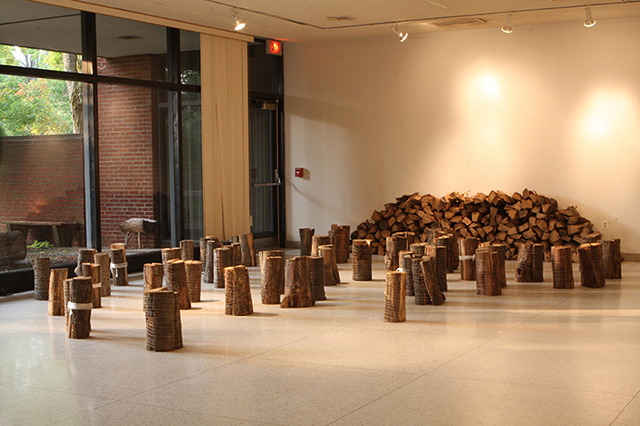
Woodlot, performance/installation work, ½ cord firewood and string, 8 hours, part of “8-Hour Projects: Performativity” at Allegheny College, Meadville, PA, 2013.

Woodlot, performance/installation work, ½ cord firewood and string, 8 hours, part of “8-Hour Projects: Performativity” at Allegheny College, Meadville, PA, 2013.

The concept of the “artist studio” has a broad range of meanings, especially in contemporary practice. The idea of the artist toiling away alone in a room may not necessarily reflect what many artists do from day to day anymore. Describe your studio practice and how it differs from (or is the same as) traditional notions of “being in the studio.”

I have a studio practice in the traditional sense, in that “making” is a big part of my work. I try to keep somewhat regular studio hours, and much of that time is spent working alone in my space. For me, there is a mental shift that happens when I enter the studio, almost a kind of switch that turns off (most) of the everyday distractions, allowing me to enter into the work. I do reading, research, and some making outside of my studio, but it is in the studio that I am most productive and focused. I think this idea of a place carved away from distraction, where one can focus their ideas, whether or not it is used as a space for making, is still relevant across many types of contemporary artistic practices.

What unique roles do you see yourself as the artist playing that you may not have envisioned yourself in when you first started making art?

When I first started making art, I definitely had that stereotypical vision of the individual artist working in the studio, creating work for exhibitions and the like. And that’s certainly a big part of my practice, but I have found it has developed into something much more complex.

First, I don’t think that I imagined my work would involve as much research in the form of reading and seeking out information to inform its conceptual backbone. I also didn’t conceive of how many different roles I would play as an artist, or the way my practice would extend beyond my individual work. I have become much more engaged as a member of a community of artists and creative people, in Boston and beyond, as a teacher and a collaborator. Starting the website Temporary Land Bridge, which features interviews with artists, artist writing, and exhibition coverage, has allowed me to actively participate in this community in a different way. Working with the New Craft Artists in Action collective has provided an entry point for more community-engaged art making, and has taught me a lot about collaboration. Ultimately, I wear many more hats than I ever imagined.
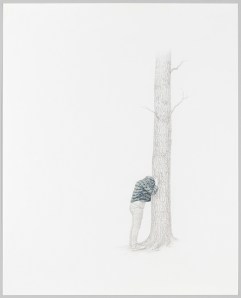
The Tree #1, silverpoint and watercolor on prepared paper, 28.75" x 23.25", 2011.

The Tree #1, silverpoint and watercolor on prepared paper, 28.75″ x 23.25″, 2011.

When do you find is the best time of day to make art? Do you have time set aside every day, every week or do you just work whenever you can? 

I’m a morning person, so I have the most energy and get my best work done when I get in the studio on the early side. This isn’t always possible though. Since I teach, my schedule is changing every four or five months, and it often feels like I’m just getting a balance worked out when it changes again. During the academic year, I set up a studio schedule around my teaching schedule, and try to protect that time the best I can. I don’t go to the studio every day, but in a good week, I’ll be there 4 or 5 days, even if just for a few hours.

How has your work changed in the last five years? How is it the same?

It’s an interesting time to think about this. I finished graduate school about 5 years ago, and since that time, my work has changed in more subtle ways than during graduate school. An interest in human experience and relationships, landscape, and nature has remained a major thread throughout the work, as well as my love for slow and detailed processes such as silverpoint drawing and knitting.

On a formal and technical level, my drawings have become visibly tighter and more controlled, which has made the need for some type of disruption to this control (such as the paint sprays in the “Marker” series) really important. I have allowed myself permission to explore sculpture as a final form in my practice, which I was uneasy to do earlier on.

While my work is still very much founded in individual experience, I’m looking towards ways that extend these issues into a larger discussion. On a conceptual level, I have been delving much deeper into studies of the constructed idea of nature and how this aligns with the very real natural world. At this point in time, what we consider “nature” has been completely impacted by human actions. The overlap of this notion and its reality presents complex questions about it means to try to preserve or conserve what remains.

Are there people such as family, friends, writers, philosophers or even pop icons that have had an impact on the work you do?

As I mentioned prior, my family really had a big role in setting the stage that encouraged the sensibilities that brought me to art making. My husband, Kirk Amaral Snow, who is also an artist, has had an exceptional impact on the work I do. We share a studio, bounce ideas off one another, offer each other critique. He’s not afraid to push me, and I really trust his opinion.

Outside of the personal sphere, the case studies and writings of neurologist Oliver Sacks have completely transformed my understanding of how we perceive and experience the world through our bodies. Rebecca Solnit’s books, spanning subjects as wide as walking, being lost, landscape, and photography, have really stuck with me. Michael Pollan’s writing on food, farming, gardening, and the built environment are something I return to again and again. In the studio, I am constantly listening to podcasts. Radiolab, with hosts Jad Abumrad and Robert Krulwich, is a constant favorite, and it totally blows my mind.

If you had an occupation outside of being an artist, what would that be and why?

First, I’d say a farmer; it runs in my family and I was born with a love for plants and vegetables. But I have a pretty romantic version of it in my head; I know it would be a ton of work to make it work. Otherwise, I could perhaps see myself as a mail carrier. I’ve been watching the mail women in my neighborhood, and in the summer it seems like it could be nice. You get to walk around outside all day, get a little exercise and fresh air, have some time for your mind to wander, but you do have to wear that uniform.

About
ASEvans headshotAndrea Sherrill Evans (b. 1982, Mesa, AZ) began making art at an early age and went on to study painting at Arizona State University, receiving her BFA in 2004. Evans moved to Boston, Massachusetts in 2006 to attend graduate school at the School of the Museum of Fine Arts, Boston/Tufts University (MFA 2009). 

Evans’ practice is based in drawing, painting, performance, and sculpture. She is a recipient of the 2012 Massachusetts Cultural Council Artist Fellowship in Drawing, 2012 St. Botolph Club Foundation Emerging Artist Award, and 2010 Blanche E. Colman Award. Her work has been exhibited at locations including Montserrat College of Art (Beverly, MA), Allegheny College (Meadville, PA), SPACE Gallery (Pittsburgh, PA), Proof Gallery (Boston, MA), Drive-By (Watertown, MA), Mobius (Boston, MA), New Art Center (Newton, MA), Phoenix College (Phoenix, AZ), and eye lounge (Phoenix, AZ).

In addition to her independent studio practice, Evans is a member of the New Craft Artists in Action (NCAA), a collective dedicated to creating handmade basketball nets for empty hoops in public spaces. Their self-published book of net patterns, knit and crochet instructions, and community projects, Networks, came out in early 2014. Evans is the founder and co-editor of Temporary Land Bridge, a website focused on art practice in its various stages of creation, contextualization, and exhibition. She is a visiting lecturer in the Studio Foundation program at Massachusetts College of Art and Design and currently lives in Boston, MA.

The Studio

The Studio

www.andreasherrillevans.com

All images copyright of the artist and used with their permission.

Posted in Uncategorized | Tagged , , , , | Leave a comment

Todd Mrozinski – Milwaukee, Wisconsin

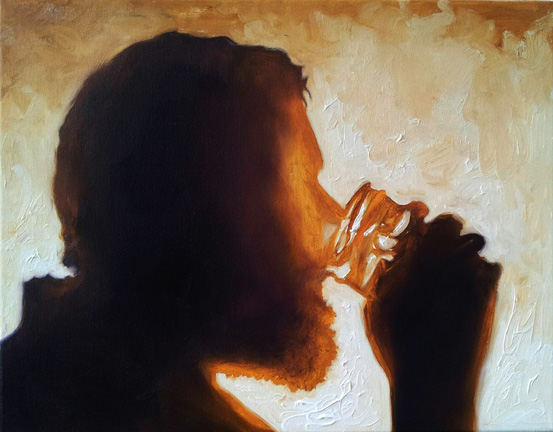
Matt Drinking Water. Oil on canvas. 2014©. 16" x 20"

Matt Drinking Water. Oil on canvas. 2014©.       16″ x 20″

Briefly describe the work you do.

I am a painter of shadows, clothing, personality, place and light. My work is a reflection of my life and the people in it. The paintings are made by following inspiration and by being open to what the present moment has to offer. The work often develops in series, spontaneously, depending on the people I meet and the movement of the sun.  

At what point I your life did you want to become an artist?

 I have always been an artist.

Tell us a little about your background and how that influences you as an artist.

I was raised Catholic, my dad was a former priest and continued to work as a director of religious education after he married and until he retired, so the church was my playground while growing up. Incense, stained glass and ritual were a normal part of life. 

Painting is my ritual now. When I am able to be wholly present with the person, the painting, the paint, the shadow or article of clothing, sacred space is created. It feels like I am honoring the person who the painting is a symbol of through being present in its making. 

The creative process is magical, by using tools, colored mud is spread on a piece of fabric and is transformed into a living organism that is able to move us and communicate to us at unspeakable levels over generations and across continents. I am continuously amazed at the transformative power of art.  

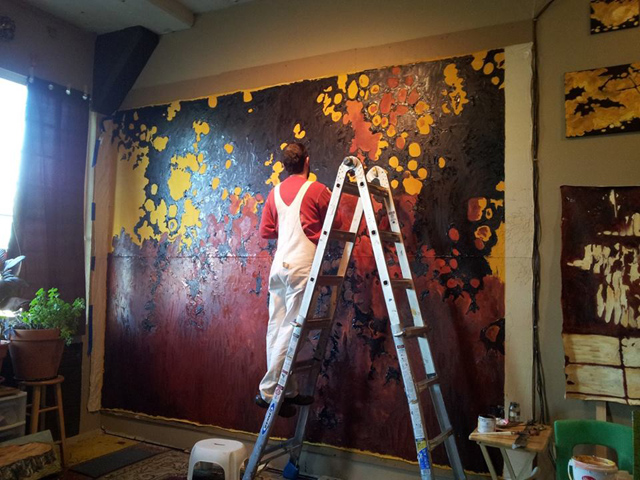
Working in Studio on Tree Shadow

Working in Studio on Tree Shadow

What types of conceptual concerns are present in your work? How do those relate to the specific process(es) or media you use?

The only conceptual concern I have is that my mind, worry or doubt gets in the way of the free flow of inspiration that is continuously present and available.

We once heard Chuck Close say he did not believe in being inspired, rather in working hard everyday. What motivates you in your studio practice?

I think the best Chuck Close paintings are the most inspired ones. You can see it in the liveliness of his touch and beauty of his shapes. Inspired… in spirit, in “the zone”. That is where I want to be in my work, when I am in the zone, the momentum of the work leads and I follow. Then the work is play and 12 hours feels like 20 minutes. 

The Untangler. Oil on canvas. 2014©. 16" x 20"

The Untangler. Oil on canvas. 2014©. 16″ x 20″

What artists living or non-living influence your work? 

Velazquez, Rembrandt, Joan Mitchell, Richard Diebenkorn, Carl von Marr, Della Wells, Giorgio Morandi, Peter Doig, Goya, Arthur Thrall, Alice Neel, Clifford Still, Seurat’s drawings, the list continues… my friends who’s art I surround myself with and my wife, who I share a studio and am in continuous visual dialogue with.

When you are not making art what types of activities and interests do you engage in?

I enjoy spending time with my daughter and friends, meditation, tending the house plants, observing nature, listening to amazing music, eating wonderful food, talking to the neighbors and teaching in-studio painting classes. 

About

HeadshotBorn in Rensselaer, IN in 1974, Todd Mrozinski has loved to paint for as long as he can remember. He acquired his BFA in painting from the Milwaukee Institute of Art and Design in 1997 and in 1996 attended The New York Studio Program. He has been in solo and group exhibitions nationwide and his work is in various public and private collections. By focusing on two main areas, shadows and clothing, he explores the power of a subject’s presence through its absence. Meditation and contemplation as well as following inspiration and free flowing expression are essential to his working practice. Todd sees and shares the beauty and illumination of light and personality through drips and skeins and piles of paint. He and his wife, Renee Bebeau, have a studio in The Nut Factory, Riverwest, WI, where they offer art classes and workshops. He is currently represented by Woodman/Shimko Gallery, Palm Springs, CA.        

A favorite studio spot on the roof

A favorite studio spot on the roof

www.toddmrozinski.com

All images copyright of the artist and used with their permission.
Posted in Uncategorized | Leave a comment

Nicki Werner – Milwaukee, Wisconsin

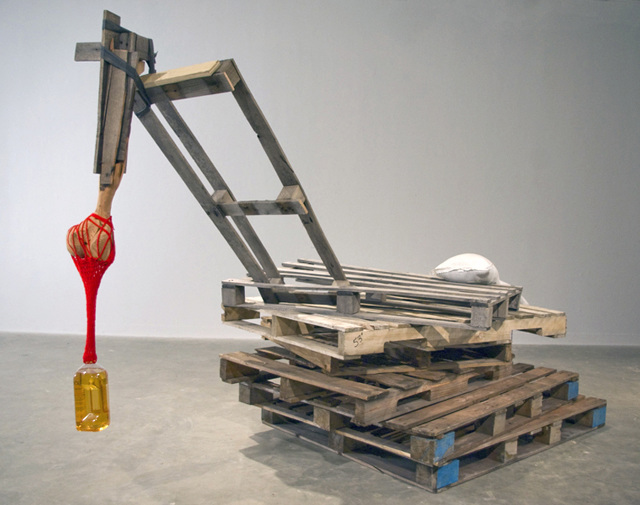
Chief Keef to Malcolm X, from Drift series, wood, paint, spatula, towel, Autobiography of Malcolm X book

Chief Keef to Malcolm X, from Drift series, wood, paint, spatula, towel, Autobiography of Malcolm X book

Briefly describe the work you do.

My art practice both is and is inspired by ethnographies. The work deals with symbols that reveal specific class, race, age, gender, and familial relations. I paint signs and make sculptures out of wood, found objects, fibers, all sorts of things. Sometimes I write essays and do live or recorded performances. I focus on the ways in which we construct our own identities and conversely, how identities are constructed for us, as both individuals and collectives. The personal is political. I want my art to contribute alternative ways of knowing to important political issues of our time. My art is part of conversations that are happening in investigative journalism, anthropology, media studies, and more. As such, current events and news are a big part of the work.

Tell us a little about your background and how that influences you as an artist.

Throughout my life I, like most people, have been on various sides of lines that stratify class, race, and other markers of identity in extreme ways. I will touch on a few. I grew up in St.Louis, Missouri, an extremely segregated city in regards to both race and class. I went to private school, but only because I lived in a city district with a failed public school system. I’ve worked many different types of blue and white-collar jobs. Also, being an artist sometimes puts me in a unique, both sides position in regards to “high” and “low” culture. Drawing from these experiences, my art is about validating forms of culture that are sometimes seen as less legitimate producers of knowledge.

My Mom wore her nice shoes to work and hurt her knee moving pallets, wood, yarn, rubber, sandbags, pine-sol

My Mom wore her nice shoes to work and hurt her knee moving pallets, wood, yarn, rubber, sandbags, pine-sol

The concept of the “artist studio” has a broad range of meanings, especially in contemporary practice. The idea of the artist toiling away alone in a room may not necessarily reflect what many artists do from day to day anymore. Describe your studio practice and how it differs from (or is the same as) traditional notions of “being in the studio.”

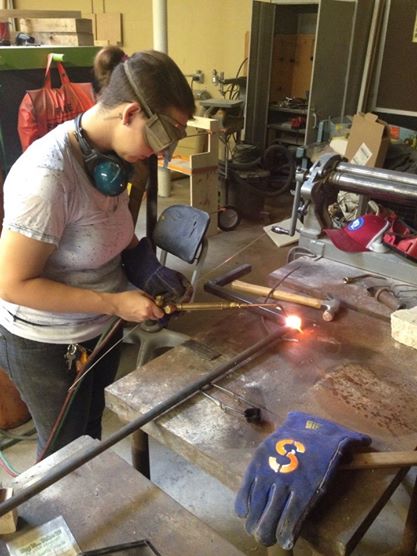
Being in the studio is important to me. Messing around, taping stuff together, even writing in a room that is full of my stuff- of my ideas materialized, makes connections happen for me in a way that I can’t seem to imitate (not without lack of trying) on the internet or in other non-studio spaces. That being said, observing and gathering from real life, both mine and other peoples’, is a big part of my process. That happens in many places, in many ways.

What unique roles do you see yourself as the artist playing that you may not have envisioned yourself in when you first started making art?

The un-hiring because of his public opinions of Steven Salaita from University of Illinois Urbana-Champaign this summer has been a kind of landmark case in a long string of rising condemnations of public intellectuals both inside and outside of academia in the last couple years. These, and other, events- the Mike Brown protests most importantly- have made me feel a particular sense of urgency about being public. I am still trying to figure out what that means, for my voice, for my art. This summer I co-taught a weeklong place-making workshop for neighborhood kids at a park in the Riverworks/Keefe area in Milwaukee. We built an inflatable structure, then drummed and danced inside. It was great. I guess I never necessarily envisioned how important organizing people around art is, and that has become a huge part of what I do.

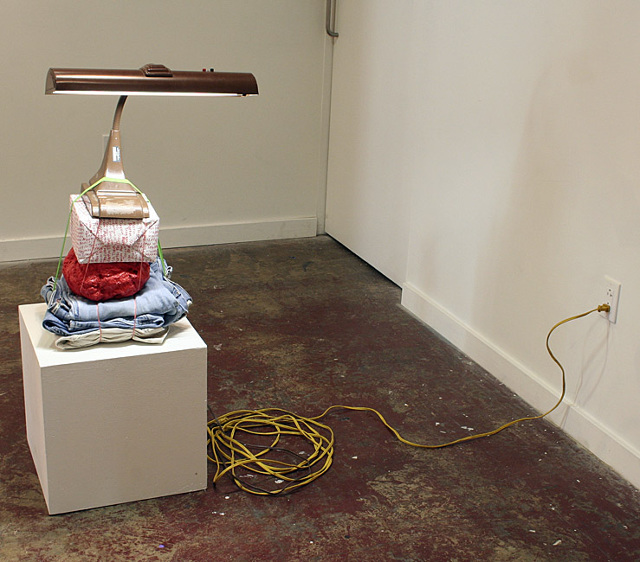
untitled monument from “My Book to Help America” project, lamp, rubberbands, package wrapped in paper scrawled with “Trayvon Martin”, melted plastic, work pants, pedestal

untitled monument from “My Book to Help America” project, lamp, rubberbands, package wrapped in paper scrawled with “Trayvon Martin”, melted plastic, work pants, pedestal

When do you find is the best time of day to make art? Do you have time set aside every day, every week or do you just work whenever you can? 

Making art is a privilege. Having a studio is a privilege. Having access to the facilities and resources I need is a privilege. I find that at more and less privileged times in my life the answer to this question is different. Right now I have the advantage of being able to teach at a college. This, and other specific freedoms, allows me to make and think and write and be immersed in my research all time without many obstacles. I tend to be a late night studio person when I my schedule allows. From another perspective- that still involves privilege- I think that being an artist is about building the life you want to live, building it in a way that makes your art life part of your whole life, your day to day life.

How has your work changed in the last five years? How is it the same?

I think in the last five years sign-painted and using words directly has almost taken over the work. I often feel like I am fighting against it. That said, it isn’t something I see going away any time soon. Even though materials and forms shift often and in big ways in my work, understanding bigger collective struggles through individuals and materials has always been there.

Are there people such as family, friends, writers, philosophers or even pop icons that have had an impact on the work you do?

In some ways my work is entirely about influence of other people. I even have a piece titled “Top Artistic Influences”, which lists my main influences since childhood. It includes such disparate types of thinkers as Malcolm X, Nicki Minaj, Bruno Latour, Claudette Colvin, Edmonia Wildfire Lewis, Wacka Flocka, the Spice Girls, Hilary Duff, Pocahontas, Donald Judd, Odd Future, Donna Haraway, and more. It is in the specifics of these types of listings and references in my work that politics become most articulated.

To answer in a less researchy way, my grandma has always been an essential role model and cultivator for my art endeavors. She took me to my first real museum experience, “The Invisible Made Visible: Angels from the Vatican” at the St. Louis Art Museum in 1998. She was a graphic artist by profession who drew everything from women’s shoes and gloves for newspaper ads to detailed diagrams of Boeing airplane engines for instruction manuals. Outside of work she loved to paint animals, children, saints, popes, and angels. I think the sincerity of her aesthetic and content has had a huge impact, in both very direct and indirect ways.

If you had an occupation outside of being an artist, what would that be and why?

I still want to be a serious, rigorous writer, writing about politics and art. Mostly because there are things that I wish were being said.

About

headshotNicki Werner is an artist who lives and work in Milwaukee, Wisconsin. She earned her BFA in sculpture and Art History from Drake University in Des Moines, Iowa in 2009 and her MFA from University of Illinois, Urbana-Champaign in 2012. She has been exhibiting for 9 years at venues including Art Chicago at the Merchandise Mart in Chicago, the Anderson Gallery in Des Moines, Iowa, and the Arkansas Arts Center in Little Rock, Arkansas. She was a visiting assistant professor of art at Illinois State University in 2012-2013, and an artist-in-residence at Redline Milwaukee in 2013-2014. She is currently a visiting assistant professor of art at Beloit College in Wisconsin.

Detail of piece in progress

Detail of piece in progress

www.nickiwerner.net

All images copyright of the artist and used with their permission.


Posted in Uncategorized | Tagged , , , , | Leave a comment

Priscilla Briggs – Minneapolis, Minnesota

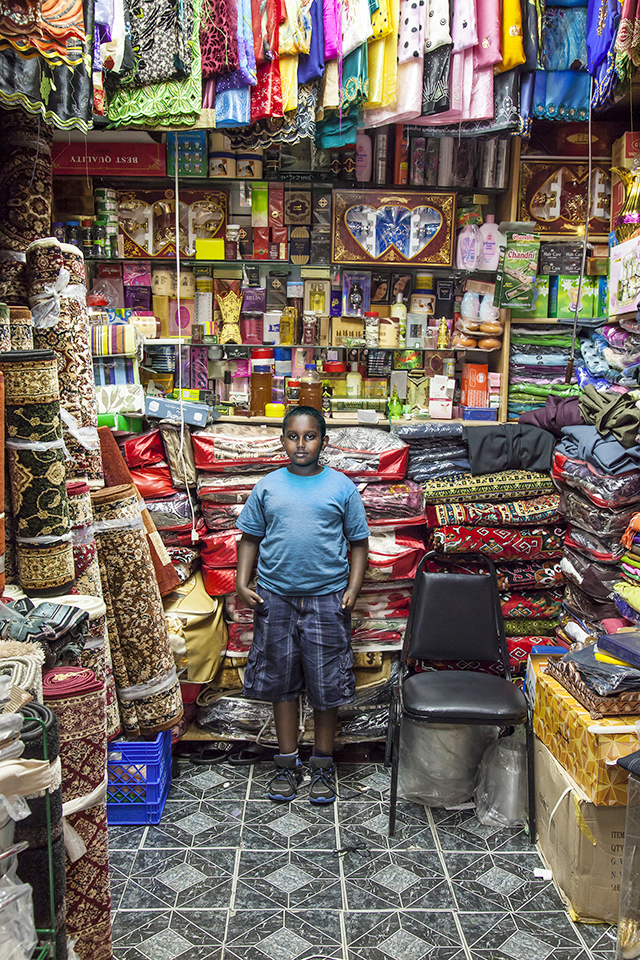
2.Abdi (Karmel “Somali” Mall, Minneapolis, MN), Archival Ink Print, 27” x 18”, 2013.

Abdi (Karmel “Somali” Mall, Minneapolis, MN), Archival Ink Print, 27” x 18”, 2013.

Briefly describe the work you do.

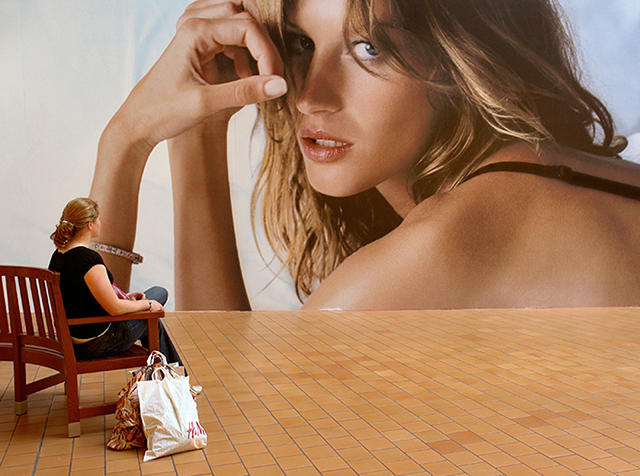
I am primarily a lens-based artist, investigating representations of capitalism and consumerism within the global market. I’m particularly interested in the role of advertising imagery as an influential backdrop in the creation and reflection of personal and collective cultural identities. Working on a project basis, I generally identify topics of interest and slowly develop a conceptual framework around the topic based on discoveries I make as I work. I love irony and infuse it into my work as much as possible.

Tell us a little about your background and how that influences you as an artist.

Growing up, my family was continually moving and morphing as my parents married, divorced, and changed jobs multiple times. Living in a continual state of flux, meeting and living with new people, adapting to new contexts and challenges all helped me recognize and appreciate the complexity of identity and perspective. I am curious about peoples’ stories and how we all fit together and contribute to defining this infinitely shifting organism that is the world. This curiosity inspires me to venture forth, to research and ask questions, to engage in dialogue, and to make observations.

The concept of the “artist studio” has a broad range of meanings, especially in contemporary practice. The idea of the artist toiling away alone in a room may not necessarily reflect what many artists do from day to day anymore. Describe your studio practice and how it differs from (or is the same as) traditional notions of “being in the studio.”

Most of my work happens either in the field or on the computer. As a result, the “studio” as a finite space is not a dominant factor in my practice. When I’m not on location, I spend my time researching, editing and processing images, writing, and experimenting with presentation in order to add conceptual depth to the work.

1.Gaze (Mall of America, Bloomington, MN), Archival Ink Print, 20” x 26”, 2006.

Gaze (Mall of America, Bloomington, MN), Archival Ink Print, 20” x 26”, 2006.

What unique roles do you see yourself as the artist playing that you may not have envisioned yourself in when you first started making art?

Cultural investigator/commentator.

When do you find is the best time of day to make art? Do you have time set aside every day, every week or do you just work whenever you can? 

Because I’m a professor with a heavy teaching load, my shooting often happens when I am off from teaching during January and summer months or weekends. My editing, writing and printing occur throughout the year as time permits.

Copies (Haicang, Xiamen), Archival Ink Print, 27” x 18”, 2013.

Copies (Haicang, Xiamen), Archival Ink Print,    27” x 18”, 2013.

How has your work changed in the last five years? How is it the same?

In general, my work has come somewhat full circle from when I first began working as an artist. I was initially drawn to portrait photography as a way of interacting with people, but became interested in constructs of identity on a larger cultural level, first on a national scale and then on an international one. Recently, I’ve returned to the portrait, but approach it from within a conceptual framework.

Are there people such as family, friends, writers, philosophers or even pop icons that have had an impact on the work you do?

I love looking at all manner of art. There are so many amazing artists and curators out there.

I am lucky to have a strong network of artist friends who have influenced my ideas and been an inspiration for me. Artists I have never met, but feel my work is somewhat in dialogue with, include Martin Parr, Walker Evans, Brian Ulrich, Cao Fei, Andy Warhol, and maybe Jeff Koons. Thinkers who have influenced me include Walter Benjamin, Jean Baudrillard, Guy Debord, Marshall McLuchan, Stephen Colbert…My work is also influenced by current events. I read a lot of news magazines and watch political/social documentaries.

If you had an occupation outside of being an artist, what would that be and why?

I’m pretty passionate about social justice issues, I love to cook and feed people, and I enjoy helping people connect with other people or resources they need. So I could see myself as a social worker of some kind, the owner of an intimate neighborhood café, or matchmaker. Right now, I work as a professor of studio art, which involves everything mentioned but the cooking. I am not the professor who bakes cookies for her students.

About

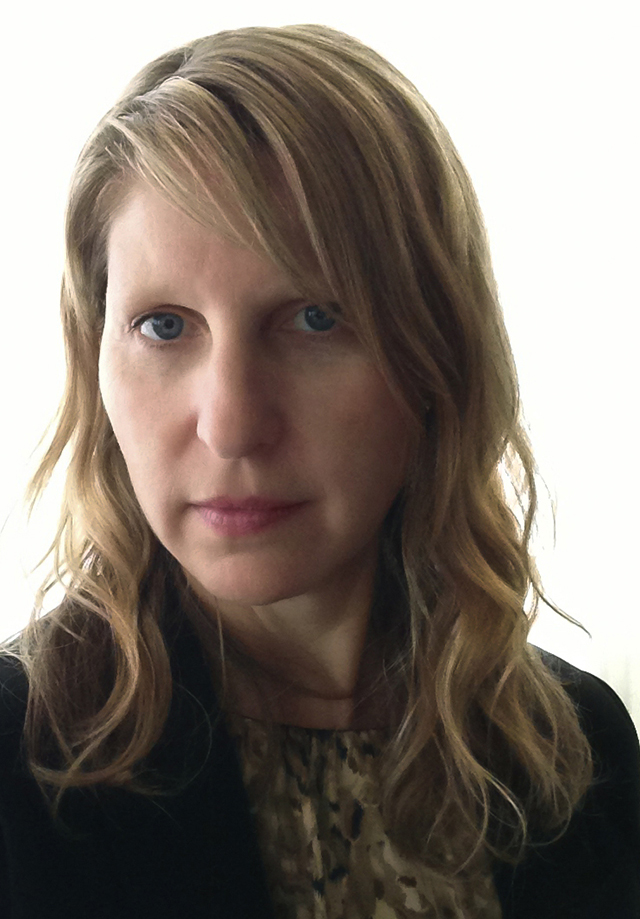
6_BriggsBorn and raised in the Mid-Atlantic region of the U.S., Priscilla Briggs is an artist currently based in Minneapolis, MN. She holds an MFA from Maryland Institute College of Art and a BA from Carnegie Mellon University. Her explorations as an artist have taken her to various areas of the world, most influentially China, where she completed residencies at Art Channel in Beijing in 2008 and the Chinese European Art Center in Xiamen in 2010 and 2013.

Priscilla has received various grants for her projects, including 2010 and 2014 MN State Arts Board Grants as well as a 2008 McKnight Artist Fellowship. Her work has been exhibited widely and is included in the Midwest Photographer’s Project at the Museum of Contemporary Photography in Chicago. She recently joined the artist collective of Piacsek Gallery based in the UK.

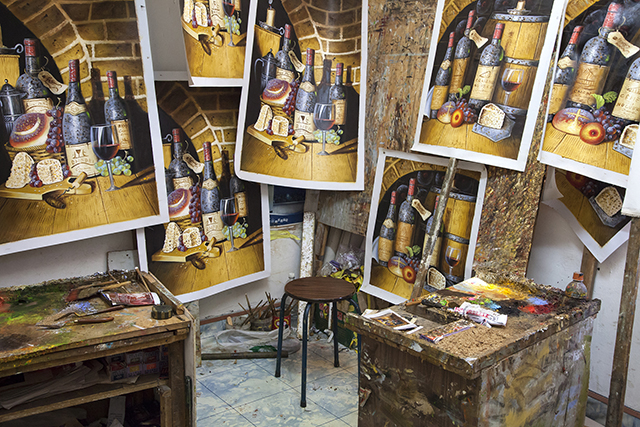
On location in Yiwu, China.

On location in Yiwu, China.

www.priscillabriggs.com

All images copyright of the artist and used with their permission.
Posted in Uncategorized | Tagged , , , , | Leave a comment

Luke Amram Knox – Fayetteville, Arkansas

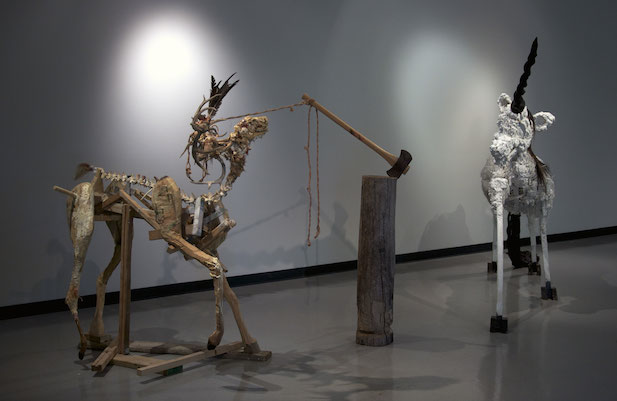
A Stag and Unicorn In the Forest Go  installation approx. 15' X 7' X 6'4” 2013 wood, preserved deer leg, tree trunk, charred tree branch, antlers, axe,  bailing string, bailing wire, coyote ravaged deer skeleton, polyurethane foam,  polystyrene foam, polyurethane adhesive, latex paint, latex acrylic, steel hardware,  chicken wire, concrete, plaster, aluminum fencing wire, horse hair, human hair, goose feathers, gymnasium rope,  tar, machine enamel, spray enamel, oil paint, fabric,  raw hide

A Stag and Unicorn In the Forest Go
installation approx. 15′ X 7′ X 6’4”
2013
wood, preserved deer leg, tree trunk, charred tree branch, antlers, axe,, bailing string, bailing wire, coyote ravaged deer skeleton, polyurethane foam,
polystyrene foam, polyurethane adhesive, latex paint, latex acrylic, steel hardware,
chicken wire, concrete, plaster, aluminum fencing wire, horse hair, human hair, goose feathers, gymnasium rope,tar, machine enamel, spray enamel, oil paint, fabric, raw hide

Briefly describe the work you do.

My work responds to mythological and iconographic traditions from antiquity. Inspired by the works of Carl Jung and the art historian Aby Warburg, my artistic practice explores concepts of the collective unconscious and cultural afterlife. Through sculpture making I examine how remnants of archaic thought and extinct cultures survive to influence contemporary frameworks. Using appropriated objects and conventional building mediums, I make representational forms that are inspired by ancient and contemporary motifs, highlighting relationships between them that enlighten contemporary cultural identities.

At what point I your life did you want to become an artist?

It wasn’t until later in my life that I took art seriously. From my childhood to high school I drew cartoons inspired by anything from Disney to classical mythology. After quitting college a third time, realizing that I was not the classical scholar I had always wanted to be, I began making art centered around themes that I had unknowingly already been fascinated with.

Tell us a little about your background and how that influences you as an artist.

I grew up on a farm, so animals have always held an important place in my creative and practical life. That, along with my lifelong conversations with my grandfather, an armchair theologian, really gave me the conceptual fodder for what I do now. However, my focus on global myth comes from my experiences traveling through Asia and Europe, finding parallels and exchanges between ancient cultures that, for all I know, wouldn’t have had any communication with one another.

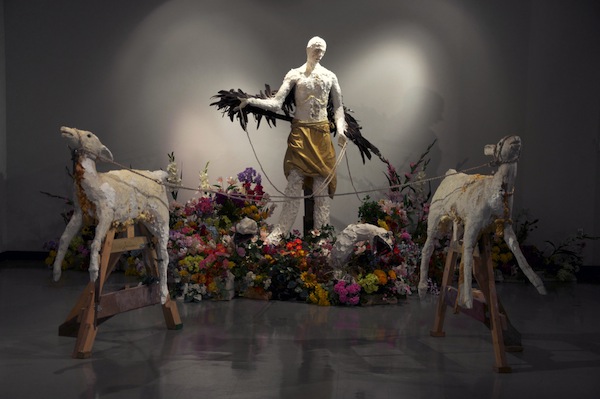
Hierophany  installation approx. 17'X 8'10”X21' 2013  cotton horse foaling blanket, unfired clay, concrete casts of dead deer,  boar tusks, acrylic latex, leather, machine enamel, spray enamel, mannequin hands, goose feathers, oak lumber, untreated pine, steel hardware, plaster, polyurethane, polyurethane adhesive, oil paint, poly-cotton rope, polystyrene foam, polyurethane foam, polymer clay, bailing wire, tar, artificial flora, rhinestone, liquid asphalt, concrete sealant, epoxy

Hierophany
installation approx. 17’X 8’10”X21′
2013
cotton horse foaling blanket, unfired clay, concrete casts of dead deer,
boar tusks, acrylic latex, leather, machine enamel, spray enamel, mannequin hands,
goose feathers, oak lumber, untreated pine, steel hardware, plaster, polyurethane, polyurethane adhesive, oil paint, poly-cotton rope, polystyrene foam, polyurethane foam, polymer clay, bailing wire, tar, artificial flora, rhinestone, liquid asphalt, concrete sealant, epoxy

What types of conceptual concerns are present in your work? How do those relate to the specific process(es) or media you use?

Comparative mythology and art history are the foundation of my concept. I realized that I couldn’t really find any satisfaction in traditional scholarship, so I thought of using them in the creation of art. Yet, the crux of my work isn’t so much the examination of these things as it is the relationships between them and the current world in which we live. There is a reason why we have the mores we do, why we believe what we believe and why we still fundamentally search for the same thing that the ancients did. That is what I want to look at.

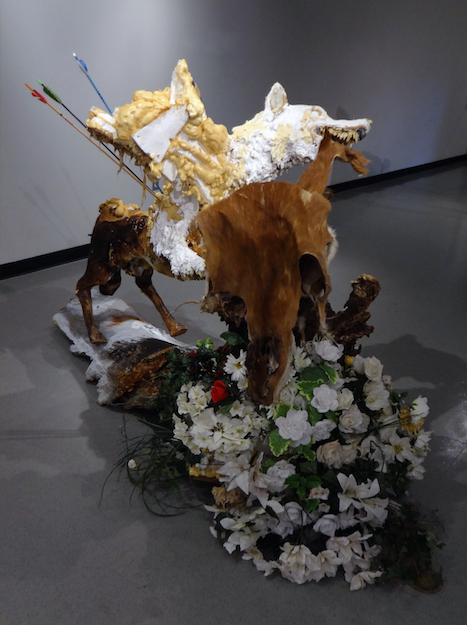
Ysengrimus, Orthus, and Sick Stag  5'9” X 4'7 X 3'5” 2013 tree trunk fragment, neatsfoot oil, oil paint, spray enamel, polymer clay, artificial flora, polystyrene foam, polyurethane foam, bailing wire steel hardware, deer hide (roadkill), polyurethane adhesive, fiberglass arrows, wood, acrylic latex, machine enamel,  broken deer bones, plaster, epoxy, spar urethane

Ysengrimus, Orthus, and Sick Stag
5’9” X 4’7 X 3’5”
2013
tree trunk fragment, neatsfoot oil, oil paint, spray enamel, polymer clay,
artificial flora, polystyrene foam, polyurethane foam, bailing wire
steel hardware, deer hide (roadkill), polyurethane adhesive,
fiberglass arrows, wood, acrylic latex, machine enamel, broken deer bones, plaster, epoxy, spar urethane

We once heard Chuck Close say he did not believe in being inspired, rather in working hard everyday. What motivates you in your studio practice?

There can’t really be any work unless there is inspiration to work I think. Be it inspiration from this world or something that you are looking at from a meta like stance. But personally I feel like my practice is driven by my desire to make things. It is about having fun with a plethora of mediums – exploring their conceptual and physical potential. The concept is something that reigns it all in and keeps it going in a solid direction.

What artists living or non-living influence your work? 

Ed Keinholtz, David Altmedj, Huma Bhaba, Paolo Ucello, Robert Rauschenberg, Banks Violette

When you are not making art what types of activities and interests do you engage in?

I have five cats and a dog so I spend a lot of time picking fleas off of them. Professionally I like to piecemeal a lifestyle, from scrapping copper to scrap carpentry to being a coffee barista. Landscaping is another hobby of mine and I do hope to get back into archery.

About

headshot_2Luke Knox was born in Iowa City, IA in 1987 and relocated to Northwest Arkansas as a child. Since then, he has spent the majority of his time exploring the

Ozark Mountains and working on his mother’s horse and cattle ranch. His upbringing around natural landscapes and on the farm formed his fascination with animals, ecology and the pastoral. These experiences influence his paintings and sculpture, which focus on the relationship between society and nature by examining parallels and reoccurring motifs in mythology, ritual and cultural iconography.

In 2012 he graduated with a BFA in Drawing from the University of Arkansas’ Fulbright College of the Arts and Sciences. He lives and works in Fayetteville, Ar. and there he maintains his personal practice while collaborating with other artists to convert his barn into a communal artistic workspace.

studio_image

lukeknox.com

All images copyright of the artist and used with their permission.
Posted in Uncategorized | Tagged , , , | Leave a comment

Enda O’Donoghue – Berlin, Germany

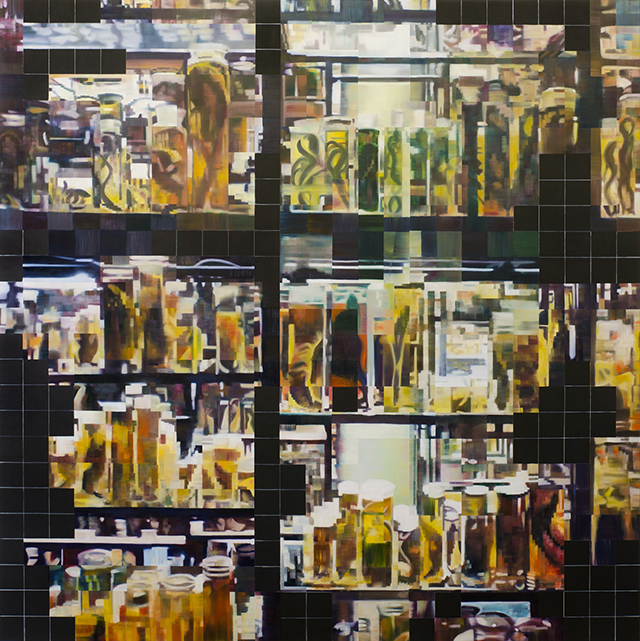
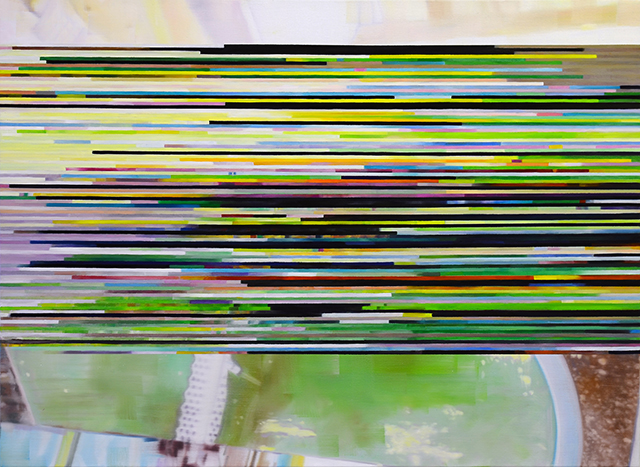
The Wet Collections (2013) Oil and Acrylic on Canvas, 200 x 200 cm

The Wet Collections (2013) Oil and Acrylic on Canvas, 200 x 200 cm

Briefly describe the work you do.

First and foremost I would describe myself as a painter even though I have worked, and still work, with many other mediums on quite a regular basis, for example video and photography, but I see painting as the backbone of my practice and that informs everything I do.

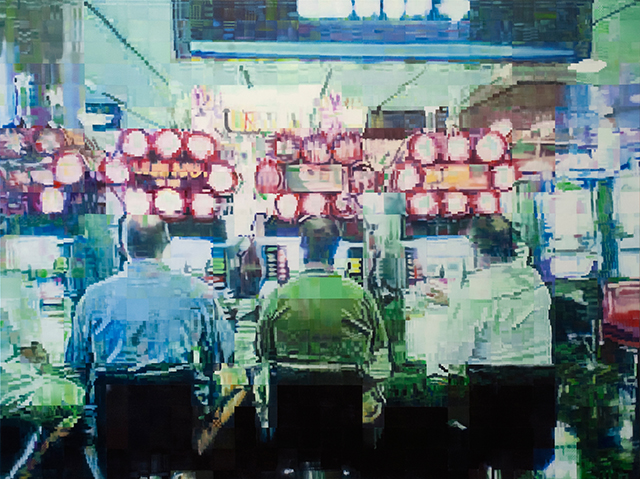
The bulk of my work over the past few years has been using found images and photographs mostly sourced from the internet which are treated to very systematic translations into paintings. An ongoing interest for me has been in exploring the digital aesthetic, complete with pixelation, errors and glitches. This comes partly out of an interest in the hidden structure underlying digital images and partly from a love of the purely abstract qualities of this visual noise.

I tend to always gravitate towards images which at first glance seem inconsequential, maybe even coming from amateur sources, images which otherwise would be lost and easily forgotten in the perpetually growing stream of online media. Up until recently most of the images that I have been using have been very much from the present day, pictures of contemporary life, but currently I am looking to images, videos and photos that are dating back to the early 1970s.

Tell us a little about your background and how that influences you as an artist.

My background is in computer programming, which I studied for a few years before art and, although I tried to avoid it, the mathematics and structured logic from that world eventually began to invade the way I approached painting and making art. Over the years I worked professionally teaching multimedia applications and as a video editor, a web designer, and programmer, so I think there is no way for me to avoid dealing with the digital world and the technology in a very direct way. Added to that I have always been fascinated by watching the evolution of digital technology and the internet. In particular by how our relationship with photography, video and images has changed so drastically in such a short period of time.

The concept of the “artist studio” has a broad range of meanings, especially in contemporary practice. The idea of the artist toiling away alone in a room may not necessarily reflect what many artists do from day to day anymore. Describe your studio practice and how it differs from (or is the same as) traditional notions of “being in the studio.”

My day in the studio usually it starts out slowly by tidying up the remnants from the previous day’s work and I also spending a lot of time just looking and thinking and assessing the success or failure of what I have been working on. Often I’ll spend some time writing, just notes really or rambling reflections on what I am working at the time or more often what direction I would like to go with the work, trying to figure out all the dilemmas and understand or define my own place or position in it all.

I often think about that movie, from the 80’s I think, called New York Stories, it was in 3 or 4 different parts, each one by a different director, like Scorsese and Woody Allen. Well there was one segment in the film which had Nick Nolte playing an artist. I don’t remember who directed that bit and I can’t even remember the story very well but there is a scene from it that that has stuck with me, the scene of the artist in his studio painting. It had loud dramatic music, he was drinking whiskey, smoking cigarettes, caught up in the moment, in a vast studio, making wild expressionistic gestures, the whole thing was full of gravitas, angst and that horribly misunderstood and over used word “inspiration”. Well my day in the studio is nothing like that. But for a long time, while growing up, that is the picture I had of the romantic idea of the artist working and maybe for some people that is how it is. I do have the music on and I try to keep the music suitably dramatic and loud, and I do get lost in the moment, in the flow, while working, but actually my time in the studio is generally quite structured and planned out and my working process goes through different stages from research to experimentation, planning on to preparation, then to the actual painting and a lot of time spent quietly looking.

A friend of mine back when we were in art college used to have days that he would set aside that he would devote to spontaneous unplanned experimentation in the studio, his spontaneous days as he used to call them. Well I do sometimes following his example take a few days every now and again for my own spontaneous days or I guess I could call them my Nick Nolte days.

Reno (2011) Oil on Canvas, 180 x 240 cm

Reno (2011) Oil on Canvas, 180 x 240 cm

What unique roles do you see yourself as the artist playing that you may not have envisioned yourself in when you first started making art?

I find myself doing a lot logistical planning, mostly organising transportation for exhibitions. It is something that I have had to learn about the hard way by just doing it and I don’t think I ever envisioned the amount of applications, proposals and submissions that an artist has to make these days. It is definitely one of the things which strips away any of the romantic clichés normally associated with being an artist. A necessary evil maybe but it can be like playing the lottery at times. I think I have managed over the years to get a good balance to it and the make sure that it doesn’t take too much time away from the actual art making or that the art making depends on the outcome in anyway for funding or support.

Something that has been very rewarding to me is any time that I have spend teaching in art colleges. It is not something that I do on a very regular basis at the moment, just intermittently as visiting artist but it has always been very fruitful experience. Also over the past few years I have organised and curated a number of group exhibitions which has likewise been hugely rewarding and a great learning experience while at the same time allowing me to work with and get to know some great artists.

When do you find is the best time of day to make art? Do you have time set aside every day, every week or do you just work whenever you can?

I mostly work in the studio on weekdays and my typical day begins around 9 or 10 in the morning and runs to about 5 or 6 in the evening. So in that way, time-wise, my artistic practice is almost like a regular 9 to 5 job. I have three children so my work revolves around the regular school hours. The number of days I get to the studio varies depending on other work that I have going on but I try to get there as many days as possible each week. I often work late into the night at home on research or if I need to do any preparatory work on computer. Of course when I have a deadline for a show coming up my time and days in the studio tends to run a lot longer but for me the regular structure and discipline of going to the studio for such regular hours has been really helpful in maintaining a certain amount of sanity in my life and as a result sustaining a career over time. I am not one for sitting around waiting for ideas or inspiration to come, instead I for me ideas come very readily as a result of the process of working and often actually from the little things, the seemingly meaningless but necessary tasks that go on around the work.

Fuzzy Memory ( 2012 ) Oil on Canvas , 70 x 95 cm

Fuzzy Memory ( 2012 ) Oil on Canvas , 70 x 95 cm

 How has your work changed in the last five years? How is it the same?

The scale of my work has increased over the past five years and I have been exploring different materials and techniques but I think one of the main developments in my work has been that I have made a conscious effort to expand the focus of my work, in other words allowing myself to follow different tangents or different parallel strands of interest at the same time rather than trying, as I had done previously, to restrict myself to a more singular path in an attempt to establish a distinct style. This has been a very liberating development for me and one which I hope to push further over the next few years.

I would say is one of the greatest ongoing challenges in my practice is with the selection of source material. It is a question I find myself returning to again and again in attempt to find a strategy that could act as a guide or at the very least a framework to my choices. I imagine that it is a challenge that most artists must face when presented with all the possible images, themes and subjects that are on offer from the internet, when you can choose from everything it is hard to choose anything and every choice is valid but then also invalid. Navigating and selecting from these possibilities is never easy and my own approach is continually evolving. When I first began using the internet as a source the selections were semi-random or quite arbitrary in nature. Most recently I have begun working on a project that is looking at media and subject matter guided and directed by research into and around newspaper stories about UFO sightings.

Are there people such as family, friends, writers, philosophers or even pop icons that have had an impact on the work you do?

I’ve had a studio for the past 8 or 9 years in a former piano factory which is home to almost 35 artists and the daily interaction with the other artists in the studio house has been a very valuable thing for me and it continues to be a rich source of support. I have been very lucky over the years to have had quite a number of close friends who are also artists that have been great companions to discuss, debate, argue and pontificate at great length about art and I think this has been a huge influence on my work and my approach.

Living in Berlin means that I have easy access to a vast number of galleries and museums and I spend a lot of time visiting galleries and looking at art and I could make a vary long list of artists who’s work has influenced me in some way or other both directly or indirectly. Some of the main artist that have always been on my radar would be Richard Hamilton, Malcolm Morley, Gerhard Richter, Sigmar Polke, Shirin Neshat, Eberhard Havekost and Xie Nanxing to name but a few.

Music, film and books have always had a very great influence on my work and my taste in all of these areas tends to be very varied and eclectic but a list of those names would be very long. Recently I have been listening to a lot of the weird and wonderful Moondog, watching the movie Holy Motors a couple of times and reading a strangely fantastic book called Wittenstein’s Mistress by David Markson.

If you had an occupation outside of being an artist, what would that be and why?

I think I would be a baker, baking bread just seems like a very useful thing to do.

About

Photo by Conor Clarke

Photo by Conor Clarke

Enda O’Donoghue’s work presents a forensic interest into the construction, the language and the mediated world of digital images together with an ongoing dialogue with the medium and process of painting. Hovering between the realms of abstraction and representation, between the mathematical encoded and the organic, O’Donoghue’s paintings are the result of a process which is highly analytical and methodical and yet inviting of errors, misalignments and glitches. The imagery comes almost exclusively from found photographs sourced from the Internet, where he plays with random throw-away moments of everyday life, merging them together in various interconnected themes. In O’Donoghue’s work, the painterliness of his technique works with the disposable nature of his subjects to make the work sometimes poignant and melancholic, or alternatively brittle and harsh. His work is deeply influenced by the digital high speed reality we now live in and he transports these seemingly meaningless sound-bite images from a place of apparent futility to one that questions and searches for meaning through the transformative act of painting.

Enda O’Donoghue was born in Ireland in 1973 and has been living and working in Berlin since 2002. He completed a degree in painting at the Limerick School of Art and Design followed by a Masters in Interactive Media at the University of Limerick.

O’Donoghue has taken part in numerous international group exhibitions, including shows at Liebkranz Galerie, Berlin (2012), Meter Room, Coventry (2012), The Moscow Museum of Modern Art (2011), Expo in Shanghai (2010), Universal Cube, Leipzig (2008), Four Gallery, Dublin (2006), Overgaden, Institute for Contemporary Art, Copenhagen (2006) and a number of solo shows in Berlin, Ireland and in 2009 a solo exhibition in New York. In 2012 his work was presented in a major solo exhibition at the Limerick City Gallery of Art, Ireland and he has recently been awarded a residency at the Golden Art Foundation in New York state. He has also curated a number of group exhibitions, most recently an exhibition presenting a selection of Berlin based Irish artists at Grimmmuseum in Berlin which toured to the Galway Arts Centre, Ireland in 2013.

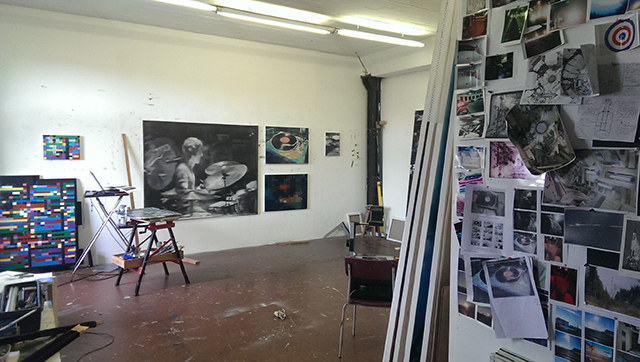
The Studio

The Studio

endaodonoghue.com

All images copyright of the artist and used with their permission.

Posted in Uncategorized | Tagged , , , , | Leave a comment

Joe Bussell – Rosedale, Kansas

photo-79Briefly describe the work you do.

I have MFAs in Painting and Ceramics and currently work in in 2D and 3D.

At what point I your life did you want to become an artist?

My parents pushed music at an early age but when I was finally allowed to go to an art camp I knew art is what I wanted to do for the rest of my life. My mother and father were horrified.

Tell us a little about your background and how that influences you as an artist.

I had to fight to go to art school and I that fight stayed with me. Making art always comes first. It’s probably why I wasn’t a very good teacher.

What types of conceptual concerns are present in your work? How do those relate to the specific process(es) or media you use?

When I was a younger artist the concept or content of the work played a pivotal role. Now it’s all about the process. Ironically, my work has more content now than it did when I worried about it all the time.

photo-78

We once heard Chuck Close say he did not believe in being inspired, rather in working hard everyday. What motivates you in your studio practice?

Chuck Close hmmm… I agree going to the studio every day and working hard is crucial, but inspiration lives in that space too. If something is uninspired most likely it’s not very interesting to look at. Making art is what I live for. That’s really all the motivation I need.

What artists living or non-living influence your work? 

Joan Mitchell, Howard Hodgkin and Mark Rothko are the artists I always look at.I saw a retrospective of Joan Mitchell’s work in New York and a retrospective of Rothko’s work in Paris. The memory of those shows and how they made me feel stay with me to this day.

When you are not making art what types of activities and interests do you engage in?

I read, not as much anymore, but I make up for it by going to plays and the opera. My partner, Fred and I go to every exhibition we can. Hate openings but love to see what other artists are doing.

About

photo-780Hippie, gay activist, AIDS advocate, gypsy, art educator and ex pat have described Joe Bussell over the years, but artist defines him.

In 1979 Joe received a BFA in painting from Kansas University. By 1994 he received two MFA degrees from Washington University in St Louis. From 1993 to 1998 Joe worked as a faculty member in the School of Art at Wash U.

Over the years his work has been exhibited through out the US and in Europe. The work was reviewed in various newspapers,journals and magazines, including the US News and World Report, New Art Examiner and The New York Native. Bussell’s work has been represented by the the TAI Gallery in New York City, Urbi et Orbi, Gallery Karl Oskar and Marji Gallery in Santa Fe.

Joe lives in Rosedale, Kansas, a rural/urban nether world setting in the crossroads of Kansas City, Kansas and Kansas City, Missouri. This idyllic setting provides him the time to make his work, commune with nature and yet be close enough to an airport to be anywhere in the world within a few hours.

DSC_8572

joebussell.com

All images copyright of the artist and used with their permission.

Posted in Uncategorized | Tagged , , | 4 Comments