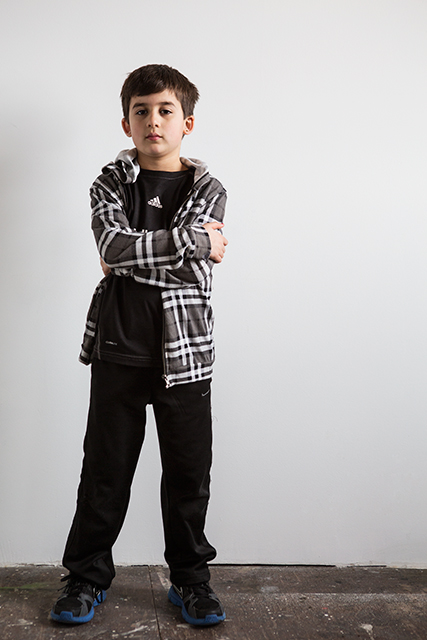
Lois Bielefeld – Milwaukee, Wisconsin

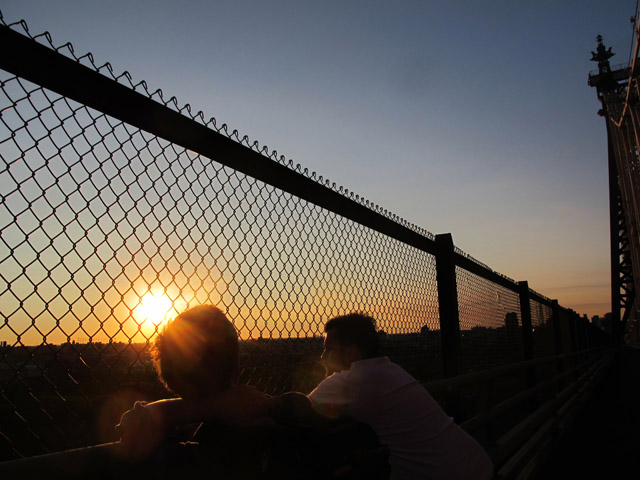
Amaya, 2014. from Androgyny  photograph, 30x20"

Amaya, 2014. from Androgyny photograph, 30×20″

Briefly describe the work you do. 

The central motif of my work is the conceptual portrait. I focus on a connective idea that ties a group of people together and explores the human qualities that we all share. There are things we all do, eat and sleep for example, but the rituals surrounding those activities and how we define the spaces for partaking in them vary and can be telling. My goal is to explore the rituals that define us exploring what habits and personal spaces can reveal about our private selves. I do this through photography, audio interviews, installation and film/video pieces. 

Tell us a little about your background and how that influences you as an artist.

I’m from Milwaukee, raised in a very religious family. My mom was a full-time homemaker, as she called it, and I watched my dad get laid-off after almost a lifetime with the same company due his field becoming obsolete. They never introduced me to the arts or really any pop culture but were encouraging with my interest in photography. My fairly typical midwestern upbringing influences my work as my work strives to study Americans and therefore completely relatable. We all eat an evening meal and sleep in some sort of bedroom. 

The concept of the “artist studio” has a broad range of meanings, especially in contemporary practice. The idea of the artist toiling away alone in a room may not necessarily reflect what many artists do from day to day anymore. Describe your studio practice and how it differs from (or is the same as) traditional notions of “being in the studio.”

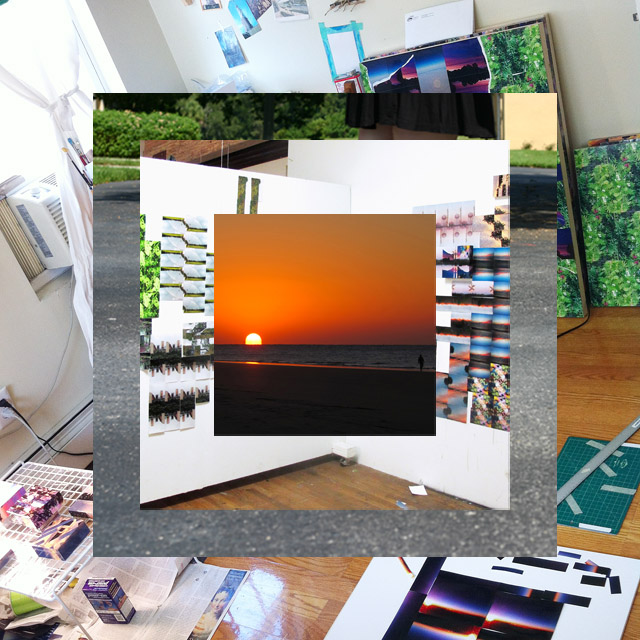
Until my most recent series, Androgyny, my work was completely environmental. It was as much a portrait about the person as it was about their space. I really only worked in the studio for commercial work. Sometimes I considered my studio space more so to be my office as post production is just as important as the actual shoot. For my portraits I do almost no retouching but there is always editing, scheduling, applying– so much time at the computer that that sometimes has become my studio. Just over a year ago when developingAndrogyny I rented my first studio space and have really loved having a consistent space to work out of. Sadly this is my last week with my studio which I didn’t anticipate being so torn up about!
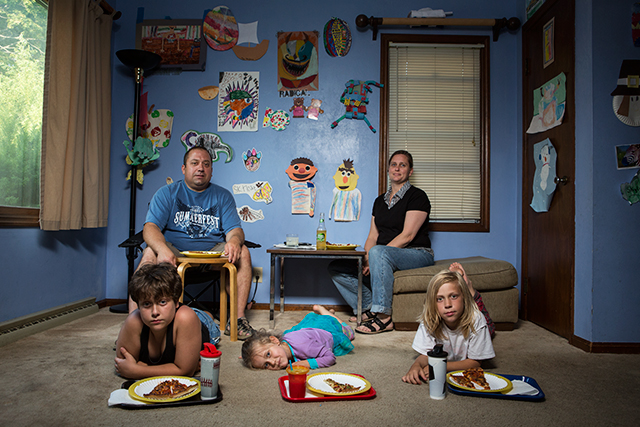
Wednesday: Emilio, Rhonda, Benedetto, Skylrae, Jacomo. 2014 from Weeknight Dinners  photograph, 30x20"

Wednesday: Emilio, Rhonda, Benedetto, Skylrae, Jacomo. 2014 from Weeknight Dinners photograph, 30×20″

What unique roles do you see yourself as the artist playing that you may not have envisioned yourself in when you first started making art?

Often my curiosity about a subject will inspire a series. In 2011, when i first moved back to WI the law changed enabling conceal carry of handguns. This coupled with my coworkers invitation to go trap-shooting (I’d never touched a gun) really got me thinking– I wanted to know who was carrying and why and to hear their stories. This inspired Conceal Carry, 2012-2013, a series of 30 portraits and 15 audio interviews. I never imagined myself at a range shooting a handgun (researching the experience) or putting myself out on group boards like ArmedBadger.com in efforts to find subjects. I love that my work makes me examine and learn about something from many more angles than just my initial emotional reaction. 

When do you find is the best time of day to make art? Do you have time set aside every day, every week or do you just work whenever you can? 

I don’t have a best time honestly- I shoot commercially to enable all my personal work. So i cram all of my projects in between my 8-5 in-house shooting job (which i love by the way as an aside, as it gets me to work in many different ways than I normally would on my own). Some projects dictate the time such as in Weeknight Dinners (2013-current). But really, I rarely stop working- i’m always applying to something, doing post-production work, photographing, or concepting. Honestly, I feel best when I’m working on my work. 
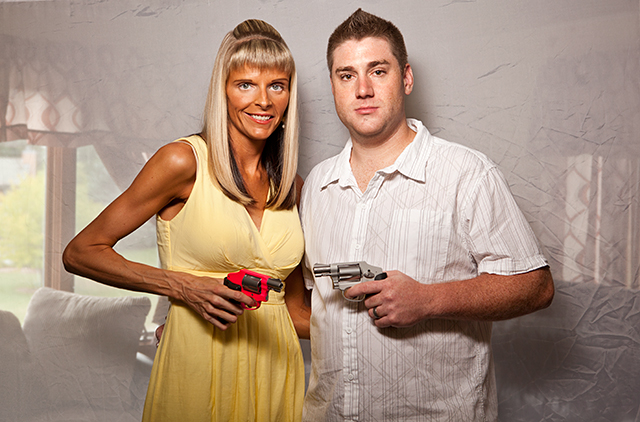
Lisa and Pat, Smith & Wesson 642.38 special. 2012 from Conceal Carry photograph, 30x20"

Lisa and Pat, Smith & Wesson 642.38 special. 2012 from Conceal Carry photograph, 30×20″

How has your work changed in the last five years? How is it the same?

I relocated from Brooklyn 4 years ago to Milwaukee to shoot in-house for Kohl’s. This had a tremendous change on my personal work because instead of hustling for client-work now i could just focus on my personal work. In the past 4 years I’ve gone to working on one long-term series The Bedroom (2008-2012) to pursuing several bodies of work. I started showing my work and found an incredible gallery rep, Debra Brehmer, at Portrait Society Gallery. I really have progressed in the past 4 years as an emerging artist developing photography, film/video, audio, and now installation.

Are there people such as family, friends, writers, philosophers or even pop icons that have had an impact on the work you do?

Definitely my family impacts my work. My daughter is 14 and I have been thinking a ton about adolescence and her development. I started a body of work on adolescence in 2013 but failed miserably on figuring out my approach with the series and shelved it- but i’m still mulling on it and hope to pick it up again when it solidifies. I find inspiration from travel and people watching- little interactions and the things we do. I adore Wes Anderson films…. and try to go to as many shows and openings as I can make time for. I’m also really inspired by the incredibly supportive and rich art community in Wisconsin and my peers. I also love fashion photography and find great story-telling and lighting aspiration from photographers like Alex Prager, Steven Klein, and Mert Alas & Marcus Piggott. And music! I can’t forget how inspiring music is on my work– from Grizzly Bear to Sumi Jo! 

If you had an occupation outside of being an artist, what would that be and why?

Before I studied photography I considered going into environmental studies or urban planning as I feel a responsibility for the way we live and exist in this world and the generations to come. But honestly, I have no interest in doing anything else nor would I know where to start! 

About
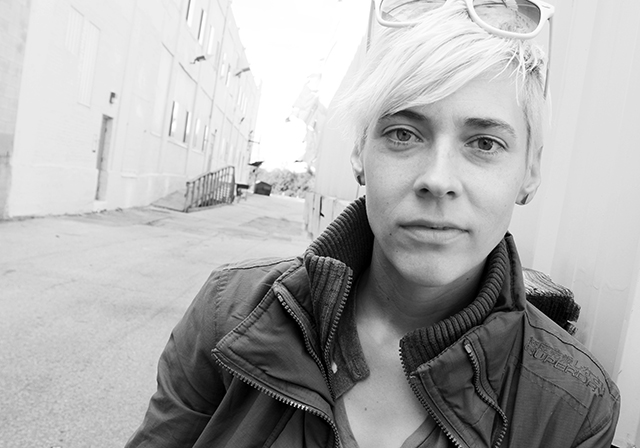
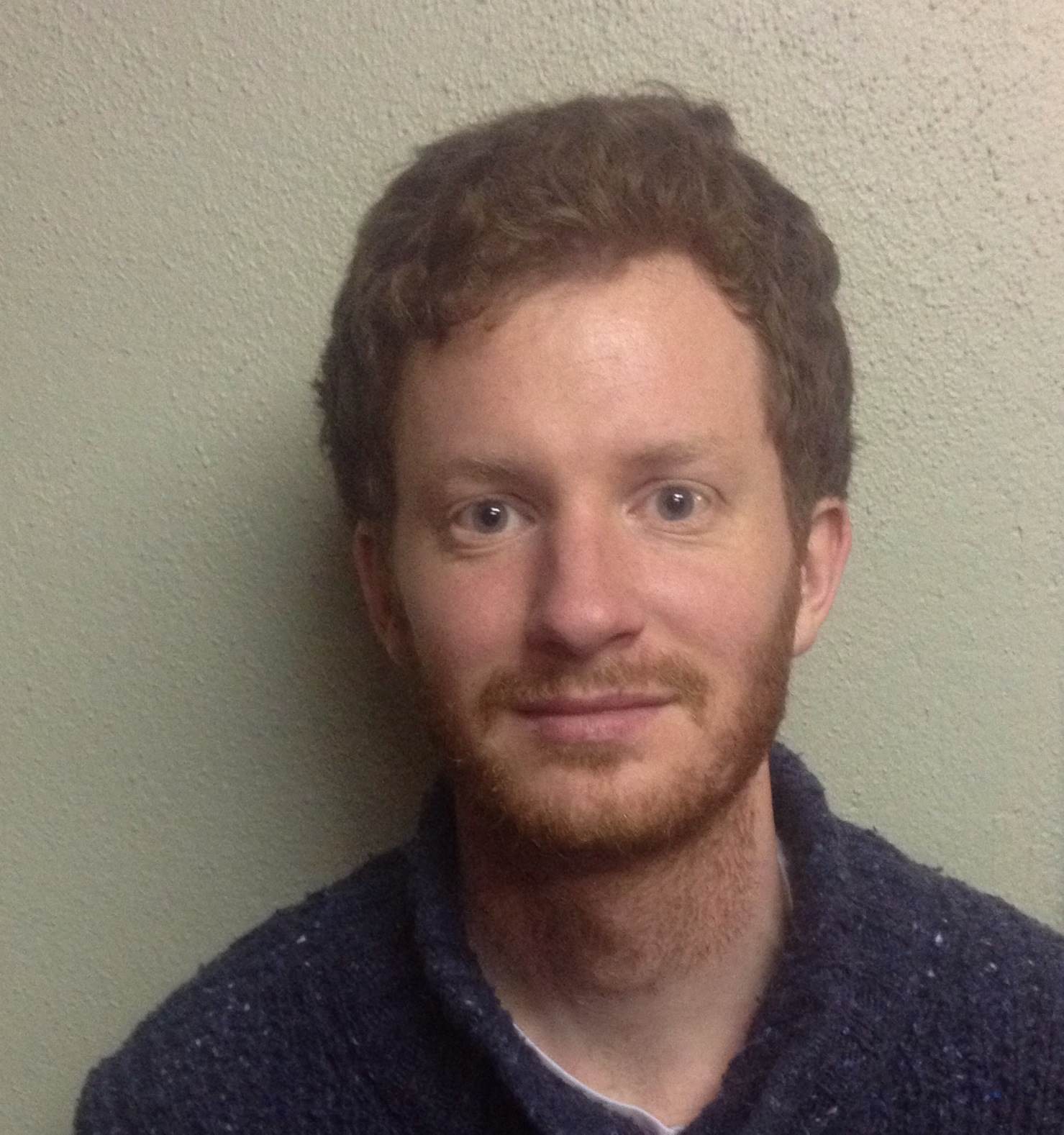
Lois_headshot

Photo credit Sara Risley

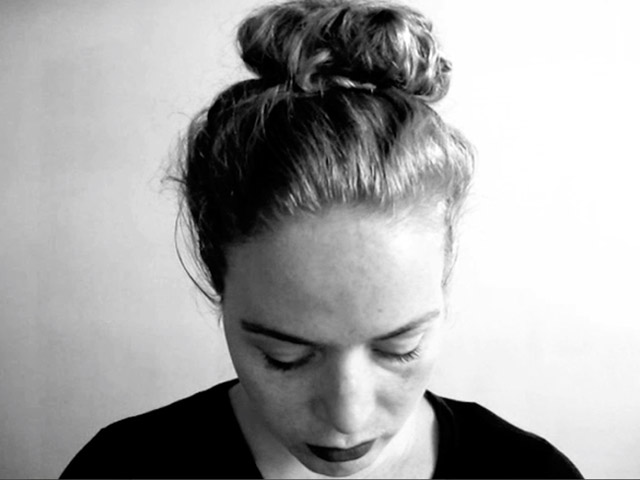
Lois Bielefeld is a conceptual photographer and filmmaker who splits her time between fine art and commercial/fashion photography. She was born and currently resides in Milwaukee, WI with her girlfriend and daughter. Lois has her BFA in photography from Rochester Institute of Technology and from 2003-2010 she lived in New York City. Besides photography, she feels passionate about Scrabble, swimming, urban gardening and bicycling adventures.  She has two solo shows this fall: Room & Board at ArtStart in Rhinelander and Androgyny  opening at UW-Parkside in November.
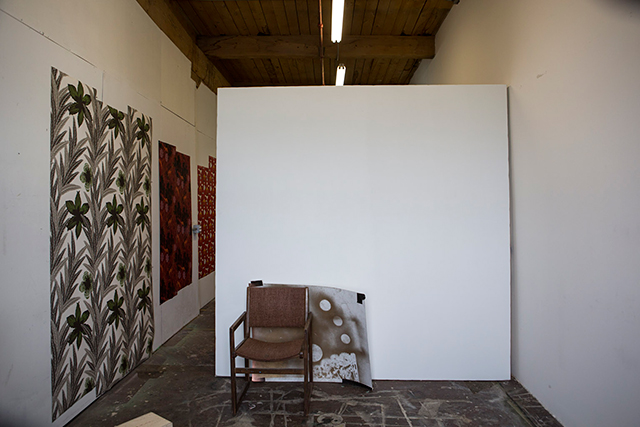
Lois_studio

www.loisbielefeld.com

 All images copyright of the artist and used with their permission.
Posted in Uncategorized | Tagged , , , , | Leave a comment

Donal Moloney – London, England

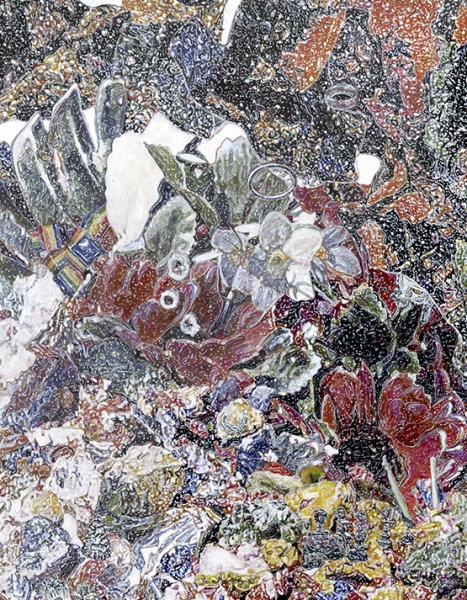
Donal Moloney, Detail of Reliquary

Donal Moloney, Detail of Reliquary

Briefly describe the work you do.

The work I make are small paintings on canvas. I construct ‘models’ and dioramas using a variety of materials such as plaster, plasticine, clay, string, paint, wood, plastic and varnishes. I make what could be thought of as colourful, almost iridescent, playful objects and forms. These are made quickly and originate from very simple ideas that I record as thumbnail sketches and descriptive notes such as ‘a series of overlapping mountains’ or ‘two trees made from plasticine’. I subsequently combine these objects with other found imagery.

Tell us a little about your background and how that influences you as an artist.

I am originally from Cork. I studied Fine Art at the Crawford College of Art and Design before coming to London to do an MFA in Painting at the Slade School of Fine Art. It is hard to say how my background has influenced me as an artist. Perhaps the biggest influence has been learning to draw in art classes when I was younger and really enjoying being absorbed in making images. This interest in painting and drawing grew and grew throughout secondary education and eventually led to me applying to art school.

The concept of the “artist studio” has a broad range of meanings, especially in contemporary practice. The idea of the artist toiling away alone in a room may not necessarily reflect what many artists do from day to day anymore. Describe your studio practice and how it differs from (or is the same as) traditional notions of ‘being in the studio.’

My studio practice sounds quite like the one you described! Whether it is ‘traditional’ or not I do not know but I have always liked to have quite a steady routine in the studio. It is quite simple really. I start early and plan out what I hope to achieve for the day. This plan in then improvised upon but I find it very useful to have an aim that I can then be flexible with. I find limits constructive and a sort of focusing aid at times. Some days in the studio can be spent on the computer editing and searching for Images I want to paint. Other times many weeks can go by where all I am doing is underpainting. I like the way you can build a studio practice out of all the things you love doing. For me, it is about mixing very quick and playful model making with longer more contemplative ‘reconstructing’ of the models in a painting. Rather than copying the models the paintings are, I think, more of an interpretation of them; a slow gestational reimagining of them. Of course many ideas jump out at you when you’re out of the studio and you make notes from these little ‘moments’. However, when you get back into the reality of the studio those ‘moments’ often lose their gleam and might be better served in a future painting (or not at all!).

Donal Moloney, Shrines.

Donal Moloney, Shrines.

What unique roles do you see yourself as the artist playing that you may not have envisioned yourself in when you first started making art?

That’s a tricky question. I was quite naive when I first started art school. I thought I would be drawing and painting from casts and then from the life model for a number of years. I did not do much research about art school before going! We were more or less given studio spaces and told to get on with it! This was great for me because I had to figure out what I really wanted to do for myself, then teach myself how to do something, rather than depend on being taught every step. This was extremely useful when I left art school. You discover very suprising things about materials with such an open ended way of learning. Regarding what ‘unique role’ I play as ‘the artist’ I have no clear and concise answer. I have always been drawn to artist’s work that gives me the ‘wow factor’ as a friend once described it. I still find that accurate to what I like to look at. I know the artist is apparently supposed to have a role in society creating ‘novel visibilities’ and thought provoking commentaries on the world we live in. Perhaps that is part of what I do but I do not totally know what I am doing most of the time. Maybe my work is some form of commentary on the world we live in, however nuanced or slight my propositions are. At the end of the day I don’t really mind not knowing exactly what I have done as I love ambiguity in art (but a very specific one none the less).

When do you find is the best time of day to make art? Do you have time set aside every day, every week or do you just work whenever you can?

As I mentioned earlier I like to start early and work throughout the day. The way I work also allows me to paint after work or grab an hour or two here and there. I think it’s important to keep the momentum up because, for me, solutions and ideas for the work come during the making of the work itself as my mind drifts. I often find I make serendipitous connections between images and ideas whist actually painting.

Donal Moloney, Reliquary

Donal Moloney, Reliquary

How has your work changed in the last five years? How is it the same?

Five years ago, whilst still on my MFA and afterwards, I spent a lot of time experimenting with each of the various processes I use such as model making, digital image editing and even weaving for a time. Perhaps the work I was making at this time was not very interesting to look at but in combining image making processes I learned that between these different ways of working there are often exciting combinations. I brought these together and thought about what I really wanted to make rather than what I could make. I made a decision to make the most busy or complex paintings I could imagine. It may sound simple but for me it became about refining very complex combinations of avenues I had explored previously.

Are there people such as family, friends, writers, philosophers or even pop icons that have had an impact on the work you do?

Of course family and friends are really important; they’re great at spotting things you never saw in your work before. Regarding writers and philosophers I do like reading and writing about art but, like many artists, I am not interested in making art about what I read. Reading helps me to get to grips with other’s art making but rarely is there any concrete crossovers with my own practice. I have been reading a great book called ‘The Rhetoric of Perspective’ by Hanneke Grootenboer. I love music and have sometimes thought there is a crossover between the sentiment, or perhaps the complexity, of some of the music I listen to and my own paintings (Sikth, THe Flecktones, Scritti Politti) but I think I just like catchy, cheesy hooks and odd time signatures!

If you had an occupation outside of being an artist, what would that be and why?

I think I would have liked to study art history or maybe write on art. I find the slippages between what you see and read about is fascinating. I did want to become an architect when I was younger. I am quite jealous of an archaeologist friend of mine but like most things the glamour and interest probably shifts when you do it day in day out!

About

Donal MoloneyMy practice stems from an interest in how the activity of painting can be channelled and transformed through other media and processes from outside itself, such as sculpture, photography, weaving, video, and how this channelling can return back to painting. 

In parallel with this interest in ‘slippages’ between media I am also fascinated by paintings of fantastical and bizarre ‘proximal spaces’. I investigate and play with metamorphosising and compressing all manner of images together in my paintings. Such complicated and multifaceted ways of looking, that these paintings can evoke, are a central concern of my practice.

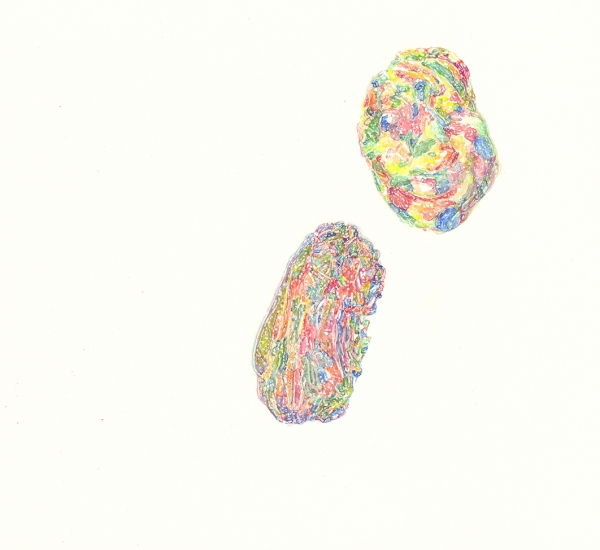
Donal Moloney, Study for Reliquary 4

Donal Moloney, Study for Reliquary 4

donalmoloney.net

All images copyright of the artist and used with their permission.


Posted in Uncategorized | Tagged , , , | Leave a comment

J.D. Doria – Tel-Aviv, Israel

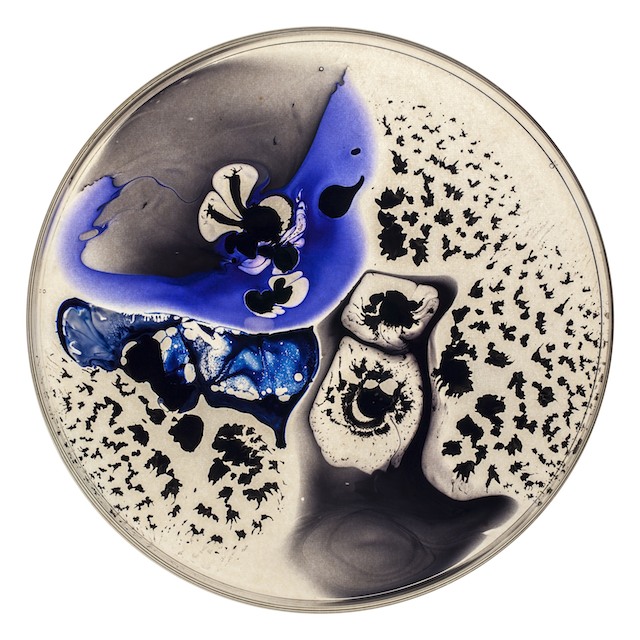
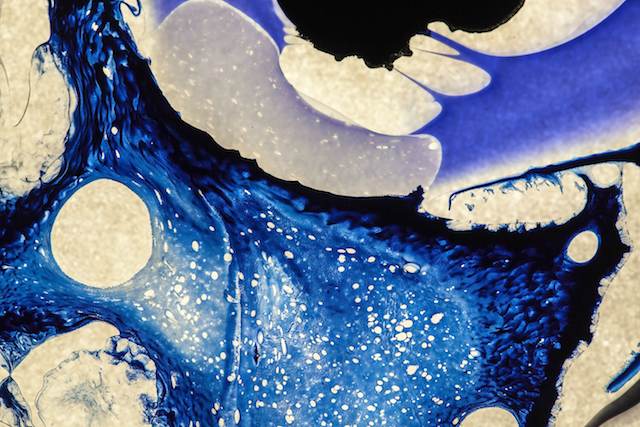
The Petri Dish Project (01b) -2014

The Petri Dish Project (01b) -2014

Briefly describe the work you do.

In my work, since the beginning, it was the line of separation between imagination, nature and matter that caught my attention and became across multiple mediums my experimental and aesthetic enterprise.

What would happen if one looks at nature, imagination and matter as a continuum? Where the one is endlessly spilling into the other? My work, originally rooted in painting, interprets such a continuum of potential openness and attempts to achieve it by the attentive usages of bridges, the bridges to which I refer as technologies.

Technologies in my work are the artist’s extension, and they profoundly change how i relate to the artistic process, they help expose and reveal the ‘middle’, the constant leaking of medium into medium, of mind into mind and of projected futures into the present. I am after the softness that unfolds as interconnected-ness, opening by that a corridor into new transitory ‘home’ for our perception.

For example in my last project – the Petri Dish, rather than painting I am “growing” images by the agency of materials (colors and mediums). The composition in the Petri dish becomes active and generates chaotic processes, out of which a ‘colony’ of images emerges. This is where the camera and the close collaboration with a photographer enter the scene and capture the dynamics in time. Images are then digitally enlarged and grown and enter a process of selection and articulation. Each ‘work’ is then composed by a circular image of the particular “culture” and by the ‘multitude’ of images extracted from the process.

Tell us a little about your background and how that influences you as an artist.

Cinema is my background and the initial corridor I took into art, and it has definitely influenced the way I understand art, aesthetics and the scope of being an artist. When we think of cinema, Technology is a critical factor in enabling the emergence of Cinema and the final product of it is always the outcome of an ensemble of masters working together. The interesting element is that the artistic output is grown through stations that blur the times of the process: script, recreated during shooting reframed during editing. The work of art is understood as a malleable substance that can profoundly mutate via the coordination of multiple stations of making. I believe that this attitude towards the artistic process is visible in my current work. The use of technology, the collaborative work and the succession of multiple stations of making, are an integral aspect in the way I create. The final images are extracted in multiple stages, at first in the generative aspect of my work with materials, then through technology which allows to open the initial impressions into multiple spatial scales and time frames, then through the collaborative dialogic act of selection and articulation, and eventually in the final editing and presentation of the artistic product – painting as multitude.

The Petri Dish Project (01a) - 2014

The Petri Dish Project (01a) – 2014

The concept of the “artist studio” has a broad range of meanings, especially in contemporary practice. The idea of the artist toiling away alone in a room may not necessarily reflect what many artists do from day to day anymore. Describe your studio practice and how it differs from (or is the same as) traditional notions of “being in the studio.”

The most important aspect of my work is the experimentation phase in the studio. This is where I meet new materials and discover them in interaction, searching for emergent properties that can lead my imagination into new realms. During this period I enjoy the freedom from specific intent and immerse myself in the doing of things that carry no useful end in the immediacy. It is very similar to a meditation method and it operates through soft intention, which enables a space of mind and intensity on the edge. The experimentation embeds two parallel processes both characterized as being far from equilibrium: the interaction of the materials and the navigation of my states of mind. The moments of alignment of both realms are basically what I am after. My experimentation phases range between one to three months, after which the actual creation of a project is done in an intense and short period of time.

What unique roles do you see yourself as the artist playing that you may not have envisioned yourself in when you first started making art?

I think that my idea of making art at the beginning was definitely biased, at times bending towards ideals and at a times leaning towards the here and now of the self.

And perhaps the boldest difference that emerge along the years of practice lies in the understanding that the making of art needs to be dressed with a proper context and that the context needs to be relevant (a currency) to the current phase of the culture. Which means that the making of art lies in the communication between morphology of eternality and morphology of temporalities and the actual ‘making’ is itself a process of morph-genesis that composes these morphologies into new and hopefully relevant form and fabric.

The Petri Dish Project (01c) - 2014

The Petri Dish Project (01c) – 2014

When do you find is the best time of day to make art? Do you have time set aside every day, every week or do you just work whenever you can? 

I work in periods. There is an intense period of work and then I do other things that basically become, at the right timings, the next platform for the creative process. So in general there are intense periods of research, not directly connected to the studio and intense period of making, in between there is all the rest.

How has your work changed in the last five years? How is it the same?

My work has passed through a radical change in the last 5 years. When I introduced technology into the traditional process of painting and from then my work has been a mediation between painting and technology. Along these years, I have used various technologies: 3D scanner, digital photography and computer software. And I also changed the medium upon which I work moving from big canvases to small paper, and lately migrating from the 2D surfaces of traditional painting to the 3D depth and fluidity of Petri dish cultures captured on still camera. The Petri dish, in its symbolic power, reflects in my mind the growing powers of experimentation that characterize the beginning of the current century. As humans our civilization may soon be able to play with our inner codes, to reprogram the inner folds of ourselves. It is a dramatic discontinuity with previous history and it is happening extremely fast. In the last few years I contemplate more and more the importance that aesthetics may assume in the transition phase, the possibility to read aesthetics as “curation-of-becoming” and bring it to be a relevant voice in the ongoing debate about the future of our race and life at large.

Are there people such as family, friends, writers, philosophers or even pop icons that have had an impact on the work you do?

If I were to name a few, then, through cinema I met Andrei Tarkovsky, who touched me deeply for the correlation between art and higher states of mind. In painting I would say Kazimir Malevich, who for me embodies the real pathfinder. Through the web and my interest in the evolution of the mind, future and friendship, I met the writings of ‘Wildcat’, who provokes, through his writing, the very substance of a mind on the edge.

If you had an occupation outside of being an artist, what would that be and why?

I would wish to be a super intelligent mind mold that could grow in minds and diffuse into those mediums insights, visions and dreams.

About

J. D. Doria, aHeadshot jd dorian interdisciplinary artist, works and lives in Tel Aviv and has exhibited his works internationally in Tel Aviv, Rome, Milan, Paris and Munich among others. His work explores through ‘matter’ the questions he deems fundamental in a human becoming, and matures at the intersections between art and technology, and between art and science. His background in cinema allows him to capture unexpected dynamic qualities in his works, which stem out from painting, and evolve through technology and photography into generative art. Among his exhibited projects, Painting as a multitude, Organic Memory and the Petri Dish Project.

jd doria 2

jd-doria.com

All images copyright of the artist and used with their permission.

Posted in Uncategorized | Tagged , , , | Leave a comment

Katrina Majkut – Brooklyn, New York

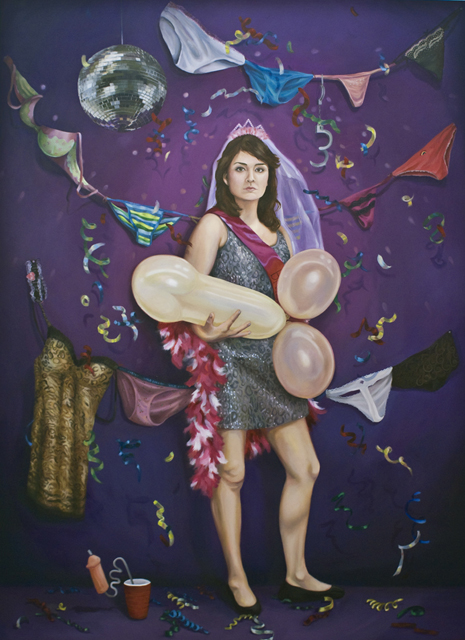
Limelight, Spotlight, G-Spot, Oil on Canvas, 68" x 50", 2013

Limelight, Spotlight, G-Spot, Oil on Canvas, 68″ x 50″, 2013

Briefly describe the work you do.

I explore feminine aesthetics, traditions and narratives through mediums that most fit the subject and my ideas, which are usually oil, cross stitch embroidery or screenprinting. I also run a website called, www.TheFeministBride.com that has inspired most of my recent paintings focusing on wedding and marriage traditions.

I’m interested in the complicated and didactic psychology associated with these seemingly romantic and joyous celebrations. My work aims to touch upon socially constructed, gendered identities and their subsequent inequalities. This is where my research into the social impacts takes root and within each custom I investigate issues such as vanity, consumerism, sex, identity, the gaze and the spectacle. These themes, including the work’s feminist grounding, are purposely subtle, much like modern sexism.

Tell us a little about your background and how that influences you as an artist.

My most influential background experience includes being a beleaguered bridesmaid. I discovered my amazing lack of talent for weddings as my friends began walking down the aisle. Several injuries, one wedding party expulsion, too many bridal showers, not enough bachelorette parties and one spouse later, I began researching wedding and marriage tradition’s history, comparing it to contemporary lifestyles and then creating more egalitarian solutions. I decided to put all this towards a website I started called, TheFeministBride.com and a book that is now represented by Carol Mann Literary Agency in New York City.

In addition to complications in women’s culture, I was often the lone woman in many male-dominated spheres. My undergraduate college was only 30% women and there I was the only female thrower and captain on the Track and Field varsity team. I then spent five years in wealth asset management where women probably made up 10% of the workforce. Being isolated in these environments really instigated my feminism and my belief in “leaning in” before Sheryl Sandberg even coined the term. I don’t think I would be creating socially driven, feminist work had I not had these two impactful experiences.       

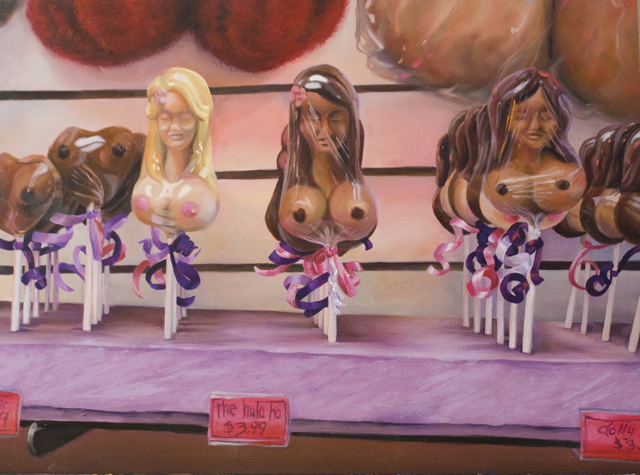
Hula Ho's, Oil on Panel, 12"x14", 2014

Hula Ho’s, Oil on Panel, 12″x14″, 2014

The concept of the “artist studio” has a broad range of meanings, especially in contemporary practice. The idea of the artist toiling away alone in a room may not necessarily reflect what many artists do from day to day anymore. Describe your studio practice and how it differs from (or is the same as) traditional notions of “being in the studio.”

As a cross-stitcher, my process is completely unorthodox. The best location for it is actually on the couch, lounging, with my elbows propped up by pillows for support. The downside to stitching hours on end is that it’s left me with a lot of tendonitis in my shoulders and elbows, so the more support I get, the less painful my art practice is. I also have to watch TV while stitching. The small stitches I make are miniscule and constantly changing my eye focus (from art to TV) prevents eyestrain so I can work longer. Few would assume that cross-stitching is so physically demanding. I’ve been working this way since I was 10, so despite having the TV on, I’m quite efficient and diligent at it.

As a painter, I would say my practice is pretty standard. What I listen to as inspiration is probably the most important aspect in creating artwork, I’m either listening to my favorite women artists or podcasts that aren’t afraid to tackle heavy current events or personal stories. I tend to be extremely quiet and focused when I’m working.

Your favorite place to hang out in your studio

My favorite place to hang out at the studio is probably across the street at The Bell House in Gowanus. It has the most creative musical, artistic, comedic and storytelling performances and talent in the area. I’ve seen The Moth, Andy Daly, Women of Letters and lots more there. It’s also just a cool place to hang. When you’ve logged a long day at the studio, it’s a great place to go to refresh your creativity with different types of art.

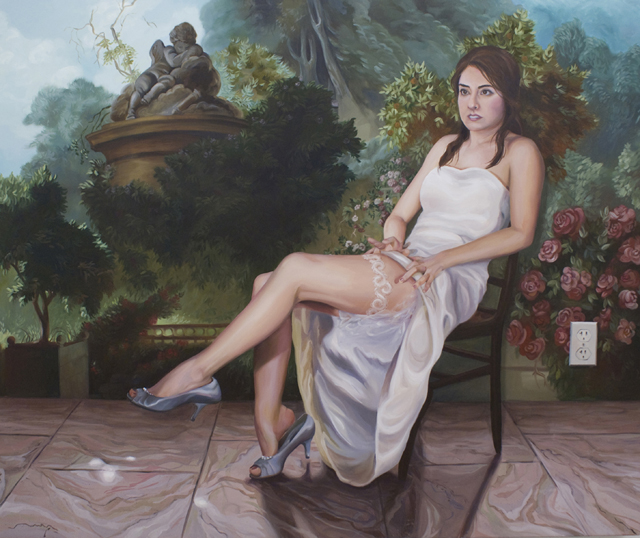
Crowned, Oil on Canvas, 41.5" x 50", 2013

Crowned, Oil on Canvas, 41.5″ x 50″, 2013

What unique roles do you see yourself as the artist playing that you may not have envisioned yourself in when you first started making art?

I never thought I’d be making art with the intention of creating social awareness and change. Now that I am, I can’t imagine making art without a message or simply art for art sake. I find depicting issues I’m passionate about to be completely rewarding.

When do you find is the best time of day to make art? Do you have time set aside every day, every week or do you just work whenever you can? 

I alternate between painting, writing and stitching days or some combo of them. I tend to write best in the mornings with my cup of coffee and prefer painting in the afternoon when I’m ready to switch creative muscles. I’m always working on something throughout the entire day until I go to bed. It’s a work ethic my parents’ instilled in me; though the downside to that is I feel pretty guilty/lost when I’m not working on something. I think I enjoy cross stitching in the winter the best though, it’s a great excuse to stay indoors where it’s warm and make art.

How has your work changed in the last five years? How is it the same?

Having always loved landscapes, I never thought I’d be painting figures or patterns. As I’ve become much more interested in social issues over the years, it’s about finding visual forms and other semiotics to support my overarching subjects. What has remained the same is that I am constantly drawn to exploring and depicting dichotomies. For example, as it relates to wedding, I want to explore how can a ritual be both instructed and predetermined but uniquely special? How can a special moment be intimate and romantic but incredibly publicized and performed? Or how can even participating in the institution of marriage be selfless but simultaneously selfish, greedy but altruistically giving?

There are two sides to everything and as an artist I want to explore each. There’s this unspoken pressure on artists to have a definitive viewpoint, to communicate to the viewer an absolute. The “grey area” in an artwork or subject is much more interesting to me. When it comes to addressing social issues, I prefer taking a much more bipartisan approach; to me, it’s more productive.

Are there people such as family, friends, writers, philosophers or even pop icons that have had an impact on the work you do?

Coming from Boston as a painter, it’s almost impossible to not be inspired by John Singer Sargent. More modern artists that explore women’s issues or culture and art history would have to be Swoon, Mickalene Thomas, Lisa Yuskavage, Elaine Reichek, The Guerrilla Girls, Kara Walker, etc. For writer’s and pop icons, I’m extremely interested in those who can brooch tough or intellectual subjects but with a personal wit like Bill Bryson, Joel Stein, Jessica Valenti and Tina Fey.

If you had an occupation outside of being an artist, what would that be and why?

I’m extremely excited to be an artist, writer and feminist, but if nothing else I would be a professional explorer or traveler. Ever since attending Semester at Sea in college, travel is a crucial part of my life. I’m even writing this from Alaska as we speak.

About

Majkut_HeadshotKatrina Majkut (My’kit) is a research-based artist dedicated to understanding and exploring feminine narratives in aesthetics, media, history and personal experiences, with a particular specialization in marriage and wedding traditions.

Majkut is an active presence in art institutions that are eager to address women’s issues and marriage equality through art. She exhibits internationally. She was most recently chosen as a finalist for the International Museum of Women’s collaboration with the Global Fund for Women #EqualityIs media project. A sample of upcoming and recent exhibits include the Lincoln Arts Project, MA; University of Maine, Farmington; showing alongside the Guerrilla Girls at the Arc Gallery (San Francisco); The Visual Studies Workshop; University of North Carolina, Wilmington; Stonehill College and The University of Alberta, Canada. Her lectures cover topics such as the future of marriage, choice feminism, patronymics and the history of the wedding cake. Her MFA thesis, Center of Attention received a feature article from Boston Magazine and her cross-stitch artworks were recently reviewed in Art New England Magazine. Majkut’s work just recently joined the art collection at Dana Farber. (http://www.dana-farber.org)

Majkut holds a B.S. in Business Administration from Babson College, Wellesley, Mass., and a Post-baccalaureate certificate and a Master of Fine Arts degree from the School of the Museum of Fine Arts, Boston/Tufts University. She also founded the website, http://www.TheFeministBride.com that inspired her artistic topics. Her writing on The Feminist Bride is now represented by the Carol Mann Agency in New York City.

www.KatrinaMajkut.com

All images copyright of the artist and used with their permission.

Posted in Uncategorized | Tagged , , , , , | Leave a comment

Jennifer Revit – Los Angeles, California

The Catcher in the Rye, video still, 2011, 26min 11sec

The Catcher in the Rye, video still, 2011, 26min 11sec

Briefly describe the work you do.

I use video to interpret and convey my experiences as an explorer. These expeditions can be near or far, planned or spontaneous, but with the intention of relaying experience and culture through the filter of a lens, of a computer application, of a storage device and of a screen. My work intentionally explores places and subjects that are familiar, even prosaic, but reinterpreted with a combination of personal experience and technology.

Tell us a little about your background and how that influences you as an artist.

During my childhood my family moved from my birthplace, New York, to Nebraska and then again to Southern California. My parents exposed my brother and I to travel and to culture outside of our given communities.  My varied background, along with exposure to adaptability at a very young age, instilled a curiosity to explore.   As an undergrad I studied Art History and Religious Studies then received an MFA in Set Design from UCLA. Rather than attending graduation I went to NYC to find a place to live. During the summer of 2001 I relocated to Brooklyn and lived there for 11 years.  Early in 2006 while exploring an empty lot in Long Island City I was inspired to document the experience and have since been making videos. My freelance job, a passion for early modern architecture and the love of spacious movie theaters brought me back to Los Angeles where I currently reside.

Entschuldigung, video still, 2013, 17min 12 sec

Entschuldigung, video still, 2013, 17min 12 sec

The concept of the “artist studio” has a broad range of meanings, especially in contemporary practice. The idea of the artist toiling away alone in a room may not necessarily reflect what many artists do from day to day anymore. Describe your studio practice and how it differs from (or is the same as) traditional notions of “being in the studio.”

My practice requires me to get out into the world and interact with it.   There is focused intention when I’m in a physical “studio” space editing my footage, but gathering images is spontaneous and can be inspired by the time of day as much as by happenstance.  

What unique roles do you see yourself as the artist playing that you may not have envisioned yourself in when you first started making art?

Living in Brooklyn and witnessing the dramatic shifts in the landscape of the city inspired me to spend time gathering imagery from locations in flux.  As with old photographs, revisiting places that have changed to accommodate these shifts can often bring back memories and emotions associated with the past.   This makes me feel that in some ways my work contributes to the documentation of lost places and spaces. 

Volcano, video still, 2013, 5min50sec

Volcano, video still, 2013, 5min50sec

When do you find is the best time of day to make art? Do you have time set aside every day, every week or do you just work whenever you can?  

Editing always seems to take place at the end of my day.  After work and personal obligations, after cleaning up and eating dinner, I sit down and work on projects.  As for the explorative side of my practice, this is usually outside of my daily routines, either while traveling or on the weekends.  I’m often inspired by unexpected and unfamiliar places.  

How has your work changed in the last five years? How is it the same?

Moving from New York to Los Angeles has made my work much quieter, my editing tendencies are much less frenetic, likely a reflection of my newer surroundings.   I see a major shift when, about 6 months after I moved to the West Coast, I attended an artist residency in Wyoming.  The work moved closer to a place of contemplation and observation rather than a reaction to society, pop culture and the sensory overload of a New York lifestyle.

Are there people such as family, friends, writers, philosophers or even pop icons that have had an impact on the work you do?

I am an American and I believe that my work looks and feels it is derived from the values and culture of the United States. I have a profound love of art but can be equally inspired by long hikes, unexpected markets or the snarky comment of a teenage girl.  I mentioned how my family’s exposure to culture and my parents ability to pick up and move without fear has deeply influenced me as an artist and as a person. 

Pop Art, popular culture and the urban environment also contribute because utilizing familiar references helps me to connect with my audience. In my work I often revisit Stanley Kubrick’s soundtracks, consider the repetition of Target ads and welcome the familiarity of The Catcher in the Rye. Wagner Opera’s and Wooster Group performances motivate me to consider all media as relevant, especially the pervasive sounds and sights of living in the city.

The artist Kelly McLane has had a profound influence on my work as an artist and on my person.  She is a very close friend, a mentor and an inspiration.  I hold her in the highest regard and profoundly respect her as a person and as an artist. 

I would not be pursuing any creative endeavors if it wasn’t for Viktor Frankl’s “Man’s Search for Meaning”, a book assigned to me as a freshman in college.  

If you had an occupation outside of being an artist, what would that be and why?

My income is earned in by working as a set designer for photography.  I find it allows me to flex my creative muscle just enough to keep me satisfied in my “day job” while providing the freedom and the time necessary for me to continue to pursue my own creative endeavors.  Essentially, I enjoy working as a set designer because it is challenging and the jobs I work on are always different.  In my work I’m required to learn new things and interact with all kinds of professionals and purveyors which is actually quite fun.  If I didn’t work as a designer I’ve imagined myself as a librarian but, I’m afraid, in 2014 this is much different than the fantasy of working amongst stacks of books!

About

jennifer revit photoJennifer Revit was born in Queens, New York then moved to a small farming community outside of Omaha, Nebraska when she was 6. After elementary school, her family relocated to Southern California where she spent her adolescence. Upon graduating from the University of Denver with a degree in Art History and minors in Religious Studies and Business, Jennifer moved to Los Angeles where she worked in galleries then earned an MFA from UCLA in Set Design. Rather than attending graduation she went to NYC to find a place to live and during the summer of 2001 she relocated to Brooklyn and lived there for 11 years. Early in 2006 while exploring an empty lot in Long Island City she was inspired to document the experience and has since been making videos. Her freelance job, a passion for early modern architecture and the love of spacious movie theaters brought her back to Los Angeles where she currently resides. For the past 18 years I have been working as a creative collaborator to earn a living while concurrently developing my own personal artistic vision.  While on a bike ride in early in 2006, I discovered a small plot of undeveloped land in Queens and was inspired to document the experience through video.

The Studio

The Studio

www.jenniferrevit.com

All images copyright of the artist and used with their permission.

Posted in Uncategorized | Tagged , , , , | Leave a comment

Katrina Neumann – New York, New York

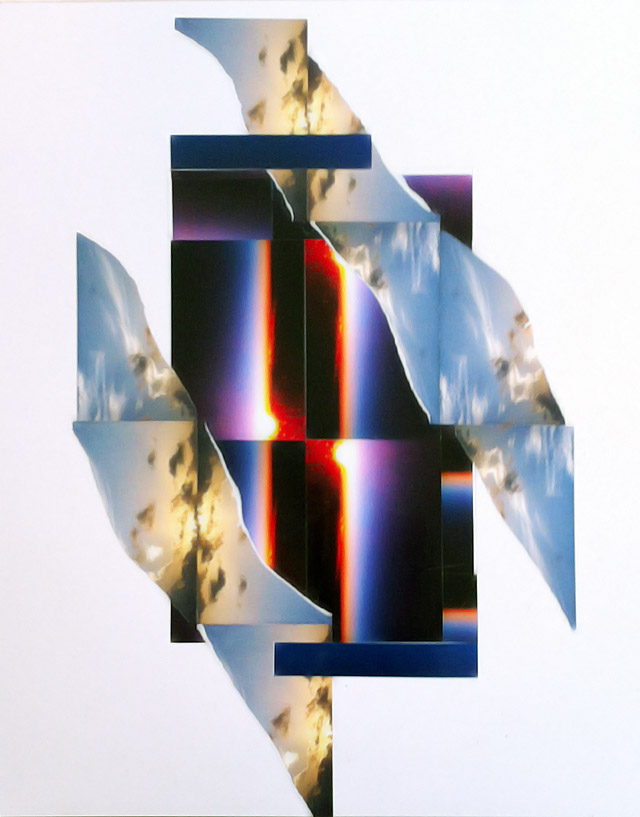
Untitled,Digitalphotocollageonvellum,24x19in.,2014

Untitled,Digitalphotocollageonvellum,24x19in.,2014

Briefly describe the work you do.

I work on many projects at once that revolve around the ideas of new romanticism, slowness, wanderlust, cartography, and a political call to the return of yesterday’s pastimes for the preservation of today’s environment.

I have both a studio and post-studio practice. In the studio, I make photo collages on vellum and wood panels and I secretly make tiny landscape paintings. While creating small-scale works, I dream of doing large-scale installations with these projects one day.

In my post-studio practice, I invite people to participate in adventures like extremely long walks in New York City that feel like climbing a mountain, or tours that invite people to come back to nature by viewing a sunrise for just a moment.

Tell us a little about your background and how that influences you as an artist.

While growing up, I was involved in a lot of artistic activities outside of the visual arts. I worked extensively in the theatre department and I played flute competitively.

Upon entering university age, I decided to major in theatre at a reclusive liberal arts college in the Pennsylvania Mountains. I soon grew self-conscious during my second year about being a ‘triple threat’ in the theatre world; so, I changed my major to art and began pursuing graphic design. Simultaneously, I took a painting course and remember one night stating, “If I could do this the rest of my life, I would.” My professor, Melissa Kuntz, soon encouraged me to apply to art schools where I had since graduated with a B.F.A. from Purchase College, lived in Flux Factory (II) in Long Island City, and received my M.F.A. from SMFA and Tufts University amongst other highlights in my emerging career.

Today, I still take my theatre, graphic design, and musical background into consideration as tools for projects that I have worked on and projects to come.

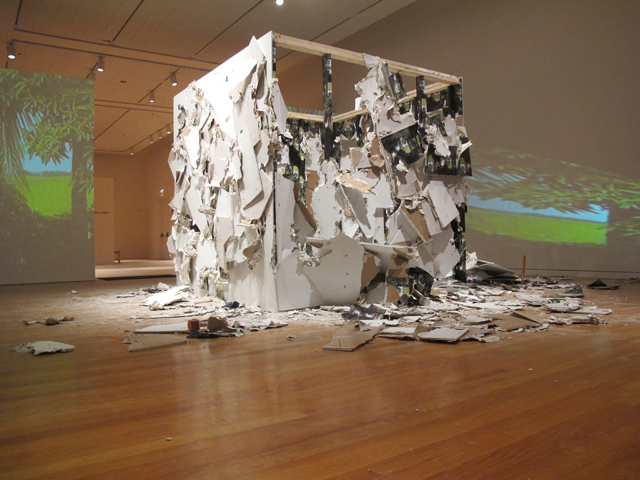
PriBlan,Multimediatemporalinstallationanddurational performance (performance in collaboration with Fabiola Menchelli) including: Drywall, wallpaper, screws, paint, sledge hammers, drill, wood, double .jpg projection on 1 min. loop, 300 sq. ft, 2011

PriBlan,Multimediatemporalinstallationanddurational performance (performance in collaboration with Fabiola Menchelli) including: Drywall, wallpaper, screws, paint, sledge hammers, drill, wood, double .jpg projection on 1 min. loop, 300 sq. ft, 2011

The concept of the “artist studio” has a broad range of meanings, especially in contemporary practice. The idea of the artist toiling away alone in a room may not necessarily reflect what many artists do from day to day anymore. Describe your studio practice and how it differs from (or is the same as) traditional notions of ‘being in the studio.’

I jump back and forth between being in the studio and having a post- studio practice. This comes from attending two schools of thought, both Purchase College (studio-based) and SMFA (post-studio based). A majority of my work happens outside of my studio. However, I do crave making tangible objects and the satisfaction of seeing a product that long-term conceptual projects can’t immediately satisfy for me.

What unique roles do you see yourself as the artist playing that you may not have envisioned yourself in when you first started making art?

When I began, I never saw myself as being able to break down the walls of my studio to involve more community-based projects. Also, I didn’t foresee including social elements such as collaborative projects to performative works – and thank goodness for this because it can get lonely in the studio.

On another note, I never saw myself as an activist and an artist and being able to co-mingle the two. Today, I see my interest in Disaster Relief Volunteering and being an artist inseparable. I enjoy the research aspect of this practice and the ability to be ‘in the field’ as a documentarian of epic catastrophe and a helping hand.

DerSonnenaufgangTours(afterFriedrich)LongIslandCity,Social Practice including: catered breakfast, coffee or tea in metal canisters, 2-3 participants, an un-theatrical tour to an unspecified but pre-determined location, picnic blanket (at times chairs or folding table provided), no cellphones or cameras are allowed, 2-3 hours, 2013

DerSonnenaufgangTours(afterFriedrich)LongIslandCity,Social Practice including: catered breakfast, coffee or tea in metal canisters, 2-3 participants, an un-theatrical tour to an unspecified but pre-determined location, picnic blanket (at times chairs or folding table provided), no cellphones or cameras are allowed, 2-3 hours, 2013

When do you find is the best time of day to make art? Do you have time set aside every day, every week or do you just work whenever you can?

I try to be good about budgeting my time, though it gets tricky because I have a full-time job as a designer in a gallery in Chelsea and I run a website. But I make sure that I have one full day a week in the studio and try to squeeze the sleepy hours after work in as studio time. I write in the mornings and begin working in the afternoon – sometimes my work outside of the studio happens in the wee hours of 4:30 am to 10:00 am.

How has your work changed in the last five years? How is it the same?

I think my artwork within the last five years has undergone a huge reconstruction . . . but, mybe later down the line, I will see the connection that lead me to where I am in the future.

In 2009, I was a purist painter living in Flux Factory and I had a studio in 5-Pointz (when artists could afford studios in NYC). I didn’t get Flux Factory when I lived there at the time. I would think things like, ‘why would you build a Shanty Town (by Ian Montgomery) on the rooftop?!’ but at the same time I was extremely mesmerized by these works. I began wanting more than the limits of the stretcher bars; my ideas felt bigger than a 2-Dimensional still image.

Today, like all ex-painters will say, I feel like I still have the inner core and heart of a painter and most of my work is inspired by images in historical and contemporary paintings.

Are there people such as family, friends, writers, philosophers or even pop icons that have had an impact on the work you do?

Current Artists: Bas Jan Ader, Caspar David Friedrich, Sophie Calle, and Alejandro Jodorowsky

Family: All of them from the republican-gun-loving-southern ladies and gents to my British-tea-drinking-sassy-loving grandmother and my ever-supportive mother and father.Friends: They are all muses in so many ways – whether chosen artists or not – from every laugh and conversation, my life is enlightened

Professors: Jeannie, Mary-Ellen, Barbara, Katharina, Nancy, Bobby B, Dannielle, Melissa, Patte, Kaersten, Cathie, George, Magda, & Kate

Current book of influence: Wilderness and the American Mind by Roderick Nash, How to Use Your Eyes by James Elkins, & Wanderlust by Rebecca Solnit

Dreams: My reoccurring dreams about the apocalypse, which often look like environmental disaster sites.

If you had an occupation outside of being an artist, what would that be and why?

Fo’gedaboutit! I work too hard to be an artist in the moonlight hours to think about being anything else . . . maybe a professor, with a lush studio in New York and many research grants to practice my art . . . or, an artist represented by a blue-chip gallery (hello, museum collections!) – but this is all in the world and range of an artist.

About

KNeumann_HeadshotBorn in 1985 outside of Los Angeles and grew up in the suburbs of Washington D.C., Katrina Neumann works internationally as a visual artist. She received her B.F.A from SUNY at Purchase College and her M.F.A from Tufts University/School of the Museum of Fine Arts, Boston. Her work has been featured in the juried-in-print exhibition New American Paintings, Radio Context, WNYC, Whurk Magazine and Berlin Art-Parasites. She is affiliated with Flux Factory, Elsewhere Museum, CAC Woodside, LMCC, Creative Capital, Artist Alliance Inc. and All Hands Volunteer.

Neumann is the Founder and Chief Editor of Rate My Artist Residency. This growing resource provides a platform for artists to socially and critically engage in conversations about artist residencies worldwide. The website has been featured in ArtFCity, BlouinArtInfo, Artspace, China Residencies, CMagazine, and NYArts Magazine.

Katrina currently lives and works in New York City. Her upcoming projects include a collaboration with a string quartet (Rose Hashimoto, Karen Dekker, James Waldo, and Beth Wenstrom), a residency with Artists Alliance Inc. and a forthcoming exhibition with Cuchifritos Gallery and Project Space.

KNeumann_Studio

www.katrinaneumann.com

All images copyright of the artist and used with their permission.

Posted in Uncategorized | Tagged , , , , | Leave a comment

Eugenia Pardue – Portland, Oregon

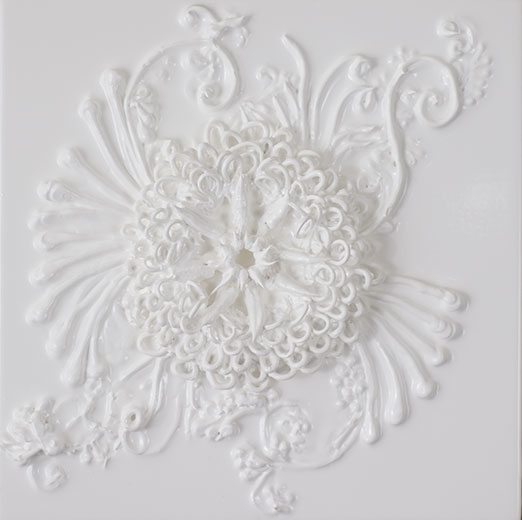
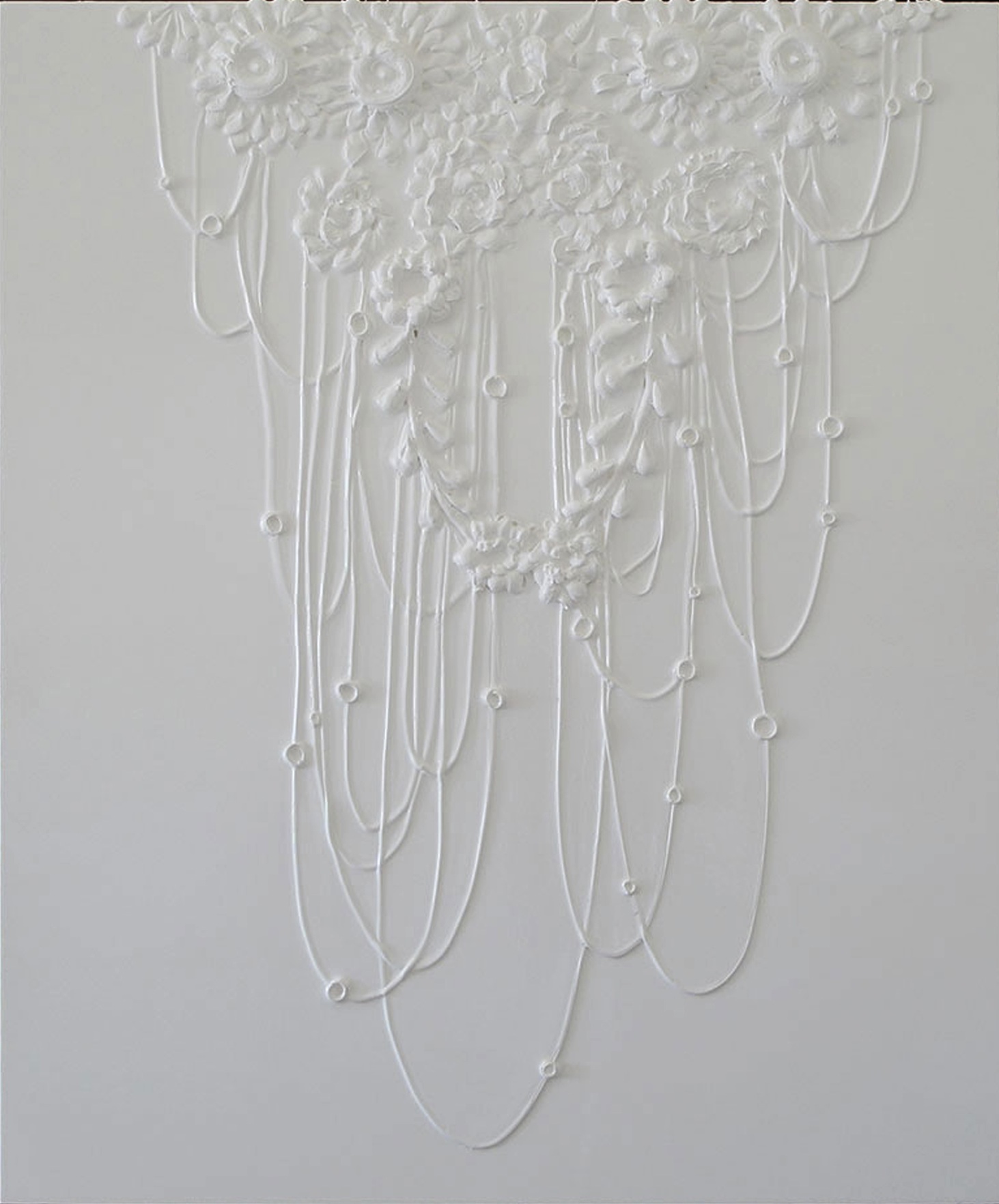
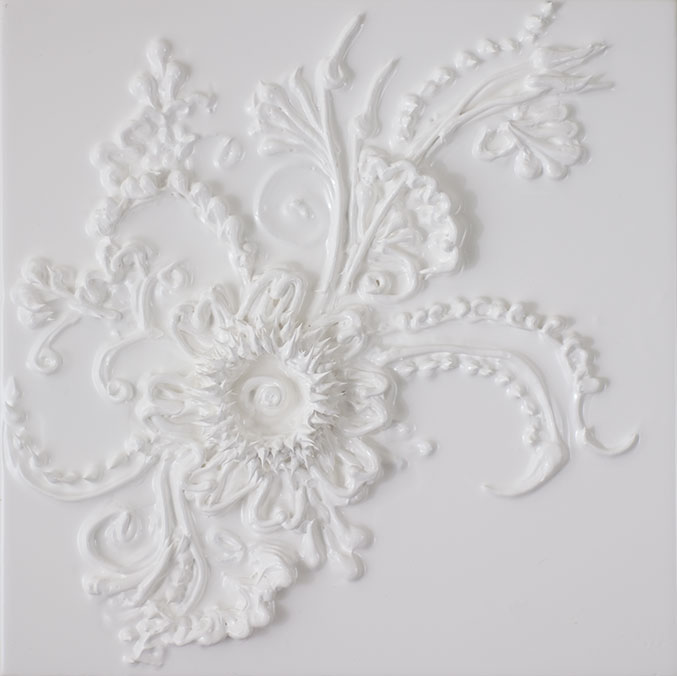
"Tableaux #8", 12" x 12", Hand sculpted Acrylic Polymer, 2014

“Tableaux #8″, 12″ x 12”, Hand sculpted Acrylic Polymer, 2014

Briefly describe the work you do.

I hand sculpt white on white acrylic polymer.A paean to nature, I translate the luxuriance, sensuality and fecundity found in flora and the ornamental.  In an artist residency in the Czech Republic, I lived and painted in an 18th Century palace—an immersion in the splendors of the baroque and rococo, which impressed upon me the ties between the decorative arts and the narrative, myth-making power of contemporary abstract painting.  They are pure, meditative, and sacred, painterly and sculptural, minimalist and maximalist, serene and dramatic, with undertones of danger and seduction.  I aim to bring viewers back into touch with the opulent physicality of art, and to remind them of the beauty within themselves.

Tell us a little about your background and how that influences you as an artist.

In my painting there is a sense of luxury, rooted in the luxuriance of nature.  As a child I frolicked in nature, camping in the forests, swimming in Santa Cruz, and running around my family’s 80-acre farm in Minnesota. I spent my early adult years in New Orleans and Miami, sultry sub-tropical cities with spicy cuisine and brilliant colors.  But not until I lived in Portland, Oregon, with its gorgeous gardens lining the avenues, did I begin to translate nature’s sensuality and fecundity into my art. 

The concept of the “artist studio” has a broad range of meanings, especially in contemporary practice. The idea of the artist toiling away alone in a room may not necessarily reflect what many artists do from day to day anymore. Describe your studio practice and how it differs from (or is the same as) traditional notions of “being in the studio.”

I consider my whole life being a studio practice. Yes, I “toil away alone” but I also am engaged in life, traveling, having rich conversations with other artists and people from all walks of life. I live, breath and am an artist. This is my life and this what defines me, this is how I live.

"Cascading Coronal"  48"x40", Hand sculpted Acrylic Polymer, 2014

“Cascading Coronal” 48″x40″, Hand sculpted Acrylic Polymer, 2014

What unique roles do you see yourself as the artist playing that you may not have envisioned yourself in when you first started making art?

I am constantly challenging my self to develop new dialogue in the concept of paint as visceral medium. I ground myself in the process and materials. Each piece elicits a visceral reaction while making associations with the natural world of flora and fauna.  My language is about beauty and is both visual and descriptive. My art reflects upon the past of Baroque elegance where design evoked the majesty of nature and these elements were metaphors for the human condition.  I combine symbolism and innovation of the medium of paint to speak to a new dialog in painting. 

When do you find is the best time of day to make art? Do you have time set aside every day, every week or do you just work whenever you can?

 My best time of day to work is to start mid morning after I have done my daily routine of taking care of my pets, doing a daily practice of yoga. I work every day 5-6 days a week any where from 5 hours to the wee hours in the morning. When i am in the “making”, I get lost, and time escapes me and before I know it, is 4am!

"Tableaux #11", 12" x 12", Hand sculpted Acrylic Polymer, 2014

“Tableaux #11″, 12″ x 12”, Hand sculpted Acrylic Polymer, 2014

How has your work changed in the last five years? How is it the same?

I have been working white on white since 2005. My strength is in color theory, but the work I do begs to be in white.

Right now, I am in the process of transitioning from the highly decorative forms, introducing a bit color while still focusing on the opulent, sublime, and subtlety of cascading light and how it reflects on the surface.

Are there people such as family, friends, writers, philosophers or even pop icons that have had an impact on the work you do?

Family: My twin sister, Allison. My husband Sam. My pets, Amelia, Count Zero and Betty. Friends: Richard Speer (my dear friend and art critic and amazing writer).Kelly Kerwick, Abi Spring, Dana Lynn Louis, Karen Silve, (all dear friends and amazing artists). Writers: (Just to name a few). Again:Richard Speer (my dear friend and art critic and amazing writer). Dave Hickey: “The Invisible Dragon: Essays on Beauty”, Beau Monde: Toward a Redeemed Comopolitanism. “Odd Nerdrum:  Kitsch, More than Art” by Jan-Ove Tuv (Author), Bjorn Li (Author), Dag Solhjell (Author), Odd Nerdrum (Artist). Camille Paglia, “Sexual personae: Art and Decadence fron Nefertiti to Emily Dickinson”. And “Glittering Images: A Journey Through Art from Egypt to Star Wars”. Virgina Wolf “A Room of One’s Own”.

About

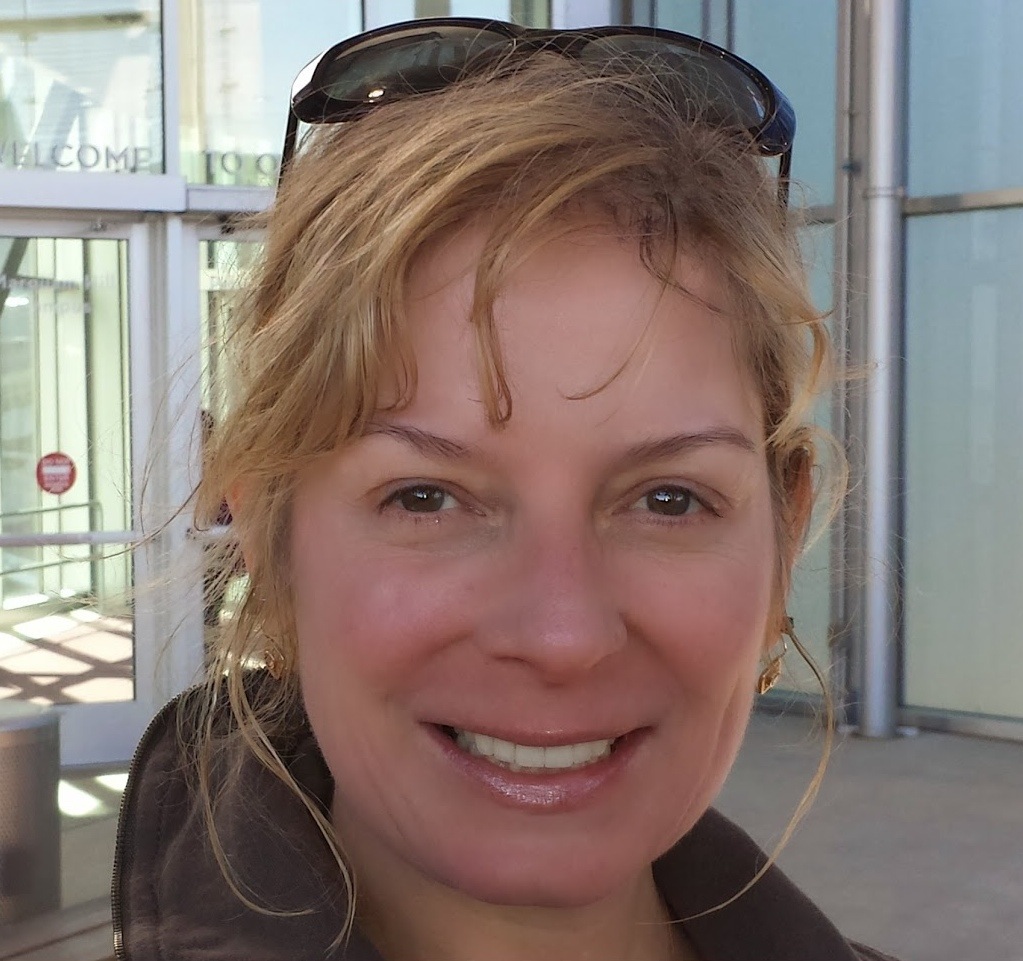
Eugenia PardueA professional artist for over twenty years, Eugenia Pardue has showed her work internationally and been collected by numerous corporations and individuals. Her exhibition career includes dozens of solo and group exhibitions. In 2012 Eugenia was awarded “Grand Prize” in the Center on Contemporary Art Northwest Annual in Seattle, WA, an exhibition of comprehensive survey of the top tier of Northwest Artists. She has commissioned works in the Presidential Suite in the Nines Hotel, Portland OR, Tiffany’s & Co., The Ritz-Carlton Tyson Center in Washington DC. Her work has been reviewed in numerous local and national and international publications.

From an early age, Eugenia Pardue enjoyed the richness of engaging with tactile elements, as she experimented with painting, drawing and clay. When Pardue enrolled in a ceramics class at Florida International University, Miami her artistic career took focus. She majored in painting and was awarded her Masters of Fine Arts in 1990. 

In 2003, Pardue eliminated oils from her stable and embraced gallons of acrylic medium.  She chose to confront the contemporary dilemma of paintings where art became about the non-painting. Pardue decided to address this point of view head on by showcasing the versatility and complexity of painting as a subject in and of itself.

In 2006, Pardue participated in the “Milkwood Artist Residency” in Cesky Krumlov, Czech Republic.  Here she developed her work as seen today where she paints in white while applying decorative motifs and architectural elements. There is a luscious tension of the forms that allows the viewer to move inside and outside the composition. Her works take on the feminine quality of organic shapes while using a medium that is completely fluid.  Shadow and shape are the subjects. 

Pardue grounds herself in the process and materials. Each piece elicits a visceral reaction while making associations with the natural world of flora and fauna.  Her language is about beauty and is both visual and descriptive. Her art reflects upon the past of Baroque elegance where design evoked the majesty of nature and these elements were metaphors for the human condition.  Pardue combines symbolism and innovation of the medium of paint to speak to a new dialog in painting.

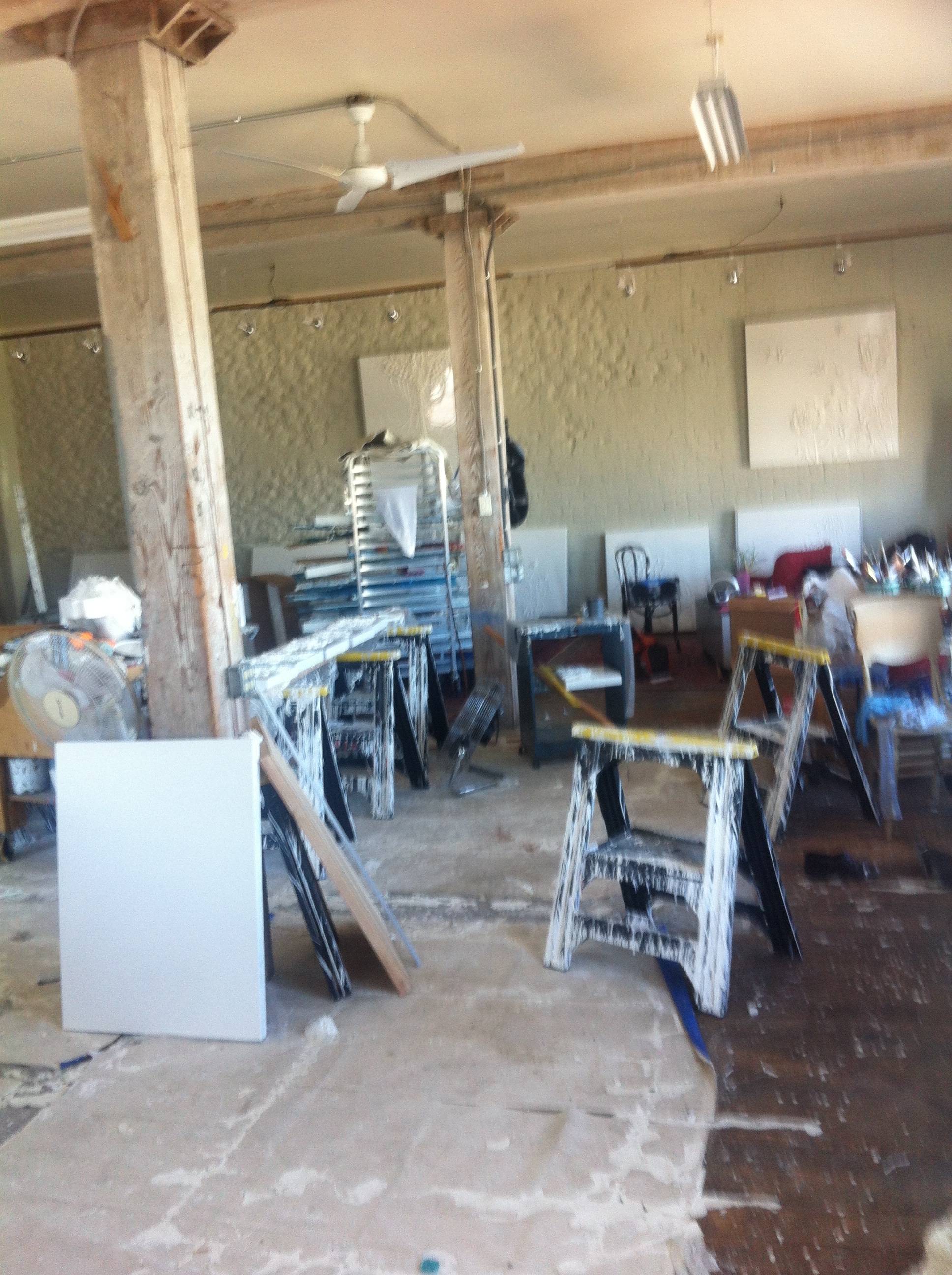
In the Studio

The Studio

www.eugeniapardue.com

All images copyright of the artist and used with their permission.

Posted in Uncategorized | Leave a comment

Bradley Tsalyuk – Los Angeles, California

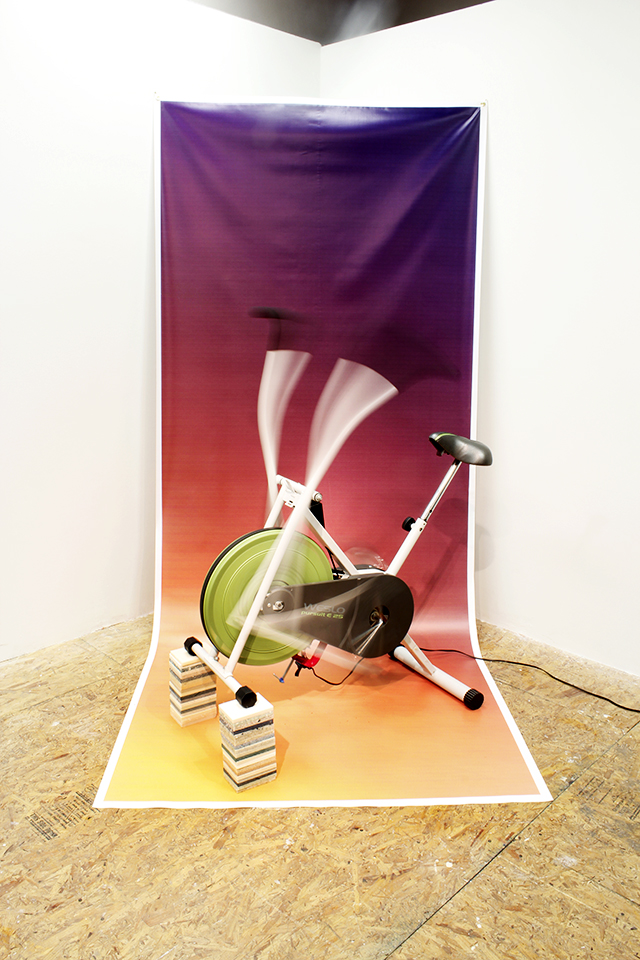
Weslo Pursuit E25 2013 8’x4’x4’ Perpetually running stationary bike, custom printed banner, corian countertop samples Collaborative installation with Corey Dunlap.

Weslo Pursuit E25
2013
8’x4’x4’
Perpetually running stationary bike, custom printed banner, corian countertop samples
Collaborative installation with Corey Dunlap.

Briefly describe the work you do.

My work is led by an insatiable curiosity, irrational collecting, and theft that has evolved as I’ve continued making. I often agitate my ideas through a variety of mediums, like a taste test in search of a sublime formula. I’m always searching for that self-stimulated gasp. I’m captivated by facets of contemporary culture that have created languages for themselves, speak to historical lineages, and generate objects and actions to be appropriated. Because of this fascination I have recently generated work using pilfered material related to Doomsday Preppers, self help culture, and the search for extraterrestrial intelligence. I also work collaboratively with my partner, Corey Dunlap. This collaborative work has allowed for larger pieces and a collision of our interests.

Tell us a little about your background and how that influences you as an artist.

My parents were immigrants from the former Soviet Union. Because of them I appreciate not only my education but also the freedom to learn about anything and everything. I have always been interested in science. It’s a broad umbrella that includes social sciences, life sciences, applied sciences, etc. In these realms there is always a search for something beyond our understanding. That desire to search has always stayed with me.

The concept of the “artist studio” has a broad range of meanings, especially in contemporary practice. The idea of the artist toiling away alone in a room may not necessarily reflect what many artists do from day to day anymore. Describe your studio practice and how it differs from (or is the same as) traditional notions of “being in the studio.”

I have a traditional studio space but since I work with my partner and we share that space, I tend to not be toiling away alone in a room. I like the idea of a collaborative studio space whether I’m in a room collaborating with my partner or outside collaborating with the environment around me.

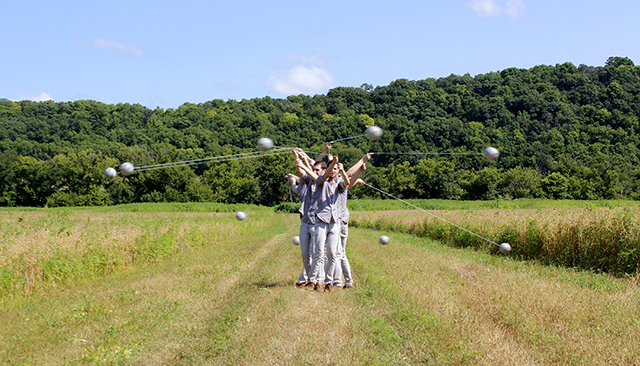
Moon Orbit 2014 Performance with moon globe.

Moon Orbit
2014
Performance with moon globe.

What unique roles do you see yourself as the artist playing that you may not have envisioned yourself in when you first started making art?

I never thought that I would become a collector on the verge of hoarder. I recently did a big cross-country move and was forced to reevaluate the things I’ve amassed. My collecting also extends beyond physical objects into the digital realm. I’ve been building a digital library of essays, books, and articles along side photo documentation of work. Maybe my next role will be as an archivist and I will tackle some of the physical or digital piles. 

When do you find is the best time of day to make art? Do you have time set aside every day, every week or do you just work whenever you can? 

I work whenever I can. I utilize weekends for more labor intensive or time consuming projects. Having my partner in the studio pushes me to work more. We tend to be in the studio together. 

How has your work changed in the last five years? How is it the same?

I graduated from my undergrad recently (is 1 year ago considered recent?) so most of the shifts in my work are as a direct result of my experience at the School of the Museum of Fine Arts-Boston. My work has shifted away from any kind of commitment to a particular medium. I’ve incorporated more found materials and text over the years. I still incorporate play, satire, irony, and DIY elements into my current work. The evolution of my collaborative efforts has also made me more ambitious.

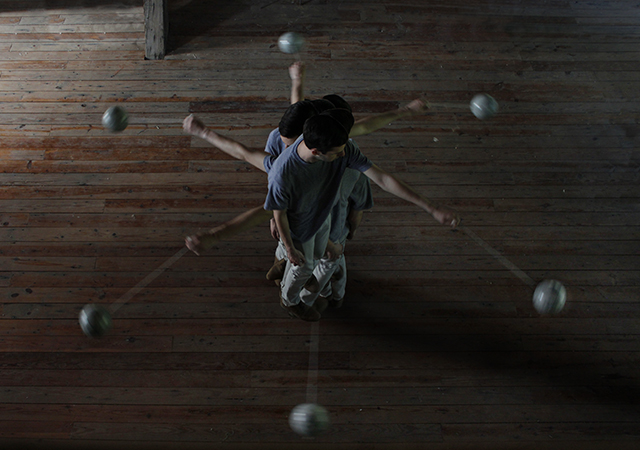
Moon Orbit 2 2014 Performance with moon globe.

Moon Orbit 2
2014
Performance with moon globe.

Are there people such as family, friends, writers, philosophers or even pop icons that have had an impact on the work you do? 

I feel like there are to many artists, writers, and filmmakers that have impacted my work. My more immediate influences are my family, friends, and my partner. My friends and community from school are some of the most intelligent and diverse people I’ve met. Their different backgrounds and interests always make me reconsider the way I look at my own work. My partner, who is also an artist, has become increasingly important as I try to grow my practice and move forward as a creative professional. He is someone who doesn’t let me get away with making bullshit work and definitely helps me follow through on projects I might otherwise doubt.

If you had an occupation outside of being an artist, what would that be and why?

It’s hard to imagine doing anything else. If anything I think I would be a professional tinkerer. Someone who takes things apart, fixes them, and puts them back together.

About

Headshot Bradley TsalyukBradley Tsalyuk is a graduate of the School of the Museum of Fine Arts-Boston. He has shown throughout the United States including the 2013 CAA conference in New York City, an exhibition of touchable artwork at Public Space One in Iowa City, and the 2013 Rapid Pulse International Performance Art Festival in Chicago. He has contributed to multiple visual art publications including The Emergency Index, an annual collection of performance art documentation. Bradley Tsalyuk lives and works in Los Angeles, CA. 

In the Studio

In the Studio

www.cargocollective.com/tsalyuk

All images copyright of the artist and used with their permission.

Posted in Uncategorized | Tagged , , , , | Leave a comment

Daisy Patton – Denver, Colorado

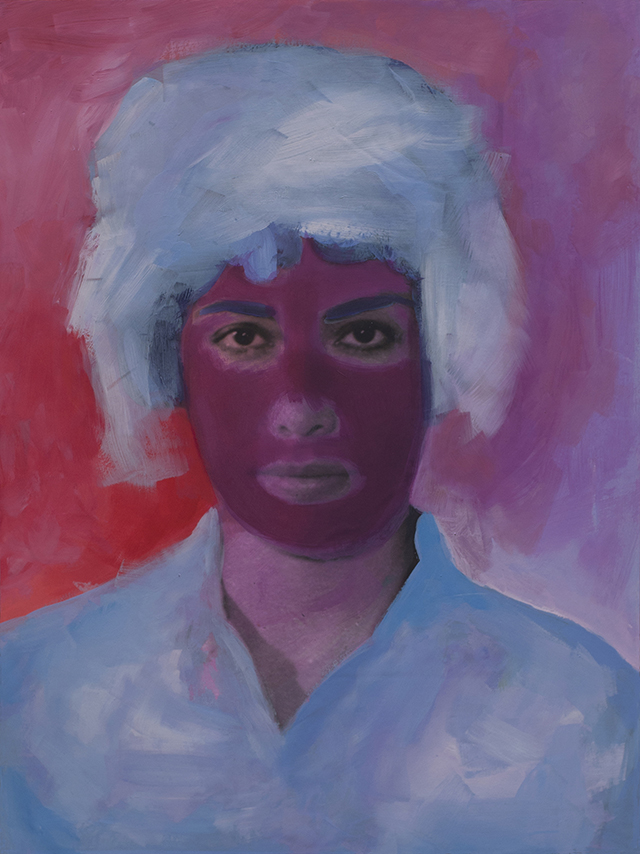
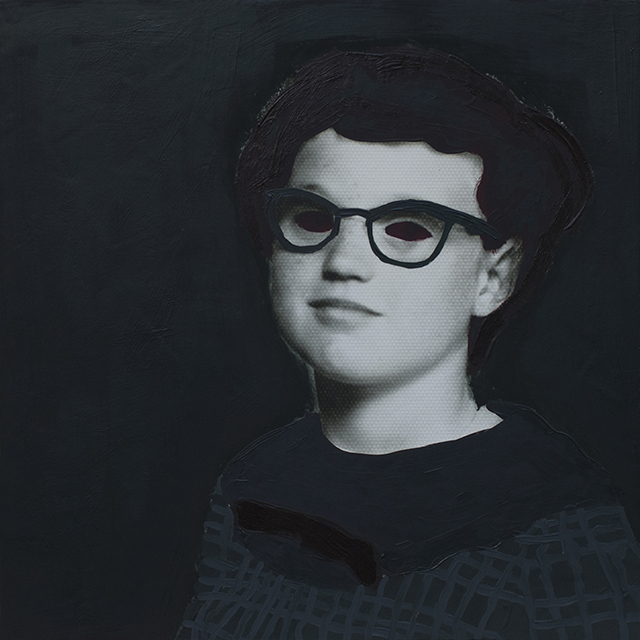
Untitled (Novak), Mixed Media Painting, 18”x24”,  2014

Untitled (Novak), Mixed Media Painting, 18”x24”, 2014

Briefly describe the work you do.

My practice is deeply entrenched in history and memory, and I work in a variety of media investigating those interests. I prefer exploring the social conventions and meaning of families, our relationships to the photograph and its inherent emotional ties, and what it is to be a person living in our contemporary world. Additionally, the connection between painting and photography is something I return to regularly, and I have two series exploring that right now. One is enlarging found/abandoned family photos and painting over them in an examination of memory and identity, and the other is realistically painting family photos of mine and my potential father’s (who I’ve never met) as a way to create an alternate, fake timeline of his presence. Generally, my work is emotionally charged and hopefully evokes a response from the audience; moreover, it’s often research-heavy and long-term. I also love connecting with others in not so serious projects, like the illustration blog I have where I draw colloquial Venezuelan sayings and collect this cultural ephemera.

Tell us a little about your background and how that influences you as an artist.

My somewhat difficult childhood has greatly affected who I am as an artist. I’ve always been interested in storytelling and making up reasons for why people behaved the way they did, or perhaps what happened in the past. Growing up in a single parent household with no knowledge of who my father was, the missing information of my heritage (my father was supposedly Iranian) meant that, subconsciously, I redirected that curiosity to everything that was around me. I read voraciously, anything from history books about far away countries, detective tales, and most especially ghost stories and colloquial mythology. In the film The Devil’s Backbone, a character talks about how ghosts are repeated events in time, which I think perfectly describes how these seemingly disparate interests tie together. Also, my family was very poor economically and health-wise, and that constant instability I think really influenced my attempts to regain some semblance of control through my art-making.

It has been really in the last five years that I’ve understood just how much that upbringing shaped my art and my commitment to social justice; I’ve been focusing more and more on powerlessness and helplessness and trying to make some kind of impact on my local community in one way or another. Another thing that factors into my work as an artist is my health; I was diagnosed with Multiple Sclerosis four years ago. It means that the very act of making, of what I can do, or even my focus has changed. The illness does not define who I am (no MS sufferer first, person second crap), but it may factor into why I’m so attracted to some kind of lack or powerlessness. Likewise, this means that I’m working as hard as I can for as long as I physically am able to do so.

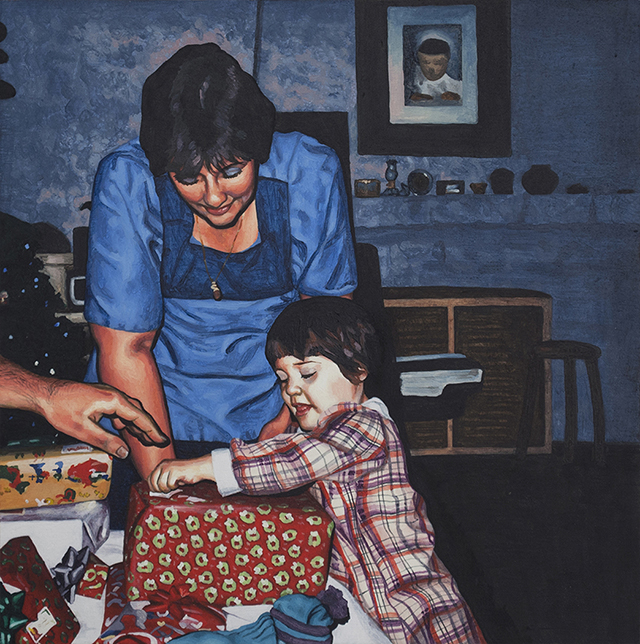
Christmas Presents, Oil on Panel, 10”x10”, 2013

Christmas Presents, Oil on Panel, 10”x10”, 2013

The concept of the “artist studio” has a broad range of meanings, especially in contemporary practice. The idea of the artist toiling away alone in a room may not necessarily reflect what many artists do from day to day anymore. Describe your studio practice and how it differs from (or is the same as) traditional notions of “being in the studio.”

Until recently, I’d worked from home, trying to navigate the restriction to small spaces and not destroy the apartments I’d lived in. That really resulted in a great deal of isolation, both because I wasn’t surrounded by other artists in a general studio space and because my late hours meant studio visits were hard to schedule. I’m incredibly fortunate and excited to be a new resident artist at RedLine Denver, a fantastic art organization that has artist studios that are open to the public. So while before I worked alone and with little to no interaction, now I have members of the public wander into my studio while I’m working to chat about art, what I’m up to, or anything in between! It’s been a wonderful experience so far, and I’ve found the open door studio concept to be invigorating and prompts me to work even more. I know many artists would find that distracting or balk at showing their process at work, but I actually welcome having those interactions. I deeply believe that art should be meaningful to more than just an elite few, and I enjoy being able to increase arts literacy with the general public by having these conversations or even just letting them have a peek at what I’m doing.

Untitled (Mary Ann Hollingsworth to Nancy), Mixed Media Painting, 20”x20”, 2014

Untitled (Mary Ann Hollingsworth to Nancy), Mixed Media Painting, 20”x20”, 2014

What unique roles do you see yourself as the artist playing that you may not have envisioned yourself in when you first started making art?

This is something I frequently think about now: what is the role of art and the artist in society? I like to think that art is an interpretation of our surroundings and contemporary life and the artist is the mediator of this interpretation. When I was younger, my impulse was to create and make work, but I didn’t really understand the larger role of artists as cultural mediators until a few years ago. I like to imagine that artists can bridge various worlds and topics with their work, and that’s something that dawned on me as I matured as an artist.

When do you find is the best time of day to make art? Do you have time set aside every day, every week or do you just work whenever you can? 

 I am a total night owl, which can be a problem since working 9pm to 3am doesn’t vibe well with others’ schedules! But night is always best, or at the very least, late afternoon at the earliest. Since I’ve had my public studio at Redline, I’ve been trying to track back my working time to be present during business hours, but truthfully, I’m still trying to sort that out. In my mind, art-making is a job, and I am in studio six out of seven days of the week consistently. Even if it’s just to think about a potential piece or clean up, I need to be there and I need to be making something.

How has your work changed in the last five years? How is it the same?

Five years ago, I was doing voyeuristic street photography almost exclusively, and now I’m back into painting, something I’d done for most of my life except that period of time. I also have a sound art project, digital media work, a graphic novel I’m working on…so in the most basic sense, the media I use has exploded and the number of on-going projects I have has as well. Additionally, I’ve gotten more comfortable doing work that is more personal or autobiographical, something I hated until around three years ago. But there are common threads throughout these bodies of work that remain: examining relationships between people and our environment, as well as that voyeurism and construction of false relationships.

Are there people such as family, friends, writers, philosophers or even pop icons that have had an impact on the work you do?

Whew, that’s hard to answer because I find inspiration everywhere! I certainly adore the writing of Rebecca Solnit, whose work on history, landscape, politics, gender, philosophy, and so much more is a great reflection of what’s rattling in my brain in a given moment. I tend to read extensively in certain fields: history, true crime in history, life science/behavioral science, human arrogance in nature, and memory-based work, which all inevitably feeds into my thought-process and practice. Having supporting friends and my best friend, my husband Henry, help keep me working when doubt or irritations could derail me. But really, looking at art, other artists, and thinking about the relationship between those and our society is what motivates me most. I adore the work of Marlene Dumas, Sophie Calle, Ellen Gallagher, Nan Goldin, Tracey Emin, Doris Salcedo, who I consider influences in varying ways—and specifically, I’m very much drawn to women and women’s work/experiences historically, within the art world, and now.

If you had an occupation outside of being an artist, what would that be and why?

Part of the joy of being an artist is that you can be a dilettante in a variety of fields, which makes the polymath in me very happy. That said, while I’ve always been an artist, I did consider being a history professor as a day job for a long time. If I had to, I’d fall back on that path since there’s something really attractive about understanding and unraveling events in the past.

 About

Patton_HeadshotOriginally from Los Angeles, California, Daisy Patton moved back and forth between Oklahoma and California for most of her childhood. She has a BFA in Studio Arts from the University of Oklahoma with minors in History and Art History and an Honors degree. Her MFA is from The School of the Museum of Fine Arts, Boston/Tufts University, a multi-disciplinary program. Patton received the Montague Travel Grant to do research in Dresden, Germany for an upcoming project, and she was also awarded a position as an exchange student at the University of Hertfordshire, UK while an undergraduate. She has been granted residencies at the Anythink Libraries in Colorado and most recently a two-year residency at RedLine, an arts organization in Denver, Colorado. Exhibiting in group and solo shows nationally, she is represented by Michael Warren Contemporary in Denver with an upcoming show in December. Patton resides in Denver, a happy distance away from bears.
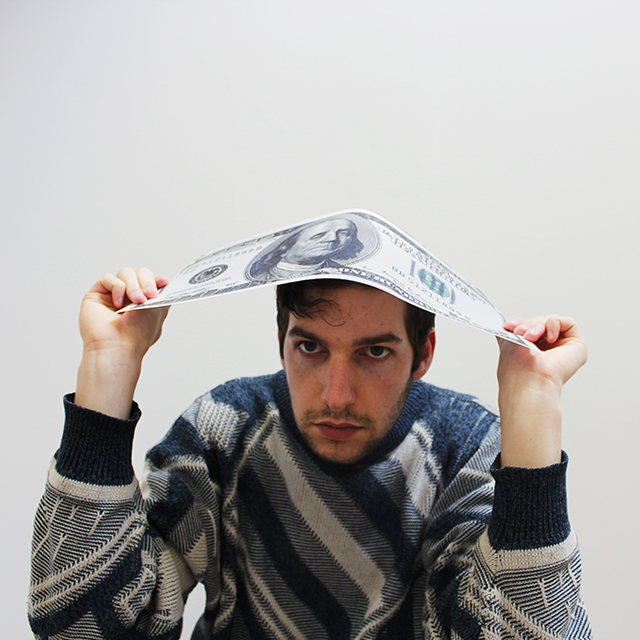
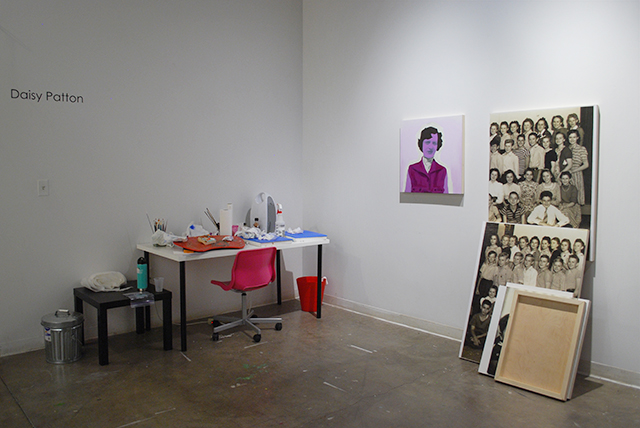
The Studio

The Studio

daisypatton.com

All images copyright of the artist and used with their permission.

Posted in Uncategorized | Tagged , , , , | 1 Comment

Emily Glass – Rochester, New York

 The Curious State, Charcoal on Paper, 68 by 36 in, 2012

The Curious State, Charcoal on Paper, 68 by 36 in, 2012

Briefly describe the work you do.

I mainly identify as a painter, but my work ranges in materials from traditional and water-soluble oil paint, to ink, oil and chalk pastels, to graphite and charcoal. I generally work on paper or canvas. The content of my work focuses on social and individual states of being and the subjects of my work are often biological in nature. I feel I am hard pressed to find forms that are more structurally complex and visually stunning than natural living forms. I delight in studying their complexity and teasing out my associations with pedestrian life that I find in groupings of insects, livestock and plants.

Tell us a little about your background and how that influences you as an artist.

I spent a large part of my youth growing up outside on 9.75 acres of forest and hobby farm land in Vermont. I made a choice early on to not watch TV, which created a sizable gap in my knowledge of pop culture. This however did free up a large part of my time to explore and exist outside. Time to sit and listen, time to build, to reflect, to observe, to read, and to learn from and train the horses and house pets. I studied the results of my experimental vegetable garden. I watched as my carefully hypothesized ideas on best horticultural practice either grew or failed. I would eagerly take notes and collect seeds, often pumpkin, and try again. The main interest was in learning every intricacy of the plant or animal’s growth and life.Within my paintings these tracts of learning, observing and experimenting continue. The paintings and drawings become records of my attempts to truly see and think in depth about the structure and beauty of living organisms. Over time social and cultural observations have become more significant, permeating my mind and inevitably mixing with how I see natural forms. I welcome the complexity and see it as a way to reflect and center myself.

Eggs for Breakfast, Oil, Marker and Pencil on Canvas, 41 by 103 in, 2010

Eggs for Breakfast, Oil, Marker and Pencil on Canvas, 41 by 103 in, 2010

The concept of the “artist studio” has a broad range of meanings, especially in contemporary practice. The idea of the artist toiling away alone in a room may not necessarily reflect what many artists do from day to day anymore. Describe your studio practice and how it differs from (or is the same as) traditional notions of “being in the studio.”

The space I work in varies on whether or not I can bring my canvas and paints to the forms I am painting. For subject material I visit state fairs, herbariums, national parks, entomology museums, biology departments and my immediate back yard, with a sketch book and camera in hand. I have painted in veterinary medicine dissection labs, old football stadium studios and apartment parking lots. Most currently I spend as much time as possible painting outside for the pure necessity of excellent ventilation and light. ‘Being in the studio’ will change again as the seasons move into winter and I search for new subject matter and another place to paint.

What unique roles do you see yourself as the artist playing that you may not have envisioned yourself in when you first started making art?

When I first started making, I knew I could sustain my interest in art but I did not know how I could sustain myself in a career. It was not long, (through the help of some very important mentors,) before I was teaching at a college level and realizing my love for sharing the ability to make. Although teaching is not unique, it was at first a surprise to me, to find comfort standing in front of a group and presenting the next visual challenge to solve. The experience has been rewarding past what I could anticipate. Over the past six years, I have continued to learn from teaching each semester, and this trend endures at Rochester Institute of Technology in NY where I am currently a visiting assistant professor.
When do you find is the best time of day to make art? Do you have time set aside every day, every week or do you just work whenever you can? 

I am a morning person but the best time to paint is all day. A four hour block of painting in the morning. An hour or two for a laid back lunch with a book. Then a four hour block of painting in the afternoon before dinner. I take breaks for a cup of tea as needed and I stretch and dance to keep my blood moving. During the summer I’ll spend as many days like this as possible with gallery/museum/library and exploration trips intermingled. On days when I can’t have a large block of time to paint, I try to make something for at least an hour. Despite how tired I am at the end of the day, if I can put music on and get myself in front of art materials for an hour, my mind is put at ease. All of the fullness of the day can empty out through making. I allow these single studio hours to be completely open with no expectations. Whim takes over and I play and experiment with whatever interests me at the moment. These single hours spent in the studio are incredibly important to my work, my process of thinking through ideas, and my enjoyment of making.
How has your work changed in the last five years? How is it the same? 

Five years ago I was in grad school. I was experimenting with mark and process. I was asking myself how much of the stages of gesture and drawing should appear in the final stage of my paintings. There is something very raw and honest about the first dozen attempts of composition and form that lay underneath a finished painting. While these qualities remain part of my work, the paintings I’m working on now explore a more complete understanding of the objects under study. What has remained the same is my broad focus on natural subjects and social constructs.

Watchers, Oil on Canvas, 36 by 101 in, 2011

Watchers, Oil on Canvas, 36 by 101 in, 2011

Are there people such as family, friends, writers, philosophers or even pop icons that have had an impact on the work you do? 

On a larger scope family, friends, peers and the varied books I pick up do have an impact on my approach to working habits and what I ultimately complete and show. Interactions with engaged thoughtful persons and texts are all part of the intellectual and emotionally supportive energy that helps enrich my thoughts and excites me to make. One specific example that has impacted my process is: Hellen and Scott Nearing’s writings in The Good Life. In part of this book they talk about organizing time with the goal of non-anxious, non-pressured or rushed work time. I have long debated and tested many different weekly self-imposed painting schedules, always questioning how much I can accomplish and whether it is enough. Their strategy is what I base my above described studio practice on and is the only strategy I’ve found that feels balanced and sustainable.

If you had an occupation outside of being an artist, what would that be and why? 

If I had another occupation outside of my current work, I would likely find a way to stay close to the topics of botany or biology, studying specific wild or domesticated species. But I do have an occupation outside of being an artist, which is teaching. It is a big part of my current identity. What I do in the studio gives me energy and content to bring to the classroom, and what I learn from my experiences in the academic studios, I bring back to my work.

About

Emily Glass, Headshot, 2014Emily received her BFA from the State University of New York at Potsdam and her MFA degree in painting from Kansas State University. Emily is currently a Visiting Assistant Professor in the School of Art at Rochester Institute of Technology.Her personal work embraces the investigation of anatomical and structural forms of animals, insects and plants. Large panoramic paintings and small enclosed charcoal and pencil drawings make up the current boundaries of her process. What is at stake within her art is the development of individuals on a two dimensional surface. Some issues explored through this process of inspecting the figure are ideas of self-image, social indifference and social indulgence. Emily’s research leads to the study of cadavers in biology departments, insects in university entomology museums, and most recently biological matter in herbariums and the gardens of her immediate surroundings of Rochester NY.In the last three years Emily’s work has shown in juried and solo exhibitions in New York, Kansas, Arkansas, Iowa, Maryland, Oklahoma and Illinois. Most recently she participated in national juried exhibitions at The Fine Arts Center of Hot Springs Arkansas, the Maryland Federation of Art and the High Falls Museum in NY.

Seasonal Studio Space, 2014

Seasonal Studio Space, 2014

emilyglassart.com

All images copyright of the artist and used with their permission.

Posted in Uncategorized | Tagged , , , , | Leave a comment